


Meet Dogwood’s Database Intern, Patrick Connelly…
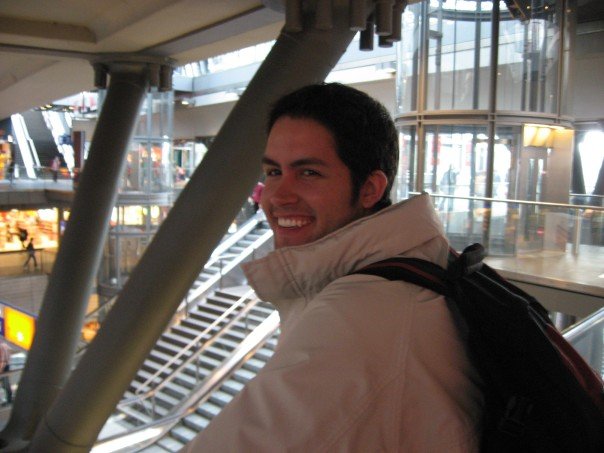
I knew from the time I arrived for my internship interview that Dogwood Alliance would be the place for me. I never heard about them until one of my friends from UNC Asheville blurted out their name when we were talking about what we were going to do when we were finished with undergrad. I’m going into my senior year at UNC Asheville studying Business Administration and Environmental Studies. I’ve always been interested in nature and more recently ways to change humans impact on the environment. I’ve known for a while that I wanted to work for a non-profit because change occurs one battle at a time. Non-profits are where you get your hands dirty and are actually a part of the action. And after doing a bit of research on the organization and stopping a few times after my interview I knew I was in for an adventure that would provide loads of experience as well as an office atmosphere that would be unmatched anywhere else.
For the summer my main tasks and responsibilities are focused in the development aspects of the organization. Pretty much making sure that all the information on Dogwood Alliances supporters are up to date and as accessible as possible to the staff. I’ll be working closely with the data base that Dogwood Alliance uses as well as helping out wherever I’m needed in the rest of the organization. In working with the data base my goal is to get all of the staff members on board and to help them use the data base in the most effective way possible. In doing so it will hopefully allow Dogwood Alliance to get their message out to even more individuals, recruit more supporters and to have an even greater impact in saving the Southern forests than they are already doing.
So far my time at Dogwood Alliance has provided me with the ability to actually take the processes that I am learning about in the classroom and apply them to the real world, testing my abilities before actually stepping out into the professional world. And the experience is proving to be invaluable. I have much more freedom than I would ever expect to have but that freedom sort of took me for a loop. I am responsible for completing tasks without having someone set the time line, which was something I have rarely experienced. And setting my schedule has allowed me to hone my time management as well as other skills. For the rest of my internship I am looking forward to the other events Dogwood Alliance will be attending as well as all the opportunities allotted by this internship.
Nearly 17,500 public comments were sent to the US Department of Agriculture opposing their recommendation for approval of an ArborGen proposal to plant over a quarter of a million genetically engineered (GE) eucalyptus trees. Only 39 favorable comments were received by the USDA. If allowed, the plantings would take place on 330 acres of land across seven states in the Southern U.S., to supposedly feed future cellulosic ethanol production.
All but one of the field trials would be allowed to flower and produce seeds. The trees are genetically engineered to be cold tolerant, produce less lignin and have altered fertility. When the USDA issued their draft Environmental Assessment (EA) in early May in favor of ArborGen’s proposal, the STOP GE Trees Campaign mobilized.
The collection of comments from people firmly opposing the large-scale release of GE eucalyptus trees was a combined effort of several different organizations, including Dogwood Alliance, that recognize the inherent danger in this industry proposal. Eucalyptus trees are known to be wildly invasive, extremely flammable and deplete huge quantities of ground water. They are also not native to North America. In many cases they have exacerbated drought conditions, which can set the stage for devastating wildfires. In a massive Australian eucalyptus wildfire earlier this year 173 people perished.
The good people at TriplePundit, posted an excellent piece about it this morning, you can view it here.
Or to read our press release, look here .
For more information, visit the Stop GE Trees Campaign .
Public Overwhelmingly Rejects Genetically Engineered Trees
Asheville, NC – Nearly 17,500 public comments were sent to the US Department of Agriculture opposing their recommendation for approval of an ArborGen [1] proposal to plant over a quarter of a million genetically engineered (GE) eucalyptus trees. Only 39 favorable comments were received by the USDA. If allowed, the plantings would take place on 330 acres of land across seven states in the Southern U.S., to supposedly feed future cellulosic ethanol production.
All but one of the field trials would be allowed to flower and produce seeds. The trees are genetically engineered to be cold tolerant, produce less lignin and have altered fertility. When the USDA issued their draft Environmental Assessment (EA) in early May in favor of ArborGen’s proposal, the STOP GE Trees Campaign [2] mobilized. The collection of comments from people firmly opposing the large-scale release of GE eucalyptus trees was a combined effort of several different organizations that recognize the inherent danger in this industry proposal. Eucalyptus trees are known to be wildly invasive, extremely flammable and deplete huge quantities of ground water. They are also not native to North America. In many cases they have exacerbated drought conditions, which can set the stage for devastating wildfires. In a massive Australian eucalyptus wildfire earlier this year -173 people perished. “Releasing a quarter of a million genetically modified trees that are allowed to both flower and produce seeds is irresponsible and dangerous,” stated George Kimbrell, Staff Attorney for the Center for Food Safety. “USDA failed to analyze rigorously the foreseeable impacts of this unprecedented experiment on native environments, which could have devastating consequences,” he concluded. “The Organic Consumer’s Association strongly opposes the release of any and all GMO trees into the environment,” stated Craig Minowa, Environmental Scientist at the OCA. “Some of the projected social and environmental impacts from the release of GMO trees commercially include the increased use of toxic herbicides and pesticides and the contamination of native forests with GMO trees engineered for such traits as reduced lignin, insect resistance, or faster growth which would be devastating to forest ecosystems,” he added. With offices in the U.S., Brazil and New Zealand, ArborGen is shipping GE tree tissue from location to location. According to the draft USDA Environmental Assessment, the GE tree hybrid used to create the 260,000 GE tree clones to be planted in the U.S. originated in Brazil, where non-GMO eucalyptus plantations have long been causing massive social and ecological problems. The GE tree tissue was then sent to New Zealand where it was genetically engineered and then shipped to the U.S. for cloning and outdoor release. [3] “Here in New Zealand ArborGen has been prevented from doing field trials of their GE trees because it is recognized that the risks associated with these field trials are simply too great,” stated Co-chair and spokesperson Steffan Browning of the Soil & Health Association of New Zealand. “GE trees are prohibited from field trials in New Zealand, so ArborGen will export them to the USA or anywhere else they can get away with it. This scandal brings shame to New Zealand’s clean, green GMO-free reputation,” he added. The USDA will be making a final decision soon. For updates on the current status of the application visit: http://nogetrees.org
NOTES: [1] ArborGen is the global leader in the research, development and commercialization of genetically engineered trees. ArborGen is jointly owned by , MeadWestvaco and Rubicon. [2] The Stop GE Trees Campaign steering committee includes the Global Justice Ecology Project, Dogwood Alliance, Sierra Club, Institute for Social Ecology, Canadian Biotechnology Action Network, ETC Group, World Rainforest Movement, Global Forest Coalition, TimberWatch and other groups that have united toward the goal of prohibiting the ecologically and socially devastating release of genetically engineered trees into the environment. This growing campaign has 144 partners in 36 countries around the globe. For more information visit: http://nogetrees.org. World Rainforest Movement is the southern hemisphere hub of the campaign and this month features “The Transgenic Trees Threat” on their website http://www.wrm.org.uy/ [3] Page 27 of the EA http://www.regulations.gov/search/search_results.jsp?sid=1227AB60E014&Ntt=aphis-2008-0059&Ntk=All&Ntx=mode+matchall&N=8059&css=0&Ne=2+8+11+8053+8054+8098+8074+8066+8084+8055+11 —
Contact Information
Celebrating Sarah T’s last day at Dogwood Alliance..
Last week at Dogwood Alliance, one of our valued employees and dear friend, Sarah Thompson, spent her last days in the office. Sarah has been working for Dogwood for about a year carrying a smile on her at all times. Her lively spirit will be missed, but we are proud of her work done here, as well as the work she will embark on. Sara has flown to Hawaii on a one way ticket!

For her last days, it was only natural that the Dogwood crew spent it together, planting our feet on the very ground that we are working to protect, the ground that brought us here, working for Dogwood. The Dogwood crew trekked the trails of Bent Creek post-lunch on a beautiful Wednesday afternoon. It was important to the crew to take an afternoon of leisure in appreciation of the gorgeous nature that surrounds us and is in need our protection. Hiking was a great way to remind us what we are fighting for and what has brought us together. After our hike, those that brought bathing suits, cooled down in the lake. It was a great afternoon spent enjoying nature and Sarah’s last day.
Meet another of Dogwood Alliance’s amazing summer interns, Jingjing Zhu…

My undergraduate major was environmental science. As I learned more and more knowledge on scientific and engineering issues I realized that policy and management are also important and I like to see what else we can do to solve the environmental problems in China. Almost all the developed countries have ever experienced similar pollutions I think they must be experienced to deal with these situations or avoid them. That’s why I came to America. Currently I concentrate in energy and environment. Energy is the fuel for the whole society and many environmental problems and conflicts closely relate to energy issues. It is a comprehensive field. I would like to focus on commercializing renewable energy and clean technologies for traditional energy. Energy efficiency is also very interesting to me. Time magazine said America can decrease its oil import to a large extent if it can improve its energy efficiency. My personal experience in America confirmed that there are many chances for improving energy efficiency.
My very recent interest is on carbon capture and storage (CCS) and wind power. CCS is a controversial topic because it brings some hopes and risks. I was working on a forest carbon offsets project the past semester. It’s kind of complex to me and I don’t know much about the exact theory on how forest offsets the artificial carbon emissions. But this project makes me interested in forest topics. Therefore I am so glad that I got the internship in Dogwood Alliance. I am happy to work with people who are experienced with the forest issues and dedicate themselves to protect the forest resources. I like people here. They are so nice and always willing to help. I like the relaxing environment here. This allows me to make my own schedule and finish the program in my usual pace. I also like the three big dogs. They are quiet and cute. The amazing thing is all of them can understand “sit” and “shake your hand”. The next step may be to train them to dance.
My main task in Dogwood Alliance is to work on a biomass white paper. I will try to make a comprehensive analysis about the biomass energy that relate to forest resources. I will include the benefit and cost of bio-energy in three main aspects: economy, society and environment. There are tons of papers and reports that support the bio-energy or fight against it. I would try my best to be objective. Nowadays renewable energy, climate change and environmentally sound are all fashions. But there are some activities that we think they are environmentally friendly or can mitigate the climate change when in fact they don’t work out that way. There are also some tricks that we must pay attention to. I am not an extreme environmentalist. But I do believe we should be careful what step to take in a specific period and how to take the step.


 Donate