


 Donate


New Report Discredits Energy Company Claims that Wood Pellets Burned in UK Power Plants are Made from Wood Waste
Evidence Emerges that Wood Pellets Imported From the Southern US Are Manufactured Using Whole Trees from Forest Logging Operations as UK Considers Misguided Biomass Subsidies
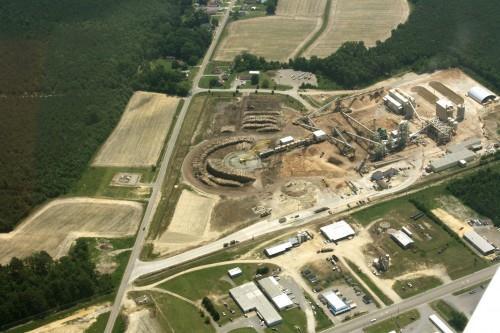 Asheville, NC, USA – Today, Dogwood Alliance, a nonprofit organization working to protect forests in the Southern US, released “The Use of Whole Trees in Wood Pellet Manufacturing,” a report documenting that the top exporters of wood pellets in the region rely heavily on whole trees, i.e. cutting down trees to be burnt in European power stations. According to Wood Resources International, the Southern US is now the world’s largest exporter of wood pellets to Europe. The report discredits European energy companies’ claims that wood pellets burned in UK power stations are produced from wood waste and residues. Over the next 5-10 years, burning wood in large power stations – both new-build biomass power stations but increasingly also converted coal power stations – is expected to attract several billion pounds of public subsidies annually in the UK.
“In the wake of mounting scientific documentation that burning trees for electricity will result in increased carbon emissions compared to fossil fuels, this report underscores the need for new climate policies,” stated Scot Quaranda, Campaign Director for Dogwood Alliance. “Energy companies in the UK, including Drax, RWE and E.On are converting large, old, dirty and inefficient coal power stations to biomass all in the name of reducing carbon emissions, but the reality is that this shift will accelerate climate change while also driving destructive industrial logging in the world’s most biologically diverse temperate forests.”
Through direct investigation and research, the report documents the use of whole trees from Southern forests by the largest wood pellet manufacturers and exporters in the Southern US. Pellet manufacturers such as Georgia Biomass, a wholly owned subsidiary of RWE, and Enviva, a major supplier of Drax and E.On as well as Enova, Green Circle and General Biofuels are highlighted in the report as using or if not open, planning to use, whole trees.
“The Use of Whole Trees in Wood Pellet Manufacturing,” follows on the heels of another report released on Monday, “Dirtier than Coal?” by the RSPB, Greenpeace, and Friends of the Earth, that details how burning wood from trees cut down for this purpose is commonly worse for the climate than burning coal for decades to come. This week these groups called on the UK government to end all subsidies for biomass and redirect them to genuinely climate-friendly renewables, such as solar and wind projects. The report highlights that the UK government’s own Bioenergy Strategy presents data which shows that burning wood from whole trees commonly results in the release of at least 49% more emissions than burning coal over the next 40 years. This is damaging evidence especially as more and more UK power stations, including Drax, Eggborough, Tilbury B and Ironbrige are announcing the shift from coal to biomass.
“There seems to be confusion in the UK and Europe about the source of wood pellets that are imported for burning by European utility companies, but as this report shows, whole trees in the Southern US are in fact being used to produce pellets for burning on the other side of the Atlantic,” said Scot Quaranda, Campaign Director. “We hope this report brings clarity to this issue and that the UK governments and European energy companies take immediate action to stop the burning of whole trees for electricity.”
Download the report here: http://www.dogwoodalliance.org/wp-content/uploads/2012/11/Whole-Tree-Wood-Pellet-Production-Report.pdf
Scot Quaranda

 September 10, 2026