



Kimala enjoying field and forest.
Kimala recently joined the Dogwood team as its first ever Marketing Associate. We’re all excited to work with Kimala because of her creative spirit, her marketing experience and her dedication to protecting our Southern forests.
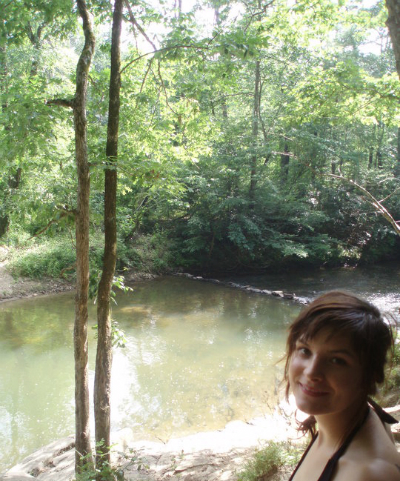
Kimala playing in our forests at a watering hole.
Kimala remembers always being an environmentalist, having grown up in Asheville within a community of folks who were very focused on issues of sustainability, and it shaped the way she views the world. Having spent time as an adult living in New York City, one of the largest metropolitan areas in the world, really reminded her of the importance of being close to nature. She saw the way living in a big city away from nature can increase hostility, isolation and create a fear of being disconnected. Kimala says,
There’s something about being in nature that allows you to become separate from your problems and see the world more as a whole. I’ve also seen a decrease in my lifetime of the priority to uphold our natural resources, which makes me want to be more involved and active.
That desire to make a difference is what brought her to Dogwood. Kimala followed the organization for quite some time and was inspired by Dogwood’s work and mission. Having gone to school for Culture & Media, Kimala really values the opportunity to use her education and her creativity to serve a greater good through her work to protect our special, wild places and our remaining green spaces. She says,
I feel really lucky to have a job that allows me to be creative and think outside the box, a job that aligns with my core values and helps me achieve an overall goal in my life, which is to be proactive and give back. I feel really lucky to be a part of Dogwood, being part of a team of such hard-working people who are like-minded and mission-driven.
Kimala loves to go on trailruns with groups of people, go for creek walks, collect rocks with gem-like qualities and sit on the edge of overlooks. She loves looking out over nature when as far as the eye can see, there’s nothing but trees, plants and animals.
Kimala also enjoys playing music and trying new cuisines.
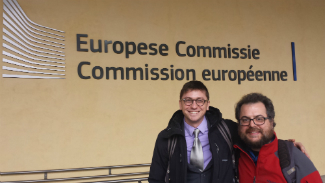
Scot Quaranda & Adam Macon making the case for our forests.
Over the last several weeks, Dogwood Alliance and our partners had the unique opportunity to directly engage with decision makers in the European Union and within the member states. Delivering them the Our Forests Aren’t Fuel message: that EU energy policies are destroying Southern forests and it’s time these policies change. Over the course of the trip: hustling from meeting to meeting, engaging with officials, delivering our presentation, Communications Director Scot Quaranda and I came to realize an important shift in the way conversation is taking place about the forests we call home. For too many years, the forests of the Southern United States have been sparsely recognized for their incredible contributions to biodiversity, mitigating climate change and improving the health and quality of our communities.
We noticed this first in our meeting with a member of the EU parliament, when he described wetland ecosystems of the Southern US as the “North American Amazon”. Wow! We’ll take that. While Southern US wetland ecosystems are vastly different from the Amazon rainforest, it’s still a fact that Southern forests contain the highest tree species diversity in the US and greatest amount of wetland forests in North America.
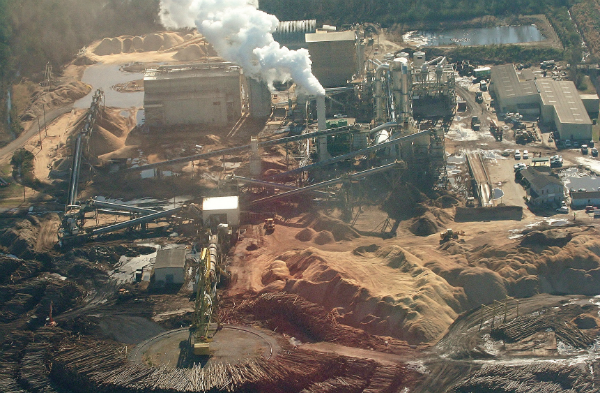
Ahoskie, NC wood pellet facility, destroying forests for fuel.
During our second week of travel, we had the unique opportunity to meet directly with British Secretary of State for Energy and Climate Change Ed Davey.That we were even able to secure a meeting with Secretary Davey was a huge step forward. As we addressed in our first EU Update blog, it’s become widely understood that the destruction of our forests for the use of electricity was an issue that needs to be addressed. In the meeting, our coalition exposed Secretary Davey to the devastating effects that UK policies are having on the forests, communities and local economies of the Southern US (this past November over 50,000 people sent Secretary Davey SOS messages) and demanded that he take action. While Secretary Davey was clearly moved by our scientific facts and stories from Southern communities, it was clear that he had been lobbied by the industry, making it vital that we continue to communicate the growing opposition movement.

Beautiful wetland forest in the Southern US.
For too long the wood products industry has held a choke hold on the fate of our Southern forests. Our environment and communities have had to deal with the impacts of unsustainable extraction of our native standing forests – our best defense against climate change. That paradigm is shifting. As the native forests of the Southern US continue to gain global recognition, we now have a unique opportunity not only to build the movement that provides lasting protection for our unique forests but helps completely shift the natural resource extraction economy that has suppressed Southern communities and economies for so long. This is an opportunity to transition into a sustainable economy that relies not on the destruction of our precious environment but on the preservation and valuation of the natural world, native culture and truly sustainable industries.
To achieve this vision for our environment and economy, we have a long way to go. But after spending two weeks across the pond, advocating for our unique and important Southern forests and demanding action to protect them, it’s clear that the time is now. We have a growing movement, a unifying issue, and a clear goal.
Biomass industry leaders, such as Enviva, try to argue that their increasing demand for our Southern forests is good for forests and will generate forest expansion in the US. We know that this is just not the case. The demand for woody biomass far surpasses anything our natural forests can sustain.
In an unprecedented and alarming move, the US Department of Agriculture has given GE tree company ArborGen permission to pursue commercial production of a genetically engineered loblolly pine with no regulatory oversight or environmental risk assessment. In the current plan, the potential impacts to the public or to the environment will not be evaluated.

Protest at Tree Biotech Conference 2013. Photo Credit: Global Justice Ecology Project
Our native loblolly pines are a key habitat for more than twenty songbirds and other animals, including the endangered red-cockaded woodpecker. If ArborGen’s GE loblolly pines are planted, there will be no way to stop them from irreversibly cross-contaminating native loblolly pines and pine plantations. Loblolly pollen is known to travel long distances. This contamination could take place on private lands and on public lands, threatening some of our last remaining native forests.
This decision sets a terrible and unacceptable precedent. If unchallenged, it will allow other GE trees with even more dangerous traits to be developed without any federal or public review. All at a great risk to our natural forests and the habitats they provide.
For too long, profit-seeking industries have sold our native forests for economic gain, transformed them into agricultural tree plantations that in no way resemble natural forests and disregarded the crucial habitat and ecosystem services they provide.
Industries like Enviva and ArborGen attempt to manipulate our forests for their personal gain, and then have the gall to exclude the public, or, worse yet, claim that what they’re doing is actually good for our forests! But we know that just by existing, are forests are doing what they do best.
But Dogwood Alliance, Global Justice Ecology Project and others are standing up to say no more.

GJEP and allies protest the Tree Biotechnology 2013. Photo Credit: Global Justice Ecology Project
Tell ArborGen that this will not be tolerated. There is a growing movement of anti-GMO groups, forest protection groups, Indigenous Peoples, birders, foresters, farmers, scientists, parents, hikers and many others who do not want our forests contaminated by GE trees.

Dogwood Alliance has been chosen by Green Sage Cafe in Asheville, North Carolina to be their Cup Worthy recipient for the month of February!

Dogwood staffers Kimala & Amanda enjoy a cup of organic coffee in Dogwood mugs at Green Sage!
Each time you bring your own reusable travel mug as a substitute for a paper cup, they’ll donate 20 cents to us. Yay!
We are so honored and grateful to have been chosen! We can’t wait to get our Green Sage coffees and teas in our Dogwood Alliance mugs, and we hope you’ll stop by to get a hot beverage and support two great organizations at the same time! The more coffee or tea you drink, the more Southern forests you’ll help save!

US Forest Protection Delegation in front of the Department of Energy & Climate Change
Dogwood Alliance staff members Adam Macon and Scot Quaranda joined coalition partners Sasha Stashwick from Natural Resources Defense Council (NRDC) and Derb Carter of Southern Environmental Law Center (SELC) to travel as a delegation to Europe to discuss the implication of EU and UK biomass policy on the forests and communities of the Southern US. Thanks to the growing controversy generated by on-the-ground evidence of forest destruction, thousands of Southerners speaking up to protect their communities and forests, and improved carbon science, our message is being heard loud and clear.
On our first delegation to Europe in November 2013, there were big hurdles. We had to combat several myths about the impacts, scale and potential for growth of the wood pellet industry held firm by policy makers. Big companies like Drax, Enviva, and Electrabel had been feeding government officials, decision-makers and the media misinformation and empty rhetoric. Now, just 15 months later, we have proof that our message got through.
We no longer need to debate whether it is just waste wood or residuals; they all understand that the wood pellet industry and utilities are using whole trees.

London
The forest carbon debate has come a long way, too, with very few people holding onto the false concept of carbon neutrality. Instead folks are trying to understand the intricacies and how to move forward without destroying more forests and our climate.
Though this important progress has been made, we still have a long way to go. Bioenergy policies in Europe are still driving forest destruction, and, while new policies are being debated, nothing is certain. The toughest challenges are still ahead.
It appears the US International Pellet Association is responding to our delegation to Europe. They’ve asked their members to write a letter because anti-biomass campaigners (that’s us) are in Europe misleading policy makers. Though they’ve raised the stakes, we doubt they’ll generate over 50,000 letters like our coalition did last November!
Just last week, the US Forest Service released a report about the importance of biomass, claiming that everything was rosy despite the fact that the report itself showed that biomass has increased forest destruction and will likely lead to mass conversion of natural forests to plantations.
In addition to our meetings with government officials in London and Brussels, some we also attended an inspiring public meeting organized by Biofuelwatch and hosted by Friends of the Earth UK and Royal Society for the Protection of Birds (RSPB). 60 people showed up to that event eager learn about how the UK is driving the destruction of Southern forests. We also participated in a major environmental organization gathering that featured 70 people representing 20 countries. This gathering sponsored by Birdlife International, European Environmental Bureau (EEB) and Transport & Environment gave us the opportunity to share stories and strategize.
Thankfully we are ready to meet greater challenges from industry. Over the next 10 days that we’re in Europe, we’ll continue to push. We’ll come home to the Southern US ready to build a stronger campaign to stop the destruction of our forests for electricity.
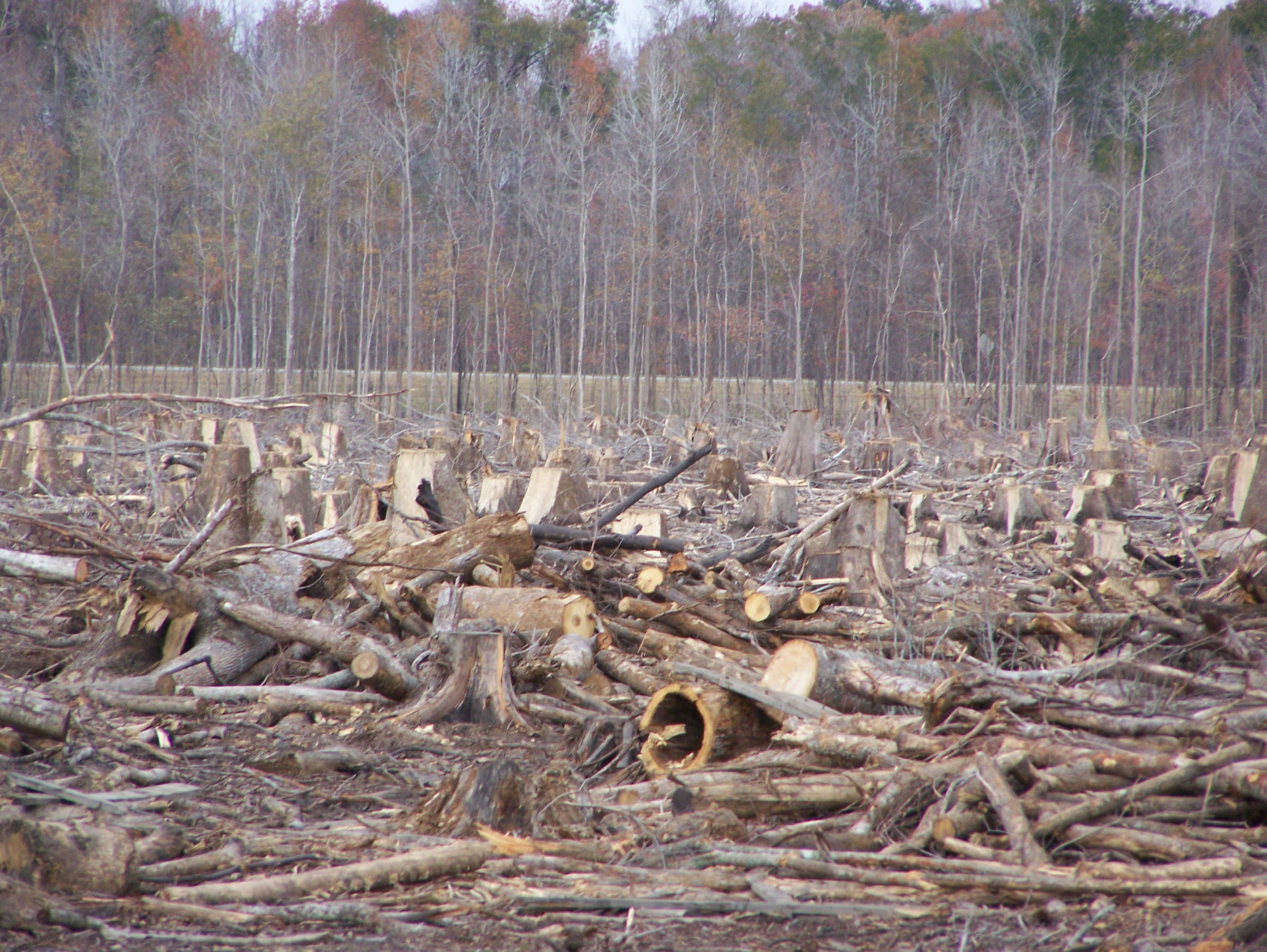
Clearcut wetland swamps
The US Forest Service’s Southern Research Station released a report assessing the current and potential impact of the rapidly expanding wood pellet export market on the forests of the US South. The South is already the world’s largest manufacturer and exporter of wood pellets as fuel for electricity generation.
Over the past few years, scientists, local community leaders, river keepers and conservation organizations have sounded the alarm as dozens of new wood pellet export facilities have been constructed and/or announced. Concerns about the impacts have grown with ongoing documentation that the South’s largest wood pellet manufacturer, Enviva, is getting wood from clearcut wetland forests.
This latest report should force policy makers in Europe to pause and rethink the policies that are driving, not only increased smokestack CO2 emissions in Europe, but deforestation across the pond. It should also make our own Environmental Protection Agency think twice about the impact its recently released draft rule regarding forest-based biomass is going to have on one of our most valuable natural resources – standing forests.
Two key findings in the report reinforce what’s at risk if policies continue to encourage the use of wood as a primary alternative fuel source to fossil fuels for generating electricity:
Wow! Really? All this time the wood pellet industry has claimed that they are simply taking scraps from land that would have been harvested anyway and that they are not causing an increase in logging. I guess we can lay that fallacy to rest now that the US Forest Service has confirmed that, yes, the rapid growth in wood pellet manufacturing is in fact driving increased logging.
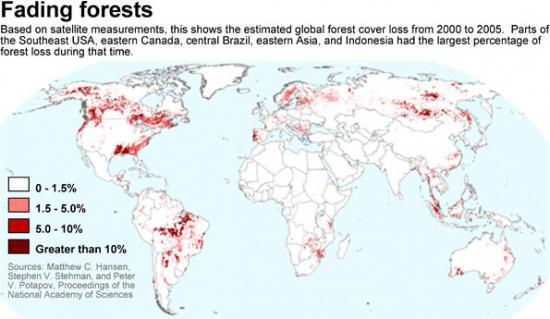
The Southern US is lit up red with forest cover loss.
Global maps of forest cover loss released by National Academy of Science last year show the rapid rate of forest cover loss from logging in the Southern US was four times that of Brazil during the study period from 2000 to 2012. We need to reverse that trend, not accelerate it. The NASA maps and associated report emphasize the need to look beyond mere acres of forests as a measure of sustainability. We must also pay attention to the rate and scale of forest cover loss from logging. When forests are cleared, it takes many years for them to recover, disrupting critical ecological services, including carbon storage.
The US Forest Service report finds that there could be enough wood to supply increasing demand for wood pellets, but that comes at a price – more plantations, and that means the continued conversion of natural stands to plantations requiring chemical herbicides and fertilizers. It could also mean the industrial use of genetically engineered trees.
The South’s landscape has already been heavily fragmented and degraded by the establishment of fast-growing single species pine plantations, contributing not only to species loss but also to the loss of entire ecosystems, such as the long-leaf pine ecosystem, and to the disruption of entire watersheds, such as the Waccamaw River Basin.
The report also points to the establishment of plantations on “marginal agricultural lands”. This too has important implications for the future as the loss of agricultural lands could drive up food prices, threatening food security.
Whether it’s the expansion of tree plantations in Indonesian rainforests for palm oil or the expansion of pine plantations in the diverse temperate forests of the US South for wood pellets, this form of deforestation is no longer acceptable in the 21st Century. We must get beyond measuring “sustainability” simply by assessing whether we will be able to grow enough trees fast enough to supply an ever-increasing demand.
The report is also crystal clear in regards to what it does not analyze, and those gaps are worth noting.

Atchafalaya Swamp in Louisiana
It’s time to move into the 21st Century and recognize that forests are so much more than the fastest growing trees or the wood they contain! They are homes to countless species of plants and animals. They protect us from storm surges. They remove carbon from the atmosphere. They generate and purify our drinking water. They make life on Earth so much more enjoyable!
So next time the wood pellet industry touts that they are protecting forests by creating a market that ensures landowners are growing trees, think about what that really means. Think carefully about whether accelerated logging and the further expansion of pine plantations is the direction we need to be going in to sustain life on Earth.
“To effectively address the huge sustainability challenges of the 21st century, we need to restore large expanses of intact natural forest cover across the planet and especially along our coasts. Accelerated logging for wood as fuel is not going to get us there.”
Contemplate whether this kind of “yesterday’s” thinking is going to help us solve the sustainability challenges of the 21st Century where climate change, species extinction and water shortages are becoming more evident every day.
New corporate and government policies have the potential to create an economy that encourages landowners to grow forests for carbon sinks, storm protection, biodiversity and water filters. With policies in place that actually incorporate the value of these critical services, we can expand markets and investments that encourage the restoration and maintenance of large expanses of natural forest cover, bringing much needed balance back to the natural world and ensuring the health and safety of our communities. Our challenge in this decade is to fully embrace new ways of relating to the natural world, letting go of the old paradigms. This latest USFS report is an indicator that we clearly aren’t quite there yet.
Let’s hope those with decision-making authority finally start seeing the forest for the trees.
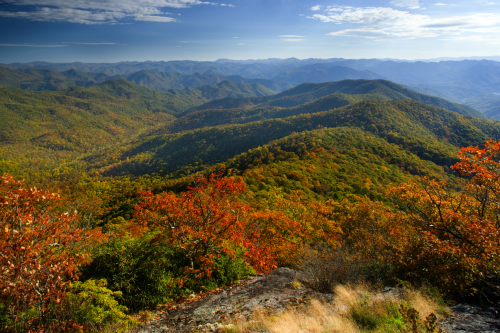
Ever since Dogwood Alliance launched our first corporate campaign in 2002, challenging office products giant Staples to green its paper purchasing, our work to transform the forest products industry and protect Southern forests has continued to use the power of the marketplace to support and reward pulp and paper companies that improve their environmental performance.
Brands like Office Depot, Office Max, Kentucky Fried Chicken and others were targets of Dogwood’s public campaigns that mobilizing thousands of people to demand these brands protect our Southern forests and do better with their paper purchasing.
Because those fun, loud and powerful public campaigns were so successful in changing the way the largest paper consumers purchase paper, we created a huge demand for more responsibly produced paper. Now Dogwood has a seat at the table with several of the large pulp and paper companies operating across the South. Today, Dogwood’s Paper Campaign works to protect Southern Forests and transform the forest products industry in a new way. Yes, we still work to make sure that the marketplace continues to reward environmental performance, but now we also work directly with the largest paper and forest products companies in the world to improve the way they buy wood from the forests of the South.
This past December, Dogwood held its annual meetings in with Georgia-Pacific (GP) in Atlanta and with International Paper (IP) here at Dogwood’s office in Asheville, NC. We reviewed the companies’ progress in implementing the agreements we reached to improve the way they do business in the woods.
A vision of products produced with wood and fiber from well-managed forests and not from our last Endangered Forests or at the expense of the conversion of our diverse natural forests to monoculture pine plantations. We’ve made important progress with GP mapping Endangered Forests and Special Areas across most of the South, assisting their procurement team in developing and implementing the supply chain tools to make sure those important forests don’t end up in GP products. We’re now moving forward with IP on mapping high conservation value forests in the Coastal Plain in the procurement footprint of their massive Southeastern NC Riegelwood mill. In addition, we have helped support IP’s Forestland Stewards program, which has made significant grants in support of habitat improvement and conservation in the Piney Woods, the Coastal Carolinas and the Cumberland Plateau.
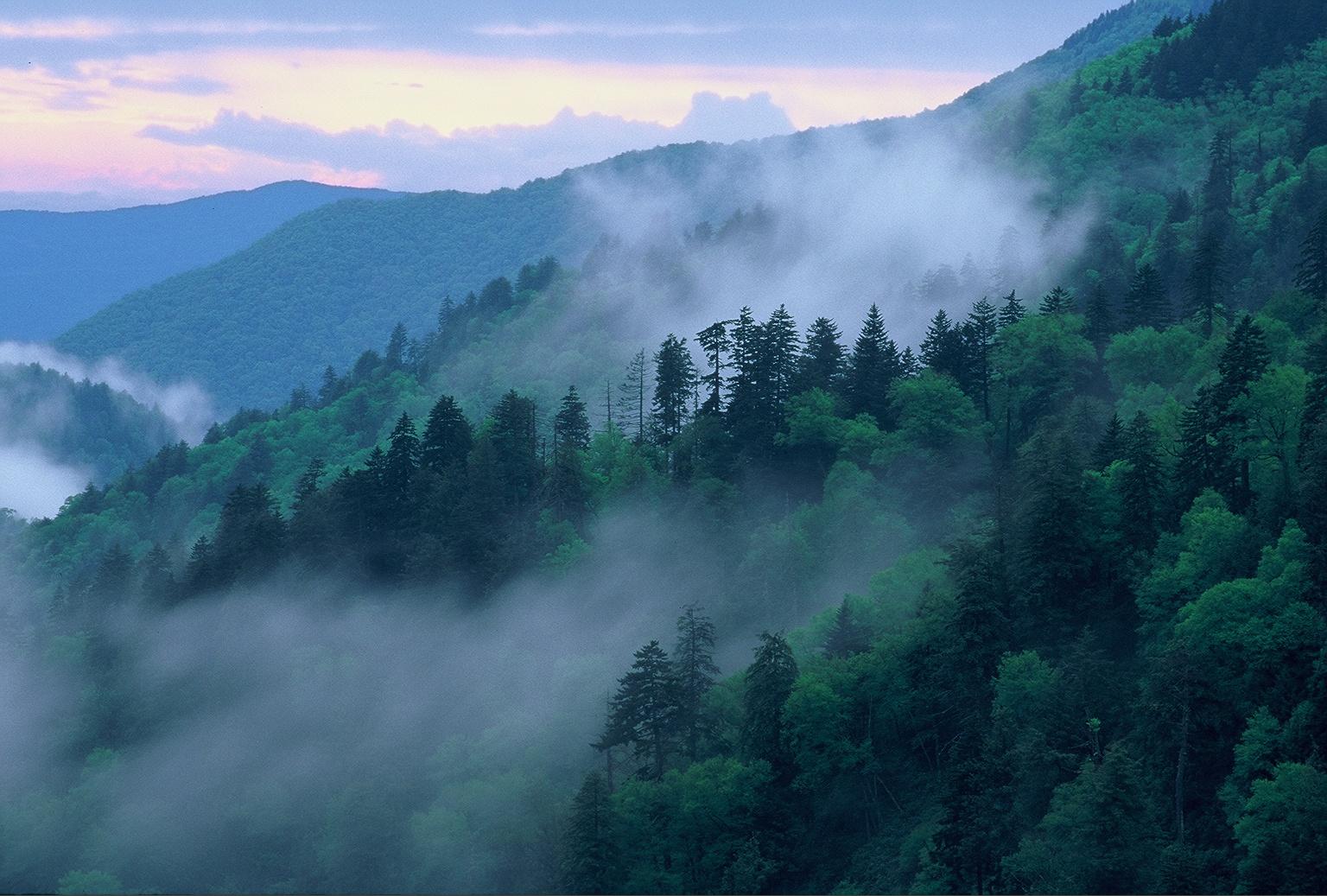 Finally, we have long advocated for Forest Stewardship Council (FSC) certification as the gold standard of responsible forest management. Through our Paper Campaign, we have pushed companies to adopt purchasing commitments that favor FSC and have worked with forest product companies to grow their FSC certified volumes. With our Carbon Canopy Project, we’ve worked to develop ecosystem service payments to landowners that sequester carbon in their forests through responsible FSC certified forest management. Key FSC components for protecting Southern forests include:
That advocacy work has been extremely effective, and the FSC has grown as has the number of companies relying on it. Now as industry’s role in the system continues to grow, Dogwood has directly engaged with FSC to ensure the system remains the gold standard and continues to provide important forest protection. In December, the FSC held its second US South Regional Meeting in Atlanta, and in a testament to the growth of the FSC marketplace the well-attended event was frankly a who’s who of our regions forest products economy.
This marks real progress from an industry that said that the FSC would never fly in the world’s largest pulp and paper producing region.
So the more things change here at Dogwood, the more things stay the same. We are continuing our campaign, our mission, our heart’s work, to protect Southern forests by transforming the pulp and paper industry. With your support over the years, we have found new and better ways to achieve our shared objectives. Now Dogwood is on the Board of Directors of the FSC US and on key working groups, ensuring strong standards and key forest protections. Face to face with the largest pulp and paper companies in the world on the 39th floor of a skyscraper in Atlanta and around the Dogwood conference table in Asheville working to protect forests! Keep watching for exciting progress and look for our new Green Grades report detailing environmental progress from GP, IP and Domtar coming soon.
Today, February 2nd is World Wetlands Day. At Dogwood Alliance, we’re taking today to specially recognize the beauty and value of our wetland forests. On this day in particular, we want to share the wonder of wetlands with all our friends and partners.

Awe-inspiring North Carolina Wetlands
Though many consider wetlands to be uninhabitable swamps, in truth, they are the beating heart of many vital ecosystems. They are biodiverse havens for countless species of animals and plants. They filter our water and air. They protect us from floods. They are homes to many Southern communities.
Wetlands also give us something more intangible; they give us tranquility and adventure. As lifeforms upon this planet and as human beings, these ancient forests take care of us in so many ways.
Dogwood has spent nearly two decades protecting wetland forests from industrial logging. We’ve protected millions of acres by changing the practices of some of the largest corporations in the world. Today we continue that fight against the bioenergy industry, which seeks to clearcut these precious wetland forests, ship them over to Europe and burn them for electricity all in the name of profit. We’re going to put a stop to this absurd excuse for “renewable energy”.
Though we should never forget what we’re fighting to protect, let’s take today to stand in awe of these powerful, majestic wetland forests, to honor all that they do for us and to make a pledge to do our part to preserve them.


 Donate