


On the evening of October 23rd, the European Union Parliament’s Environmental Committee met to vote on the Renewable Energy Directive. When it came time to determine the future of subsidies for the continued burning of whole trees for energy, members of European Parliament sided with the biomass industry and ignored the conservation community, science, and, ultimately, the people who will suffer as a result of this vote.
The outcome of the environmental committee’s RED II vote fails the climate, forest conservation, and, most importantly, rural and low-income communities in the US South who will now face real-world and all too familiar consequences from industrial extraction and a changing climate.
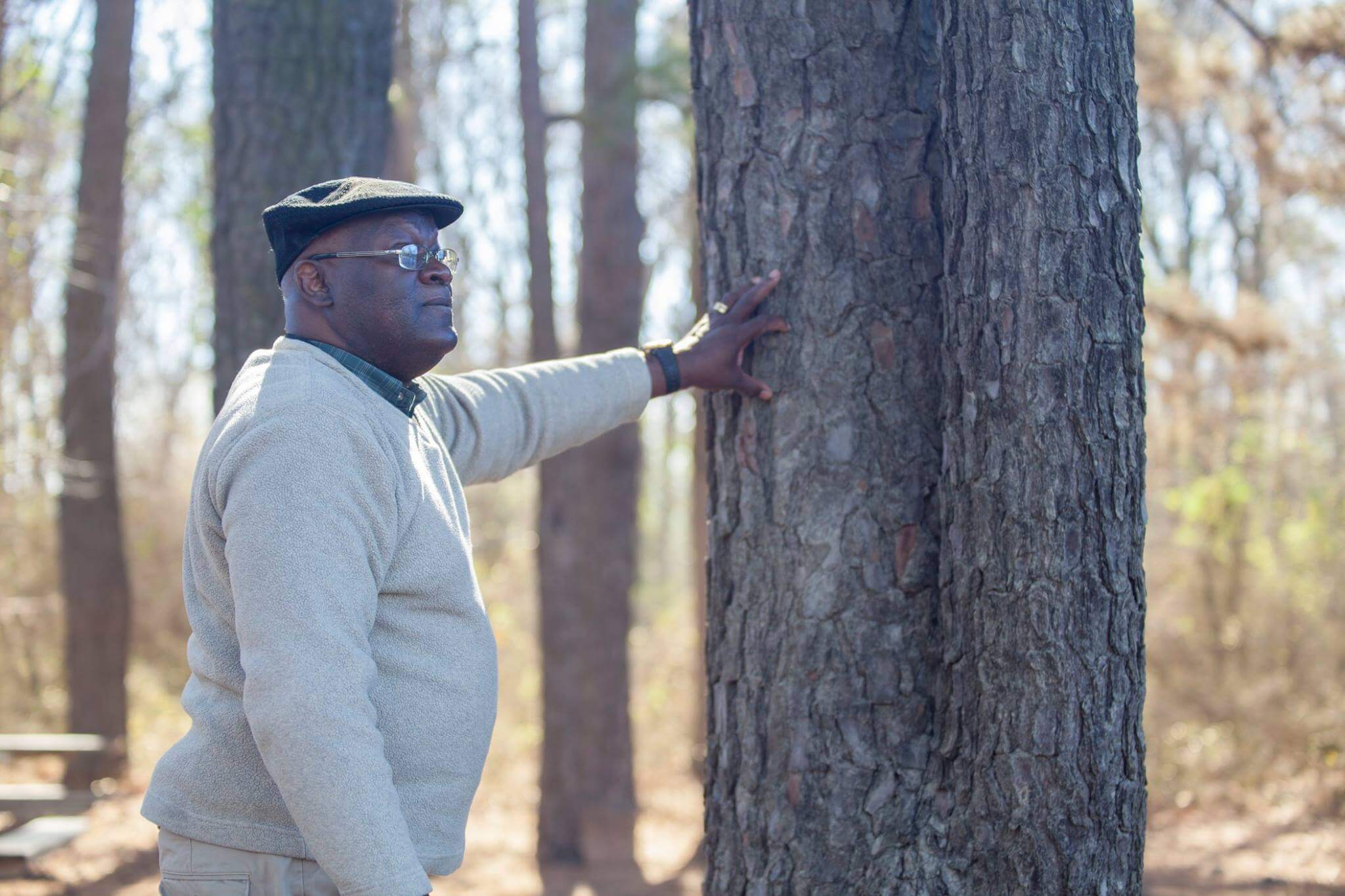
In the Southern US, our forests are biologically rich and the region where a vast majority of European wood pellet imports come from was recently named the 36th global biodiversity hotspot. Southerners can tell you that the forests logged for wood pellet production are at the heart of our region’s most valuable natural resources, providing flood protection as well as clean air and water to people all throughout the South. If left standing, Southern forests help fight climate change by serving as massive carbon sinks and serve as our best defense against the worst impacts of climate change, including flooding, storm surge, and sea level rise. Yet, the European Parliament opened the door to increased exploitation of Southern forests and logging by subsidizing the biomass industry to cut down these natural forests and burn them in massive power stations. They’re saying that our forests are only valuable when they are logged. This is the exact opposite of what science, climate policy, and efforts to maintain biodiversity tell us.

In the flurry of climate and forest discussions and, ultimately, the vote on the Renewable Energy Directive II, there was a gaping hole among conversations: Why weren’t the communities and people impacted by the wood pellet industry being considered?
The EU Environmental Committee is literally separated by an entire ocean from the forests and communities that they are signing a death warrant for. Since the dawn of industrialization, extraction of our native forests has been carried out in this unsustainable way for far too long. This system hurts communities on the ground and the decision-makers never have to face the consequences of their actions.

The wood pellet industry is part of the extraction economy and is an environmental justice foe. Almost 75% of mills in the Carolinas are located within a 2-mile radius of areas that are non-white and have average median incomes that are lower than the state average. These mills are likely to contribute to environmental injustice. Consider, for instance, the most recent proposed facility from wood pellet giant Enviva in Richmond County, NC.
Richmond County is already suffering from the negative impacts of several other polluting industries, including coal ash transportation, Duke Energy turbines, a Perdue chicken plant, and is the proposed connecting location for the Atlantic Coast Pipeline. According to the EPA’s EJSCREEN tool, the communities in Richmond County are in the 70-90th percentile for air toxics cancer risk, diesel particulate matter, and traffic proximity.
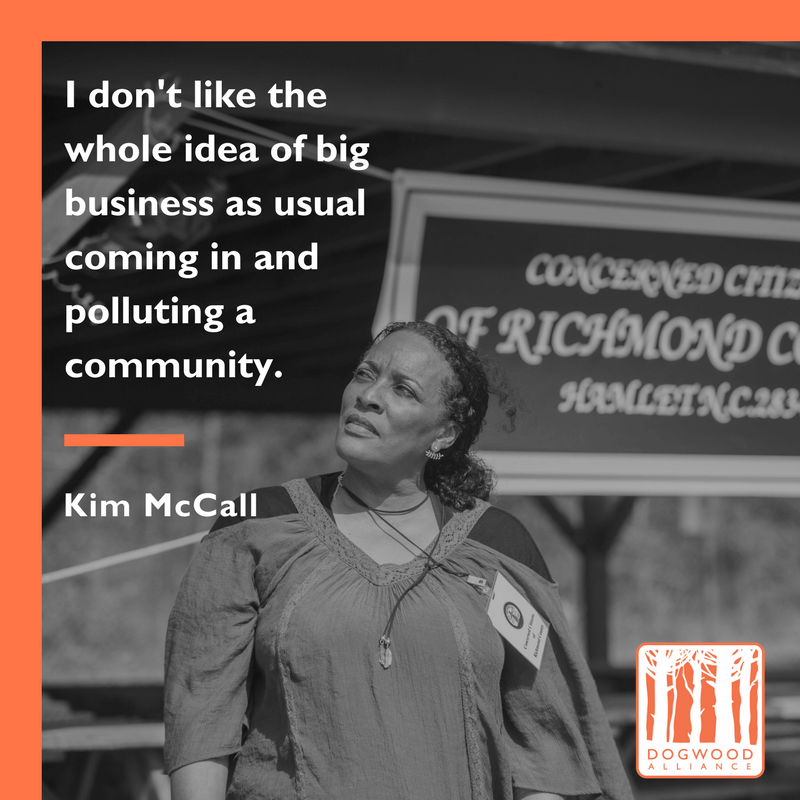
To achieve social and environmental justice, we must strive for major change. We can do this by putting the communities, people, and the faces of those impacted by policies in front of decision-makers. Dogwood Alliance is committed to a future that values and protects the rights of communities to access the resources they need to live happy and healthy lives.

The forest defender movement calls not only for lasting protection for our unique forests but also for a shift from the natural resource extraction economy that has suppressed Southern communities and economies for so long. The forest defender movement calls not only for votes on renewable energy directives that recognize science, but for system change to support forests, climate, and the communities that rely on them. As long as “business as usual” is the golden child among politicians and corporations, we will never realize this shift.
The vote clearly exhibited unequal colonial, economic, and social power relations. The biomass industry’s crooked message and short-sighted science won out over community and climate justice. Now is the time to shift power back to our people, uplift community-based alternatives, and follow the lead of people on the frontlines. For our movement to achieve forest protection and successfully stop the worst impacts of climate change, we must focus on the voices of the communities most impacted by extractive and unjust corporate behavior. Only then will our policies truly reflect the preservation and valuation of the natural world, native culture, and sustainable economies.
Before the Renewable Energy Directive is finalized by the rest of the EU Parliament and individual member states this winter, they must do the right thing and stand for our forests and communities. Their goals of climate change mitigation and forest protection will not be achieved otherwise.
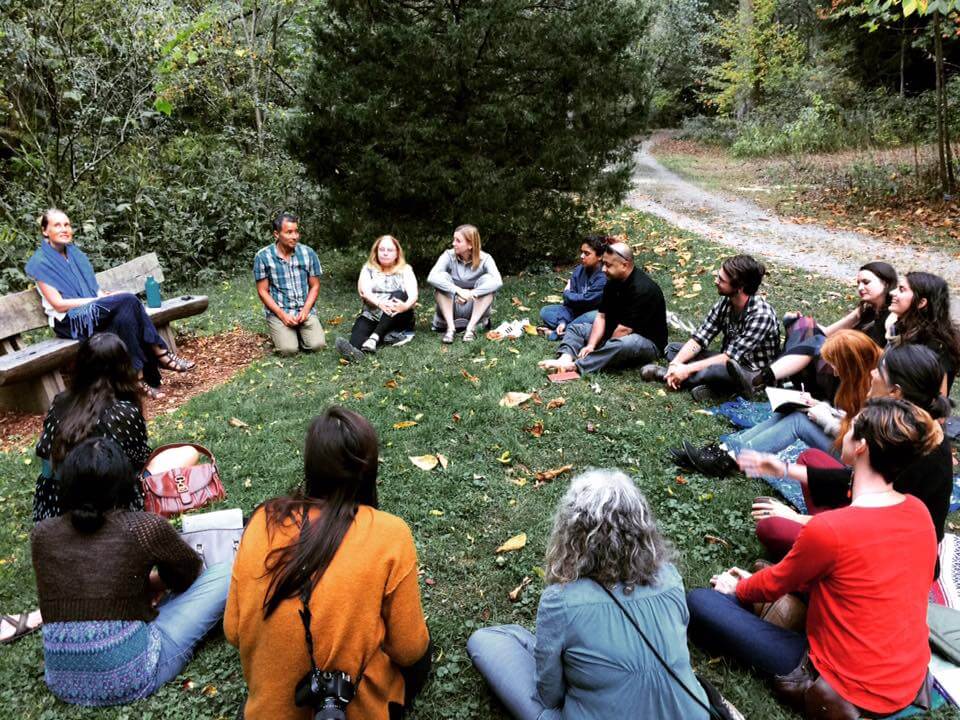
The forests are an important part of the southern Appalachian Mountains, but according to many indigenous traditions, they hold more significance than just the resources they provide.
“When the forests are gone, we lose more than just the oxygen they release, we lose more than just the resources they provide, we lose the wisdom of the trees,” said Erin Everett, a weather worker and tradition-holder in the Nahua lineage in Mexico.
Partnered with the Dogwood Alliance, an Asheville-based forest conservation group, Everett led an event titled “The Stories Trees Tell” in the UNC Asheville Botanical Gardens on Oct. 13. Participants selected a tree in the gardens, spent time meditating and listening to what it had to say then gathered together to share their observations.
“When we were little we saw magic in everything, we saw sacredness in everything, but we’ve been kind of talked out of that as we grow older,” Everett said. “In my experience of the indigenous understandings and cultures that I’ve been exposed to, children would be encouraged. Sometimes their connection with the world around them can help adults. To me, the thing I love about working with indigenous wisdom and bringing that to modern people is that it really gives us something to do to help build that relationship back again.”
“Would it hurt to just go back to some of those ways, not giving up our technology, not giving up our cars but being grateful for those things and being grateful for the world around us who has provided us with so much electricity and all these comforts that we have in modern life?” Everett asked. “If we just add gratefulness and gratitude to the equation, there’s balance.”
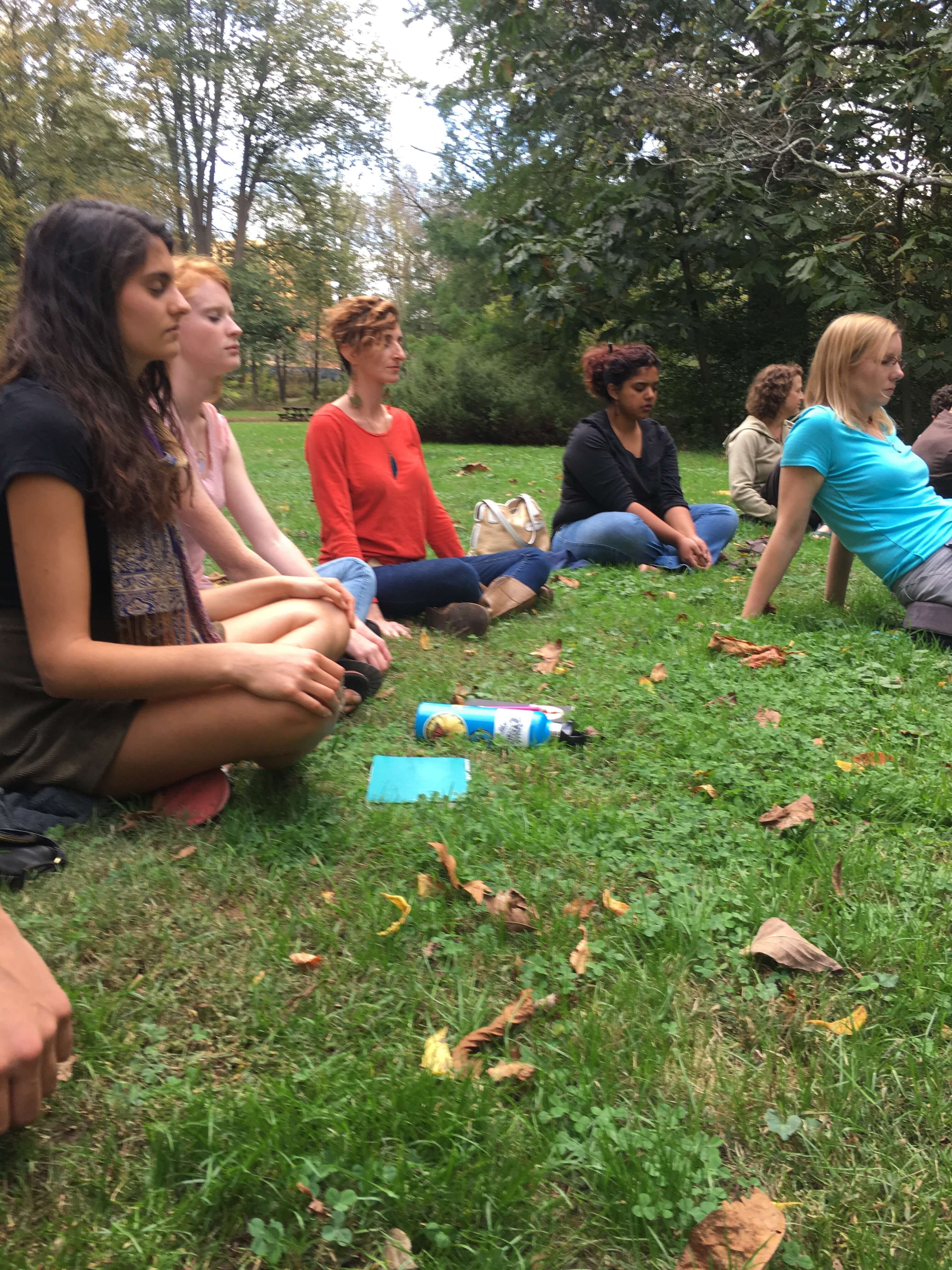
Following individual time with their trees, participants gathered to share their findings with one another.
“What sacred witnesses trees are, how many joyful moments they get to see,” said Ash Wahl, an Asheville resident who said she frequently talks to trees.
Wahl hopes to do a similar event with children through her organization the Ash Tree Faery.
“I found it really amazing the things that you can learn by not putting it in a category,” said Alyssa Melton, a junior ecology and environmental biology student. “I just felt really connected to it.”
“The Dogwood Alliance was honored to have Erin,” said Kimala Luna, a representative of the organization. “She always finds a way to inspire others and instill the mission of forest protection.”
Everett said she hopes events like these can inspire forest protection by helping people recognize the significance of nature.
“It’s like we’re falling asleep in the illusion of our own independence, that human beings don’t need anything else,” Everett said. “But we’re going to find out, and we are finding out, that we do.”
“I really enjoy helping modern people connect with indigenous traditional wisdom and apply it to modern life in a way that’s really practical and sustainable,” Everett said. “It’s really the most practical way of living, the way these people live and to me it’s the ultimate sustainability knowing how to make relationships with the trees and forests and with nature, like we did tonight.”
This year, Terrapin designated Dogwood as the beneficiary for their annual festival in Athens, GA.
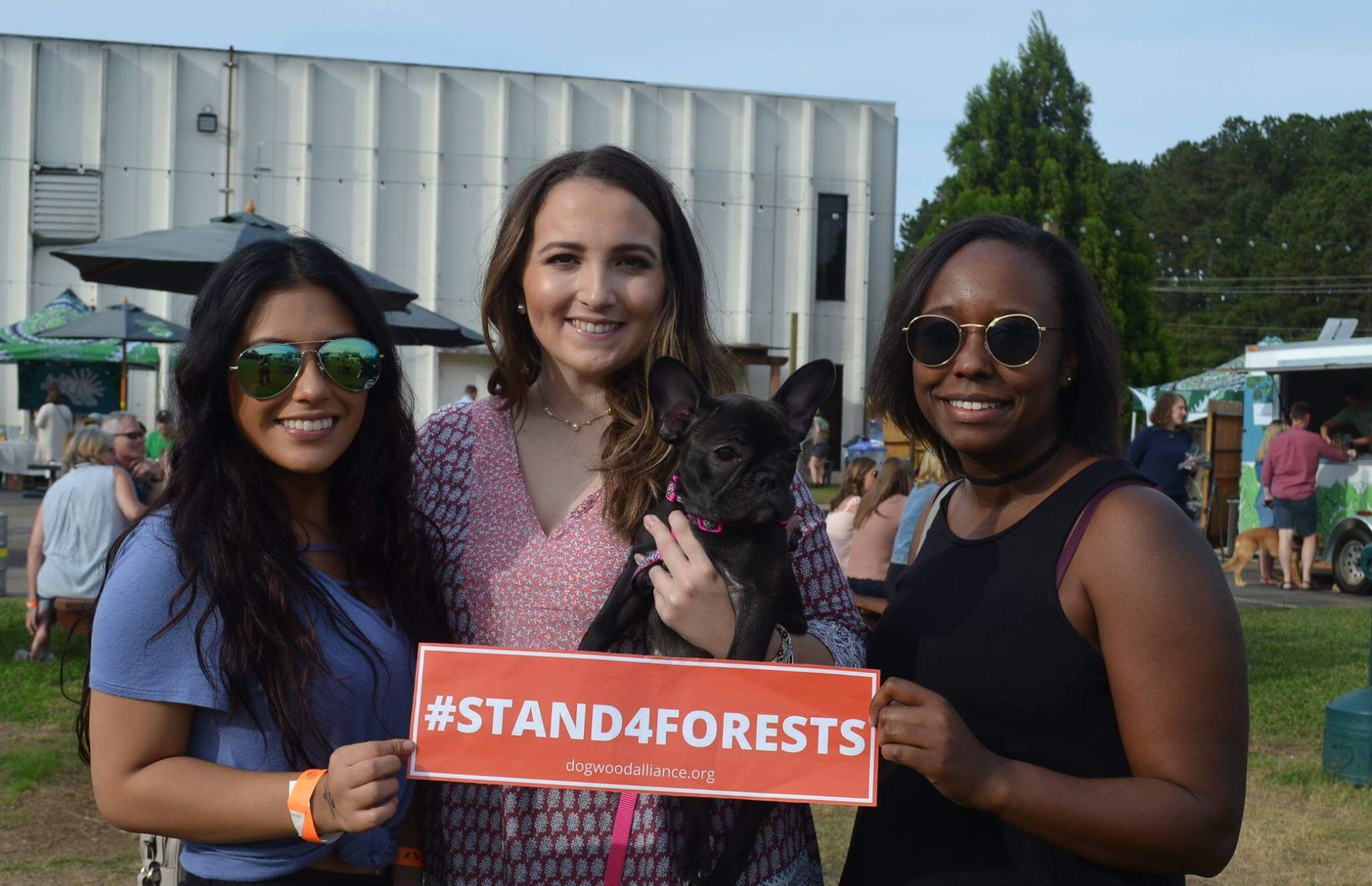
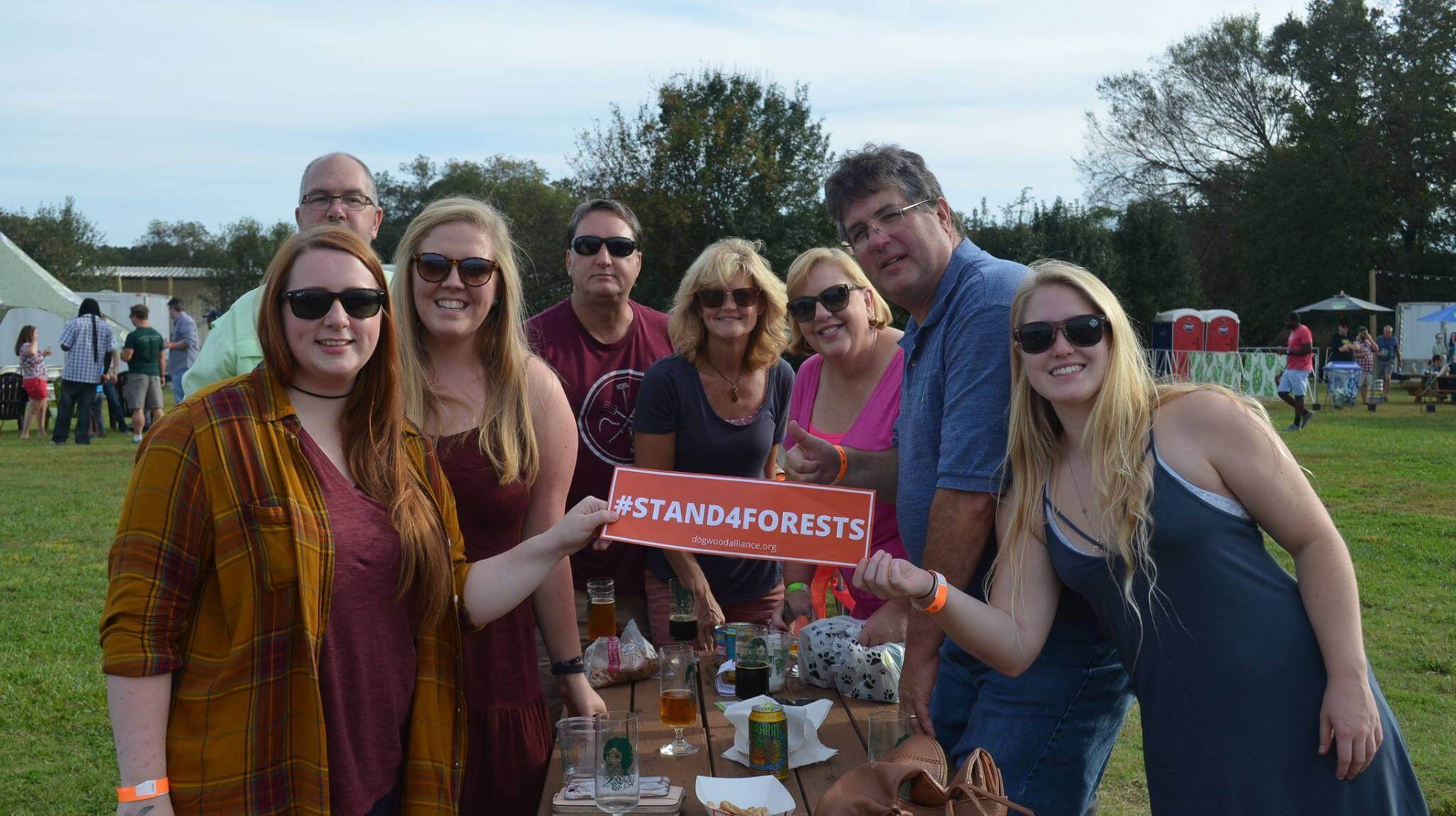
Folks were not just excited for the festival, but they were also excited to Stand4Forests with their photo petitions!
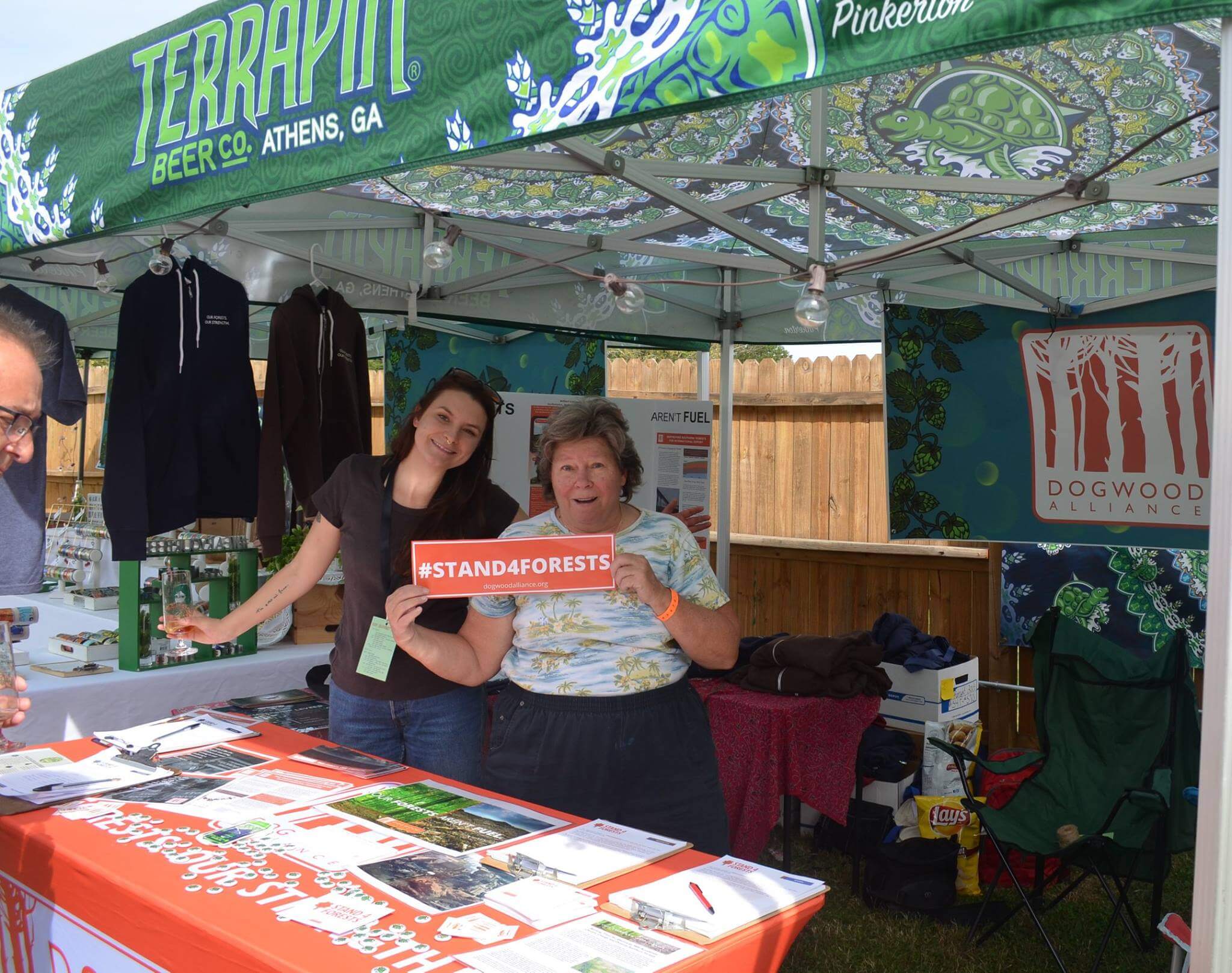
We also had the pleasure of teaming up with our Georgia State Coordinator, Vicki Weeks.
2017 has been a record breaking year for natural disasters that have devastated communities across the Southern US and Puerto Rico. The season began with Hurricane Harvey that devastated Houston and hit close to home. We had record breaking storm after storm all the way through to Hurricane Maria and Nate which battered Puerto Rico and Mississippi. Our hearts are with the people who have been most directly impacted and we sincerely hope all that can and should be done is in order to ensure each and every one of them is respected and taken care of.
Today is the UN sponsored International Day of Disaster Reduction (IDDR). Nations and communities around the world are highlighting ways to better prepare for and prevent the most calamitous and disastrous impacts of natural disasters.
As we have seen this hurricane season, long-term degradation and neglect of natural systems have taken a major toll on our coastal communities.

For our part, we would like to forward what we consider to be our best defense against these disasters – forests.
Excess water drains better where there are healthy, intact, large areas of mature forests. When we keep forests standing along our riverbanks, there’s less erosion and less flooding inland. And as the flooding recedes, trees help to clean our drinking water.
For example, in the past three years the forests of the coastal South have become the largest source of wood pellet exports to Europe, where they are burned in power stations to generate electricity as a “climate friendly” alternative to coal. Logging, past and present, has significantly degraded US forests’ disaster-reducing capabilities, and a new path must forward must be created in order to restore US forests for these benefits.
On the IDDR last year, local politicians from across the region called on the European Union to stop subsidizing the destruction of Southern forests. Our favorite quote came from James Holmes, Chatham County, GA Commissioner:
“Forests are one of our best defenses against natural disasters. Whether it’s flooding, landslides, storm surges, droughts, or hurricanes, forests play a vital role in the protection of lives and livelihoods. No matter what type of storm threatens our local communities, allowing natural forests to remain intact is a cost-effective investment and helps save the lives of our citizens.”
We could not more wholeheartedly agree! That is why we joined with landowners, community groups, conservation organizations, and more to launch the Wetland Forest Initiative earlier this year. This ambitious conservation initiative, focused on conserving, restoring and improving wetland forests, which span 35 million acres across 14 Southern states, represents a unified effort to secure a safer, healthier and more economically just and prosperous future for the rural South.
The Wetland Forest Initiative is as much about protecting people as it is about protecting wildlife and birds. It’s as much about saving taxpayer money as it is about saving species. It’s as much about safeguarding our communities from natural disasters as it is about improving the economic conditions for rural southerners and creating more options for landowners. It’s as much about maintaining the diversity within the forest as it is about embracing the wisdom in the diversity of people that define the Southern culture. And, it’s as much about the here and now as it is about the legacy that we leave for future generations.
As storms become more frequent and intense, coastal communities need to strengthen defenses not weaken them. Our Southern forests provide vital protection from extreme weather and we cannot afford to lose any more. To ensure our economic prosperity, to protect our health and children, to ensure our security and safety, and to protect our wildlife we need to act now to keep natural forests intact.
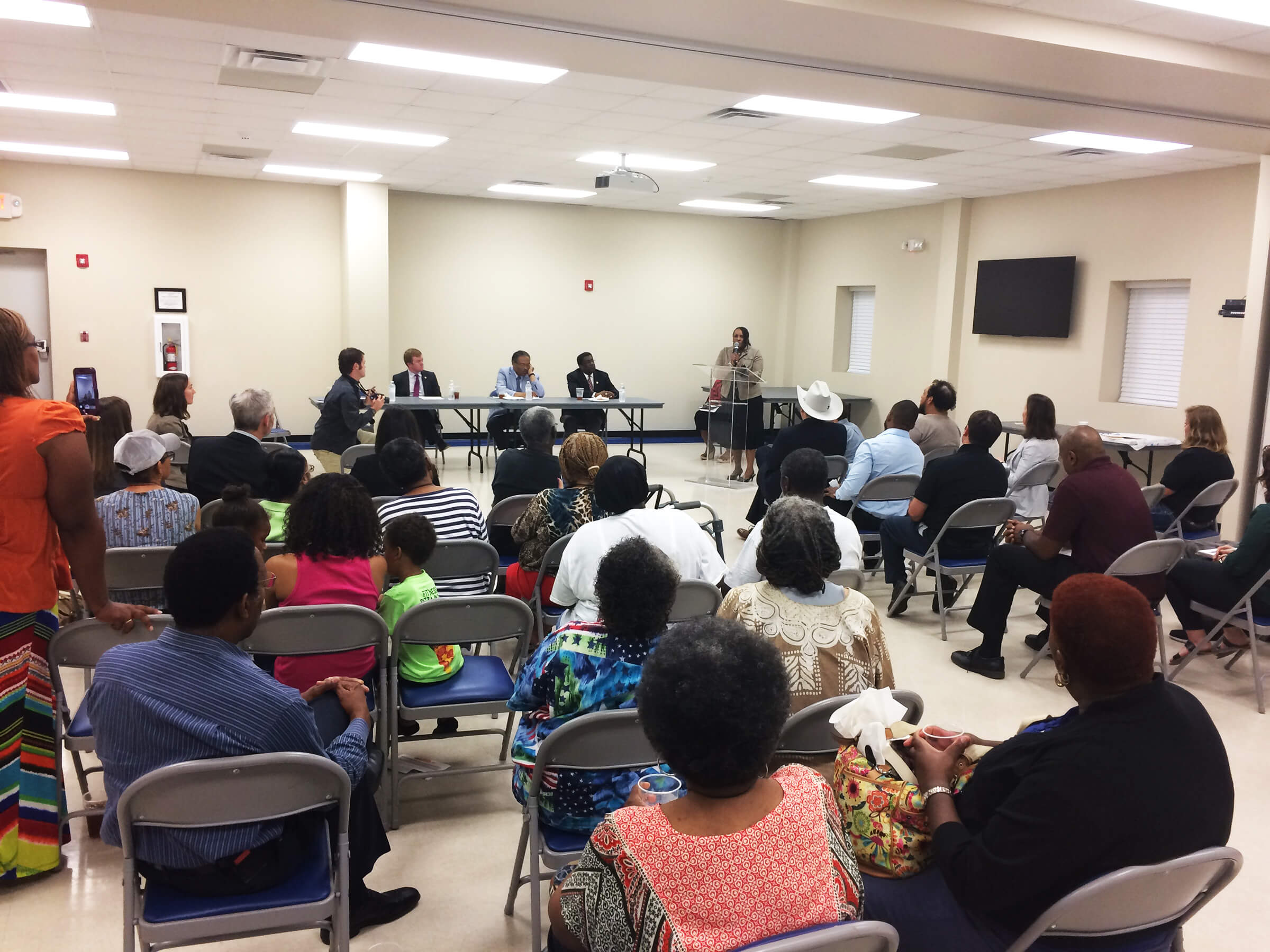
On September 26th, representatives from the North Carolina Legislative Black Caucus attended a Listening Panel in Dobbins Heights to hear comments on the proposed Enviva Wood Pellet Facility. Representative Garland Pierce (District 48), Representative Kelly Alexander (District 107), and Legislative Aide Michael Wilson (Representative Chaz Beasley, District 92) attended the Listening Panel.
Rep. Garland Pierce, whose constituents in Dobbins Heights will be directly affected by the wood pellet facility, said:
“The voices of citizens in rural counties, like in my district, need to be listened to locally and on the state level.”
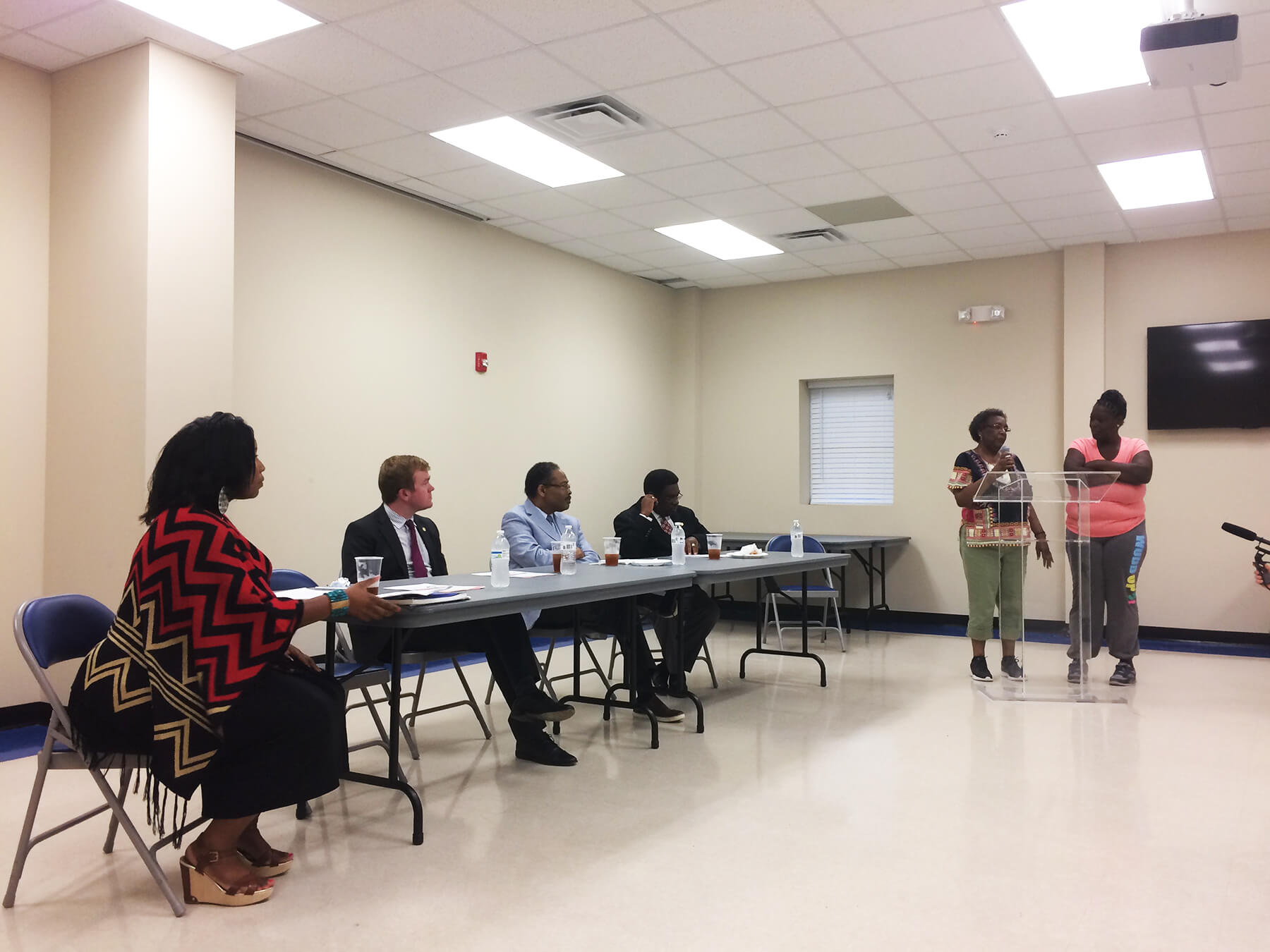
Debbie Short & Nora Jones standing up for Richmond County
When facilitator and Climate Justice Activist Nakisa Glover asked the room of approximately 50 people how many were from Dobbins Heights, nearly all of the room raised their hand. When asked how many had suffered from or knew someone who suffered from cancer or asthma, once more, nearly all in the room raised their hand.
In the one hour period that was given for public comment, 10 Richmond County residents gave comment, and 8 comments came from outside of the community. Of those comments, 12 were in opposition to Enviva, and 5 were in favor, which included 4 comments from Enviva representatives.
Most comments alluded to the health concerns people have with the plant coming in. Brenda David, a Richmond County resident and mother, delivered a letter to be read to the Commissioners:
“I have a lot of family here in Dobbins Heights, my children play at the park as well as play in their grandmother’s yard. The health issues from this industry can cause big concerns for me, not only for my kids and family but for anyone who has to breath in this pollution.”
Kim McCall, a member of Concerned Citizens of Richmond County, speaks out against Enviva
Richmond County resident Tavares Bostic said:
“When big companies come in, they don’t see the people, they don’t see us. They see dollars and cents.”
Perhaps the biggest concern of local residents was the fact that their community was never given a public hearing. In 2015, under the McCrory Administration, NC DEQ issued an air quality permit for Enviva without giving public notice, resulting in a lawsuit by Southern Environmental Law Center on behalf of the Concerned Citizens or Richmond County.
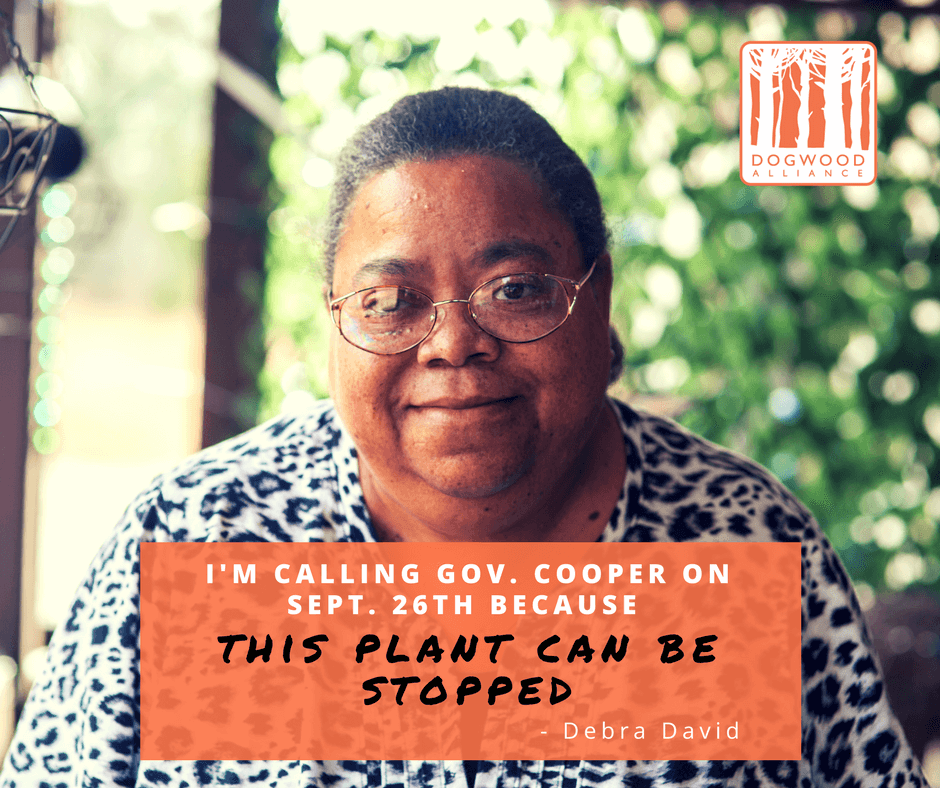
“We deserve a chance to know,” said Dobbins Heights Resident Debra David.

Concerned Citizens of Richmond County member, Debra David, speaks out for her community
Southern forests and communities are in danger. Enviva, the world’s largest pellet producer, wants to build its fourth wood pellet facility in the state of NC and clearcut nearly 50 acres of forest every day. The community that Enviva wants to build in, Richmond County, doesn’t want the facility and are raising their voices to stop it.

Dozens of Southern and even national organizations have signed onto a lettercalling on the Governor to revoke the permit, and last week over 600 people picked up their phones to personally call the Governor and shout the message louder, “Protect forests and communities: Stop Enviva!”Kim McCall, a community member of Concerned Citizens of Richmond County, explained that she called Governor Cooper’s office because: “It’s about time somebody stood up.”
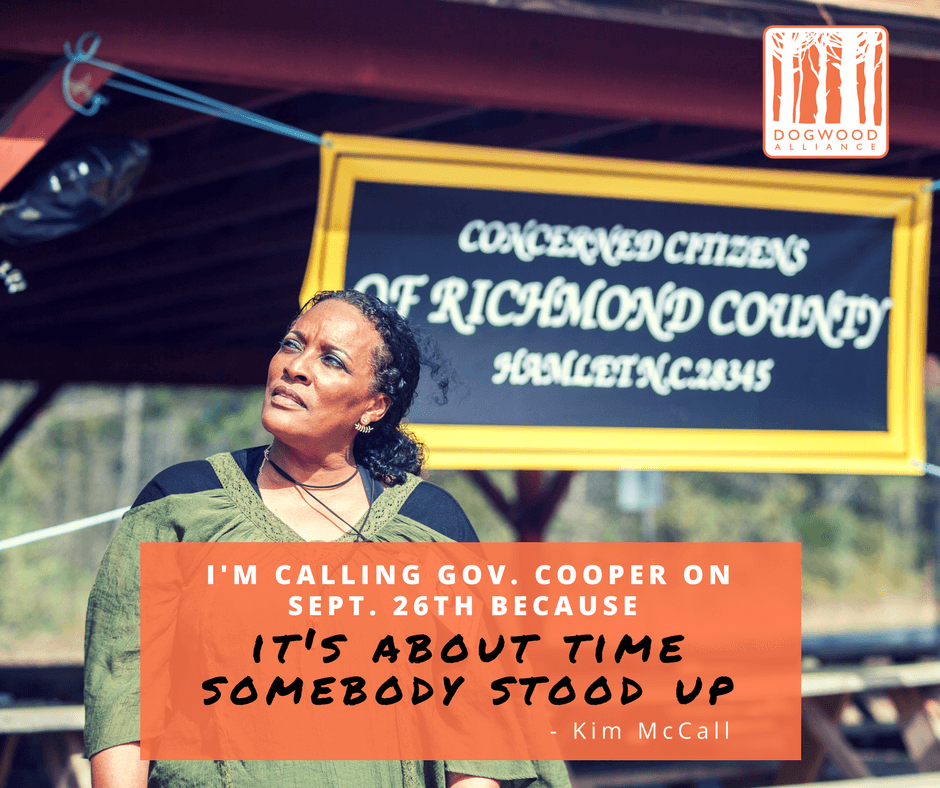
This couldn’t be more true. As Cary Rodgers, pastor for Pathway to Peace Ministries and BREDL organizer puts it, “We have to fight this for our children. We have to fight this for the future. We have to fight this to save our health.” In 2016, Richmond County was ranked 90 out of 100 counties in North Carolina for health outcomes.
Wood pellet facilities emit air pollutants directly and indirectly that are harmful to human health. One of these air pollutants, fine particulate matter (PM2.5), can cause numerous health issues, most notably adverse respiratory and cardiovascular health effects. In 2010, the American Heart Association deemed particulate matter a modifiable factor in heart disease and a key contributor to premature deaths (Brook et al. 2010). In 2016, the American Lung Association stated it does not support biomass combustion for energy generation because of the adverse health effects from air pollutants emitted during production (American Lung Association, 2016).

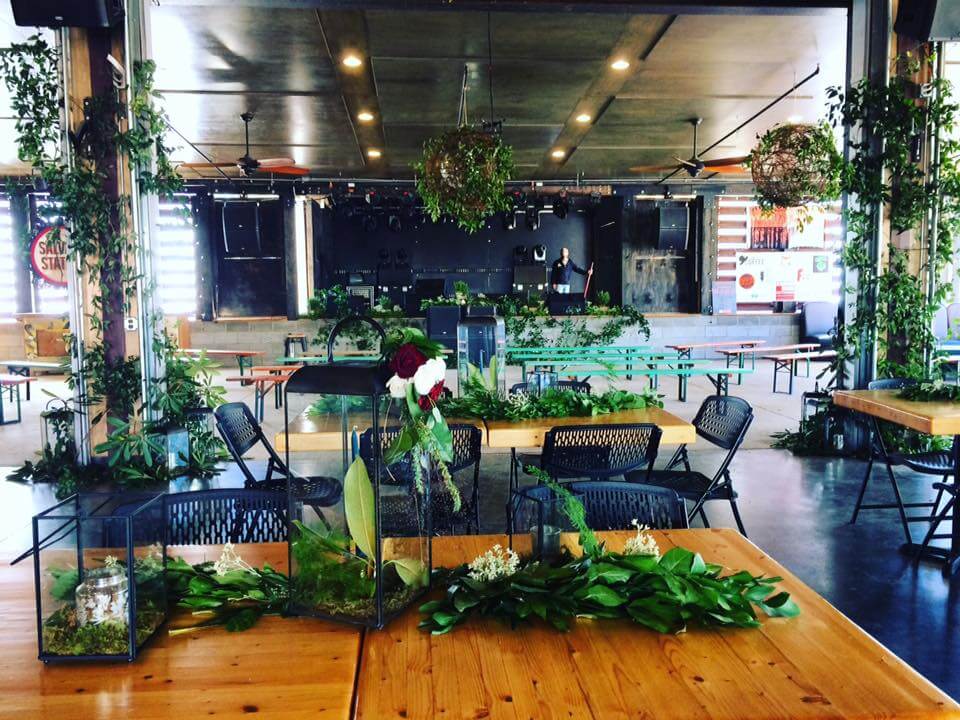
Dogwood Alliance’s 2nd Annual Woods & Wilds Storytelling and Music Festival at the Salvage Station was magical!
The beautiful decorations from Flora set the scene for us to be transported to the wild places inside ourselves.
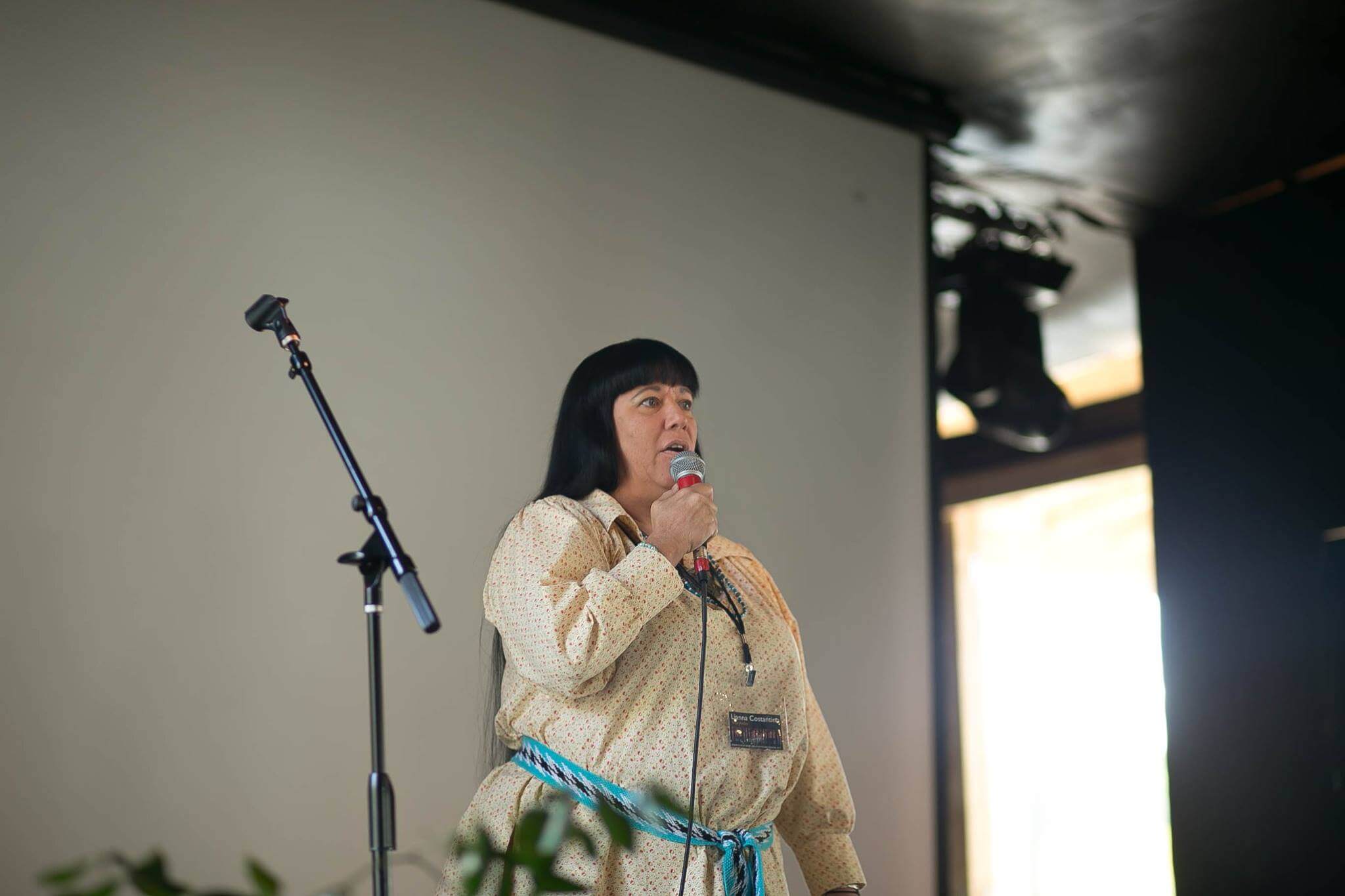
Storytellers like Lianna Costantino of the Cherokee Nation of Oklahoma moved us. She told us of the birth of disease and medicine, of the trauma of the Cherokee people past down across the generations, and of her experience walking the Trail of Tears with an Elder.
To ground and center us, we took outdoor yoga classes with Inner Wild Yoga and Inspired Change Yoga.

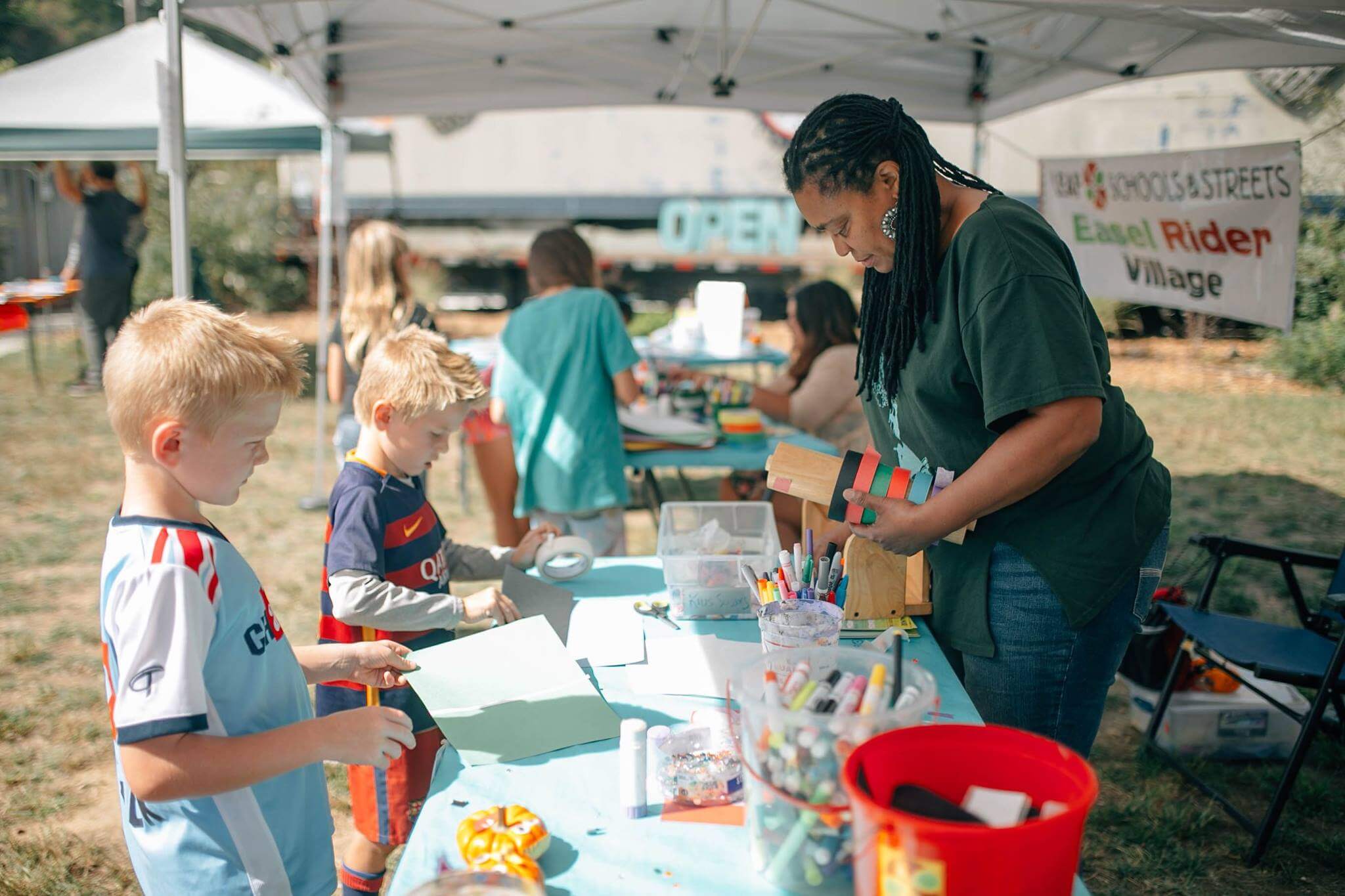
Our partners from LEAF Community Arts infused the festival with an artistic spirit by working with kids and adults alike to create.
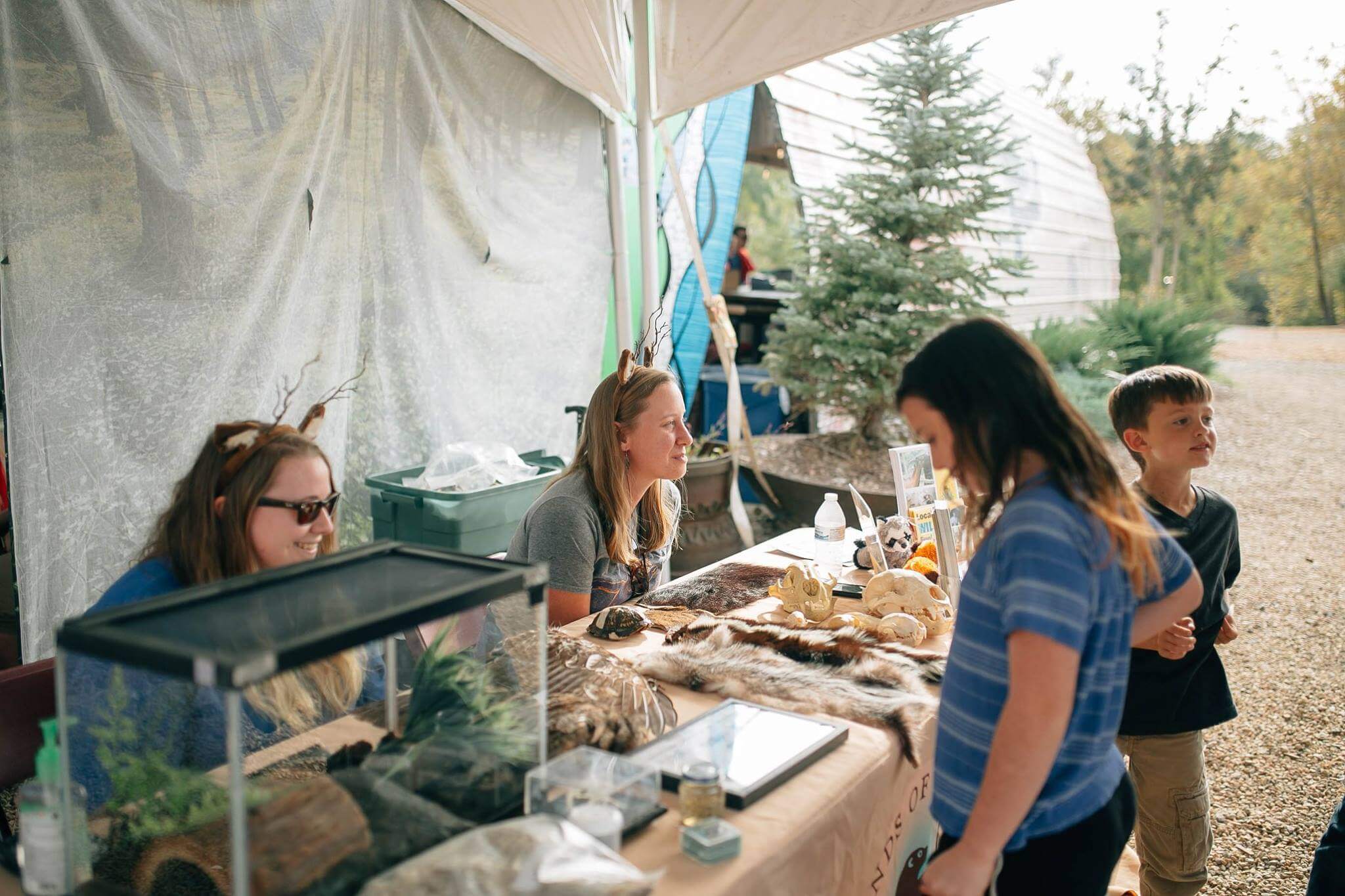
Our friends at WNC Nature Center brought along their Ambassa-Tortoise and shared their knowledge and experiences of the creatures who inhabit our Southern forests.
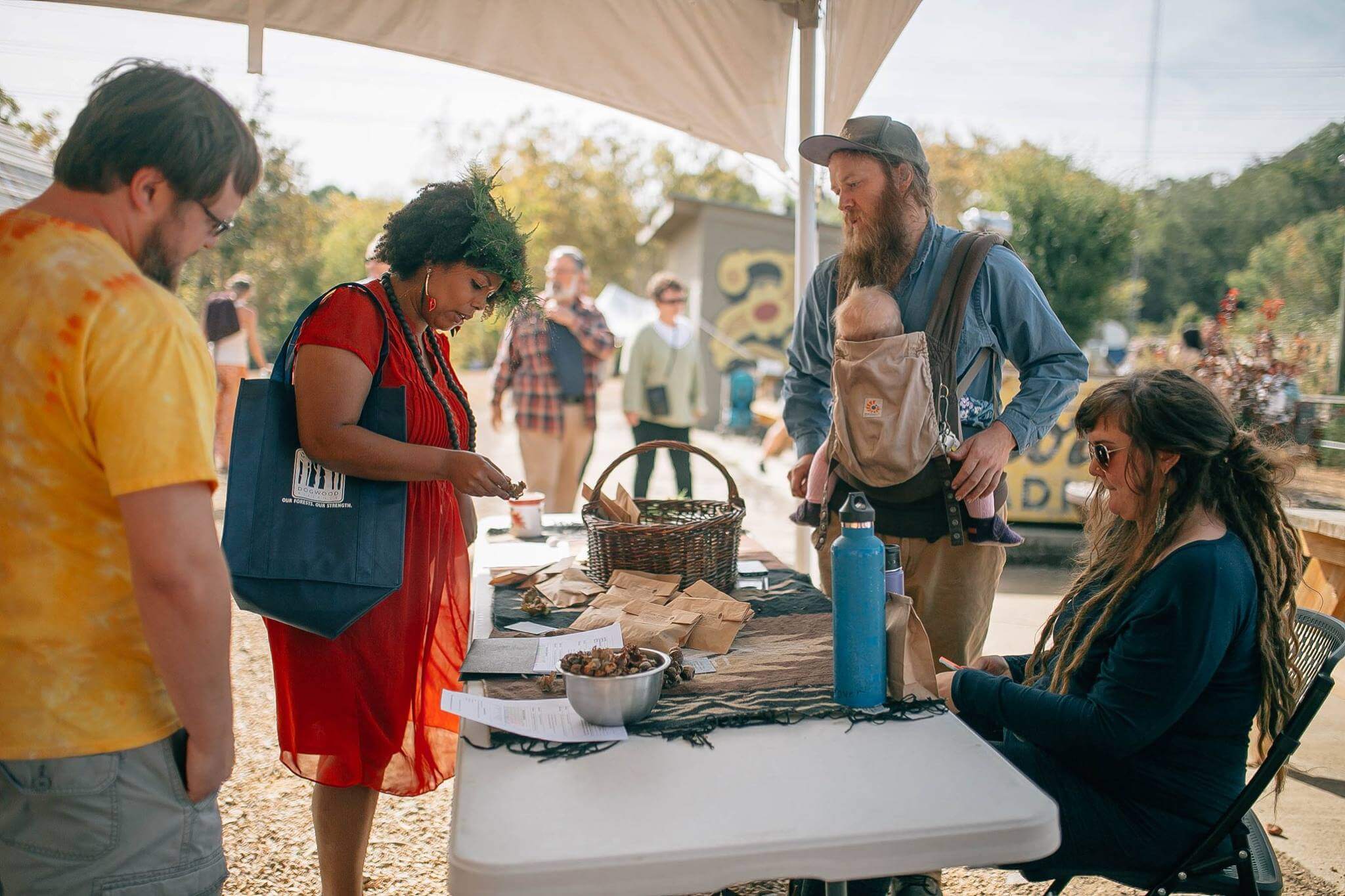
We built up quite an appetite and munched on the cookies made from foraged acorns that Glorious Forest provided free of charge.
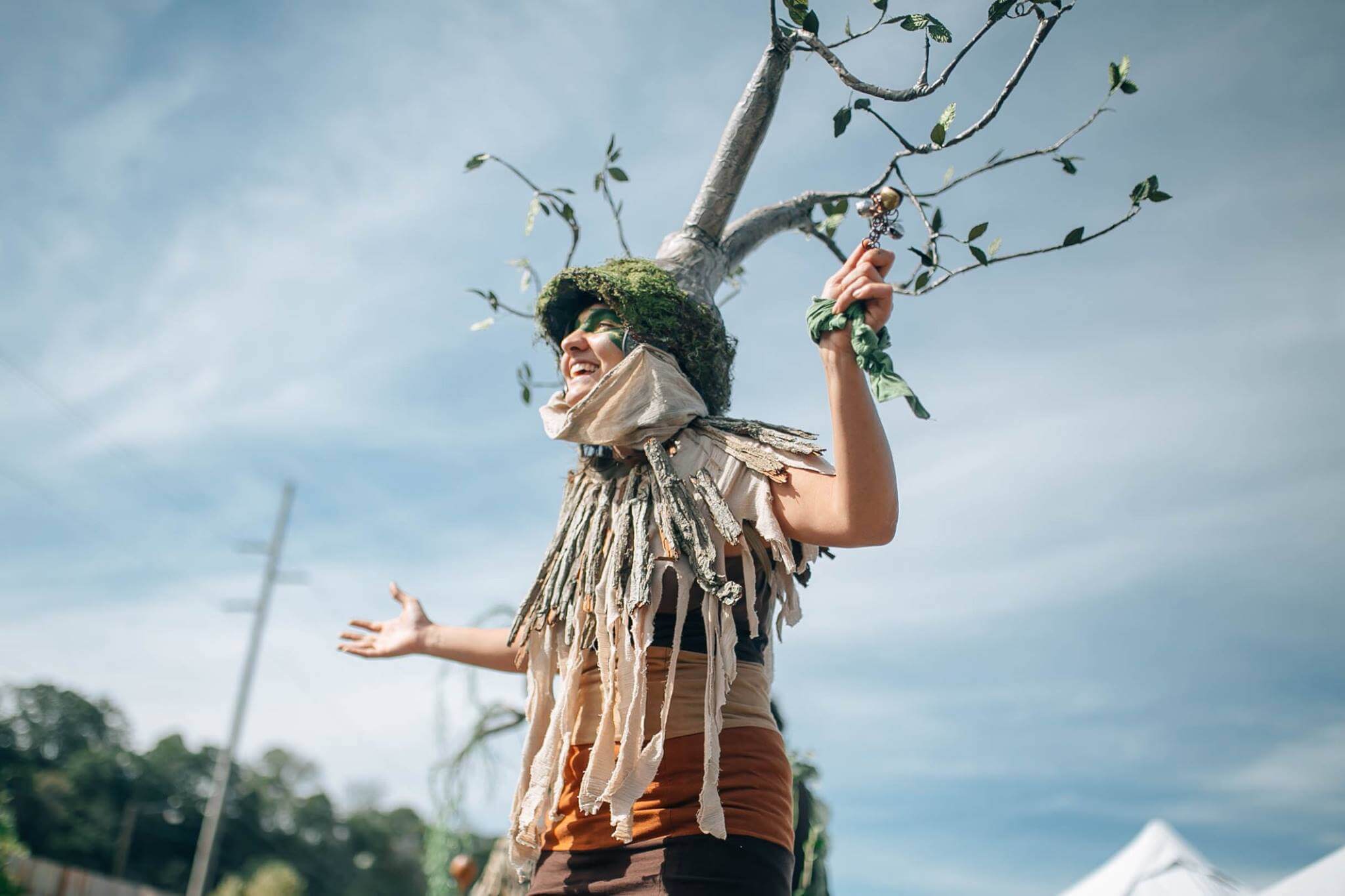
The Faerie Kin with their stiltwalkers, winged creatures, and music makers brought the magic of the forest to life with their performance!
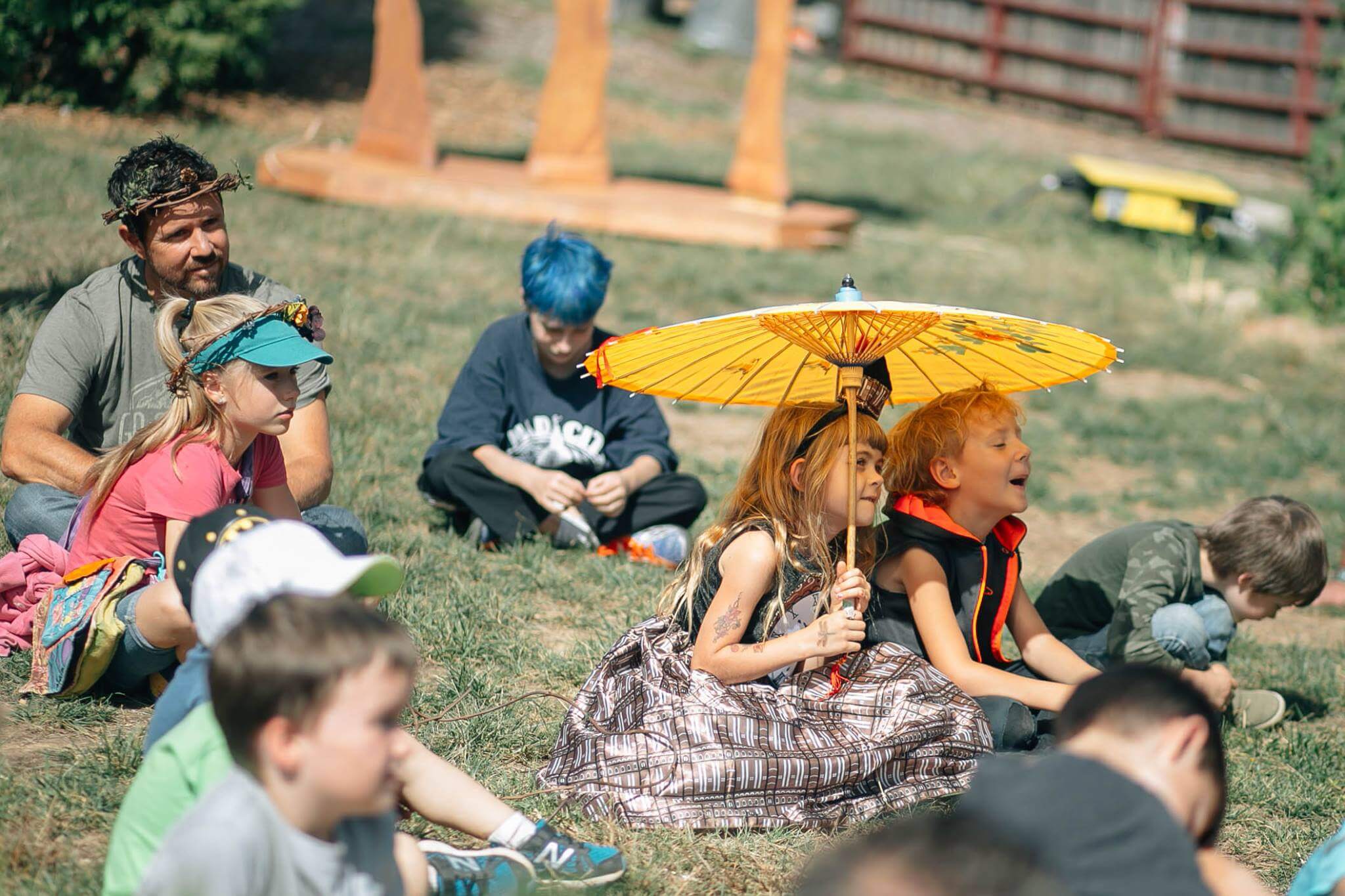
We enjoyed the beautiful weather and each other’s company for many hours.
We also got down with unforgettable live music! The bluegrass, Americana band Sherri Lynn & Mountain Friends kicked off the performances.

The ensemble band Dub Kartel added a festive reggae flavor to the night.
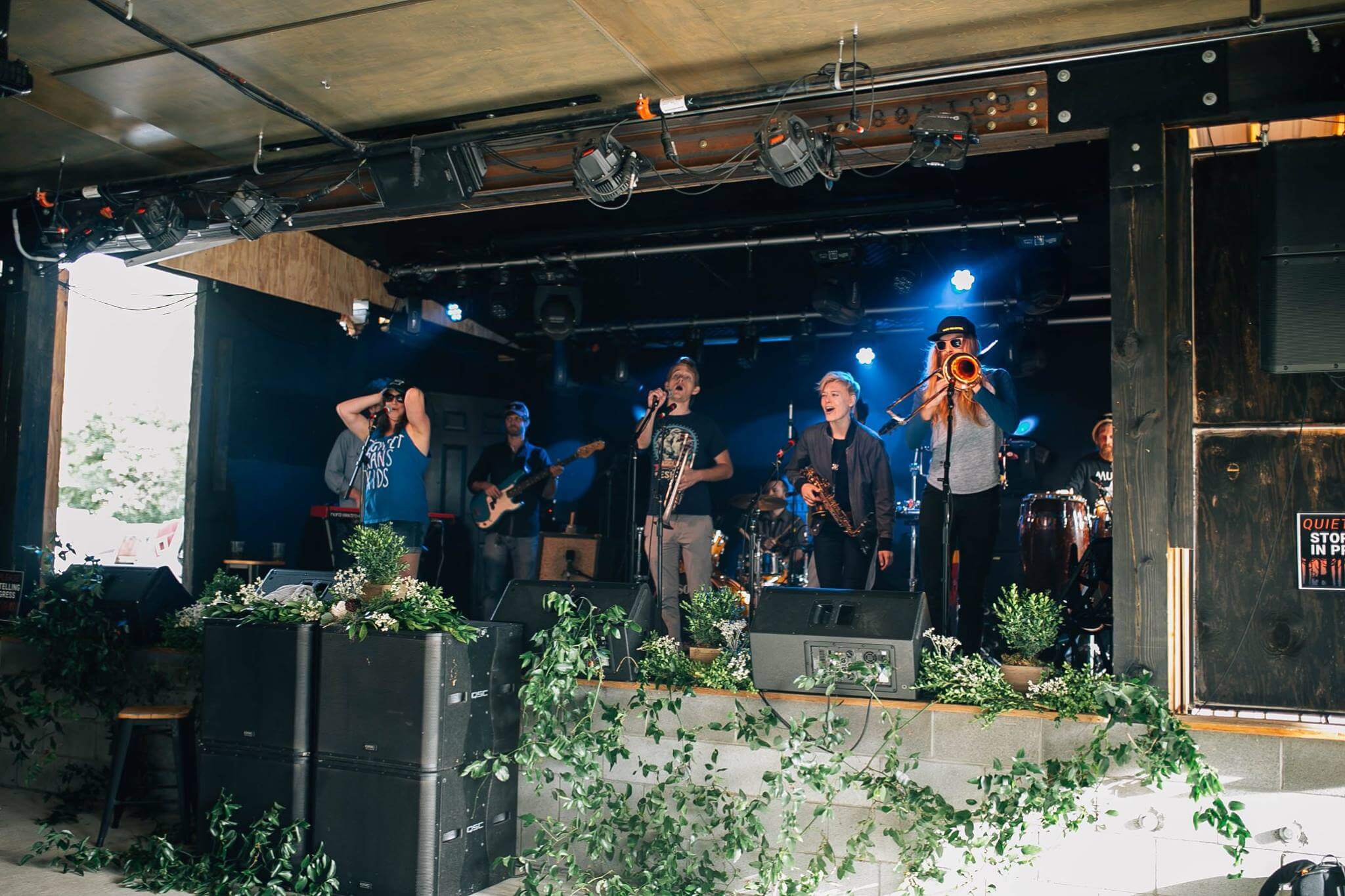
Then The Threadbare Skivvies alternately crooned to us with soulful lyrics and got us stomping and clapping with their banjo playing and funky beats.
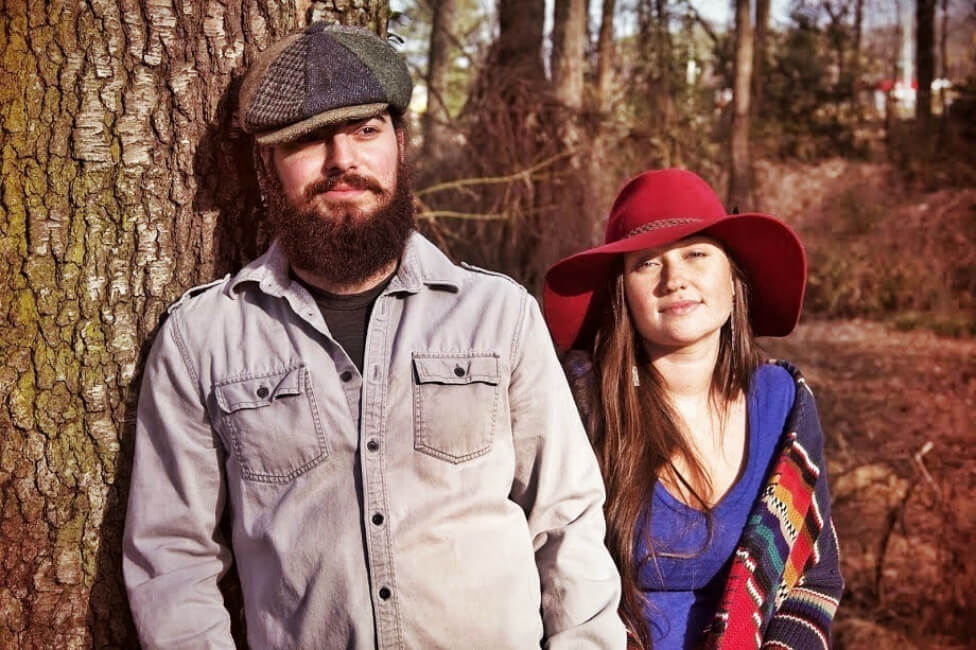
The Get Right Band got us to our feet with their rock-infused, catchy harmonies.

LYRIC closed out the night with their powerful performance and their reminder to us that together we can make a difference in the world, if we stand together.

We couldn’t have had such an amazing day without: RISC Networks, Terrapin Beer Co, Asheville Grit, Diamond Brand Outdoors, Larry’s Coffee, Earth Equity Advisors, Asheville T-Shirt Company, Foot RX, Inner Wild Yoga, and French Broad Chocolates!
WNC Nature Center, LEAF Community Arts, Inspired Change Yoga, Asheville Farmstead School, Glorious Forest, The Block Off Biltmore, 350 Asheville, Flora, WNC Renewables Coalition, Keep Knoxville Beautiful, Sierra Club of WNC, Indivisible WNC, Community Roots, and Blue Ridge Environmental Defense League: we so admire everything you do and all the work they put into this festival
You are the heart and soul of the forest protection movement. You inspire us each and every day to keep standing with our forests and standing with the people of the South!


 Donate