


The US South is home to some of the most beautiful and important forests in the world. They provide us with clean air and water, protect us from storms and flooding, and are homes to unique plants and animals. Our forests are a special part of our cultural heritage.
Corporations like Maryland-based Enviva, the world’s largest wood pellet manufacturer, continue to set up shop across the South to turn huge swaths of forest into wood pellets and then ship them to Europe and Asia to be burned in power stations for electricity.
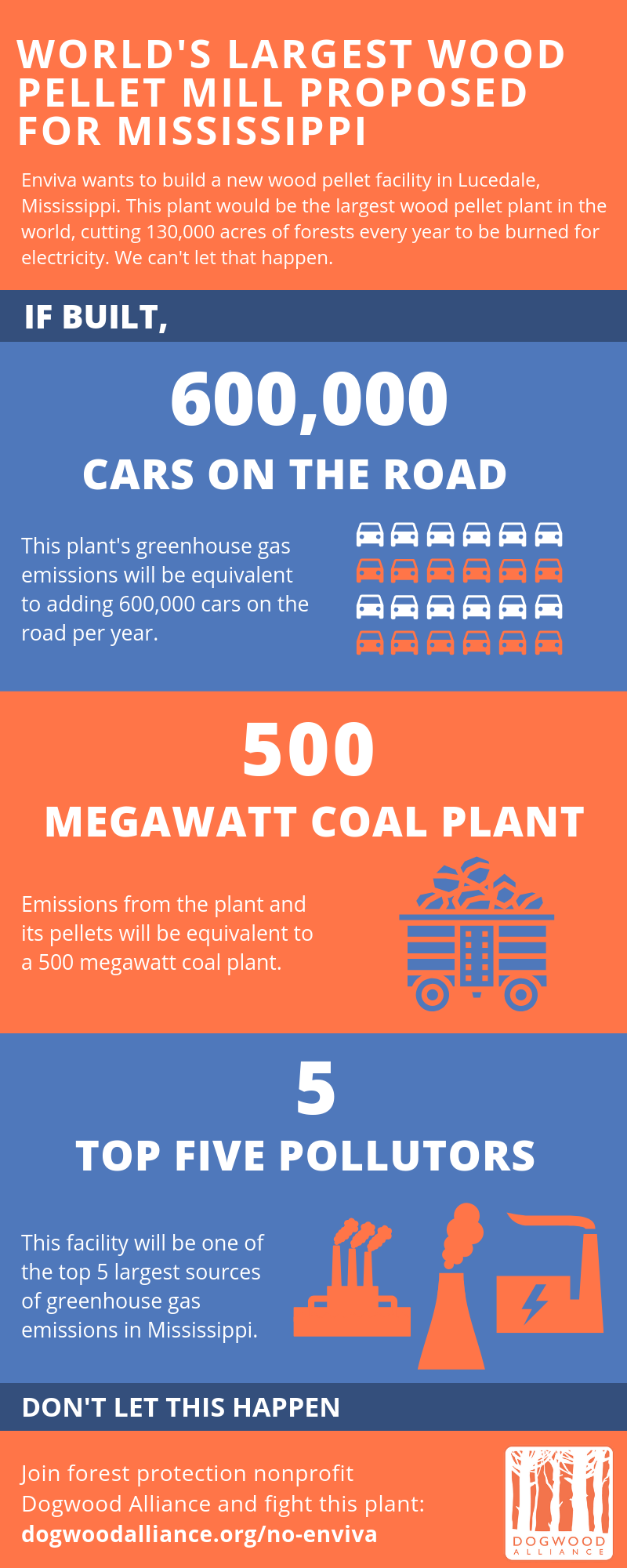
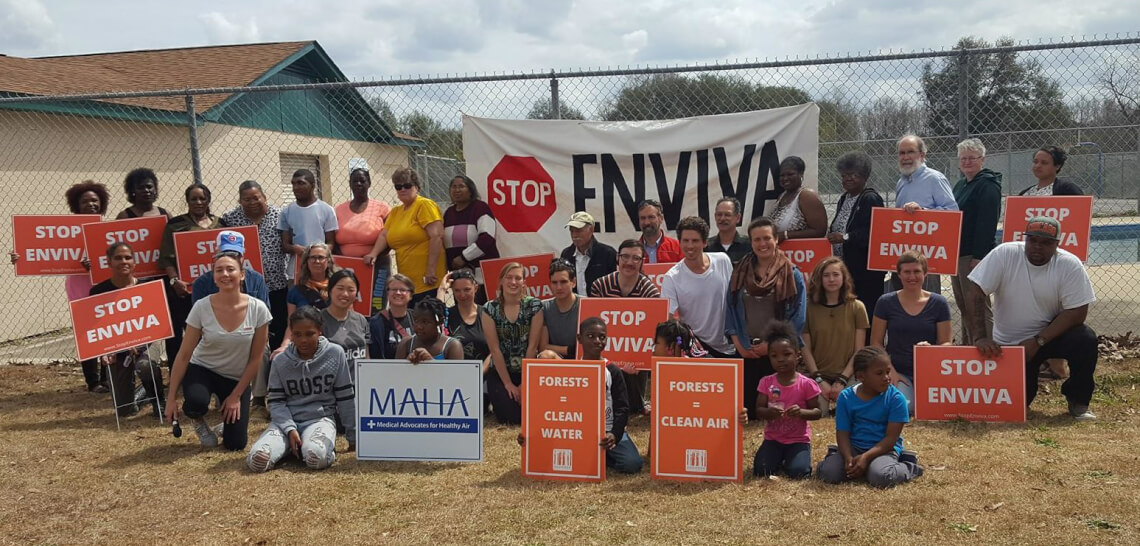
Now, Enviva wants to build a new facility in Lucedale, Mississippi. We just got word that the Mississippi Department of Environmental Quality has issued the draft permit that would allow Enviva to proceed with construction. We can’t let that happen.
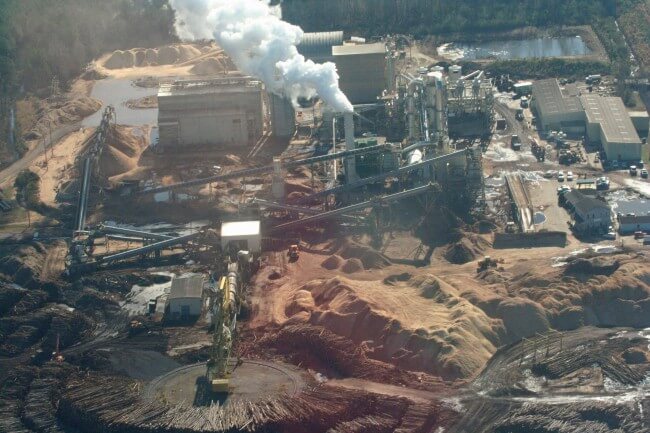
Overhead view of Enviva’s facility in Ahoskie, North Carolina. The Ahoskie plant is less than a third of the size of the proposed Lucedale plant.
That’s the equivalent to logging an area nearly the size of Chicago – every single year. This plant would be as big, as dirty, and as destructive as three of the existing large Enviva facilities combined that are currently having such a harmful impact on the forests and communities of North Carolina and Virginia.
If built as Enviva intends, this plant will be truly massive in its size and destruction.
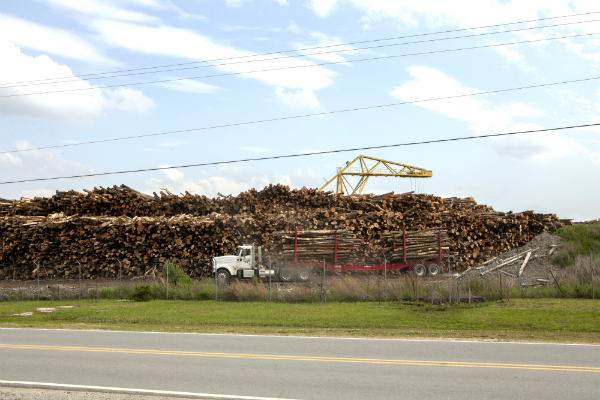
Piles of trees in front of Enviva’s Ahoskie facility (2015). Trucks just like these enter the pellet facility at estimated rates of 10-25 trucks per hour. Enviva estimates that 300 trucks per day will deliver logs to their proposed Lucedale facility.
Destroying our forests and burning them for electricity is a false solution to economic development and to solving the climate crisis. Burning trees for electricity is dirtier and worse for the climate than burning coal.
If built, the Enviva facility and the pellets it produces will be one of the top 5 largest sources of GHG emissions in Mississippi. The GHG emissions from the plant and the pellets it produces would be roughly equivalent to a 500 megawatt coal plant.
If industrial logging was the answer to economic development, rural Southern communities would be some of richest in the world. But the truth is that communities reliant on logging face some of the highest poverty rates. Lucedale, a community named after its founder in the lumber business, is no exception.
We have been exposing the truth about this industry for years — from on-the-ground investigations, to local public hearings, to the international stage. Again and again, Enviva has deceived the public, policymakers, and investors about their sourcing practices, environmental impact, and economic value.
Here’s the truth: Enviva profits by destroying and exporting our forests, harming our communities’ health and quality of life, and imperiling our efforts to avoid a climate disaster.
In the past few months, we’ve seen incredible momentum in the United States for our leaders to take bold, concrete action on climate change and environmental justice. From the halls of Congress to dinner tables and schools across the country, there is growing energy and momentum to address the climate crisis.
Whether it’s the movement calling for a Green New Deal, youth striking for climate around the world, or Southern justice leaders bringing the message of Justice First to DC, climate action is finally getting the national attention that its urgency demands.
Now, it is more important than ever to educate and mobilize organizations, individuals, and decision-makers about what it means to be a real climate leader.
Simply put, to avoid a climate disaster we need to stop forest destruction and prioritize forest protection. For Dogwood Alliance activists, this is what we want to hit home with our policymakers day in and day out.
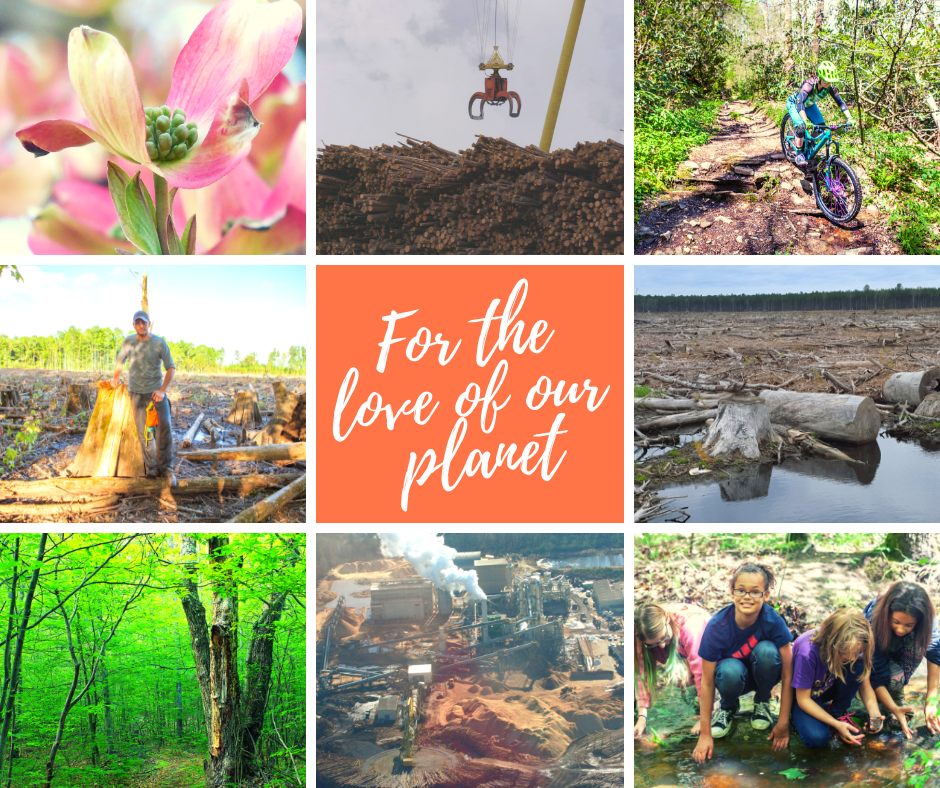
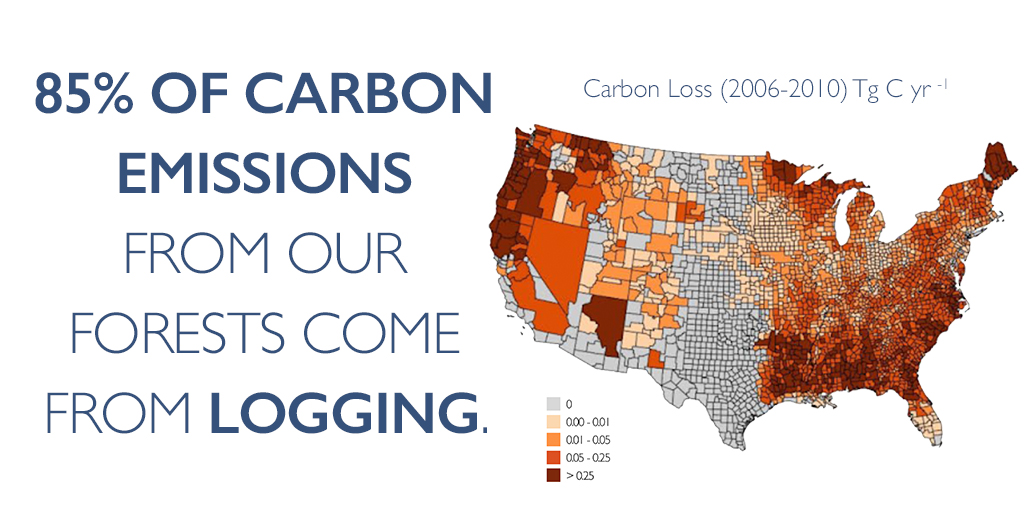
At a time when we should be protecting forests, the US is cutting down our own forests at one of the highest rates in the world. In fact, right here in the Southern US, our forests are logged and degraded at a rate four times higher than that of South American rainforests.Keeping forest carbon in the ground is as important as keeping fossil fuel carbon in the ground.
To make this a reality, last year Stand4Forests launched with the support of over 200 organizations, scientists, and elected officials with a bold vision for forest protection in the US — and we continue to grow every day.
Earlier this year, Dogwood Alliance traveled to Washington, DC with the Justice First Campaign to bring our shared vision of forest protection, clean energy, and climate justice to the halls of Congress. We put the Stand4Forests platform in the hands of several congressional offices — climate leaders who want to see ambitious climate legislation on the federal level. Based on the best scientific evidence, any comprehensive climate action plan needs to protect our forests as well as tackle the alarming rate of forest destruction currently happening in the US.
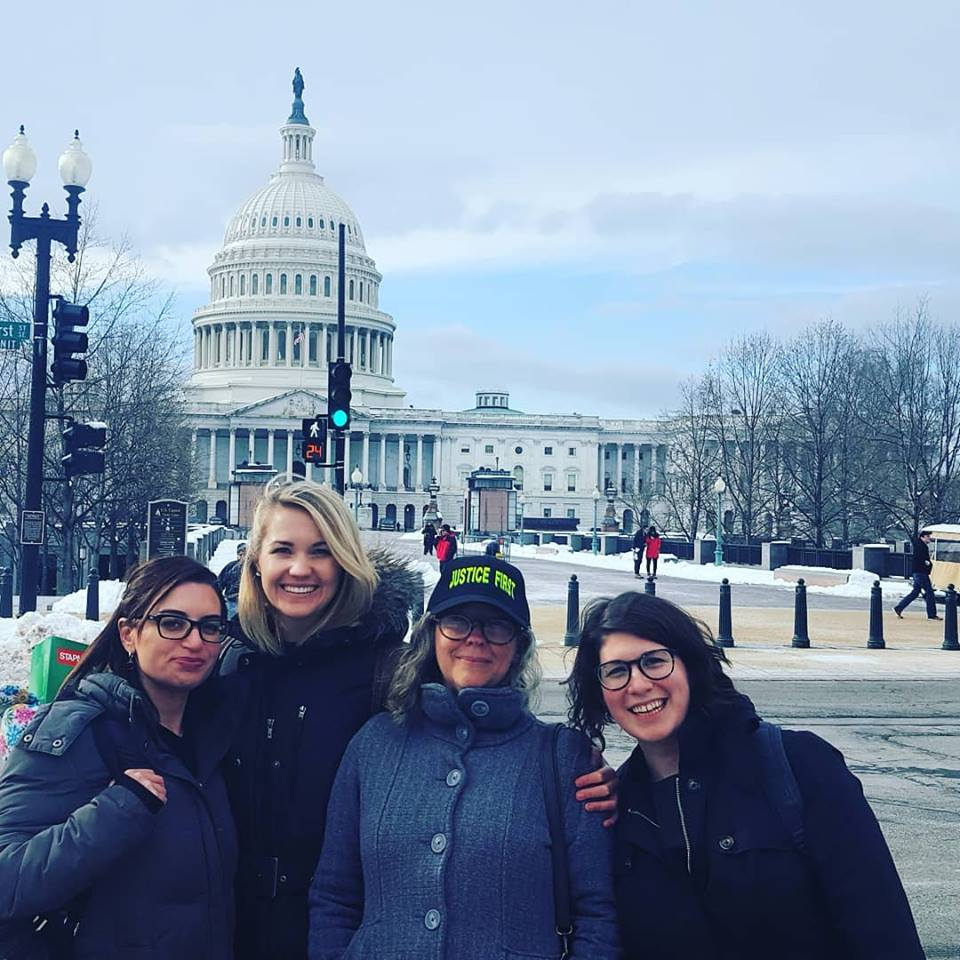
Dogwood Alliance’s Rita Frost, Danna Smith, and Rachel Weber in front of the Capitol along with Carina Daniels, Co-Founder of Story & Reach
I live in Congressman David Price’s district, and today, I called his office and asked him to be a Stand4Forests champion. I’m asking everyone I know and everyone reading this to join me in calling your Representative and Senators today.
By joining the growing list of supporters, policymakers who endorse the Stand4Forests platform will be taking a stand for principles anyone can get behind: clean air and water, protection from flooding and storms, the green economy, biodiversity, and the charge to solve the climate crisis.
Every call makes a difference. We know that lawmakers hear from the forest products industry and their friends every day. Profit-driven groups and companies like Enviva, the world’s largest wood pellet manufacturer, benefit from the status quo of the forest products industry. These industry players want policymakers and the public to believe that we can log our way out of climate change. In fact, just the other day, forest industry sweetheart, Arkansas Representative Bruce Westerman, tried to win over The Hill’s readers with the faulty logic that if you want to save a tree, you should… cut down a tree?
Every day of the year, Dogwood Alliance celebrates and champions our forests. We fight for the clean air and water they provide, the beauty they share, and the protection they give us from flooding and storms. More than ever, we fight for forests because they are essential to solving the climate crisis.
On March 21st each year, the International Day of Forests gives us a reason to celebrate a little louder. Happy International Day of Forests!
If you haven’t already, be sure to sign and share the Stand4Forests pledge!
Join the conversation on social media with the hashtags #Stand4Forests and #IntlForestDay.
A new version of BURNED: Are Trees the New Coal — the hard-hitting documentary that exposes the truth about the biomass industry — has just made its debut on Link TV and is available for international free streaming!
This powerful film probes the policy loopholes, huge subsidies, and blatant greenwashing of the biomass electric power industry.
Here in the US South, our forests are disturbed at a rate four times higher than South American rainforests. Dogwood Alliance has documented the increased pressure that the biomass industry has put on this heavily logged landscape. Every year, tens of thousands of acres of Southern forests are cut down, turned into wood pellets, and shipped overseas by Enviva, the world’s largest wood pellet manufacturer, to be burned for electricity.
BURNED has had a profound impact on Dogwood Alliance’s work and getting the message out. Adam Colette, Dogwood Alliance’s Program Director, says:
“I’ve been following Enviva and the wood pellet industry for years, and I’ve seen the devastation first hand. This documentary has allowed the public and policymakers to join me on Dogwood Alliance’s investigations of shocking clearcuts, see the destruction for themselves, and ask the question: is this what clean energy looks like?”

Adam Colette at the site of a devastating wetland clearcut, where Enviva was sourcing for one of their North Carolina facilities. Watch the documentary for footage of this 2015 investigation.
BURNED: Are Trees the New Coal will be available for streaming for four months, through July 18th. Watch how a dedicated group of forest activists, ecologists, carbon scientists, and concerned citizens fight to establish the enormous value of our forests, protect their communities, debunk this false solution to climate change, and alter energy policy both in the US and abroad. Be sure to watch and share!
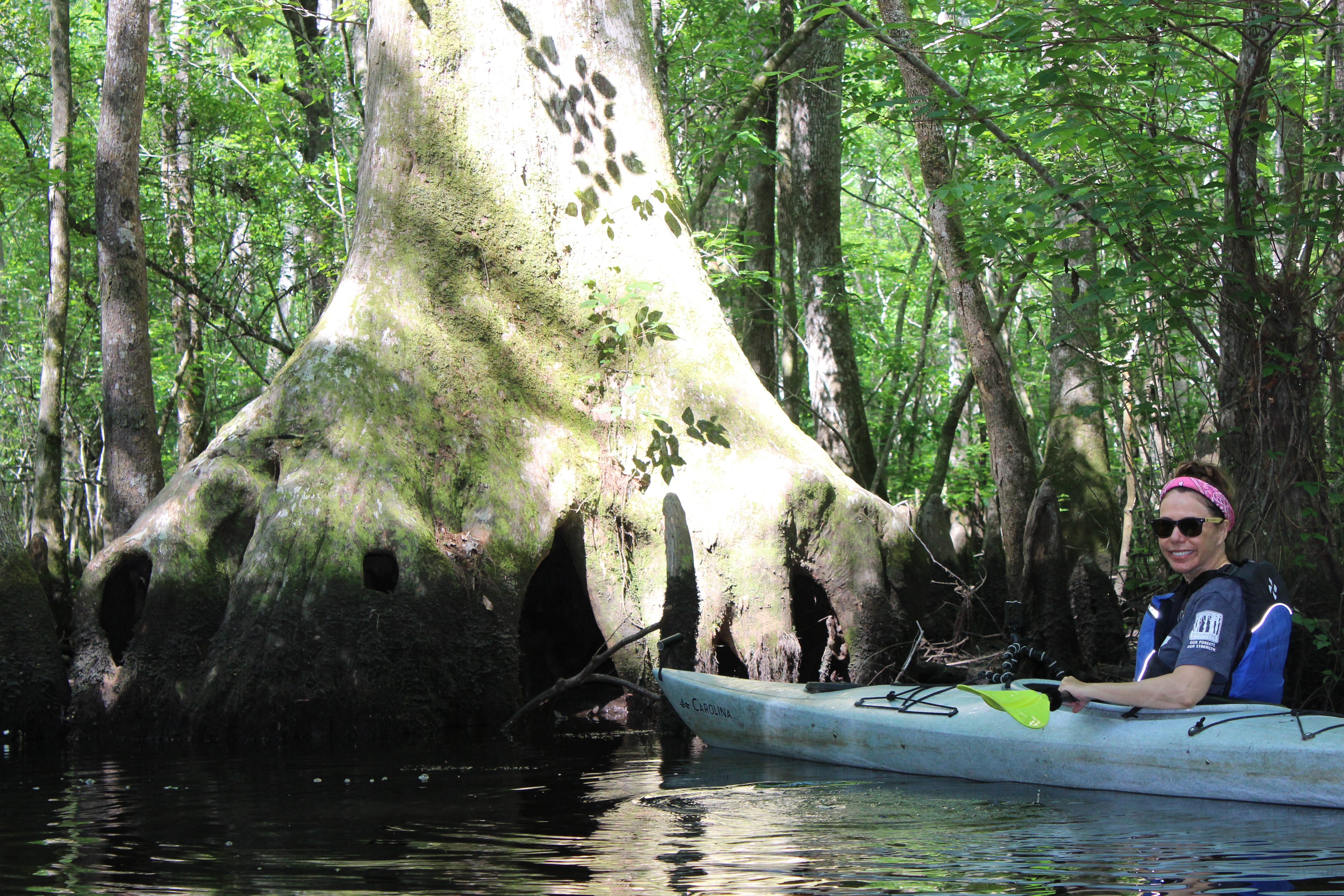
Wetland forests in the US are our communities’ best protection from the worst impacts of climate change like increased flooding, drought, and degradation of our water quality. But the Trump Administration wants to eliminate protections for wetland forests, streams, and other wetland areas.

Under this new proposed rule, many wetland forests like floodplain forests and bottomland hardwoods would no longer be protected from destruction. The new rule would mean that any wetland forest with a road, levee, or berm that disrupts its connection to other waterways would no longer be protected. Over half of the nation’s wetlands would be vulnerable to destruction and pollution if the Trump Administration has its way. Read on to find out more about the legislation in question: the Clean Water Act.
The Clean Water Act, passed in 1972, is one of the most influential pieces of environmental legislation in the United States. The Clean Water Act is the primary federal law controlling and preventing water pollution. It recognizes the power and responsibility of state governments in preventing pollution while also giving the federal government authority to regulate “point” pollution, like pollution from sewage treatment and industrial facilities. Perhaps most importantly, the Clean Water Act protects wetlands in the US that would otherwise be left vulnerable to pollution and destruction.
Unfortunately, some of the language in the Clean Water Act has been somewhat unclear. In particular, the scope of the nation’s waters has been murky at times and subject to several lawsuits. Two court cases in particular, SWANCC vs. US ACE and Rapanos vs. US, demonstrated the need to clarify which wetlands fall under the Clean Water Act’s purview.
In 2015, the Obama Administration, through the Environmental Protection Agency (EPA) and US Army Corps. of Engineers (ACE) attempted to clarify the scope of the Clean Water Act by proposing the “Clean Water Rule” that clarifies which wetlands are subject to the federal legislation and which are not. This rule was crafted by both the EPA and ACE as they “conducted peer-reviewed hydrological studies, interagency reviews, and economic analyses before publishing a formal proposed rule on April 21, 2014.”
The Clean Water Rule has been demonized by industrial polluters, big business, big agriculture, and industrial forestry since its inception. These industries want to have the right to pollute, destroy, and develop wetlands when it is convenient for them, regardless of the impacts that they will have on surrounding communities.
After President Trump came into office, Scott Pruitt and the EPA suspended the implementation of the Clean Water Rule in January 2018. However, it was reinstated in August of 2018 when a federal district court judge decided that the Trump Administration had overstepped its bounds by not taking public comment before acting. As a result, the Clean Water Rule is the law of the land — but the Trump Administration wants to change that.
As you know, wetland forests in the US are our communities’ best protection from the worst impacts of climate change like increased flooding, drought, and degradation of our water quality. The Trump Administration is now attempting to eliminate Clean Water Act protections for wetland forests, streams, and other wetland areas by “revising” the Clean Water Rule. The proposal limits Clean Water Act protections to wetlands with a “continuous surface connection” to larger lakes, streams, or rivers. In addition, it removes federal protections for rain and snow dependent streams. This Trump Administration would mean, by the EPA’s own estimates, that over half of the nation’s currently protected wetlands will become vulnerable once again.
Under this new rule, many wetland forests like floodplain forests and bottomland hardwoods would no longer be protected from destruction. The new rule would mean that any wetland forest with a road, levee, or berm that disrupts its connection to other waterways would no longer be protected by the Clean Water Act. Additionally, scientists believe that this rule revision would have significant impacts on water resources (like clean drinking water) in the US.
All told, the Trump Administration’s dangerous proposal would remove safeguards for more than half of America’s wetlands, leaving them open to destruction from logging, development, and pollution. Drinking water and flood protection for millions of Americans would be at risk. We will not let that happen.
We only have a short window to show our support for the nation’s wetland forests. Please, speak up for our wetland forests by submitting your public comments to the US EPA.
Last year the Stand4Forests movement was launched, laying out a bold vision for forest protection in the US endorsed by organizations, elected officials, and scientists from around the country. The Stand4Forests movement calls for a new vision of forest protection.
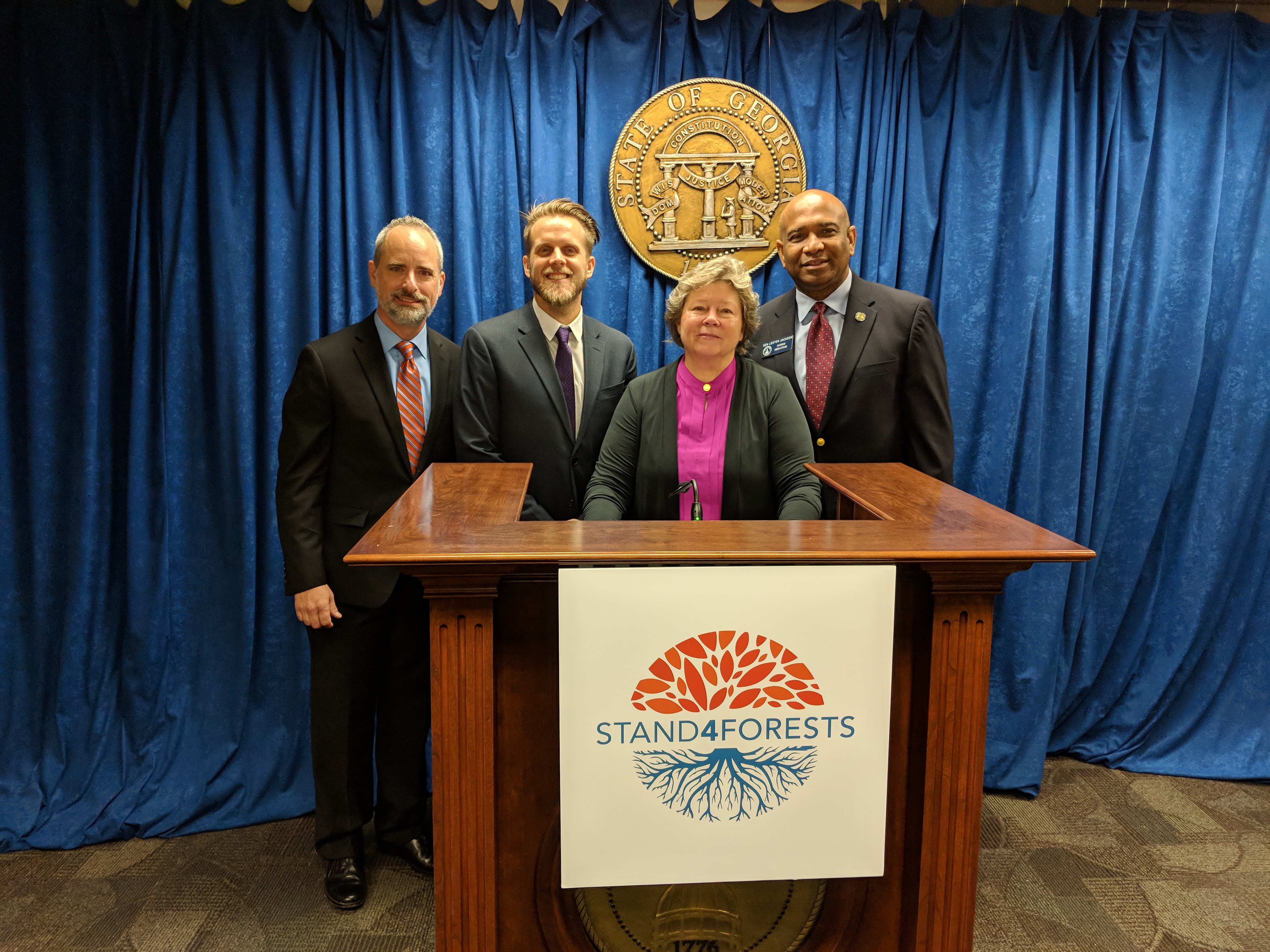
It’s been co-sponsored by at least 6 other State Senators and when the 2019-2020 legislative session begins again, we could see SR 108 going to a vote! That means that now – this year – is the time to call on all of our GA Senators to become forest champions.
The climate crisis is urgent — communities, the planet, and our very existence are threatened. The state of Georgia is no exception. Climate science shows that Southeastern US cities, including those in Georgia, are particularly vulnerable to climate change, with major expected impacts to infrastructure and human health.
But at a time when we should be protecting forests, the US is cutting down our own forests at one of the highest rates in the world, creating a climate emergency.
Georgia is one of the states hardest hit by industrial logging and the expansion of the wood pellet industry. The Georgia Biomass facility, outside of Waycross, is one of the largest wood pellet plants in the world. This pellet industry typically uses whole trees and is increasing carbon emissions and polluting communities. Additionally, wood pellet plants are typically located in environmental justice communities already burdened with other polluting industries.

When left standing, forests provide billions in economic value to our state and local communities. Georgia’s forests, when protected, can buffer communities from the damage caused by extreme weather events, reduce costs of waste and water treatment, provide habitat for pollinators, and support an already robust wildlife-related recreation economy.
We now must ask ourselves – how will we protect our valuable forests? What can we gain if we do? And what do we have to lose if we do not protect our forests?
By joining the growing list of supporters, Georgia policymakers who endorse the Stand4Forests platform will be taking a stand for principles any American can get behind: clean air and water, protection from flooding and storms, jobs in the growing green economy, biodiversity, and the charge to solve the climate crisis.


 Donate