


A coalition of regional and national environmental groups expressed dismay that the proposal unveiled earlier today by Senator Tom Udall to create a national “Renewable Energy Standard” would provide subsidies for polluting and inefficient wood-burning power plants.
The groups included Arise for Social Justice, Center for Biological Diversity, Dogwood Alliance, John Muir Project, Food & Water Watch, Friends of the Earth, Partnership for Policy Integrity, Pivot Point, and the Rachel Carson Council.
“Burning trees and forest residues for energy emits more CO2 than fossil fuels, and the emissions impact lasts for decades,” said Dr. Mary S. Booth, president of the Partnership for Policy Integrity. “To avoid catastrophic climate change, the IPCC says we must reduce emissions to nearly zero, and massively increase forest carbon uptake. In other words, we need to grow forests, not burn them for energy.”
“Biomass harvesting is destroying forests in the U.S. Southeast to meet demand overseas for so-called carbon neutral biomass,” said Adam Colette, Program Director for the Dogwood Alliance. “The last thing any renewable energy bill in the US should do is further increase forest harvesting to be burned in power stations. The way the bill is currently written, that’s exactly what it would do.”
“Just like coal plants, wood-burning power plants emit harmful air pollution, including fine particulates, smog precursors, and carcinogens,” said Nicole Ghio, Senior Fossil Fuels Program Manager at Friends of the Earth. “A recent report shows air pollution already causes over 100,000 premature deaths in the US each year. Subsidizing technologies that increase killer air pollution is terrible public policy.”
“We have fought for years to keep a biomass power plant from being built in Springfield, which has the worst asthma problems in the nation,” said Katy Pyle, environmental justice organizer at Arise for Social Justice in Springfield, Mass. “Subsidizing these plants will disproportionately impact environmental justice communities, who already suffer high rates of asthma, heart disease, cancer, and other chronic health problems.”
“Burning trees and plants for fuel is a losing dirty formula. We can and must do better, and Senator Udall knows it,” said Bill Snape, Senior Counsel at the Center for Biological Diversity.
The groups are urging Senator Udall to remove biomass from the Renewable Energy Standard in S.1974.
###
Dogwood Alliance believes in a world with beautiful, standing forests, clean air and water, and thriving communities. That’s why we’re working so hard to stop the expansion of Enviva, the world’s largest wood pellet manufacturer, and to expose the truth about their destruction.
Every year, Enviva devastates tens of thousands of acres of forests across the US South and ships them overseas to be burned for dirty biomass energy — harming our forests, communities, and our climate at every step of the process. Enviva is undergoing plans for a major expansion across the South, and we must stand together to stop them.
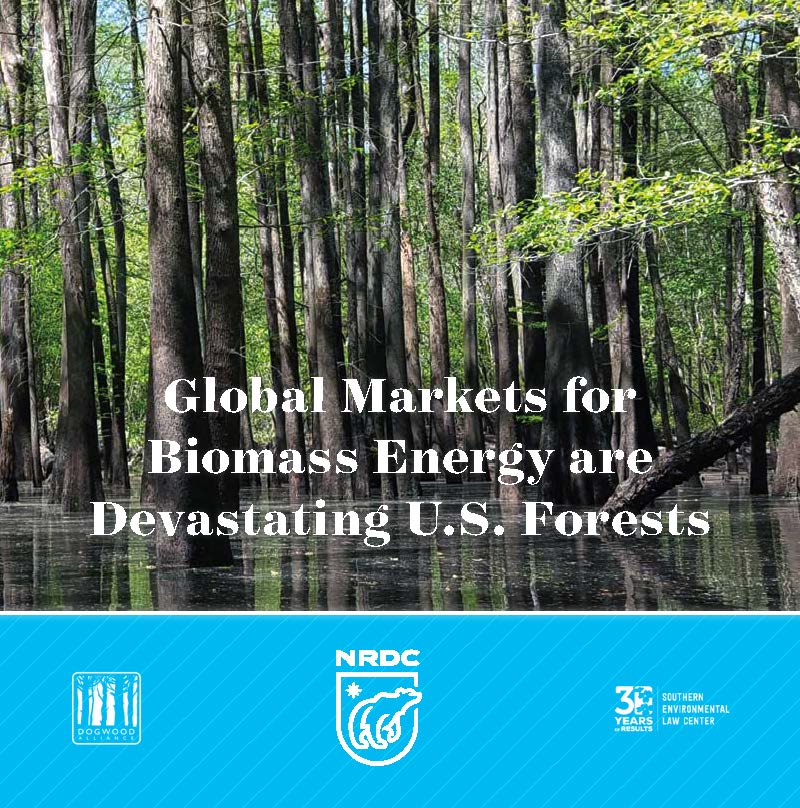
Time and again, Enviva has deceived the public, policymakers, and its investors — whether about the company’s destructive sourcing practices, their carbon footprint, or their impacts to air quality. In fact, earlier this month Enviva was forced to install stronger pollution controls at their Hamlet facility in North Carolina, and reports have documented their widespread air quality issues across the South.
Enviva has targeted the Carolinas and the Gulf South for this massive expansion. In North Carolina, despite the Governor’s commitment to address the climate crisis, the state is poised to become the largest exporter of wood pellets. In Lucedale, Mississippi, Enviva has plans to build the world’s largest wood pellet facility, which would require up to 130,000 acres of forests to be cut down each year.
Enviva has demonstrated they need to be caught in the act and even dragged to court just to do the right thing. In the absence of real accountability, Enviva will do what’s best for their bottom line at the expense of our forests, climate, and communities. We need our leaders to stand up for people and the planet, not profit, and stop the expansion of this industry.
FOR IMMEDIATE RELEASE – June 18, 2019, 9 amContact: Scot Quaranda, [email protected], 828-242-3596


Photo credits: Dogwood Alliance
ASHEVILLE (June 18, 2019) – A new investigation exposes how valuable forests, wetlands, and habitats in North Carolina continue to face devastation from overseas demand for “biomass” energy.
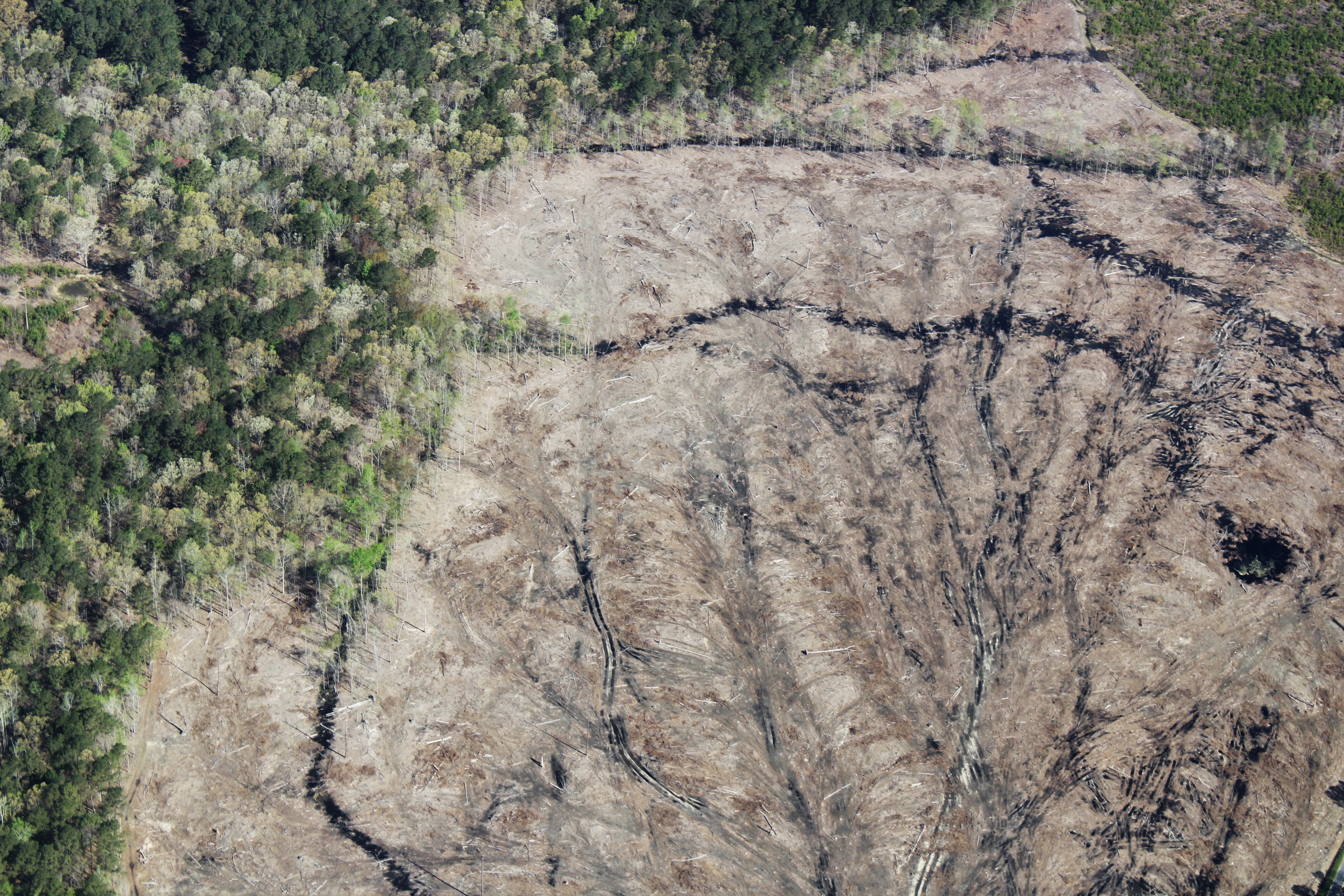
The recent photographic evidence gathered by Dogwood Alliance, the Natural Resources Defense Council and the Southern Environmental Law Center documents the ecological destruction of biomass sourced from clearcut forests to supply Enviva, the world’s largest wood-pellet producer. Millions of tons of Enviva’s pellets from North Carolina are shipped across the ocean and burned in power plants – primarily in the UK, other countries in Europe, and, increasingly, Japan.
North Carolina Governor Roy Cooper has publicly acknowledged concern over the impact of the wood pellet industry on the state’s forests and communities, as well as pledged to make climate action a top priority for his administration through Executive Order 80. To address the negative impacts of Enviva’s operations on North Carolinians’ environment and natural resources, the state now needs to take decisive action that will immediately halt the industry’s rapid growth or mitigate its impacts.
Enviva’s pellets are exported to countries that continue to erroneously treat biomass as a low-carbon fuel and prop up Enviva’s customers with billions in subsidies and other policy incentives.The industry has mostly been given a free pass to expand, despite the fact that leading science shows burning wood for electricity accelerates climate change, destroys forests and increases emissions of dangerous air pollutants.
“The North Carolina Department of Environmental Quality has just issued draft permits for Enviva to expand its Sampson County facility despite mounting evidence that this is the wrong direction for our state,” said Danna Smith, Executive Director of Dogwood Alliance. “Now is the time for our Governor to pull the brakes on the wood pellet industry in the state and declare a moratorium on any further expansion of the industry until the full impacts to our forests, communities, climate and economy can be assessed and policies to change the industry are in place.”
Yet, Enviva and the State were brought to court by environmental and public health organizations, Clean Air Carolina, the Southern Environmental Law Center, and the Environmental Integrity Project, for failing to protect local communities health at its Richmond county facility from high levels of air pollution. A settlement in that case required Enviva to install new pollution controls at its facility. Enviva also reached a similar legal agreement with the state for its facility in Sampson County.
“The Hamlet settlement will reduce harmful air pollutants from the facility by at least 95 percent, allowing Richmond County families to breathe easier,” said Heather Hillaker, attorney with the Southern Environmental Law Center. “As the wood pellet industry continues to expand operations throughout the state, the threat remains for many North Carolinians to the air we breathe and the wetlands that buffer us from storms and floods.”
The company’s wood pellet mills are located in areas that already endure some of the highest logging rates in the world, with surrounding communities suffering high poverty rates and facing the threat of flooding from climate change. Despite promises, Enviva has yet to jumpstart the local economies where they have facilities in NC, where county-level poverty rates have increased or remained stagnant since Enviva came to town.
Hurricane season started on June 1st, and over the last three years North Carolina and residents of the state have seen just how deadly they can be to coastal communities. Many people are still struggling to rebuild from Matthew and Florence. Forests and wetlands play a vital role in coastal resilience and keeping people safe from the worst impacts of flooding and storm surge.
“Burning trees for electricity is worse for our climate than burning coal and has no place in a clean energy future,” said Sasha Stashwick, senior advocate at the Natural Resources Defense Council. “North Carolinians deserve genuinely clean alternatives, such as energy efficiency, solar and wind, not dirty and destructive biomass.”
This photographic evidence demonstrates the destruction necessary to supply Enviva’s operations, a reality the company failed to mention while unveiling a new “responsible sourcing policy” earlier this month.
“Our forests are our best defense against the climate crisis and our Governor needs to take decisive action to protect them,” said Rita Frost, campaigns director at Dogwood Alliance. “No one can look at these horrific images and conclude that slashing forests and burning the wood for electricity is a viable solution to our climate crisis.”
# # #
Dogwood Alliance is a nonprofit environmental organization based in the Southern United States that mobilizes diverse voices to protect Southern forests and communities from destructive industrial logging. The group’s Our Forests Aren’t Fuel campaign is part of an international coalition opposing industrial-scale forest biomass energy. Learn more at www.dogwoodalliance.org and follow us on Twitter @DogwoodAlliance.
The Natural Resources Defense Council (NRDC) is an international nonprofit environmental organization with more than 3 million members and online activists. Since 1970, our lawyers, scientists, and other environmental specialists have worked to protect the world’s natural resources, public health, and the environment. NRDC has offices in New York City, Washington, D.C., Los Angeles, San Francisco, Chicago, Bozeman, MT, and Beijing. Visit us at www.nrdc.org and follow us on Twitter @NRDC.
For more than 30 years, the Southern Environmental Law Center has used the power of the law to champion the environment of the Southeast. With more than 80 attorneys and nine offices across the region, SELC is widely recognized as the Southeast’s foremost environmental organization and regional leader. SELC works on a full range of environmental issues to protect our natural resources and the health and well-being of all the people in our region. www.SouthernEnvironment.org
We know that protecting our Southern forests requires challenging the industries and corporate interests that threaten them. But it also requires building the relationships, networks, and solutions to create the world we want to live in.
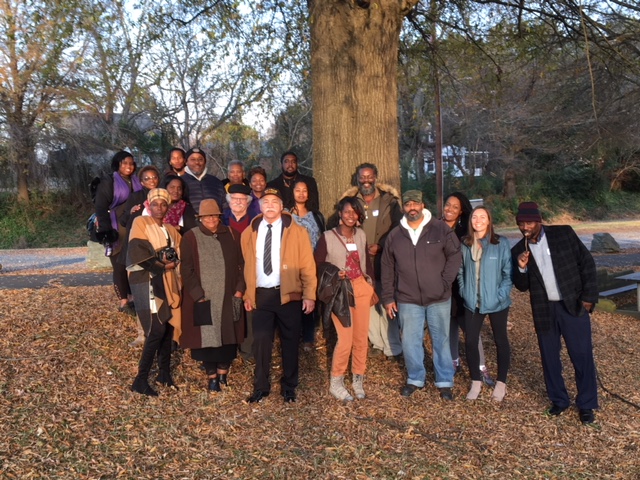
The FOREST (Frontline Organizing Resiliency and Entrepreneurial Solutions Training) Circle is a network of activists, organizers, and community leaders.

The first FOREST Circle was held in December 2017, in Whitakers, North Carolina. Dogwood Alliance partnered with Nakisa Glover (Sol Nation) to co-organize the event. We began the process with outreach to community leaders across the South to identify the main areas that would be helpful to focus on. From that outreach, we identified some of our focus areas: frontline communities, organizing, building resiliency, and focusing on solutions, specifically entrepreneurial solutions that are sustainable for communities and the environment.
After our first summit, our group was energized and inspired. We knew we were building something special. We decided to continue working together as the FOREST Circle.
In May 2019, the FOREST Circle met for our 3rd FOREST Summit in Winston-Salem, NC. FOREST Circle member Michael Banner invited us to his hometown, to learn from and connect with the work that is blossoming in his community.
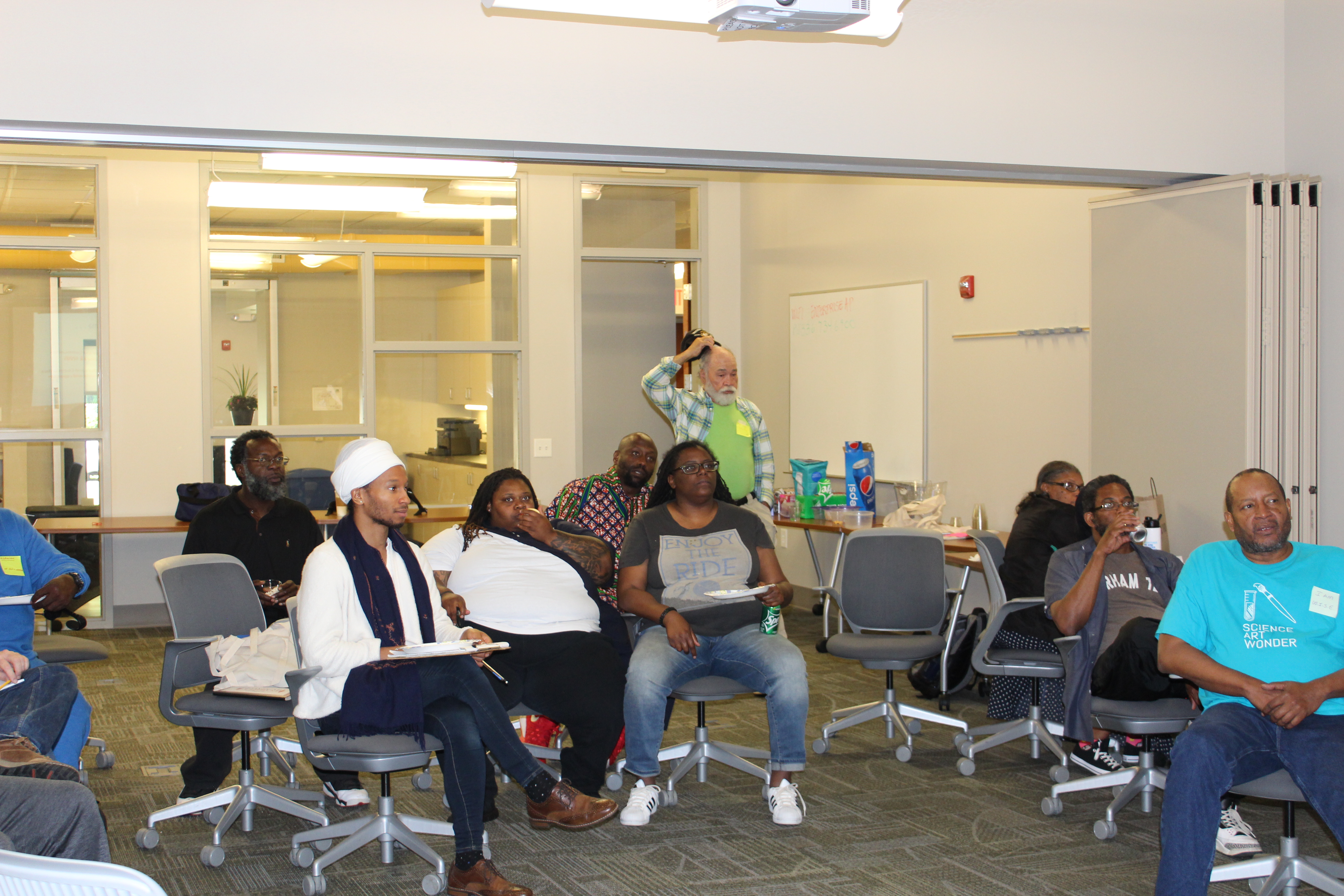
Our theme this year was asset mapping. What skills does our group have? What are we passionate about? What education and training do we have? How can we map this out to be more effective in the work that we do?
We began our weekend with Spirit House Introductions. Led by Cindy Taylor of Sandhills Cooperation Association, we were asked to introduce ourselves without using our names, titles, or relationships. Instead, we focused on the essence of who we are.
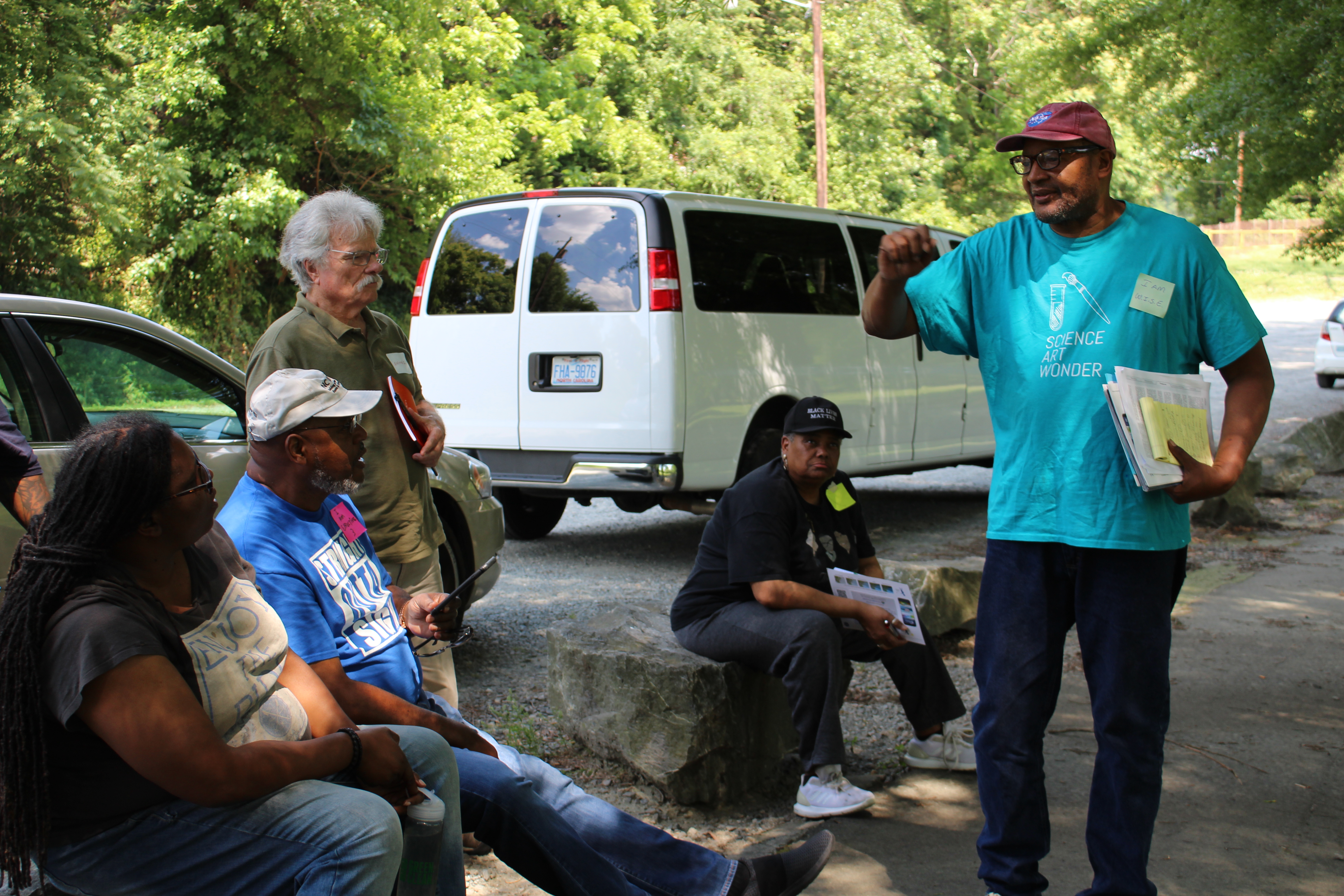
The next morning, FOREST Circle members Elijah Brunson and Tiffany Fant led us through workshops on relationship building. We were challenged to get out of our comfort zone and participate in movement-based activities. We learned to trust each other immensely as we were guided through a crowded room with our eyes closed and were reminded of the many ways we speak to and relate to each other without language. Our next workshop brought us back into the realm of the work we do day to day. We broke out into groups and gave each person space to speak for 5 minutes, uninterrupted, about what they are working on. Then, the other members of the group were able to respond specifically on how they can support the work that was described.

That afternoon, we left the venue to visit sites in Winston-Salem. First, we traveled to a park where the community plans to create an organic garden. Michael told us about their plans and their work to secure funding to create a garden that would provide Winston-Salem’s island community with fresh, healthy, organic produce. As we explored the site, Garry Harris trained us on how to do citizen-science. Our teams went through a series of steps to measure the height of a tree, collect soil samples, and test for mosquitoes.

Our next stop was a community garden tended to by Ms. Rosa Johnson, the niece of Maya Angelou. The women who cared for this garden told us of their journey to get the garden set up and how the school children down the street used to be shocked that they could eat something that came out of the dirt – “It’s dirty Ms. Rosa!” one child told Ms. Johnson. But now, they can’t wait to come nibble straight from the garden. Then we drove back across town to visit with Michael’s mother, a community activist and mayoral candidate. She shared with us stories from her new book and even played us a song she had written on her guitar.
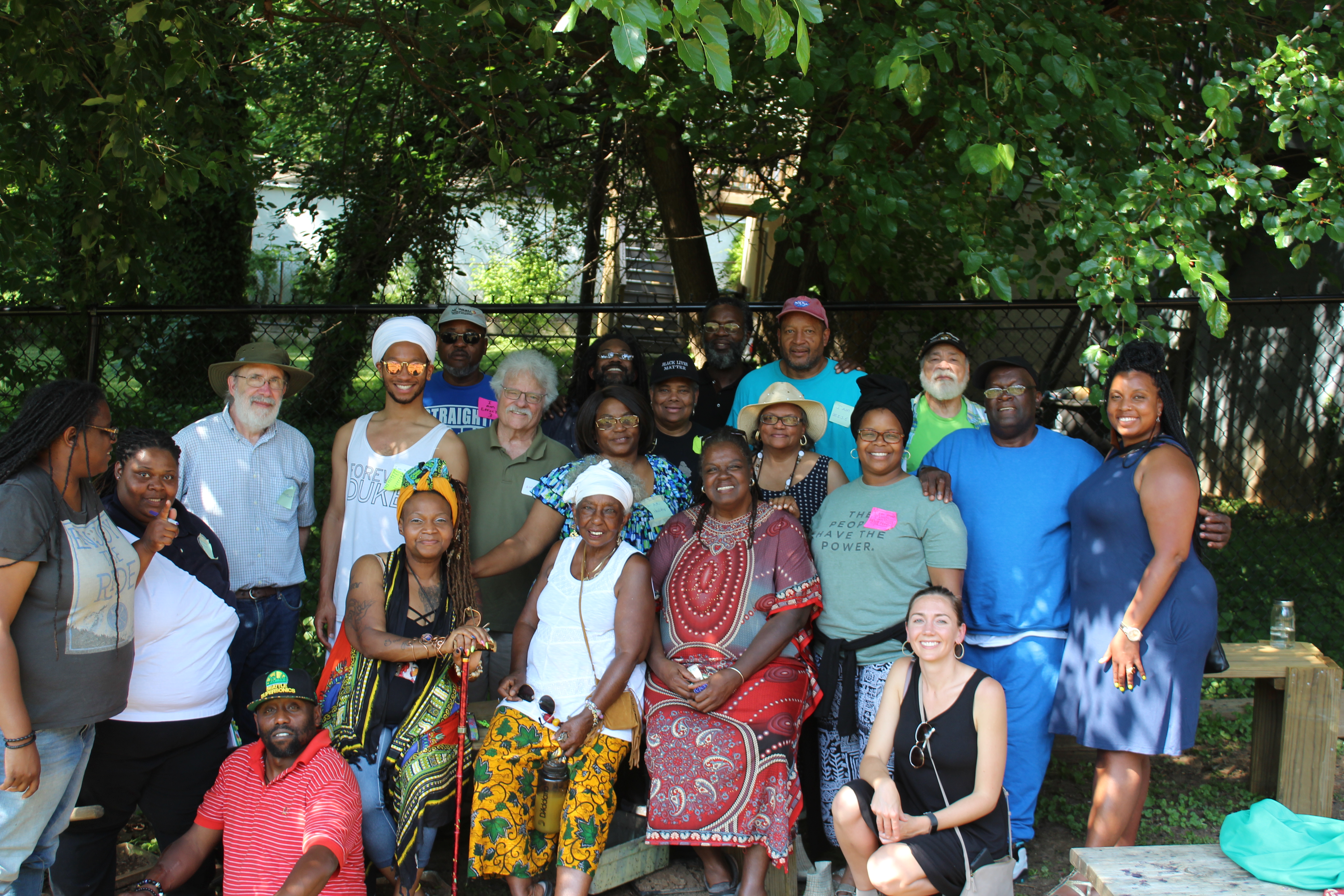
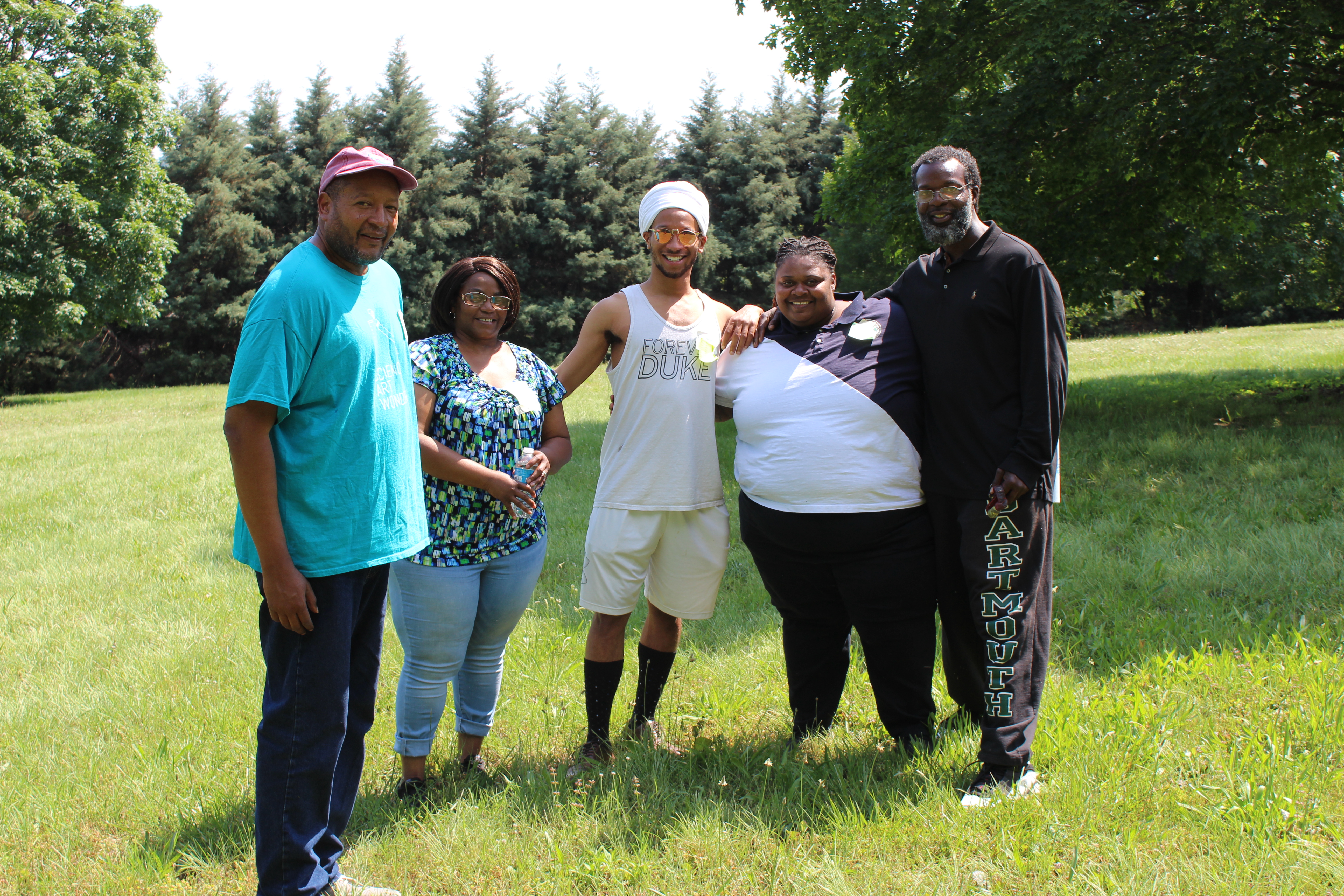
The final morning, we ended our summit with an Asset Mapping exercise. Fenton Wilkinson and Cindy Taylor of Sandhills Cooperation Association taught us how to use our heads, hearts, and hands to identify our strengths. Our group has so much to offer. We are passionate about justice, the environment, our communities, and so much more. We know how to garden, build things, write grants, facilitate workshops, speak publicly, make t-shirts, draft resumes and cover letters, manage projects, and more.
As our Circle continues to strengthen, we know we are creating something intentional and powerful. The work that we do for forest protection, clean air, clean water, healthy food, and strong communities depends so much on how we work together.
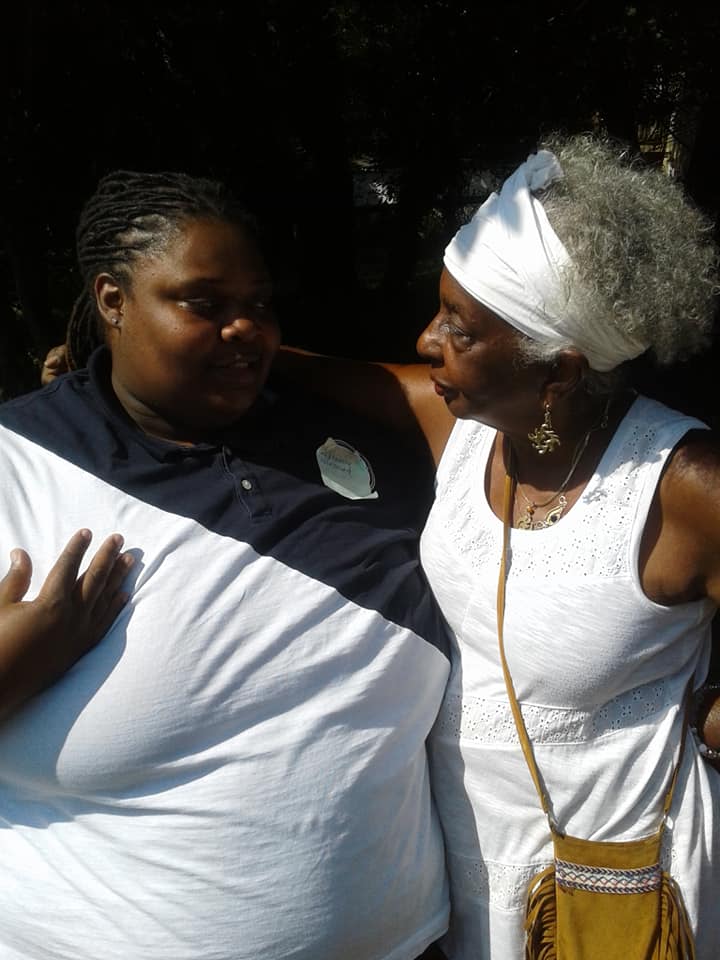
A healthy forest is a diverse forest – there are old trees, young trees, different types of trees, and different sizes of trees. In a healthy forest ecosystem, trees support each other – they share nutrients, resources, and even information on potential diseases and other threats. A single standing tree is susceptible to being knocked down by wind or floods. But in a forest, each individual tree is stronger and supported by all the other trees.
Media Statement in response to the settlement of a lawsuit challenge from clean air groups that forces Enviva’s Richmond County, NC wood pellet factory to install pollution controls:
Today, in a victory for clean air and public health, Clean Air Carolina represented by the Southern Environmental Law Center and Environmental Integrity Project signed an agreement with Enviva and North Carolina Department of Environmental Quality. Enviva, the world’s largest wood pellet manufacturer will now have to install the controls at their Hamlet facility that organizations and community members have been demanding, reducing dangerous smog-forming pollution by 95%. No community should have to breathe harmful air pollutants that damage their health and quality of life, and now the people of Dobbins Heights, Hamlet, Richmond County and the surrounding areas will get the proper air pollution controls they deserve.
Time and again, Enviva has deceived the public, policymakers, and its investors over the years — whether about the company’s impacts to air quality, our climate, or its destructive sourcing practices. The Maryland-based company has demonstrated it must be caught in the act and even dragged to court just to do the right thing. In the absence of real accountability, Enviva has made it clear it will always do what’s best for their bottom line and not what makes a good neighbor, despite its claims to the contrary.
As the wood pellet industry expands in North Carolina and throughout the South, Enviva continues to threaten our forests and wetlands, climate, and resiliency. When this industry is allowed to devastate our best defenses against climate change and extreme weather — our natural forests and wetlands — all of us are at risk. The wood pellet industry, led by Enviva, has been allowed to grow unchecked — and this company has certainly taken advantage of its free pass. Now, it’s time for the Cooper Administration to hold Enviva accountable for its impact on our forests, climate, and communities, and halt the expansion of the industry.
Read the full press release on today’s announcement from the Southern Environmental Law Center here.
Read more about Enviva and the wood pellet industry’s air quality violations throughout the South: Dirty Deception
Read more about Enviva’s history of deception here.


 Donate