


We held a 25th Anniversary contest seeking a design from an awesome youth artist in celebration of forests! We welcomed ages 8-11 to submit. We’re excited to announce that we have a winner, and her name is Tulsi Bell!
We encouraged participants to incorporate our anniversary celebration tagline:
That’s because we believe our track record of success over 25 years makes us ideally positioned to tackle the challenges of forest protection, climate change, and environmental justice. We are in the exact Right Place at the Right Time to take meaningful climate action for our future well-being.
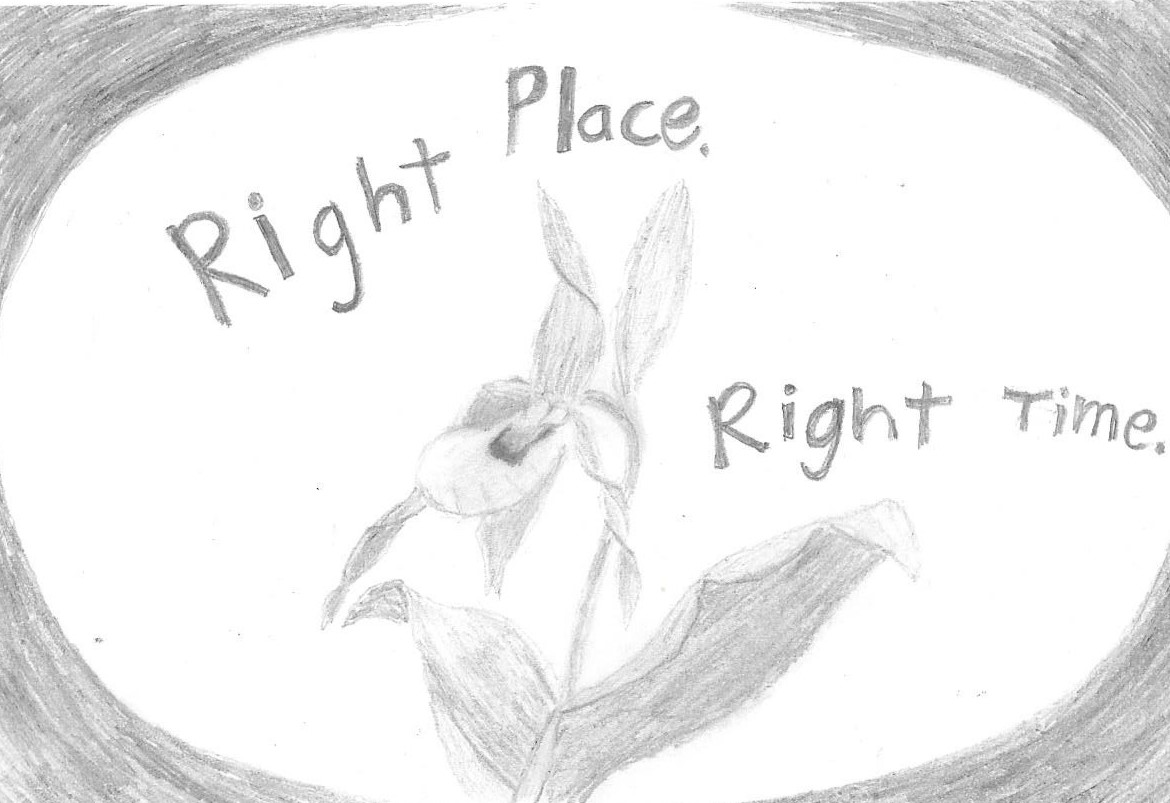
25th Anniversary contest winning design by Tulsi Bell
Because of habitat loss, some kinds of Lady Slippers are very rare and have a protected status. Tulsi chose the Lady Slipper for her illustration because you have to be in the Right Place at the Right Time to see them bloom.
Tulsi is 10 years old and lives on a beautiful piece of forested land in Barnardsville, North Carolina. She attends a small nature-based school nearby and enjoys swimming, drawing, reading, and playing dodgeball. She has a sharp mind and an innovative spirit.
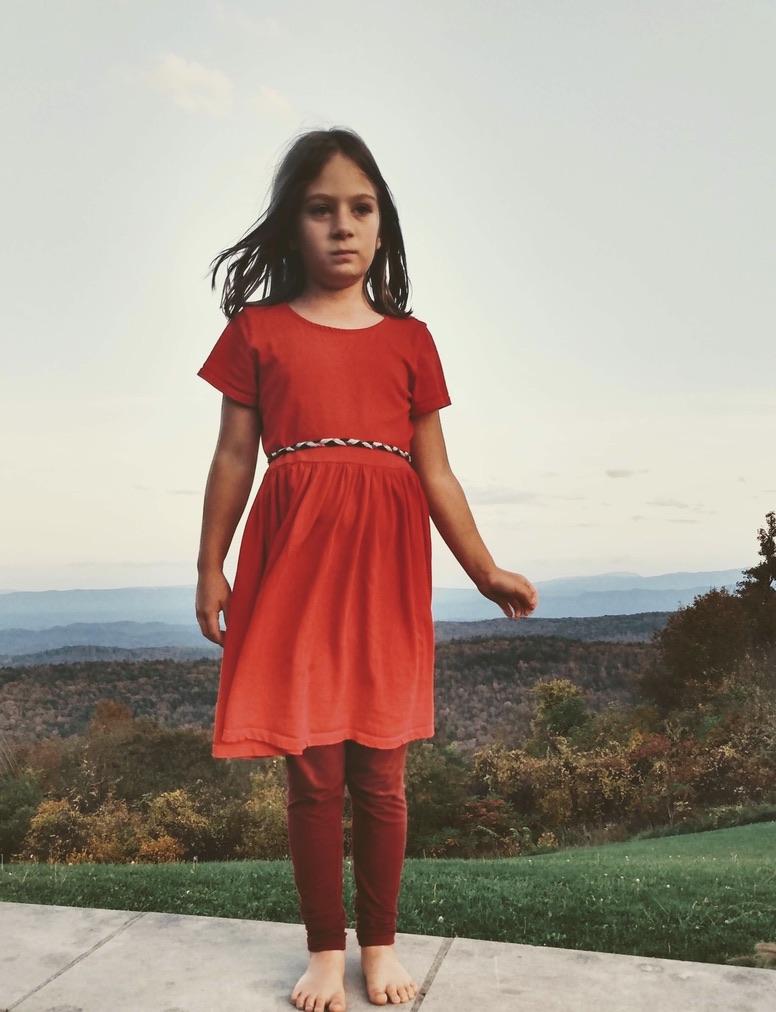
25th Anniversary Contest Winner Tulsi Bell from North Carolina
Tulsi’s home is on a north-facing mountain and she enjoys visiting the patch of yellow Lady Slippers on her land each Spring. She is glad that her family is able to protect this special patch of land and its Lady Slippers from deforestation and development.
Here is the design turned into its final graphic form:
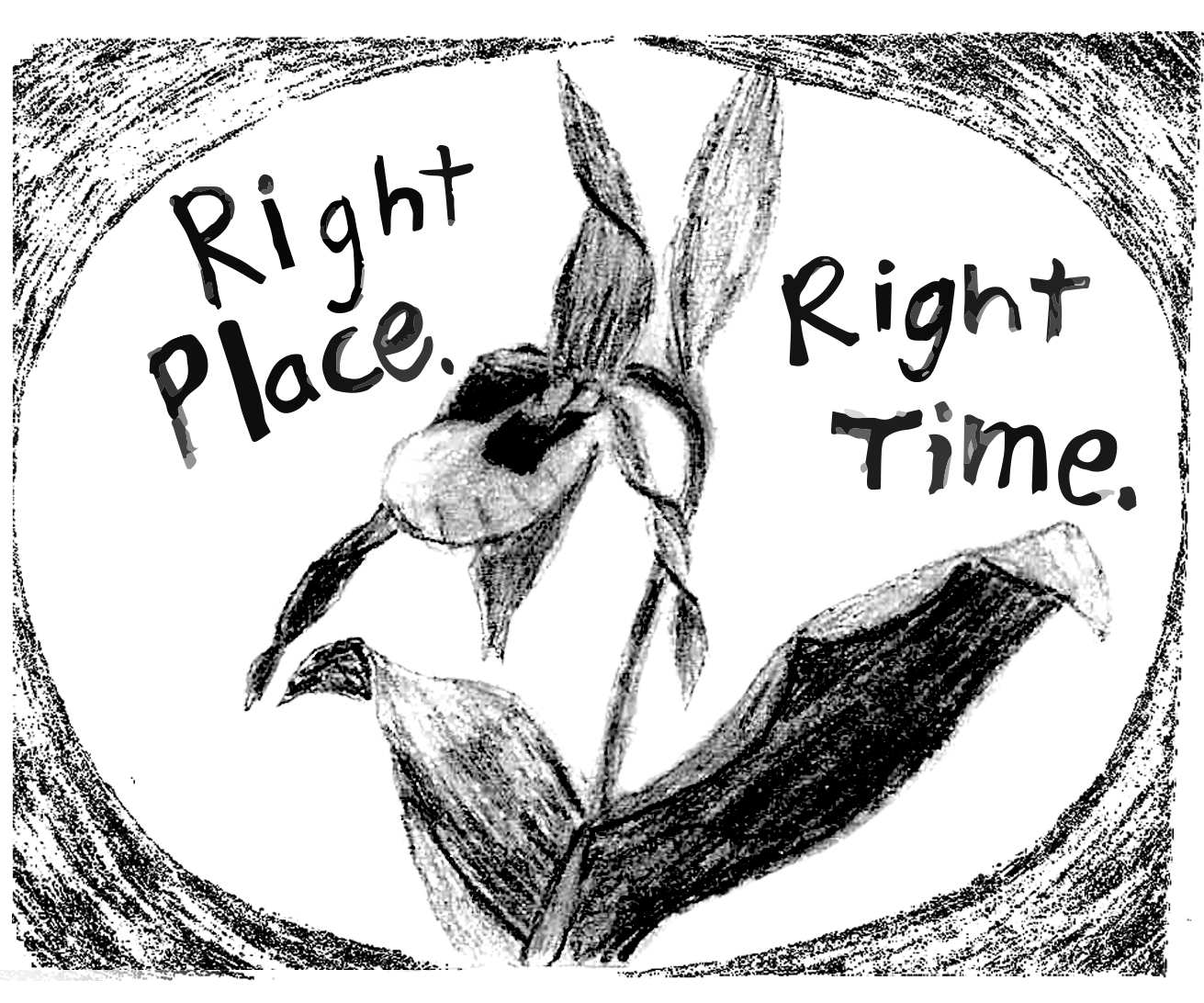
25th Anniversary Contest winner: Right Place Right Time
Our tale begins with a story we’ve all heard: corporations with unlimited resources steamrolling the residents of a small, rural town. The villain? A wolf in sheep’s clothing. They call themselves the Renewable Biomass Group (Biomass), and they thought it would be easy to bring their noisy, dirty wood pellet biomass plant to the frontline community of Adel in Cook County, Georgia. Their plan is to cut down forests in the surrounding area, turn the trees into wood pellets, and then ship them overseas to be burned for electricity. What Biomass didn’t know was that the residents of Adel were fed up. They were already suffering from years of polluters not held to account.
Through Dogwood, they connected with other activists living in and around Cook County. They formed the Concerned Citizens of Cook County (4C) and didn’t waste any time. Members attended and spoke at City Council meetings, hoping to stop a rezoning of the proposed plant site from agricultural to heavy industrial. They reached out to every member of their City Council, asking them to recognize the additional pollution this would bring to their already burdened community.
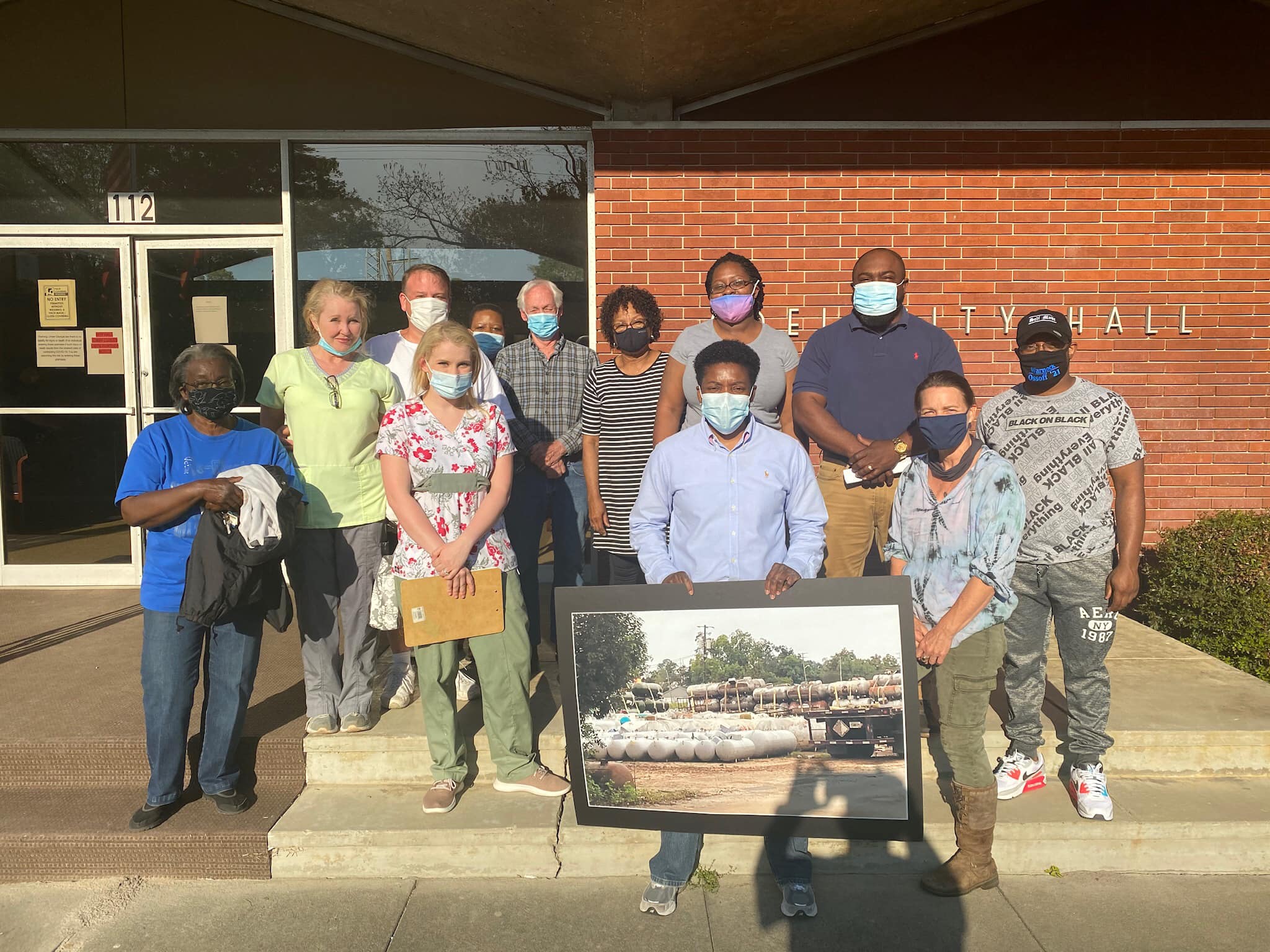
Concerned Citizens of Cook County GA organize to oppose dirty wood pellet biomass plant
Despite overwhelming opposition at the meeting, the rezoning was approved in a 3-2 vote.
Why? Because the GA EPD is not playing by the rules. The EPA mandates a public comment period for this type of project before a permit is issued, and the citizens of Adel have made it clear: they will be fighting for their rights.
After our meeting with them, the EPA District 4 Air Quality Division is reviewing our petition, but they may need more urging to get us a decision before the wood pellet plant begins construction. That’s where you come in…
Now, a struggle that began in rural South Georgia is well on its way to becoming a national story. Dr. Treva Gear, founder of 4C, and Vicki Weeks, Dogwood Alliance’s Georgia State Coordinator, recently met with Georgia’s two newly elected Senators and asked them to support our EPA petition.
Please take a stand for Southern forests by letting the EPA know that you support this petition.
Stay tuned to find out how we’re pushing back against the unchecked expansion of the wood pellet industry!
Welcome to Part Two of our four-part forest documentary series. We’ve scoured the land to bring you a curated list of the best documentaries about forests! Not sure what to watch this weekend? Don’t worry; we’ve got you covered.
A BBC and UC Berkeley study revealed why viewers choose to kick back and tune in to nature documentaries. The reason? Because nature documentaries trigger the release of neurochemicals. They’re involved in feelings of happiness, reducing the stress and anxieties of modern life. With these top four forest restoration documentaries, you’re sure to be humbled and inspired. Sometimes it only takes one passionate and dedicated person to create or restore a forest, and that one person’s work who can change the world.
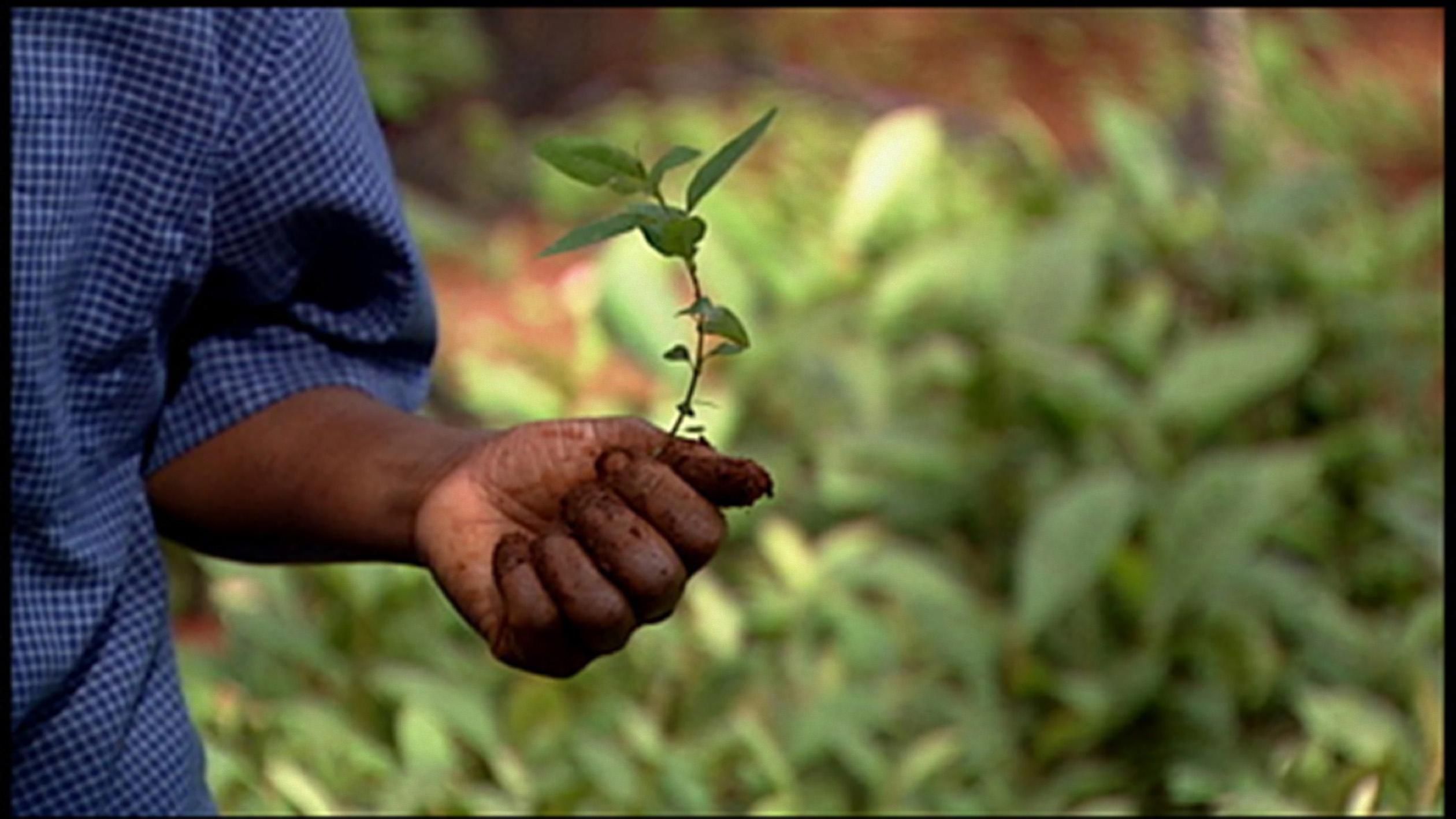
Indigenous tree seedling from Taking Root: The Vision of Wangari Maathai. Photo Credit: Alan Dater
Since the 1970’s Majuli islander Jadav Payeng has been planting trees to save his island. To date he has singlehandedly planted a forest larger than Central Park, NYC. His forest has transformed what was once a barren wasteland into a lush oasis. Humble yet passionate and philosophical about his work, Payeng takes us on a journey into his incredible forest. Where to watch: Available here.
50 years ago a unique afforestation project (planting trees where there were none before) took root on an eroded desert plateau in Tamil, South India. Today, the lush Auroville forest is an outstanding example of restoration that recreates and preserves a type of tropical forest. The film tells the story of Auroville’s 50-years-young forest through some of the diverse characters who have dedicated their lives to bringing it to life. Where to watch: Available here.
This documentary tells the dramatic story of Kenyan Nobel Peace Prize Laureate Wangari Maathai. Maathai’s simple act of planting trees grew into the Green Belt Movement. Women and girls lead this nationwide movement that safeguards the environment and protects human rights, social justice, and peace. Since its founding in 1977, the Green Belt Movement has planted over 51 million trees. Where to watch: Available here.
A documentary telling the story of Hinewai Nature Reserve in New Zealand and its manager, botanist Hugh Wilson. In 1987 Hugh decided to regenerate farmland into native forest and restore the native biodiversity as much as possible. The local community met the plan with a lot of skepticism. Now Wilson oversees 1500 hectares resplendent in native forest, where birds and other wildlife are abundant and 47 known waterfalls are in permanent flow. He has proven without doubt that nature knows best and that he is no fool. Where to watch: Available here.
For more than 15 years ecologist John D. Liu has been working on his worldwide mission to green deserts and to restore biodiversity. In 1995 he saw a local population who turned an area of almost the same size as The Netherlands from a dry, exhausted wasteland into one green oasis. From that moment on, Liu has been travelling all over the world to convince and inspire government leaders, policy-makers, and farmers with his film material and knowledge. Liu diligently spreads the message that restoration of ecosystems is not only possible, but also economically very meaningful. Where to watch: Available on Amazon Prime OR watch the complete film below!
Part 1: Top 5 Forest Preservation Documentaries Part 3: Top 5 Old Growth Forest Documentaries Part 4: Top 5 Communities and Forests Documentaries
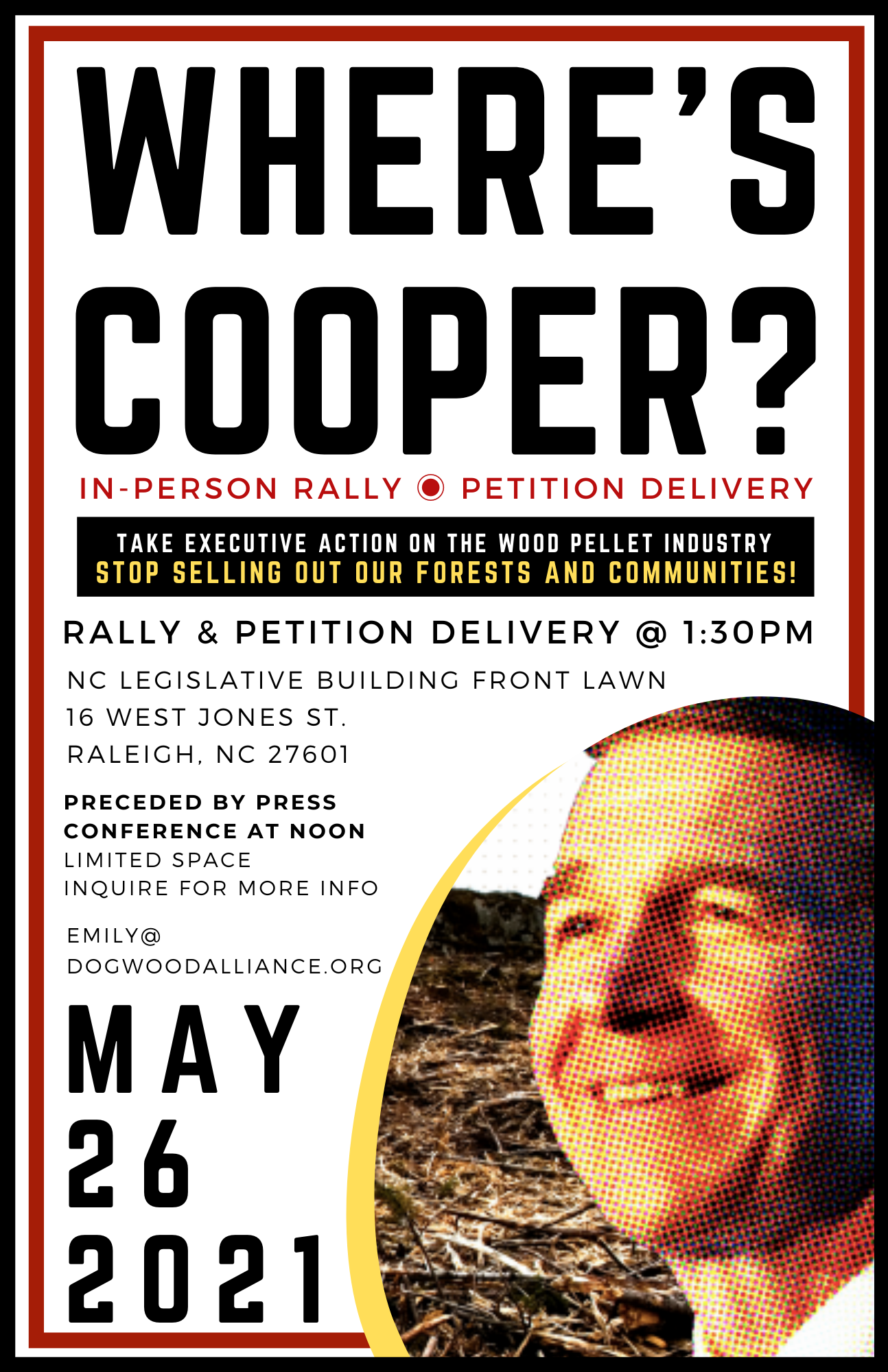
That was the big question at the Where’s Cooper press conference and demonstration on May 26th. Despite the pandemic, demonstrators showed up to put public pressure on Governor Cooper and his administration to follow through on promises to address climate change and advance environmental justice. Frontline community leaders gathered at the NC legislature to speak out about the harms their communities face from the wood pellet biomass industry. Environmental organizations joined alongside them in calling for action.

Demonstrators gather to ask where Governor Cooper is on protecting forests & rural communities from the destructive wood pellet biomass industry.
Emily Zucchino, Dogwood Alliance’s Director of Community Engagement said,
“Governor Cooper and his Administration cannot follow through on their promises on climate change and environmental justice while continuing to support the wood pellet industry.”
The wood pellet industry in the Southern US is growing to meet European and Asian energy demands. We cut down our forests here, grind them up in mills predominantly located in environmental justice communities, and turn them into wood pellets before being shipped overseas to be burned for fuel. This is all part of the dirty biomass scheme that calls itself green while being worse for our climate than coal.
During Cooper’s first term, frontline community members and environmental organizations gave him detailed evidence of the forest, climate, and pollution impacts of the wood pellet industry. The Governor responded by excluding wood pellets from the 2019 NC Clean Energy Plan, and he acknowledged some of their impacts. In spite of this, Governor Cooper has not addressed the rapidly expanding wood pellet export market.

Emily Zucchino of Dogwood Alliance at the Where’s Cooper press conference and demonstration
The NC Clean Energy Plan states: “Currently, the wood pellet industry does not contribute to NC’s energy generation portfolio and does not advance NC’s clean energy economy.” In spite of this cautious and critical view, the state has provided over $7 million in subsidies to support and expand this industry. The Enviva wood pellet facilities clearcut over 60,000 acres per year and are all cited in low-income (Tier 1) communities of color. Tier 1 is a designation applied to the state’s 40 most economically distressed counties. The rapid expansion of the controversial wood pellet industry has occurred in the state without any meaningful public or policy discourse.
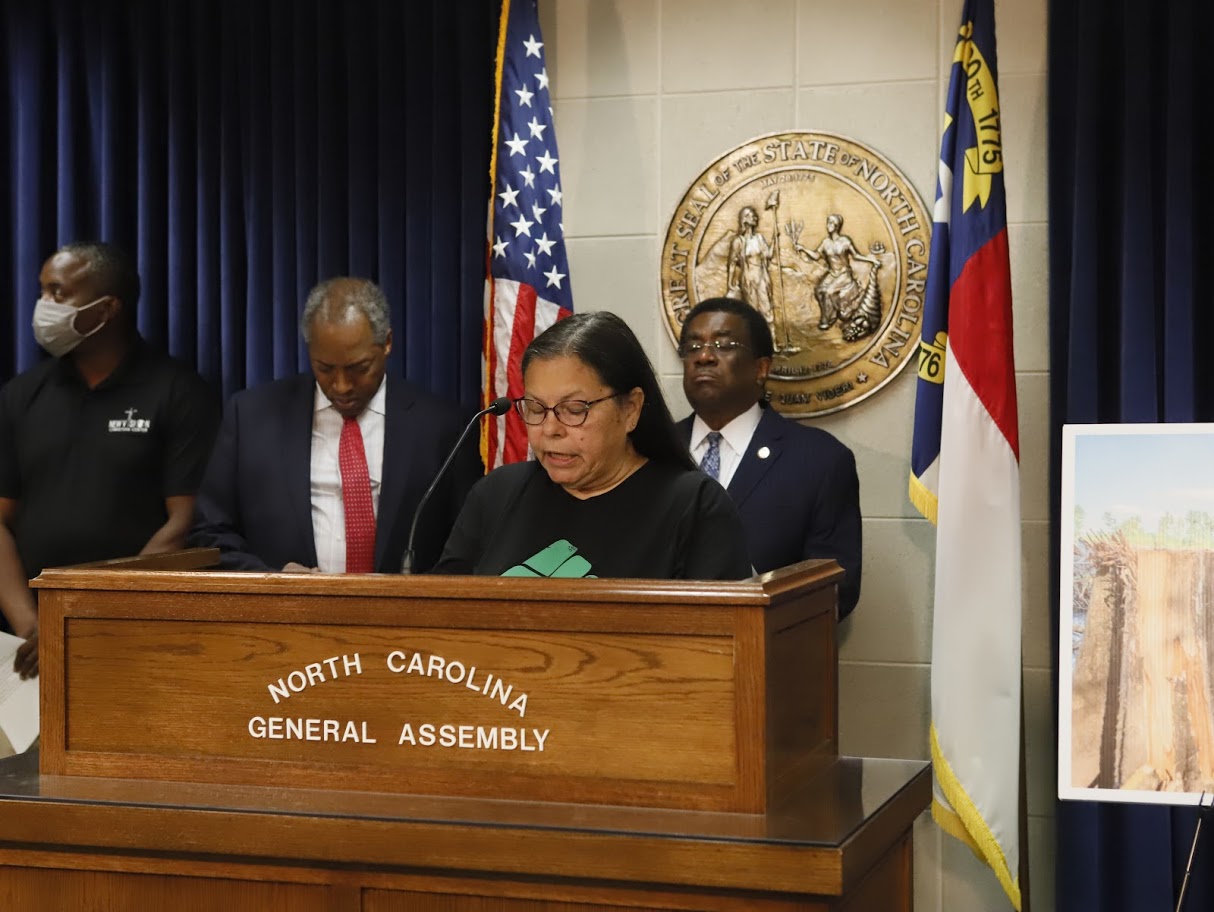
Donna Chavis of Friends of the Earth at the Where’s Cooper press conference and demonstration
Donna Chavis of Friends of the Earth said,
“Governor Cooper must follow the science. Supplying the globe with the false solution of wood biomass pellets adds to our climate crisis at home.”
Representative Garland Pierce hosted the press conference. Frontline community leaders took turns speaking about the forest, climate, and community health effects of the biomass wood pellet industry. They questioned why these toxic, polluting industries are concentrated in Tier 1 communities. As Tier 1 communities, residents of Northampton, Hertford, Sampson, Robeson, and Richmond counties are already overburdened with too many extractive industries.
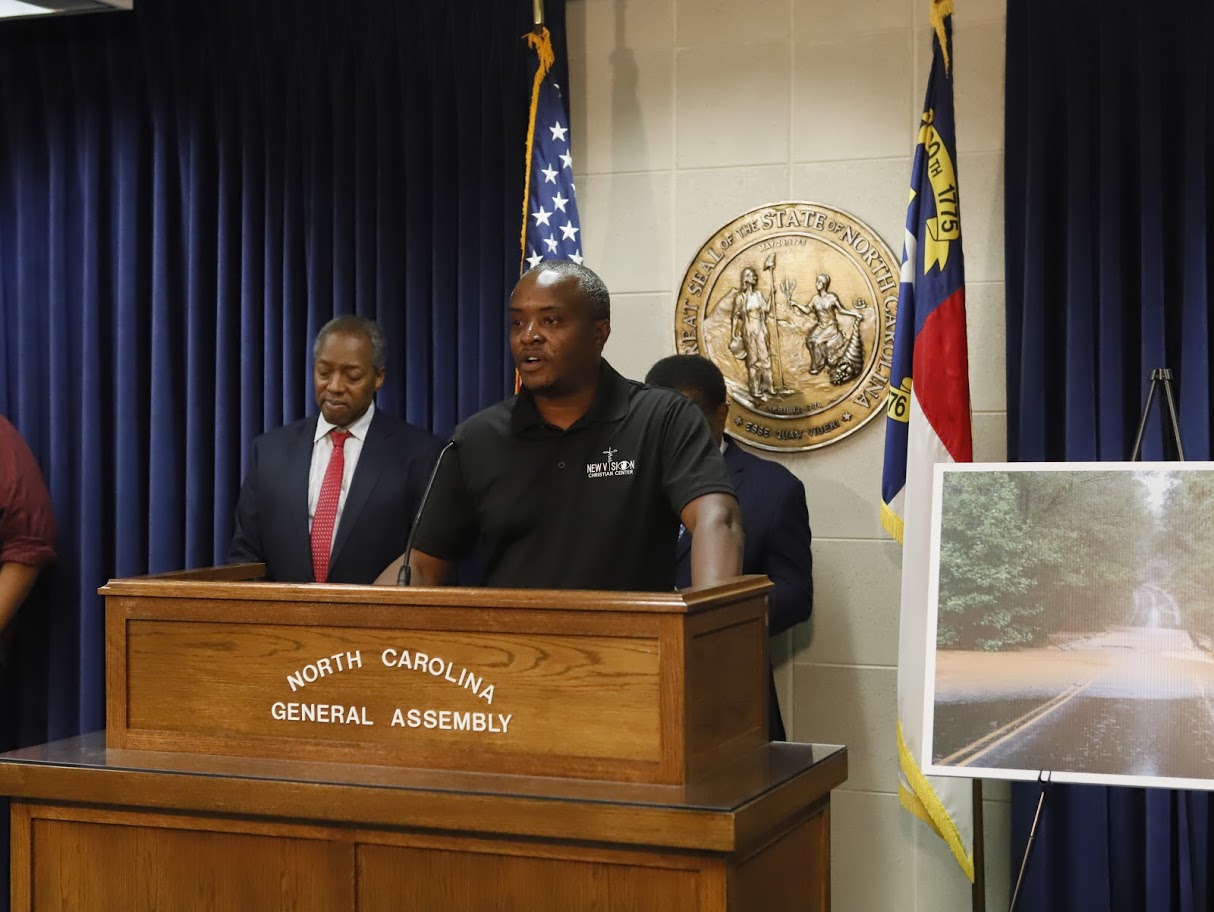
Rev Richie Harding of Northampton County at the Where’s Cooper press conference and demonstration
Belinda Joyner, a Northampton County resident asked,
“My question is where is the concern for the people that are affected by this?”
Rev. Richie Harding, also a Northampton County resident, took it a step further. He called on state leaders who have expressed solidarity with the Black Lives Matter movement to act on racial disparities around pollution. Harding questioned,
“If Black lives matter, why is my community the desired location for a facility that would not only shorten my life, but the lives of my children?”
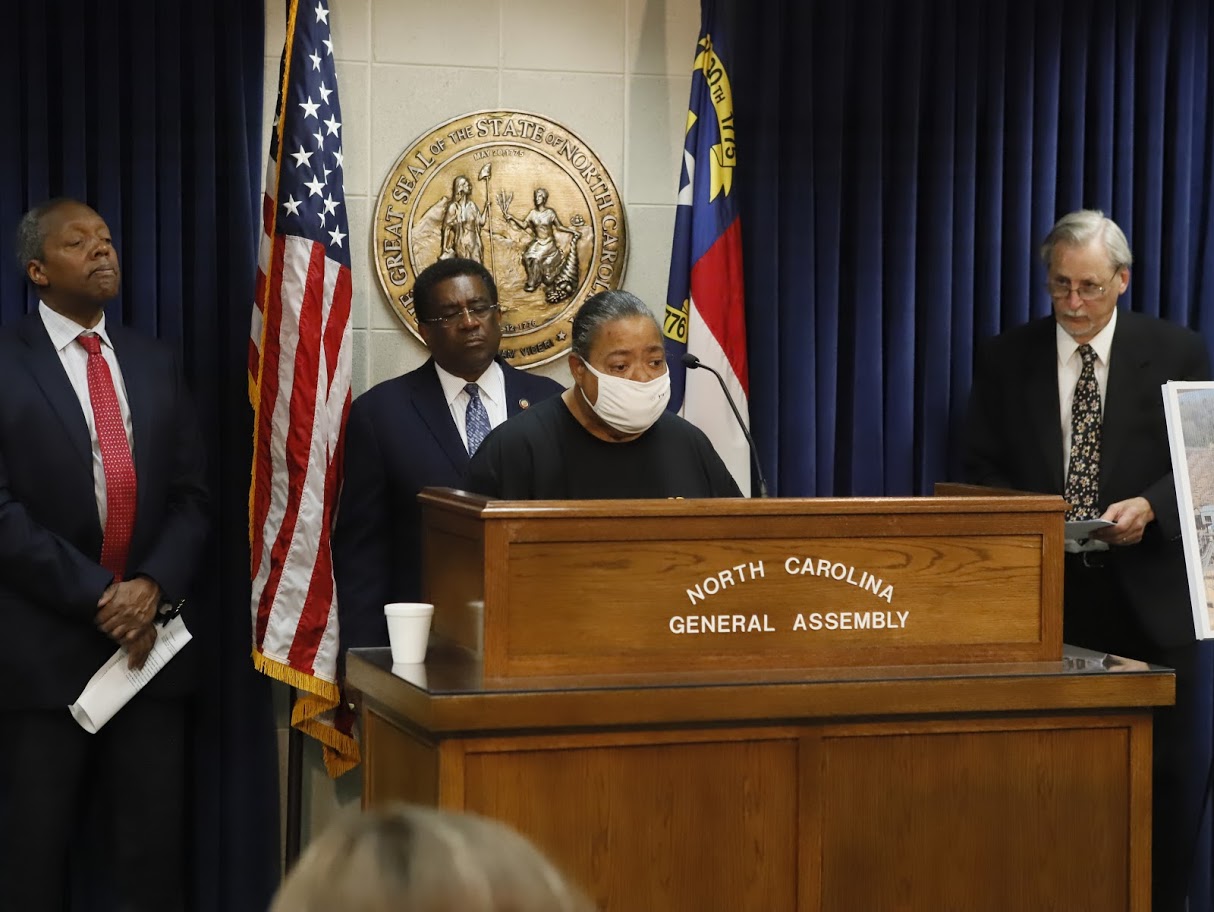
Debra David of Concerned Citizens of Richmond County at the Where’s Cooper press conference and demonstration
Debra David of Concerned Citizens of Richmond County said,
“Our government is behind this, and they are killing us. These are death notices. It took one knee on a neck to put somebody’s breath out, and it doesn’t take nothing but the whole world to say let’s stop this because our breath is going to be lost due to pollution – but slowly.”
Residents of Robeson County decried state support for the wood pellet industry and spoke of the increased flood risk from the loss of their natural forests. Their county made national headlines due to flooding from Hurricane Florence in 2018. Jeff Currie, the Lumber Riverkeeper, said,
“Our bottomland forests and swamps absorb water that controls flooding, clean the surface waters to help us control our pollution, and recharge our groundwater supplies for clean drinking. So where’s Cooper? He seems to favor cutting down our trees to create pellets that folks overseas can burn to keep their lights on.”
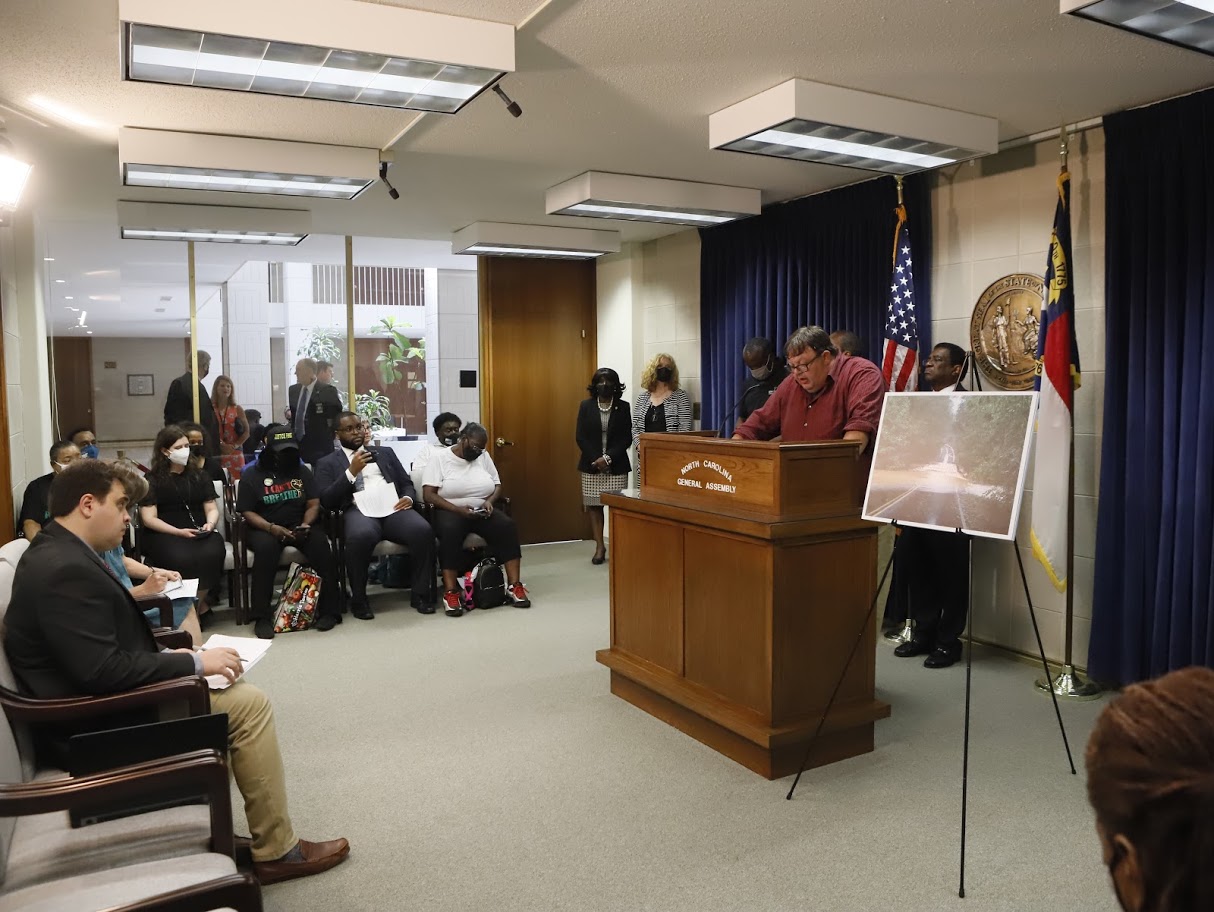
Jeff Currie, Lumber River Waterkeeper, at the Where’s Cooper press conference and demonstration
Reverend Mac Legerton of the Robeson County Center for Cooperative Development followed that up by pointing out the toxic impacts of the industry. He said,
“In public discourse about this issue in North Carolina what is most missed is the toxic releases from this industry that lead to diseases like respiratory problems, heart attacks and cancer. Why are these wood pellet mills in Tier 1 communities that are already overburdened with pollution? The social and environmental damage far outweighs the economic benefits.”
Sarah Muskin of UNC Gillings School of Global Public Health said,
“We must push for DEQ and North Carolina legislators to reevaluate the mechanisms through which they make decisions, and restructure the process to center the needs and health of impacted communities over the demands of polluting industries.”
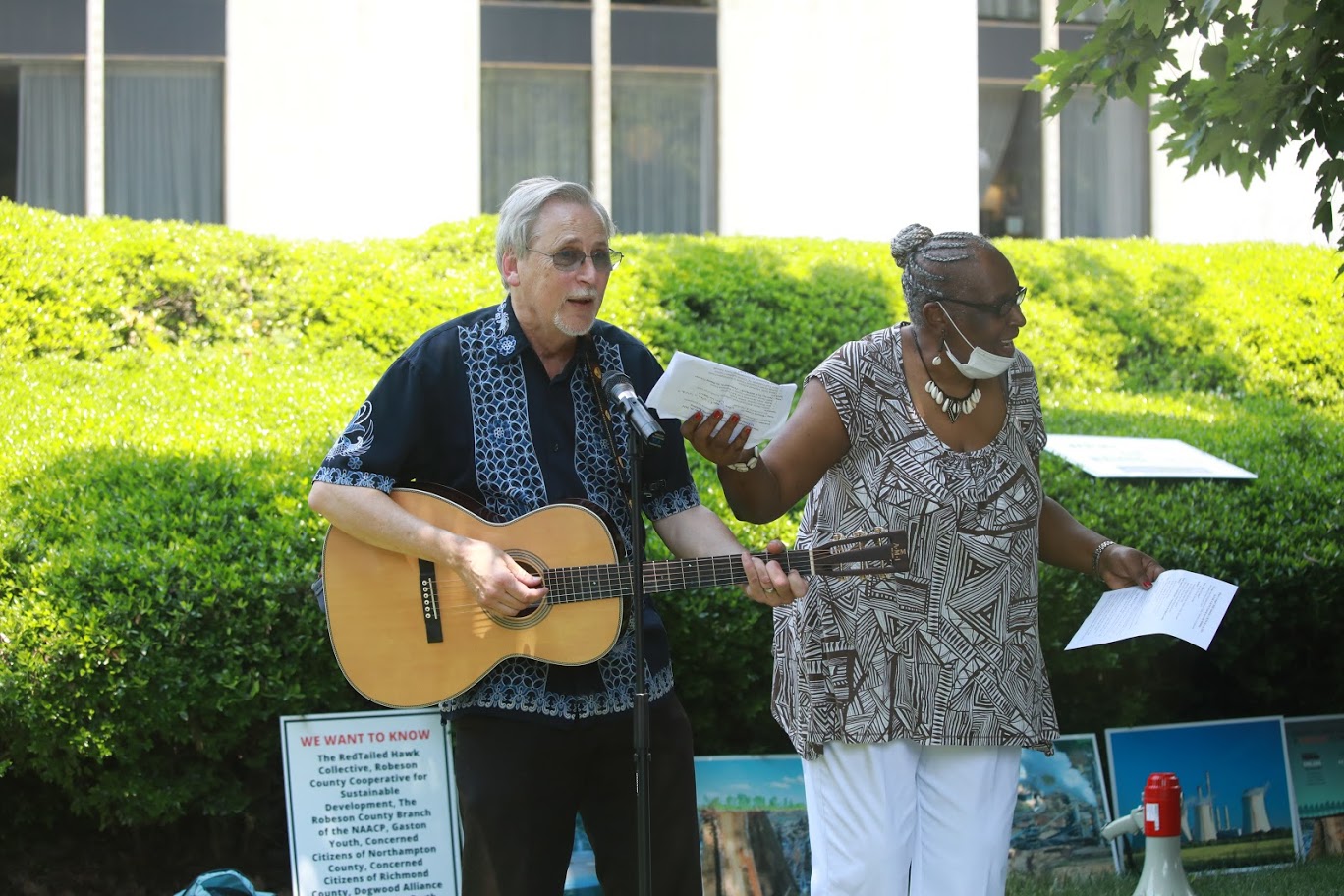
Belinda Joyner of Northampton County and Mac Legerton of Robeson County sing at the Where’s Cooper press conference and demonstration
Following the press conference, the groups joined concerned citizens from all over the state for a peaceful demonstration. Demonstrators held signs reading “Where is Cooper on deforestation?” and “We are tired of being tired” and sang “Where is Cooper? Where’s his Voice?” to the tune of Frere Jaques. Demonstrators then marched to the Governor’s office, Department of Environmental Quality, and NC Justice Department to deliver a petition that thousands of North Carolinians signed.
Donna Chavis of Friends of the Earth said,
“We’re here today to call on Governor Cooper to preserve our greatest natural resource, our forests. If we are to believe the sentiments of his clean energy plan, there needs to be action.”
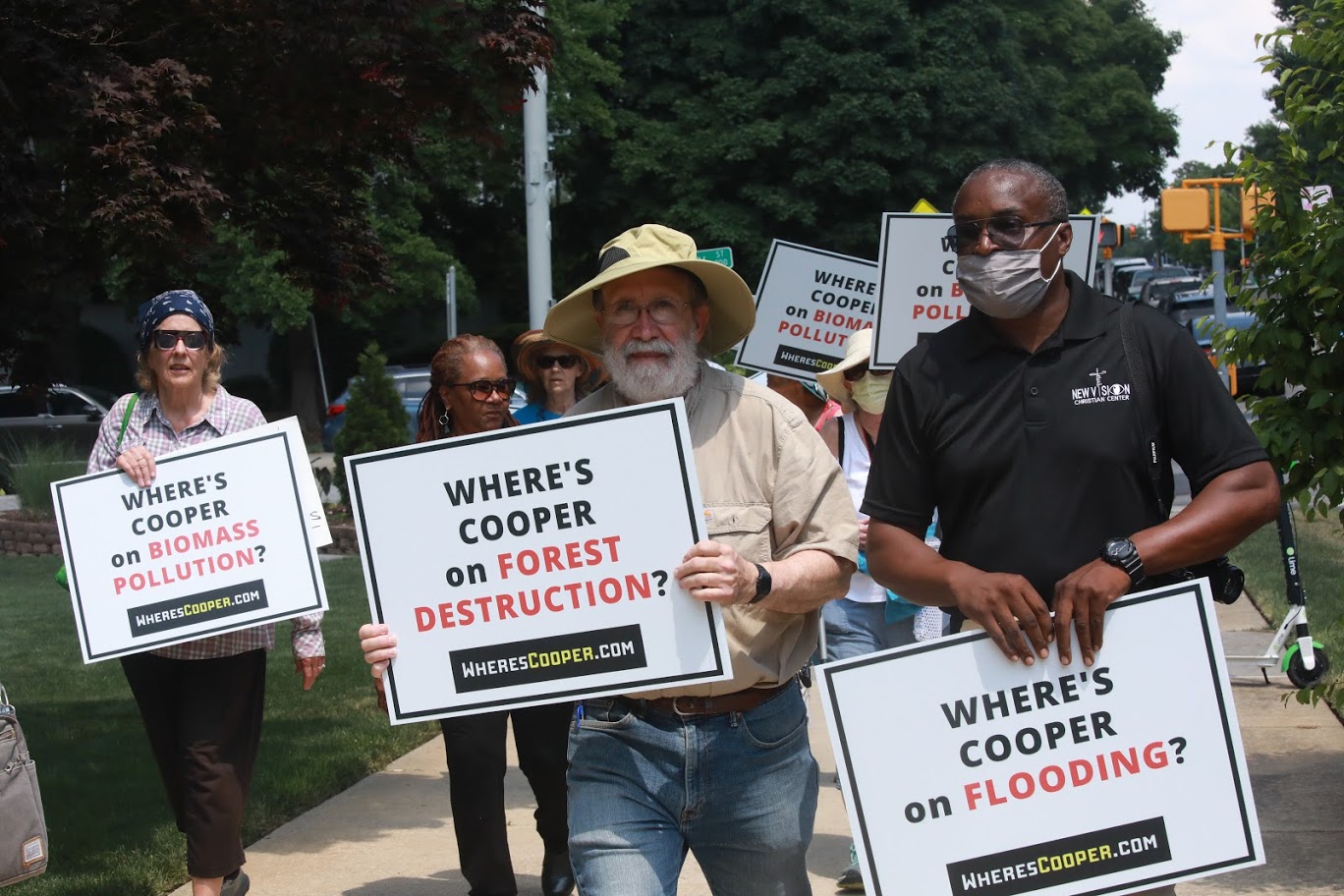
Demonstrators peacefully march at the Where’s Cooper rally
Join Dogwood Alliance and SlayTheMic as we bring you tales of connection to nature and music.This week our hosts of Woods & Wilds: The Podcast, Erniko Brown and Kimala Luna from Dogwood Alliance along with Elizabeth Lashay from SlayTheMic, talk with Kristan Pitts about sparking your soul alongside others, what freedom tastes like, and how we are always invited.
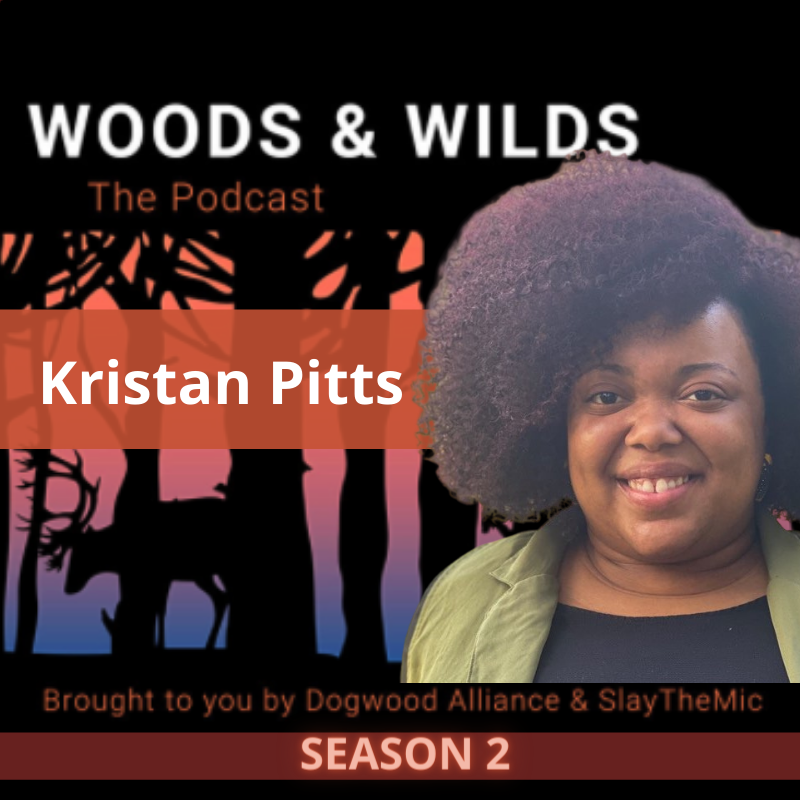
Kristan Pitts is a Greenville, SC native. As a recent Master of Divinity graduate of Wake Forest School of Divinity, for Kristan, “ministry” is “working toward the collective liberation of ALL.” With the belief that ” we bring all of who we are to the spaces and places we frequent,” she is a cross-pollinator of ideas and practices. She has several years of experience working with faith-based non-profits and in student affairs. Currently, she serves as the Diversity Communication Specialist with Yadkin Riverkeeper. When she is not working or studying, she enjoys plotting to take over the world, sightseeing on the Blue Ridge Parkway, and existential conversations with her partner, Latricia, and Ol’ Mother-Law, Mrs. Margaret.
Want to listen to more?
Check out the full transcript of our interview with Kristan Pitts!
Elizabeth Lashay: I’m Elizabeth Lashay from Slay the Mic, and I’m joined by my wonderful co-hosts.
Kimala Luna: Hey everybody. I’m Kimala Luna with Dogwood Alliance, and I am also here with-
Erniko Brown: What’s up, everybody? I’m Erniko Brown with Dogwood Alliance, and today we have with us Kristan Pitts. So, Kristan Pitts has been my entryway into the environmental space. I have thus far enjoyed it as an observer and moving into actually doing the work, and today we are absolutely privileged to have her with us. So without further ado, Kristan Pitts.
Kristan Pitts: Hey, y’all. I’m Kristan, and I’m excited to be with you today.
Elizabeth Lashay: Well, we’re excited. Kristan, when did you fall in love with nature?
Kristan Pitts: So, I kind of fell into it because I wanted to be reconnected to the community that I grew up in. I went to undergrad at a women’s college in South Carolina, Converse College. It’s now co-ed. I studied business there and for about a year, I was doing retail management as a manager and I was really struggling with the ways in which we were treating our hourly employees, and I didn’t have the language at the time, but struggling around us not paying them a living wage. That’s kind of what sparked my, I guess, entryway into commitments around social justice, and some mentors of mine encouraged me to pursue nonprofit work or at least look into it. So, I had explored all these different social job opportunities and nonprofit jobs. I was applying for a bunch of things. I think I applied for 90 jobs during that time. Just so happened, stumbled upon a job posting for an organization called Sustaining Way. They had a sustainability demonstration sight in the community that I grew up in, Nicholtown, which is in Greenville, South Carolina. It was just a desire to reconnect to the community that I grew up in that led me into falling in love with nature and the land through, at the time I was saying it was, I think, urban organic landscape. In meeting Erniko later, she just invited me to throw away those $10 dollar words and just say, “Hey, girl. You’re gardening. Let it go, it’s okay.” So, that is when I first fell in love and reconnected with the land.
Kimala Luna: That’s beautiful, and it’s really powerful to hear. I just view Erniko as such a force in the world, so to meet the entryway into this arena is a big deal. So, I just want to hear about, what sparks you to spark other people? I think one of my favorite quotes, I’ve been obsessing over this series of quotes recently, and one of them is, “One candle can light a thousand other candles and still remain lit itself. Be that candle.” It seems like you are that candle. So, talk about that. Let me hear about it.
Kristan Pitts: Well, that is a beautiful illustration of what it means to invite or spark joy in other folks. I’m a recent divinity student, so if I make references to theologians, please forgive me. I literally just graduated a week ago.
Kimala Luna: Congrats.
Kristan Pitts: Thank you. Howard Thurman is this theological voice that is a force to be reckoned with. Often when people are talking about thinking about your vocation or the work that you feel called to do in the world, they quote Howard Thurman in a speech that he gave. A commencement speech actually for Spelman years ago, where he said, “Don’t ask the world what you can do for it. You need to think about what makes your soul come alive.” I think what makes my soul come alive is literally just inviting folks to be in community. I believe in this notion of everything is by invitation, and nothing is by demand, so if I’m doing something and I see folks, “Hey, you want to connect?” Or, “You want to be a part of this?” Because it’s something that’s important to me, whether that thing makes the other person’s soul come alive is an entryway for them to see a perspective, and it might also spark something within them. It’s very humbling to hear that Erniko feels that way. So actually, I will name that when we first met each other, Erniko was actually a wonderful supporter of me and my work at Sustaining Way. So the role that I was in was a rotational developmental position, and I was scrambling trying to figure out, “Oh, I’m coming into this new space. I don’t know anything about program creation or anything about sustainability,” because I had just jumped into the work. Even in that, she was the person who supported me in leading programs, helping prepare meals for the volunteers that we had on site. So, it’s just as much as I was the candle that helped light her fire for her passion for environmental justice work, she also did the same for me in the ways that she supported me in the work. So, I do want to name that.
Erniko Brown: Yeah. That’s really nice of you right now, and everybody is all giggly, smiley. I do appreciate that, but getting into the work, I was in the advocacy space and why was it important for you to advocate on behalf of your community as you got into the work?
Kristan Pitts: So I think for me, initially I didn’t make the connections around environmental issues, so the community that I grew up in and the folks that I’ve been most proximate to have been black folks and people of color, and folks who’ve been low income or low wealth. That has been my own journey of navigating what it means to be a poor person in the south. So for me, I felt as I was looking at my community of Greenville, South Carolina, I think in 2016, around the time that I started doing environmental work, Greenville was the fourth fastest growing city in the nation. We were also the ninth worst place for economic mobility. So, that played a role in thinking through the ways opportunities were distributed in my community. I mean, I struggled as I watched affluent transplants come to my community while the people who I knew and who I was most proximate to were still not benefiting from what we saw as this cool, hip place with all these economic opportunities. So, it was becoming more aware of those issues that sparked my desire in the first place to move into the realm of working or applying to work with a nonprofit, and Sustaining Way of course was that place. In doing the work, it was where I began to make the connections between those other social issues that I saw and wanted to attend to with also protecting the natural world, because the same way that we exploit folks, we do that to the natural world. Being able to make that connection, and I will name that I’m still making that connection daily through all the work that I do in the spaces and places that I frequent, but that is how I got into my passion to advocate around these issues.
Elizabeth Lashay: Thank you for sharing that. One thing that I admire is the way that you speak about your upbringing and your family, and how it’s a collaborative effort. So whenever I think about environmental sustainability and how it’s a collaborative effort, what are some things that you can take from your upbringing and the roots that you have had and then translate that into the fertilizer that we need for where we’re going in terms of our environmental sustainability process?
Kristan Pitts: Right. So when I talk about my upbringing, I often name the ways in which it was a collaborative effort. My mom was younger when she had me, and she didn’t necessarily have access to all the tools that it took to support me as a child. So, I had the opportunity to live with my great grandmother, whose home is eight houses up from Sustaining Way’s demonstration site of Annie’s House. Being in a multi-generational context and also being collaboratively raised by my great grandmother, my mother’s father, his mother, and then my grandmother’s parents as well, and also aunts and uncles, was very formative for me as a child. As I think about the ways in which we have to collectively work together in order to attend to the issues of all the environmental issues that are impacting our world today, what I notice or a thing that I see is that it takes all of us. Just like it took all those folks to form me and raise me into the person who I am today, it takes all of us to attend to these issues and to create a just and equitable world for all. When I say all, I mean the human and the nonhuman. So, that theme around the collective work that leads to collective liberation is what I see and I think. Thinking about the collective in that way, we all have gifts and talents to contribute to creating a world that’s more environmentally sustainable. A lot of times I think we privilege certain voices and certain tools, but I think what my experience and divinity school has taught me is that we often need to be invited to think more expansively because we need storytellers just like we need scientists. We need folks to prepare our meals just like we need the people on the street protesting. We also need change makers in board rooms. It takes all of us, so I think that’s what my formative experience has taught me by growing up and seeing my family, and how they cared for me to blossom into who I am. Also, of course prune some of the, I say spicy when I’m talking about negative traits sometimes, so to prune some of the spicy things that have also come out when we prune our plants in order for them to be able to grow and thrive in the way that we need them to.
Kimala Luna: I love that, and I got chills earlier when you were talking about figuring out the programs thing for the first time. It sparked that thought about laying the track as the train is moving. Creating that new pathway, because the existing pathways don’t work. It’s never worked, and then the collaborative piece also feels like a really important aspect to that. Then interweaving those garden metaphors also feels relevant, and I just want to make sure we’re highlighting the theology piece too. Right? Because it is about how it sparks our soul and the ways that we feel moved and feel inspired. So, can you talk about that piece and maybe a recent time that was super moving to your soul?
Kristan Pitts: Sure. I think theologically, clearly when we think about the Bible, there is so many rich metaphors for growing and connection to the land and to water woven throughout the biblical texts, and especially within Christian theology, which is what I’m more familiar with, there are these rich biblical examples but I think for me, what often comes up for me is the ways in which Jesus lived his life. As a disruptor to systems that were broken, and his call to ministry as justice making. so it’s not necessarily people may say that it’s not directly tied to those garden metaphors, but for me, it is. Because, if it wasn’t for this connection for justice making or this connection to seeing that people needed to be treated equitably, I don’t think I would’ve even gotten to the part of the, I guess beautiful, natural world metaphors. If that makes sense. So for me what the undercurrent is this connection to justice making in the ways in which Jesus saw folks mistreating people in the temple, exploiting them for their resources, and he went in there and was like, “No,” and was flipping stuff over. So, I think those indirectly is what influences, for me theologically, what was led me to reconnect to the natural world.
Erniko Brown: Cool. We definitely appreciate you saying that and talking about the metaphors because a lot of times we hear metaphors but we don’t understand them. So for you to take a moment to actually breakdown metaphorically speaking is a great opportunity for people to actually hear it, which brings me to my question. Thinking about those metaphors and the natural world versus the biblical world, how does that intersectionality intertwine with the reason you walked away from the work and excites you about coming back into the work?
Kristan Pitts: Right. So for me, I think when I was at Sustaining Way, one thing that happened for me was my social consciousness was raised in that space, and it was one place where I was first introduced to environmental advocacy, specifically around climate change and climate justice. So, I remember an early experience I had. Originally when I started there I was kind of a part time assistant kind of role, just there to learn and support the coordinator at the time. I ended up getting promoted, and then I had to serve as a representative at this climate change gathering. I remember feeling like, oh my god. So at the time, that was my first time on a plane as an adult. I traveled to this conference, so that was a new thing for me. I was like, “Oh lord, what’s happening?” So I get there. I’m already feeling like a fish out of water, and in my conversations I just felt like I was not equipped to participate, and I also did not feel welcomed in that space because I didn’t necessarily have a scientific background nor did I have an advanced degree that was related to the field. I couldn’t talk statistics related to climate science. Also, was not equipped to share specific stories or even understand some of the jargon that the folks were using, and for me, that was very off putting. It made me feel like, “Oh, I don’t have a place here.” I just felt like I didn’t have a place in the environmental movement, and I felt like oh, it was my positionality because I was a person who was a poor, black, queer woman. Oh, there is not a place for me here. That’s what led me to being like, “This ain’t for me. I’m going to let the people who are doing that do that because it’s important work and it needs to be done, but I don’t think I’m supposed to do it.” So, I kind of left and was focusing on work, sitting around, inviting religious folks to see Jesus’s call to doing justice work. I just kind of focused on more faith based things. I didn’t have anything specifically to do with sustainability, or at least at the time I didn’t see it. The program that I was doing outreach for is a curriculum that has various things around justice, where the food justice and climate justice was actually woven into the programming, but at the time I was just like, “No. I don’t want to have anything to do with this,” and I didn’t recognize it at the time. So in my time in divinity school, I began to reflect around what I was feeling most drawn to, and that’s the place where I continued to make the connections around all these justice issues. Environmental justice is a racial justice issue. It’s an economic justice issue. So all the other things I cared about were intersected with environmental justice, and I didn’t realize that at the time, but I began to make the connections. As I did, I felt drawn to come back and do specific work related to the environment because I felt like in my experience doing work with LGBTQ communities and working with faith based communities as well in interfaith context but also in ecumenical, across denomination type things within Christian contexts, I felt like I could come back to the work in a way that was more intersectional than I could before. As I was reflecting on that, an opportunity somebody had shared with me for an organization called the Yadkin Riverkeeper. It was a part time position as a diversity communications coordinator, and what they were hoping to do was to help invite more diverse communities to be engaged with their organization. I’m not familiar with how familiar you are with waterkeeper organizations, but the Waterkeeper Alliance is a global network of organizations who focus on protecting our water systems. So, Yadkin Riverkeeper specifically focuses on protecting the Yadkin Pee Dee river basin, which flows from West Central part of North Carolina, and eventually it turns into the Pee Dee. It flows into South Carolina, but we focus on the 21 counties that are in the river basin in North Carolina. So, there’s about 21 counties and almost 100 municipalities, and we work to enhance and protect the Yadkin through advocacy, education, and action. Our network, there’s some opportunities for growth around representation of our river basin and the communities within our river basin, and the role was an opportunity to help make those connections throughout all of our communities. That is what has sparked my interest in reconnecting to the movement and actually being able to do the work. Now, I’ve only been working with the organization for the past six months, but it has been so rewarding to pull from the skills I learned when I was at my time at Sustaining Way, and developing robust programs but also inviting my organization and myself to think through how we are leaning into justice, equity, diversity, and inclusion in our own lives but also in operational lives within our organization.
Elizabeth Lashay: Thank you for that. I mean, there’s so much to unpack just from what you were saying, and a few key things that come to mind are these buzzwords that we keep hearing is diversity, equity, inclusion. Is it really being implemented into the organizations? One thing that you said is when I came into these spaces, I didn’t know the lingo and it didn’t feel like I was in an area to be included. So, I know just based upon what you said, what are three things that you think organizations really need to take a look at in order to implement an actual, sustainable, inclusive, just, and belonging environment?
Kristan Pitts: For sure. That’s a really good question. So, I think the first is around hiring practices and really thinking through the organizations. How are we selecting candidates? Where are we posting? Thinking about ways to make that process as unbiased as possible. One of the things I’m trying out is we recently created a fellowship. It’s a 10 week fellowship where someone can come in and hopefully help cultivate their environmental leadership. One of the things that was important to me was to put into place a hiring process that was as unbiased as possible. So, we created a sheet that was based on numerical value. There are multiple people who are a part of the process, and I try to make sure that we were posting it in different places that we don’t normally post it. Also, not only looking at the numbers as objectively as possible and the scoring of each candidate, but what was coming up for us as we were interviewing folks, and it was important for me for that to happen because I think a lot about moral formation and I don’t know if that’s because of divinity school or what. Ethics is super important to me, and when we’re a part of organizations, we have to assess, does it align with our values as well? So, it was a wonderful learning opportunity for me and my colleagues to think through how we were deciding on what numbers of ranking we’re going to give people based on the same questions everybody was asked. It was, for me, inviting them to think through, why did you give that person that score? Can you tell me a little bit more about that? What that was rooted in, and for example, often people talk about professionalism and what professionalism looks like in an interview. We had a conversation about this today. So for me, I was asking them, “Oh, we kind of have these ideas about what professionalism is, but what is that rooted in? Who does it privilege and who does it disadvantage?” So, the first thing is hiring practices and that is a little bit of rational for why I think. That’s one of the things. I think organizations, not only do they need to be doing consciousness raising, educational workshops for their staff, their board, they need to make sure that when they are hiring folks to do that consciousness raising, professional development opportunities within, that they’re not being biased in who they select. So for me when I think about folks who are doing DEI work, we have to be careful because I feel like DEI programs sometimes are often commercialized in these particular ways that just lead to us mimicking the systems of oppression that we’re trying to get away from. It takes a lot and I think being in conversation with other organizations, but also the communities that you’re working with, and typically I think people who have a credential behind their name or something like that, those are the folks that we want to go to first. I think in assessing who’s at the front of movement work, who’s in your community who’s doing justice center work, those might be the folks that we need to be tapping. Community members who are doing that work. So the second thing I would say is consciousness raising, professional development work for organizations to assess the individuals or to invite the individuals to assess themselves, their organizational practices and bylaws, things of that nature. I think the third thing is continued self reflection for all the people who are involved in our organization. I think for me, divinity school has really invited me to think about that a little bit more critically, because I think a lot of times we think organizationally but we don’t really assess the ways in which we show up as individuals. I think critical self reflection is important because individuals make up institutions, and the institutions that are doing harm, are doing harm because individuals ain’t work through their stuff. Good, bad, and indifferent. So, those are the three things. Critical self reflection of the individuals involved in the organization, continued professional development, and being very critical around who you’re inviting to lead that, and then of course best practices around hiring.
Kimala Luna: That was juicy, and I’m reminded I’m ashamed to say I just read the Combahee River Collective Statement for the first time and I’m just really reminded of that work because they have this segment in there about how it’s inherently a socialist movement, and it should be about the people who were actually getting the work done and not created for the bosses. I want to switch gears for a second, for the people who are getting in there and moving in this world where this space has not been created for them to feel comfortable. Where they’re being activated daily, hourly. What words do you have for those people?
Kristan Pitts: I would say continue to be your most authentic self, and the resources will come, because there is a lot of work to do when it comes to making our world more just and equitable. So, I would invite them to continue to show up as best as they can and as much as they can, and also to take care of yourselves and to find joy outside of the work of doing justice, because I think that’s an act of justice in itself. Going back to biblical ideas, so this idea around sabbath and jubilee is something that I’ve been reflecting on a lot. I think a lot about sabbath. For example, I really struggled with it when I was coming into divinity school because it felt like, you know that’s cute y’all talking about that, but people who are in really challenging situations, they don’t have access to sabbath in the same ways. They don’t have access to rest and celebration in the same ways, and in some ways it felt, in the ways we were talking about sabbath and self care, it felt very privileged to me. Thinking through, it felt wrong. If that makes sense. Also, I think a thing that everybody has learned or a lot of folks have learned from COVID, even with seeing a lot of the ways in which inequity was exacerbated due to the pandemic, in some ways we kind of got a pause. Some folks got more of a pause than other folks, which also continues to invite me to sit intention, but in that pause I think I’ve learned and I’ve witnessed other folks learn this importance of what it means to separate from the systems as much as possible to find joy. Even if it’s for a few minutes. Or to take a nap, or to go outside and enjoy, your bare feet being in the grass, or sitting by the river. Some of that is mixed both with joy and pain, because I’ll name even for me during the pandemic, not really sure if we were going to lose our jobs or whatever, me and my spouse. I found the best peace by reconnecting to the natural world. There’s a park in Winston-Salem where my school was called, I think it’s the 421 park, has a river access point and I would just go there with my spouse, and we would listen to Octavia Butler’s books and sit by the river. That was where I found joy. Even in the midst of all of this spicy uncertainty. So, I would invite folks to try to find joy in moments of sabbath and reconnecting to land, and being their most authentic self in the work that they’re doing because sometimes it doesn’t feel like when we’re doing work people can see it, but people can see it. We have to think about, who are we doing the work for or what are we doing the work for? I think if it’s for the liberation of folks and the environment, there’s even joy in that work as well.
Erniko Brown: So, yeah. That was just pretty heavy, poetic, all of the good things in one. One thing that you touched on was liberation and a little bit of intersectionality. My question to you is, how does intersectionality relate to collective liberation from your perspective in the work that you’re doing?
Kristan Pitts: So, I feel like and I’ve heard greats say that no one is free until we’re all free. So for me, that’s where intersectionality plays a role. As I think about my own positionality as a low wealth, even with multiple degrees, black queer woman in the South and I think about the ways certain groups are more impacted by environmental degradation, I see those intersections. In attending to the issues that impact folks with my positionality and even folks who are more marginalized than I am, thinking through that, and also thinking through the ways in which folks who may not realize that they’re being negatively impacted in their participation whether they’re oppressing people are not, are not saying anything about the ways that we treat folks and the environment. They’re also being morally deformed in the process of apathy, essentially. That’s my personal belief. So, I think it’s important to think through a way in which we can all have access to thriving, and whatever that means. I know people have different understandings of what that means, but when I think about the most marginalized person or the ways in which we treat our environment, what is the worst thing we should try to attend to, whatever the most marginalized person or part of the natural world, attend to that? If we’re looking for it through that perspective, that’s how we should treat everybody or everything. So, I kind of feel as though the connections between the two relate to if I want to be treated well, I should treat other people well. So, if I want to be free, I’ve got to make sure everybody else is free as well. It comes down to that for me, when it comes to intersectionality and thinking through collective liberation, because I think a lot of times some folks, and this is what religious leaders are talking about in spaces and places, and leaders in general. We often see, oh, I’m marginalized in this way, but then we’re not reflective on how we’re oppressing others or not caring for the environment. So, we’re actually mimicking the harm that we say that we want to disrupt. Even folks who are marginalized. I think those are the connections for me, and I think I want to continue to reflect as an individual, and invite other people on that journey, of deeper reflection on how we can just be better neighbors to each other and the natural world.
Elizabeth Lashay: With that being said, what does freedom taste like? I know we were talking about treating other people like we want to be treated, but I mean, the actual feeling. What does that feel like to you and have you ever felt that feeling in moments when you’ve been in nature?
Kristan Pitts: I appreciate that question. It reminds me of a gentleman named Parker Palmer, another theologian, who talks about this idea of the tragic gap and how existing in the tragic gap is this space between the reality that we know is possible because we’ve glimpsed it, and the harsh realities that we also see whether through experience or through seeing others. The tragic gap is the ability to stay in that place while still working towards creating that future that we’ve glimpsed for everybody. So when I think about what freedom tastes like, I think about a lot of different things but first is walking through parks in, there are two, one in South Carolina and then the campus of Wake Forest during the spring when the kousa berries are in bloom. There is a tree. I think it’s a Japanese dogwood tree, that produces these berries. They kind of look like tiny apple strawberries, because yeah. They’re textured similarly to strawberries, but walking through, I can’t even remember the name of the park in my state but walking through that park and walking on campus through the grass in the spring, and just eating those berries. Not even rinsing them off. To me, that’s what freedom tastes like. Or, being in spaces where there are paw paws. Where I can just pull one off and eat it. That is what freedom tastes like. Strawberries, just pulling them and the juice dripping down your face because it’s so good. Plums. That’s what freedom tastes like to me. There’s this sweetness to it, and the beauty, it makes me emotional talking about that because I’ve glimpsed, and I’ve felt, and I’ve tasted those things and the beauty of, what if that could be a reality for everybody? I think it’s what keeps me going.
Kimala Luna: Gosh, more often than I can express, Liz asks these questions that just floor me and they get these answers that just make me want to weep. So, give me a second while I gather my question. I guess, what is the thing that you love most about reading Octavia Butler in nature?
Kristan Pitts: So, I’ll be honest. The Parable of the Sower really startled me. It invited both nostalgia, it startled me, and then it also gave me hope in a way. So when I first was listening to the book, like I said, it was a crazy time during the pandemic. We were at the park, and hearing the storyline, I don’t want to share too much just in case the listeners haven’t read it yet, but some of her family’s experiences and the experiences of her community of violence during this time of upheaval, and the fact that the setting, to me, it felt really prophetic. Because, I think the setting is the 2020s, they have this interesting person who’s in leadership for the country who’s a little spicy like someone else we know. There’s this environmental collapse, and then all the spiciness starts to happen, and the folks are navigating their new reality. The fact that that book was written when I was a small child, I think written and published when I was a small child, and now we’re glimpsing that, was very startling to me. Olamina’s character as it unfolded and just listening or reading her words gave me hope, and some strategy. I was taking notes. I was like, “Well, okay. If we’re going to end up where this book is saying,” because it felt real prophetic, “Let me take some tips from little Olamina right now.” Also, the ways in which she talks about the divine is what really resonated with me. So when she talked about everything we touch, we change, and then how God is change, theologically when I think about my own personal theology that I hold, what a more expansive and beautiful way to think about the divine, and seeing the way that Earthseed, this vision that she birthed, came together by the second book. There was a lot of spiciness in between, but she got to partially see her vision come to fruition, and that gave me a lot of hope. Being able to listen to that book while also being close to the water was very therapeutic for me. There was a lot of tears. Tears of both joy and sadness, but yeah. That was a good question, thank you for asking that.
Erniko Brown: Yeah, we appreciate that. Just for you, I would like to know. I know you talk about theologians and you pull things from the divine. What do you feel like your body of work is? What do you feel like is your purpose and passion within this work for the environment?
Kristan Pitts: Got you. So, I think that my body of work is still unfolding, but I think all of our work doesn’t happen in a vacuum. So to be honest, all work is everybody’s work because we’ve been influenced by people and history that lead you to producing whatever we produce, or showing up in the way that we show up. I think one of my hopes is around justice making in every space that I frequent. I kind of think about it like, I once heard somebody talk about this idea of in the world where we have professionals, we have cross pollinators, and we have jackhammers. I see myself as more of a cross pollinator. So, I hope to continue to cross pollinate ideas and practices in all the spaces and places that I frequent, because the reality is it’s all interconnected anyway. Even though we don’t necessarily or we normatively don’t think about it in that way. So, that is a way of just saying it’s still developing, and I’ll keep you posted.
Elizabeth Lashay: Well, I’ve got to tell you one thing. The pollen is real. My eyes have been itchy this year, so you are doing your job by just spreading the justice through the pollen.
Kristan Pitts: That’s beautiful imagery. I just moved to Virginia, and pollen is covering everything.
Elizabeth Lashay: There you go, there you go. I want to know, where can we find you in terms of what you’re doing, the work that you are continuously doing, whether it’s through social media or another outlet? We would love to keep in touch and our listeners to follow you as well.
Kristan Pitts: Sure. So, I will say I’ve been pretty low key. I’ve been kind of hiding out behind the bushes as I continue to figure out the work that my soul most needs, but if you are curious to locate me, if I’m not hiding, on social media you can find me on ImKristan. The work that I’ve been doing with Yadkin Riverkeeper can be found via their website, YadkinRiverkeeper.org, and also the same thing, that’s our handle on social media as well. Yes, so that is where you can find me and who knows? I may be lurking behind a bush in your neck of the woods.
Kimala Luna: Man, this has been incredible. You are brilliant. You are a plugged in human. You are shining bright. I am still processing this concept of when you reach for expansion, when you go to change something, you’re not just changing yourself, the practices in your immediate community or the world, but the universe. You’re expanding the universe as you go. So when you start a cult, I am ready to sign up. I am going to follow you wherever.
Kristan Pitts: Well, who knows? It might be developing. I’ll keep you posted.
Kimala Luna: Please keep me posted. I’m ready. One more question. If there’s one more thing you would want people to just know, if you wish that people just, the basic understanding, what would it be?
Kristan Pitts: One thing. You’re always invited to remember that you’re loved, and that you can think more expansively in the ways that you love yourself and others. The human and the nonhuman.
Erniko Brown: I guess just to close us out, I know you Kimala just said what she said I guess, you talked a lot about theologians. If you could quote one theologian with one important piece of information to the listeners, what would that be? Closing us out.
Kristan Pitts: So the one thing that I would share from a theologian of course would be Howard Thurman. It would be the following statement. Don’t ask what the world needs. Ask what makes you come alive and go do it, because what the world needs, is people who have come alive.
Kimala Luna: Yes.
Elizabeth Lashay: That is a perfect mic drop. [inaudible]. That is absolutely amazing.
Kimala Luna: That is so beautiful.
Elizabeth Lashay: Thank you so much for joining us today. I mean, this has been an honor, a pleasure, and absolutely inspiring in terms of just continuing to thrive in the spaces that we already take up.
Kimala Luna: Yes.
Kristan Pitts: For sure, for sure. Thank y’all for allowing me to be with y’all today. I have thoroughly enjoyed our time together.
Kimala Luna: Yes. We should do another. You should come back.
The UK is responding to urgent calls from scientists to take aggressive action on climate change over the next decade. The UK has a Committee on Climate Change that has enacted binding climate legislation. However, both the UK and the US fall short when it comes to one of the world’s best defenses we have in the climate crisis — forests. The biggest difference in their failures is that while we are not protecting our forests at home, the UK is burning our forests right now for electricity, and they’re relying on massive amounts of taxpayer dollars to do it. This burning of forests, called biomass, is a forest-destroyer and a waste of precious public resources that should be going towards true renewables.
Biomass burning:
Drax power station is the biggest biomass plant in the world and the primary client of Enviva. Drax received over £4 billion in public funding between 2012 and 2019. Furthermore, Drax is trying to shore up even more public funding when its subsidies end in 2027 with pie-in-the-sky bioenergy carbon capture and storage (BECCS) proposals. Recent analysis suggests BECCS will need an additional £31.7 billion in subsidies. Not only that, but biomass is extremely unpopular with the people. Two-thirds of the British public oppose the burning of wood from overseas forests for domestic energy production.
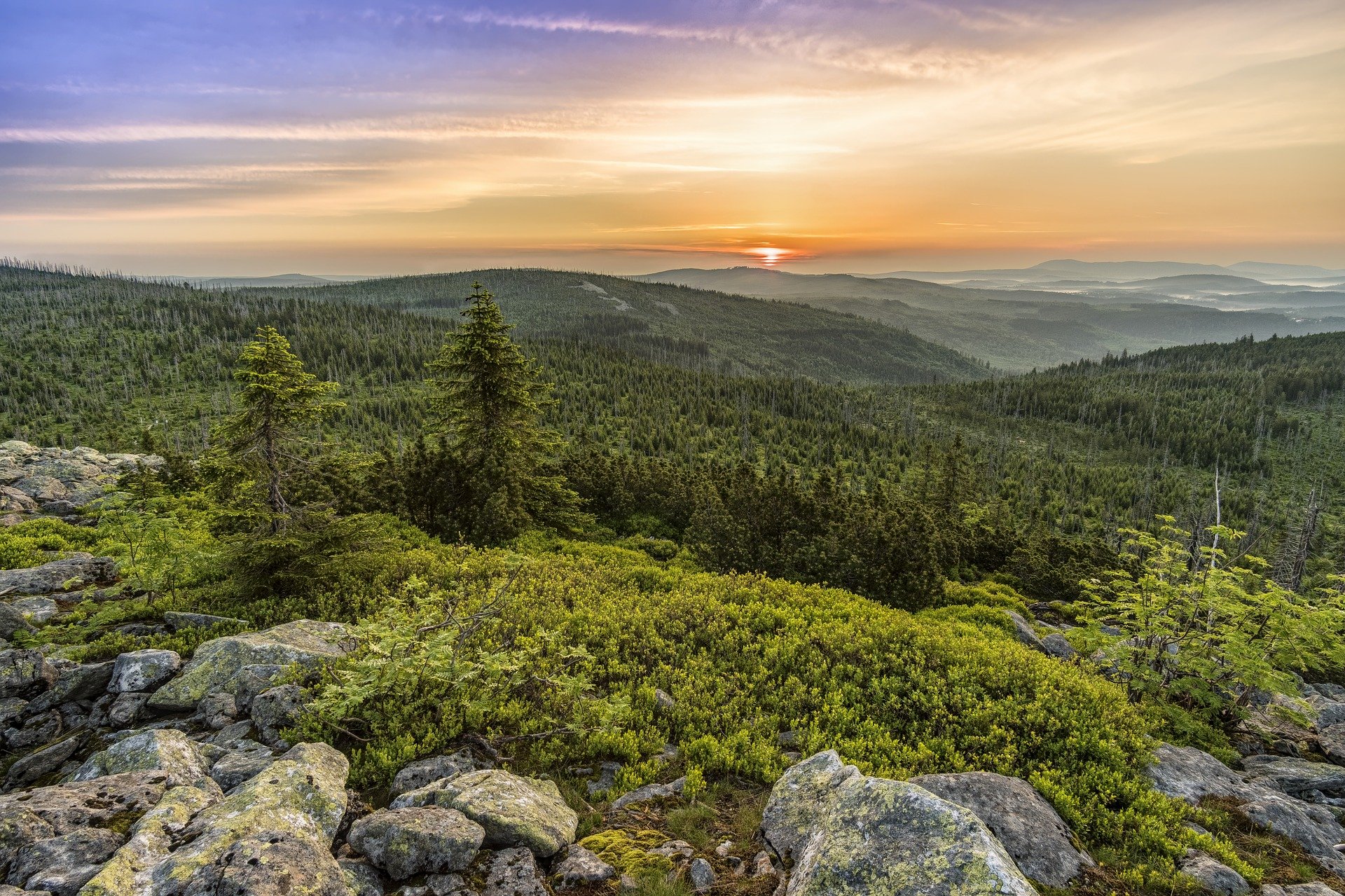
They should at the very least follow in the footsteps of the Netherlands, which imports biomass but has decided to put a halt to all biomass subsidies until a phaseout plan is in place. The Cut Carbon Not Forests coalition remains a leading voice in calling on the UK government to remove the vast subsidies paid to companies that burn forests for electricity.
We need to stop pretending that burning forests is “clean” energy. If the UK wants to be a real leader in tackling the climate emergency, false solutions like biomass should not receive another penny.
Guest post by Amber Skinner
From protecting the atmosphere to providing homes for many organisms, forests are crucial for humans and the planet. Recent innovations allow us to use forms of renewable energy such as wind, solar, and geothermal. With meaningful investment, these will soon replace fossil fuels as main energy sources and lower pollution and the carbon emissions that are warming the planet. None of these new technologies are 100 percent neutral, however. Some are even more harmful than what they are meant to replace. Bioenergy from trees is touted as “green” but is actually a high-carbon polluting energy form. Bioenergy companies, like Maryland-based Enviva, publish confusing statements about their practices to sound better than they actually are. Here’s the truth about Enviva.
Enviva claims that their impact in North Carolina is great for the economy. The state of North Carolina has supported these claims by subsidizing the industry with $7.1 million in taxpayer dollars. But, from 2004 to 2009, the South lost over 20% of wood production jobs. Wood pellet production plants need money from foreign governments to export their pellets. The UK and other European countries give money to the plants because wood pellet production claims to be “eco-friendly.” The corporations risk losing this money if the lie of biomass as a clean energy solution is exposed. The fact is, removing trees from the ground, making them into pellets and burning them in power plants worsens climate change.
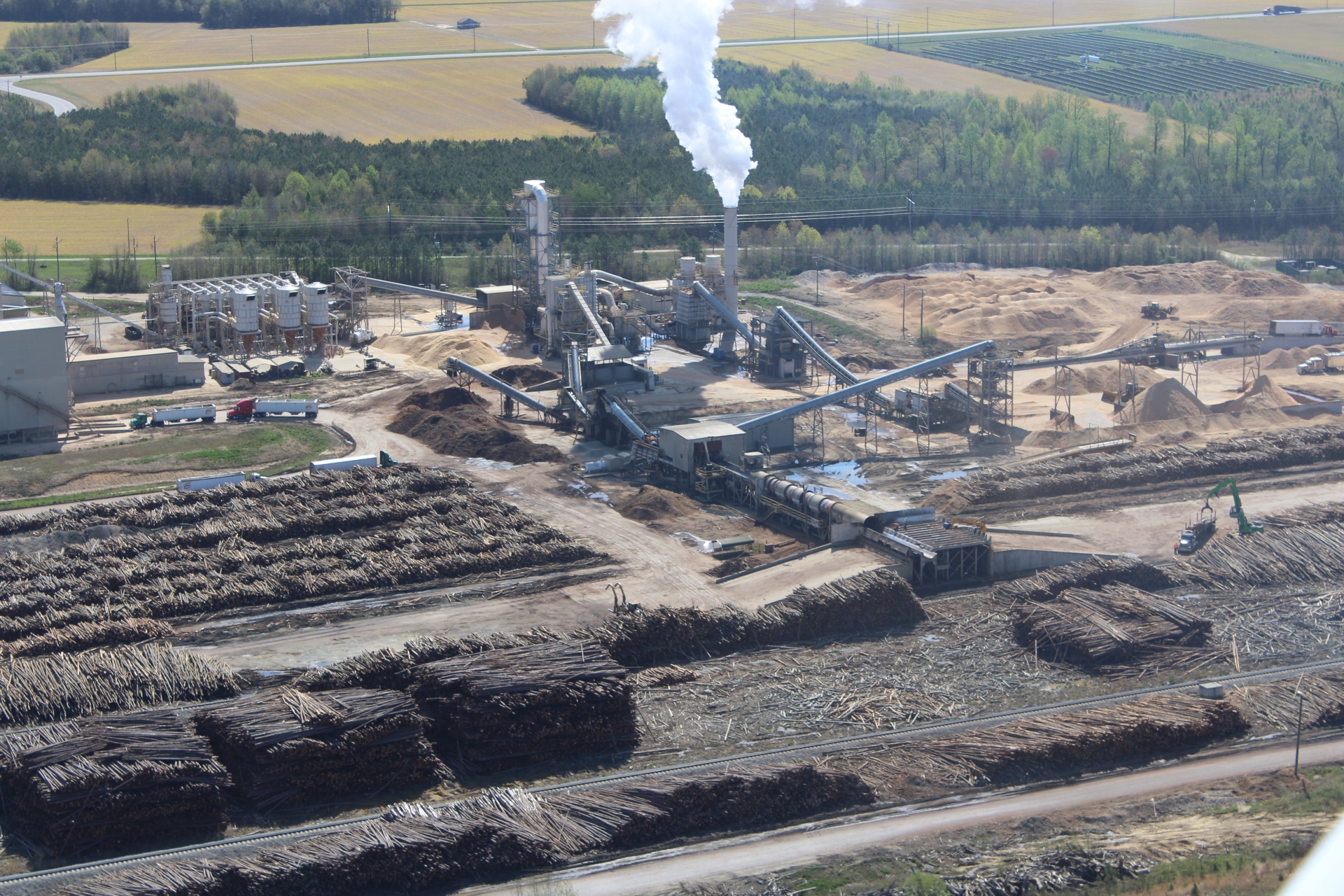
The industry often claims that it provides much needed good jobs to the neighborhoods they seek to operate in. But is this true, and at what cost? Enviva may bring a handful of jobs, but the executive jobs are still outsourced, away from the communities where the plants are located. Enviva is based in Bethesda, MD – part of the Washington, DC metro area. Other executives for Enviva live and work in places like Raleigh, NC – hours away from the facilities that they manage. Meanwhile, communities near the plants suffer, with higher exposure to air pollution, truck traffic 24/7, and dust so heavy that residents can’t garden or enjoy their own backyards.
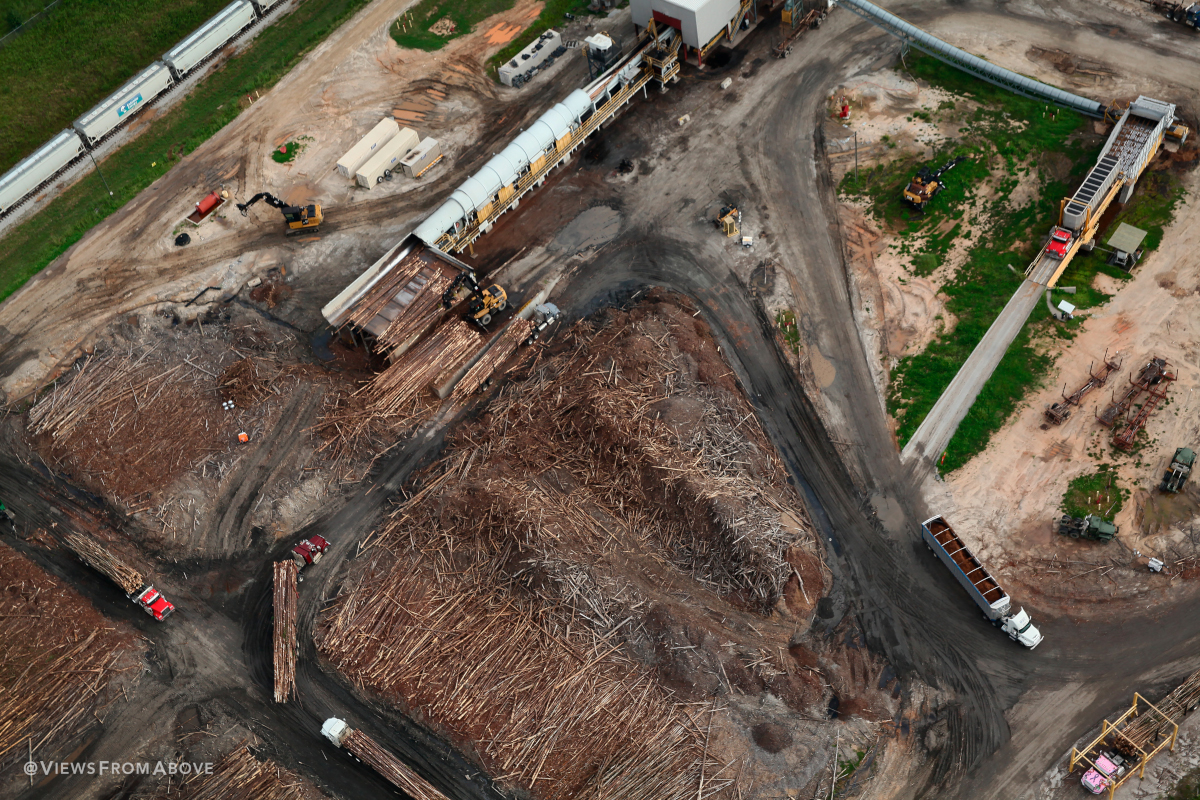
Photo Credit: Views From Above
Also, industrial resource extraction has a restricting effect on economic growth. Counties supported by exporting industries are subject to the whims of international economics. This means that sudden plant closures are normal. Rural communities with wood pellet plants may not have economic growth in other areas, because the presence of manufacturing industries can make those places undesirable. For example, communities may not be able to draw in tourists because manufacturing facilities are ugly, polluting, and often surrounded by barren land. Having a wood pellet production plant in a community leads to dangerous, unintended economic consequences.
Foreign support largely drives Enviva’s economic growth. For example, the UK gave Drax, a major UK energy provider, $965 million dollars in subsidies to burn wood pellets. Most of the wood pellets were produced in the US South by Enviva. These subsidies are Enviva’s business model, and they’re due to dry up soon. The Netherlands, for example, has stopped funding companies like Enviva to discourage bioenergy. Without foreign subsidies, the wood pellet industry is in trouble. The writing is on the wall for Enviva’s subsidy-driven business.
Additionally, there is a devastating environmental costs of Enviva’s operations. Like most manufacturing industries, the timber industry negatively impacts their surroundings. Material for creating wood products comes from a 50-75 mile radius around the facility. In the US South, industrial logging practices like clearcutting drive wood products companies. Clearcutting exerts a heavy toll on forest ecosystems. Clearcutting destroys the soil, kills wildlife and microorganisms, and pollutes the air that we breathe. These practices also cause noise pollution and water pollution. Natural forests are worth billions of dollars in ecosystem services (like clean water and air, protection from storms and flooding, and wildlife habitat) each year. By destroying the forests, Enviva hurts the North Carolina economy.
Enviva claims that they create good, clean jobs for people, but working in the wood pellet industry is dangerous. The resources used to produce wood pellets are incredibly combustible and flammable. This results in perilous working conditions. Enviva’s wood pellet production plants are prone to fires and explosions. This risks the lives of the people the plant employs. In fact, on April 30th of this year, there was a fire at the Enviva Pellets Sampson Plant in Sampson County, North Carolina. It was caused by their wood resources catching on fire. Another wood pellet related fire at a warehouse in Brunswick, GA raged for days.
There is also a risk of carbon monoxide poisoning. Wood pellets release carbon monoxide, a gas known as the “silent killer”. If proper ventilation is not installed, high levels of CO concentration can lead to the deaths of workers in the plants or on transport ships.
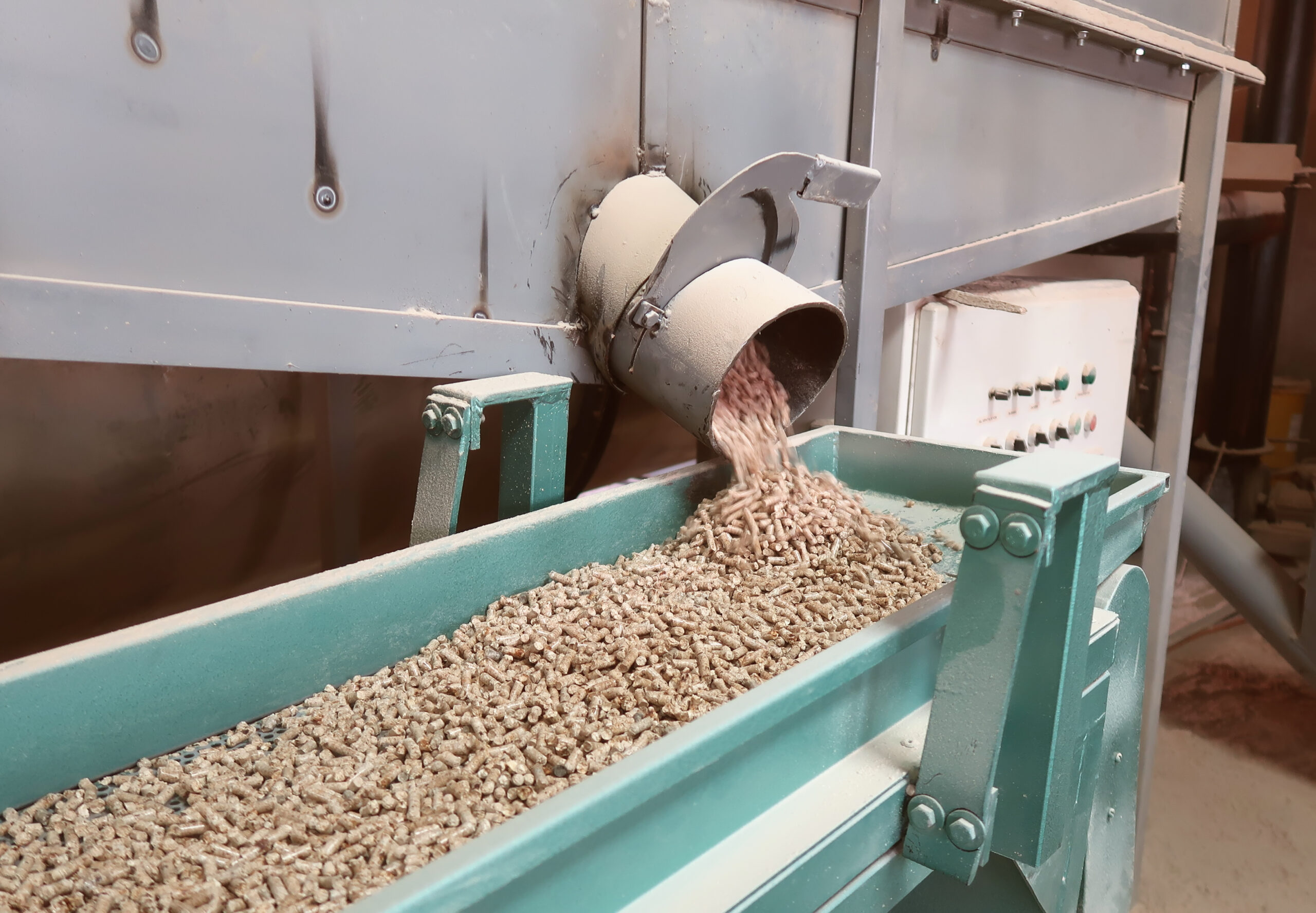
Enviva claims that our forests are growing. In fact, the rate at which forest resources are being utilized is not sustainable. Forests cannot and will not continue to grow if we keep cutting them down. The wood inventory has only been able to grow because of monoculture plantations. This is where the industries plant inexpensive, fast-growing pine trees in bulk. Monoculture plantations don’t provide nearly the same benefits that natural forests do.
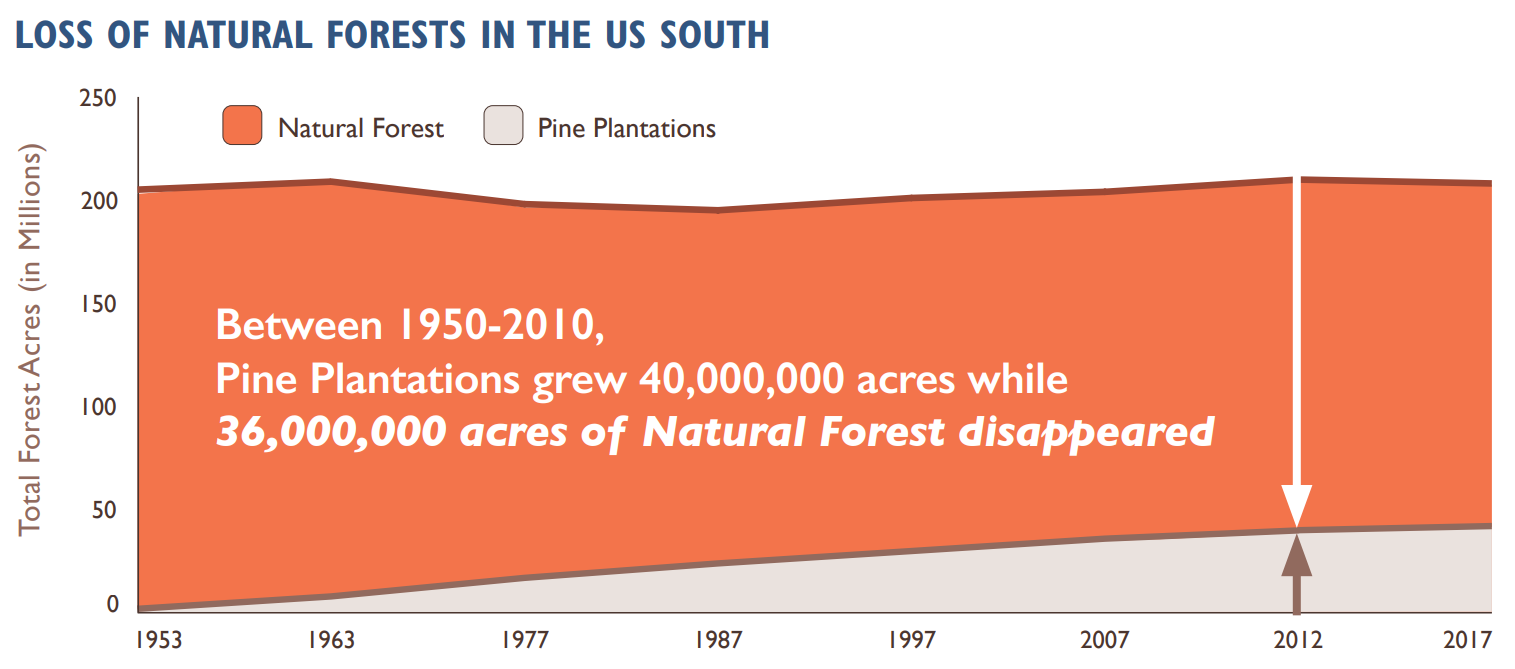
Forest acreage has grown less than 2% in the last 64 years. Acres of “forest” in the US South are more and more likely to be pine plantations, not natural forests. Some people believe forest loss is due to the creation of cities (urbanization). However, globally, forest loss due to urbanization represents less than 1% of total loss. Most forest loss in the US is a result of forestry activities, like Enviva’s clearcutting. The forest products industry is the main cause of carbon loss, deforestation, and degradation in the United States.
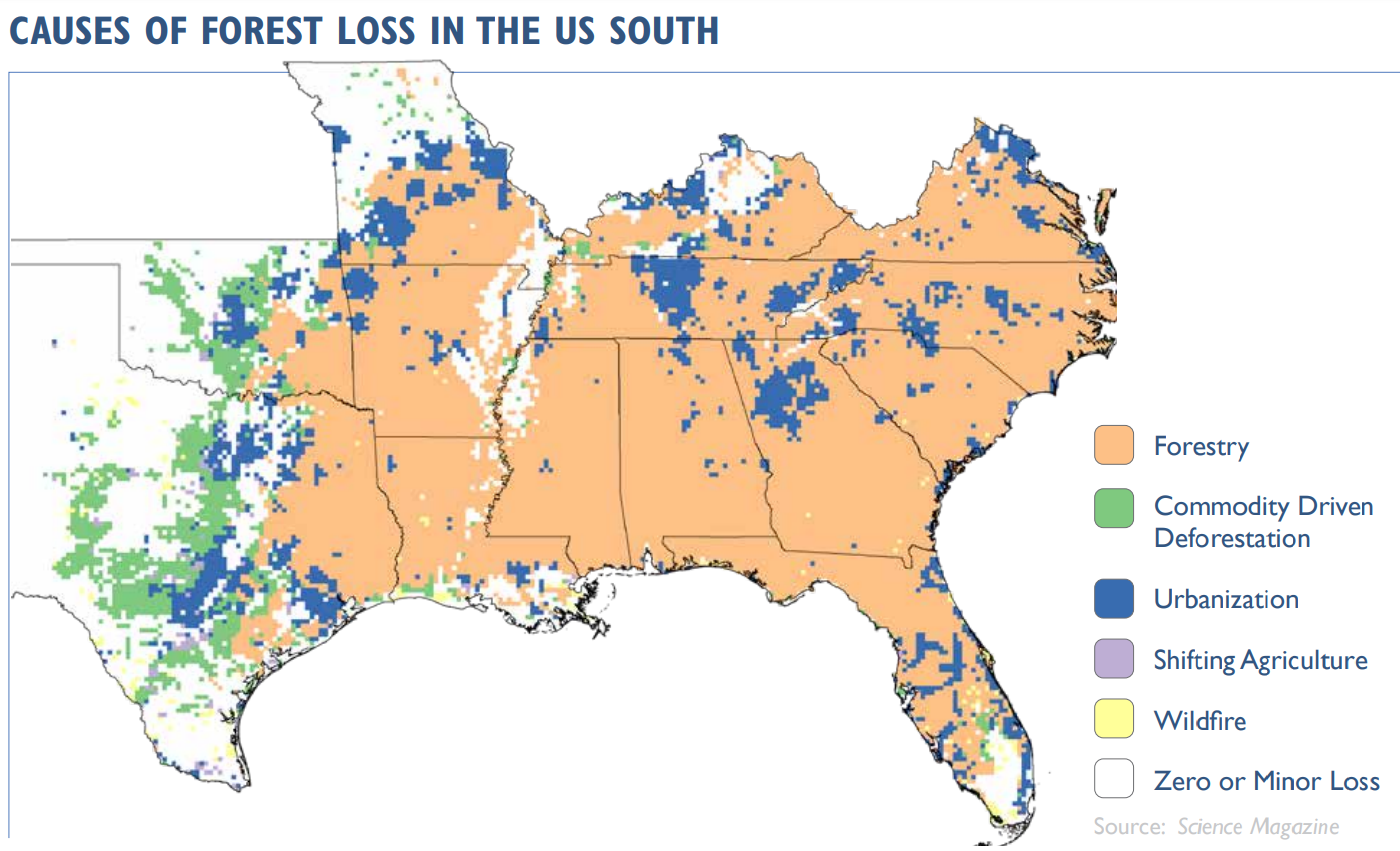
To make matters worse, other measures of forest health have declined as logging has increased. Forests have changed a lot in the last 60 years. When plantations replace forests, there are more pests and less biodiversity. In addition, logging cuts right through forests, which causes large barren areas and forest fragmentation. These measures point to declines in forest health, but that’s not the story that Enviva chooses to tell. Instead, Enviva continues to greenwash their impacts on the economy and forests of the US South.

Amber Skinner is a rising junior at Duke University and an intern at Dogwood Alliance for the summer. She is working towards a Bachelor of Arts degree in Environmental Science and Policy with a special focus in environmental justice and education. Amber loves the outdoors, particularly hiking, and can be frequently found playing outside her home with her two kittens.
Not sure what to watch this weekend? With so many options and streaming platforms, it’s getting harder to decide. We’re here to help you! We’ve searched high and low to bring you a curated list of the best documentaries about forests in a four-part series. Welcome to Part One!
The battle to protect and preserve forests is incredibly important right now. While we fight against climate change, forests are our number one defense, and we can’t afford to cut them down…not if we value our future. Not only that, but it is an issue of environmental justice when we take a look at the most often low income Black, Brown, and Indigenous communities where these forests are being destroyed. Here you’ll find amazing stories of people who faced off against the forces of deforestation to protect their homes, forests, and futures.
Bones of the Forest is an award-winning Canadian forest documentary
This documentary told through the eyes of both Native and non-Native elders places deforestation into the context of colonization. According to the Oxford English dictionary, colonization is “The action or process of settling among and establishing control over the Indigenous people of an area.” The documentary incorporates the views of loggers, alternative forestry practitioners, a former VP of logging giant MacMillan-Bloedel, Native elders, and longtime protesters. The position of loggers and their families, made redundant due to over-foresting, is included as another damaging social consequence of forestry policy. Where to watch: Available here.
This documentary tells the story of activist Daniel G. McGowan of the Earth Liberation Front (ELF). The ELF is the radical environmental group that the FBI calls America’s “number one domestic terrorist threat.” McGowan faces life in prison for two multi-million dollar arsons against Oregon timber companies. The documentary also examines the ethics of the ELF at large and how terrorism is to be defined. Where to watch: Available on Amazon Prime.
Daniel Balima is a horticulturist from Tenkodogo, a small Sub-Saharan African town in Burkina Faso. As a child he contracted polio, leaving him without the use of his legs. Instead Balima learned to walk on his hands. And he has given life to more than a million trees. Because of the drought in his country, he dreams of planting another million.
This powerful documentary tells the little-known story of the accelerating destruction of our forests for fuel. It probes the policy loopholes, huge subsidies, and blatant greenwashing of the growing biomass electric power industry. This industry cuts down forests primarily in the Southern US, turns them into wood pellets, and ships them overseas to be burned to meet Europe’s demand for “green energy.” Science, though, shows that the industrial burning of trees actually produces more carbon than coal, so this industry isn’t green or sustainable, and it’s doomed to fail.
Every year, impoverished farmers on the Indonesian islands set fire to areas of pristine rainforest to clear land for palm oil plantations. The smoke chokes up the air of neighboring countries, endangers forest wildlife, and emits tons of carbon. This documentary shows three stories: An Australian entrepreneur who believes there is money to be made from saving rainforests in Indonesia. A Danish expat who cares for displaced orangutans. And a small-scale farmer wrestling with the dilemma of contributing to climate change and needing to feed his family. Where to watch: Available here.
Part 2: Top 5 Forest Restoration Documentaries Part 3: Top 5 Old Growth Forest Documentaries Part 4: Top 5 Communities and Forests Documentaries
Raleigh (May 26, 2021) – Where does Governor Roy Cooper stand on protecting our forests and rural communities from destructive industrial forestry practices? That was the question of the day in the North Carolina state capitol. Yesterday afternoon leaders from communities that have wood pellet mills operating in their towns were joined by environmental organizations for a press conference and rally at the NC Legislature in Raleigh demanding the Governor halt the further expansion of the wood pellet industry.
North Carolina exports more wood pellets overseas to be burned for energy than any other state in the nation. The state has 4 active wood pellet production facilities operated by Enviva in Northampton County, Hertford County, Sampson County, and Richmond County. Active Energy Renewable Power has plans to operate a 5th new facility in Robeson County. And European power stations burn 2.5 million tons of North Carolina wood pellets per year.
Belinda Joyner of Northampton County said,
“I am from Northampton County. We are home to four facilities that have permits from DEQ – hog farms, landfills, and of course Enviva. Everything our communities don’t want is there – air pollution, noise pollution, and health problems. Where does Governor Cooper stand in protecting my community?”
The NC Clean Energy Plan states: “Currently, the wood pellet industry does not contribute to NC’s energy generation portfolio and does not advance NC’s clean energy economy.” In spite of this cautious and critical view, the state has provided over $7 million in subsidies to support and expand this industry. The Enviva wood pellet facilities clearcut over 60,000 acres per year and are all sited in low-income (Tier 1) communities of color. The rapid expansion of the controversial wood pellet industry has occurred in the state without any meaningful public or policy discourse.
Donna Chavis of Friends of the Earth and a lifelong resident of Robeson County said:
“We’re here today to call on Governor Cooper to preserve our greatest natural resource, our forests. If we are to believe the sentiments of his clean energy plan, there needs to be action. We are concerned about businesses that degrade the quality of life of our communities. And, unfortunately, he has continued to allow the wood biomass industry to log our forests to provide wood pellets globally.”
Reverend Mac Legerton of the Robeson County Center for Cooperative Development followed that up by pointing out the toxic impacts of the industry:
“In public discourse about this issue in North Carolina what is most missed is the toxic releases from this industry that lead to diseases like respiratory problems, heart attacks, and cancer. Why are these wood pellet mills in Tier 1 communities that are already overburdened with pollution? The social and environmental damage far outweighs the economic benefits.”
Following the press conference, the groups held a spirited rally and then marched to the Governor’s residence to deliver a petition signed by thousands of North Carolinians with the following demands:
Emily Zucchino of Dogwood Alliance said:
“Despite overwhelming scientific evidence that this industry is taking us backwards, not forwards, on climate change, North Carolina has advanced this industry without any public or policy discourse. Governor Cooper and his Administration cannot follow through on their promises on climate change and environmental justice while continuing to support this industry.”
# # #
On May 18th, the world’s most influential energy institution, the International Energy Agency (IEA), released its roadmap to achieve an energy transition towards a 1.5 degree Celcius pathway in line with the Paris Climate Agreement. Dogwood Alliance applauds the tireless anti-fossil fuel campaigners whose work has been recognized in the report with a call for an immediate end to the production of and investment in fossil fuels.
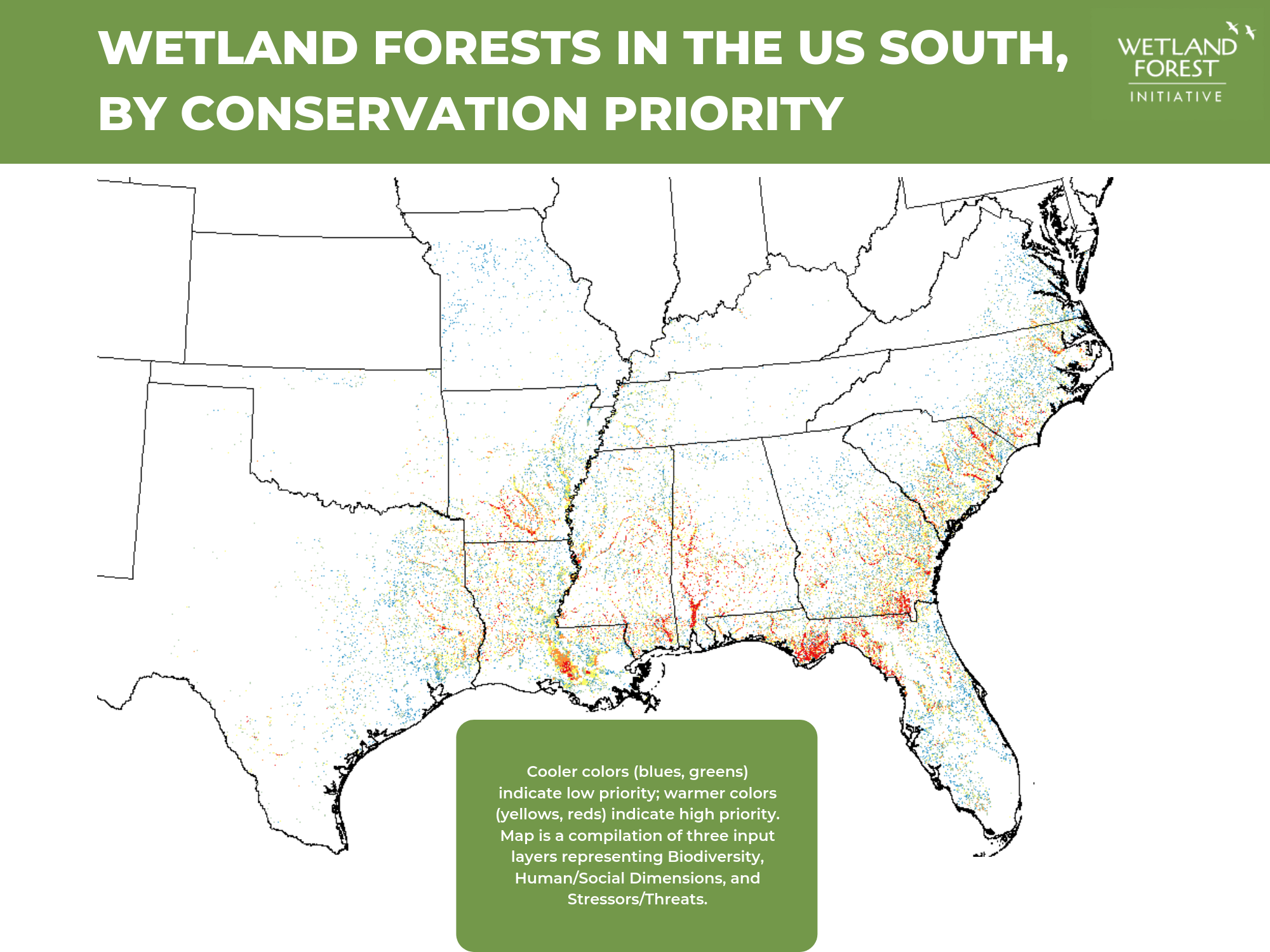
They are calling for a 60% increase in biomass usage. Furthermore, they are also relying on the development and scale up of Bioenergy Carbon Capture and Storage (BECCS). BECCS is not only an unproven technology, but it also leads to a major increase in logging forests, our best existing “technology” for storing carbon and protecting us from the worst impacts of climate change. Finally, early estimates show that we will need a forest the size of India and Pakistan combined to meet the demands of these scenarios.
We have faced the destruction for this false solution for far too long now, and we can no longer let our forests and communities be sacrifice zones. Bearing the brunt of biomass demand has meant degraded forests, impacted communities, and a climate that is no better off than when we burn coal.
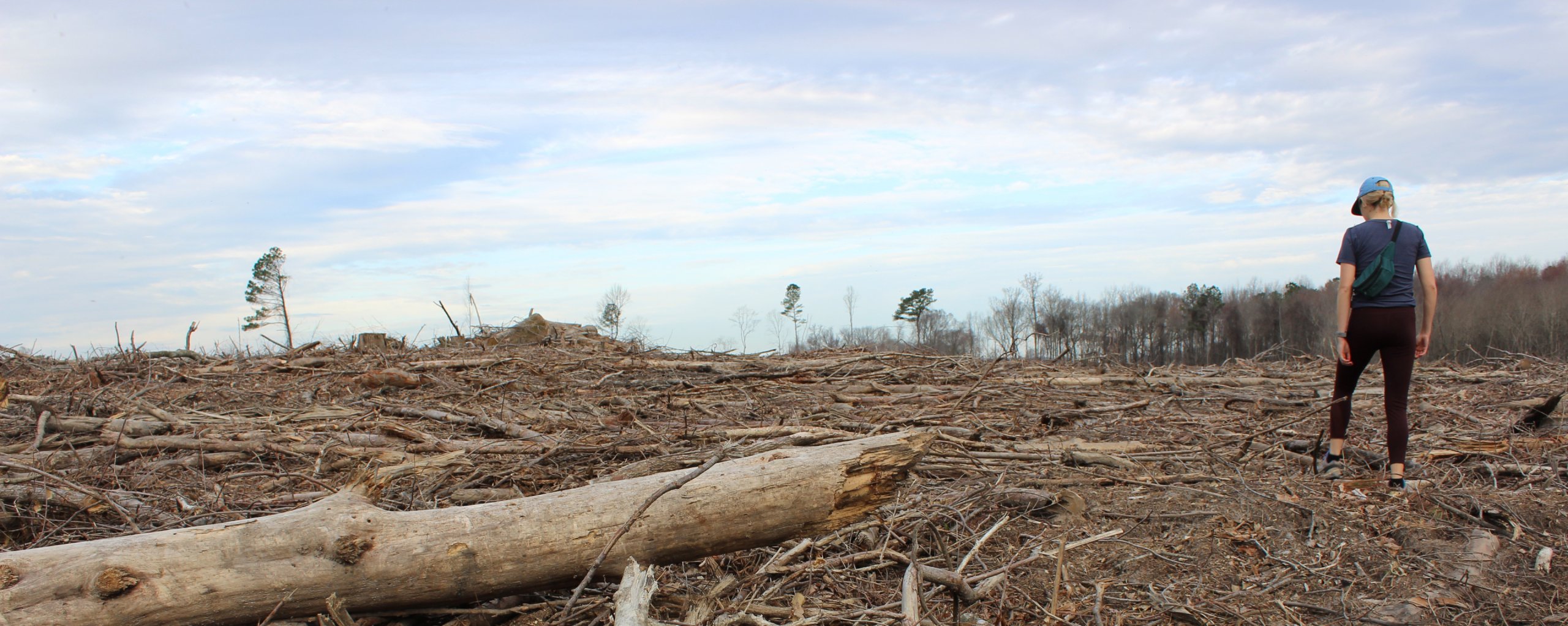
Forests and soils are one of the world’s most crucial carbon sinks. To us, we need our forests to do what they do best: remain standing to capture carbon, provide habitat for wildlife, filter our water, and provide us with places to hunt, fish, and explore. In conclusion, Dogwood Alliance challenges the IEA report to rethink the bioenergy portion of its Net Zero statement and stop supporting biomass as a pathway to a clean energy future.


 Donate