


We know that the health and well-being of people, plants, and animals are intricately connected to our forests. Forests provide us with clean air, clean water, and natural flood control. They also pull dangerous greenhouse gases like carbon dioxide out of the atmosphere. When we truly protect our forests, we protect one of our best resources for fighting climate change.
But North Carolina is a troubled place when it comes to forests. North Carolina recently became ground zero for the wood pellet export market, causing renewed public concern about clearcutting North Carolina’s forests. North Carolina’s forests must be adequately protected from destructive logging practices, especially in light of the urgent need for climate change action.
Recently, the North Carolina Department of Environmental Quality released its North Carolina Natural and Working Lands (NWL) Action Plan. This long-awaited report is an initial roadmap for how North Carolina can utilize the state’s lands and waters as a solution to the climate emergency. North Carolina’s Department of Environmental Quality organized and sponsored the plan with a stakeholder group that authored sections of the report.
Dogwood Alliance was a member of the stakeholder group and participated most heavily in the sections of the report dealing with forests. The report offers a mixture of good and bad ideas, some we agree with and some that will only take us further away from true solutions to climate change. Here’s the rundown:
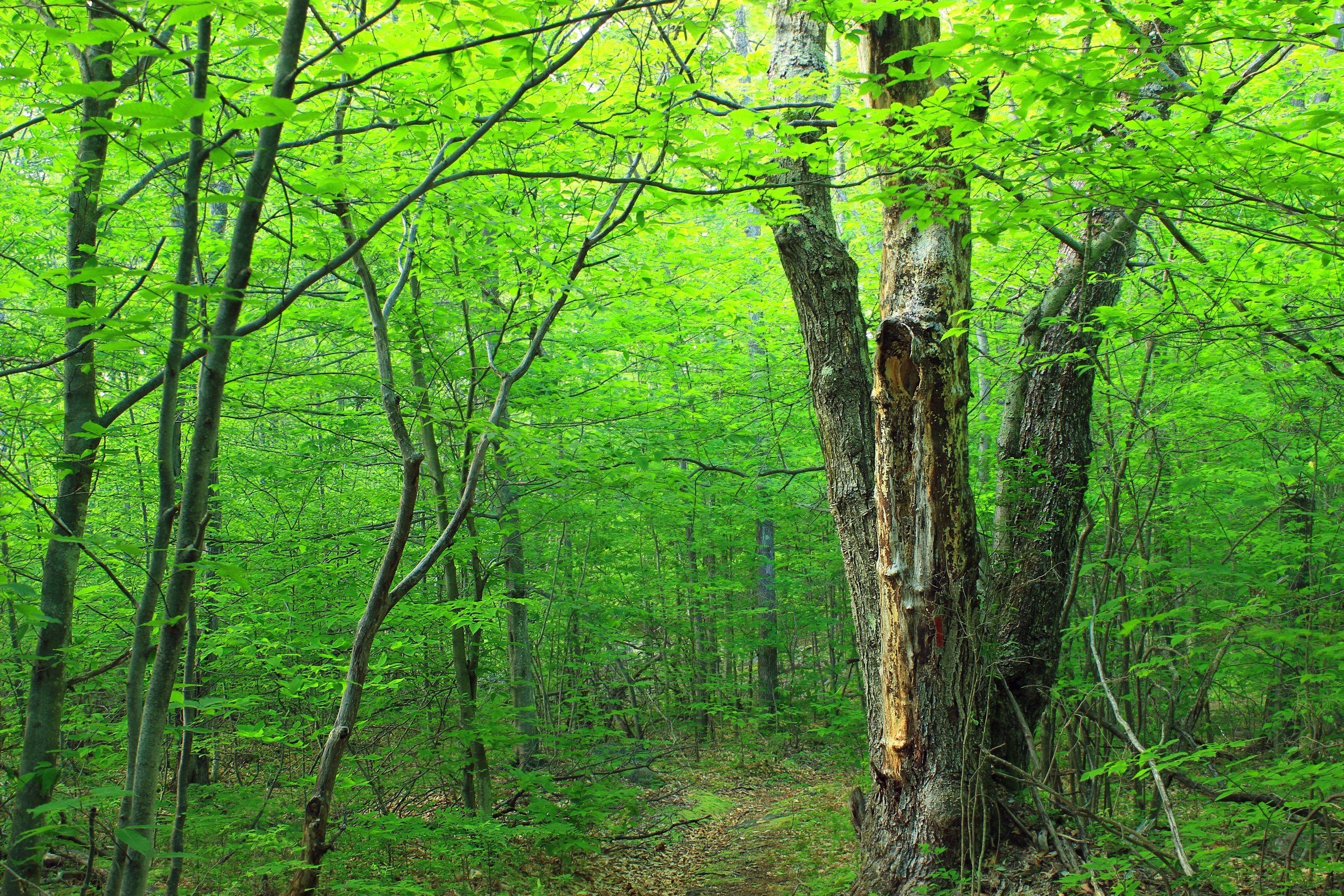
The Action Plan recommends that we protect one million acres and restore one million acres of forests and wetlands in the state. Two million more acres of protected and restored forests and wetlands represent a substantial amount of extra carbon being stored in the ground. If these acres are actually protected from soil-disturbing activities like logging, these actions have the potential to continually keep 186 million metric tonnes of carbon out of the atmosphere. That’s 24% more than the 2017 gross emissions of North Carolina.
However, how we define “protection” of forests and wetlands makes a crucial difference in the success of any carbon sequestration strategy. Did you know that only around 10% of “protected” lands in North Carolina are actually protected from most clearcut logging activities? Many “protected” lands in NC are still logged regularly to generate revenue for state and federal agencies.
Eminent scientists are calling for more drastic and permanent preservation measures. Both EO Wilson and the Center for Biological Diversity, for example, suggest that half of the world’s habitat should be set aside from human activity. By that measure, about 9 million acres of North Carolina’s forests should be preserved. With a 2-million acre target in the action plan and 3 million acres already preserved in some way, we’re falling about 4 million acres short.
The Action Plan encourages timber production and “business as usual” practices in NC forests.The “Enhance Forests” section, essentially written by the forest products industry, promotes and encourages an increase in manufacturing of wood products, which are the third largest contributor to carbon emissions in North Carolina. They are also point sources of pollution with disproportionate impacts to people of color.
This is what happens when you let people with economic ties to forest destruction get involved in conservation planning. While the plan calls for protecting an additional 1 million acres, no time frame for that protection is specified. NC is currently clearcutting a million acres every five years anyway. We can’t protect what we have while continuing to clearcut at such an alarming rate.
What could the alternative be? “Enhancing Forests” could be focused on investing in local economic development consistent with preserving wild forests. Instead of promoting carbon emissions and pollution, the “Enhance Forests” section could lift up marginalized communities that have suffered for decades at the hands of industrial extraction and pollution.
The concept of a landowner getting paid for conserving carbon on their land is easy to understand. But carbon markets are complicated. Landowners need to catalog every tree, go through a third party verification, and then sell their credits in a marketplace. The scale of the operation means that only landowners who own the most land can benefit from carbon markets.
More importantly, carbon markets do nothing to address environmental justice issues in the communities where polluters are purchasing their offset credits. Carbon markets give a stamp-of-approval for local polluting and destructive activities as long as there is a promise of restoration some time in the future, somewhere else.
The Action Plan proposes a statewide carbon market that claims it would address the major barriers of upfront costs and documentation, but the plan doesn’t actually describe how. Although this proposal won’t actively harm forests, it will take away resources that could be invested in proven carbon sequestration like preserving mature forests, creating more roadless areas, and reducing the amount of logging in North Carolina. Carbon markets are a distraction, not a solution.
The Action Plan recommends updating the tax code to include more opportunities for landowners to conserve instead of logging. Historically, the tax code in North Carolina has been skewed towards helping landowners log forests — not protecting their forests for clean water, air, and other ecosystem services. The plan recommends the current “Present Use Value” tax system be updated to include tax credits for carbon sequestration and ecosystem services. These tax credits are different from carbon markets because they reward landowners without a tie to industrial pollution.
The Action plan encourages the state to research a “No Net Loss” policy for NC forests. A “No Net Loss” policy would help mitigate any damages incurred to forests through land use changes like development. For any land clearing project larger than 10 acres, the developer would need to get approval and also mitigate the damages by conserving a new plot of forest land. Maryland has a No Net Loss policy, and North Carolina should follow suit.
While a No Net Loss policy is a good start, there are a lot of ways that it could go wrong. We’ve seen issues with No Net Loss policies in wetlands before. For example, we know that plantations just aren’t as good as natural forests: they don’t store as much carbon, filter as much water, or hold the same levels of biodiversity. Additionally, allowing forests to be replaced miles away could lead to heavily developed areas, greenwashed with the paltry promise of tree planting elsewhere.
Creating the NC Natural and Working Lands Action Plan was very much business as usual. The stakeholder group process was set up to rely on organizations’ expertise with no input from folks who live in the rural communities where this plan is focused. Nor was there any chance for the citizens of North Carolina to comment, either digitally or in person. Every issue that we’ve highlighted above on forests has justice and quality of life implications for rural communities and communities of color.
Beyond the forests section, there are other problematic pieces of the NWL Action Plan that merit attention. In particular, there is a substantial section on biogas. This was included with a proportionally small disclaimer in the report that reads, “Pollution to waterways, odors, and public health concerns for nearby and downstream communities, including those felt disproportionately by minority populations, are the reasons for opposition to biogas production.”
The word “justice” appears nowhere in the NC Natural and Working Lands Action Plan.
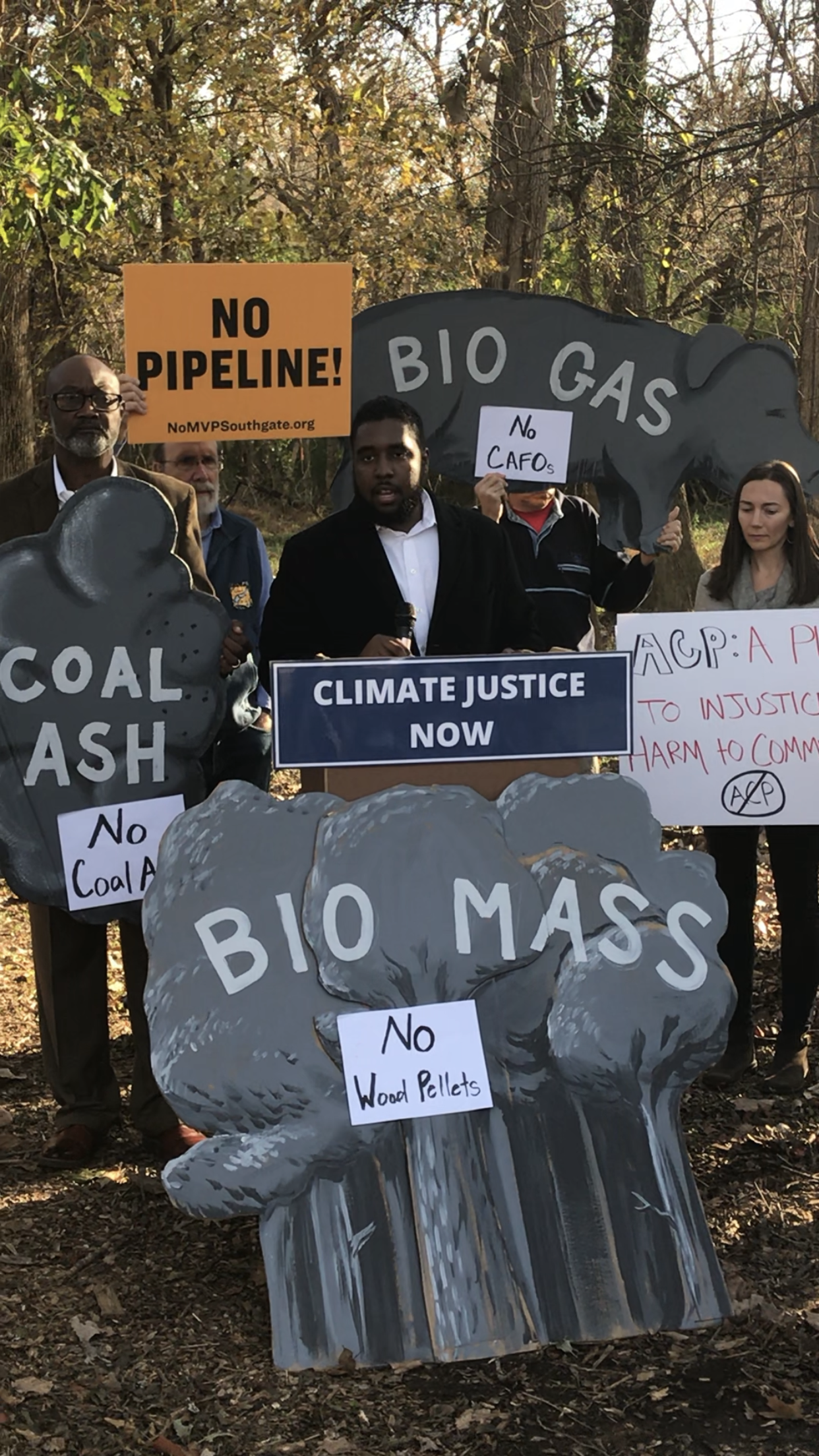
The NC Natural and Working Lands Action Plan needs improvement. Many parts of the plan are still too mired in business as usual to give us the transformative change that we need. Here are the facts:
We can’t address climate change by increasing the rate and scale of logging. We can’t address climate change by planting fake forests and hoping that they do the trick. We must protect the wild forests and wetlands that we have and not hope that we can replace them later.
We have less than a decade to address climate change. Any “solution” that relies on research or nonexistent technology is a distraction from solving climate change. We can’t wait for carbon markets. We can’t wait for trees to grow. And we can’t pretend that carbon emissions from logging don’t exist.
We know that our government officials won’t do everything in their power to fight climate change. The time horizon is too broad. The threats are too vague. To solve climate change, we need to hold our leaders accountable.
While we appreciate that Governor Cooper had the foresight to initiate a policy conversation about how we can address the climate emergency, we need our government officials right here in North Carolina to take bold, meaningful action. This is where you come in: we need you to let Governor Cooper know how you feel about climate change.
This is a joint statement from Dogwood Alliance and the Center for Biological Diversity.  Dogwood Alliance mobilizes diverse voices to protect Southern Forests and communities from destructive industrial logging. For over 20 years, Dogwood Alliance has worked with diverse communities, partner organizations and decision-makers to protect Southern forests across 14 states. They do this through community and grassroots organizing, holding corporations and governments accountable, and working to conserve millions of acres of Southern forests.

The Center for Biological Diversity believes that the welfare of human beings is deeply linked to nature — to the existence in our world of a vast diversity of wild animals and plants. Because diversity has intrinsic value, and because its loss impoverishes society, they work to secure a future for all species, great and small, hovering on the brink of extinction. They do so through science, law and creative media, with a focus on protecting the lands, waters and climate that species need to survive. They want those who come after us to inherit a world where the wild is still alive.
George Floyd. Breonna Taylor. Tony McDade. James Scurlock. David McAtee. Modesto Reyes.
Racism is prevalent across our society at every turn. We see it on TV with countless videos of police killing, hurting, and intimidating Black citizens, and we know there are countless other such incidents that don’t ever make headline news. We see it play out in real time in our work, as we have witnessed how the presence of police intimidated a Black community in Richmond County at a press event when they were denied the right to testify at a public meeting on a proposed pollution-spewing, forest-destroying wood pellet mill in their own town. It’s vital that we make these connections between what on the surface may seem like separate and unrelated issues.
We have heard the requests of our Black allies, colleagues, leaders, and friends who urge us to stand up and speak out in the face of injustice. As a white-led organization, we understand the importance of speaking up right now, but this statement is just one step in the process of demonstrating our commitment to standing up against police brutality and intimidation directed at people of color.
Racism and a culture of white supremacy is at the root of all of the struggles for justice in our country. It is at the heart of injustice in the criminal system, extreme economic inequity, and health disparity as we are seeing now with the disproportionate impacts the Coronavirus has had on the Black community. Racism also lies at the heart of environmental destruction and pollution. It lies at the center of climate change and the destruction of nature. For it is a racist system that values the excessive profits of a few over human life.
We can and must take a long, hard look at our values and morals as a country built on white supremacy. This means committing ourselves to becoming anti-racist and being dedicated allies devoted to prioritizing the long-term mobilization necessary to build a movement that shuts racism down for good so these things never, ever, ever happen again. And, this means continuing to educate ourselves, being open to uncomfortable conversations, and taking continuous and honest feedback on how we show up in our world as anti-racists.
The staff and board of Dogwood Alliance are all personally committed to taking individual and organizational action to continue educating ourselves and our members and taking action to end the destructive power of racism. We will continue to stand arm in arm with our partners and friends in frontline communities whose lives are at risk every single day.
It is our duty to be fully committed to being an anti-racist organization. It is also our duty to ensure that our white members, supporters, activists, partners, and allies join us at the frontlines in solidarity with Black, Brown, and Indigenous communities.
One day, I want to take my children to the Smoky Mountains. We will turn over rocks to observe the wriggling critters underneath. We will plunge our feet into cool streams on hot summer days. We will hike up mountains and breathe the thinner air at the summit. We will seek shade under the sprawling foliage of deciduous trees.
As restaurants and businesses closed, the sun and the grass and the water promised to melt away the gloom of quarantine. It was like returning to a childhood friend. As I jogged outside or strung up my hammock, I thought, why don’t I do this more often?
Because of the pandemic, carbon emissions are predicted to fall by 5% this year–the biggest drop on record. But such a decrease doesn’t require drastic quarantine measures. All it requires is a shift in our priorities to more sustainable practices. For example, protecting forested areas from logging activities would keep carbon out of the atmosphere and provide more of the beautiful natural spaces many of us have enjoyed so much during quarantine. Forests serve a vital role in storing carbon, which offsets the emissions produced from human activity. Additionally, reducing carbon emissions by switching to renewable energy sources like solar and wind power is crucial to limit climate change. This will diminish the risk of extreme droughts and wildfires that threaten our forests. We can’t implement these types of changes on an individual level. We need systemic changes in policies that prioritize the reduction of carbon emissions.
At a time when we will already have to make changes to the way we produce goods and the way we carry on our daily lives, it only makes sense to begin phasing in the changes to a more sustainable future. These changes don’t have to be drastic, and if we begin making them now, the future problems will be much easier to handle. Imagine if we had years to prepare for the Coronavirus pandemic rather than only weeks?
These natural spaces are at risk of disappearing unless we act now. Experts agree that we only have 10 years to reduce carbon emissions before climate change reaches a tipping point that will irreversibly alter our lives, and many people are already seeing those changes and suffering from those effects. If we don’t act, we will witness more natural disasters, food scarcity issues, and the extinction of animals that have lived alongside us for thousands of years.

Picture I took at one of the thousands of climate strikes held worldwide on September 20, 2019. A young boy is holding a sign that reads “fight for our future.”
I’m twenty-one years old, and I’m worried about life when I’ll be fifty. I’m worried for my future children. Will I be able to show them the diverse wildlife, the panoramic views, the meandering trails of the Smoky Mountains that I grew up with?
Or will I only be able to show them pictures?
 Raksha Doddabele
Growing up in eastern Tennessee with the backdrop of the Smoky Mountains, Raksha has always had a strong connection with the outdoors. She is a current undergraduate at Duke University, where she is pursuing a B.S. in Biology and minor in Computer Science, which she hopes to put to good use working in wildlife conservation. Some of her favorite activities include hiking, Scuba diving, and adventuring.
The EU announces a new Biodiversity Strategy including a review of its flawed biomass policy, creating opportunity for real climate action to protect standing forestsAsheville, NC, USA – Late last week, the EU announced its new Biodiversity Strategy, which many are hailing as a landmark moment for European forests. The Strategy outlines land protection targets, strict protection of old growth forests, and guidelines for management practices that respect biodiversity objectives.
In addition to European forests, help may also be on the way for Southern US forests. The newly released strategy wisely includes a critical look at current EU biomass policy by the end of 2020 in order to inform the review of the Clean Energy Package and and ensure alignment of Europe’s increasing bioenergy demand with necessary climate and biodiversity goals set out in the European Green Deal.
Last year, the EU adopted a new Renewable Energy Directive (RED II) that unfortunately allowed European countries to continue burning forests for energy to meet their goals. A majority of the wood burned in major power stations across the continent comes from wood pellet mills in the Southern US. These wood pellet mills run by bad actors like Enviva have led to major destruction of wetlands and standing forests across the Southern Coastal plain, in addition to heavily polluting overburdened rural communities. Countries including the UK, Denmark, and the Netherlands are burning our forests on a large-scale.
The assessment mentioned in the strategy will feed into an ongoing review to revise those rules 10 years ahead of schedule with the aim of eliminating controversial sources of the wood from the mix and ideally incorporating more accurate accounting for carbon emissions from burning wood, which are up to three times higher than burning fossil fuels.
With this review, we urge the EU to align its biomass policy with their climate and biodiversity goals. We believe it is of utmost importance that the EU eliminate whole trees from being burned for electricity, which we have shown time and time again through investigations that this practice is the largest source of wood pellets coming from our region. Additionally, we call on the EU to ensure that whereas sustainability standards are important, proper carbon accounting must be put in place to eliminate biomass as a renewable energy source when superior options are available such as wind, solar, and geothermal.
We expect the EU’s biodiversity strategy will help protect biodiversity here in the States and move beyond the destructive practices that its current biomass policy allows. We will continue to work with our allies in the EU to ensure that our forests aren’t fuel.
By Danna Smith and Reverend Leo Woodberry
As we brace for another season of intensifying storms, it’s an opportune time to reflect on the vital role that our diverse, Southern wetland forests play in sheltering some of our nation’s most vulnerable communities during this new era of climate change and rapid loss of biodiversity.
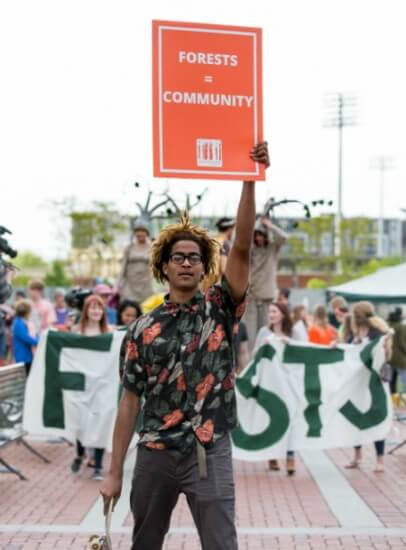
Extreme flooding linked to climate change has become the norm for communities living in the Coastal Plain of the South, home to the lion’s share of our nation’s wetland forests. What used to be considered “hundred year storms” have recently been occurring every few years.
This flooding has a disproportionate impact on low income communities and people of color across the rural coastal plain of the Southern US.
Last year, we spent time with people on the ground living in some of the most rural and remote areas of the Pee Dee Watershed of South Carolina, recently identified as a regional priority for wetland forest protection. Places like Britton’s Neck in Marion County were hit especially hard by back-to-back flooding events from the 2015 “Thousand Year Flood” to Hurricane Matthew in 2016 and tropical storm Florence in 2018. We listened to stories of people losing their homes and contaminated drinking water from the flood waters carrying industrial site waste into the river and water supplies. Even a year later, we could see evidence of flood damage. We heard the sadness in the voices of community members who told us about an elderly woman who was still homeless.

An abandoned home in Marion County in the Pee Dee Watershed
We heard stories of hurricane relief funds being withheld from people who hadn’t paid their garbage collection fees. We saw notices attached to empty houses that still hadn’t been restored from flood damage, warning that if the home wasn’t raised by as much as 7 feet, they would no longer be eligible for flood insurance.
For a low income rural community already struggling, these storms have pushed the most vulnerable to the brink.
In 2015, the UN Convention on Biological Diversity issued a press release, preceding the Paris climate negotiations. This document underscored the need for governments to consider the protection of biodiversity as a climate disaster reduction strategy because functional ecosystems provide “safety nets to communities in times of climate shocks and natural disasters.” The scientists went on to write, “Biodiversity is a critical resource, not only for climate change adaptation and mitigation, but as a tool to make countries more resilient and help reduce the risk and damages associated with natural disasters.”
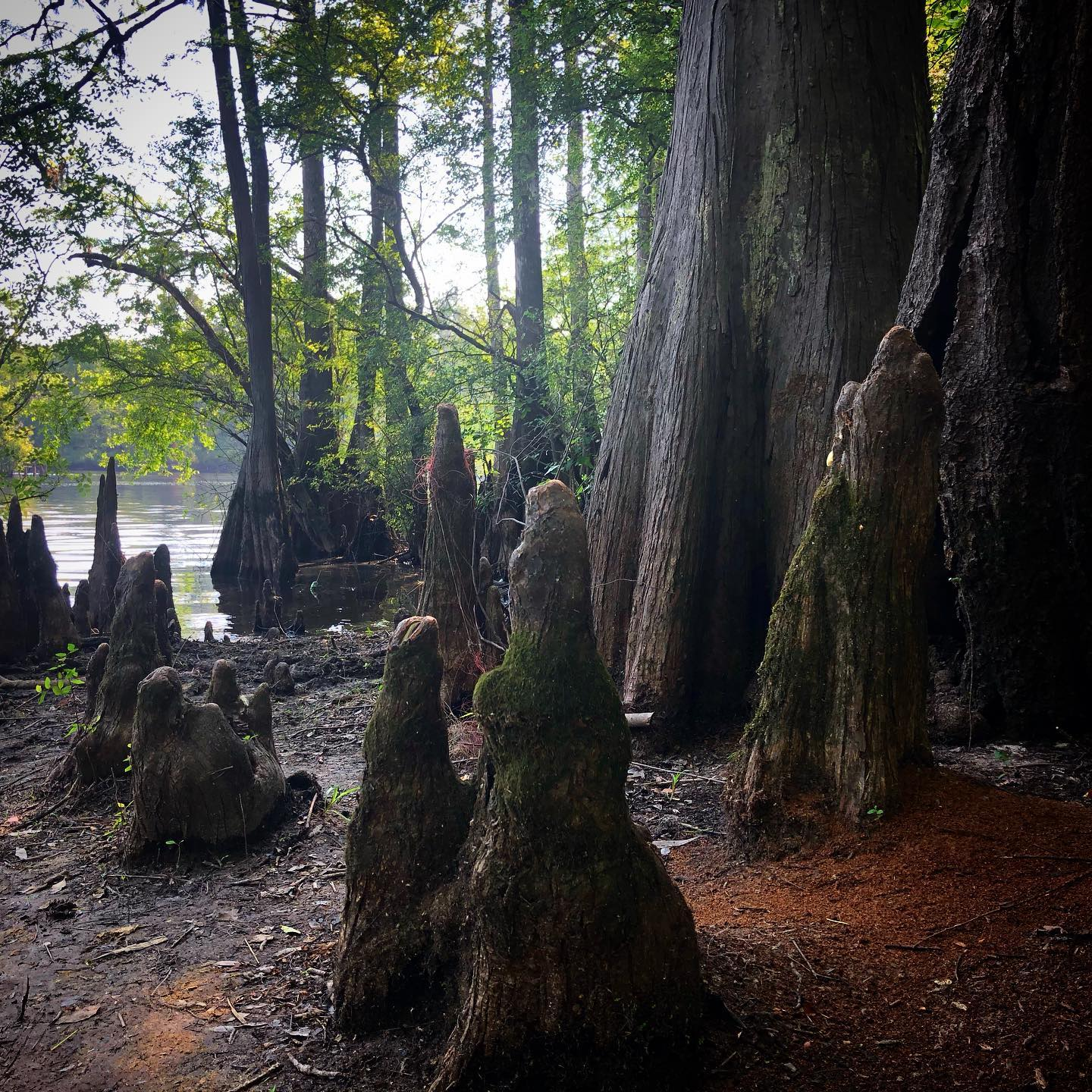
Wetland forests in the Pee Dee watershed of South Carolina
Southern wetland forests are among the most biodiverse forests in the world, home to a diversity of unique plants and animals, such as the Venus flytrap, American black bear, and the Skipper butterfly. According to the World Wildlife Fund, these forests rank among the top ten in North America for reptiles, birds, and tree species diversity and “are some of the most biologically important habitats in North America.”
These diverse Southern wetland forests evolved over hundreds of thousands of years to function like large sponges, soaking up flood waters during periods of heavy rain, while ensuring an abundance of naturally filtered, clean drinking water.
As storms and droughts become more intense, protecting these wetland forests as a safety net for our communities is one of the smartest things we could be doing right now.
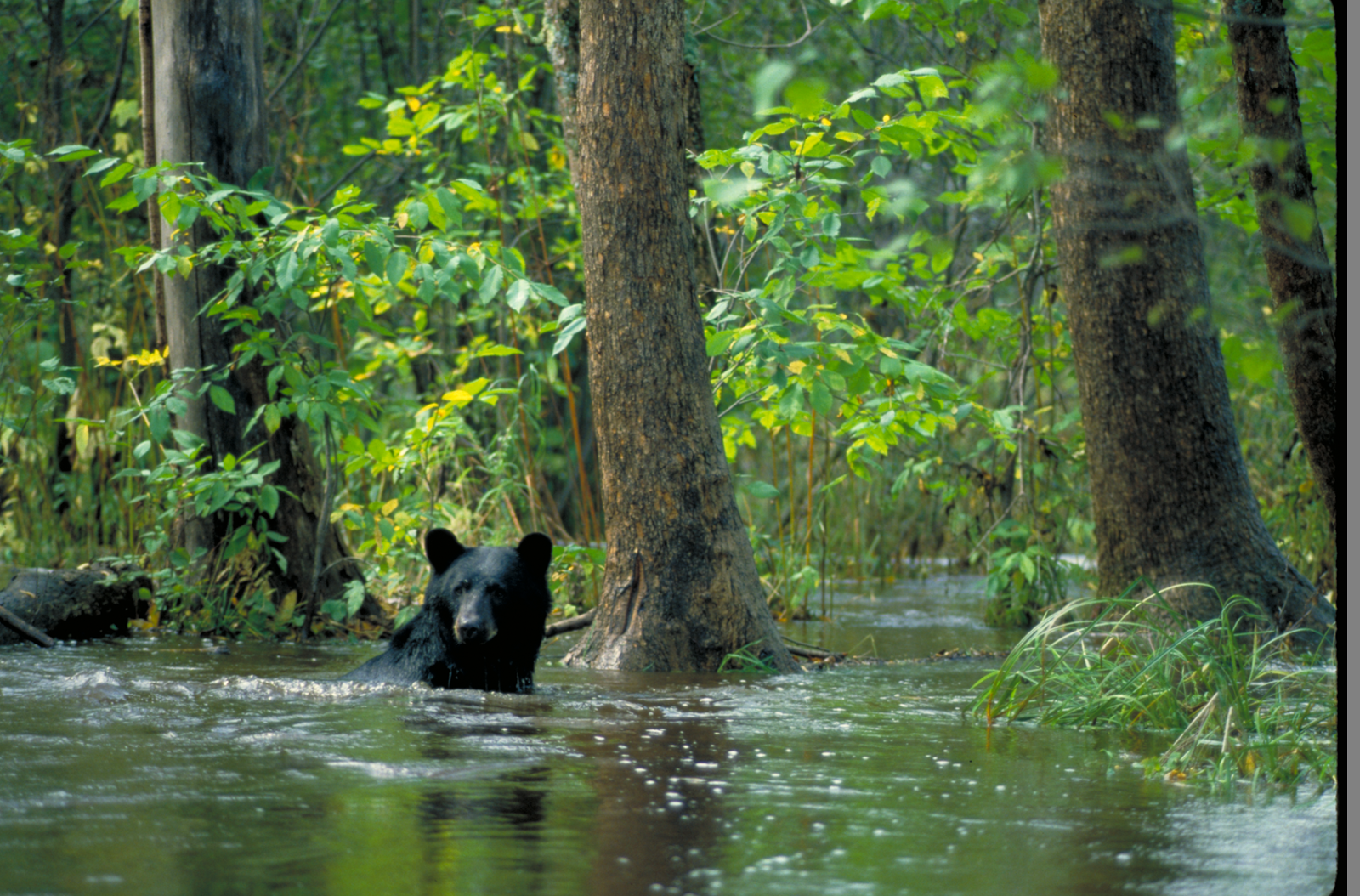
An American black bear swimming in a Southern wetland forest
While these forests, found along rivers throughout the coastal plain of the US South, are vital to the health and well-being of rural communities, they remain under constant threat from industrial logging. The rate and scale of logging in this region of the South is among the highest on Earth, estimated to be four times greater than logging rates in South American rainforests.
Logging is the largest driver of forest cover loss in this region.
In addition to paper and wood for building, the expansion in the production of wood pellets to fuel power stations in Europe is now adding to the threats to wetland forests.
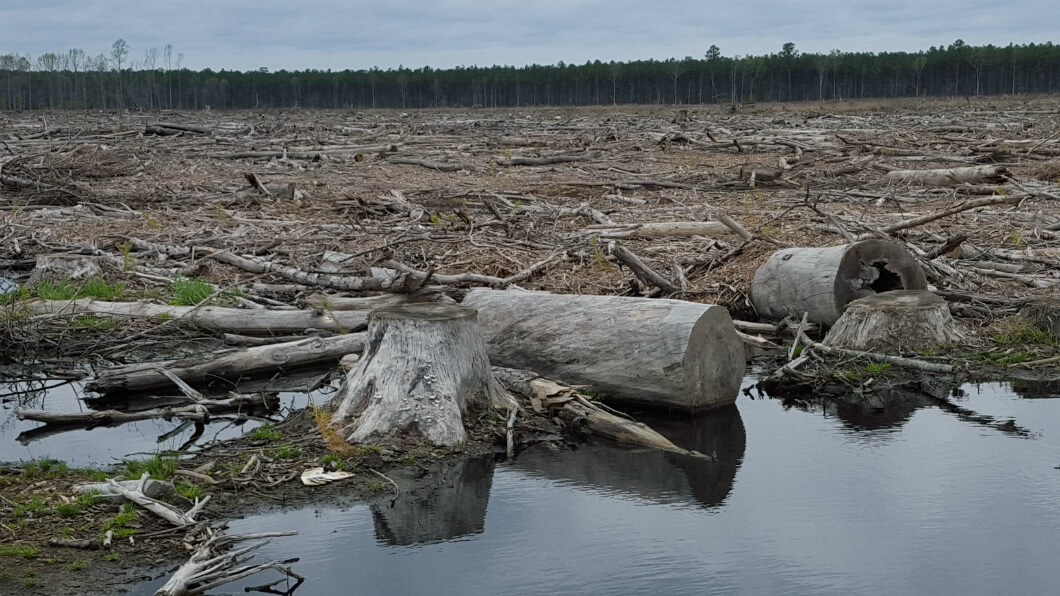
A Southern wetland forest clearcut for wood pellets
Large-scale logging releases vast amounts of carbon that would otherwise be stored.
It also diminishes forests’ ability to remove carbon from the atmosphere. Scientists agree that drastic reductions in carbon emissions and the active removal of carbon from the atmosphere are both vital to meeting climate change mitigation goals. Logging also compromises biodiversity and forests’ ability to provide natural flood control and other life-supporting functions. Equally as important, wood manufacturing facilities like paper mills and wood pellet mills release toxic pollution into the air, compromising the health of people living nearby.
Though the Coastal Plain of the US South is the world’s largest wood producing region, their rural economies are depressed. High poverty rates, high unemployment rates, and other indicators of socioeconomic stress are evident in these rural counties where industrial logging is concentrated. While African Americans make up a large percentage of the population, white people own the overwhelming majority of the land.
The long history of land exploitation and degradation with its resulting wealth inequality is evident throughout these communities.
About one year ago to the day, we were blessed when the Pee Dee Tribe in South Carolina invited us to a gathering. Spanning from the southern central border of North Carolina to the northern central coast of South Carolina, the Pee Dee River and surrounding watershed is named after the Pee Dee Tribe, the area’s original inhabitants.

The authors with Chief Pete Parr at the Pee Dee Tribe gathering in May 2019
Living among thousand year old cypress trees stretching for hundreds of miles along the Pee Dee River and its tributaries, the Pee Dee Tribe thrived in this hurricane-prone floodplain, surviving storm after storm for an estimated 4,000 years. Moving up and down the river from the coast inland, they found everything they needed in the rivers and in the woods. Never taking more than was necessary to survive, the tribe thrived among intact, ancient wetland forests, which provided fresh water, food, medicine, and shelter.
But neither the Pee Dee Tribe nor the ancient forests that sustained them stood much of a chance against the destructive storm that began some 400 years ago when the European settlers landed on the coast of South Carolina. As the settlers moved inland along the river, land was conquered, people were massacred, and the ancient forest destroyed and degraded.
The Pee Dee Tribe and the forest that sustained it are but a small remnant of what they once were.
Stripped of their land, their culture, and their way of life, Chief Parr, the current chief of the Pee Dee Tribe, is working to protect the forest and restore the culture of his people. He said:
“Once it’s gone, you can never fully get it back. But we can get some of it back, and in doing so, maybe we can help people understand that humans are not separate from nature and that treating the land with respect is vital to all of our survival.”
A few years ago, the tribe was gifted a 16 acre tract of land with wetland forests in the Pee Dee watershed.
Though developing it would bring income to the tribe, they have no interest in exploiting the land for profit.
Instead, they want to build a cultural center, plant an organic garden that can provide the tribe with fresh food, and create a place where everyone is welcome to learn about their culture and experience the beauty of the Southern wetland forest. “We aren’t interested in trying to make money from the land,” Chief Parr noted. “It’s greed that has gotten us into this mess to begin with.”
Climate scientists agree that indigenous peoples and local communities play a central role in safeguarding land, noting that forests throughout the world managed by indigenous people and local communities (vs private individuals or corporations) are more protected and less disturbed. In Peru, putting land back in the hands of indigenous communities quickly reduced forest disturbance and clearing.
In the Southern Coastal Plain, almost all the land is in private ownership, and there is a long history of unjust policies that have excluded Black, Native American, and people of color from owning and retaining land.
It is estimated that the economic value of standing wetland forests for their climate and other ecological benefits is fifteen times greater than their value for wood products. And while the forest industry employs some 950,000 people nationwide, the outdoor recreation industry employs 7.6 million. Yet outdated tax codes and government policies continue to favor industrial logging over protection, and the gigantic costs of climate change-related storm damage escalates.
It’s time to transform the forest economy across the rural coastal plain of the South to one that creates greater economic equity and builds climate resiliency in vulnerable communities.
Across the coastal plain of the South are rays of sunshine bursting through the cracks of the dark storm cloud that has hovered over this region for hundreds of years. A movement as diverse as the wetland forest itself is gathering strength, with people working together to reweave the wetland forest safety net that has been torn apart by industrial logging. As we look to rebuild our nation’s economy, there is no time like now to embrace change and make protecting our diverse Southern wetland forests and communities the new norm.
Want to know what you can do? Give now: Join the fight to protect our wetland forests today.
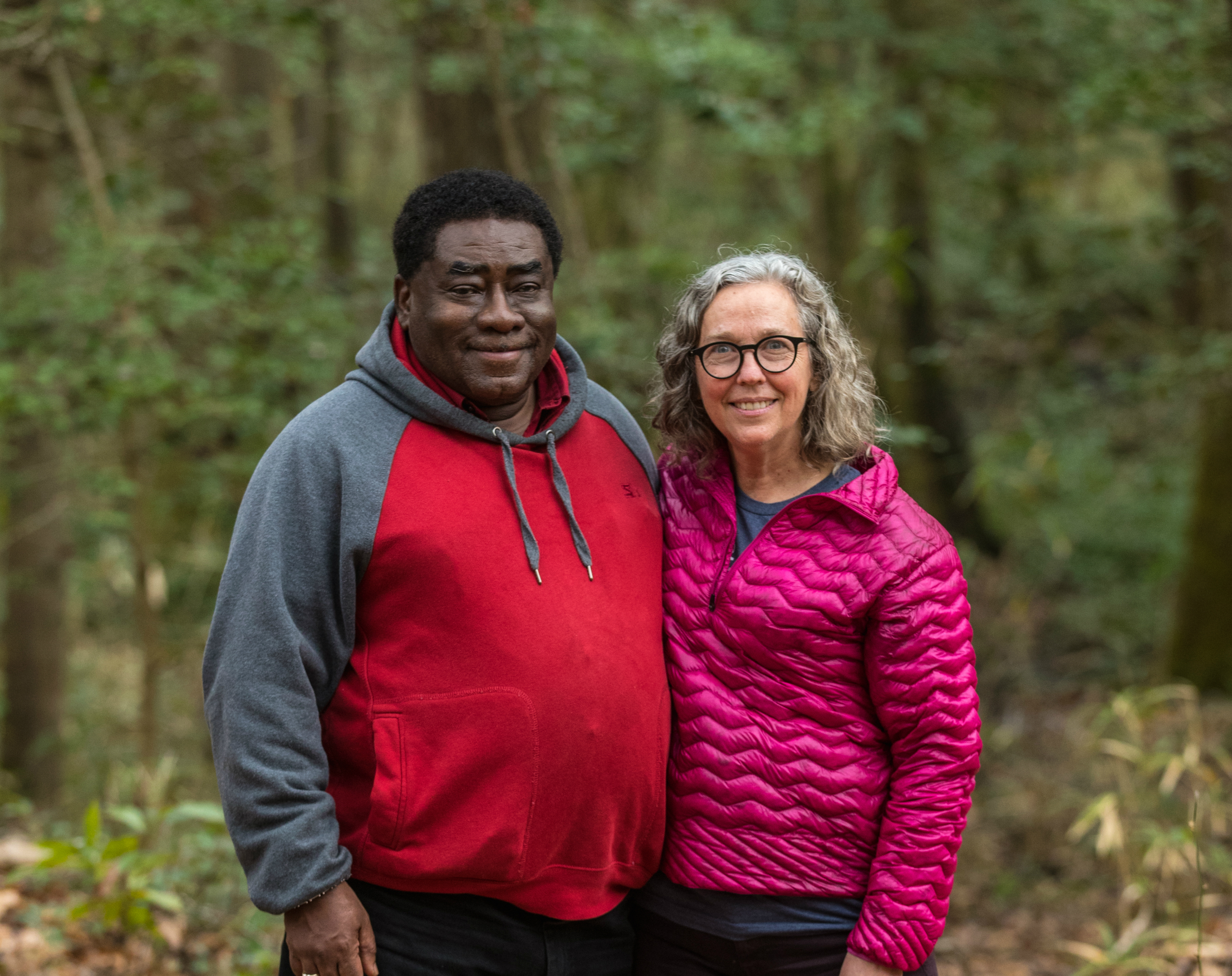
Danna Smith and Reverend Leo Woodberry
On May 14th, I was invited to speak at a conference hosted by the National Wildlife Federation (NWF) and the Forest Stewardship Council (FSC) entitled: “Growing the Impact of Forest-Based Natural Climate Solutions in North America.” The other featured presenters included The Nature Conservancy, NWF, and the American Forest Foundation. Much of the focus was on how to improve logging practices, but I was there to speak about a new scientific concept, proforestation.
I grew up in the world’s largest wood producing region — the Coastal Plain of the US South. I’ve witnessed first hand the large-scale forest degradation that has followed in the wake of an ever-expanding wood products industry. I’ve dedicated my entire adult career to protecting forests in this region. It hasn’t been easy.
I spent most of my career focused on improving forest management, with some success. Then about 7 years ago, when the wood pellet industry started to expand across the South, I realized that it’s impossible to do “better logging” which requires leaving more trees in the ground, while simultaneously expanding wood markets. The current rate and scale of logging is unsustainable and we need to scale up the protection of forests, not just try to improve logging around the edges.
Today, 200 climate scientists across the US signed a letter that was sent to members of Congress urging them to oppose legislative proposals that would promote logging and wood consumption as a natural climate change solution, based on claims that it represents an effective carbon storage approach, or claims that biomass logging, and incinerating trees for energy, represents renewable, carbon-neutral energy.
Instead they call for a major scale up in the protection of existing natural forests, stating “We find no scientific evidence to support increased logging to store more carbon in wood products, such as dimensional lumber or cross-laminated timber (CLT) for tall buildings, as a natural climate solution. The growing consensus of scientific findings is that, to effectively mitigate the worst impacts of climate change, we must not only move beyond fossil fuel consumption but must also substantially increase protection of our native forests in order to absorb more CO2 from the atmosphere and store more, not less, carbon in our forests.”
Proforestation is the only “natural climate solution” that gives natural “working” forests, which make up a majority of forests in the US and a substantial amount of forests in Canada, a break so they can help heal the planet, slowing climate change, optimizing climate resiliency, and restoring biodiversity.
New terms often arise and take root in times of change. For example all of a sudden, “social distancing” and “flatten the curve” have become a part of the global vernacular. These terms have helped to shape both government policies and had a dramatic impact on human behavior. I’m hopeful that proforestation will have a similar impact on forest climate policy and behavior.
But to be effective, we must confront some uncomfortable truths about how much damage we have already done and continue to do to forests. We have to be willing and open to changing cultural norms.
That essentially means letting nature do its job uninterrupted by humans. It is the quickest and most reliable solution for drawing carbon out of the atmosphere. It’s based on the scientific understanding that:
By its very definition proforestation recognizes that managed, working forests – large-scale commercial logging, has impacts on carbon sinks. When forests are disturbed, carbon is released – whether it’s due to wildfire, insects, wind damage, conversion to agriculture or development, or logging.
Many models intended to assess the potential of forests as a climate solution fail to model what would happen if we were to protect large areas of natural forests from logging. Instead, they focus on “afforestation”,“reforestation” or “improved forest management” all of which have benefits but not as large or as quick as letting existing natural forests grow.
The cultural norms and policies in the developed world are biased towards sustaining the production and consumption of wood products. These norms are propped up by a deeply held belief that forests are a “renewable” resource and that retaining forests on the land, even in a degraded condition, is the primary goal because it’s better than no forests at all. In writing this report, Dr. Moomaw and I began to identify a large body of scientific research that documented how logging US forests is a significant contributor to climate change. It’s the elephant in the room that no one wants to acknowledge. But if we fail to acknowledge this, we will develop faulty or insufficient solutions that allow the problem to persist or worsen.
These are forests that have already grown to their ecological potential: they are providing optimal climate and other ecosystem benefits. By protecting them, we can ensure their climate benefits are not lost or degraded. But protecting intact forests will not result in any additional climate benefit beyond what they currently do, and we know we need forests to pull more carbon out of the atmosphere.
Some forests are now in agriculture or development, but a majority have regenerated, though they are now younger and highly fragmented. These regenerated forests exist in a degraded state compared to what they once were.
By 1990, intact forests across the continental US had largely been wiped out. It is estimated that 60% of the carbon lost has yet to be recovered by forest regrowth. Yet when we measure and report on forest carbon today through the annual EPA Greenhouse Gas Inventory, the government uses a 1990 baseline. This essentially erases this history and its climate impacts from the accounting and from our memories.
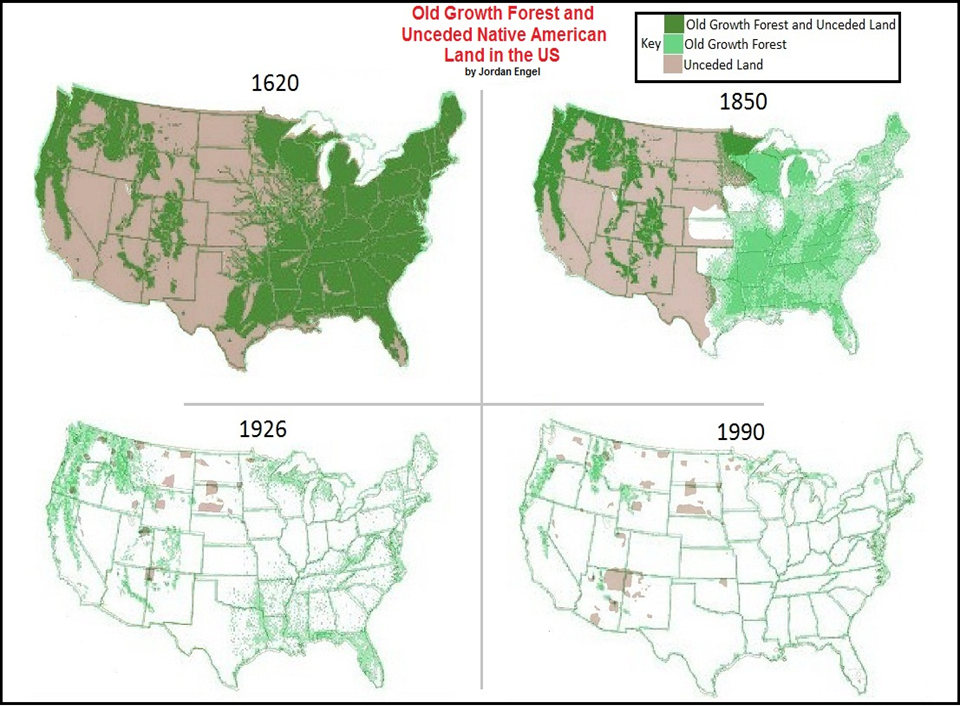
Old growth from 1620 to 1990, most has been lost and none of these logging emissions have ever been accounted for.
It creates a double standard where we tell other countries that protecting their intact forests is vital, while escaping accountability for destroying our own. When we say “forests are renewable,” it’s a half-truth because we haven’t been renewing intact, old forests and the carbon they once stored. Instead we have a patchwork of degraded carbon sinks as reflected by young forests, clearcuts, and pine plantations.
It only reports on year to year net changes in carbon flux. The problem with this is that we can’t see how various drivers of forest carbon loss are affecting the sum total. While this important information is missing, the framework does count carbon stored in wood products. This suggests that wood products are helping increase carbon sinks, but the reality is that the amount of carbon lost in the forest from logging far exceeds any carbon that may be stored in wood products.
Recent data compiled from satellite imagery documents that logging is in fact the largest single driver of forest carbon loss in the US.
This information is vital to understanding the potential protecting forests from logging has as a climate solution. The reality is that emissions could be avoided, and the forest carbon sink in the US could be much larger with compounding benefits each year if we weren’t logging at the rate and scale that we are.
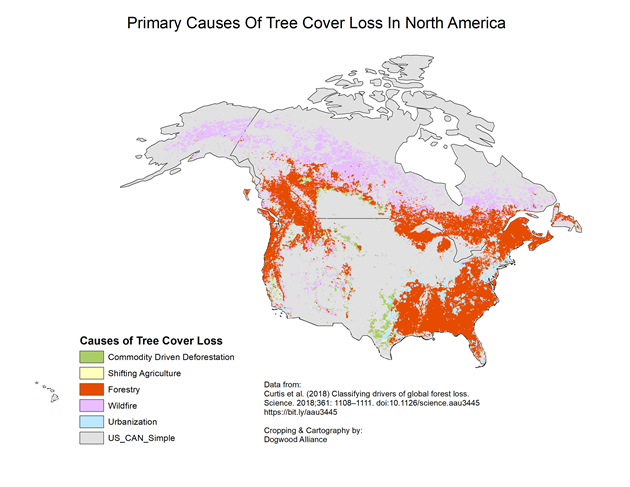
Logging is the primary cause of tree cover loss in North America.
It’s also important to recognize other impacts that the forest industry has. For example, the pollution associated with the production of many wood products, contributes to health problems of nearby residents and disproportionately affects low income communities and communities of color. The degradation of forests is also compromising other ecological services like natural flood control, biodiversity, and water protection.
As Mahatma Gandhi said, “What we do to the forests of the world is a mirror reflection of what we are doing to ourselves and each other.”
An article published in Nature in 2018 underscores that too often in the climate conversation about forests, the focus on on only half the problem, deforestation, ignoring the huge climate impacts of “forest management” (aka logging). This study documented how much more carbon we could remove from the atmosphere and store in forests if we were to stop logging and adopted proforestation as a solution. Low carbon stock forests such as those found in areas where logging rates are high (like the Southern US) would move to high carbon stocks, pulling increasing amounts of carbon out of the atmosphere.
In advocating for proforestation, we are not “against all logging or all wood products.” It simply means that we need to acknowledge that the current rate and scale of industrial logging and the production and consumption of wood products are limiting our ability to maximize forests as a climate solution and take aggressive steps to address it.
Unfortunately, most government policies today are currently focused on tree planting, wildfire prevention via logging, avoiding deforestation, and expanding wood products as natural climate solutions. We must embrace proforestation as a priority. Nature knows how to stabilize the climate better than humans do. To advance a proforestation policy agenda, we must:
Scientists are calling for rapid transformation across all industrial sectors. That includes the forestry sector. Substituting wood for plastic, steel, or coal and expanding our extraction of wood from forests is not the answer.
Our health is vital in these times. Climate change is one of the great threats facing the world today, along with pandemics like COVID-19. To protect our communities and our livelihoods, we need to address the problem before it is too late.
You would probably ask, “How does that work?” Many of the benefits that healthy, standing forests and wetlands provide are invisible from day to day. They are the ultimate water pumps. They are KEY to ensuring storm and flood protection for our communities, and they provide clean drinking water to millions of Americans.
Forests and wetlands also provide natural air filtration, food, medicine, recreation, and opportunities to create jobs that are geared towards building up, not destroying, our communities and environment.

Photo by: Winnifred Helton-Harmon
We are facing several threats that compromise our health and survival. These threats include deforestation, loss of habitat, and development.
These industries are destroying the critical natural infrastructure that buffers our communities from flooding and absorbs carbon from the atmosphere. They are destroying the habitat and biodiversity of these valuable places.
The degradation of forests and wetland forests, along with the pollution of our air and water, have left communities in degraded conditions. These same communities are facing the most significant economic impacts of extreme weather events like hurricanes and flooding.
But these jobs come with a price tag (air pollution, asthma, cancer, and when clearcut logging happens around their communities, flooding becomes more and more frequent). Extreme weather is not going away. In fact, if we keep logging our forests and clearcutting our wetlands (the sponges of the world), communities will experience more flooding and pollution.
Like a member of The Southeast Climate and Energy Network (SCEN) stated, “COVID-19 is an environmental issue.”
Sonia Shah, author of the 2017 book Pandemic, is an epidemiologist who studied outbreaks ranging from cholera to the West Nile virus to Ebola, and she found:
Deforestation and loss of habitat are the prime drivers. In other words, we have overdrawn our natural resources, and now the bill (pandemics like COVID-19) is at our door.
More than ever, wetland forest protection should be prioritized in a way that increases community well-being and does not exploit natural resources to benefit the few. Industries have no regard for the consequences that our communities will face if we continue with deforestation.
This is alarming because species are a key element of balancing the ecosystems that are essential for all life on our planet.

If we work together, we can save species from extinction and create a new economy that values well-being and healthy habitats where we all can thrive. Leading scientists have determined that restoring degraded land between now and 2030 could generate $9 trillion in environmental benefits, such as clean water, clean air, and increased wildlife, which are essential in this time of climate and pandemic crises.

Your voice is valuable!
During this global crisis we’ve watched as governments and public agencies make decisions deeming what is “essential” for our society to function. To be clear, this is an incredibly tough job for our elected officials. It’s not easy to flatten the curve of a rapidly spreading global pandemic while maintaining life-supporting systems (medical, water, waste removal, etc), food supply chains, and educational systems, not to mention balancing intense political dynamics.
Despite this challenging time full of difficult decisions, I have been inspired by the ingenuity and creativity of our global community. Our ability as humans to adapt and discover new ways of being, working, and thriving is simply incredible. From online dance parties and mutual aid networks, to a 90% drop in global air-travel in a matter of weeks, it’s clear that collective experience can spark rapid transformation.

Photo Credit: NASA’s Earth Observatory
This unplanned transformation and renewed focus on what’s “essential” has placed our values and the values of our society’s systems and structures on full display. And while, for the most part, the clarity provided by humanity’s inherent values has been inspiring, our political structure and economic systems have been laid bare, and they say very plainly, “You are not essential.”
All the posturing, all the “talk” and no action, all the complex laws, codes, and unwritten rules steeped in systemic oppression and racism have been put on full display. From the initial bailout – which prioritized the boardrooms of big corporations over its employees, to EPA administrator Andrew Wheeler waiving pollution standards and placing vulnerable populations at an even greater risk, to the stock market rebounding even when record numbers of Americans applied for unemployment, to communities of color facing significantly higher COVID-19 infection and death rates.
In our work at Dogwood Alliance to protect the forests and communities of the US South, this unfortunate scenario has been most visible through the speedy and unquestioned approval of the forest destroying company Enviva as an “essential” business. Enviva, who destroys and degrades nearly 10,000 acres of Southern forests every single month and produces thousands of tons of harmful air pollution, was given the green light to continue business as usual without hesitation. In North Carolina, every single one of Enviva’s facilities are built in environmental justice communities. Environmental justice communities are areas where the poverty level is above the state medium, and at least 25% of the population is nonwhite and they are most impacted by environmental risks and harms. The system is clear – these communities are not essential.
For years, local people and supporting coalitions of organizations have campaigned against the approval of these Enviva biomass facilities. Demanding that this was not the type of economic development they needed, not the type of industry they wanted in their community.
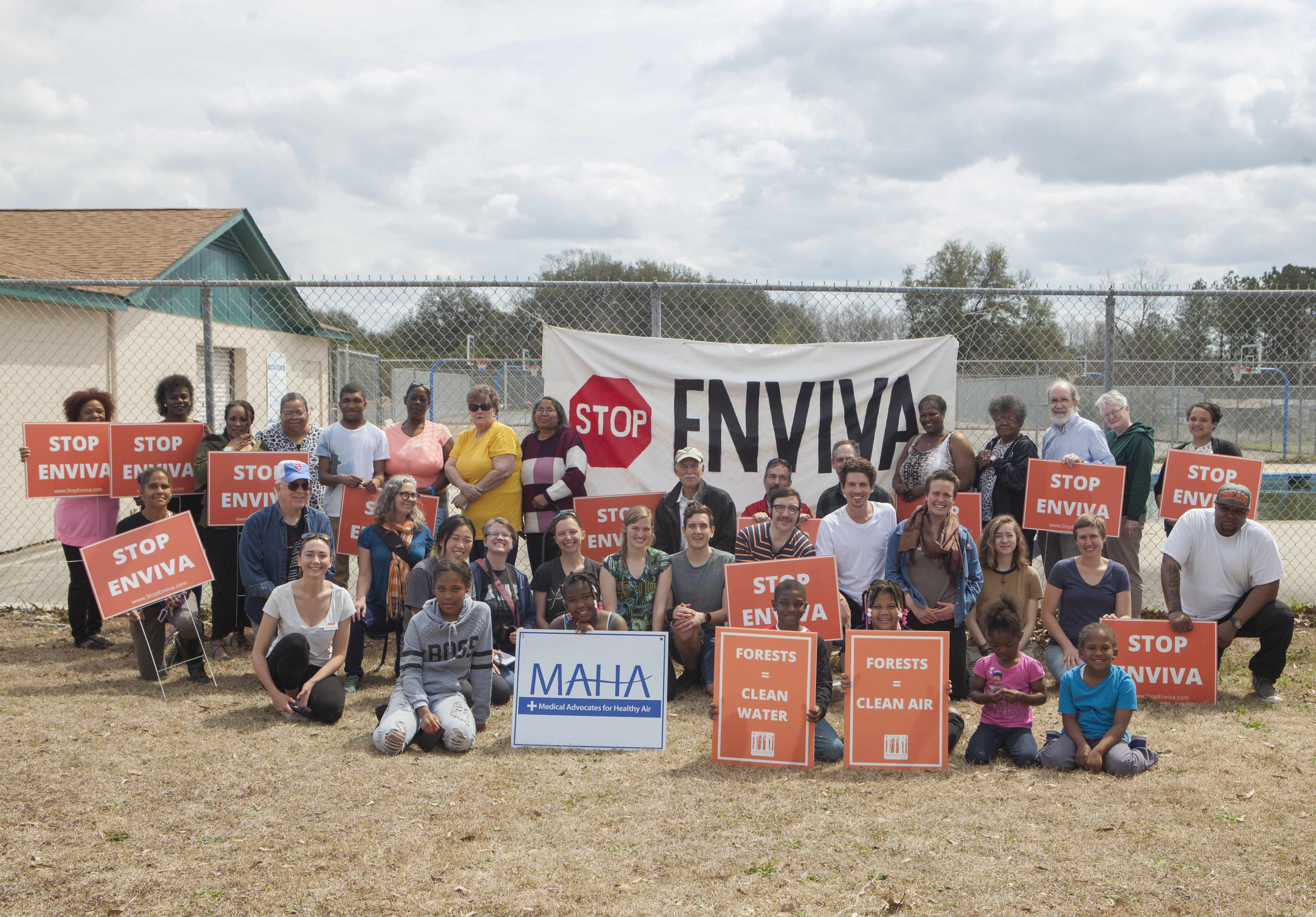
Community members from Richmond County NC protesting the Enviva facility
In 2018, I remember being at a county commissioners meeting in Richmond County, NC with dozens of community members who had come out to protest the proposed biomass facility. The commissioners had invited Enviva representatives to give a presentation. While local police intimidatingly surrounded our small but mighty group of local citizens, the red carpet treatment was given to an out-of-state company who planned to export local resources and profits, all while receiving sizable tax incentive packages from the local government. During the protest, I’ll never forget when the county commissioners left the room, shaking hands with the Enviva representatives, eyes visibly rolling at our signs and chants. A community member turned to me and said, “Must be nice to be listened to.”
Yes, not being essential is not a new revelation in the time of COVID. It’s historic, deeply ingrained and self-reinforcing. It’s easily hidden through misleading narratives like trickle down economics and the bootstrap mentality. Hidden, until now.
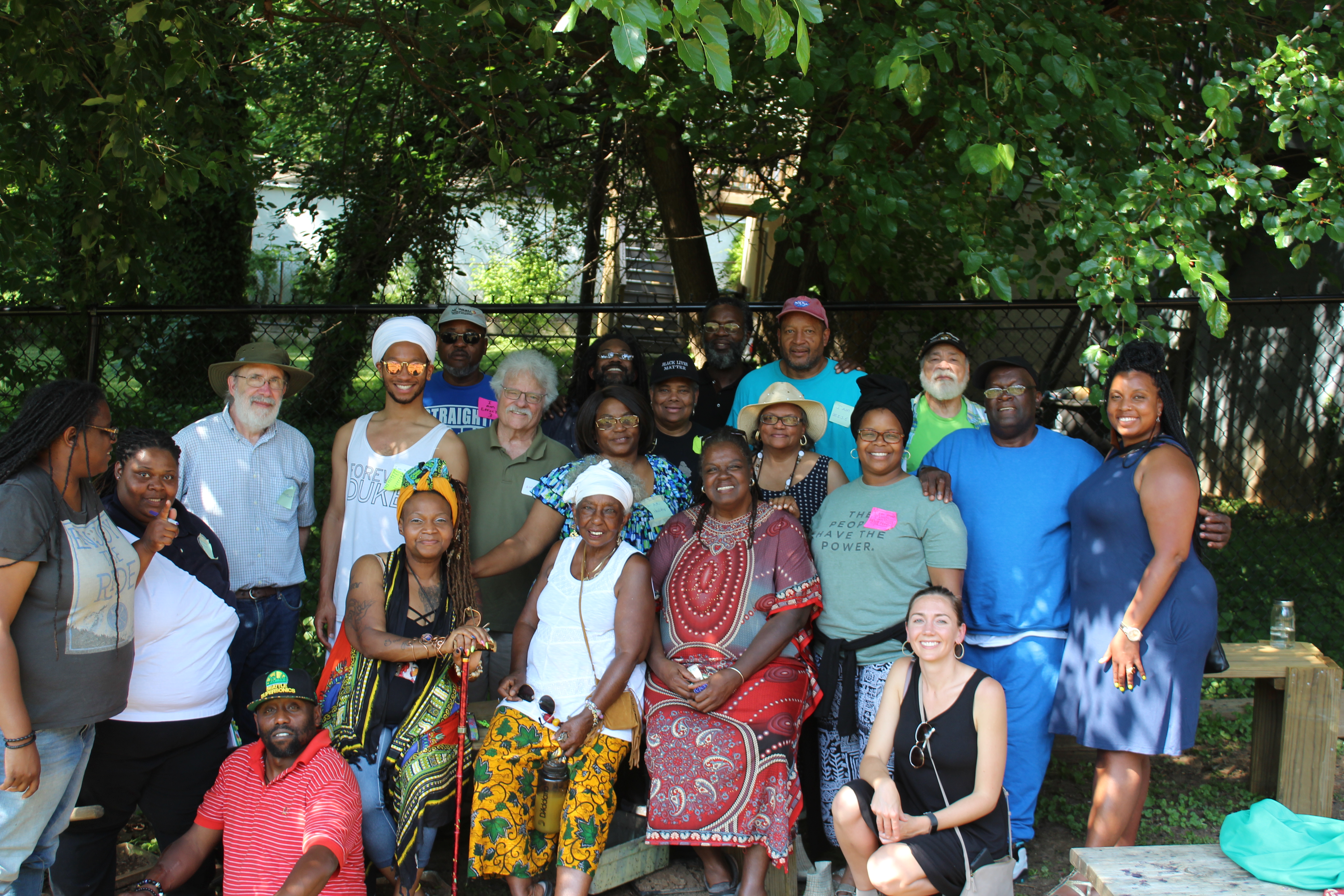
Members of the Frontline Resiliency Organizing and Entrepreneurial Solutions Training (FOREST) Circle who work towards alternative economic development solutions in their communities
An opportunity to re-imagine a future that holds: healthy children and communities, abundant natural environments, and an economic system that works for all. No, it won’t happen easily or quickly, but the time for transformation is now.
Continuing to build our economy around extractive industries like Enviva Biomass, who boost profits by using taxpayer subsidies to destroy, degrade, and export nature – is not the answer or essential. In fact, that ideology devalues most of what is actually essential for our society and our planet.
To use another forest example, wetland forests in the US South are some of the most important – dare I say essential – forests in our country. Not only do they purify water, clean the air, and provide critical habitat, they also protect local communities from extreme weather events like flooding from hurricanes. Yet, fewer than 10% of these forests are protected from industrial logging. Less than 10% protected, despite the fact that by shifting forest management from timber production to native ecosystem health, wetland forests increase over fifteen times in value from about $1,200 per acre to $18,600 per acre.

The good news is that this transformation of our system’s values has already begun. You’ve already seen it in the creativity and resilience our communities have shown through this pandemic, shining a light on what matters. Now we must seize this moment, build upon it, and transform society. We’ve got what it takes to make this world a better place. The opportunities are abundant. They are here and now – from individual choices and communities’ decisions, all the way to influencing our national policies.
May we never lose sight of what we’ve been shown. Even though the current political structure and economic system says you’re not, you are essential!
And we need you in this movement.

Here at Dogwood Alliance we will continue to challenge companies like Enviva and work with communities to protect Southern forests. We will continue to stand in solidarity and fight for what is truly essential. I hope that you will join us.
See you on the other side.
In February, I threw on my rain jacket, grabbed our drone, and headed out in to the field with reporters from EenVandaag, a current affairs television program in the Netherlands with a daily broadcast watched by more than 1.5 million viewers.
This was to be a journey that was similar to many that I have taken over the past several years — ones in which I’ve accompanied journalists from Denmark, the UK, and the Netherlands on investigations that expose the ugly truth about the dirty biomass industry. We get up in the air on small airplanes, follow-up on the ground by tracking logging trucks back to facilities, and spend time in small diners and community members’ homes to hear how the biomass industry is affecting their quality of life.
Each time I prepare for an investigation, the gravity of the situation hits home, and it gets personal.
The scientific consensus is that burning biomass releases carbon dioxide into the air, harms biodiversity by destroying habitat that plants and animals rely on, and the local communities suffer from air pollution, potholes and damage to their roads, and constant battering noise.
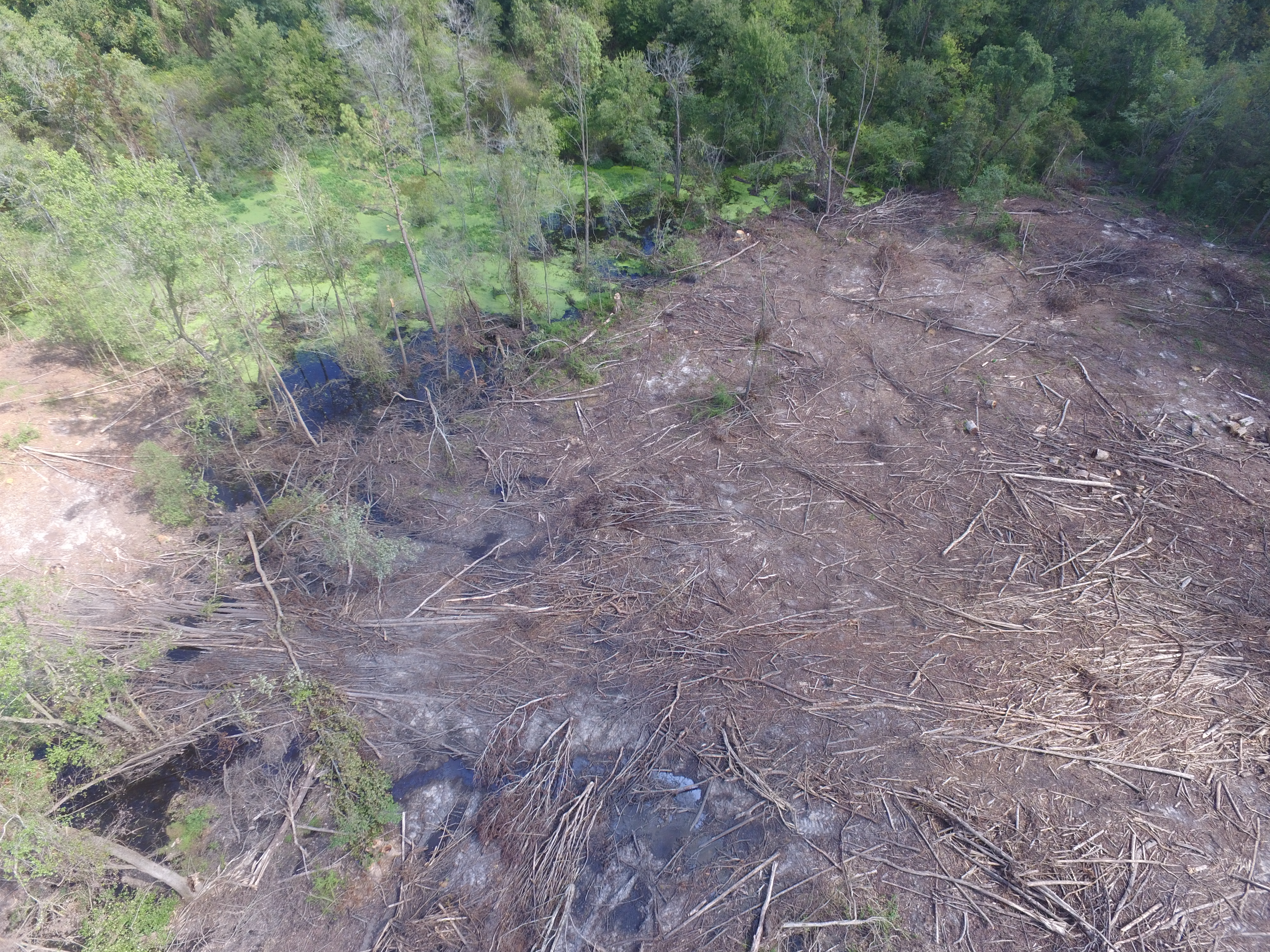
Qualified as a carbon-neutral energy source, burning biomass in electricity and power stations in the Netherlands aids them politically in claiming that they are doing right by the planet. The Netherlands Climate Minister, Eric Wiebes, is still saying that Dutch biomass plants use “residual wood” despite our investigations, documentation, and credible news outlets consistently showing mature hardwood trees being trucked back to wood pellet production facilities.
Right now in the Netherlands, €3.6 billion in subsidies go to co-firing wood pellets in coal stations, and a further €5.2 billion is earmarked for burning in dedicated biomass power, heat, and cogeneration plants. That is a huge sum of money. I cannot fathom what I would do as a policymaker with that sum of money, but if I was trying to use it to help the planet, I’d want to make sure that it was furthering the cause of protecting nature and lessening greenhouse gas emissions, not increasing them.
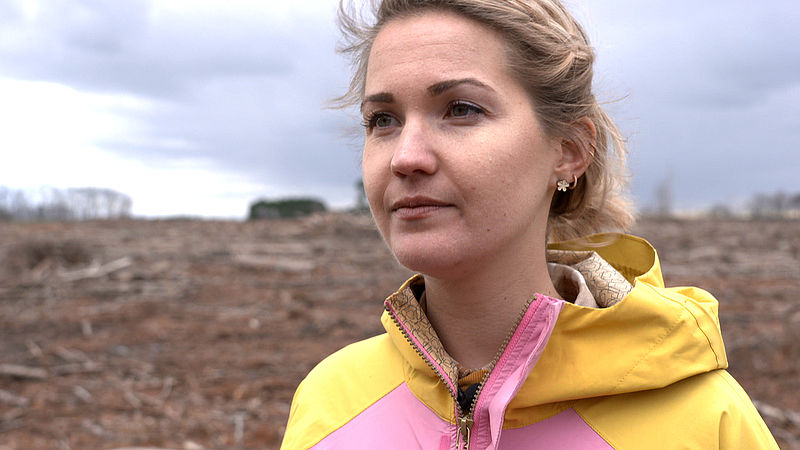
Rita Frost in a clearcut. Photo credit: EenVandaag
Each investigation that catches the dirty wood pellet and biomass industry in the act of forest destruction threatens to topple their “renewable energy” house of cards. The tide is turning in Europe against dirty biomass. How long will the European subsidies that are propping up this crumbling industry last when people know the truth?
Dutch organizations including the National Federation against Biomass (FAB), Greenpeace, Fossil Free NL, Party for the Animals, and the SP, led an online demonstration to #StopBiomassa. Their petition, requesting that the subsidies for biomass are stopped immediately, gained 14,000 petition signatures in one day.
We are seeing similar demonstrations gain power in the UK as well. An action on Earth Day, #AxeDraxNotTrees, called for an end to irresponsible biomass use, protection of carbon sinks and reservoirs of biodiversity, and investment in the climate. Biofuelwatch continues to gain support around their action demanding an end to £1 billion being wasted on dirty biomass and redirecting that money to genuine low-carbon renewable energy.
Despite the greenwashing found in Enviva’s new sustainability policy, forest destruction is continuing as usual. In North Carolina, Enviva is the number one producer of wood pellets for export. Elected officials in the state responded to the groundswell of public opposition and the growing body of scientific evidence that says burning forests for electricity is worsening the climate crisis. In the NC Clean Energy Plan, Governor Cooper’s Department of Environmental Quality (NC DEQ) rejected the combustion of biomass for electricity as a future clean energy source and explicitly recognized the current harmful climate impacts of the wood pellet industry in the state. Furthermore, a 100% clean energy resolution passed in Savannah, Georgia, a major port city that exports a significant amount of biomass, excludes biomass from being defined as an acceptable clean energy source.
And yet, in this period of the global pandemic, Enviva has been declared an “essential business” and continues to receive massive government subsidies from the European Union and Southeast Asia.
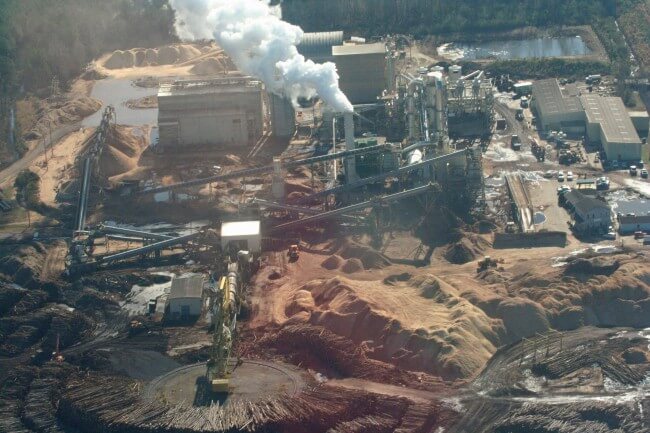
Forest destruction is on the rise, and false solutions to the climate crisis like biomass for energy continue to show themselves to be what they truly are, a major distraction that prevents forests from doing what they do best, storing and sequestering carbon. The EenVandaag investigation, rising citizen movements around the world, and science are all singing the same tune. When will policy makers respond in harmony?
Join the ranks of our monthly sustainers who are the backbone of the forest protection movement.
Amsterdam, 8th May, 2020– Today’s publication of a long-awaited biomass report by the Netherlands Environmental Assessment Agency has been greeted with alarm by international environmental organizations [1] who denounce its support for biomass subsidies in the face of strong evidence that those harm forests and the climate.
The report, entitled “Availability and Sustainability of Biomass”[2], which is meant to inform a forthcoming policy review headed by the Netherlands’ Social and Economic Council, acknowledges that the Dutch biomass certification scheme cannot guarantee that subsidised wood burning for energy is low carbon and causes no harm to forests and wildlife. It cites from various studies which conclude that large-scale burning of wood for energy is not compatible with limiting global warming to 1.5 degrees, the goal of the Paris Agreement. Nonetheless, the authors conclude that a climate policy without a significant role for biomass would be “risky” and that it was “advisable to invest in sustainable biomass production”, in other words, to continue promoting the expansion of biomass energy, whilst continuing to monitor its impacts and considering whether different sustainability standards might be introduced, justifying this conclusion with scientific uncertainties and claims.
In 2018, 800 scientists signed an open letter to the EU warning that cutting down trees for energy will increase CO2 in the atmosphere and warming for decades or centuries, even when this action replaces fossil fuels, regardless of how sustainable the forest management is.[3] The European Academies’ Science Advisory Council (EASAC) has come to a similar conclusion and has called for international action to restrict support schemes for forest biomass energy.[4] Furthermore, evidence collected and published by environmental NGOs and investigative reporters shows that in both the southern USA [5] and Estonia [6] – two of the pellet supply regions for the Netherlands – wood for pellets is routinely sourced from the clearcutting of wildlife-rich forests. In the Southern US, in many cases those are bottomland hardwood forests that lie at the heart of a global biodiversity hotspot.
Almuth Ernsting from Biofuelwatch states: “We are deeply disappointed that the Environmental Agency report endorses further support for expansion of biomass energy despite listing a host of studies and reports which show that the climate impacts of cutting down and burning trees for energy is no better than those of burning coal. The authors are using “uncertainties” and lack of consensus as a reason to embrace more ‘business as usual’ biomass energy, whilst recommending more monitoring, research and consideration of changes to sustainability standards which haven’t been shown to have had any impact in the first place. This is the opposite of the precautionary principle to which the Netherlands and the EU have signed up to.”
Rita Frost from US forest protection NGO Dogwood Alliance explains: “Every year since 2013, we have observed Enviva, the world’s largest pellet producer and a supplier of RWE Netherlands, sourcing whole trees from what once were beautiful natural forests The Netherlands is subsidising forest destruction through taxpayers’ money, and this needs to stop.“
Siim Kuresoo from Estonian Fund for Nature adds: “In Estonia, logging rates and practices are causing serious harm to our forests and to the wildlife that depends on them, such as Flying squirrels, Black storks and many other birds. We are deeply disappointed that the authors of the report are supporting policies which will worsen the situation for forests in our country, despite the evidence we and others have sent to them.”
Sasha Stashwick, a Senior Advocate for NRDC’S Climate & Clean Energy program said: “Not only does burning biomass pollute the climate just like fossil fuels, but the industry’s devastating impacts on critical ecosystems and surrounding communities are well-documented. Instead of wasting taxpayer resources subsidizing a dirty and destructive power source the Dutch government should invest in clean, reliable and inexpensive wind and solar energy.”
– END –
Contacts:
Notes:
[1] The press release is being sent by Dogwood Alliance (www.dogwoodalliance.org), Natural Resources Defense Council (www.nrdc.org), Partnership for Policy Integrity (www.pfpi.net), Estonian Fund for Nature (www.elfond.ee), Fern (www.fern.org) and Biofuelwatch (www.biofuelwatch.org.uk).
[2] The report, which can be found at pbl.nl/publicaties/beschikbaarheid-en-toepassingsmogelijkheden-van-duurzame-biomassa-verslag-van-een-zoektocht-naar-gedeelde-feiten, provides information and advice to the Netherlands’ Social and Economic Council, which in turn will advise the government on a new Dutch sustainability framework for biomass. Scientific publications and research in the field of availability, applications and certification of biomass have been assessed by the Environment Assessment Agency ( PBL) in the report. The PBL report justifies the continuation of the current Dutch policy in which biomass combustion in coal-fired power stations and biomass-fired power stations will continue to hold a large share.
[3] pfpi.net/wp-content/uploads/2018/04/UPDATE-800-signatures_Scientist-Letter-on-EU-Forest-Biomass.pdf
[4] easac.eu/fileadmin/PDF_s/reports_statements/Carbon_Neutrality/EASAC_commentary_on_Carbon_Neutrality_15_June_2018.pdf and onlinelibrary.wiley.com/doi/10.1111/gcbb.12643
[5] See for example dogwoodalliance.org/wp-content/uploads/2019/07/Biomass-Investigation-Booklet-2019.pdf, nyheder.tv2.dk/samfund/2019-09-09-tv-2-afsloerer-fejl-i-klimakontrol-helt-sort-siger-ekspert and reports.climatecentral.org/pulp-fiction/2/


 Donate