


EPES, AL – This week news broke that the Alabama Department of Environmental Management (ADEM) approved Enviva’s application to build a massive wood pellet facility in Sumter County, just weeks after a public comment period ended in which hundreds of people submitted comments opposing the new mill. ADEM’s quick approval of the Maryland-based company’s 1.2 million ton wood pellet facility delivers a dangerous blow to the local community of Epes, the region’s forests, and our global climate.
As the annual United Nations Climate Change Conference continues in Madrid, the global calls for real climate action have become increasingly urgent. Millions of people walked out of schools and workplaces in recent youth-led climate strikes, over 11,000 scientists have declared we are in a climate emergency, and just this week the head of the U.N. warned that we are falling dangerously far behind on necessary global climate action.
“Do we really want to be remembered as the generation that buried its head in the sand?” asked U.N. Secretary-General António Guterres, referring to inaction on climate. The statement could not be more apt than for governments, industries, and investors that still promote the burning of biomass for electricity — which flies in the face of a decade of scientific evidence that says burning biomass is worse for the climate than burning coal.
With a production capacity of 1.2 million tons of wood pellets per year, the Epes facility will require up to 30,000 acres of forests to be cut down annually. Combined with its new Lucedale facility, currently under construction, Enviva’s expansion in the Gulf South will place intense pressure on Mississippi and Alabama’s forests. In a region where the land has been degraded by the forest products industry for decades, intact forests and wetlands are now more important than ever to protect communities from the increasing frequency and severity of flash floods, landslides, hurricanes and heavy rain.
In a community that is more than 90% African-American, Enviva’s wood pellet facility will bring harmful air pollution, dust, constant noise, and dangerous truck traffic. Despite a rosy corporate image portrayed by the company of coming to uplift communities in the Black Belt, Enviva represents the worst of a story that has played out time and again — dirty industry that parachutes in to extract resources and wealth, degrading the community’s health and land, for the benefit of a few, and the peril of many.
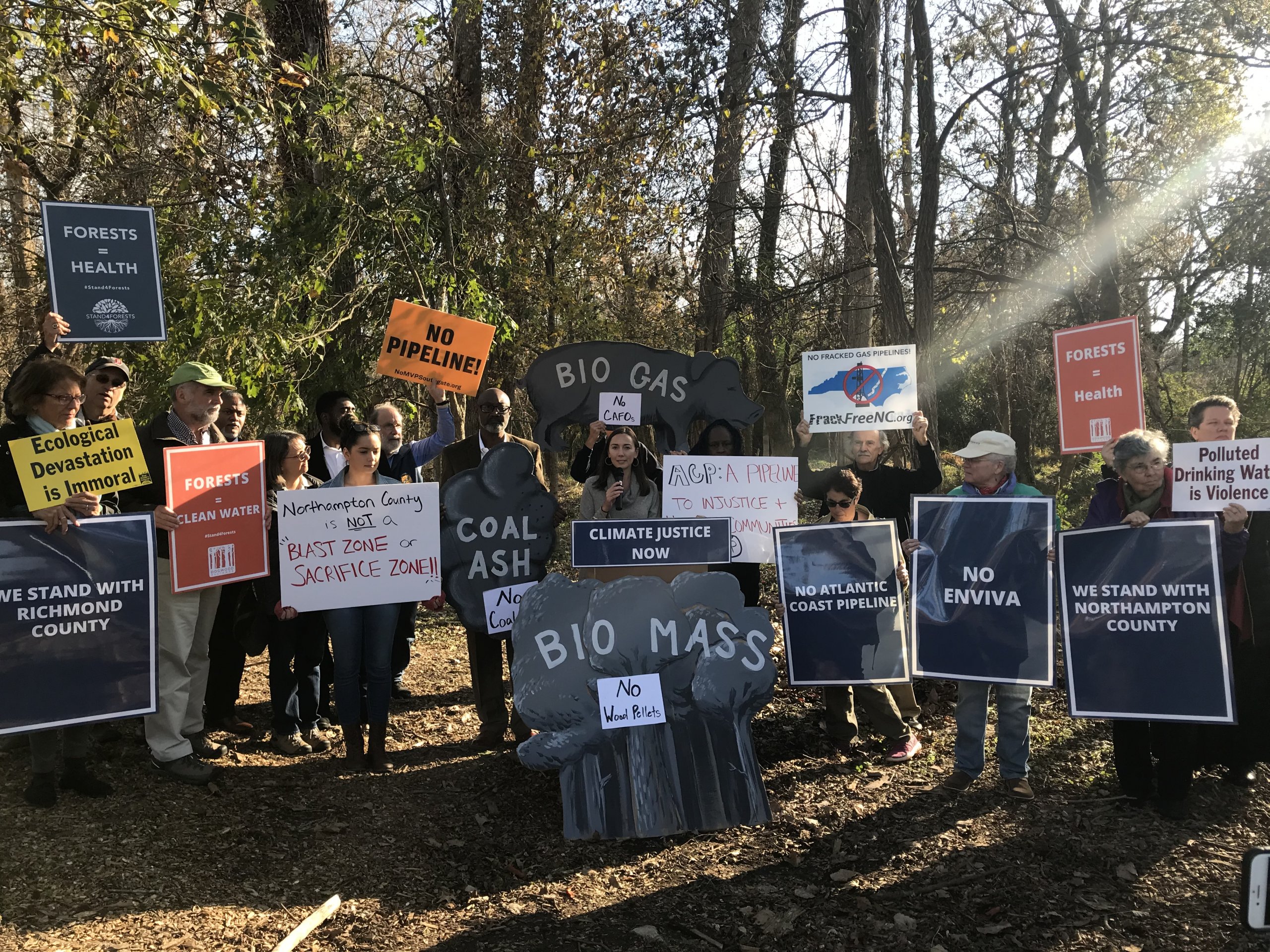
Last week, we stood together with community leaders and climate justice advocates to host a press conference about the destructive impacts of the wood pellet industry and other extractive industries in the state. Following the NC Department of Environmental Quality (DEQ) Environmental Justice and Equity Advisory Board Meeting, Belinda Joyner of the Concerned Citizens of Northampton County and Debra David of the Concerned Citizens of Richmond County shared their experiences living with the impacts of polluting industries — including Enviva wood pellet facilities, hog factories, Duke Energy’s power plants, and the proposed Atlantic Coast Pipeline.
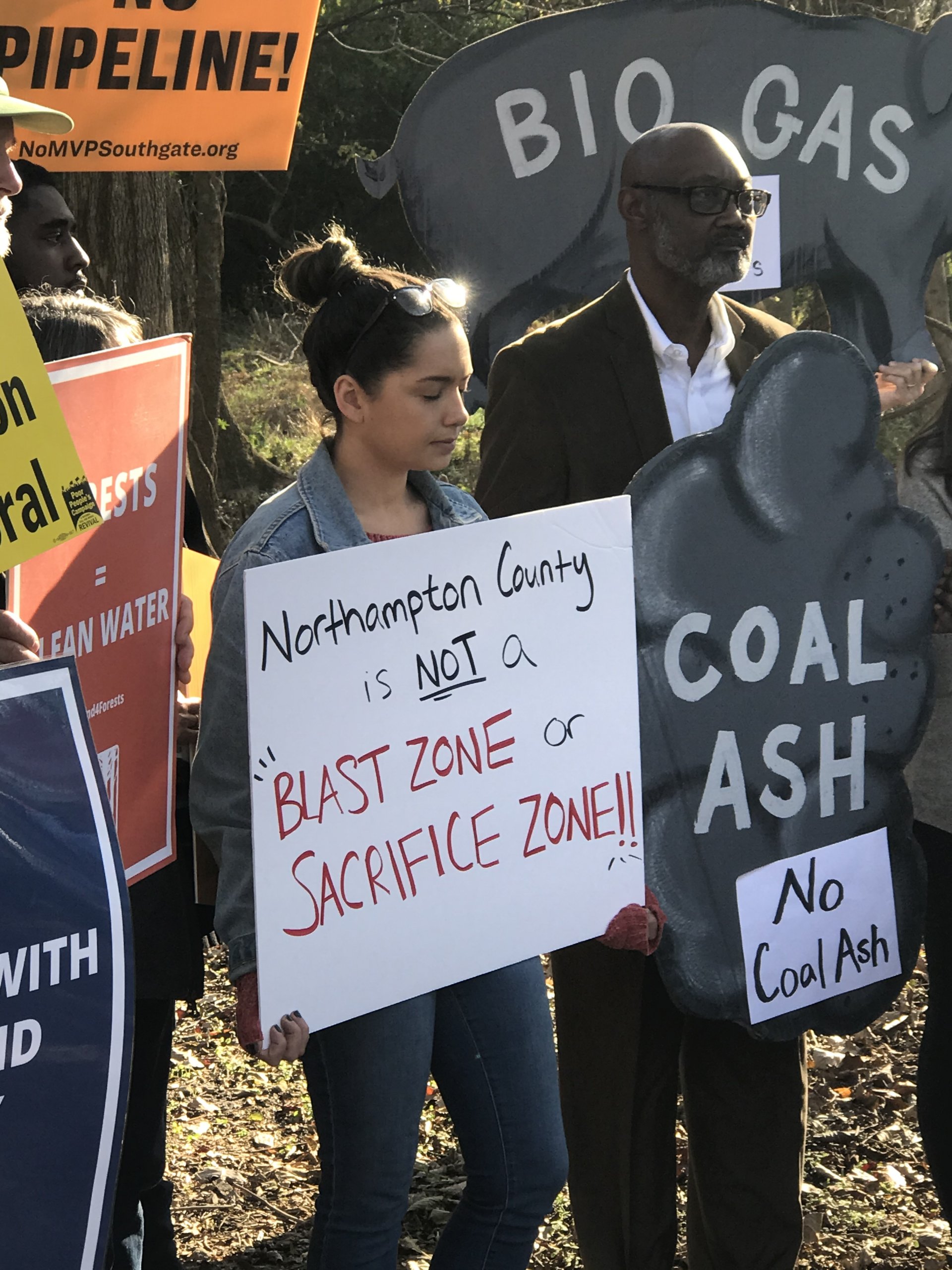
Community members and advocates hold signs at the press conference in support of climate justice and in opposition to extractive industries and dirty energy.
Emily Zucchino, Dogwood Alliance’s Director of Community Engagement, and William Barber III of the NC Poor People’s Campaign and Climate Reality Project also spoke, renewing calls on Governor Cooper’s administration and DEQ to issue a cumulative impact assessment of extractive industries in the state, starting with the wood pellet industry.
The meeting and press conference came on the heels of DEQ approving Enviva’s third massive expansion this year — this time at its dirty Northampton County facility, just a few miles from Belinda’s home. Each time Enviva applied to expand, community members and North Carolinians from across the state spoke out in favor of forest protection and climate justice, urging DEQ to deny the production increases.
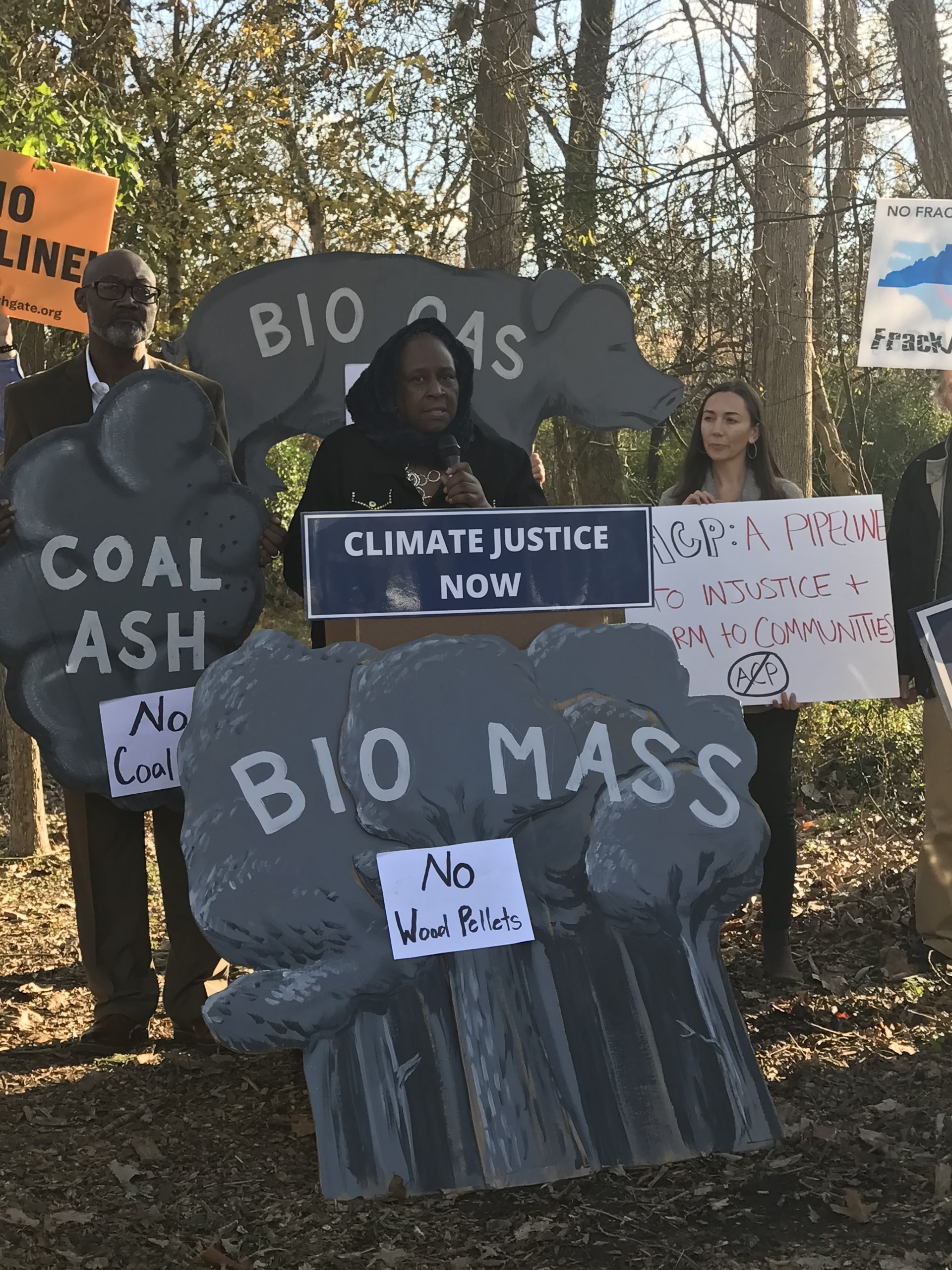
Belinda Joyner of Garysburg, NC, Concerned Citizens of Northampton County
“They [DEQ] had a public hearing in three different counties, and to come back with the same result, I find something wrong with that… Because they did not listen to anything that we said in Northampton County. They did not hear the cries of the people who can’t sit on their porches, can’t hang their clothes on the line, with trucks 24/7 up and down the highway.” – Belinda Joyner, Concerned Citizens of Northampton County
Throughout the press conference and at the Environmental Justice and Equity Advisory Board meeting beforehand, we kept hearing a similar refrain — a call on DEQ to stop treating communities like dumping grounds and sacrifice zones.
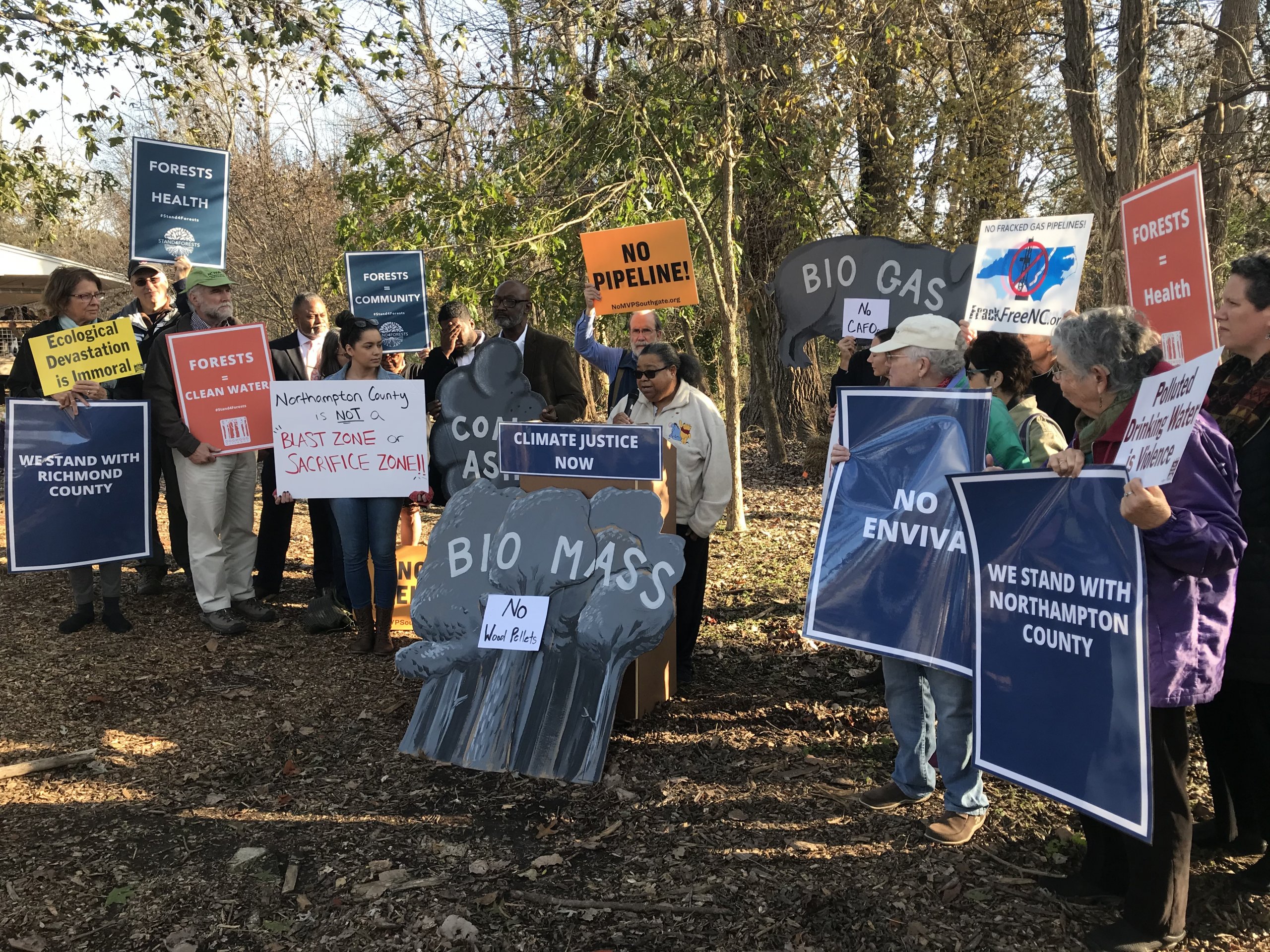
Debra David of Dobbins Heights, NC, Concerned Citizens of Richmond County
“Where I live in Dobbins Heights, we already have Duke Energy, Piedmont Gas, Perdue Farms, CSX Railroad, Trinity Chemical Factory, and we have Enviva built on top of that. So I feel like we are a dumping ground.” – Debra David, Concerned Citizens of Richmond County
The seriousness of the climate crisis demands transformative action to transition to a clean energy economy and dramatically scale up forest protection. Issuing permits now for expanded forest destruction and new fossil fuel infrastructure locks in dangerous emissions for decades to come, at a time when we urgently need decision-makers to pull the brakes on these harmful industries.
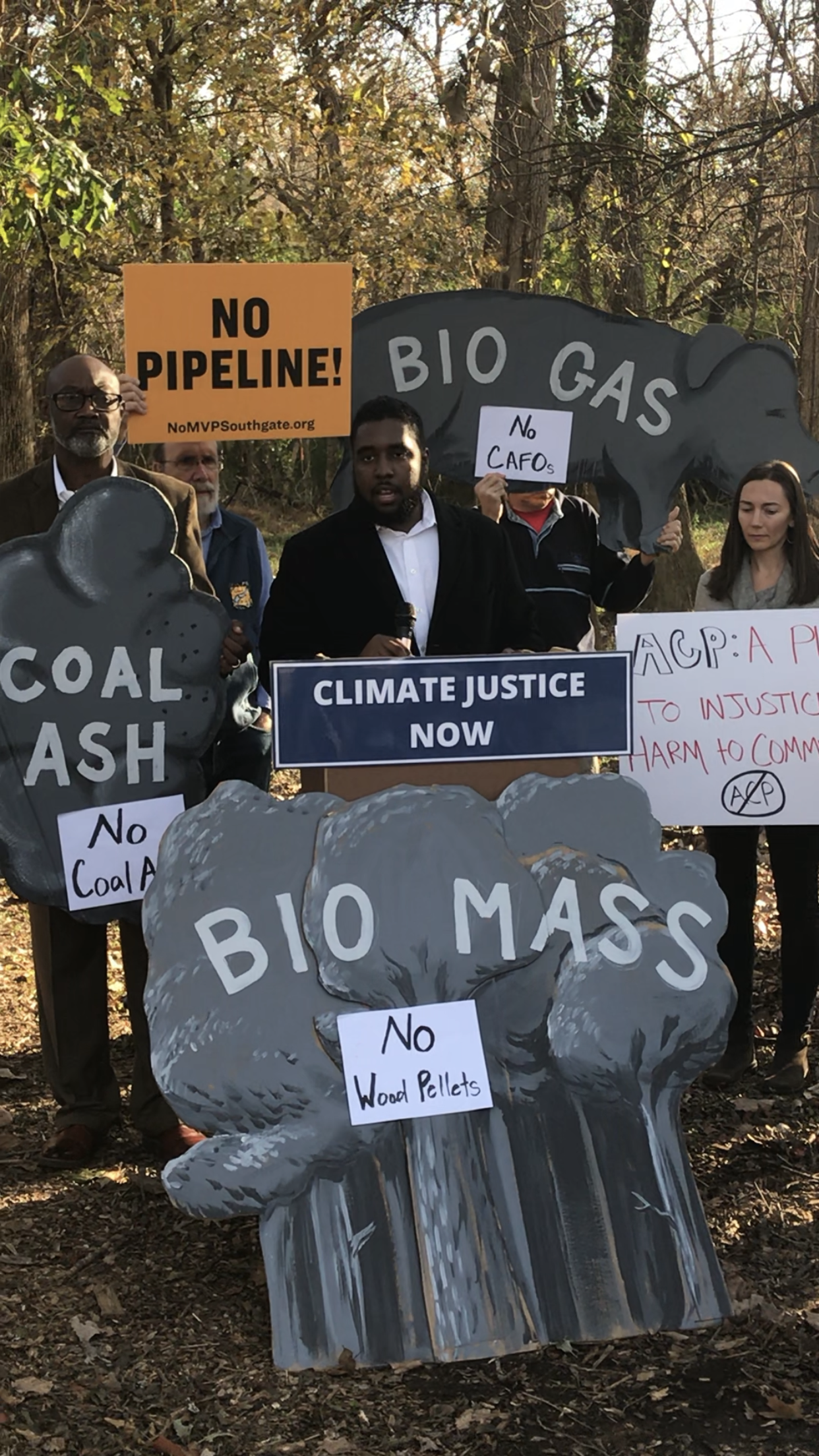
William Barber III, NC Poor People’s Campaign and Climate Reality Project
“When we allow our communities to be encroached upon by fossil fuel infrastructure, whether it be pipelines or power plants, and when we allow our forests to be cut down and consumed, it increases the amount of greenhouse gas emissions being dumped into our global atmosphere and lowers the probability that we will act in enough time to minimize the worst effects of the environmental crisis.” – William Barber III, NC Poor People’s Campaign and Climate Reality Project
Emily Zucchino, Dogwood Alliance
“Those hit first and worst by climate change are often the very communities who live with the pollution and disruption of the industries that have caused and are worsening the climate crisis. Yet our state laws and regulations keep us bound to a system that approves industry in a silo, failing to consider the full and long-lasting impacts.”
Destructive industries like the wood pellet industry have been approved to expand repeatedly, without proper scrutiny of their full impacts on our forests, climate, community resiliency, and public health. It’s time for the Cooper administration to conduct a cumulative impact assessment of the industry’s full impacts, and not continue to allow them to go unaccounted for.
After these leaders spoke out to call for a cumulative impact assessment and shared their experiences, we gathered for community reflections — a powerful session facilitated by Jodi Lasseter, co-convener of the NC Climate Justice Collective.
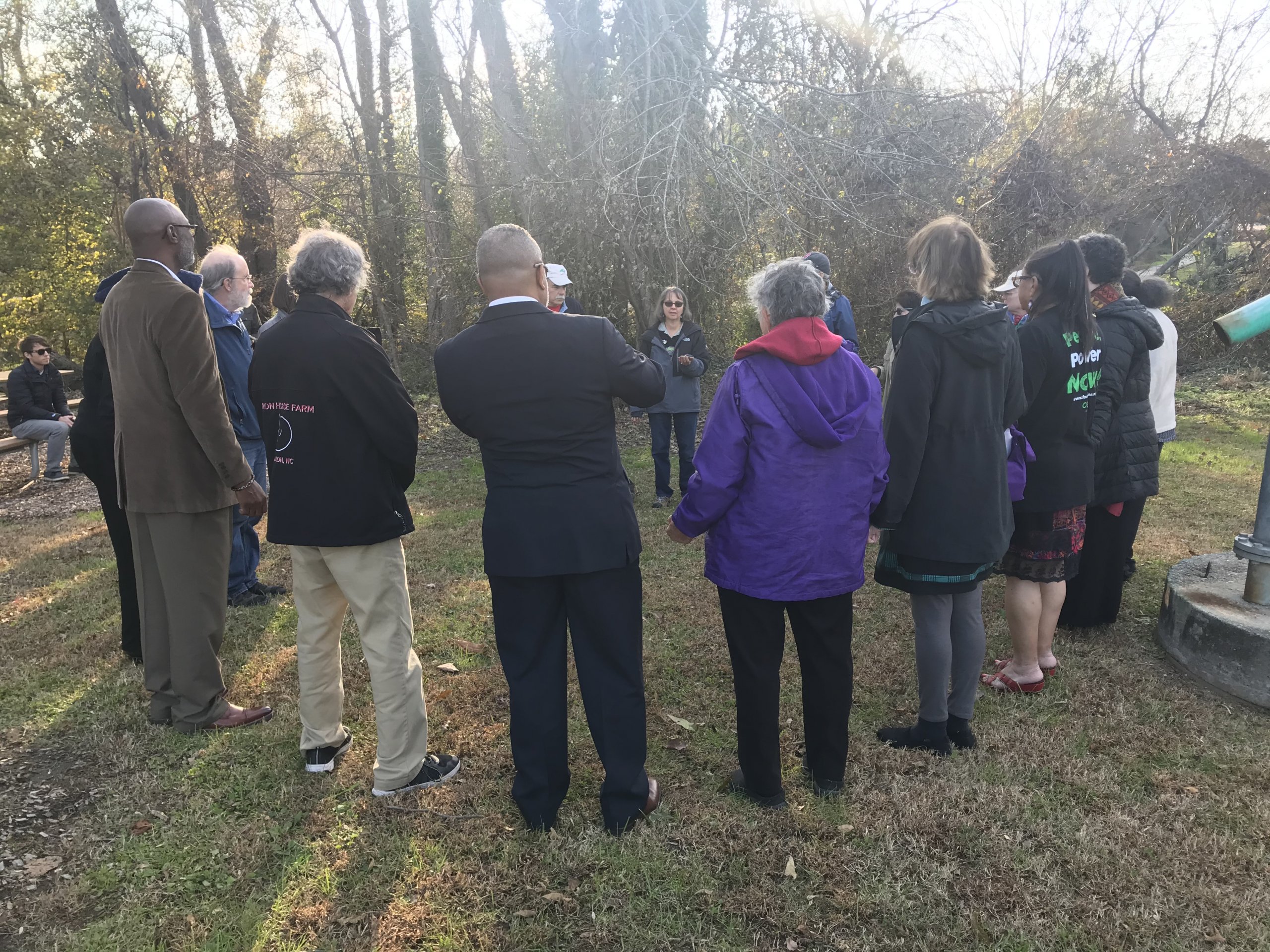
We gathered in a circle at the Walnut Creek Wetland Center to make space for community reflections.
The permitting of Enviva’s expansion has failed to reflect the real concerns of North Carolinians across the state, and these expansions will be a tremendous loss for our forests and communities. So as we continue to urge our decision-makers to halt the expansion of this destructive industry, we also make space to recognize and mourn the devastating impacts of these facilities.
We ended the day with gratitude, in recognition that the movement for forest protection, climate action, and justice for all grows stronger every day — and we’re strongest when we stand together.
Before a crucial vote occurs November 26 in the Netherlands on a coal ban and biomass subsidies, environmental organisations from the United States & Estonia demand the Netherlands close its coal power stations without converting them to biomass and redirect subsidies supporting the burning of wood to genuinely low-carbon renewable energy such as wind and solar power.
In an open letter from NGOs in the sourcing region of Netherlands utility RWE’s biomass demand- the United States and Estonia- and joined by concerned international organizations, Dutch Climate Minister Wiebes & members of the Dutch House are warned that transitioning from coal to biomass would be simply replacing one carbon-intensive energy source for another. The Netherlands already subsidizes the burning of 3.5 million tonnes of wood pellets each year heavily. Those subsidies make it profitable for energy companies to continue burning coal for several more years, and result in wasted public resources, ruined forests, harmful community impacts, and biodiversity loss.
“Biomass is the new coal. Burning biomass increases carbon in the atmosphere and means warming for decades to centuries. We need to protect and expand forests as part of our climate strategy— we cannot log and burn our way to a stable climate future,” says Rita Frost, Campaigns Director at Dogwood Alliance.
“Estonian forests are experiencing most intensive exploitation in history as logging rates are record high. This puts a huge pressure on forest biodiversity and damages both the carbon stock and sink for decades to come, limiting our own possibilities for achieving carbon neutrality. The logging incentive driven by wood burning subsides in other countries is an unnecessary fuel for this environmental destruction,” says Siim Kuresoo, Estonian Fund for Nature.
Massive new subsidy payouts have recently been approved by the Dutch government and the Netherlands is at serious risk of compromising its climate goals by locking in dirty bioenergy infrastructure for years to come. Three of the Netherlands’ newest coal plants face early closure due to a climate coalition agreement. Emerging science makes it clear that biomass is a risky investment that cannot be afforded when time and money are of the essence to tackle climate change.
In order to respond responsibly to the climate emergency, the NGOs make it clear to the Netherlands that allowing for the conversion of coal stations to biomass is an impediment to the clean energy transition. Greenlighting biomass provides a life-line for dirty infrastructure and pulls investments away from true renewables like wind & solar power.
Current policies that treat biomass as carbon-neutral do not reflect their real impacts on the climate and public money should only be used to subsidize technologies that genuinely reduce carbon emissions.
See the letter here: https://www.dogwoodalliance.org/wp-content/uploads/2019/12/NL-Coal-Phaseout-Sign-on-Letter.pdf
We’re excited to share with you the final Stories Happen in Forests video for this year: Grow & Forage! Meet Indy Srinath, a manager of urban gardens. She’s not only a gardener, but she’s an educator and a forager, too. Indy is passionate about honoring the sacrifices of those who paved the way for her, permaculture, and mushrooms!
In the video, Indy shares her belief that urban gardening is one of the most radical things a person can do. She also shares her deep respect for our forests: from her drive to learn and understand what the forest is communicating, to her desire to exist in harmony with all life in the woods.
I learned a lot from Indy on our tour of the community garden and on our hike through some of her favorite foraging spots. From how fruits and veggies grown in the garden are shared among the community, to how to identify mushrooms and the role they play in the forest. A big thank you to Indy for sharing her wisdom with you and with me.
Many will say fighting climate change is expensive. Calculating the cost of inaction, though, makes it obvious that the investment in climate mitigation (reducing our greenhouse gas emissions) and adaptation (making our communities more resilient to climate impacts like flooding) is worth it. But funding false solutions? Here’s where we can all agree: we don’t have the time nor the money to waste on so-called solutions that don’t work.
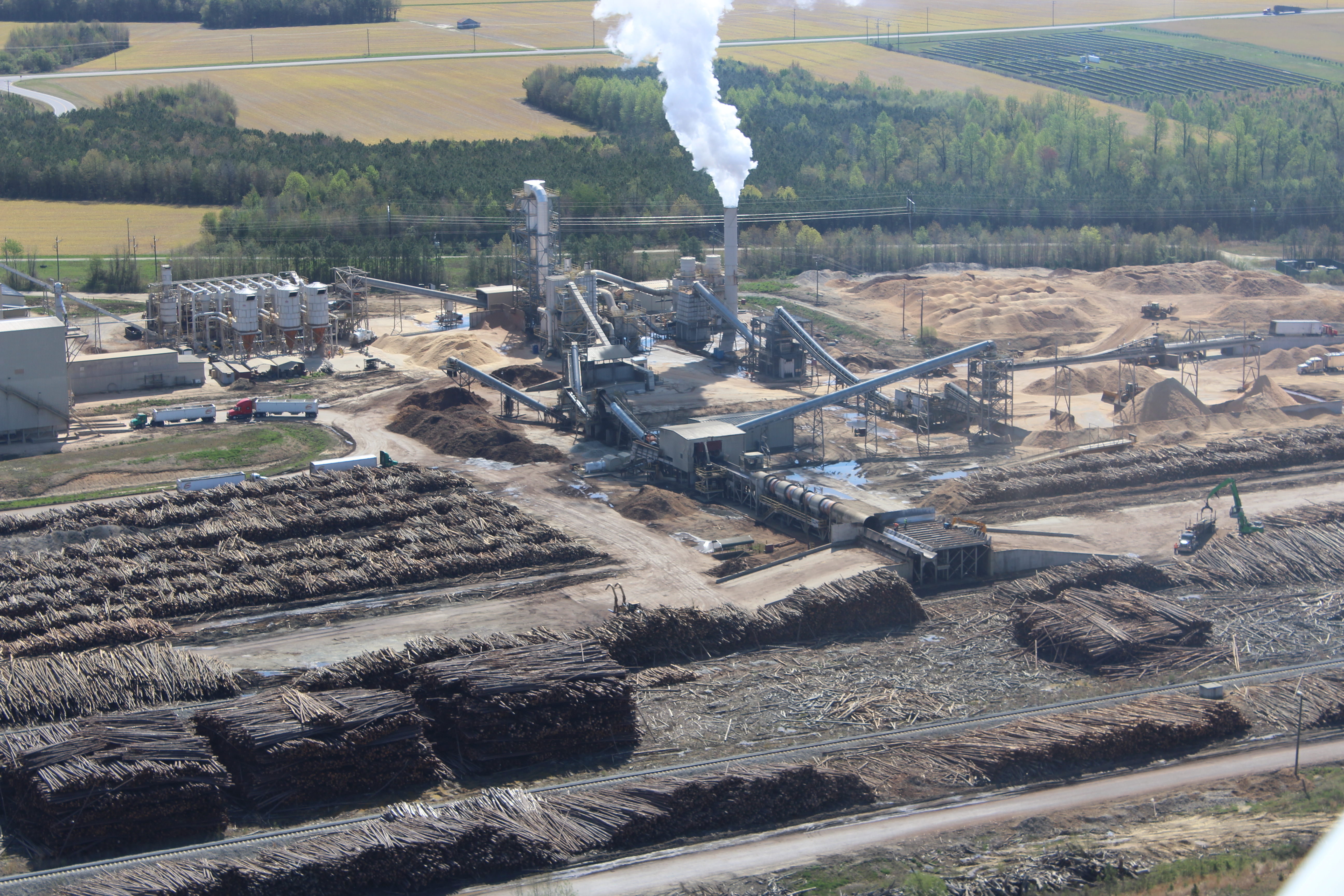
Enviva’s Northampton Biomass production facility
Led by countries in the European Union, governments around the world are turning towards replacing coal with biomass energy as a categorized renewable energy source. This move flies in the face of research, which has shown time and time again that burning biomass from forests for energy is dirty and destructive. Burning forest biomass has shown itself to be a significant contributor to (not a solution to) climate change because it releases large amounts of greenhouse gases, removes crucial forest ecosystems that provide habitat and are carbon-capturers, and harms communities where the facilities are located.
Coal-to-biomass conversions are uneconomical compared with genuine clean energy alternatives. A 2017 analysis of the UK power sector, for example, found that by 2025 Drax’s existing biomass plants will be more expensive to operate than building completely new solar and wind capacity.
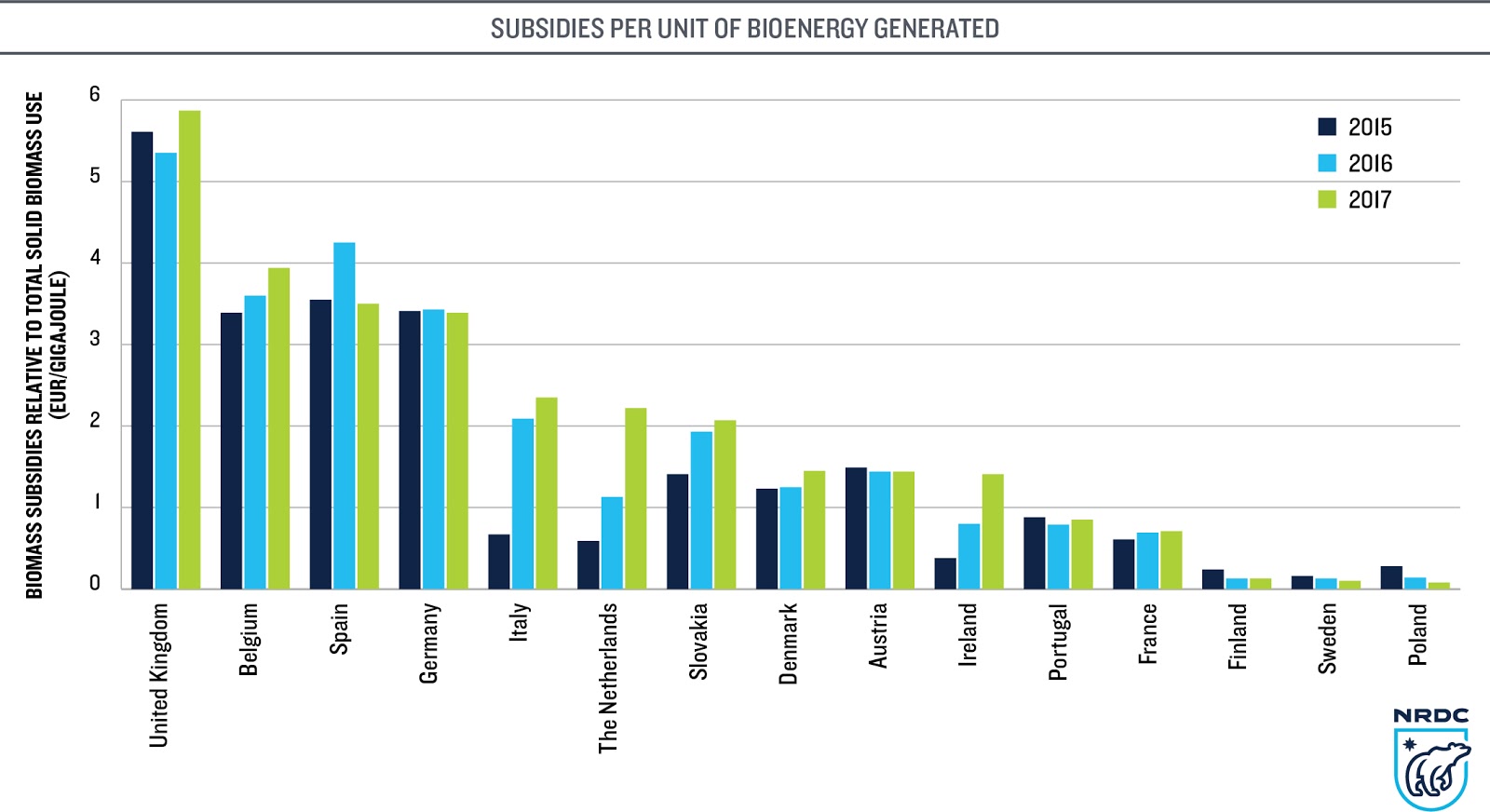
This week, a critical new report from the Natural Resources Defense Council detailed how 15 EU member states are wasting billions of euros on dirty bioenergy subsidies each year. Burnout: EU Clean Energy Policies Lead to Forest Destruction shows that $7 billion euros are paid out every year to utilities and end users of biomass. Enviva, the world’s largest supplier of biomass, reaps these benefits when they sell to European utilities. Renewable energy subsidies should help address the climate emergency, not make it worse.
Even more, scientists are urgently calling for the world to protect forests, not destroy them. Renewable energy subsidies should be going towards truly clean, renewable energy sources like wind and solar, while we also invest in climate solutions like keeping forests standing. One of the most important places for that to happen is in forests in the Southern US.
The new NRDC report shows how much Europe funds destruction of Southern forests for biomass. We don’t have the time nor the money to be swindled by biomass as an energy source any longer. Enviva has plans for a massive scale-up of their wood pellet production in the Southern US. This is bad for our forests, climate, and communities.
There are over 35 million acres of wetland forests in the 14 states of the US South, providing critical ecosystem services, like cleaning air, filtering water, and protecting communities from floods. We know that, on average, natural wetland forests left standing, not logged, are worth over $18,000 per acre. That doesn’t exactly tell us what we could lose, though, if the wood pellet industry has its way.
The Yadkin-Pee Dee River flows through North and South Carolina, with headwaters near Blowing Rock, NC and an endpoint in the Winyah Bay near Georgetown, SC. Known as the “Tigris and Euphrates of the South“, the river is a main source of drinking water and economic opportunity for the surrounding communities and has been the site of human civilization for over twelve thousand years, home to the Pee Dee Tribe and other indigenous societies.
Watersheds are land areas that surround rivers, and water from those areas flow into the main river systems. The Pee Dee watershed, which surrounds the Yadkin and Pee Dee rivers, encompasses 18,864 square miles of land in both North and South Carolina.
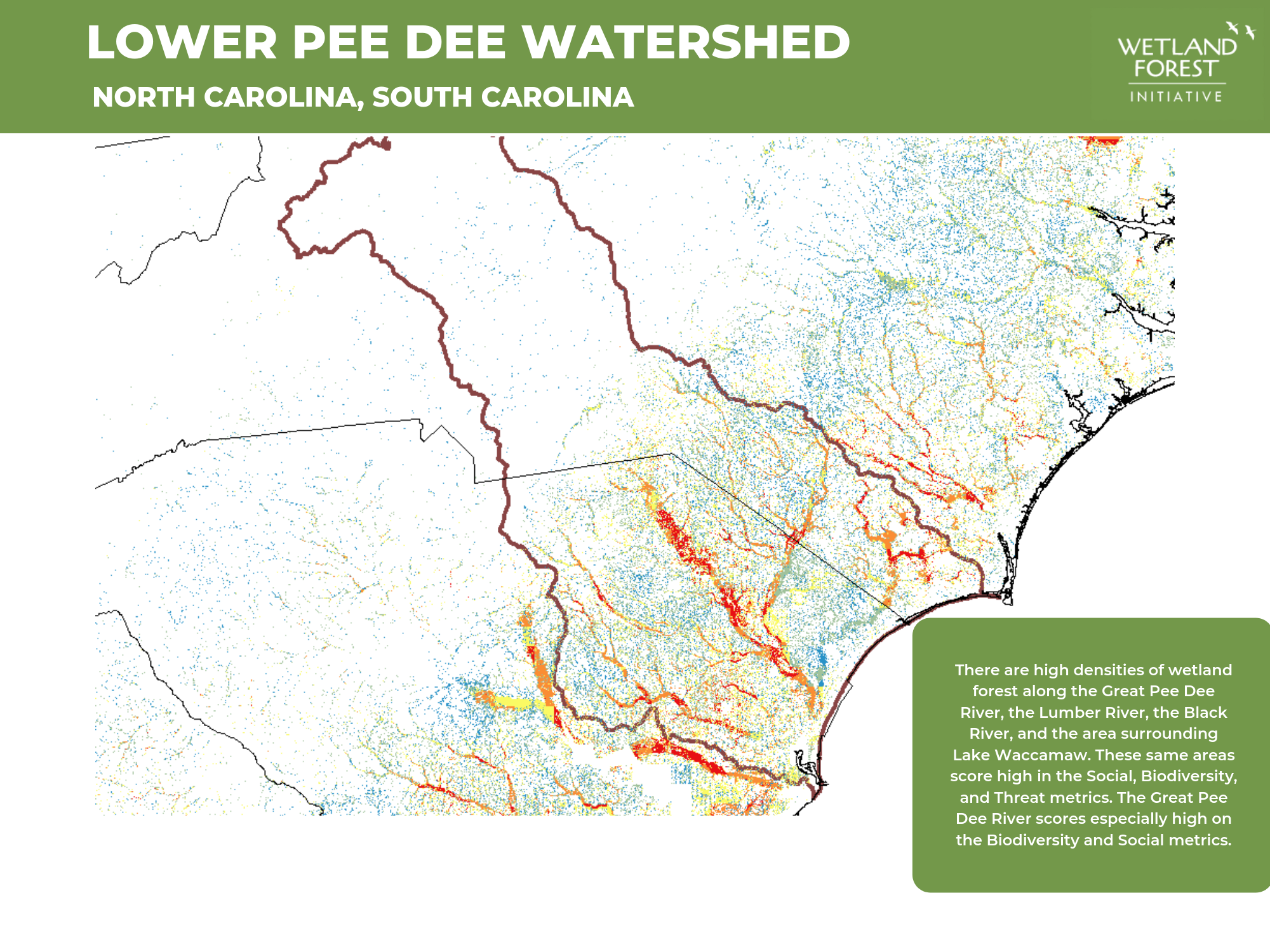
Perhaps most importantly, the Pee Dee Watershed is home to roughly 1.5 million people in 19 counties across two states. The communities in these counties rely on the natural infrastructure and ecosystem services that wetland forests provide, equivalent to $36 billion in value. These wetland forests provide critical, life-giving services to urban centers and rural communities like the Pee Dee Indian Tribe throughout the watershed. But these ecosystem services are at risk. The wood pellet industry targets wetland forests just like these for logging.
The forest products industry is skilled at hiding its forest destruction and degradation behind fancy words and misleading statements. When a logging company goes into a forest in the US South, regardless of where the logs are going, the standard operation is to create a massive clearcut, removing all available wood, leaving only minimal branches, bare earth, and weeds behind. The wood pellet industry often claims it only uses “waste” wood, but their definition of “waste” is very broad, including whole trees not suitable for the paper or lumber industry — like cypress trees in wetland forests.
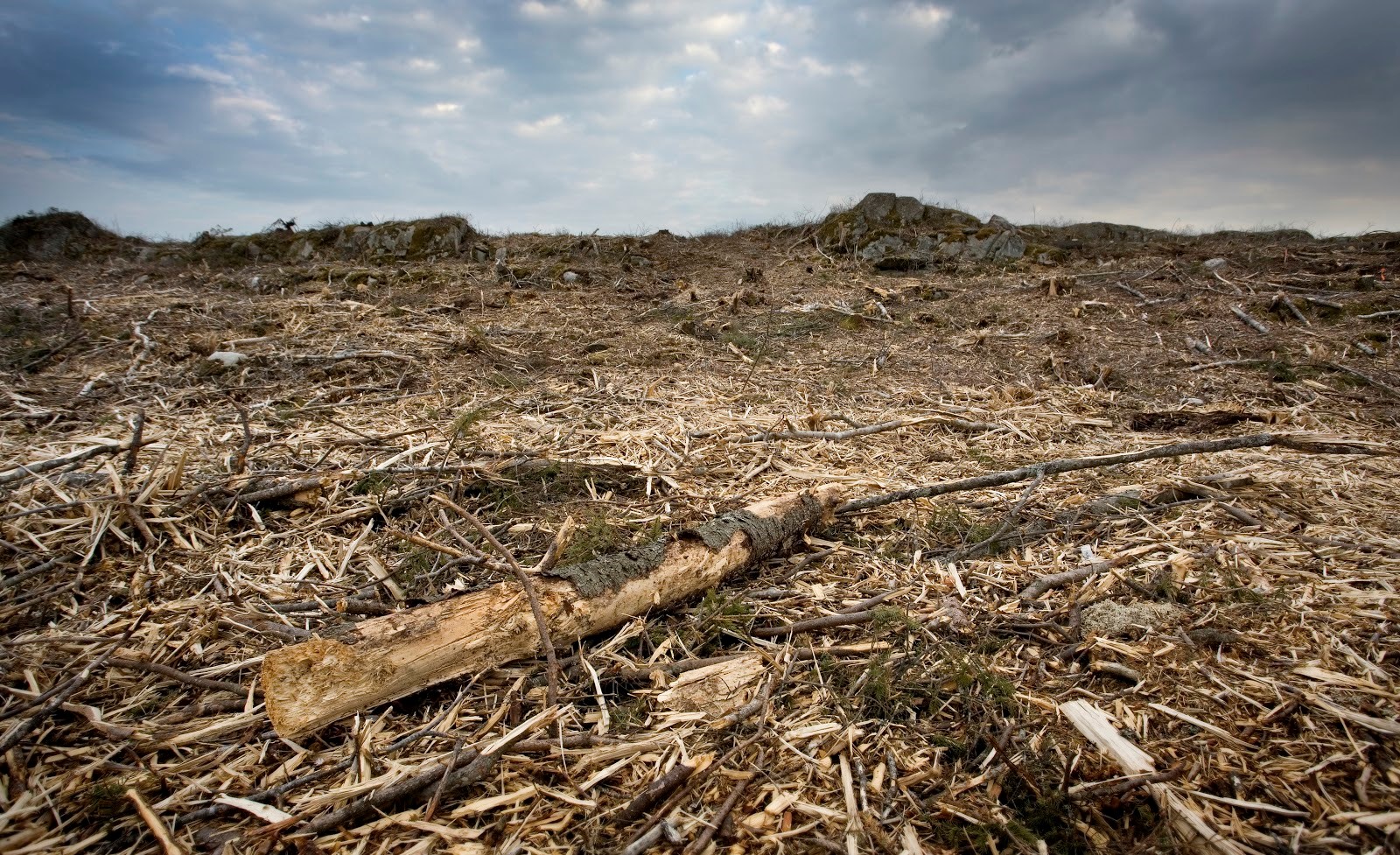
After harvest — provided that the land is not converted to another use, like development or agriculture — the land may either be planted, usually with commercial monoculture species, or left to regenerate more naturally. If every tree is removed from the area, there will be no trees left to drop seeds for the next generation. This means that the cut down area will only grow with seeds from nearby areas, which may mean that the trees that come back are nothing like the trees that were cut down.
Because wetland forests are special ecosystems, clearcuts can be especially problematic. For example, scientists know that cypress trees — keystone species in bottomland hardwoods and floodplain forests — have very strict requirements for regrowth.
Cypress seeds:
In other words, unless extreme care is taken in wetland forests, cypress trees will not recover from clearcutting.

The Pee Dee Watershed includes a variety of protected areas, including public use areas, parks, national forests, national wildlife refuges, and wildlife management areas. Wetland forests, highly acclaimed for their ecosystem services, make up nearly a quarter of forests in the Pee Dee Watershed.
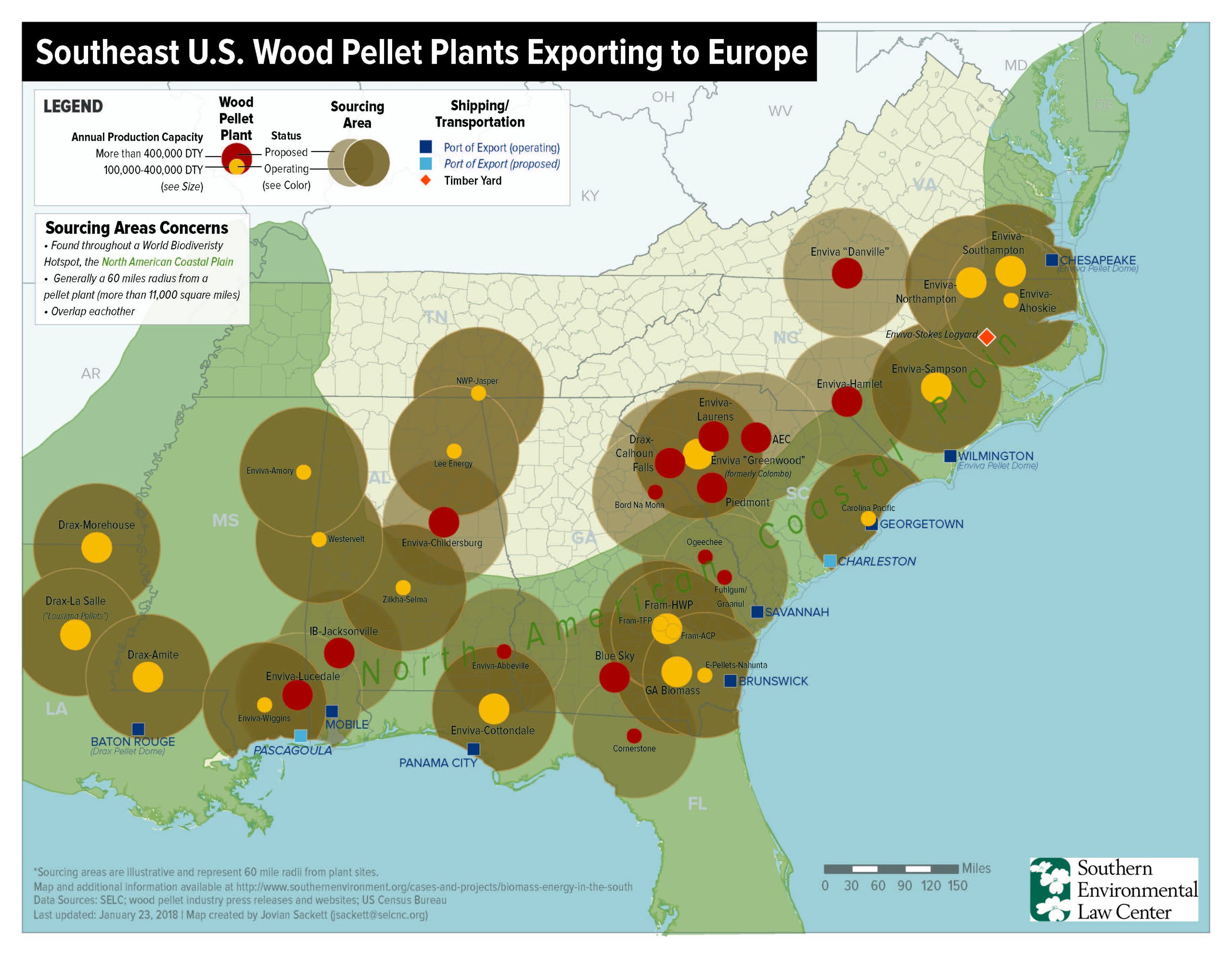
There are three currently active wood pellet production facilities that source from the Pee Dee Watershed: Enviva Hamlet (Hamlet, NC), Nature’s Earth Pellet Energy (Laurinburg, NC), and Enviva Sampson (Faison, NC). Of the three, the two Enviva facilities use and produce the vast majority (over 90%) of wood pellets from the region, exclusively for export to feed Europe’s growing energy demands.
Wood pellet facilities will accept wood from up to 75 miles away in any direction. That means that when combined, the three facilities have a potential sourcing impact on 1.4 million acres of wetland forests in the watershed. That is over 80% of total wetland forests in the watershed. Over the course of even a decade, impacts from logging can be staggeringly large. If these three facilities affect just 1% of available wetland forests for ten years, 140,000 acres of wetland forests could be destroyed in the Pee Dee Watershed alone.
These impacts are not just felt in the forests, but also in the quality of life for residents of the watershed. We know from our work on ecosystem services that wetland forests in the Pee Dee Watershed provide $26 billion in ecosystem services, which includes:
If 140,000 acres of the watershed were degraded through logging, it would mean:
I don’t know about you, but $2.4 billion in lost ecosystem services — like clean water, food production, protection from extreme weather events, and quality of life — seems like an awfully high price to pay for subsidizing Europe’s energy demands.
NC DEQ’s approval of Enviva’s Northampton facility expansion is the latest contradiction between the Cooper administration’s stance critiquing biomass and its continued inaction to address the threats the industry poses to our forests, communities, and climate
Yesterday, the North Carolina Department of Environmental Quality (DEQ) approved yet another massive expansion of the wood pellet export industry led by Enviva — this time at its dirty Northampton County facility. This approval represents another contradiction between the Cooper administration’s stance critiquing biomass in the state’s Clean Energy Plan and the agency’s continued greenlighting of the industry’s expansion. With this additional production capacity, North Carolina will now become the world’s largest wood pellet exporter.
The permit allows Enviva to increase its annual production to over 780,000 tons of wood pellets, which requires an equivalent of 18,750 acres of North Carolina’s forests to be clearcut each year. At a time when standing forests are more important than ever to store and sequester carbon and protect communities from flooding, the company’s four wood pellet facilities in the state will require over 60,000 acres of forests each year to be cut down to meet its 2.6 million ton production capacity.
The wood pellet industry has garnered statewide opposition from impacted community members, environmental justice advocates, health professionals, scientists, and other residents. During the public comment period, hundreds submitted comments opposing the permit — and thousands more have signed petitions to Governor Cooper urging his administration to place a moratorium on the expansion of the wood pellet industry until a statewide cumulative impact assessment is completed.
Despite a mounting body of scientific evidence warning governments against the large-scale use of bioenergy — such as the IPCC’s latest special report on Climate Change and Land1 — the Cooper administration has allowed this industry to expand without proper scrutiny, ignoring calls for a state cumulative impact study. As the permitting process has failed to account for the industry’s dangerous threats to forests, climate, and communities, it remains as urgent as ever for the Cooper administration to take a closer look at this industry and protect North Carolinians from the impacts of its expansion.
1“The production and use of biomass for bioenergy can have co-benefits, adverse side effects, and risks for land degradation, food insecurity, GHG emissions and other environmental and sustainable development goals (high confidence).” (SRCCL for Policymakers, B 3.3)
The Alabama Department of Environmental Management (ADEM) has issued a draft permit for Enviva to construct an enormous new wood pellet plant in Epes, Alabama. This is the first of four wood pellet facilities that Enviva hopes to build in Alabama.
If built, this plant would produce 1.2 million tons of wood pellets per year and would require nearly 80 acres of forests to be cut down per day, turned into wood pellets, and shipped overseas to be burned for electricity in Europe and Asia. It would be a huge emitter of greenhouse gases and other toxins that would threaten our climate and the local community’s health.
Alabama organizations know that their state will not benefit by allowing Enviva to build these facilities. In North Carolina, where Enviva operates four wood pellet facilities, NC Governor Roy Cooper recently delivered harsh criticism of the industry in the state’s Clean Energy Plan.
Local organizations concerned about Enviva’s proposed facility recently sent a letter to local residents warning them of the negative impacts of this industry.
Dear Resident, Enviva is planning to build a 1.2 million ton per year wood pellet production plant in Epes, Alabama. As Alabama-based organizations working to protect the health and natural resources of our state and its residents, we are concerned about the negative impacts of this industry. Enviva is the world’s largest wood pellet producer, and they’re based in the Washington DC area. The company has been constructing wood pellet facilities across the region to feed the demands of the biomass industry. Here’s what that means: Tens of thousands of acres of forests will be chopped down every year, turned into pellets at Enviva’s polluting facility, and then exported by boat overseas. If you’ve already heard about Enviva, you’ve probably only heard its side of the story — the one about coming here to save and uplift the Black Belt. The truth is that Enviva is part of the same story that has played out in Alabama for decades. Our communities have been exploited by a system that does not work for us. The Black Belt has been targeted by extractive industries (absentee landowners) that have harmed our communities and polluted our water resources . What was once forest will be shipped out of Pascagoula as far as the UK and Japan to be burned in power stations. European commitments to 20% renewable energy use by 2020 placed biomass on the renewables list. This has incentivized increased logging for wood pellet export in the southeast. Wood pellets made from whole bottomland hardwood trees, when burned, will emit carbon pollution comparable to, or in excess of, fossil fuels such as coal for approximately five decades. We’ll get the dust, the noise, the truck traffic, loss of native plants, trees, and wildlife habitat, and water pollution — but we’ll hardly reap in the benefits. Enviva’s wood pellet plants bring air pollution, 24/7 noise, and truck traffic that tears up local roads. The dust and pollution from this type of facility has been linked to respiratory illness, heart disease, and cancer. In North Carolina, Enviva was the subject of a lawsuit brought by concerned citizens for violating the Clean Air Act. Outside industries profit, while we are left with pollution, illness, and declining real estate values. Time and again, these industries come in with the irresistible promise of jobs and wealth. If industrial logging were a way to pull people out of poverty, Alabama would already be the wealthiest place on earth because we have some of the highest logging rates in the country. But the reality is that Alabama is the 6th poorest state in the nation. There has to be a better way. Enviva has a history of not being a good neighbor. To reap the benefits while leaving the community with the burden is an injustice. We care about you as our neighbor and the state of Alabama as our home. We are strong supporters of economic development and bringing in jobs that support our local communities. But our communities do not benefit from the destruction of our forests and the pollution of our people. We want economic development that is clean, healthy, and protects people and the environment. The Alabama Department of Environmental Management will be holding a public hearing to hear comments regarding the facility. The public hearing will be held on November 7, 2019, at 7:00 p.m. at the Livingston Civic Center on 101 Country Club Rd in Livingston, AL. An informal information session will be held immediately prior to the hearing from 6:00 p.m. to 7:00 p.m. For more information, contact Michael Hansen at [email protected] or at (205) 701-4277. If you cannot attend in person, you can submit a public comment by November 8th to Ronald W. Gore, by email at [email protected], or to PO Box 301463, Montgomery, AL 36110. Sincerely, Alabama Interfaith Power & Light Alabama Rivers Alliance Alabama Sustainable Agriculture Network Black Warrior Riverkeeper Gasp Mobile Bay Sierra Club
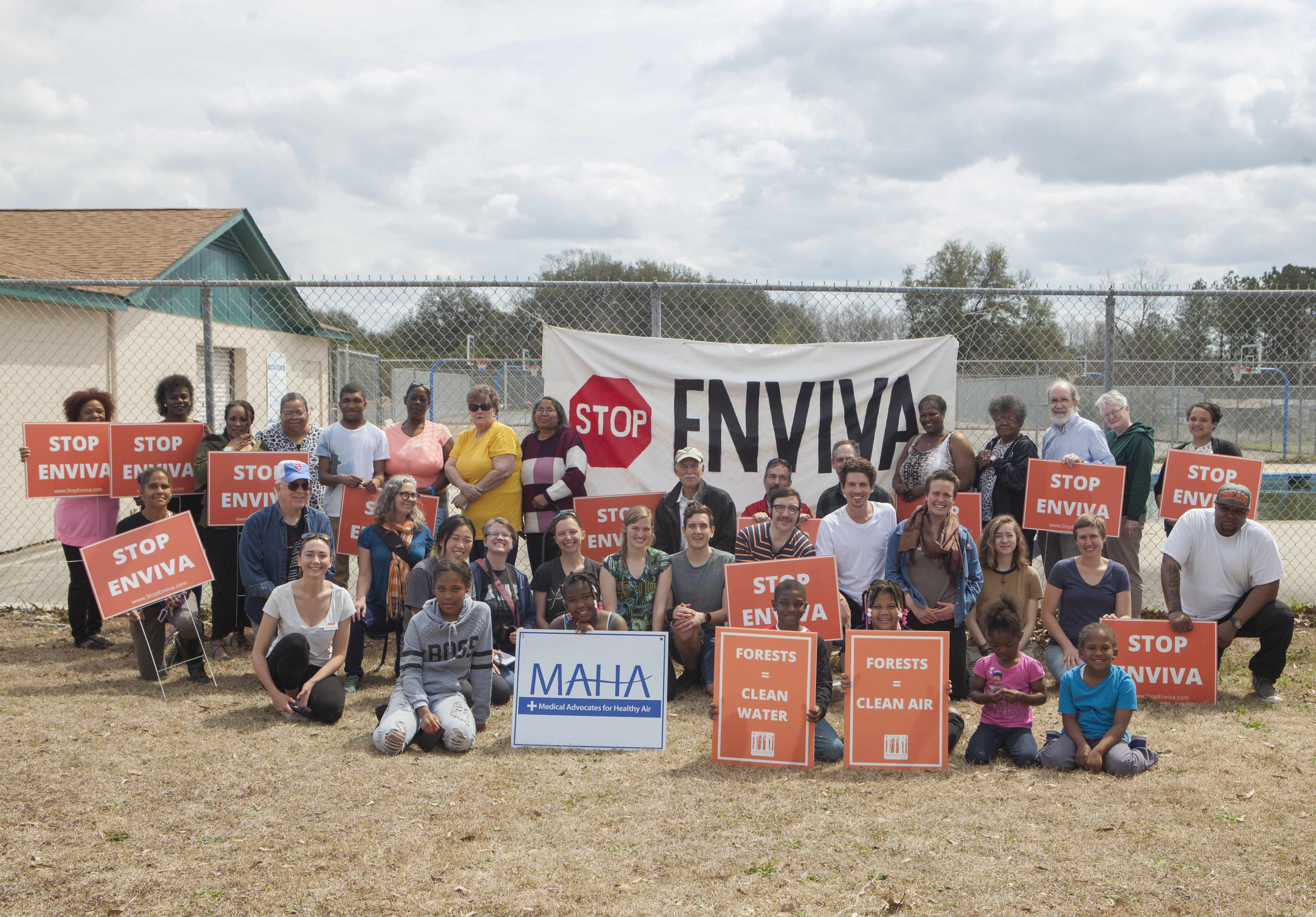
This post was originally posted in October of 2019. As more evidence continues to be brought to light, we updated it in October 2020.Dogwood Alliance has worked in the Southern United States for over 20 years to protect communities and forests from the impacts of large-scale industrial logging. Our priority has been and will always be, to communicate the most recent scientific evidence as well as to amplify concerns of impacted Southerners to decision-makers. For the past seven years, in partnership with NGOs, scientists, and policymakers from across the globe, one of our primary areas of focus has been addressing the impacts of a growing global demand for wood pellets. Over the course of that period, our region has become the world’s largest exporter of biomass.Investigations by countless media outlets and independent watchdogs over the past several years reveal the truth about the supply chains for pellets manufactured and exported by Enviva, the world’s largest wood pellet manufacturer, to utilities in Europe including RWE in the Netherlands, Drax in the UK, and Orsted in Denmark. Independent media, government reports in the EU and the US, as well as the industry’s own reporting have confirmed our own investigations. They depict a disturbing pattern where wood pellets are harvested from native hardwood forests (1) in an area designated as a global biodiversity hotspot— all happening under the umbrella of “sustainable” sourcing standards. In fact, the state of North Carolina recently advocated in their own official Clean Energy Plan, that the large-scale use of North Carolina’s forests in foreign markets should be “challenged at the national and international level,” and the official document explicitly recognized that the wood pellet industry increases carbon emissions in the state via logging, processing, and transportation.The reality is that industrial scale use of biomass for energy is bad for our climate, forests, and local communities. Sustainability policies for the harvesting of wood pellets cannot guarantee a reduction in carbon dioxide emissions within timeframes relevant to fighting climate change. Reports from world renowned scientists have shown that burning biomass from forests for electricity creates more carbon dioxide emissions than burning coal, and that increased carbon dioxide concentrations persist in the atmosphere for decades or more.Countries looking to meet their commitments under the Paris Climate Agreement and phase out coal must stop wasting scarce public resources subsidizing dirty and destructive biomass energy. Instead, we urge policymakers to redirect investments to genuinely zero-carbon energy sources. Independently verified investigations into wood pellet biomass sourcing:
Enviva’s “Track & Trace” system, which claims to track every ton of wood that the company buys, was proven to be little more than a smokescreen for destruction in a recent North Carolina investigation. TV2, Denmark’s most-viewed public broadcasting news channel, revealed in a primetime four-part series the devastating impacts that Denmark’s import of wood pellets is having on Southern forests, communities, and climate. Putting Enviva’s Sampson County facility under a microscope, the team of investigative journalists found a major crack in Enviva’s Track & Trace system. This once again proved that the production of wood pellet biomass in the Southern United States for buyers in Denmark, the UK, and the Netherlands comes hand-in-hand with forest destruction and imperiling the climate.
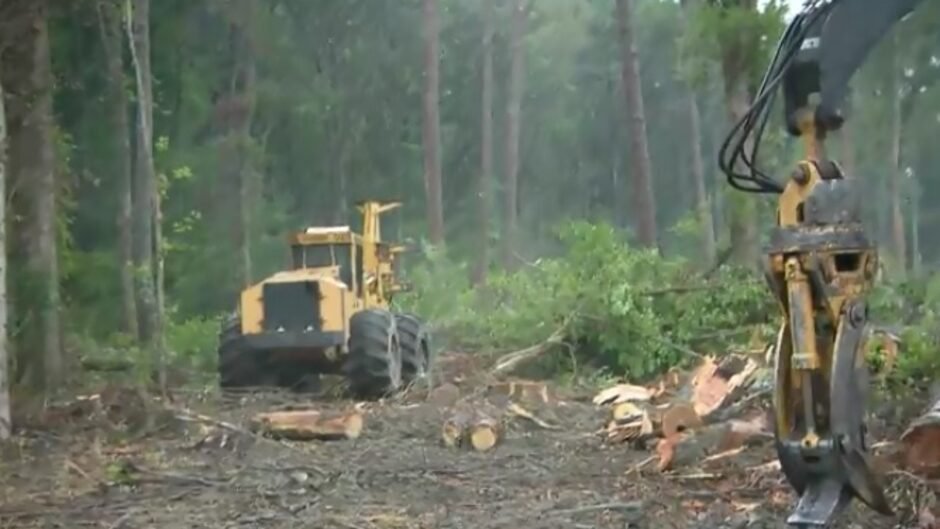
Photo by Celina Danielsen
Enviva’s Track & Trace program has been cited by governments in the United States and abroad — from North Carolina’s Department of Environmental Quality to sustainability policies in countries like Denmark. Policymakers use Enviva’s own sourcing claims as justification for providing the industry with billions of dollars in subsidies meant to address the climate emergency. This system was created to quiet policymakers’ questions about Enviva’s harmful impact on forests, communities and the climate — concerns which have been coming for years from community members, environmental advocates, and scientists. In the Track & Trace system, Enviva claims not to source from old growth forests, protected forests, or from any forests where a landowner plans to convert their land to another use.
However, repeated on-the-ground investigations tell a much different story than the one Enviva is spinning. Mostly recently, the TV2 investigation documented local sources telling the station that not all trees are replanted. Indeed, a logger in North Carolina told TV2 that he has supplied wood to Enviva from a forest that was turned into “grazing land.” All the tree stumps are removed and then they plant for cows and horses.” This isn’t too surprising, given there are no laws or regulations to guarantee that forestland is replanted — just Enviva’s word.
TV2 also tracked Enviva sourcing trees from a clearcut area in North Carolina. These bottomland forest ecosystems in the coastal plain are more important than ever to protect communities from flooding and storms like Hurricanes Dorian and Florence. Enviva’s response to TV2? They denied it, despite TV2 clearly showing that the system is far from bulletproof.
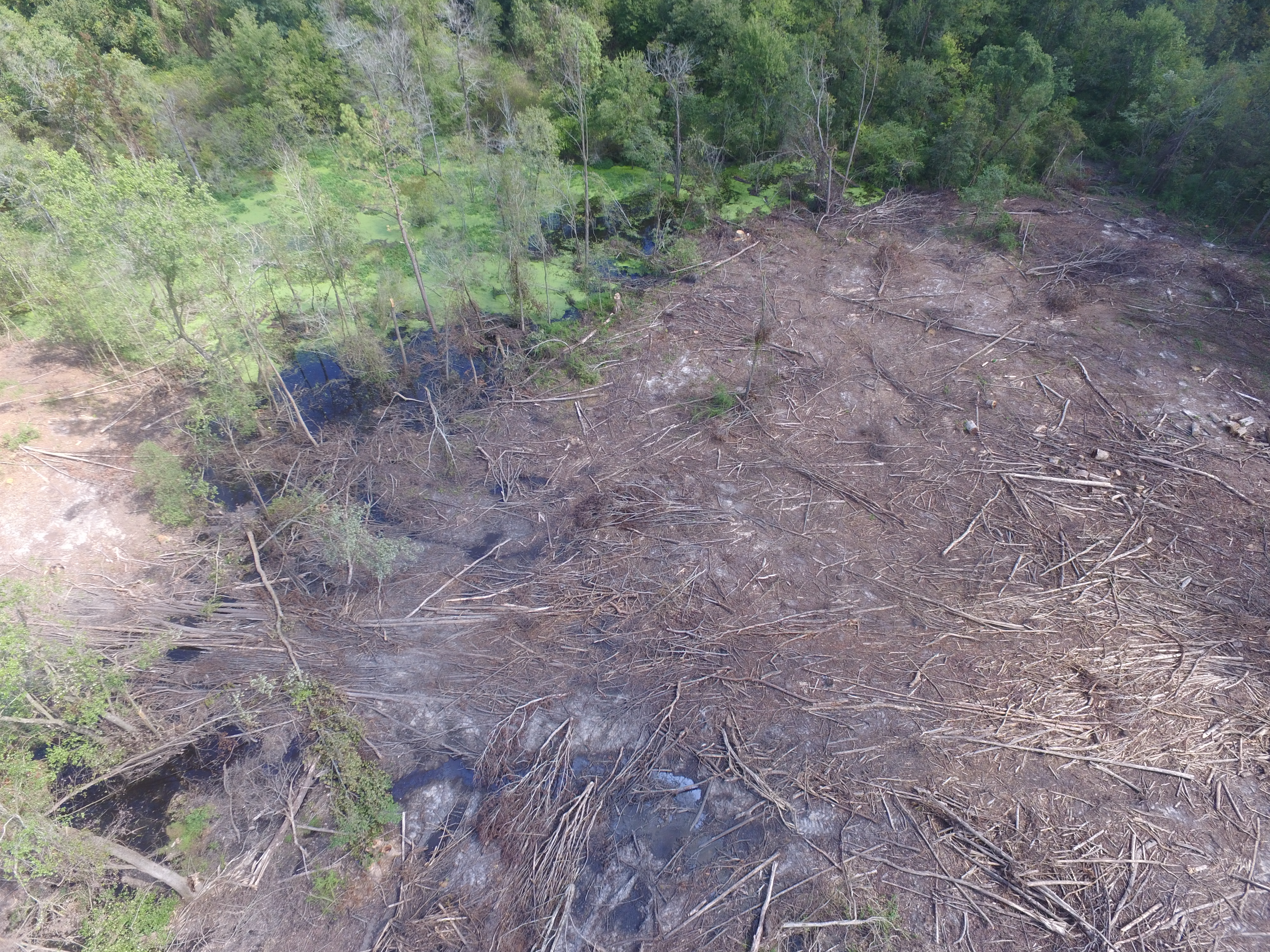
Enviva has operated with little to no legal oversight in the Southern United States for close to a decade now. Floating on renewable energy subsidies designed to address climate change, countries like Denmark, the United Kingdom, and the Netherlands subject Enviva to sustainability requirements, but they leave enforcement up to the company.
The TV2 investigation as well as investigations Dogwood Alliance and other organizations have carried out year after year, show that wood pellet biomass leads to forest destruction and climate impacts.
Enviva’s own data confirm that 83% of their sourcing comes from standing forests and more than half (53%) comes from hardwood trees. A majority of forests that Enviva sources from for its wood pellets are natural forests, which, former International Panel on Climate Change (IPCC) scientist Dr. Bill Moomaw has illuminated as the precise ecosystems that should be left for “proforestation.” Proforestation, a new term in our understanding of natural climate solutions, means leaving older & middle-aged forests intact for their superior carbon-sequestration abilities.
In an interview with Yale Environment 360, Moomaw explained, “The most effective thing that we can do is to allow trees that are already planted, that are already growing, to continue growing to reach their full ecological potential, to store carbon, and develop a forest that has its full complement of environmental services. Cutting trees to burn them is not a way to get there.”

The IPCC warned in the 1.5C report that to stop climate change, we must do more than stop using fossil fuels; we must also remove large amounts of carbon from our atmosphere. Keeping our forests standing is the best, cheapest, and most proven “technology” to do this. Connecting the IPCC’s special reports to the most recent science from Europe’s highest scientific academy (EASAC), a critical factor to consider with biomass for electricity are payback periods.
“..burning forest biomass transmits the carbon from the forest stock to the atmosphere within minutes, and there is a carbon ‘payback period’ between this initial release and a return to forest carbon stocks through regrowth… Given that the Intergovernmental Panel on Climate Change (IPCC, 2018) projects that average surface temperatures are likely to exceed 1.5°C between 2030 and 2052 on current trends, payback periods of decades increase the risk of overshooting Paris Agreement targets.” (EASAC 2019)
There’s not much that’s scarier than forest destruction, and burning trees for electricity is as spooky as it gets. This Halloween, don’t get tricked. Dogwood Alliance is heeding the warnings of scientists and leading the charge to fight wood pellet biomass: from its creation in production facilities in the United States, all the way to influencing the policies at the national level of importing countries.
We need your help to stop Enviva from destroying our forests.


 Donate