


These days, I notice many people viewing our forests in terms of value and function. I stress about what it means to defend these invaluable resources from destruction. For good reason! We are in dire times and great shifts must take place to focus on the health and well-being of our planet and our people. I realized we fight so long and hard that we don’t actually get to appreciate the already present beauty we are fighting for. We forget to stop and look at the sun shining through tree branches. We take for granted the grace and serenity that nature offers and the deep and wondrous connection we all share with the forests.
This year was a perfect example of what Woods & Wilds is all about. We want to thank all our amazing storytellers.
ZaKiya Bell-Rogers who found the trees are the chorus of nature.
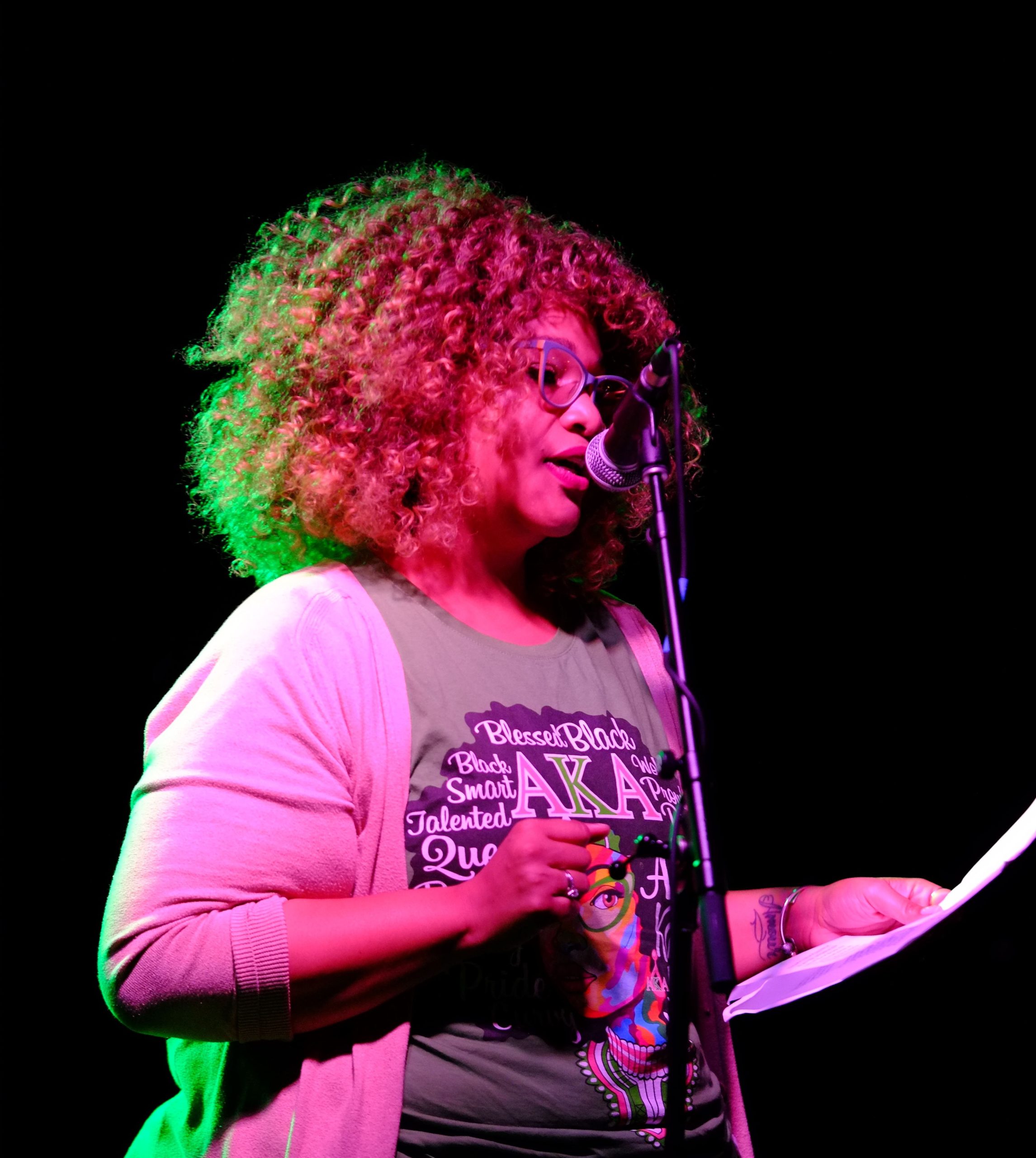
Isa Whitaker reminded us that our world is on fire and we must protect it. Not only for the survival of our physical bodies but for the preservation of our spirit.

Nicole Townsend brought in the ancestors.

Ali McGhee shared with us the forest that grows inside her.

Indy Srinath told us a tale of finding her kinship, beauty, and power in the woods.

Cortina Jenelle Caldwell shared the promises that she made to the trees.
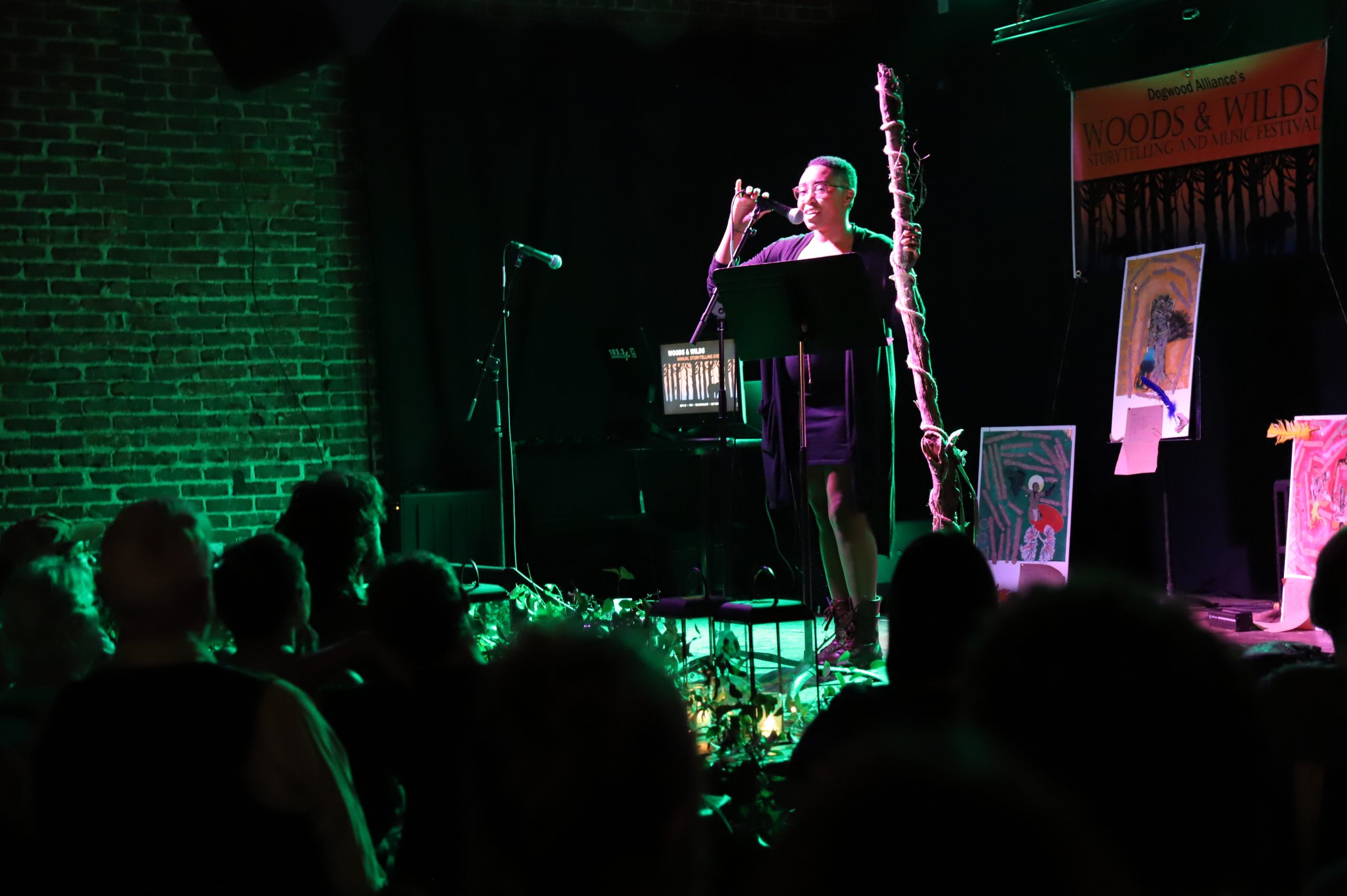
Abby The Spoon lady spoke of the forest as a haven of acceptance.

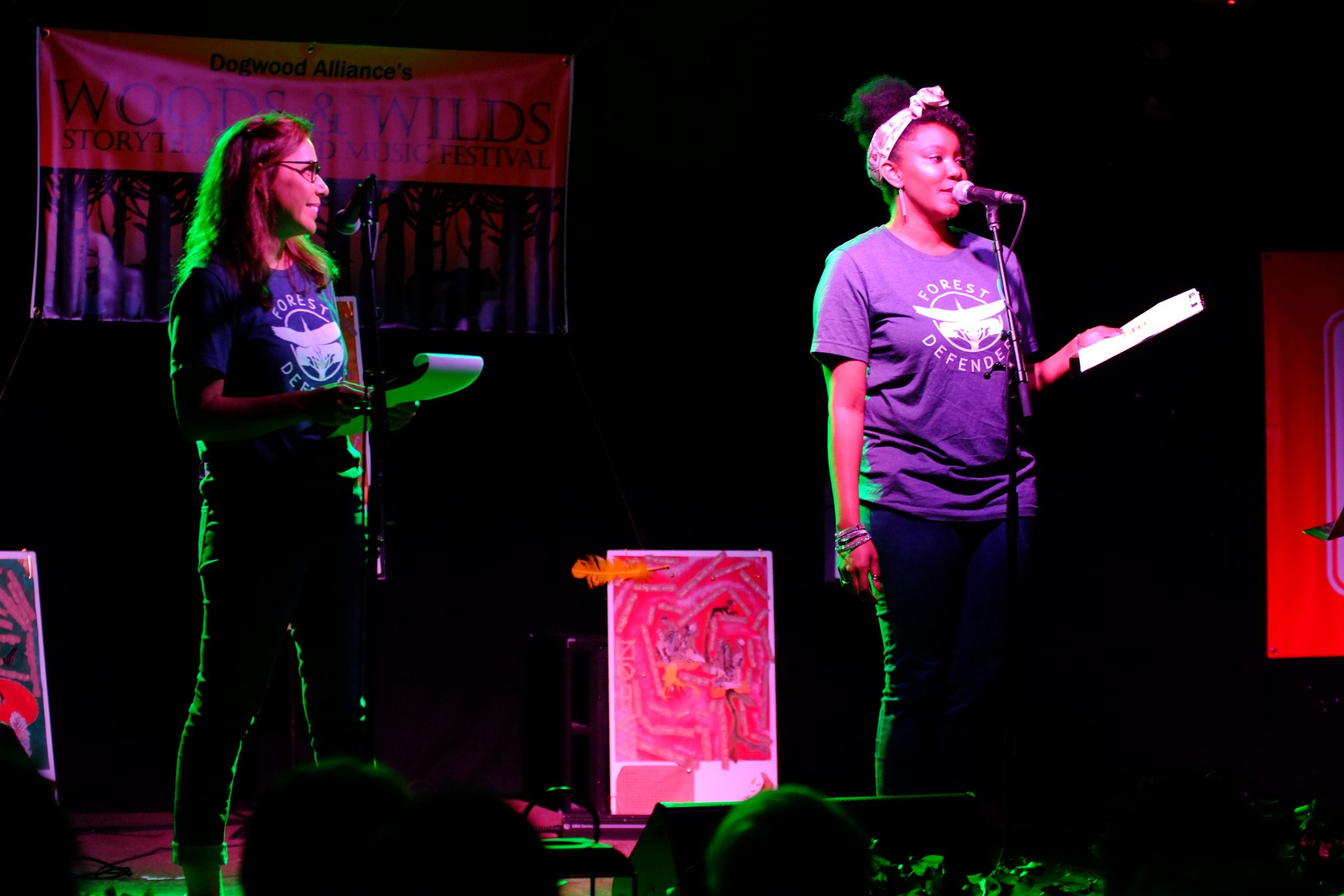
Big thanks to our awesome emcees, Elizabeth Garland and Lucia Ibarra, who held down the stage.
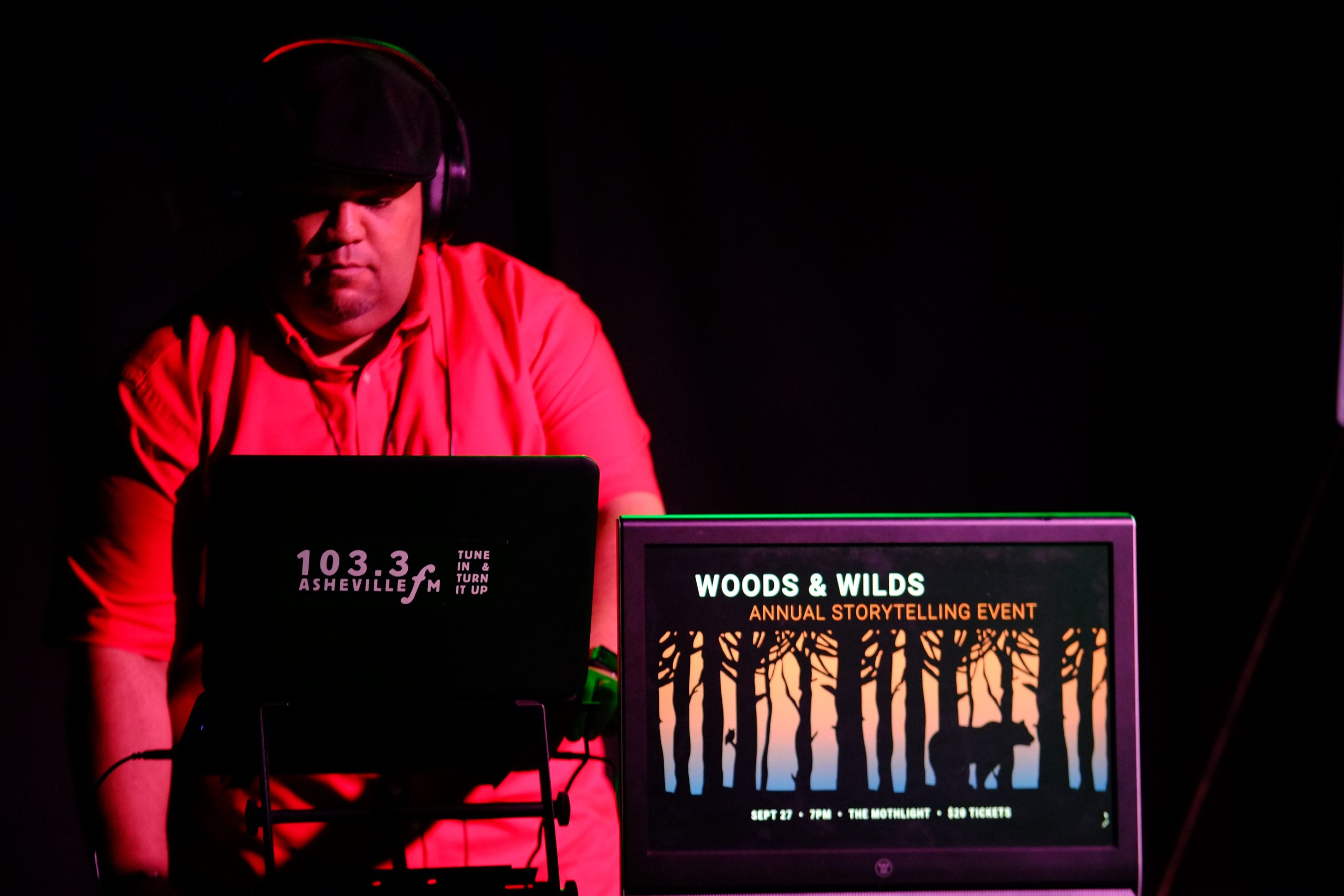
Big shoutout to Cousin TL who put rhythm into our night.
We would also like to thank our sponsors, without which this event would not be possible: Gaia Herbs, Selina Naturally, Blue Moon Water, Flora Botanical Living, Larry’s Coffee, Earth Equity Advisors, & Sierra Nevada Brewing Co.
Finally, we’d like to thank you for your continued support. Together we are not only mighty but magical like a forest.
For Immediate Release: October 10, 2019
An open letter signed by NGOs in the sourcing regions of Danish utility Ørsted’s biomass demand– the United States, Estonia, and Lithuania– and joined by concerned organizations in the United Kingdom and European Union was sent today to address the present use of wood-based bioenergy (referred to as “biomass”) as an energy source in Denmark. Denmark’s renewable energy supply is predominantly met by biomass (nearly 70%) and no country in the EU spends more per capita in bioenergy subsidies than Denmark.
The recent TV2 investigations that aired in September made clear what NGOs and scientists have been reporting for years: the biomass industry’s so-called sustainability standards fail to genuinely protect forests, climate, and communities. Pellet producers like Enviva, the world’s largest producer with facilities across the Southern United States, and Granuul Invest in Estonia have been exposed time and again for sourcing practices that destroy natural forests and threaten biodiversity. The stakes are too high and timeline too narrow to continue to rely on the industry’s tenuous claims of sustainability and climate benefits, which cannot be meaningfully guaranteed.
The international NGOs, representing millions of activists and community members all over the globe, commend Minister Jørgensen’s historic leadership at the European Union level where he made a motion for a resolution questioning the assumption of carbon neutrality for biomass used for energy purposes, and recommend this scrutiny be applied in the Danish context. Danish Climate Minister Jørgensen and members of the Danish Parliament are urged to impose a levy on biomass, phase out the subsidy for burning biomass from wood, and to determine a date for phasing out biomass as soon as possible.
See the letter here.See the government’s response here.
Last week, Governor Cooper accepted his NC Department of Environmental Quality’s (DEQ) Clean Energy Plan, which delivered harsh criticism of wood pellet biomass and recognized its harmful climate impacts. Just days later, the agency contradicted its stance on biomass by approving yet another massive expansion of the wood pellet export industry led by Enviva. Despite statewide public opposition to any expansion of Enviva and increased calls for a moratorium on the expansion of the industry, NC DEQ issued a permit for increased production capacity at the company’s Sampson County mill, effectively locking in increased carbon emissions and forest destruction for years to come.
At a time when our forests are more important than ever to store and sequester carbon and protect communities from extreme weather and flooding — particularly in areas still recovering from storms like Hurricane Florence — the expansion at Enviva Sampson will require nearly 3,000 additional acres of forests to be logged each year. This expansion will bring the total carbon emissions for the Sampson County facility to over 1.2 million tons per year — equivalent to 231,822 additional cars on the road per year.
Over 1,200 people submitted comments in opposition to Enviva’s expansion, representing an overwhelming majority of those who weighed in on the draft permit. At the July public hearing, a diverse statewide coalition made of local impacted community members, clean air and environmental justice advocates, health professionals, scientists, and students spoke in opposition to Enviva and called on the Cooper administration to halt the expansion of the industry. Thousands of North Carolinians have signed a petition to Governor Cooper, calling for a moratorium on issuing permits for expanded production until the cumulative impacts of the industry can be assessed.
The Cooper administration has explicitly recognized that wood pellet biomass should have no place in North Carolina’s clean energy future, but the current system is set up to allow this industry to expand — despite its impacts on our state that continue to go unaccounted for. The contradiction between the stance on biomass in North Carolina’s Clean Energy Plan and the approval of Enviva’s continued expansion illustrate that, now more than ever, the Cooper administration must pull the brakes on the wood pellet industry. With another permit for Enviva’s proposed expansion still under consideration by DEQ, the Cooper administration must now turn their statements into real, immediate action, rather than allowing the permits to continue to be reviewed and issued in a silo at the expense of our forests, communities, and climate.
After a long silence on the issue of the wood pellet industry, Governor Cooper’s administration has finally responded to the groundswell of public opposition and the growing body of scientific evidence that says burning forests for electricity is worsening the climate crisis. In the newly released Clean Energy Plan, Dogwood Alliance is pleased to see that Governor Cooper’s Department of Environmental Quality (NC DEQ) rejected the combustion of biomass for electricity as a future clean energy source and explicitly recognized the current harmful climate impacts of the wood pellet industry in North Carolina.
For the past several years NGOs, scientists, health professionals, frontline community members, and tens of thousands of North Carolinians have repeatedly called on the administration to address the threats posed by the wood pellet industry to our forests, communities, and climate. We now urge Governor Cooper and NC DEQ to turn statements in the Clean Energy Plan into real, immediate action by denying Enviva’s proposed expansion of wood pellet production in North Carolina, which is currently under review by the agency.
Dogwood Alliance celebrates that the Clean Energy Plan asserts that our forests should not be used for electricity generation in North Carolina in the future, advocates that the large-scale use of North Carolina’s forests in foreign markets should be “challenged at the national and international level,” and explicitly recognizes that the wood pellet industry increases carbon emissions in the state via logging, processing, and transportation.
Yet while Governor Cooper delivers harsh criticism of the wood pellet industry for North Carolina’s energy sector, his administration has continuously approved the expansion of this industry for export markets. With two permits currently under review for Enviva’s proposed expansion at its Sampson and Northampton facilities, the implications of Governor Cooper’s administration’s stance on biomass and the wood pellet industry are playing out in real time. If Enviva is allowed to expand, an additional 8,700 acres of North Carolina’s forests will be destroyed each year to meet foreign markets’ demands for biomass and the state will become the largest exporter of dirty wood pellets in the nation. We urge the Cooper administration to place a moratorium on issuing permits for expanded production until the cumulative impacts of the industry can be assessed.
As implied by the Clean Energy Plan, the best path forward for our forests is to keep them intact, allowing them to do what they do best: store and sequester carbon. But forest destruction is on the rise — our latest research finds that industrial logging is the third largest source of greenhouse gas emissions in the state. We look forward to pending executive actions like the NC Climate Risk Assessment and Resilience plan to scale up forest protection and restoration, rapidly expand our state’s carbon sinks, and protect communities from extreme weather and flooding. Dogwood Alliance thanks the Department of Environmental Quality and Cooper administration staff for their work on creating this plan, and looks forward to continuing to be an active participant and stakeholder on behalf of our forests, communities, and climate.
Read the full section on biomass on pg. 25-6 of the Clean Energy Plan: https://files.nc.gov/governor/documents/files/NC_Clean_Energy_Plan_OCT_2019_.pdf
The Global Climate Strike has been full of climate action across the world, and we are standing all together as a single strong voice with Greta Thunberg, a leader who has sparked a global climate movement, led by young people. Millions around the world on September 20th walked out of their schools, workplaces, and homes to rally together and demand climate justice for all.

It was great to see and feel the energy and tenacity of people of all ages. All being one and standing for our YOUTH, our FOREST, our PLANET, and our FUTURE!

On September 20th, our team shared the truth about what logging means for our climate and exposed the truth about how we are losing the Southern Forests to the logging industry, the biomass industry, and tree plantations. We let people know the important role that natural forests play in climate change and how they are one of the most powerful tools we have to remove carbon from the atmosphere.
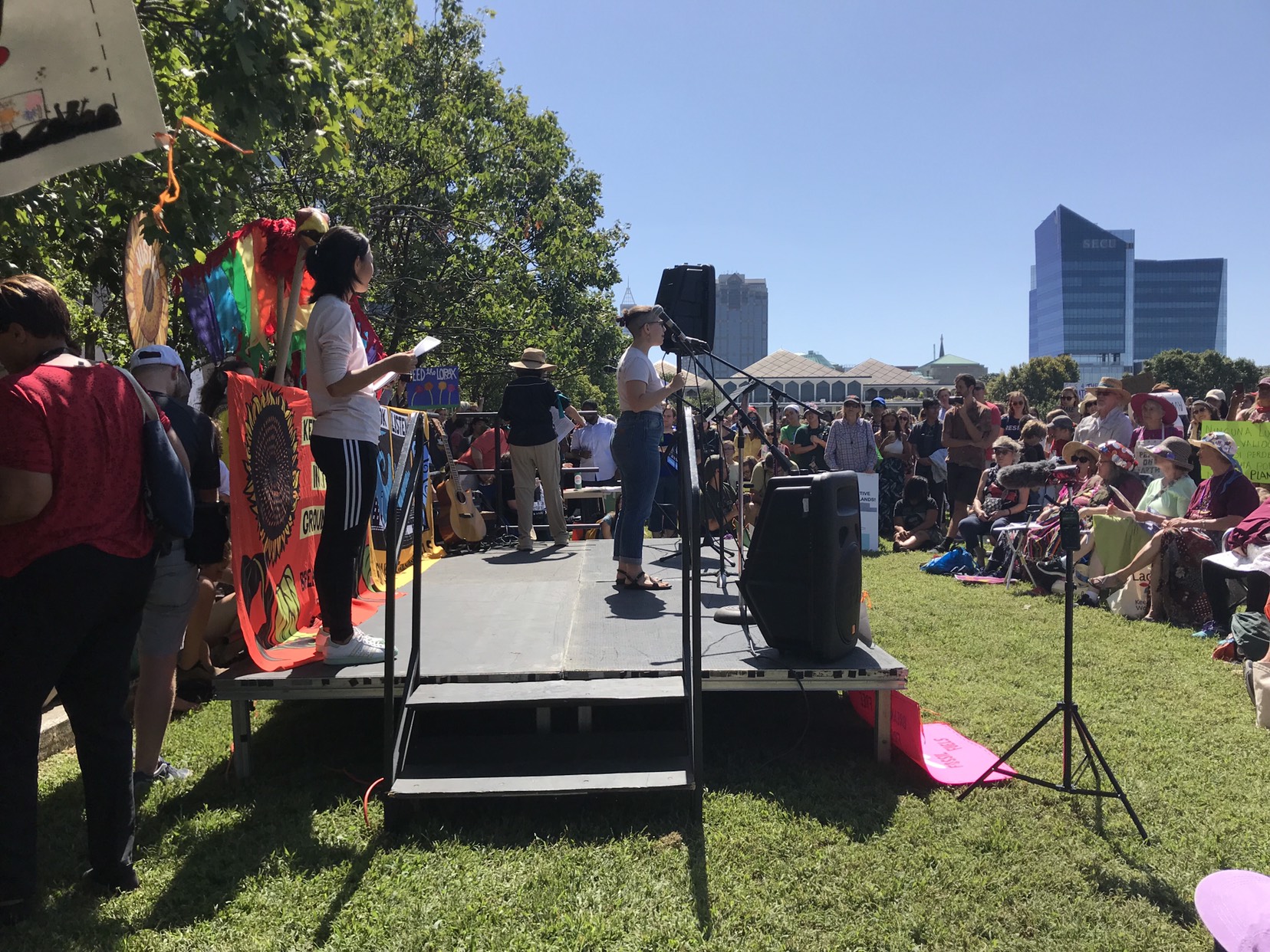
It was a great day. We were there united with a single vision, a better future – where everyone has clean water, clean air, and an economy that welcomes and supports climate-friendly practices – a non-extractive economy (preserve, restore, found).
Wetland forests span 35 million acres across the US South, as both majestic, long stretching swamps and simple buffers around our rivers and streams. Wetland forests provide nearby towns and cities with clean water, flood prevention, and recreational opportunities. New maps released by the Wetland Forest Initiative identify wetland forests in need of conservation by evaluating the presence of wildlife, social indicators, and threats.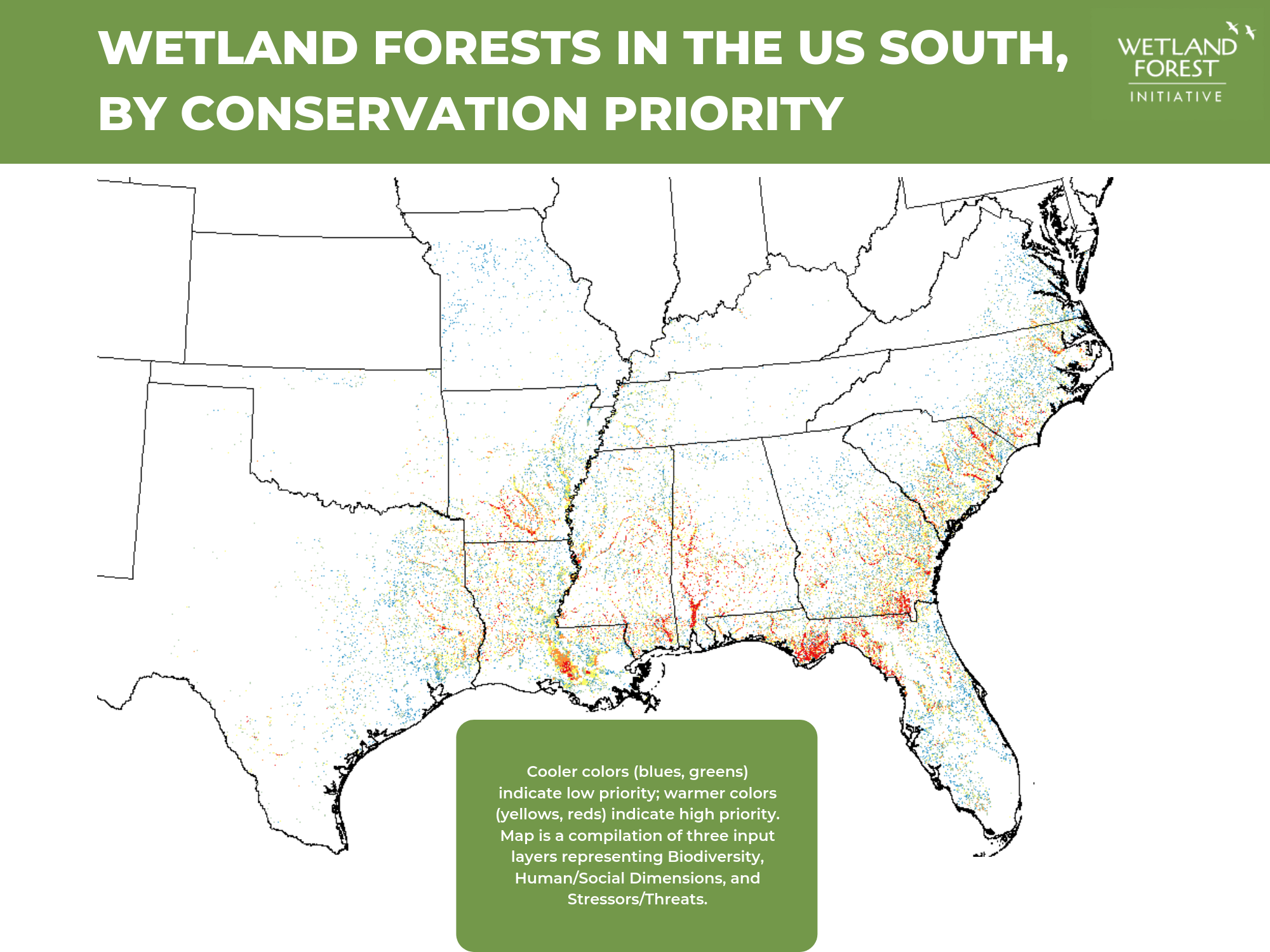
The maps give us critical information about the quality and quantity of wetland forests within each watershed in the US South. I want to demonstrate the power of these maps by sharing details about the Mobile Bay Watershed, one of the fourteen watersheds identified as a critical conservation priority.
The Mobile Bay watershed stretches from the Alabama coast nearly up to its Northern border and even occupies a portion of eastern Mississippi. The watershed includes most major cities within Alabama and is home to 17 threatened and endangered species. The watershed includes around two-thirds of the 2.2 million acres of wetland forests found in Alabama.
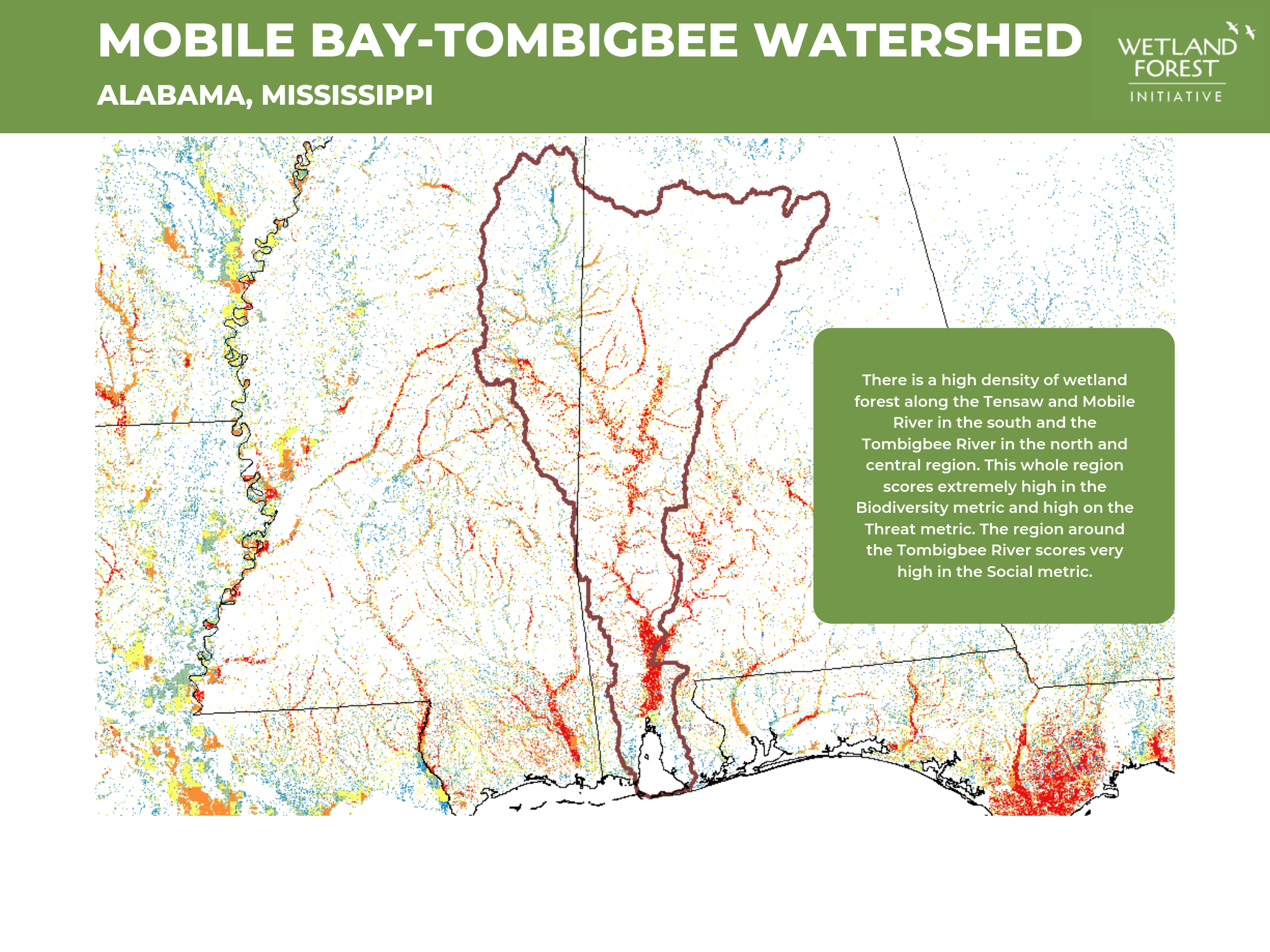 Why does this watershed matter? First, there is a high density of wetland forests along three major rivers: the Tensaw and Mobile rivers in the south and the Tombigbee river in the north. Second, this region has high quality wildlife, including multiple endangered and threatened species. Third, this area is highly susceptible to threats like sea level rise, logging, and economic uncertainty. Finally, this watershed is within the sourcing region for the proposed Enviva wood pellet mill in Lucedale, MS.
Enviva is currently pressing forward with a plan to build the largest wood pellet plant in the world in Lucedale, MS, which will export over a million tons of wood pellets each year to feed Europe’s energy demands. Despite massive public outcry, the Mississippi state government is allowing the project to move forward.
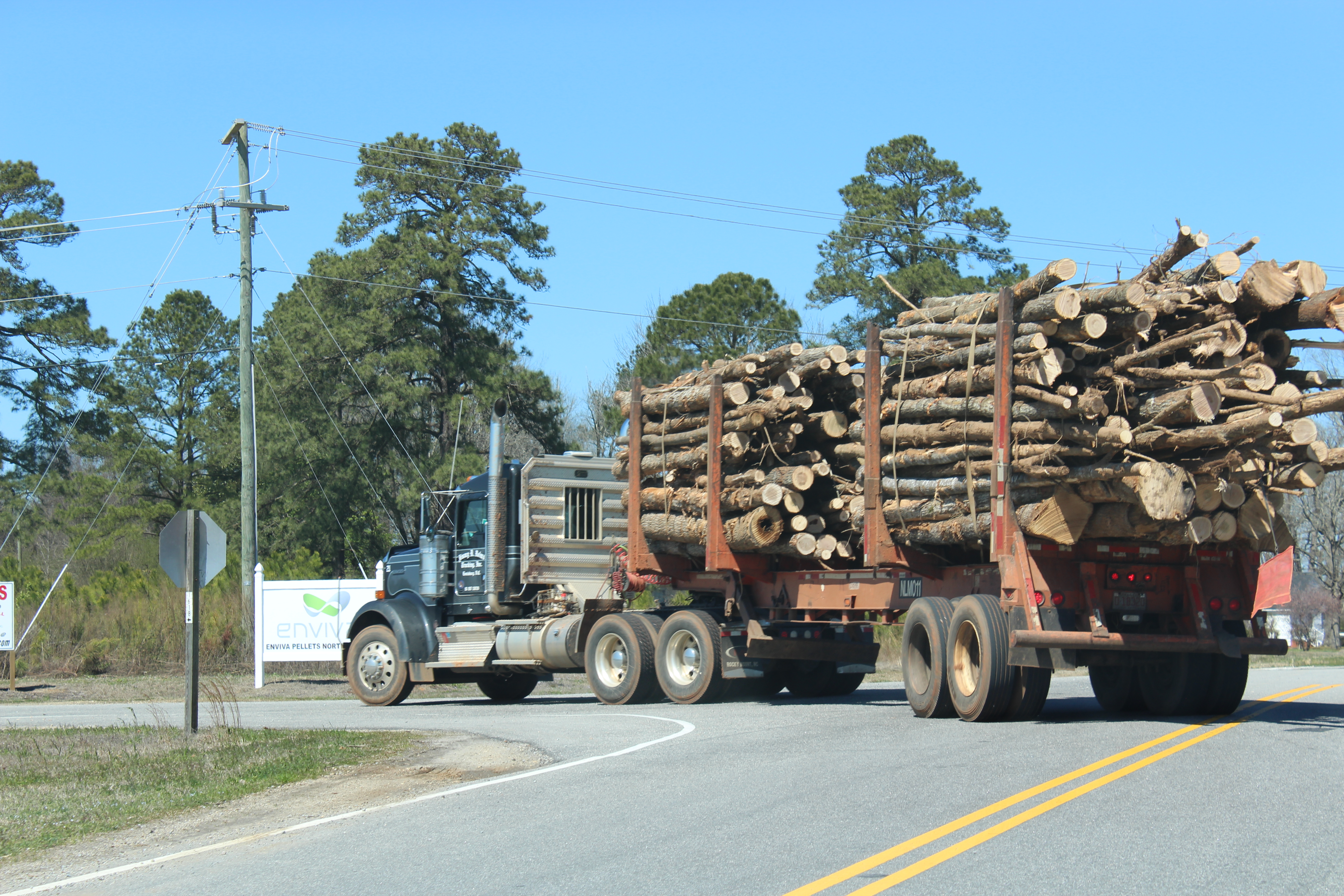
As the Enviva facility is built and becomes operational in Lucedale, MS, it will have real and lasting impacts on Lucedale residents. The industrial-scale production of wood pellets endangers public health and local quality of life by creating harmful particulate matter, volatile organic compounds (VOCs) that create smog, and other hazardous air pollutants (HAPs). Modeling shows that the facility’s impact would result in increased concentrations of air toxins like formaldehyde and acrolein, which could increase the risk of cancer and chronic illnesses.
Beyond air quality concerns, a new wood pellet facility would also decrease quality of life for residents living close by. Roads will be used and potentially damaged by the constant traffic of heavy logging trucks. Residents will be subjected to noises from the facility, 24/7. People living near other Enviva facilities have reported decreased sleep and quality of life as a direct result of Enviva facility operations.
The Mobile Bay watershed, spanning 21,914 sq miles, contains nearly 1.4 million acres of wetland forests. Although the Enviva mill will source from just the southern 15% of the watershed, ultimately, up to 400,000 acres in the Mobile Bay watershed are at risk of being logged for bioenergy.
Based on our previous research, those 400,000 acres in the Mobile Bay watershed provide over $7 billion USD in ecosystem services like recreation and tourism, water filtration and waste treatment, food, pollination, and critically, protection from extreme events. Losing even a fraction of the wetland forest acres in the Mobile Bay watershed would be a huge loss of ecosystem services to the region and its residents.

Enviva’s Lucedale plant will also be sourcing outside of the Mobile Bay watershed. Most pellet mills source from a radius of about 75 miles from their facility, equivalent to a potential sourcing region of 11.3 million acres. Around the Lucedale plant, these maps show that there are 1.9 million acres of wetland forests vulnerable to logging by Enviva’s suppliers. Enviva has a long track record of logging wetland forests, despite claims to the contrary.
Our previous research indicates that logging wetland forests causes them to lose fifteen times their value. If Enviva accepts wood from just a fraction (2%) of wetland forests in the full sourcing region annually, Mississippi and Alabama will lose out on $661 million in ecosystem services each year.
These communities will be more vulnerable to flooding from major storms because their wetland forests will have lost much of their ability to protect the area from extreme events. They’ll lose $165 million in recreational benefits those wetland forests once provided. The increased logging of their wetland forets will affect these communities’ air and water quality, climate regulation, and food production .
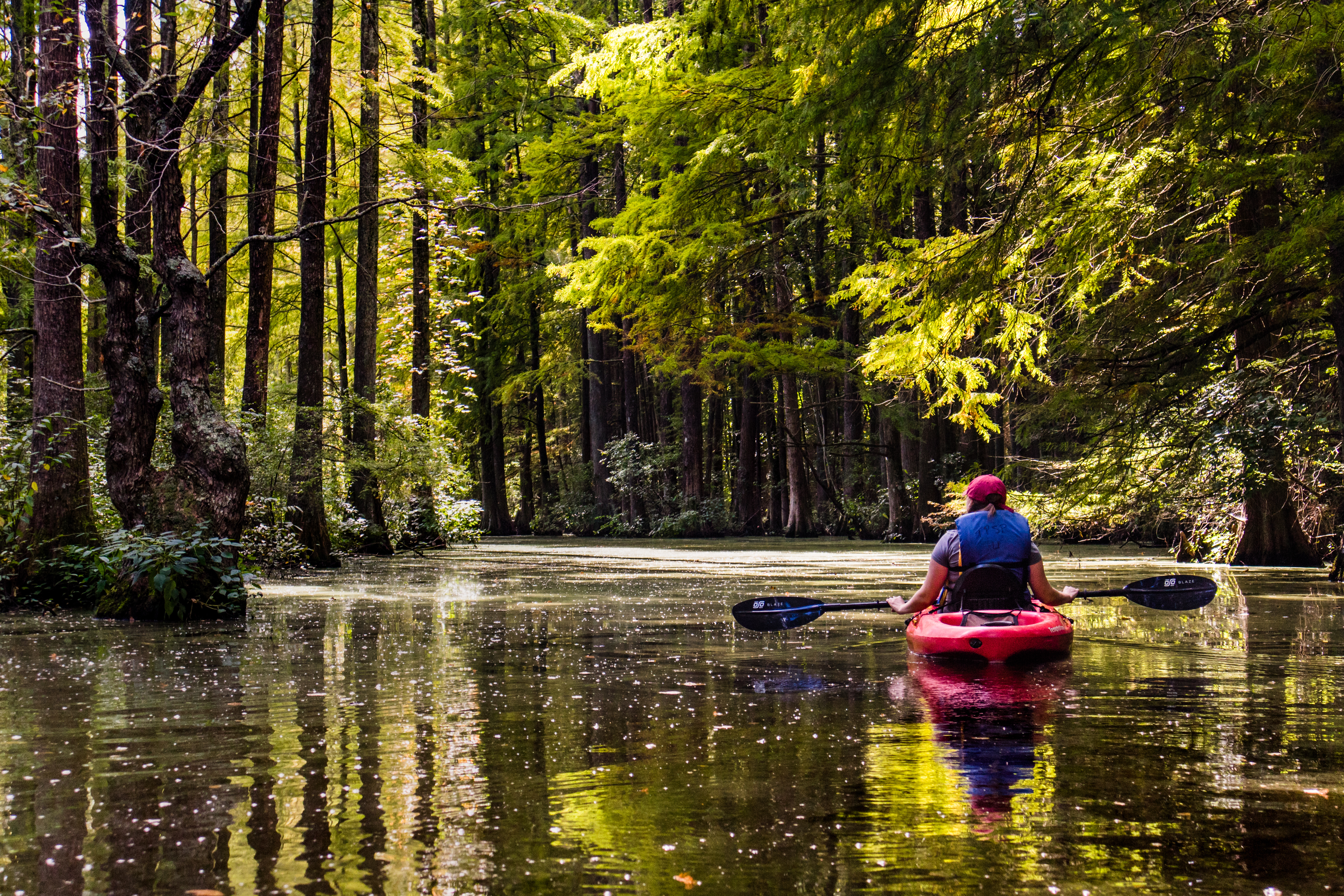
These new conservation maps will enable us to do more in-depth analysis on the impacts of wood pellet production on wetland forests in the US South. Are you ready to take action?
FOR IMMEDIATE RELEASE: September 26, 2019, 8:00 AM EST CONTACT: Sam Davis, Dogwood Alliance, [email protected] , 828-251-2525 ext. 19The Wetland Forest Initiative unveils new maps that show the biological and social importance of wetland forests alongside the current and future threats to their sustainability. Asheville, NC — Today, the Wetland Forest Initiative (WFI), a unique coalition of conservation groups, advocacy organizations, landowner groups, and forestry and wildlife agencies, released the first version of their Conservation Priority Maps for Wetland Forests. The groups highlighted fourteen potential watersheds to prioritize for conservation work in wetland forests, including:
The others are: Roanoke, Santee, Savannah, Suwannee, Ochlockonee, Mobile Bay, Central Louisiana Coastal, Lower Mississippi Greeneville, Lower Mississippi Helena, Lake Maurepas, and the Neches Watersheds.
The WFI Priority Maps identify the most important watersheds as defined by biodiversity (e.g., presence of reptiles and amphibians found nowhere else on earth), surrounding human communities (e.g., percent unemployment), and stressors (e.g., projected sea level rise). Watersheds along the coastal plain were repeatedly identified as among the most important to protect due in part to their high concentrations of unique species.
“These maps will help researchers, government agencies and nonprofits across the region determine what to target in their own local or regional conservation work to protect our threatened wetland forests,” said Sam Davis, Conservation Scientist at Dogwood Alliance.
Previous reports have found that restoring and conserving wetland forests in the U.S. South will provide extensive financial, social, and environmental benefits. One of these, released by the Dogwood Alliance in 2018, revealed that restoring and conserving wetland forests could increase their value by over $45 billion USD.
“Wetland forests are some of our most critical natural resources. They help prevent flooding, preserve wildlife habitats, and produce clean water for our households,” said J.J. Apodaca, report author and Lead Scientist at Tangled Bank Conservation.
Steadily declining wetland forests have triggered worries about the future of this forest type for flood control, water quality and wildlife habitat. The Wetland Forest Initiative maps will provide critical information to conservation organizations in the United States about where to focus their limited resources to save this declining forest type before it’s too late.
“Ducks Unlimited is very encouraged by the breadth of partners working on science-based prioritization tools for southeastern wetland conservation. This work by WFI advances regional efforts to conserve and restore habitats for waterfowl and other wetland-dependent species, and it supports efforts across different sectors to conserve these areas for mutually-beneficial environmental and social goals.” Justin Park, Manager of Land Conservation, Southern Region, Ducks Unlimited
To view the maps, please visit: https://wetlandforests.org/conservation-maps
# # #
The Wetland Forest Initiative’s mission is to conserve, restore, and improve Southern wetland forests to strengthen our communities through science-based actions, diverse partnerships, and citizen and landowner engagement. To see the list of steering committee members and learn more, visit: https://wetlandforests.org/about-us/
Supporting quotes from WFI members:
“In addition to the beauty of our wetland forests, they provide many essential services to mankind in terms of improved water quality, flood control, habitat diversity, timber, etc. These maps will help in our efforts to better manage and preserve these valuable lands.” William Conner, Professor, Clemson’s Baruch Institute of Coastal Ecology and Forest Science.
“The protection and restoration of wetland forests is a large-scale conservation challenge. With these maps we are able to set priorities to focus our work and direct our resources to where they are most needed and where we can make the biggest impact for wildlife, water quality and local communities.” Ben Prater, Southeast Director, Defenders of Wildlife.
“Wetland forests rank among the most important in the nation for carbon sequestration and biodiversity. These maps will inform a bold conservation and community resilience agenda to protect and fund the restoration of these critical ecosystems, supporting local economic activity, decreasing the impact and recovery costs from natural disasters and contributing to national climate mitigation goals.” Debbie Hammel, Deputy Director Land Division, Natural Resources Defense Council.
“Wetland forests are critical to the wellbeing of humans. The ecosystem services they provide to people and communities are essential. Their ability to store carbon, protect against flooding. Increase our water quality are important to building our resiliency to adapt to the climate crisis. Their protection is greater now than ever. These maps will be important to help in this effort and to better manage these valuable resources.” Rick Savage, President, Carolina Wetlands Association.
If you’re like me, the endless expansion of Enviva — the world’s largest wood pellet producer — gives you a sense of deja vu, the eerie feeling that we’ve all been here before.
When there’s a threat to forests and communities, Dogwood Alliance, community members, and environmental justice advocates show up. This month, we showed up to speak truth to power in Southampton, Virginia, where Enviva is attempting to expand their polluting wood pellet mill. In August, we joined with a powerful coalition in Northampton County, North Carolina, just four weeks after a hearing in Sampson County, NC — both times to oppose Enviva’s expansion in North Carolina. It was the third hearing in a ten month period in North Carolina and just a few months after a hearing about Enviva’s massive proposed mill in Lucedale, Mississippi.
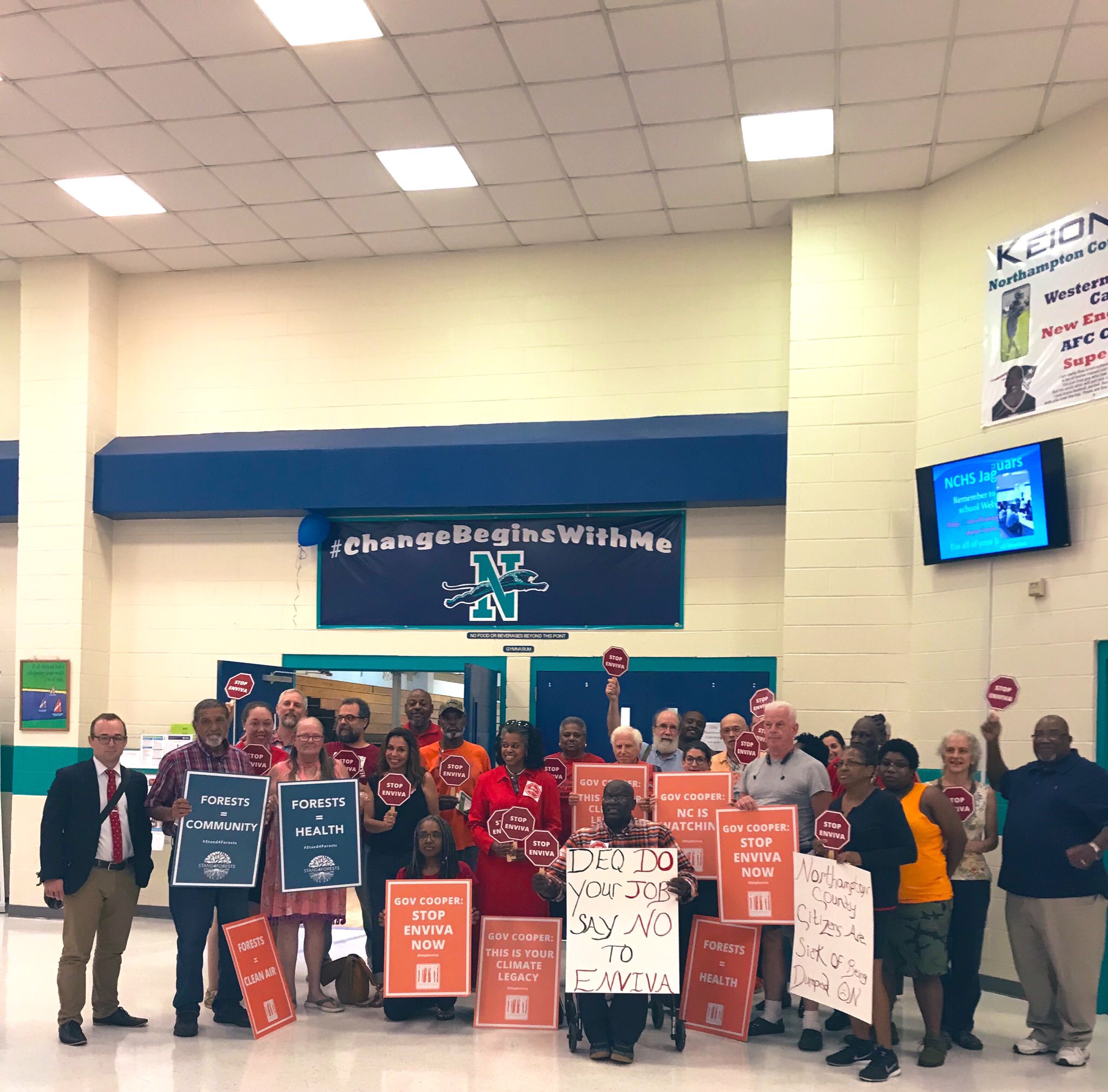
North Carolinians from Northampton County and across the state gather at the August public hearing in Gaston, NC, urging Governor Cooper and the NC Department of Environmental Quality to stop Enviva’s expansion.
One thing has become crystal clear in the face of Enviva’s proposed expansion: our movement is powerful, and we are united. We are a movement fighting for climate justice, forest protection, and clean air and water for all. We are a movement that believes nobody should have to choose between a good job and a livable planet, or their health, or the health of their environment.
As our movement’s calls for an end to the wood pellet industry’s expansion have grown louder, the silence of North Carolina Governor Cooper and his administration has grown louder, too. Governor Cooper’s administration continues to green-light Enviva’s rapid growth, and meanwhile, that support of the destructive wood pellet industry stands in direct conflict with his commitment on climate action.
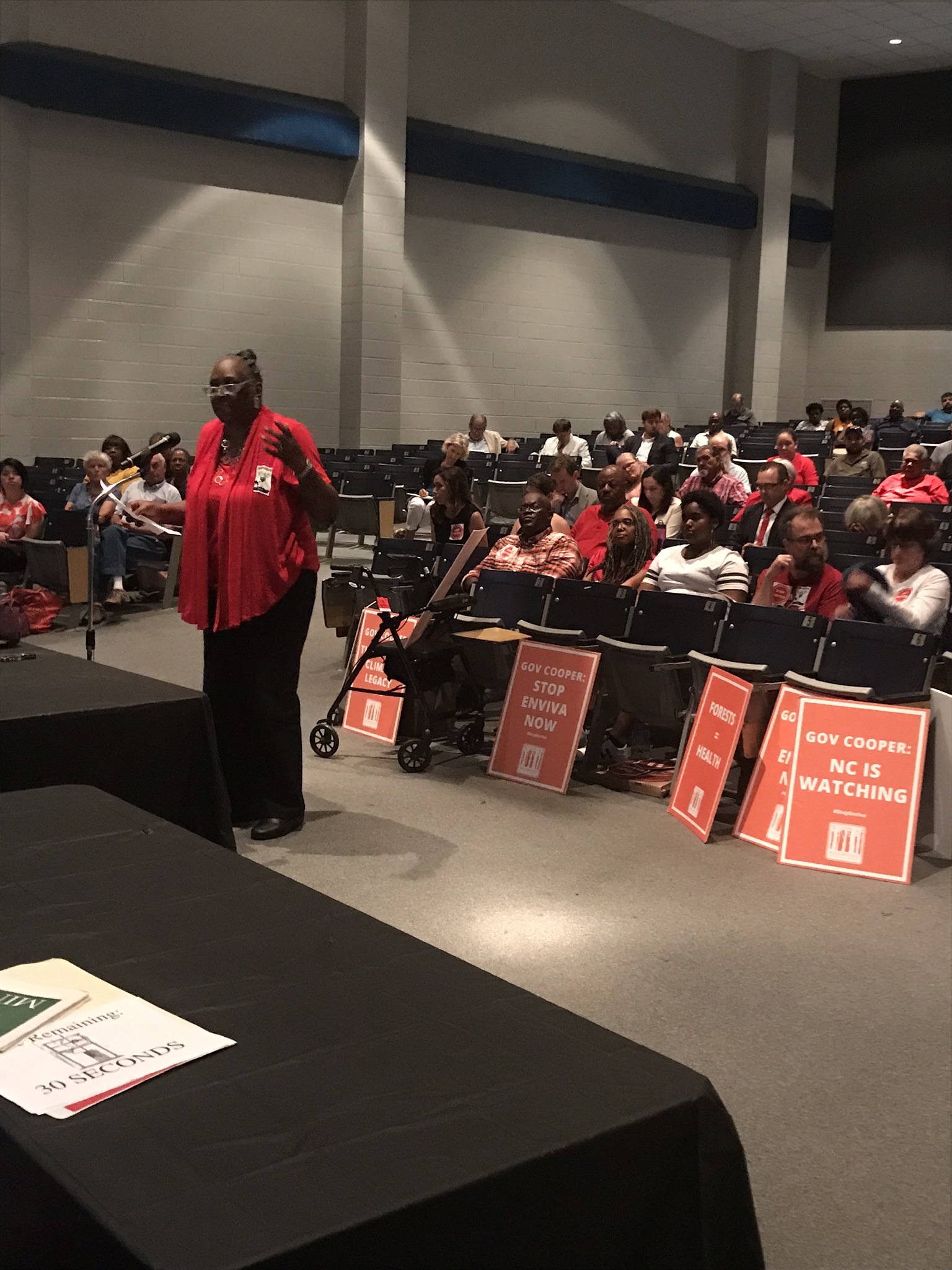
Belinda Joyner, resident of Garysburg, NC and organizer of the Concerned Citizens of Northampton County, gives her public comment and calls on DEQ to do the right thing: stop Enviva’s expansion and ensure the community gets the pollution controls they deserve.
In wake of Hurricane Florence last year, North Carolina’s Governor Cooper signed an Executive Order on climate action, with the goal of slashing our state’s greenhouse gas emissions and transitioning to a clean energy economy. And last month, Governor Cooper’s Department of Environmental Quality (DEQ) released their draft Clean Energy Plan, which sets ambitious, necessary decarbonization goals for the state but continues to allow the wood pellet industry to escape scrutiny from the administration.
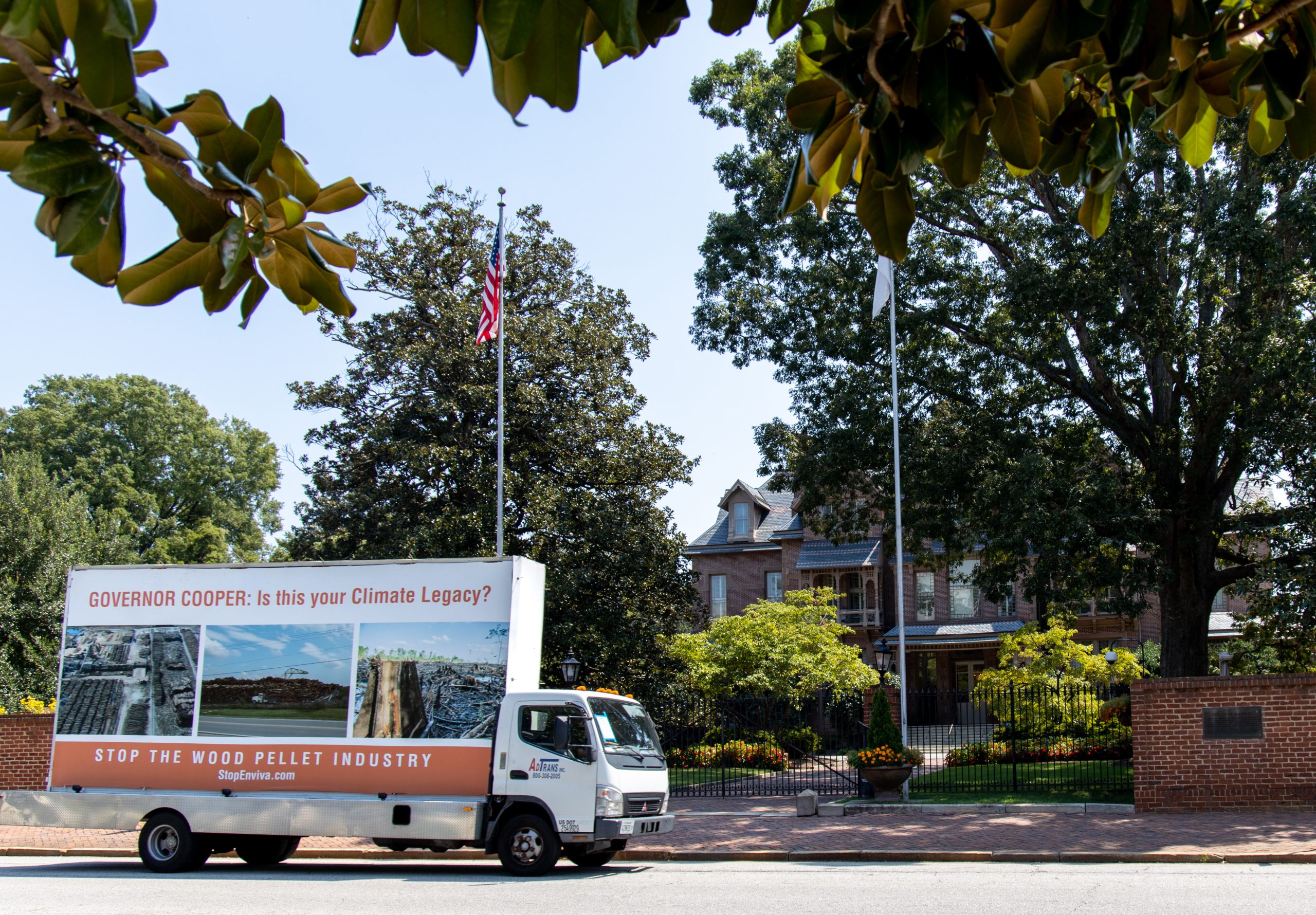
Has Governor Cooper gotten the message yet? A mobile billboard drove by the Executive Mansion in Raleigh to remind him to add “stopping the wood pellet industry” to his priority list.
Now more than ever, we need to protect our forests — not cut them down and burn them for electricity. Forests store enormous amounts of carbon in trees and soil. They buffer communities from climate impacts like extreme weather and flooding.
We anticipate that the NC Department of Environmental Quality will make decisions about Enviva’s proposed expansions at its Sampson and Northampton facilities any day now. Governor Cooper can step up and pull the brakes on this industry, but time is running out. If these expansions go through, there will be thousands more acres of forests destroyed under his administration’s watch. Governor Cooper needs to do the right thing for our forests, communities, and climate, and pave the way for neighboring states to follow his lead.
Today is the Global Climate Strike, and millions around the world will walk out of their schools, workplaces, and homes to rally together and demand climate justice for all. Dogwood Alliance has shut our office for the day, and our team members will be joining climate strikers in Asheville, Raleigh, Savannah, and Seattle.
So many of us have heard Greta Thunberg — the leader who has sparked a global climate movement led by young people — say that our house is on fire, and we need to act like it. Part of the reason for that is that our forests are going up in smoke. And I’m not just talking about the horrific, climate-caused forest fires of the West or even the outrageous destruction happening in the Amazon right now. I’m talking about the clearcutting and burning of our forests right here in our backyard in the US South.
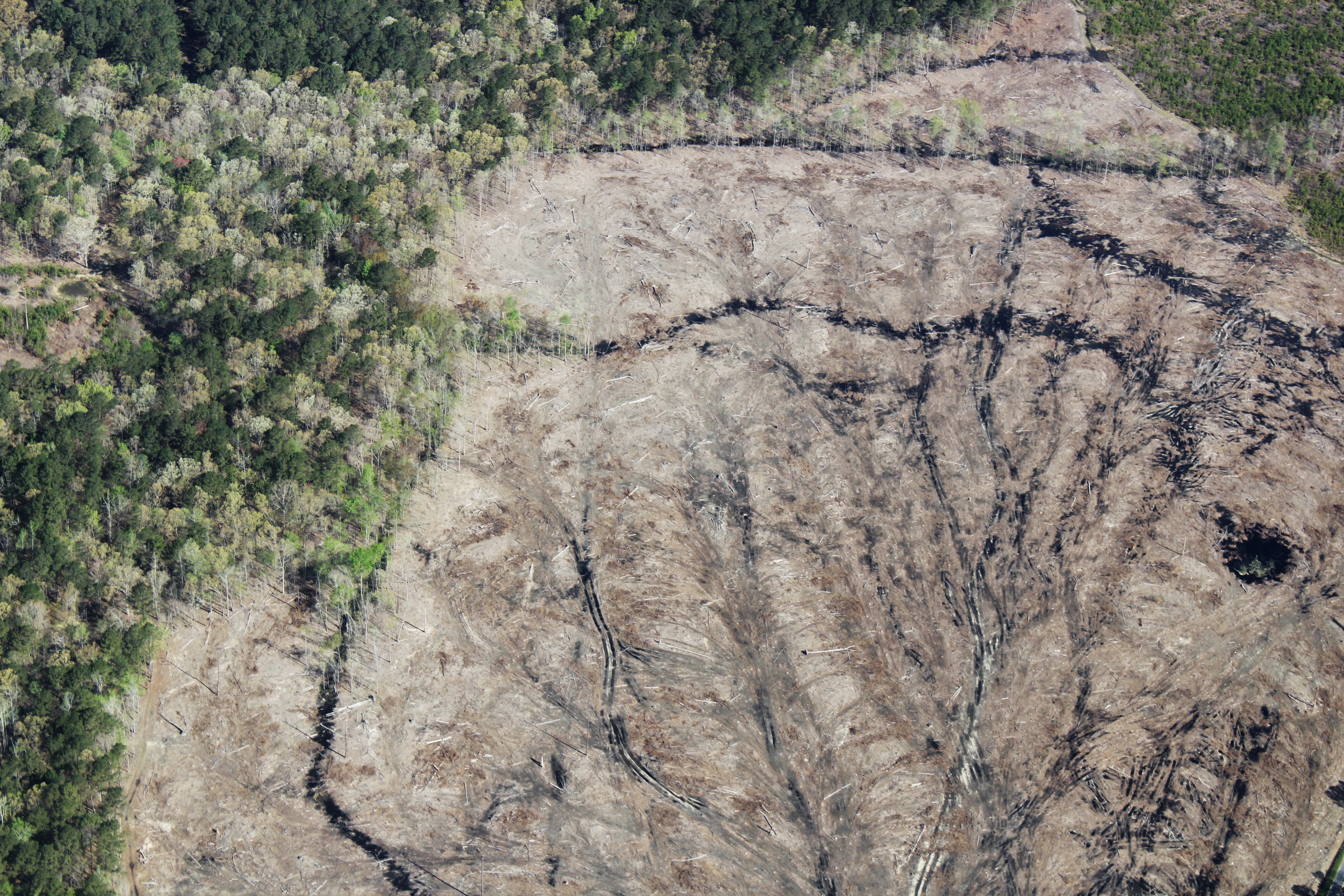
Every single year, tens of thousands of acres of forests and wetlands are cut down, turned into wood pellets, and shipped overseas to be burned for electricity in power stations in Europe and Asia. It’s called biomass power. It’s dirtier than burning coal, but it gets millions and millions of dollars in subsidies for being a “green and renewable” energy source — just another deceptive claim from big industry that’s taking us backward and not forward on climate.
Failed policies in Europe started the global biomass swindle, but it’s our Southern communities and forests paying the price for the deception and the destruction led by the world’s largest wood pellet producer, Enviva. Each of Enviva’s facilities require dozens of acres of forests to be cut down every day. Right now they have eight facilities throughout the South with more in the works.
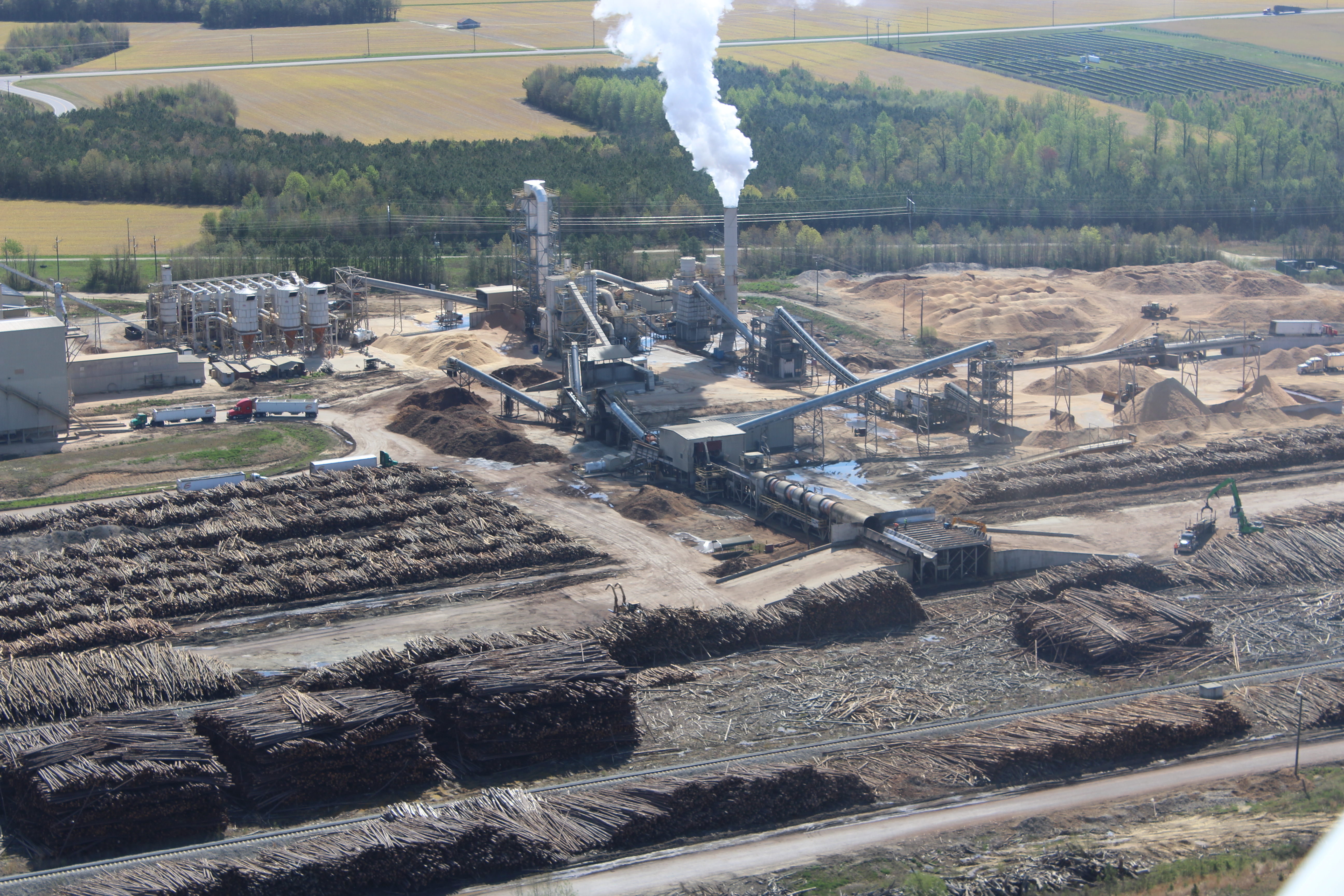
The communities living near Enviva’s facilities suffer the 24/7 noise, dust, harmful air pollution, truck traffic, and forest degradation of the wood pellet industry. These communities are on the frontlines of climate injustice. They’re often the same communities living along the route of proposed and unnecessary pipelines, of polluting hog factories, and of coal ash contamination.
They’re located in places bearing the impacts of extreme weather first and worst, where intact forests and wetlands are more important than ever to protect us from storms like Hurricane Florence, Dorian, Matthew, Michael, Irma, Harvey — and the growing list of household names that have wrought devastation to communities across our region.

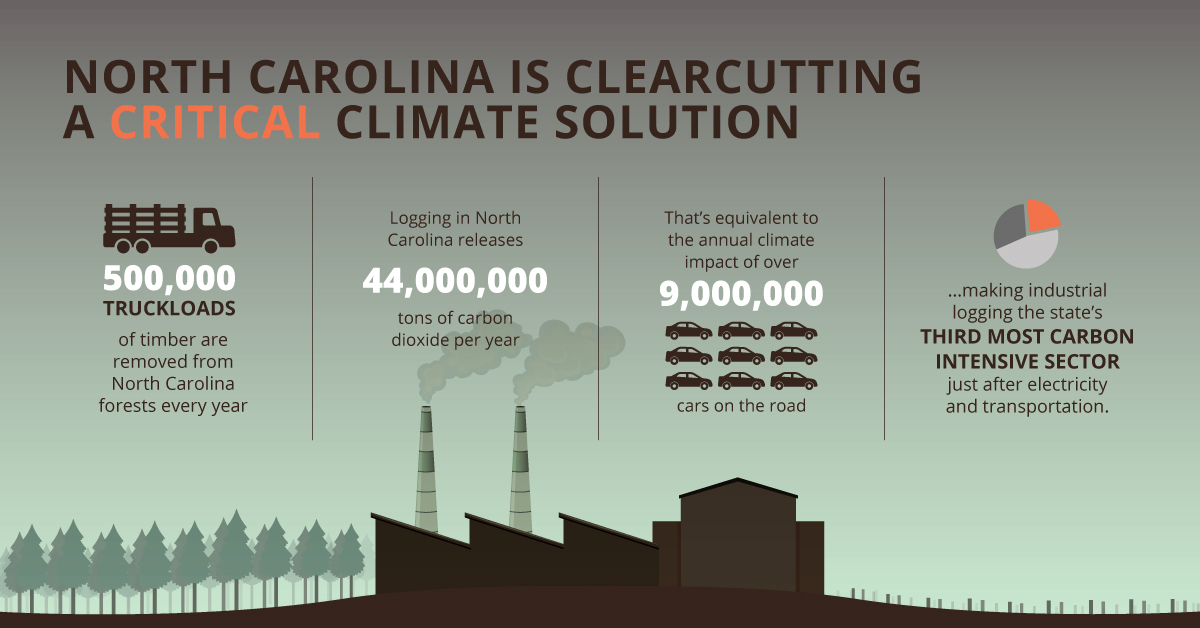
The best science is telling us that to avoid a climate catastrophe, we need to dramatically scale up forest protection at the same time as we transition to 100% clean, renewable energy. On top of that, an emerging body of research shows that logging is a major climate problem that’s flying under the radar. Our latest report shows that logging in North Carolina is the third largest source of greenhouse gas emissions in the state, just behind electricity and transportation. That might not come as a surprise if you knew that our forests here in the US South were disturbed at a rate four times higher than South American rainforests. But if you didn’t know that, it’s because the best kept secret of the forest products industry is their dirty climate impact.
The industry and many of our so-called leaders want to keep business as usual. They want to keep logging, extracting, burning our forests, and slapping a green label on it. They want to keep putting profit above people and land no matter what it costs the rest of us. But you and I all know that business as usual has brought us to the crisis that we’re in right now — and we’re not going to stand for it anymore.
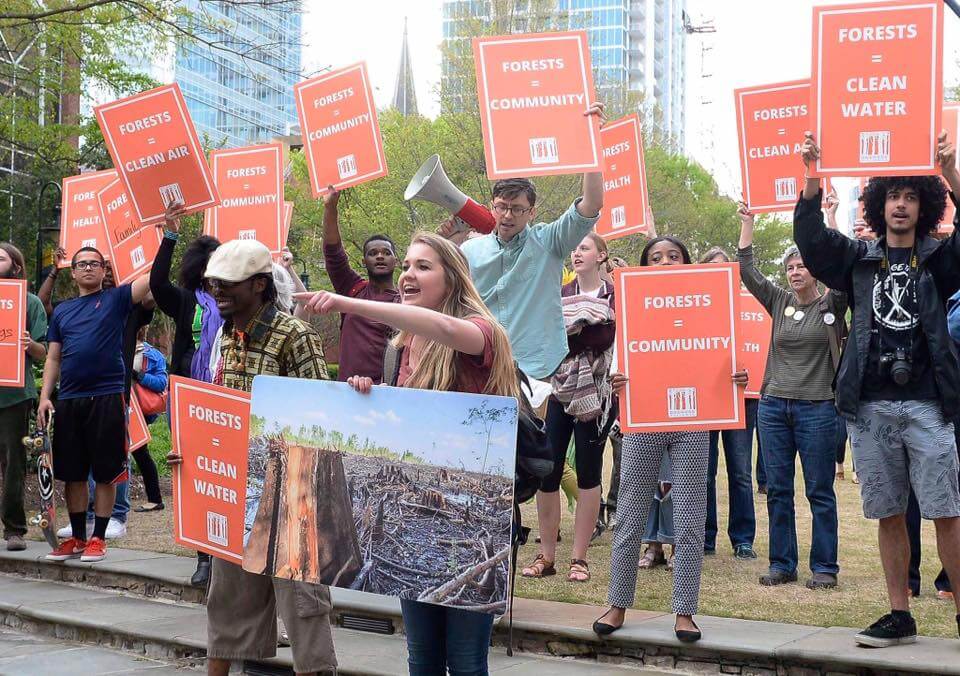
We’re fighting for a world where everyone has clean air and water, where nobody has to choose between a job and their health or their quality of life, and where we have beautiful, standing, diverse forests now and for generations to come. Join us in the movement for forest protection, climate action, and environmental justice.
When we decided to seek out sponsors for our Annual Woods & Wilds Storytelling event, everyone agreed that we could only partner with businesses (preferably local or regional) that genuinely supported our vision for a future that values wild forests, healthy communities, and human life.
Both Selina DeLangre, CEO of Selina Naturally® and Chris Mathis, owner of Blue Moon Water were excited when they heard about the event and how their sponsorship would help protect our forests, climate, and communities from clearcut logging for wood pellets to fuel power plants in Europe.
 Selina Naturally Supports Wellness for People AND Forests
Selina Naturally® is the originator of the signature Celtic Sea Salt® Brand. The company has been supporting small farmers for over 40 years by providing tools that they need to produce natural sea salt ethically and sustainably.


Blue Moon Water is the go-to local bottled spring water delivery company for Asheville, NC, including Buncombe County and some surrounding communities. Chris and the Blue Moon Water family know that forests are vital to providing clean water for people and wildlife.

You can meet the great people from Selina Naturally and Blue Moon Water at Woods & Wilds on September 27th. This year Woods & Wilds is at Asheville’s home for storytelling, the Mothlight! The evening will feature local storytellers as they share their stories of the wild!
Dogwood Alliance is clear and focused in its work to mobilize diverse voices to protect Southern Forests and communities from destructive industrial logging. We’re proud that the businesses that support our work and are equally committed to sustainability in their business practices as well as their personal values.


 Donate