


The United Kingdom Committee on Climate Change (CCC) is an independent, legal body established by the UK government under the 2008 Climate Change Act. Their purpose is to advise the Government and various departments on emissions targets and report to Parliament on progress made in reducing greenhouse gas emissions and preparing for climate change. The UK CCC recently released a report to mark their 10 year anniversary that recommends the nation strive for net-zero carbon emissions by 2050.In the days following the release of the report, the government is receiving accolades for creating one of the most comprehensive and ambitious climate targets in the world. While it is high-time for governments to step up and take climate action, it will be all for nothing if the road map isn’t as strong as its ambition. One way in which the UK is stumbling is in its continued use and taxpayer funded support of energy that comes from burning forests in the Southern U.S. Alongside our partners at The Natural Resources Defense Council, the Southern Environmental Law Center, and Biofuelwatch, we issued a response to the report that calls for an immediate end to national subsidies for power plants relying on forests for fuel, and insisting on the need for the government to invest in genuine renewables to meet its net zero emissions target. Year after year, our on-the-ground investigations expose the damaging logging practices used to provide wood pellets to the biomass industry, driven in a large part by misguided UK policies. If the country is serious about leading on climate change, it must cut emissions, not forests.See below for our full press release.
——————————————————————————————– FOR IMMEDIATE RELEASE: Thursday, 2nd May, 2019
The UK government’s continued support for burning trees for electricity—so-called “biomass”—threatens a net zero emissions goal. Moreover, while the Committee on Climate Change (CCC) has rightly challenged the government to go further and faster in fighting climate change, its reliance on biomass with carbon capture and storage (BECCS) to get there is misguided and risks driving even more tree burning in the UK, with enormous climate and ecological risks. The Natural Resources Defense Council and its partners at Biofuelwatch, Dogwood Alliance, and the Southern Environmental Law Center urge the UK government to put an immediate end to biomass electricity subsidies and channel investment into energy efficiency and conservation, genuinely zero-emission renewable energy like wind, wave, and solar power, and smart resources, such as electricity storage.
“Biomass-burning at a massive scale in the UK today is a clear and present threat to any last gasp we have of avoiding the worst consequences of climate change. The UK needs to reverse course and end its multi-billion pound subsidy programme for wood-fired electricity generation now if the country is going to help the world avoid devastating planetary warming,” said Sasha Stashwick, Senior Advocate at the Natural Resources Defense Council.
Almuth Ernsting from Biofuelwatch adds: “The Committee for Climate Change’s endorsement of BECCS is badly misguided. If BECCS was to ever work, it would suck up billions of subsidies urgently needed for true climate solutions, and lead to yet more trees being burned for less energy.”
The CCC has acknowledged that biomass must not be considered as carbon neutral but can result in carbon emissions comparable to those from fossil fuels. UK legislation only accounts for a sliver of the full lifecycle impacts of biopower plants.
“The CCC warned in a report last autumn that without significant reforms, reliance on large-scale biopower may lead to worse outcomes for the climate than using fossil fuels – a critical admission from the UK government’s official climate advisory board,” said David Carr, General Counsel at the Southern Environmental Law Center. “As long as Drax and others continue to burn trees, their power stations cannot be considered green, with or without carbon capture technology added on.”
The CCC has rightly underscored the risks associated with biomass imports, such as from forests in the US Southeast where NGOs have documented that biomass harvesting to supply the UK energy market is contributing to the destruction of ecologically valuable bottomland hardwood forests.
“Year after year, our on-the-ground investigations expose the damaging logging practices used to source the biomass industry, driven in a large part by misguided UK policies,” said Rita Frost, Campaigns Director at Dogwood Alliance. “If the UK is serious about leading on climate change, it must cut emissions, not forests.”
Recently, the UK hit a new record for powering the country without coal, achieving a total of 90 hours and 45 minutes. Worryingly, 4 percent of this record power generation came from biomass and an increasing share of the UK’s ‘renewable’ energy generation currently comes from biopower plants – such as Drax – which burn biomass, primarily in the form of wood pellets imported from the Southeastern US. This generates climate pollution both at the smokestack, where burning biomass results in more carbon than burning coal, and from the land, where increased wood harvesting replaces mature forests with young saplings, reducing forest ‘carbon sinks’ and foregoing sequestration.
– ENDS –
The Natural Resources Defense Council (NRDC) is an international nonprofit environmental organisation with more than 3 million members and online activists. Since 1970, our lawyers, scientists, and other environmental specialists have worked to protect the world’s natural resources, public health, and the environment. NRDC has offices in New York City, Washington, D.C., Los Angeles, San Francisco, Chicago, Bozeman, MT, and Beijing. Visit us at www.nrdc.org and follow us on Twitter @NRDC.
Biofuelwatch is a UK/US NGO which carries out research, advocacy and campaigning in relation to the impacts of large-scale bioenergy. See: biofuelwatch.org.uk
For more than 30 years, the Southern Environmental Law Center has used the power of the law to champion the environment of the Southeast. With more than 80 attorneys and nine offices across the region, SELC is widely recognized as the Southeast’s foremost environmental organization and regional leader. SELC works on a full range of environmental issues to protect our natural resources and the health and well-being of all the people in our region. www.SouthernEnvironment.org
For over 20 years, Dogwood Alliance has worked with diverse communities, partner organizations and decision-makers to protect Southern forests across 14 states. We do this through community and grassroots organizing, holding corporations and governments accountable and working to conserve millions of acres of Southern forests. www.dogwoodalliance.org and follow us on Twitter @DogwoodAlliance
Remember me? I’m, Lucia, The Wetland Wanderer, and I’m back! I’m excited to share with you Episode 3 of the Wetland Wanderer where I visit Congaree National Park in the beautiful state of South Carolina. In the video, I take you around to visit a moonshiner forest office, share a theory on what cypress knees actually do, and breakdown the economic value wetland forests provide our people and planet.
Our standing wetlands are so incredibly important in this time of climate crisis. While we all focus on energy, HOW WE TREAT OUR FORESTS MATTERS. Climate science is telling us that we need to rapidly transform all sectors of industry — not just energy and fossil fuels. Wetland forests are key to helping us fight climate change!
Loving and protecting wetlands will help us build a clean energy future that rewards our planet and all life on Earth.

Keep an eye out for Episode #4 later this year. Until then, I’ll see you in the Wetlands!!
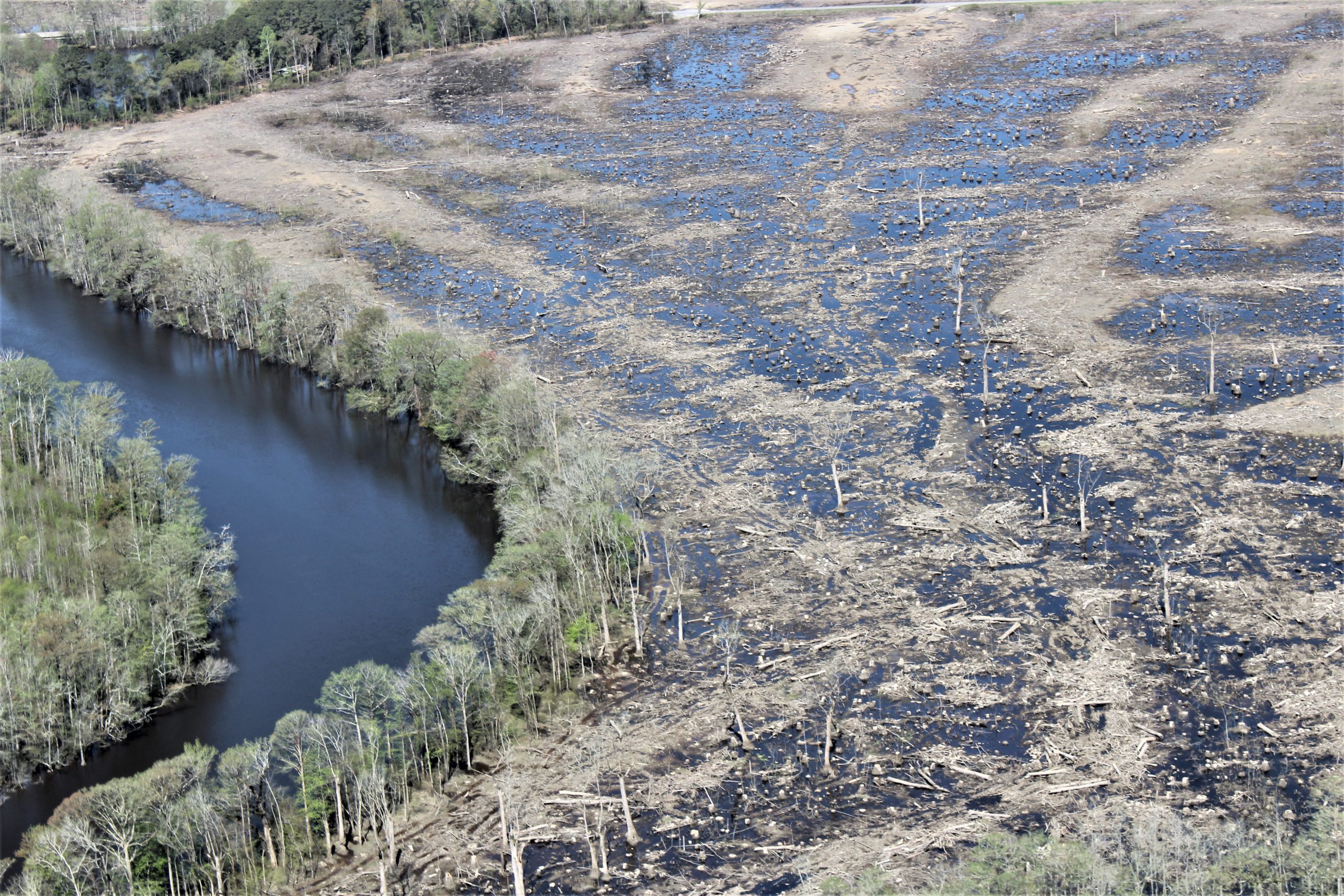
Dogwood Alliance Campaigns Director Rita Frost and I recently went on a flight with SouthWings volunteer pilot, Stu Bailey, to conclude our latest ground investigation of a particularly devastating wetland clearcut in Eastern North Carolina.
Every year, Dogwood Alliance conducts investigations on the sourcing practices of the wood pellet industry led by Enviva. We expose the truth about these practices, from the ground and from the air, and we document the condemning evidence for the public and policymakers.
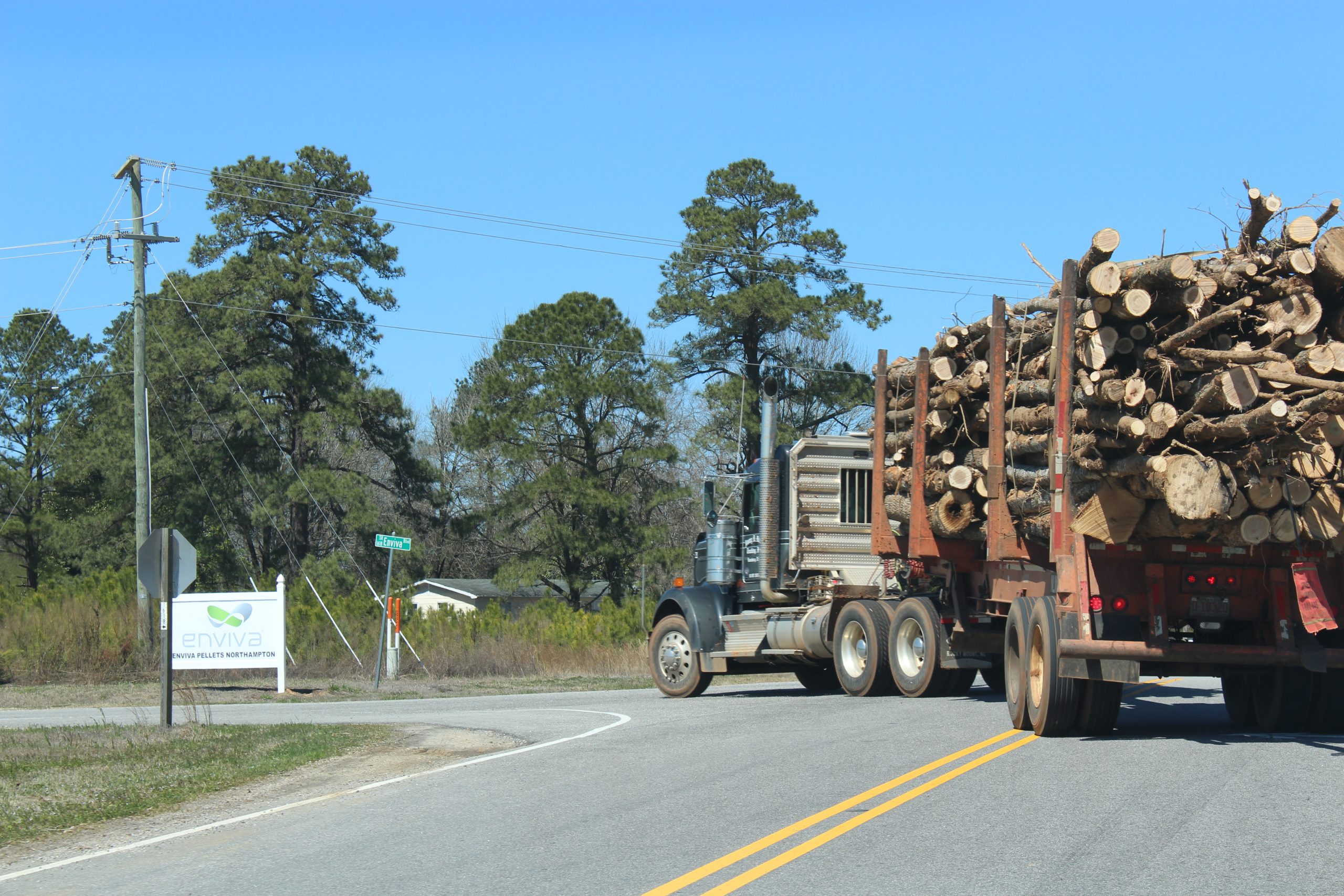
A logging truck loaded with trees drives into the Enviva Northampton facility. These trees will be turned into wood pellets and eventually make their way to the Wilmington port, where they’ll be shipped to Europe to be burned.
As I tried to keep down my breakfast (and failed, but I’ll spare you those details), I got a thousand-foot view of what industrial logging looks like in Eastern North Carolina and Virginia.
If you’ve ever traveled by airplane and scored a window seat, you’ve probably noticed this about the landscape, too. Maybe you’ve peered through your window and taken note how so much of our once wild country has been subdued into straight-edged plots with right angles sharp and precise. At these times, it’s hard to believe we’re looking at the same planet where we find untamed, lush forests and other natural spaces.

All across the region, industrial forestry has turned the landscape into a series of tree farms.
We flew over miles and miles of tree plantations at various stages of growth. In adjacent plots, we saw swaths of raw clearcuts, light green saplings, and darker green plots of pines getting ready to be cut once again. The landscape was dotted with other signs of industrialization, too. We cruised over smokestacks from polluting facilities, along with hog manure lagoons and factories that house thousands of swine.
When I first showed the aerial photos of plantation forestry to my partner, his first reaction was: “Wow, that’s a lot of farmland.” He’s a farmer himself and works on a small organic vegetable farm in the Piedmont region of North Carolina. He was surprised when I clarified that the acres and acres of neat rows weren’t vegetables or fruits — they’re trees.
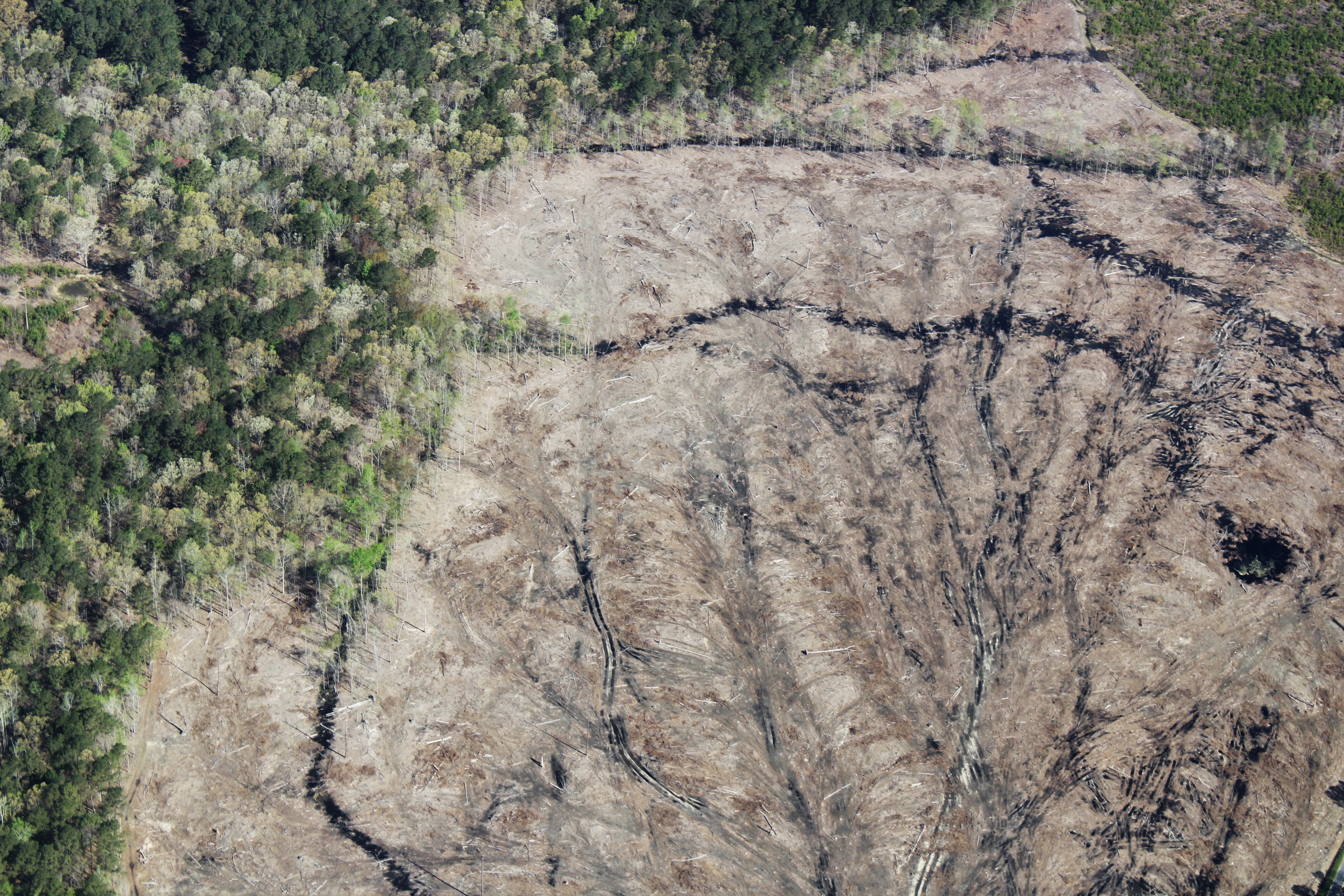
An aerial view of the cut we investigated on the ground. The clearcut here ended up at Enviva’s Northampton facility.
Of the clearcuts and degraded forestland that Rita and I flew over, some of it ends up in trucks headed to the wood pellet export industry led by Enviva to be burned as biomass overseas. We got birds-eye views of Enviva’s Northampton facility in NC and their Southampton mill in VA, with long stretches of logs piled like matchsticks. Other logging cuts end up at pulp and paper mills and will turn into single-use products like diapers and coffee cups.
All of that logging is part of the impact that industrial forestry has had on the Southeastern US over decades — where forests are disturbed at a rate four times higher than South American rainforests. And all of it is having a devastating impact on our climate, communities, and natural forests throughout the South.
The US South is the world’s largest wood-producing region, and a mix of existing markets, large capital investments, and industry-favorable government policies have incentivized the degradation of our landscape. Because of this, we’ve lost 33 million acres of natural forest, and fast-growing monoculture pine plantations have increased by 40 million acres in the US South. Now, we have more plantations and less true, natural forests than ever before.
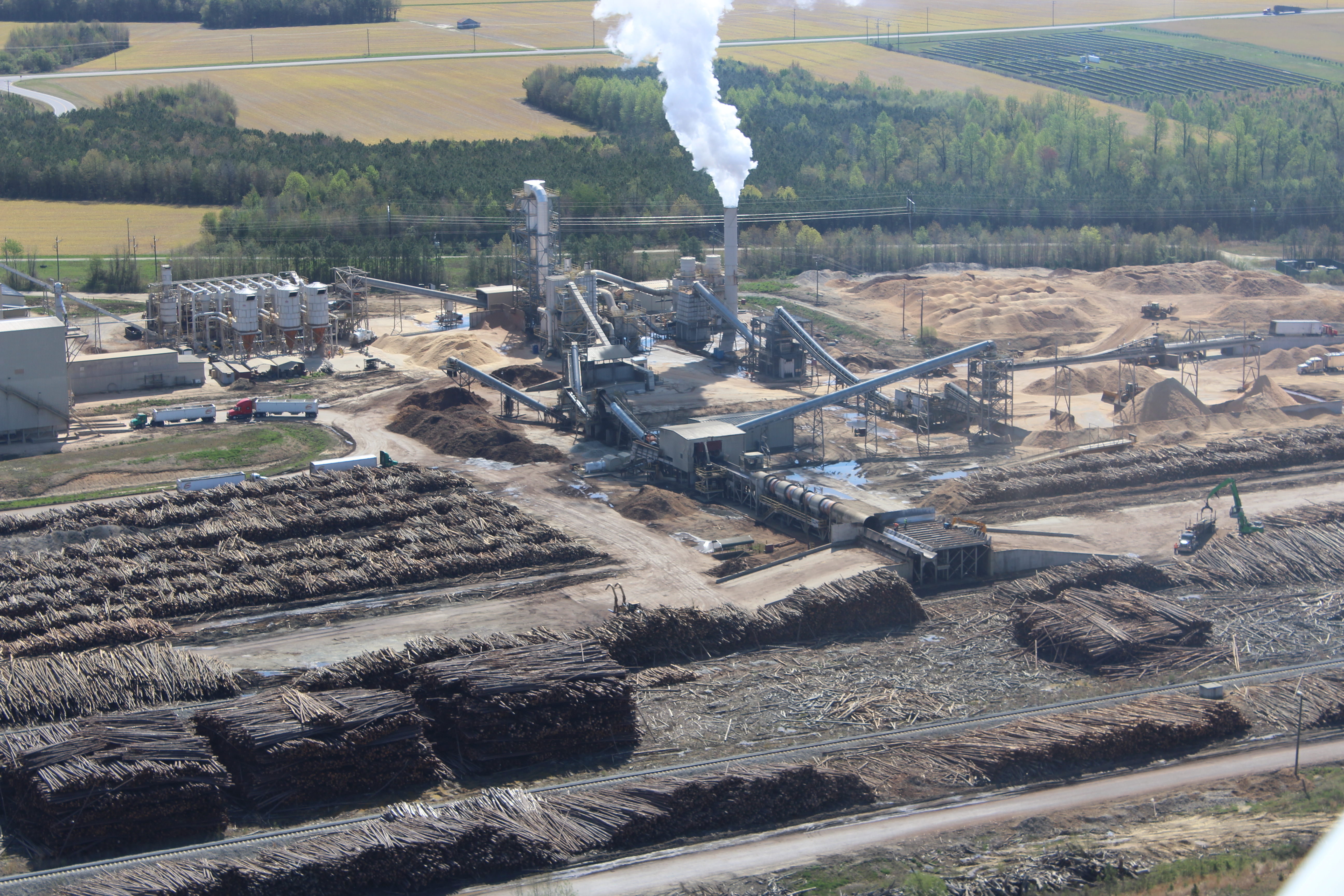
Enviva’s Northampton facility, which has a production capacity of 510,000 metric tons of wood pellets per year. Enviva recently filed an application to expand this enormous facility.
Industry will tell you that plantations are the answer to the climate crisis. That cutting down trees and turning them into short-lived products or burning them at power stations will fix our carbon balance if we just look at their math. And that if we want to save trees, well, we just have to cut more down.
The paper, “Restoring natural forests is the best way to remove atmospheric carbon” argues that “plans to triple the area of plantations will not meet 1.5 °C climate goals.” Our best bet, according to these scientists? Natural forests.
The UN IPCC report calls on governments around the world to scale up forest protection in order to keep global temperatures below 1.5 °C. Policymakers in other parts of the world are returning the call — but most of the land pledged globally for forest restoration is slated to grow crops as tree farms or agroforestry. Scientists warn that “plantations hold little more carbon, on average, than the land cleared to plant them.” Then the carbon that planted trees uptake is rapidly released when they are cut in short rotations for profit.

The best path forward for storing carbon is natural forest regeneration, whereas current plans for plantations and agroforestry fall short. Source: S. L. Lewis et al.
Natural forest regeneration is the most effective and cheapest strategy to store and sequester carbon at the rate and scale we need to avoid climate catastrophe. In other words, industrial logging and plantation forestry is actively interfering with our ability to maintain global temperatures below 1.5 °C. Communities around the world are already experiencing the effects of climate change like extreme weather, droughts, heat waves, and rising sea levels. There are more dire consequences ahead if we continue down this path.
Just think: if leaders like North Carolina’s Governor Cooper put forest protection at the forefront of their climate and clean economic development agenda and broke their silence on destructive forestry practices, what would become of the patchwork landscape of the South? We could see our forests grow old, more connected, stronger. A birds-eye view in the future could have some relics of a distant past, if we let natural forests regenerate and restore.
As Rita and I flew back toward the Chesapeake Regional Airport, we got another look at a beautiful natural wetland forest, the Great Dismal Swamp — a stunning preserved area with forested wetlands surrounding Lake Drummond. The mixed hardwood forest looks nothing like the manicured pine plantations from above or from the ground.
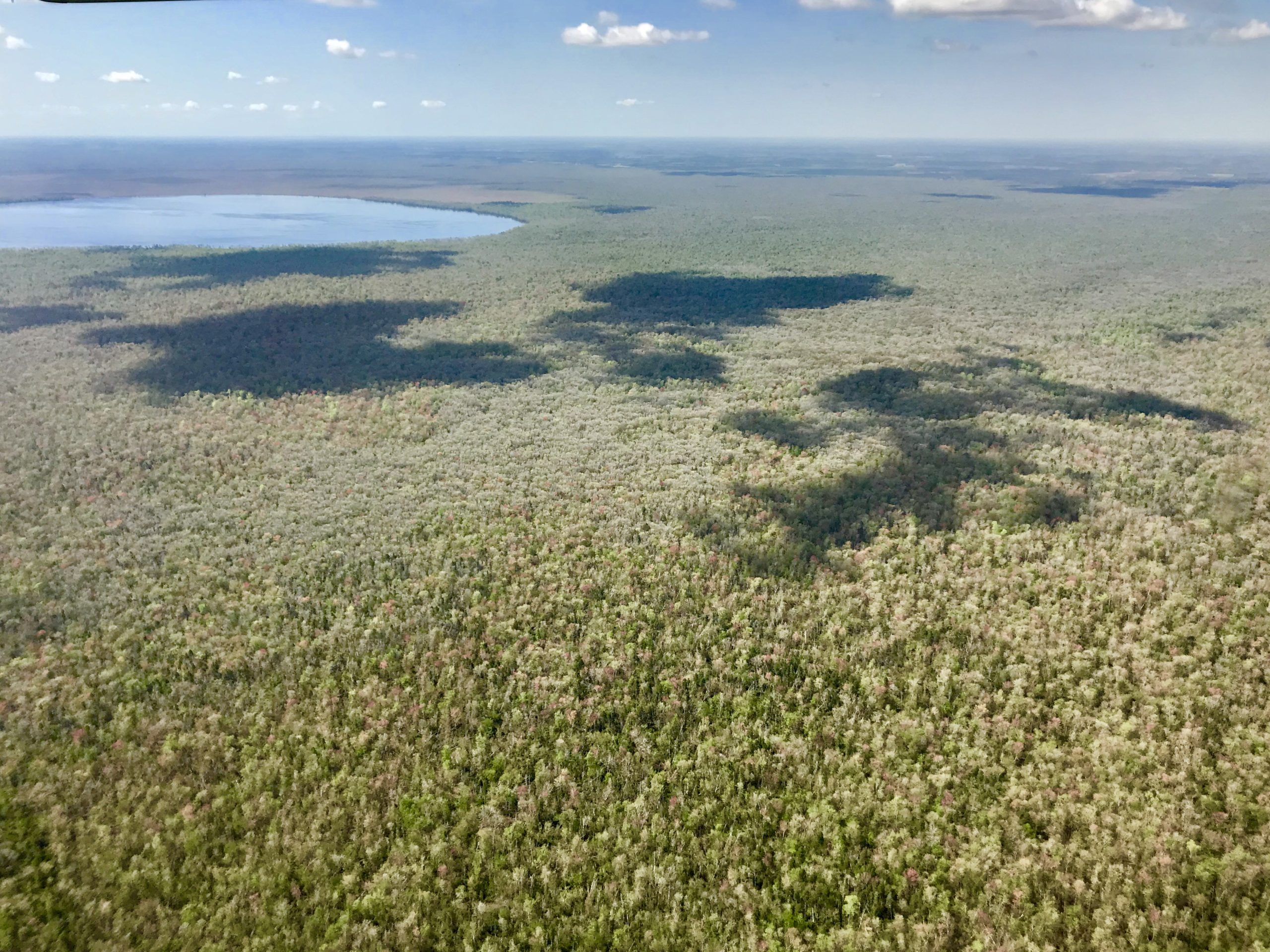
A birds-eye view of the Great Dismal Swamp circling Lake Drummond. With miles and miles of protected forested wetlands in Virginia and North Carolina, it’s worth a visit from the ground next time you’re in the area.
While the forest industry continues to spin tales about the plantation forest model, we’ll keep on exposing the truth about industrial logging and the danger it poses for forests, climate, and communities — and working toward a world where our markets, policies, and culture capture the full value of forests. Stay tuned for the release of our updated investigation booklet with photo evidence from our 2018 and 2019 investigations!
This is a crosspost from the Eureka Springs Independent by Dr. Luis Contreras. You can view the original here. Luis publishes a weekly column in the paper, and from time to time we will share them here.
Greta Thunberg, David Suzuki, Naomi Klein, Michael Mann, and a long list of renowned activists and scientists signed an open letter on April 3, 2019, requesting immediate protection and restoration of the world’s forests, wetlands, grasslands, and other critical ecosystems to stop the climate and ecological crises.
A green world is a healthy world. Eliminating greenhouse gas emissions is not enough. The oceans, fish, fresh water, and the air we breathe are highly polluted.
Everything in nature is connected by nutrients and energy flows. There are no simple solutions to careless destruction of the web of life. It takes decades to grow trees while mushrooms grow at a different rate.
The December 2018 executive order directed the Forest Service to increase logging by 25 percent in 2019, an 800-million board feet hike. According to the Forest Service Employees for Environmental Ethics, FSEEE, this is not to prevent forest fires. “Board feet” is a commercial measure of wood volume that applies to large trees. Anything under 6 inches in diameter has zero board feet.
Natural forests have a variety of species and sizes of trees. Trees are connected by a fungal web, sharing nutrients and energy. Please visit FSEEE.org to learn how to protect our forests.
The federal government recently proposed changes to the Clean Air Act to lower the cost of coal power, saying “mercury regulations are no longer appropriate or necessary.”
This is nonsense, carcinogenic compounds don’t care what #45 says. Making false claims about wind turbines, the Green New Deal, and other climate related information, is no different than yelling fire in a crowded public place.
Mercury is an element of wood, coal, and fossil fuels. Burning these fuels releases mercury gas emissions into the atmosphere. Coal-fired power plants account for 42 percent of all man-made mercury emissions. Mercury in the air can travel thousands of miles before it comes back to earth in rainfall or gas. Mercury is converted into a far more toxic form when it enters the food chain. Human exposure to mercury can result in premature death and cause a host of cancers, lung, and heart diseases.
Shandong Sun Paper plans to build a $2 billion kraft paper mill near Arkadelphia and the Ouachita National Forest. The facility will have one kraft mill and two linerboard paper lines. The Ouachita River was diverted to provide fresh water and a water treatment plant was built by Clark County. Kraft paper mills smell like rotten eggs.
While the Pine Bluff, Highland Wood Pellets is down, a second facility is on the way. Arkansas Teacher’s Retirement System may end up owning two dead mills.
Why would tourists come to Arkansas to see stumps in the ground and hundreds of logging trucks destroying country roads and bridges?
Let’s restore our forests. How many businesses would relocate to a quiet, beautiful state? Carbon offsets would compensate landowners and massive diesel emissions would be avoided.
If you care about Arkansas and your family, please join the Dogwood Alliance Stand4Forests, Stand4Forests.org, a unified call for U.S. forest protection.
“US climate policy must protect forests and communities, not the forest industry” The Hill, March 21, 2019, says, “leading climate scientists warn that burning wood will exacerbate climate change, releasing even more CO2 per unit of energy generated than coal and further degrade vital forest carbon sinks.”
Stopping Profits and wars before people, the doctrine driving the current economy and politics, is another requirement to get us out of this mess.
Nothing will change unless we change. After all, we are part of nature. Spend some time in your favorite forest with your family and decide what you will do to get us out of this mess. See with your own eyes the beauty and hear with your own ears the songs of the forest, nature has a message for you. It is not too late, but we must rise up now.
Enviva has a proven record of harming communities, forests, and the climate. Enviva isn’t shy about bending or twisting the truth or even flat-out lying to get what they want.
Here are the facts:
Enviva used to say that they don’t source from wetlands, until we uncovered the truth. They used to claim they only use waste wood and residues, until we uncovered the truth. They used to say they don’t source from clearcut, until we uncovered the truth. Now, in the draft permit for their latest monstrosity, Enviva is finally pulling the wool off and admitting that, yes, they use timber logs. This goes against everything the biomass industry has been saying for years — that they’re only using wood that’s not suitable for traditional forest products industry.

A recent report by Environmental Integrity Project shows a shocking pattern of air quality violations or noncompliance at over half of all wood pellet facilities, with Enviva being the most egregious. The pollutants created by wood pellet manufacturing and biomass combustion — such as VOCs (volatile organic compounds) and HAPs (hazardous air pollutants) — cause cardiovascular and respiratory health problems, such as asthma, heart attacks, and cancer. Both the American Lung Association and the American Heart Association have come out against wood pellet facilities because of their impact on air quality in the communities where they’re located.
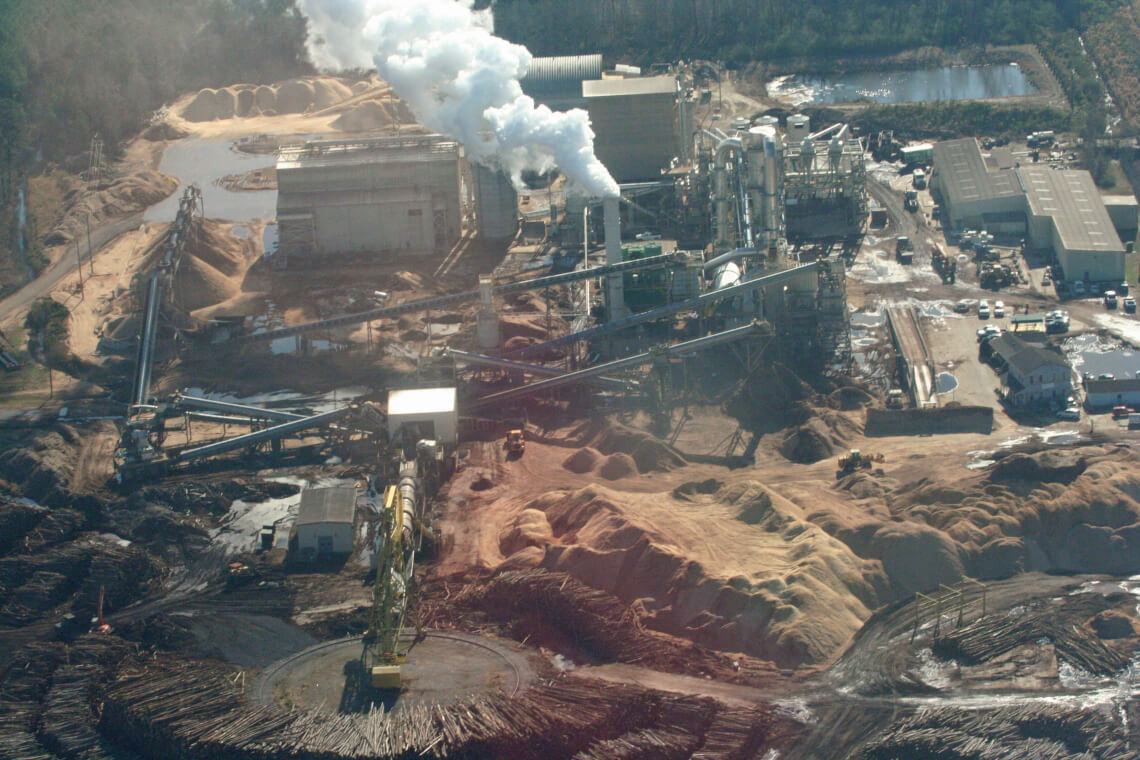
Enviva has a troubling history in communities, with several flawed permits, air quality violations, and denial of communities having meaningful public input during permitting processes. Their 24/7 operations mean constant noise and dust for the surrounding community, and increased truck traffic has affected local roads. Does that sound like a good neighbor to you?
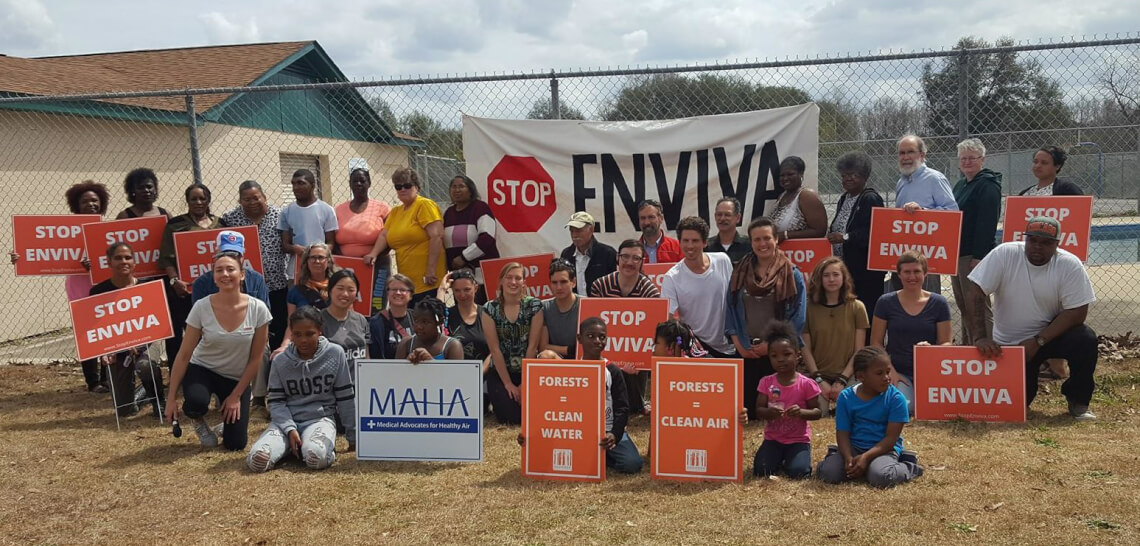
Enviva promises jobs and prosperity to the local community and government decision-makers. But these promises just haven’t panned out. Poverty rates in many areas where Enviva has existing facilities have been stagnant or even increased since Enviva came to town.
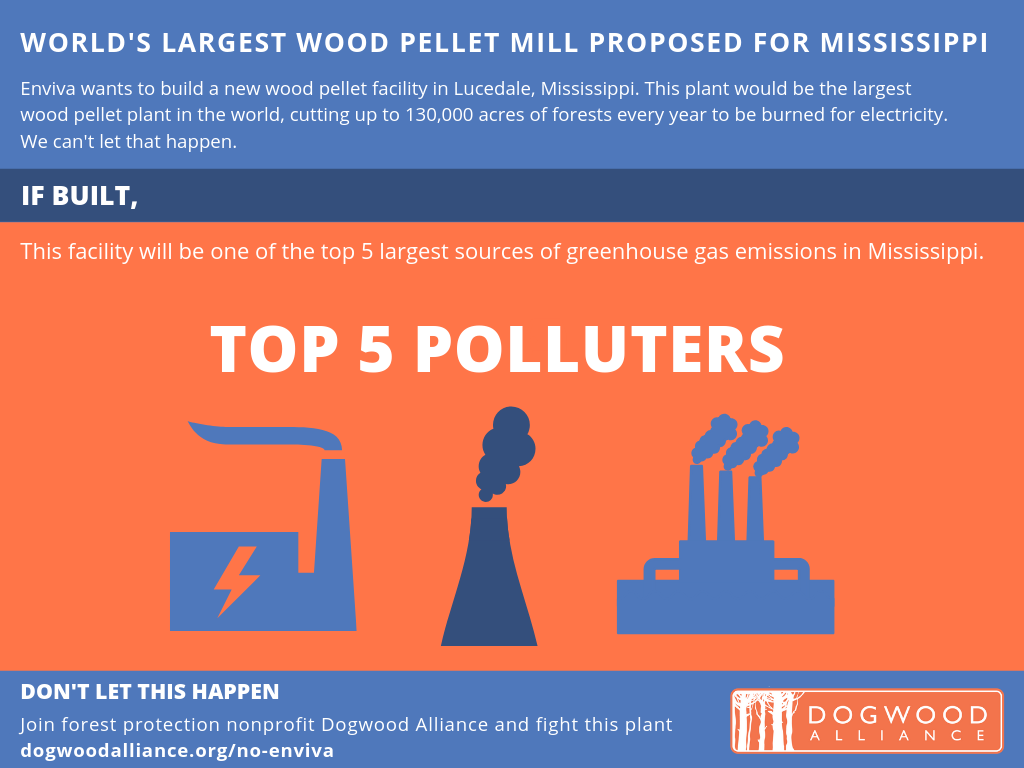
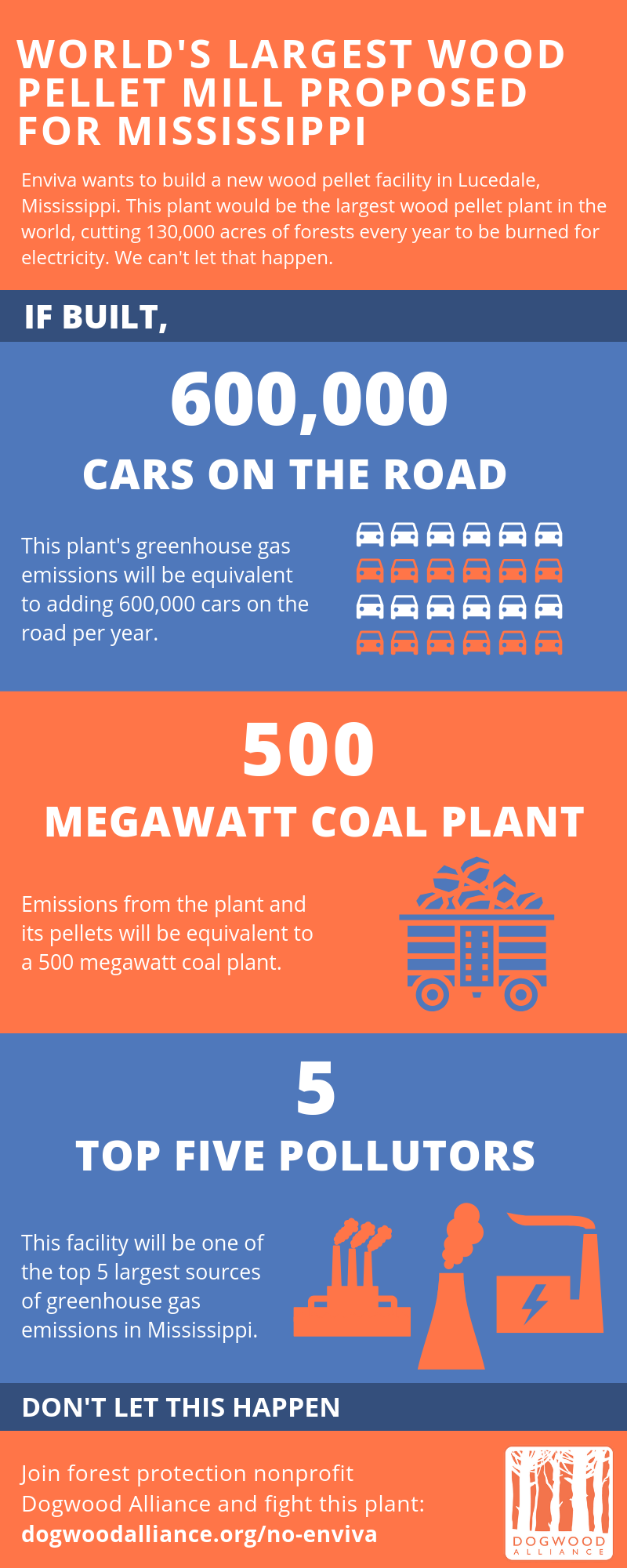
Now Enviva wants to build the biggest wood pellet facility in the world in Lucedale, Mississippi. This monster could produce 1.4 million tons of wood pellets per year. A plant of this size could require 130,000 acres of forest, an area roughly the size of Chicago, cut down every single year. It would put 300 trucks a day on the roads in this small rural town. Our forests will suffer, Mississippi communities will suffer, and our climate will suffer. We can’t let this happen.
FOR IMMEDIATE RELEASE: April 3rd, 12:01am EST
Asheville, NC – Today, the Wetland Forest Initiative, a unique coalition of conservation groups, advocacy organizations, landowner groups, forestry and wildlife agencies, released a new plan for conserving and protecting wetland forests in the Southern US. The 5-year plan lays out clear priorities for the coalition:
“With the devastating impacts of climate change like hurricanes and flooding, increasingly slamming the Southern US, this plan and important coalition represents one of our best efforts to support climate resiliency and protect one of our regions most valuable resources, wetland forests,” said Adam Colette, Program Director at Dogwood Alliance.
Wetland forests, like all wetlands, are the “filters” of our natural system, removing pollution, absorbing excess nutrients, securing fresh drinking water for surrounding and downstream communities, and providing critical protection from dangerous flooding in vulnerable landscapes. Critically, wetland forests rank among the most important forests in the nation for carbon sequestration and biodiversity.
“Wetland forests are one of the most important habitat types in the Southern U.S. providing refuge for numerous endangered species and abundant wildlife of all kinds. The protection of these special places are critical for the conservation and recovery of plants and animals. From black bears and bass to woodstorks and waterfowl our wetland forests are a treasure,” said Ben Prater, Southeast Program Director for Defenders of Wildlife.
The majority of the nation’s remaining wetland forests are located in the Southern United States, spanning 35 million acres across fourteen states of bottomland hardwood forests, Carolina bays, pocosins, vernal pools, and cypress-gum swamps. One third of currently listed endangered species are dependent on wetlands, yet we have already lost a majority of the wetland forests that existed historically in the South. Ninety percent of these wetland forests are located on private lands, an excellent opportunity for collaboration with landowners.
“With a majority of our southern wetland forests under private ownership, it is critical that solutions to their conservation recognize and incorporate sustainable harvesting for forest products and also begin to value standing ecosystem services like flood control, biodiversity and carbon. Sustainable management can be the key to both economic and environmental benefits from these ecosystems,” said Tim Foley, Policy Director at the Southern Group of State Foresters.
The Wetland Forest Initiative is a coalition of nonprofit organizations, state and federal agencies, tribes, professional associations, and academics. The initiative is dedicated to conserving, restoring, and improving Southern wetland forests. Their vision for wetland forests is simple: abundant wetland forests for healthy human and natural communities.
To read the new 5-year plan synopsis, visit: https://wetlandforests.org/plan# # #
The Wetland Forest Initiative’s mission is to conserve, restore, and improve Southern wetland forests to strengthen our communities through science-based actions, diverse partnerships, and citizen and landowner engagement. To see the list of steering committee members and learn more, visit: https://wetlandforests.org/about-us/
The US South is home to some of the most beautiful and important forests in the world. They provide us with clean air and water, protect us from storms and flooding, and are homes to unique plants and animals. Our forests are a special part of our cultural heritage.
Corporations like Maryland-based Enviva, the world’s largest wood pellet manufacturer, continue to set up shop across the South to turn huge swaths of forest into wood pellets and then ship them to Europe and Asia to be burned in power stations for electricity.
Now, Enviva wants to build a new facility in Lucedale, Mississippi. We just got word that the Mississippi Department of Environmental Quality has issued the draft permit that would allow Enviva to proceed with construction. We can’t let that happen.
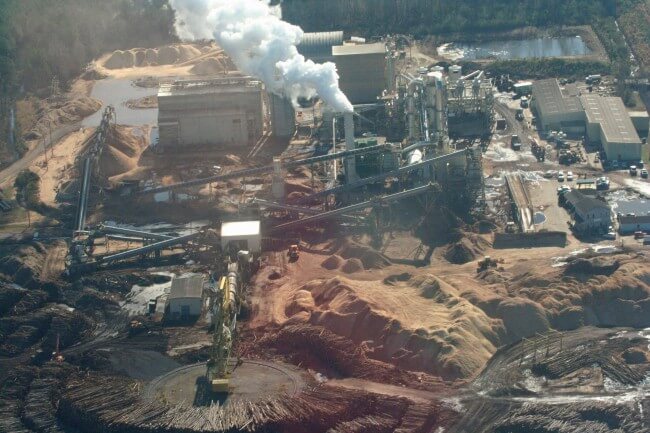
Overhead view of Enviva’s facility in Ahoskie, North Carolina. The Ahoskie plant is less than a third of the size of the proposed Lucedale plant.
That’s the equivalent to logging an area nearly the size of Chicago – every single year. This plant would be as big, as dirty, and as destructive as three of the existing large Enviva facilities combined that are currently having such a harmful impact on the forests and communities of North Carolina and Virginia.
If built as Enviva intends, this plant will be truly massive in its size and destruction.
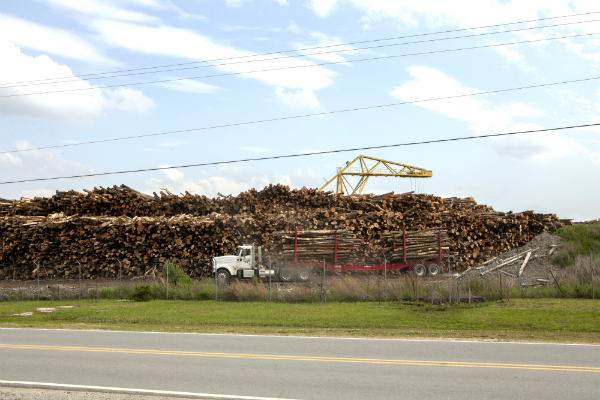
Piles of trees in front of Enviva’s Ahoskie facility (2015). Trucks just like these enter the pellet facility at estimated rates of 10-25 trucks per hour. Enviva estimates that 300 trucks per day will deliver logs to their proposed Lucedale facility.
Destroying our forests and burning them for electricity is a false solution to economic development and to solving the climate crisis. Burning trees for electricity is dirtier and worse for the climate than burning coal.
If built, the Enviva facility and the pellets it produces will be one of the top 5 largest sources of GHG emissions in Mississippi. The GHG emissions from the plant and the pellets it produces would be roughly equivalent to a 500 megawatt coal plant.
If industrial logging was the answer to economic development, rural Southern communities would be some of richest in the world. But the truth is that communities reliant on logging face some of the highest poverty rates. Lucedale, a community named after its founder in the lumber business, is no exception.
We have been exposing the truth about this industry for years — from on-the-ground investigations, to local public hearings, to the international stage. Again and again, Enviva has deceived the public, policymakers, and investors about their sourcing practices, environmental impact, and economic value.
Here’s the truth: Enviva profits by destroying and exporting our forests, harming our communities’ health and quality of life, and imperiling our efforts to avoid a climate disaster.
In the past few months, we’ve seen incredible momentum in the United States for our leaders to take bold, concrete action on climate change and environmental justice. From the halls of Congress to dinner tables and schools across the country, there is growing energy and momentum to address the climate crisis.
Whether it’s the movement calling for a Green New Deal, youth striking for climate around the world, or Southern justice leaders bringing the message of Justice First to DC, climate action is finally getting the national attention that its urgency demands.
Now, it is more important than ever to educate and mobilize organizations, individuals, and decision-makers about what it means to be a real climate leader.
Simply put, to avoid a climate disaster we need to stop forest destruction and prioritize forest protection. For Dogwood Alliance activists, this is what we want to hit home with our policymakers day in and day out.
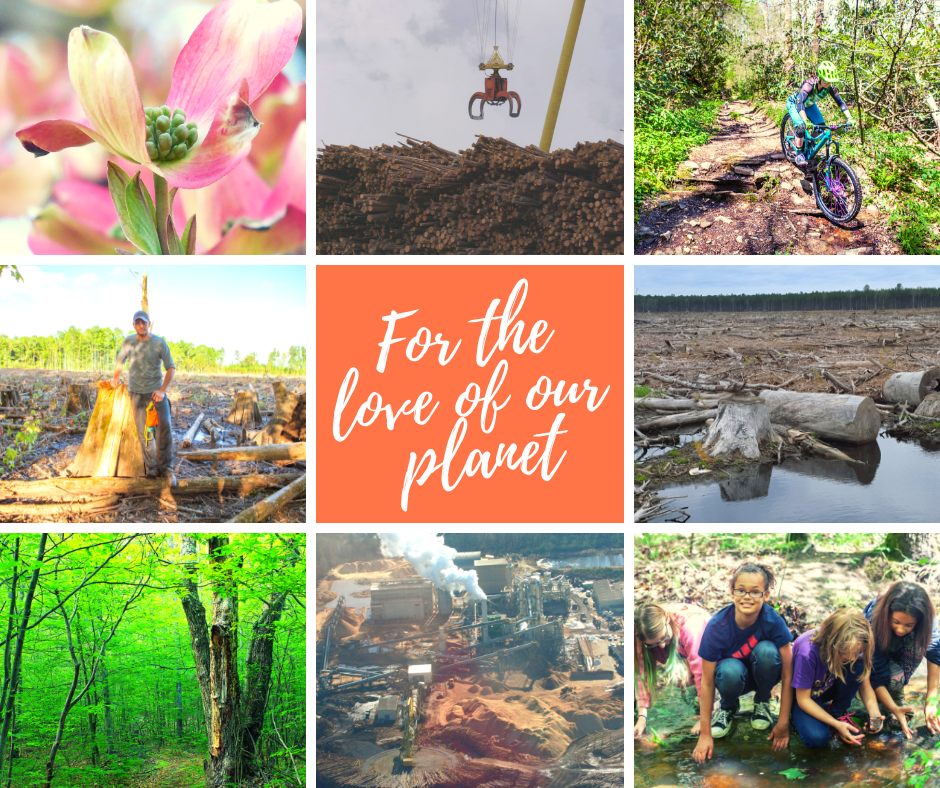
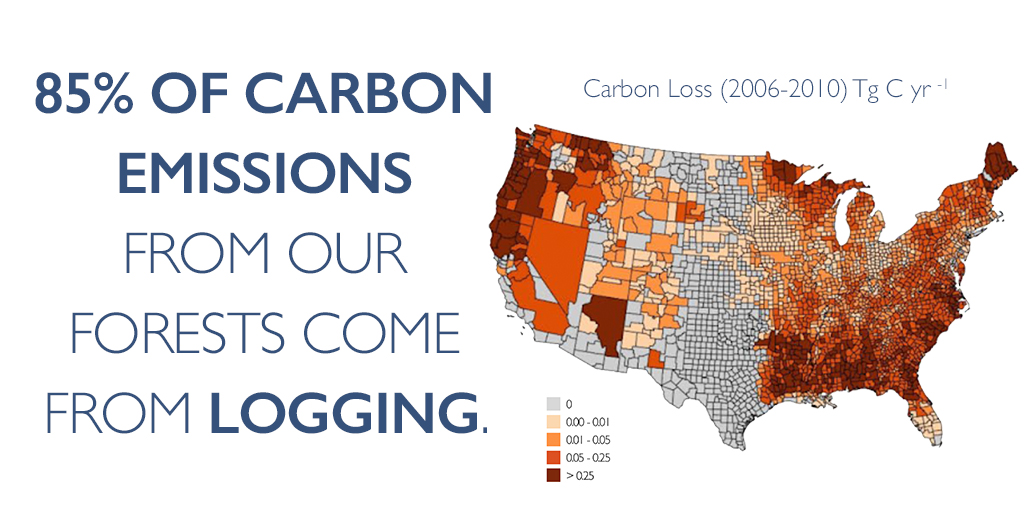
At a time when we should be protecting forests, the US is cutting down our own forests at one of the highest rates in the world. In fact, right here in the Southern US, our forests are logged and degraded at a rate four times higher than that of South American rainforests.Keeping forest carbon in the ground is as important as keeping fossil fuel carbon in the ground.
To make this a reality, last year Stand4Forests launched with the support of over 200 organizations, scientists, and elected officials with a bold vision for forest protection in the US — and we continue to grow every day.
Earlier this year, Dogwood Alliance traveled to Washington, DC with the Justice First Campaign to bring our shared vision of forest protection, clean energy, and climate justice to the halls of Congress. We put the Stand4Forests platform in the hands of several congressional offices — climate leaders who want to see ambitious climate legislation on the federal level. Based on the best scientific evidence, any comprehensive climate action plan needs to protect our forests as well as tackle the alarming rate of forest destruction currently happening in the US.
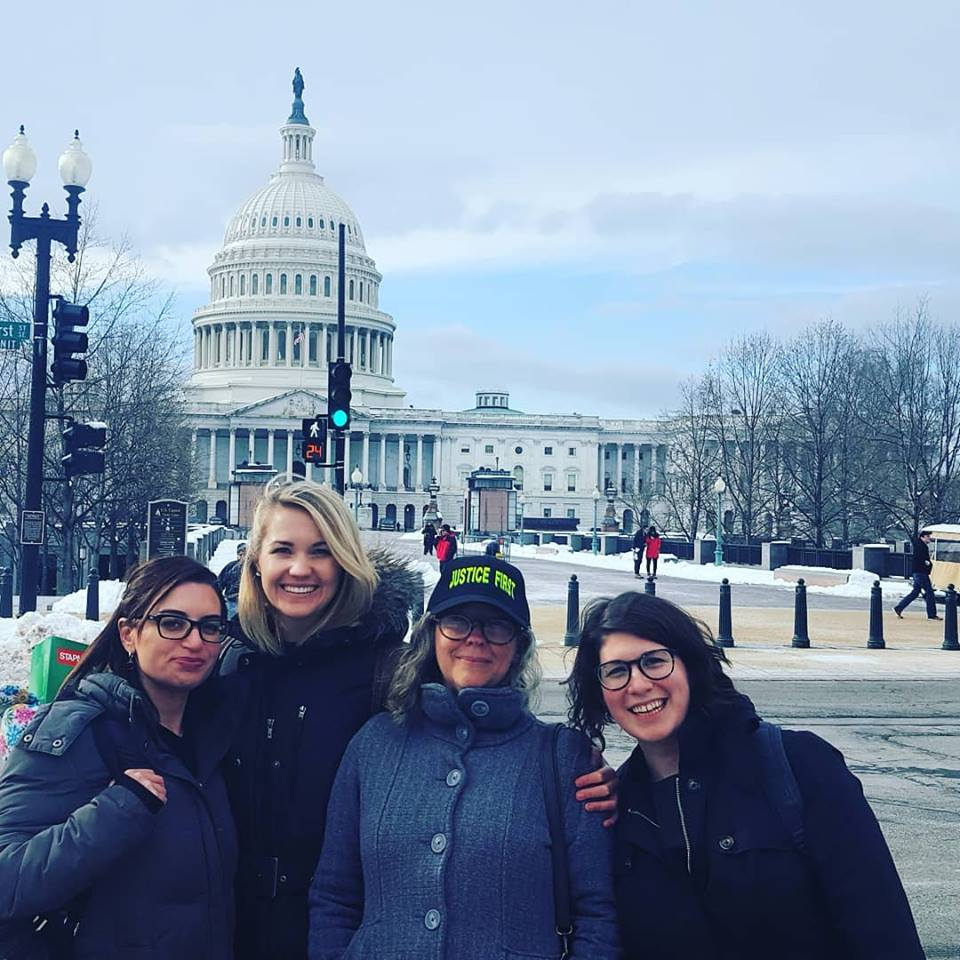
Dogwood Alliance’s Rita Frost, Danna Smith, and Rachel Weber in front of the Capitol along with Carina Daniels, Co-Founder of Story & Reach
I live in Congressman David Price’s district, and today, I called his office and asked him to be a Stand4Forests champion. I’m asking everyone I know and everyone reading this to join me in calling your Representative and Senators today.
By joining the growing list of supporters, policymakers who endorse the Stand4Forests platform will be taking a stand for principles anyone can get behind: clean air and water, protection from flooding and storms, the green economy, biodiversity, and the charge to solve the climate crisis.
Every call makes a difference. We know that lawmakers hear from the forest products industry and their friends every day. Profit-driven groups and companies like Enviva, the world’s largest wood pellet manufacturer, benefit from the status quo of the forest products industry. These industry players want policymakers and the public to believe that we can log our way out of climate change. In fact, just the other day, forest industry sweetheart, Arkansas Representative Bruce Westerman, tried to win over The Hill’s readers with the faulty logic that if you want to save a tree, you should… cut down a tree?
Every day of the year, Dogwood Alliance celebrates and champions our forests. We fight for the clean air and water they provide, the beauty they share, and the protection they give us from flooding and storms. More than ever, we fight for forests because they are essential to solving the climate crisis.
On March 21st each year, the International Day of Forests gives us a reason to celebrate a little louder. Happy International Day of Forests!
If you haven’t already, be sure to sign and share the Stand4Forests pledge!
Join the conversation on social media with the hashtags #Stand4Forests and #IntlForestDay.
A new version of BURNED: Are Trees the New Coal — the hard-hitting documentary that exposes the truth about the biomass industry — has just made its debut on Link TV and is available for international free streaming!
This powerful film probes the policy loopholes, huge subsidies, and blatant greenwashing of the biomass electric power industry.
Here in the US South, our forests are disturbed at a rate four times higher than South American rainforests. Dogwood Alliance has documented the increased pressure that the biomass industry has put on this heavily logged landscape. Every year, tens of thousands of acres of Southern forests are cut down, turned into wood pellets, and shipped overseas by Enviva, the world’s largest wood pellet manufacturer, to be burned for electricity.
BURNED has had a profound impact on Dogwood Alliance’s work and getting the message out. Adam Colette, Dogwood Alliance’s Program Director, says:
“I’ve been following Enviva and the wood pellet industry for years, and I’ve seen the devastation first hand. This documentary has allowed the public and policymakers to join me on Dogwood Alliance’s investigations of shocking clearcuts, see the destruction for themselves, and ask the question: is this what clean energy looks like?”
Adam Colette at the site of a devastating wetland clearcut, where Enviva was sourcing for one of their North Carolina facilities. Watch the documentary for footage of this 2015 investigation.
BURNED: Are Trees the New Coal will be available for streaming for four months, through July 18th. Watch how a dedicated group of forest activists, ecologists, carbon scientists, and concerned citizens fight to establish the enormous value of our forests, protect their communities, debunk this false solution to climate change, and alter energy policy both in the US and abroad. Be sure to watch and share!


 Donate