


FOR IMMEDIATE RELEASE: November 8, 2018
Hamlet, North Carolina – This evening, the North Carolina Department of Environmental Quality’s Division of Air Quality (DAQ) will hold a public hearing to take comments on the proposed expansion of Enviva’s pellet mill in Richmond County. This is the first in a series of expansions that Enviva plans to make at their NC facilities.
Enviva has applied for a modification to their construction permit at the Hamlet facility to increase production by nearly 100,000 tons of wood pellets annually. This significant expansion would require an additional 2,000 acres of forest per year to be cut down to meet Enviva’s demand, bringing the facility total to 15,000 acres per year. 40 environmental and social justice organizations in the state have signed onto a letter urging DAQ to modify Enviva’s permit to reduce production levels and require Enviva to install the pollution controls that the community deserves.
“Enviva has not even finished construction at their Richmond County plant, yet they are already applying to increase production,” said Emily Zucchino of Dogwood Alliance. “The wood pellet industry has been allowed to grow unchecked in North Carolina. We cannot make that mistake again.”
Enviva’s Hamlet facility has a particularly troubling history, with several flawed permits and a denial of the community to participate in a public hearing and comment period during the permitting process for this highly controversial facility. This public hearing represents the first opportunity for North Carolinians to make their voices heard.
A recent report by Environmental Integrity Project shows a shocking pattern of air quality violations or noncompliance at the majority of wood pellet facilities across the South, with Enviva’s North Carolina facilities being the most egregious. The Maryland-based company has attempted to assuage community concerns by including the installation of pollution controls in addition to their proposed expansion. However, emissions testing at Enviva’s facilities show that the facility would still be emitting above the legal limit, which is why environmental groups and community members are calling on DAQ to require Enviva to reduce production levels.
“My community does not benefit from the destruction of our forests and the pollution of our people,” said Debra David, co-chair of Concerned Citizens of Richmond County. “We want economic development solutions that are clean, healthy, and protect the people and the environment.”
The urgency of the climate crisis, which was underscored by a major international report released in October by the UN Intergovernmental Panel on Climate Change, demands that we dramatically scale up forest protection. Burning trees for electricity is worse for the climate than burning coal, and yet industry is exporting North Carolina’s forests and burning their climate and community benefits up in smoke — at a time when we need forests and wetlands more than ever to protect us from flooding and storms like Hurricane Florence.
Recently, Governor Cooper reaffirmed his commitment to the Paris Agreement by signing Executive Order 80, which sets forth aggressive targets for reducing greenhouse gas emissions and a bold vision for addressing climate change in the state. Increasing forest protection is an essential component of meeting climate goals, and allowing the wood pellet industry to expand in the state stands in direct contradiction with the Governor’s order.
“Time and again, Enviva has mislead the public, government, and investors on their emissions and sourcing practices — repeatedly putting profit over people,” continued Zucchino. “The company’s past actions and missteps make it all the more imperative that they are strongly scrutinized at every step of the way.”
For a brief legal background on Enviva’s permit application, visit: https://www.dogwoodalliance.org/wp-content/uploads/2018/11/Legal-backgrounder-Enviva-Hamlet-expansion-1.pdf
For more information on the public hearing, visit: https://deq.nc.gov/news/press-releases/2018/10/09/public-hearing-draft-permit-enviva-pellets-hamlet-facility-nov-8
For more on the wood pellet industry’s damaging practices, visit: https://stopenviva.com/
# # #
Dogwood Alliance mobilizes diverse voices to defend the unique forests and communities of the Southern U.S. from destruction by industrial forestry. Learn more at www.dogwoodalliance.org or on Twitter – @DogwoodAllianceConcerned Citizens of Richmond County, based in Hamlet, NC, is a local environmental justice group that is an advocate for clean air and water in Richmond County. The group is a chapter of the Blue Ridge Environmental Defense League (BREDL). Learn more here.
FOR IMMEDIATE RELEASE: November 7, 2018, 12:01 am
(November 7, 2018) — An international coalition of more than 120 organisations from 40 countries today warns that the rapid global growth of the so-called bioeconomy poses a grave risk to the climate, nature, and human rights.
In addition to publishing an Open Letter,[1] a petition is being launched today to coincide with the International Day of Action on Bioenergy[2] which calls on governments around the world to support proven low carbon technologies, reduce overconsumption, and protect forests and other ecosystems.
In recent years, governments from the UK to Brazil to South Korea have promoted burning forest biomass for energy as a substitute for fossil fuels. Yet a large and growing[3] number of scientific[4] studies show that, far from being the ‘green energy’ climate solution, burning biomass[5] for energy emits no less carbon than burning coal, while also threatening biodiversity,[6] and human rights.[7]
The petition and global day of action come as the bioenergy industry is striving for further expansion and influence.
Today, major figures from the industry and policymakers will gather in San Francisco for an event organised by the Biofuture Platform[8], an initiative supported by 20 countries and backed by organisations including the International Energy Agency (IEA) and the Food and Agricultural Organization of the United Nations (FAO). The Biofuture Platform promotes products made out of bio-materials as well as the wider bioeconomy.
“The BioFuture Platform actively promotes bioenergy and biomass products, which incentivizes more forest destruction. In the Southern US, we are already facing the insatiable appetite of European demand for biomass thanks to well-intentioned policies that have had damaging results. The bioeconomy harms our precious forests, rural communities, and the climate. In the wake of the latest UN IPCC report, it’s clear that forests are our best defense against climate change and we need to keep them standing,” said Rita Frost, campaign manager of Dogwood Alliance[9], which works to protect the Southern forests of the US.
“Over the past year, reports of an up to 60% decline in animal populations worldwide and an 80% decline in insect populations in several regions have made the headlines, with habitat loss remaining the number one cause of biodiversity loss. Yet the Biofuture Platform and numerous governments are promoting policies which will accelerate habitat loss in favour of vastly more crop and tree monocultures for energy and materials,” said Almuth Ernsting, co-director of Biofuelwatch[10], which campaigns on the impacts of large-scale bioenergy and bio-based products.
“The exponential growth of the bioeconomy is a global threat. Instead of contributing to climate mitigation, bioenergy and ‘bio’ products keep energy generation locked-in to the carbon cycle, decrease the amount of land available for food crops, drive land-grabs, and decimate forests – our most efficient carbon sinks. For a sustainable world, we must protect forests and rely on truly renewable energy sources, such as wind and solar,” said Katja Garson, bioenergy campaigner at forests and rights NGO Fern[11].
“Demand for biofuels, woodchips, pellets, and charcoal is a major driver of forest destruction and land-grabbing across the global South. Realising the plans of the Biofuture Platform would require tens or even hundreds of millions of hectares of new plantations at a devastating cost to forests, indigenous peoples, other forest dependent and traditional communities, and small farmers” said Mary Louise Malig, Campaigns Coordinator of the Global Forest Coalition, based in Bolivia.
Civil society organizations call for an end to support for bioenergy and other short-lived bioproducts. In the era needing urgent action on climate change, the NGOs call for “meaningful and equitable responses to the climate crisis which respect human rights, focus on proven low-carbon technologies, reduce overconsumption and waste, and protect forests and other ecosystems.”
###
 [1] For an online version: http://environmentalpaper.org/bioeconomy-day-of-action The letter will also be delivered to policymakers at the BioFuture Platform Conference being held in San Francisco, California
[2]https://www.rainforest-rescue.org/petitions/1152[3]http://www.biofuelwatch.org.uk/biomass-resources/resources-on-biomass/[4]https://www.euractiv.com/wp-content/uploads/sites/2/2018/01/Letter-of-Scientists-on-Use-of-Forest-Biomass-for-Bioenergy-January-12-2018.pdf[5]https://fern.org/bioenergy[6]https://e360.yale.edu/features/insect_numbers_declining_why_it_matters[7]http://actionaid.org/sites/files/actionaid/adding_fuel_to_the_flame_actionaid_2013_final.pdf[8]http://biofutureplatform.org/about/[9]https://www.dogwoodalliance.org/about-us/our-story/[10]http://www.biofuelwatch.org.uk/about/[11]https://fern.org/team
 Faith and Forests is a special monthly series by Joseph Frankovic. In the series, Joseph will explore how his deep connection to spirituality and faith intersects with our forests and the work of Dogwood Alliance. The views and opinions expressed are those of the author(s) and do not imply endorsement by Dogwood Alliance.
Last month, we met a group of ancient Jewish activists whose outlook on life and deeds to help wayfarers and captive women reminded one eminent Israeli historian of the Galilean miracle worker Jesus. Members of that group were known as men of action.1 Like Jesus, a few of these men of action also had reputations for working miracles.
Allow me to leap forward in time to the modern era and carry the epithet with me, while expanding its scope to include active men and women of more recent faith traditions. Under this wider banner, I will bring together the Catholic saint Mother Teresa of Calcutta, who died in 1997, and the Karachi philanthropist Abdul Sattar Edhi, who died in 2016.2 Both of them made my short list of recommendations for people who may have entered the kingdom of heaven.
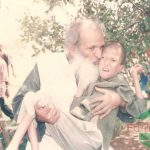
Abdul Sattar Edhi holding a sick child. Courtesy of the Edhi Foundation
When describing the vows taken by the Missionaries of Charity, the society that she founded, Mother Teresa once wrote: “[We] give wholehearted free service to the poorest of the poor. By this vow, we bind ourselves to be one of them, to depend solely on divine providence.”3 When being interviewed by Julie McCarthy of National Public Radio, Edhi once said: “I feel happy that God made me different from the others. I helped the most oppressed.“4 These two statements identify three stakeholders whom the kingdom of heaven brings into close contact: benefactors, beneficiaries, and, of course, God, who underwrites the program. Starting with the beneficiaries, I will take another leap in time and return to the first century of the Common Era.
Early in his career as a healer and activist with a prophetic edge, Jesus made a public announcement that revealed his high self-awareness and characterized his movement. He made the announcement one Sabbath in the synagogue of his hometown, in Nazareth, by reading from the Prophet Isaiah.
Ἔχρισέν με εὐαγγελίσασθαι πτωχοῖς, ἀπέσσταλκέν με, κηρύξαι αἰχμαλώτοις ἄφεσιν και τυφλοῖς ἀνάβλεψιν, ἀποστεῖλαι τεθραυσμένους ἐν ἀφέσει
[God] has anointed me to bring good news to the destitute, he has sent me to proclaim release to captives and recovery of sight to the blind, to set free those who are crushed.5
The historical record indicates that Jesus presented his mission as a real benefit for blind, captive, crushed, and destitute people. The message was good news, and it included a proclamation of liberty, restored sight, and freedom.
As interest in his message grew, Jesus started making administrative and organizational decisions. One person could no longer handle the many requests for help and continue to manage the movement’s growth. He deputed, therefore, 12 young men to assist and gave them instructions for spreading the message.
Πορευόμενοι δὲ κηρύσσετε λέγοντες ὅτι Ἤγγικεν ἡ βασιλεία τῶν οὐρανῶν. ἀσθενοῦντας θεραπεύετε, νεκροὺς ἐγείρετε, λεπροὺς καθαρίζετε, δαιμόνια ἐκβάλλετε.
As you move about, proclaim that the kingdom of heaven has come [to this place]: Heal the infirm, raise the dead, cure lepers, expel demons.6
This passage identifies another quartet of beneficiaries: those suffering from illness, from leprosy, and from spiritual oppression, as well as those who had expired—presumably not long before Jesus’s lieutenants had arrived.
On another occasion, when John the Baptist sent two messengers to ask a question about his mission, Jesus replied:
Πορευθέντες ἀπαγγείλατε Ἰωάννῃ ἅ ἀκούετε καὶ βλέπετε τυφλοὶ ἀναβλέπουσιν καὶ χωλοὶ περιπατοῦσιν, λεπροὶ καθαρίζονται καὶ κωφοὶ ἀκούουσιν, καὶ νεκροὶ ἐγείρονται καὶ πτωχοὶ εὐαγγελίζονται.
Go [and] tell John what you hear and see: The blind see and lame walk, the lepers are cured and deaf hear, and the dead are raised and the poor have good news proclaimed to them.7
Jesus answered by summarizing reports that were circulating and by pointing to results that these messengers could see. And who were the subjects of these reports? People who had been blind, crippled, dead, deaf, and leprous.

A crippled man in ragged clothes walking with two crutches and a wooden leg. Etching by Jan Georg van der Vliet, c. 1632. (Wikimedia Commons)
We now know who benefited from the kingdom of heaven’s growth. I will list the beneficiaries encountered so far, one after the other, in alphabetical order: blind, captive, dead, deaf, lame, leprous, oppressed, poor, and sick men, women, and children. Edhi and Mother Teresa captured the general character of this group with an economy of words. They described the beneficiaries of their labors as the most oppressed and poorest of the poor.
What about the benefactors? Who did Jesus recruit to join his movement? The Gospel of Luke mentions three occasions when Jesus invited people to follow him. Six received invitations; five followed and joined—that is, they entered the kingdom of heaven.
The first occasion is found in a long passage that begins with a description of Jesus using a crowd-control strategy to manage increasing numbers. Teaching along the shoreline of the Sea of Galilee, at the ancient port of Tabgha, near the fishing town of Capernaum, Jesus climbed in an idle boat and sat down. Sitting in it allowed him to address the people while being just a few feet away.
That boat belonged to Simon, who worked with his brother Andrew. These two brothers had formed a partnership with two other young men, James and John, who were also brothers and who also owned a boat. This partnership of two fishing crews had been using trammel nets the previous night to catch tilapia galilea, which tourists know as St. Peter’s fish. In the winter and early spring, warm water associated with the springs of Tabgha attract the tilapia, creating a highly productive fishing ground.8
Simon, Andrew, James, and John were neither deaf nor blind, infirm nor lame, and certainly not dead. They had full and comfortable lives, residing in Capernaum, a prosperous community that had built and maintained a synagogue. Yet after lowering their nets in the water in broad daylight, as Jesus had directed—trammel nets are invisible to tilapia only after dark—and hauling up a huge catch, they responded to his invitation to follow.
Καὶ καταγαγόντες τὰ πλοῖα ἐπὶ τὴν γῆν ἀφέντες πάντα ἠκολούθησαν αὐτῷ.
And bringing their boats ashore, They abandoned everything and followed him.9
These four young men, two pairs of brothers—in the prime of life, able-bodied, and competent—abandoned their fishing partnership and left behind neighbors, friends, and relatives.
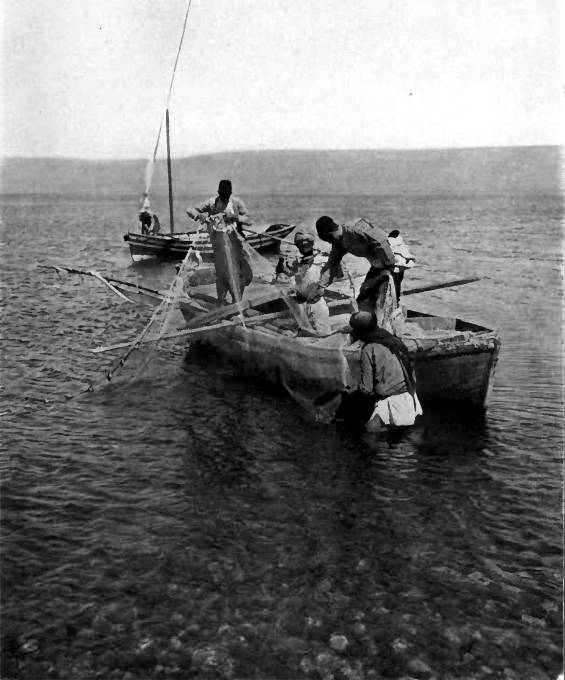
Fisherman on the Sea of Galilee (1912) – Wikimedia Commons
The second occasion involved the tax collector Levi. He was sitting at the custom house when Jesus approached him. Jesus’s invitation to join and Levi’s response apparently required little discussion. Perhaps Levi heard reports similar to the ones that John’s messengers had heard.
Καὶ εἶπεν αὐτῷ, ἀκολούθει μοι. καὶ καταλιπὼν πάντα ἀναστὰς ἠκολούθει αὐτῷ
And [Jesus] said to [Levi], “Follow me.” And leaving everything, he stood up and followed him.10
The invitation and the response may have constituted a remarkable leveling event. Employed as a tax agent, Levi collected plenty of silver and gold for Rome and was permitted to take a cut for himself. To follow Jesus, he walked away from a lucrative career and probably gave away a small fortune, too.
The final occasion is found in another long passage. The story centers on a conversation between Jesus and a rich young man, who may have been a restless soul. He approached Jesus and asked what he should do to inherit eternal life. Jesus recommended that he govern his life in accordance with the Law of Moses. Not entirely content with that answer, the young man apparently pressed Jesus:
Ταῦτα πάντα ἐφύλαξα ἐκ νεότητος.
I have kept all of these [commandments] from my youth.11
In these words, I discern a young man of wealth and privilege seeking to know if there is something more and what it may require. Jesus then replied with an invitation to join him, plus one prerequisite:
Εἰ θέλεις τέλειος εἶναι, ὕπαγε πώλησόν σου τὰ ὑπάρχοντα καὶ δὸς [τοῖς] πτωχοῖς, καὶ ἓξεις θησαυρὸν ἐν οὐρανοῖς, καὶ δεῦρο ἀκολούθει μοι.
If you desire fulfillment, go sell your possessions, and give [the money] to the poor, and you will have treasure in heaven, and come [and] follow me.12
The young man became sad. And looking at him, Jesus spoke his famous metaphor of a camel passing through the eye of a needle to illustrate the unlikelihood of a rich person entering the kingdom of heaven (i.e., kingdom of God).13 A wealthy person usually has no interest in entering the kingdom of heaven, but when he or she does—and takes that step to cross over the threshold—the newcomer joins a band of benefactors who have relinquished everything to join the poorest and most oppressed among us.
Now, pause for a moment and again leap forward in time. One of the existential threats that humans must address soon, together, and on a global scale, is climate change. Scientist Johan Rockström, who earned his doctoral degree at Stockholm University, recently presented the TED talk “Five Transformational Policies for a Prosperous and Sustainable World.”14 In his talk, he gave an overview of the Earth-3 model, which aims to meet the United Nation’s 17 sustainable development goals while staying within the 9 planetary boundaries that must be respected to ensure a stable Earth System. The model was developed by a team of scientists to help us create a just and safe world. The team concluded that five policies must be adopted to avoid a grim future.
The fourth transformational policy addresses income inequality and the wealth chasm, which are gumming up electoral processes and ruining democratic institutions in the United States and elsewhere. The policy is designed to redistribute wealth by limiting how much the richest ten percent may accumulate. As far left as this proposal may sound—setting limits for wealth accumulation—Jesus required far more of rich people entering the kingdom of heaven. They entered after abandoning their material wealth or distributing it to the poor.
The act of entering the kingdom of heaven reduces inequality through voluntary redistribution and leveling. The rich person who enters becomes like the poor person whom he or she seeks to help. Both benefactor and beneficiary, now in close association, share the same experience and possess the same quality of being poor in spirit—being dependent on divine providence for life’s essentials.
I am reminded of Mary Clarke, who grew up in Beverly Hills with the glamour culture of Hollywood. As an adult, she married twice, raised seven children, and went through two divorces. She also discovered that helping the poor vitalized her. At the age of 50, Clarke, who had renamed herself Mother Antonia, took the final, radical step. She left behind a comfortable lifestyle in suburban Los Angeles, CA, and voluntarily moved into a cell at La Mesa prison in Tijuana, Mexico. In 2005, she was interviewed by host Terry Gross on Fresh Air.15 I will recreate a short segment of the interview:
Gross: So, you put on a habit; you went to the prison in Tijuana, where you had been doing some work already. Clarke: Yes. Gross: And you wanted to move in there that you could literally be with the prisoners, live with the prisoners. Clarke: Yes, be with, being with—
In the audio recording, Mother Antonia clearly disrupted the conversation’s flow to accentuate the point of being with the prisoners.
I am also thinking of Dr. Thomas Catena, whom we met last month. He administers Mother of Mercy Hospital, the only medical facility in the Nuba mountains of Southern Kordofan. “I’m in it with these guys,” explained Catena, “I’m all in.” A former Brown University nose guard who received All-Ivy League and All-American honors, he was explaining his decision to join the Nuban people and care for them in a war zone.16
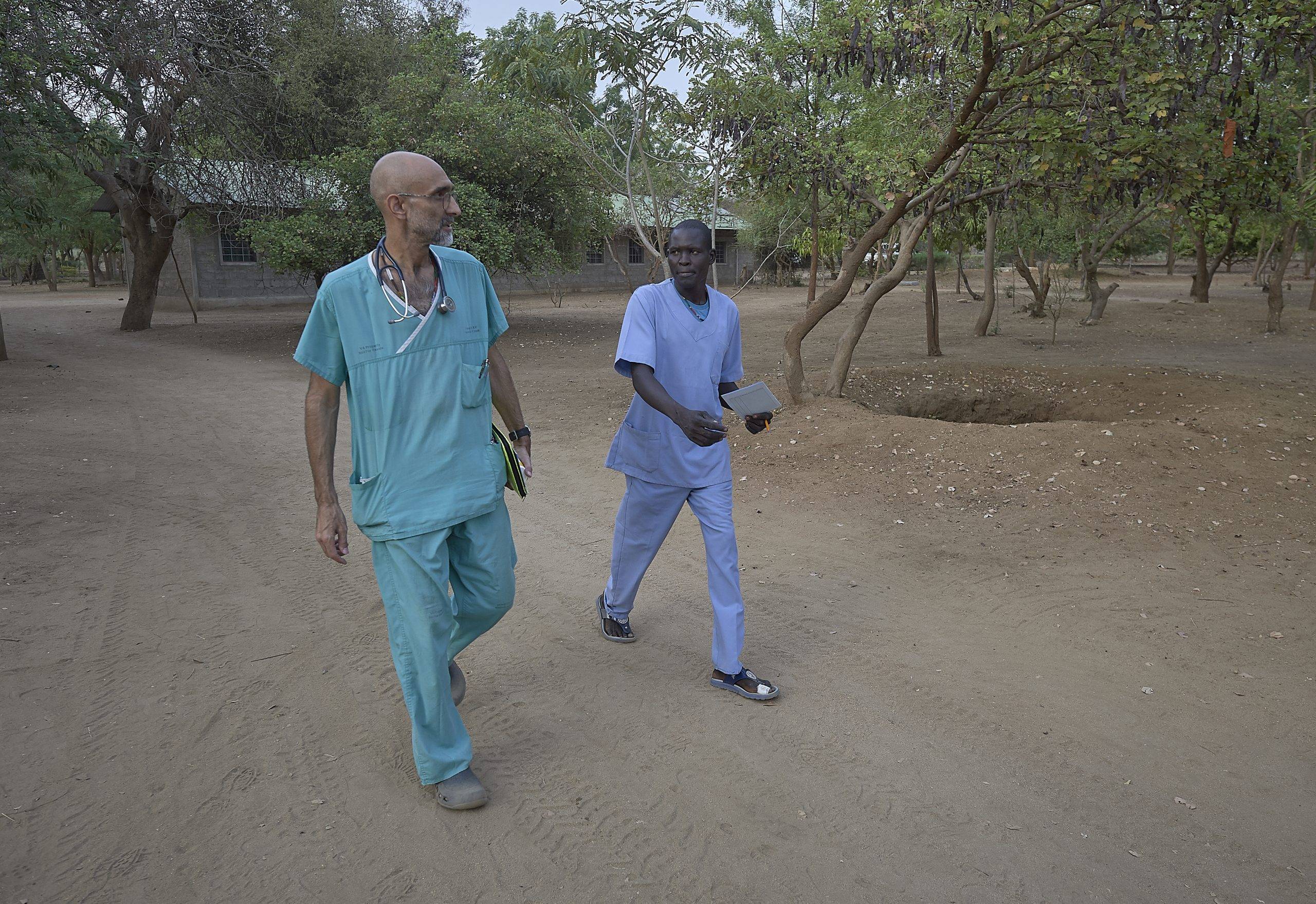
Dr. Catena walking in a Sudanese village with a colleague. Photo Credit: Paul Jeffrey
In the Synoptic Gospels, the kingdom of heaven conveys two basic meanings. First, it may refer to its constituent parts: benefactors and beneficiaries. People who are poor in spirit populate the kingdom of heaven. Secondly, it may refer to God’s intervention in earthly affairs. When Jesus healed the sick, he referred to the kingdom of heaven as being present. When used with this connotation, it may be regarded as a way of speaking about God’s presence in oblique language.
In an earlier section, I mentioned two messengers who queried Jesus about his mission. John the Baptist had sent them. After they had departed, Jesus addressed the people around him and spoke about John the Baptist and the kingdom of heaven:
ἀπὸ δὲ τῶν ἡμερῶν Ἰωάννου τοῦ βαπτιστοῦ ἕως ἄρτι ἡ βασιλειά τῶν οὐρανῶν βιάζεται [καὶ πᾶς εἰς αὐτὴν βιάζεται].
From the days of John the Baptist until now, the kingdom of heaven breaks forth [and everyone breaks forth [with] it].17
This saying bedeviled expositors and preachers for a millennium and a half—until the 17th century, when Edward Pocock, the renowned professor of Arabic and Hebrew at Oxford University, recognized its connection to an earlier passage from the Prophet Micah.18 Lifting the key word from Micah, Jesus had tapped the original imagery of the passage to project a dynamic scene: restless sheep streaming forth from a crowded pen, through a breach in a low stone wall that no longer confines them. It is a tumultuous, glorious event—the kingdom of heaven breaking forth, benefactor and beneficiary being swept forward, in a surge of motion and commotion, with God striding ahead to lead the way.

Flock of sheep moving through Cologne streets on a holiday morning – Turelio via Wikimedia Commons
Notes
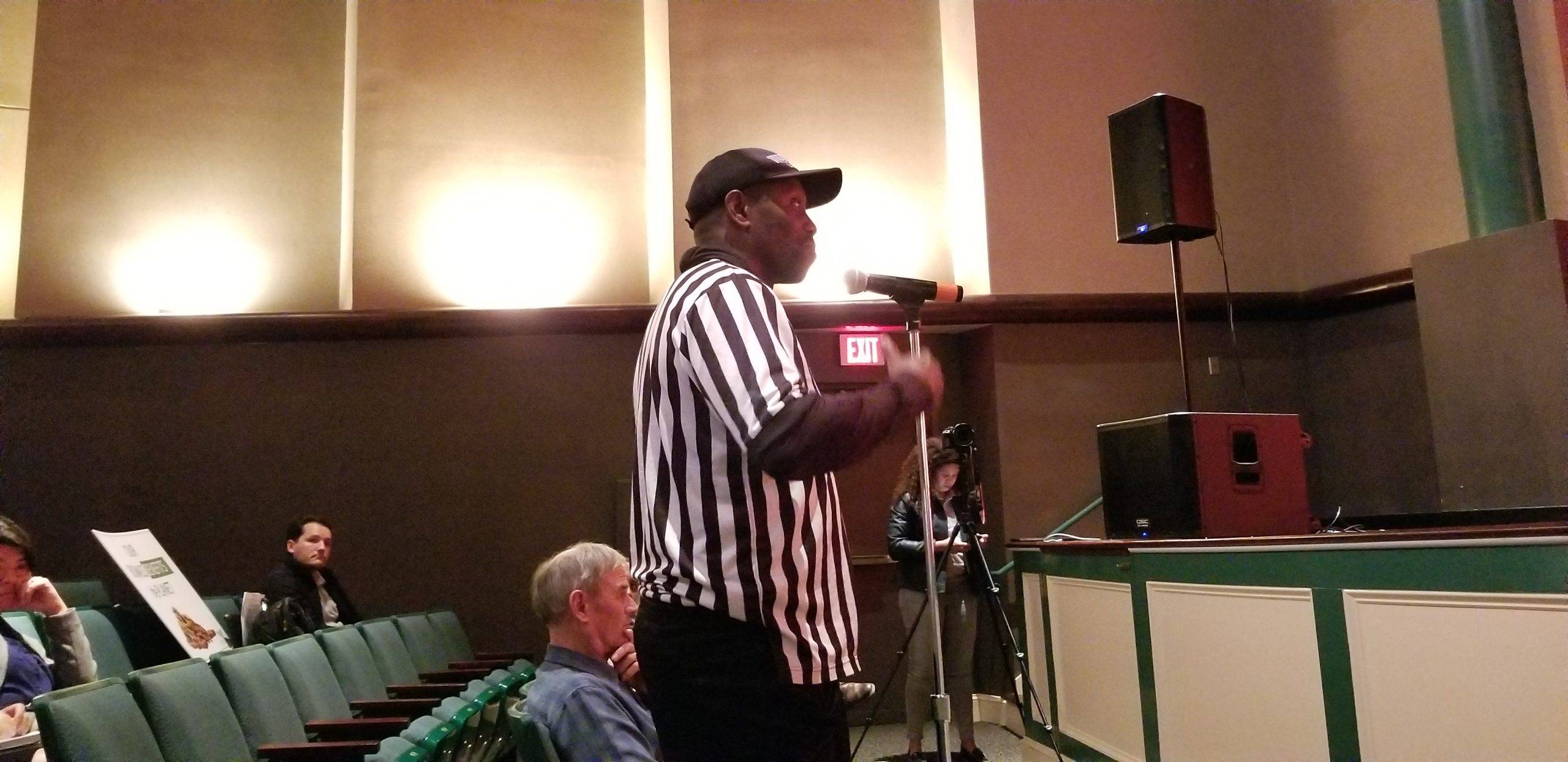
On November 8th, nearly 200 people attended a public hearing in Richmond County to learn more about and weigh in on Enviva’s plans to expand production at their Hamlet facility. Enviva, the world’s largest wood pellet manufacturer, cuts down our Southern US forests, turns them into pellets, and ships them to Europe to be burned for electricity. Now Enviva is gearing up for a string of expansions at their North Carolina and Virginia facilities. Together, these expansions could equal 400,000 additional tons of wood pellets each year – requiring 9,600 additional acres of forests to be cut down per year.
In Hamlet, NC, Dogwood Alliance joined local concerned residents and environmental justice advocates from across the state to voice support for clean air and increased forest protection. The hearing represented the first time North Carolinians had meaningful involvement in the permitting process, as the community was denied an opportunity to have a public hearing on the initial permitting decision.

Local residents, environmental justice advocates, air quality experts, and attorneys expressed concern that Enviva’s expansion will create harmful air pollution, exacerbate environmental injustices, hinder forests’ ability to protect communities against the flooding and high winds of natural disasters, and take us backwards, not forwards, on climate change. The comments given at the hearing were bolstered by a letter signed by 40 organizations representing well over 1.5 million North Carolinians, calling on DEQ to deny Enviva’s expansion and halt any future permitting until they complete a study of the cumulative impacts of the wood pellet industry.
They provide us with clean air and water, protection from flooding and storms like Hurricane Florence, and habitat for unique plants and animals. Forests also draw enormous amounts of carbon out of the atmosphere and store it in trees and soil.
The urgency of the climate crisis demands that we dramatically scale up forest protection. North Carolina cannot afford the increased logging and degradation of our forests.
In response to the latest UN IPCC Report that pressed governments around the world to take “rapid, far-reaching and unprecedented changes” to fight climate change, North Carolina Governor Roy Cooper issued an executive order on climate action, pledging to reduce the state’s greenhouse gas emissions by 40% by 2025.
North Carolina residents speaking at the hearing emphasized that allowing Enviva to expand their operations in Hamlet or any other facility sharply contradicts the Governor’s commitment on climate action. The only way to avoid climate disaster is to dramatically scale up forest protection at the same time as we transition to truly clean, carbon-free energy.
“Cutting our forests down and burning them is irresponsible.” – Danna Smith, Executive Director, Dogwood Alliance
North Carolina’s lax oversight in the past has resulted in the unchecked expansion of the wood pellet industry without proper analysis of the industry’s impacts on forests, climate, and communities. Any expansion of Enviva’s facilities will worsen the already dangerous impact of this industry on public health, forests, and the climate. At the November 8th hearing, North Carolinians said: enough is enough. We want healthy forests, clean air, and strong local economies. We won’t stand for any expansion of the wood pellet industry, starting with this Hamlet permit modification.
FOR IMMEDIATE RELEASE: OCTOBER 29, 2018 2 PM ESTDogwood Alliance Statement in Response to Governor Cooper’s Executive Order on North Carolina’s Commitment to Address Climate ChangeAsheville, NC – Today, North Carolina Governor Roy Cooper signed an executive order, “Executive Order NO. 80: North Carolina’s Commitment to Address Climate Change and Transition to a Clean Energy Economy,” that set forth aggressive targets and a bold vision for addressing climate change in the state. The order aims to reduce greenhouse gas emissions by 40% from 2012 levels by 2025.
“We applaud the Cooper Administration for their leadership on climate change, and for taking this important first step in reducing greenhouse gas emissions and preparing North Carolina communities for the impacts of a changing climate,” stated Danna Smith, Executive Director of Dogwood Alliance. “We encourage the Cooper Administration to look to forest protection as one of the best solutions we have to protect our state from the negative impacts of a changing climate. Standing forests must be a central component of any climate adaptation plan.”
Executive Order No. 80 comes on the heels of Hurricane Florence and 2017’s Hurricane Matthew that caused major destruction to communities across the state and cost taxpayers billions. It also follows a major report from the UN Intergovernmental Panel on Climate Change (IPCC) that warns that the world only has a short window to address climate change before catastrophic impacts dramatically increase. The IPCC report places a heavy emphasis on the dual strategy of reducing fossil fuel consumption and protecting forests.
In our recent report, “Seeing the Forest: Nature’s Solution to Climate Change” we found based on the latest science, if we stop deforestation, protect and restore degraded forests, and expand forests, we could reduce annual emissions by 75% in the next fifty years. If we also phase out fossil fuels, we could easily meet the goals of the Paris Agreement and avoid catastrophic climate change. These goals are lofty, but not unattainable, especially if the world unites for a common vision of keeping climate change at just 1.5 degrees Celsius.
The NC order promotes strategies that increase the number of registered emission free vehicles in the state, reduce energy consumption in state buildings, and continue to wean the state from fossil fuel electricity. A bold strategy is needed to protect and restore forests across North Carolina. A vital component of the executive order is climate adaptation and readying the citizens of the state for further damaging storms and impact from a changing climate. Forests are our community’s best defense against flooding and storm surge and are needed to continue to capture and store carbon.
Now is the time to rethink the way we value forests in the state in order to create more resilient and healthier communities, ecosystems and economies. We must accurately and transparently account for carbon emissions from the forestry sector, including the wood pellet industry that is cutting down forests in the state to turn them into pellets to ship to Europe and Asia to burn for electricity. We encourage Governor Cooper to pull the brakes on this industry and instead promote forest protection as a climate adaptation strategy.
# # #
Dogwood Alliance mobilizes diverse voices to defend the unique forests and communities of the Southern U.S. from destruction by industrial forestry. Learn more at www.dogwoodalliance.org or on Twitter – @DogwoodAllianceMedia Contact: Scot Quaranda, 828.242.3596, [email protected]
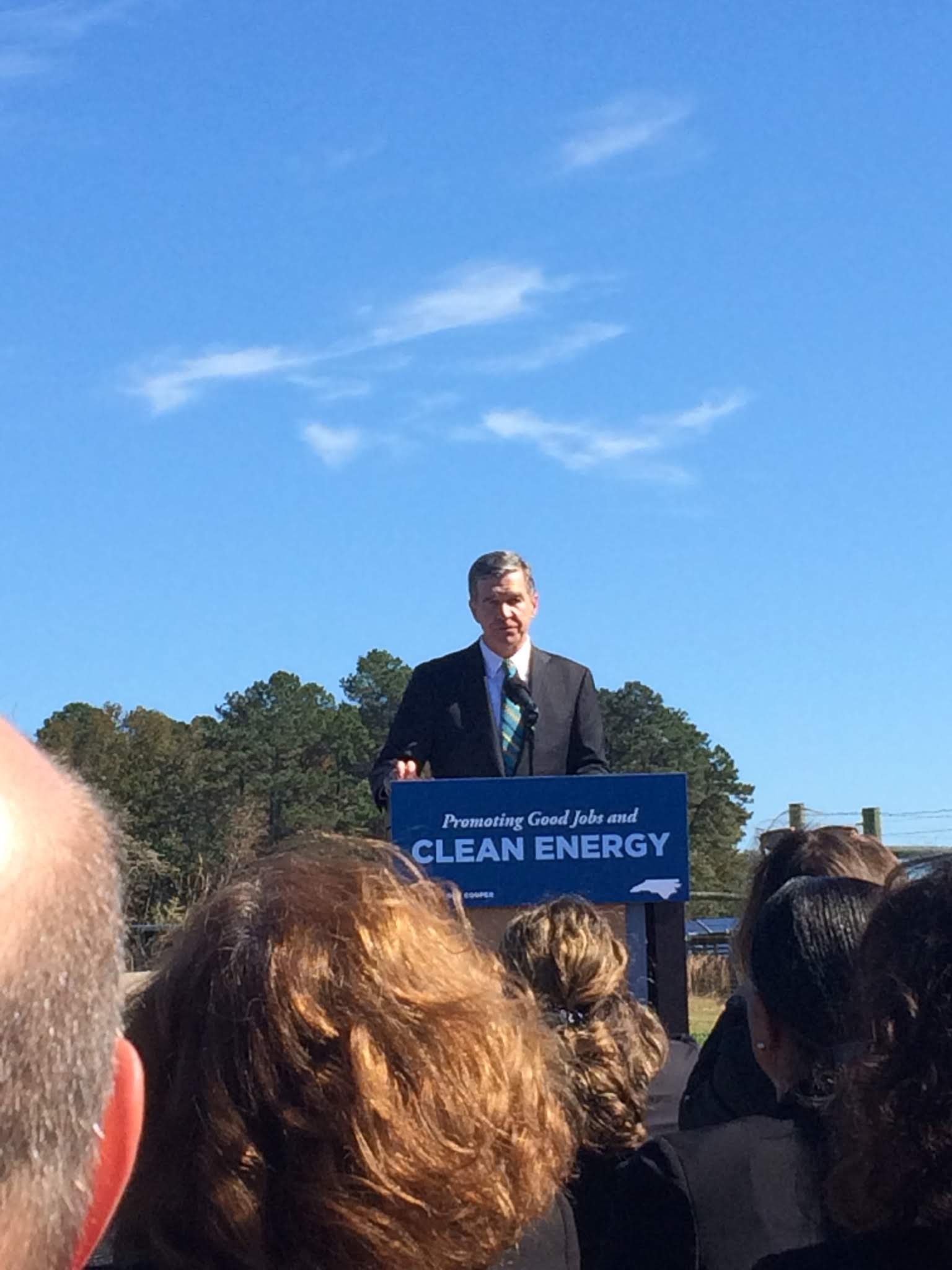
Governor Roy Cooper outlines a bold new vision delivered today via Executive Order for tackling climate change in the state of North Carolina.
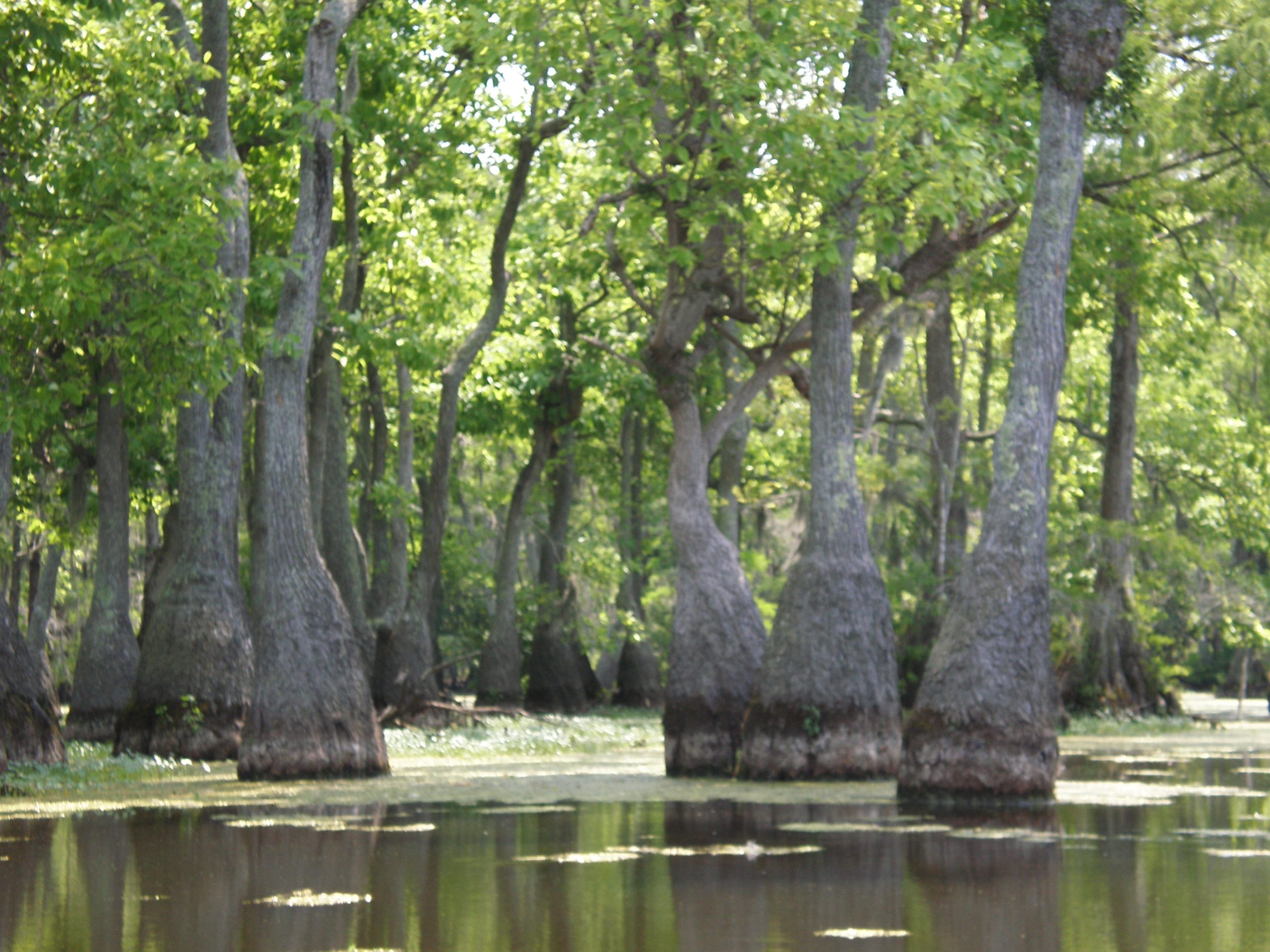
Dogwood Alliance asserts that standing forests are our best defense against a changing climate and hopes they will play a central role in Cooper’s plan.
From a passionate desire to expand the conversation about climate change, environmental artists around the world are striving to harness the transformative power of art to promote awareness, provoke dialogue, and inspire action.
The exhibit features the distinctly different visual voices of environmental photographers, Susan Patrice and Benjamin Dimmitt.
Patrice’s work, The Enveloping Landscape, explores Pisgah National Forest’s lush woodland landscape amidst underpinnings of intimacy, vulnerability, and belonging.

Susan Patrice photograph from The Enveloping Landscape
Dimmitt’s work, An Unflinching Look, portrays the destructive effects of sea level rise on an estuary in his native Florida. A Dialogue in Photographs invites viewers to step into an intimate world where landscape images are revealed not as objects to be admired, but as intimate portraits of a sovereign and alive place waiting to be met, understood, cared for, and loved.

Benjamin Dimmitt photograph from An Unflinching Look
Opening reception:
Friday, November 9, 4:00–6:00 pm Dot Editions at RAMP SOUTH Studio 821 Riverside Drive Asheville, NC 28801
Susan Patrice will be donating 30% of The Enveloping Landscape print sales to Dogwood Alliance.
A Dialogue in Photographs is just one of many extraordinary exhibits and events that will be featured as part of photo+sphere – an art and science event in Asheville, North Carolina November 7-11 that brings attention to how we see the environment and the role humans play in determining the future of our planet. photo+sphere explores the environment through photography and photo-media and includes nationally known speakers and panelists, exhibitions, films, and performances at venues throughout Asheville.
The Southern US contains about 2% of the world’s forests but produces over a fifth of the world’s timber products. Therefore, we have a particularly important charge to protect the forests & communities that depend on them from industrial forest practices.
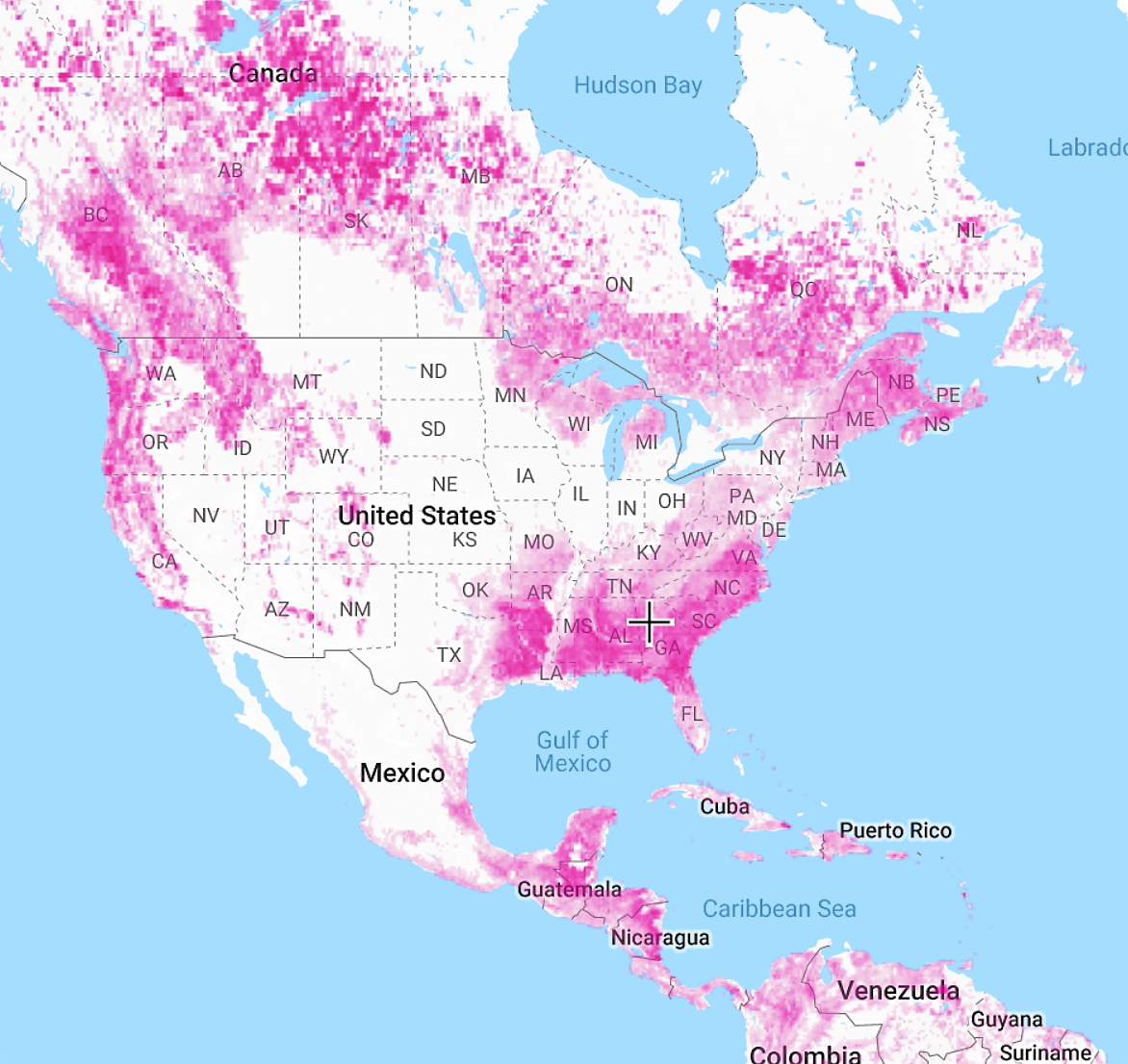
This map, from Global Forest Watch, displays forest degradation. The Southern US stands out as a clear hotspot in North America.
Earlier this month, the Intergovernmental Panel on Climate Change (IPCC) issued a report on limiting global warming to 1.5 degrees C. The IPCC, our premier collection of scientists, is telling us in no uncertain terms that humanity’s future depends on slashing greenhouse gas emissions to reach net zero by 2050. Even more, we must halve our current level of emissions by 2030.
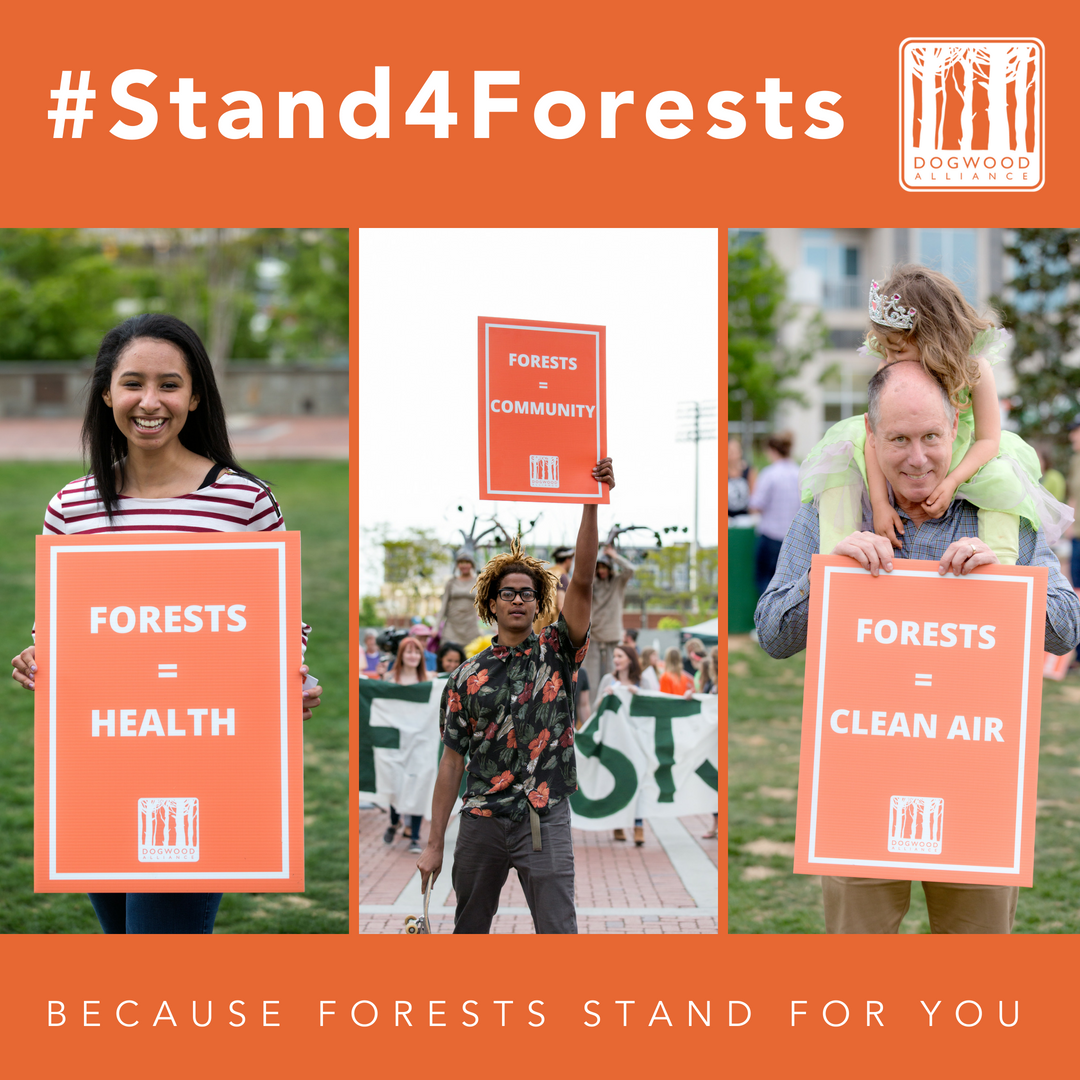
Stand4Forests because forests stand for you
The best way to remove carbon from the atmosphere isn’t new technology, but, rather, it’s listening to mother nature. We must let our trees and forests grow old, so they can store carbon and keep the atmosphere in balance. Restoring and protecting forests must become central to decision makers’ climate strategies.
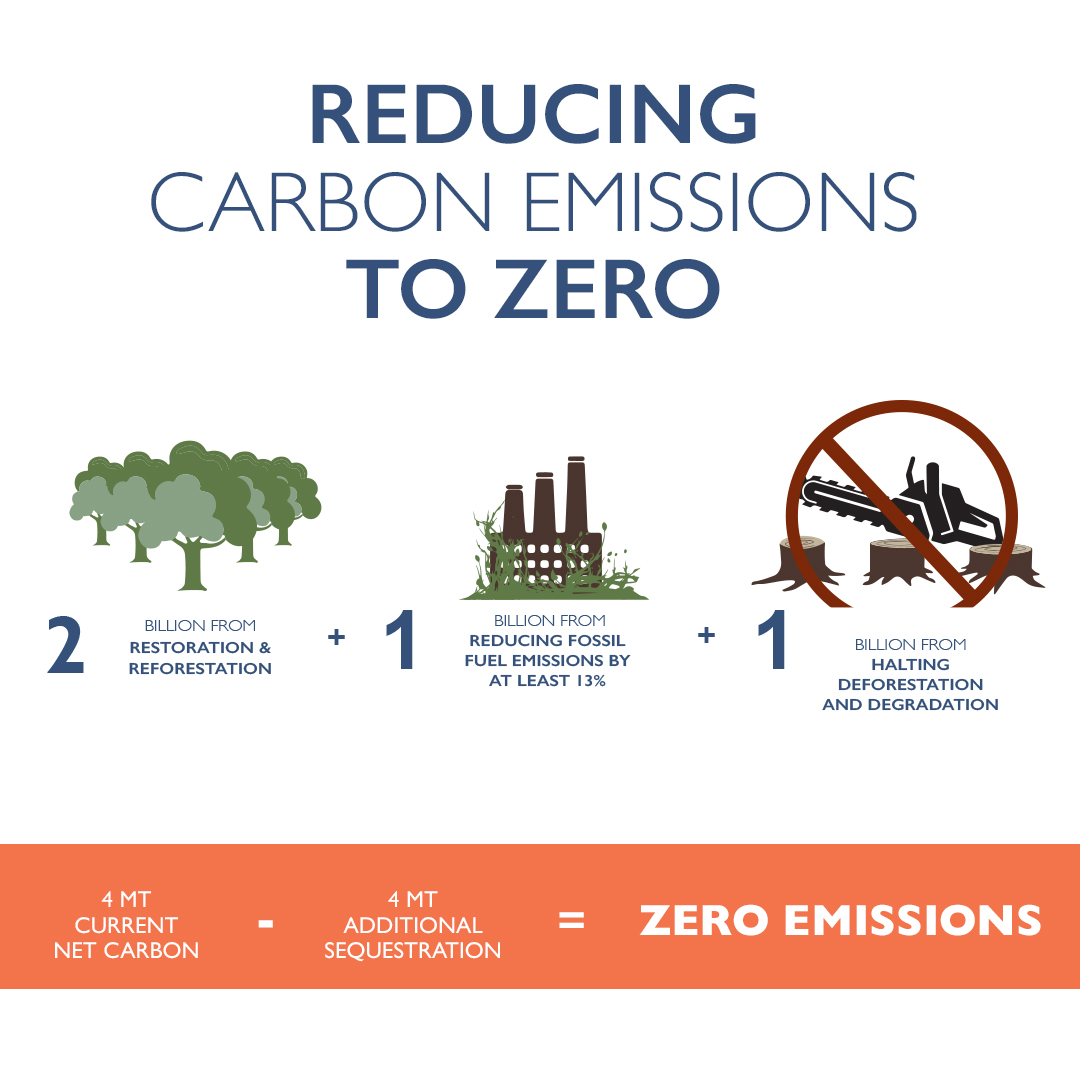
Reducing emissions in the atmosphere to zero requires restoration, reforestation, and halting deforestation and forest degradation
What can we do? We must demand an end to subsidies for biomass. Industry tries to confuse us by calling it “renewable biomass”, but let’s cut to the chase here: it unequivocally means clearcutting forests in the Southern US and burning them. Burning wood actually releases up to 50% more carbon dioxide than burning coal per unit of electricity generated.
That is why Dogwood Alliance is joining a global alliance to proclaim that biomass is a delusion. Large-scale burning of trees for energy harms the climate, forests, people, and inhibits the clean energy transition. We must move beyond burning forests to address climate change.
The US South is ground zero for forest destruction and biomass. As long as we continue to incentivize forest destruction over forest conservation, we will not solve the climate crisis. Enviva destroys tens of thousands of acres of forests every year in order to create wood pellet biomass. For the health of the planet and the safety of our communities, this must stop.
Dogwood Alliance, unlike industrial-forest-destroyers, does not mince words. We’ve just had a big wake-up call, and we, our families, and our communities must respond. Our climate and humanity’s future depend on forest protection.
FOR IMMEDIATE RELEASE: Monday, October 8CONTACT: Scot Quaranda, 828-242-3596, [email protected]
(October 8, 2018) — A new report from the United Nations Intergovernmental Panel on Climate Change (IPCC) forwarded the need to protect and restore forests just two weeks after over 200 organizations, scientists and elected officials released the #Stand4Forests platform in the United States. The newly released platform aligned with the IPCC report in demanding the protection of forests as a vital climate solution and warned against false techno-solutions like bio-energy carbon capture and storage (BECCS).
“Climate science shows that we cannot stop a climate catastrophe without scaling up the protection of forests around the world, including in the United States. Therefore, the US must be a global leader in not only committing to phase out fossil fuel use but also in protecting our forests,” says the platform, which was released in between California’s Global Climate Action Summit and New York’s Climate Week. Signatories include 40 mayors from coast to coast; organizations such as Leonardo DiCaprio Foundation, NRDC and Sierra Club; and leading climate scientists and advocates including Bill McKibben and Michael Mann (see the full list of signatories here.
“The IPCC report confirmed what we have been collectively saying for years, that forests are our best defense against climate change and that we need to join together to keep them standing,” said Danna Smith, Executive Director of Dogwood Alliance, a North Carolina-based forest protection organization and principal organizer of the Platform. “Living forests are our best hope for removing carbon from the atmosphere; and yet the rate of forest destruction from logging in this country is among the highest on Earth. To avoid climate catastrophe, we must take immediate steps to protect our forests.”
The new IPCC report found that a goal of keeping the Earth’s temperature rise 1.5 degrees is vital for protecting the planet, and the goal of 2 degrees set forth in Paris will not go far enough to prevent climate disaster. This year the recorded amount of carbon dioxide in the atmosphere reached 411 parts per million (ppm) – well beyond the 350 ppm that climate scientists deemed safe for humans.
Nevertheless, the U.S. forest industry is rapidly replacing most of our nation’s original forests with younger forests and commercial tree plantations. Logging rates in the Southeast alone are estimated to be four times that of South American rainforests. These degraded forests are not only far less effective at storing carbon than trees that are 100 years-old or older; but they are also more vulnerable to forest fires and not nearly as helpful in preventing flooding, as we saw with the dire impacts of Hurricane Florence.
“Industrial logging accelerates climate change and exacerbates rural poverty and inequity,” said Reverend Leo Woodberry, pastor of Kingdom Living Temple in Florence, S.C. and nationally recognized environmental justice leader. “We saw with Hurricane Florence and the subsequent flooding how important it is to protect our forests.These beautiful, rural areas need economies that work in harmony with nature.”
The Stand4Forests platform states (in part):
Standing forests in the US provide our communities with clean air, fresh water, carbon storage, home to thousands of unique species of plants and animals, and protection from flooding and drought, making forest protection a national and global priority.
The United States is the world’s largest producer and consumer of wood products, which continues to drive massive extraction and degradation of forests at one of the fastest rates in the world.
Communities living at the frontlines of forest destruction are often the same ones who are most vulnerable to the effects of climate change and face oppressive, polluting, and extractive industries. Communities of color, indigenous communities, low-income, and/or rural populations disproportionately bear the impacts of climate change as well as the health, economic, and social costs associated with industrial practices.
That is why we must:
Other quotes from national Stand4Forests spokespeople:
“We cannot solve the climate crisis without a massive scale-up in the protection of forests. That includes right here in our own backyard.”
“Forests are most valuable left standing, as they provide clean water, medicines, food, recreation, scenery, pollination and regulation of floods, fires, insects and disease. But tragically, short-sighted corporations have stripped the land bare. Humanity needs us to reverse this trend. The Stand4Forests platform provides a common basis for action to do just that.”
“The science is clear that increasing forest protection while moving beyond fossil fuel consumption ensures effective climate change mitigation—but it requires both,” said Dr. Chad Hanson, a research Ecologist with the John Muir Project. “We need to end the logging program on our National Forests and stop subsidizing logging on private lands,” he added.
– Dr. Chad Hanson, co-founder of the John Muir project and author of The Ecological Importance of Mixed-Severity Fires: Nature’s Phoenix
“Legislators across the country are stepping up to champion policies that protect our environment, health, communities, and economy. Protecting forests is good policy – whether they’re protecting communities from storms like Florence, mitigating the threat of climate change, or providing clean jobs in restoration and recreation.”
# # #
Faith and Forests is a special monthly series by Joseph Frankovic. In the series, Joseph will explore how his deep connection to spirituality and faith intersects with our forests and the work of Dogwood Alliance. The views and opinions expressed are those of the author(s) and do not imply endorsement by Dogwood Alliance.
As Earth’s surface and ocean depths warm, the potential risk of crossing a planetary threshold increases. That threshold, if crossed, could herald a new climate reality: self-reinforcing feedbacks causing warming within the Earth System—even while human greenhouse gas emissions taper off —according to the abstract of a recent study. To back the Earth System away from this threshold and to keep “it in a habitable interglacial-like state,” collective human action is singled out as the way forward.1

In the body of this scholarly article, which the National Academy of Sciences of the United States of America published, 16 science experts identified several things that humans, acting collectively, need to pursue. One of those pursuits is to adopt new values. Take a look at what this data-sensitive team said about the human side of the risk equation:
“Widespread, rapid, and fundamental transformations will likely be required to reduce the risk of crossing the threshold . . . these include changes in behavior, technology and innovation, governance, and values.” “These international governance initiatives are matched by carbon reduction commitments . . . but as yet, these are not enough to meet the Paris target. Enhanced ambition will need new collectively shared values, principles, and frameworks as well as education to support such changes.” “The Stabilized Earth trajectory requires deliberate management of humanity’s relationship with the rest of the Earth System. . . . a deep transformation based on a fundamental reorientation of human values, equity, behavior, institutions, economies, and technologies is required”.2
In the Anthropocene—the name given to a proposed new geological epoch—the conclusions of climate researchers and a core concern of religion and classical philosophy are converging. To embrace life and escape the death trajectory, these researchers have informed us that humans must fundamentally reorient their values.3
A new set of collectively shared values—where shall we look; whose values shall we adopt? This may sound bold, but I can give a reliable answer. As part of our search, we should look back in time and give careful consideration to the lives and achievements of notable figures who flourished in antiquity or who lived in the modern era, but whose minds were suffused with premodern values and modes of thought. In the ancient group, I would include Socrates the Athenian and Jesus of Galilee, as well as others.4 In the modern group, these names come to mind: the leader of India’s independence movement Mohandas K. Gandhi, Saint Teresa of Calcutta, and the American physician Charles A. Eastman, who is also known by his Sioux name Ohiyesa. Of course, I personalized the two lists according to my interests and current purpose.
As part of my contribution to find new collectively shared values, I will use the remaining content of this month’s blog post to place the accent on Jesus, on the movement that he organized, and on the values associated with that movement. While studying as a graduate student, I benefitted from a few outstanding teachers who generously shared their knowledge and helped me appreciate aspects of the life and teachings of Jesus. I hope to reflect some of that knowledge by sketching a big picture with broad strokes, minimal detail, and without citing too many sources. Readers who desire more detail may leave a comment, and I will provide additional citations or a short explanation.
Jesus was a sage, and like other Jewish sages who flourished in the first century, he came from Galilee equipped with a traditional education.5 By paying close attention to his adept handling of Scripture, we can grasp the depth of this education. Within Judaism, although he was aware of the achievements of the Dead Sea Sect (i.e., the Essenes), Jesus demonstrated a closeness in habits and ideology to a group known as the חסידים ואנשי מעשה (“pious ones and men of action”). Listen to what former Professor Shmuel Safrai of the Hebrew University wrote about them:
“Many traditions testify to hasidim [pietists] who were engaged in attending to public needs and [who] moved among the public, such as the story of the hasid who used to dig pits, holes and caves for wayfarers, or the collection of anecdotes concerning captive women who were followed by two hasidim bent on redeeming them. There are many similar stories.6“
These pious men of action were busy, attending to the public good. They were neither policymakers nor theorists, but doers who constructed shelters for travelers and accepted risk to help women in a dire situation. These men of action were also associated with rainmaking and healing, two highly prized public services.7
Like activists and organizers of our day, Jesus attended to public needs, spoke truth to power, discouraged dedicating one’s life to wealth accumulation, and proclaimed the advent of a new movement. When speaking of this movement, he referred to it as the kingdom of heaven (i.e., the kingdom of God) and sometimes used his special term in the phrase to enter the kingdom of heaven. He also spoke of inheriting eternal life (i.e., going to heaven after death). In rabbinic literature, the early rabbis spoke of receiving the kingdom of heaven. The three verbs are worth noting.
In the Christian theological tradition, a tendency to conflate the kingdom of heaven and eternal life started very early. The two concepts comingled with each other, and the two phrases—to enter the kingdom of heaven and to inherit eternal life—became more or less synonymous in sermons and teachings. This tendency started so early that it left discernable traces in the New Testament. The kingdom of heaven and eternal life, however, were originally two independent concepts that shared some overlap.8
According to the Gospels of Matthew, Mark, and Luke, Jesus spoke of the kingdom of heaven in two ways. First, he used it to describe God intervening in earthly affairs:
Εἰ δὲ ἐν δακτύλῳ θεοῦ ἐγὼ ἐκβάλλω τὰ δαιμόνια, ἄρα ἔφθασεν ἐφ᾽ ὑμᾶς ἡ βασιλεία τοῦ θεοῦ. If I expel demons by the finger of God, then the kingdom of God has come upon you.9
The way that Jesus spoke of the kingdom of God (i.e., kingdom of heaven) in this verse reminds one of part of a prayer that is repeated in synagogues around the world every Friday evening. The prayer celebrates God’s intervention on behalf of the Israelites when they were pinned between the Red Sea and Pharaoh’s war chariots. The important line reads as follows:
מלכותך ראו בניך בוקע ים לפני משה זה אלי ענו Your children saw your kingdom [when you] split the sea before Moses. They exclaimed, This is my God!10
In rabbinic texts, the demonstrative pronoun zeh (i.e., this) can be a pointing word.11 Here it may have suggested to early Jewish commentators that the people pointed at their God as he parted the waters.
Secondly, Jesus referred to those who had responded to his new initiative as constituting the kingdom of heaven.
Μακάριοι οἱ πτωχοὶ τῷ πνεύματι, ὅτι αὐτῶν ἐστιν ἡ βασιλεία τῶν οὐρανῶν. Blessed are the poor in spirit, because the kingdom of heaven is [composed] of them.12
In other words, people who enter the kingdom of heaven are poor in spirit. They depend on God for everything. This dependency is a requirement for a simple reason: Those who enter the kingdom of heaven usually find themselves serving the public in circumstances of extreme hardship and at great risk.
Although I may be a candidate for inheriting eternal life because of my lightly packed knapsack of good works and God’s densely stocked warehouse of grace, I do not regard myself as having entered the kingdom of heaven. Allow me to step aside and recommend medical director Thomas Catena of Mother of Mercy Hospital, which is located in the Nuba mountains of Sudan, and his coworkers as examples of people who may have entered the kingdom of heaven.13
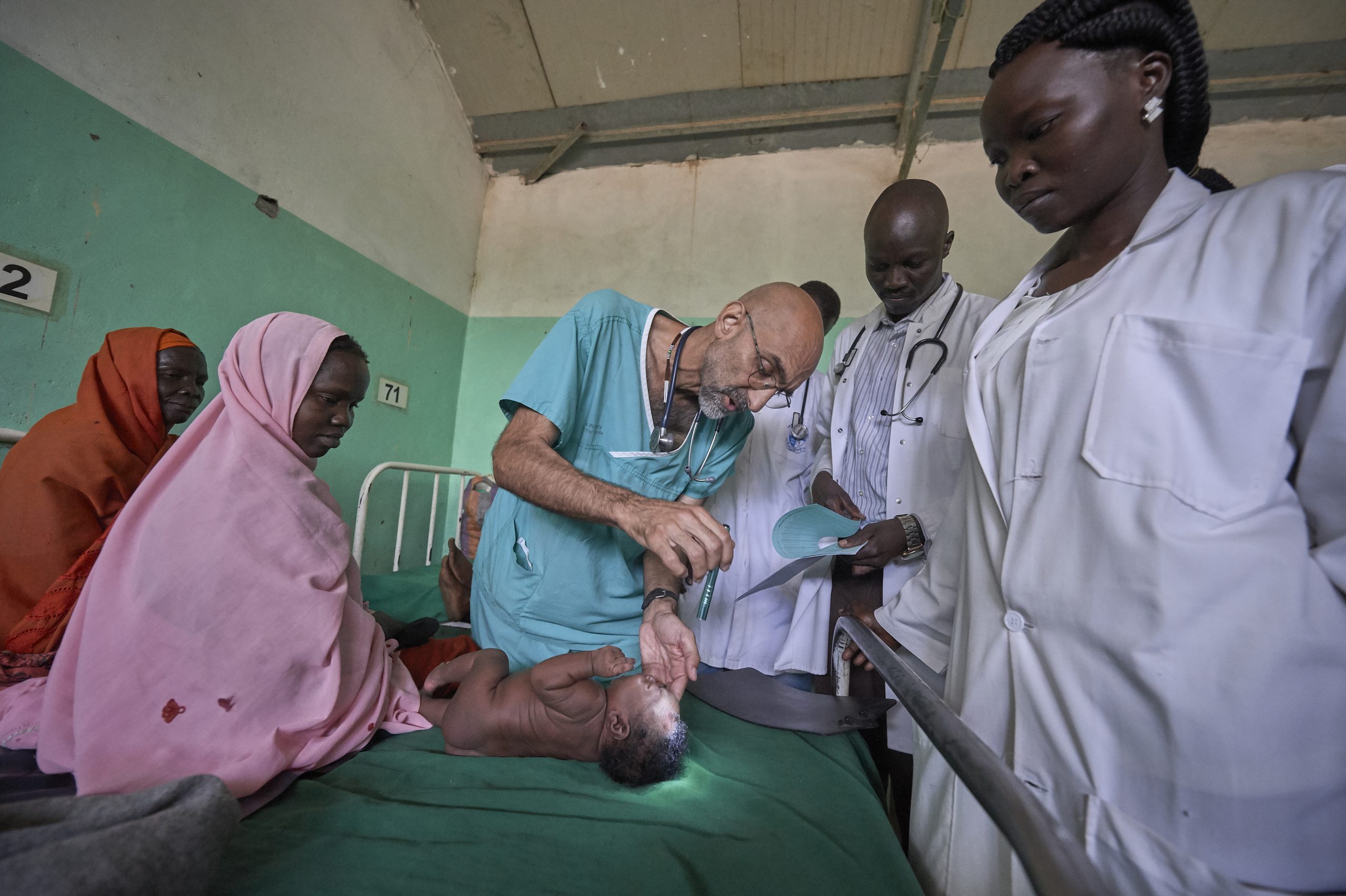
Dr Thomas Catena – click photo for short video Photo Credit: Paul Jeffrey
Without a doubt, some readers of this blog post can identify others whose superlative lives merit the same recommendation.
If I were to compose a motto for the kingdom of heaven, I would propose: The obedience of the few profits the many. Four hundred years before Jesus, the classical Greek philosopher Socrates conducted his life in a manner that foreshadowed this characterization. Always obedient to the Voice who whispered restraint, Socrates described himself as the “benefactor” of the “men of Athens”––one poor man whom God had given to the city, in the role of a “gadfly,” to arouse, persuade, and reproach its citizens through public instruction and without remuneration.14
God underwrites the kingdom of heaven’s capital-less economy, and the poor in spirit flourish within it. Dogmas and doctrines cannot clarify its mysteries; walls of institutions can neither stop its penetration nor contain its expansive, centrifugal dynamic.15 Accordingly, the kingdom of heaven may start up anywhere––within any institution, within any organization, and within any creed.16
My characterization of the kingdom of heaven has been influenced by Saint Teresa of Calcutta, who said: “There is only one God and He is God to all . . . everyone is seen as equal before God. . . . we should help a Hindu become a better Hindu, a Muslim become a better Muslim, a Catholic become a better Catholic.”17 A radical and ultimate conclusion of seeking to become a better who-you-are could draw a person toward the kingdom of heaven.

Saint Teresa of Calcutta
Let us evenly apply the brakes and slow down, put on the turn signal, and look at this subject from another angle. Former Professor David Flusser of the Hebrew University described one of Jesus’s objectives as a “transvaluation of all values.”18 That transvaluation has attracted the attention of others and won their approval in some cases. When Dr. Charles Eastman was working as an organizer for the Young Men’s Christian Association (YMCA), he met with groups from the Cheyenne, Cree, Ojibway, Sioux, and other indigenous nations. In these meetings, Eastman presented “in simple language the life and character of the Man Jesus.” On one occasion, after hearing the Anglo-Sioux doctor speak, an old warrior stood up and said:
“We have followed this law you speak of for untold ages! We owned nothing, because everything is from Him. Food was free, land free as sunshine and rain. Who has changed all this?”19
This elderly gentleman heartily endorsed Jesus’s approach to economics. In his words, I hear echoes of Mt 5:45 and 6:25–34. These 11 verses from Matthew’s Gospel belong to a special part of the Synoptic tradition (i.e., the Gospels of Matthew, Mark, and Luke). That special part is called the Sermon on the Mount. His comment also highlighted a conflict between Jesus’s agenda and the values held by Americans whose gene pool of European origins had been absorbing the ideology of free-market capitalism, in both the Old and New World, for a century or more. Remember that capital-less economy underwritten by whom?
Eastman himself gave a more precise insight that is worth noting for our purpose:
“The Christ ideal might be radical, visionary, even impractical, as judged in the light of my later experiences; it still seemed to me logical, and in line with most of my Indian training.”20
The clear-eyed doctor saw the yawning divide between American society and its values, on the one hand, and the kingdom of heaven and its values––which he called the Christ ideal––on the other. Moreover, Eastman described most of his Indian training as being in alignment with the values of the Christ ideal. He also recognized that the philosophy of the education that he had received as a child and the values of the kingdom of heaven (i.e., the Christ ideal)––although lacking pragmatism, perhaps relevance, as well, in the modern world of the early 20th century––were radical and visionary.
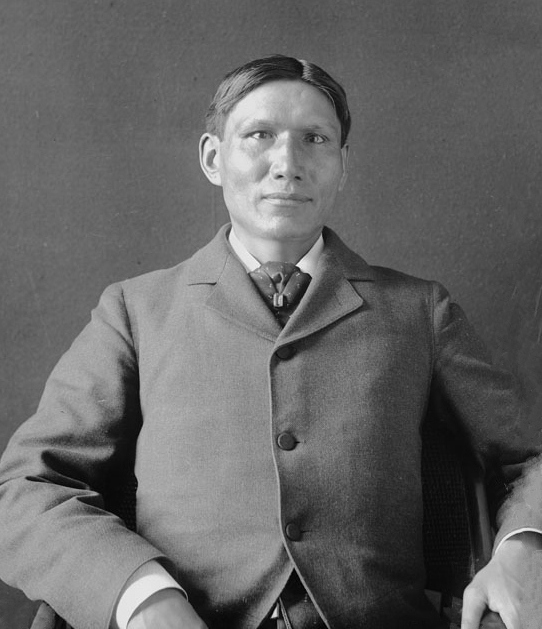
Dr Charles Eastman
Another beneficiary of Jesus’s transvaluation of all values was Mohandas Gandhi, who, incidentally, thought that politics was a very good place for religion: “Those who say that religion has nothing to do with politics do not know what religion means.”21Chicago Tribune reporter William L. Shirer covered the independence movement in India. During that time, he became a personal friend of Gandhi. They had regular opportunities to converse, and Shirer heard him explain his opinion on many topics.
In his memoir, the newspaperman recorded Gandhi’s feelings toward Christianity:
“Though Gandhi got his principal religious inspiration from the Hindu Bhagavad Gita, on whose poetic teachings, he said, he tried to base the conduct of his life, he was strongly attracted to Christianity.”
As a starting point, Shirer’s remark about Gandhi’s attraction to Christianity is interesting, but too general. Fortunately, he provided more detail in the next paragraph:
“The New Testament he loved. ‘Especially the Sermon on the Mount,‘ he would say. ‘It goes straight to my heart. Like the Gita!‘ And he would sing out the words ‘. . . whosoever shall smite thee on thy right cheek, turn to him the other also.’ ‘That’s what I’ve been trying to do, and to induce others to do, all my life,’ he would say. ‘It is the basis of my creed of non-violence.'” 22
I italicized Sermon on the Mount because we already encountered this special part of the Synoptic Gospels. Gandhi approved highly of the values contained in the sermon. He even credited Mt 5:39 for serving as the basis of his nonviolent approach to effect independence from the British empire through civil disobedience. He took the sermon’s teaching at face value; he accepted its plain meaning. At this point, the reader should not be surprised to learn that the values of the kingdom of heaven are concentrated in the Sermon on the Mount. I cannot think of a more value-laden part of the Synoptic Gospels than this sermon.
To derive greater benefit from the values associated with the kingdom of heaven––in terms of their relevance in this precarious moment; their application to the struggle for economic and social justice, for defending the environment, and for scaling back on military spending and interventions––we need to examine the relationship between entering the kingdom of heaven and inheriting eternal life. The question should be asked: Are these two achievements identical?23 When they are disentangled from each other, a conservative Jesus with some stunningly progressive values steps forward from a morass of tradition, theology, and scholarly opinion. These same values, Eastman described as radical and visionary.
The scientific community has issued a call to action. That call, we can ignore only at great peril to ourselves and to the other creatures with whom we share planet Earth. We must make a choice: reorient our values or take a risky gamble, using our biosphere as the poker chip. I find the stakes far too high for gambling and, therefore, recommend that we start the search for new collectively shared values, immediately.
Endnotes
http://climatecouncil.wpengine.com/author/will-steffen/
The use of the word “habitable” in the phrase “habitable interglacial-like state” caught the attention of this writer.
“I no longer divide politics into left and right. . . . Today politics is divided between the politics of life and the politics of death. Climate change worldwide separates us into two major sides. . . . [On the side of life], you have those of us who want to respond and adapt as quickly as possible.”
https://www.democracynow.org/2018/8/10/meet_gustavo_petro_colombian_former_guerilla
https://www.ted.com/talks/brett_hennig_what_if_we_replaced_politicians_with_randomly_selected_peoplehttps://www.rt.com/shows/on-contact/437438-aristotle-democracies-australia-innovation/
In his book Political Illiberalism: A Defense of Freedom (republished 2018), Professor of Philosophy Peter L. Simpson clobbered the ideology of Neoliberalism in a way that only a classicist could do. I can recommend the chapter “Anti-Federalists and Federalists on the US Articles of Confederation” as an enlightening treatment of an early patch of American history with which too few Americans are familiar. Simpson is known for his academic work on Aristotle and relies on the ancient philosopher in his critique of Neoliberalism.
https://www.rt.com/shows/on-contact/422264-professor-democracy-political-liberalism/
“When Jesus’ sayings are examined against the background of contemporaneous Jewish learning, however, it is easy to observe that Jesus was far from uneducated. He was perfectly at home both in holy scripture and in oral tradition, and he knew how to apply this scholarly heritage. Moreover, Jesus’ Jewish education was incomparably superior to that of St. Paul.”
David Flusser, Jesus, 2d corrected and augmented ed. (Jerusalem: Magnes Press, Hebrew University) 1998, pp. 29-30.
http://articles.latimes.com/2000/sep/25/local/me-26396
For a study centering on Jesus and his relationship to hasidut, see Shmuel Safrai’s
״ישׁו והתנועה החסידית״ in the Proceedings of the World Union of Jewish Studies, div. B, vol. 1 (Jerusalem: World Union of Jewish Studies, 1990), 1-7. In this article, which was written in modern Hebrew, Safrai noted that this stream of hasidut began in the first century B.C.E. and faded from rabbinic Judaism in the beginning of the third century C.E.
“Jesus preached the same Kingdom of God (Matthew has preserved in ‘Kingdom of Heaven’ the rabbinical expression ‘Malkut Shamayim‘) . . . .When, however, the trend of events led early Christianity to make a decided disavowal of all political expectations antagonistic to Rome, the conception of the Kingdom of God was made an entirely spiritual one, and was identified with the ‘olam ha-ba‘ (= ‘the world to come’), the spiritual life.”
The Hebrew phrase “olam ha-ba” may be translated literally as “the world to come” or dynamically as “eternal life.”
http://www.jewishencyclopedia.com/articles/9328-kingdom-of-god
Another standard reference work also has an article on the kingdom of God.
“In Christ’s teaching the kingdom of God is also declared to be actually present as He spoke and its coming is represented as a present . . . reality. . . . It is possible that this conception of the Kingdom as a present reality may have occupied a considerably more prominent place in the Lord’s teaching than it fills in the Gospels and elsewhere in the NT, where its centrality may have been displaced. . . .”
I added the italicized font. One of the purposes of this piece was to direct thoughtful consideration to this possibility. The Oxford Dictionary of the Christian Church, 2d ed., sub verbo “KINGDOM OF GOD, The.”
I offer William W. Tomes, Jr., of Chicago as another recommendation for somebody who may have entered the kingdom of heaven. Tomes helped gang members in Chicago housing projects on the city’s Near North Side.
http://content.time.com/time/magazine/article/0,9171,138995,00.htmlhttps://www.npr.org/books/titles/138252921/the-people-are-the-news-grant-picks-chicago-stories
http://classics.mit.edu/Plato/apology.html
Regarding the Voice, Mohandas Gandhi also relied on a voice at key moments in the struggle for India’s independence for knowing what to do next and when to do it. William L. Shirer, Gandhi: A Memoir (New York: Washington Square Press/Pocket Books, 1982), pp. 87, 216.
https://dianerehm.org/shows/2016-12-27/albert-race-hoss-sample-rebroadcast
http://www.npr.org/templates/story/story.php?storyId=111102319
“Two or three times he had touched briefly on what he called the value of comparative religion, suggesting that I give it some thought. Perhaps he had sensed my skepticism about my own Christian religion, which he himself said had so inspired him. Though a devout Hindu, he had explained that his religion was really a compound of the best in his own and other religions: in Buddhism, with its wisdom about man’s lot on this earth; in Mohammedanism, which he liked for its appeal for brotherhood; and above all in Christianity, as revealed in the New Testament.”
FOR IMMEDIATE RELEASE: Monday, September 24, 12:01 am
Limiting Industrial Logging Must be Prioritized Along with Reducing Fossil Fuels, Explains New Report
(September 24, 2018) — In the wake of Hurricane Florence and wildfires that have swept the country, today over 200 organizations, scientists and elected officials released the #Stand4Forests platform demanding the protection of U.S. forests as a vital climate solution. “Climate science shows that we cannot stop a climate catastrophe without scaling up the protection of forests around the world, including in the United States. Therefore, the US must be a global leader in not only committing to phase out fossil fuel use but also in protecting our forests,” says the platform, which was released in between California’s Global Climate Action Summit and New York’s Climate Week. Signatories include 40 mayors from coast to coast; organizations such as Leonardo DiCaprio Foundation, NRDC and Sierra Club; and leading climate scientists and advocates including Bill McKibben and Michael Mann (see the full list of signatories here).“Hurricane Florence and the devastation it left in its wake has brought climate change to the forefront of public awareness yet again,” said Danna Smith, Executive Director of Dogwood Alliance, a North Carolina-based forest protection organization and principal organizer of the Platform. “Living forests are our best hope for removing carbon from the atmosphere; and yet the rate of forest destruction from logging in this country is among the highest on Earth. To avoid climate catastrophe, we must take immediate steps to protect our forests.” Along with the platform, a new report was also released today summarizing the latest peer-reviewed science underscoring that industrial logging is a major source of carbon emissions in the US; and why we need older trees in tact to pull carbon out of the atmosphere. “Seeing the Forest: Nature’s Solution to Climate Change” reminds us that burning wood for electricity actually releases up to 50 percent more carbon dioxide than burning coal per unit of electricity.This year the recorded amount of carbon dioxide in the atmosphere reached 411 parts per million (ppm) – well beyond the 350 ppm that climate scientists deemed safe for humans. Nevertheless, the U.S. forest industry is rapidly replacing most of our nation’s natural forests with younger forests and commercial tree plantations. Logging rates in the Southeast alone are estimated to be four times that of South American rainforests. These degraded forests are not only far less effective at storing carbon than trees that are 100 years-old or older; but they are also more vulnerable to forest fires and not nearly as helpful in preventing flooding, as we saw with the dire impacts of Hurricane Florence.“Industrial logging accelerates climate change and exacerbates rural poverty and inequity,” said Reverend Leo Woodberry, pastor of Kingdom Living Temple in Florence, S.C. and nationally recognized environmental justice leader. “We saw with Hurricane Florence and the subsequent flooding how important it is to protect our forests.These beautiful, rural areas need economies that work in harmony with nature.”The Stand4Forests platform states (in part):Standing forests in the US provide our communities with clean air, fresh water, carbon storage, home to thousands of unique species of plants and animals, and protection from flooding and drought, making forest protection a national and global priority.The United States is the world’s largest producer and consumer of wood products, which continues to drive massive extraction and degradation of forests at one of the fastest rates in the world.Communities living at the frontlines of forest destruction are often the same ones who are most vulnerable to the effects of climate change and face oppressive, polluting, and extractive industries. Communities of color, indigenous communities, low-income, and/or rural populations disproportionately bear the impacts of climate change as well as the health, economic, and social costs associated with industrial practices.That is why we must:
Other quotes from national Stand4Forests spokespeople: “We cannot solve the climate crisis without a massive scale-up in the protection of forests. That includes right here in our own backyard.”
“Forests are most valuable left standing, as they provide clean water, medicines, food, recreation, scenery, pollination and regulation of floods, fires, insects and disease. But tragically, short-sighted corporations have stripped the land bare. Humanity needs us to reverse this trend. The Stand4Forests platform provides a common basis for action to do just that.”
“The science is clear that increasing forest protection while moving beyond fossil fuel consumption ensures effective climate change mitigation—but it requires both,” said Dr. Chad Hanson, a research Ecologist with the John Muir Project. “We need to end the logging program on our National Forests and stop subsidizing logging on private lands,” he added.
“Legislators across the country are stepping up to champion policies that protect our environment, health, communities, and economy. Protecting forests is good policy – whether they’re protecting communities from storms like Florence, mitigating the threat of climate change, or providing clean jobs in restoration and recreation.”
# # #


 Donate