


A few weeks ago, I finally watched the Marvel comic movie the Black Panther. I couldn’t stop thinking about how that movie is a sign of the times, of how the Black Lives Matter Movement and every black person fighting for justice at this moment in history created the space for the Black Panther superhero to emerge with such blockbuster power.

Image: Marvel Studios
It reminded me of 1975, when I was a kid and the Wonder Woman TV show first aired. Before Wonder Woman, the dominant storyline was that of a man saving the day, rescuing a helpless woman in distress. The story of Wonder Woman busted through that old-school narrative, inspiring young girls like me to believe that we, too, could be superheroes.

She was a character that represented thousands of real-life women of the 1970’s who were fighting for their rights; women who were becoming powerful politicians, lawyers, authors, artists, entrepreneurs, and doctors. With both the Black Panther and Wonder Woman, the superheroes are, in reality, the people everywhere taking control of the narrative and challenging long-standing, outdated ways of thinking.
I’ve been thinking a lot lately about how storytelling is a powerful tool that shapes our reality.
They help shape entire generations. They capture the evolutionary curve of a society. They can help shift an entire culture.

Image: Mac Stone
For decades, the underlying storyline in the world’s largest wood-producing region has been that Southern forests are most valuable when they’re logged, turned into wood products, and sold for profits. The underlying moral of this old-school narrative is that the primary role of Southern forests is to supply us humans with wood products. This has resulted in a myth that standing, living forests have no value.
But, today the winds of change are blowing through the trees.
Over the past month, we’ve been lifting up the stories of superhero Forest Defenders who are showing us all the different and beautiful ways we humans can value living Southern forests.
He sees the woods as a priceless place of learning and reflection that makes him feel safe and is helping him live out his ancestors’ dreams of freedom. Dr. Easley sees the beauty of diversity in the forest and in us and urges us to embrace that difference within ourselves and others. He reminds us that we don’t really own the forest; it owns us.
This wise child shares her knowledge,
“Trees can be useful being cut down, but sometimes it’s useful for them to just stay where they are because it takes them a long time, like years, to grow fully and just appreciate how beautiful they are.”
She reminds us just how valuable living forests are as a place to play and be a kid again, to escape the stress and fast-paced world that we all live in.
Together our stories and our everyday actions are changing and shaping the future of Southern forests — a future where the world accepts that our forests are worth way more living than dead. Every time we tell a story that busts through the old way of thinking, every time we take action to protect our forests from industrial logging or support forests with our dollars, we’re a superhero who’s saving our forests and our future.
Guest blog post written by Duke Communications Intern, Pengfei Ye.
Hood Huggers International Driving Tour, launched by DeWayne Barton, is an opportunity for visitors and local residents in Asheville to explore and learn about historical African American neighborhoods and communities in Asheville.
Stephens Lee Recreation Center initially served as the gymnasium and fitness center for Stephens Lee High School and has now become a recreation center, offering various recreational programs for local residents in Asheville. During segregation, Stephens Lee High School was a secondary school for African American students in Western North Carolina. It accommodated students from local Asheville community and attracted students from surrounding areas, including Madison County, Haywood County, and Yancey County. Though the other buildings of the high school were sadly bulldozed, Stephens Lee Recreation Center still provided us with a great opportunity to learn about the rich history of the Southside community.
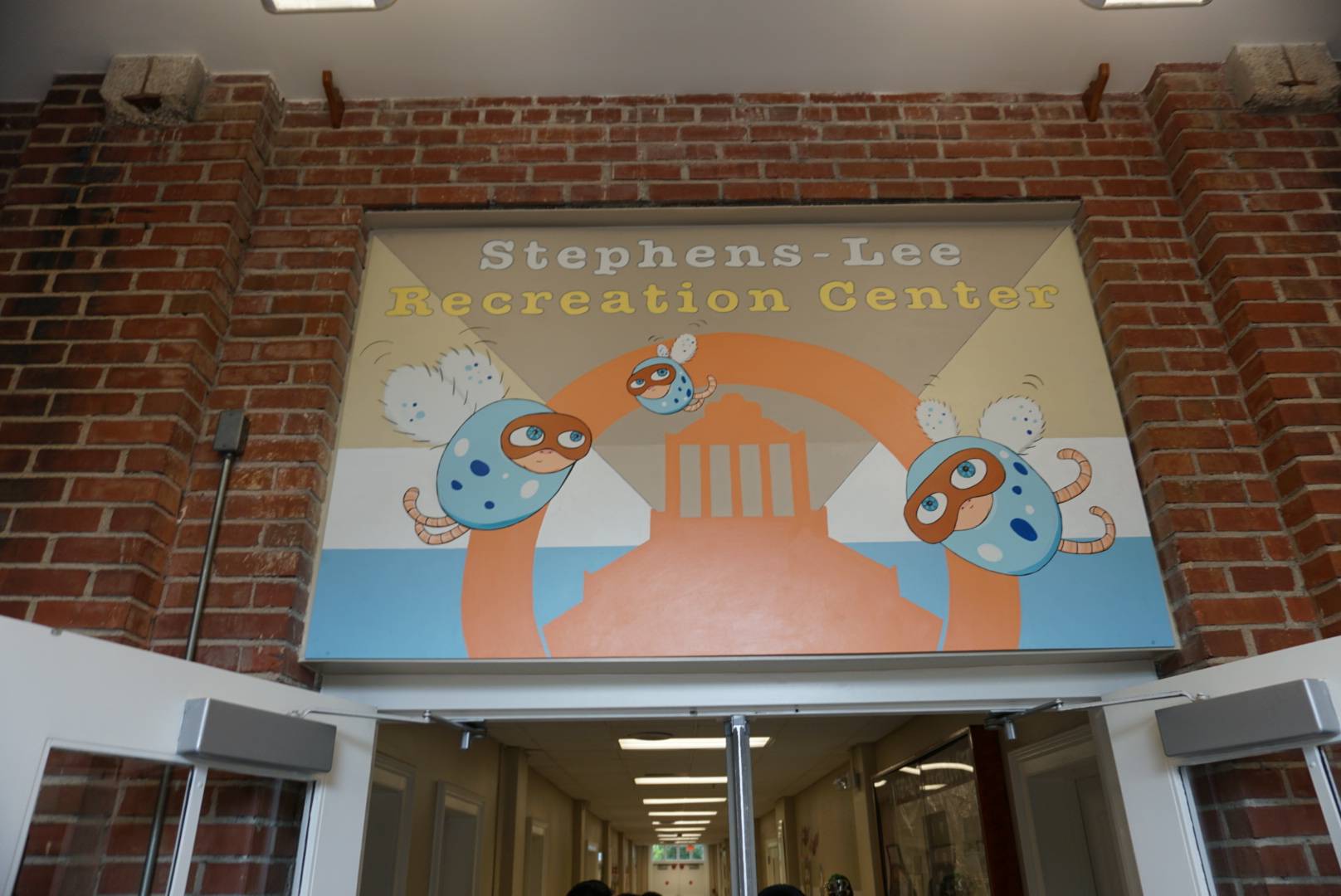
Figure 1. Entrance of Stephens Lee Recreation Center
In the hallway of the Stephens Lee Recreation Center, numerous excellently preserved photos and posters hang in the recreation center to tell the history of Stephens Lee High School and to demonstrate its large alumni network.
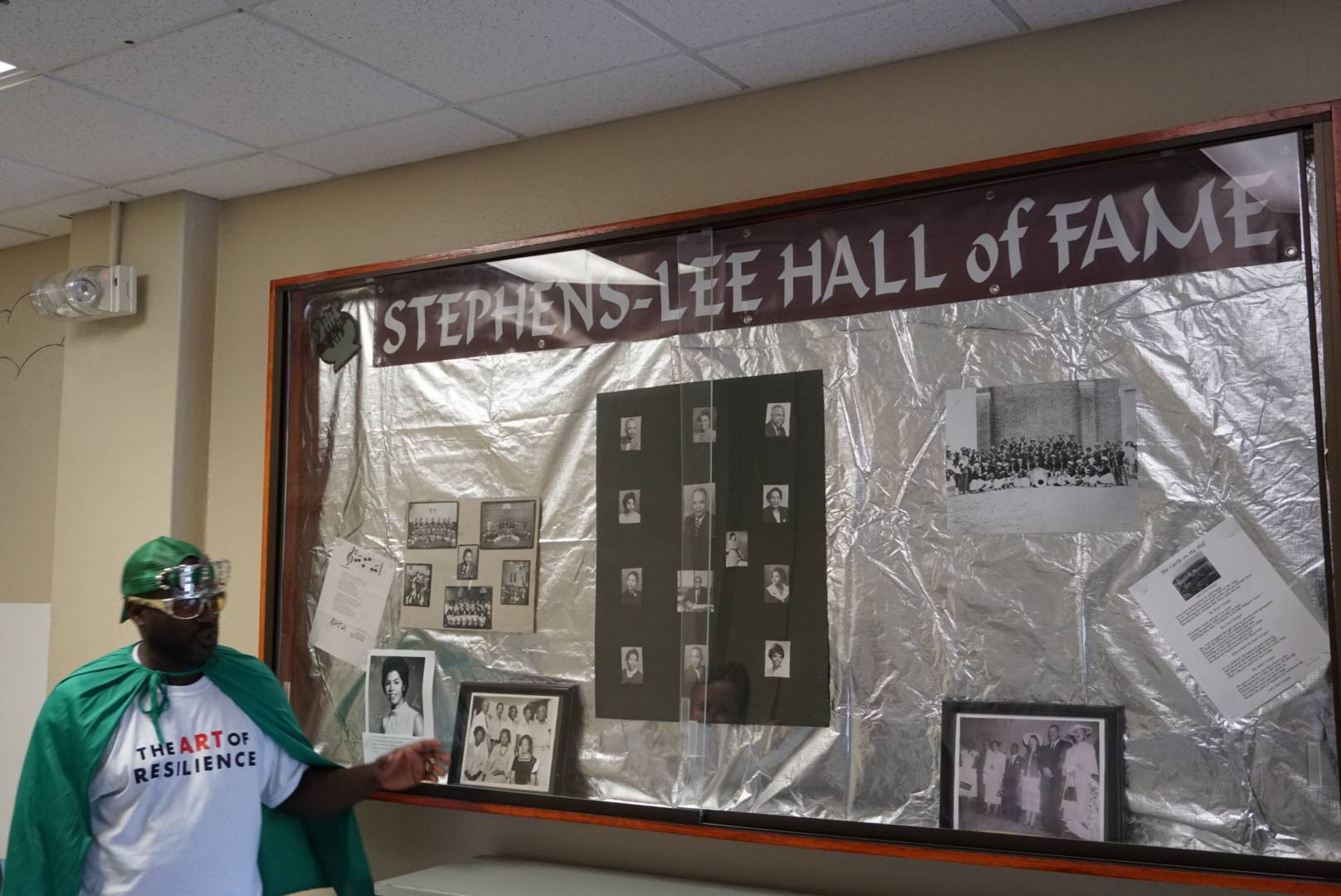
Figure 2. Hood Huggers organizer DeWayne Barton sharing Stephens Lee Hall of Fame.
Although the main building of Stephen Lee High School no longer exists, photos of the historical building still hang to present the past scenery of the school.
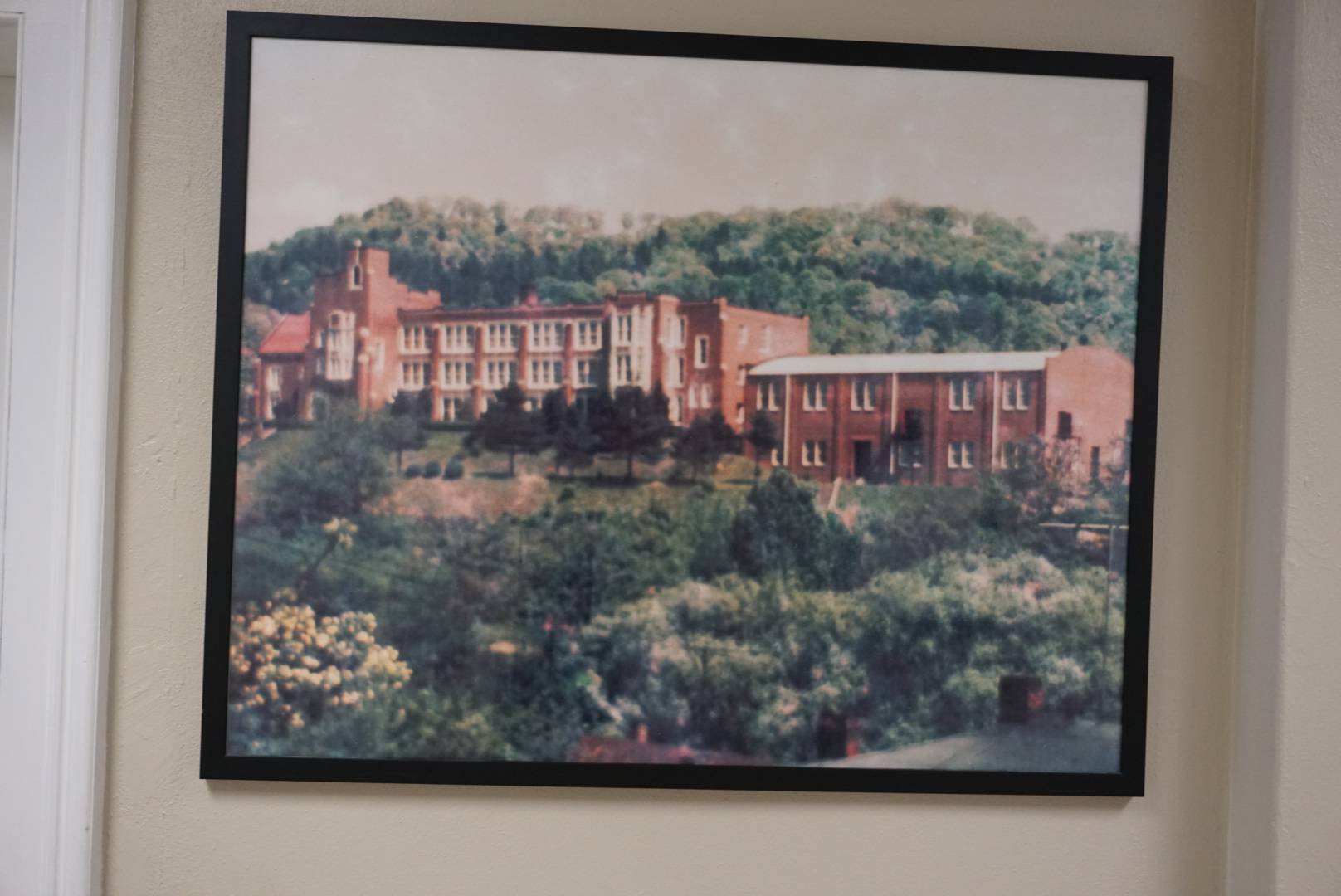
Figure 3. Photo of Stephens Lee High School before demolition.
Stephens Lee Alumni Association has sponsored a room in the recreation center dedicated to displaying its alumni and their achievements. During the school’s history, there were many outstanding alumni in various industries, including music, education, and business.

Figure 4. Stephens Lee Alumni achievement room.
Dr. George Washington Carver Edible Park is located just outside of the recreation center. It has many types of edible fruits and vegetables, including persimmons and apples. There’s also an outdoor basketball court that overlooks unique downtown Asheville with its modern architecture and historical southern buildings.
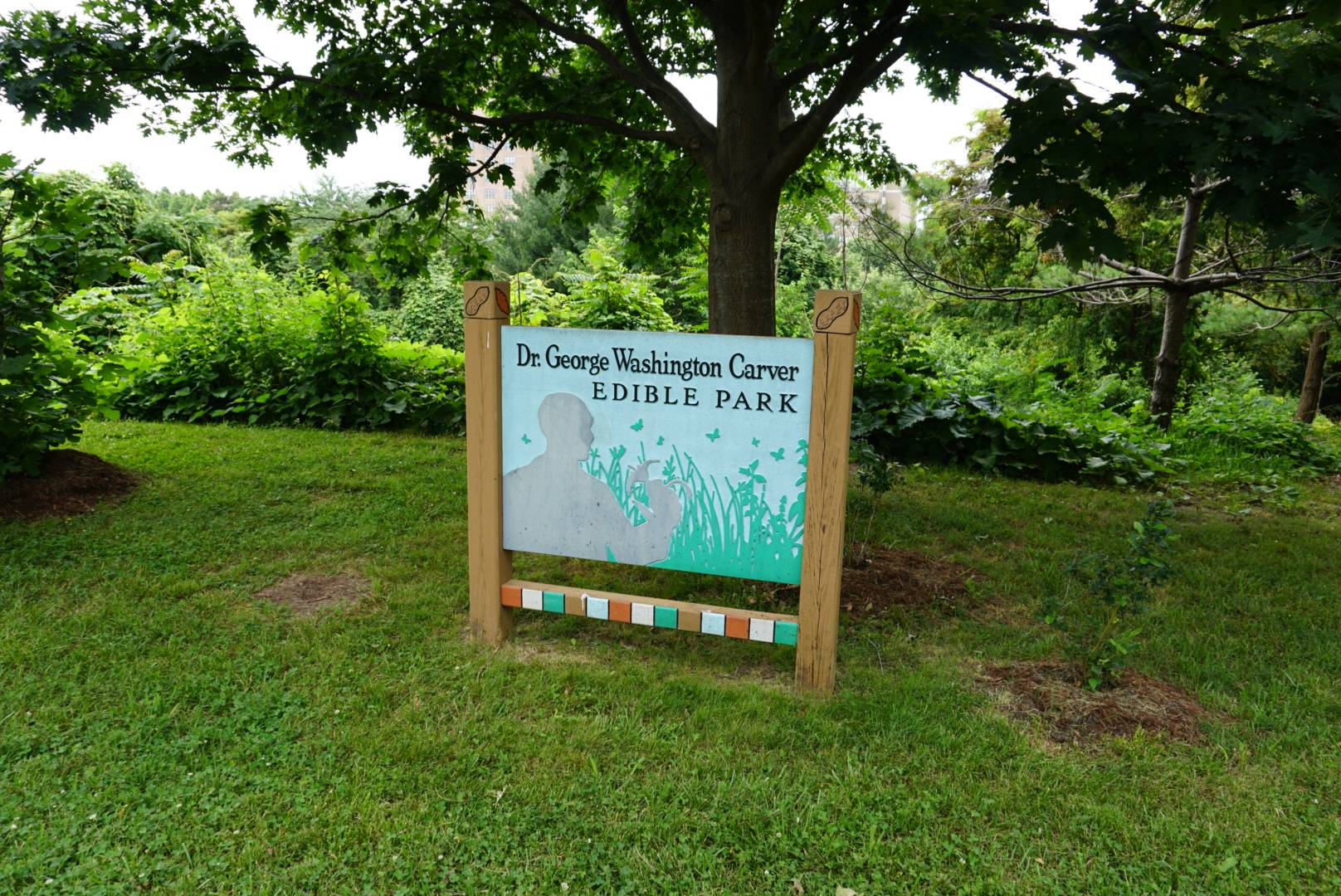
Figure 6. Dr. George Washington Carver Edible Park Entrance
The next stop of the Hood Huggers Tour was a historic icon in downtown Asheville on Eagle Street: the YMI (Young Men’s Institute) Cultural Center. Financed by George Washington Vanderbilt and completed in 1893, the YMI is a three story building designed to enrich the lives of the black community. Inside the YMI, Ray Auditorium is a spacious ballroom available for multiple purposes, and there is a gallery is space available for artwork exhibitions. On the day of our visit, the gallery hosted an art exhibition about gun control and peace.

Figure 8. YMI Cultural Center welcome sign
Triangle Park is located a block away from the YMI, and it’s named after its unique triangle shape. The most interesting part of the park is the graffiti on the walls of the park. It features notable figures in the history of Asheville like Isaac Dickson and The Stephens Lee Marching band as well as developments, transitions, and important events in the history of Black Asheville. Bold and colorful paintings were used in these pieces, and the contrast between vivid graffiti and verdant trees attract people to relax and learn.

Figure 9. Graffiti in Triangle Park

Figure 10. DeWayne Barton sharing the stories about the legendary Stephens Lee Marching Band
With all the rapid development in Asheville, a hotel, an apartment complex, and other buildings will be finished near Triangle Park. Even worse, Triangle Park faces threats of being developed into a parking lot. This would be a tragic loss of the history and art of Black Asheville.
At the end of the tour, DeWayne showed us The Hood Huggers International Green Book. Inspired by The Negro Motorist Green Book, a book that served as a travel guide for African Americans during segregation, it includes local black businesses and organizations, aiming to raise awareness of these places and connect people to them.

Figure 11. Hood Huggers Green Book.
From this trip, I am impressed by the awareness of African American culture preservation and development from social activists, such as DeWayne Barton. Hood Huggers International Tour serves as a great tool for people to understand African American cultures and the stories belong to Asheville’s history. Many cities in the US have different races of people, and they all make great contributions to the prosperity of cities and leave unique cultural marks. Many of these cultural marks are ignored, but they should be respected and known to citizens.
In January of this year, the European Union Parliament’s vote on the Renewable Energy Directive (RED II) failed forests by neglecting to rule out the burning of stumps and stemwood for bioenergy. The final vote is in: sadly, the European Union failed to Stand for Forests and decided to keep incentivizing the widespread burning of forests as “carbon neutral.”
It may seem like a long time, but we only have until 2030 to start hitting our emissions goals or else we all face climate disaster. That means we must start transitioning our energy, transport, and land sectors in ways that decrease emissions and support increased carbon sinks right now. Burning forests that store carbon and protect us from climate change is taking us in the absolute wrong direction. This policy decision equals more forest destruction, a weakening of our global carbon stores, and more emissions from smokestacks coming out of the EU.
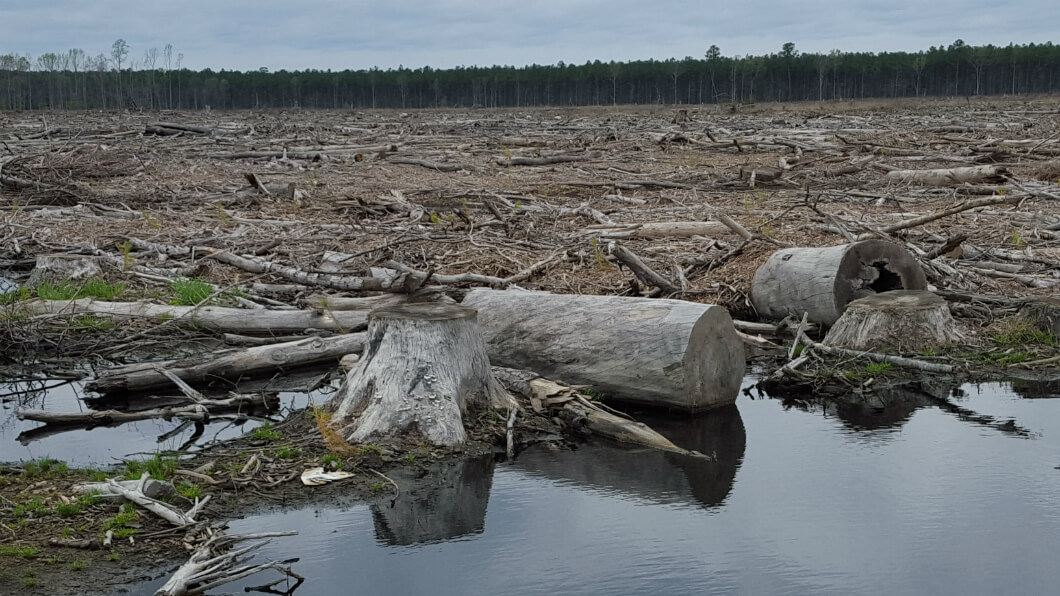
The EU can no longer pretend to be climate leaders. We know without a doubt that burning forests for energy will increase Europe’s emissions.
Since the EU failed, it’s up to its member states, like France, Germany, and Italy, to ensure that our forests, communities, and ability to build resiliency against climate change are not undercut by this disastrous RED II policy decision. The best chance of forcing the individual European countries to do the right thing, of course, lies with people.
The people who live in the Southern United States, the world’s region that is being hit hardest to produce wood pellet biomass, know the effects of these policies and have been standing against them for years. Hundreds of thousands of messages have been sent, and the movement is growing.
At Dogwood Alliance, we’re mobilizing a vast forest, climate, and justice movement to pressure elected officials to value forests more.
Protecting forests is important for more than just carbon storage, it would also improve water quality, restore ecosystems, and preserve biodiversity.
The people-powered pressure is working: Belgium was once a huge expansion market for biomass, but now that honeymoon is over; the Netherlands is placing severe limits on the kinds of biomass it will accept, which will limit reckless burning of any and all kinds of biomass.

To get there, we must start now and we must look for member state champions in the European Union who will:
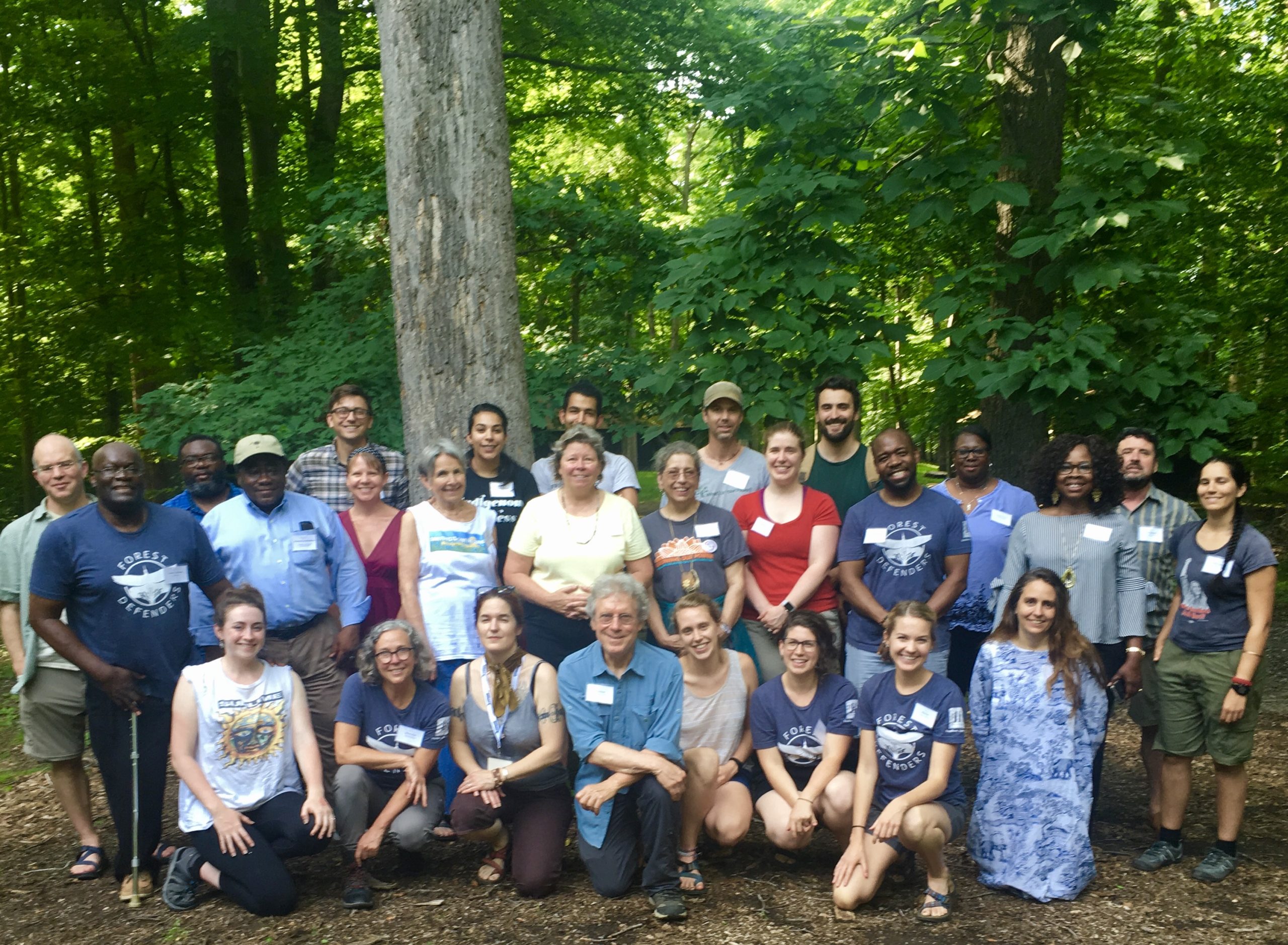
On a hot and humid Saturday at the beginning of June, Rita and I found ourselves covered in sweat and dirt; our ankles eaten alive by mosquitoes. But most of all, we had two huge, satisfied grins on our faces. We were just wrapping up an inspiring summit with 30 independent, diverse, and committed leaders from all over the country, where we came together for a groundbreaking purpose: to elevate the role of forest protection in the national movement for climate action and justice. After all those months of preparing for the summit, we didn’t know quite what to expect.
From the majestic redwoods of the West to the mystic cypresses of the South, forests are our lifeline. Whether they’re providing us with clean air and water, protecting us from storms, or giving us a place to retreat and restore, forests make for healthy and resilient communities.
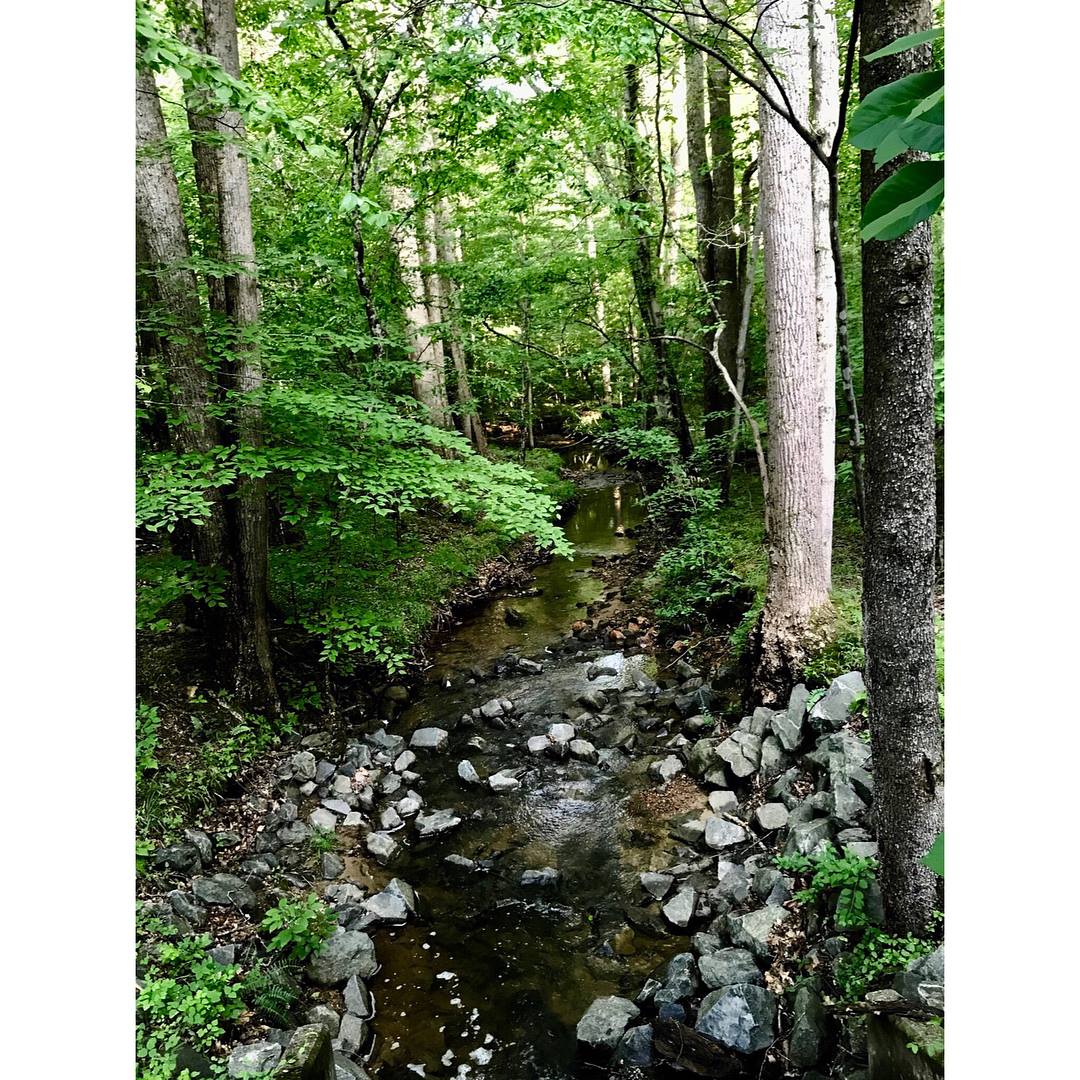
And there’s more. Forests aren’t just the place where all the unique critters, towering trees, plants, and creatures smaller than the eye can see are thriving.
Forests remove large quantities of carbon dioxide from the atmosphere and store it in trees and soils.
With the highest rates of logging in the world and a system that puts profit over people and land, the US is doing exactly the opposite – and putting our climate, communities, and forests in grave danger.
“The US is the world’s leading wood products producer and the leading source of greenhouse gases from logging,” noted John Talberth, President and Senior Economist at the Center for Sustainable Economy, who joined us at the Virginia meeting from Oregon. He added,
“Big Timber’s toxic plantations are serious public health and safety threats as climate change unfolds because they are more susceptible to fires, floods, insects, disease, and water shortages than natural forests.”
In the beginning of the year, Dogwood Alliance reached out to this group of leaders to bring them in on the ground floor of catalyzing a national movement on forests, climate, and justice. This inspiring group represented people from all over the country, who all offered their diverse perspectives, background, spirit, and wisdom to the conversation. Frontline communities and grassroots organizations, big and small non-profits, universities and institutes — we were all over the map.
Folks traveled from near and far to be a part of the summit. We gathered to work and break bread together in a large mess hall. Over two days, we strengthened relationships while learning from one another and putting pen to paper on our work to come.
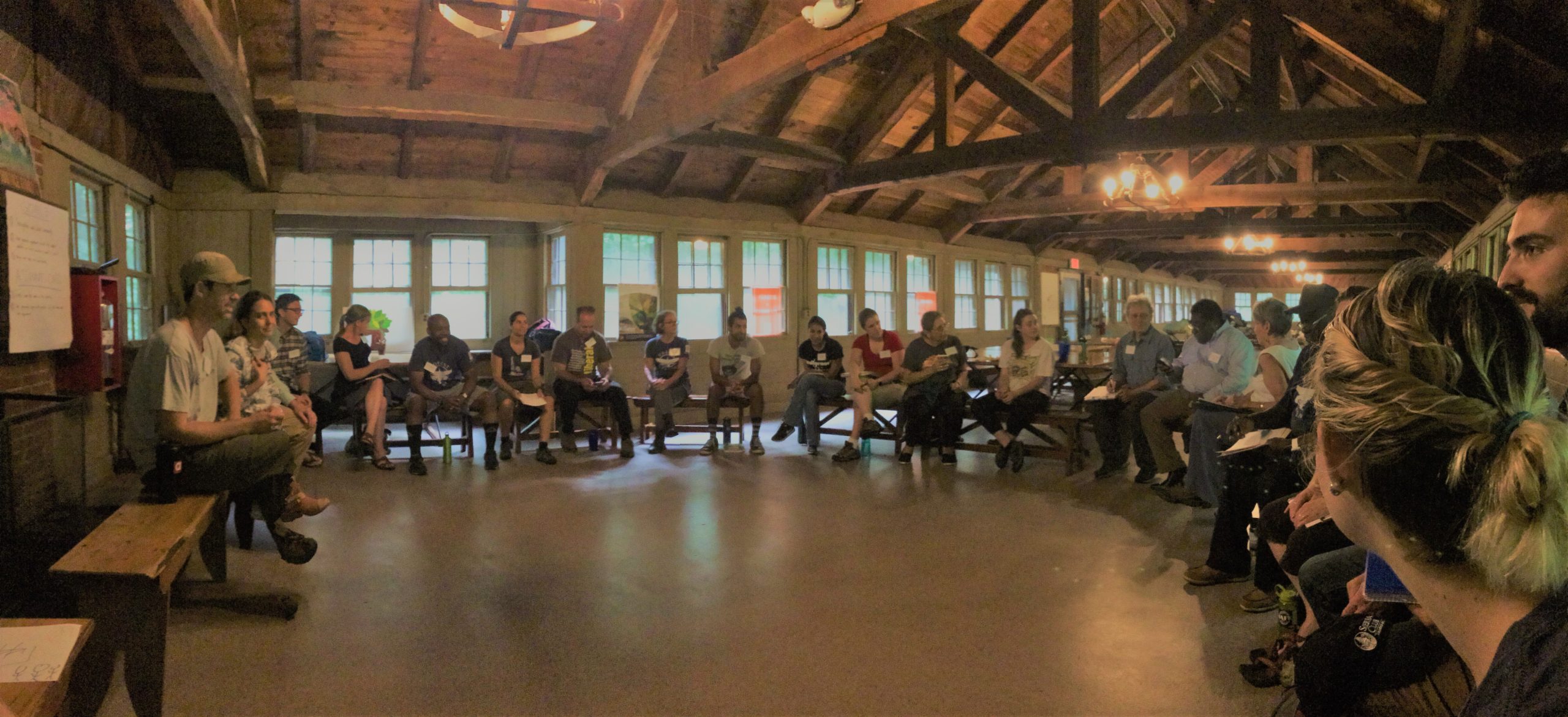
While we may differ in our regions, priorities, and tactics, we are united by a common goal: we seek a world where we value forests more standing than logged.
Dr. Dominick DellaSala, President and Chief Scientist of the Geos Institute, who traveled from the West coast to join our group of forest protectors, said,
“The time is now for infusing the forest movement with biodiversity, climate security, and social justice in order to keep carbon in the forests instead of logging and releasing it into the atmosphere.”
As we chatted over meals prepared by Seeds of Peace, a collective dedicated to feeding, training, and in all ways supporting the practitioners of radical political change, we got the sense that big change was happening. Ten years from now many of us will look back at this weekend as a shining moment in the effort to protect forests, climate, and communities.
This is a movement, and it’s the work that comes next that will drive the forces of change to keep more forests standing and to tackle the climate crisis and the injustices we are facing.
On the work ahead, BJ McManama, a West Virginia-based Campaign Organizer with the Indigenous Environmental Network, shared,
“We came away from this gathering of grassroots leaders encouraged and motivated to find the unique solutions that are based on our location and our people’s needs, and that will ensure a peaceful, prosperous, and equity-based future for our next Seven Generations.”
MC Egbert, the Policy Assistant and Social Media Coordinator with the John Muir Project, said,
“I was so inspired by everyone at the meeting, and it inspired me to bring it back to my own organization and start building our own grassroots team!”
In the coming weeks and months, we’ll be putting the finishing touches on our collaborative national platform, while we’re gathering more organizations, community members, and other voices.
The Netherlands was one of the first European countries to fall for the myth of biomass as clean and green renewable energy. One of a handful of European countries that did not have a clear path forward to meet EU-wide 20% fossil fuel reduction and 20% renewable energy targets, they assumed that switching from coal to burning our Southern forests for electricity would be a good step towards true renewables like wind and solar. Fortunately, they discovered this was a mistake before it was too late and have been aggressively working to limit their biomass supply to waste and not forests like our bottomland wetland forests that are supplying countries like the UK and Denmark right now.
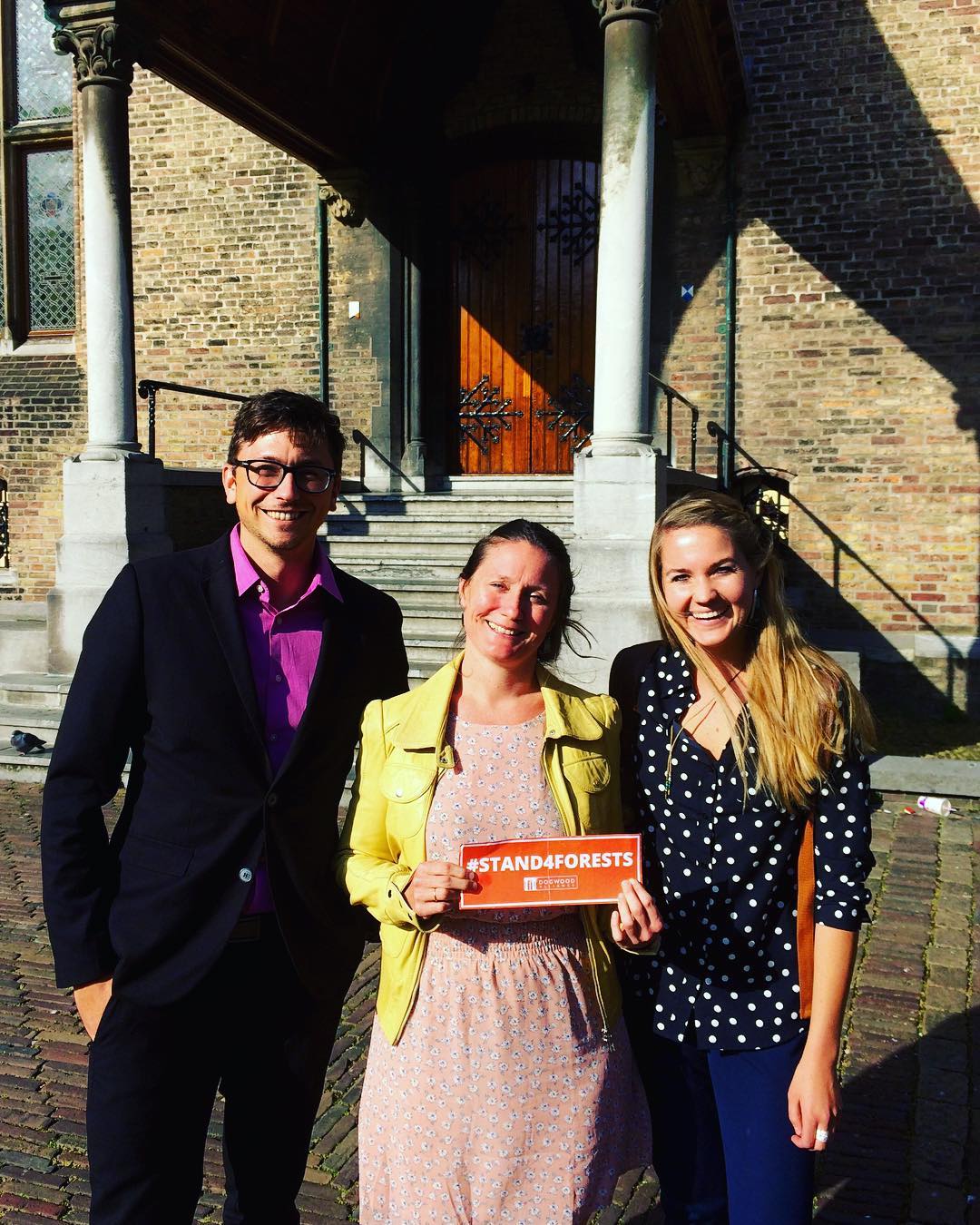
Dogwood’s Adam Colette, Programs Director, and Rita Frost, Campaigns Manager, met with Suzanne Kröger (middle), Green Parliamentarian in the Netherlands, last May to discuss how the Netherlands could better ensure true sustainability standards for biomass.
It’s clear that the Dutch sustainability requirements are set very high.
These schemes were denied approval for subsidies by the Dutch government at the beginning of 2018. Largely due to the concerted efforts of our campaign partners, led by NRDC, now the industry’s biggest greenwash certification scheme, the Sustainable Forestry Initiative (SFI), has been eliminated from contention because the Dutch called them out on not actually doing enough to protect forests.
Schemes like the Sustainable Forestry Initiative may have sustainable in their names but, as the saying goes,
For threatened Southern forests, this means that the Netherlands won’t accept wood pellets from forests certified by SFI, SBP, and ATFS. It’s nearly impossible for slimy US-based wood pellet manufacturer, Enviva, to enter into a long-term contract with Dutch buyers. All this goes to show that biomass is not the “sustainable” resource it claims to be.
While the Netherlands is paving the way for which kinds of biomass should and should not be acceptable, the UK is stepping further into the proverbial biomass fire.
The energy biomass provides is still less than 1% of the UK’s total energy needs. That is the opposite of efficient and sustainable.
Lynemouth coal power station is converting to biomass and is scheduled to start burning trees later in 2018. MGT Power (owned by Macquarie Group and the Danish pension fund PKA) is building what will be the world’s largest dedicated biomass power plant, to open in 2020. While the UK’s own scientific findings are showing that facilities like Drax are neither sustainable nor cost effective, UK policies directly conflict. UK Energy Secretary Claire Perry, needs to end these climate-wrecking subsidies and look instead to solar and wind.
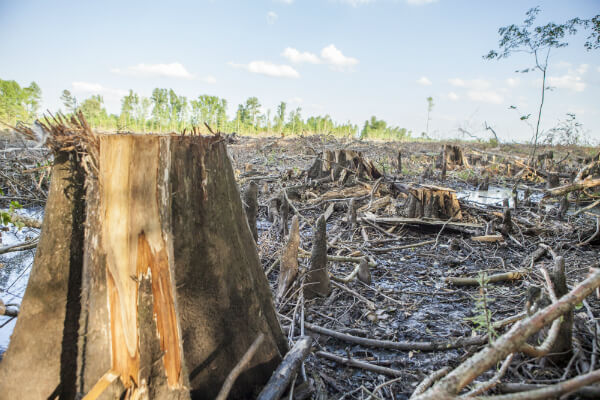
The Netherlands is showing that sustainability isn’t just a buzzword.
The Netherlands’ rejection of SFI and all those other shady schemes is a signal to the UK – the top burner of biomass in the world – that they need to give up on all this greenwashing. If the UK had real standards for biomass that didn’t hurt our forests and our planet, they would realize that biomass doesn’t make economic or environmental sense and Drax would have to close down its forest-burning operations.
We commend the Netherlands’ efforts that will ultimately ensure greater protections for forests in the Southern US. While we contend that to be true climate champions, no biomass burning is acceptable and the Netherlands can do more to protect forests, we support their dismissal of bad certifications. For now, others, like the UK, can be more responsible biomass users by ending support for certification schemes that allow for the continued destruction of our precious forests.
On World Wetlands Day 2017, Dogwood Alliance stepped forward to enrich the wetland conservation movement. On this date, Dogwood Alliance launched the Wetland Forest Initiative (WFI). WFI is a broad and diverse coalition of partners and organizations across the South that joined together with a simple mission:
In May 2018, the Initiative met for their final strategic planning session. This meeting is a milestone for WFI because its results will dictate the course of action for wetland conservation for the next five years.
This meeting took three days, where diverse voices finalized the strategy and successfully developed innovative ways to conserve, restore, and improve Southern wetland forest.
A big part of the meeting’s success was that the organizations and individuals from different backgrounds and points of view had an open mindset and were willing to listen to one another and collaborate in order to build a shared vision:
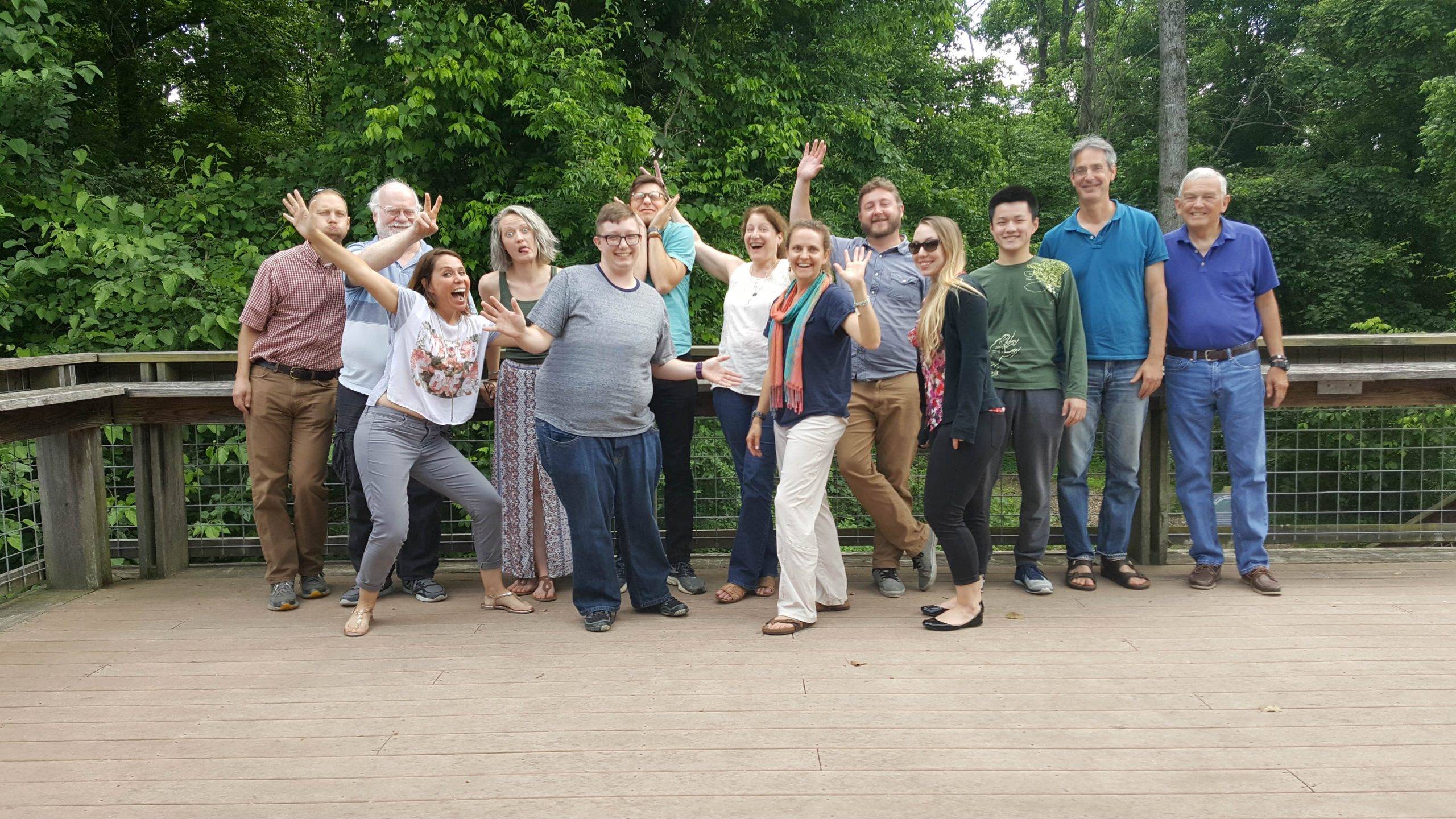
This meeting took place at Walnut Creek Wetland Center in Raleigh, NC, a perfect spot to discover local wetlands. Walnut Creek Center’s goal is to make people aware of the importance of wetlands for clean water, habitat, and recreation while emphasizing the importance of human interaction with nature.
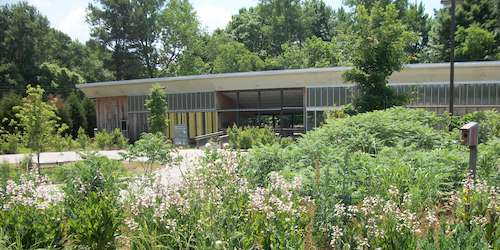
In honor of Wetlands month, we wanted to explore the beauty and value wetland forests provide…
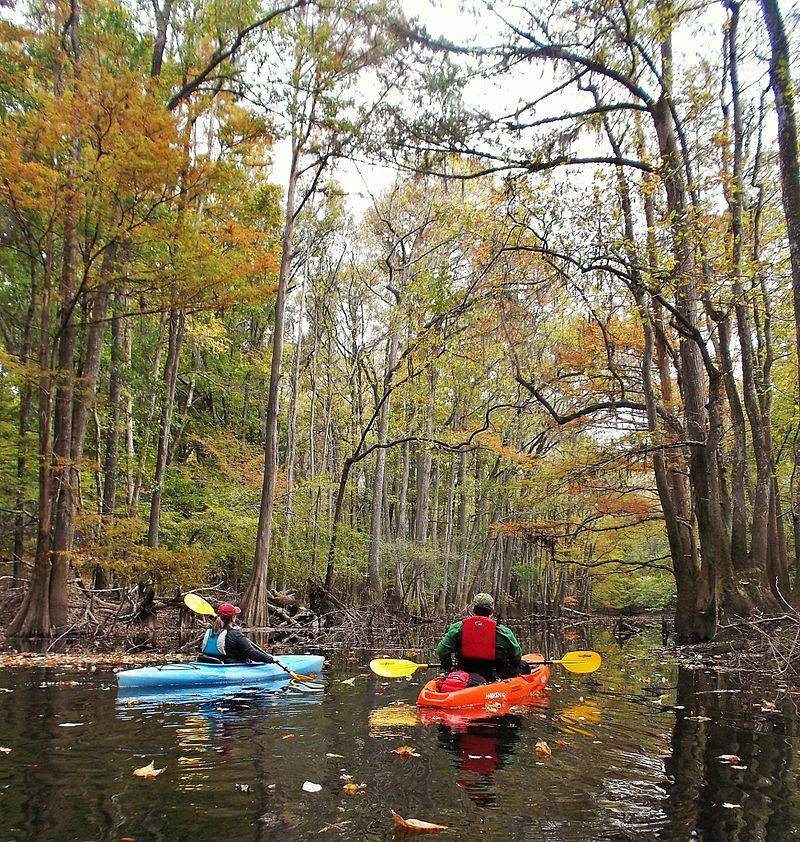
Kayakers on Cedar Creek – photo credit: JT Martin
What happens when research scientists and organizations like Dogwood Alliance start doing outreach about wetlands? They find information that connects intact wetlands with natural disaster reduction, water quality, justice, and enjoyment of the outdoors.
Wetlands, and especially wetland forests, are the “filters” of our natural systems and secure fresh drinking water for surrounding and downstream communities. They provide critical protection from dangerous flooding in vulnerable regions. Furthermore, wetland forests rank among the most important in the nation for carbon sequestration and biodiversity.
Natural disaster reduction – Did you know that two of the most expensive natural disasters of 2016 occurred in the Southern United States (floods in Baton Rouge and Hurricane Matthew)? We believe that the impacts of disasters like these could be reduced if we invested in conserving, restoring, and improving wetland forests in our region.

Water –Did you know that the Forest Service reports that nearly 50 million southerners rely on drinking water filtered through our forests? Wetland forests are known to filter out pollutants and excess nutrients from water, securing clean drinking water to communities.

Photo credit – Mac Stone
Access to recreation – Did you know that biodiversity plays a key role in your enjoyment of the great outdoors? We want to ensure that everyone has access to recreation in natural areas. So, having healthy wetlands that provide home to many species of plants and animals that people can enjoy – whether you want to hunt, fish, birdwatch, canoe, or just go for a walk. Biodiversity is important in order to continue to enjoy the outdoors.
Biodiversity means many species and equals healthy ecosystems where plants and animal can thrive.
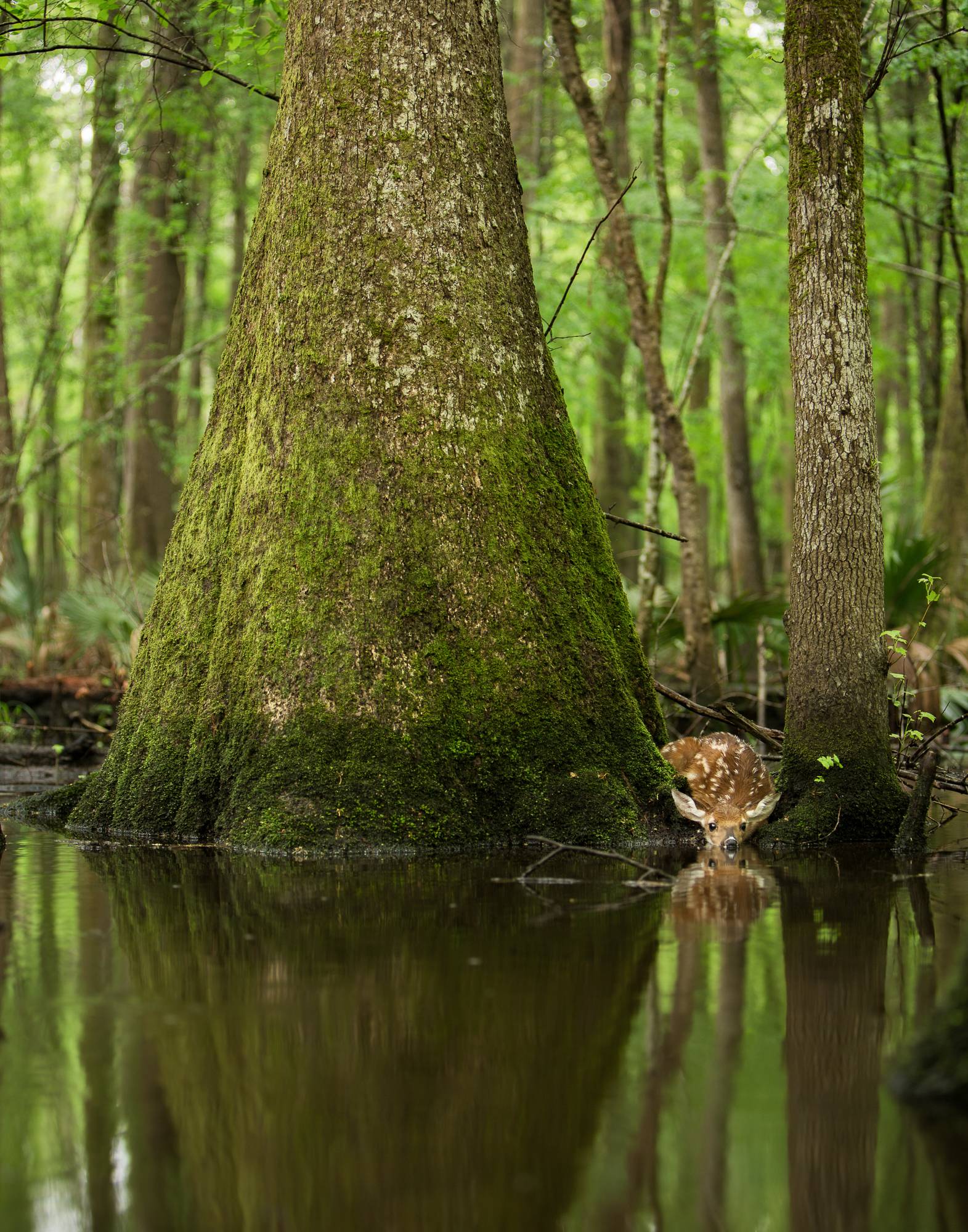
Photo credit – Mac Stone
Justice –Did you know that many wetland forests occur in poor rural areas? Investing in our natural infrastructure can help us transition away from an extractive economy (like logging) and towards an economy that rewards communities for the ecosystem services that their forests provide. This could be through payments for ecosystem services or bolstering ecotourism, among many other possibilities.
Stay tuned for the Swamp Road Trip Video Blog and be sure to check out our Treasures of the South: The True Value of Wetland Forests! If you like what we are doing, endorse the WFI platform.
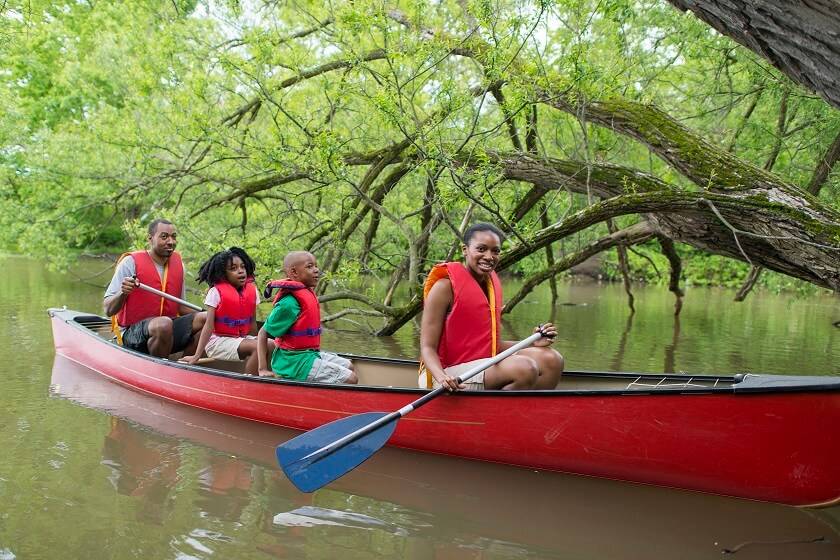
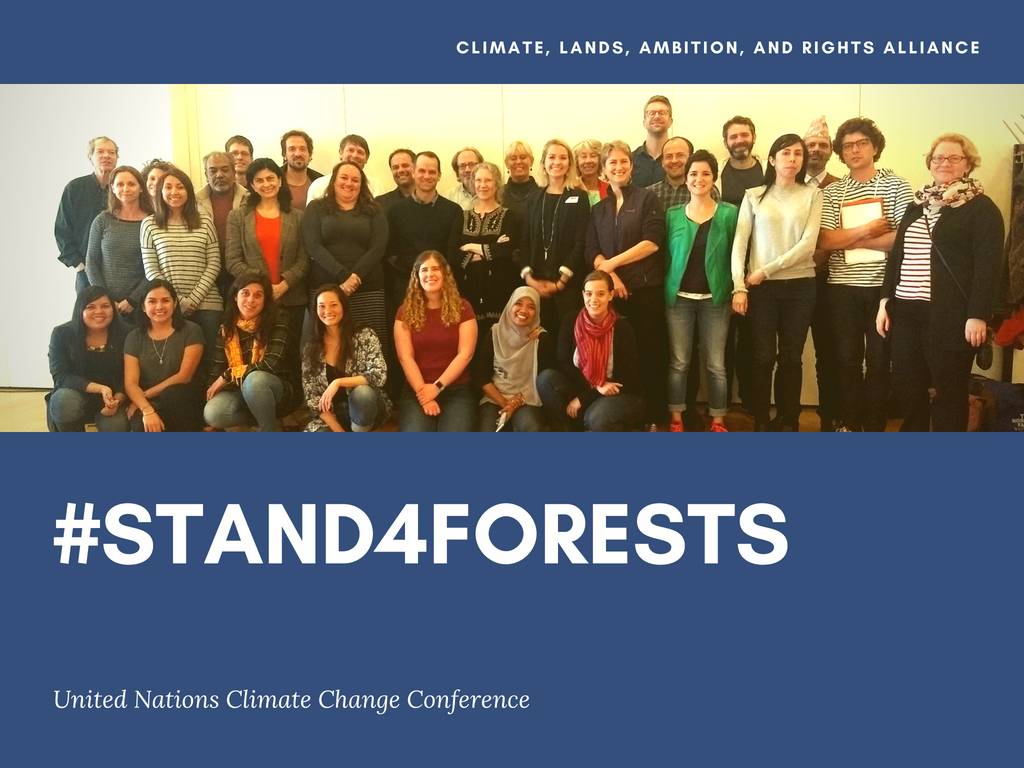
In this year’s session, the two weeks promised to include a full of discussion on implementation, scientific and technological advice, and, most importantly, serve as a working group to fulfil the Paris Climate Agreement of limiting global warming to 1.5 degrees Celsius.
For an organization like Dogwood Alliance, it’s critical that we are in the middle of such a convention because forests are the best tool that we have to fight climate change. Due to the U.S.’ past of being a major emitter of greenhouse gases, our status as one of the wealthiest nations the world has ever seen, and the unlocked potential of our forests to be bigger carbon sinks, protecting and restoring degraded forests as a part of the global climate change agenda must start with forests at home.
The reality is that global governments have been discussing how to deal with climate change at the UNFCCC meetings for decades. And with a world that just reached 410ppm of C02 in the atmosphere, we must not only decarbonize our electricity supply, countries must actively remove emissions from the atmosphere. This is oftentimes referred to as “negative emissions.”
Further, in the Southern U.S., we know that our forests are not only important carbon sinks, but they also provide immeasurable benefits like cultural heritage, recreation, and non-timber forest products like mushrooms, berries, and medicinal plants.
Forests are the solution to tackle climate change, preserve global biodiversity, and protect the livelihoods of millions of people. For example, in our region, 50 million people rely on forests for clean drinking water. Even more, it’s important to call out false solutions for negative emissions like afforestation and bioenergy with carbon capture and storage, otherwise known as BECCS. To achieve negative emissions in a way that doesn’t exceed social, technological, or biophysical constraints, governments must move towards protecting forests and allowing degraded forests to regenerate.
For the Southern U.S., this means valuing forests for more than their commodity value as timber, paper, pulp, or biomass. It means placing direct value on ecosystem services like clean air, clean water, recreation, aesthetics, extreme weather event protection, food, pollination, and countless other services. After all, wetland forests in the U.S. already provide services worth $503.8 billion to our economy that’s not directly valued!
Restoring forests can come in many forms. Specifically, our forests in the Southern U.S. deserve greater protection. Most protected lands in the U.S. are in the West, even though more biodiversity is housed in the Southeast. Logging rates need to be limited and damage from logging needs to be reduced. Finally, lost forest lands need to be restored. These are the clear measures that need to be fulfilled in order to fight the existential threat that climate change poses. Payments for ecosystem services are one way to incentivize these measures, and the values we espouse for forests must fundamentally shift to be about protection rather than destruction.
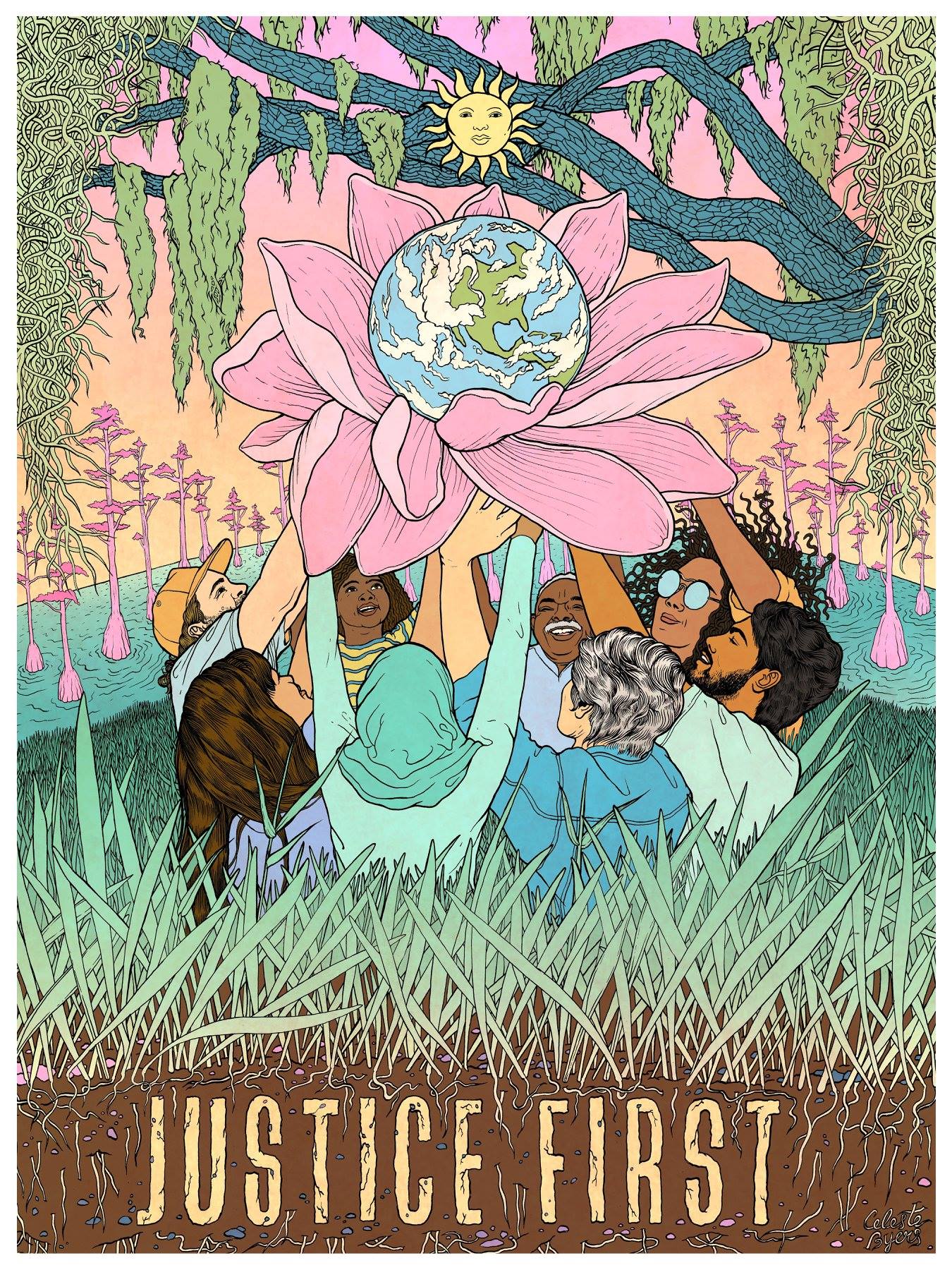 Just as the climate movement in the United States is calling for justice first, so too is the global climate movement.
In the international setting, this means that developed countries that are wealthier and have contributed more greatly to the share of global emissions have a responsibility to clean up after the decades of pollution we have caused. They can do this by scaling up our targets for emissions reductions and for climate finance.
And while our President has indicated he wants nothing to do with climate change negotiations, elected officials at our state and local levels are stepping up to join the US Climate Alliance and reduce their share of greenhouse gas emissions.
Our eyes are on Governors in our region who have signed on to this alliance but have yet to stand for forests: Governor Roy Cooper in North Carolina and Governor Ralph Northam in Virginia.
Limiting global warming to 1.5 degrees Celsius is not only possible, it is the only chance of survival for vulnerable communities in our region of the Southern U.S. and the world, who are increasingly exposed to rising sea levels, more destructive storms, and flooding. Starting in our own region and calling on our own policymakers is critical in order to fight climate change by standing for forests.
For years, the industrial-scale wood pellet industry has been allowed to expand unchecked in the Southern U.S. While the negative impacts of burning wood pellets on our climate have been well documented, new research highlights another troubling aspect of this dirty industry: harmful pollution made worse by an shocking pattern of violations.
Communities living near wood pellet production facilities have long called for reprieve from the dust that coats their homes and triggers respiratory illnesses. A new report from the Environmental Integrity Project, DIRTY DECEPTION: How the Wood Biomass Industry Skirts the Clean Air Act, confirms that these facilities are indeed releasing tons of soot particles that can trigger asthma and heart attacks, as well as carcinogens and smog-forming pollutants.
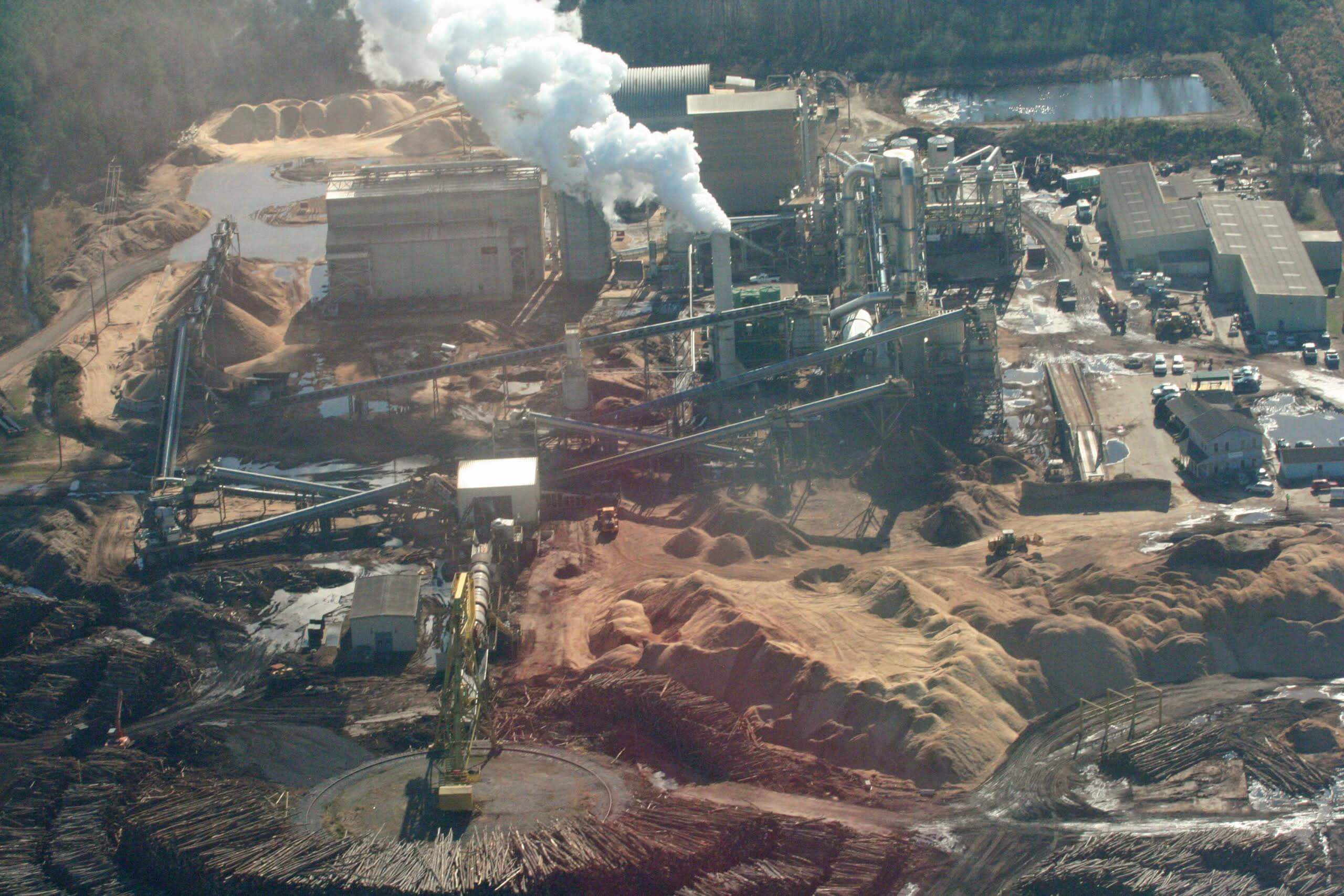
The Environmental Integrity Project report highlights the widespread air quality violations in the biomass industry. The report’s authors examined federal and state records for 21 wood pellet plants from Virginia to Texas.
The results underline the need for decision-makers to take a hard look at the destruction of the wood pellet industry, hold companies like Enviva accountable for their pollution, and take a stand for true climate solutions and healthy communities.
The report found that:
It should come as no surprise that North Carolina, home to three Enviva wood pellet facilities and a fourth underway, has been the most egregious in terms of allowing unnecessary and unlawful pollution from the industry. Due to North Carolina’s lax oversight and Enviva’s reluctance to install controls, the Enviva plants are the largest emitters of VOCs and hazardous air pollutants in the industry, emitting five to six times the level of VOCs and 50 times the level of hazardous air pollutants as comparable facilities.
New research shows that wood pellet facilities are 50% more likely to be located in Environmental Justice communities – counties where the poverty level is above the state medium, and at least 25% of the population is nonwhite. In North Carolina, every single wood pellet facility is located in a low-income, community of color.
These wood pellet producers, like Enviva, and the state regulators who have permitted them, are knowingly allowing polluting facilities to skirt federal Clean Air Act requirements and put at risk communities who are the most vulnerable to the impacts of climate change and who have the least access to quality and affordable health care.
This is unacceptable. Our communities and forests deserve better.
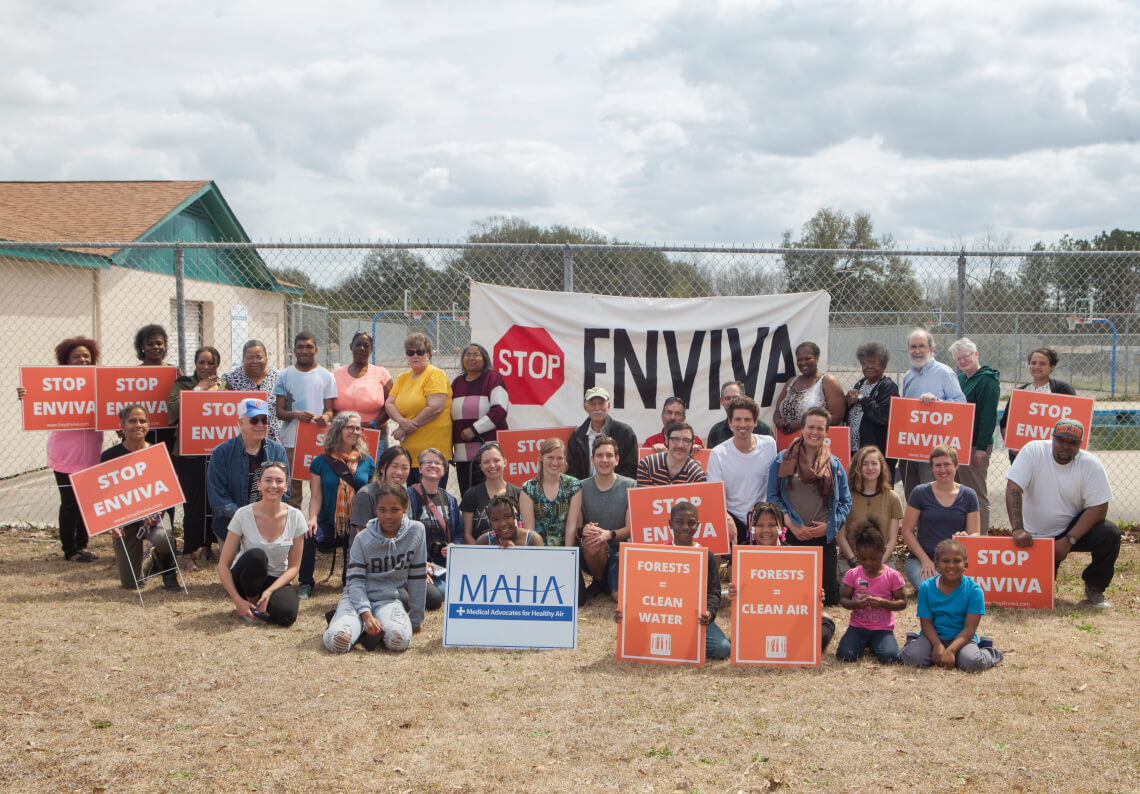
It is time for states to pump the brakes on an industry that has been deceiving investors, decision-makers, and communities from day one. Our state officials, armed with this new knowledge, should hold the biomass industry accountable and do right by communities. We call on state officials to fix permit and compliance issues, ensure that facilities install best available pollution controls, and halt the expansion of this industry.
On Earth Day, the one day a year that Americans are reminded to respect and love the earth for all its wildness and splendor, and to be thankful for the clean air, water, and nurturing it provides, Environmental Protection Agency Head Scott Pruitt decided he would push the planet closer to the brink of destruction.
Traveling down to Georgia, where Dogwood Alliance’s Stand4Forest campaign has helped stop communities from adopting biomass in Chatham County, Atlanta and Pine Lake, Pruitt announced that the EPA would declare the burning of all biomass carbon neutral. Despite the fact that the scientific community disagrees, Pruitt took an action that could open the floodgates to new forest destroying biomass utilities to come online across the United States.
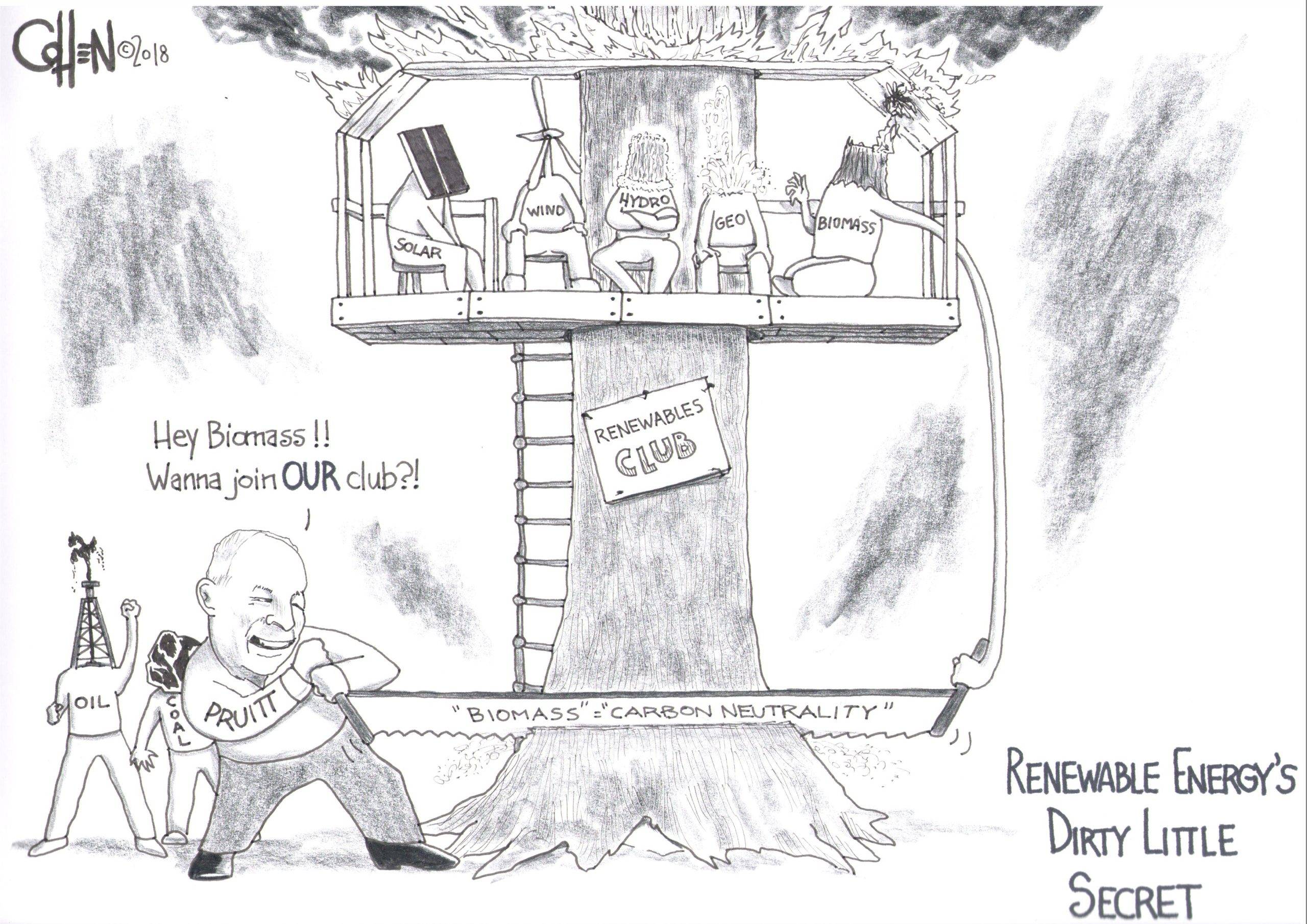
Despite the fact that the forests of the Southern US are some of the most biodiverse in the world and provide billions of dollars of vital services like flood protection, carbon storage, and clean drinking water, they have a long history of destruction from those looking to make a profit.
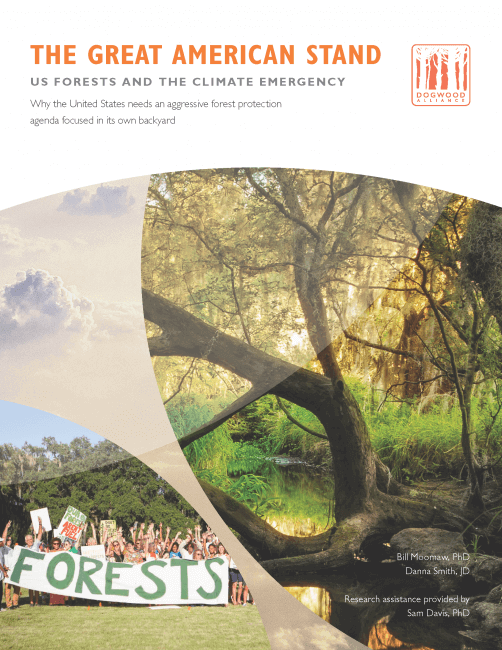
So in order to give Scott Pruitt and the timber industry a vital reminder of the legacy of forest destruction in the Southern US, we produced a white paper, “A History of Forests in the US South,” which is the first installment of our new Great American Stand series.
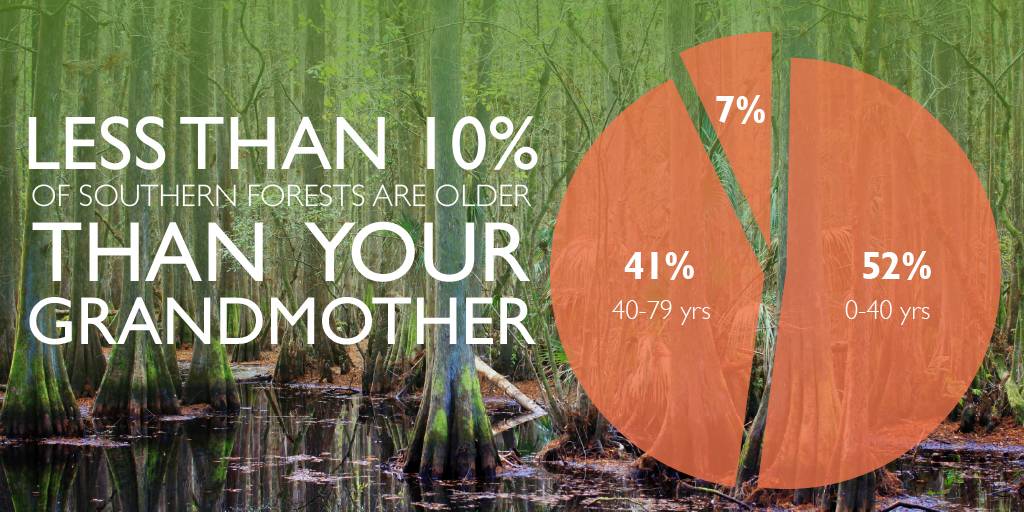
Healthy, natural forests support biodiversity, store carbon, and clean our air and water. The older our forests are, the more benefits they can provide. But we lose out on many of these benefits when forests are harvested in just 30-40 years to make lumber, paper, wood pellets or other wood products. In the US South, more than half of our forests are less than 40 old, and many are degraded as a result of constant logging without proper regeneration.
If our forests were left to grow, they could continue storing carbon and removing it from the atmosphere, cleaning air, and providing fresh drinking water. They could house our many native species of plants and wildlife. They could provide recreation opportunities to children and adults alike, and they could protect communities from storms and flooding. We risk all of these benefits by putting forest products before people. Which clearly, Scott Pruitt has chosen to do.
This can and must change, together we will rewrite history! but if Pruitt has his way, things will only get worse.


 Donate
