


For years, the industrial-scale wood pellet industry has been allowed to expand unchecked in the Southern U.S. While the negative impacts of burning wood pellets on our climate have been well documented, new research highlights another troubling aspect of this dirty industry: harmful pollution made worse by an shocking pattern of violations.
Communities living near wood pellet production facilities have long called for reprieve from the dust that coats their homes and triggers respiratory illnesses. A new report from the Environmental Integrity Project, DIRTY DECEPTION: How the Wood Biomass Industry Skirts the Clean Air Act, confirms that these facilities are indeed releasing tons of soot particles that can trigger asthma and heart attacks, as well as carcinogens and smog-forming pollutants.
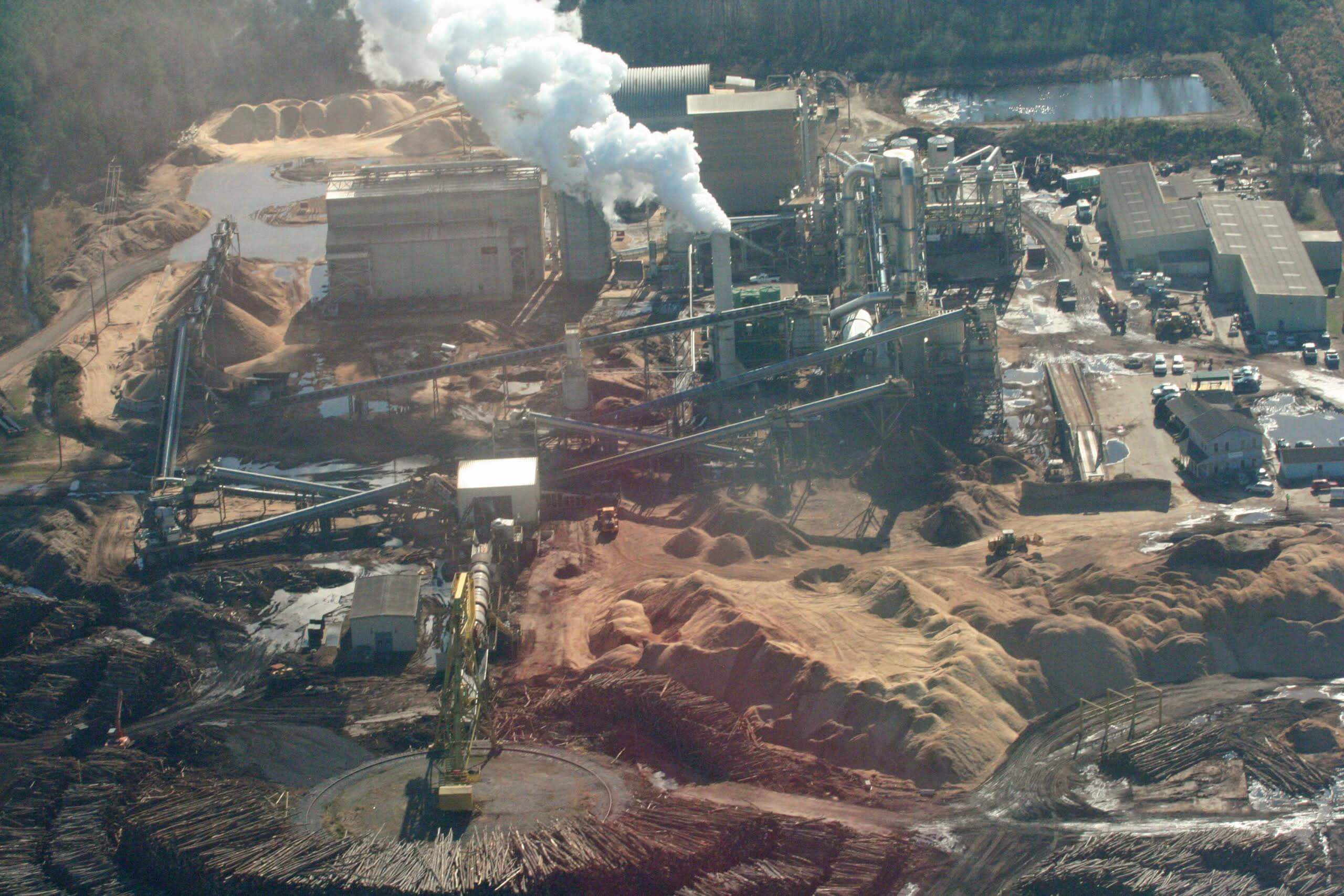
The Environmental Integrity Project report highlights the widespread air quality violations in the biomass industry. The report’s authors examined federal and state records for 21 wood pellet plants from Virginia to Texas.
The results underline the need for decision-makers to take a hard look at the destruction of the wood pellet industry, hold companies like Enviva accountable for their pollution, and take a stand for true climate solutions and healthy communities.
The report found that:
It should come as no surprise that North Carolina, home to three Enviva wood pellet facilities and a fourth underway, has been the most egregious in terms of allowing unnecessary and unlawful pollution from the industry. Due to North Carolina’s lax oversight and Enviva’s reluctance to install controls, the Enviva plants are the largest emitters of VOCs and hazardous air pollutants in the industry, emitting five to six times the level of VOCs and 50 times the level of hazardous air pollutants as comparable facilities.
New research shows that wood pellet facilities are 50% more likely to be located in Environmental Justice communities – counties where the poverty level is above the state medium, and at least 25% of the population is nonwhite. In North Carolina, every single wood pellet facility is located in a low-income, community of color.
These wood pellet producers, like Enviva, and the state regulators who have permitted them, are knowingly allowing polluting facilities to skirt federal Clean Air Act requirements and put at risk communities who are the most vulnerable to the impacts of climate change and who have the least access to quality and affordable health care.
This is unacceptable. Our communities and forests deserve better.
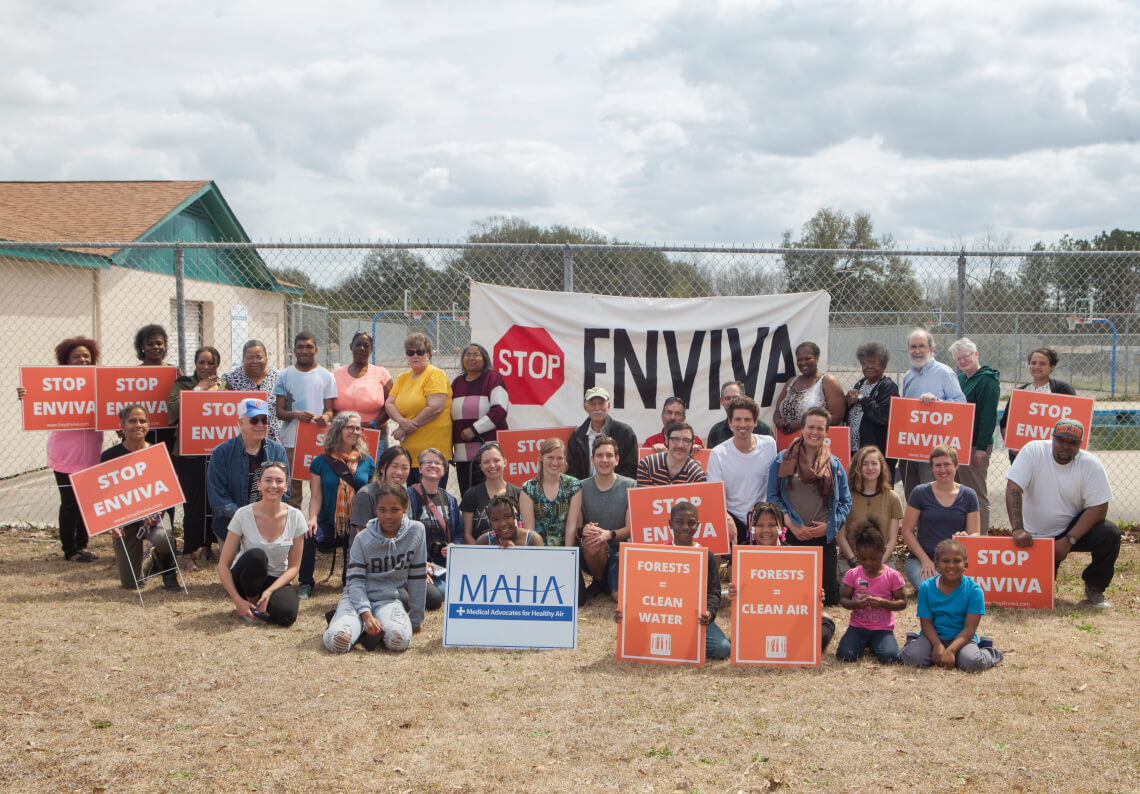
It is time for states to pump the brakes on an industry that has been deceiving investors, decision-makers, and communities from day one. Our state officials, armed with this new knowledge, should hold the biomass industry accountable and do right by communities. We call on state officials to fix permit and compliance issues, ensure that facilities install best available pollution controls, and halt the expansion of this industry.
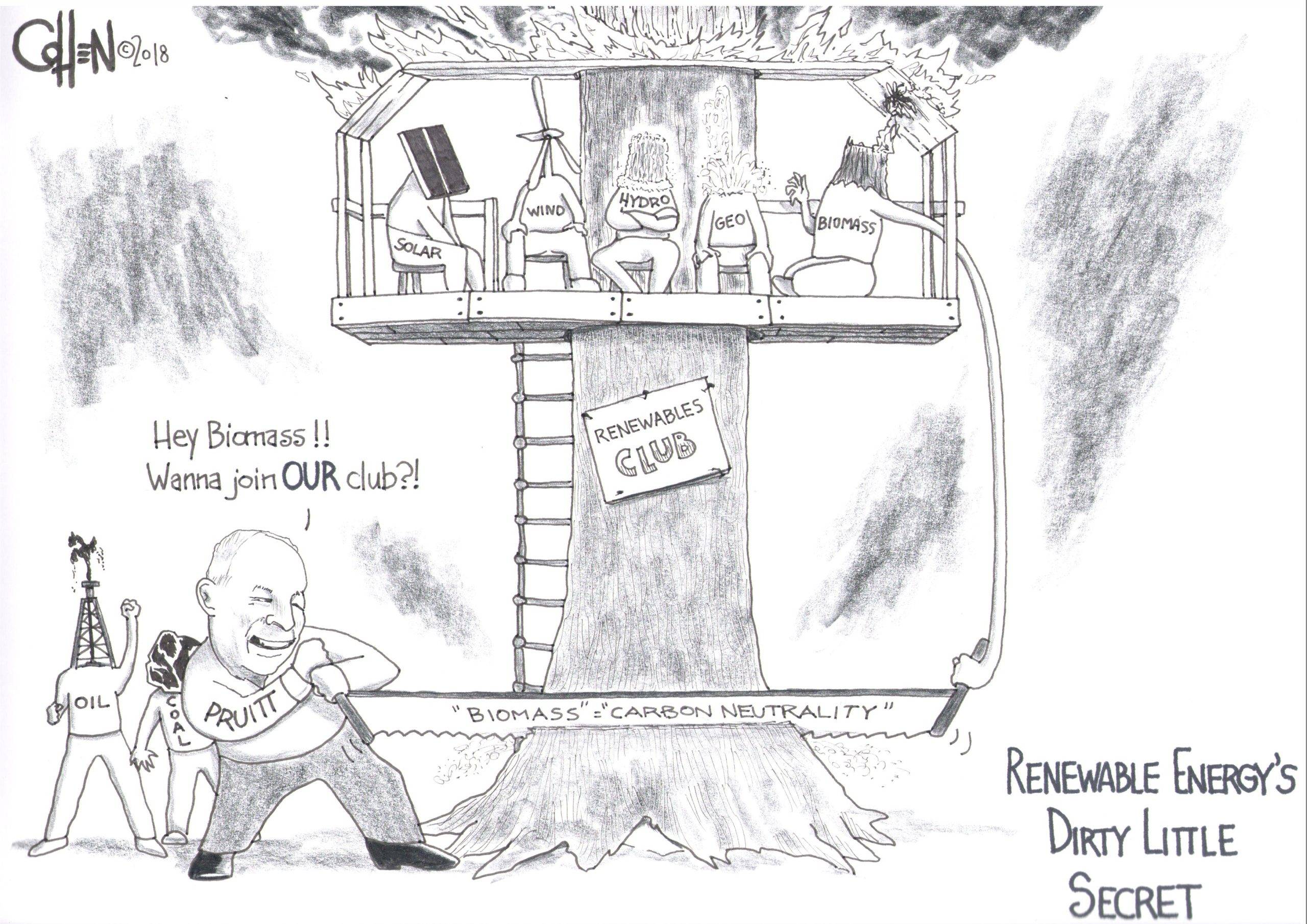
On Earth Day, the one day a year that Americans are reminded to respect and love the earth for all its wildness and splendor, and to be thankful for the clean air, water, and nurturing it provides, Environmental Protection Agency Head Scott Pruitt decided he would push the planet closer to the brink of destruction.
Traveling down to Georgia, where Dogwood Alliance’s Stand4Forest campaign has helped stop communities from adopting biomass in Chatham County, Atlanta and Pine Lake, Pruitt announced that the EPA would declare the burning of all biomass carbon neutral. Despite the fact that the scientific community disagrees, Pruitt took an action that could open the floodgates to new forest destroying biomass utilities to come online across the United States.
Despite the fact that the forests of the Southern US are some of the most biodiverse in the world and provide billions of dollars of vital services like flood protection, carbon storage, and clean drinking water, they have a long history of destruction from those looking to make a profit.
So in order to give Scott Pruitt and the timber industry a vital reminder of the legacy of forest destruction in the Southern US, we produced a white paper, “A History of Forests in the US South,” which is the first installment of our new Great American Stand series.
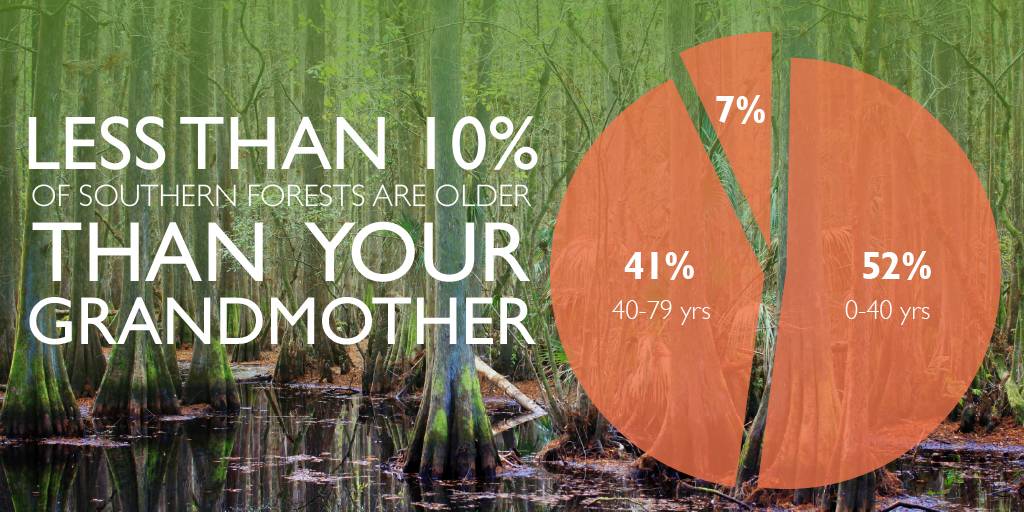
Healthy, natural forests support biodiversity, store carbon, and clean our air and water. The older our forests are, the more benefits they can provide. But we lose out on many of these benefits when forests are harvested in just 30-40 years to make lumber, paper, wood pellets or other wood products. In the US South, more than half of our forests are less than 40 old, and many are degraded as a result of constant logging without proper regeneration.
If our forests were left to grow, they could continue storing carbon and removing it from the atmosphere, cleaning air, and providing fresh drinking water. They could house our many native species of plants and wildlife. They could provide recreation opportunities to children and adults alike, and they could protect communities from storms and flooding. We risk all of these benefits by putting forest products before people. Which clearly, Scott Pruitt has chosen to do.
This can and must change, together we will rewrite history! but if Pruitt has his way, things will only get worse.
Wide-ranging media outlets from The Wall Street Journal to The Economist to Science Magazine have covered the issues surrounding wood pellet production and arrived at the conclusion that burning Southern forests for electricity is ludicrous. Being at the forefront of the work to stop the unimpeded growth of the industrial-scale biomass industry, we can easily agree because of all our hours spent on country roads following trucks to prove that the industry is sourcing its “green fuel” from precious bottomland hardwood forests.
Scientists, organizations, community groups, and investment firms have spoken out against the biomass industry’s false promises of “sustainability” and their smokescreen of caring for the communities where they set up their dirty facilities.
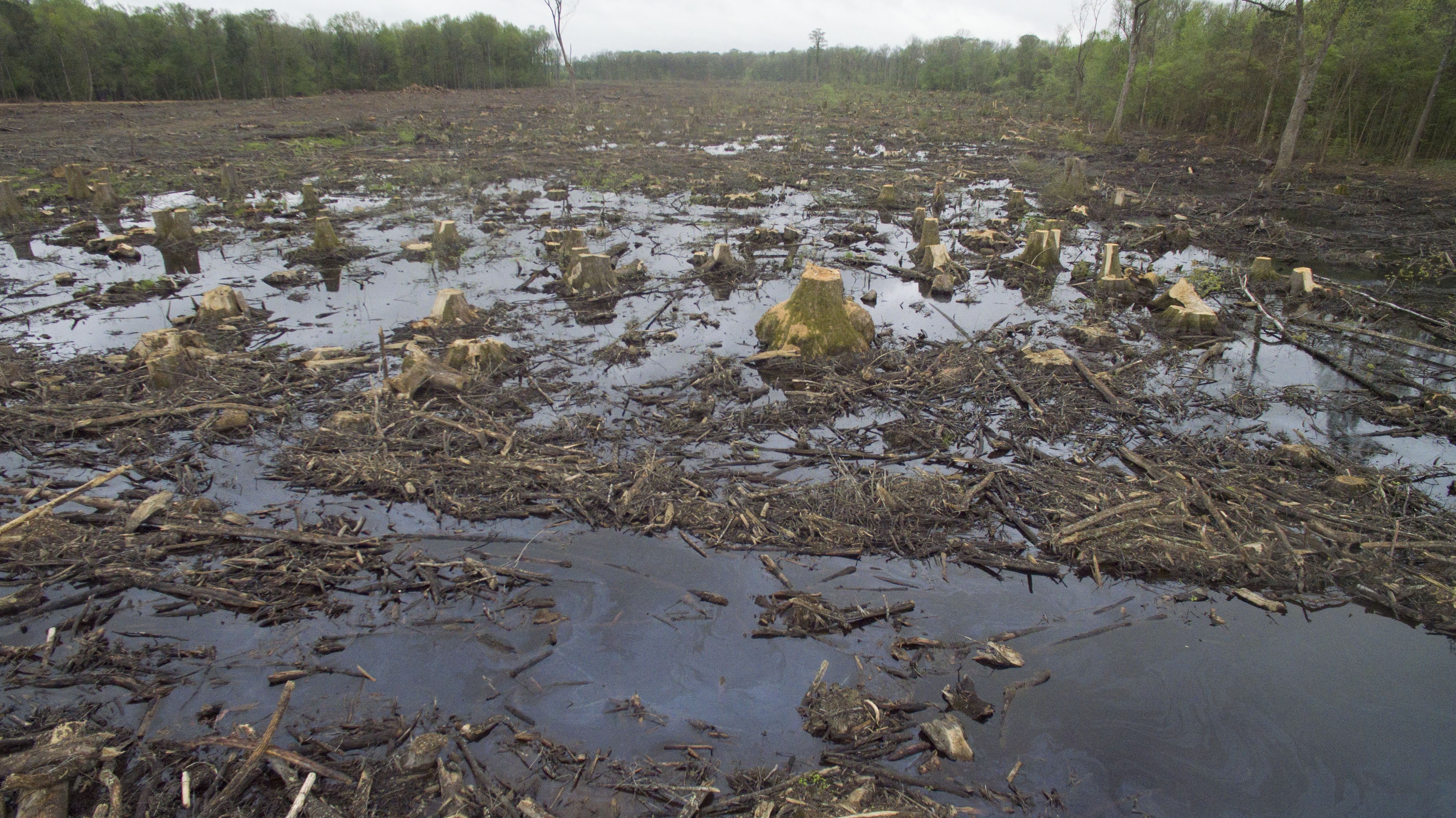
Southern bottomland hardwood forest devastated after biomass harvest
Our pellets are shipped primarily to the UK and EU, and for the past several years, people have been joining in to the chorus. Neighbors all across South, from big cities like Atlanta, Charlotte, and Baton Rouge and small towns like Hamlet, NC, Clinton, SC, and Gainesville, FL have spoken up, and it’s not gone unnoticed. The urgency and scale of the threat has even prompted the creation of an international biomass network, which gathered in Estonia last week to #Stand4Forests.
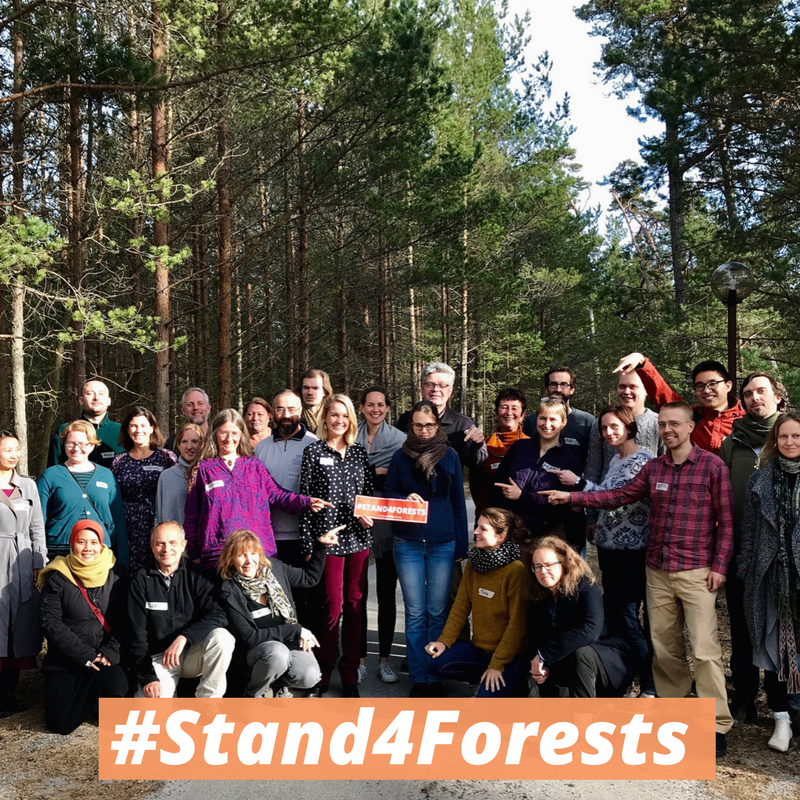
International Biomass Network gathering
Right now, our forests are at the center of the debate in the EU about its next renewable policy. Our forests are showing up in the nightly primetime news show in the UK, and they are being published about in environmental justice research journals.
Where has this led us? To carry the message of forest protection to the highest level that we can go: the United Nations Climate Change Conference in Bonn, Germany. UN Climate Conferences provide a platform for advocating real solutions to the climate crisis and ensuring false solutions are not agreed to.

Campaigns Manager, Rita Frost, at the UN Climate Change Conference to #Stand4Forests
The UN Framework Convention on Climate Change (UNFCCC) is the root of the carbon accounting error that determined burning trees for electricity was carbon neutral because eventually trees grow back. This was a relatively benign problem for a number of years until Europe opened up the floodgates for biomass power, which promptly led to enormous destruction of forests in the Southern US.
Even more, as the world determines how each country will meet their Paris Climate Agreement goals, enormous countries are signaling that they want to scale up the “bioeconomy.” In the South, we know exactly what happens when market structures and government subsidies are created to prop up the biomass industry. Our history with European renewable policy hurting our forests has demanded that we arrive in Bonn, Germany and deliver the strong message that we have been saying for years: Our Forests Aren’t Fuel!
Technologies like biomass with carbon capture and storage (BECCS) which is just an excuse to burn more forests and coal and sadly makes up a vast majority of scenarios being explored by the UN. Our problems will only be solved through collective efforts to address the root causes of climate change such as drawing down fossil fuels, ending forest destruction, and rapidly increasing protections for carbon sinks like forests.
Implementation of the Paris Climate Agreement is happening right now. This is why we’re showing up, representing the voices of thousands of Southerners. Forests must be valued for all the life-giving benefits that they provide us. Forest are the best system to protect us from climate change.
Earth Day is 48 years old this year. You might think for people who have been working in the environmental trenches for a while, it’s a little been-there-done-that. But, for most of the long-timers, that’s definitely not the case. Many participated in that very first celebration and, much as we loved Earth Day #1, each year since then has brought an ever-deepening awareness of the incredible gifts we’re given every day by this little blue planet – and of the increasing peril those gifts, and we, are facing. That peril itself can be seen as a kind of dark gift, though, providing serious motivation to stay in the movement and on the job.
Each year, tens of thousands of “Generation Next” youth around the world join the movement. They show up to table and canvass, petition, make calls, and pledge, and perhaps most importantly, to vote. This generation understands that their future is at stake, and many of them are taking matters into their own hands.

Unfortunately, our elected officials don’t always prioritize the environment.
Dane Strother, a political communication strategist, gets right to the point in a recent article in the Washington Post:
“The failure of our national leaders to take climate change seriously may be both cause and consequence of environmentalists’ low voting rates…”
A recent study indicates that likely voters – defined as those who voted in the last couple of elections – are critically important to determining the issues candidates care about. But in that very group, the environment ranked much lower than other issues. Why? It seems people who rank the environment as their top priority are up to 50% less likely to vote!
In addition to recognizing the gift of our environment, let’s give a shout out and recognize a debt of gratitude to the young people who #Stand4Forests here in Georgia and throughout the Southeast. Let’s thank them for taking action on the streets, and let’s hope they’ll all register to VOTE for planet Earth.
FOR IMMEDIATE RELEASE: April 18, 2018 1 pm EDT
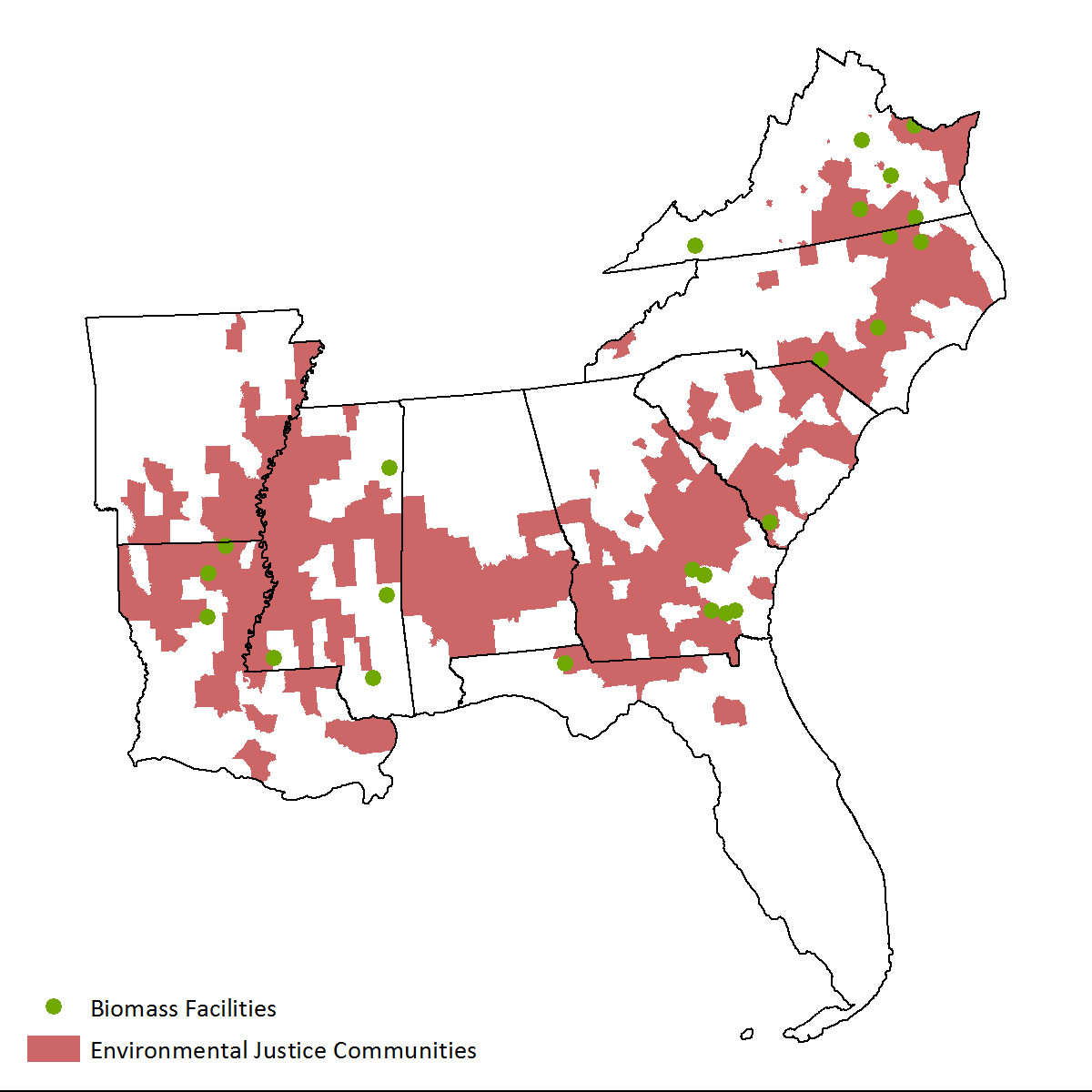
Map showing the location of existing wood pellet mills and Environmental Justice (EJ) designated communities in the Southern United States. All mills in North and South Carolina have been located in EJ communities, and the research found there is a greater than 50% likelihood that future wood pellet mills would be as well.
Asheville, NC – A new research paper, “Siting of Wood Pellet Production Facilities in Environmental Justice Communities in the Southeastern United States” has been published this month in Environmental Justice, a peer reviewed scientific journal, by Sam Davis, research manager at Dogwood Alliance and Stefan Koester, of Tufts University. The paper examines the burgeoning wood pellet production industry in the Southern United States, where the facilities are increasingly marred by controversy around self-proclaimed statements of being “clean” and “green” energy.
As efforts to decarbonize the electric sector take on increased urgency, governments are turning to wood pellets as a potential renewable energy resource. This is especially true in Europe, which has become the world’s largest importer of wood pellets for use in electricity facilities. However, the production of pellets from woody biomass has immediate community-wide impacts on air and water quality.
Wood pellet production facilities release fine particulates, nitrogen oxides, carbon monoxide, and volatile organic compounds in the air while operating, which can place a substantial burden on nearby communities already struggling with other polluting industries in the area. Davis and Koester examined the relationship between locations of wood pellet production facilities and the economic and racial diversity of areas where they are located. The authors found that wood pellet production facilities in the southeastern United States are 50% more likely to be located in “Environmental Justice” (EJ) communities — counties where the poverty level is above the state medium, and at least 25% of the population is nonwhite.
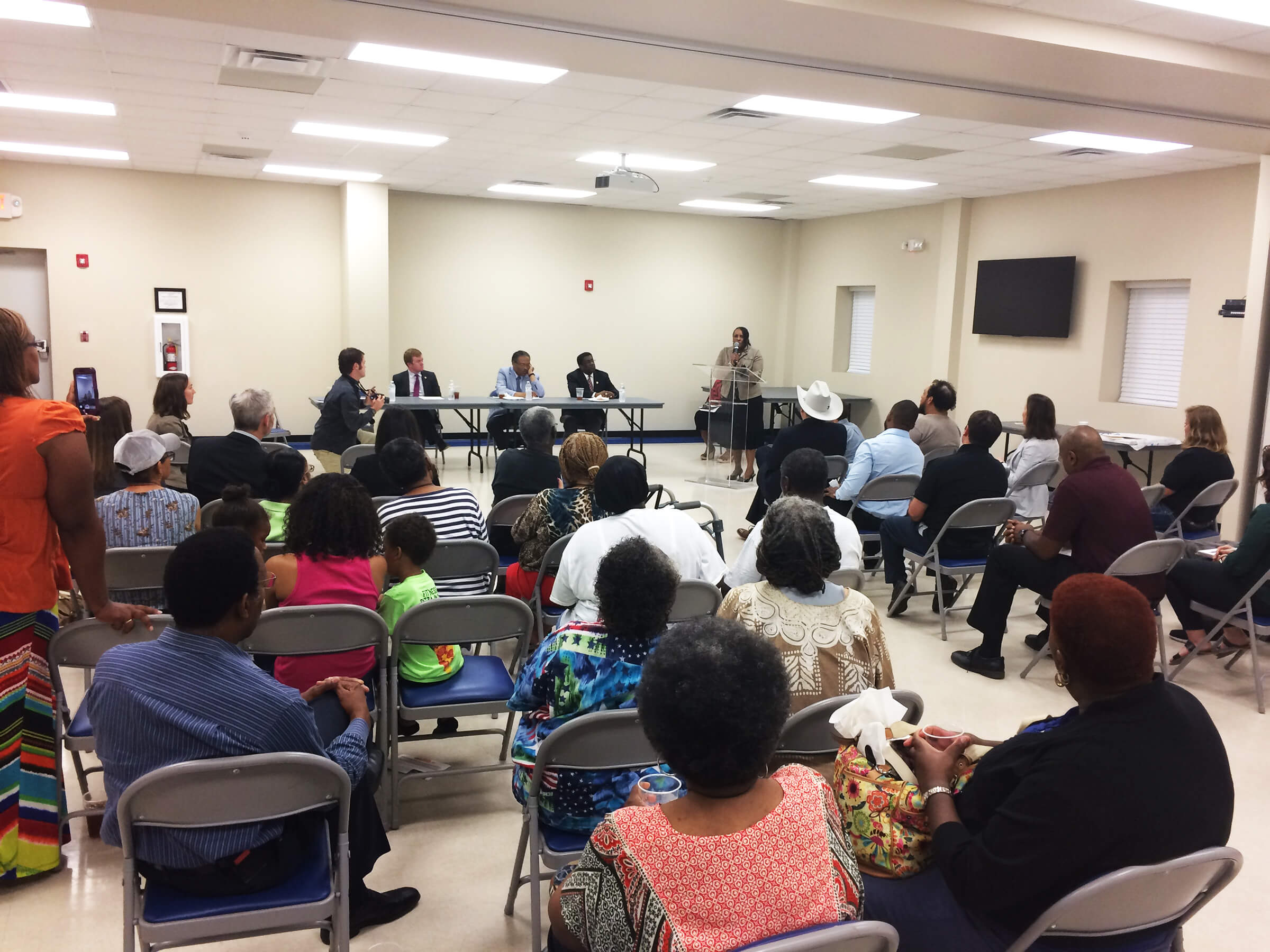
Residents of the Concerned Citizens of Richmond County speak at a community forum in opposition to a proposed Enviva wood pellet mill. Dobbins Heights where the facility is set to be built is designated as an Environmental Justice community.
“These data add to growing evidence that biomass facilities in the US South place an undue burden on areas struggling with economic and environmental justice issues,” said Davis. “We hope that this paper will encourage communities and local governments to think twice before allowing a polluting industry like wood pellets to take up residence in their towns.”
This finding identifies a worrying trend in wood pellet production facilities (also known as “biomass” facilities) in the South — that they are being placed in low-income communities of color where often other polluting industries exist. This pattern was especially egregious in both North Carolina and South Carolina, where every large wood pellet production facility analyzed was located in an existing Environmental Justice community.
The paper also highlights the Dobbins Heights community, in Richmond Co., North Carolina, where the community organization Concerned Citizens of Richmond County organized to try and prevent construction of a wood pellet production facility owned by Enviva. Enviva’s Richmond County facility, which was recently permitted, will join a Perdue chicken plant, Duke Energy, Piedmont Natural Gas, CSX, and a connecting point for the Piedmont and Atlantic Coast Pipelines.
“We really see the impacts on the ground in communities like Dobbins Heights in Richmond County, where an Enviva wood pellet plant under construction will join all of these other polluting industries in one very concentrated area,” said Emily Zucchino, Community Network Manager at Dogwood Alliance. “It’s just not fair to those residents who want clean air and a safe, healthy environment for their families.”
# # #
Every once in a while you meet someone who has a profound influence on your life — a person who helps you see things differently and inspires you to take on new challenges. Last year, I was fortunate enough to meet Reverend Leo Woodberry at the People’s Climate March in Washington DC. He had organized a delegation of over 600 citizens from communities on the front-lines of environmental destruction in the Southeastern US to attend the march. He insisted that Dogwood staff and volunteers with our forest protection signs march with them.
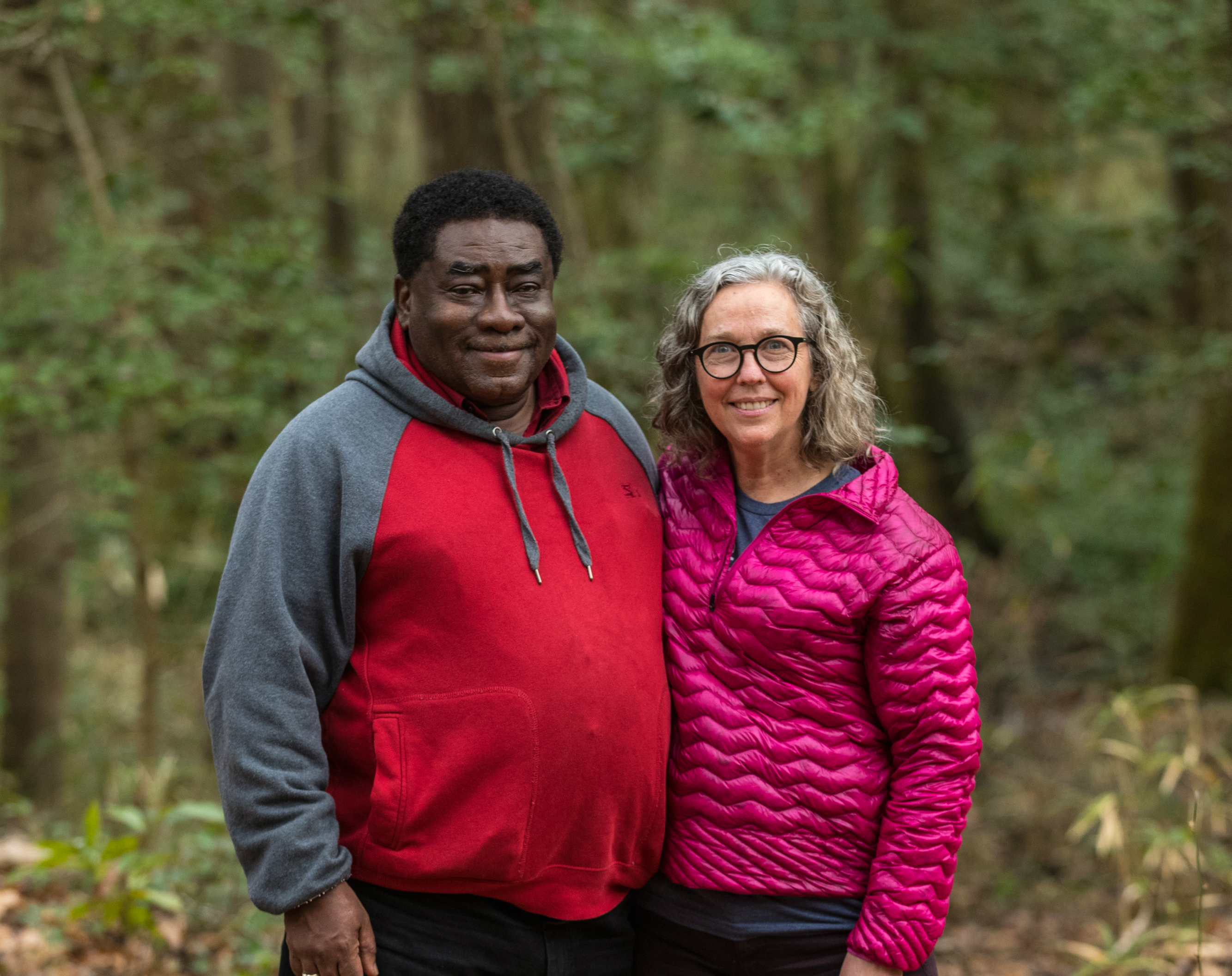
Over the course of the rest of the year, Leo and I would see each other at various press events, rallies, and conferences. We became good friends, sharing stories, food, laughs, and even walks in the woods.
We had hours of conversations about all of the polluting industry in the South, our region’s long history of land exploitation and its relationship to poverty and race.
As daily news reports reflected a nation becoming more divided, seeming to have lost its moral compass and hope for the future, our talks inevitably came down to one simple truth:
Justice is defined by the dictionary as meaning fairness, equity, honesty, and morality.
Leo said, “We should do a tour together, organizing our networks and people in the communities to inspire a grassroots solidarity movement and talk about a new vision for the region.”

On April 14th the New Alpha Development Corporation and Dogwood Alliance, with the support of Sierra Club, GreenFaith, US Climate Action Network, and dozens of environmental groups, justice organizations, and faith leaders from across the South will launch the Justice First Tour in Raleigh, NC. This tour, which will span 8 states and 13 cities from April until August will lift up the voices of many of the communities most impacted by climate change, forest destruction, pollution, and other forms of injustice.
Most people don’t immediately think of forests when thinking about climate or justice issues in the South even though the South is the world’s largest wood producing region with a rate and scale of logging that is four times that of South American rainforests. Increasingly, scientists are pointing to the critical need to, not only transition away from fossil fuels, but also to let forests grow if we are to avoid the worst effects of climate change.

Low-income people and people of color across the South disproportionately suffer from higher than average cancer, asthma, and other health problems due to pollution from industrial factories (e.g., power plants, paper mills, oil refineries, and waste dumps). The fact is, polluting facilities are a lot more likely to be sited in low income communities and communities of color. Many of these same communities are hit the hardest by recent extreme flooding linked to climate change, which has left many homeless or otherwise financially burdened after having to flee their homes and jobs.
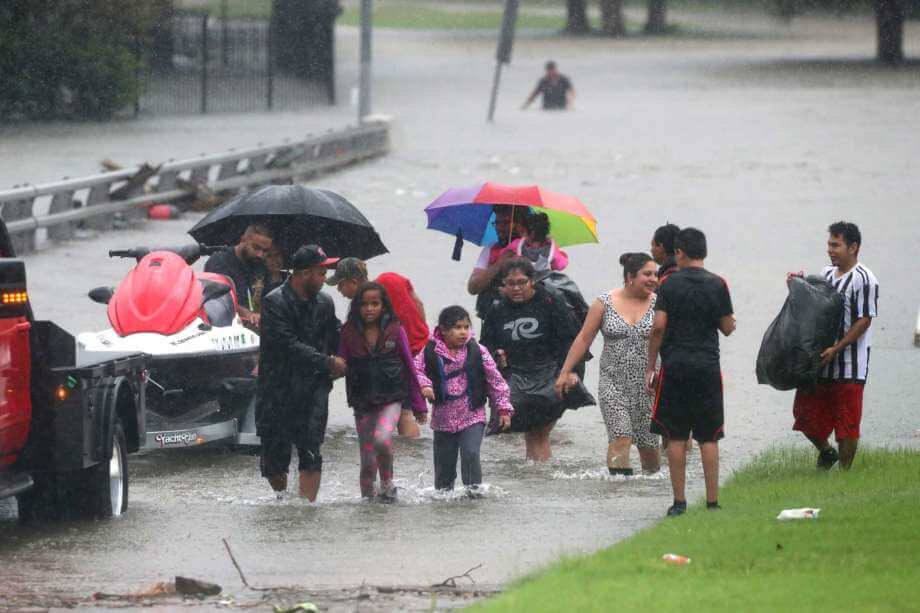
Photo: Marie D. De Jesus
Our Southern communities are currently facing a new wave of dirty energy projects, including offshore Atlantic drilling, the construction of new gas pipelines, and the rapid expansion of wood pellet mills that are polluting the air and destroying forests to produce fuel to generate electricity in Europe. Government at every level and across political lines continues to ignore climate science and put corporate interests above the interests of the people.
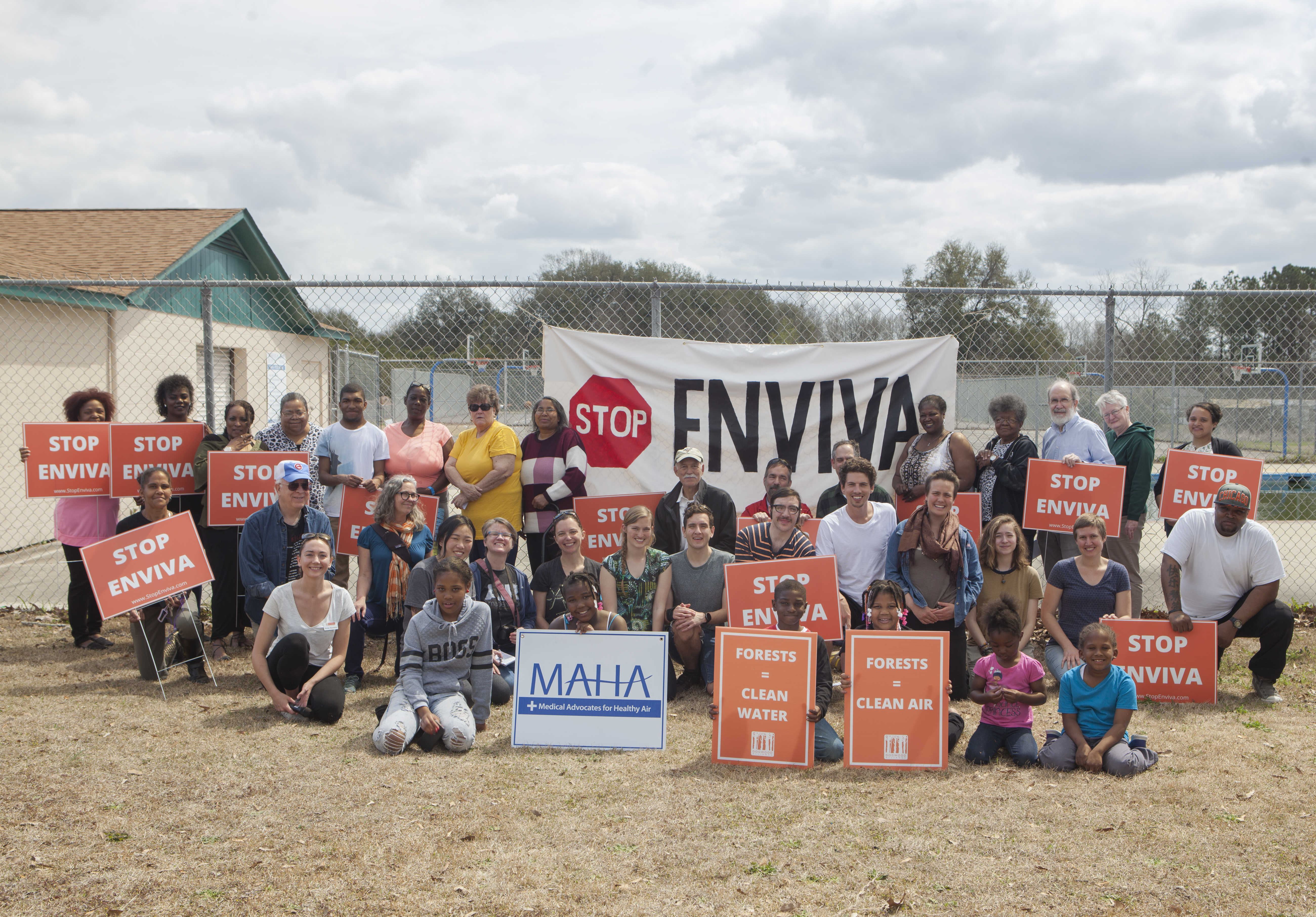
It’s a simple fact, and it’s not ok.
But, it doesn’t have to be this way. The South is a beautiful region with a culture as rich and diverse as its forests. Out of a tumultuous history of slavery, discrimination, and prejudice came the rise of the Civil Rights Movement, which propelled our country forward in its ideals of liberty, equality, and justice for all. Today, we must face the reality that we still have not lived up to the principles of justice and equity upon which our country was founded.
Together we are a powerful force of change that, to paraphrase Martin Luther King, Jr., can once again bend the long arc of the moral universe towards justice.
For, our strength and our ability to do our best work, just like a forest, lies in our diversity and willingness to work cooperatively in support of the greater good for everyone.
Reverend Leo Woodberry and Danna Smith at Congaree National Park
Mahatma Gandhi said:
“What we are doing to the forests of the world is but a mirror reflection of what we are doing to ourselves and to one another.”
He also said:
“The Earth provides enough to satisfy every man’s needs, but not every man’s greed.”
On this International Day of Forests, we want to highlight how much these statements resonate in the world’s largest wood producing region – the Southern US – where forest cover loss from large-scale industrial logging is four times greater than South American rainforests.
Healthy intact forests provide critical life-supporting services like ensuring a steady and clean supply of drinking water, purifying the air, providing natural flood control and creating a space of beauty for spiritual renewal. Recent scientific studies have also underscored that letting forests grow to soak up carbon out of the atmosphere is as essential as getting off fossil fuels to avoid catastrophic climate change.
Logging rates across the rural communities of the Southern Coastal Plain are among the highest on the planet. This expansive economic exploitation has left our forests and our rural communities in a degraded condition, disproportionately impacting low income people and BIPOC communities. 90% of the rural, Black population in the US is concentrated in the South in what has been coined the “Black Belt.” Within the Black Belt are some of the poorest rural counties in the nation.
Across this rural landscape, tens of millions of acres of natural forests have been displaced by single-species tree plantations sprayed routinely with toxic herbicides and fertilizers. Remaining natural forests suffer ongoing degradation from logging. What were once large expanses of old, intact forests have been largely reduced to a patchwork of clearcuts, pine plantations and degraded, commercialized forests.
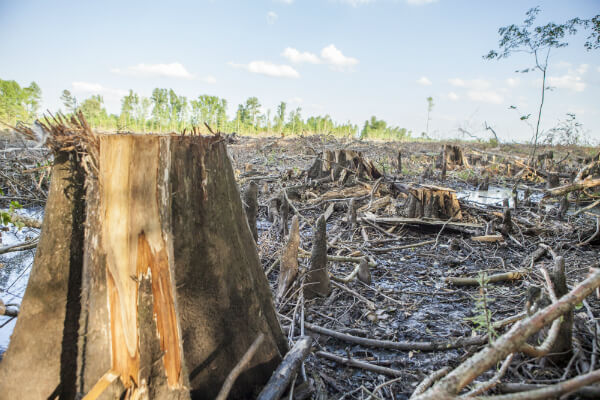
Logging rates across the US Southern Coastal Plain are among the highest on Earth
While corporate executives and many landowners have acquired significant wealth from logging forests, rural communities living on the front-lines of the destruction have some of the highest poverty and unemployment rates in the country. For the record, Black Americans own less than 1% of the rural land in the South yet make up a majority of the population in many of the Black Belt rural counties.
Tax breaks for logging and other destructive industries hurt public funds that would otherwise go to schools, health care and other critical social services that support community well-being.
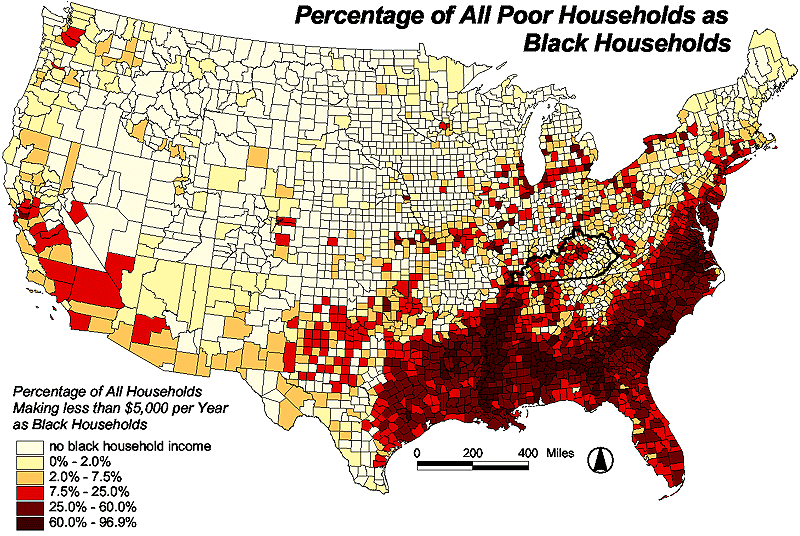
Map Source: https://dogwoodalliance.org/wp-content/uploads/2026/01/us_poor_hslds.gif
At the same time, the Southern region is bearing the brunt of the impacts of climate change in the US, primarily due to flooding from recent extreme weather events. Low income communities and communities of color living in rural areas are among the worst hurt, often lacking resources to evacuate or make ends meet until they can get back to work.
Recently, front-line communities, climate scientists, and faith, environmental, and justice organizations have united in opposition to a rapidly expanding wood pellet export industry across the Southern US.
The wood pellet industry is touted by industry and government as providing “green, renewable energy jobs” despite scientific evidence that burning trees for electricity will accelerate, not mitigate climate change. Local communities are pushing back, concerned about more air pollution, dangerous truck traffic and other detrimental community impacts.
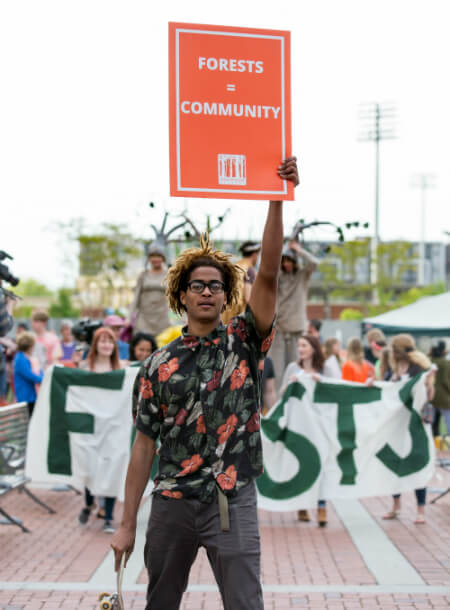
At a time when coastal communities of the South are experiencing some of the worst effects of climate change from flooding, destroying forests along rivers to feed global markets has sparked a new conversation about the connections between a long history of land exploitation and its disproportionate negative impacts on low income people and BIPOC living in rural areas across the region.
Meanwhile, the value of standing forests along the rivers for things like clean drinking water and natural flood control are estimated to be fifteen times greater than their value for wood products.
In the same way we need a just transition away from resource extraction in the coal fields of Appalachia, there is growing recognition that we need a just transition in the forest economy of the Southern Coastal Plain to one that values the community benefits of standing forests. An emerging diverse movement across the South working at the intersection of forests, climate, and justice is focused on a new vision for the region — a just transition to truly 100% clean, renewable energy and a new forest economy that supports landowners to keep more forests standing, creates healthy jobs for low-income communities and communities of color and ensures that everyone has a beautiful and healthy place to live, work and play.
It is simply not acceptable to continue to put low income people and Black, Indigenous, and people of color on the frontlines of a destructive economic system that continues to concentrate power and wealth into the hands of a few while destroying our life support system. We must right the wrongs that have not only destroyed our forests, climate, air, and water but also placed the burden on vulnerable communities that have suffered the most. By restoring the forest (as well as the air, water and climate), we can restore our communities, our relationship to each other and our morality. We can provide for everyone’s needs, but not if we do not eliminate greed.
Enviva’s “Track and Trace” program, which claims to track every ton of wood that the company buys, confirms what Dogwood Alliance and other organizations have been saying for years: Enviva primarily sources from standing hardwood forests, adding additional pressure to our already over-logged Southern forests and contributing to the climate crisis.
Enviva’s data puts to rest the idea that a majority of their wood is coming from “waste” or scraps, sawdust or even established pine plantations. By their own admission, 81% of their sourcing comes from standing forests, and 58% of their total product comes from hardwood trees. This means a majority of the forests that are being logged and turned into pellets to be burned are coming from natural forests.
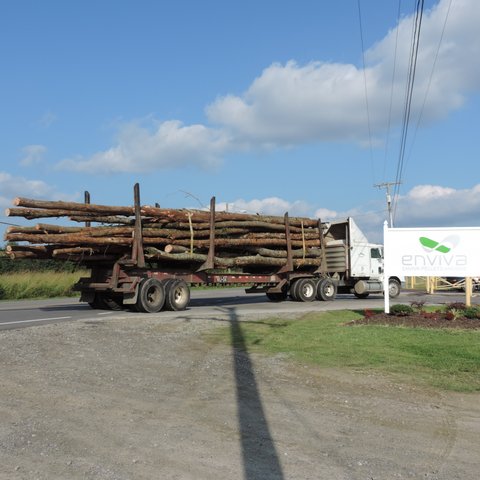
The carbon impacts of this practice cannot be overstated and have been proven over and over again in multiple peer-reviewed scientific reports. Adding to the growing list, a recent study from authors at MIT and UMass Lowell showed that when coal is replaced with wood pellets, even when harvested from pine plantations, it releases more emissions than coal and takes 44-104 years to payback that debt—after which time it is still only equivalent to coal, the most carbon intensive fossil fuel. As if that wasn’t enough, peer-reviewed research now shows that even when companies like Enviva burn forest residues, it’s far from being carbon neutral and significantly undermines efforts to address climate change in the necessary timeframes.
Enviva brags in their infographic that the amount of forested land in their sourcing area has increased by 320,842 acres since 2011. Yet, they do not identify exactly what their “sourcing area” is — because the draft Forest Inventory numbers for the US South for 2017 show a loss of 2 million acres in the South, and a loss of 757,000 acres in the four states where Enviva operates (FL, MS, NC, VA).
Instead of using easily accessible and published numbers from the US Forest Inventory and Analysis (FIA) program, Enviva chooses to estimate yearly acreage for 12 states in their Forest Trend map. As a result, the data that they present are not easily reproducible for verification. This may be because they want to show “growth” in forest area, and US Forest Service numbers do not back that up.

In fact what these numbers are really showing is a growth in pine plantations. According to the US Forest service’s own data, since 1953, we’ve lost more than 37 million acres of natural forests, while pine plantation acreage has grown by about 42 million acres.
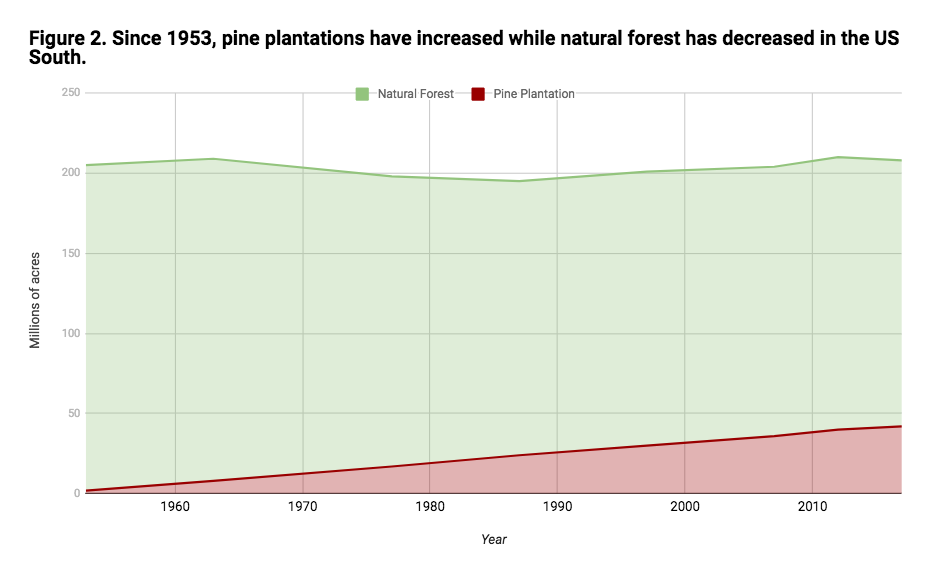
It’s important to know the difference between what Enviva means by “growth” and the type of growth needed from our forests to address the climate crisis and protect our coastal communities from extreme weather events. If a natural forest or pine plantation in the US South is clear-cut, that barren land is still classified as “forest” that is “growing”. By this narrow, pro-extraction definition, as long as the land does not convert to another use (eg. a parking lot), then it doesn’t matter if the entire forest ecosystem is completely destroyed. It still counts as a forest contributing to overall “growth”.
In the context of addressing climate change and carbon emissions, which Enviva boldly proclaims to do, this is a huge problem.
We must remove large amounts of carbon from our atmosphere. Keeping our forests standing is the only proven natural technology that can do this. Instead, we have companies like Enviva proclaiming that they are the climate saviors while continually emitting needless extra carbon into the atmosphere.
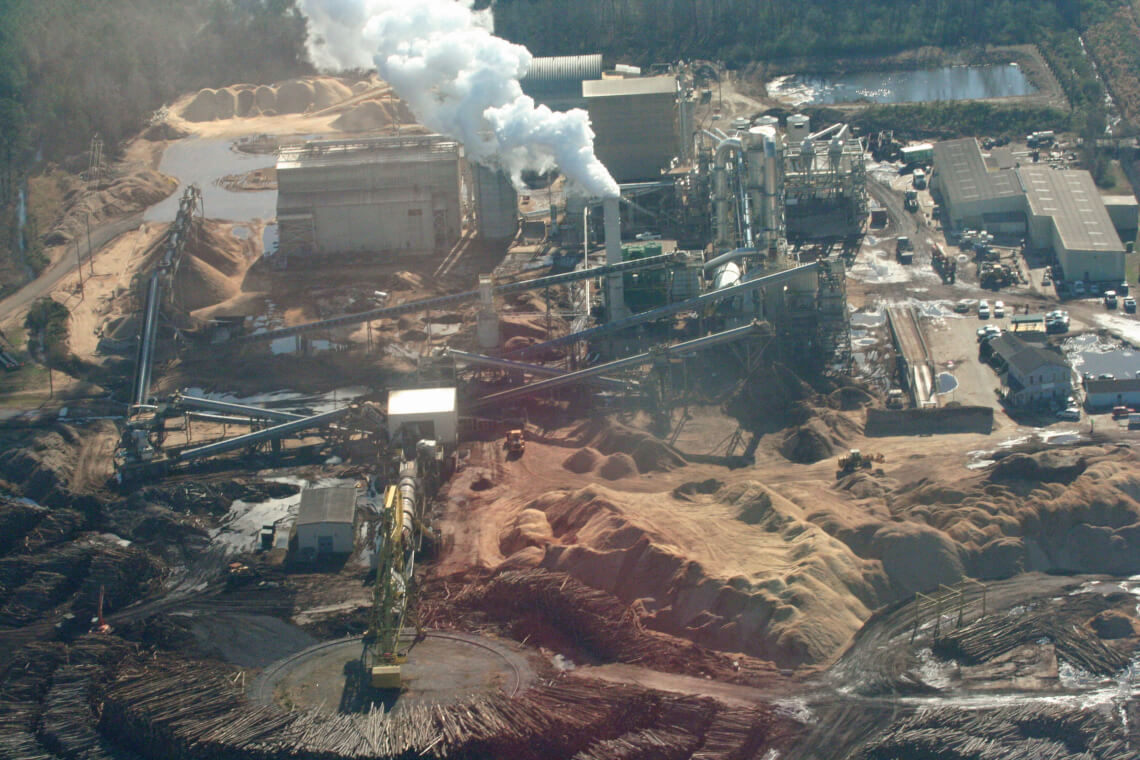
The type of forest that Enviva is logging to be turned into pellets and their current scale of operation are increasing carbon emissions and moving us in the wrong direction for addressing the worst impacts of climate change.
What happens when citizens reach out and meet with their representatives? If our experience at the Georgia State Conservation Day in the Capital this month is any indication, then legislators listen. Three of our great volunteers from Savannah, Claudia, Connie, and Ardis, joined me in Atlanta on March 1.
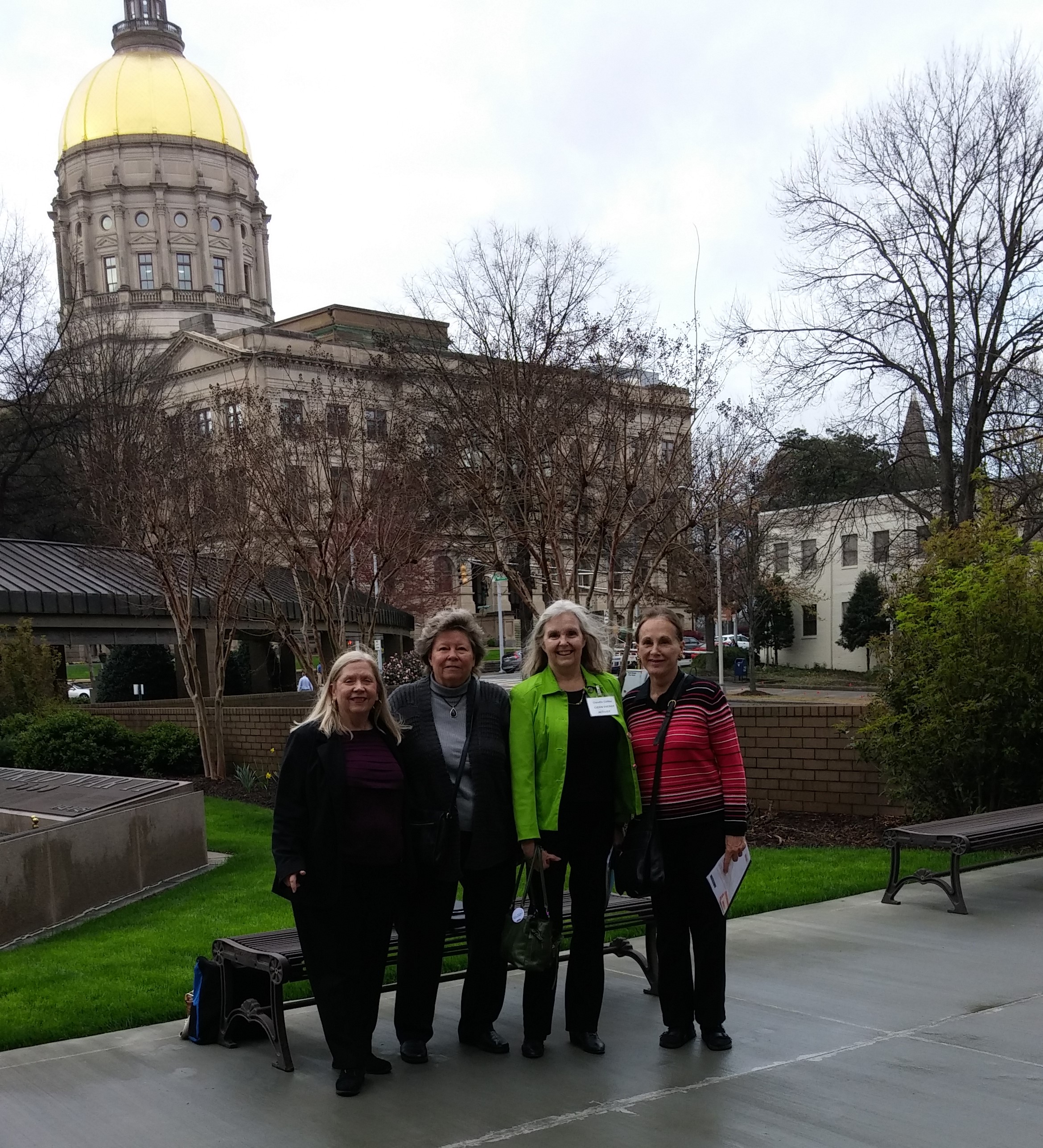
Dogwood’s Savannah A Team of Volunteers at the Georgia Capital
Together we met with Senators and Representatives on both sides of the aisle to share information from our recently released report, Treasures of the South: The True Value of Wetland Forests, on the substantial, positive economic impact of keeping Georgia forests standing.
We also shared information on wood pellet biomass industry plans to expand in Georgia – and some facts about the identified downsides of this planned expansion on health, biodiversity, and environmental justice for Georgia citizens, including their own constituents.
We also spoke with Senator Lester Jackson and the House Minority Leader Representative Robert Trammell about the importance of bringing forest protection into the state and national conversation on climate change.
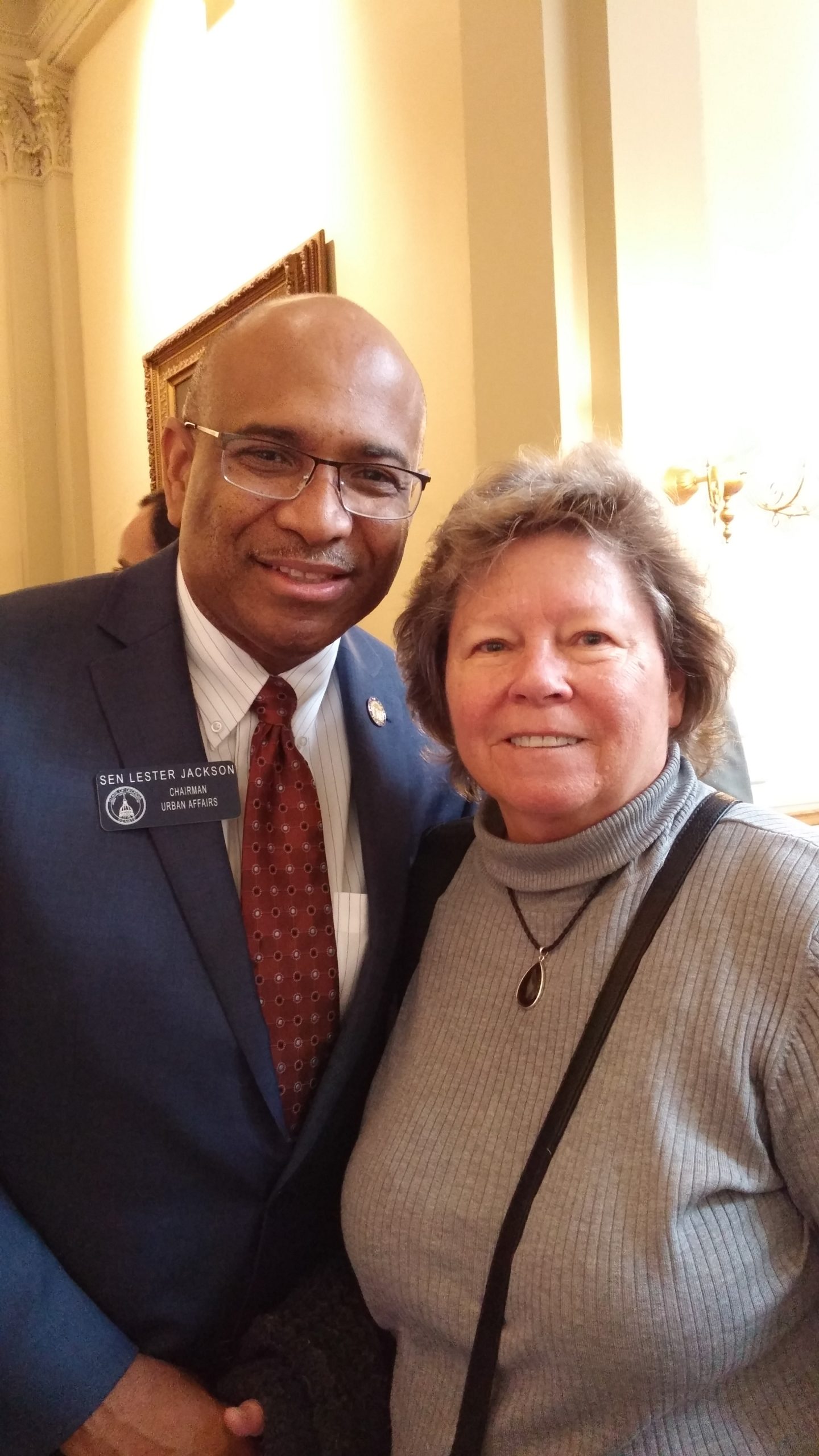
Georgia Senator Lester Jackson
Senator Jackson represents coastal Georgia, including Savannah, which recent studies indicate may see as much as 4-7 feet of sea level rise by 2050, so he’s deeply aware of the importance of taking action to address climate disruption. We plan to keep working with these legislators and others in hopes of bringing state legislation forward in the next session to stop forest degradation and support regeneration of our forests.
We also met up with a very cool and committed youth group at the Capital. – Youth for a Cleaner Environment (YFACE) Brunswick.
Youth for a Cleaner Environment (YFACE) Brunswick
These young environmentalists who ranged from 3rd through 12th grade were right there with us calling “their senators and representatives to the ropes” to discuss their environmental concerns.
And they weren’t the only young people taking serious action this month. The Green Ambassadors from Georgia Southern University (GSU), hosted a Volunteers’ Meet & Greet Pizza Party for new members who are interested in working on the #Stand4Forests – GA campaign!
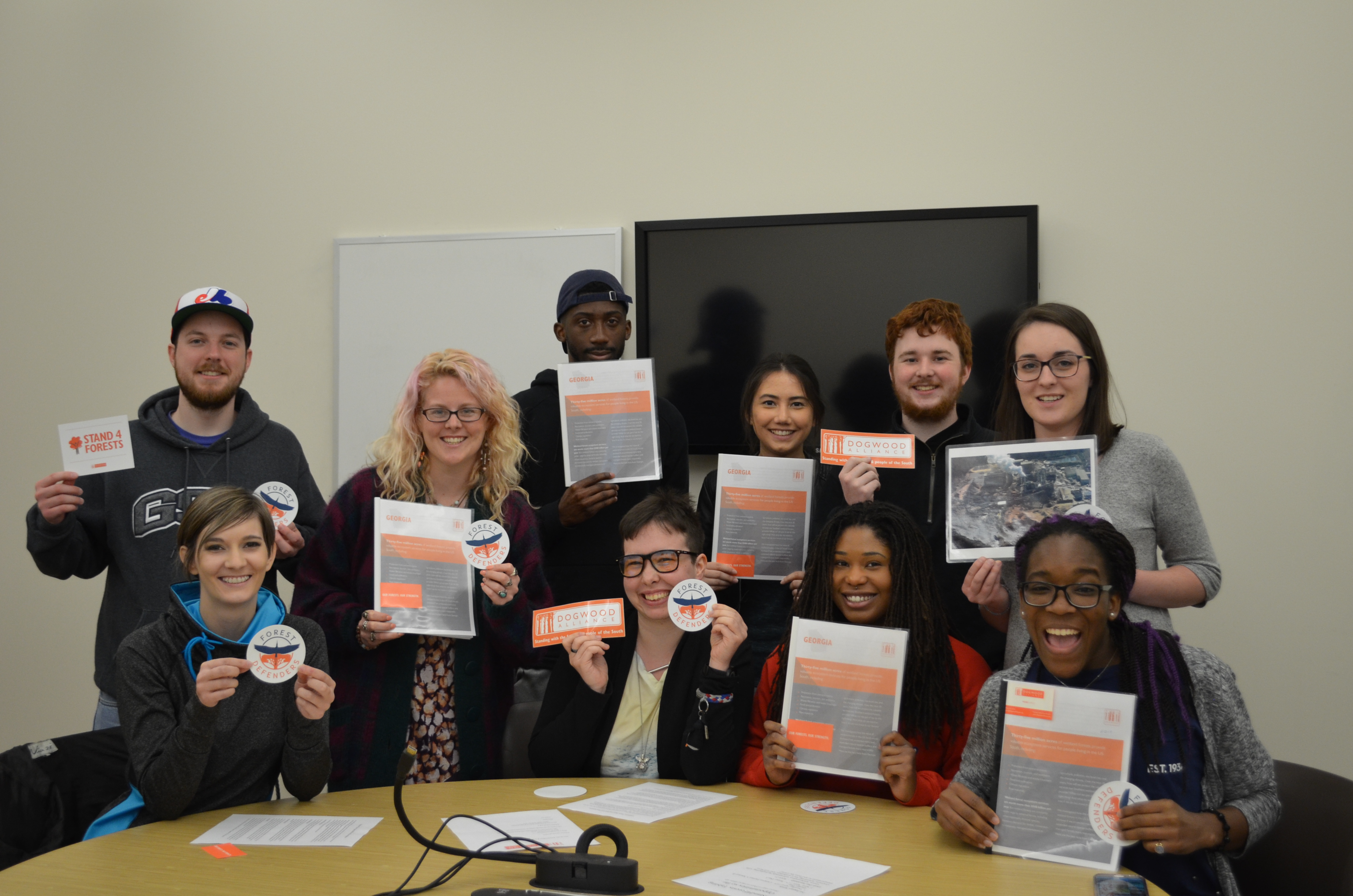
The Green Ambassadors from Georgia Southern University
Aside from really good pizza, They had some outstanding ideas for how to expand awareness of the campaign to more of the GSU student body and faculty. We put together two new working teams for the Statesboro, Georgia area to focus on: community outreach and public speaking. I’ll be working with the teams to identify opportunities to educate the community through tabling, presentations, and meetings with THEIR representatives.
To be a champion for communities and the climate, a leader must stand up and make tough decisions when it really matters. For too many years, Enviva has been allowed to expand unchecked in North Carolina, with three existing wood pellet facilities and one on the way.
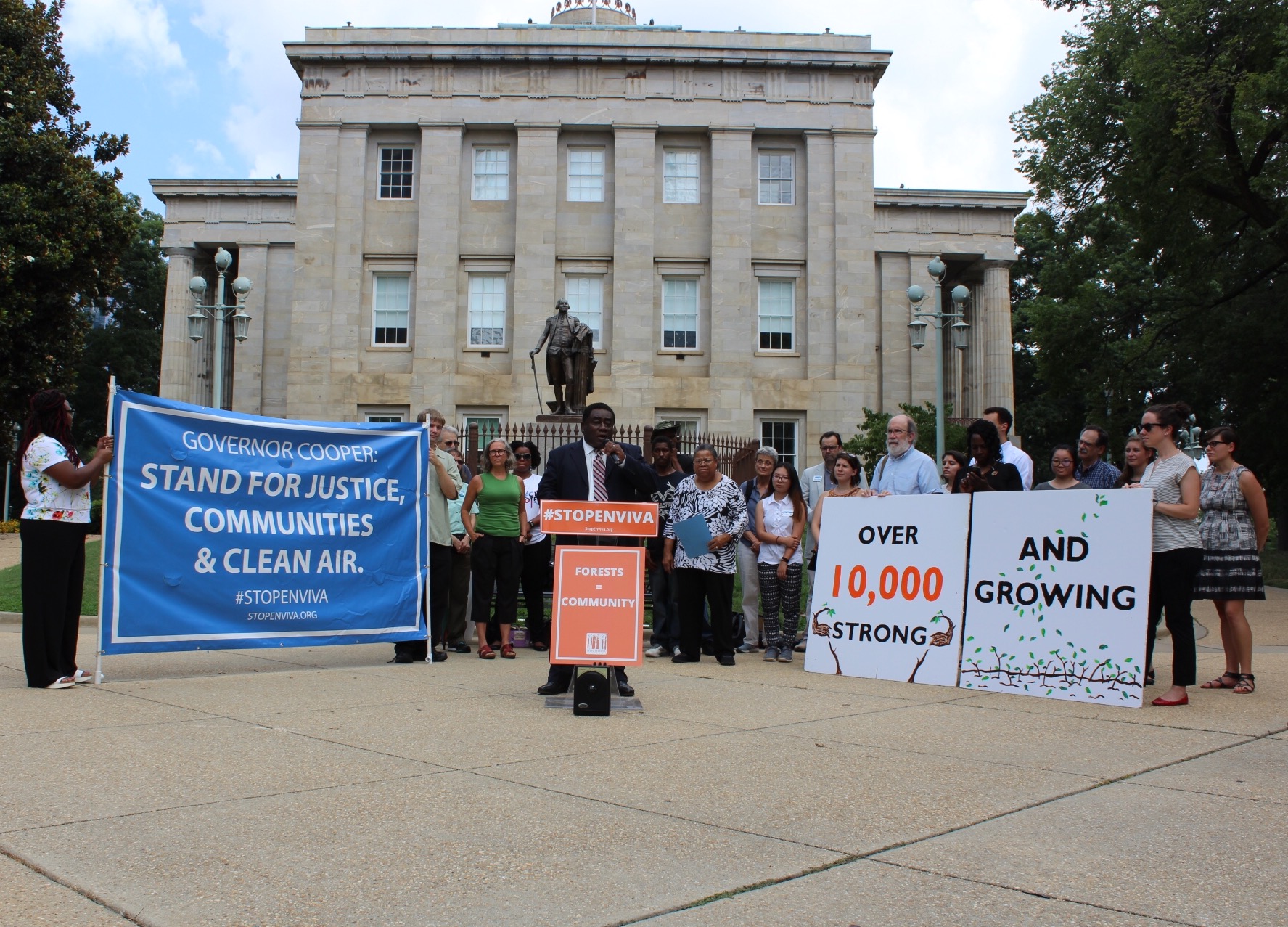
In the past few years, North Carolina has been hit by floods, wildfires, and droughts.
False solutions, like the industrial-scale wood pellet industry, are taking North Carolina further down a path of destruction and vulnerability.
The wood pellet industry, led by Enviva, has a proven record of sourcing in precious bottomland hardwood forests, increasing carbon emissions, and polluting communities. Yet this industry continues to expand unchecked. In just a few years, North Carolina has become ground zero for forest destruction at the hands of the wood pellet industry.
Standing forests are the only proven system that can remove and store vast amounts of carbon from the atmosphere at the scale necessary to keep our planet livable. It is essential to not only prevent further emissions from fossil fuels, deforestation, forest degradation, and bioenergy, but also to expand our forests’ capacity to remove carbon from the atmosphere and store it long-term.
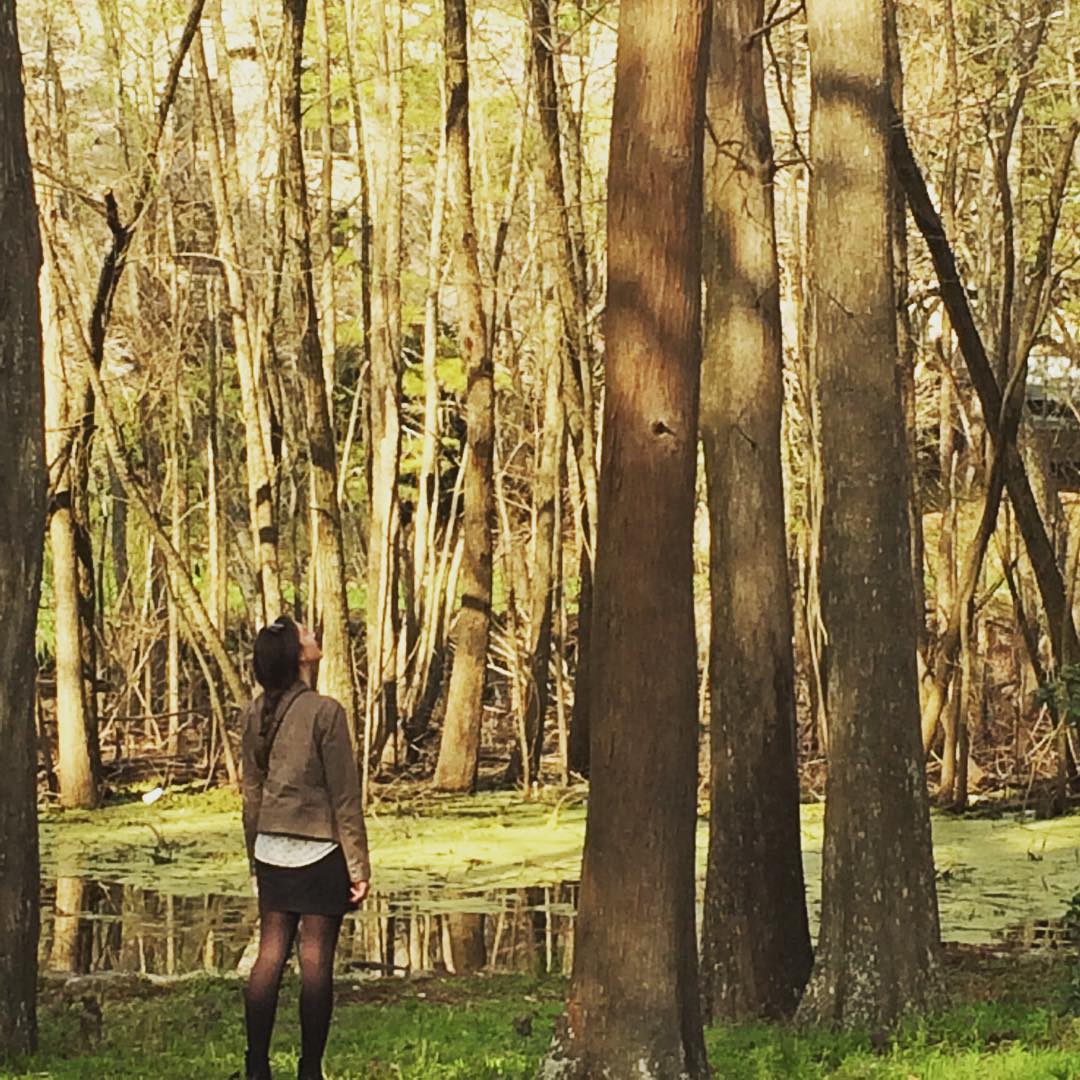
We’re counting on Governor Cooper to understand the gravity of these issues. We urge the Governor to develop a comprehensive climate strategy that includes clean energy and protection for North Carolina’s forests.
Specifically, we call on Governor Cooper to:
Forests need to be at the forefront of the agenda on climate action, community resilience, flood mitigation, water quality, and alternative rural economic development.
Governor Cooper, we believe in your vision for a strong and healthy state. North Carolina can lead the way in creating innovative solutions that uplift communities, create new markets, and remove vast amounts of carbon from the atmosphere. But it will mean taking a stand. We are eager to work with you to put North Carolina back on the path of leading the way for a prosperous and just future.


 Donate