


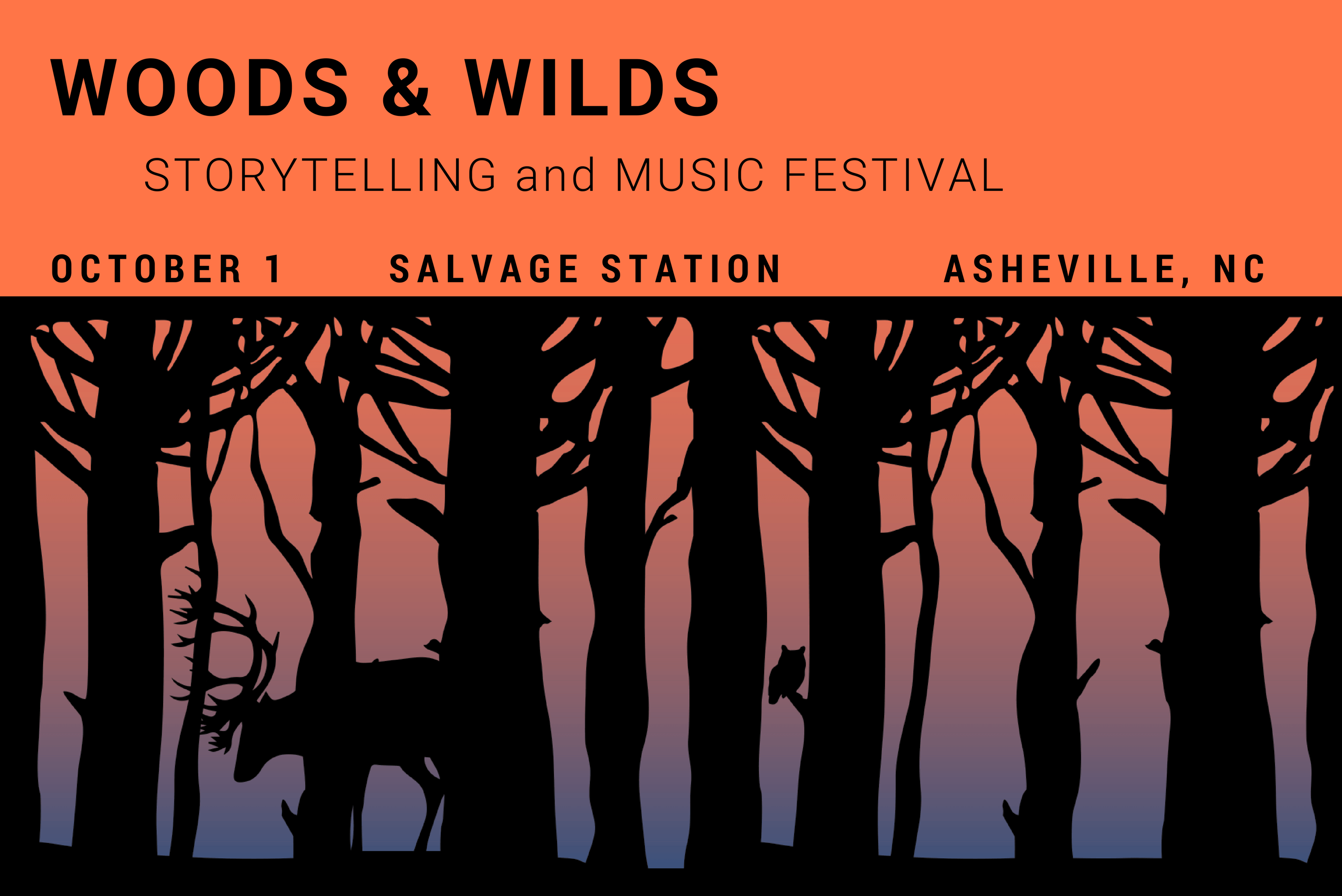
Join Dogwood Alliance on Sunday, October 1st for our 2nd annual Woods & Wilds Storytelling and Music Festival from 1-10 pm at the Salvage Station in Asheville! The Festival will feature regional storytellers, live music, and performances as well as kid friendly activities! Join us to celebrate 21 years of standing with the people and forests of the South!
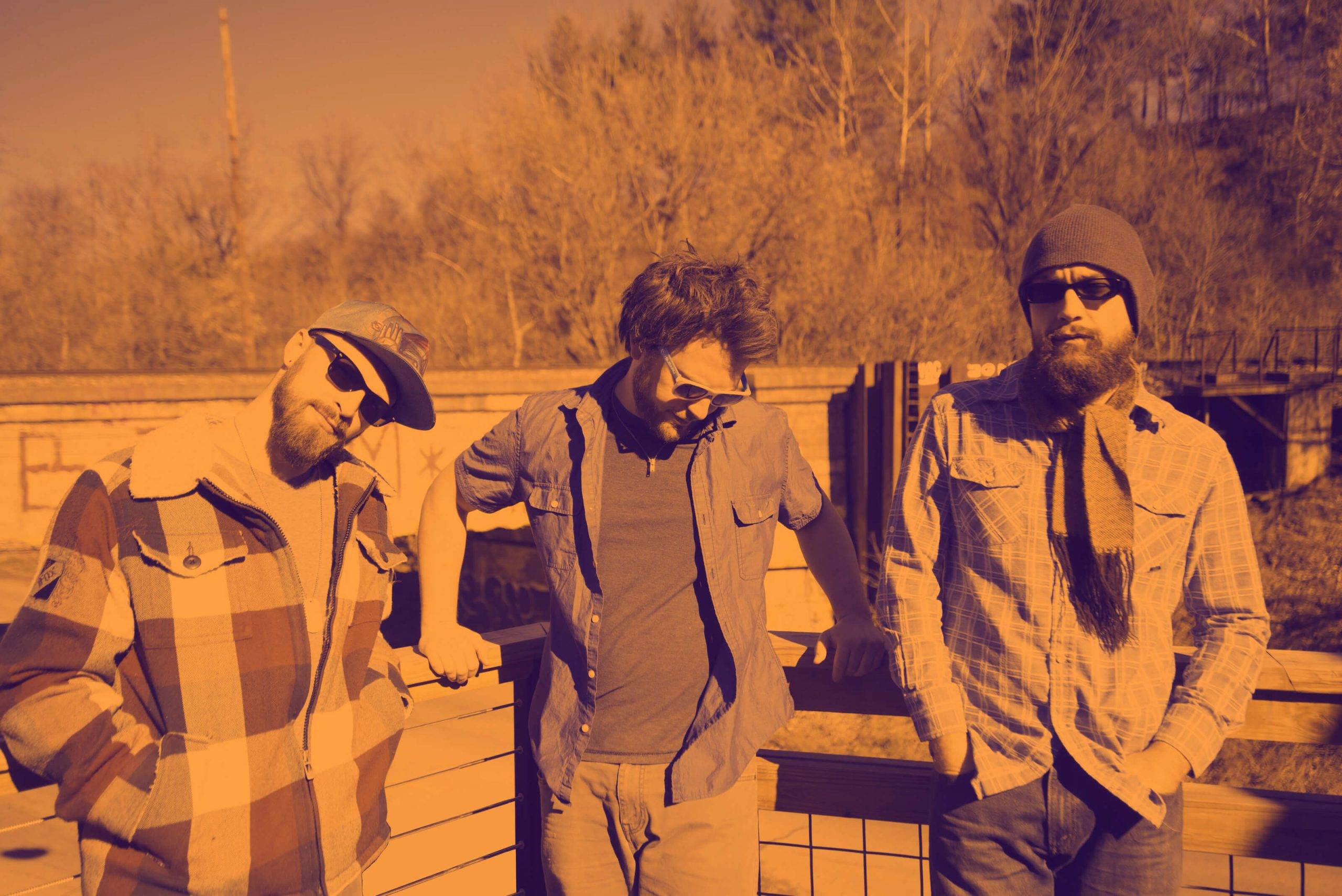
Combining catchy, clever, honest songwriting with musical expertise and fearless improvisation, The Get Right Band promises to move your head, heart, and hips.

LYRIC is a pop/rock/soul/funk band that inspires, influences and changes lives through the power of music and Lyric(s)
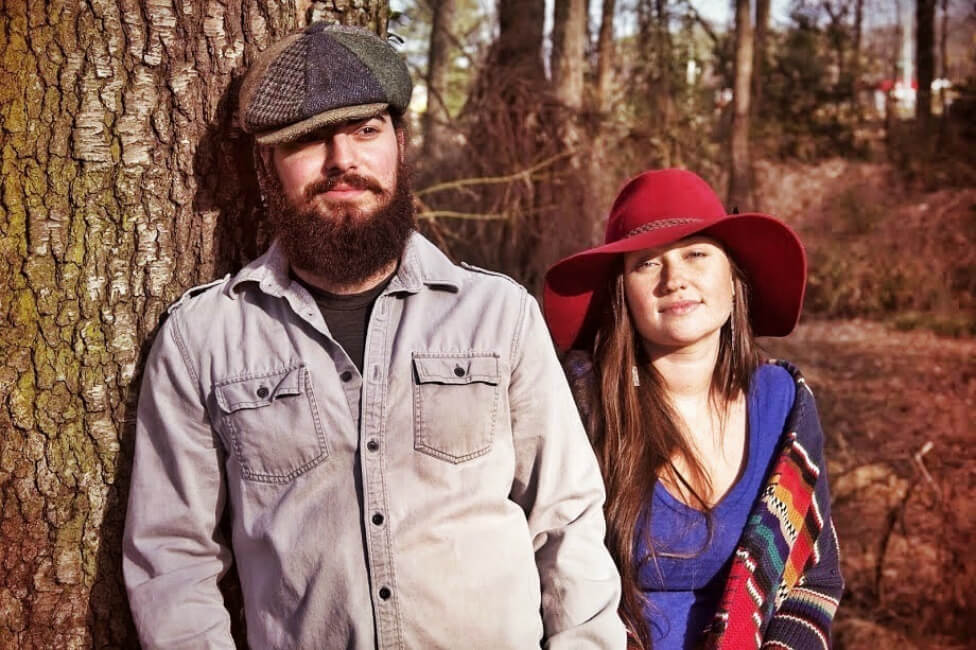
The Threadbare Skivvies are a duo from Atlanta. It’s a bohemian banjo bangin’, stompin’ & clappin’ kind of business – powerhouse harmonies, funky rhythms, and soulful lyrics.

Based in Asheville, Dub Kartel is an east coast reggae collective that delivers classic dub rhythms and pays tribute to the golden era of Jamaican music.

Sherri Lynn & Mountain Friends is an Asheville-based Americana bluegrass band.
FOR IMMEDIATE RELEASE: August 24, 2017
Asheville, North Carolina – Ten years ago, a unique collaborative was initiated between the forest products industry, retailers, private landowners, and conservation organizations that strove to discover how the carbon market could improve forests management and protect forests on private lands in the Southern US. Ultimately the project led to increased protection for thousands of acres of forests in the southern Appalachians and spawned several new initiatives across the region.
A new report released today, “Carbon Canopy: Lessons from Nearly a Decade of Developing Forest Carbon Projects in Southern Appalachia,” includes valuable technical, economic and social knowledge that was gained and should serve as a road map for those interested in utilizing the carbon market to protect forests and improve management in working forest landscapes.
“Carbon Canopy was a first of its kind project in the Southern US and blazed a trail for those interested in utilizing ecosystem services like carbon sequestration as a tool for conservation,” said Danna Smith, Executive Director at Dogwood Alliance. “We were so inspired by all of the organizations and companies that came together and believe what we learned will help improve practices in the woods and begin to place greater value on all of the incredible benefits our standing forests provide.”
The Carbon Canopy was a pioneering effort in the world’s largest wood producing region, to experiment with demonstrating the value of standing forests as a vital tool in the fight to mitigate climate change. It was one of the first projects in the country to meet the rigorous standards of the California carbon market climate policies. It required a lot of testing of different landowners, sizes, models, and certifiers.
The first successful project was with the Forestland Group on an almost 10,000 acre tract in southwestern Virginia, and since that project they have applied the model to put nearly a quarter of a million more acres of forestland in that region into carbon management.
With any pioneering effort there are a lot of valuable lessons, here are the key takeaways:
In addition to the Carbon Canopy project leading to almost 250,000 acres of forests receiving increased protection, it gave rise to new projects designed to tackle some of the biggest obstacles the group faced. The Rainforest Alliance, Domtar, Staples, Columbia Forest Products and others launched the Appalachian Woodlands Alliance to work with small landowners in the region to overcome the barriers of cost and technical knowledge and increase the amount of working forests that are managed responsibly, and ultimately achieve certification.
“Southern forests are remarkable for their resilience, biodiversity, and beauty,” Appalachian Woodlands Alliance project manager Andrew Goldberg said. “Landowners know this–Carbon Canopy and the Appalachian Woodlands Alliance provide an added incentive to landowners to manage their forests responsibly, so generations of southerners can enjoy this unique, beautiful landscape.”
Additionally, Dogwood Alliance, working with another unique set of partners, launched the Wetlands Forest Initiative to prioritize conservation and protection in the coastal plains and in forests along rivers in the South. This is the region hardest hit by paper and wood pellet production and has some of the country’s highest carbon values and are critical to protecting our region’s most vulnerable communities from the worst impacts of climate change.
# # #
Contact: Scot Quaranda, [email protected], 828.242.3596
We are saddened by the tragic loss of life in Charlottesville and the display of hatred and bigotry by a small group of white nationalist and Nazi radicals. These people do not represent a vast majority of the people of the South.
Let this challenging moment be a reminder of the deep and broad work that needs to be done every day to dismantle all forms of racism as we work to promote equity, justice, and a healthy planet. The struggles to protect our forests, rivers, water, air, and climate are not separate from the struggles for equality and peace.
It is in this spirit that today we proudly joined a broad coalition of environmental, public health and public interest groups, including prominent African American and Latinx organizations, to issue the following joint statement in response to this past weekend’s white nationalist gathering and violence in Charlottesville, Virginia:
Our nation witnessed tragic, despicable and completely unnecessary violence in Charlottesville this past weekend. Driven by hatred and racism, these white nationalist and neo-Nazi groups and their actions do not represent our values, nor the values of the vast majority of Americans. We also remember the life of Heather Heyer and commit to continuing the struggle she died for. The behavior of white nationalists is neither acceptable nor normal and we will continue to stand in solidarity against such hatred and in defense of the rights and safety of communities across the country like Charlottesville. We will not tolerate any form of hatred or discrimination and will align ourselves with communities of color and creeds that are the target of ongoing bigotry. We call on our political leaders to condemn these acts not just today, but every time they happen. President Trump and all political leaders, no matter their party affiliation, have an obligation to stand up against such hate groups immediately and unequivocally. Their voices and words — and lack thereof — matter. The tragic events in Charlottesville fall on our shoulders as a nation. No one who stands for justice, equality, and human dignity can stay silent any longer. We will stand unified against the white nationalist movement that everyday threatens America’s people and ideals, including life, liberty, and the pursuit of happiness for all. We will ultimately prevail by countering this hate with love.
17 for Peace and Justice 350.org African American Nature and Parks Experience Alaska Wilderness League Alliance for Climate Education (ACE) Audubon Naturalist Society Austin 2030 District Azul Be The Change -USA Black permaculture network Bold Alliance California League of Conservation Voters Care About Climate Center for Biological Diversity Center for Diversity & the Environment Center for International Environmental Law Chesapeake Climate Action Network (CCAN) Chispa Citizens’ Climate Lobby Clean Air Council Climate Hawks Vote Climate Nexus Coalition Center for Popular Democracy Defend Our Future Defenders of Wildlife Diverse Environmental Leaders Speakers Bureau Dogwood Alliance Dynamic Aptitude Earthjustice Earthworks Endangered Species Coalition Environmental Defense Fund Environmental Leadership Program EPCF – Climate Change Disruption Food & Water Watch Friends of Organ Mountains Desert Peaks Friends of the Earth Green 2.0 Green For All GreenFaith GreenLatinos Greenpeace USA Greensgrow Hip Hop Caucus Hispanic Access Foundation Hispanic Federation IDEASForUs Imagine Power LLC Institute for Sustainable Communities Institute for Sutainable Urban Transformation Interfaith Power & Light International Mayan League La Union Hace La Fuerza Latino Victory Project League of Conservation Voters League of United Latin American Citizens Living United for Change in Arizona (LUCHA) Maine Conservation Voters Mi Familia Vota Moms Clean Air Force Mount Moriah FBH Church Mt Eastern Joy, LLC National Hispanic Medical Association National Ocean Protection National Parks Conservation Association Natural Resources Defense Council NCLR Action Fund Network for Sustainable Financial Markets NextGen America Noble Renewables Group of the West North American Students of Cooperation (NASCO) Ocean Conservancy Oceana Our Climate Outdoor Afro Peoples Climate Movement Physicians for Social Responsibility Population Connection Power Shift Network Public Citizen Rachel Carson Council Rachel’s Network Radiance Studios LLC Rainforest Action Network Roosevelt Institute Rural Coalition Sachamama Save EPA Sierra Club Sierra Club Virginia Chapter Sunrise Sustainable Agricultural Education Association Sustainable Practices SustainUS The Environmental Justice Center at Chestnut Hill United Church The Evangelical Environmental Network The Farmworker Association of Florida, Inc The Joy Trip Project The Praxis Project The Trail Posse The Wilderness Society Toxics Action Center Union of Concerned Scientists University of Massachusetts Amherst Virginia Interfaith Power & Light Virginia League of Conservation Voters Voces Verdes Voices for Progress Voto Latino Waterkeeper Alliance WE ACT for Environmental Justice
FOR IMMEDIATE RELEASE: July 18, 2017 at 1 pmGroups Call on Governor Cooper to Pull the Brakes on Wood Pellet Industry in North CarolinaOver 10,000 Individuals and 50 Organizations, Representing Millions of People, Supporting Communities, Public Health, Climate and Forests Ask Governor to Revoke World’s Largest Wood Pellet Manufacturer’s Flawed Air Quality Permit in Richmond County Raleigh, NC – The Concerned Citizens of Richmond County and Dogwood Alliance joined with faith, justice, health and science leaders to call on North Carolina Governor Roy Cooper to stop the continued growth of the wood pellet industry in the state. The groups held a press conference to share a letter signed by over 50 NC organizations and a petition from over 10,000 people asking the Governor to revoke a flawed air permit granted to Enviva, the world’s largest wood pellet manufacturer. Community members opposing Enviva hand-delivered the petitions and letter to the offices of Governor Cooper and NC DEQ following the event.
The organizations contend that biomass and the wood pellet industry are an environmental injustice. Nowhere is this more clearly seen than Richmond County in rural North Carolina. For the last several years county officials have been working, mostly behind closed doors, with Enviva to gain approval for the construction of a wood pellet manufacturing facility in the town of Hamlet. Residents of the county have repeatedly attempted to deliver public comments to their elected officials at the Richmond County Commission, and have been denied on multiple occasions in a practice that NC Policy Watch reports “clearly violates the first amendment.”
Under the McCrory Administration, the NC Department of Environmental Quality issued an air quality permit to Enviva without any notice or opportunity for the local community to comment, resulting in a lawsuit challenging the permit. The Southern Environmental Law Center is representing the Concerned Citizens of Richmond County in the case. Now, the local group is joining with state and national organizations to urge Governor Cooper to oppose this pellet mill and stand for justice, the environment, and communities.
“We hope Governor Cooper will respond to our call for environmental justice and revoke Enviva’s air permit, we were not provided the opportunity for input and this directly impacts us all” said Debra David, secretary of the Concerned Citizens of Richmond County. “Adding a wood pellet mill that harms our forests, health and quality of life to CAFOs, a dirty coal plant, and a potential terminal for the Atlantic Coastal Pipeline would be an injustice.”
The Enviva facility will be an additional burden to a community already taxed with extractive industry, pollution, and economic hardship. Residents currently live with a Duke natural gas turbine, a CSX rail station, coal ash transportation, and are on the route for a connecting line for the Atlantic Coast Pipeline.
The wood pellet industry has exploded in the South over the last few years based on the growing demand for biomass electricity in Europe. Environmental organizations such as the Dogwood Alliance have criticized Enviva and other wood pellet manufacturers for logging in ecologically sensitive areas and increasing carbon emissions.
“We commend Governor Cooper for his commitment to upholding the Paris Climate Agreement and hope he will recognize how dirty energy like biomass is bad for our climate and that these types of extractive industries are not the future that our state needs,” said Danna Smith, Executive Director of Dogwood Alliance. “North Carolina should invest in truly clean energy and promote businesses that support healthy communities and protect our forests. Together we can lead the way to a prosperous and just future.”
Concerned citizens fear this facility will create harmful particulate matter and pollutants, will create constant noise and disrupt their quality of life, and clog up roads with dangerous truck traffic. The County has offered Enviva $1.6 million in direct cash incentives and property tax breaks of up to 85%, which residents oppose as a wasteful expenditure of taxpayer dollars. Richmond County already faces some of the highest levels of asthma in the region, and a 2016 study showed Richmond County ranking in the bottom 10 percent of North Carolina counties for health outcomes.
“North Carolina forests do their job to clean the air when they are a living part of our environment”, said Terry Lansdell, Program Director at Clean Air Carolina. “From production to combustion, wood pellet chain emissions are higher than coal, release large quantities of respiratory pollutants and release levels of particulate matter that disproportionately affect residents already overburdened with health impacts like asthma and COPD from air pollution exposure.”
# # #
Based in Hamlet, NC the Concerned Citizens of Richmond County is a local environmental justice group that is an advocate for clean air and water in Richmond County. The group is a chapter of the Blue Ridge Environmental Defense League (BREDL). Founded in 1996 and based in Asheville, NC, Dogwood Alliance mobilizes diverse voices to protect Southern forests and communities from destructive industrial logging. The group’s Our Forests Aren’t Fuel campaign is part of an international coalition opposing industrial-scale forest biomass energy. Visit us at www.dogwoodalliance.org and follow us on Twitter @DogwoodAlliance.Supporting Quotes:
“Christians should be involved as much as possible in the process of redeeming nature here and now on earth as an expression of our own redemption and salvation and the “living out” of our faith. Being responsible for the destruction of forests, the health of communities, and the quality of life of those in Richmond County does not seem consistent with nor does it honor God’s plan for redeeming nature.” – Susannah Tuttle, Executive Director of Interfaith Power & Light
“The Reverend Dr. Martin Luther King, Jr. said, ‘Injustice anywhere, is a threat to justice everywhere.’ When we neglect our environment and the least among us, our health safety, environment and planet are all placed in jeopardy.” – Reverend Leo Woodberry, The New Alpha Community Development Corporation
“This biomass plant would threaten some of the most unique and imperiled natural forests in the country,” said Sami Yassa, Senior Scientist with the Natural Resources Defense Council. “Growing demand for biomass fuel from Europe is driving an out-of-control wood pellet industry in North Carolina, harming communities such as those in Richmond county, and decimating natural forests throughout the state. To stop this, we must end policies that wrongly subsidize dirty biomass as if it were a truly clean energy source like wind and solar, while protesting the development of new, unwanted biomass plants.”
CONTACT: Scot Quaranda, Dogwood Alliance, [email protected], 828.242.3596
Dogwood Alliance is excited to announce that this month Adam Macon will be stepping into the role of Program Director.
Adam joined Dogwood Alliance in 2014 as the Our Forests Aren’t Fuel Campaign Director. Since that time he has successfully elevated the campaign to international prominence, and has been instrumental in supporting the development of an international and domestic network pushing back against a growing biomass industry. Adam and his team have also stopped wood pellet mills in the South and biomass power plants in Europe from being built.
A leading spokesperson for Dogwood Alliance and the Our Forests Aren’t Fuel Campaign, Adam has been featured in media around the world, including on the BBC, French TV, Zembla (the 60 Minutes of the Netherlands), CCTV, and various other regional, national and international media outlets.
Born and raised in coal country of Eastern Kentucky, Adam has always had a passion for organizing people and fighting the corporations whose practices destroy our earth. We’re proud to say that he officially began his career in activism as an intern for Dogwood Alliance, where we helped launch the Dogwood’s campaign against unsustainable fast food paper packaging. Over the past 10 years, Adam has worked with several organizations across the country to fight coal plants, protect our public water systems and build the sharing economy.
Beginning this month, Adam will be directing all of Dogwood’s programs including the Wetland Forests Initiative, Forests & Climate work, the Paper Campaign, and continued involvement in the Our Forests Aren’t Fuel Campaign.
Adam is replacing Tyson Miller, who is stepping down from the position in order to launch his own consulting business in August. He has been an amazing member of the Dogwood Alliance team who spearheaded the launch the Wetland Forest Initiative, helped grow the capacity of the organization, and played a key role in our forests and climate work.
Tyson will remain a close member of the Dogwood Alliance family, and support the organization on our Forests & Climate work, fundraising, and supply chain engagement with the paper industry, as an adviser. Tyson can be reached at his personal email – [email protected].
Click here to contact Adam and wish him well, or give input on our work!
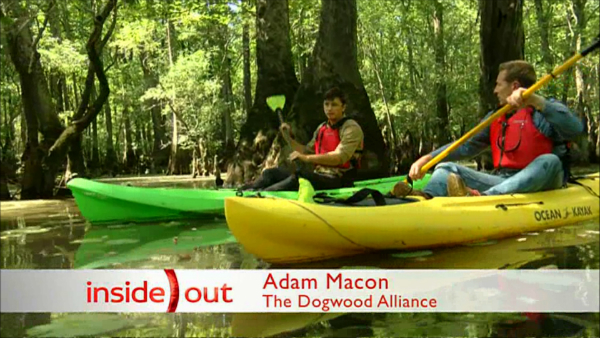
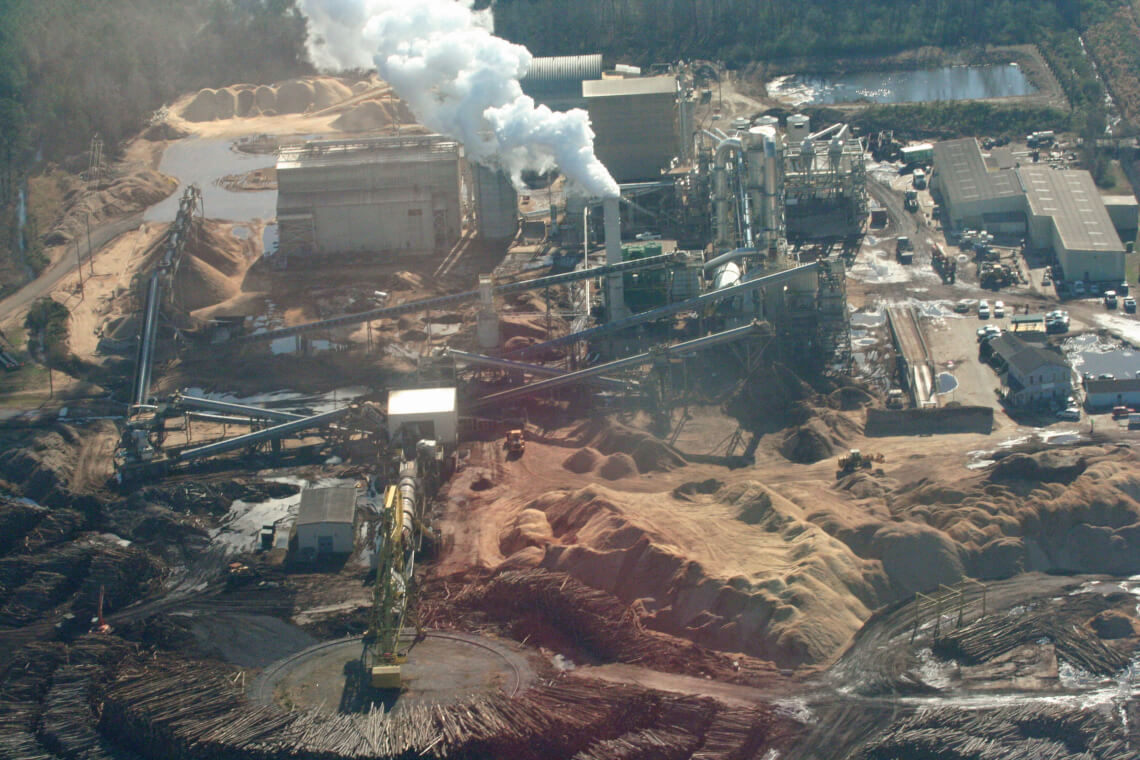
Cutting trees down to use as fuel in energy production–known as biomass energy or bioenergy–is one of the most counterproductive things we can do if our goal is clean air and a livable planet. Despite this reality, policymakers around the world have invested heavily in bioenergy. Nowhere is this more true than in the European Union, where bioenergy policies in the UK and other member states enable billions in subsidies each year to flow to the balance sheets of large utility companies, padding their profits and financing the conversion of old coal-fired power plants to burn wood.

Yet too many policymakers remain unwilling to acknowledge the impacts of bioenergy and adequately limit its growth. They argue that the industry’s impacts on the climate, forests, and people are still uncertain, that we need more studies, more “proof”.
For five years running, leading media outlets, NGO’s, climate scientists, health professionals, and even official government reports have offered this proof time and time again. Scientists tell us that burning whole trees and other large-diameter wood increases carbon pollution compared to coal for many decades. Public health experts tell us burning biomass emits myriad harmful air pollutants, with serious consequences for air quality and public health. Economists tell us biomass conversions are a bad investment compared to truly clean energy sources, such as solar and wind. Communities tell us that they don’t want biomass producers in their backyards. And for five years running, respected reporters and local and national NGOs have documented the unsustainable logging practices uses to source the biomass industry, putting some of the most biodiverse and valuable forests in the world in peril.
Unlike the biomass industry, these communities, advocates, reporters and researchers have no political or financial stake in bioenergy subsidies.
These policymakers are elected to advance the public’s interest. They pay out biomass subsidies under the guise of advancing national goals of increasing renewable energy production and taking meaningful action on climate change. In exchange for the public’s generous support, biomass-burning utilities are assumed to deliver a public good: cleaner air and lower carbon emissions. Both parties should be held accountable for demonstrating that the public is getting what it’s paying for.
Enter the Sustainable Biomass Program (SBP). The SBP was created in 2013 by biomass companies to provide assurances that their wood pellets and other biomass fuel are sustainable and legally sourced. Unfortunately, from the start, this certification scheme was dominated by industry and built to allow the industry to effectively “self police”.
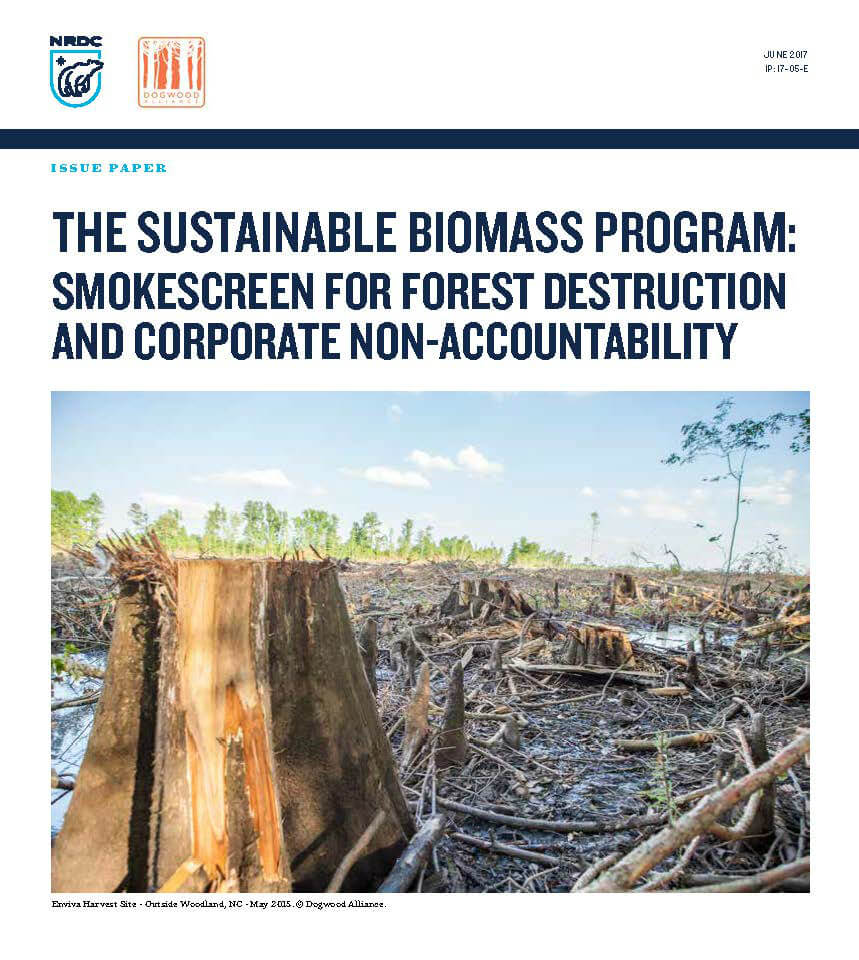 Amongst the key findings is that the program uses flawed and incomplete carbon accounting, lacks adequate independent audits and verification, leaving biomass producers to conduct their own risk assessments and choose their own verifiers and data sources, despite the obvious conflict of interest, and fails to provide performance-based thresholds and protections. Put plainly, the SBP allows the biomass industry to hide their carbon emissions and destructive forestry practices to fuel an environmentally damaging energy industry. In doing so, it actually undercuts vital efforts to address climate change and protect forests and communities.
The impacts of industrial scale bioenergy are now well known and well documented.
The message to policymakers cannot be clearer: if they are looking to the SBP to provide assurances on the sustainability and carbon intensity of biomass fuels, they cannot be confident in using it.
The world has been generating electricity the same way since the 1880’s.
To truly act on climate change, European policymakers must end subsidies for dirty and destructive industrial-scale biomass and invest in truly clean and low-carbon energy sources like solar and wind and the protection and expansion of our standing forests.
Other key findings of the comprehensive analysis of the SBP include:
FOR IMMEDIATE RELEASE Contact: Nick Conger, 202-717-8237, [email protected]
Scot Quaranda, 828-242-3596, [email protected]New Study Faults Biomass Industry Greenwashing SchemeThe Sustainable Biomass Program perpetuates myth that biomass is “carbon neutral” on par with solar and windNew York, June 29, 2017 – A four-year-old biomass certification program has led to increased carbon dioxide emissions, accelerated the loss of natural forests, and created negative impacts on local communities – the very results it was designed to avoid, according to a new study by the Natural Resources Defense Council (NRDC) and the Dogwood Alliance. The report outlines how the Sustainable Biomass Program (SBP), an industry-dominated certification scheme meant to assure policymakers that biomass energy is environmentally sustainable, actually undercuts efforts to address climate change and protect forests.
A growing trend in the European Union to convert coal plants to burn biomass has spurred billions of dollars in subsidies within member states. This demand is boosting an exploding wood pellet export industry in the Southeastern United States, where trees are cut down, manufactured into pellets, loaded on ships, and sent abroad to burn for electricity.
“The biomass industry is using a highly deficient self-policing program to justify its environmentally destructive practices,” said Sasha Stashwick, Senior Advocate at NRDC. “The Sustainable Biomass Program lets the fox guard the henhouse. Biomass producers want policymakers to think that burning trees to fuel power plants is green, but in fact it’s one of the worst things we can do in the fight against climate change. If policymakers here and abroad are looking for clean energy sources of the future, they should look to wind and solar, and leave our vital forests alone.”
The rapidly expanding biomass industry poses a serious risk to biodiversity in the forests of the U.S. Southeast, where the coastal plain has been recognized as a global biodiversity hotspot. The southeast region is home to some of the most biologically rich wetland forests in the country, known as bottomland hardwood forests. On-the-ground investigations have shown repeatedly that the most unsustainable practices, such as clearcutting of wetland forests, are being used to source the biomass industry.
“The forests of the U.S. Southeast are vital to protecting rural communities across the region from the worst impacts of climate change such as storm surge and flooding, and their destruction should not be rubberstamped as green by the Sustainable Biomass Program,” said Adam Macon, Campaign Director at Dogwood Alliance. “Our local communities do not need more industrial forestry destruction; they need positive investment in standing forests that provide clean drinking water, community safety, and bolster and improve their health and quality of life.”
With growing concerns from leading scientists about the impact of biomass logging on forest ecosystems and carbon emissions, the biomass industry created the SBP in 2013. The program was designed as an international certification scheme to provide assurances on sourcing, carbon levels, and forest protection. However, this report details serious concerns regarding the SBP’s independence and ability to credibly evaluate the industry’s impacts on the climate, forest ecosystems, and local communities.
The certification scheme is dominated by those within the biomass industry who have a vested interest in making their logging practices appear environmentally sustainable and their fuel “carbon neutral.” Unlike other certification programs, the SBP scheme lacks adequate independent audits and verification, leaving biomass producers to conduct their own risk assessments and choose their own verifiers and data sources, despite the obvious conflict of interest.
Other key findings include:
The Executive Summary as well as the full report can be viewed on the Dogwood Alliance website:
Executive Summary: https://www.dogwoodalliance.org/wp-content/uploads/2017/06/Executive-Summary-Sustainable-Biomass-Program.pdf
Full Report: https://www.dogwoodalliance.org/wp-content/uploads/2017/06/Sustainable-Biomass-Program-Report.pdf
For a blog post by Sasha Stashwick and Adam Macon, visit: https://www.dogwoodalliance.org/2017/06/a-smokescreen-for-forest-destruction/
###
The Natural Resources Defense Council (NRDC) is an international non-profit environmental organization with more than 2 million members and online activists. Since 1970, our lawyers, scientists, and other environmental specialists have worked to protect the world’s natural resources, public health, and the environment. NRDC has offices in New York City; Washington, D.C.; Los Angeles; San Francisco; Chicago; Bozeman, Montana; and Beijing. Visit us at www.nrdc.org and follow us on Twitter @NRDC.Founded in 1996 and based in Asheville, NC, Dogwood Alliance mobilizes diverse voices to protect Southern forests and communities from destructive industrial logging. The group’s Our Forests Aren’t Fuel campaign is part of an international coalition opposing industrial-scale forest biomass energy. Visit us at www.dogwoodalliance.org and follow us on Twitter @DogwoodAlliance.
FOR IMMEDIATE RELEASE: July 23, 2017 Georgia’s Chatham County Commission Unanimously Passes Resolution Protecting Climate and Forests#Stand4Forests Campaign Launches in Georgia as County Commissioners Show True Leadership and Call on Other State and Local Leaders to Do the SameSavannah, GA – The Chatham County Commission has unanimously passed what is thought to be a first-in-the-nation resolution to promote local climate protection and protect standing forests. The resolution bans the use of taxpayer funds to subsidize the industrial wood pellet industry. It passed with bipartisan support with Commissioners stepping up to provide leadership on both protecting taxpayers from wasteful subsidies and addressing climate change.
Commissioner Holmes in bringing the resolution forward said, “Forests are one of our best defenses against natural disasters. We’ve seen the damage that Hurricane Matthew brought to our area. No matter what storm threatens our coast, allowing forests to remain standing is a cost-effective investment in resilience and protection. We certainly shouldn’t be using taxpayer dollars to encourage their destruction.”
Holmes previously joined other regional and national leaders in urging the European Commission to recognize the crucial role of standing forests in reducing the impact of natural disasters. The European Union currently subsidizes the wood pellet industry as part of their renewable energy plan. This short-term cut and run industry is dependent on foreign subsidies and policies that are currently being revised as more scientific evidence reveals the damaging climate impacts associated with the forest destruction by the wood pellet industry in the Southern US, and the intrinsic value of leaving forests standing.
Noting the expansion of the wood pellet industry across the state and its potential impact on the environment, economy, and quality of life of Chatham residents, the resolution also calls for state legislation that would ban state incentives for industrial-scale production or incineration of wood pellets.
Chatham and Savannah political leaders and business owners have increasingly taken a leadership stance in preparing for the impacts of climate change. The city was an early signatory to the Compact of Mayors, and has demonstrated its commitment to sustainable local climate action with the formation of a city sustainability department. That department, headed by Nick Defley, has been working to develop a comprehensive sustainability plan in keeping with the city’s commitment to the compact.
Dogwood Alliance’s Georgia State Coordinator, Vicki Weeks, who has been building support for the resolution said, “This vote highlights the vision of our Chatham County Commissioners. With this vote they are recognizing the environmental and economic value of standing forests. The Stand4Forests movement is calling for a new vision of forest protection here in Georgia, a vision that doesn’t include false solutions like industrial biomass. When left standing, forests provide billions in economic value to our state and local communities. We applaud our commissioners for taking this important step.”
Weeks will highlight the leadership shown by Chatham County in passing this resolution in a statewide campaign to pass similar resolutions in Georgia counties most at risk of being targeted as a source destination by the industry. For more information or to get involved in the “Stand for Forests GA” campaign, visit the website: www.dogwoodalliance.org or contact Weeks at [email protected]
###
Founded in 1996 and based in Asheville, North Carolina, Dogwood Alliance mobilizes diverse voices to protect Southern forests and communities from destructive industrial logging. The group’s Our Forests Aren’t Fuel campaign is part of an international coalition opposing industrial-scale forest biomass energy.Contact: Vicki Weeks, Georgia State Coordinator, 912-231-2252, [email protected]
Richmond County, NC needs your help right now to stop a biomass wood pellet facility.
50 acres of forests a day in North and South Carolina would be turned into pellets and then shipped to Europe to burn for electricity. The health and economic impacts would be devastating, and the community doesn’t want it.

In 2016 Richmond County was ranked 90 out of 100 counties in the State of North Carolina for health outcomes.
The NC Department of Environmental Quality issued permits to Enviva, the biomass company proposing the facility, that contained false information regarding the plant’s location and violated air quality regulations, yet no public hearing was ever held.
Enviva, the world’s largest exporter of wood pellets, threatens the livelihoods of communities, forests, and the climate. Enviva is proposing to build their fourth wood pellet biomass facility in Richmond County.
FOR IMMEDIATE RELEASE: June 15, 2017‘Rising Up with Richmond County’ to Stop a New Proposed Enviva Wood Pellet MillNew video and petition to Governor Cooper highlights the need to protect climate, forests and the frontline community in Richmond County NC facing its latest environmental injusticeHamlet, North Carolina – The Concerned Citizens of Richmond County in eastern North Carolina and the regional conservation organization, Dogwood Alliance, are fighting a proposed new Enviva wood pellet mill in Hamlet, NC. The facility would be the latest environmental injustice to come to the area and would have lasting damaging impacts on the community’s climate, forests, and public health.
Today, the groups released ‘Rising Up with Richmond County,’ a short documentary that tells the story of the local communities’ struggle to stop the pellet mill, how they have been blocked at every turn from providing input, and why there is still reason to have hope. Accompanying the video is a new petition to Governor Cooper, asking him to stop the trajectory of destruction begun by the previous administration and revoke Enviva’s permit.
“Richmond County has been at the epicenter of environmental injustice in the state and Enviva’s wood pellet mill is the latest environmental and economic swindle facing the community,” said Emily Zucchino, Community Network Manager at Dogwood Alliance. “Not only will this mill decimate forests in the surrounding community, but it will also threaten public health, quality of life, and stands as a false solution to climate change.”
The wood pellet export market that has grown dramatically over the last few years is increasing pollution, degrading forests, and hinders sustainable economic development in rural Southern communities. Enviva, the world’s largest wood pellet exporter, already has three mills in the state, and the Richmond County facility would be its fourth. The state does not need another wood pellet export mill shipping valuable forests across the Atlantic to be burned in European power stations.
Wood pellets are not a green, clean climate-friendly fuel:
“We hope Governor Cooper will respond to our call for environmental justice and revoke Enviva’s air permit, we were not provided the opportunity for input and this directly impacts us all” said Debra David, secretary of the Concerned Citizens of Richmond County. “Adding a wood pellet mill to CAFOs, dirty coal plants, and the potential for the Atlantic Coastal Pipeline would be a tragedy.”
“Rising Up with Richmond County” is available here
The petition to Governor Cooper is available here# # #
Based in Asheville, NC, Dogwood Alliance mobilizes diverse voices to protect Southern forests and communities from destructive industrial logging. The group’s Our Forests Aren’t Fuel campaign is part of an international coalition opposing industrial-scale forest biomass energy.
Concerned Citizens of Richmond County is a local environmental justice group who is advocate for clean air and water in Richmond County in Hamlet, N.C. They are a chapter of the Blue Ridge Environmental Defense League.
Contact: Scot Quaranda, [email protected], 828.242.3596


 Donate