


Today, the Trump Administration announced that the United States is severing its commitment to the Paris Climate Treaty. While many will be rightfully pointing out the dire consequences of this move on international relations, the future of life as we know it and the lost economic leadership opportunity for America, it’s important to underscore what this decision really says about Trump’s promises to improve the lives of our families, friends and communities.
Despite insurmountable scientific evidence that we are in a climate crisis, President Trump continues to put climate polluters ahead of hardworking, American citizens, turning his back on communities bearing the brunt of the impacts of destructive industry and the costs of climate change. Many had hoped Trump would do more to support our communities—in fact he vowed to do just that.
Hundreds of coal-burning, electricity-generating units operate across the Southern US. At the same time, logging rates of forests in the Southeast—which suck up carbon pollution and provide critical flood control and stabilize fresh water supplies—are some of the highest in the world. This double whammy is not only contributing to climate change but also has serious negative impacts on our Southern communities health, well-being and economies.
This is a reality that many in Congress as well as the President are ignoring.
Rural communities of the the Southeastern region alone were hit especially hard in 2016. Massive flooding in Louisiana last August resulted in 13 deaths with costs from property damage estimated as high at $15 billion. In September, Hurricane Matthew slammed across the entire Southeastern seaboard, killing 34 people with costs estimated at nearly $10 billion. These two extreme weather events turned out to be two of the five most costly natural disasters in the world of 2016. In North Carolina, Trump turned his back on many coastal communities in need of federal aid to help return back to their homes and rebuild their communities, which suffered damages estimated at $2.5 billion.

On top of the flooding, extreme drought conditions resulted in massive forest fires that spread across the South in October and November, taking down nearly 120,000 acres of forests across four Southern states. In Tennessee alone the fires were responsible for killing 14 people, injuring 134 and costing an estimated $6 million in damages. So in the four month period between August and September, more than 60 people died from extreme weather events in the Southern region of the US that cost over $30 billion dollars.
In addition to these extreme weather events, pollution from coal is deadly as well and carries a high price tag. In the coal fields of Southern Appalachia, the public health costs from coal pollution amount to a staggering $75 billion. And across the US coal pollution is linked to 13,000 deaths a year, with a high concentration of large coal burning power plants located in the Southeastern region.
Unless we take swift action to phase out fossil fuels, transition to clean energy like solar and wind and scale up the protection of forests, we can expect even more pollution and extreme weather events, threatening more lives and costing us even more. This latest move by Trump ignores the real health and economic impacts of climate change on our Southern communities, ironically the very communities he vowed to put first.
Clean energy and forest protection can also make our communities safer and our families healthier, driving down rising health costs and mitigating costs associated with extreme weather events. These are real solutions for the times we live in.
Just last month the Cities of Atlanta and Columbia, SC made bold commitments to advance clean energy over the next two decades. Last year, just after Hurricane Matthew, a number of local officials from across the South urged the EU government to stop burning trees as a fuel alternative to coal due to the impacts the EU wood pellet market is having on the forests of the Southeast, stating that “our Southern forests are one of our best defenses against natural disasters.” And these are just two examples, a tiny fraction, of the actions being taken at the local level.
As Trump throws our communities under the bus for those that profit at the expense of the people, citizens will continue working hard at the local level, where the impacts are real, to push back new climate threats and to push forward solutions. In the end, climate change is not going away, but I suspect politicians who continue to put corporate interests above the health and well-being of their constituents will soon be gone.
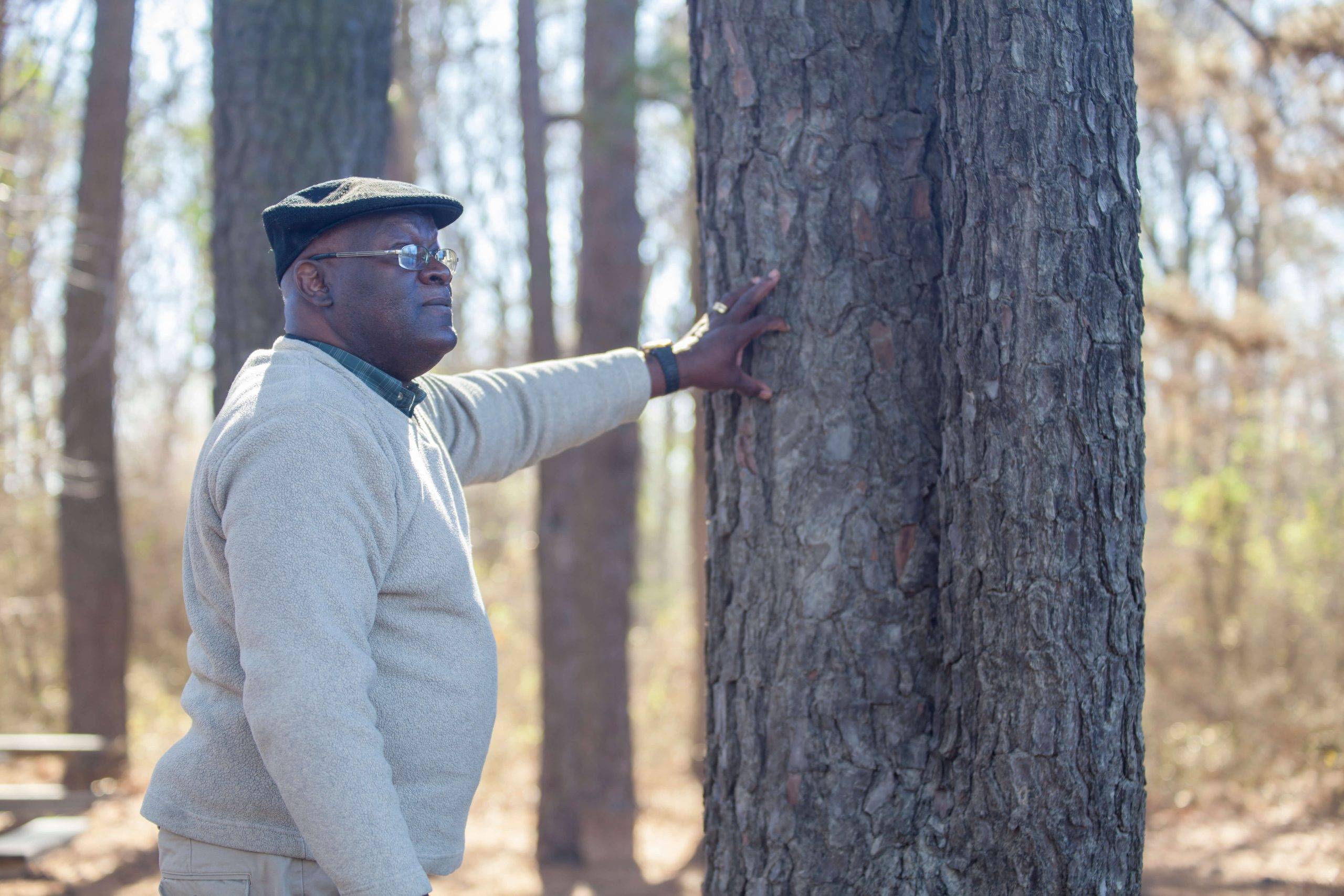
We often think about how forests give us clean air and water, but how often do we think about the forest’s power to heal and transform?
James Woodley joined us at River Park North in Greenville, South Carolina to tell us the story of how forests helped him survive his heartbreaking illness and find strength within himself.
We need your help so that forests can KEEP giving us peace and a sense of belonging. We need forests to remain places where we can heal and connect.
As a Forest Defender, you are a monthly sustainer and the backbone of the forest protection movement. You’ll also get exclusive opportunities, invitations, and gifts!
Stories Happen in Forests is not meant as an endorsement for any organization, business or group, nor is it a representation of Dogwood Alliance programmatic work.
There are many ways we enjoy the forests, whether it’s camping, trail running, fishing, or hiking. There are also many different ways we can protect Southern forests and stand in solidarity with the people most affected by deforestation and climate change.
We met up with Ruddy of Global Justice Ecology Project in Hypoluxo Scrub, a Florida forest, and she told us about the unique and inspiring way she protects forests.
We need your help so that forests can remain places of beauty, wonder, and community. So that people like Ruddy can climb trees for the sheer joy of it and don’t have to put their bodies on the line to protect the places we all love and need.
As a Forest Defender, you become a monthly sustainer and the backbone of the forest protection movement. You’ll also get exclusive opportunities, invitations, and gifts!
Stories Happen in Forests is not meant as an endorsement for any organization, business or group, nor is it a representation of Dogwood Alliance programmatic work.
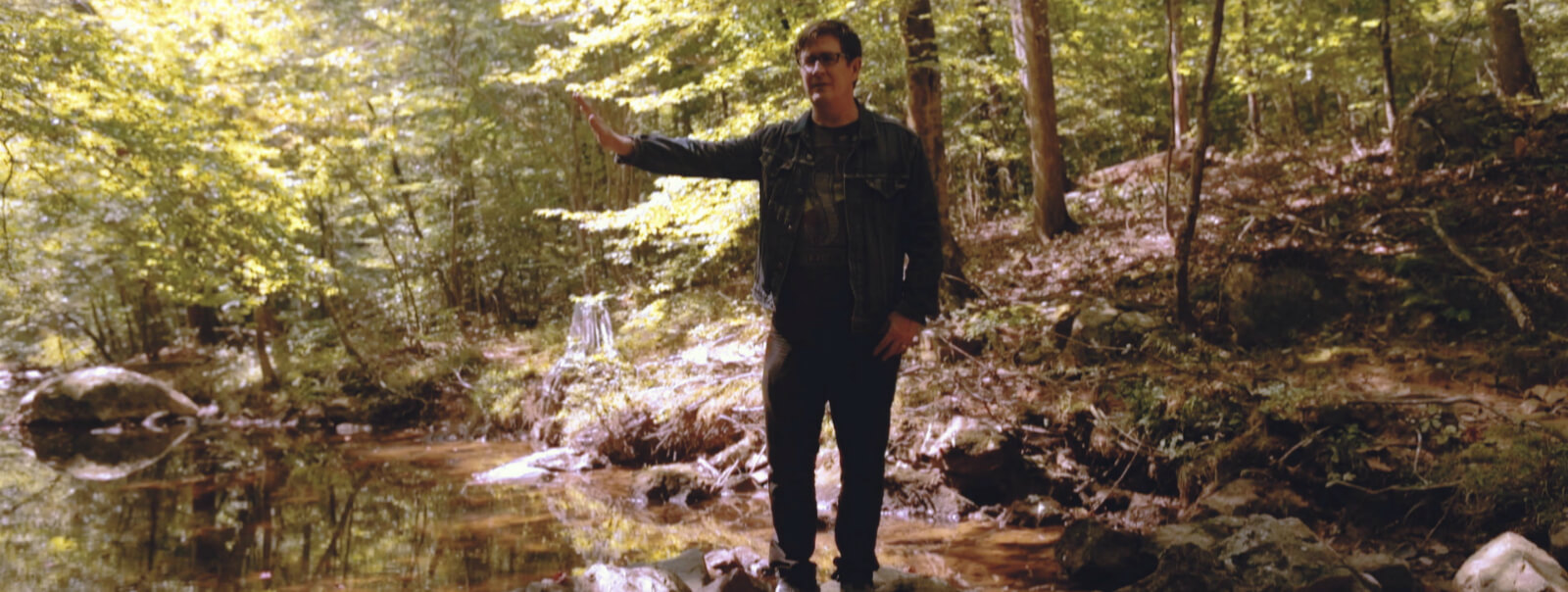
We caught up with John Darnielle, writer and singer of The Mountain Goats, and he told us a story about a surprise encounter he experienced in the woods.
in which I tell a story about a bear https://t.co/I5pzo0E1KI
— The Mountain Goats (@mountain_goats) May 9, 2017
We need your help so that stories like John’s and countless others can KEEP happening in the forest. Protecting Southern forests is about the legacy that we leave for future generations.
As a Forest Defender, you become a monthly sustainer and the backbone of the forest protection movement. You’ll also get exclusive opportunities, invitations, and gifts!
Stories Happen in Forests is not meant as an endorsement for any organization, business or group, nor is it a representation of Dogwood Alliance programmatic work.

I met Desiree Adaway at the Botanical Gardens for Forest Friday, where we nestled on a rock under a tree. Desiree is recovering from a leg injury, so I picked a beautiful place that didn’t demand much walking. The Botanical Gardens is a great place to feel in community with nature without having go out of town.
Desiree is a Dogwood Alliance favorite. She worked with our organization a couple years ago to coach us, and we have yet to let her go. She is currently coaching our Executive Director, Danna Smith. Luckily, the feelings are so mutual. Desiree said:
There are two things that I adore about Dogwood. One is the absolute utter unabashedly, unashamed commitment that Danna and all the staff and the board have for this work. Every day just in it and really committed to that. I love that Dogwood sees this work as a part of a larger piece of social justice and that it is not just about the trees and the water, but about the communities and the people. I love that Dogwood is not only committed to the environment but to understanding how the environment intersects with race, class, and gender and making it accessible to everybody. That’s really important to me.
Desiree is a very busy woman completely committed to her social justice work. Currently, she is primarily doing anti-oppression work. She has a few online classes she teaches with her colleague Erika Hines. In April she launched a social justice intensive course that focuses on racism and privilege, religion and what it means to be non-Christian in this country, and sexism and heterosexism. You can look at other classes Desiree offers and read more about her incredible work here.
Desiree talks about relationships as transformational and not transactional. She said:
When we both step away from the table, we’re both better from being there. Not just you, but we both are. We both are stronger organizations. We both are better equipped. We now have stronger, more useful tools to get this work done. I always say let’s get free together because we have to. We have to do this together. You can save all the trees you want, but if the people in the communities with those trees are not having their needs met, then what’s saving those trees for? You want people to come out and enjoy it and be in community and harmony with it. We have to save the earth in all ways for everybody. That’s the work. You can’t do that if it’s only you sitting at the table talking about trees. It’s the trees AND the gift and the impact they have on the quality of life for everybody.
We want to thank Desiree for joining us for a Forest Friday! Please keep checking back for more Forest Fridays coming soon!
Dogwood Alliance has been working for years to support some of this country’s largest paper and wood producers to improve their forestry practices and support conservation efforts. International Paper, the largest paper company in the South and the World, is one of the companies that we work closely with and are proud to see their leadership and commitment to funding forest conservation. On April 19th, along with their partners at the National Fish and Wildlife Foundation, they announced a $10 million conservation funding commitment over the next five years focused on protecting and restoring forests across four priority regions in our region.
They established a partnership with the National Fish and Wildlife Foundation (NFWF) called the Forestland Stewards program in 2013 and committed $1.5 million/year to fund forest enhancement, restoration, and conservation efforts across 8 states – including a special focus on bottomland hardwoods or wetland forests. With this funding renewal commitment that includes a larger monetary commitment for the new period, that is cumulatively over $17.5 million for forest conservation efforts in the region by IP and this will fund conservation efforts on over 500,000 acres by the end of 2022. Congratulations IP on this leadership and work with NFWF – we look forward to seeing other forest products companies following your lead.
Below is the announcement from NFWF and IP:
Washington, D.C. (April 19) – The National Fish and Wildlife Foundation (NFWF) and International Paper (NYSE: IP) today announced that IP has renewed its five-year commitment while increasing its overall contribution to $10 million to the Forestland Stewards Initiative, one of the most effective public-private forest conservation partnerships in the United States. In the first four years of the initial five-year commitment, the partnership has funded 44 projects that have restored, enhanced or protected more than 190,000 acres of forest habitat.
The projects targeted three specific landscapes in the United States — the low country of North and South Carolina; the Cumberland Plateau in Kentucky, Tennessee, Alabama and Georgia; and the piney woods on the Louisiana-Texas border. Because of the effective conservation successes within these landscapes, International Paper and NFWF will expand the partnership into a fourth landscape, the Lower Mississippi Alluvial Valley, in a concentrated effort to restore and protect bottomland hardwood forests and associated wildlife, including migratory and wading birds, wintering waterfowl, and other terrestrial and aquatic species.
“Our entire business depends on the sustainability of forests,” said International Paper Chairman and CEO Mark Sutton. “Through this expanded collaboration with NFWF, we will continue to promote responsible forest stewardship and ensure healthy and productive forest ecosystems for future generations.”
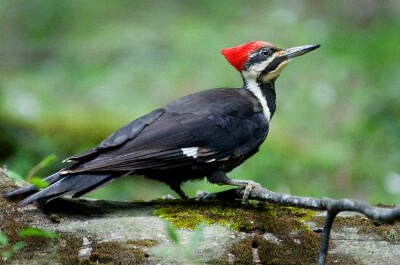
The Forestland Stewards Initiative began in 2013, when International Paper made its first five-year commitment of $7.5 million to restore, protect and enhance 200,000 acres of Southern pine, oak and savanna woodlands across eight southern states. These forests were selected because they represent some of the most biologically diverse natural areas in the world, providing habitat for numerous at-risk, threatened and endangered species such as the red-cockaded woodpecker, gopher tortoise, songbirds, freshwater mussels and rare plants. In addition, these forests are a significant source of wood products that are important to local economies.
As the initiative enters its fifth year of grant-making under the initial commitment, the partnership anticipates that it will exceed its original five-year goal, with more than 240,000 acres restored and protected once all projects are completed.
“The Forestland Stewards Initiative has achieved tremendous success by bringing together business leaders, landowners, public agencies and conservationists to restore and protect some of the most iconic forests in the United States,” said Jeff Trandahl, executive director and CEO of NFWF. “This public-private partnership serves as an outstanding model for landscape-scale conservation, and its renewal will bolster and expand ongoing conservation efforts to create seamless forest habitats for wildlife and support local economies.”
Forestland Stewards works with private landowners, government agencies and conservation groups on strategic forest restoration, enhancement strategies such as prescribed burning, and protection of key tracts of land within wildlife corridors and existing hubs of forestland. The program has leveraged conservation investments to benefit fish and wildlife and to assist landowners in improving forest management practices for “working” forests, a critical contributor to responsible stewardship of forest resources. And, through its competitive grant process, the Forestland Stewards Initiative has leveraged International Paper’s initial $7.5 million investment to generate more than $24.5 million in matching contributions, for a total conservation impact of approximately $32 million.
About International PaperInternational Paper (NYSE: IP) is a leading global producer of renewable fiber-based packaging, pulp and paper products with manufacturing operations in North America, Latin America, Europe, North Africa, Asia and Russia. We produce packaging products that protect and promote goods, and enable world-wide commerce; pulp for diapers, tissue and other personal hygiene products that promote health and wellness; papers that facilitate education and communication; and paper bags, cups and food containers that provide convenience and portability. We are headquartered in Memphis, Tenn., and employ approximately 55,000 colleagues located in more than 24 countries. Net sales for 2016 were $21 billion. For more information about International Paper, our products and global citizenship efforts, please visit internationalpaper.com.About the National Fish and Wildlife FoundationThe National Fish and Wildlife Foundation (NFWF) protects and restores our nation’s wildlife and habitats. Chartered by Congress in 1984, NFWF directs public conservation dollars to the most pressing environmental needs and matches those investments with private contributions. NFWF works with government, nonprofit and corporate partners to find solutions for the most intractable conservation challenges. Over the last three decades, NFWF has funded more than 4,500 organizations and committed more than $3.8 billion to conservation projects. Learn more at www.nfwf.org.
For nearly 50 years, Earth Day has been celebrated around the world to call attention to some of our most pressing environmental and social problems, including climate change, natural resource destruction, and threats to biodiversity.
This Earth Day, Dogwood Alliance sends gratitude to the people who are addressing these issues in their communities every single day.
To learn more about the work of these heroes, be sure to catch our newest short video being released on May 15th!
In Richmond County, North Carolina, the Concerned Citizens of Richmond County are organizing to stop an Enviva wood pellet facility from being built in their community.
This small community is going up against Enviva, a giant in the biomass energy industry.
If Richmond County is successful in stopping this plant, they will protect their community from additional pollution, will protect our forests and wildlife from the needless destruction of nearly 10,000 acres a year, and will protect our climate from excessive amounts of carbon being dumped into our atmosphere.
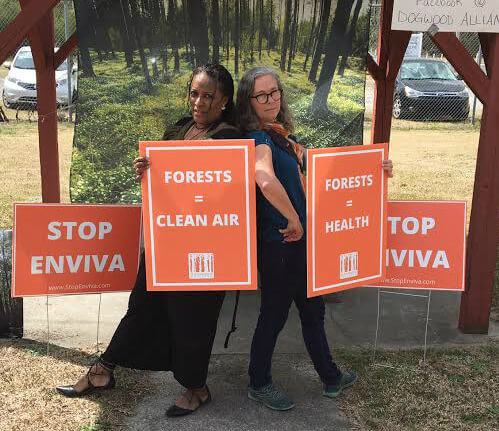
Each April 22nd, people around the world come together to value our environment. This year, we ask you to commit to extending that action throughout the year.
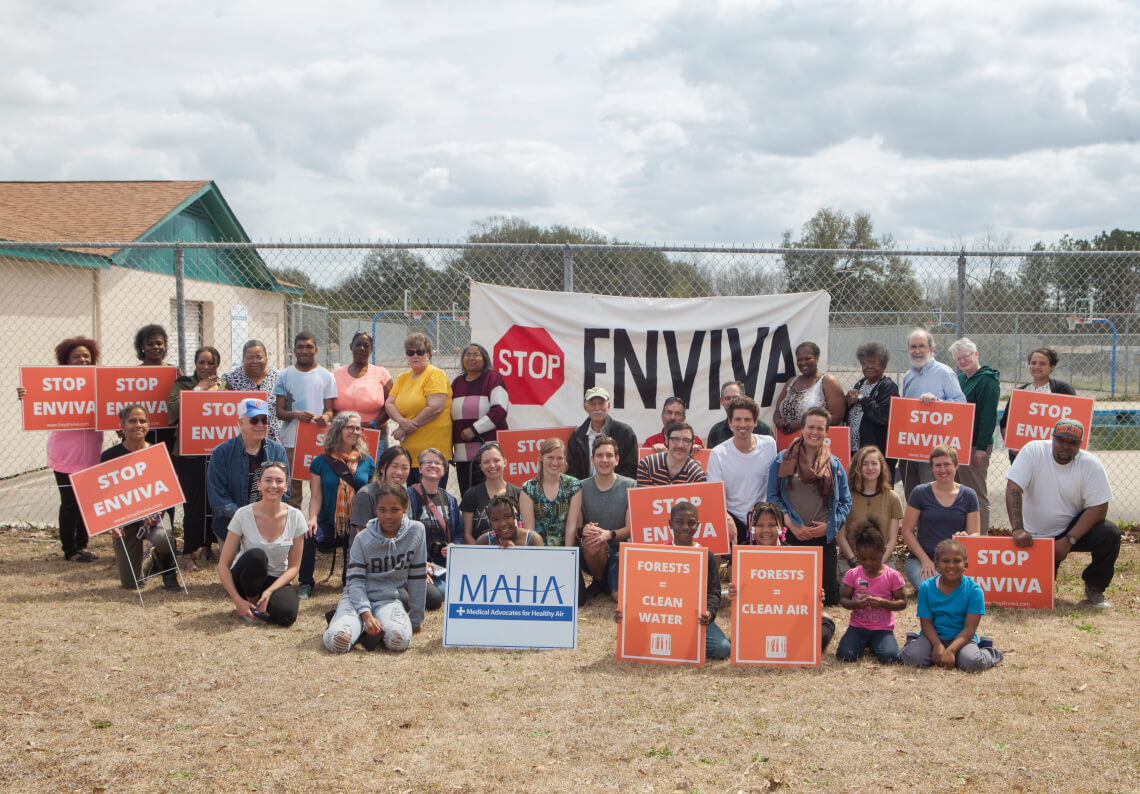
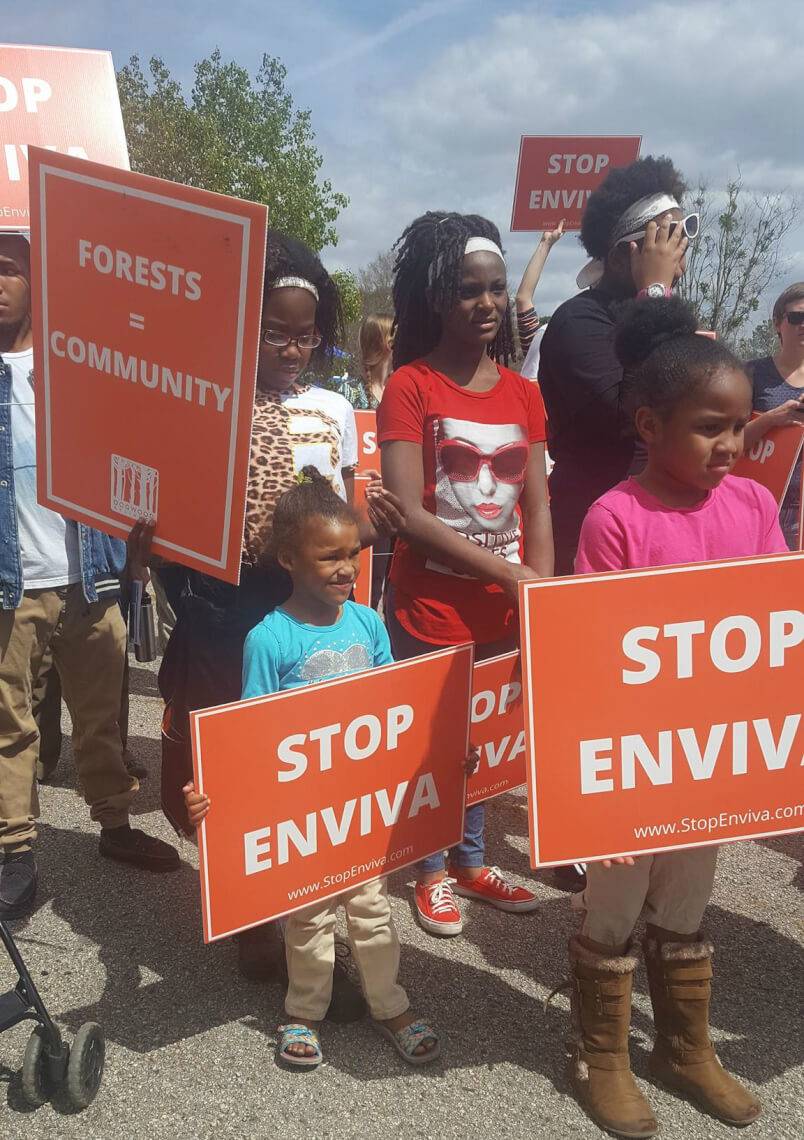
On March 25th, Dogwood Alliance joined the Concerned Citizens of Richmond County for a Rally for Health and Environmental Justice.
Local residents fear that the proposed Enviva wood pellet facility will bring harmful dust pollution, constant noise, dangerous truck traffic, and forest degradation.
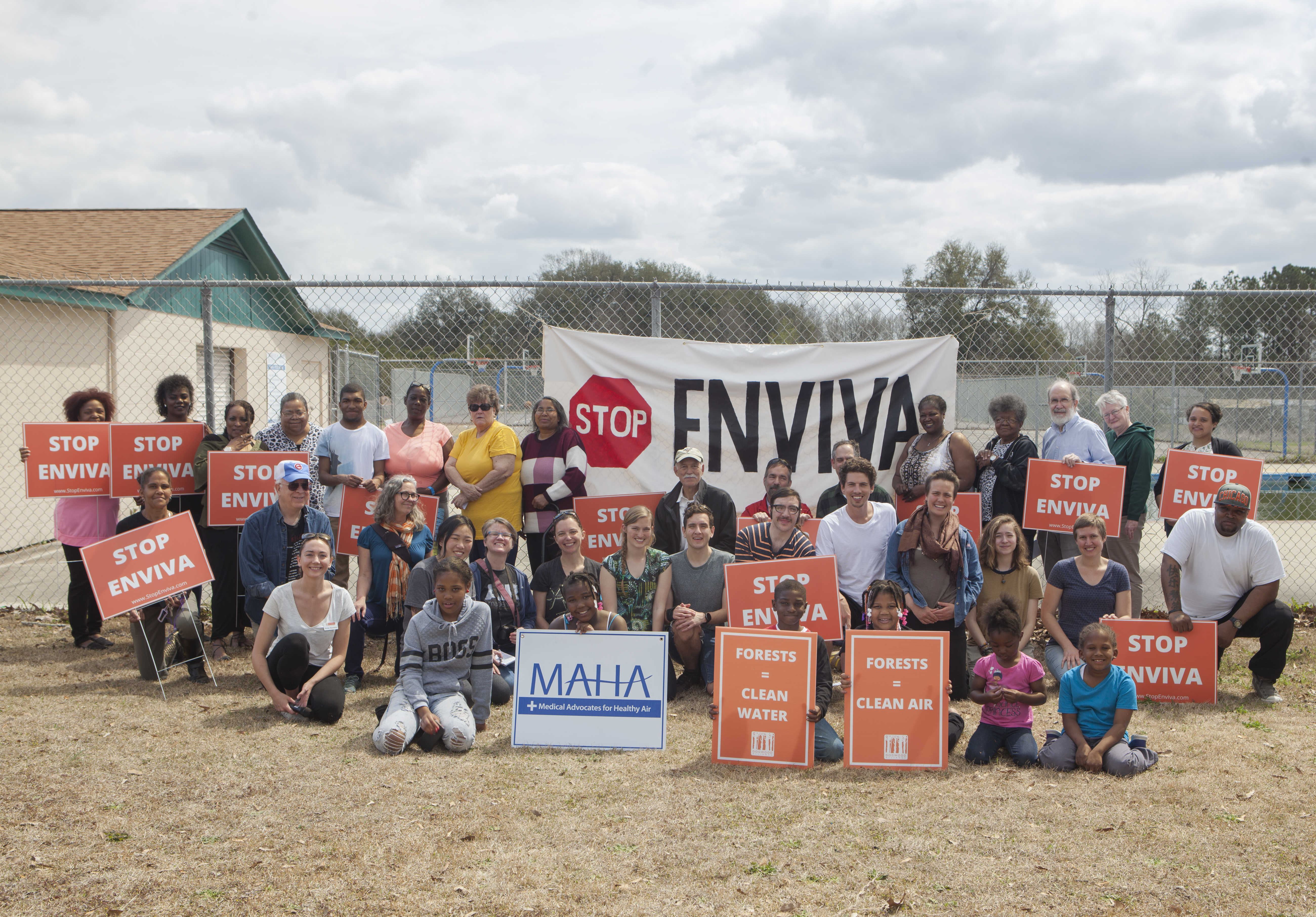
At a time when we need our standing forests to protect our climate and our communities, Enviva threatens the very future of communities like Richmond County.
In the face of increasing threats to our health and the health of our children, threats to the well-being of our jobs and communities, and threats to our ability to grow and flourish, we need to protect our home. Every year our coastal communities face increasingly devastating and costly natural disasters. Rates of childhood asthma and respiratory illnesses have reached near epidemic levels, impacting everything from missed school days to an increasing medical cost burden on the family. Economic inequality continues to grow as our rural, black, Latinx, and Native communities bear the burden of international extraction economies. Industry promises jobs and economic growth but only extracts wealth, damages communities, and degrades the environment. Industry intentionally targets communities that have a much higher mountain to climb to reach economic equality.
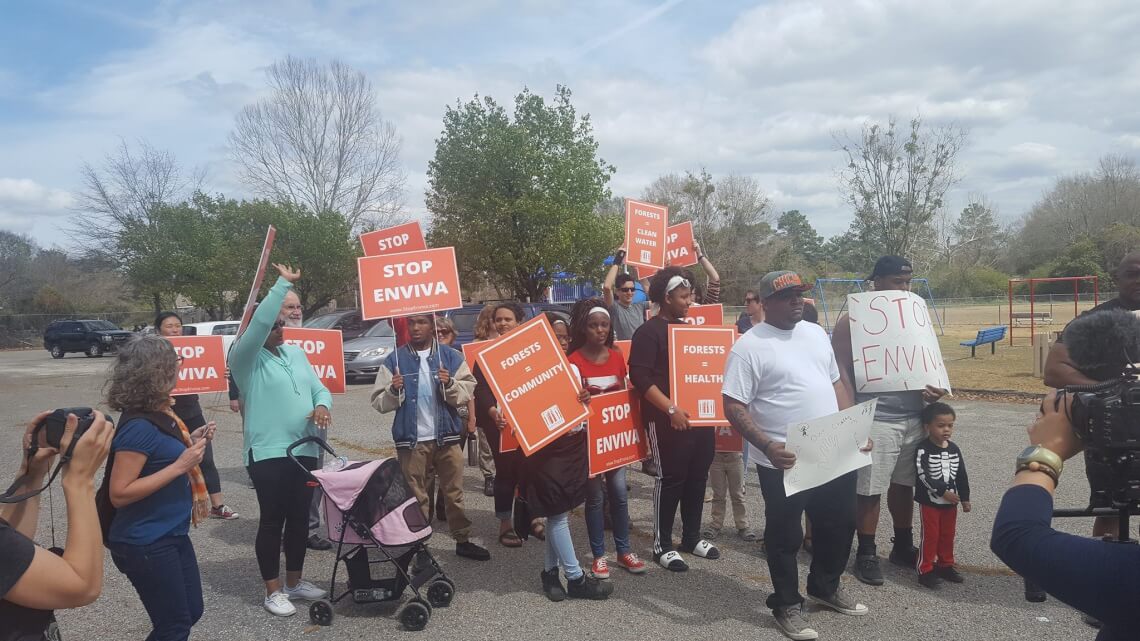
On numerous occasions, residents of Richmond County attempted to deliver public comments to their county commissioners regarding their concerns, but were denied access to public comment.
Richmond County residents fear the facility will worsen conditions for this already overburdened community. Kim McCall, Treasurer of Concerned Citizens of Richmond County, says:
“Our county already has one of the highest levels of childhood asthma in the region, and cancer is the leading cause of death in Richmond County. We are already living with a CSX station, Piedmont Natural Gas, a Perdue Chicken plant, the Duke Energy complex, and we are the final stop for the Atlantic Coast Pipeline. This Enviva plant is an additional injustice to our community.”
Last year, the NC Department of Environmental Quality and the NC Department of Air Quality approved an air quality permit for Enviva, despite numerous flaws in the permit and despite never holding a public hearing in Richmond County.
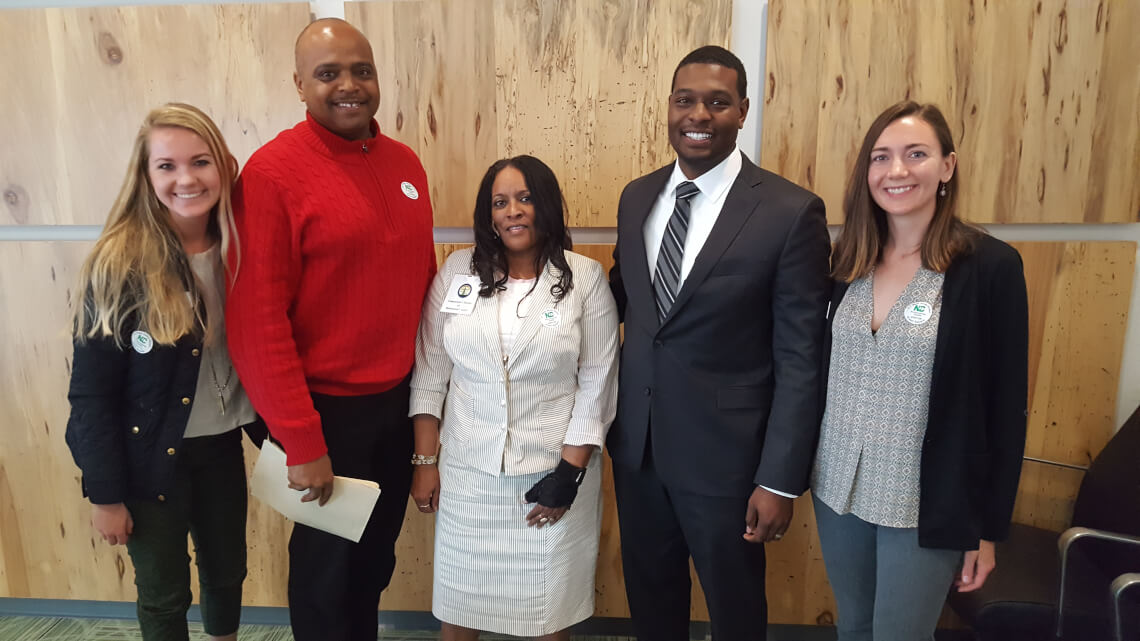
“I live less than a mile from the proposed site”, said Debra David, resident and Treasurer of Concerned Citizens of Richmond County. “The dust and the noise from the plant will affect the way of life for our entire community. Enough is enough.”
Today, President Trump, with the stroke of his executive pen, attempted to roll back U.S. progress towards addressing climate change. Under attack is President Obama’s historic Clean Power Plan which set about to regulate carbon emissions from power plants as well as other important steps taken by the Obama administration to address climate change.
At the heart of his actions is a long-held belief on the part of the new President and his top cabinet picks that climate change is a hoax, despite clear and overwhelming scientific evidence to the contrary. Solving the climate crisis should be the top priority of our president, but instead Trump’s priority appears to be protecting the interests of the fossil fuel industry, even as people of Appalachian coal country are already transitioning to the green economy.
As noted in a recent report from the Department of Energy, jobs in the renewable energy industry, led by solar, are on the rise. In fact, solar creates more electricity jobs than oil, gas, coal and nuclear combined. If we are serious about creating jobs in this country, we should be leaders in developing new, clean energy technology and training a diverse workforce in pursuit of these well-paying jobs.
Despite its flaws, the Clean Power Plan was the most important step forward the U.S. had made towards addressing carbon emissions. In his actions today, the president is not only harming our environment, but he is directly impacting the most at-risk communities in the US and around the globe. Rural communities across the South are already facing a glut of resource extractive industries that put both their health, economic stability, and quality of life at risk.
Climate change is not just an environmental issue that will impact us all at some point in the future. It is an issue affecting the health and well-being of the most vulnerable in our society right now, including that fact that it is disproportionately impacting communities of color.
At the end of the day, the truth will prevail. Trump might get away with fooling some of his supporters that climate change is a hoax or that we have to compromise our environment to save jobs, but in the end, he isn’t fooling the atmosphere or changing the fact that many investors and companies are already creating US jobs while turning a profit from clean energy.
We are no stranger here at Dogwood to government attempts to defy climate science. For the past three years, we, along with our partners and leading scientists have been working hard to expose the truth that burning trees in place of coal to generate “biomass” electricity will actually increase carbon emissions, thereby accelerating climate change. This fact stands in direct contrast to attempts by the US Senate as well as outdated laws in the European Union that designate burning trees as climate friendly.
Just last week, we published a report detailing how carbon emissions from logging are a major driver of climate change. Just because the government doesn’t account for or acknowledge these emissions, doesn’t mean they aren’t happening. The sooner we embrace the truth the better off we will all be.
Around the world a critical mass of government leaders, scientists and advocacy groups working hard everyday to address what has become the defining issue of our time. Chances are that this last-ditch attempt by those with a vested financial interest in dirty energy might stall progress in a few areas. But progress at the global, state and local level will continue, as will business innovation focused on clean energy solutions and forest protection.
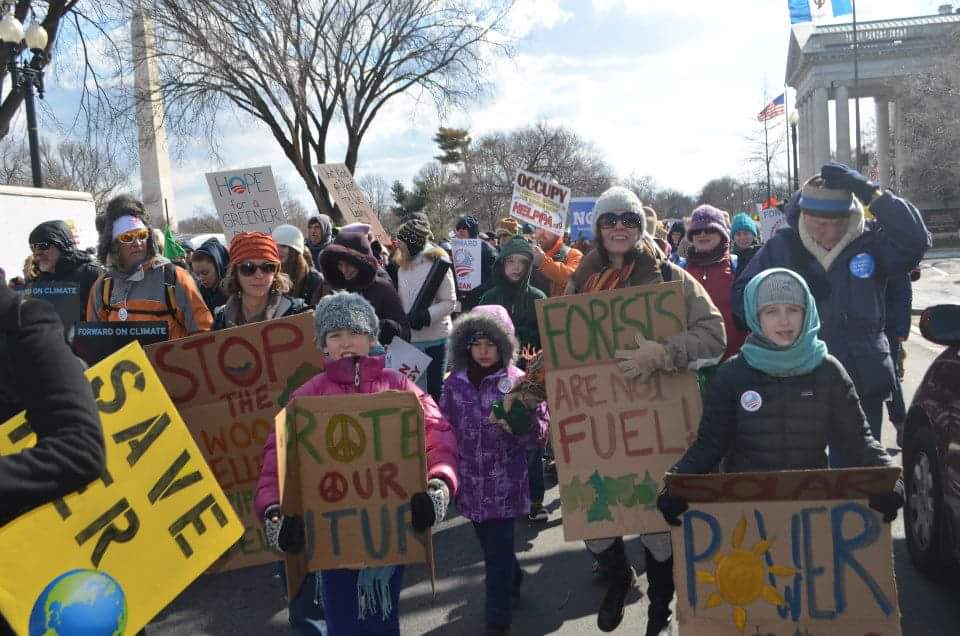
Today we stand arm in arm with our frontline communities, renewable energy entrepreneurs, national climate leaders, and scientists. Together, we will resist the false profit over people narrative that has kept wealth and power concentrated in the hands of a few and dominated decision-making for too long. Ongoing public pressure on this administration, Congress and at the state and local levels are as important as they have ever been. Citizen action matters. Trump is going to find that just like the immigration ban and health care, undoing climate progress will be met with fierce resistance and won’t be easy.
For Immediate Release – March 21, 2017
Report defines key climate solutions connected to forest protection and documents how logging across the US, the world’s largest wood producing and consuming country, is threatening the climate and exacerbating the impacts of natural disasters. Asheville, NC – According to a new report released today on the International Day of Forests, a massive scale-up in forest protection in the United States, is critical to solving the climate crisis and providing a safety net for communities against extreme weather events. Despite its importance, forest protection in the United States is not currently seen as a climate priority, and government and industry often promote increased logging as a climate solution.
“In order to meet the ambitious goals set forward by the Paris Climate agreement, the United States is going to need to aggressively reduce emissions from fossil fuels while also accelerating the removal of atmospheric carbon dioxide by protecting and restoring forests here at home,” said Dr. Bill Moomaw, a climate scientist who co-authored the report with Danna Smith, Executive Director of Dogwood Alliance who has been a leader working on the front-lines of industrial logging in the U.S. for over 20 years.
Meanwhile, the rate and scale of logging in U.S. forests for wood, paper and fuel are among the highest in the world. Logging, past and present, has significantly degraded U.S. forests’ climate stabilizing capacity, and a new path must forward must be created in order to restore U.S. forests for their climate benefits.
“Forests are both vital to solving the climate crisis and are our best protection against the worst impacts of climate change,” said Ms. Smith. “Our hope with this new report is that leaders across federal, state and local governments, businesses, nonprofits and citizens accelerate actions to protect and restore our nation’s forests to help solve the climate crisis and protect our most vulnerable communities from the worst effects of climate change.”
In the past three years the forests of the coastal South have become the largest source of wood pellet exports to Europe, where they are burned in power stations to generate electricity as a “climate friendly” alternative to coal.
Bill Moomaw states,
“We cannot log and burn our way out of climate change. Logging forests and burning trees to generate electricity in place of coal while not counting the emissions may help governments meet their emission goals, but the atmosphere and climate is where the real accounting takes place. While forests have been successfully regulating carbon dioxide in the atmosphere for 300 million years their potential to address climate change in the coming centuries is significantly underestimated.”
Standing forests provide a proven means for atmospheric carbon removal and storage that can operate at the necessary scale and time frame to keep the world from going over the climate precipice. Forest protection, restoration and expansion must therefore become a top priority in America’s climate agenda.
To download the report, visit: www.dogwoodalliance.org/forests-climate# # #Contact: Scot Quaranda, [email protected], 828.242.3596


 Donate