


Kathryn May Keeper
The ascending path is a fire escape bolted to the outside of the city. Down below the lowest clouds, builders clamber for a view of blue while the creation of new windows shrinks the sky. Walls extending endlessly into space crane discourteously towards the horizon in a world of squinting apertures recessed into cement, getting in the way of their own perspectives. The path leads out.
At the summit. Openness. Full breaths. A view.
Strange how quickly instincts adapt to circumstance. We measure time in seconds while dust settles patiently into the arms of aeons. Sound distorted by the abundance of flat planes bounces back unregistered. The horizon is an orange glow above the bruisey purples of architectural valleys. A few short human reproductive cycles pass and awe becomes ennui; genetic divisions sever us mercifully from the dread of our own creations.
They had trekked up the eastern slope on a narrow trail that wound snakily through miles of primeval rhododendron to join the humans who’d parked just below the summit. Some hunched, resting, on the simple weathered benches; others orchestratrated family members into poses with the vast rolling vista visible on either side of their groupings like a frame around their right to be at the top of something. With a snap, they are imprinted on a screen as brittle as memory. Red-faced children scowled.
Here in the clean air, human-smell is the foreign spoor. Chemical sun blockers. Perfume. Heavy metal deodorant tang. Meat. Salt. Starch. Seared lungs expelling desperate gasps of thin air. Loud talk about things that should have been left at their cars in the lot below. There is, it seems, a lot to be said for speaking.
He watched her stand on the bench against the eastern edge of the platform and shade her pale eyes with her hand as if she were saluting the curve of the horizon.
The summit platform was small and heavily graffitied. Names with dates. Hearts declaring immortal love at an elevation of 3500 feet..
Despite the weak struggle of the sun against the clouds, the rocks were warm. The rhododendron leaves lifted and flagged lethargically, scintillating gilded green like fish tilting as a single being in the current. Droning black flies settled on the nearest lump of skin when the air went slack. As a high gust pressed all the branches back away from their trunks the sound drowned out the exclamations of the tourists crowding the summit.
She was thinking, we must gain distance to see what is closest to us. We must get closer to learn what we can gain with distance.
They had ascended the eastern slope; they would wind their way back through the rhododendron in darkness. They would return to the city and their familiar squares of sky. On a clear day they could see the remote summit from their front porch, lost in a blue ether of similar peaks, softening the border between firm earth and firmament.

Kathryn Keeper
Kathryn Keeper is a writer, artist, observer and agent of fortune residing in Asheville. She aspires to great things while constantly reworking and evaluating her personal definition of greatness. She would like to thank Asheville Grit and the Dogwood Alliance for providing a forum for writers to present their interpretations of the deep beauty of the southern wilds.

Dogwood Alliance is celebrating its 20th Anniversary of Southern forest protection with a fun and exciting storytelling and music festival! This free festival is great for the whole family with live music, renowned storytellers, games, yoga, kids’ activities, and more!
For music, we’ve got Sherri Lynn and the Mountain Friends, Threadbare Skivvies, Krekel and Whoa, Phuncle Sam, and DJ Malinalli. Our featured storyteller is the internationally acclaimed Doug Elliott.
There will be SO much to do, including mask making, laurel wreath making, a puppet area, giant Jenga, oracle readings, Yoga with Inner Wild, cornhole, and an art auction.
The only thing we need to make this celebration a success is you! So please bring your friends, family, and co-workers with you and have the most amazing time!
1:00pm Asheville Grit Writing Contest Winners2:00pm Dogwood Alliance Forest Defender Induction Ceremony – for children of all ages!2:15pm Storyteller Gary Phillips2:30pm Poet Amy Upham3:00pm Sherri Lynn and the Mountain Friends4:00pm Feature Storyteller Doug Elliott5:00pm Threadbare Skivvies6:00pm Krekel and Whoa8:00pm Phuncle Sam10:00pm DJ Malinalli
For 20 years, Dogwood Alliance has stood with the forests and people of the South. Based in the mountains of Asheville, North Carolina, Dogwood has transformed the forestry and paper-buying practices of some of the largest companies in the world. Today we work at the international level to stop the burning of Southern forests for European electricity.
Looking ahead to the next 20 years, Dogwood Alliance is building a vision and a movement to protect 35 million acres of wetland forests across the South. Despite their beauty and life-sustaining magic, these forests are largely unprotected. Working together, we can and we will change that.
You are what makes the work of protecting our Southern forests possible. Come celebrate all that we’ve done and all the amazing things we have yet to do together.
DOGWOOD ALLIANCE ● NATURAL RESOURCES DEFENSE COUNCIL ● SOUTHERN ENVIRONMENTAL LAW CENTER
FOR IMMEDIATE RELEASEPRESS CONTACTS: Scot Quaranda, Dogwood Alliance (US), +1 828-242-3596, [email protected] Jeff Benzak, NRDC (US), +1 202-513-6248, [email protected] David Carr, SELC (US) +1 434-218-7381, [email protected]
Following Multi-Year Campaign, Environmental Groups See Potential in Fight to Protect Forests and Communities from Dirty Biomass; But it is Now the Responsibility of the EU Parliament and Council to Strengthen the Commission’s Proposal to Ensure Renewable Energy Targets Do Not Drive Forest Destruction and More Climate Pollution.
WASHINGTON (November 30, 2016) – Responding to public pressure and signaling progress in a years-long environmental campaign, the European Commission (EC) today took a step toward curtailing the dangerous, continent-wide expansion of burning trees to generate electricity by proposing to remove misguided subsidies for large-scale biomass from its renewable energy policies. With an increasing body of scientific evidence making clear that burning trees for power increases carbon emissions, this signal from the EU should act as a wake-up call to the wood pellet industry.
For months, public pressure has been mounting on the European Commission to act. In October, environmental groups in Europe and the U.S. mobilized activists from at least 29 countries and five continents to deliver social media messages reaching 1.5 million people. Directed at two EU commissioners who oversee renewable energy policy, the groundswell of citizen concern underscored that burning trees for energy pollutes our climate and our air, destroys our forests, and harms our health.
The greatest potential improvement to EU energy policy came as the Commission proposed to end support for new, stand-alone biomass burning facilities. Going forward, new facilities that wish to burn biomass will need to be much more efficient and generate both heat and power. Unfortunately, the targets for efficiency are currently ambiguous and will need to be clarified during the next phase of debate in the European parliament. Without such an efficiency threshold, the EC risks creating another dangerous loophole that would allow utilities to burn more polluting biomass.
In addition, the EU Commission failed to fully address several fundamental problems in its draft policy. The proposal fails to adequately deal with the existing biomass industry in Europe that continues to emit millions of tons of carbon into the atmosphere and puts valuable forests at risk in the Southern U.S. and around the globe. Further, it does nothing to ensure that new biomass-burning facilities actually reduce their carbon pollution. Instead, it puts in place only weak sustainable wood-sourcing standards, which lack any adequate carbon accounting mechanism—a critical flaw that must be corrected.
Environmental organizations will focus their attention on stronger limits to wood sourcing and increased accountability on carbon emissions as the process moves forward to debate in European Parliament. It is now up to the European Parliament and the Council of Ministers to introduce amendments that will ensure renewable energy targets will not result in even greater carbon emissions.
“Taking subsidies off the table for new electricity-only power stations that burn biomass represents important but modest progress for our climate and for the air we all breathe,” said Debbie Hammel, director of NRDC’s Land Markets Initiative. “Burning trees to generate electricity is dirtier than coal, destroys forests, and threatens our health. To ensure that EU renewables policies deliver on their promise, policymakers on both sides of the Atlantic must understand that sustainability standards for wood fuel alone are not sufficient to address the biomass threat. Bioenergy policies must close the carbon accounting loophole and place an overall cap on the use of biomass for energy at levels that can be sustainably supplied.”
“The new EU policy draft is an important step forward for the native Southern forests and rural communities that are suffering at the hands of the dirty biomass industry,” said Adam Macon, Campaign Director at Dogwood Alliance. “While we will celebrate this progress, this policy needs to be further strengthened and we will not stop fighting for our forests and communities in the region that still face the dangers of government and corporate resource extraction for wood pellets at the expense of their health and quality of life.“
“The draft policy proposes to eliminate future subsidies for burning wood to produce solely electricity, but includes several large loopholes in that proposal,”said David Carr, General Counsel, Southern Environmental Law Center. “If the final policy adopted clearly bans subsidies for burning wood in new electric power plants or co-firing in existing coal plants, this would be an important step in controlling the expansion of the worst effects of burning trees for energy. Unfortunately, it would do nothing to limit the carbon emissions from existing biomass power plants.”For more information on how harmful EU biomass policies impact the world, please see the following resources:
###
There’s no better time to embrace nature than in the fall, the season of transformation. Over the past few decades, our forests have come under major threat due to a number of human-induced disturbances. Trees play important roles for not just our ecosystems but for our community as well. Turns out there are many health benefits from wandering around the woods. The following infographic, created by Organic Lesson, highlights four health benefits that have been suggested by past research studies. From reducing stress to boosting our immune systems, check out the infographic to learn more.

According to a study by researchers at the University of Illinois at Urbana-Champaign, viewing nature could help reduce the level of stress hormone in the body. Imagine yourself in the woods where your mind is free of daily stress and you have so many beautiful things to gaze at while you walk by trees, rivers, and open sky. The best part is that there are many outdoor activities you could do outside of walking to gain the same benefits. Search online for local outdoor yoga classes or maybe you want to try something creative like a photography class. There’s something for everybody!
Plants emit a substance called Phytocide, which helps them against bug attacks and diseases. Studies have found that Phytocides are beneficial for human beings as well. When we breathe in the chemical substance, our bodies respond by increasing the production of white blood cells that protect us from infection and disease. The same studies have suggested that this plant-based substance could also help with reducing the risk of cancer.
Another study found that outdoor activities could also help mitigate ADHD symptoms. For example, a study at the University of Illinois found that exposure to everyday green spaces could potentially help with treating ADHD. The study found that engaging in such activities could help replenish a child’s “directed attention”.
As you can see, there are many benefits that we gain from embracing nature. We have to do more to protect our valuable trees, and there’s no better way to do that than educating yourself and the people around you on the benefits that forests provide. Start planning for an outdoor trip today and experience all that nature has to offer!
Sam Choan is an organic gardening enthusiast. His blog Organic Lesson shares his experiences on topics like gardening, sustainability, and going green. Sam is an advocate of environmental conservation and uses his blog to promote such activities.
WASHINGTON (October 20, 2016) – Environmental organizations today wrapped up a massive social media campaign that directed Twitter messages at two powerful European Commission members who this autumn are charged with helping overhaul crucial European Union bioenergy policies.
The messages originated from at least 29 counties across five continents. The messages reached nearly 1.5 million people worldwide.
The sprawling social media action was part of the 19 October “International Day of Action on Bioenergy.” It was timed to influence an upcoming, high-stakes decision by the European Commission on a new EU bioenergy policy.
The messages shared a common demand: The EU must fundamentally change the way it treats burning wood and other biomass to generate energy so that bioenergy policies finally “protect our climate, crops and forests.” Contrary to their original intent, current EU policies and subsidies now result in distorted outcomes which actually harm biodiversity and worsen climate change.
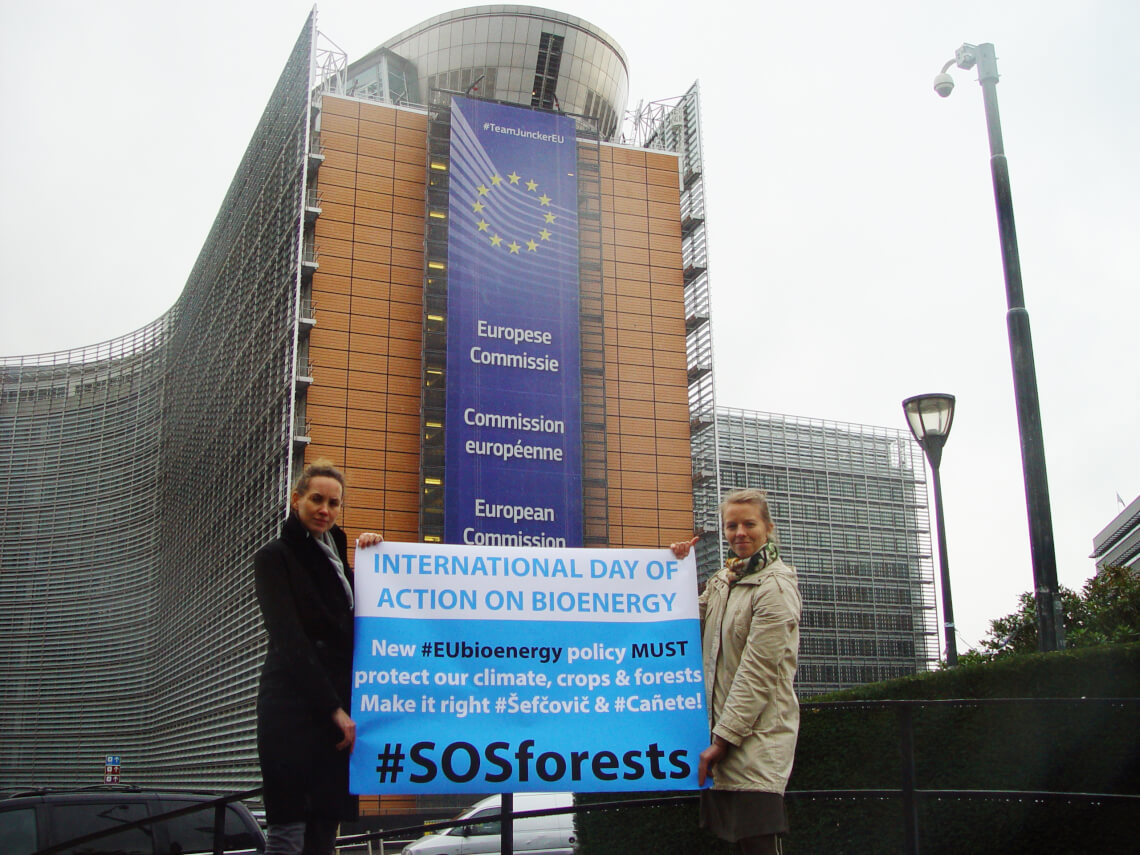
Campaigners from Birdlife Europe and Fern deliver a “live” tweet to the European Commission on the International Day of Action on Bioenergy
Environmental groups and their allies rallied around the #EUbioenergy and #SOSforests hashtags. They focused a barrage of messages on two key decision-makers whose bioenergy policy positions are being closely monitored around the world – European Commission Vice President Maroš Šefčovič and Climate Commissioner Miguel Arias Cañete.
Šefčovič, Cañete, and the European Commission must urgently fix flawed renewable energy policies that have failed to decrease carbon emissions effectively, precipitated an alarming spike in clear-cut logging of native Southeastern US forests, razed European forests and converted European grassland, the groups said. A new bioenergy policy that is based on the latest science and that better protects the environment is needed now, according to the groups.
Europe is perched on the front lines of industrial biomass expansion, so policy changes in Brussels have an outsized impact on the international biomass market. New EU bioenergy policies are expected as soon as early December.
Tweets supporting the International Day of Action on Bioenergy originated from the following countries: Australia, Austria, Belgium, Bulgaria, Canada, Cyprus, Czech Republic, Denmark, Finland, France, Germany, Ireland, Italy, Latvia, Mexico, Netherlands, Poland, Russia, Scotland, Slovakia, Slovenia, South Africa, Spain, Sweden, Turkey, United Kingdom, United States, Vietnam, and Wales.
See here for a photo taken Wednesday in Brussels.
“It has become perfectly clear that bioenergy policies have had a negative impact on our forests, communities and climate and the EU Commission is in the position to fix this mistake,” said Adam Macon, Campaign Director at Dogwood Alliance. “Today we stand with communities from around the world to deliver a clear message, the time is now to stop using our forests for fuel.”
“This isn’t just a European issue or a renewable energy issue,” said Debbie Hammel, director of NRDC’s Land Markets Initiative. “This is a climate issue. Chopping down trees in the US to keep the lights on in Europe is not a clean energy solution. It hastens climate change and undermines international efforts to cut carbon now.”
“EU’s taxpayers are funding bioenergy projects that are worsening global warming and destroying forests,” said Linde Zuidema, bioenergy campaigner at forest NGO Fern. “To make its renewable policy credible, the EU should drastically limit its overall bioenergy use and prohibit the use of roundwood.”
“We raise our voices today because we have already seen first-hand and up-close the negative impacts of the uncontrolled use of bioenergy. We want to see a policy that changes the ongoing destructive practices and outcomes. The new EU policy needs to put an end to burning trees and food for energy, and focus instead on using residues and waste biomass only, recognizing that these sources are limited. In the case of bioenergy the assumption that using more is better is wrong,” said Sini Eräjää, BirdLife Europe’s EU Bioenergy Policy Officer.
Today we recognize Southern US forests at the international level for the way they protect us from climate change and storms like Hurricane Matthew. Today we celebrate Southern forests for the way they give us clean water and air, and for the way they give people and communities a place to play and to rest. The forests of the South are some of the most biodiverse on the planet, and they are so important for providing homes to countless plants and animals.
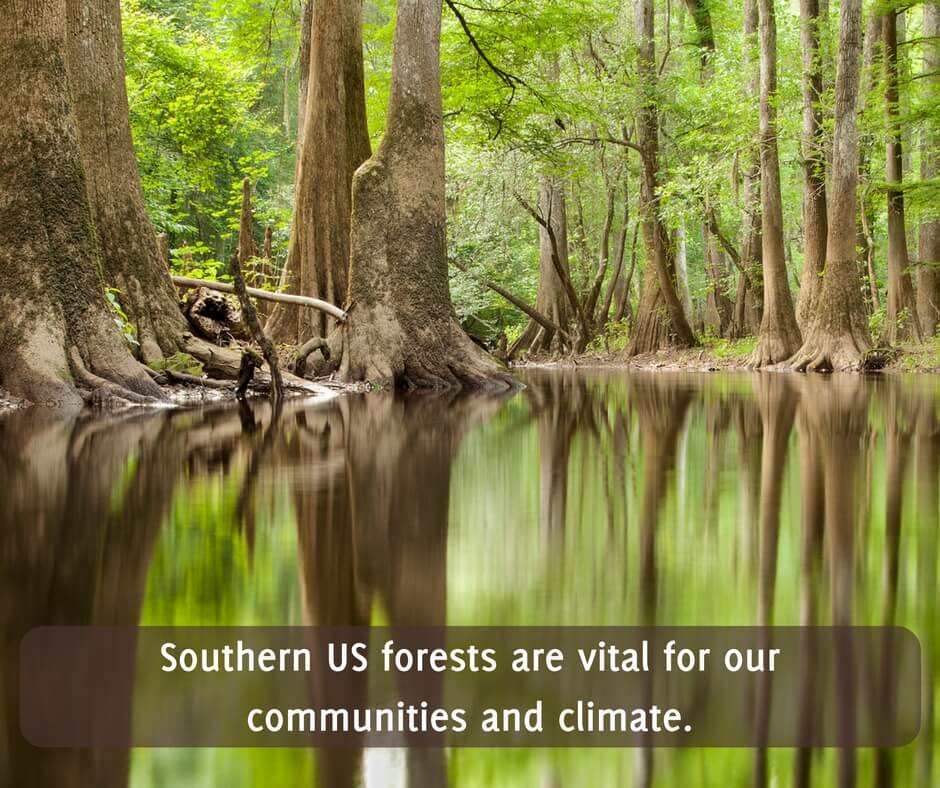
Our forests are being chopped down, turned into wood pellets, and shipped across the ocean to Europe to meet their so-called “clean energy” demands. Our forests are our best defense against natural disastersand climate change, but instead of protecting our homes and communities, they’re lining the bioenergy industry’s pockets.
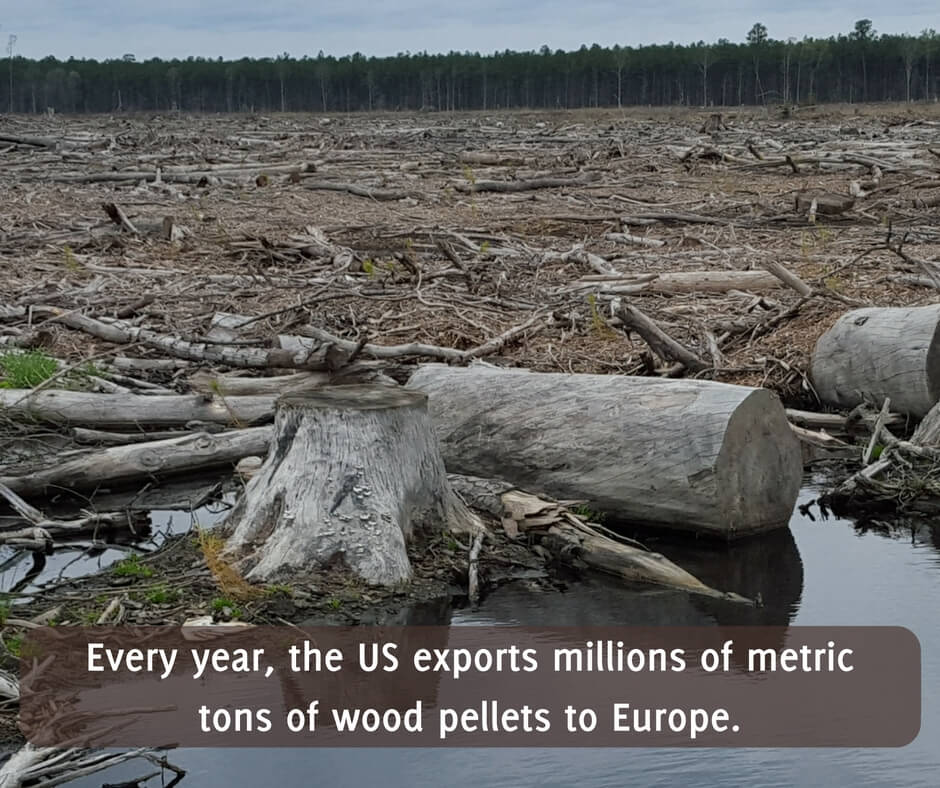
Scientists have even proven that burning forests for fuel is worse for the environment than burning coal. Despite the fact that burning trees isn’t efficient, isn’t clean, and isn’t green, our forests are being destroyed at an alarming rate.
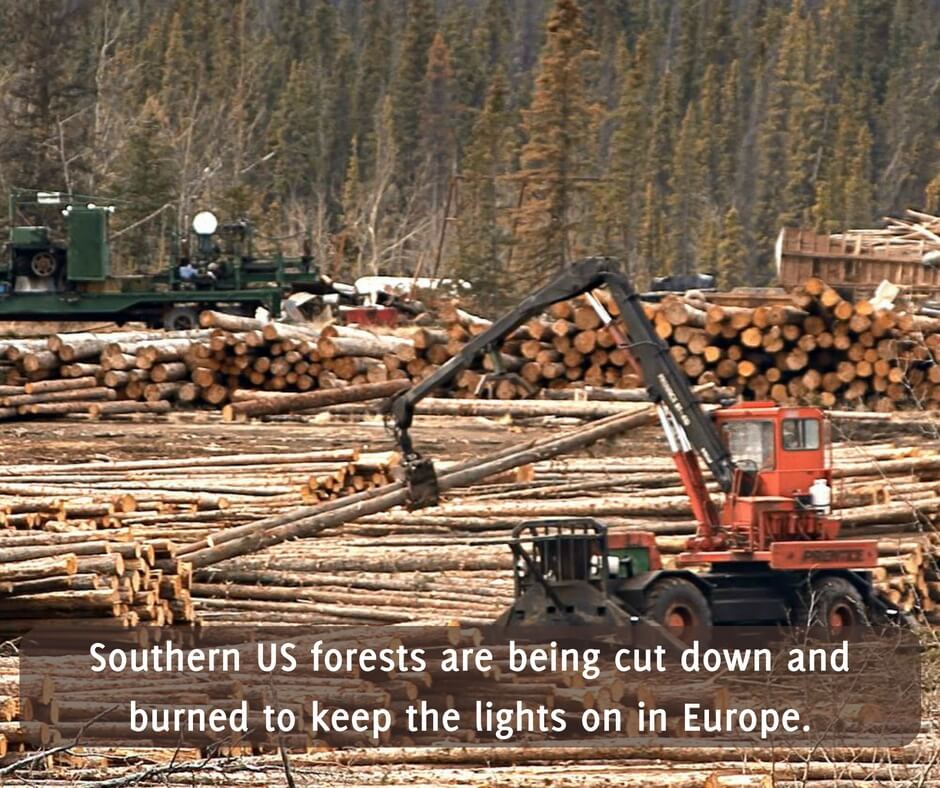
Communities are joining forces to demand the EU Commission stop this deforestation and protect our climate and forests.
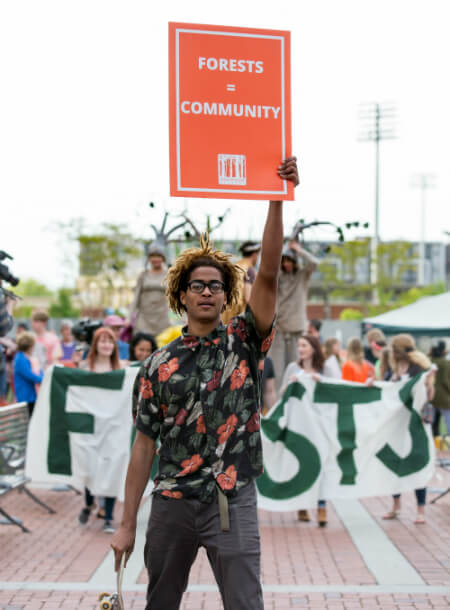
Join with the people of the South in calling for politicians, industry, and the world to value our forests for all the ways that they protect us and give us life. Join us in calling for true renewable energy solutions.
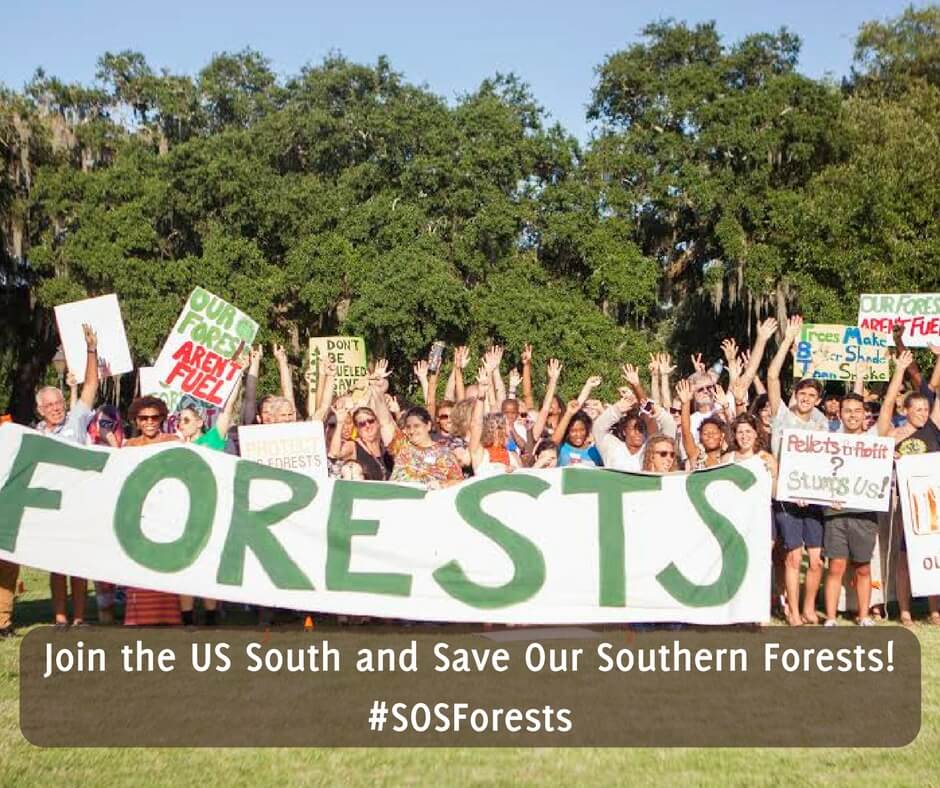
Asheville, NC – Today, local elected officials spanning political parties and several Southeastern states sent a letter to European leaders asking them to promptly reform bioenergy policies that incentivize the destruction and logging of forests. In accordance with the UN-recognized International Day of Natural Disaster Reduction, local elected officials from Virginia to Florida took their local leadership to an international level. Representing over one million Southerners, the public officials want to enhance their communities’ resilience to extreme weather conditions brought on by climate change by communicating directly with European officials who are impacting their ability to do so.
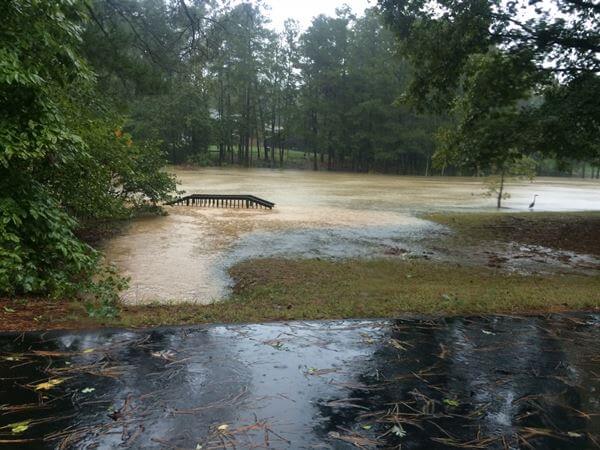
Flooding caused by Hurricane Matthew in eastern North Carolina.
This letter follows on the heels of Hurricane Matthew which claimed the lives of nineteen people in North Carolina and caused billions of dollars in damages that will take years to recover from. In the past 60 years, the Southern US has lost 33 million acres of natural forests including over 75% of our forested wetlands, which provide protection from flooding and storm surge when left standing. Leading economists estimate the protection coastal wetland forests provide communities from extreme weather at over $24 Billion dollars.“Forests are one of our best defenses against natural disasters. Whether it’s flooding, landslides, storm surges, droughts, or hurricanes, forests play a vital role in the protection of lives and livelihoods,” said James Holmes, County Commissioner from Chatham County, Georgia. “No matter what type of storm threatens our local communities, allowing natural forests to remain intact is a cost-effective investment and helps save the lives of our citizens.” Since the European Union’s original bioenergy policy was created in 2010, tens of millions of tons of wood pellets have been exported from Southern forests to fuel European Union ‘renewable’ energy quotas. Many of the forests lost have been from bottomland hardwood forests which are not only precious environmental habitat but also provide critical flood protection to our coastal communities. “As it stands, the European Union’s bioenergy policy and its associated subsidies are driving an unsustainable expansion of wood pellet manufacturing facilities in our region. These policies, though originally well-intentioned, incentivize industrial logging and degradation of our native southeastern forests, including coastal wetland forests.” said Philip Stoddard from South Miami, Florida.The EU Commission is currently determining the future of its bioenergy policy and plans to release a new policy in late 2016 which is what stimulated these officials to act. According to the letter, the local elected officials came together for the protection of forests from bioenergy to “ensure our economic prosperity, to protect our health and children, and to ensure our security and safety.” Daniel Dietch, Mayor of Surfside Florida, summarized their concerns, “I understand the role that forests play in reducing vulnerability to natural disasters and I also understand that one of the best ways to protect the communities we represent is by supporting the conservation of our standing forests and improving management practices in our working forests.”
In southern Missouri’s Ozark Mountains, the spirit of the forest defending Bolala is alive and well in community members who helped protect part of the Mark Twain National Forest.
A US Forest Service restoration plan for one particular part of this national forest, called Butler Hollow, threatened the natural state of this area and posed serious health risks to residents. Although the Forest Service tried to get this plan passed quickly and quietly without involvement from residents, community members led by Sherry and Dale Becker were adamant about getting both the forest and their community the protection they deserved.
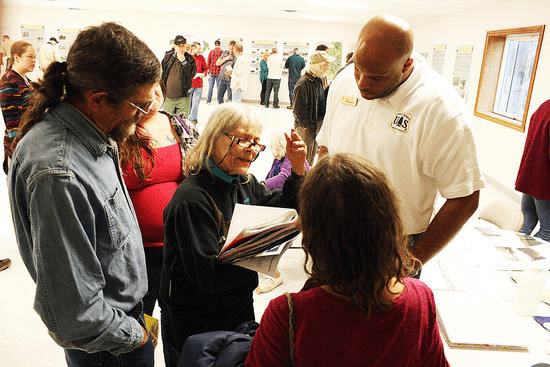
Image credit: Jason Johnston
The Forest Service’s 2014 plan called for the restoration of over 18,000 acres of the Mark Twain National Forest, using prescribed burns, herbicides, and the removal of cedar trees. Amongst other sources, they planned to fund this project by building roads and allowing for commercial logging in the area. However, residents realized that allowing logging in Butler Hollow would have fundamentally changed the unique natural character of the forest. The Forest Service justified this project by claiming that they wanted to return the forest to its “pre-European settlement conditions,” despite strong evidence that the surveys on which they based their image of Butler Hollow’s “natural state” were unreliable. They planned to do all of this without an environmental impact assessment.
Butler Hollow residents and neighbors were highly concerned with unavoidable health problems arising from the particulate matter and other toxic chemicals from incomplete wood combustion caused by prescribed burns. The local community decided that they wouldn’t allow their health and the health of the forest to be put at risk. The only option after a thorough study of the proposed action, was to say NO and take a firm stand. Clean water, clean air, and wilderness are not negotiable in the Ozarks.
That this project would not have restored Butler Hollow to glades was far from the only issue. Logging and prescribed burning would have exposed the forest to wild turkey hunting, four wheelers, arson, and illegal logging. Repeated prescribed burns would threaten wildlife and the survival of some species. Logging and wood smoke in Butler Hollow would also have made the forest unsafe, and less accessible to community members and tourists alike, meaning that this restoration plan could have reduced area tourism as a result.
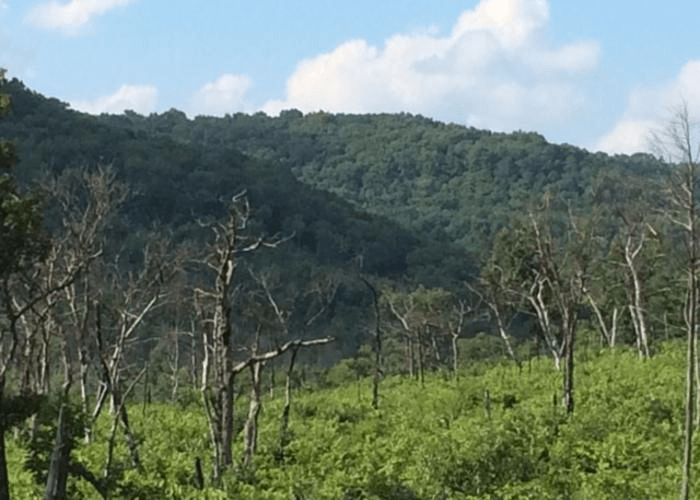
Image credit: Jacqueline Froelich
Thanks to the community’s tireless work, using traditional media, social media, colorful posters hung up around town, and the help of their local congressman, Republican Billy Long, the community was able to work with the Forest Service to reduce the restoration area from 18,000 to 3,600 acres. Congressman Long helped pressure the Forest Service into taking residents’ concerns seriously, by extending the public comment period and ensuring that all voices were heard so that a solution could be reached.
The Forest Service has proposed prescribed burns on 3,600 acres, and commercial logging on 539 acres. Most people oppose all burns and commercial logging. A final decision is expected shortly. By working together and standing up for the health of their forests and community, these residents have become the Bolala and will keep Butler Hollow untouched and natural.
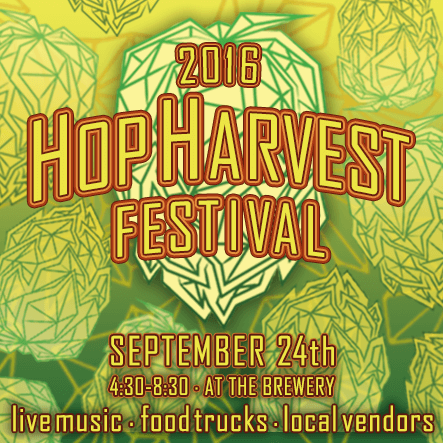
For several years running, our friends at Terrapin Beer Co. have designated Dogwood Alliance as the beneficiary for their annual Hop Harvest Festival. Terrapin is deeply invested in two things: crafting amazing beer AND environmental sustainability. That’s why the friendship between Terrapin and Dogwood is so beautiful. We love great beer, AND we’re experts on forest protection in the South!
We were lucky enough to hang out in the cool town of Athens, GA with other like-minded folks who were eager to learn more about how they can protect the forests in their backyard. This year, even more so, because three new wood pellet mills are proposed in and around the Athens area, which would clearcut Georgia forests, turn them into pellets, and either ship them to Europe to be burned for electricity OR burn them right here in the South. We got to share important information about the forests of the South while making new friends. We got to spend time with some really great people, like Weevil Outdoor Supply Co. and King of Pops, but I wanted to give a special shout-out to:
The talented folks of (Re)Creative Design make “craft brewed jewelry.” Their specialty is BrewBracelets: beautiful bracelets made out of discarded beer cans. How’s that for reduce, reuse, recycle!

(Re)Creative Design and their awesome BrewBracelets!
The fellas in the bluegrass Packway Handle Band really imbue their music with the heart of the South and just make you want to dance.

Packway Handle Band got us to kick up our heels!
The hilarious improv group of Dad’s Garage really knows how to make us think AND laugh!

The sidesplitting folks of Dad’s Garage Theatre Company!
All of us, of course, went to Hop Harvest to have fun, but everyone who went to the festival also contributed to their community and to the protection of Southern forests. We have Terrapin to thank for that, so from the bottom of our hearts:
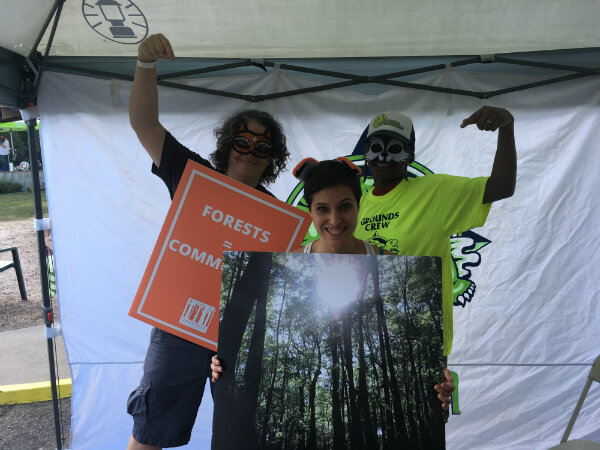
Dogwood & Terrapin join together to save trees!
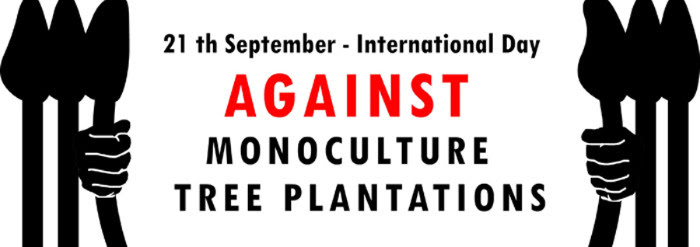
Today, September 21st, is the International Day of Struggle against Monoculture Tree Plantations. Launched in 2004, this international day commemorates people’s resistance and struggles in defense of territories and against the expansion of industrial tree monocultures. Here at Dogwood Alliance we proudly stand with the organizations and communities across the globe who work relentlessly to deliver the increasingly important message:
To learn more about this International Day of Struggle visit the World Rainforest Movement website.
Despite having some of the most important and diverse forests in the world, from 1950 to 2010, pine plantation acreage in the Southeastern US skyrocketed from 1.8 million acres to 40 million acres. During that same time period, 33 million acres of natural forest have been lost. The inconvenient truth: we’ve turned our natural forest habitats into monoculture tree farms for industrial uses while recording little changes to our “forested” land.
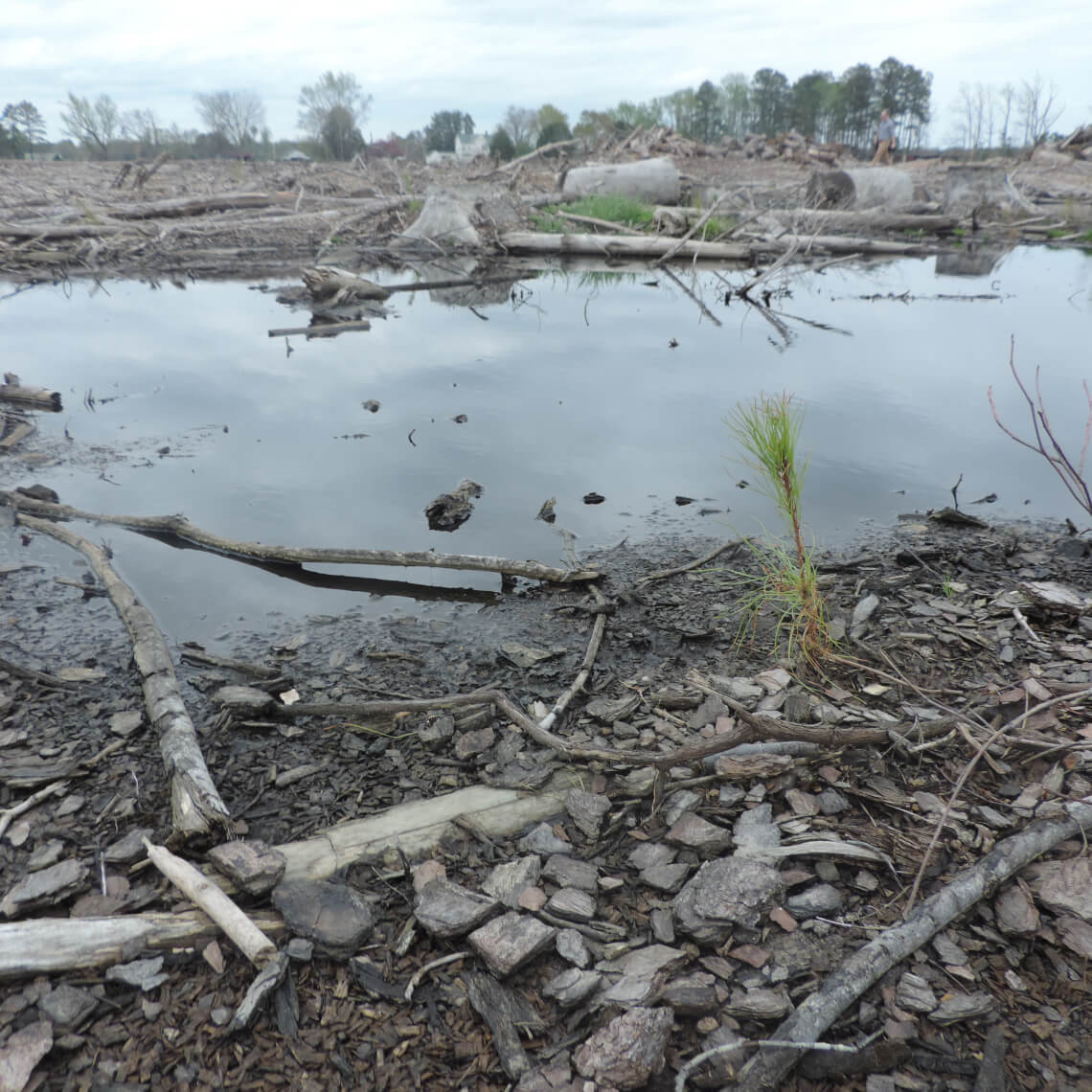
A clear-cut native forest being converted to a pine plantation near a biomass facility in Eastern NC. These tiny pine trees will take 20-40 years to reach maturity, when they’ll be clear-cut again. The carbon stock and native habitat of this forest will likely never recover.
If a natural forest is replaced with a pine plantation, there is a severe loss of the critical natural services that we urgently need. Water purification, flood protection, pollinator habitat, the list goes on. Famed Harvard biologist, E.O. Wilson found that a pine plantation is 98% less biodiverse than a natural forest, and science shows us that pine plantations are much less equipped to sequester carbon and fight climate change.
Right now, the EU Commission is drafting a new Bioenergy Sustainability Policy for post-2020. The emerging biomass industry poses the greatest threat to increased monoculture plantation conversion in the Southern US. While alarms have been raised within the EU, well-funded industry forces are lobbying hard to make sure new regulations do nothing to limit the growth of their destructive industry.
A recent independent report commissioned by the European Union found that in the Southern US,
Bioenergy is expected to be the single largest source of new demand and that this will contribute to the expansion of pine plantations converting both agricultural land and natural forests. …over the next 45 years, this demand could contribute to a 2.8-11 million hectare (7-27 million acres) increase in plantations, with the loss of natural pine and hardwood forests being likely.
Today, on September 21st the International Day of Struggle Against Monoculture Tree Plantations, I say:
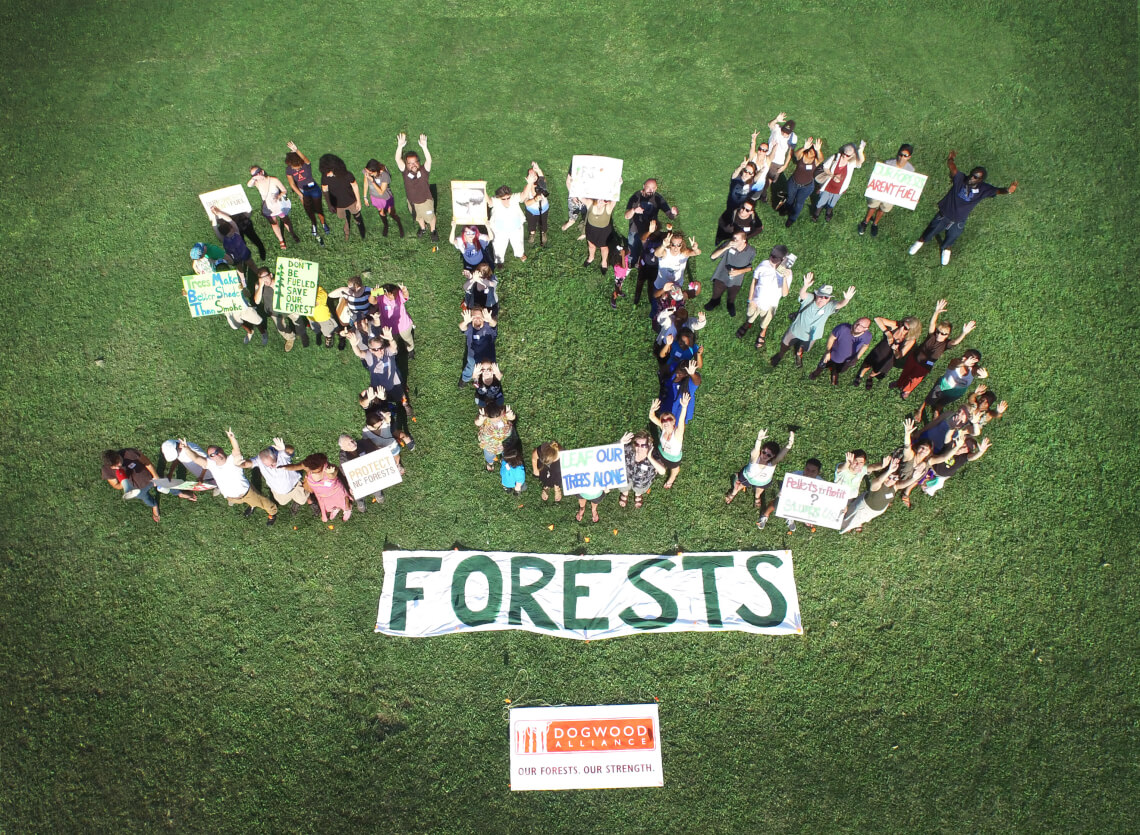
The call from Southern’s to the EU has been clear: SAVE OUR SOUTHERN FORESTS!
An international coalition has already laid out a clear path forward for the new EU Bioenergy Policy. Solutions are clear. The time is now. Our message to the EU: Stand for our Southern forests and we’ll stand with you.


 Donate