


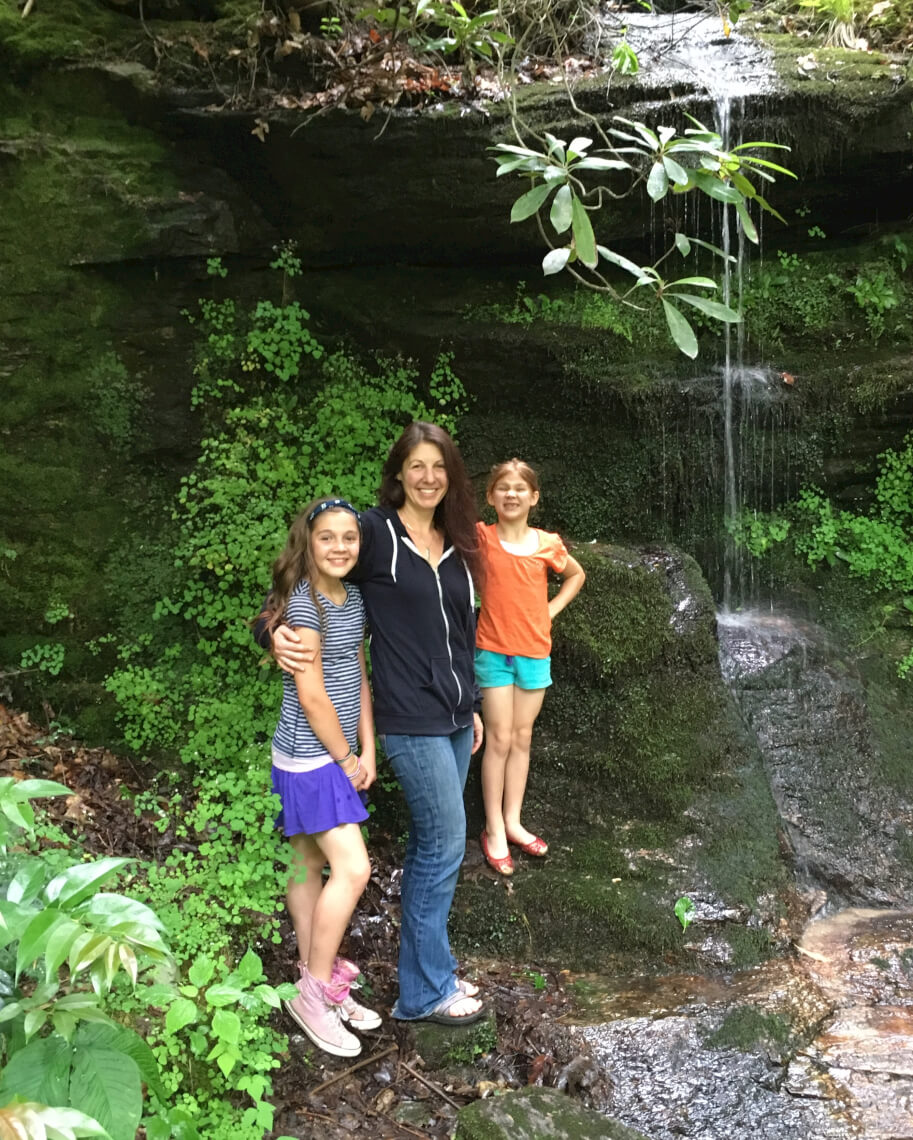
Kelly Ball with her daughters, Anathea and Clementine.
Kelly Ball has lived in Asheville since 2008. Before moving to Asheville, she lived in Moab, Utah working at Arches National Park after finishing a degree in Geology at University of Massachusetts at Amherst. Kelly led guided tours and worked in programs at the park.
When she moved to Asheville, she began working at the North Carolina Arboretum where she worked with their database, The Raiser’s Edge, which is the same database system that Dogwood uses.
Kelly was at the Arboretum for 4 years before transitioning into the Advancement Department at Warren Wilson College in Swannanoa. She worked in their Advancement Department for about a year–again working with their database system–before deciding to return to school to earn her Master’s degree in business while maintaining her position at the college.
When asked what attracted Kelly to Dogwood the most, she said:
“It sounds so nerdy, but the database attracted me most at first, just the opportunity to dive full-in, and then once I got here, the culture–everyone–seems really passionate and caring. People are spending every day working for a cause they believe in and doing good things.”
Kelly is mostly looking forward to increasing awareness of the organization and “the need for funding to keep doing this work that everyone is passionate about,” she says.
Kelly has two daughters, Clementine, 6, and Anathea, 10. “One is in first grade and the other is in fifth grade and they are both wild Leos. Very sassy and fun,” Kelly says. They recently adopted a dog named Bertie.

Kelly Ball out in the woods.
An avid trail runner, Kelly says, “I’m out there pretty much every day and I’ve been running for 10 years now. I’ll be doing my sixth marathon this fall. If I couldn’t do that I would go crazy.” She explains that growing up in Massachusetts, she would often go for walks and sit outside. “It was just nice to have my spot and go out and read.”
Besides running and liking the outdoors, her other hobbies include reading, dabbling in the fiddle, guitar and piano. Kelly finished her Master’s in Business two days before starting her position at Dogwood Alliance, so she feels like she’s getting used to having a life again. She’s looking forward to sewing, playing music, gardening and being crafty.
Previously LEED had only recognized wood certified according to the rules of the Forest Stewardship Council (FSC) – a forest certification system that is the gold standard and something that Dogwood Alliance has committed to in a big way. The new pilot credit is a problem because FSC is the most credible forest certification system in existence and SFI simply does not compare.
The USGBC decision was as a surprise to environmental groups who are in support of FSC, and opposed to SFI. Among other concerns, SFI certifies vast clearcuts, allows biodiverse forests to be turned into barren single-species plantations, accepts logging that harms water quality and jeopardizes already imperiled fish and wildlife, and has many deficiencies when it comes to indigenous concerns.
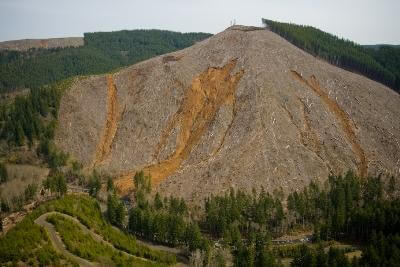
A clearcut in Washington State performed on forest lands
certified by SFI.
Photo Courtesy of Washington Forest Law Center
USGBC suggests that the purpose of the pilot (which USGBC calls an Alternative Compliance Path) is to test the feasibility of a new LEED requirement for evidence that wood was legally harvested. This should be easy to support. However, what it looks like to leading environmental groups in the US and Canada, who submitted a letters to USGBC opposing the pilot program, is that this pilot credit is simply a concession to the largest logging companies in North America.
The pilot credit isn’t yet a permanent part of LEED and unless it is revised so that it no longer recognizes SFI, it should never become one. This issue is important: LEED is the most credible and widely used green building rating system in the world. LEED has played a key role driving responsible practices in the forest products industry. This new pilot credit could undermine years of progress aligning environmental protection with the building industry.
This is no time for USGBC to abandon its legacy of collaboration, transparency, and leadership. It needs to resist the pressure from the logging industry and maintain its commitment to responsible forest management.
By Bob Gale
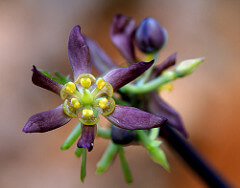
Blue Cohosh
Woodland wildflower populations, and the forest communities in which they occur, are two major components of the southeast which attract countless visitors and bind long-time residents to this region. These natural systems are closely connected and offer sustenance for a variety of wildlife species associated with them.
In an undisturbed southeastern forest community, a premiere highlight is the proliferation of beautiful spring “ephemeral” wildflowers. These clever plants have adapted over millions of years to develop the best strategy to promote their species in a difficult low light setting.

Jack in the pulpit.
Spring ephemerals have evolved their life cycles to burst forth in flower in late winter and early spring, while deciduous canopy trees are still dormant or just beginning to leaf out. By late spring to early summer, when the forest canopy closure is complete, ephemeral flowers have already blossomed, become pollinated, and their petals are withering away, offering no hint at the spectacular floral beauty that so deeply enchanted onlookers only a short time before.
These sun-loving flowers and shade-producing trees are hardly enemies, though. Both have worked in tandem over the millennia to build a rich and deep organic soil structure which is an important ecosystem unto itself. Critical to all of this forest plant life are the mycorrhizal soil fungi which facilitate uptake of minerals and water, and the diverse forest-dwelling insects and bees which pollinate such plant species.
A threat to this ecological balance comes in the form of disturbance. To be sure, some disturbance is natural. Storms and micro-bursts create treefalls which often pull up giant tree root systems, exposing areas of soil. Occasionally, a hurricane creates a large area of disturbance. But the wildflower/forest partnership easily survives these widely occurring and mostly localized disruptions.

Dward Larkspur
A much greater threat comes from the human-caused disturbance of forest clearing, which has occurred at an exponential rate never before encountered by these natural communities. Their mechanisms of damage control and repair are simply overwhelmed by this assault. Forest clearing for development, highways, and wood, paper and the energy industry can result in permanent injury and disruption to these ecosystems.
In many southeastern states, protective wetland regulations are suspended for timbering on private lands, so clearing equipment regularly plows through wetlands and bogs, dragging logs with them at the expense of many herbaceous plants, some of which may be very rare. And, an unexpected result in such heavily disturbed settings can be an invasion of non-native plants from Asia or Europe, introduced intentionally or by accident, but which outcompete and displace many native species.
In recent years, many citizens, organizations, and agencies have added thousands of acres of forests under protection through public lands and private conservation easements. They have also protected and restored populations of ephemeral flowers with their awesome spring displays. Public forest management has greatly improved, as well. But many privately owned lands remain threatened with unsustainable forestry practices, including the very real and present threat of increased logging of southeastern forests to feed the new biomass energy industry.
This is a guest blog by Kenneth Richter. Kenneth is a Germany-based consultant to NRDC and has worked on biomass issues for 8 years.
Since 2010, NRDC’s Our Forests Aren’t Fuel campaign to save Southeast forests from logging for bioenergy has sounded the alarm about this issue and targeted the European Union for reform.
In 2009, the EU passed binding legislation to ensure the EU meets its climate and energy targets, including a 20% reduction in greenhouse gas emissions, a requirement that 20% of EU energy be generated from renewable sources, and a 20% improvement in energy efficiency, all by 2020. While laudable, the policy package came with a gaping loophole around bioenergy: all biomass, whether wood chips and sawdust from a sawmill or whole trees from old growth forests, was considered “carbon neutral”. In other words, when biomass is burned in European power stations, the EU acts like the carbon emissions coming out of the smokestack simply don’t exist.
And we’re talking about a lot of emissions. The latest and best science tells us that when we burn many forms of biomass for electricity—in particular whole trees and other large-diameter wood—carbon emissions increase for decades compared to coal. Today, nearly two-thirds of the EU’s renewables target is being met by burning biomass.
As the European Commission called an international stakeholder meeting to consult on the future of its bioenergy policy, I travelled to Brussels to attend and to bring NRDC’s evidence to the table. Overwhelmingly, the biomass we’re burning is coming from the wood pellet mills of the U.S. Southeast. The region is now the world’s top exporter of wood for energy production. Misguided bioenergy policy in the EU is driving demand for wood pellets from these forests, putting millions of uncounted tons of carbon into the atmosphere and putting at risk some of the world’s most biodiverse and precious forests.
On the way to the Commission building came a sobering moment when we passed Maelbeek Metro Station, where flowers reminded of the recent bomb attack.
EU Commission international stakeholder meeting to consult on the future of EU bioenergy policyKenneth Richter
Once past security and inside the building, we arrived in an oval-shaped room packed with EU politicians, scientists, and representatives of industry and civil society.
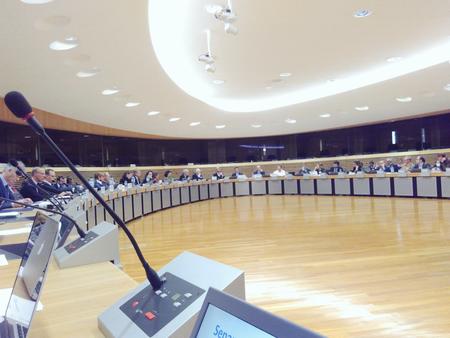
EU Commission international stakeholder meeting
to consult on the future of EU bioenergy policy
Kenneth Richter
Right at the top, the European Commission’s representative acknowledged the remarkable fact that over 56,000 supporters of NRDC and its allies had written to the Commission to express their concern about the destruction of US forests, asking them to stop incentivizing the use of trees for fuel in EU renewable energy policies.
After that, much of the day was taken up by bioenergy industry representatives re-stating their positions, at one point provoking unintentional hilarity when citing the production of oxygen by plants as an argument to continue unabated bioenergy incentives.
But then the science panel was called and made some remarkably clear statements: Despite some disagreement over exact figures for various bioenergy scenarios, they all agreed that bioenergy is not carbon-neutral. (One scientist sneakily called it “70% carbon-neutral”, which of course means not carbon-neutral).
NRDC had recently demonstrated the real carbon emissions of using wood pellets sourced from Southeastern forests to produce electricity used for bioenergy, which found that when pellets are comprised of anywhere from 40 to 70 percent, it takes approximately 55 years for forest regrowth to recapture enough carbon from the atmosphere to reduce a power station’s cumulative emissions below those of coal. At levels greater than 40 percent, pellets emit more carbon than coal for most of this period.
Echoing these findings, Lisa Marelli, the scientist from the EU Commission’s own research body, the Joint Research Centre (JRC), pointed out that the current methodology used in the EU excludes biogenic carbon emissions of bioenergy and “consequently, doesn’t provide an estimate of actual GHG emissions savings compared to a fossil fuel alternative”.
She demonstrated that the use of forest biomass can actually result in a worsening of climate change over a period of over 40 years or more (depending on decay rates were that biomass to instead be left on the forest floor).
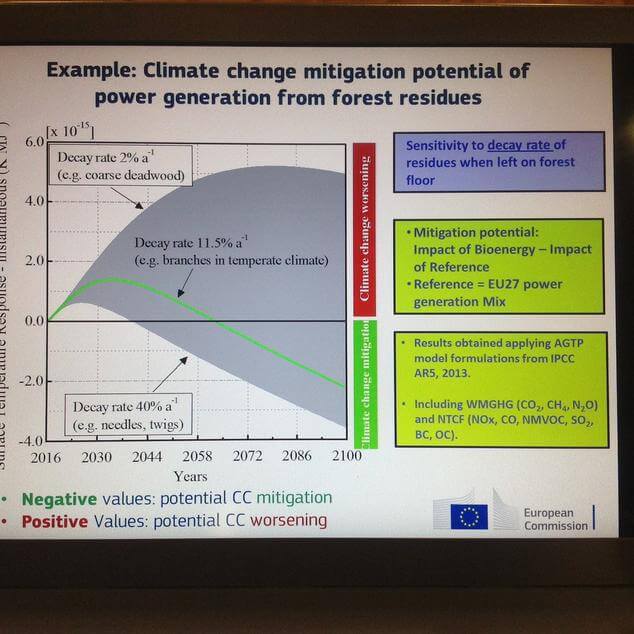
Presentation of Lisa Marelli, EU Commission Joint Research Centre
Kenneth Richter
Asked whether bioenergy can be assumed carbon-neutral, Marelli responded with an emphatic “definitely not”.
These are strong words from a representative of the Commission’s own research body. Unfortunately, they are in direct conflict with current EU policy, which still assumes all bioenergy to be inherently carbon neutral and encourages EU member states to subsidise it as such.
Over the course of the day, the European Commission also heard evidence from stakeholders on the negative impacts of on biodiversity and on affected communities. Staff from allied EU NGOs and I were able to relay how, on a recent trip to the Southeast, we saw firsthand the devastating clearcuts of threatened bottomland hardwood forest that previously had been teeming with wildlife.
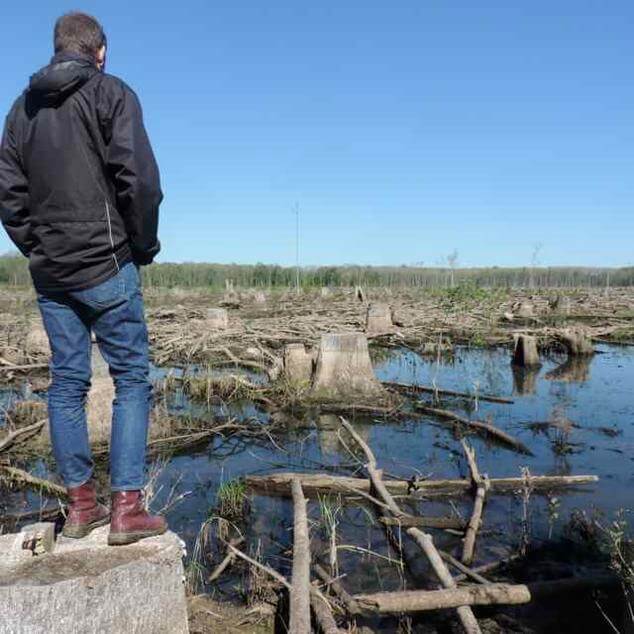
Clear-cut of wetland forest in North Carolina. The wood is used to make pellets for biomass-burning power stations in Europe
Dogwood Alliance
We simply can’t wait decades to begin reducing carbon emissions from our power sector, all the while destroying the very forests that are one of our best tools for fighting climate change and providing a host of other ecosystem services. The question is now: How will the European Commission respond to this evidence, including its own research body stating that bioenergy is “definitely not carbon neutral”?
Today, millions in European taxpayer resources—money that could be used to support truly clean energy technologies, such as solar and wind—is wasted on a dirty form of electricity that destroys forests and worsens climate change rather than mitigating it. A proposal on how to reform EU bioenergy renewables policy is expected by the end of the year. In the meantime, we need to keep the pressure on policymakers and make sure the EU’s 2030 climate and energy package does not continue to drive the destruction of US forests in the name of renewable energy.
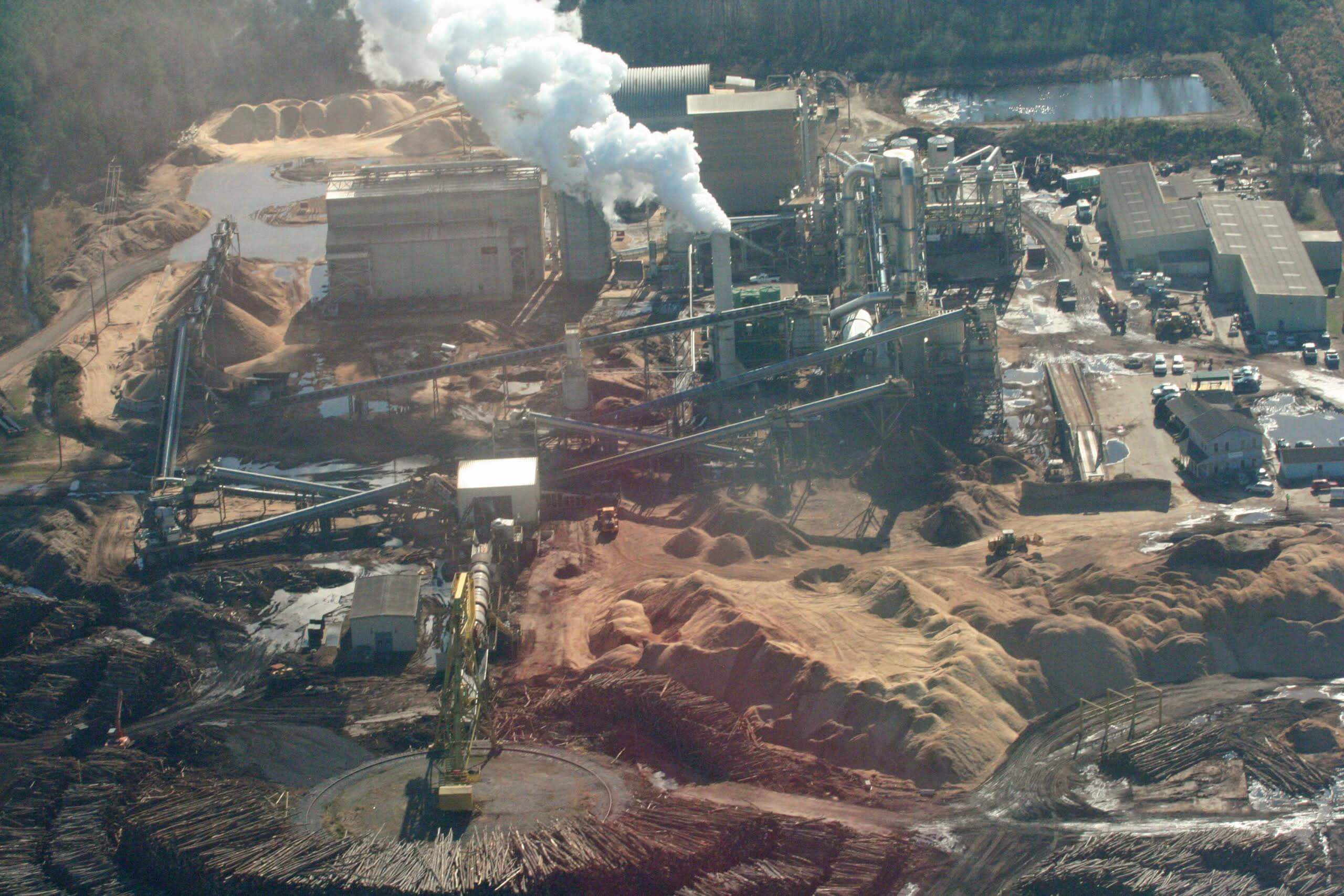
Asheville, NC – In late March, US conservationists were joined by a delegation of European environmental leaders on a fact finding mission to see firsthand the impact of European biomass energy policy on the forests of the Southern United States. After receiving a tip from a local Roanoke River watchdog group, the group visited an active industrial logging operation in a wetland forest near the river.
Upon further investigation, they discovered that the destroyed wetland forests were bound for Enviva’s Ahoskie, NC wood pellet mill where they were being made into wood pellets to be shipped to Europe and burned for electricity.
“For many of my European colleagues this was simply a matter of flawed policy that needed to be fixed. Once the moment of shock kicked in at witnessing the destruction of a precious wetland forest in our region the urgency to fix this skyrocketed,” said Adam Macon, Campaign Director at Dogwood Alliance. “Misguided policies in Europe have led to hundreds of thousands of acres of native forests in our region being chopped down and shipped overseas to be burned for electricity and we are calling on the European Commission to end the destruction of our environment and communities.”
Yesterday was the final day for public and organizational comments to be submitted for consideration to the European Commission as part of it public engagement period on their Bioenergy Sustainability Policy. The final policy will be released later in 2016 and is expected to be debated by and voted on by the European Parliament in 2017.
During the public engagement period, the European Commission received an unprecedented number of responses from individuals and organizations in the United States that are concerned about the impact biomass electricity has on the climate, communities and forests of their country.
The original policy, announced in 2010, was primarily driven by flawed science that assumed that burning of wood for electricity was carbon neutral. A multitude of recent scientific studies have disproved this assumption. Even showing that in many cases burning wood for electricity actually releases more carbon than coal, meaning we are increasing rather than limiting carbon emissions by burning wood.
“The European Commission developing a new Bioenergy Sustainability Policy is a clear indication that it is tempering its full steam ahead approach to biomass,” continued Macon. “This has also sent a clear message to investors that as the science develops and the policy changes this is a risky investment.”
At the center of the biomass controversy has been Enviva, the world’s largest wood pellet manufacturer with operations in Virginia, North Carolina, Florida and Mississippi. Multiple investigations of the company have uncovered Enviva sourcing whole trees from coastal wetland forests in Virginia and North Carolina for its wood pellets. The most recent wetland logging investigation once again caught Enviva red-handed. Despite claims to the contrary, Enviva continues to have devastating impacts on native forests in North Carolina and Virginia.
To view a slideshow of the wetland forest logging investigation visit here.
# # #
Based in Asheville, NC, Dogwood Alliance (www.dogwoodalliance.org) is the only nonprofit focused on protecting Southern and the communities that rely on them. The organization has been responsible for helping companies including Staples, McDonalds, and KFC transform their paper-buying policies, and it has also worked with the paper industry to develop new, sustainable forest management practices. The group’s Our Forests Aren’t Fuel is part of an international coalition opposing industrial-scale forest biomass energy.
With logging unmatched anywhere on Earth, is it possible to turn the tide of forest destruction in the South? Can we realize a dream where living forests are valued more than forests that are destroyed?


We must build a lasting legacy for our children. Together we will push back the industries that threaten our forests, and over the coming decades, we will secure the protection of millions of acres across the South, protection that values the clean air and water, climate stabilization, flood control and wildlife that standing, living forests provide.
We have to act now to secure the future of our forests.
This year Dogwood celebrates 20 years of hard-fought victories on behalf of Southern forests thanks to donors like you. We can’t grow this movement or achieve this vision without you. To work with people all over the South and make forests a top priority for our future, we need your help.
Together we can build a better future for forests in the South.
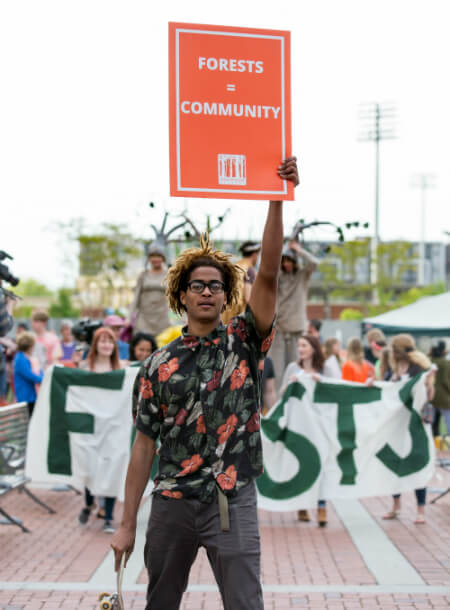
Last week, hundreds of people came together in Savannah, GA, to celebrate Earth Day. But in Savannah, and across the South, protecting our planet and the people and wildlife that call it home is more than a one day event. It is a lifestyle.
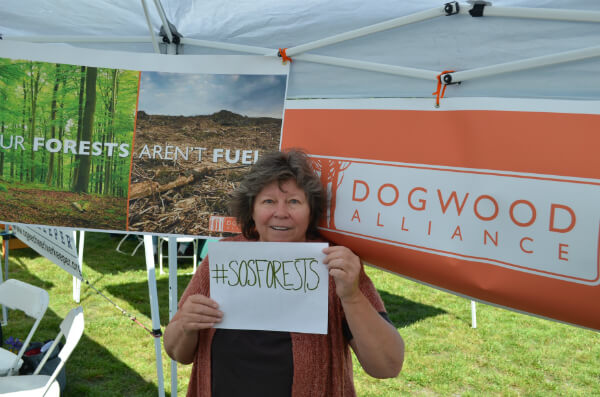
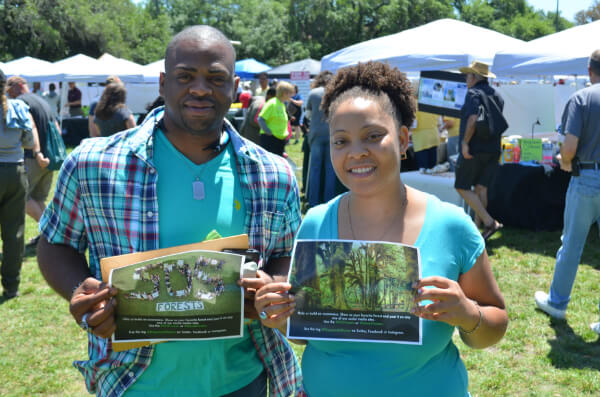
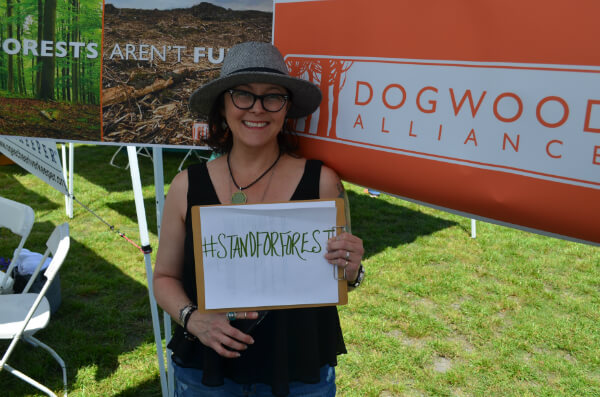

Washington, DC – The US Senate is poised to vote today on the controversial Energy Policy and Modernization Act (S. 2012) which has environmentalists and local community organizations up in arms because of a sweetheart deal for the bioenergy industry. Today, over 75 organizations sent a letter to Chairwoman Lisa Murkowski (R-Alaska) and Ranking Member Maria Cantwell (D-Wash.) voicing their opposition to the legislation because of its dangerous biomass provisions.
“The message from conservationists and communities across the country is clear, burning wood for electricity is bad for our climate and quality of life,” said Adam Macon from Dogwood Alliance. “The US Senate should stick to the business of protecting the people and environment, not create sweetheart deals for their favorite industries at the expense of the rest of us.”
An amendment from Senator Susan Collins (R-Maine) and Senator Amy Klobuchar (D-Minn.) (S. Amnd. 3140) that was earlier accepted by voice vote instructs the Secretaries of Energy and Agriculture and the Environmental Protection Agency (EPA) to develop policies that “reflect the carbon neutrality” of forest-derived biomass. This contradicts the general scientific consensus that per megawatt hour, burning wood for electricity generates more carbon emissions than coal.
“This bill sets a dangerous precedent by legislating science and overriding physical facts,” said Friends of the Earth Climate and Energy Program Director Benjamin Schreiber. “Congress is interfering with the ability of the Environmental Protection Agency to protect public health.”
An amendment from Senator Manchin (D- W.Va.)(S. Amnd. 3270) that is slated for a vote would promote co-firing coal with biomass by deeming it to have “net-negative carbon emissions” when paired with carbon capture and sequestration, despite the reality that biomass co-firing would significantly increase carbon emissions from coal plants. In addition to the increased emissions associated with burning wood, deeming co-fired plans “net-negative” would extend the life-spans of coal-burning power plants and delay the transition to clean clean renewable energy.
Earlier this year sixty top climate scientists sent a letter urging the Senate to remove the bad biofuels language. “These amendments are an attempt to subvert science and allow some of the most destructive industries to continue with business as usual,” said Adam Macon from Dogwood Alliance. “The US Senate needs to listen to leading scientists who show that biomass is not carbon neutral and is taking us backwards rather than toward a truly clean and green renewable energy future.”
“We cannot have U.S. Energy Legislation that endorses, subsidizes or supports dirty and inefficient sources of power like biomass,” Center for Biological Diversity Senior Counsel Bill Snape. “The current Senate bill is riddled with harmful provisions and special interest favors, and its treatment of forest biomass energy sources will denude American forests and vastly increase deadly greenhouse air pollution.”
The vote on both the Manchin Amendment and on final passage are expected to happen today.
To see the letter with the full list of signatories, go here.
“No biomass, no way! Not ever, not today!” Morgan Rowden’s voice sung out, managing to be louder than even our crowd of over 100 marchers. She stood with a mix of students of all ages, health advocates, faith leaders, social justice activists, other members of frontline communities affected by dirty biomass and even eco-conscious fairy performers standing 6-feet above our sea of people. We were an ocean of activists holding orange signs that read:
Southerners chanted: “Our Forests Aren’t Fuel!”
Our group in downtown Charlotte on April 11 marched, united around our central message: Our Forests Aren’t Fuel. In the last 60 years, the US South has lost 33 million acres of natural forests, and the threat of using biomass for energy is making this much worse.
We came from all across the region to peacefully gather in Romare-Bearden park to physically and symbolically stand tall to protect Southern forests, public health and Southern communities. The world’s largest biomass conference, The International Biomass Conference and Expo, was gathered just down the street, scheming new ways to turn our precious wetland forests into pellets and ship them across the ocean to be burned for fuel in Europe.
Kaela, a 7th grader in NC, shouted about the biomass industry:
“This needs to stop! My generation wants forest protection because that means clean air, water and a safer future. I’m here today with my classmates because we know that when we show up at rallies, we can call attention to what’s right, not just what makes money.”
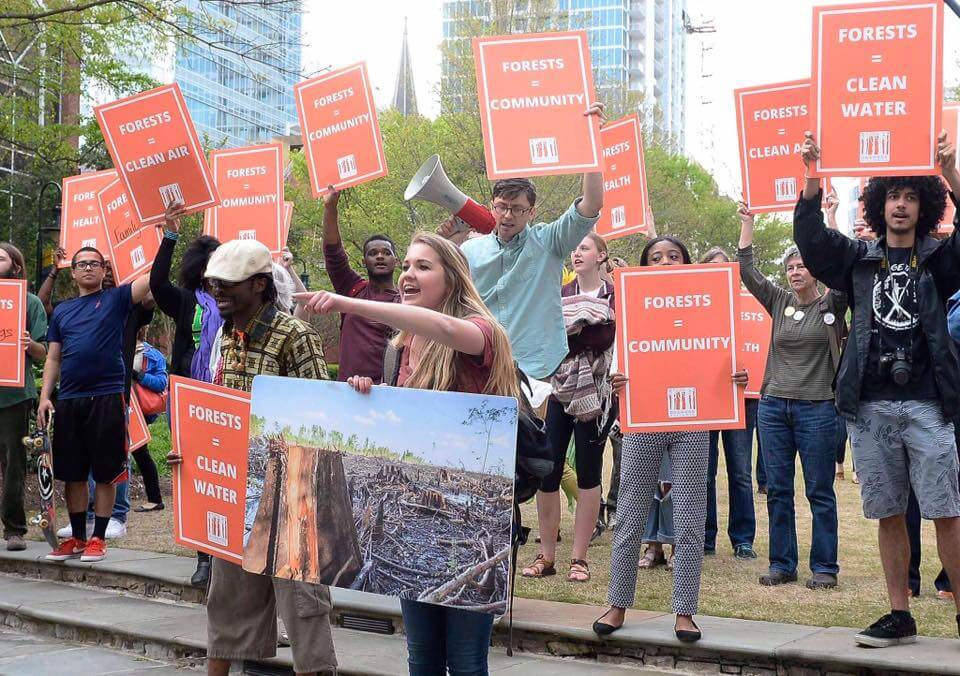
“Biomass is neither green nor peaceful,” Monica Embrey of Greenpeace rallied us.
Banging and clanking from hammers on metal, cranes and workers milling about turned our heads skyward. Danna Smith, Dogwood Alliance Executive Director turned to me and commented,
“It’s amazing that humans can figure out how to build these cities of steel and yet we still don’t know how to adequately manage forests in an environmentally, economically, and socially-sound manner. We must step into the twenty-first century of forest management.”
BJ McManama, organizer with the Indigenous Environmental Network, beautifully stated the purpose of the rally:
“Because we, the keepers of the forests and fields – four-legged, winged, finned and two-legged are seeing great disregard for the Rights of Our Mother Earth and her children. It is OUR responsibility to know that what we do today has consequences that will affect the next seven generations that follow.”
As our crowd continuously grew and swelled throughout the night, it was a beautiful symbol of how the movement across the entire US South is growing and swelling right at this moment. Weeks ago, a rural community in South Carolina stopped a pellet mill. Science is consistently on our side: less than two weeks ago, an EPA group of scientific experts rejected a report that would essentially count biomass as carbon neutral.
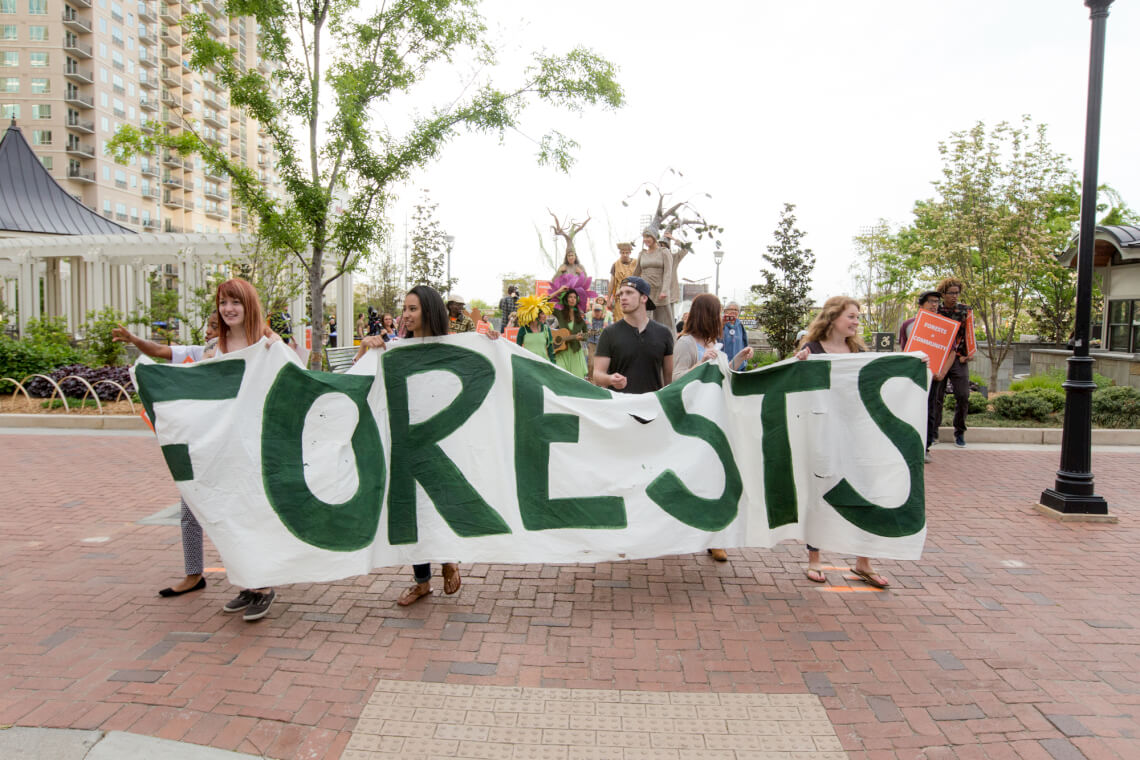
The pressure on the biomass industry to stop clearcutting forests is increasing
In fact, a group of investors with over $53 billion in assets under management recently requested that the SEC examine claims of climate benefits in the biomass energy sector and enforce rules requiring companies to disclose material information, including climate change-related risks, to investors. Citizens all over the South, in places like Baton Rouge and Savannah, are pushing back and calling for local moratorium on biomass facilities. The EU government has agreed to review its biomass policies.
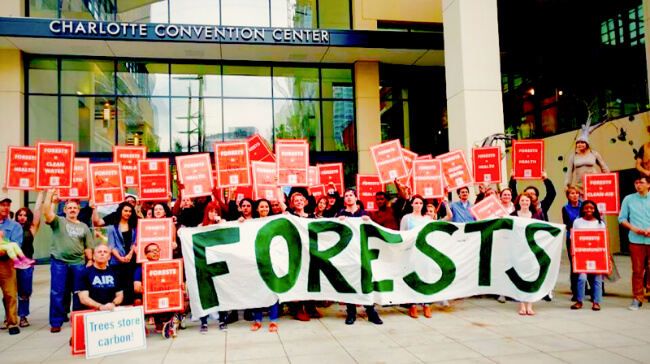
It’s becoming increasingly difficult for wood pellet manufacturers and the biomass industry to come into communities because Southerners know that this industry doesn’t serve our interests.
It’s simple enough for even kids to understand. As our Campaign Director, Adam Macon, spoke about the dangers of biomass, a young boy of five invigorated everyone by yelling, “Unacceptable!”

Time for state governments, the EPA, the EU climate commission and multinational corporations companies to realize what kids who are not even 10-years-old know to be certain: the clearcutting and export of millions of tons of our precious Southern forests to generate electricity is “unacceptable.”
The dogwood trees are in bloom at this time of year in North Carolina. I find it hopeful that as the dogwoods bloom, our activists turned out in full force to demonstrate against a forest-destroying industry. We are fighting to keep the dogwoods in as many forests as possible; to keep as many communities safe from the ravaging impacts a biomass facility can have on a town; to keep our global community safe from the worst impacts of climate change.
“If you have come here to help me, you are wasting your time. But if you have come because your liberation is bound up with mine, then let us work together.” – Aboriginal activist, Lilla Watson
For Immediate Release – April 11, 2016Contact: Scot Quaranda, scot@
Charlotte, NC – In the last five years, the South has seen explosive growth in wood pellet manufacturing—pellets which are being shipped across the Atlantic for use as a replacement fuel in Europe’s coal fired power plants. But while these exports are generating significant profits for European corporations, questions are being asked about both the environmental and economic consequences of this rapid expansion.
From April 11th to the 14th, The International Biomass Conference & Expo will draw 1,500 attendees from across industry and government to Charlotte. The subject of wood pellet manufacturing and forest-to-biomass energy is likely to be a hot topic.
The movement of opposition against the biomass industry is rapidly growing. Outside the conference a group of activists including Asheville-based forest protection group Dogwood Alliance and impacted community members, public health groups, faith leaders, environmental justice organizations, and local environmental non-profits gathered to present a different message. According to Danna Smith, Executive Director of Dogwood Alliance, the industry’s green claims do not hold up to scrutiny:
“By their own admission, large wood pellet companies like Enviva aren’t just using waste wood to make their pellets. They are sourcing whole trees from endangered Southern forests – forests that are home to countless wildlife species found nowhere else on Earth, and Cypress trees that are hundreds of years old.”
In addition to biodiversity concerns, activists are also highlighting the climate impact of burning wood for energy. While the industry itself has touted its product as “carbon neutral”, research has shown burning wood to release more carbon than coal—leading many to worry that this industry will disappear as the world’s leaders start taking climate change more seriously. In fact, a group of investors with over $53 billion in assets under management recently requested that the SEC examine claims of climate benefits in the biomass energy sector, and enforce rules requiring companies to disclose material information, including climate-change related risks, to investors.
Social justice activists are also concerned about the wood pellet industry’s impact on communities in the South. Recently, a community in Fairfield County, SC was able to stop a new wood pellet mill from being built. Morgan Rowden, a community member from nearby Laurens County, South Carolina that is also facing the potential of a new wood pellet mills said:
“Rural communities—often communities of color—across The South are facing increased traffic, noise, wood dust and other hazards from the explosive growth of this industry. The sad part is it’s not even creating jobs. Because these companies are heavily subsidized by Europe, it’s pushing up wood prices and threatening the paper and wood-product industries that have been a part of our communities for generations.”
This Monday, activists held a rally and festival in Romare-Bearden Park that provided a counterpoint to the industry voices at the convention center. According to Danna Smith, the message is simple:
“This industry is bad for our forests. It’s bad for our climate. It’s bad for our communities. And it’s bad for our economy too. With subsidies likely to be phased out in 2023, there’s not even any guarantee that it will be around for much longer. We’re calling on Southerners to send a clear message: Tell Europe to Stop Burning Our Forests.”
—
Based in Asheville, NC, Dogwood Alliance (www.dogwoodalliance.


 Donate