


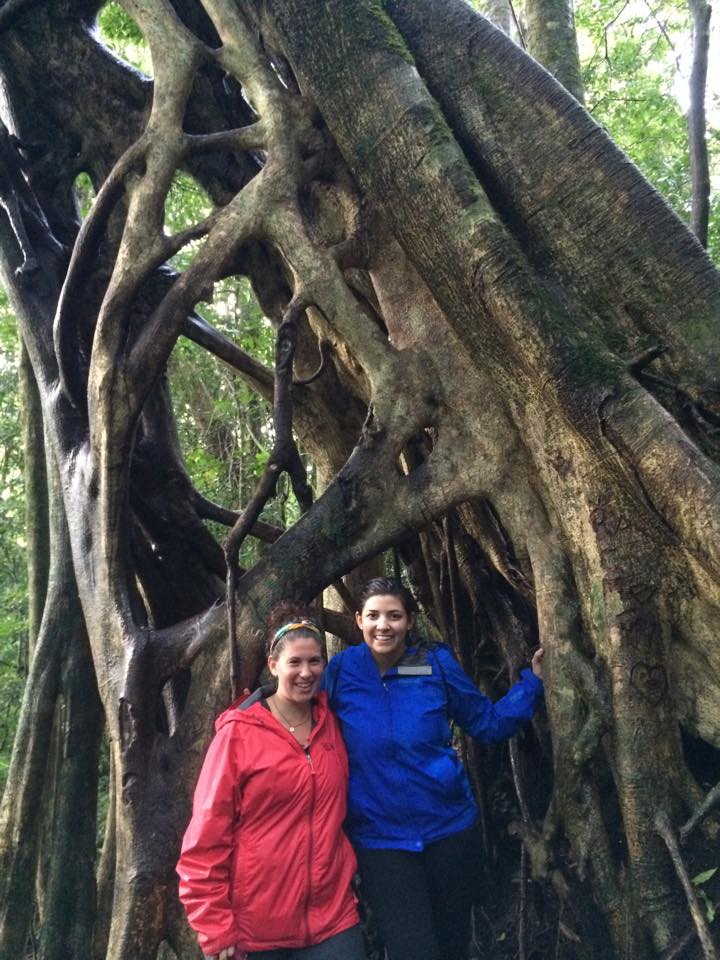
Rachel (right) in Monteverde, Costa Rica.
We have lovely new interns starting at Dogwood Alliance this month, and we’re excited to introduce you to them! The first intern, Rachel Weber, you’ve already met, as she has been an avid member of Dogwood Alliance since she first interned with us in the summer of 2014. Rachel worked on the Carbon Canopy Project and gathered photos for the Our Forests Aren’t Fuel campaign. While working her internship at Dogwood Alliance, Rachel showed such exemplary initiative and insight. As a result, she was asked to become a board member this past year. We are so honored to be able to have Rachel working with us as an intern again this summer. She has never failed to bring her hard working, positive personality to the table and exceed our expectations. Join us in welcoming her back!
Next up is, Johannah Ramer. Johannah discovered Dogwood Alliance through the Stanback Internship Program at Duke University. “Being in the Master of Environmental Management (MEM) program at Duke University’s Nicholas School there are several internship in the Stanback program that peaked my interest but the position at Dogwood Alliance was the one that stuck. The mission of Dogwood rang true to my interests as it is unique in how they address the issues that they are most passionate about from all angles.”
Johannah says that when she was younger the woods had a majestic quality. She explains,
“There was no made-up adventure that was too big for the forest to fuel.”
As she grew up she said that the forests became a place for her to go to clear her head. Whether it’s camping, a day hike, or field work, she finds peace in the forests that is unattainable anywhere else.

Johannah in Las Alpujarra’s of the Andalucia region of Spain with friends.
Johannah likes that Dogwood is a growing non-profit that is looking forward to create real change. She’s most looking forward to helping further that work and gaining valuable skills. She sees being in Asheville and working with “bright and passionate people” as a huge benefit.
Johannah’s hobbies range “from the most mundane to thrill seeking.” She says, “I am an avid reader and I do not discriminate on genres and with that a discoverer of seemingly useless information. I love starting conversations, and all forms of exploring (hiking, traveling, rock climbing, camping, sailing, scuba diving).”
We’re very excited to be working with Johannah and Rachel this summer!
Stay tuned for more interns to come!
As the biomass industry continues to expand across the Southern US, so does the growing movement of people opposed to the devastation that this industry brings to our communities, our environment and our climate. At the heart of this growing movement over the past few months has been a team of Greencorps organizers.
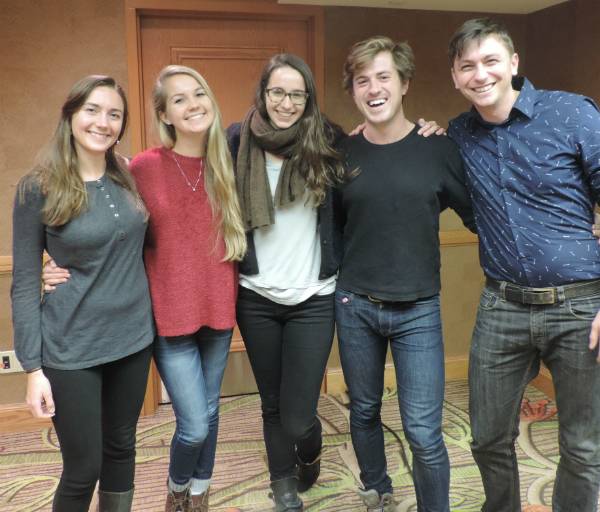
Greencorps organizers with Our Forests Aren’t Fuel Campaign Organizer and Campaign Director.
Katya, John and Rita have been huge assets to the Our Forests Aren’t Fuel campaign. Between the three of them, they collected 2,834 SOS messages to Save Our Southern forests, turned out 500 people at 5 different visibility events and generated 31 total media hits, like this one. Their passion and dedication to forest protection sparked a growing movement in the cities where they worked – Baton Rouge, Wilmington and Savannah. In these port cities, where our Southern forests are exported away to be burned as fuel, residents are standing up to send a clear message to policy makers and industry leaders: Our forests aren’t fuel.
When asked what was the best part of working on the Our Forests Aren’t Fuel campaign, all three organizers highlighted their involvement with the local communities.
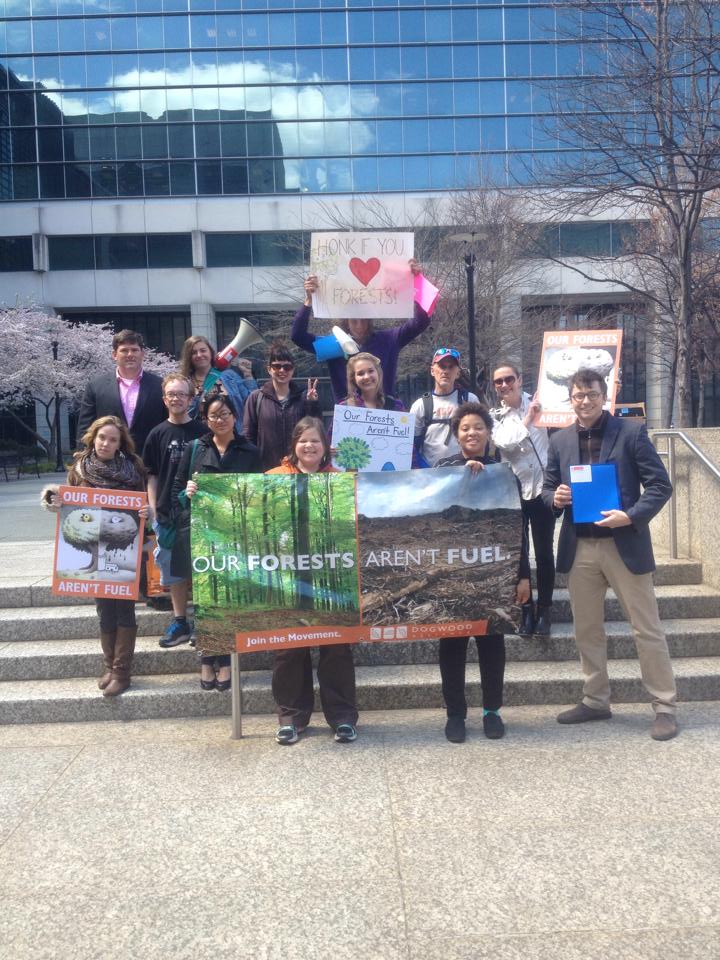
Forest advocates on the stairs of the EPA.
“I learned so much from the community there, and I have a much deeper appreciation for the culture and specific challenges in the South than I ever had before. I am deeply grateful for the people I work with and learned from in Baton Rouge,” said Katya.
In Wilmington, John reflected, “I loved my people. I had incredible volunteers of all ages and backgrounds who cared deeply about the environment for different reasons and put a lot into the campaign. It was great working with them and getting to learn more about developing leaders in this work.”
From Savannah, Rita said, “I loved working with the creativity of Savannah and getting the chance to work on a community campaign.”
We can’t express how much we appreciate the hard work and dedication of these three organizers. We are so grateful for all you have done to help protect the forests of the South.
We wish you the best in your future careers, and we know all of you will go on to do great things.
I attended the Innovation Forum’s Washington, DC conference on “How businesses can tackle deforestation.” Over the span of two days, various environmental groups working to protect forests sat on panels alongside corporate executives to discuss challenges and opportunities surrounding the adoption and implementation of corporate commitments designed to end deforestation or otherwise reduce businesses’ impacts on forests. The conversation was engaging and compelling, allowing for debate on points of tension while also focusing on finding a path forward.
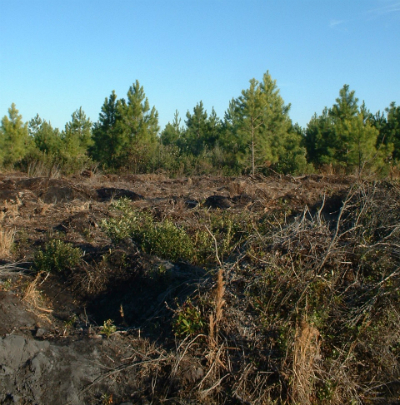
Loblolly pine plantation
Not only is the US South home to the most biologically diverse temperate forests and freshwater ecosystems in the world, but it is also the world’s largest wood producing region. The supply chains of some of the world’s largest corporations, including many of those present at the conference, have profound impacts on the forests of this region.
In the South, the forest products industry has long been a driver of forest clearing and the conversion of natural forests to mono-culture pine plantations. According to a global forest cover loss study published last year in Science, forest disturbance in Southeastern US forests was four times that of Brazil from 2000 to 2012. Industrial logging in the subtropical forests of the US South was cited as a major driver.
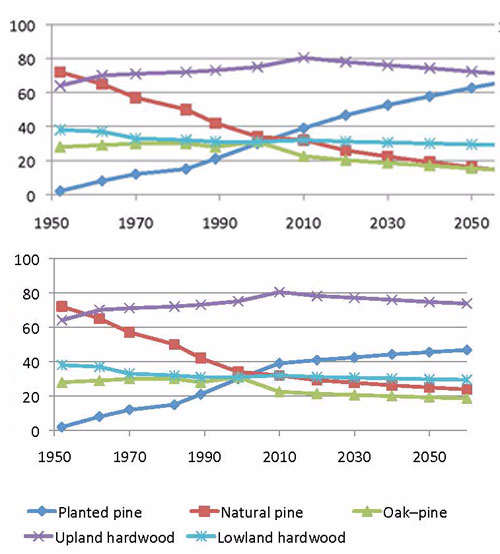
USFS Southern Futures Report shows growth in plantations & loss of natural forests
According to the US Forest Service (USFS), tens of millions of acres of natural forests in the South have also been converted to fast-growing pine plantations. Loblolly and slash pine, which used to make up a small fraction of the overall natural pine forest in the South, now dominate the landscape of the Coastal Plain. On the other hand, natural long-leaf pine savannahs, which used to be ubiquitous, have been reduced to a small fraction of their original range. The historical ditching and draining of wetland forests to make way for intensively managed pine plantations has altered the hydrological function of entire watersheds.
Most agree that the explosive growth of the palm oil industry and the resulting conversion of millions of hectares of rainforests to plantations are drivers of global deforestation that must be addressed. Similarly, in the Southern US, in just in the last five years, an exploding new market for wood as a fuel source for generating electricity has researchers at the USFS projecting yet another wave of deforestation in the US South over the coming decades to make way for new, fast-growing pine plantations.
News coverage exposing the impacts of the wood pellet industry on wetland forests in the US South has been high-profile and wide-spread (BBC, The Wall Street Journal, New York Times, Daily Mail, Grist, Politico, etc.). ENGOs have launched public campaigns. Scientists have sounded the alarm bell. Yet, the topic of wood pellet exports from the US South to Europe did not make the agenda, and there was no mention of the US context in the panel discussion on GMOs. Despite historical trends and future projections, there was an almost silent undertone that somehow the US is “different”. Because we are really, really good at growing trees, deforestation from industrial logging isn’t really an issue here at home. Yet, just the week before the conference a new study was released documenting the disconnect between biodiversity, protected areas and conservation priorities in the US. The Southern US was the clear winner when it comes to biodiversity. By contrast, it was the clear loser when it comes to protected areas.
Over the past decade, Dogwood has been diligent, persistent and successful in convincing some of the world’s largest producers and consumers of wood and paper in the US to adopt new policies and supply chain controls to reduce their impact on forests. Some of these companies, including Staples, International Paper and Domtar, spoke on a panel from the corporate perspective about their work to implement forest sustainability commitments in the Southern US. These companies are making meaningful progress. This progress has been both informed and supported by environmental organizations. Dogwood Alliance has been working diligently with these and other companies to tackle deforestation through supply chain management right here at home. Notably absent, however, was an environmental organization’s perspective about deforestation in the US South. Dogwood Alliance and others are striving to fill that gap, not only at conferences like this one, but in the broader discussion around stopping deforestation and forest degradation globally.
I will continue to attend forums and conferences focused on stopping deforestation. I hope next time there can be more discussion that includes environmental groups about the newest driver of deforestation – wood as fuel for electricity – as well as innovative strategies for stopping deforestation in the largest wood producing region of the world.
Coming into Dogwood Alliance as an intern for the Our Forests Aren’t Fuel campaign I wasn’t really sure what to expect. I was willing to do whatever I could to learn as much as possible about environmental nonprofit work and do something useful for Dogwood. When I first met with Emily Zucchino, the Campaign Organizer for Our Forests Aren’t Fuel, she welcomed me with open arms. We organized and worked together on a work plan that would help Dogwood while helping me learn as much as possible.
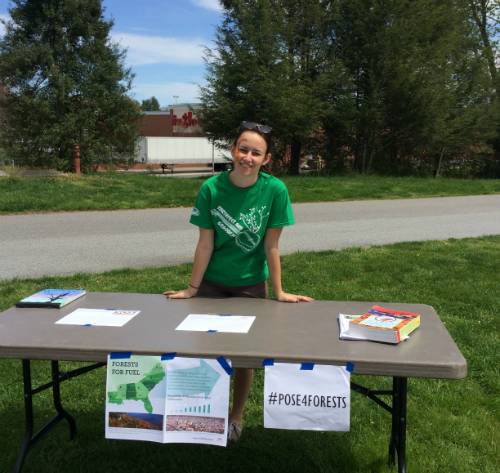
Emily spreads the word about protecting our forests.
I’ve greatly enjoyed working with others who are passionate about the environment. Thinking back on my experience at Dogwood, I can’t be anything but positive.
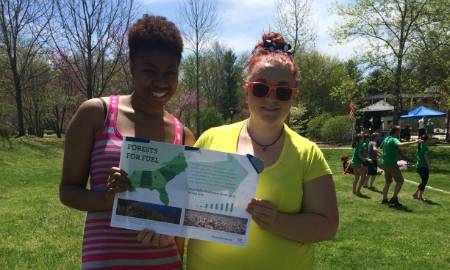
Emily engages her fellow students to Strike a #Pose4Forests.
Working with Emily, I’ve helped organize student group connections, volunteer night events and Earth Day events on campuses across the southeast, including on my campus at Brevard College. I had so much fun working with other students and planning how to spread the word about Dogwood. I feel lucky to have been a part of Dogwood and a student, allowing me to be more than an intern; I was a part of the movement.
I’ve learned that patience, hard work and passion are what it takes to execute planning, and I’ve learned the importance of continued connections to further the cause.
Adam and Emily and every staff member at Dogwood are incredibly passionate about their work, and it was inspiring for me to be part of that.
As an Environmental Studies major, I’ve been exposed to the different sectors of energy, but I knew very little about the biomass industry before this internship.
The Our Forests Aren’t Fuel campaign has been easy to become invested in about because it ties in with things I am already passionate about like climate change. Without trees, what hope do we have? I’ve also gotten the chance to learn more about the communities that this industry affects, and it’s inspired me to delve even further to learn more and hopefully create a senior project out of it. This internship has done so much more than give me skills and a resume filler; it’s given me connections and experience, and it’s helped me understand what I want to do in my future.
Dogwood makes an impact and changes things for the better, and that’s all I’ve wanted to do with my life.
Dogwood has shown me that it is possible to have a career that you love and can feel good about. Those in nonprofit work are driven and passionate, especially those at Dogwood. I want to thank my supervisor Emily Zucchino for teaching me so much, and Adam Macon and Scot Quaranda for helping me grow and learn as much as possible.
I’m looking forward to staying in touch and reading about Dogwood in the news!
Photos available here:http://www.biofuelwatch.org.
http://www.biofuelwatch.org.
A day of action on biomass and coal today has seen the AGM of the operators of the UK’s largest power station disrupted by environmental campaigners, as well as a lively demonstration outside the venue. In addition, a stunt was carried out at the Department of Energy and Climate Change, where a cardboard cut out of Energy Minister Ed Davey was dressed as the “Grimm Reaper of Forests” and presented with an open letter. The letter called on DECC to end subsidies for Drax power station and phase out its coal units, and was signed by NGOs from both sides of the Atlantic.
Julie Timbrell, a biomass campaigner, disrupted the AGM by unravelling and reading from a scroll detailing all of the species of birds and other wildlife that are impacted by Drax’s biomass sourcing in the southern US. After being ejected from the AGM, Julie said: “I disrupted the AGM today because I want the Drax executives and shareholders to know what harm they are causing. Biodiversity loss is an issue as important as climate change, and intimately linked to it. Drax has to understand that its operations are harming biodiversity in some of the world’s most important temperate wetland forests.“
Speaking at the the protest today, Biofuelwatch Co-Director and Campaigner with the Coal Action Network Oliver Munnion said: “This is the third year running that we’ve targeted Drax, and this time we’ve also taken our protest to the Department for Energy and Climate Change over its support for the power station. If the UK is serious about bringing down carbon emissions, and cares at all about the communities being dug up by coal mines and the forests being chopped down for biomass, then the UK’s biggest polluter has to go. It really is time to axe Drax.“
Drax power station in Yorkshire is the largest coal-burner in the UK, and is now also the biggest biomass power station in the world. The company has admitted sourcing coal from Colombia, where whole communities have been displaced for huge opencast coal mines. [1] US conservation groups have also shown that Drax is sourcing wood pellets for its converted biomass units that have come from the destruction of some of the world’s most biodiverse temperate forests. [2]
“The forests of the Southern US are some of the most biodiverse ecosystems in the world.” said Adam Macon, Campaign Director with Dogwood Alliance, and a signatory to the open letter. “The demand for wood pellets to feed Drax’s growing appetite has caused devastating effects to our forests and communities. Southerners are becoming outraged when they learn that their forests are being cleatcut, shipped to the UK and burned. We stand united in sending a clear message to DECC that it’s time they axe Drax.”
Speaking at the protest, Richard Solly, coordinator for the London Mining Network and another letter signatory said: “Coal is bad news at every level, from its extraction to its emissions, harming the workers who mine it, the communities displaced by its extraction, the people living where it is burned, and the atmosphere we all rely on. Continuing to subsidise coal at Drax tells the world that Britain is not concerned with climate change, human rights, or even our own air quality. This Earth Day is the perfect moment for DECC to pull its subsidies for Drax and show the way to a sustainable energy future.”
Drax has converted two units to biomass and plans to convert a third by 2016. With three converted units, Drax will require some 7 million tonnes of wood pellets a year, the vast majority of which will be imported. This is equivalent to almost 1.5 times the UK’s total annual wood production. In addition, Drax’s remaining coal units will be burning almost 4 million tonnes of coal a year, but would otherwise have had to close down without the partial biomass conversion. [5] By 2016, Drax will be eligible for around £660 million in subsidies each year.
Campaigners also challenged claims that biomass reduces carbon emissions, as evidence shows that it can be more carbon intensive than coal [7]. The scientific community is increasingly speaking out on this point. [8] Demand for biomass is set to sky-rocket over the coming years because of lucrative subsidies being offered to the industry by DECC.
Notes to Editors:
[1] Human rights abuses in Colombia because of conflict between communities and coal mining companies have been extensively documented by many organsiations over many years, for example:
http://www.globaljustice.org.uk/resources/cerrej%C3%B3n-minehttp://londonminingnetwork.org/2014/06/cerrejon-coal-colombia-an-abusive-marriage-full-of-machismo/
[2] US-based Dogwood Alliance have extensively documented the use of whole trees and destruction of ancient wetland forests in the southern US by Drax and E.On pellet supplier Envia. For more information see Dogwood Alliance campaign “Our forests aren’t fuel” and:
http://www.dogwoodalliance.org/2012/11/new-report-discredits-uk-energy-company-claims-that-pellets-come-from-wood-waste/http://www.dogwoodalliance.org/2013/08/press-release-new-maps-reveal-envivas-ahoskie-wood-pellet-facility-threatens-southern-wetland-forests-surrounding-ecosystems-and-wildlife/http://www.dogwoodalliance.org/campaigns/bioenergy/
and Biofuelwatch’s report “Biomass: the Chain of Destruction” http://www.biofuelwatch.org.
[3] Drax annual pellet requirements: This figure is an estimate based on the following calculations by Biofuelwatch.
Assumptions:
Net Calorific value by mass of 1 kg of wood pellets = 4.8 kWh/kg
(http://www.
Efficiency of 1 Drax unit = 40%
Capacity of 1 Drax Unit = 630 MWW
Hours of operation per year = 7000
Calculation:
Mass of pellets required to produce 1 MWh thermal = 1000/4.8 = 208.3 kg pellets
Mass required to produce 1 MWh electricity = 208.3/Efficiency = 520.75 kg pellets
Mass of pellets required to produce 1 MWh x Capacity of unit x hours of operation = Mass of pellets burned in 1 year
520.75 x 630 x 7000 = 2296507500 kg pellets = 2296508 tonnes of pellets = 2.3 million tonnes of pellets
2.3 million tonnes x 3 units = 6.9 million tonnes of pellets per year
This figure could be an underestimate, as conservative figures for efficiency, generating capacity and hours of operation have been used.
[4] This figure is an estimate based on the following calculation by Biofuelwatch.
Assumptions:
Net Calorific value by mass of 1 kg of thermal coal = 9.2 kWh/kg
(http://www.
Efficiency of 1 Drax unit = 40%
Capacity of 1 Drax Unit = 660 MWW
Hours of operation per year = 7000
Calculation:
Mass of coal required to produce 1 MWh thermal = 1000/4.8 = 108.7 kg coal
Mass required to produce 1 MWh electricity = 208.3/Efficiency = 271.75 kg coal
Mass of coal required to produce 1 MWh x Capacity of unit x hours of operation = Mass of coal burned in 1 year
271.75 x 660 x 7000 = 1255485000 kg coal = 1255485 tonnes of coal = 1.3 million tonnes of coal
1.3 million tonnes x 3 units = 3.9 million tonnes of coal per year
5 According to Secretary of State Vince Cable, without converting to biomass and the loan from the Green Investment Bank that is helping to finance it, Drax “would have closed down because it has to meet European rules on coal use and it wouldn’t have been able to survive” (http://www.ft.com/cms/s/
[6] Subsidy forecasts are Biofuelwatch estimates based on the average market price per ROC for the last 12 months, current electricity wholesale prices, and the assumption that running on biomass, each Drax unit will run at 630 MW capacity (which could be an underestimate):
– One unit conversion to be subsidised through a Contract for Difference (approved by UK government, but still pending State Aid Clearance by the European Commission): £264.55 million per year [subsidy element calculated as strike price minus wholesale price];
– 2 Unit conversions to be funded via ROCs: £185.04 each i.e. £370.08 million per year
In addition, Drax has been granted Capacity Market Payments for two coal units, amounting to £25.6 million per year.
Total: 2 units on biomass getting ROCs plus 1 unit on biomass getting Contract for Difference plus two coal units getting Capacity Market Payments: £660.23 million per year.
[7] For a list of studies into the carbon impacts of biomass electricity, see www.biofuelwatch.org.uk/2015/
[8] For example see http://docs.nrdc.org/energy/files/ene_13090603a.pdf
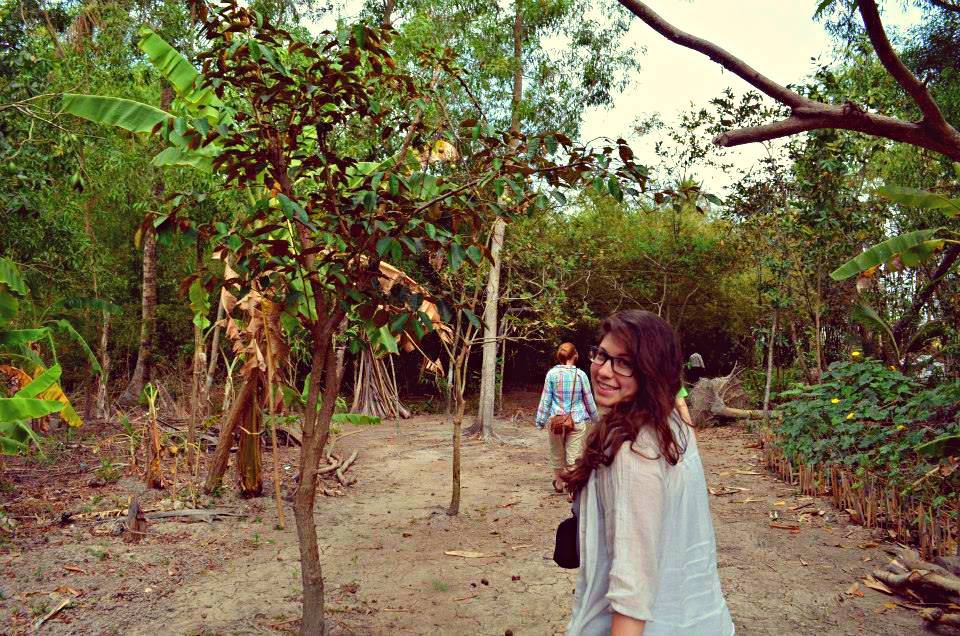
Rachel in Vietnam Bac Lieu Bird Sanctuary.
Rachel Weber came to Dogwood as a student at Duke University who became an intern through their Stanback Internship program. Due to her interest in the ecosystem service marketplace and the intersection between conservation and economics, Rachel worked with a team of interns to analyze the carbon market and think strategically about the Carbon Canopy going forward.
Rachel says,
“Dogwood Alliance is the best case scenario for a small non-profit organization because it is highly mission driven and constantly evaluating itself and it’s goals, striving to be the best Dogwood it can be.”
How did Rachel become a board member? It happened in the summer of 2014. Dogwood Alliance invited the Stanback interns to attend a board meeting. Rachel recalls,
“It was a great learning experience to listen to the conversations that the board and staff were having about Dogwood’s strategy, metrics, and long-term plans.”
When the conversation turned to Carbon Canopy, Rachel spoke up about what she had been working on that summer. With her fresh perspective, she was able to offer her insights. Rachel being extremely well-spoken, immediately made an impression. Rachel explains,
“I was honored when John asked me to serve a one-year term as a youth board member to continue providing that perspective.”
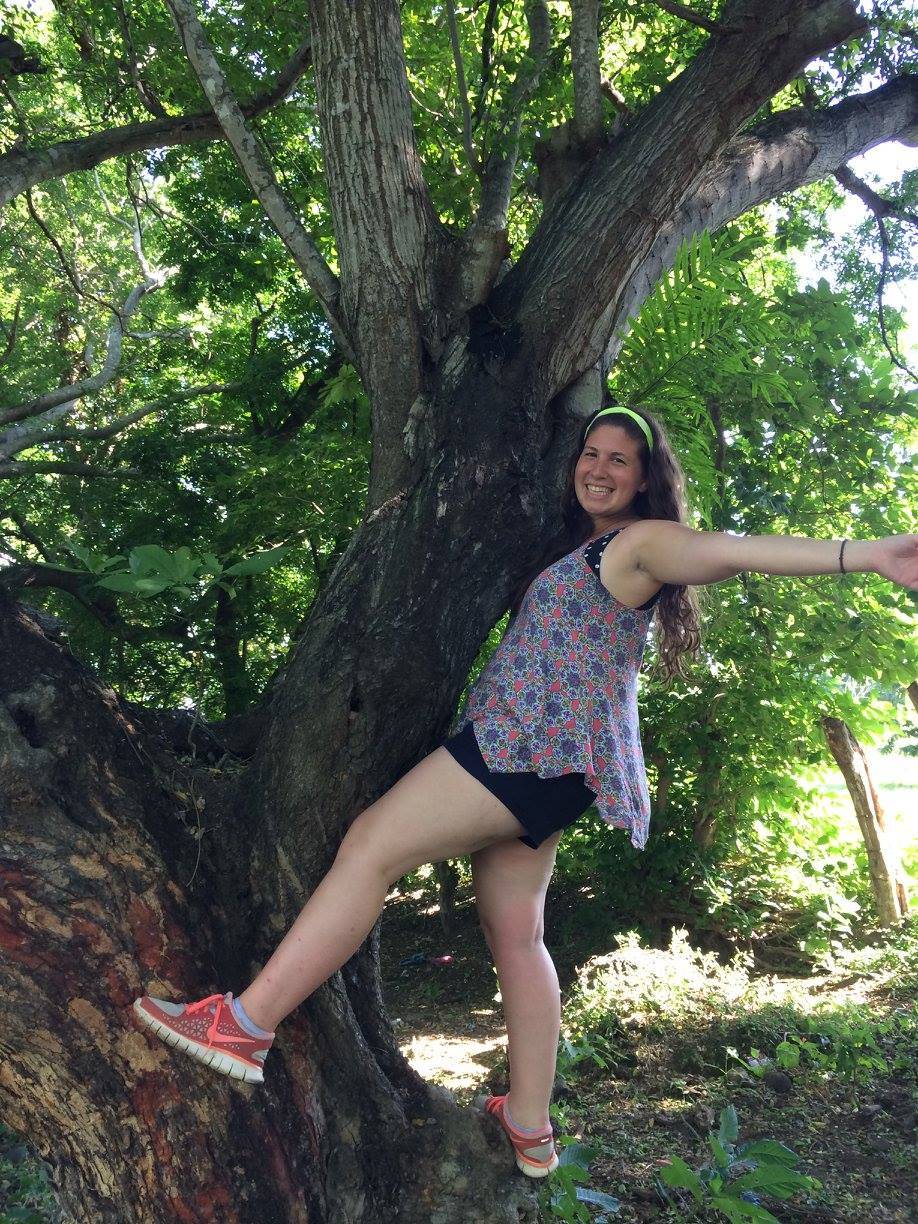
Rachel in Ometepe.
Rachel has a special connection to the trees. It takes her twice as long to get from her apartment to class because she will walk through the Duke gardens and stop to appreciate every tree that catches her attention. She has always felt a special connection with trees, hiking with her dad in upstate New York. One of her eventual goals is to hike the Pacific Crest Trail or Appalachian Trail. A literal tree hugger, when studying abroad in Costa Rica, she hiked with her professor and a group up to the Talamanca mountains. She says,
“Our destination was this immense almendro tree – it must have been at least 600 years old. Together, five of us could hardly wrap our arms around the tree.”
Rachel practices yoga, writes and explores new music. A lot of her spare time is currently taken up by the campaign she is helping to lead to divest Duke’s endowment from fossil fuels, a rewarding experience that’s teaching her the unique challenges and opportunities of organizing on a college campus.
You’ll be hearing a lot more from Rachel as she will be interning again at Dogwood Alliance this summer on the Our Forests Aren’t Fuel campaign.
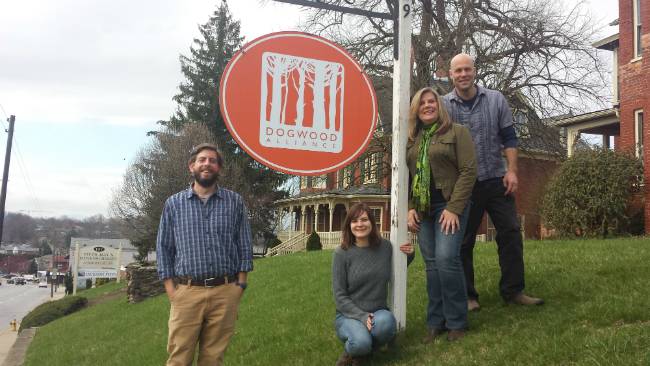
From left to right: Christian, Kimala, Shannon & Tyson
2015 is already an exciting year for Dogwood Alliance! We’ve seen exponential growth on our campaigns, particularly on Our Forests Aren’t Fuel, fighting back against European utility companies that want to burn Southern US forests for electricity. We’ve also made huge strides in our collaboration with paper companies to encourage and measure their sustainability in the woods while protecting forests as carbon sinks in the South.
Please welcome:
Tyson, our new Program Director, brings his program management and his sucessful campaign track record to the mix, helping to take Dogwood to the next level.
Kimala is our very first Marketing Associate, and she offers her impressive graphic design skills, creativity and social media savvy to share the mission of protecting Southern forests.
Shannon, our first ever Advancement Director, helps us integrate development and communications, using her deep knowledge of fundraising and marketing as well as her background in management to encourage more folks to invest in the future of Southern forests.
Christian is our new Director of Finance and Operations, contributing his keen systems and finacial management skills as well as his human resources experience to keep Dogwood on the cutting edge of organizational administration.
Hunters, students and conservationists meet with British Consulate and then take to the streets of Atlanta advocating for endangered southern forests
Forest advocates on the stairs of the EPA.
Atlanta, GA – Today, a diverse coalition of conservationists, student groups and outdoorsmen from across the Southeast held a rally outside of the British Consulate in Atlanta, GA calling on the U.K. to stop burning Southern US forests for electricity. The U.K. is the world’s largest importer of wood pellets from the region, some of which are harvested from endangered wetlands, shipped to Europe and burned to generate electricity as a replacement for coal. Last year, wood pellet exports from southern ports increased more than 70 percent.
The group, led by Asheville, NC-based Dogwood Alliance, met with the UK Consul General Jeremy Pilmore-Bedford, a top ranking British official whose role is to promote UK-US trade and investment, conduct public diplomacy on key issues and build scientific co-operation. Members of the coalition stressed how European renewable energy regulations, intended to reduce the environmental impact of energy production, are actually driving widespread destruction of Endangered Forests and wetlands along the Eastern seaboard and across the US Gulf Coast.
In 2009, the European Commission enacted legislation that aims to reduce greenhouse gas emissions by 20 percent from 1990 levels and increase renewable energy consumption by 20 percent. Loopholes in this law are the principle driver behind the explosion of the wood pellet industry around the world.
“The Southern United States is blessed with one of the most biologically diverse forest systems on the planet,” said Adam Macon, Campaign Director for Dogwood Alliance. “While we strongly support Europe’s efforts to reduce its environmental footprint, their current misguided polices are destroying irreplaceable ecosystems and doing much more damage than the intended good.”
Historically, wood pellets were produced from the byproducts of the timber industry – branches, sawdust and other residues. Due to the massive demand created by the EU regulations, wood pellet producers are now clear cutting forests and processing whole trees to feed the growing demand for biomass energy across Europe. Recently, the UK’s own Department of Energy and Climate Change released a report stating that the use of whole trees, larger than 4 inches in diameter, created no carbon benefits and actually in many scenarios produce up to 4 times more carbon pollution than burning coal.
“European policymakers should heed the advice of its own energy experts and adopt policies that prevent further destruction of our southern forests.” said Rita Frost an organizer with Dogwood Alliance. “Southerners have a deep rooted connection to nature and are becoming outraged when they learn that their rich cultural heritage is being clearcut, shipped to Europe and burned. We stand united in sending a clear message to Europe that “Our Forests Aren’t Fuel.”
A common misconception is that forestry in the South is strictly regulated. In reality, 90% of forestry conducted in the region is on private land with few restrictions and very little regulation. Practices such as large-scale clearcutting, logging of endangered forests, wetland logging, and the conversion of natural forests to plantations are mostly unregulated and are often practiced in sensitive habitats with little protection for wildlife.
The Southeast is a dynamic geographical region that supports at least half of the waterfowl wintering in the Atlantic Flyway, and wetlands across the region serve as year-round habitat for wood ducks and mottled ducks. Specific wetland habitats important to waterfowl within the region include managed coastal wetlands, floodplain forests along river systems, freshwater marshes, coastal bays, and estuaries. The destruction of the critical wetlands and bottomland forests puts communities at risk from the effects of climate change and is also having a negative impact on wildlife such as waterfowl that depend on these habitats.
“As a young boy, my father would take me duck hunting and it was during those days in the duck blind that I developed a deep appreciation for the outdoors. I also learned about the responsibility of serving as a steward of these resources to ensure that future generations are able to share similar experiences.” said Bob Freeman, an avid duck hunter and small business owner. “When I learned that critical waterfowl habitat along the Atlantic Flyway and Mississippi Flyway were being harvested to power Europe, I knew it was my responsibility to speak up on behalf of outdoorsmen to ensure the collective voices of conservationists are heard. There are several waterfowl organizations that are raising millions of dollars to protect these critical habitats, unfortunately those efforts are being outpaced by the demand created by misguided European policies.”
The “Our Forests Aren’t Fuel” campaign is actively engaged across the South, engaging businesses, outdoorsmen, conservationists, elected leaders and citizens being impacted by the wood pellet industry. The coalition is in active discussions with policy makers in Europe and with diplomats in Washington, DC and Atlanta, GA to make sure they understand the real impacts their policies are having on the forests of the region. The coalition is committed to working with European policy makers to ensure their renewable energy policies actually meet their desired goals without compromising the future of forests across the globe.
# # #
About Dogwood Alliance Dogwood Alliance is increasing protection for millions of acres of Southern forests by transforming the way corporations, landowners and communities value them for their climate, wildlife and water benefits. Dogwood Alliance has revolutionized the environmental practices of some of the world’s largest corporations. For more information on the organization please visit www.dogwoodalliance.org
or follow on Twitter @DogwoodAlliance.
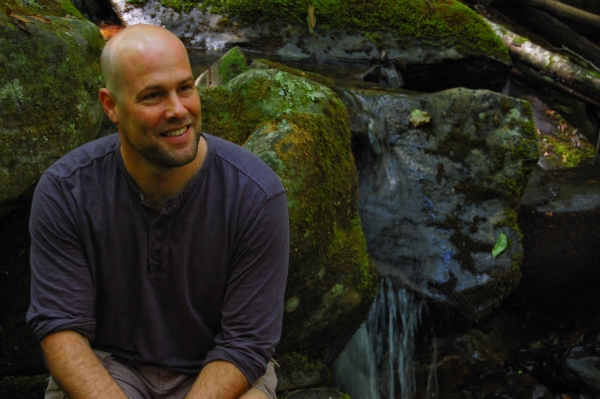
Tyson Miller enjoying nature.
Tyson Miller is no rookie when it comes to fighting for change. For the past 20 years, he ran SEE Innovation, an environmental organization creating effective programs. Tyson helped to create the anthology, Dream of a Nation, that chronicles the success models in environmental education. The book is in 30 thousand schools and reaching countless students each day.
Tyson’s work at SEE Innovation with the Green Press Initiative to focus on paper and forest issues has a lot of overlap with Dogwood’s mission, so he saw this opportunity at Dogwood as room to grow.
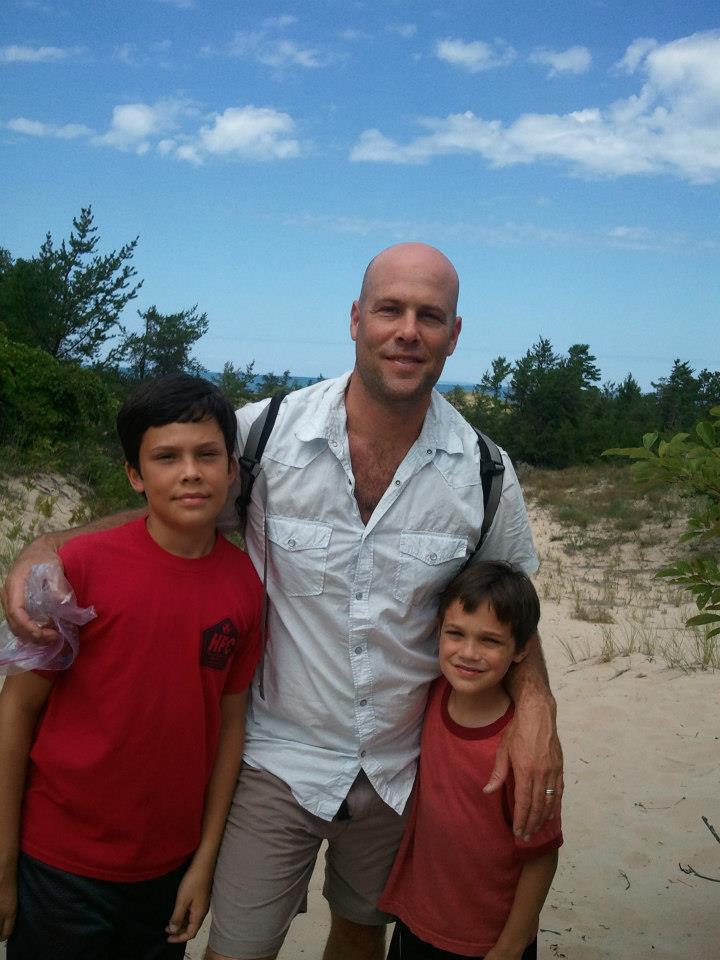
Tyson with his two sons, Ayden and Kyle.
As Program Director, Tyson will be supporting the ongoing successes and the people leading them, mapping what the programs might look like 20 years from now and interfacing with communications and media.
He says,
“Dogwood is thinking about what needs to happen in 20 years, about how we can advance meaningful large-scale forest conservation into the future. I’m excited to work with great people and advance meaningful, impactful change over the next six months and the next 20 years.”
Tyson moved to Asheville eight years ago. He says,
“My wife and I have two boys. We like to get out and hike a lot – go up into Black Balsam Wilderness. We love getting in water and waterfalls. My sons are 14 and 10 and so that keeps me on my toes. We like mountain biking and getting outside as much as possible. I also like playing music a bit.”
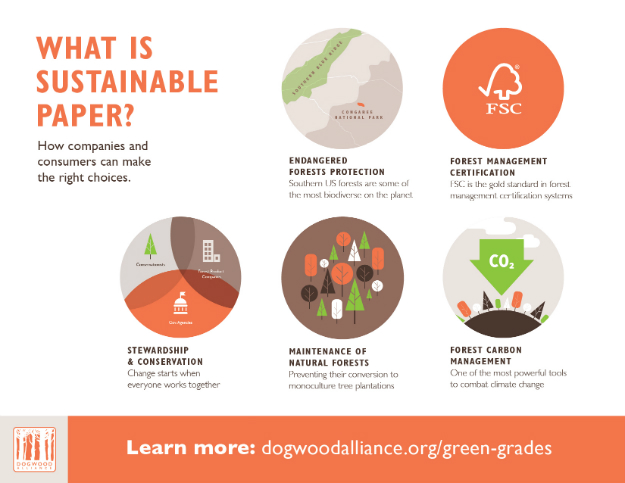
Dogwood Alliance is proud of our role as a catalyst in the greening of the forest products industry. We’ve earned this position through our hard-hitting public campaigns, a clear understanding of the on-the-ground impacts of industrial forest management through grassroots investigations and many years of successful collaboration on supply chain improvements with the largest players in the paper industry in the Southern US.
Now is the time for companies to shift from the old way of thinking to 21st Century Forest Management that places more value on the services that our forests provide rather than simply the forest products they produce, services like clean drinking water, carbon storage, wildlife habitat and flood protection. Companies still need to compete for business on price and quality, but now to be successful, a paper company is, for the first time, required by the marketplace to compete on environmental performance.
We analyze their performance on five key metrics focusing on their impacts in the forest. These metrics make up an important roadmap necessary for progress on sustainability issues in the woods and give clear guidance on a proven way forward to address these vitally important issues.
Indeed many of the largest companies across the sector are in one way or another already deeply involved in the work of many of the indicators and metrics set out in this survey. This report offers important information to the large customer companies that have come to rely on Dogwood Alliance as a watchdog and trusted stakeholder on forest sustainability procurement issues.
The forest products industry is one of the key drivers in the future of our forests.
How those forests are logged and where that logging occurs is absolutely critical to the future of our region. That is why we report on:
Each of these players can and must improve their environmental impact on our forests. You can help. Each of us can make a choice, and for those whose job it is to purchase millions of dollars of paper or fiber from the companies in our survey, month after month and year after year, your job is even more important.


 Donate