


On August 7th, the UK Court of Appeal ruled in favor of the Department of Energy and Climate Change (DECC) in its decision to deny Drax major subsidies for the conversion of one of its coal burning units to biomass at its power station in North Yorkshire. Drax officials have stated that they will not appeal the decision.
This decision could have major implications for future investment in biomass conversion in the UK, and consequently wood pellet production development in the Southern US and around the world. Drax’s stock immediately dropped 10% in value.
This important decision sends a strong signal of caution to the marketplace and US and European governments that the biomass and wood pellet market may not be a wise investment. At a time when we can and must reduce our climate impact, why would we support an industry that is increasing carbon emissions? We need to increase investment in truly renewable energy like wind and solar and it seems that DECC and UK Court of Appeal agree.
All of this news comes to light as a new report emerged from the Intergovernmental Panel on Climate Change (IPCC) that deep emission cuts are needed to limit climate change by 2050. The agency estimates that cuts of 40-70% will be needed in order to stave off the deadliest impacts.
The latest science is showing that burning wood from electricity in most scenarios releases more greenhouse gases than coal and natural gas. Prominent scientists from across the US have urged the European Commission, DECC and the US EPA to highly regulate this burgeoning market.

Emily Zucchino enjoying our beautiful rivers and forests
Growing up, Emily Zucchino lived down the street from a nature reserve. She spent her days catching frogs and turtles, camping, playing, getting lost in the woods and finding her way home. She always felt a strong connection to the outdoors and nature.
During her college years at UNC Asheville, she became more involved in activism and activist networks. Soon after, she started doing international work as the Regional Director for Witness for Peace Southeast, organizing delegations to Latin America as well as Southeastern communities to take action against US and transnational corps who were contributing to poverty, injustice and environmental devastation in Latin America. Emily says,

Emily soaking in majestic mountains
“The hardest thing for me to see was the way that corporations could put profits above the environment, people’s needs and habitats. I want to go up against corporations who put profits before the environment.”
Her work at Witness for Peace brought her to Dogwood Alliance. Looking for an organization with a proven track record of strategic successes against corporations that cause the most environmental damages, Dogwood was the natural choice. Emily was excited to apply, and now work for, a place so dedicated to environmental and corporate responsibility. Now she is Dogwood’s Campaign Organizer for the Our Forests Aren’t Fuel campaign.
Now that Emily is back in Asheville, she loves all the opportunities to do yoga and go hiking, backpacking and waterfall hunting. She still enjoys traveling to as many nature reserves and old growth forests as she can. Our adventurous Emily has hiked the Amazon, the Himalayas and gone on backpacking trips in Joyce Kilmer. Emily says,
“My time spent in the forest is a chance for me to get away from the pavement and the chaos of the city. Find a place where I can find my calm and my center, be rejuvenated and clear my head in the woods and the mountains.”
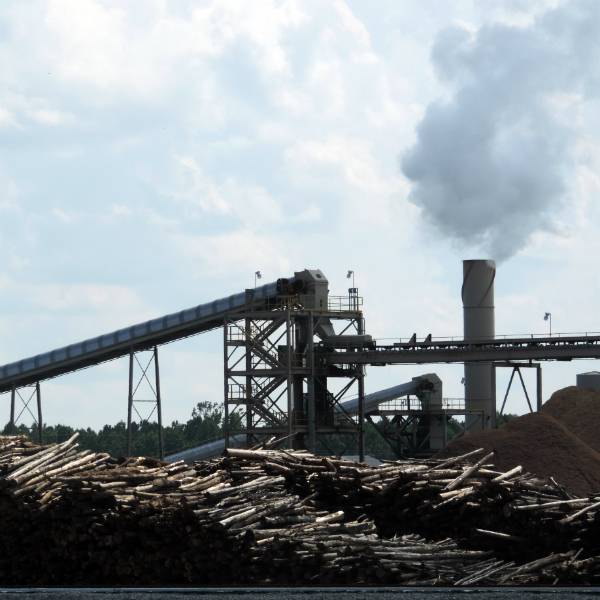
Enviva’s Southampton wood pellet facility is not good for our climate.
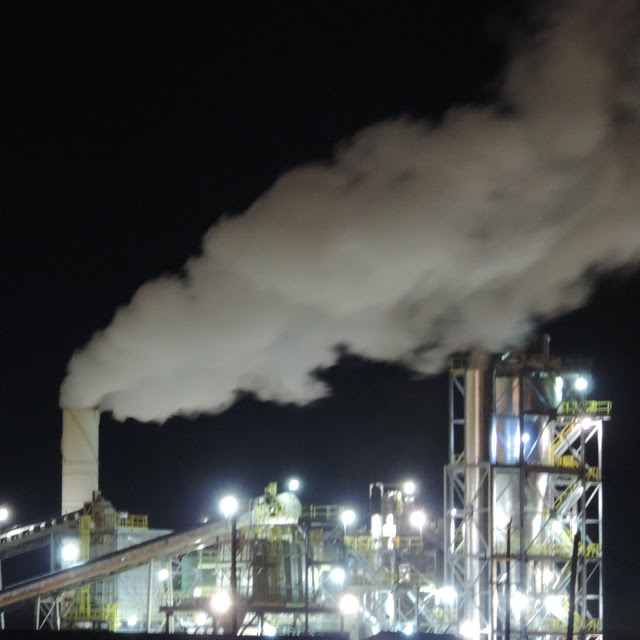
Asheville, NC, USA – Today the UK Department of Energy and Climate Change (DECC) released its long-awaited Biomass Emissions and Counterfactual Model Calculator and an accompanying report Lifecycle Impacts of Biomass in 2020 report. The findings from the tool and associated report confirm what U.S. and European ENGOs have been claiming for the last few years – that burning forests for electricity is bad for our climate.
At the heart of the debate is the dramatic growth in new wood pellet production to meet the surging demand from the UK. Drax, the UK’s largest utility, has already converted one of its coal-fired boilers to burn wood pellets and plans to convert three more. This increased demand for wood as a fuel source in the UK is driving the expansion of wood pellet manufacturing and export in the US South.
Enviva, a wood pellet supplier to Drax, has come under heavy fire from conservation organizations, having been tied directly to the clearcutting of wetland forests in its production of wood pellets. The new report clearly shows that whether it is whole trees or so-called leftover “residuals” from logging operations, Enviva’s wood pellets, when burned, release too much carbon to be considered a solution to climate change or a feasible alternative to coal.
“Today’s report confirms that burning our forests for electricity is not a solution to our climate crisis,” stated Danna Smith, Executive Director of Dogwood Alliance. “Now is the time for the UK government to acknowledge its mistakes and put the brakes on Drax’s expansion before even more Southern forests are destroyed by Drax and Enviva. Our forests are under assault, and until the right policies are in place to ensure the protection of forests and our climate, further investment in this industry must be halted.”
Over the last two years, the Southern US has emerged as the world’s largest exporter of wood pellets, mainly to meet growing European demand. There are currently 21 pellet mills operating across the region with 29 facilities proposed to come online over the next several years. Included in those proposals are three new wood pellet mills to be operated by Enviva and four new facilities to be operated by Drax and its subsidiaries in Mississippi, Louisiana and South Carolina.
Major European utilities led by Drax, E.On and Electrabel have invested greatly in burning forests for electricity generation rather than pushing toward truly renewable energy generation like wind and solar. Heavily subsidized by the EU and national governments, this report serves as a wake-up call to policy-makers, corporate leaders and major investors in the US and Europe who have implemented biomass as part of their strategy.
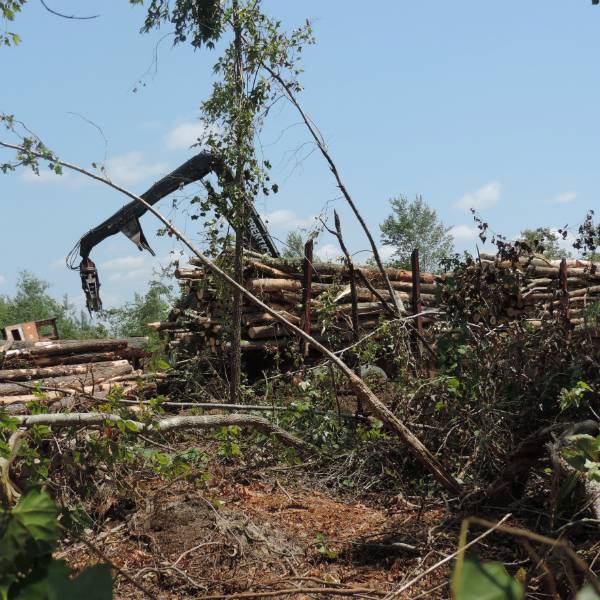
Enviva sources from clearcut forests, turns the wood into pellets and ships them to Europe to burn for electricity.
Earlier this year, a group of over 60 distinguished US scientists wrote the UK Secretary of State for Energy and Climate Change, Edward Davey, expressing concern over the UK’s growth of biomass electricity, foreshadowing the outcome of the new report. They urged the agency to end further subsidization of this misguided industry.
While a number of European nations, led by the UK, Netherlands, Denmark and Belgium, have turned to biomass as a means to reduce carbon emissions under EU renewable energy mandates, scientists and conservation organizations have continued to push back against the assumption that because trees simply grow back this industry is carbon beneficial. The findings from the new report not only support ENGO claims but also show that, in many cases, burning wood for electricity has an even more detrimental impact on our climate than burning coal.
Dogwood Alliance is increasing protection for millions of acres of Southern forests by transforming the way corporations, landowners and communities value them for their climate, wildlife and water benefits. Dogwood Alliance has revolutionized the environmental practices of some of the world’s largest corporations. For more information on the organization please visit www.dogwoodalliance.org or follow on Twitter @DogwoodAlliance.
MEDIA CONTACT: Scot Quaranda, Dogwood Alliance, 828.242.3596, [email protected]
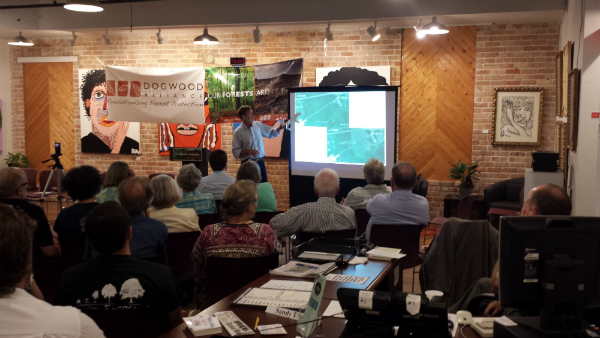
Wilmington public hearing to discuss Enviva port expansion
Wilmington, NC – North Carolina residents held their own public hearing, filling to capacity the MC Erny Gallery in Downtown Wilmington, after the NC State Ports Authority’s decision to move forward on its development of a wood pellet export facility at the Port of Wilmington without a public hearing. The Authority is developing the facility in partnership with Enviva, one of the world’s largest manufacturers of wood pellets. North and South Carolina forests will produce these wood pellets at three planned Enviva plants in southeastern NC (Sampson and Richmond Counties) and SC (Laurens County). The pellets will be shipped to Europe and burned in power plants.
Public testimony focused on the impact of this major expansion of the wood pellet industry on North Carolina’s coastal plain forests, local communities, and the climate. Speakers included noted ecologist Andy Wood, who discussed how wood pellet harvesting will affect wetland forests and biodiversity in the coastal plain, as well as negatively impacting climate (cutting forests and burning wood pellets puts more carbon into the atmosphere over the next 35 to 50 years than burning fossil fuels). Representatives from communities near the port and near the proposed Enviva plants also spoke. The hearing culminated in the capacity crowd calling on the Ports Authority and the Governor to halt the project until the impacts are fully evaluated.
“The North Carolina State Ports Authority is being short-sighted by pursuing this project without fully considering all of the environmental impacts,” said Adam Macon of Dogwood Alliance, one of the groups that organized the meeting. “The state should not be supporting forest destruction to supply energy for Europe.”
Over 2,500 people from across North Carolina submitted comments to the Ports Authority in May, calling for comprehensive environmental review and an opportunity for public input. On June 4, the Authority announced that they were going ahead with the project without addressing the serious concerns raised by the public. Among these concerns: the fact that media reports have confirmed that Enviva uses whole trees from wetland forests to make its pellets. The Wilmington project would allow Enviva to nearly double its pellet production, threatening hundreds of thousands of acres of forest in eastern NC and SC.
“The wood pellet industry is a growing threat to North Carolina’s valuable wetlands, forests, and the life those ecosystems support,” said Derb Carter, Director of Southern Environmental Law Center’s Chapel Hill Office. “Rather than addressing the serious concerns raised by citizens, the Ports Authority is going all in on an industry with significant threats and uncertain benefits for North Carolina.”
Over the last five years, the Southern US has emerged as the major sourcing area for the global wood pellet industry. Demand for wood pellets has been solely driven by European climate polices that erroneously categorize wood pellets as an environmentally-preferable alternative to fossil fuels.

Dogwood Campaign Director Adam Macon at Wilmington public hearing
Dogwood Alliance is increasing protection for millions of acres of Southern forests by transforming the way corporations, landowners and communities value them for their climate, wildlife and water benefits. Dogwood Alliance has revolutionized the environmental practices of some of the world’s largest corporations. For more information on the organization please visit the homepage follow on Twitter.
The Southern Environmental Law Center is a regional nonprofit using the power of the law to protect the health and environment of the Southeast (Virginia, Tennessee, North and South Carolina, Georgia, and Alabama). Founded in 1986, SELC’s team of more than 60 legal and policy experts represent more than 100 partner groups on issues of climate change and energy, air and water quality, forests, the coast and wetlands, transportation, and land use.

Andrew Goldberg, excited to be a Kinship Fellow
Dogwood Alliance staff member Andrew Goldberg has been selected as a 2014 Kinship Conservation Fellow, one of only 16 environmentalists chosen from around the world. Goldberg directs the Carbon Canopy Project for Asheville’s Dogwood Alliance, a ground-breaking initiative that incorporates the preservation of ecosystem services into forest management in the Southern U.S.
As a Kinship Fellow, From June 29 to July 30, the 2014 cohort of Fellows will take part in an exceptional learning community that prepares them to successfully implement innovative strategies in the field. The 18 Fellows will travel from 10 countries including Belgium, Canada, China, Ecuador, Kenya, Madagascar, Mexico, South Africa, the United Kingdom, and the United States to attend the month-long program in Bellingham, Washington.
“The Kinship Fellowship is an exciting opportunity to learn from leaders from around the world who have been developing tools to address the most pressing environmental problems,” said Goldberg, the Corporate Engagement Director at Dogwood Alliance. “I am proud to selected and look forward to bringing this knowledge home to continue to develop innovative market solutions to help protect Southern Forests.”
The fellowship will be an opportunity for Goldberg to strengthen his expertise on ecosystem services and develop creative pathways forward to expand the forest carbon and ecosystem service markets in the Southern U.S.
Southern forests are at the forefront of supply chain innovation and also comprise the largest carbon sink in the U.S. Annually forests in this region absorb approximately 12% of U.S. carbon emissions. This region is also the world’s leading source of pulp, paper, and timber and home to the most biodiverse temperate forests in the world, making it the ideal testing ground for innovation.
Dogwood Alliance is increasing protection for millions of acres of Southern forests by transforming the way corporations, landowners and communities value them for their climate, wildlife and water benefits. Dogwood Alliance has revolutionized the environmental practices of some of the world’s largest corporations.
Kinship Conservation Fellows is a ground-breaking environmental leadership program that emphasizes market-based solutions to environmental problems. Kinship’s dynamic global network of 191 Fellows in 47 countries and 6 continents is collaborative, entrepreneurial, and dedicated to effective conservation.
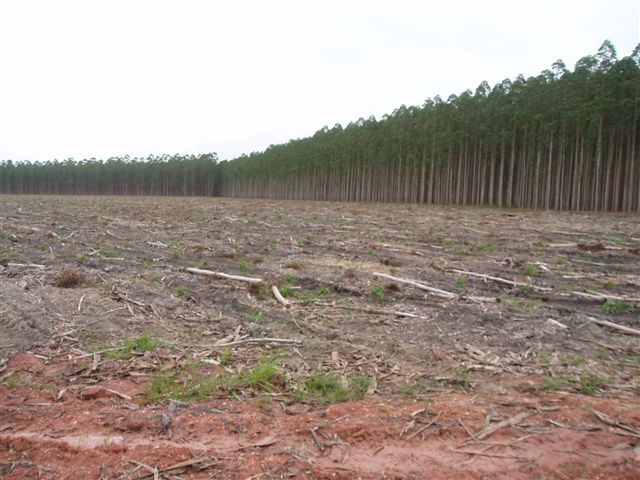
This is what a eucalyptus plantation looks like
Dear friends,
FuturaGene, a biotechnology firm owned by Brazilian pulp and paper company Suzano, has requested authorization from the Brazilian Biosafety Commission (CTNBio) for the commercial release of its genetically engineered eucalyptus trees in Brazil.
A letter has been issued by Brazilian and Latin American organizations (including CEPEDES; Terra de Direitos and the Latin American Network against Plantations) to CTNBio to urge them to deny this approval. As the Brazilian Open Letter (attached below) explains, if approved, use of GE eucalyptus trees will aggravate the already well-known negative impacts that non-GE industrial eucalyptus tree plantations already pose to communities´ livelihoods.
We ask your organization to sign on to the statement below in support of this Brazilian letter, which will be sent to CTNBio, the Brazilian governmental institution in charge of authorizing the release of GMOs. Their letter expresses deep concern and urges the CTNBio not to authorize the commercial release of GE eucalyptus by Suzano/FuturaGene.
To sign on in support of this letter protesting the legalization of genetically engineered trees, please send us your name, organization and country to the following address [email protected] before June 15th.
Thank you,The Campaign to STOP GE Treesincluding Biofuelwatch, Canadian Biotechnology Action Network, Dogwood Alliance, Global Justice Ecology Project, Indigenous Environmental Network, World Rainforest Movement
The Campaign to Stop GE Trees, an international coalition of 248 groups from 49 countries, founded in 2004, supports a global ban on commercial deregulation of genetically engineered trees (also known as genetically modified trees) based on serious concerns about their impacts on biodiversity and human rights. The Campaign supports the position expressed herein, in solidarity with Brazilian and Latin American groups, calling upon CTNBio to pay heed to public resistance to GE trees and reject Futuragene’s request for commercial approval of GE trees.
The Campaign is joined by the undersigned organizations from around the world that endorse the call for a global ban on the release of genetically engineered trees into the environment, as well as those scientists and organizations that are calling for a moratorium on the release of GE trees until they are proven to have no damaging social or ecological impacts. As no such proof of safety currently exists, but there is significant evidence to the contrary, the release of GE trees must be stopped.
See FuturaGene web site at http://www.futuragene.comhttp://wrm.org.uy/pt/livros-e-relatorios/plantacoes-de-eucalipto-para-energia-o-caso-da-suzano-no-baixo-parnaiba-maranhao-brasil/http://www.gmwatch.org/files/GMsoy_Sust_Respons_SUMMARY_SPA_v1.pdfhttp://www.theguardian.com/environment/2012/nov/15/gm-trees-bred-world-energy
June 19th and 20th marked the Spring 2014 meeting for Carbon Canopy, Dogwood Alliance’s forest carbon offsets initiative. Carbon Canopy is an innovative project that incentivizes forest conservation to create lucrative carbon sinks for landowners and valuable offsets for environmentally conscious businesses looking to reduce their footprint. Partners and stakeholders convened to discuss the state of Carbon Canopy’s mission and goals and to refocus the project’s direction. Many of the meeting attendees have been involved in the project since its conception. But for myself and two other interns at the meeting, we’re new to the team. Along with Arjun Wadwalkar and Yimeng Wang, I’m a summer intern at Dogwood Alliance, working on the business development plan for Carbon Canopy under the guidance of Andrew Goldberg, Dogwood’s Director of Corporate Engagement.
Carbon Canopy Project
Gathered at the table, we all asked ourselves: since we first came together, what has changed? What has stayed the same? And what does it mean going forward? It’s clear that one important thing hasn’t changed—Carbon Canopy’s commitment to its core values. Discussing the main goals of the project, we affirmed that they were the same ones that inspired partners to come together in 2007:
In addition to Carbon Canopy’s core values holding true, we noted another similarity from the onset of the project. In early 2007, Senators Lieberman (D-CT) and McCain (R-AZ) introduced a piece of legislation that would have established a market-driven solution to reducing greenhouse gas emissions. A nationwide carbon market seemed promising—but the bill never made it through Congress. Now, we’re experiencing another moment of political inflection. In its recently proposed rule, the EPA plans to cut carbon pollution from the power sector by 30% from the levels of 2005. It calls for states to develop their own plans for how to meet those goals. That could potentially call for the expansion of carbon markets beyond California’s existing Global Warming Solutions Act cap-and-trade system. Under the rule, states may adopt cap-and-trade systems that could lead to growth in demand for offsets from newly regulated utility companies. That’s where Carbon Canopy’s high quality, authentic credits come in. To prepare for the meeting in the month leading up to it, the other Carbon Canopy interns and I familiarized ourselves with the ins and outs of the carbon market and developed a stronger grasp on the mission of the forest carbon venture. We put together a presentation that digests the executive summary of the State of the Voluntary Carbon Markets 2014 (check back here for more information when the full report comes out in a few weeks!), provided our analysis of the market forces and competitive radar, and explained our take on the non-profit business model. We offered strategic recommendations for Carbon Canopy going forward, focusing on how it can strengthen its brand, provide more services, and further its overall mission. I’m looking forward to continuing to work on the project for the remainder of the summer, developing a more thorough business plan.
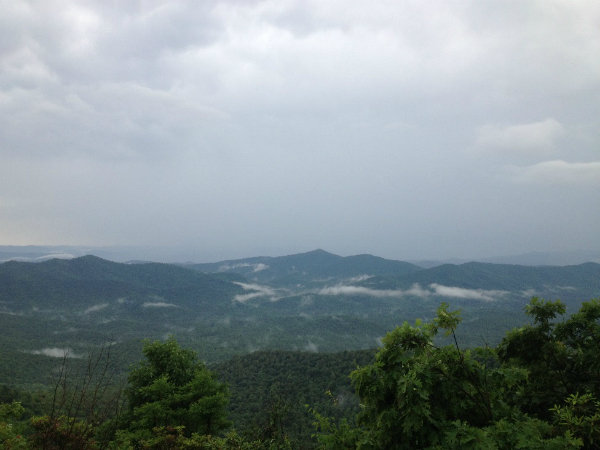
Blue Ridge Mountains. Photo credit: Yimeng Wang
Marking a first for Carbon Canopy, continuing forestry education credits were approved for those foresters in attendance. Before the discussion and presentation on Friday, the group visited the Pisgah Mountain Tract, a piece of land that is managed by Columbia Forest Products. This is one of the key strengths of the Carbon Canopy Project—the ability and desire to connect stakeholders directly with the land. Out in the field on Thursday and at the conference discussion the next day, the dedication was evident. The field visit and meeting served to remind us all what we’re fighting for, and I’m expecting some exciting next steps for the Carbon Canopy.
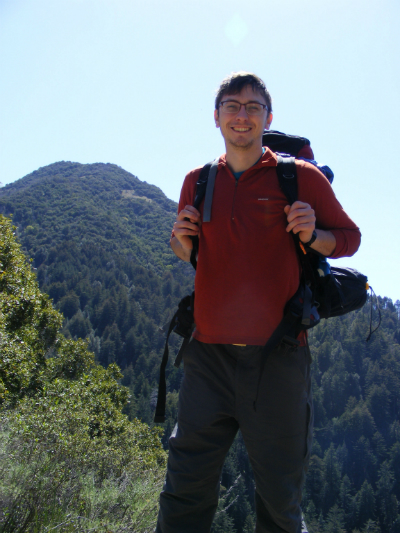
Dogwood Alliance’s new Campaign Director, Adam Macon
Way back in 2007, as an environmental science major at UNCA, Adam had his very first internship with none other than Dogwood Alliance. All these years later, he’s come back to us to fill the role of Our Forests Aren’t Fuel Campaign Director. Working with Dogwood was Adam’s first taste of challenging abusive corporate power, and it empowered him, showing that he could make real, lasting changes in the world and that he was good at it, too.
“My internship with Dogwood was pivotal. It activated me and set off a chain reaction. I’ve spent my time away really preparing myself for this role as Campaign Director. I’ve been a field organizer on-the-ground, working directly with people, and I’ve been a national campaigner, working to build high-level coalitions. I’ve also built and developed online communities. Seven years later, this constant stream of experiences has led me back to Dogwood. It’s wonderful to come full circle. I’m excited to be a part of this next chapter of Dogwood’s story.”
Adam also has a deep passion for the outdoors that was cultivated all throughout his upbringing in rural Williamsburg, Kentucky, playing in the woods and later when he became a rafting guide. For Adam, there is a deep spirituality that connects him to forests.
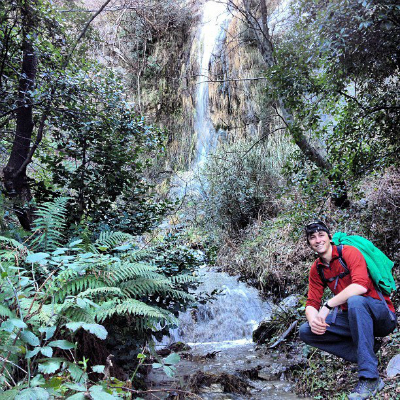
Dogwood Alliance’s new Campaign Director Adam Macon
“I feel at home in nature. It’s something that’s a part of me, defining who I am and why I’m here. I’m obsessed with natural design. Natural design IS sustainability. The way trees grow together, animals work together, and the way symbiotic relationships form. When you appreciate the way a tree grows, it helps us appreciate ourselves for the natural, biological creatures we are.”
Excited to finally be back in Asheville, Adam is ready to get to work. He’s a firm believer that the key to global change is the South. He says, “If we change the South, we change the United States, and if we change the US, we change the world.”
When Adam isn’t working to save the forests of the Southern US, he loves hunting for waterfalls, riding his bike around town, writing letters to people, listening to music, and making mixed CDs.
Press Release from the Dogwood Alliance, Southern Environmental Law Center, and NRDC
For Immediate Release: May 13, 2014
Conservation Groups, Over 4500 Carolinians Call for Public Hearing, Further Environmental Review of Wilmington Port Wood Pellet Project
CHAPEL HILL, N.C.–In comments submitted to North Carolina this week, conservation groups called for a public hearing and further environmental review of a proposed wood pellet export project at the Port of Wilmington, N.C. The Southern Environmental Law Center submitted comments joined by Dogwood Alliance, Natural Resources Defense Council, Audubon North Carolina, Sierra Club, Friends of the Earth US, Friends of the Earth England Wales and Northern Ireland, and North Carolina Coastal Federation.
Across the Carolinas, over 4500 people also requested a public hearing and further review of this controversial project.
The proposed project involves the lease of state public land at the state port to a wood pellet manufacturer, Enviva LP, for the development of a wood pellet export facility. The wood pellets would be produced at three new wood pellet plants that would use in wood, including whole trees, southeastern North Carolina and central South Carolina and shipped to Europe, where they would be burned to generate electricity. Demand for wood pellets in Europe is being driven by policies that incorrectly categorize burning wood as a non-carbon polluting fuel source.
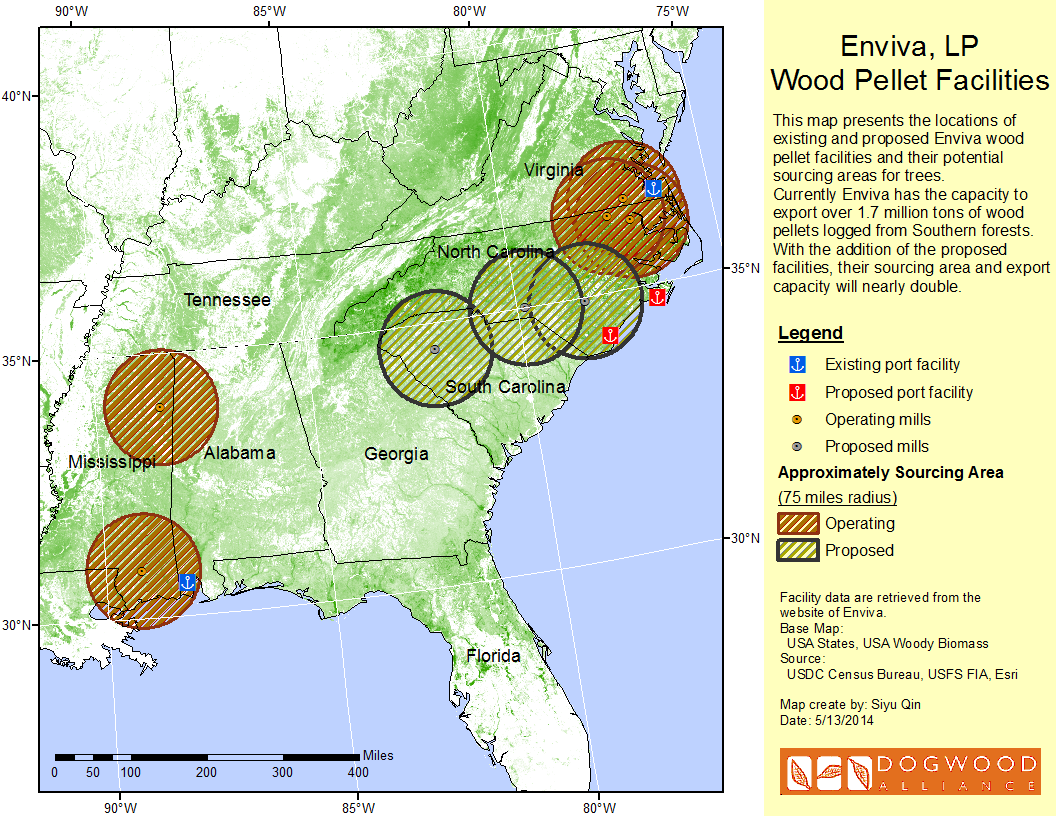
Investigations by media and conservation groups have revealed that Enviva uses whole trees, including trees from North Carolina’s wetland forests, to make wood pellets. Wetland forests are some of the most ecologically-important ecosystems in the Southeast, providing habitat for threatened species and important ecosystem services, including provisioning of clean water, flood control, and nursery habitat for fisheries. In addition, harvesting for wood pellet manufacturing may lead to forest loss of all types.
No current regulations in North Carolina require the replanting of forests after harvest.
Despite these concerns about the wood pellet industry, the Ports Authority has not held a public hearing to receive public input on the wood pellet export project and the major expansion of the wood pellet industry.
Comments from the conservation groups follow:
“This project puts the cart before the horse in a major expansion of the wood pellet industry in our state since the state doesn’t yet know what the impact will be on critical forests and wetlands,” Derb Carter, director of SELC’s North Carolina offices, stated: “North Carolina law requires that the Ports Authority fully assess these impacts before it goes ahead with this project.”
“Over the past year, Enviva’s existing wood pellet mills have been linked to the destruction of wetland forests, the acceleration of carbon emissions and the disruption of the living conditions of our rural communities.” said Danna Smith, Executive Director at Dogwood Alliance. “Given all of the evidence and resulting controversy surrounding the impacts of Enviva’s existing wood pellet export operations, it’s unbelievable that the NC Ports Authority has declared that this project will have no significant environmental impact.”
Debbie Hammel, Senior Resource Specialist with NRDC’s Land and Wildlife Program, stated: “The Carolina coastal region, home to some of the earth’s most ecologically diverse hardwood wetland forests, is highly vulnerable to the detrimental environmental impact of the wood pellet industry. Wetland forests are in serious decline across the landscape and when they disappear so do all the benefits they provide such as flood protection for nearby communities and habitat for endangered wildlife. It is absolutely critical that a thorough environmental impact analysis is conducted to clearly understand the ramifications of expanding the Port of Wilmington.”
###
Southern Environmental Law Center:The Southern Environmental Law Center is a regional nonprofit using the power of the law to protect the health and environment of the Southeast (Virginia, Tennessee, North and South Carolina, Georgia, and Alabama). Founded in 1986, SELC’s team of nearly 60 legal and policy experts represent more than 100 partner groups on issues of climate change and energy, air and water quality, forests, the coast and wetlands, transportation, and land use.www.SouthernEnvironment.orgDogwood Alliance:Dogwood Alliance is increasing protection for millions of acres of Southern forests by transforming the way corporations, landowners and communities value them for their climate, wildlife and water benefits. Dogwood Alliance has revolutionized the environmental practices of some of the world’s largest corporations. For more information on the organization please visit www.dogwoodalliance.org or follow on Twitter @DogwoodAlliance The Natural Resources Defense Council:The Natural Resources Defense Council (NRDC) is an international nonprofit environmental organization with more than 1.4 million members and online activists. Since 1970, our lawyers, scientists, and other environmental specialists have worked to protect the world’s natural resources, public health, and the environment. NRDC has offices in New York City, Washington, D.C., Los Angeles, San Francisco, Chicago, Livingston, Montana, and Beijing. Visit us at www.nrdc.org and follow us on Twitter @NRDC.
Contact:
Dogwood Alliance, Scot Quaranda, 828-242-3596 or [email protected]
SELC, Kathleen Sullivan, 919-945-7106 or [email protected]
NRDC, Philip McGowan, 615-400-7970 or [email protected]

The overwhelming destruction of forests to burn as biomass electricity
After several days of touring the Louisiana Bayou by car, boat, and foot, it was time for us to view the landscape from the sky. Last week, we had an amazing opportunity to fly with SouthWings, who agreed to take us up and give us an aerial view of the bayou basin, several wood pellet facilities and areas affected by industrial logging.
It was a particularly windy day, which gave my stomach some turns because of the bumpy ride! Seeing the bayou basin from the air was not only an entirely different perspective, but it also hammered home the scale of logging operations taking place in the gulf south. In one particular flyover, we viewed a huge section of swamp that was being logged that very moment. The bumpy flight was nothing compared to the way seeing bulldozers hauling away 200 year-old cypress trees churned my stomach.
This view from the top reinforced to me how important our work at the Dogwood Alliance really is. The forests, waterways, and communities in Louisiana, Mississippi, and throughout the South are counting on us to challenge and scale back the very real threat of companies like Enviva and Drax who are destroying our forests to keep the lights on in Europe.
It’s going to take a lot of strategic work and support from the entire Dogwood Alliance community, but after seeing firsthand the beautiful forests we’re fighting for, I know that we won’t stop until Southern forests are protected for generations to come.


 Donate