


Dogwood Alliance is pleased to once again take part in Blog Action Day. This year’s theme is Human Rights, and we decided to step away from forests in the Southern US for our post and spend some time discussing how respecting human rights is the key to ending deforestation in Indonesia.
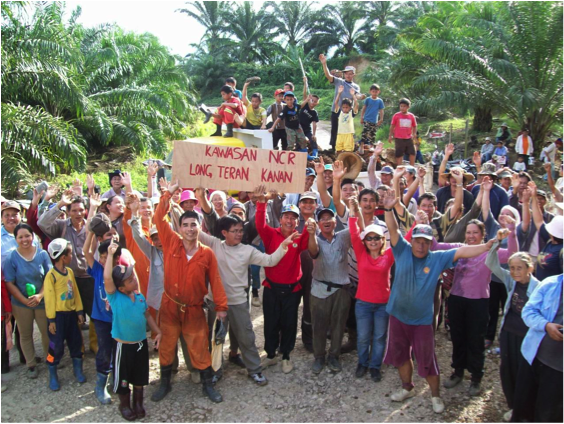
The people of Long Teran Kenan in Malaysian Borneo reclaimed part of their homeland with a peaceful act of collective resistance.
The tropical forests of Indonesia are a global treasure and are one of the top five homes for wildlife species around the globe, including some of the last critical habitat for orangutans. Sadly, over the last 40 years Indonesia has lost over 80% of its natural forests and continues to lose over 1 million hectares every year. Today, the country has the third highest number of endangered species at 772, including 40 species of primates.
With that in mind, you may be asking yourself what this has to do with human rights. In addition to the countless plant and animal species that call these forests home, there are 100 million indigenous people in the country, many of whom rely on forests for their food and livelihood. Sadly, the pulp and paper along with the palm oil industry have a long history of destruction, which has impacted these people and led the country to be one of the largest emitters of greenhouse gases on the planet.
Even with government pledges to limit the expansion of eucalyptus and oil palm plantations, the industry marches on with plans to double the current plantation acreage over the next 10 years. This plantation expansion will replace more native forests and small farms, increasing not only deforestation but also human right conflicts.
Government allocation of new land for plantation conversion does not take into account indigenous use and ownership. As a result, the rights of local communities and small farmers to own, manage and derive livelihoods from these areas are ignored and violated. Communities are rarely able to stop or limit these expansions.
Indonesia’s National Lands Agency has registered over 3,000 conflicts between oil palm companies and local communities. They have not done the same for paper plantations, but estimates range as high as 30,000 villages facing the impacts.
Communities resisting the takeover of their forests and farms for pulpwood or oil palm plantations are often treated as criminals, including village leaders being imprisoned for long stretches without a trial, repression of community protest as well as the burning and bulldozing of villages and community farms.
The government typically fails to even acknowledge these abuses, and without recognizing human rights violations in Indonesia, plantation expansion will continue unabated, leading to further human rights abuses and widespread impoverishment of thousands. At the very least, companies and their colluders in government need to adopt mixed agroforestry that allows local people access to their farmland and forests.
Respecting human rights is not optional. It is an obligation that has long been overlooked by corporations and government officials in Indonesia. If the government won’t act, it is imperative that global consumers at the corporate and individual level stop association with companies that violate human rights.
A full list of recommendations for government can be reviewed in the publication titled “Breaking the Link Between Commodities and Climate Change” released by a wide range of NGOs, including our friends at RAN, NRDC, and Climate Advisers in June 2013.
Since Dogwood Alliance launched the “Our Forests Aren’t Fuel” campaign a few months ago nearly 20,000 of you have sent messages and letters to the CEO’s of Enviva, Drax and Dominion Power, the main culprits burning trees to generate electricity. You rock! Combine your letters with the flurry of news stories over the past few weeks in North Carolina and Europe, and we’ve clearly gotten the attention of the major players. In fact, many of you even got an email recently from Enviva, the South’s biggest exporter of wood pellets for fuel to Europe.
Together, let’s show Enviva and the others that we’re not giving up until they stop destroying our amazing Southern forests and burning them to generate electricity.
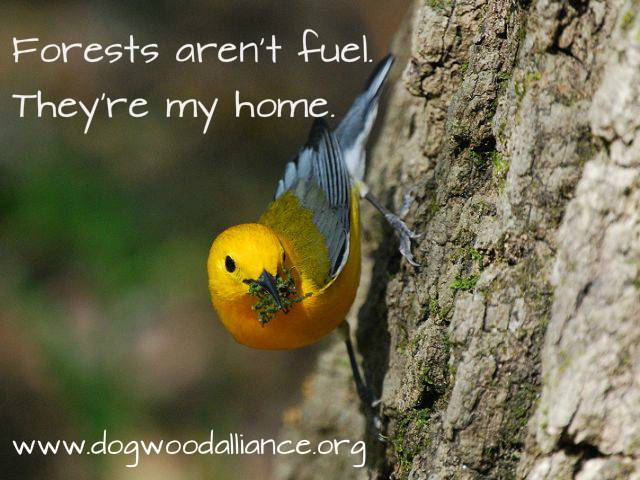
The bottom line is that Enviva, in turning trees from clearcut wetland forests into wood pellets, is threatening some of the world’s most unique forests. In a surrounding sea of pine plantations, these wetland forests, which have already been reduced to a fraction of their original range, serve as lifeboats for countless species, especially birds like the Prothonatary Warbler (pictured above), a songbird native to these endangered wetlands.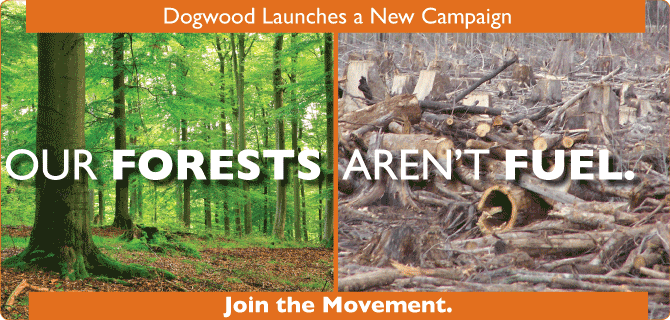
Thanks to you we are already making an impact with these companies, and our campaign continues to gain momentum! Your continued engagement is vital for us to give voice to the trees and protect our wetland forests from the terrible destructive force of biomass.

BENNY Award
Friends and supporters already know how important Dogwood’s agreement with International Paper for building a more responsible forest products industry in the South. Our long history of public campaigns got Dogwood a seat at the table with the largest paper company in the world and get them to change the way they do business in the woods. We did that with your support.
Our agreement with International Paper is in the running for a BENNY Award presented by the Business Ethics Network. We know you think our work is important please let them know!
Dogwood Alliance, as you know, is a proud proponent of clean, renewable energy, forest conservation and efficiency, and taking responsibility for our planet. One of the ways you can help create a movement of environmental consciousness is through our friends and partners at Eco Arts Awards, where you can get creative and express your love for the earth through your art.
 Eco Arts Awards is an international annual online arts competition that currently features four creative categories; Songwriting, Literature, Fine Art & Re-Purposed Materials in Art & Design. This is a unique venue for diverse creative expression around the meaning of the epochal topic of our time: ecology. $1,000 is awarded to the first place winner in each of those categories. A Grand Prize winner will also be selected from the four categories. Winners will be announced in January 2014 via the Eco Arts Award newsletter, so sign up! Here are just a few ideas and perspectives that can draw you deeper into this immense topic:
Eco Arts Awards is in its third year, receiving entries from around the world. Whether you’re a student, an amateur, or a professional, your work is welcome! The jurors, all experts in their fields, eagerly seek inspired and original interpretations of what ecology means to you.

Kathryn Edwards, Founder of Eco Arts Awards
The early Greeks identified three major value spheres: the Good, the True and the Beautiful. The Good refers to morals, justice and how we treat each other. The True is the objective truth of science based on empirical evidence. Beauty holds aesthetics and the expressive currents of the subjective self. Prior to the Enlightenment, Priests, Kings, and Nobility had exclusive domain over what was considered Good, True, and Beautiful, and there were no distinctions made between the value spheres. One of the major accomplishments of the Age of Enlightenment was to differentiate the three value spheres, allowing each sphere their rightful function. Science was no longer held in check by the morals of the church. Artists were allowed to include images other than archangels and the virgin mother. It was the dawning of a magnificent era for humanity that spawned tremendous growth. We made appropriate distinctions between these value spheres, but we’ve gone too far. The disassociation of goodness and beauty is now limiting progress. Science without morals, and morals without beauty cannot serve our highest evolution. Anyone who thinks deeply can sense that if the three value spheres were integrated (without losing their distinctions), more would be accomplished.
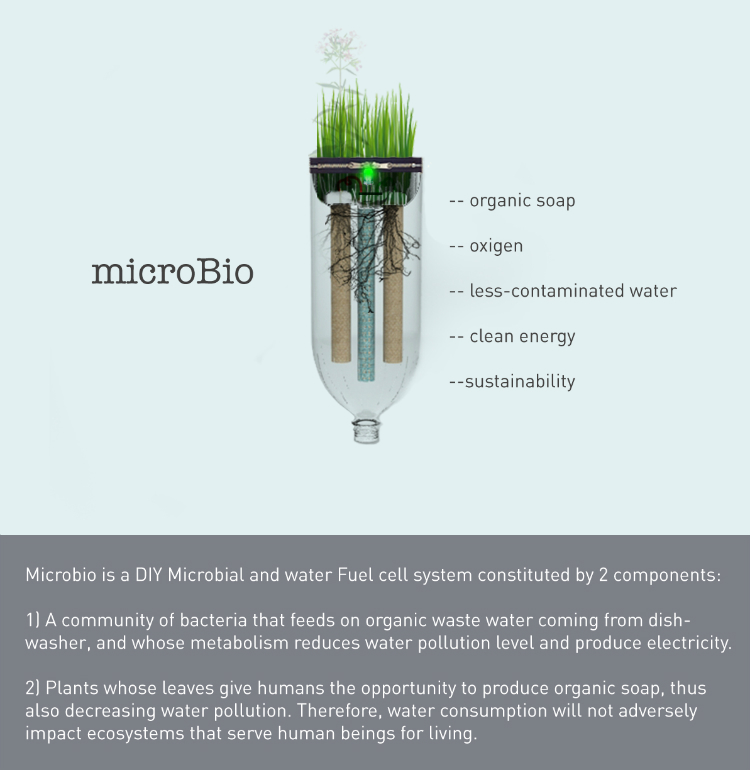
“microBio” by Paula Rincon winner of 2013 Eco Arts Award in Repurposed Materials
As Ken Wilber suggests, integration is the great challenge of our times. Simply put, if our interiority does not become more engaged with the exterior reality of our environmental concerns, not much is going to stick. Hence, it is time for the arts to have its say about our current state of planetary issues. Eco Arts Awards is constantly on the look out for expressions that will turn the world’s head in another, better direction. Perhaps it will be a song, a painting, a poem, or a thought-provoking apparatus made from Repurposed Materials? Perhaps it won’t be any single individual artist per se but a collective movement in the arts that catalyzes our earth’s healing? There is no question of art’s ability to influence culture, and with enough artists answering the call, who knows what the future might be? Eco Arts Awards is approaching its 3rd annual entry deadline this Nov. 4. Its distinguished panel of jurors look for excellence in ecological thematic expression in songwriting, literature, fine art, and repurposed materials in art & design. All finalists in the four creative categories are awarded a page in the online gallery, The Art of Ecology, as well as a handsome sum of cash for first place and grand prize ($6,000 in total cash and prizes).
 A group of over 60 US scientists, including such luminaries as E.O. Wilson, Tom Lovejoy, Gretchen Daily, and Reed Noss, recently sent a letter to EU decision-makers urging them to take swift action to “develop and adopt sustainability criteria and carbon accounting requirements to ensure adequate protections for forests and the climate.”
This letter was motivated by the fact that the Southeastern US has become the world’s largest exporter of wood pellets for biomass electricity generation. According to the North American Wood Fiber Review, export volumes from the southern US reached an estimated 1.75 million tons in 2012 and are expected to jump to 5.7 million tons in 2015. This explosive growth is being driven by misguided EU energy policies which incorrectly assume that burning wood will lower carbon emissions and help fight climate change. However, recent science has shown that burning trees to produce electricity actually increases carbon emissions compared with fossil fuels for many decades and contributes to other air pollution problems.
Adding insult to injury, Europe’s rising consumption of wood pellets is generating greater demand for trees at a time when our southeastern US forests are already under tremendous pressure from the more traditional wood and paper industries. This in turn threatens to further compromise the future ecological integrity of some of our most important and imperiled ecosystems. Despite industry claims, a growing body of evidence suggests that trees rather than wood waste are the primary source of the wood pellets exported to Europe from the Southern US.
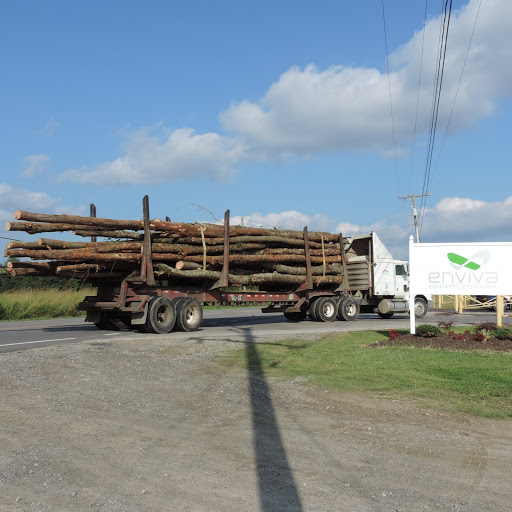
A truck drives into the Ahoskie Enviva facility carrying whole trees.
For example, the Wall Street Journal recently revealed that Enviva, the South’s largest exporter of wood pellets, relies on clearcutting hardwood wetland forests in the Mid-Atlantic Coastal Eco-region at its mill in Ahoskie, North Carolina. The Dogwood Alliance and Natural Resources Defense Council recently released a series of maps and a report underscoring the threat Enviva’s operations at this facility poses to these forests, some of the South’s most threatened and valuable forest ecosystems.
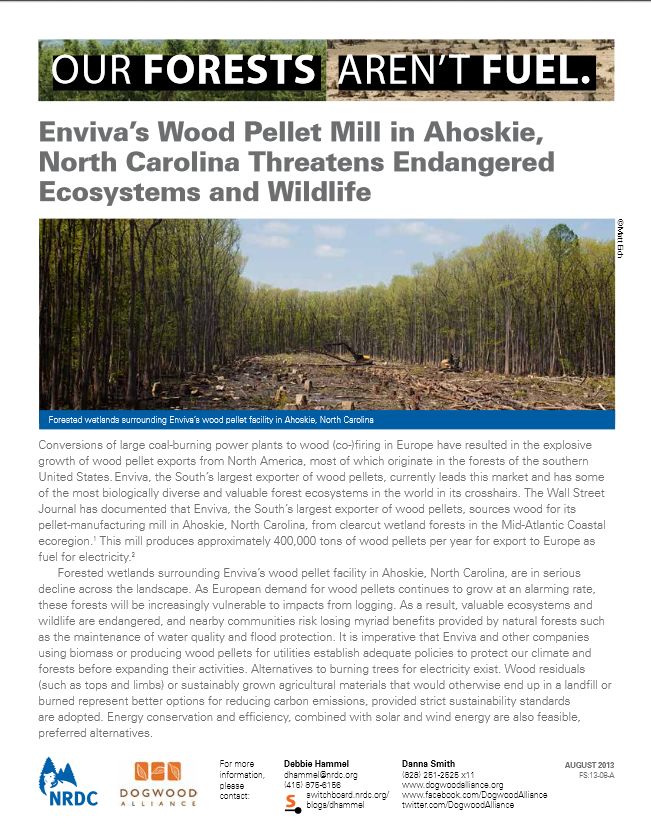 The maps and report document the extreme fragmentation and enormous ecological value of the few remaining natural and semi natural forests, much of which are wetlands, that surround Enviva’s Ahoskie wood pellet mill. Like many of the forests across the South, the planting of fast-growing industrial pine plantations has replaced many of the natural forests. The remnant natural forests that remain contribute invaluable and often unnoticed services we all depend on.
For instance, in addition to storing substantial amounts of carbon in the standing trees and soil, the slow-growing bottomland hardwood forests buffer natural and human communities from storms, floods, and droughts, maintain water quality of rivers and estuaries, and provide critical habitat for birds, black bear, reptiles, amphibians, fish, and other wildlife. In fact, according to the World Wildlife Fund, these forests “contain the most diverse assemblage of freshwater wetland communities in North America and perhaps of all temperate forest ecoregions” and “are some of the most biologically important habitats in North America.” They also “serve as a resource sink for upland aquatic communities, support[ing] aquatic food webs when flooded and terrestrial food chains during the dry season.”
Yet less than one percent of the forests within this sourcing region are permanently protected from logging. Neither the federal government, nor the States of North Carolina or Virginia, sufficiently regulate industrial forestry, leaving the floodgates open to Enviva and other wood pellet manufacturers that are destroying some of the last remaining natural forests in this region.
One would hope that the EU, which many of us view as acting responsibly on environmental issues, might be of some help here. However, a document recently leaked to the European press indicates the EU is siding with pellet manufacturers, as the current draft “sustainability criteria” would do nothing to help protect wetland or other critically important and endangered forests or ensure carbon emission reductions.
Consequently, the US scientist letter sent to EU decision-makers concludes as follows:
As scientists and concerned citizens, we thus urge you to reconsider the policies that are driving this demand for wood pellets as a fuel source for generating electricity in Europe. We urge you to take prompt action to remedy the adverse climate and biodiversity impacts of the current misguided policies.
There are far better ways to convert biomass into electricity than clearing and burning our forests. For instance, if strict sustainability standards are adopted and enforced, on a small scale, wood waste or sustainably grown agricultural materials that would otherwise end up in a landfill could be used. Of course, in the end, energy conservation and efficiency combined with real renewable energy sources such as wind and solar, are almost always our best bets.
Enviva turns North Carolina trees into pellets before shipping them to Europe to burn for electricity
‘Tug on anything in nature, and you’ll find that it is connected to everything else.” I was recently reminded of this John Muir quote after reading about a growing and controversial new industry spreading across North Carolina and the entire Southeast: wood pellet manufacturing.
In rural communities such as Ahoskie, Garysburg and Roxboro, this new industry is turning whole trees into tiny wood pellets to be burned in European power plants to produce so-called biomass energy, which is essentially burning wood. The growth of biomass energy and the wood pellet industries are based on the need to find alternatives to coal. In Europe and in many U.S. states, the biomass industry has fooled people into thinking it is a green energy, and large subsidies are given away annually to electric utilities to burn trees from North Carolina and elsewhere. As a result, the demand for wood pellets from our native Southeastern forests is skyrocketing. According to a recent News & Observer article, Europe imported 3 million tons of wood pellets last year, and by 2018 that number is expected to climb rapidly to 30 million.
There are some obvious ironies in logging trees, shipping them to the other side of the Atlantic Ocean and burning them in European power stations under the guise of “green energy.” In fact, the most recent data show that burning whole trees is worse (per unit of energy) for the environment than burning fossil fuels like coal.
At first, the pellet industry tried to convince us that it was using only “waste” wood – the tops and limbs left over from other logging operations – but there is no way near enough left over residues from clearcutting to feed this industry so now it is finally admitting it is using whole trees.
The Ahoskie facility operator, Enviva, assures North Carolinians that it is using only gnarled and knotted trees – and that no harm is being done to the local ecology as a result of its operation. Recent evidence from the Wall Street Journal, however, shows one of the manufacturer’s suppliers clearcutting a wetland forest near the facility. Wetland forests are comprised of ecologically valuable plant species and provide irreplaceable habitat for native wildlife, some of which are endangered. Losing these unprotected forests means losing a part of North Carolina’s natural heritage, and these natural areas become more susceptible to destruction as the demand for wood pellets increases.
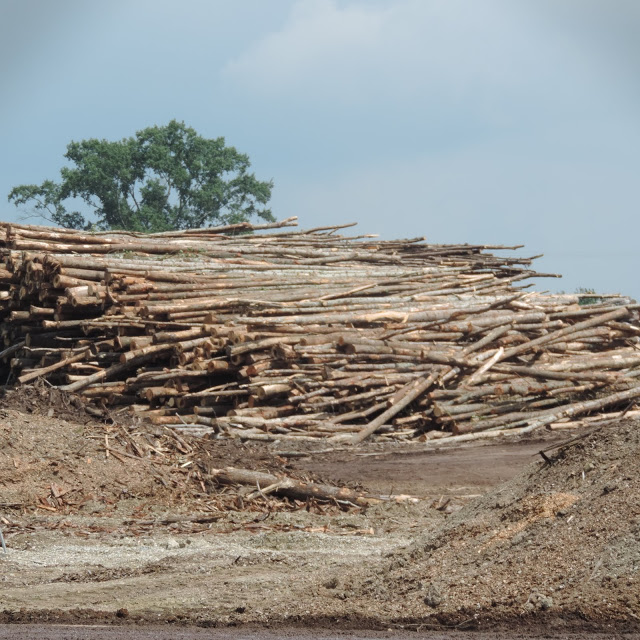
Enviva uses whole trees from North Carolina wetland forests for its pellets.
It’s even more alarming that Enviva is acting as if it is doing us and the environment a big favor by using deformed trees on its way to making a fortune. This arrogance is telling. Claiming to be a responsible steward of our forests by accepting only unwanted, blemished trees – trees that can’t be manufactured into things like furniture or building materials – wrongfully assumes that trees serve only an economic purpose. There is no “waste” in a functional ecological system.
Moreover, the earth’s atmosphere depends on trees to capture carbon, regardless if knotted or gnarled. In fact, in the U.S. we count on our forests to suck up roughly 13 percent of our total, economy-wide greenhouse gas emissions each year. That’s like taking more than 180 million cars off the road.
Certainly trees have economic value, but for the wood pellet industry to imply that’s all they’re good for shows its true priorities: the bottom line.
The emergence of the wood pellet industry has flown under the radar. But as it grows, we must not forget how important our forests are for North Carolina’s ecology and everything else connected to it.
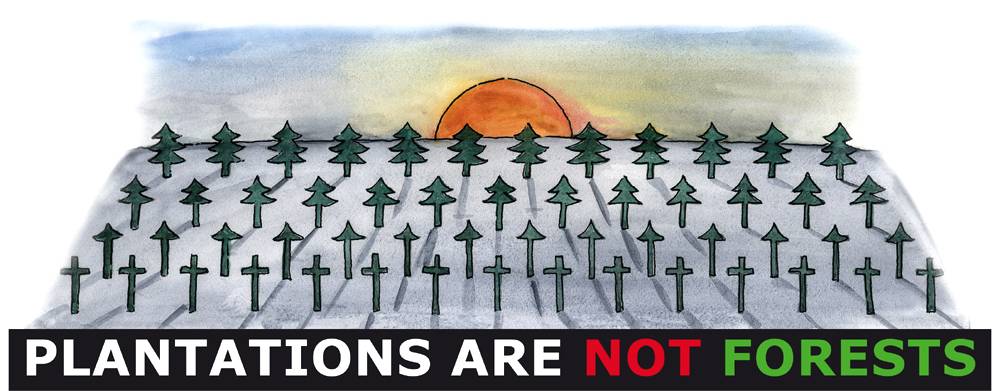
Dogwood Alliance is proud to join the World Rainforest Movement and countless groups around the globe by taking part in the International Day of Action against Plantations. Natural forests in Africa, South America, Southeast Asia, China, Indonesia, and the Southern US are under threat from the big agribusiness, the global pulp and paper industry, and increasingly wood burning utilities that look at forests as a commodity to increase corporate profit rather than for the vital role they play as home to indigenous people, wildlife habitat, protecting the world against climate change, and so much more.
As an organization working to protect the forests and communities of the Southern US, we have fought for over fifteen years to end the conversion of our natural forests to plantations. The work has been both challenging and rewarding. By the time of our founding in 1996, companies in the South had already converted countless acres to plantations and for now we have the largest number of acres of plantations in the world at around 42 Million acres. Sadly, we have exported these bad practices around the globe and vast swaths of forests have been converted in places like South Africa, Brazil, Indonesia and elsewhere.
We campaigned hard to stop this practice and thus far have convinced four of the five largest paper companies in the region to end this practice and helped dozens of large Fortune 500 companies develop policies that no longer will accept paper originating from natural forests that are converted. We celebrate this increased protection for millions of acres of natural forests in the South and hope to see companies around the globe embrace these types of policies.
Sadly, over the last couple of years a new industry has come on the scene which threatens the future of our natural forests once again. Large utilities in Europe and the United States are increasingly turning to wood as a source for electricity and the forests of our region are ground zero to supply the wood needed to burn. The Southern US is the largest wood pellet export region in the world and if demand continues to increase as projected in Europe, this industry will lead to a doubling of current plantation acreage, meaning that over 40% of our forests will be plantations. This is patently unacceptable and must be stopped.
That is why we launched the “Our Forests Aren’t Fuel” campaign at the end of May, to stop the rush to burn. Forests are meant to sequester carbon, filter water, prevent flooding, and clean our air, not to be burned. It is absolutely ludicrous that we are burning the very thing that is supposed to protect us from climate change. The latest science suggests that burning wood for electricity may actually release more carbon emissions that coal, so why have we chosen the path back to the Stone Age?
We hope you will take a moment to click some of the links in the story and below to learn more not just about the threats to our forests from tree burning utilities but also threats to forests and indigenous people in Indonesia, Africa, and Brazil. Let’s all envision together a world free from the rampant destruction of our forests and one that values all of the amazing benefits our forests provide.
Click here to learn more about the threat of oil palm plantations in Africa.And about the fight against eucalyptus plantations in Brazil.And about how snack food companies in the US that use palm oil from Indonesia are contributing to orangutan extinction, climate change and human rights violations.
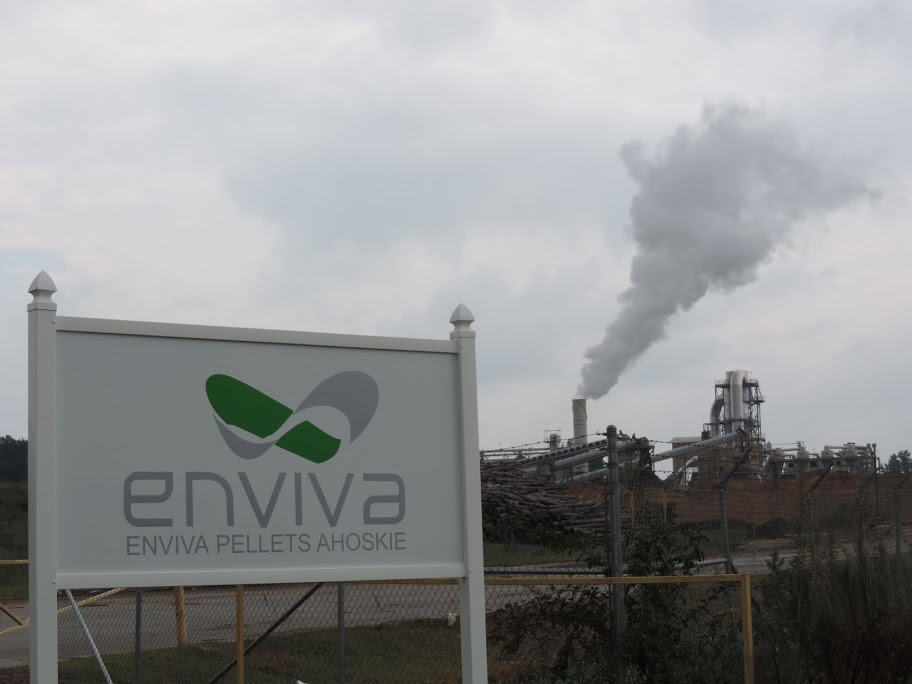
Last week I continued the Our Forest Aren’t Fuel campaign’s investigation with a trip up to Ahoskie, NC to gather more evidence at Enviva’s flagship wood pellet mill. Enviva, the largest producer and exporter of wood pellets in the US South, is systematically selling off our forests to the highest bidder to be burned for electricity in the false name of renewable energy. I wanted to get a better look at their operations and document as best I could the daily truck loads of whole trees that roll onto their lot, destined to be ground into sawdust and turned into pellets.
Sure not to trespass, I stayed on the outside of Enviva’s fence. My aim was to get close enough to capture a very clear view of the towering piles of hardwood tree trunks some of which measured over 50′ in length!
Very soon after I began to take pictures, an Enviva employee in a black late model Toyota Tundra drove up to the other side of the fence to ask who I was and what I was doing. I told him that I was following up on all the recent media coverage in the Wall Street Journal, Raleigh News and Observer and the Charlotte News and Observer and that I had come to check out their operations myself.
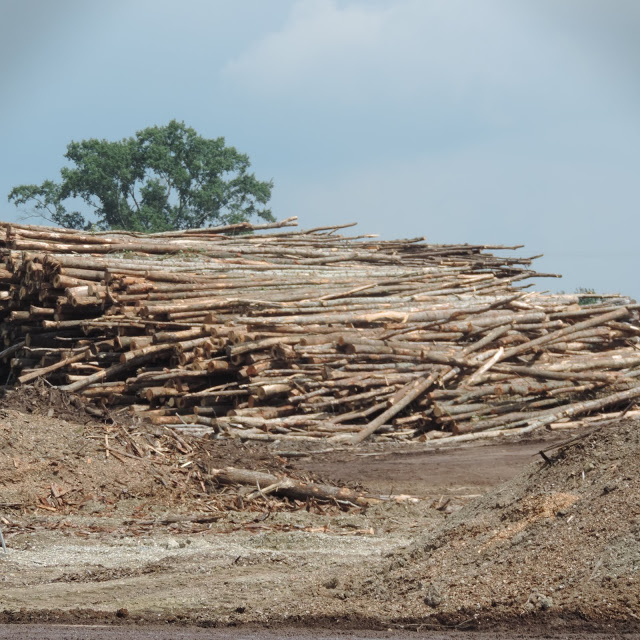 After another attempt to find out who I was, he informed me that they had a “right to commerce” and that I was interrupting that right. If that was the case, apparently all it would take to stop the clear cutting of our native forests for European electricity would be a few people like myself standing outside their fences with cameras in hand…if only that were true!
The most concerning part of this interaction was the employee’s choice of language: “Right to Commerce.” You may not be aware of the model legislation originally written by the American Legislative Exchange Council, or ALEC, titled “Animal and Ecological Terrorism Act”, but it popped up all over the US this year in a few different versions and under different names, including North Carolina as SB 648 where it was presented as the NC Commerce Protection Act of 2013. These “Ag-Gag” laws, as they have come to be known, are now enforceable in Utah and Iowa and are still pending in several other states, like Pennsylvania, where they have been expanded to encompass documentation of Fracking operations on “agricultural” land. In North Carolina where Enviva’s flagship pellet mill is located, the law could prevent employees from documenting illegal behavior and actions and prevent whistleblowers. In many other versions of the law, it would criminalize the documentation of anyone, like myself, of a broad interpretation of “agricultural” operations even if that documentation occurred on public property.
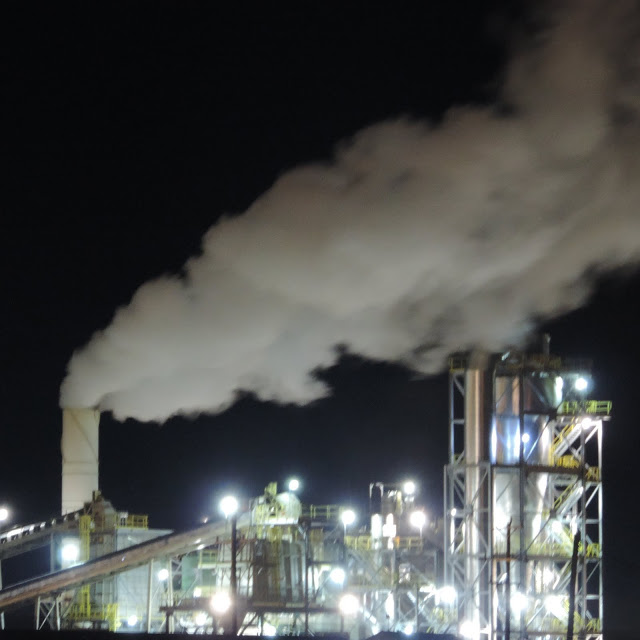 After this intimidation, I eventually walked away, leaving a newly positioned Enviva employee standing guard in front of their company sign and main entrance. I wondered if Enviva has nothing to hide, then why didn’t they invite me in, show me around and set the record straight? Enviva keeps insisting in the media that they’re only sourcing from approved trees. If that’s true, why not take this opportunity to show us?
A few hours later, as I was driving by the Ahoskie facility, that same employee in his black Toyota Tacoma, pulled up behind me and began to follow me through the town. Pulling into shopping centers, driving down back streets, zigging and sagging, he was relentless in his pursuit. Eventually I got out in front of him and successfully pulled behind a bank as he drove past my hiding spot. Again, the goal was clearly to intimidate anyone who would dare to stand up to them and their shortsighted destructive business plan. Intimidation of this kind is an all too familiar tactic of those within the fossil fuel industry and unfortunately is not at all surprising coming from a “leader” within a biomass energy industry that has been scientifically proven to increase carbon emissions even more than the environmentally destructive process of burning coal.
The bottom line? Truly green companies out to make the world a better place while generating profits have nothing to hide. Closing the door of transparency is an old strategy used by dirty businesses with everything to lose if the truth comes out. Enviva’s response to my visit was yet another piece of evidence that Enviva is trying to insulate itself in a big cloud of green smoke.
Don’t worry, I’m not deterred, despite their best attempts to pressure us. Regardless of Enviva’s petty tactics, the investigation was a success, and we now have an even better understanding of how Enviva is doing business. I’ll be sure to share that information along with some of the photos and video I collected in my next update.
Dogwood will continue to expose the truth behind the biomass industry.
Our Forests Aren’t Fuel!

Tom Llewellyn Campaign Organizer
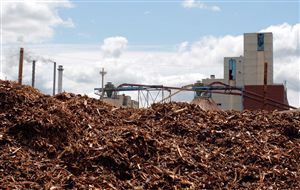
I read with interest the Aug. 28 article about the booming wood pellet export industry in North Carolina (“Report targets Ahoskie pellet mill for clear-cutting,” Aug. 28).
I was disheartened to learn these pellets are being produced in massive quantities from our trees, only to be shipped and burned in European power plants as a “renewable” energy.
We North Carolinians know a thing or two about renewable energy. We are sixth in the country for solar energy capacity. Our wind energy potential continues to attract companies here.
We have some of the brightest minds on the planet developing new renewable energy technologies. It doesn’t take a scientist to realize there is nothing green about logging wetland forests and burning the trees for energy.
Alan White
Davidson, NC
Photo from European Voice article: “EU Biomass Threatens Forests in Southern US”
Your article entitled “Commission floats ‘weak’ criteria for biomass” (EuropeanVoice.com, 15 August), highlighted how the biomass industry in Europe asserts that strong forest sustainability criteria are unnecessary for biomass because most of the wood imported to be burned in Europe’s power stations comes from forests in North America, and not from countries with a “troubling history of land degradation such as Indonesia and Brazil.” But, in the Southern United States, the leading exporter of wood pellets to Europe, there are virtually no laws regulating industrial forestry on private lands which make up 90% of the forests in the region.
Just like Indonesia and Brazil, this region of the world is a hot spot for biodiversity (home to the most biologically-diverse temperate forests in the world) and does have a “troubling history of land degradation”. Tens of millions of acres of natural forests across this region of the world have been destroyed to make way for fast-growing industrial tree plantations. This practice has contributed to a well-documented, significant decline in hardwood wetland forests and the near disappearance of entire ecosystems, such as the long-leaf pine savannahs, which has brought countless species to the brink of extinction. Destructive clearcutting in remaining natural forests, including wetlands, is increasingly common with the explosive growth in the wood pellet export market to Europe.
For example, Enviva, the South’s largest exporter of wood pellets to Europe, relies on clearcutting in hardwood wetland forests to make its pellets.
In addition to storing substantial amounts of carbon in the standing trees and soil, the slow-growing bottomland hardwood forests along the US Atlantic Coastal Plain buffer natural and human communities from storms and floods, maintain water quality of rivers and estuaries, and provide critical habitat for birds, fish, and other wildlife. Yet the bottomland forests that once covered this region have been reduced to a mere fraction of their original extent.
In the absence of strict, binding sustainability criteria, what remains of this and other important ecosystems throughout the Southern US is increasingly threatened by clearcutting to supply fuel to European utility companies like Drax.


 Donate