


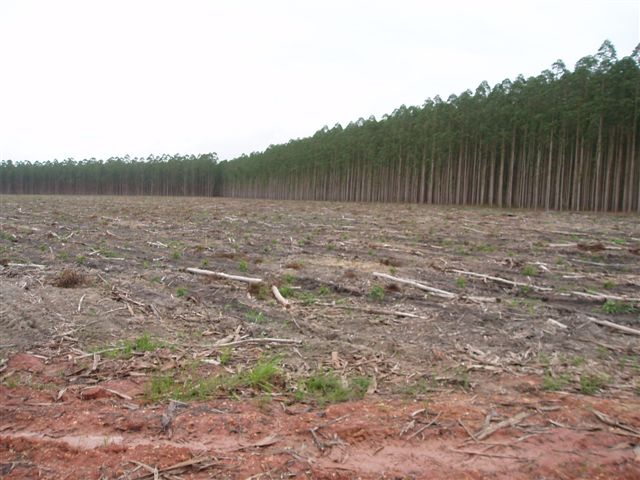
Non-native eucalyptus plantations threaten Southern ecosystems
In response to industry plans to develop eucalyptus plantations across the US South[1], environmental groups[2] are raising serious concerns about the impacts of eucalyptus plantations on forests, rural communities, wildlife and the climate, especially if those trees are genetically engineered.
EcoGen, LLC recently announced plans to develop eucalyptus plantations in southern Florida to feed biomass facilities. Additionally, South Carolina-based ArborGen has requested USDA permission to sell billions of genetically engineered cold tolerant eucalyptus trees for plantations in South Carolina, Georgia, Florida, Alabama, Mississippi, Louisiana and Texas. The USDA is expected to respond to this request in the coming months.
Eucalyptus trees are documented as an invasive pest in California and Florida. But because they cannot grow in sub-freezing temperatures, they have been engineered to be cold-tolerant, enabling them to survive temperatures down to 20°f – vastly expanding their range.
Besides being highly invasive–the Charlotte Observer called them “the kudzu of the 2010’s”–eucalyptus plantations deplete ground water and can even worsen droughts. The US Forest Service opposes GE eucalyptus plantations due to their impact on ground water and streams. [3,4]
“GE eucalyptus trees are a disaster waiting to happen–it is critical the USDA reject them,” said Global Justice Ecology Project Executive Director Anne Petermann. “In addition to being invasive, eucalyptus trees are explosively flammable. In a region that has been plagued by droughts in recent years, developing plantations of an invasive, water-greedy and fire-prone tree is foolhardy and dangerous.”
Petermann coordinates the international STOP GE Trees Campaign [5], which has collected thousands of signatures supporting a ban on GE trees due to their potentially catastrophic impacts on communities and forests.
“The forests of the Southeast are some of the most biodiverse in the world,” said Danna Smith, Executive Director of Asheville, NC-based Dogwood Alliance. “They contain species found nowhere else. Species like the Louisiana Black Bear, the golden-cheeked warbler and the red-cockaded woodpecker are already endangered. Eucalyptus plantations could push these and other species over the edge,” she added.
The Georgia Department of Wildlife opposes GE eucalyptus trees due to these impacts. [6]
The STOP GE Trees Campaign is planning events around the Tree Biotechnology 2013 Conference this May in Asheville, NC, where GE tree industry representatives and researchers will gather to discuss the use of GE trees and their deployment across the US South.
Anne Petermann, Global Justice Ecology Project, STOP GE Trees Campaign, (802) 578-0477 Dr. Rachel Smolker, Biofuelwatch, (802) 482-2848 Scot Quaranda, Dogwood Alliance, (828) 251-2525 ext.18
2. Groups include Global Justice Ecology Project, Dogwood Alliance, Canadian Biotechnology Action Network, BiofuelWatch and the STOP GE Trees Campaign.
3. Could eucalyptus trees be the kudzu of the 2010’s?
4. Forest Service assessment of impacts on hydrology Page 59
5. The STOP GE Trees Campaign is a global alliance of hundreds of organizations that support a ban on any release of genetically engineered trees into the environment. In 2008 the Campaign won a decision from the UN Convention on Biological Diversity in Bonn, Germany warning countries to use caution when considering use of GE trees, and calling for them to be grown only in confined field trials until proven safe.
6. Georgia Department of Wildlife comments to the USDA
 Editor’s Note: This is a guest post from outgoing Dogwood Alliance Board Member John Beal from Decatur, GA, who is an awesome community activist and grassroots fundraiser!
Why would we sacrifice the health of our children and the future of our Southern forests for a biomass plant that will have no sustainable future? Here in Georgia we are facing this threat and asking this question.
A Lithonia (GA) organization, Citizens for a Healthy and Safe Environment is working to stop the construction of a local biomass plant. They are on the front lines of the efforts to halt this industrial development that is not a better alternative to burning coal and oil!
We got some welcome news here as the new year started when Georgia Power announced that they were retiring 15 dirty coal and oil burning plants. They also recently announced no new planned power stations. Georgia families will breathe easier with these polluters phased out. But plans to build a biomass plant in Lithonia will just add a new source of pollution that is once again a real threat to human health and additionally a new threat to our Southern forests and ecosystems. This new plant will emit tons of hazardous pollutants that are already known to cause cancer and birth defects.
The Lithonia area is already failing to meet EPA health standards for particulate matter and ozone. The addition of this biomass plant will only increase the health threats to children living nearby.
There is an additional problem with this plan. This single facility will require 20 tons of wood chips per hour. At the rate that biomass plants are projected to be developed in the southeast, there is no possible sustainable way that our southern forests can be harvested to supply the “fuel”. This is not an alternative clean energy solution!
For the future health of our children and grandchildren and the future of our Southern forests we need to move toward truly alternative forms of energy production.
For more information on this local effort and the challenges presented by large scale industrial biomass check out the links below.
Biomass Plant Will Add Pollution – December 15, 2012: Former Lithonia Mayor Marcia G. Hunter speaks out in the Crossroads News about the pollution from a proposed biomass plant.
EPD hearing into biomass plant draws a crowd

Dogwood Alliance and Poverty is Real are the beneficiaries of this amazing day-long free event in Decatur, Georgia celebrating sustainability.
Athens-based Terrapin Beer Co. has a great love of music, is committed to the environment, and practices living life to the fullest. Terrapin’s Tree Hugger organic altbier was created in support of Dogwood Alliance’s Green Fest and will be available again at this year’s festival!
With the Sweet Tea Project, former Collective Soul front man and Atlanta native, Ed Roland, has teamed up with a group of friends and musicians for a new approach to his classic hit-making style, featuring an eclectic collection of songs that range from hard driving to heart touching with one common thread.

Norcross-based Tree Leaf Music strives to educate the world on the importance of sustainable living and the impact of conscious consumerism through the power of music. They record their music with renewable energy at their carbon neutral facility and have been supporters of Dogwood Alliance’s Green Fest for many years!


Dogwood Alliance is a Southern forest protection non-profit, mobilizing the public and exposing the truth about forest destruction to inspire individuals, communities, corporations, and government to take action while working collaboratively with industry leaders to put innovative business solutions to work that result in more protected Southern forests.

Our local partner for 2013 is Poverty is Real, a non-profit organization that leverages the universal love of music to combat poverty at the local level. PIR organizes and promotes fundraising concerts that raise money for local organizations addressing the issues of poverty and homelessness in their communities.
Non-native eucalyptus plantations threaten Southern ecosystems
Burning wood to generate electricity as a replacement to fossil fuels is being widely promoted as the solution to climate change in spite of mounting scientific evidence that burning trees will actually accelerate carbon emissions and add to already intense pressure on forests over the next several decades. The last thing we need in the midst of record droughts, storm surges and unseasonal temperature swings is more carbon going into the air and more forest destruction, right?
Yet, despite the warnings, a mad dash to burn forests in the Southern US for electricity is underway. Not only has there been an almost overnight proliferation of new manufacturing facilities turning Southern forests into wood pellets for export to burn in European power stations, but now domestic utilities are joining the frenzy. Even worse, Progress Energy and Florida Power and Light are supporting the planting of non-native, industrial-scale eucalyptus tree plantation energy crops, which could wreak major havoc on native ecosystems and water supplies already under stress.
These two utilities are moving ahead without any mechanisms in place to verify that generating electricity from burning trees actually will reduce carbon emissions or that they will be sourcing wood responsibly. Quite to the contrary, they are ignoring evidence that electricity generated from burning trees will actually accelerate carbon emissions for decades while having a negative impact forests.
A new company called EcoGen recently emerged out of nowhere onto the rapidly expanding biomass power generation scene in the Southern US. According to the company’s website:
“U.S. EcoGen, LLC plans to develop, finance, construct, own, and operate a portfolio of 63 MW biomass-fueled Generating Facilities and 200,000 MT/Yr Pellet Facilities throughout the Southeastern region of the United States. USEG plans to have at least 20 plants in its portfolio by 2025, representing more than 1,000 MWs of electrical power generation and 4 Million MT/Yr of pellet production. USEG currently has four (4) 63 MW/200,000 MT/Yr projects (“Florida Projects”) under advanced stage development.”
But, what separates EcoGen from the rest of the pack is its very public intent to supply the new energy market by planting industrial eucalyptus plantations. Eucalyptus trees are not native to the Southern US, and their planting on an industrial scale poses significant threats to the South’s native forests and water resources. Eucalyptus trees grow faster than any of the native Southern tree species and could quickly become invasive, taking over natural ecosystems. In fact, the Charlotte News & Observer describes Eucalyptus trees as “the kudzu of the 2010’s.” And if that wasn’t bad enough, major efforts are underway to develop genetically-engineered eucalyptus to be frost-tolerant, so it can grow in other, cooler regions of the South.
In addition, eucalyptus trees rapidly soak up water as they grow. In many places around the world where industrial eucalyptus plantations have been established, water supplies have been significantly impacted. Burning trees for electricity is a terrible idea. Burning trees grown from establishing non-native Eucalyptus plantations is an even worse idea.
Yet, EcoGen already has a signed long-term purchase agreement with Progress Energy to buy power generated from burning trees for electricity at a yet-to-be constructed power plant in Fort Meade, Florida. Florida Power and Light is now seeking approval from Florida state regulators to approve a proposal that would result in their purchase of electricity from EcoGen’s three proposed new wood burning biomass power plants in Clay, Martin and Okeechobee counties.
So what’s the good news? None of EcoGen’s power stations have been built yet. There is still time for Progress Energy and Florida Power and Light to change course and align their strategies with the most recent climate and forest science. Utility companies that rely on biomass as a primary “renewable energy” strategy are going to find themselves in the midst of increasing public conflict. And those that are spurring the industrial-scale planting of eucalyptus plantations are going to be in the front and center of that conflict.
In addition, utilities that embrace tree burning are going to get caught up in a rapidly evolving regulatory environment. Governments are considering new policies that take into account the growing scientific evidence that burning trees for electricity might actually increase carbon emissions. The Scientific Advisory Board of the EPA studying the issue has warned that burning trees is not “carbon neutral”, and Massachusetts adopted new regulations last year requiring full carbon accounting for biomass that significantly limits the use of whole trees. Even European governments are reassessing their biomass carbon policies. Utilities would be much smarter to avoid whole tree biomass and focus on strategies that are actually likely to result in real carbon emission reductions like energy conservation and efficiency, solar, wind and geothermal.
After two years of pressure from Dogwood Alliance and our partners, KFC and its parent company, Yum! Brands, released a new sustainable packaging policy in late October. (Click on Sustainable Sourcing and Waste Recovery Policy and it will pop up)
“We’ve been studying the implications of the policy and talking with the company’s biggest suppliers to ensure that this new policy will drive real change on the ground for our forests,” said Dogwood’s Campaign Director Scot Quaranda. “After much analysis, we are now confident that it will increase the overall use of recycled paper, eliminate controversial sourcing from endangered forests like the Green Swamp in southeastern North Carolina, and give preference to FSC-certified fiber, which will limit the most destructive practices in the woods. It all adds up to a big win for Southern forests!”
Specifically, Yum!’s new policy states that it will not source fiber from:
In addition, the company will give preference to suppliers who source wood fiber certified by a third-party (such as FSC) that meets the most rigorous forest management standards.
To celebrate this huge step forward in Dogwood’s work with KFC, one of Dogwood’s talented activists worked with staff to create a new, free video game, Bucket Kickin’ Chicken. Play it here!

But Dogwood isn’t letting up on the pressure just yet. Although Southern forests will be better protected, KFC also sources paper from other companies that are devastating forests in Indonesia and other parts of Asia. “Unfortunately, KFC’s new policy does not include language on deforestation, and global deforestation is the main reason our allies at Greenpeace are standing with the people of Indonesia and calling on the company to stop buying from Asia Pulp and Paper, who is notorious for this practice,” Quaranda explains. “While we applaud KFC’s new policy here in the US, we will continue to support the Greenpeace campaign until KFC’s policy is global. We’re hopeful that our new relationship with the company can help to ultimately green KFC’s packaging worldwide.”
 Dogwood Alliance’s Executive Director, Danna Smith, has been elected to the Environmental Chamber of the Forest Stewardship Council (FSC) Board of Directors. The Forest Stewardship Council promotes environmentally sound, socially beneficial and economically prosperous management of forests around the world. Dogwood Alliance fans know them best as the group that developed FSC certification for paper sourcing, ensuring that the entire paper production process is managed sustainably.
The Forest Stewardship Council‘s Board is comprised of nine individuals elected from among FSC’s US-based members, and six appointed members. The Board is divided into Environmental, Economic and Social Chambers.
“The fact that Danna was elected by Dogwood’s peers in environmental work is a huge honor,” said Dogwood Chair Eva Hernandez. “It shows that Danna’s leadership — and Dogwood Alliance’s abilities — are respected throughout our field.”
“FSC relies on leadership from our diverse membership to maintain our integrity, credibility and balance, so it’s fantastic to have Danna Smith join the US board, where she can provide a vigorous voice for protection of forest ecosystems,” said Corey Brinkema, president of FSC US. “With the Forest Stewardship Council experiencing rapid growth in the Southeastern US, it’s also great to have Danna’s knowledge of the region and deep connections throughout the forest products marketplace.”
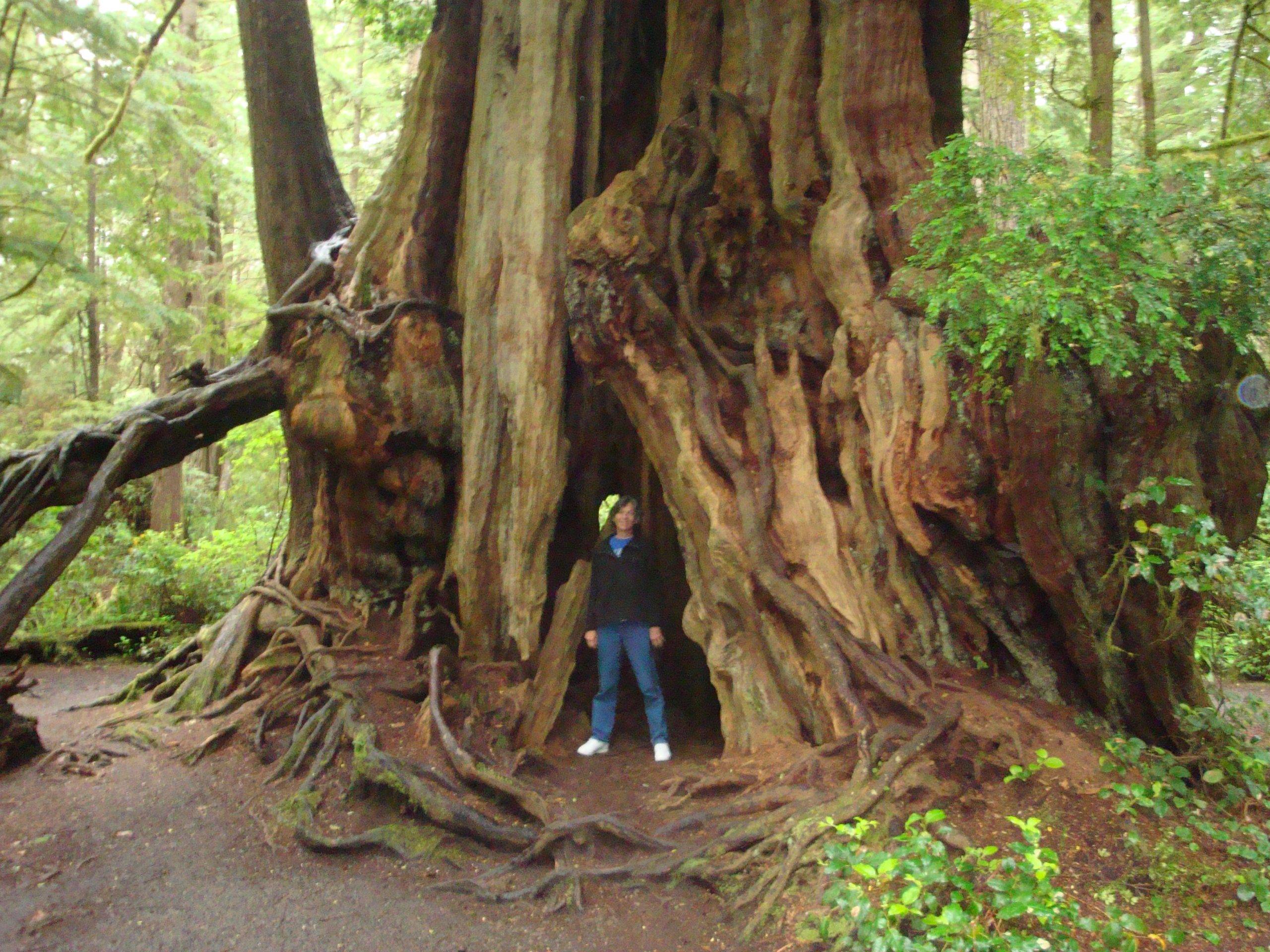
Dogwood supporter Leila von Stein comes from a family with a very unique tie to Southern forests. In 1892, her great-grandfather, Captain Seaton Grantland, created the first hand-planted Southern pine forest in the country near Griffin, Georgia. The forest, which spanned about 10 acres, included some 7,000 hill short-leaf pines and some loblollies, planted in rows and preserved for three generations until it was lost to development in the 1950’s.
“My great-grandfather planted that pine forest to make a screen between his house and the cemetery where his beloved wife was buried; she died of tuberculosis in her 30’s,” Leila reports. According to a 1925 article by W.R. Mattoon (publication unknown) she shared, the neighbors were originally skeptical of Grantland’s forest planting, but the stand of trees was carefully planned and lovingly tended for many years. Unlike today’s corporate slash pine plantations, this forest was planted with an intention of long-term growth rather than short-term harvest, and kept many of its natural protections, including a thick, moisture-conserving carpet of pine needles. Captain Grantland’s daughter shared this vision, stating in the article that she hoped to put the property “into public ownership as a town forest and memorial to her father.” Until the 1950’s, it was a favorite play area for the children of Griffin.
 In addition to pioneering the planting of the pine forest, Grantland created the first hydroelectric plant in Georgia, built the world’s first electrically powered gristmill, and was “instrumental in advancing education for everyone,” says Leila.
Although Grantland’s legendary forest is now gone, Leila understands the importance of protecting Southern forests like these, which led her to Dogwood Alliance. “I like being a valued supporter,” she says. “Our forests are important for many reasons, from providing key habitats to offering peace and quiet from the rest of the world. Dogwood Alliance is very effective at making sure individuals and companies understand this and behave accordingly.”
Exciting news! In late October, KFC released a new sustainable packaging policy that we can get behind. We’ve been studying the implications of the policy and talking with the company’s biggest suppliers to ensure that there’s real change on the ground for our forests. After much analysis, we are now confident that it will.
Essentially, what the policy will do is increase the overall use of recycled paper, eliminate controversial sourcing from endangered forests like the Green Swamp in southeastern North Carolina, and give preference to FSC-certified fiber, which will limit the most destructive practices in the woods. You can view the policy here (click on Sustainable Sourcing and Waste Recovery Policy and it will pop up).
In celebration of our progress with KFC, one of our talented activists worked with us to create this fun game – Bucket Kickin’ Chicken, which you can play here.
Though we are excited about the change that has come from leadership at KFC as it relates to the forests of the Southern US, unfortunately, the new policy does not include language on deforestation. Global deforestation is the main reason our allies at Greenpeace are standing with the people of Indonesia and calling on the company to stop buying from Asia Pulp and Paper, who is notorious for this practice.
So though our forests have received a reprieve, Indonesia’s have not, and we will continue to support the Greenpeace campaign until KFC gets the entire job done. We hope our new relationship with the company can help create the leverage needed to green KFC’s packaging worldwide.
We can’t thank you enough for all your support throughout the last two years in pressuring the company to change, and we could not have achieved this victory without you!
For our forests,
Scot Quaranda Campaign Director
[vc_row][vc_column][vc_column_text]“The meeting of two personalities is like the contact of two chemical substances: if there is any reaction, both are transformed.” – Carl Jung
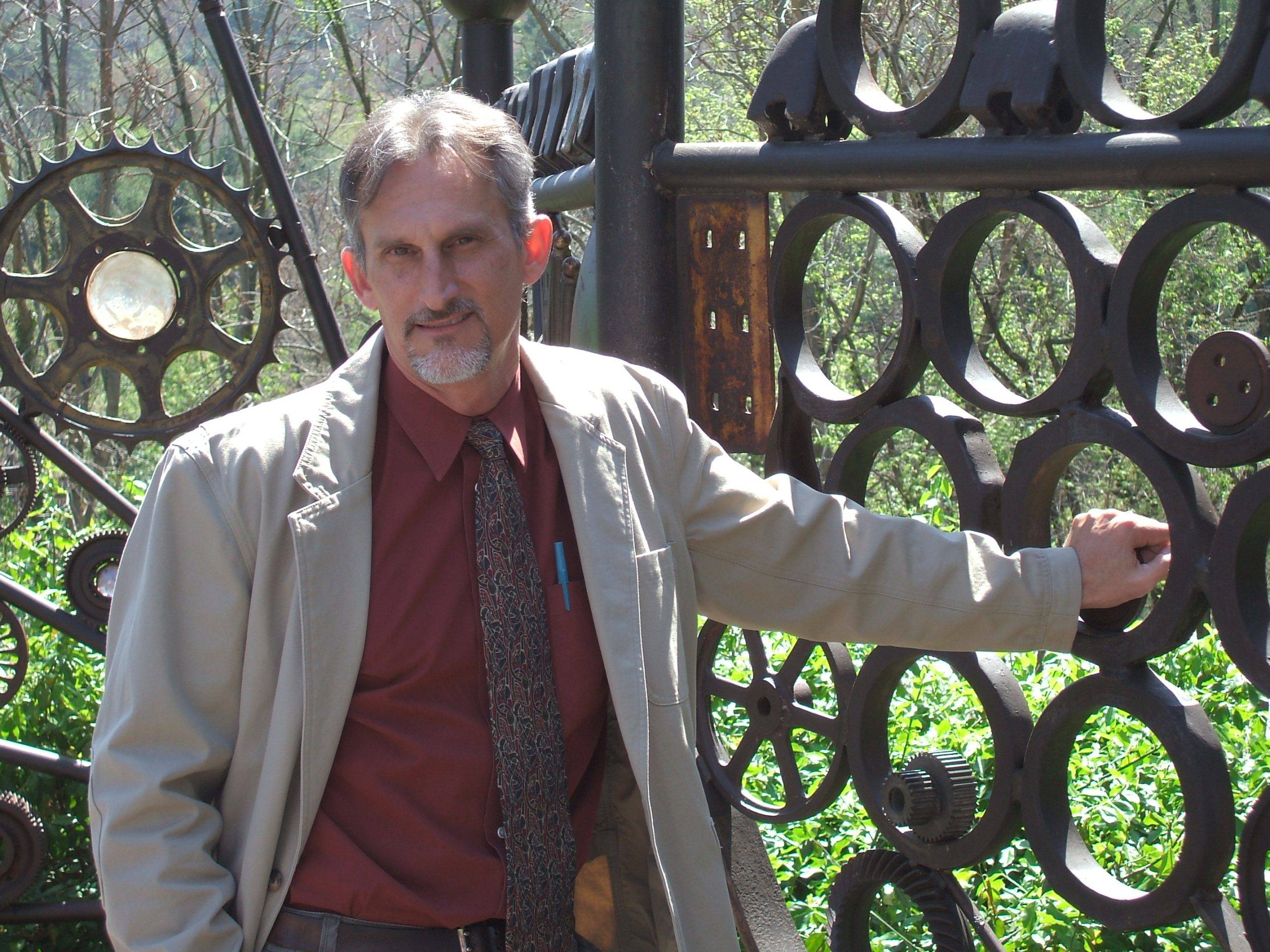 Sid Cullipher, the Executive Director of Dogwood Alliance from 2007 to 2009 passed away on Saturday afternoon after being diagnosed less than two weeks ago with cancer. The hearts and souls of all of us here at Dogwood go out to Sid’s family. He was a truly amazing individual and we are honored to have gotten to know Sid well during his tenure at Dogwood. We are filled equally with sadness for his departure as well as gratitude for his presence in our lives, for he blessed our organization with some transformative gifts.
Like many of us here at Dogwood Alliance, Sid made a life out of his love for nature. In addition to being a river guide, Sid also worked for Outward Bound. He was the Executive Director of a nonprofit organization called Journey into Wholeness, which focused on teaching the psychology of Carl Jung, exploring the meaning of life and what it means to live in full relationship with all creation. He got his Master’s Degree from New Mexico University in Resource Economics and facilitated a national dialogue on climate while working at the Keystone Center for Public Policy in Washington, D.C. He was a perfect fit for Dogwood in 2007 when we began to elevate the importance of forest protection in the context of global climate change and as we began to build new partnerships with big corporations and Southern landowners to develop new, paradigm-shifting markets that value the protection rather than the destruction of our forests. This video shows Sid speaking passionately and compellingly about the importance of our forests.
He was intellectually brilliant. Always reading, always learning. And while he was intensively creative, articulate, charismatic and dynamic, he was also very kind and thoughtful, sweet and gentle. He was strong-willed but not egotistical. From Dogwood members and activists to the most politically-savvy funders to the top executives of the largest corporations in the world, Sid gained the trust and respect of many. He was genuine and authentic.
 On a personal level, his calm presence and support helped me work through intensely challenging discussions as we negotiated what would become an historic agreement with Georgia Pacific that increased protection for over 90 million acres of Southern forests. He also helped establish the partnerships and create the vision for the Carbon Canopy Project. His passion for this project helped elevate it as a key strategy for the organization. He was with us when we launched The Packaging Campaign. He encouraged new ideas to surface, and we released our first report on bioenergy “Don’t Log the Forest for the Fuel.” He was a skilled ambassador, drumming up new financial support for Southern forests that allowed our work to expand. By the time he left Dogwood in 2009, we were not only well-prepared to weather the financial storm of the economic crisis, but well-positioned to leverage even bigger protection for Southern forests.
But beyond that, and even more importantly, he was fun, he was wild, he was cool, he was honest, he was transparent. He knew what matters most in this world and he embraced the many challenges of being Dogwood’s Executive Director with grace, adapting, flowing and even dancing around obstacles like a pure, clear, mountain river.
Having taken over the Executive Director position at Dogwood Alliance after Sid left, I have nothing but the deepest gratitude and respect for his profound presence in the evolution of our work to protect Southern forests. I am a much better Executive Director than I ever would have been if I did not have the opportunity to learn from him. We all learned big lessons from him. He was a true friend, an inspiring mentor and a helpful guide along the wild river of life.
Sid moved on from Dogwood, but his passion for nature continued to drive his life. About a year or so ago, he purchased Headwater’s Outfitters Outdoor Adventures, just outside of Brevard. This video of Sid in his element, talking about the French Broad River, makes all of us here at Dogwood Alliance feel honored to have had such a passionate and creative person as our Executive Director at such a pivotal time in the organization’s history.
Sid’s life was about accumulating meaning, not wealth. If you would like to support his family, please consider making a contribution to help with medical costs and college tuition for his children. The Dogwood office will be closed on Friday in honor of Sid. This weekend, Dogwood staff and board will plant a Dogwood tree in front of our office in downtown Asheville in celebration of the tremendous contribution he made to the efforts to protect the natural ecosystems of the South.
Farewell for now, dear Sid! We will miss your big hugs, your fire dancing, your handstands and your moonshine! But, your infinite light continues to guide our transformation, and your spirit will forever live among the blooming Dogwoods.[/vc_column_text][space height=”15″][vc_video link=”http://www.youtube.com/watch?v=t0X4YR_qvx8&sns=em”][/vc_column][/vc_row]
New Report Discredits Energy Company Claims that Wood Pellets Burned in UK Power Plants are Made from Wood Waste
Evidence Emerges that Wood Pellets Imported From the Southern US Are Manufactured Using Whole Trees from Forest Logging Operations as UK Considers Misguided Biomass Subsidies
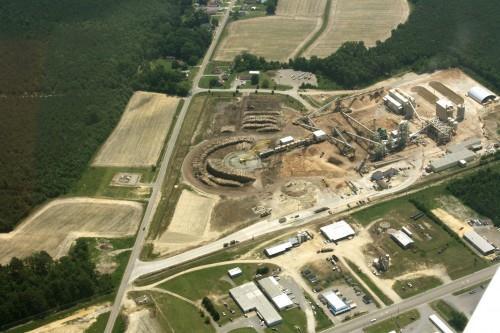 Asheville, NC, USA – Today, Dogwood Alliance, a nonprofit organization working to protect forests in the Southern US, released “The Use of Whole Trees in Wood Pellet Manufacturing,” a report documenting that the top exporters of wood pellets in the region rely heavily on whole trees, i.e. cutting down trees to be burnt in European power stations. According to Wood Resources International, the Southern US is now the world’s largest exporter of wood pellets to Europe. The report discredits European energy companies’ claims that wood pellets burned in UK power stations are produced from wood waste and residues. Over the next 5-10 years, burning wood in large power stations – both new-build biomass power stations but increasingly also converted coal power stations – is expected to attract several billion pounds of public subsidies annually in the UK.
“In the wake of mounting scientific documentation that burning trees for electricity will result in increased carbon emissions compared to fossil fuels, this report underscores the need for new climate policies,” stated Scot Quaranda, Campaign Director for Dogwood Alliance. “Energy companies in the UK, including Drax, RWE and E.On are converting large, old, dirty and inefficient coal power stations to biomass all in the name of reducing carbon emissions, but the reality is that this shift will accelerate climate change while also driving destructive industrial logging in the world’s most biologically diverse temperate forests.”
Through direct investigation and research, the report documents the use of whole trees from Southern forests by the largest wood pellet manufacturers and exporters in the Southern US. Pellet manufacturers such as Georgia Biomass, a wholly owned subsidiary of RWE, and Enviva, a major supplier of Drax and E.On as well as Enova, Green Circle and General Biofuels are highlighted in the report as using or if not open, planning to use, whole trees.
“The Use of Whole Trees in Wood Pellet Manufacturing,” follows on the heels of another report released on Monday, “Dirtier than Coal?” by the RSPB, Greenpeace, and Friends of the Earth, that details how burning wood from trees cut down for this purpose is commonly worse for the climate than burning coal for decades to come. This week these groups called on the UK government to end all subsidies for biomass and redirect them to genuinely climate-friendly renewables, such as solar and wind projects. The report highlights that the UK government’s own Bioenergy Strategy presents data which shows that burning wood from whole trees commonly results in the release of at least 49% more emissions than burning coal over the next 40 years. This is damaging evidence especially as more and more UK power stations, including Drax, Eggborough, Tilbury B and Ironbrige are announcing the shift from coal to biomass.
“There seems to be confusion in the UK and Europe about the source of wood pellets that are imported for burning by European utility companies, but as this report shows, whole trees in the Southern US are in fact being used to produce pellets for burning on the other side of the Atlantic,” said Scot Quaranda, Campaign Director. “We hope this report brings clarity to this issue and that the UK governments and European energy companies take immediate action to stop the burning of whole trees for electricity.”
Download the report here: http://www.dogwoodalliance.org/wp-content/uploads/2012/11/Whole-Tree-Wood-Pellet-Production-Report.pdf


 Donate