


[vc_row][vc_column width=”1/1″][vc_column_text]Following up on last month’s trailer, today we are releasing “Cole and KFC,” a short video that tells the inspiring story of the journey of four kids from North Carolina to the KFC headquarters in Louisville, KY. Filled with hope, these awesome kids delivered over 6000 hand-drawn postcards from youth across the state to executives at KFC urging the company to stop destroying forests and be a leader for environmental change.
[/vc_column_text][space height=”10″][vc_video link=”http://www.youtube.com/watch?v=PIQUcDt1dhE”][vc_column_text]Our friend Cole, who many of you may have read about when he contacted us asking for help in his quest to protect the forests and wildlife of the coast, has helped take our message to a whole new level. We are proud to present this video and hope you will enjoy the adventures of Cole, his sister Kaella, and his two best friends, Nik and Liam.
It is rare that you find someone so dedicated to protecting our forests, and it’s so incredible that he is only ten years old! Please take a moment to share this on Twitter, Facebook, e-mail or in person with your friends, family, children and grandchildren. Together, let’s join with Cole in convincing KFC to change.
PS If you are not already following us on Twitter or Facebook, you can click these links to keep up with all of our work.[/vc_column_text][/vc_column][/vc_row]
When Dogwood Alliance started taking on one of the largest fast food conglomerates in April 2010, it seemed this was a David versus Goliath struggle all over again, just as they had taken on other larger targets in previous campaigns. In the first year, KFC acknowledged the targeted campaign with a change in their packaging – in the wrong direction. They announced an unusual switch – moving from foam and plastic to a much more paperboard based lineup (see here for more details). They are boasting they will decrease foam packaging by 62% and plastic by 17% – with a corresponding increase in paper packaging.
At the same time, they are migrating toward requiring their paperboard suppliers to be registered by an environmental standard – undoubtedly coached by these same suppliers as to which standard to choose. Not surprisingly, the KFC-chosen standard is the dubiously named Sustainable Forestry Initiative (SFI) – a standard principally created and supported by the paper industry to sustain already existing practices as environmentally sensitive. Even SFI on their own website tries to justify it’s own requirements, with quotes from a variety of organizations that mention SFI and the more stringent standard from the Forest Stewardship Council (FSC) in the same sentences or publications (see here to read the greenwash).
There is hope that this is just the first step for KFC and their parent, YUM! Brands. It took a relatively short time for Dogwood to get some action from this giant company – these initiatives were mostly rolled out in October of 2010. And they now have a corporate statement that “KFC will assign no new business to paperboard suppliers who are not recognized by an international certification organization or using 100% recycled content.” FSC certification should be entirely acceptable, therefore – and should be specified explicitly, as well as required of ALL paperboard suppliers going forward. There is no perfect packaging material, and in some circles the movement away from plastic and foam we’re sure will be applauded. But the Colonel owes their customers a switch to FSC if they’re going to become an even larger user of paperboard than they already are, even more so as they are supposedly doing this for environmental reasons. Go to their Facebook wall and tell them so – they do pay attention to postings.
The following open letter objecting to Forth Energy proposals to import millions of tons of wood from southeastern US was delivered to Members of Parliament etc in Scotland this morning. An accompanying press release from FOE Scotland resulted in article in the Scotsman here: http://news.scotsman.com/environment/US-activists-call-for-ministers.6742841.jp
OPEN LETTER OF OBJECTION TO FORTH ENERGY PROPOSALS FROM US GROUPS Jim Mather Minister for Energy, Enterprise and Tourism Scottish Government, St Andrews House, Regent Road Edinburgh, EH1 3DG, Scotland, United Kingdom Colin Imrie Head of Energy Markets Division Scottish Government, St Andrews House, Regent Road Edinburgh, EH1 3DG, Scotland, United Kingdom John Swinney Cabinet Secretary for Finance and Sustainable Growth Scottish Government, St Andrews House, Regent Road, Edinburgh, EH1 3DG, Scotland, United Kingdom The Energy Consents and Deployment Unit 4th Floor, 5 Atlantic Quay, 150 Broomielaw, Glasgow, G2 8LU
March 30,2011
RE: Open letter of objection to Forth Energy’s plans for construction and operation of four biomass power stations: Dundee, Grangemouth, Rosyth and Leith/Edinburgh from American groups: Biomass Accountability Project, Center for Biological Diversity, Dogwood Alliance, Friends of the Earth US, Save Americas Forests.
Dear Sirs,
We write to ask that you oppose Forth Energy’s plans for the construction and operation of four biomass stations in Scotland. We recently reviewed Forth Energy proposals for these biomass power stations, which combined would burn 5.3 million tonnes of biomass – primarily wood chips and pellets – per year.
Forth Energy states that near 90 percent of this biomass would have to be imported, due to a lack of indigenous wood biomass availability. They expect that 75 percent of the imported biomass would be sourced from (or via) the state of Florida, United States. This implies that around 3.6 million tonnes of woody biomass would be exported from Florida to be burned in Forth Energy facilities. Such massive demand will have serious impact on forests in the southeastern US, and on existing forest products industries. In their assessment of the availability of forestry residues and roundwood for N Carolina, S. Carolina and Virginia, for example, Galiki et al. found in a peer-reviewed study, that residue supplies “….are in themselves insufficient to satisfy long term biomass electricity production requirements imposed by a hypothetical [US] national [Renewable Portfolio Standard] and [Renewable Fuel Standard].” The authors further noted that: Should demand for woody biomass exceed the supply of forest residues, our findings suggest that all users of forest resources will be affected by the resulting spike in resource pricing. Biomass demand for pulpwood will not simply be added to current demand, except possibly in the very short run. As prices increase marginal wood consumers in existing markets will be displaced.[1] This analysis did not consider the additional very large demand that Forth Energy expects to meet from these same forests, or the additional demand from other UK and European energy companies. For example, the RWE NPower’s 750 MW biomass power station at the Port of Tilbury seeks to source the majority of an estimated 7.5 million tones of wood per year from North America and is already approved. The southeastern US contain some of the most biodiversity-rich ecosystems in North America and have experienced massive losses with the conversion of natural forest to industrial pine plantations. According to the US Forest Service Southern Forests Research Assessment, only about 182 million acres of the former 356 million acres of natural forest still remain. [2] Over 15 percent of the remaining forested area has been converted to industrial pine plantation monocultures, which provide little habitat for biodiversity.
This conversion has been accompanied by a near 800 percent increase in the use of chemical fertilizers and escalating use of toxic herbicides and pesticides in the region. Industrial plantations are expected to expand to over 52 million acres. Projections are that logging will increase by 50 percent to over eight million acres a year by 2040. This large scale destruction and conversion of forest in the southeastern US has been undertaken to supply already existing demands and projected growth. What’s more, the US has its’ own growing demand for biomass electricity and heat, many also with the expectation that they will source wood from southeastern pine plantations. Demand for biomass to burn in Scottish power plants will be additional to the above. It is clear that all of these competing demands will result in serious further damage to southern ecosystems. We do not believe that Forth Energy’s use of certification will reduce the impact on our southern forests. In their “Sustainability Statement” Forth Energy indicates that they will address sustainability concerns by sourcing their wood from producers certified by the “Sustainable Forestry Initiative” (SFI) or by the “Forest Stewardship Council” (FSC). We have several problems with this approach. First, certification cannot address the unsustainability of demand and even if Forth Energy could source wood less destructively than other companies, this would still lead to more overall logging and to more natural ecosystems being converted to plantations. Second, there appears to be no credible prospect of Forth Energy being able to source large quantities of FSC-certified wood: no pellet or woodchip exporter producer in Florida is certified by the FSC, although several have SFI certification. We believe that the SFI should be met with scrutiny.
The SFI is not a legitimate measure of sustainable forestry. SFI was established by the American Pulp and Paper Association, and, though they claim to be “an independent non-profit”, they represent Weyerhauser, , Plum Creek and other large forest products industries, as is clear from perusal of their board members, their funding and their practices. This lack of independence is revealed by SFI’s practices. Audits are weak to nonexistent and very rarely result in any requirements whatsoever for improved practices. A report by Forest Ethics entitled “SFI: Certified Greenwash” found that out that of 543 audits on SFI’s website, only a single case of non compliance was required to take steps to address a problem.
SFI’s poor enforcement of sustainability has resulted in numerous examples of ecological degradation. Further, SFI fiber sourcing policy is criticized for taking no measures to exclude the use of illegally logged wood, failing to protect old growth, permitting clearcutting of very large areas – 120 acres, resulting in damage to habitat, watersheds and soils, and permitting use of large amounts of toxic herbicides, pesticides and fungicides. The poor performance of SFI was brought to attention when, in 2007, following heavy rains in Washington State, over 1200 landslides occurred as a result of poor forestry practices – 84 percent of them on SFI certified lands. In addition, citizen lawsuits were required to protect the marbled murrelet habitat from SFI certified practices in Northern California. In the Southeastern US, SFI practices were criticized in a letter from more than 90 scientists:
Over the past few decades, SFI-sanctioned practices such as large scale clearcutting, the conversion of forests to plantations and the industrial use of chemicals have compromised the biological integrity of much of the South’s forestland. These practices also disproportionately impact low-income rural communities and forestry workers, groups that – especially in the South – already suffer from higher rates of disease and injury.
In sum, there is little basis for confidence in SFI certification.
Given the massive quantities of wood – most of which will be imported from our forests – that Forth Energy facilities would burn, the inefficiency of biomass electricity generation (most facilities operate at 25-30 percent efficiency at best), the emerging science indicating that bioelectricity is not necessarily “carbon neutral” or “clean”, the human health impacts of emissions, and the unreliability of SFI forest certification schemes – we call on the Scottish Government to reject Forth Energy’s proposed biomass electricity facilities in Scotland. Thank you, Kate McMahon Biofuels Campaign Coordinator Friends of the Earth US 1100 15th street NW Washington, DC 20005 http://www.foe.org/
Marc Fink
Public Lands Forest Director
Center for Biological Diversity
209 East 7th St.
Duluth, Minnesota 55805
Tel: 218-525-3884
Scot Quaranda
Campaign Director
Dogwood Alliance
PO Box 7645
Asheville, North Carolina 28802
http://www.dogwoodalliance.org/
Carl Ross
Founder and Director
Save Americas Forests
4 Library Court, SE
http://www.saveamericasforests.org/
Meg Sheehan
Attorney Director
Biomass Accountability Project
http://www.nobiomassburning.org/nobiomassburning.org/Home.html
NOTES: 1. The Center for Biological Diversity is a nonprofit conservation organization with 255,000 members and online activists dedicated to the protection of endangered species and wild places with more than 60 staff in offices in Arizona, California, New Mexico, Oregon, Vermont, and Washington, D.C 2. Friends of the Earth works to protect the rights of all people to live in a safe and healthy environment, both at home or in countries around the world. Friends of the Earth US is part of FOE International, which unites 76 national member groups and some 5,000 local activist groups on every continent.
3. Save Americas Forests is the nationwide campaign to protect and restore America’s wild and natural forests. “Citizen involvement is how our laws are made. Help shape U.S. forest protection policy.”
4. Biomass Accountability Project (BAP) provides legal and technical support to grassroots communities throughout the US opposing incinerators that burn wood and other “biomass” under the guise of “renewable energy”. BAP is part of an emerging US National level “Anti-Incineration Forest Protection Campaign”.
5. Dogwood Alliance is a southern regional network based in North Carolina, comprised of 70 grassroots organizations in 17 states and concerned citizens from across the nation. Dogwood holds corporations accountable for the impact of industrial forestry practices on forest and communities.
[1] Forest Biomass Supply in the Southeastern United States — Implications for Industrial Roundwood and Bioenergy Production. Christopher S. Galik1 Robert C. Abt2 Yun Wu3 Journal of Forestry 107(2): 69-77 (March 2009) http://saf.publisher.ingentaconnect.com/content/saf/jof
A statement from our friends at the Environmental Paper Network about why AF&PA new sustainability goals did not go far enough…
* Editor’s note: While Dogwood Alliance sees some positive steps in this new policy, it falls short for many reasons, especially because AF&PA continues to support the Sustainable Forestry Initiative, which allows large-scale clearcutting, the conversion of natural forests to plantations, the use of toxic chemicals and GE trees, and the logging of endangered forests.
FOR IMMEDIATE RELEASE
March 29, 2011
Media Contact
Joshua Martin, Environmental Paper Network, 828.251.8558/828.242.4238
U.S. Paper Industry Sets Goals Responding to Calls for Greater Responsibility
2020 Goals Are a Good Step, But Are They Enough?
Asheville, NC – Today, the trade association for the U.S. forest and paper industry announced a set of environmental and safety related goals for its members called, Better Practices, Better Planet 2020. The Environmental Paper Network (EPN) applauds the American Forest & Paper Association (AF&PA) for recognizing an urgent need for reducing its environmental impact and for responding to the calls for industry transformation from conservation organizations and economic trends in the marketplace. However, as a whole, the goals announced today are incomplete and the process to achieve them remains unclear.
Statement from Joshua Martin, Director of the Environmental Paper Network: “Member organizations in the Environmental Paper Network have been working together since 2002 towards the Common Vision for the Transformation of the Paper Industry and accelerating market demand for more environmentally responsible paper products. The U.S. paper industry has begun to respond to the conservation community’s joint call for transformation and the market demand for more responsible paper production.
“The AF&PA goals announced today include some notable first steps towards reducing the U.S. paper industry’s significant environmental impact and also the opportunity for further expansion of the effort’s scope and ambition. EPN applauds AF&PA for seeking to increase its energy efficiency, decrease greenhouse gas emissions from fossil fuels, and reduce OSHA recordable safety incidents. EPN also looks forward to working together to achieve progress on the common goal of increasing paper recovery.
“However, the goals are incomplete in addressing the full scope of the industry’s massive footprint and are a missed opportunity for decisive leadership in the global marketplace and in the fight against climate change. It is surprising that there are no specific goals or plans related to water quality or air quality. Though gains have been made since the 1970s, the industry remains a major polluter. And these goals will mean very little for forest conservation and biodiversity in our woods if they result in merely expanding certification by the less credible Sustainable Forestry Initiative, or SFI. The EPN calls on AF&PA and its member companies to strive for global leadership by exceeding these goals and broadening their scope as soon as possible.”
Specific examples of where the Better Practices, Better Planet 2020 initiative falls short of the comprehensive conservation Vision of the Environmental Paper Network include,
The conservation community looks forward to the opportunity to work with AF&PA and its member companies to accelerate progress towards these and other environmental goals.
###
The Environmental Paper Network accelerates environmental transformation in the paper industry through collaboration and the coordination of a strong and diverse coalition of non-governmental organizations in order to protect forests, climate, water and communities. Learn more at http://www.environmentalpaper.org.
This is alert is from our friends at the North Carolina Conservation Network, Scenic NC and the Central Piedmont Sierra Club. Thanks for your attention!
If the Billboard Bill (Senate Bill 183/House Bill 309), passes the General Assembly, it would dramatically expand the area along public roadsides where trees can be cleared in front of billboards. Even worse, this legislation would take away the right of local communities to curb the spread of billboards by prohibiting enforcement of local tree ordinances in front of billboards along interstates and federally assisted highways.
This legislation would also require local taxpayers to buy out billboards if they want them to be removed, in turn costing North Carolina taxpayers hundreds of thousands of dollars per billboard, making these distracting structures all but permanent.
Please contact your legislators here and urge them to oppose the Bad Billboard Bill (Senate Bill 183/House Bill 309).
Asheville, NC – Fast food giant McDonald’s announced a new Sustainable Land Management Commitment in support of their efforts to improve how they source everything from beef and chicken to paper packaging. While McDonald’s sustainable packaging policies have incorporated the familiar and important tenets of Reduce, Reuse, Recycle, it’s the adoption of new forest standards discouraging the conversion of natural forests to industrial tree plantations and giving buying preference for paper products certified by the Forest Stewardship Council (FSC) that propels McDonald’s ahead of its competitors and sets a higher environmental bar for the fast food industry.
“We applaud McDonald’s as the first of the big fast food companies to take a clear stand against the continued conversion of natural forests to plantations and to embrace FSC certification over the widely criticized and misleading industry driven Sustainable Forestry Initiative (SFI) that certifies the conversion of natural forests to plantations as sustainable” said Andrew Goldberg of Dogwood Alliance. “Unfortunately, KFC, whose paper packaging is also sourced from mills connected to the destruction of important wetland forests along the Mid-Atlantic Coast, continues to resist change.”
Specifically, McDonald’s will work to eliminate paper originating from tree plantations established after 1994 that were previously natural forests. The replacement of natural forests by industrial tree plantations for paper production has destroyed millions of acres of unique forests and forested wetlands in the Southern US, the world’s largest paper producing region where much of the paper packaging for companies like McDonald’s and KFC originates.
In giving preference to FSC, McDonald’s recognizes FSC as providing the best assurance of meeting its new forestry standards. FSC is the only forest certification system in the world supported broadly by conservation groups because it prohibits bad forestry practices such as large-scale clearcutting, conversion of natural forests to plantations, logging of endangered forests, and widespread use of toxic chemicals in forest management practices..
Last year, a public campaign was launched against Yum! Brands and its biggest fast food chain KFC whose paper packaging comes from mills that are destroying wetland forests along the Mid Atlantic Coast. KFC announced a new environmental packaging policy last September which was criticized as failing to protect these forests. # # # Dogwood Alliance is protecting millions of acres of Southern forests by changing the way communities, landowners and corporations value them for their benefits to climate, wildlife and water. . For more information on the KFC fast food packaging campaign, visit www.kentuckyfriedforests.com. For more info on the organization, visit dogwoodalliance.org.
For more information on McDonald’s new policy, visit: http://www.aboutmcdonalds.com/mcd/csr/about/sustainable_supply/sustainable_land_management_commitment.html
[vc_row][vc_column width=”1/1″][vc_column_text]Every now and again, a story so inspiring comes along that not only changes your life, but sets into motion a greater transformation in society. For the staff here at Dogwood Alliance, that change came in the form of an amazing elementary school student from Charlotte, North Carolina with an incredible passion for the coastal forests of his beautiful state.
Our friend Cole, who many of you may have read about when he contacted us asking for help in his quest to protect the forests and wildlife of the coast, has taken his project to a whole new level. We are proud to present this video trailer for a longer piece coming soon about his adventure to Louisville with his sister, Kaella, and his two best friends, Nik and Liam.
On March 3rd, Cole and friends made the 350 mile journey from Charlotte to Louisville to deliver in person over 6,000 hand-drawn postcards to corporate executives at KFC. They collected the postcards from youth across the state urging KFC to be a leader for environmental change by using more recycled paper and no longer buying paper that comes from endangered forests from the coast. We hope you are as inspired by this story as we are and will help spread this video far and wide.
[/vc_column_text][space height=”10″][vc_video link=”http://www.youtube.com/watch?v=eDq27iFdSvI”][vc_column_text]It is rare that you find someone so dedicated to protecting our forests, and it’s so incredible that he is only ten years old! Please take a moment to share this on Twitter, Facebook, e-mail or in person with your friends and family. Together, let’s join with Cole in convincing KFC to change.
Stay tuned for the full video in the coming weeks, plus a special music video from the kids about our forests and KFC inspired by the Black Eyed Peas.
For our forests and children’s future,
Scot Quaranda
Campaign Director
PS If you are not already following us on Twitter or Facebook, you can click these links to keep up with all of our work.[/vc_column_text][/vc_column][/vc_row]
Today an article was posted on Food and Drink Digital about a number of companies in the fast food industry who are taking steps to reduce their impact on the environment. Not surprisingly, KFC is not one of them. While Starbucks is telling its customers to use less paper cups and providing incentives for customers to use reusable cups instead, KFC is telling its customers not to worry because their paper packaging, which by the way comes from destroyed forests here in the South, is “green”. And while McDonald’s is developing new standards to ensure sustainable forestry practices in its food packaging, KFC is promoting its paper packaging coming from business as usual destructive forestry as “sustainable”. Come on KFC, you can do better. We know you can!
The other day someone asked me why I chose to spend my limited free time serving on the board of an organization (they didn’t know much about Dogwood Alliance, but I filled them in). When I already work long hours doing advocacy work in Texas where we are definitely fighting an uphill battle – how, they wondered, did I find the time and the energy to commit to giving to another organization. It’s really simple – how can I not?
The work that Dogwood Alliance is doing is some of the most important forest protection work in the world. Dogwood Alliance is transforming multi million dollar coroporations, saving millions of acres of trees, and empowering people across the Southeast to get involved in protecting the heritage and beauty of the South. Dogwood is the definition of small but mighty, and Dogwood is changing the name of the game.
How does Dogwood make it happen? Of course there are some incredibly talented staff, but also because of the commitments from volunteers across the country. The best thing is that there really is something for everyone. From serving on the Board of Directors, to becoming a petition captain, to hosting a house party and everything in between there really is an opportunity for everyone. And I’m asking that anyone who read this – commit something. An hour a week, 20 hours a day, 5 hours a month – whatever you have to give is invaluable to the protection of our forests.
Everyone volunteers for different reasons, some people find specific rewards, some people see their role in building a movement, some people volunteer to make friends. Whatever your reason is – find it and do it.
All the work WE are doing together to protect our forests is so important – not only so the forests can be around for future generations to enjoy – but also because of the work the forests are doing to mitigate climate change. To read more about the role of forests in fighting climate change – click http://www.fao.org/newsroom/en/focus/2006/1000247/index.html
And – to get involved in protecting our forests email [email protected].
Written by Dr. Dan Abel:
My winter/spring to-do list is overwhelming, and includes three major projects with looming deadlines: a textbook manuscript, a greenhouse gas inventory at Coastal Carolina University (where I teach and also direct the Sustainability Initiative), and a proposal for an exciting new sustainability major.
Yet, even given these time-consuming responsibilities and rapidly approaching deadlines, when an opportunity to join the Board of Directors of the Dogwood Alliance arose, I accepted with unrestrained enthusiasm.
Here’s why: It was unthinkable that I would pass up an offer to join an organization whose principles so closely mirrored my own values, one whose accomplishments belied that it lacked the material resources of the corporate giants with whom it was standing head-to-head. Perhaps most significantly, joining the Dogwood Alliance board would give me the gift of contributing in some small way to what it does so splendidly: working with outsize passion to ensure a habitable planet for us and future generations through protecting southern forests.
I first learned of the Dogwood Alliance several years ago from former staff member and current Board of Directors member Eva Hernandez, a remarkable person who engaged my students with stories of Dogwood’s challenges and successes. Eva entered my classroom and taught us the virtues and methods of organizing, and how to challenge authority and the status quo in productive ways.
There are two other reasons I accepted Dogwood’s Invitation. First, in May I returned from a 26,000-mile voyage around the world teaching with Semester at Sea. I saw both the best and worst that the planet has offer. I gazed in awe at wondrous forest ecosystems in Vietnam’s Can Gio Biosphere Reserve. I also saw the carcasses of desecrated Malaysian teak trees stacked in a shipyard in Chennai, India, and was choked by the smoke from forest biomass-fueled fires used for cooking in India and Ghana. I returned invigorated to act where I could do so most effectively, and Dogwood has given me the exact opportunity my soul was searching for.
Second is the legacy of Lyn Roth. Lyn was a forest scientist, author, educator, humanist, and environmentalist, as well as a close friend for the too short a time we knew her before she died of cancer. Because of Lynn, I think of forests and watersheds more often, and in different light than a marine biologist might otherwise consider them. Lyn’s spirit still motivates me, and whatever contribution I may make at Dogwood will add to her legacy of accomplishments.
It would be an understatement to say I am excited about being a part of the Dogwood Alliance. I find myself bragging to friends and colleagues about my appointment, and always with a broad smile.
At the same time, I also realize the urgency of Dogwood’s mission, and as I learn about the organization and begin to work with them, I have observed the professionalism and energy of their staff and volunteers, and the value of their supporters. It’s the passion, skill, commitment, and wisdom of these people that make Dogwood successful, and the threats to our forests that make it so absolutely essential. I’m honored to join the Dogwood Alliance.
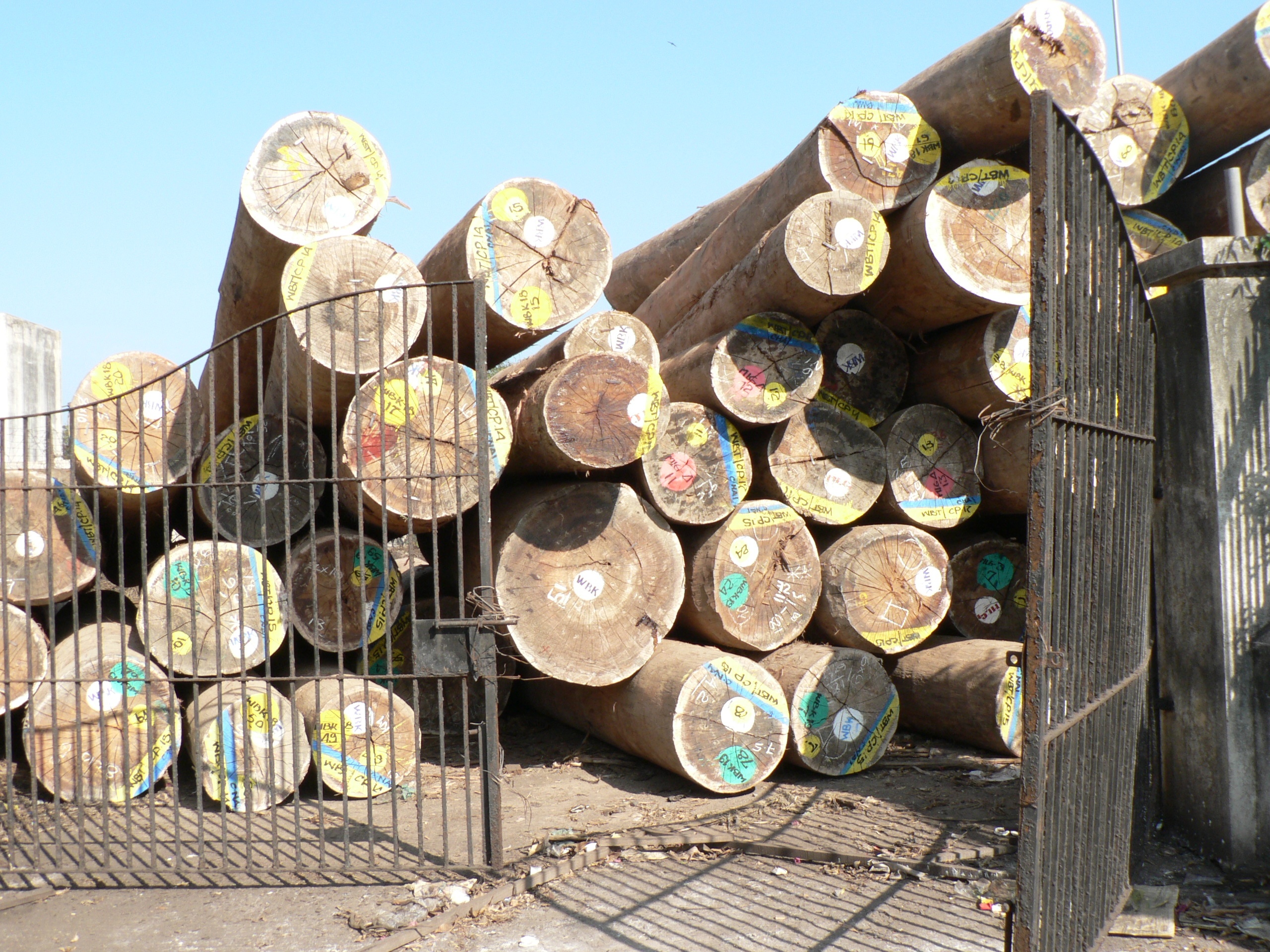
Malaysian Teak in Chennai, India
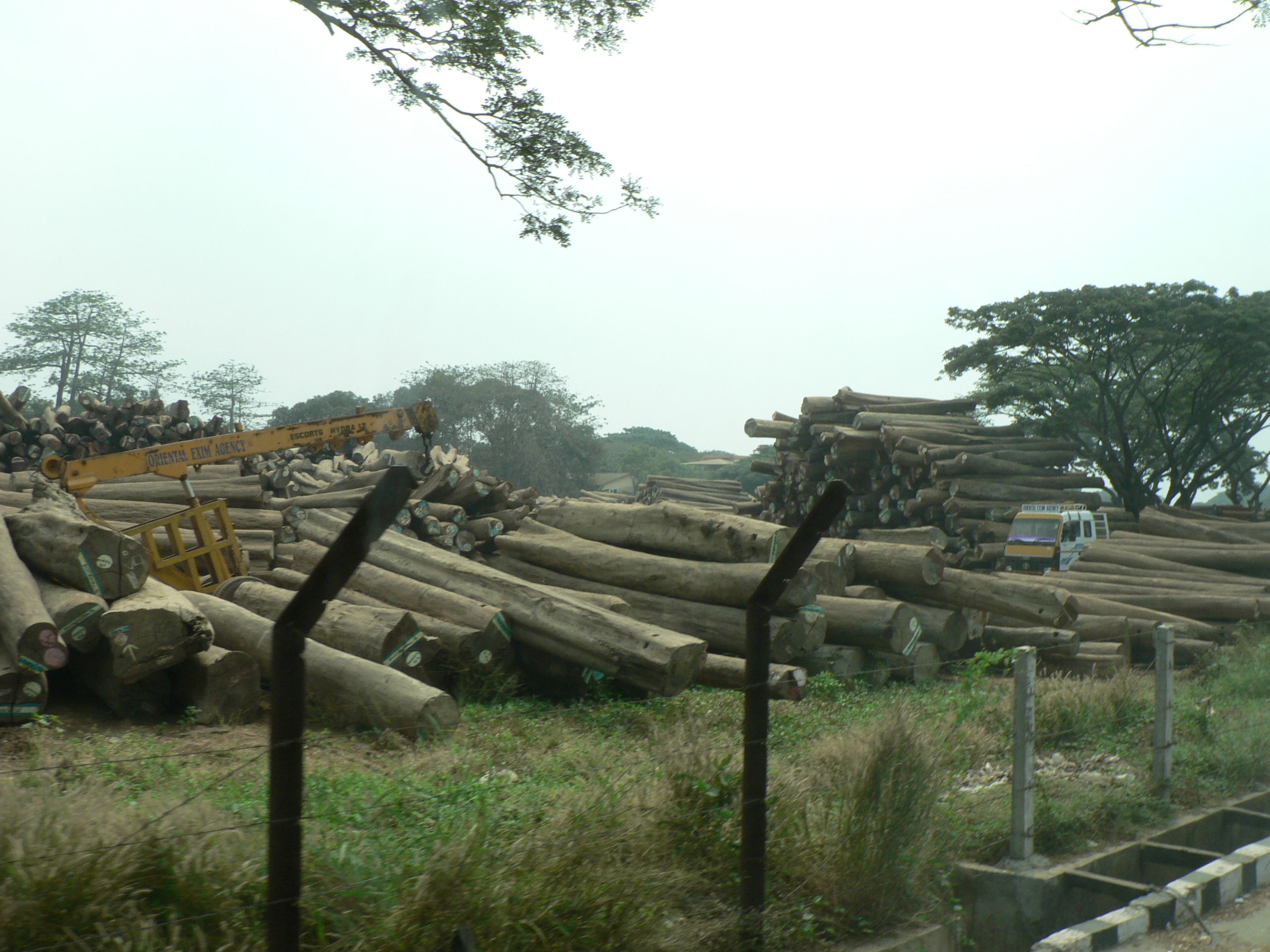
Teak in Cochin, India


 Donate