


Meet another of Dogwood Alliance’s amazing summer interns, Jingjing Zhu…

My undergraduate major was environmental science. As I learned more and more knowledge on scientific and engineering issues I realized that policy and management are also important and I like to see what else we can do to solve the environmental problems in China. Almost all the developed countries have ever experienced similar pollutions I think they must be experienced to deal with these situations or avoid them. That’s why I came to America. Currently I concentrate in energy and environment. Energy is the fuel for the whole society and many environmental problems and conflicts closely relate to energy issues. It is a comprehensive field. I would like to focus on commercializing renewable energy and clean technologies for traditional energy. Energy efficiency is also very interesting to me. Time magazine said America can decrease its oil import to a large extent if it can improve its energy efficiency. My personal experience in America confirmed that there are many chances for improving energy efficiency.
My very recent interest is on carbon capture and storage (CCS) and wind power. CCS is a controversial topic because it brings some hopes and risks. I was working on a forest carbon offsets project the past semester. It’s kind of complex to me and I don’t know much about the exact theory on how forest offsets the artificial carbon emissions. But this project makes me interested in forest topics. Therefore I am so glad that I got the internship in Dogwood Alliance. I am happy to work with people who are experienced with the forest issues and dedicate themselves to protect the forest resources. I like people here. They are so nice and always willing to help. I like the relaxing environment here. This allows me to make my own schedule and finish the program in my usual pace. I also like the three big dogs. They are quiet and cute. The amazing thing is all of them can understand “sit” and “shake your hand”. The next step may be to train them to dance.
My main task in Dogwood Alliance is to work on a biomass white paper. I will try to make a comprehensive analysis about the biomass energy that relate to forest resources. I will include the benefit and cost of bio-energy in three main aspects: economy, society and environment. There are tons of papers and reports that support the bio-energy or fight against it. I would try my best to be objective. Nowadays renewable energy, climate change and environmentally sound are all fashions. But there are some activities that we think they are environmentally friendly or can mitigate the climate change when in fact they don’t work out that way. There are also some tricks that we must pay attention to. I am not an extreme environmentalist. But I do believe we should be careful what step to take in a specific period and how to take the step.
Dogwood Alliance’s Response to’s Recent Forest Stewardship Council Certification Announcement
Recently (IP), the world’s largest paper producer and the biggest paper producer in the Southern US, was tagged a top ten corporate greenwasher by Wall Street 24/7 a company providing analysis and commentary for US and global equity investors. And indeed again and again over the years we have seen and heard lots of promotional noise from the company without true green progress to back it up.
Central to IP’s greenwashing push to present itself as a sustainability leader is its decade long funding and promotion of the highly-criticized,  industry-driven forest certification system, the Sustainable Forestry Initiative (SFI): SFI is widely criticized by the global environmental community as a greenwashing tool that allows companies to slap a green label on products made from business-as-usual industrial forestry practices like large-scale clearcutting, the conversion of natural forests to monoculture tree plantations and the routine use of toxic fertilizers and herbicides that are destroying important ecosystems in North America, including in the Southern US, the largest paper producing region in the world.
This week, IP announced Forest Stewardship Council (FSC) Chain of Custody certification at a number of its mills in the US claiming “the largest FSC manufacturing platform across the globe.”Contrary to SFI, FSC is the only forest products certification system in existence today that is supported by the broader conservation community, including Dogwood Alliance.It is the only certification system that provides meaningful protection for endangered forests and restrictions on the conversion of natural forests to plantations, large-scale clearcutting and the use of chemicals in plantations.
So, has IP seen the light or is this just another attempt at greenwashing?
One thing is clear. Over the past two years, IP has been feeling the pressure about forest sustainability issues from all directions – environmental groups, its customers and even its competitors. As a direct result of Dogwood Alliance’s campaign targeting IP’s customers in the office supply industry and, more recently large IP customers of paper packaging, many of IP’s largest customers including Staples, OfficeMax, Universal Music Group, Tetra Pak ….and others) have been pushing the company to produce FSC certified products.
In addition to market demand and direct pressure from large customers, a major competitor– Domtar – has positioned itself as a market leader when it comes to producing FSC certified paper in the office supply market.Two years ago, Domtar bought a number of mills from Weyerhaeuser in the Southern US that produce office paper, making it the largest manufacturer of office paper in the world.Just last month, the Canadian company announced that it achieved FSC Chain of Custody certification at four of its five mills in the Southern US –IP’s home turf.
So, IP is now vying for a leadership position and scrambling to satisfy its customers who want FSC certified paper products. Through its announcement this week, IP appears to concede that it has failed to convince the marketplace that SFI certification is a credible measure of sustainability — an interesting place to be in light of its heavy investment in SFI certification. On the one hand, the announcement by IP represents huge movement by the world’s largest paper company and on its surface may suggest that perhaps IP has jumped ahead of Domtar as the FSC market leader. On the other hand a closer look at what FSC chain of custody certification really means (or doesn’t mean) is important. Buyers beware.
The fact that IP now has FSC chain of custody certification at some of its facilities means simply that it has the appropriate mechanisms in place to be able to track FSC certified fiber from the forest, through the mills and to an end product. It does not mean that IP is actually moving FSC certified fiber through its mills or producing any FSC certified products. Most importantly, it does not mean that anything at all has changed in the forest.
Unlike Domtar, which recognizes FSC as a better certification system than SFI, actually produces FSC certified products at its mills and actively partners with conservation groups and others to work towards expanding FSC on the ground in the forest where it matters most, IP continues to promote SFI as equal, hasn’t produced one FSC certified product to date and refuses to work with conservation groups on expanding FSC on the ground. So, while IP is moving in response to market pressure, there is no tangible evidence yet that IP is in fact changing its behavior.While IP now has the keys to the Prius (FSC) it is still driving a Hummer (SFI).
IP must continue to be held accountable for the forest destruction in the Southern US and around the world that results from its production of paper.While IP may appear to be moving, it hasn’t changed anything on the ground.Keeping the market pressure on IP is critical to ensuring that this week’s big announcement isn’t just another attempt at greenwashing.IP must clearly understand that until it takes tangible action that results in real improvements on the ground in the forests where it sources fiber it will continue to be branded as the industry laggard when it comes to forest sustainability.
Today marks the fourth anniversary of our historic agreement with Bowater to increase protections for our Southern forests…
June 25th marks a big day in the history of Dogwood Alliance. It was four years ago today that Dogwood Alliance signed a historic agreement with Bowater (now AbitibiBowater) that dramatically changed the way the company does business in the special forests of the Cumberland Plateau and across the Southern region.
AbitibiBowater, North America’s largest newsprint manufacturer agreed to protect ecologically significant forests on the Cumberland Plateau, end the practice of converting natural forests to plantations, curb the use of toxic chemicals in its forest management, and improve its practices on the ground in the woods.
Since that time Dogwood Alliance has been working hard to make sure AbitibiBowater holds true to its commitments. We have not only working closely with the company to monitor its commitment, but we’ve also been working with the University of the South’s Landscape Analysis Lab to monitor the company’s forest practices using state-of-the-art satellite imagery analysis. Through this project, the first of its kind in the US, we have been able to independently assess AbitibiBowater’s compliance with its commitments.
With your help together we have made a difference for Southern forests and have protected some of the best of what is left on the Cumberland Plateau.
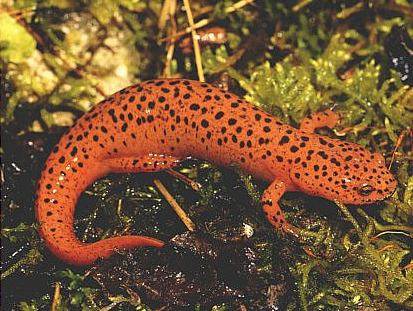
That is why today we are releasing our 3rd annual report, monitoring the company’s compliance, complementing all the progress that they have made and highlighting areas for continuous improvement. You can check out that report here. Specifically this year we are excited to be able to report that AbitibiBowater is in fact now protecting ephemeral ponds on the Cumberland Plateau – small isolated wetlands that provide critical habitat for many species of salamanders and birds.
A month ago, I went out in the field on the Cumberland Plateau with some AbitibiBowater folks and someone from the University of the South’s faculty who has been analyzing satellite imagery of company land over the last four years to ground truth the data. It was inspiring to see for myself the ephemeral ponds and lush hardwood stands as a result of our work.
After the fun and excitement of the campaign comes to an end, monitoring corporate progress is not the sexiest work, but it turns out that is is the real work. This follow-up is where we ensure that our forests are protected and that important commitments are followed through on. So today, we would like to ask you to make a donation to support our work holding companies’ feet to the fire and protecting our forests and communities for this and future generations. You can donate here.
It also reminds me that we all hear a lot of green talk these days – without a lot of real green action. The first company that is the largest pulp and paper company in the world, who continues to lag behind companies like AbitibiBowater in places like the coastal forests of North and South Carolina, Virginia and Georgia, where they are destroying coastal wetland forests to make paper packaging for some of the largest fast food chains in the country. It’s time to move past the hot air and the greenwashing.
Through our packaging campaign, Dogwood Alliance is working hard to hold companies like IP accountable. Thank you for your continued support and all that you do in joining us to make the world a better place.
Andrew waxes poetic about our work to leverage change in the marketplace to protect Cole’s favorite place…
A few weeks ago I was down in Wilmington, North Carolina, the heart of Dogwood Alliance’s Coastal Forest focal area to present at the Cape Fear Arch Conservation Collaboration’s quarterly meeting. The Arch part of that name refers to a special geologic feature stretching from Cape Lookout, NC to Cape Romain, SC containing globally significant animal and plant communities. This area is also home to several large pulp and paper mills that are having a destructive impact on forests of the region. The rest of that name refers to a partnership of organizations and individuals interested in protecting this region while balancing the needs of man and nature. Its mission is to develop and implement a community conservation vision to build awareness, protection and stewardship of the region’s important natural resources and it is an emerging force in conservation in the region.
The title of my presentation was “Harnessing Market Forces for Forest Conservation in the Southeast” and my was to explain how our work pressuring the large corporate customers of the paper mills in the region to adopt environmentally responsible paper practices leads to pressure on the paper producers themselves to be better stewards of the land and ultimately to changes in forestry practices on the ground. Our campaigns get big companies invested in environmental paper practices and forest conservation issues as the effect the Cape Fear region. The corporations with their buying power and their capital become new stakeholders at the table working towards the protection of these forests.
My message to them was that our campaign work illustrates that lots of people beyond the Cape Fear region care about these amazing forests. Thanks again for your interest and support of our work.
[vc_row][vc_column width=”1/1″][vc_column_text]
“I love animals and want to save a lot of them.Can you help me get more people to save our forests?”These were the first inspiring words out of eight year old Cole Rasenberger’s mouth when we got together at his elementary school in Charlotte, NC.
On the outside, Cole looks like your normal, happy 2nd grader. He loves to draw (and is great at it as evidenced by the postcards he drew for his project). He loves all kinds of sports, especially football, baseball and basketball. His favorite spot to visit in North Carolina is Beech Mountain, “because of the hiking, diversity, wild turkeys, caves and the raptor rescue program.” He has a pet snake named Popcorn, two fish, and a dog.
Let’s rewind to a fateful day in March. I received an email from Cole asking me to help him protect North Carolina’s coastal forests. Cole wanted to know what he could do to make the biggest impact to help stop deforestation and protect all of the animals he loves in our state. By the tone of his email I assumed he was in high school, so I pointed him to our website and our fast food packaging campaign and sent him copies of our fast food packaging report and Southern Swamplands report.
Unsure if I would hear from him again, a couple of short weeks later, I got an email back from Cole letting me know that he had spoken to his principal at his school in northwest Charlotte, NC and asked for permission to get all of the students at his school to sign postcards to fast food companies asking them to protect our forests by using less packaging and more recycled paper.
Permission was granted and so Cole set to work developing a plan on how to reach out to all of the students at his school and make sure their voices were heard by the fast food corporate executives. It was at this time that I got a “secret” email from Cole’s mom, Kerry, letting me know that Cole was actually 8 years old, and his school is Mountain Island Elementary School. She also wanted to stress that this was all being driven by Cole and the adults were just there to support him and help him with his grammar skills. Eight years old? Incredible!
Cole drew four postcards of animal habitat that were approved by his principal and then crafted his message to the fast food companies along with an action plan. He recruited teams of two for every grade level to help him and set Earth Week as his time for getting all of the postcards signed. With the help of his mom, he got 2250 postcards printed and wrote up a speech to be read in each class asking his fellow students to sign a postcard and help him protect our coastal forests.
During Earth Week, 24 kids stormed 51 classrooms over a period of 3 days during the kids’ reading period and got all 2250 postcards signed. They educated the students about the importance of protecting our forests and how their voices could be heard to help get fast food executives to be leaders in environmental change. When I got news of this I almost cried at the beauty and power of youth to make a positive impact on the Earth.
Here is Cole delivering the message to me that he delivered to all of the classes at his school:
[/vc_column_text][vc_video link=”http://www.youtube.com/watch?v=QcHFecO1US0″][vc_column_text]
A couple of weeks later, I ventured down to Charlotte to meet up with Cole, his buddies Chase and Sydney, and his little sister Kaela, who all took part in the campaign. They were so revved up and excited not only to hear back from the companies but to get other local schools to participate in the campaign.
I took the opportunity to sit down with Cole, shoot some photos and video and interview him. He walked me through everything he did and I was so impressed, he is 8 years old and in second grade and he already has the skills of a veteran organizer. I asked Cole why he decided to do this, he told me “In my TD (Talent Development) class we were asked to save one animal and instead I decided to save 1000 animals!”
When I asked him who could help, he said, “All moms like to watch Oprah, can we call Oprah?” Hopefully she will read this and decide she needs to call Cole!
When we talked about the fast food companies, he had an incredibly positive outlook and hopes that McDonald’s and the other fast food companies will listen. He specifically said that he wanted to “help them to be the leader in environmental change for my generation!” Here’s hoping Cole’s dreams come true!
Every now and again something so inspiring comes along that you have to share it with the world and hope that it not only makes you smile but encourages you to do your part to help make this world a better place. I hope you will join Dogwood Alliance in helping make Cole’s dreams for a better world for his and future generations come true!
PS Throughout this story are references to more photos and video of Cole and his friend Chase we took, including the beautiful postcards he designed for the campaign.You can also visit here or here to peruse them all.[/vc_column_text][/vc_column][/vc_row]
Introducing Dogwood Alliance’s forests & carbon and corporate social responsibility intern, Vinay Lekharaju…
When I started my internship at Dogwood Alliance I never realized that I would be so much into forests, carbon, woods, trees, shrubs and mountains. But within days I realized that all my mentors here have so much passion in doing what they do best- Going Green and protecting Southern Forests. Having said that what makes this team different is the fact that they believe in using technology and current trends in closing the gap between unwanted deforestation and corporate social responsibility. This is what excited me and being an Masters in Engineering Management student at Duke University it was interesting to see how supply chain process changes in industries can prevent loss of forests but at the same time also add to their revenue line. It is an initiative like this, which holds the key in making a difference to an intangible concern like reducing green house gasses and increasing post consumer recycled content.
In my first few days here I tried to read as many reports as possible and get acquainted with various practices being followed at Dogwood. My project work mainly entailed working on Green Grades – a report which shows case studies of paper practices in the Office Supply Sector. It was interesting and insightful to see how our daily use of paper (tissues, paper cases, printing and writing paper, paper boxes) can have disastrous effects on the forests. As a responsible user of such ecologically sensitive material, we ought to ask the companies if the products we are using have been manufactured at the cost of old trees or have they passed the standards acceptable by the industry. Though we never realize such trivial issues, this is the forefront of campaigns conducted by Dogwood. Besides a Report on ‘The Climate and Conservation Impacts of Packaging Mills’ was also something which I found deep interest in. It involved a lot of internet research on paper mills which engage in unethical practices to maximize profits, thus overlooking the grave which gets deeper and deeper with every such irresponsible act. As much as forests wood is required for production of paper, it is also important to understand that with the right processes and operational framework in place, little damage can be done to the resourceful forests, which are envied by countries that don’t have them.
After my first week at Dogwood I have set my goals on taking corporate social responsibility to the next level. Be it any industry, it surely has taught me that there are numerous steps which when taken, can in its own small way make a significant contribution in reducing pollution, increasing recyclable products and making the world a better place to live in. With a dedicated and committed team as this, the support and guidance is omnipresent. This internship will be a good opportunity to work on important issues like Carbon and Forests and use this experience in leveraging the motto behind the theme line- ‘Make a Difference’ in my future professional career.
Sony Pictures Home Entertainment Launches Green Packaging Initiative; Southern Forests Get Some Relief
Starting today with the Blu-ray release of Paul Blart: Mall Cop, Sony Pictures Home Entertainment is launching a major initiative to green its Blu-ray and dvd packaging for all future titles. Combining a lot less plastic and more use of recycled paper, Sony joins Warner in setting the bar for all home entertainment companies.
All of Sony’s single-disc standard-definition DVDs will incorporate paper that contains 30% post-consumer waste. Previously, Sony had been using 100% virgin paper. Additionally, ultra-light cases that feature 20% less plastic than Sony’s previous single-disc standard DVDs and will be covered with plastic shrinkwrap that is 20% lighter. The studio set a goal for itself to reduce carbon emissions associated with its DVD manufacturing and distribution by 2 million pounds in North America by the end of this year.
Working with the Asheville, NC based environmental non-profit, Dogwood Alliance, Sony took a deep look at their paper packaging, reviewed their alternatives and implemented changes that will ultimately lead to healthier forests, cleaner drinking water and air, sustainable communities, and strengthen the fight against global climate change. Sony worked with the Natural Resources Defense Council and the US EPA on examining their carbon footprint and taking action in the supply chain to reduce emissions.
Recycled paper production saves trees, energy and water, produces less pollution, uses more benign chemicals, and requires less bleaching than virgin paper production. It also solves a community disposal problem. Recycling paper and buying recycled is strongly recommended by the US EPA and the broad environmental community.
The Southern US is the largest paper producing region in the world, producing nearly 25% of the world’s paper. The number one paper product originating from the region is paper for packaging. All of that packaging adds up to major destruction in the forests, as on average 300 pounds of packaging waste are generated each year for each person in the United States and 32% of the entire domestic waste stream consists of containers and packaging.
“Southern forests are a critical piece in the fight to end the climate crisis, yet they are being logged every day to create paper and paper packaging,” said Scot Quaranda, Campaign Director at Dogwood Alliance. “We would like to thank Sony Home Entertainment for this important first step on the road to going green. We’ll all laugh a little harder tonight knowing that Paul Blart and future titles come with a green sheen!”
Better Forestry to follow
Better Forest Management and FSC Certification come to the US SouthFour Domtar Mills Gain FSC Chain of Custody Certification
Last week’s announcement that Domtar, the largest producer of office papers in North America has achieved Forest Stewardship Council (FSC) Chain-of-Custody certification at four paper mills in the South is mark of great progress in long effort to transform the pulp and paper industry in the Southern US. In particular Domtar’s newly FSC chain of custody certified office paper mill in Kingsport, TN, the largest pulp mill in the South, will play an important role in bringing improved forest practices to the ecologically significant Cumberland Plateau area.

Several years ago we convinced all of the major office supply retailers including Staples, Office Depot and others to adopt commitments to protect Southern forests, including increasing their purchases of paper certified by FSC – the only credible forest certification system in existence today. The announcement by Domtar this week serves as confirmation that Dogwood Alliance’s work continues to effectively leverage positive change with large paper producers.
This marks an important first step in expanding the amount of FSC certified forestland in the South resulting in increased protection of endangered forests, limits on clearcutting, protection against the conversion of natural forests to plantations and better forest management overall. Along with this progress comes major climate, health and forest benefits.
At the same time, while some of the leading paper producers in the region Domtar and AbitibiBowater are making progress in the US South, (IP) the world’s largest paper producer has yet to make any real improvements to its forestry practices. Even worse, while IP continues to destroy forests on a massive scale, the company claims to be a leader on forest sustainability, using the outdated and discredited industry-driven Sustainable Forestry Initiative (SFI) scheme to mislead its customers and the public. Now that IP’s largest competitor in the office supply sector has stepped up its environmental commitment, it is time for IP to follow suit.
Hope to see y’all in Decatur on Saturday!
Come on out to the 3rd Annual Decatur Green Fest on the Square in Decatur, GA on Saturday May 2nd from 3-10pm for live music, networking, and more! The event is free and proceeds from beer sales and more will benefit our organization and the Decatur Preservation Society.

Here is the music line-up, which is awesome this year:
3:00 BolderMonkey
4:00 The Virginia Dare Devils
5:00 Jeff Hix and the Heretics
6:00 Rainbarrel Auction to benefit Dogwood Alliance, Decatur Preservation Alliance, Clairemont Elementary School
6:30 Trey Rosenkampff
7:00 Deep Blue Sun
8:00 Y-O-U
The event kicks off the annual Concert on the Square Series, and features a day of earth friendly family fun and music. Attendance is anticipated at 1,000 for the day and an additional 1,000 for the evening concert. Solar power for the concert will be provided by the sound company, Tree Leaf Music.
In addition to music, the event promises a taste of local and organic food and sampling of Equal Exchange fair-trade items. Terrapin Beer Company, an event partner, and Bonterra Vineyards will be providing their tasty beverages. And for the first time, there will be an exhibition of artists working with recycled materials. Several green building professionals and other green educators will be present. The Decatur Cool City Coalition will lead a Teaching Tour of Green Buildings from 1-6pm.
What do you think about Fast Food Companies buying their paper packaging from Southern forests?
Leave a comment below!
It’s a shame that the 11 Fast Food Junkies are still at it-buying their paper packaging from Southern forests. I want to take a minute to talk about how important Southern forests are, and why we are working so hard to ensure their protection.
Southern forests contain:
Biodiversity: According to the US Forest Service, nowhere in America is there a greater variety of native plant communities, native plant species or rare and endemic plants.
Climate Change: From 1990 – 2004, Southern Forests offset the emissions from nearly 2 million cars. Southern forests are a major carbon sink, and are much too important to be wasted for fast food packaging or biomass.
Unfortunately over 5 million acres of forests in the Southeast are clearcut every year-most of which to make paper and paper packaging! The South is the largest paper producing region in the world, and is the largest logging company in the world with a major presence in the South.
The 11 Fast Food Junkies are buying their paper packaging from , i.e. from Southern forests. Check out this video from a recent visit to the Mid-Atlantic Coastal Eco-Region, a global biodiversity hotspot, to see what is still happening to our forests in the Southeast. http://www.youtube.com/watch?v=DgfKcrT5GeQ
The 11 Fast Food Junkies can do better. Instead of buying virgin fiber from Southern forests, many which are endangered, they can:
1. Reduce the amount of paper packaging being used,
2. Increase the amount of post consumer fiber in your packaging, and
3. Ensure your paper does not come from endangered forests by making sure it is certified
by the Forest Stewardship Council (FSC)
To send a message to the 11 Fast Food Junkies, including Yum! Brands (owner of Long John Silvers, Taco Bell, KFC, A&W and Pizza Hut), Wendy’s, Arby’s, Quiznos, Jack in the Box, and Bojangles, Click here. http://dia.dogwoodalliance.org/campaign.jsp?campaign_KEY=24343&t=nofreerefillsAction.dwt
To learn more about the Fast Food Packaging Campaign, No
Free Refills (for the forests), click here.
http://www.nofreerefills.org/the-facts


 Donate