


Dogwood Alliance is aligned with the Movement for Black Lives (M4BL). As a forest protection organization, we know that how we treat our forests is a reflection of how we treat each other. Our mission to protect Southern US forests from industrial logging requires strong partnership with BIPOC (Black, Indigenous, and people of color) communities of the South who have always borne the brunt of the effects of pollution, flooding, and all of the other damage inflicted by extractive industries. While we have sought environmental justice, it is just as vital that our nation grapples with racial justice and equity.
The mission of M4BL is:
The Movement for Black Lives (M4BL), formed in December of 2014, was created as a space for Black organizations across the country to debate and discuss the current political conditions, develop shared assessments of what political interventions were necessary in order to achieve key policy, cultural and political wins, convene organizational leadership in order to debate and co-create a shared movement wide strategy. Under the fundamental idea that we can achieve more together than we can separately.
To maintain a system of constant economic growth and consumerism requires constant degradation of forests, land, air, water, and communities – specifically BIPOC communities. 71% of Black Americans are living in counties that are in violation of clean air standards, and environmental justice communities are 50% more likely to have a wood pellet facility in their county.
The M4BL is not separate from the work we do at Dogwood. Rather, the M4BL are our partner organizations, our staff, our strategic advisors. We cannot work in a silo. The People’s Climate Movement, the movement to Stand4Forests – all of these movements are most successful when we unite together in solidarity.
As an environmental organization with anti-racism incorporated into our work as a core strategy, we are proud to align ourselves with and under the leadership of M4BL.
We encourage you to learn more about the Movement for Black Lives.
The BREATHE Act is a bill that advocates defunding problematic criminal justice solutions and funding community-based solutions and environmental justice.
If you haven’t noticed, I have a penchant for loving the weird little critters, and that includes fungi! Fungi are organisms that have a wide range of shapes and sizes, from the one-cell noble yeast all the way up to the Humongous Fungus – clocking in at over four square miles. Today, we’ll be diving into the fungi that you can find in your backyard. We’ll also take a brief look at some fungi imposters called slime molds.
Special note for this blog: Please do not eat wild fungi unless you are 200% sure that they are edible. I am a scientist, I have a PhD, and I still do not put wild fungi in my mouth. Fungi produce many toxic compounds that can make you very sick or even kill you.
The first mold we’re going to talk about is one that you can’t really see: yeast. Yes, yeast, the fungi that makes our bread and our beer, and sends us to the doctor when things get out of whack. Yeasts are everywhere, and this is reflected in our history of alcohol and bread development. Different styles of bread and alcohol are found all over the world, and if you reach back far enough, you’ll find that before humans even knew about microorganisms, we were able to capture yeasts and use them to our advantage.
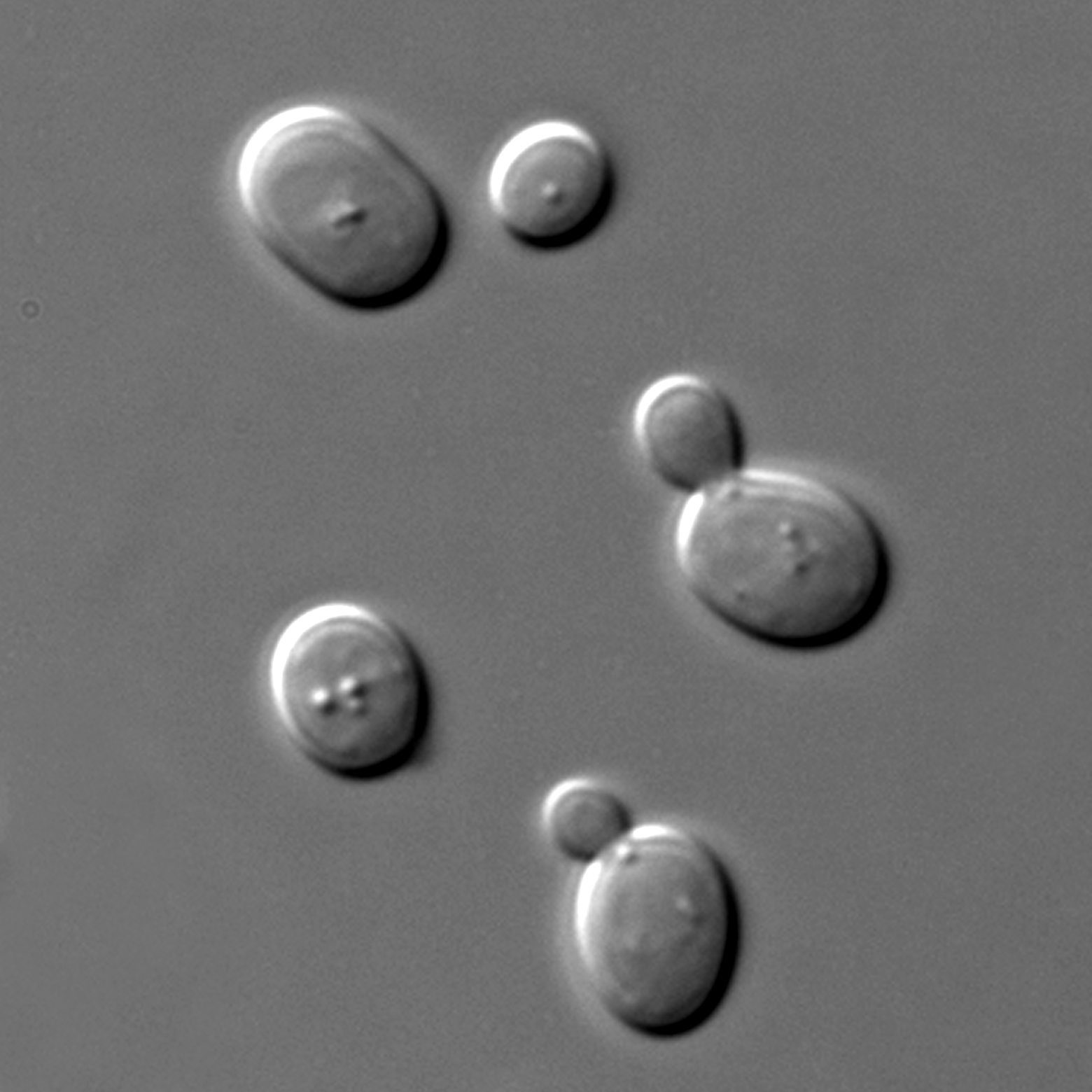
Yeast are single cell organisms; this microscopic picture shows two yeast cells budding.
Yeast are a pretty typical fungus, in that they can reproduce either asexually through a process called “budding” or sexually by combining DNA with another yeast cell and then splitting.
With the resurgence of homesteading, and grocery shortages in this time of pandemic, there have been myriad articles describing how to make your own yeast; folks have been perfecting the art of sourdough; and interest in homebrewing has never been higher. What’s not to love about yeast?
I moved to western North Carolina in late winter; by early spring, I was noticing something very unusual on my neighbor’s cedar trees. Softwood trees like cedar? They’re not supposed to have flowers! But here I was, looking at these things that looked very much like flowers. I turned to the search engines and found my answer immediately: it was a fungus called the cedar apple rust!
This fungus has a wild lifecycle. It spends half of its time on each type of plant: apple trees or cedar trees. On apple trees, like the crab apple trees that I have all over my yard, it appears as a rust fungus: a discoloration on the leaves. When it produces spores, they travel by wind over to my neighbor’s cedar trees. Then, inside the cedar trees, they end up creating these elaborate fruiting structures (pictured), which then release spores that travel back to the apple trees.
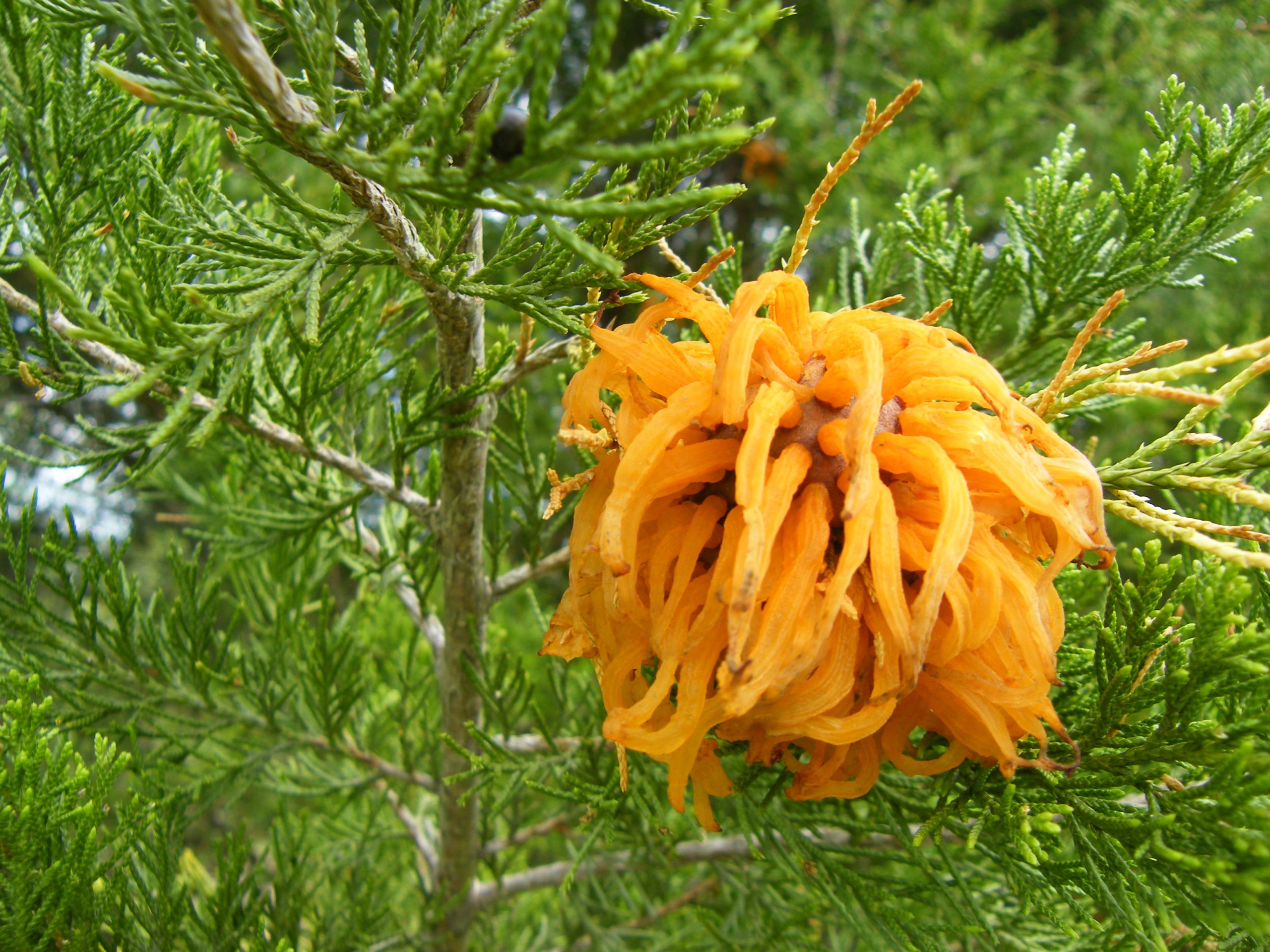
The bright orange structures on green trees are sure to catch your eye.
This fungus is a pretty bad pest on apple trees, and the recommended treatment is to interrupt the disease cycle by removing all of the cedar trees within a one mile radius of an apple orchard. But that’s not very practical. So, most farmers rely on a combination of fungi-resistant apple species and targeted fungicide application. Here in the rural mountains north of Asheville, my neighborhood doesn’t have apple orchards to protect, so we just let the fungus go wild and live its happy, weird little life.
I would never write an article about fungi without talking about the most popular and common fungi out there. These two species are well-known and well-loved by hikers, children, and everyone in between.
Turkey tail fungi look like… turkey tails! They occur most frequently on decaying trunks of trees, and have a staggered cup-shape appearance. They’re fun to touch, but please don’t eat them! They’re not edible, but they are being used in drug trials for cancer patients.
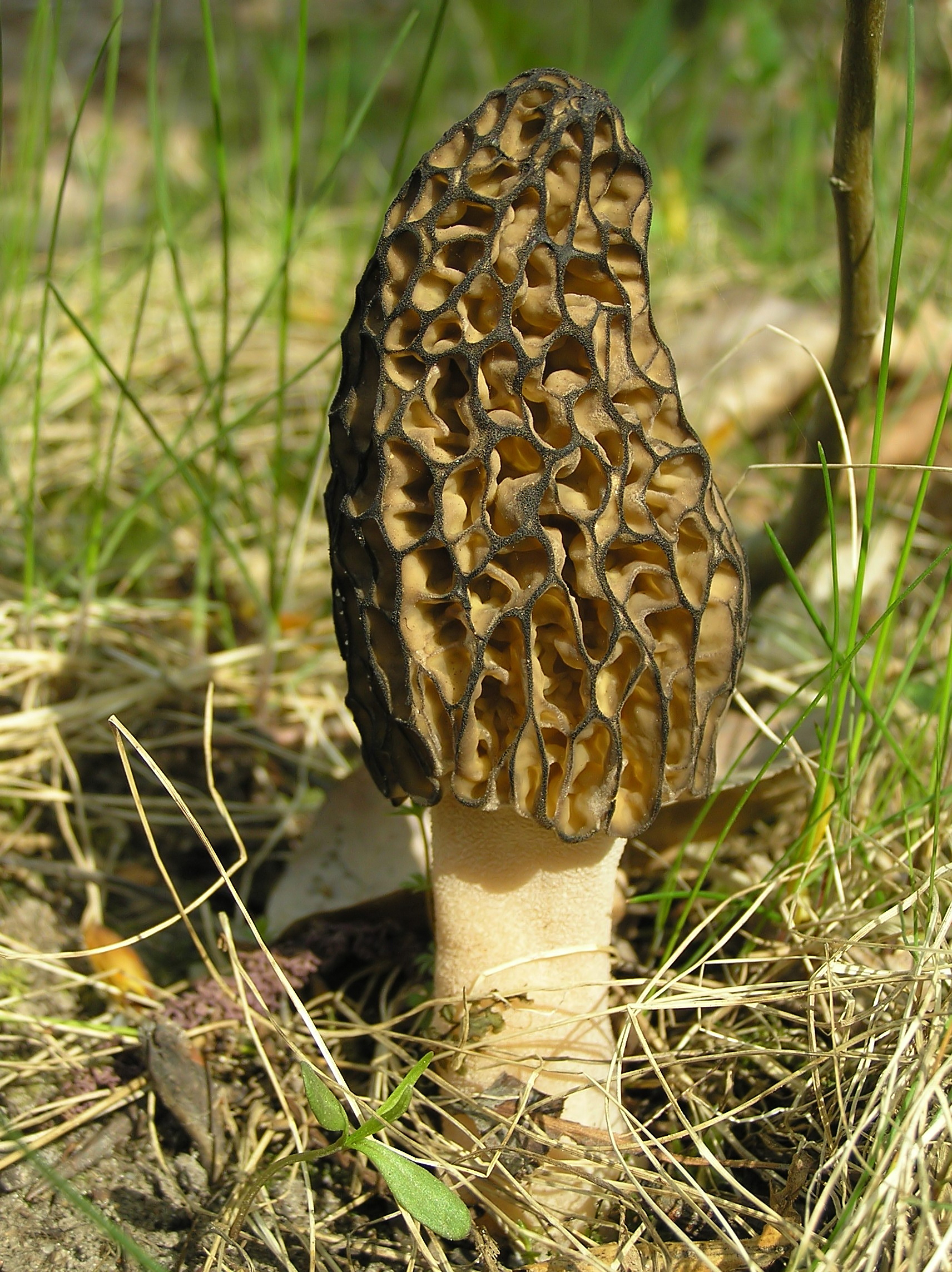
The other popular woodsy fungi is the treasured morel. Morels are in high demand all across the United States for cooking. They have a spider-web appearance to their fruiting bodies, and there’s a ton of folklore about how to find morels. They may or may not occur near certain tree species, they occur overnight, they need a certain soil temperature; the list goes on and on. Have you seen morels before?
Slime molds are these creatures that look like fungi and were even classified as fungi until recently, but they actually fit into the broader “Protista” kingdom, which houses other creatures like amoebas and algae. They spend most of their lives as single-celled wandering organisms, but when food gets scarce, they congregate and form elaborate fruiting bodies where they make spores.
The most common slime mold you’ll see is the “dog vomit” slime mold. Ew, right? But they’re so cool! They create these medium-sized bright yellow and orange structures on the soil. I see them in the spring on my neighbor’s mulch.

Did you enjoy learning about these awesome little fungi? If so, why not show us? Show us your favorite fungi and tag us on Instagram, Facebook, or Twitter!
Become a Forest Defender today! Your monthly gift will protect the fungi and biodiversity of the South.
Join our email list to get new Biodiversity in Your Backyard sent directly to your inbox!
On June 22nd, Dogwood Alliance joined forces with Biofuelwatch, NRDC (Natural Resources Defense Council), and the Southern Environmental Law Center to launch Cut Carbon Not Forests, a hard-hitting campaign to expose the UK’s wasteful subsidies for companies that burn trees for electricity and put pressure on policymakers to support reform. To learn more about the campaign, visit cutcarbonnotforests.org. This Press Release is an update on British opinion regarding biomass usage in relation to true clean energy sources. As the COVID-19 lockdown is eased in the UK, the British public believes the UK’s recovery phase must prioritize true clean energy sources, such as wind and solar power.LONDON – 22 July 2020– A new online YouGov poll has found fewer than one in four Britons (23%) think electricity generated by burning wood from forests should be classified as “renewable energy.” Additionally, 55% also disagreed with the Government’s continued subsidies for this dirty source of energy as part of the UK’s renewable energy strategy. Currently, the government gives more than £2 million per day in subsidies to power stations that burn biomass.
Instead, 82% of respondents agree that the UK should aim to preserve recent improvements in air quality by switching to clean energy sources with no associated air pollution emissions. While the public overwhelmingly backs support for wind (80%) and solar energy (82%), only 3% say the Government should help companies that burn wood sourced from forests overseas, the poll found. Nearly all UK biomass is imported.
The YouGov poll was jointly commissioned in July 2020 by Biofuelwatch, Dogwood Alliance, NRDC (Natural Resources Defense Council) and the Southern Environmental Law Center. [To request the full data tables, please email Richard Scarlett or Emma Briggs at [email protected]]
“The views of the public are clear: Burning wood for electricity is both unpopular and destructive,” said Sasha Stashwick, a senior advocate with NRDC. “It’s time for the government to end the wasteful subsidies for this polluting industry – especially when people don’t even consider it to be renewable energy. In this respect, our data shows a striking disconnect between government policy and public opinion.”
Burning biomass releases more carbon pollution than coal at the plant smokestack and emits dangerous air pollution. The UK is currently the largest user of biomass electricity in Europe, and much of the wood in question is cut down and shipped in from sensitive forests overseas, destroying habitats and wildlife. The data shows support for the protection of these natural forests and the wildlife that depends on them, with 85% worried about the impact on wildlife if trees in forests are being cut down to generate electricity.
Biomass industry proponents claim that burning forest wood as fuel in power stations is ‘renewable’ because the carbon dioxide (CO2) it emits is reabsorbed by new trees. However this process takes decades, if the new trees grow back at all. When asked how many years it should take for a low or zero carbon energy source to reabsorb the same amount of CO2 it emits into the atmosphere, 58% said within ten years and just 18% think it should take longer. For this reason, 57% respondents do not believe electricity generated in this way should be classed as ‘renewable energy.’
Other key findings include:
“No technology that pumps more carbon into the atmosphere or destroys forests should ever be receiving billpayer funds,” said Almuth Ernsting of Biofuelwatch. “With household budgets already under pressure, the UK cannot continue to waste precious subsidies on a fake climate solution that increases electricity costs. This is especially true given our abundance of affordable, clean and truly renewable energy sources like wind and solar power.”
Last month, the same coalition of environmental advocacy groups launched Cut Carbon Not Forests, a campaign to remove subsidies from companies that burn trees for electricity and shift the savings to genuinely clean and renewable energy solutions.
# # #
MEDIA CONTACTS: Richard Scarlett or Emma Briggs Finn Partners [email protected]
All figures, unless otherwise stated, are from YouGov Plc. Total sample size was 2283 adults. Fieldwork was undertaken between 9th-10th July 2020. The survey was carried out online. The figures have been weighted and are representative of all GB adults (aged 18+).
ABOUT BIOFUELWATCH
Biofuelwatch is a UK/US non-profit organisation which undertakes research, campaigning and advocacy regarding the impacts of large-scale bioenergy. Biofuelwatch is working for a reform of energy policies to ensure that all support goes towards the lowest-carbon and cleanest forms of renewable energy as well as energy efficiency and conservation. See www.biofuelwatch.org.uk and follow us on Twitter @biofuelwatch.
ABOUT DOGWOOD ALLIANCE
Dogwood Alliance is a nonprofit environmental organisation based in the Southern United States that mobilises diverse voices to protect Southern forests and communities from destructive industrial logging. The group’s Our Forests Aren’t Fuel campaign is part of an international coalition opposing industrial-scale forest biomass energy. Learn more at www.dogwoodalliance.org and follow us on Twitter @DogwoodAlliance.
ABOUT NRDC
The Natural Resources Defense Council (NRDC) is an international nonprofit environmental organization with more than 3 million members and online activists. Since 1970, our lawyers, scientists, and other environmental specialists have worked to protect the world’s natural resources, public health, and the environment. NRDC has offices in New York City, Washington, D.C., Los Angeles, San Francisco, Chicago, Bozeman, MT, and Beijing. Visit us at www.nrdc.org and follow us on Twitter @NRDC.
ABOUT SOUTHERN ENVIRONMENTAL LAW CENTER
For more than 30 years, the Southern Environmental Law Center has used the power of the law to champion the environment of the Southeast U.S. With more than 80 attorneys and nine offices across the region, SELC is widely recognized as the Southeast’s foremost environmental organization and regional leader. SELC works on a full range of environmental issues to protect our natural resources and the health and well-being of all the people in our region. www.SouthernEnvironment.org

Ali McGhee is an editor with AVL today, a host on Asheville FM Slumber Party and the former editorial director of Asheville Grit. She has a PhD in English Literature from the University of Rochester and is also a member of Asheville Public Arts and Cultural Commission. She is a core faculty member at the Enneagram School of Awakening. Her work has been published in Dark Mountain, Slippery Elm, Holler, Scallywag, WNC Magazine, and others. A native of Asheville, she grew up in the forest and the creeks, and they have been singing to her ever since.
Big thanks to Ali McGhee for sharing this beautiful tale with us!
Want to listen to more?
You can read the full transcript below.
Elizabeth Garland: All right, we are here. And this is another episode of Woods and Wilds. I’m Elizabeth Lashay. And not only do I have a podcast, but also a radio show, Slay the Mic.
Elizabeth Garland: And again, I’m just excited to be here and joined with an amazing co-host.
Kimala Luna: Hi, I’m Kimala Luna. I’m with Dogwood Alliance. I’m really excited to be back for another episode. And we are here today with Ali McGhee.
Ali McGhee is an editor with AVL today, a host on Asheville FM Slumber Party and the former editorial director of Asheville Grit. She has a PhD in English Literature from the University of Rochester and is also a member of Asheville Public Arts and Cultural Commission.
She is a core faculty member at the Enneagram School of Awakening. Her work has been published in Dark Mountain, Slippery Elm, Holler, Scallywag, WNC Magazine, and others. A native of Asheville, she grew up in the forest and the creeks, and they have been singing to her ever since. She is currently working on a novel about people turning into trees, as well as a multimedia project, Oso and Otter with her partner, artist Justin Noah Wells.
Ali McGhee, welcome to the show.
Ali McGhee: I am so glad to be here with y’all. Thanks so much for having me on.
Kimala Luna: Yes. We’re really excited to hear your story.
Ali McGhee: I will say that I wrote this story for last year’s Woods and Wilds storytelling event. And I was so excited. That was my first year as a participant, after a few years of hosting. And it was so exciting to be up on the stage telling a story and I was really honored and so I’m really excited to just share the piece. It’s been a little while since I revisited it, but I hope that you will enjoy it.
Kimala Luna: Yay!
Ali McGhee: All right. I’m here to tell you about the forest. I don’t mean to sound presumptuous. The forest doesn’t need me to tell you about it. We’ve spent too long believing we hold the power in this relationship and we all know what that’s done. No, I’m here because I need to tell you about my forest. The one whose branches grow out of my center and whose roots dig deep into this world and how my forest and the Forest, like the capital F forest, how we are the same. I read that tree’s brains, though of course that’s not the right word, look at me, forcing a tree into my narrow human understanding. But anyway, that their brains are their roots spreading out, dropping in, meeting the mycelium and flicking out messages and nutrients through it to the other trees.
Essentially, if we were trees, we’d all be doing a permanent headstand. Picture that, imagine how different yoga would look. Here’s what else I know about trees. That the Chanterelles grow under the White Oaks each summer at the house where I grew up and that the earth there is a carpet of moss, joyful and full. A tapestry of green. One year I tried to convince my mother not to pave it and turn it into extra parking spaces, and finally she understood why. That a wand carved from Black Walnut means that you have walked the poison path and found comfort in it.
And a wand carved from Oak means you have the strength of the Green Lady with you, always. That the Weeping Willow, who grows by and holds the water, cures deep, old sorrows. And that one reason for her name comes from the way rain looks like tears when it falls from her leaves. That she has held me when it seems there is no way out of my darkness and helped me to take my next steps. That each year of wood thrush nests in the woods behind my house and every morning and evening, while it’s here, I am the lucky recipient of its gifts. That it’s hidden song is disappearing from our world, that it, and all things are worth saving. That it is not even our right to say what’s worth saving.
This summer, several birds built nests in our yard. We’d peek into the hanging ferns to see baby house finches, screaming, and hungry. A month later, they fledged. We saw them perched and focused on a nearby power line as mama taught them to fly. One night after our House Finches had flown, after one of many torrential rains that month, I heard cries in the semi-dark, saw soft small movement against the wet grass. A sparrow’s nest with four hatchlings had been obliterated by the storm, sending the inhabitants toppling from their precarious position in the bush by our kitchen window. They were mewling things. And their parents swooped by horrified as I contemplated what to do. Several internet searches later, I placed the babies carefully in a homemade nest tucked into a small cardboard box filled with dried yarrow and a soft hand towel.
I had to leave it on the ground. It was too unwieldy for the bush and I didn’t want to take them too far away. I just didn’t want them to die. For the next few days, the parents flew by the window and one or two of the chicks would raise their tiny heads. Then one morning, after a night of hearing the coyote sing up in the dark hills, they were gone. They were still too young to fly. How much of the forest is still nature, red of tooth and claw, and how much is now our fault? I felt the loss and my own responsibility in it. A few days later, I watched a mama bear with two broken hind legs try to cross the interstate. Her cubs peering expectantly from the side of the road. People had stopped their cars, pulling off onto the shoulder to do what? I wasn’t that brave, had no idea how I would do anything but fall apart if I pulled over.
The next week, I was in the hospital hemorrhaging because my pregnancy was in the wrong place. Dust colored pigeons sat outside my window, which looked out over the building, endless. Itself, a kind of terrible forest filled with its own strange creatures. Death links us to death and to the turning world. Even when we hide behind our doors, our curtains pulled tight against the inevitable, but still it’s there. I felt it as I lay in that bed, inhaled and exhaled it between sobs until it could be quiet and still. Like those birds and that bear, life was lost before it even really had a chance. We all would have been good parents. Here’s another thing I know about the forest. White Pines are for peace and Hemlocks, wisdom. Oak protects and Birch helps forgive. I know this because the trees told me. I don’t know why they still bother to talk to us, but they do.
There’s a way of walking in the woods that keeps time with the slowness of the earth. I try to do it as often as I can, but I usually only find my way into that still easy way of being, paradoxically, when I’m on the hunt. For new spring violets, for stinging nettle to take home and wilt so that it releases its gentle medicine, for the morels that pop up where the old lumber mill used to be.
I have visions of creating a feast worthy of the fairy folk, where we’ll all drink honeysuckle tea out of acorn cups in a blue-green forest grove. And the world won’t be the same when I step back into it. It feels easier to leave sometimes, to throw my hands up and go deeper into the woods or maybe to take a boat and travel down the river, stopping at an island, just big enough for me and setting up there for the rest of my days like Pippi Longstocking, waiting on the fairies to come for tea. But fairies are tricksy things, and their spells would take me so far away, I’d never be able to return. Even a broken home is still a home. Isn’t it?
A few years ago, I went camping with a friend in Acadia National Park on the wild, rocky, Maine coast. We hiked all day, up what seemed to me to be a sheer cliff face as I hauled myself up, dragged myself across the iron rings and ropes that some far braver souls had placed there for people like us, drilling iron into a mountain for no other reason than to help us see the startling view from its pinnacle. It was terrifying. I feigned bravery as I skirted along the scree, feeling my own smallness articulated with every step. My frailness as my ankles twisted this way and that, as my arms shook from the effort to sidle across giant boulders and heave atop ledges. At the top was the burnt orange and gold of the forest. And at its edge, the gray sea stretching onward to the end of the world.
That night we set by a fire we built with Birch strip starters, gently pulling the paper outer bark and being careful not to take too much. And we drank cheap red wine and hot chocolate and swapped stories into the chill of the autumn evening slipped into our bones in spite of the flames. And we crawled away to sleep, drawing blankets tight and keeping wool caps on, sturdy against the cold. Things shuffled around our tent to remind us that they had been there all along. In the morning, we made bacon and eggs and they tasted that glorious way that only a camp stove and a cold night can make things taste, like gas and fire and grit. Then we packed up, folding tents and rolling sleeping bags, already stepping out of rhythm with that sacred place. Another friend calls it forest time. That slipping into the slower cadence of growing and dying things and remembering your place there. The way that being becomes so easy.
As we shed our onion skin, a replanting takes place and we recognize ourselves in the darting shape of the buck, the buzz of flies, the black eye of the woodpecker as he glides by. Days in the forest stretch on. Each new discovery, a salamander, brilliant orange and half hidden under a rock, a little village of inky cap mushrooms, glistening black and silver in the morning dew. A spider’s web the size of a face, usually spied after walking straight into it, the white bones of a deer washed clean by bugs and time. A caddis fly, submerged and sparkling in a clear rivulet of water spilling down from the mountain. Each one, giving way to the next, creating the net of a world that holds us, too.
And if the days are spacious, the nights are even longer, filled with the whisperings of things to each other and to the velvet dark, a love song, perpetually unfolding. There are no answers in this story. No paths forward. Grief takes us to strange places. And beauty does too. Once you step off the trail, you’re lost, but perhaps that’s what we all need, to be lost. To find our way back to ourselves and to discover there has never been a trail at all, but the one we’ve made before this moment, and this moment, and this one. What song do you sing to the forest? And what does it sing back?
Kimala Luna: Oh my gosh. That part always makes me cry.
Elizabeth Garland: Me too.
Kimala Luna: I just love the way you capture grief and awe in the same breath so often throughout the story.
Ali McGhee: Thank you. Yeah, and I think you can’t have one without the other. They’re are two sides to the same coin. Yeah. And maybe they’re parts of each other.
Elizabeth Garland: I’m still having chills over here. And I think it’s extremely powerful and your imagery is beautiful. And I just have to thank you for being vulnerable with others to share your story.
Ali McGhee: Thank you. Thank you so much. Yeah, it just all came out.
Kimala Luna: This thread of connection, and the connection you feel to the forest and then the connection that we end up finding in each other, through those vulnerable moments, I think are the most powerful things we’ve got really.
Ali McGhee: Yeah. I agree.
Kimala Luna: I also love that it’s got a lot of dark themes, but you keep also this thread of whimsy and innocence with the imagery of the wands and the tea parties, and being Pippi Longstockings on the river. And I just… I guess I want to know a little bit about your childhood and the kind of imaginative kid you were.
Ali McGhee: And it’s interesting, because I look back and I’m like, “Maybe I haven’t really changed that much since…” Because as a kid, I grew up in Asheville and in the woods really, like you said in my bio, we lived in a… You couldn’t even call it a neighborhood. It wasn’t that far from anything, but it was deep in the woods and there weren’t really any other houses around. And we didn’t really talk to our neighbors, but it wasn’t in the country. It was an interesting place. And for the first five and a half years of my life, I was an only child. And I was always terribly introverted.
Ali McGhee: I was really close with my parents, I didn’t want any kids to come over really. And I just wanted to be on my own. And I actually had tons of imaginary friends. So some of that is from my experiences as a kid, when I would actually have tea parties with my imaginary friends in my house and outside. And I just grew up with this feeling, and I think my parents cultivated this in me, that the forests really were a magical place. Not only were they filled with all these fairy creatures and things like that, but they were just magical in and of themselves, just because of what they were. So I’ve always felt that in the woods since then, and in the forest, when I go out. And I like to still experience the woods on my own, I’m realizing now. Like I love to go outside and walk on my own.
Ali McGhee: I love hiking with other people, but sometimes I just want to be like, “Just to be quiet, we just need to hear the magic of the forest now, stop sharing everything.” So it’s really a place where I’ve always recharged, but I also have always seen that darker side as well. So there’s always been this whimsy and there’s also always been that darkness. Once the sun goes down, if you’re camping, what are those noises outside? You have no idea. There’s this whole other world that opens up in the dark and it’s not good or bad. It just is. And it does take on a darker tone I think sometimes. That’s long winded, but kind of it. But my parents loved that I was outside all the time. So they really nurtured that in me.
Elizabeth Garland: I absolutely love that. And I think you definitely show that throughout your story. When we talk about chaos and the forest and how healing it is, what is one thing that you would tell others to do when going through a difficult time?
Ali McGhee: Hmm. I think specifically to nature, I think for me it was so helpful when I was going through my own loss of my pregnancy to just get outside and cry on trees almost? Just like actually hug a tree, get barefoot, stand on the earth. There’s something that’s so ungrounding about realizing that this control you thought you had over your body or this knowledge of your own body you thought was there, just isn’t there all of a sudden.
Ali McGhee: So I think anything that is potentially a way to reground, just like sticking your feet onto the earth or just like taking time. I think we do so much that fills up all of our time, so we don’t feel grief, but it’s important to feel it and it does give this richness to life. And it does remind us that there’s so much beauty out there. So I think opening up some silence and space for that, and the forest is the place to do that. And then while you’re in the forest, you have these magical encounters with bugs and birds and mushrooms and so it becomes a different way of connecting.
Kimala Luna: I’m feeling like also just the heaviness of the current time we’re in, and I’m wondering about your personal journey right now through that. Because you are a writer and an artist and you do use these emotional experiences that you have for creativity. You channel it. And so I was just wondering.
Ali McGhee: Yeah, that’s a great question. And the answer is complicated because… So I’m writing a novel and I’ve been writing it for years. I’m finishing a novel, I’m trying to say it that way. It’s about people turning into trees, but actually the whole premise of it is that there is an apocalyptic virus that comes and wipes people out. So as far as the pandemic goes, I found that I’ve stepped away from that novel for a while because I’m like, “Nope, no one is going to want to read this if I were to publish it in the next couple of months, like no one wants to read a novel about a virus while we’re in a virus.”
Ali McGhee: So there’s that. But then I think that the other answer is that I am finding more time to write and I’m finding more inspiration and that’s happening through a lot of the connections that I’m seeing people make to one another and the movement that I’m seeing happening. So that’s both within the pandemic, but then also with Black Lives Matter and the protests that have been going on and all those shifts, I’m starting to see… It’s really simple things, like more characters of color are starting to show up in my works, like something really simple. Things are more on my mind in this really present way.
Ali McGhee: So I just started a story with a Black main character. It’s a science fiction story and it’s weird, but she just popped into my head fully there. And I’m like, “Oh cool, it’s nice to meet you. This is great, this is so exciting.” So I think just taking inspiration and looking at how these characters and these weird science fiction universes are dealing with issues that we’re going through in their time is one thing.
Ali McGhee: And then I think part of it is just letting myself off the hook for not writing creatively as much right now. And just being there to listen. I think that is so vital right now. And I’m not going to get any stories if I don’t ever listen. And I think right now, particularly is a time to shut up and listen. So I’m doing that. And I think I’ll see what comes of that.
Elizabeth Garland: Through your story, I kept thinking about present and current events that are happening, and especially things that are really heavy on my heart, just being a black woman. And when you were talking about poison path and you felt comfort in it and the hidden song and multiple different things, whereas like this is how I feel navigating through a world where there are hidden truths or how are we talking about the things that we’re dealing with as a nation, as a world.
Ali McGhee: I love that. And I think that there’s a couple things I wanted to say about that. And one is that, this is more general, but I think anger, especially… Oh my gosh, my cat is just driving me crazy. Sorry guys. Anger in our society especially has been tamped down, especially women’s anger, I think. And the anger of black people and people of color. And I think it’s all been like, “Oh, that’s not okay. You can’t have that reaction. You’re scary,” or, “You’re not who we thought you were,” or something. And in fact, anger is actually an emotion that I’ve always felt very present to. I’ve had to work on it, but it actually has a really productive place in my life.
Ali McGhee: And I think right now we are seeing just how productive and powerful and change-making anger can be. Because anger is like this fire force that transforms things. And I think that’s always been really personally resonant for me and it is also dark. And I think some of that comes out in… So I’m really interested in Appalachian witchcraft and folklore traditions. And so some of that hidden stuff I’m speaking to is specifically regarding that, but it’s totally applicable to other traditions as well. And in fact there’s a really rich history of black Appalachian folklore and traditions here. A lot of which is still hidden.
Kimala Luna: I love that about anger. I think that is an emotion, we’re all about claiming our emotions to a certain extent until it becomes in any way problematic to the greater whole. And right now that’s what we need, is a big shake up of the greater whole, and I think that emotions like anger are really good catalyzers for that sort of thing.
Ali McGhee: I would put grief in there too. I was speaking specifically to anger, but I think grief is one of those too, where we’ve as a society, we’ve shoved off grief. You don’t really talk about it, right? But actually, it’s another one of those transforming forces, though it’s a different kind of element to it or something.
Kimala Luna: Yes. I think grief is one of the most transformative emotions you could possibly go through or experience, but yeah, you talk about that in the forest with this red tooth and claw.
Ali McGhee: Yeah. And I think that we’ve definitely experienced that with the loss of our wild spaces, to bring it really back to the forest. But that has such resonance across every aspect of life, including social justice and things like that. But this way that we’ve lost… I know that there’s a guy named Gordon Hempton, and he actually goes around the world and records wild spaces where you can’t hear any sounds that are human made. And he’s finding that they’re just decreasing more and more over time and that it’s harder and harder to find them. And that just makes me terrified. And I feel so much grief because of that. When I go out to hike in the woods, it’s so rare that I don’t meet other people or I don’t hear a plane go over, or something like that. And I’m just wondering what the cost is. I know the cost is incredibly high, but when I am out there hearing it, it’s really, really devastating.
Kimala Luna: Yeah, absolutely. I think the way that we treat our public lands is really reflective of the way that we treat people. We have a complete disregard for how it impacts everything else. And a complete disregard for the surrounding habitat and the life lost.
Ali McGhee: Yeah. And sometimes it’s very hard to feel optimistic. Especially when I’m thinking about it and talking about it, but it’s amazing how every time I’m actually outside in the woods, I always feel optimistic. It’s an interesting thing. So it’s this balance, how do I work to help this and change this? And also that, I don’t know, just recognition, I guess, of the power of the forest, and also just wanting others to be on the same page as I am. I don’t know. I’m not sure how I’m saying that, but something like that.
Kimala Luna: To even be able to have access to that, because I think a lot of things that happen is that the surrounding access to nature, or even any access to nature is limited or destroyed, for Black and Indigenous People of Color.
Ali McGhee: Absolutely. That’s so true. Yeah.
Elizabeth Garland: Well, when we were talking about laying down roots, what are some roots for you… And I keep using this word, but I’m going to say it one more time, that you are rooted in through your passion, through your love of what makes you, you? What makes you Ali?
Ali McGhee: That’s such a good question. I think one is, I guess, my imagination, which is a weird route, because it doesn’t seem very rooted, but I think that ever since I was a kid, my first best friend was my imagination. My first sibling before my sister was born, was my imagination. So that’s always been a place where I’ve turned to come back to myself, right? And I think there were years when I falsely lived as an extrovert and I’ve just recently remembered that I’m not, and it really has been this reclaiming of my imagination and the person I am when things are quiet. And I think that’s where I feel most at home. So I think that’s a really big one. I guess this is similar, but just being at home, being grounded, not being out and about and everything. I love my community. So I would say paradoxically, that’s also a route. Asheville itself is a home that I’ve returned to several times now throughout my life.
Ali McGhee: But then also just being in a home space where I feel safe and I have my loved ones around me. I’m trying to grow a garden this year and it’s sort of working. Stuff like that where I actually can see roots in the ground that I planted in there. So having a good home spaces is really important to me as well. And then yeah, community, friends and family, I have really strong relationships with my immediate family and that’s absolutely one as well. And then I think art. I love reading and watching films and listening to music and experiencing all of that. And that’s always been really important to me too. So those are a few things.
Elizabeth Garland: Wonderful. Well, in terms of being still and being grounded, and there is such a beauty in that, but there’s so much noise that is constantly happening. And I’m trying to use that as both reality and a comparison for life. When your life gets really noisy, is there a certain place that you like to go around the Asheville area?
Ali McGhee: I love that question. There are few, but the one that popped into my mind first, so I’ll talk about it, was just driving on the Blue Ridge Parkway, and maybe stopping at an overlook. There are a couple I really like and always tend to stop at, and just sitting there for a while. And I’ve done that ever since I had a car, because I grew up in this area and ever since I was in high school, I guess, I had access to a car. I would do that a few times a week, I feel like. I did it a lot. And I had so many formative experiences up on the Parkway. From hiking to just watching the meteor shower, to going up with friends.
Ali McGhee: And I think that’s one where I really tend to go when things are getting a little bit too crazy. And I’ve got a fun story. A few years ago, I had the worst day, and I needed to do something and get away. So immediately I just got in my car and I didn’t even know where I was going. And I ended up on the Parkway at an overlook and I was like, “Oh, okay, this is where I’m supposed to be.” And I got out of the car and actually wrote for a while. Because I really wanted to just write and get my creative juices flowing and dump my day. And it was really interesting because as the cars come up to the overlook and then they drive away, it’s like these little micro-communities get created. And I was just astonished by how cool it was.
Ali McGhee: Like five to eight people came together, were really lovely to one another. It was like this beautiful outpouring of human compassion and connection, and then they’d leave and another set would come and then they’d leave. And eventually this camper pulls up at the other end of the overlook and this older gentleman gets out and sets up a telescope. So I just kept sitting there and he was doing stuff with his telescope and then another couple came up, talked to him, came over and talked to me and they were like, “Oh, you should go look at that guy’s telescope. He’s got something pulled up that’s pretty cool. And he says you should come over.” So I went over there and we actually, after that, became fast friends. So he showed me the stars and a planet or something, and then gave me his card and pre-COVID we had lunch every day or every week.
Ali McGhee: And we still talk every day and we’ve got a picnic hopefully set up sometime in the next couple of weeks where we’ll get together again. But it was just this beautiful experience and it wouldn’t have happened if I hadn’t had a bad day and ended up at the Parkway. So I think that’s one of my favorite examples. Now I actually live out of town a little bit and I have immediate access to a land conservancy or a conservation easement with trails, that is across from my house. So I typically will just go over there, but I rarely meet anyone. So there are not quite as many opportunities for that sort of connection. I love that story.
Kimala Luna: That’s a very sweet story.
Elizabeth Garland: It is. It’s amazing.
Ali McGhee: Yeah. You never know who you’ll meet when you’re in the forest, or forest adjacent, I guess.
Elizabeth Garland: Yeah. All my stories about the Parkway never ended like that. I think it was more to make out with someone.
Ali McGhee: Oh, I had those too. I glossed over those, yeah, definitely. Don’t want to leave those out, also important.
Kimala Luna: Thank you so much for joining us, Ali.
Ali McGhee: Thank you guys for having me. And thanks for letting me share my story and my weird memories and stuff with you all.
This is a guest post by Jason Williams of StormSafety.org, a website dedicated to providing information to help people be prepared for storms. The views and opinions expressed are those of the author and do not imply endorsement by Dogwood Alliance.
There’s no disputing the fact that a garden is a very good addition to your home, making gardening among the most worthwhile hobbies you can pursue. However, if you’re going to put in all that effort into your garden, you want to make sure that your garden serves the environment, too. Get to know the nitty-gritty of eco-friendly and water-conscious gardening by checking out the resources below.
Gardening is widely regarded as a very healthy activity — not only enhancing overall wellness but also contributing to the health of the environment. Learning the ins and outs of this amazing pastime will ensure that you do it right, so benefits are enjoyed all around.
Photo by Pexels.com
While gardening at its very core is already environmentally-friendly, there are always opportunities to adopt eco-friendlier methods, particularly in how your garden utilizes water. Let’s take a closer look at the ways you can create a more sustainable and water-conscious garden.
Photo by Unsplash
Appropriate eco-friendly practices will undoubtedly improve your garden’s water consumption by leaps and bounds. Look into taking this important initiative to the next level with easy additions that are well worth the expense.
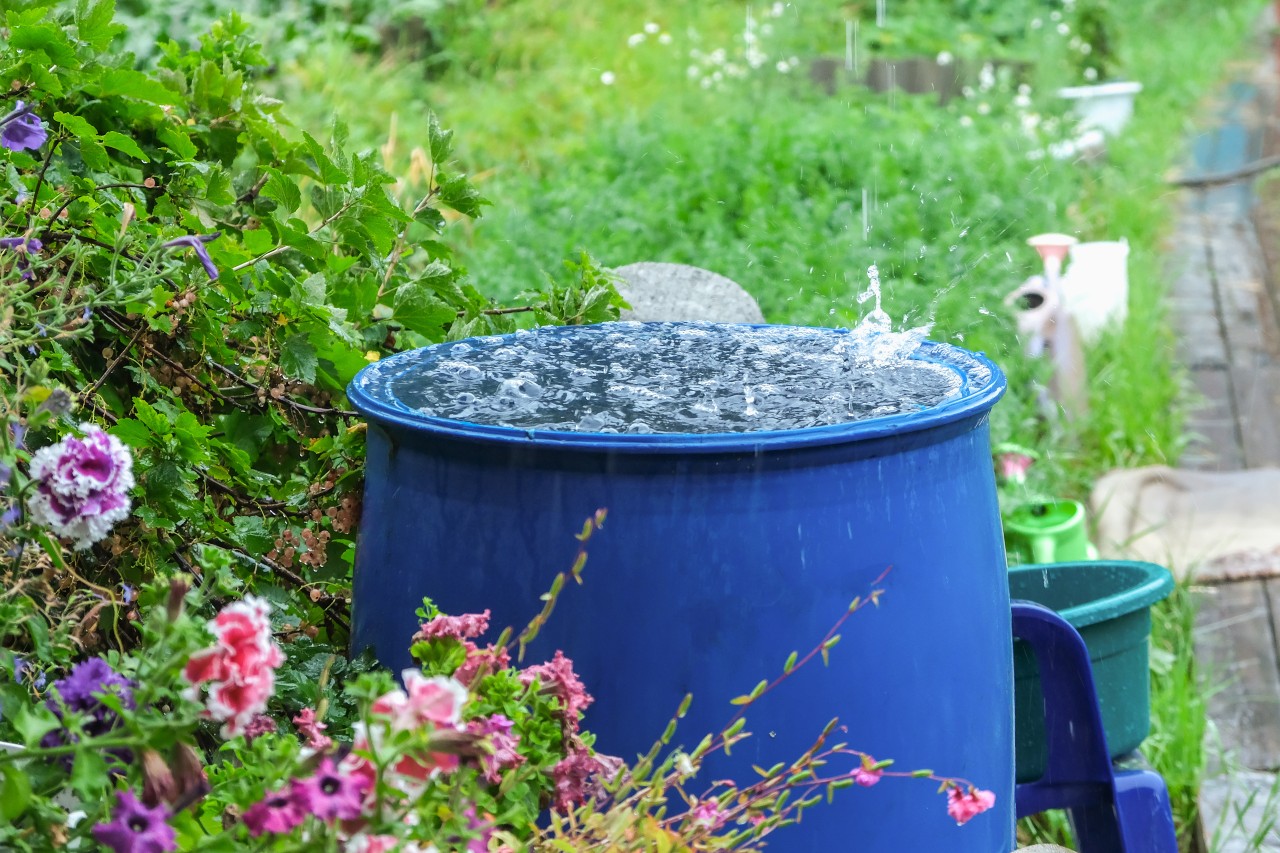
A rain barrel
Yes, gardening is already a worthwhile activity, but why stop there when you can truly contribute to the greater good by keeping your garden’s water consumption in check? As far as environmental contributions go, this may be a humble one, but the impact is anything but.
Did you enjoy learning about sustainable gardening? If so, why not show us?
Share your favorite garden videos and tag us on Instagram, Facebook, or Twitter!
Want to do more?
Become a Forest Defender today! Your monthly gift will protect the biodiversity of the South.
Join our email list to get new Biodiversity in Your Backyard sent directly to your inbox!
During times of stress like the COVID-19 pandemic, spending time in areas of greenery is an important way to reduce fear and anxiety and improve overall well-being. Especially for urban and suburban-dwellers, parks serve as easily-accessible mesocosms of wilderness within towns and cities. They are pretty to look at and relaxing to lounge in. These green spaces, including urban parks and state parks, provide areas for recreation and aesthetic pleasure and are proven to promote overall public health. Moreover, they reduce air pollution by generating cleaner air and reduce flooding by aiding in storm water collection. They are important public utilities that residents benefit from visiting.
However, such green spaces are primarily located in white and affluent communities and primarily benefit those communities. Neighborhoods with greater Black populations and less wealth or environmental justice communities are barred from the health benefits of green spaces due to physical distance.

This issue is reflected in state and national parks. State and national parks are essential areas of recreation for people of all races, yet the proportion of Black people who visit such parks is significantly smaller than the proportion of people of color in the entire US population. In fact, only 1% of Yosemite National Park’s visitors are Black. While the cost of travel to these parks may pose a barrier to minorities, part of the issue may also be that they simply do not feel comfortable accessing green spaces. In 2015, four Black academics were invited to a scholarly event in Yosemite National Park free of charge, along with white and Latinx academics. The Black academics were extensively questioned about their background and qualifications, while the white and Latinx academics were not.
This unconscious idea that green spaces are meant for white and affluent people contributes to environmental racism. This issue is even more prevalent during quarantine. Many of the already limited parks in environmental justice communities are closed to maintain social distancing. A tweet from May 2 highlights the disparity between green spaces in environmental justice neighborhoods versus white affluent neighborhoods, showing how a park in Harlem is locked and empty while a park in West Village is open and full of predominantly white people.
Parks and other green spaces are shown to improve physical health and psychological well-being. Yet these green spaces are distributed in ways that make them harder for Black, Indigenous, and people of color (BIPOC) and low income people to access. Furthermore, though studies suggest lower crime rates in neighborhoods near green spaces, some law enforcement officials view these green spaces as crime hotspots when they are located in environmental justice neighborhoods and obstruct full access. The combination of physical distance from and over-policing of urban parks prevents minority and low-income populations from reaping the health benefits of natural spaces.
 Raksha Doddabele
Growing up in eastern Tennessee with the backdrop of the Smoky Mountains, Raksha has always had a strong connection with the outdoors. She is a current undergraduate at Duke University, where she is pursuing a B.S. in Biology and minor in Computer Science, which she hopes to put to good use working in wildlife conservation. Some of her favorite activities include hiking, Scuba diving, and adventuring.
‘- for immediate release –
9th July 2020 – US American and Estonian forest campaigners welcome the conclusion of the Social and Economic Council (SER) in the Netherlands that the burning wood for heat or electricity should be phased out [1] and call on the Dutch government to act immediately to end both existing and new biomass subsidies that have turned the country into Europe’s fastest growing importer of wood pellets.[2]
The groups point out that although a majority of the Dutch public and several political parties demand an immediate end to the damage done to forests and climate by logging forests for biomass energy, Dutch wood pellet imports are forecast to double in 2020, for the second year in a row.
The biggest sourcing region are the Baltic States, however increasing quantities of wood pellets are also being imported from the Southeastern USA, Russia, and other countries.
Martin Luiga from Forest Aid Estonia states: “Logging rates in Estonia are far too high to protect the climate. Most of our endangered species are forest-dwelling species, and there is a widespread public concern about the intensity of logging. Nonetheless, the prevailing political mood is to further increase the harvesting volumes. Reducing demand for pellets would greatly help the situation and thereby protect Estonian forests.”
A peer-reviewed study published this month in the prestigious science journal Nature shows that across Europe the area of forests logged every year and the amount of wood taken from forests has drastically increased since 2016 as a result of greater demand, especially for biomass energy. The Baltic States are one of the most affected regions.[3]
Rita Frost from Dogwood Alliance, an NGO working to protect Southern US forests, says: “For many years now, we have been watching some of the most biodiverse forests in our region being clearcut followed by logs being taken to an ever growing number of pellet mills for export. Any delay in stopping subsidies in importing countries such as the Netherlands means that more of our forests will be cut down– disastrous for climate, wildlife, and communities alike.”
Almuth Ernsting from Biofuelwatch adds: “We are pleased to see that the SER Advice critiques the use of biomass for heat and electricity on principle. Until now, the Dutch government has put its trust in biomass sustainability standards, but there is no evidence that such standards – whether in the Netherlands or in any other country importing bioenergy feedstock – have had any effect on sourcing practices whatsoever. And even if they did, cutting down and burning trees will always make climate change worse.”
Scientists, amongst them the European Academies’ Science Advisory Council,[4] have been highlighting the fact that the carbon payback period for burning wood for energy lasts for decades or centuries, which is not compatible with the need to drastically reduce emissions in order to keep global warming to within 1.5 degrees.
Contacts: Martin Luiga, Forest Aid Estonia, Tel +372 567 11 615 Rita Frost, [email protected], Tel +1 512 423 0620 (USA) Almuth Ernsting, [email protected], Tel: +44 1316232600 (UK)
Notes: [1] ser.nl/nl/actueel/Nieuws/biogrondstoffen [2] See biomassmagazine.com/articles/17173/report-netherlands-to-double-wood-pellet-imports-in-2020 [3] nature.com/articles/s41586-020-2438-y [4] easac.eu/fileadmin/PDF_s/reports_statements/Carbon_Neutrality/EASAC_commentary_on_Carbon_Neutrality_15_June_2018.pdf
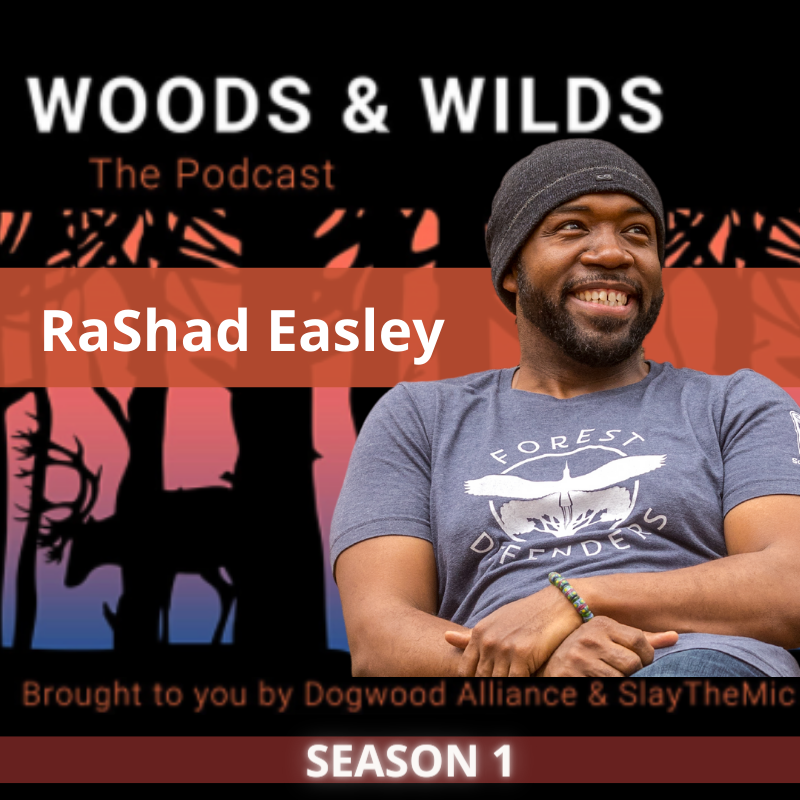
For the safety and well-being of our supporters, Dogwood Alliance will not hold our annual Woods & Wilds live storytelling event this year. It’s an event we look forward to every year because it’s an opportunity to celebrate the magic of forests with our community. We still wanted to find a way to bring that same kind of magic to people wherever they are, so we teamed up with Slay The Mic to launch Woods & Wilds: The Podcast!
We were overjoyed to welcome our very first guest, Dr. Thomas RaShad Easley aka RaShad Eas, also known as the Hip Hop Forester and the Assistant Dean of Community and Inclusion at the Yale School of Forestry & Environmental Studies, where he helps strengthen community diversity and develops programming around workplace equity. He’s also the author of the incredible article How Hip Hop Can Bring Green Issues To Communities of Color.
We look forward to sharing these stories and connections with you!
Want to listen to more? We have new episodes!


 Donate
 April 5, 2026