


Dear South Carolina Governor Henry McMaster,
COVID-19 has now killed more than 200,000 people in the US, and over a quarter of those deaths are Black Americans, in part due to racism, social inequity, and environmental injustices that have purposefully robbed the Black community of health and well-being. As you know, Enviva, a biomass wood pellet company, recently requested a permit from South Carolina DHEC to expand its production at its Greenwood, SC plant.
During the recent virtual public hearing on Enviva’s expansion request, community members and organizations asked that the company’s air quality permit be denied or postponed during the pandemic.
All across this country and around the world, essential services and production have been limited in order to ensure the safety of people. If schools, businesses, governments, and the lives of everyday citizens can be slowed, restricted, or shut down because of COVID-19, then the wood pellet industry, including Enviva, should do the same. There is currently no market for Enviva’s products in the United States. Its biomass wood pellets are burned along with coal to produce electricity in Europe and Asia.
It is a well-known scientific fact that people with preexisting conditions have disproportionate health impacts and our senior citizens are more susceptible to contracting COVID-19 and becoming ill or dying. Greenwood, like many other communities throughout the states, has BIPOC (Black, Indigenous, and People of Color) and low-income citizens who suffer disproportionately from preexisting conditions like respiratory illnesses.
Within a 2-mile radius of the Enviva plant in Greenwood, SC, the approximate 2,200 residents are already ranked above the 75th percentile for exposure to PM2.5, ozone, diesel, air toxins, cancer, respiratory hazards, Superfunds, and hazardous waste. Increasing production at the plant would further heighten the risk of exposure to many of these common pollutants, but most especially the PM2.5 and respiratory hazards risks.
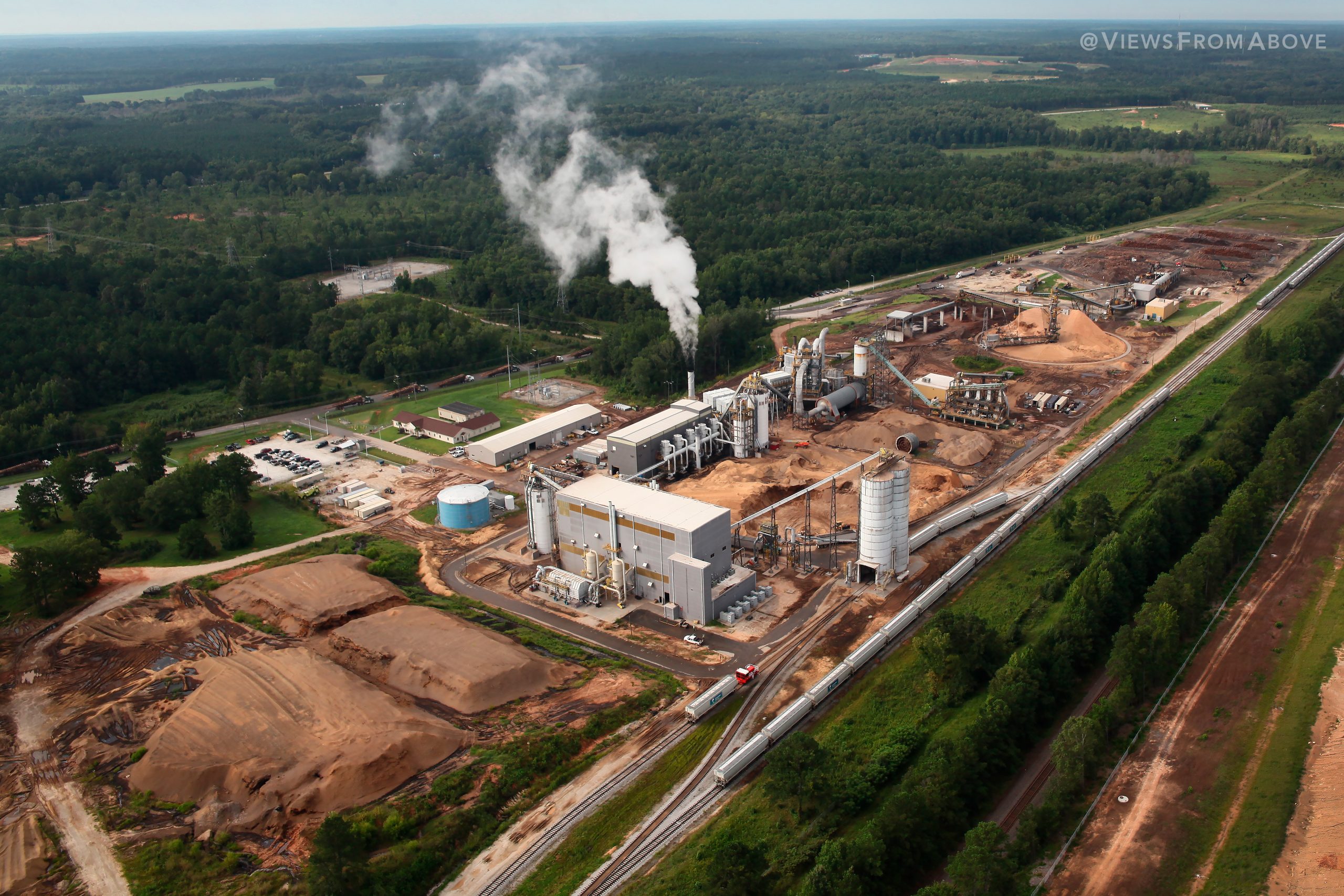
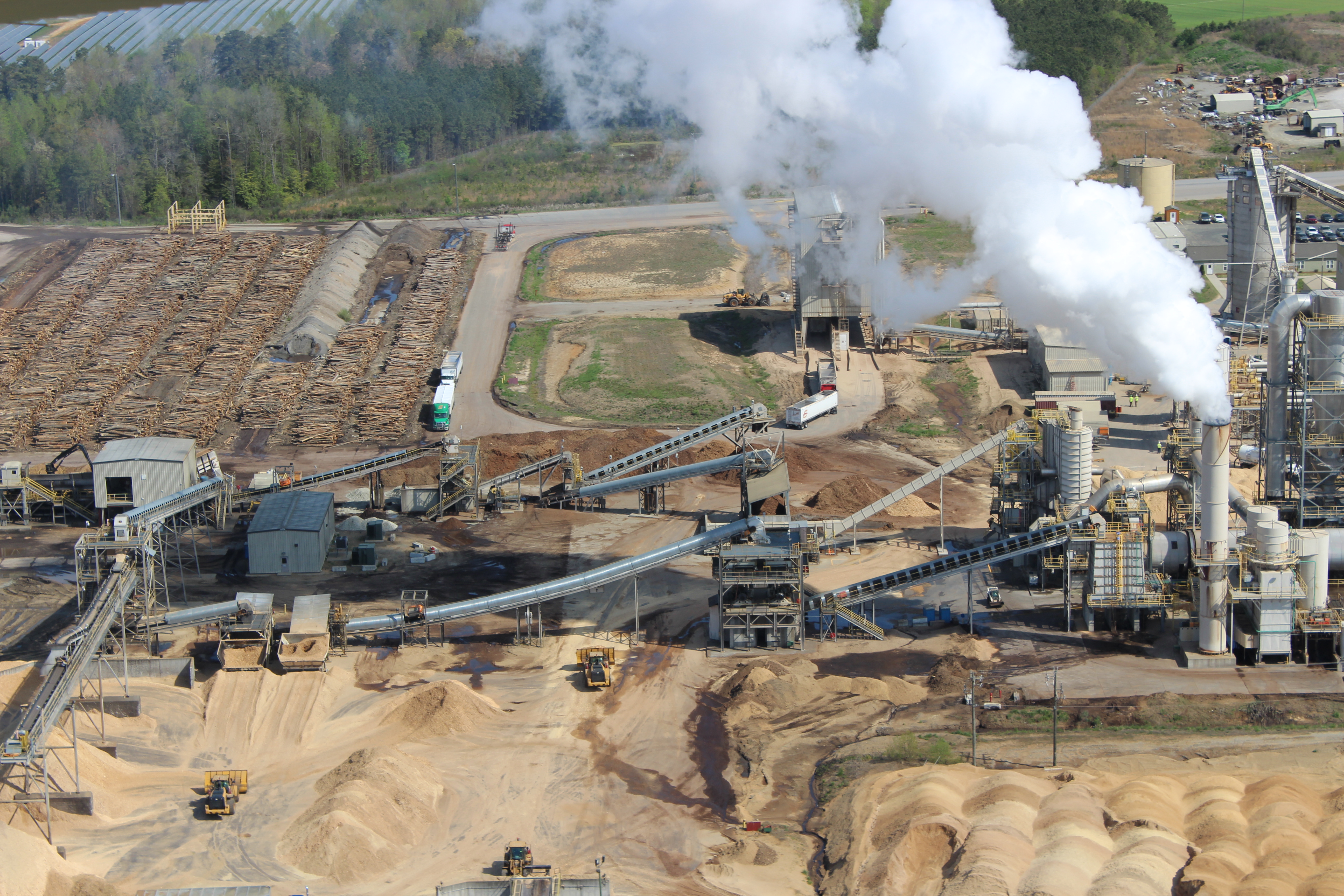
Greenwood, SC Enviva wood pellet facility. Image by: Views from Above
If the wood pellet industry continues to expand, it will have disastrous impacts on the health of local residents, the ability of natural ecosystems to support greater resiliency to storms and hurricanes, and it will contribute to global carbon emissions at a time when community health and safety rely on reducing those emissions.
Logging our forests, shipping them overseas, and burning them for fuel to meet other countries’ needs while we get all the negative side effects is a ludicrous model.
Affected communities and residents deserve to be safe, and it is the duty of the state to inform local residents of the consequences of the wood pellet industry in their community and protect them from this pollution. We reiterate our ask to postpone all permitting procedures until the coronavirus emergency declaration has been lifted.
Sincerely, Reverend Leo Woodberry – Kingdom Living Temple & New Alpha Community Development CorporationDanna Smith – Dogwood Alliance Foothills Group of the SC Sierra Club Lakelands Citizens For Clean Air, LLC Upstate SC Chapter of Climate Reality ProjectSoutheast Faith Leaders Network (SFLN), Southeast Climate and Energy Network (SCEN)-JEDI Fellow – Rev. Dallas Conyers Whitney M Slater Foundation
As forest fires rage across the West, forests in the Southeast are being destroyed for wood pellets and burned in power stations in Europe. This year, forests have become a central focus in climate change and green jobs policy proposals in the US. Unfortunately, a failure to fully grasp the scale of climate, health and economic impacts of the forest industry has led to a mishmash of forest-related policy proposals that are leading us in circles when it comes to solving the climate crisis.
Some forest policies being put forward as solutions such as the burning of trees for electricity, replacing steel with wood in buildings, and logging to prevent wildfires are going to make matters worse not better. Others are half-measures, calling for increased protections while sidestepping the need to drastically scale back forest destruction from industrial logging.
Other policy proposals focus on market-based mechanisms like carbon markets that might work for large forest landowners and Wall Street but do little to address economic and health inequities or actually have any real impact on the concentration of carbon in the atmosphere. Last but not least, some propose to invest billions of dollars in an unproven technology to remove carbon from the atmosphere or planting a trillion trees, when simply protecting existing natural forests and allowing them to grow old is much more effective and supports multiple other benefits such as biodiversity, natural flood control, clean air and water, and recreation.
Forests are vital to solving the climate crisis, protecting communities from extreme weather events, and creating healthy, equitable rural economies. If we don’t get forest climate policy right, we might as well throw in the towel in the fight for climate justice.
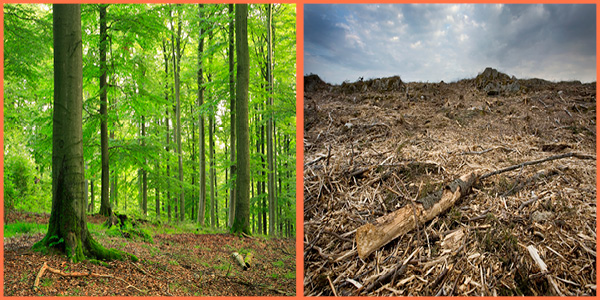
The US is the world’s largest producer and consumer of wood products, with a rate and scale of forest destruction from logging in the Southeastern US alone estimated at four times that of South American rainforests. Along with forest destruction, large wood product manufacturing facilities release harmful pollution into the air and water, with disproportionate impacts to low income communities and people of color. Equally as important, rural communities where America’s industrial-scale logging is concentrated are getting pummeled by back-to-back extreme flooding events. These same communities consistently show signs of economic distress, with disproportionately high poverty rates, unemployment rates, and other such indicators of socioeconomic distress.
Time and time again, government leaders and other advocates who champion climate solutions in the US are failing on forests and climate in five key areas.
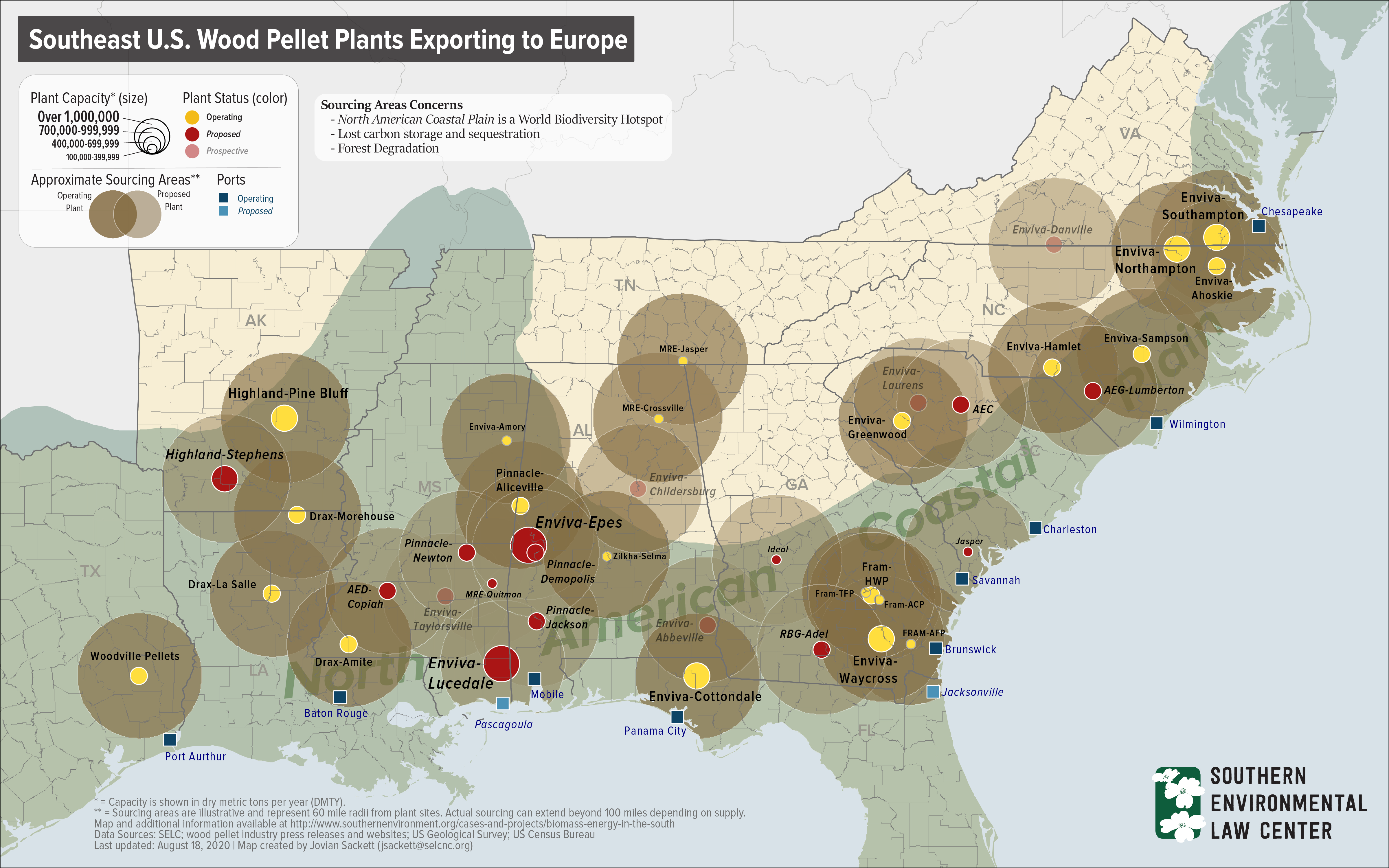
Rural communities across the Southeastern Coastal Plain with some of the nation’s highest poverty rates and percentages of Black populations lie at the epicenter of our nation’s industrial logging and wood production. Over decades this industry has compromised the health and well-being of people of color living across this rural, Southern landscape where evidence of racial injustice and corresponding economic and health inequities are pervasive.
In the past several years, these communities have become the target of a rapidly expanding global market for wood pellets, which are being burned in power stations in Europe under the guise of “green”, “renewable” energy. Black, Indigenous, and People of Color (BIPOC) on the frontlines have been pushing back at every turn from North Carolina to Mississippi.

Community concerns about the health impacts associated with the air pollution have time and time again been ignored as permit after permit is approved.
Concerns about increased flooding and the ongoing clearcutting of forests which provide natural flood protection along the rivers have likewise been ignored. Demands for truly green jobs get met with the same old rhetoric about how “green” and “sustainable” the forest industry is.
Seven new permits for expanding wood pellet mills, which emit toxic pollutants known to cause a variety of deadly health conditions were issued over just the past year and a half. Even more wood pellet mills are projected to be built across the South in the coming years and they are twice as likely to be sited in environmental justice communities.
As the Movement for Black Lives introduces The Breathe Act, now is an opportune time for all climate leaders to take action to stop further pollution and destruction and to advance new public investments in the health and resiliency of these communities. Any forest climate policy or platform that fails to address the racial injustices and inequalities associated with the forest industry are, by their omission, complicit in the harm being done to low income communities of color.
Climate leaders are failing to embrace the rapidly evolving scientific warnings about the impacts of industrial logging. A mounting body of science confirms the following:
This year, 200 scientists from across the country signed an open letter to Congress laying out the science and urging them to “oppose legislative proposals that promote logging and wood consumption, ostensibly as a natural climate change solution.”
At a time when we need to be doing whatever it takes to turn the tide on climate change, well-resourced forest industry lobbyists, allies, and spin masters are creating confusion and deflecting responsibility in an effort to perpetuate the status quo.
Lots of well-intended people working on climate change have fallen hard for industry greenwashing. A few dominant myths that have taken hold include:

Too often climate leaders out of touch with the needs of frontline communities focus on economic solutions that work for large landowners, corporate polluters, and Wall Street to the exclusion of solutions that will actually make local economies more equitable, diverse, and resilient. Forest carbon markets are a clear example of a “solution” that works for large investors and landowners, to the detriment of actually solving the climate crisis or building equitable, resilient, local economies that work for historically marginalized communities.
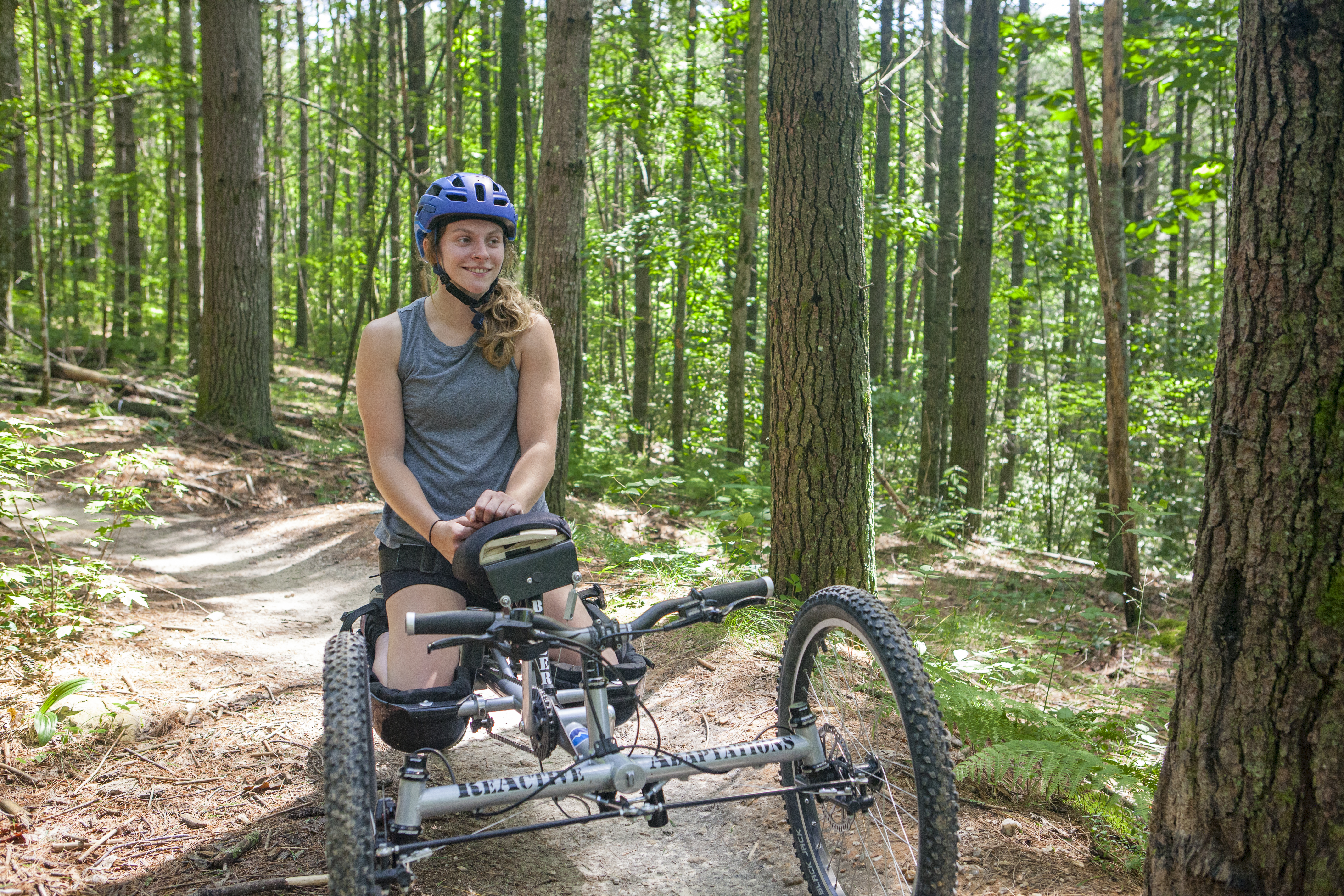
Meanwhile, outdoor recreation, which generates seven times more jobs than the forest industry, can help make communities healthier and climate resilient while creating a more diverse, locally-centered economy. New investments to equitably expand public lands and community-owned forests combined with economic development grants and job training focused on locally-owned nature-based businesses are a much better economic and climate solution that carbon markets.
Forest policy proposals today are failing to hold the forest industry accountable for its climate, health, and community impacts. If we are going to solve the climate crisis, leaders must be willing to stand up to the forest industry in addition to the fossil fuel industry.
As forests become more prominent in climate policy proposals, climate leaders must distinguish between what’s truly green and what’s greenwashing. It is vital that leaders working to advance forest climate policy differentiate between forest policies that actually ensure that Black Lives Matter versus those that perpetuate the current structures of power, influence, and wealth.
As voters hit the polls this November with climate change on their list of priorities, it’s vital that climate champions get on the right side of the people, the science, and the forests.
25 environmental NGOs from the USA and Estonia sent a letter to members of the Bundesrat ahead of last week’s debate about a reform to the Renewable Energy Law (EEG) which, the groups fear, could result in subsidies for converting coal plants with wood pellets, instead of replacing them with non-emissive, clean renewable energy.
The groups warn that subsidies for converting coal plants to biomass would pose a serious new threat to forests in the Southeastern USA and the Baltic States, where wood pellet producers routinely source wood from the clearcutting of wildlife- and carbon-rich mature forests.
They point out that Denmark, the Netherlands, and the UK, where coal power stations have been converted to biomass, import many million of tonnes of pellets from both regions between them.
Scientists, including the European Academies’ Science Advisory Council (EASAC), have warned that efforts to substitute fossil fuels with reliance on forest biomass set back efforts to address climate change by increasing atmospheric carbon dioxide levels.
Enviva, the largest US pellet producer, has repeatedly stated in public that they expect a large new market in Germany, provided subsidies are made available.
The NGOs call on the Bundesrat to reject all proposals for additional subsidies for forest biomass energy and to reserve such subsidies to clean, non-emissive renewables such as wind and solar power, as well as associated renewable heat infrastructure (e.g. heat pumps) in the Renewable Energy Law, the proposed new 1 billion Euro renewable heat subsidy and the coal phaseout law.
Rita Frost, Campaigns Director at Dogwood Alliance states: “In the Southeastern USA, Enviva consistently sources biodiverse natural forests for biomass production. Those forests play a vital role not just as wildlife habitat but also to help regulate the climate. Mature forest ecosystems remove and store large amounts of carbon from the atmosphere, and they protect communities from the worst effects of droughts and floods. German policymakers must not repeat the mistakes made by the UK, Netherlands, and Denmark in subsidizing coal-to-biomass conversions.”
Sebastian Scholz, NABU (Nature and Biodiversity Conservation Union) supports the call made by US and Estonian groups: “To reach climate targets we need to focus on energy savings and environmental friendly power generation from wind and solar energy. Substituting fossil fuels with forest biomass would cause significant harm to biodiversity whilst scientific evidence clearly shows that cutting down trees for energy is no better for the climate than burning coal. Renewable energy subsidies must be reserved for genuinely low-carbon, clean forms of energy.”
Uku Lilleväli from Estonian Fund for Nature adds: “In Estonia, logging – nearly all done by clearcuts – has been intensifying at record levels. This has a detrimental impact on the country’s biodiversity, for instance, the number of forest birds has been in steep decline, and its forest carbon sink, making it more difficult for our country to meet its own climate goals. Germany must not fuel the demand for biomass and intensify the logging further.”
Jane Ballenthien from Robin Wood adds: “US and Estonian groups are right to warn of threats to their forests, however the growing use of wood for biomass in Germany – and the possibility of converting coal plants to wood in future – threaten our own forests, too. Coal-to-biomass conversions would create a long-term greater demand for wood, ultimately requiring even more intensive logging. This is the last thing our forests need in the context of worsening impacts of climate change on forests.” ——————————- END ——————————- Contacts: Rita Frost, Dogwood Alliance, [email protected], +1 512-423-0620 Uku Lilleväli, Estonian Fund for Nature, [email protected], +372 5661999 Link to the open letter: https://www.biofuelwatch.org.uk/2020/open-letteragainst-german-coal-to-biomass-conversions
Notes: The European Academies’ Science Advisory Council (EASAC) has warned that it is “it is inevitable that the initial impact of replacing coal with forest biomass in power stations is to increase atmospheric carbon dioxide levels.”
See the letter here: https://www.dogwoodalliance.org/offener-brief-biomasse/
Groups Across North America Oppose Release of Genetically Engineered Trees New York – On Oct. 19th the initial public comment period by the United States Department of Agriculture (USDA) on the petition for deregulation of Darling 58 genetically engineered (GE or genetically modified) American Chestnut closed.
Historically, there has been strong public opposition to GE trees, a trend which continues to be seen with the current proposal. The public comment period closed with 109 organizations, representing millions of members, officially opposed to the proposal to plant Darling 58 in forests. 123,426 individuals have also registered opposition to the genetically engineered American Chestnut. More than 400 organizations have previously endorsed a full global ban on the release of all GE trees into the environment.
Today, representatives of five organizations opposing the deregulation of Darling 58 spoke at a virtual press conference: Anne Petermann–International Coordinator, Campaign to STOP GE Trees; BJ McManama–Campaign Organizer, Indigenous Environmental Network; Scot Quaranda–Communications Director, Dogwood Alliance; Dana Perls–Food and Technology Program Manager, Friends of the Earth; and Lucy Sharratt–Coordinator, Canadian Biotechnology Action Network.
The representatives spoke against the attempt by researchers at the SUNY College of Environmental Science and Forestry (ESF) to gain regulatory approval for “Darling 58,” a GE American Chestnut for unrestricted planting in North American forests, making it the first genetically modified organism (GMO) designed to spread into ecosystems.
Anne Petermann, Global Justice Ecology Project: “There are no long-term risk assessments of the impact of these GE trees on ecosystems. This would be an irreversible experiment. The Precautionary Principle mandates that before such an irreversible action is taken, it must be proven safe. There is no evidence that the GE American Chestnut tree is safe in forest ecosystems over time. Corporate backers like Monsanto, ArborGen, and Weyerhaeuser view the chestnut as a ‘test case’ to overcome widespread public opposition to GE trees. They are hoping to open the door to other GE varieties like poplar and pine designed for industrial plantations.”
Dana Perls, Friends of the Earth: “The release of genetically engineered chestnut trees could have irreversible and unpredictable impacts on vulnerable forest ecosystems. This biotech proposal is part of the decades long agribusiness agenda to maximize profits and control of nature at great cost to our health and the planet.”
BJ McManama, Indigenous Environmental Network: “Today, there remain large areas of traditional and treaty lands on which much is forested and managed as sovereign territory of many different Native American Peoples. These forests are not only a source of economic self-determination but hold great cultural significance to include sacred sites where the trees are an element of sustenance, knowledge, and familial identity. Every living being within the forests is related in some form and nothing within these lands lives in isolation, therefore changing or altering the original instructions of any one or any part of these elements threatens the natural order established over millennia.”
Scot Quaranda, Dogwood Alliance: “The Southern US is global ground zero for the forest products industry, and we see genetically engineered chestnut trees as this industry’s sneaky way of opening the floodgates for frankentrees that will harm forests, biodiversity, and local communities across the region. Our natural forests that support wildlife and the economic sovereignty of rural communities will rapidly be replaced with tree plantations for wood pellets, paper, and more, leaving environmental and climate injustice in their wake.”
Lucy Sharratt, Canadian Biotechnology Action Network: “We do not accept the risk of contamination into Canada from a US release of this GE tree. If the US approves this GE tree then it needs to be fully contained to the US range of the American Chestnut. We’re concerned that tracking the plantings and progeny of Darling 58 in the US will fall apart over time.”
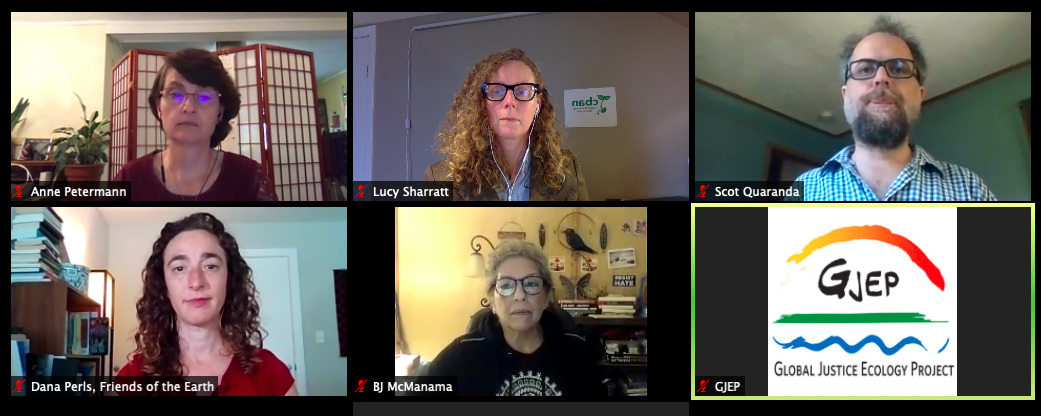
Links of Interest:
For more information or to schedule interviews with any of the speakers contact Steve Taylor
+1 314 210 1322 [email protected]
This week, our hosts Kimala Luna from Dogwood Alliance and Elizabeth Garland from SlayTheMic speak with Mary Annaïse Heglar. Mary is a storyteller, climate activist, author, and co-creator of the Hot Take Podcast and newsletter that examine the state of the climate crisis by taking a critical look at the media. This episode we hear from Mary about her work at the intersection of climate and racial justice, her love of writing, her experience as a Black climate activist, and mourning our losses in a time of a climate emergency.
Be sure to read Mary’s articles on Medium and to hear more about her work on climate, you can find her on Twitter, Instagram and be sure to listen to her podcast.
Want to listen to more?
Check out the full transcript of our interview with Mary!
Elizabeth Lashay: Welcome back to another episode of Woods and Wilds Podcast. I’m Elizabeth Lashay with SlayTheMic, and I’m joined by my wonderful co-host.
Kimala Luna: I’m Kimala Luna with Dogwood Alliance, and we are so thrilled to be here with Mary Annaïse Heglar, who uses the art of storytelling to help people feel less alone in facing the climate crisis and to build the movement for climate justice.
Kimala Luna: In addition to her essays, which have been published in The Boston Globe, Vox. Mary is the co-creator of the Hot Take Podcast and newsletter that examines the state of the climate crisis by taking a critical look at the media and all the ways we’re talking and not talking about it.
Kimala Luna: Hi, Mary, welcome to the show.
Mary Heglar: Hi, thank you for having me.
Elizabeth Lashay: Yes, I’m so excited. And I know we were looking over some of the articles that you have done. Wow, what a library you have in terms of… And the content doesn’t seem to shift.
Mary Heglar: There’s a lot to say, I found the niche in climate and emotions or climate and race, and there’s so much to say there because so little has been said.
Kimala Luna: Oh man, and I’m so glad that you mentioned climate and emotion. Cause that was going to be one of my first questions to just jump right in, you just talk about the balance between nihilism being as equally uneffective as blind optimism and that there’s a middle ground to be found. And can you speak to that middle ground?
Mary Heglar: Yeah, I think the middle ground is just reality, it’s acknowledging that this is hard, that this is painful, and that we are… We have to mourn what we’ve lost because we have lost a lot. I was frustrated at the time that I wrote the essay. I think you’re talking about “Home Is Always Worth It” because I, on one side felt like there were so many people who were just like, “Oh, climate change is here already. So we have to just give up.”
There was actually an essay that prompted that in The New Yorker by Jonathan Franzen. I don’t remember the title of it, but it was basically “what if we just admitted that climate change isn’t stoppable” and his advocacy was like, “let’s just work on other stuff since we can’t fix this.” And I was like, “well, that’s going too far.” And then the response to him was like, “no, we can still fix this.” And it’s like, “actually that’s not all the way true either.” The world we had is not the world we’re going to get back. It’s still worth fighting for, but that doesn’t mean that we’re going to go back to normal. That doesn’t mean that we’re going to go back to the planet that we had when I was two years old. And we have to acknowledge that and be realistic about that. We don’t have to delude ourselves in order to do it. And I’ve also been frustrated with this idea within climate spaces, that you have to have hope to work on this. And I don’t believe that’s true. I don’t run on hope. I run on courage. I run on a dogged determination and spite. So I don’t consider myself necessarily a hopeful person. I also don’t think hope is something that you can give to someone else, hope is something that you earn from your own actions. So yeah, that’s what I was talking about.
Kimala Luna: Thank you that’s Beautiful.
Mary Heglar: Thanks.
Elizabeth Lashay: When I was reading your article in terms of, we can’t tackle climate change without you, is that call to action in terms of when people need an extra dosage of courage. How can we get people involved in the thing and being aware of climate change and then changing it?
Mary Heglar: Yeah. My argument is that climate action is not one thing. Climate action is more of… I call it climate commitment instead of climate action. And that’s something that is ongoing and you can pick it up every day. It’s kind of a yoga practice. You go to a yoga class, it doesn’t matter if you hit the perfect pose that day. That’s not the point. The point is that you came and you practice, and maybe you’ll do it better the next day. Maybe you’ll do it worse the next day. But the point is that you did it. And I think that’s kind of the way we need to start seeing climate action. I think that people think of it as a one-time thing you recycle. If you mess up recycling that day, that’s it for you? It’s a wrap. You just suck as a person and that’s not what it is. And also I think that recycling feels like a very small solution in the face of a very, very big problem.
We have to expand our idea of what climate action is beyond our consumer actions. Because I think climate action has been defined for the most part by the industry. Who of course sees you as a consumer only, but we’re all so much more than just consumers. We are citizens. We are people, we are family members, we’re friends. There’s so much more to us.
What I would say to someone who wants to get involved in climate change or climate action. Changing climate change, rather. What I would say that a person is figure out what your power is, what your special talent is and cultivate that and bring that. No one can tell you what you’re going to evolve into as a climate person, you’re ready to full-fledged, get in here. I can’t tell you how you’re going to show up because I guarantee you, nobody told Greta Thunberg to strike outside of school. Nobody told these kids to go build their movement. They just did it. Nobody told Martin Luther King to stage a bus boycott, I guarantee people told him not to do that. People did not tell me to go start writing essays. I just did that. So figure out what you do well, and that is what you bring to climate. So do what you do best and make it climate.
Kimala Luna: You write about environmental justice and environmental racism a lot. And to me, they feel one and the same. But I understand that for a lot of people, it’s hard to make the direct connection. What are some of the things that you write about that you’re like, “I cannot believe I have to articulate this, it’s so simple.” And something that you do want everybody to just know.
Mary Heglar: Yeah, I think the thing that was the hardest for me to figure out how to articulate. It took me years to figure out how to say it was that climate action or the climate movement should be Black, that there’s no dichotomy between working for Black Lives Matter and working on climate. Those are not different things. So something that I would find very frustrating and it happened a lot this past summer was now’s not the time to talk about climate because we need to show up for Black Lives Matter. And for me as a Black climate activist or Black prominent writer, it’s like “who did you think I was here to save this whole time? Did you think I was in climate because I want it to save white people? No, I wanted to save myself. I wanted to save my family. I want to save people. I wanted to save Black people.”
So I want to get away from that dichotomy that they’re separate. It was not time for the climate movement to be silent for the sake of Black lives. It’s time for them to join. That’s what was so clear to me. And so that… I still know how I figured out how to articulate that, all that well, but I’m getting closer. And I think it’s just because it’s something that feels so inherent to me. I can’t believe I have to say it. Other things I think are that climate is one of those things that you can’t come back from, climate change… Maybe we can figure out a way to engineer the world where we’ve undone some of the damage, but we don’t have those tools at our disposal. So this idea that now’s not the time. It never makes any sense when it comes to climate because we are out of time and we’ve been out of time.
So, I’ve heard from a lot of people including elders in my own family, wait till the next election for big systemic change and. We don’t have another election. Even if somebody weren’t holding a knife to the throat of our democracy right now, as far as climate is concerned, we don’t have another election to wait. That clock ran out a long time ago. And at this point, we’re just trying to salvage a little bit of what we can. So waiting another four years is really a kamikaze action.
Elizabeth Lashay: When did you find your passion and really own the climate action?
Mary Heglar: So I don’t know if my passion is climate action or if my passion is writing. I write about the thing that I’m scared about. I learned that writing was my passionate language, my passion really, really young when I was seven years old or something. The first book that was not a child’s book that I read was a collection of poetry from the Harlem Renaissance. So that love affair started when I was really young and probably even younger than that. I loved hanging out with my great aunts and uncles and listening to the stories they would tell and the words they would use. And, I’m from Birmingham, Alabama, everybody is lyrical. So, it was just like hearing poetry come out of their mouths all the time. So that started really young.
Learning to love nature. I think that also started really young, hanging out with my great aunts and uncles at the same time. And honestly, there’s this myth that Black people don’t care about the environment, and I’ve never met that Black person I’ve met plenty of black people that don’t care for environmentalists, but not the environment. I think I learned all of that really young figuring out that climate change was the place where I was going to make my life’s work. That started in 2014. I have always worked in non-profits and in 2014, I knew I was leaving my job. I was leaving the social science research foundation, which they do good work. But it takes a really, really long time for it to make a difference when you have to build a body of research and that takes decades. And I wanted to work on something that I felt would make a more immediate impact because I felt like the world’s falling apart around me.
I don’t really… Do we have 20, 30 years? I don’t know? And so I decided that I wanted to work with the most important story and decided that was either climate change or public health. And I now know those are not different things. So I specifically sought out an environmental NGO and went to work there working on policy publications, which are these really dense wonky reports about all the problems and all the solutions. And that was when I realized how bad it was. And then you start to have the nightmares and you start to have the waking visions and going through what we now call climate grief.
I decided I needed something to process that. And so I started writing just to process it and connect it to these other issues. Because as an editor, you have to wrestle with the material, you have to look at all the bodies in between the lines and that can take a toll on you. And I didn’t just see a pipeline. I saw the schools that were sitting on top of the pipeline. I saw who’s in the schools and they looked like me and that was difficult. So yeah, I started the writing. I started putting it out there because the reason people aren’t connecting with this is because they don’t see themselves in it. And so what if I just wrote about what I saw and I didn’t think anybody would ever read my little blog, but now we’re here.
Kimala Luna: I want to talk about what inspires you about nature? And, what keeps you going in this? Because it can be really hard.
Mary Heglar: Yeah. I think spite is a lot of what keeps me going, a lot of what keeps me going is knowing that you can’t just push me into an early grave and walk off without at least a black eye. I’m at least going to embarrass you. So understanding that this isn’t just happening, somebody is doing this. Somebody is digging up fossils and setting them on fire and poisoning people today and tomorrow and forever. Someone’s making that decision. And I’m really angry at that person and those people and somebody is deciding to cut down our trees and chop them up in the pellets and ship them across the world. And that makes me really angry. And it makes me angry because I love this planet. And I love my family and I love my friends and I love myself.
All of those are reasons to want to do this work. And, I do draw inspiration from nature. I think it is beautiful, I think it’s sacred. I think it is our job, not only to protect it but also to commune with it. I think we are part of it. I think when I see people say like, “Oh, I didn’t know. I lived in nature.” It’s like, “you live in a human body.” A human body is a natural thing. And you breathe air and drink water, come on. So in that way yeah, I draw inspiration from nature because I am nature.
Elizabeth Lashay: Take us to a time where you really felt covered and at home in nature and walk us through that beautiful moment, whether it was in your childhood or was it yesterday taking a walk, Just one moment that you can think of off of the top of your head.
Mary Heglar: Yeah, I think I kind of always feel that way even on the days where I don’t leave my apartment. But some of my favorite moments are definitely when I go back home to visit my mom, my mom lives in Mississippi and I’ll sit on the back porch a lot and just watch the weather. And my favorite times are the thunderstorms. And, you kind of feel them coming and the air gets really heavy and gets dark. And then all of a sudden, the sky just deluges and there’s lightning and thunder and so much water falling out of the sky. And I think it’s really, really beautiful. And also before it starts, you see the birds start flying closer to the ground cause they know what’s coming. And then afterward you listen to the crickets and the lightning bugs start to come out if it’s dark enough yet. And then there’s other times I sit on the back porch and watch the hummingbirds. Cause she has all these hummingbird feeders out back. Cause my grandfather used to love them. And when they come by, I’m thinking, yeah it’s my grandfather, I think every hummingbirds my grandfather.
Kimala Luna: That’s so beautiful. That’s awesome thank you for sharing. I love hummingbirds. I want to talk about your podcast because you’re a writer and that’s totally a new medium. So why that podcast? Why the themes? Why a podcast in general?
Mary Heglar: Yeah. So I started the podcast with Amy Westervelt, who’s a veteran climate journalist herself. She has an amazing podcast called Drilled which if people haven’t listened to. They should listen to it. All about how the fossil fuel industry has deceived people. So I started listening to that last spring, I don’t even know what time it is anymore, but I was just obsessed with it and just inhaled it. And eventually, I slid into her DM’s and was like, “you’re so cool. I don’t know if you live in New York, but if you do, can we meet up?”
So eventually later on we met up and we became friends and she started talking about building another podcast about climate news. And the more we talked about it, I was like, “what if it was media criticism for climate coverage?” Because that was something we were texting about a lot, “this story totally missed the mark, or this story is awesome.” We want it to talk about how to improve climate storytelling in the media. Because if you look at climate change and climate solutions, the problem isn’t the technical side. And honestly never really has been. We’ve always had the solar panels and the wind turbines. We’ve always had those technical solutions. The problem is political will. And where do you build political will, if not in media? Somebody needs to be keeping track of it.
Somebody needs to be watching what they’re doing and trying to make it better, trying to hold them accountable and telling that story. That was really where it grew out of. And just recently we launched… Back in may we launched our newsletter as part of it because we realized that a biweekly podcast is just not enough to cover all of it, which is actually a good thing, that there’s so much climate media. We couldn’t cover everything that was talked about in the past two weeks. And our episodes were getting along. We had sore throats by the end of recording those things. We launched the newsletter, which we have a lot of fun with. We write short pieces every week, four different feature or two different features each about this past week, Amy held Nancy Pelosi and Dianne Feinstein accountable for not doing enough for California’s climate action.
I wrote about the passive voice and how people use it to make people think that they’re doing more on climate. Politicians use it to make themselves sound like they’re more active on climate than they are. They’ll say things like “Congress must act on climate.” You’re in Congress, what does that even mean?
We have a lot of fun with the stories that we tell over there. But more importantly, we have this section that we call our digest, where we keep a running list of all of the climate stories from that week. And it’s really long because what we found is that if you get a newsletter from The New York Times on climate, it’s just the New York Times, it’s coverage on climate, same thing for Bloomberg. And if you go to Apple news and you go to their climate change section, it’s really puny. There’s not a lot there. They don’t populate it well. So if you want it to keep up with the climate story and have an aggregator for all the best climate stories out there, you can’t the only way you can do it is to be on Twitter and you got to really be on Twitter and who wants to do that? So that was why we created this. And I say it as somebody who’s on Twitter all the time.
Elizabeth Lashay: We’re living in a world where we are very polarized. There’s a lot of misinformation as well. That is coming out throughout every media source. Where are places that you get your information?
Mary Heglar: Yeah, honestly I’m not so much sure that we are polarized or that one side has become a death pole. So I think there used to be this time of balance and whatever, you can’t balance with somebody who’s just completely gone off the deep end and created a world of conspiracy theories where they think that forests are burning up because the Sierra Club is burning them up. There’s no reasoning with that. So I feel pretty confident just letting that dream die. And I get a lot of my information from, news media that I trust. But I also have, developed my own sense of critical thinking, which is key. I do read the New York Times and The Washington Post, but I have found that at least as far as climate change is concerned, a lot of the time when it comes to the trends and the movement or whatever, they’re pretty slow.
So you can find that sort of stuff better by… Rolling Stone has fantastic coverage. So does Vice, has really good coverage. Earther, Grist, Drilled. Amy has a new site in addition to her podcasts and they do really good work too. The Guardian when they’re not neglecting it. And so reading a lot of those different sources.
Kimala Luna: So you read poetry first, you said that was your first adult book after children’s books. Do you still read poetry? And if so, if there’d been a poem that you read lately that was captured your emotion in a good way?
Mary Heglar: I haven’t read a lot of poetry lately, but if I were going to recommend one, it would be Warsan Shire’s Teaching My Mother How To Give Birth. Which is somewhere behind me, but it’s really thin. It would take me a while to find it, to pull it out.
But it is a beautiful collection of poetry about the plight of refugees. Is this the one where she says, no one puts their child on a boat unless the water is safer than the land. The whole collection is really beautiful. I had just recently finished reading Jesmyn Ward’s Salvage The Bones, which is embarrassing that I’m just now reading that, given she’s the most prolific Mississippi writer out there right now. But I would say it’s one very long poem and very beautiful poem. And it’s really about climate honestly, it’s about hurricanes.
Elizabeth Lashay: What about your Mississippi roots and just growing up, are you extremely proud of?
Mary Heglar: Well, I should clarify because it’s… Possibly one of my cousins will listen to this. My roots are in Alabama. So I was born in Alabama and raised there until I was nine. And that is where the vast majority of my family lives. And my mom moved to Mississippi with me and my brother when I was nine. So definitely shaped in Mississippi, but I had to be clear that my roots are in Alabama and they’re very similar, but very different places and both very, very beautiful. And I think what I’m most proud of is, or what I take from there and take with me always is just the beauty of language.
When we’re talking about a little bit earlier, that is what made me a writer. You can just… The way that southerners speak, the way that we communicate is just so beautiful and lyrical and buttery and just, we’re so good at things. People often ask, “where did you learn to write?” Then it’s like “Mississippi.” I didn’t take creative writing classes. Nobody taught me how to do this. I just learned from the cadence that people speak with the sort of idioms that we use, the way that we breathe nature into everything that we talk about. My cousin telling my uncle that he thinks he’s slicker than sweat on a snake. That just comes out of you. You didn’t find it anywhere, or my other cousin telling another one “that you never saw a snake when you’re cutting the grass.” I don’t know why I came up with two snakes. I actually hate snakes, those are the sorts of sayings that we just make up on the spot. And I don’t see how you grow up in a place that musical and lyrical and don’t learn to love language and learn how to wield it. And I don’t see how you grew up in a place that beautiful and not want to protect it for the rest of your life.
Kimala Luna: So on the show, we often talk about nature and the environment but because Liz is with Slay the Mic, which is a hip hop radio show. We also talk about hip hop. And so you just talked about lyricism and music, and I just wanted to know if there are any songs that have been touching you recently, or any particular artists that you want to recommend.
Mary Heglar: So I am old and I have not listened to a lot of new music in a minute. So honestly, the first thing I think of when I’m thinking about the South and hip hop, of course it’s OutKast and I don’t think OutKast gets enough credit for. They actually made a climate song on Aquemini,The Art of Storytellin Part 2 is really about climate. Andre has a whole verse about it, and it kind of doesn’t… That was what? 1999. Yeah. They were such visionaries. So they don’t get that type of credit. I see climate everywhere, but I also see it in Beyonce’s Lemonade, all over the place. Cause the whole thing is about nature or it’s a very strong presence and her song, OTHERSIDE from the Lion King soundtrack. You can’t convince me that’s not about climate change and her love for Black people.
I haven’t seen it yet because there’s a snake in it. My hatred runs strong, really runs strong.
Elizabeth Lashay: Well, in terms of what’s next, what is next for you and what you’re excited to be working on? Would you mind sharing?
Mary Heglar: Oh girl, I don’t know. Honestly, I feel I’ve got my hands full with just growing the podcast and the newsletter. I’m really excited about both of those things and I guess they still feel kind of new and I’ll probably just keep writing. Hopefully at some point we’ll get to a point where we can have speaking events in person again. Cause I hate Zoom speaking. This is cool, this is a podcast, but speaking to big crowds of people on Zoom. Oh, it’s the worst. I hate it. That’s kind of where I’m at and in the face of this quarantine, this election, all of this that’s about all I can handle.
Kimala Luna: So in nature, when animals have experienced traumatic events… Which I feel is happening to us every day, they shake violently to shake it all off. What’s something that you do to just shake it out of your system?
Mary Heglar: Primal screaming. I highly recommend it.
Kimala Luna: I love it.
Mary Heglar: Also running. Running is really cathartic and useful and a side effect, you’ll be ready when the zombies come.
Kimala Luna: Yay, and that can happen any day now.
Mary Heglar: Any day.
Elizabeth Lashay: I am not doing well then I need some jogging.
Mary Heglar: You don’t want to be the slowest. That’s the goal zombies aren’t very fast. You don’t have to be super fast.
Kimala Luna: Oh my goodness. Well, I’m excited to know a little bit more about what you think the future holds and I want to say the near future. So within a year of what is transpiring with our climate in the world around us?
Mary Heglar: I don’t know. Honestly, I don’t know if I can make up a prediction and I think I’ve tried to… Because, it feels so uncertain. I tell myself that I’m more interested in who I want to be, than what’s going to happen because that I can control. What type of person do I want to be? And how do I want to show up no matter who wins in November, no matter what climate action is taken at the grand scale or not taken, who do I want to show up as. And that is a constant, that’s something I don’t want to change. I want to be someone who’s always part of pushing for more and pushing for better.
Kimala Luna: That’s inspiring. Well, Mary, I feel like we have covered some beautiful ground here. Do you have anything that you want to make sure people tuning in hear or know or can check out?
Mary Heglar: Everybody’s said this over and over again, but it can’t hurt to say it again. Make sure that you’re registered to vote and vote.
Elizabeth Lashay: Yes, and where can we find you? We want to keep following you and read more of your essays. And is there a place that we can find information about yourself?
Mary Heglar: Yes. Sure. So I’m on Twitter. I’m at Mary Heglar, H-E-G-L-A-R and also on Instagram at the same. And also my podcast and newsletter Hot Take, are the best place to keep up with me.
Kimala Luna: Thank you. This was amazing. I got chills multiple times. I hope folks tuning in listening also got chills.
Mary Heglar: You-all are too kind.
Kimala Luna: You have such a powerful voice.
Mary Heglar: Thank you.
Kimala Luna: Yes. Thank you so much.
Mary Heglar: Thank you. This was fun.
For most of us, especially folks living in the South, we see industrial air and water pollution expanding. We feel the negative health, environmental sustainability, and economic impacts across the region and beyond. Unfortunately, most policy makers haven’t gotten the memo. Why else would we continue to see the expansion of polluting, extractive industries like industrial logging and wood pellet manufacturing?
In the case of the wood pellet industry, the expansion has been substantial.
The 40.2 million tons of wood pellets exported from 2011 – 2019 represent:
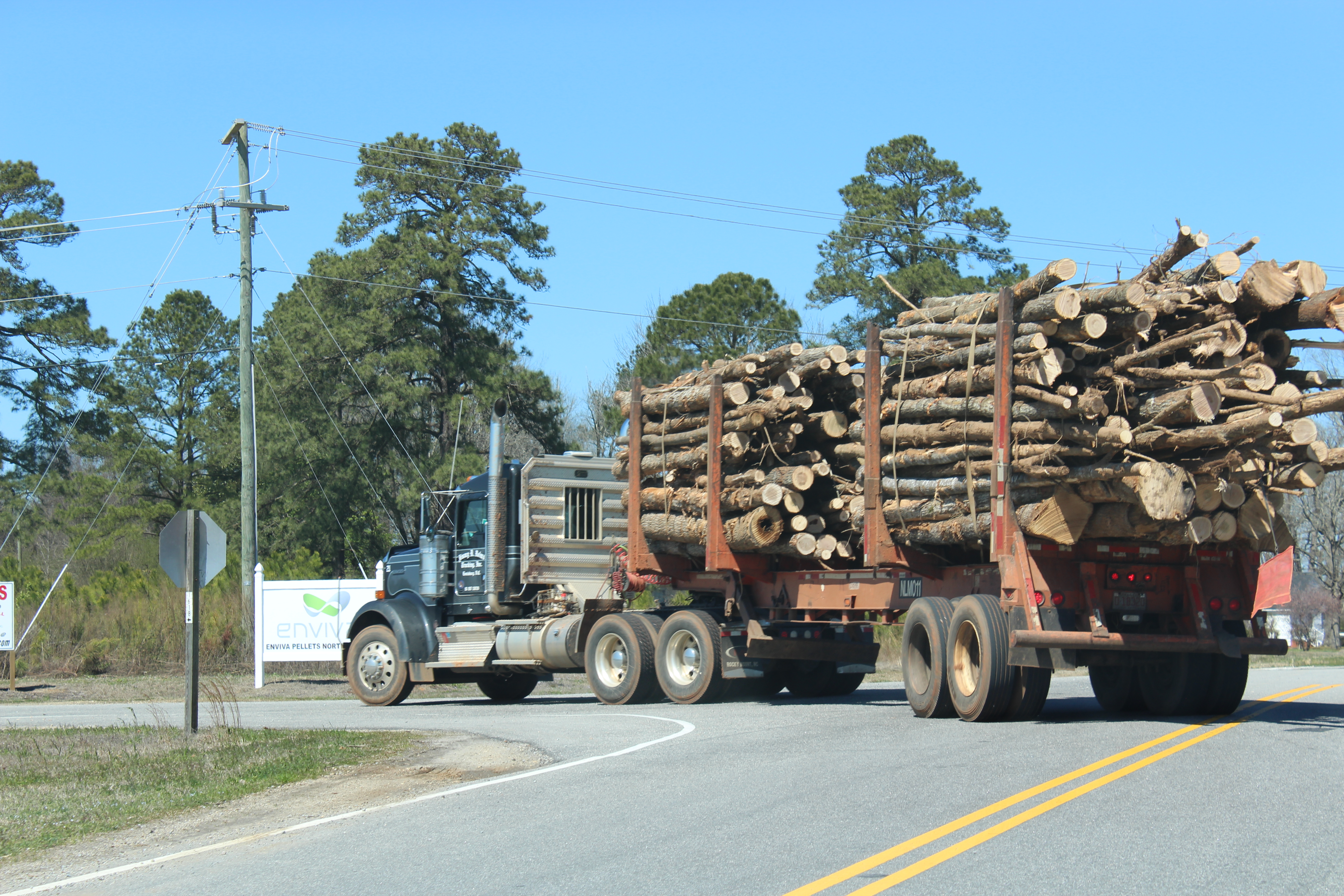
Clearcutting the solution across the US South
If the current trend continues, approximately 762,000 additional tons of wood pellets will be exported each year. If the growth of this industry remains constant, that’s approximately 18,200 additional acres cut down each year.
Unfortunately, that doesn’t compare to what industry has in store for us. Enviva, the world’s largest wood pellet producer, is currently trying to expand production limits at various plants in North and South Carolina. They have touted plans to build 3 new plants in Georgia and are constructing a plant in Lucedale, Mississippi.
Enviva isn’t the only company in the game. A new group from Texas, the Renewable Biomass Group, has invaded Georgia. Their proposed new facility, if permitted, would add another 500,000 ton per year to the projected total.
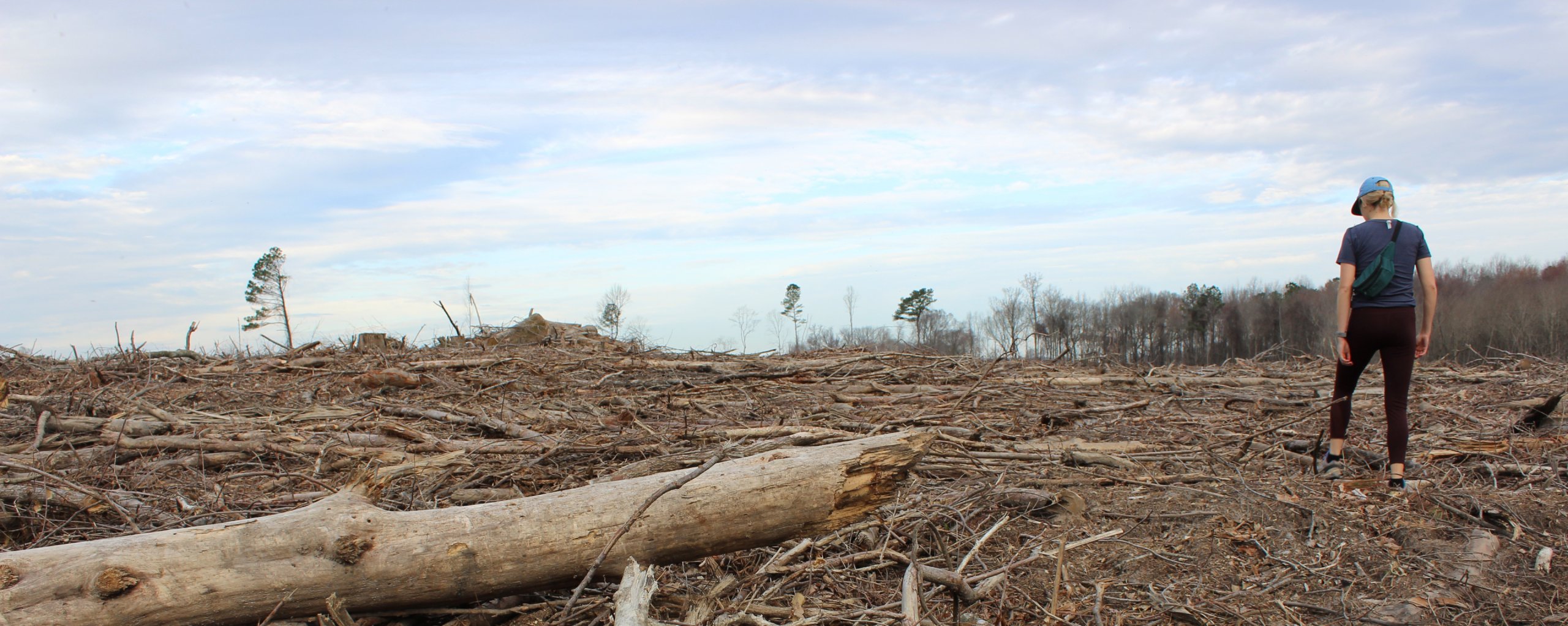
Clearcut for wood pellet production
In terms of industrial logging for the global timber trade, one study found that it represents an annual loss of $1.5 trillion USD in ecosystem services, which includes carbon sequestration. While the industry claims that plantations and harvested wood products store significant amounts of carbon, studies show that previously logged forests store only 55% of the carbon that an unlogged equivalent area does and that wood products lose carbon sequestration capacity every year after harvesting.
Looking at community health, permitting constraints on pollution throughout the South designates a certain amount of “allowable” pollution to be dumped into the community every day. Pellet mill pollutants, like fine particulates and volatile organic compounds, have been shown to cause cancer, asthma, and other lung diseases.
It’s obvious that these industries damage both the health as well as the economic and environmental sustainability of communities across the South, so why aren’t our policy makers taking action?
Polluting industries invariably build their plants in environmental justice communities. These are low income, rural communities where at least 25% of the residents are People of Color. Residents are hungry for promised jobs. Local policy makers are happy to accommodate corporations that say they’ll create them, often to the point of destroying the community tax base in return for very few actual long term jobs.
State elected officials, when not influenced by forestry industry lobbyists and corporate donations, face multiple issues specific to their own state and may not have time to look at forestry issues deeply enough to connect the dots.
But in response to the work of citizen activists and environmental organizations like Dogwood Alliance, awareness and policy solutions are coming forward. In Georgia, the Stand4Forests resolution was introduced in both the state House and Senate. In North Carolina, Governor Cooper felt the anti-biomass pressure, and now biomass is completely excluded from the state’s clean energy future.
Citizens are ramping up action on the local level, Stand4Forest resolutions have been passed in various counties, biomass is being banned in more clean energy resolutions, and citizens are showing up at city council meetings to oppose new plants.
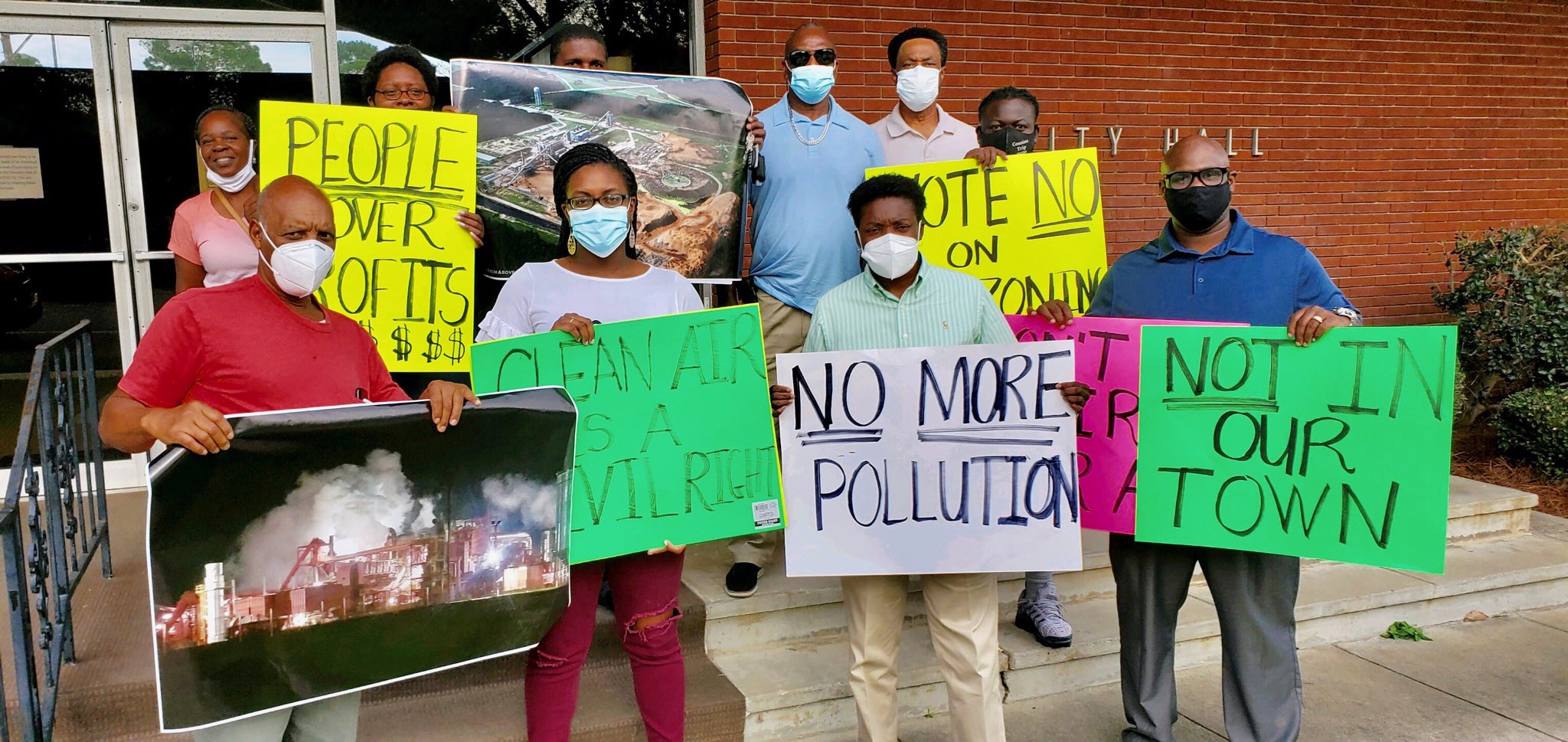
Voters Stand4Forests at Adel, GA, City Hall
As we approach this election, from the top of the ticket down, electing officials who “get it” should be our priority. We need leadership that understands the connection between forests, climate, and justice and will work hard for a just and clean energy future. Now, it’s time to get out and VOTE!
Another turn around the sun brings us to my favorite time of the year: fall! It’s no secret that autumn is the best: with color-changing trees, wild swings in weather, and most importantly: Halloween! Even though many places aren’t doing the usual Halloween festivities this year because of COVID-19, there are still ways to safely celebrate the season: Like learning about all of the spooky-themed BOOdiversity of the South. Let’s get started!
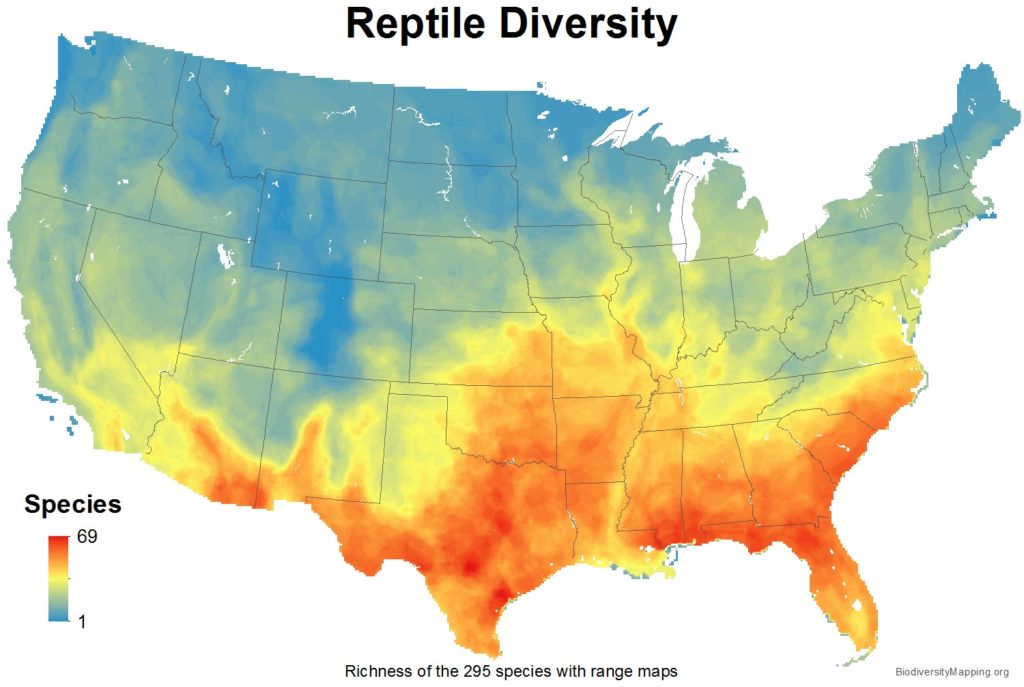
The US South is one of the most biodiverse regions in the country and even in the world. Don’t believe me? Check out these maps from biodiversitymapping.org! There are many amphibian, reptile, and fish species that call the US South home. Part of the reason our biodiversity is off the charts is because we have many “endemic” species. An endemic species is one that occurs in a very restricted area and nowhere else in the world. Endemic species might live in particular streams or caves or be special subspecies of more common plants and animals.
What’s spookier than a cave? The animals that live inside, of course! Many unique critters live in caves across the US South. At first glance, caves don’t seem too livable: they’re dark, they can have poisonous gases, and they’re damp and cold, too! What might not be very livable for humans, however, can be a great boon to cave-dwelling animals.
The most iconic cave-dwelling animal is the bat. There are at least 32 species of bats in North America. Bats are mammals, just like us, but they live in dark places like caves or under bridges, coming out at night to forage on fruit and insects. They’re a favorite to watch for as the sun is setting, and large colonies can draw large (human) crowds to watch as they go out for the night.
Despite being a feared animal, bats are actually very important to their ecosystem. Did you know that a single bat can eat hundreds of mosquitos in a night? Now that’s an ecosystem service I can get behind! Bats around here don’t attack humans or suck blood, but, like other wild animals, they can transmit rabies, so be sure to look but don’t touch.
Unfortunately, many of our bat species are in decline. The primary culprit is an unusual fungus that causes white-nose syndrome, infecting and killing entire colonies. First detected in 2006, white-nose syndrome has wiped out countless bats, and it is quickly spreading across the United States. Cases of white-nose syndrome have been linked to humans traveling between infected and uninfected caves. Researchers have tried closing off caves where bats live in an attempt to prevent humans from accidentally spreading the infections. It’s slowing, but not stopping the threat entirely.
Even before white-nose syndrome, bats were in trouble. Like many species, bats are vulnerable to the effects of human-induced climate change. The rapidly changing weather patterns are affecting how and when bats can get food. The sooner we can get climate change under control, the sooner our bats can prosper once more.
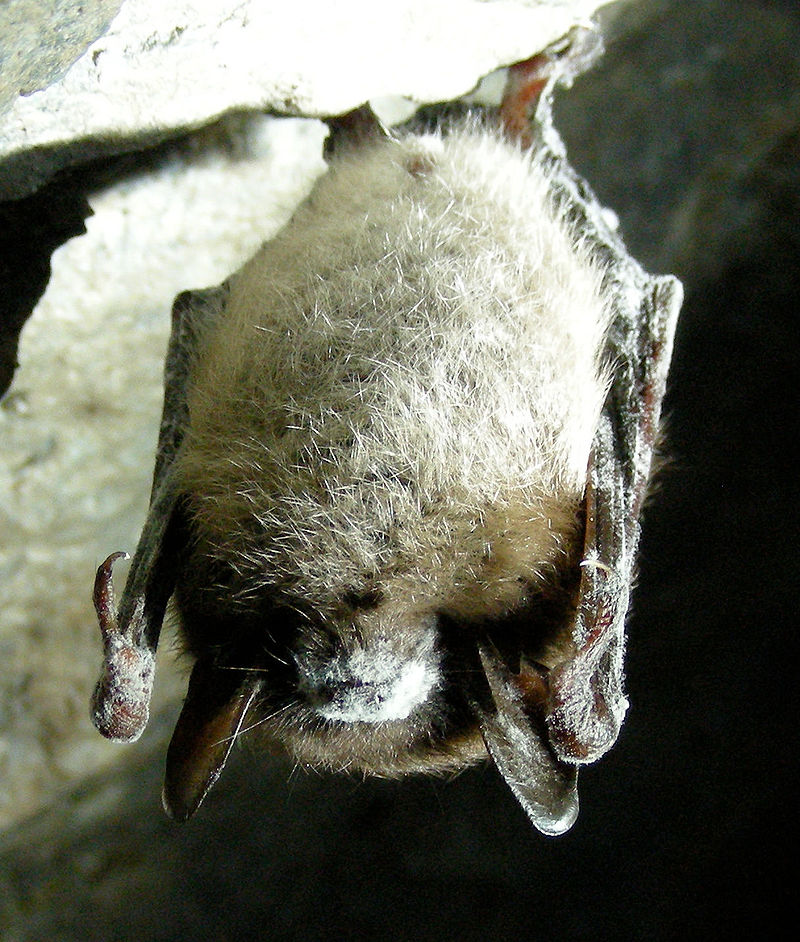
A bat with white-nose syndrome.
As a popular Halloween treat, jello worms is a good way to scare your friends and neighbors. But real worms can be just as scary! Did you know that most of the worms that we see today are invasive? That’s right! Even if you’re taught in school that worms are good for the soil, the fact is that they weren’t always here. When Europeans colonized North America, and stole the land from Indigenous peoples, they brought along their plants, soil, and earthworms.
Why are earthworms so scary? Well, our forests are an intricate ecosystem, and earthworms are seriously disturbing it. Basically, forests without earthworms have their soils decomposing at a different, slower rate, than forests with earthworms. The change in decomposition rate creates a change in the available nutrients in the forest floor, which in turn, can affect which plant species grow. When you change all of these things, you end up changing the ecosystem, which means that it might not be able to support the animal species that it used to be able to support. You know, the butterfly effect…the earthworm effect?
The worst part? It’s not just nightcrawlers. Scientists have detected a species called the jumping worm in some forests. Jumping worms are potentially worse because they live in large, dense colonies close to the surface, draining the topsoil of nutrients more efficiently than other earthworm species. Also, they jump. Shivers.
In the first few weeks after I brought my trusty hound dog, Bud, home, I would walk him in the evenings before bed. One of those nights, as we stepped out the door, he let out the first growl I’d ever heard him make – deep and low in his chest. I looked up and across the street, and there was a silhouette of a big, bushy haired creature moving very slowly across my neighbor’s driveway. Never the one for heroics…we went back inside. While peering out the window to watch from a safe distance, I soon realized that it was my neighbor’s elderly husky — not a coyote.

Bud is more likely to growl about a late dinner than a potential predator, nowadays.
My poor eyesight aside, coyotes live everywhere in the US: even in cities and suburbs. Coyotes are important members of our ecosystem. In the South, coyotes prey on mostly small game: rabbits, nutria, raccoons, and squirrels. Unfortunately, outdoor cats and small dogs are also at risk of being food for coyotes. But humans are generally safe from interactions with coyotes, and a loud voice and a stick can scare them off if they get too curious.
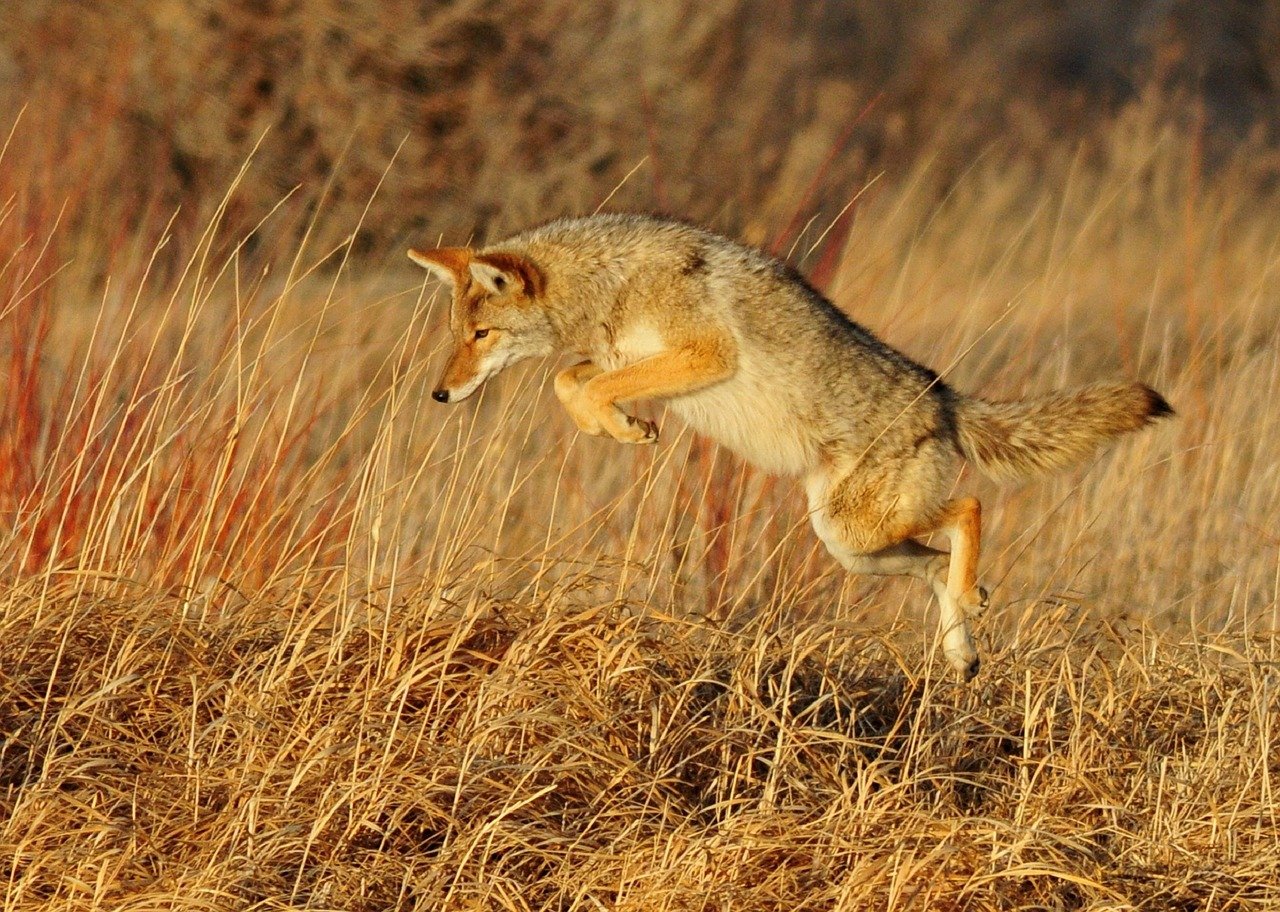
Coyotes are one of the only large predators we have left in the ecosystem, because we drove wolves and cougars to extinction here in the Eastern US. We need coyotes, even if we think they’re a little creepy: without them, small species like groundhogs and raccoons would become overpopulated, spreading disease, getting hit by cars, and causing damage to our properties. Coyotes do more yipping than howling, but their cries are magical and musical, and yes – just a little bit spooky.
Did you enjoy learning about my favorite spooky season? If so, why not show us?
Share your favorite spooky nature photos/videos and tag us on Instagram, Facebook, or Twitter!
Want to do more?
Become a Forest Defender today! Your monthly gift will protect the biodiversity of the South.
Join our email list to get new Biodiversity in Your Backyard sent directly to your inbox!
As most of you know at this point, our forests are being destroyed to make wood pellets that are shipped to Europe where they are burned for electricity. The Europeans currently count biomass electricity as both renewable and carbon neutral. Unfortunately, burning forests for fuel not only destroys our forests, the best defense against climate change, but it also releases large amounts of carbon back into the atmosphere.
Most of the stories about the negative impacts of the wood pellet industry focus on impacts to the climate and biodiversity.
Purifoy speaks to residents of Northampton, North Carolina where Enviva operates a wood pellet mill. The residents talk about increased air pollution causing breathing problems, noise keeping them up late at night, and how all of the promised jobs have not brought prosperity, but only further suffering.
Belinda Joyner, a resident of Northampton speaks truth and wisdom when she explains,
“When I looked at the officer that was choking George Floyd, and he said I can’t breathe, this is the same thing that the industries are doing to our communities.”
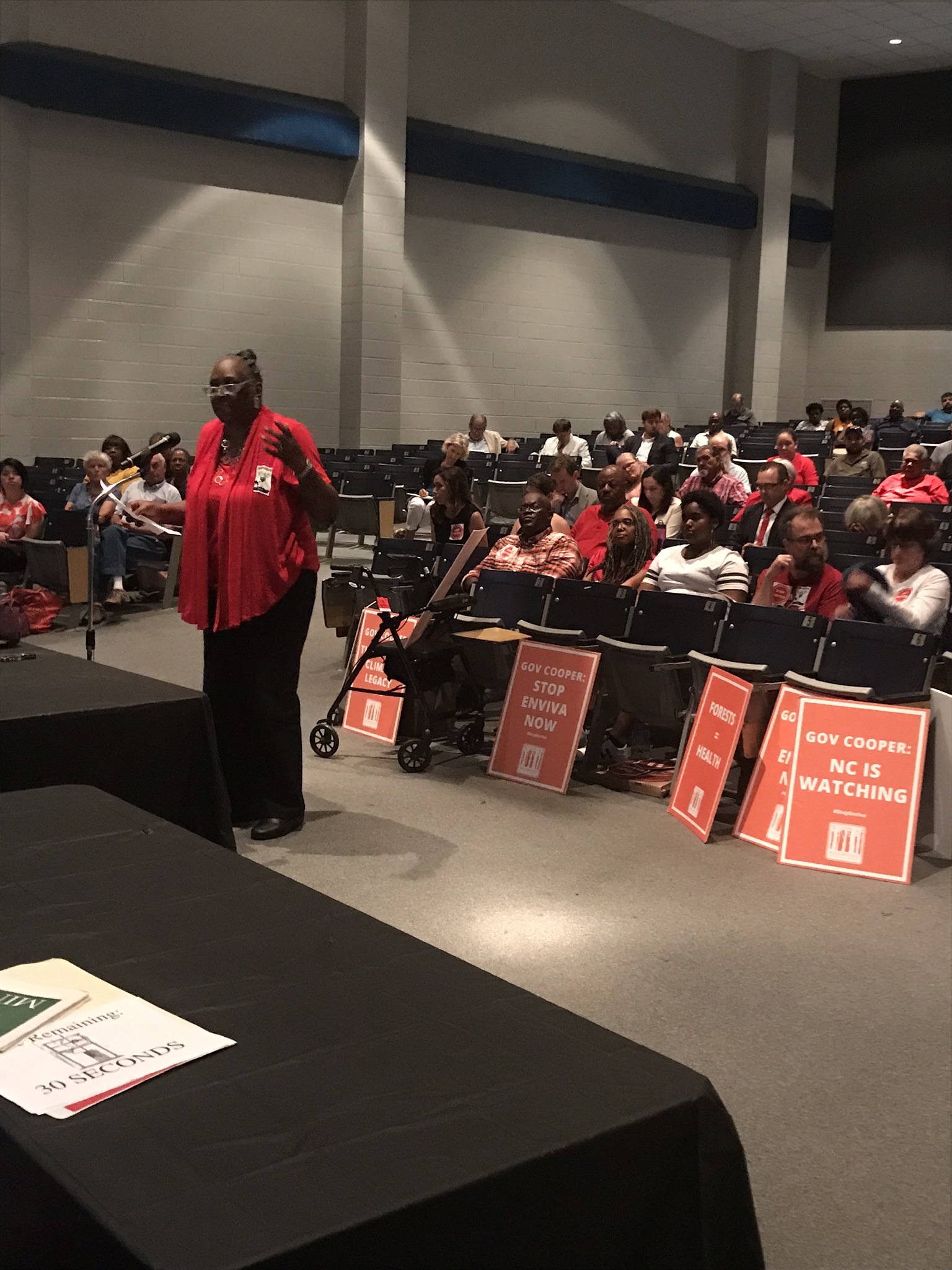
Belinda Joyner speaks at the North Carolina Department of Environmental Quality public hearing on the proposed expansion of Enviva’s wood pellet mill.
In those two states, local residents discovered the coming wood pellet mill long after it was already a done deal. The companies have spent years behind closed doors wooing local politicians and the state agencies in charge of permitting rubber stamp permits regardless of local community opposition.
Reverend Michael Malcom, the Executive Director of Alabama Interfaith Power and Light said,
“They go into these low wealth communities, promise opportunity, and a lot of residents bite on it. If we could get ahead of this, we could go in and tell them about the dangers of the wood pellet industry. But unfortunately, the way the system works in Alabama, ADEM keeps things under wraps until it’s time for the public hearing.”

Reverend Michael Malcolm, the Director of Alabama Interfaith Power & Light, and an outspoken opponent of the wood pellet industry in the deep South.
You can read Part I from Scalawag here, “Knock on Wood: How Europe’s wood pellet appetite fuels environmental racism in the South”
And Part II here, “As the wood pellet industry grows across the South, Enviva targets Alabama and Mississippi for future expansion.”
Professor Vet prepares to provide expert testimony during a Dutch Parliamentary hearing on biomass today, October 14, 2020. The Netherlands is one of the primary importers of biomass sourced from the Southern United States and major changes could be underfoot as the new Dutch sustainability framework for biomass is set this fall.
Burning wood for energy? Clearly this is a false solution to climate change. But the House of Representatives in the Netherlands is still struggling with their decision-making with the poor excuse that “there is no scientific consensus.” We, 35 scientists, know better. This is because it is not about opinions but about facts. We give ten here.
1. There is already too much CO2 in the atmosphere! If we want to achieve the climate goals for 2030 and 2050, we must reduce carbon pollution in the atmosphere within the next 10 years and actively avoid increasing emissions. The best way to do this? Let trees grow because trees are good at storing CO2.
2. The combustion of biomass emits 16% more CO2 per unit of energy than coal and 94% more than gas[1]. Decades from now that CO2 could be absorbed again in trees, but then it will be too late.
3. Wood as an energy source requires an immense amount of land because plants only capture and store a small percentage of solar energy. Biomass supplies fifty to a hundred times less energy per square meter than solar panels[2].
4. The motivation to burn wood for energy is that a new tree can be planted for every felled tree. It would therefore be CO2-free energy, because this new planting removes the released CO2 from the air. But this ignores the loss of time: it takes decades for the new plantings to absorb the CO2 emitted again, and even longer for the extra CO2 that an uncut tree would have absorbed. The “carbon-neutrality” claim by the biomass industry is an illusion. It has been scientifically established that the use of woody biomass instead of fossil fuels for energy will increase CO2 in the atmosphere for thirty to more than a hundred years[3].
5. Within the EU, the CO2 emitted by burning imported biomass – and that is the majority – has gone missing from carbon accounts because of international loopholes. This creates a skewed picture of the carbon impacts of removing and then burning forests for energy[4].
6. One argument we hear from the biomass industry is: “If you don’t burn logging waste, it will rot and the CO2 will still be released.” This ignores the time factor. Combustion emits all CO2 immediately. Wood that decays emits only a quarter to a third of its CO2 in ten years[5]. In addition, a large part of the CO2 is never emitted but fixed in the soil. This “waste” is an important source of nutrients and therefore indispensable for the growth of the forest and thus the sequestration of CO2. Forests do not produce waste: dead biomass is converted and reused. Forests are the textbook example of a circular economy.7. The claim that woody biomass is residual waste is incorrect. Only 12% of the wood for imported wood pellets is residual forest waste[6]. Documentaries from the Netherlands, the US, Estonia, and Denmark show how whole trees are harvested and processed[7]. Why on the one hand recycle newspapers and on the other hand shred and burn the trees from which newspapers are made?8. Biomass from biologically-rich forests is now burned with enormous public subsidies. Burning trees as energy is the lowest-value product of the tree in a forest. It should be used for high-quality products. In the context of climate change, the greatest value of a tree in a forest is to leave it standing to sequester and store carbons.
9. Sawdust and other residual waste that is released in the wood industry can also be used to a higher level, for example for chipboard and linoleum. Subsidies for energy purposes disrupts this market and leads to more logging.
10. The worldwide large-scale demand for biomass has major negative consequences for land use and biodiversity. A varied forest is multifunctional (air, soil and water quality, maximum carbon storage, and biodiversity). Converting existing multifunctional forests to energy crops or fast-growing wood into monocultures is a form of land use with many negative environmental and biodiversity effects.
Also on behalf of: Bert Brunekreef, Em. Prof Environmental Epidemiology, Univ. Utrecht Hans de Kroon, Prof. of Plant Ecology, Radboud Univ. Nijmegen Geert de Snoo, Prof. Conservation Biology, Univ. Leiden and NIOO-KNAW Jan den Ouden, Assistant Professor of Forest Ecology and Forest Management Wageningen Univ. Marcel Dicke, Prof. of Entomology, Wageningen Univ. Ben Feringa, Jacobus van ‘t Hoff Distinguished Prof. of Molecular Sciences, Univ. of Groningen Daan Frenkel, Em. Prof. of Chemistry, Cambridge Univ. Kees Hummelen, Em. Prof. Chemistry of (bio) organic materials, Univ. Groningen Patrick Jansen, Associate Professor of Wildlife Ecology and Conservation, Wageningen Univ. Tjeerd Jongsma, Director Institute for Sustainable Process Technology (ISPT) Frits Mohren, Prof. Forest Ecology and Forest Management, Wageningen Univ. Han Ollf, Prof. of Community and Conservation Ecology, Univ. Groningen Jos Raaijmakers, Prof. of Microbial interactions, Univ. Leiden and NIOO-KNAW Rudy Rabbinge, Em. Prof. Theoretical Production Ecology, Wageningen Univ. Joost Reek, Prof. Supramolecular Catalysis, University of Amsterdam Huub Rijnaarts, Prof. Environmental Technology, Wageningen Univ. Daan Schram, Em. Prof. Engineering Physics, Techn. Univ. Eindhoven David Smeulders, Prof. Energy Technology, Techn. Univ. Eindhoven Richard van de Sanden, Prof. Plasma Physics and Chemistry, Techn. Univ. Eindhoven Jos van der Meer, Em. Prof. General Internal Medicine, Radboud Univ. Nijmegen Klaas van Egmond, em. Prof. Environmental Science and Sustainability, Univ. Utrecht. Rienk van Grondelle, Em. Prof. biophysics Free Univ. Amsterdam Joop van Lenteren, Em. Prof. entomology, Wageningen Univ. Wim van Saarloos, Prof. of Theoretical physics, Leiden University Wim van der Putten, Prof. Functional Biodiversity, Wageningen Univ. and NIOO-KNAW Pier Vellinga, em. Prof. climate change, Free Univ. Amsterdam Marcel Visser, Prof. of Ecological genetics, Wageningen Univ. , RUG, and NIOO-KNAW Rene Wijffels, Prof. in Bioprocess Engineering, Wageningen Univ. Mary Booth Ph.D., Director, Partnership for Policy Integrity Bill Moomaw, Co-director Global Development and Environment Institute, Tufts Univ. Boston Mike Norton, Prof. Tokyo Institute of Technology, Shinshu Univ. and EASAC Environment Program Director Tim Searchinger, Research Scholar, Center for Policy Research on Energy and the Environment, Princeton Univ. Tarmo Soomere, President, Estonian Academy of Sciences, Tallinn, Estonia
References: [1] Netherlands Enterprise Agency RVO, and Zijlema, PJ (2017). Dutch list of energy carriers and standard CO2 emission factors. [2] van Zalk, J., and Behrens, P. (2018). The spatial extent of renewable and non-renewable power generation: A review and meta-analysis of power densities and their application in the US Energy Policy 123 , 83–91. [3] Bentsen, NS (2017). Carbon debt and payback time – Lost in the forest? Renewable and Sustainable Energy Reviews 73 , 1211–1217. Sterman, JD, Siegel, L., and Rooney-Varga, JN (2018). Does replacing coal with wood lower CO2 emissions? Dynamic lifecycle analysis of wood bioenergy. Environ. Res. Lett. 13 , 015007. Alessandro Agostini, Jacopo Giuntoli, and Aikaterini Boulamanti (2014). Carbon accounting of forest bioenergy: Conclusions and recommendations from a critical literature review (European Commission Joint Research Center). https://ec.europa.eu/jrc/en/publication/eur-scientific-and-technical-research-reports/carbon-accounting-forest-bioenergy-conclusions-and-recommendations-critical-literature [4] Ros, JP, Minnen, JG, Arets, EJMM, 2013. Climate effects of wood used for bioenergy. PBL Netherlands Environmental Assessment Agency. www.pbl.nl/publicaties/klimaateffecten-door-gegevens-van-hout-voor-bio-energie Page 21
Searchinger, TD 2009. Fixing a Critical Climate Accounting Error. Science 326, 527–528. doi: 10.1126 / science.1178797
Strange Olesen, A., Bager, SL, Kittler, B., Price, W., Aguilar, F., European Commission, Directorate-General for the Environment, COWI, and Pinchot Institute for Conservation (2016). Environmental implications of increased reliance of the EU on biomass from the South East US: final report. (Luxembourg: Publications Office). P 185: ‘Emissions from biomass combustion are counted as zero in the energy sector. This, however, assumes that the sourcing and use of the biomass does not lead to Greenhouse Gas emissions, or that any such emissions are properly accounted elsewhere, such as in the LULUCF sector of the country where the biomass originates from.’
The European Commission recognizes this and wants to abolish it: ‘Emissions of biomass used in energy will be recorded and accounted towards each Member State’s 2030 climate commitments’. European Commission (2016). Land use and forestry regulation for 2021-2030. https://ec.europa.eu/clima/policies/forests/lulucf_en
[5] Booth, MS (2018). Not carbon neutral: Assessing the net emissions impact of residues burned for bioenergy. Environmental Research Letters 13 , 035001. [6] (RISI) Walker, S., Lyddan, C., Perritt, W. & Pilla, L. An Analysis of UK Biomass Power Policy, US South Pellet Production and Impacts on Wood Fiber Markets (RISI, 2015). https://docplayer.net/25281897-An-analysis-of-uk-biomass-power-policy-us-south-pellet- production-and-impacts-on-wood-fiber-markets-prepared-for-the- american-forest-paper.html
Oswalt, SN, Smith, WB, Miles, PD, and Pugh, SA (2014). Forest Resources of the United States, 2012: a technical document supporting the Forest Service 2010 update of the RPA Assessment (Washington, DC: US Department of Agriculture, Forest Service). P. 21: ‘During 2011, timber-processing facilities in the United States produced nearly 59.3 million dry tons of wood residues, with just 492,000 tons (less than 1 percent) of that residue not used for a product’.
Erik Berg, Todd Morgan, Eric Simmons (2016). Timber Products Output (TPO) – Forest Inventory, Timber Harvest, Mill and Logging Residue – Essential Feedstock Information Needed to Characterize the NARA Supply Chain (Univ. Of Montana Bureau of Business and Economic Research). P. 9: ‘the vast majority of mill residue <99.8%> is currently utilized… .Nearly 80 percent .. is currently used for pulp and composite panels ‘.
[7] Videos showing how whole trees are harvested for wood pellets: 6 Sept 2020: ARD 1. Europamagazin ∙ Das Erste. Estonia: Waldrodungen für die Pelletindustrie. About clearing forests for pellets in Estonia. www.ardmediathek.de/daserste/video/europamagazin/estland-waldrodungen-fuer-die-pelletindustrie/das-erste/Y3JpZDovL2Rhc2Vyc3RlLmRlL2V1cm9wYW1hZ2F6aW4vNzQzN2ZmODktMjdjOS00OWU1LTk2MGEtZGRhZDA4ZTMzMWQ4/?fbclid=IwAR0rm79g0v-CDhrxDu4B7n8wu8jP3cccVJEle69SztjPapKs09VI7wPs1AE August 30, 2020 Mongabay. Pellet manufacturing in the US www.youtube.com/watch?v=7_yzrJleyGE 19 July 2020. French pellet factory Biosylva shows how they convert huge trees into pellets https://www.youtube.com/watch?v=PA77mKuc8gc&feature=youtu.be June 4, 2020. Fragile Forests – Estonia 2020. Clearing forests in Estonia. Select in (Youtube settings English subtitles.) Www.youtube.com/watch?time_continue=1&v=lzUcHXTC6vo&feature=emb_logo&ab_channel=PriiduSaartLaten 22 Feb 2020. EenVandaag.TV. How Enviva in the US converts trees into pellets. https://eenvandaag.avrotros.nl/embed/524402/ March 2019. Belgium: video of the wood pellet factory Ecopower CVBA in Ham, how they make pellets. https://www.youtube.com/watch?v=Fet2zceG9VI&feature=youtu.be or https://youtu.be/Fet2zceG9VI 2019. Denmark TV2, Harvesting trees in Estonia for biomass wood pellets. https://nyheder.tv2.dk/samfund/2019-09-09-tv-2-afsloerer-fejl-i-klimakontrol-helt-sort-siger-ekspert 2019. Dogwood / NRDC Brochure: Global Markets for Biomass Energy are Devastating US Forests https://www.dogwoodalliance.org/wp-content/uploads/2019/07/Biomass-Investigation-Booklet-2019.pdf Jan 18, 2018. Platform Wald-Klima.de. The Calculation Error – or: Why Burning Wood is not Carbon Neutral. https://www.youtube.com/watch?v=YC4tqu8-oSo 22 May 2017 Zembla TV: Forest as fuel. Production of American wood pellets. www.youtube.com/watch?v=6LHGbiyvZto 2017. Link TV. Burned: are trees the new coal? About wood pellet production in the US. https://burnedthemovie.com/ https://vimeo.com/286550378 www.linktv.org/shows/burned-are-trees-the-new-coal/episodes/burned-are-trees-the-new-coal 2015. Climate Central. Employees of Enviva employees show where pellets come from. http://ccentralassets.s3.amazonaws.com/specialreports/pulp-fiction/videos/packages/making-of-a-pellet-720p.mp4 18 Dec 2015 Cuijk bio-energy plant company video, including tree trunks. www.youtube.com/watch?v=38nw09mDyss&feature=youtu.be&t=53
In the Fall of 2008, I was serving as the Development Director for a small, tuition-free middle school for girls in Boston’s Dorchester neighborhood when the bottom of the US economy dropped out. As a tuition-free school, programs were funded almost entirely through grants and private donations.
It soon became clear, though, that the school’s donors – big and small – had no intention of leaving us. Every week brought surprises in the mail. The donor who’d been giving $25 a year for 10 years sent $50 that year. The foundation that sent an extra $5,000. The couple who sponsored the sixth grade and recommitted to fulfilling their pledge to support the class through the next three years, though their assets were now likely less than half what they’d been.

Because in March, when the Covid-19 pandemic closed businesses and restaurants, cancelled meetings and travel, and caused death and illness across the globe, I felt a familiar sense of panic. I feared for all those who would be hit hard and experience loss and trauma. I also feared for Dogwood Alliance and the people and forests our work supports. But in time, I realized that all the strengths that pulled that little school in Boston through the storm would also keep Dogwood strong: a clear and compelling mission, a history of success, programs that support and buttress the mission, and donors who believe in what we do.
We heard encouragement for our efforts, concern for communities hit hard by Covid-19 that are still facing wood pellet plant expansions, interest in our webinars, reports, and journal articles published in collaboration with allies. We’ve missed seeing your faces at rallies and protests, storytelling events and film screenings. But we know you are with us, because you’ve told us you are – by taking actions, reading our reports, sending comments to decision-makers, and by supporting us financially.

We are grateful that you, along with environmental activists from around the globe, have recognized Dogwood Alliance as a smart, science-based, climate-justice ally at the forefront of forest protection. Together, we will meet the challenges of this moment and keep the pressure on government, regulators, and the logging industry. With you, we will stand united with communities on the frontlines of the health and climate impacts of deforestation.
I hope you will again consider us worthy. We cannot do this work without you.


 Donate
  April 5, 2026