


When you think of the beauty of nature in the Southeastern United States, do you think of woodpeckers? You can find woodpeckers throughout the region. From the red-headed woodpecker to the giant pileated woodpeckers. These interesting birds have a lot to offer any outdoors enthusiast or birdwatcher. Let’s discover why woodpeckers are such an important part of this vibrant region.
A woodpecker is a bird that belongs to the family Picidae. You can find them all over the world. These birds are famous for their distinctive “drumming” behavior. They use their strong beaks to peck and drill into trees, posts, and other hard surfaces. They do this to find food and build nests.
Woodpeckers have:
They come in a variety of different sizes, colors, and regions depending on the species. Woodpeckers in North America usually have a splash of red in their feathers. That makes it much easier to spot them.
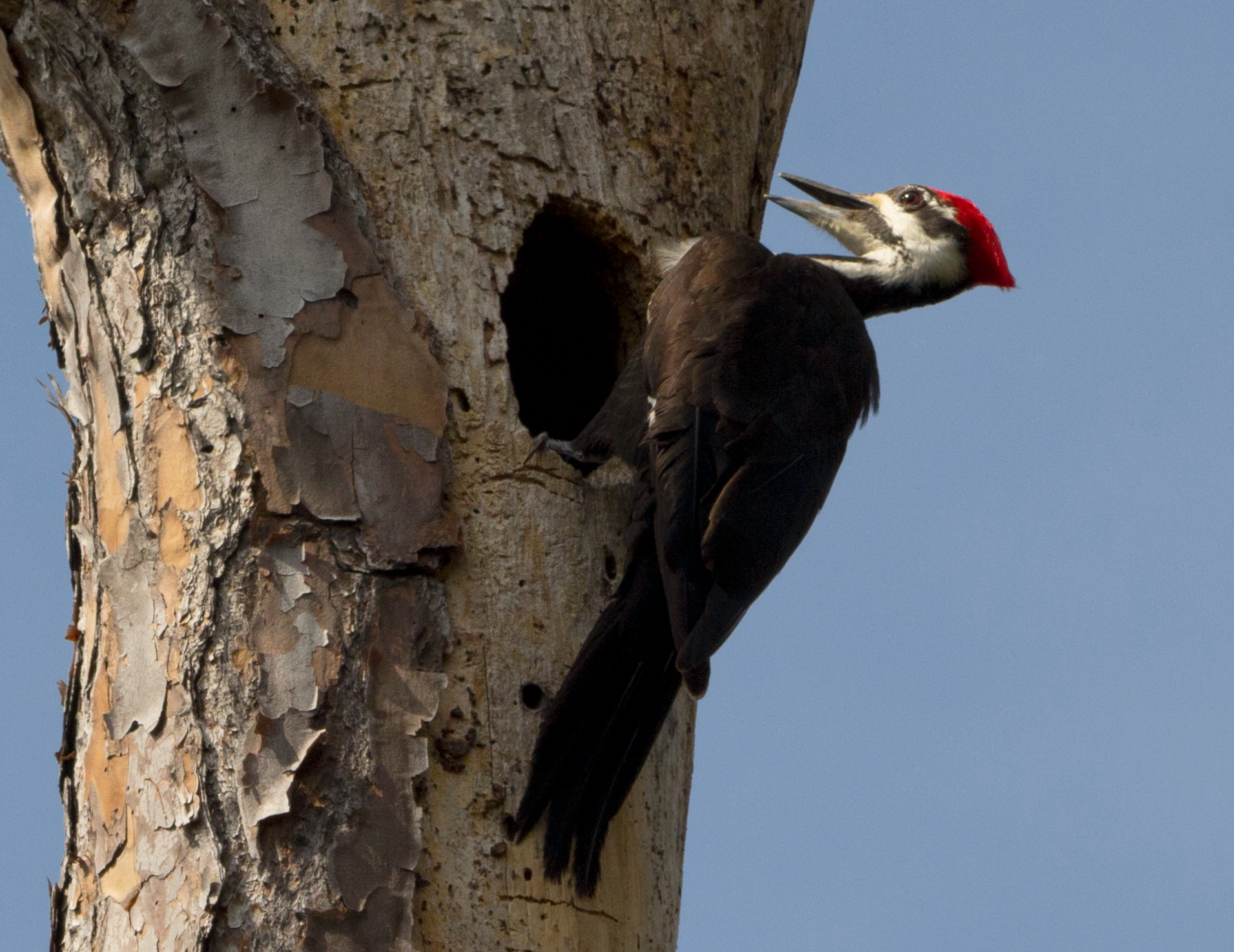
A pileated woodpecker. Photo by Adel Alamo.
Woodpeckers eat a wide variety food sources, depending on the species. Some woodpeckers prefer to eat insects and larvae that they find in trees. They also enjoy eating suet, seed mixes, peanut butter, nuts, and fruits. They’re also opportunistic, so they sometimes eat eggs, nestlings, and small animals. Woodpeckers even drink sap from trees sometimes! If you have woodpeckers in your trees, they’re probably eating:
Keep in mind that woodpeckers mostly peck on dead trees or rotten wood. They’re trying to catch insects that are decomposers who break down dead wood.
Yes, you can often see woodpeckers visiting backyard bird feeders in search of food. They can recognize and frequent the same feeders over time. As long as the feeders offer a variety food sources like nuts, suet, and seed mixes. Woodpeckers especially backyard bird feeders near a tree or other hard surface. Then they can drill for insects or larvae.
The most frequent visitors I have to my bird feeders are the Northern flickers. They’re roughly the size of your average song bird. You can’t mistake the beautiful tan of a Northern flicker.
Woodpeckers can be found throughout the world in many different habitats, including forests, woodlands, and even urban areas. They are most commonly seen in hardwood forests or pine savannas where they can find plenty of insects and food sources. Woodpeckers often nest in dead trees or tree cavities which they create for themselves. They may also reside in empty nesting boxes that have been erected by humans. Woodpeckers are most active during the daytime and can usually be heard drumming to announce their presence.
There are eight woodpecker species in the Southeast, including the:
Ivory-billed woodpeckers used to inhabit the Southeast, but they’re most likely extinct.
Red-bellied woodpeckers are an interesting species primarily in the Eastern US. Red-bellied woodpeckers have a reddish belly with black and white wings. They’re also pale with a red-capped head. Their size is somewhere between a robin and a crow.
Red-bellied woodpeckers feed on insects, nuts, and fruit. They favor suet and sunflower seeds. Red-bellied woodpeckers also enjoy visiting backyard bird feeders. They’re vocal and territorial, defending their nesting sites against other birds.
Look for a red-bellied woodpecker almost anywhere in the Eastern US. They range from Eastern Texas up North to the Mid-Atlantic and even into Wisconsin.
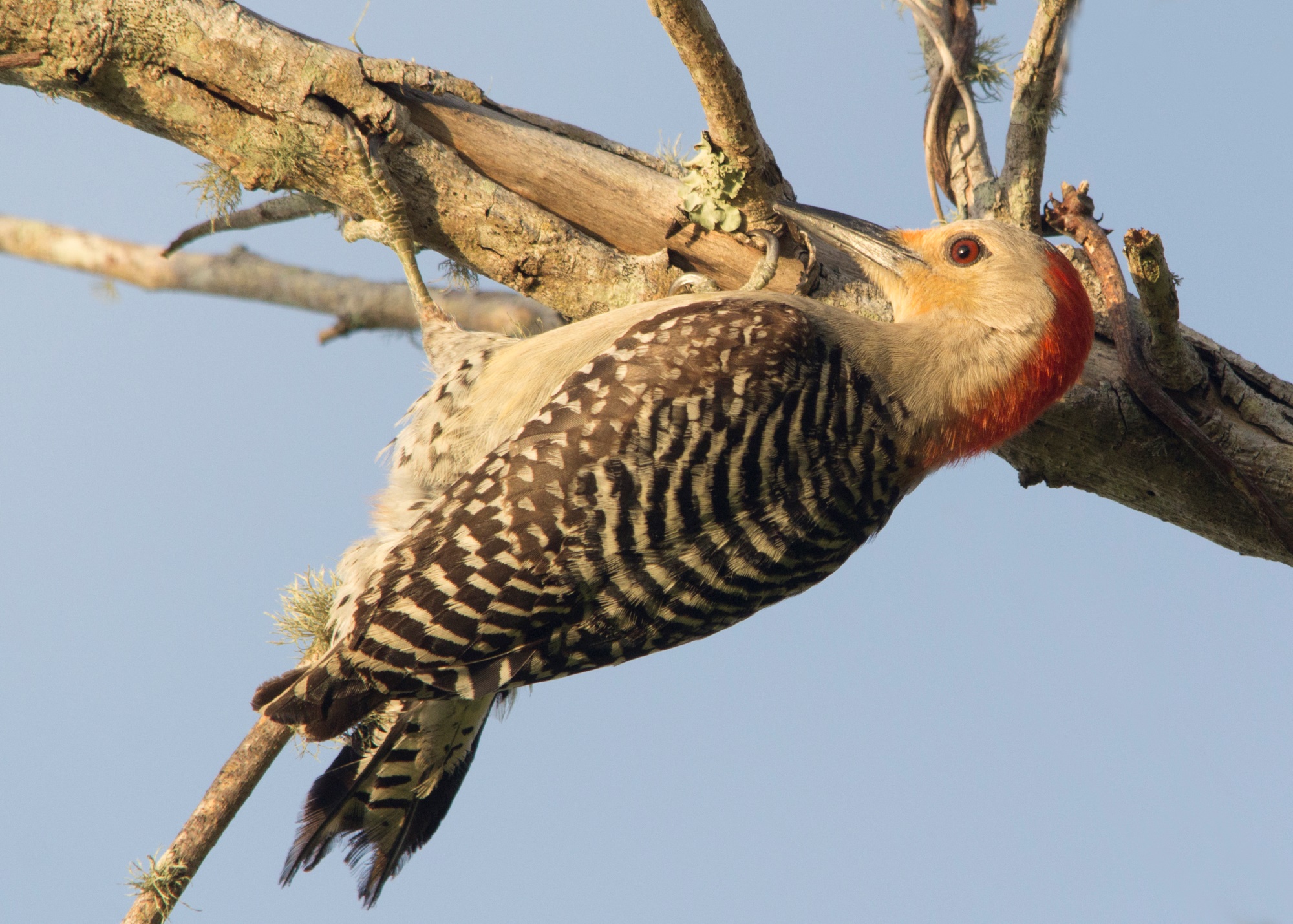
A red-bellied woodpecker on a branch. Photo by Adel Alamo.
The downy woodpecker is a small woodpecker, between the size of a sparrow and a robin. The downy woodpecker looks like the larger hairy woodpecker. But you can easily identify a downy woodpecker by its black and white streaked back and its smaller size.
The downy woodpecker roams throughout North America. They live in forests and woodlands from Alaska down through Florida. Downy woodpeckers eat insects, nuts, and fruit. They also visit backyard bird feeders for snacks. These birds make a distinctive “drumming” sound. But they’re also playful acrobats, flitting around trees searching for food.

A downy woodpecker
The red-headed woodpecker is a medium-sized bird native to North America. Red-headed woodpeckers have bright red heads. They also have white bodies with black wings and tail feathers. Some call Red-Headed Woodpeckers the “flying checkerboards” because of their distinctive coloring.
Red-headed woodpecker roam open woodlands and meadows across the US. You can find them as far North as Southern Canada. Red-headed woodpeckers eat insects, nuts, and fruit. They also visit backyard birdfeeders for easy meals. They have distinctive vocal calls and courtship displays. Those displays involve a series of rapid head movements. Red-headed woodpeckers build nests in dead trees, like most woodpeckers.

A red-headed woodpecker
Hairy woodpeckers are larger than their lookalikes, the downy woodpeckers. They have longer bills and larger heads which are generally darker in color. Hairy woodpeckers make loud calls when searching for mates.
You can find hairy woodpeckers across the US and Southern Canada. They prefer deciduous forests with large trees. They feed on a variety of insects, seeds, nuts, berries, and also visit birdfeeders.
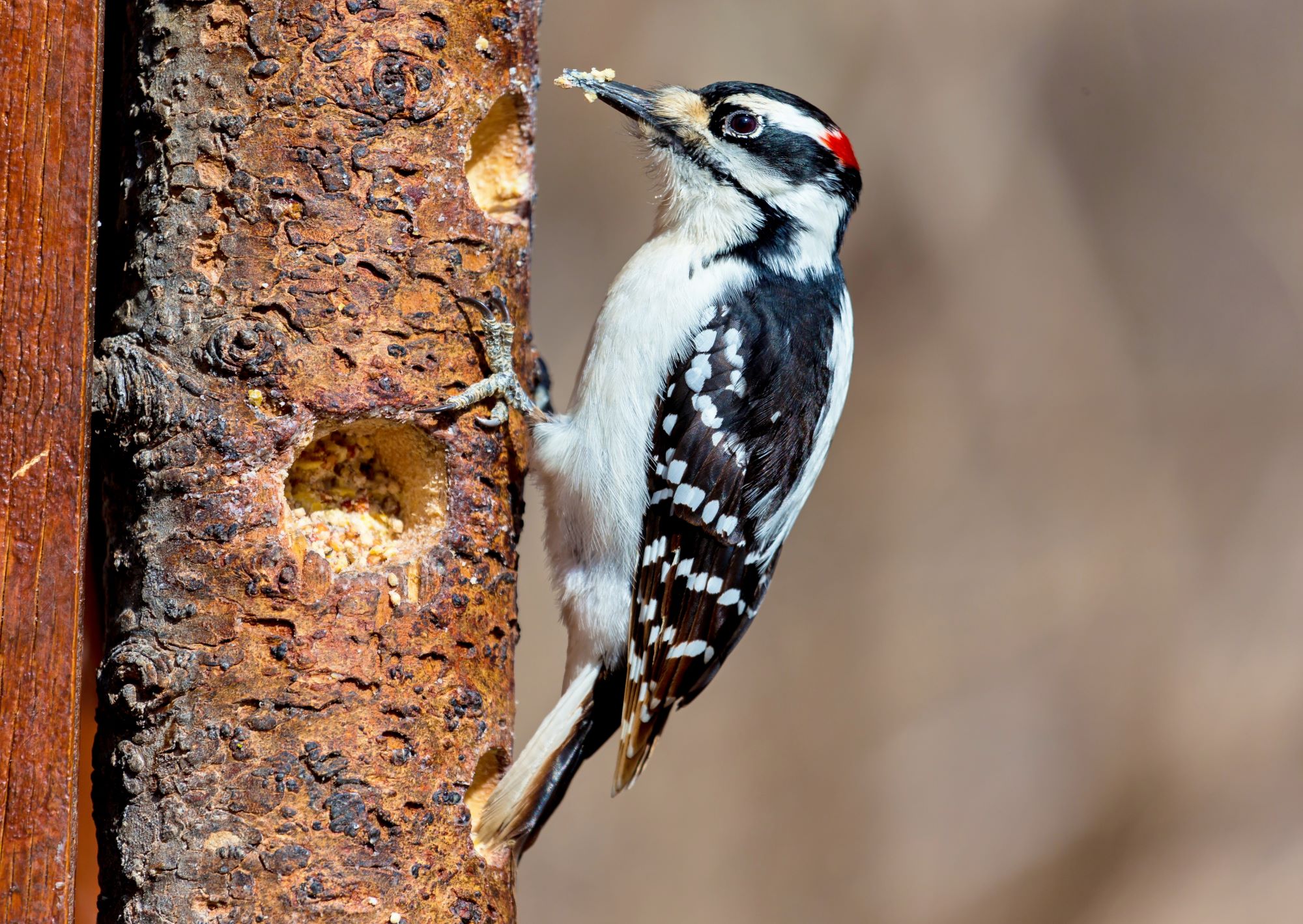
A hairy woodpecker.
The pileated woodpecker looks like a dinosaur in the sky. They’re the largest American woodpecker, up to 19 inches long. They have a red crest on their heads and white stripes down their necks. pileated woodpeckers live in deciduous and coniferous forests, East of the Rocky Mountains. But you can also find them throughout Western Canada and along the Western seaboard as well.
Pileated woodpeckers feed on insects like carpenter ants. The holes they make in search of prey can break smaller trees right in half! If the bird you’ve spotted is giant with a red head, chances are, it’s a pileated woodpecker.
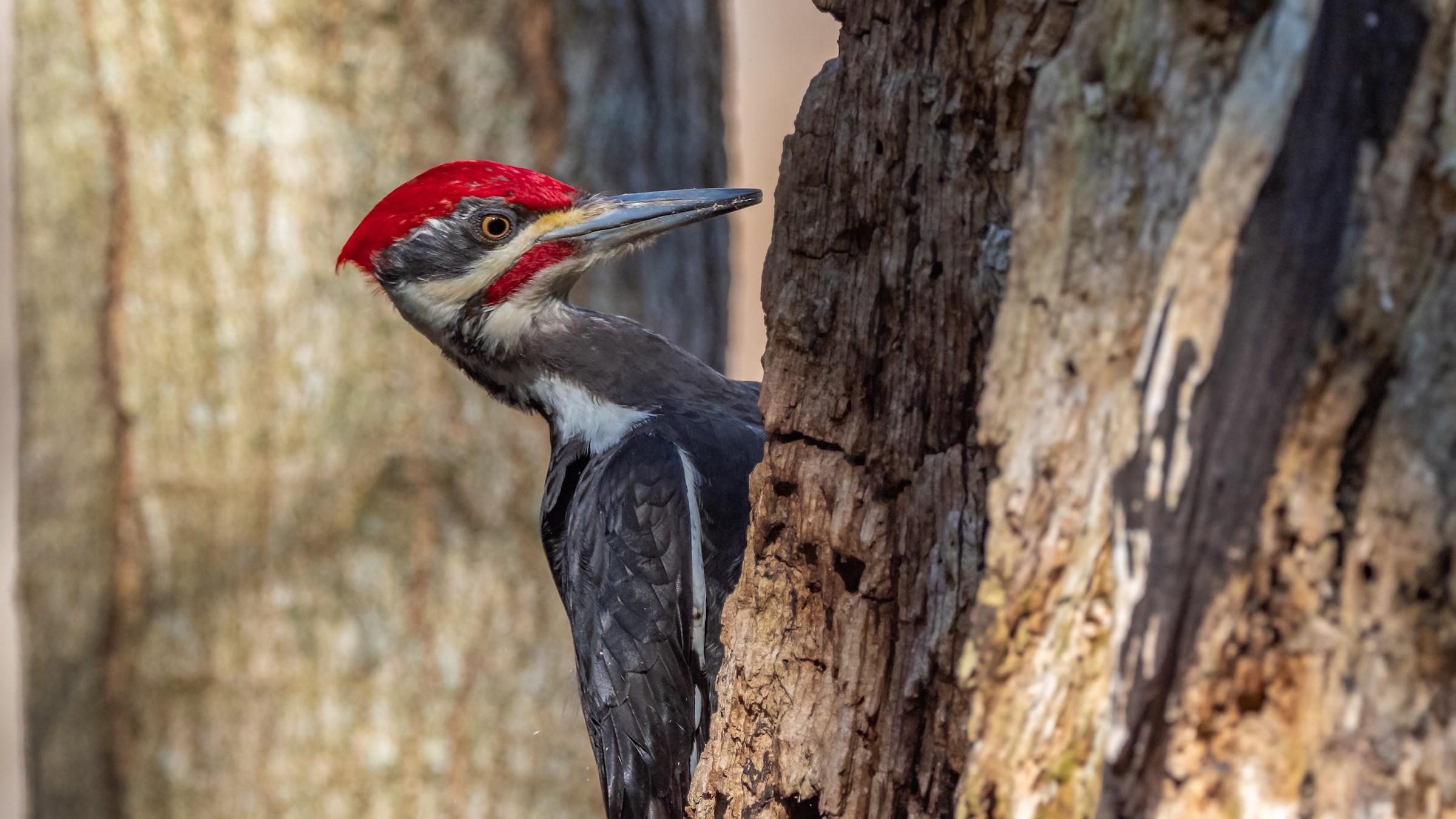
A pileated woodpecker.
Northern flickers are one of the larger woodpeckers in North America. Their size is between a robin and a crow. They have black and white plumage with a bright yellow underside of the wings. There’s a large red patch on the back of their heads. You can hear their distinctive call from quite some distance away.
Northern Flickers are throughout much of North America. But if you’re in the West, that yellow on their underwings turns to red.

A Northern flicker woodpecker.
The Red-cockaded woodpecker is a specialist of longleaf pine trees. So their population has declined drastically due to extensive logging in the 1900s. This bird was declared endangered in 1970. Wildlife professionals have been working ever since to bring them back to prominence.
Red-cockaded woodpeckers are barely red. The “cockade” is a tiny, nearly invisible red streak on male birds. The rest of their bodies are a patchwork of white and black. Red-cockaded woodpeckers are roughly robin sized.
They live in live pine trees. They prefer ones infected with the “red heart” fungus, which makes the wood easier to excavate. Seeing a Red-cockaded woodpecker is something special for most birdwatchers. That’s because you can usually find them only in protected lands. Like national wildlife refuges, national forests, and other large areas of protected habitat.
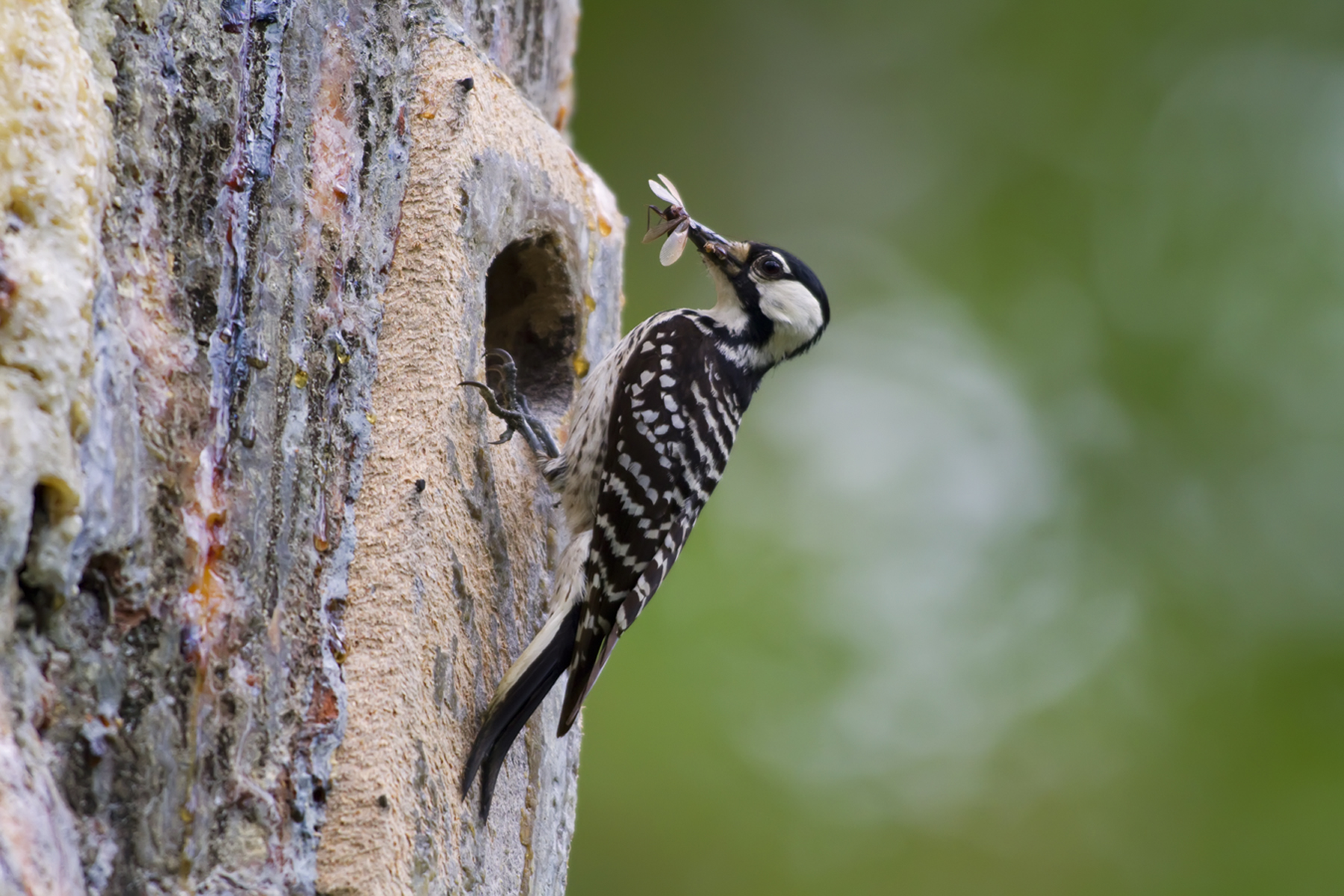
Red-cockaded woodpecker. Photo by USFWS.
Yellow-bellied sapsuckers are a bit larger than red-cockaded woodpeckers. They have striking black, white, and red markings. They’re named for their tendency to drill holes in tree bark to sip up the sap that oozes out. These holes end up as rows of shallow holes in tree bark.
Yellow-bellied sapsuckers aren’t regular bird feeder visitors. But if you have sap-producing trees (like maples), then you might just get a visit. “Yellow” is in the name of the yellow-bellied sapsuckers, but you need binoculars to spot the yellow.
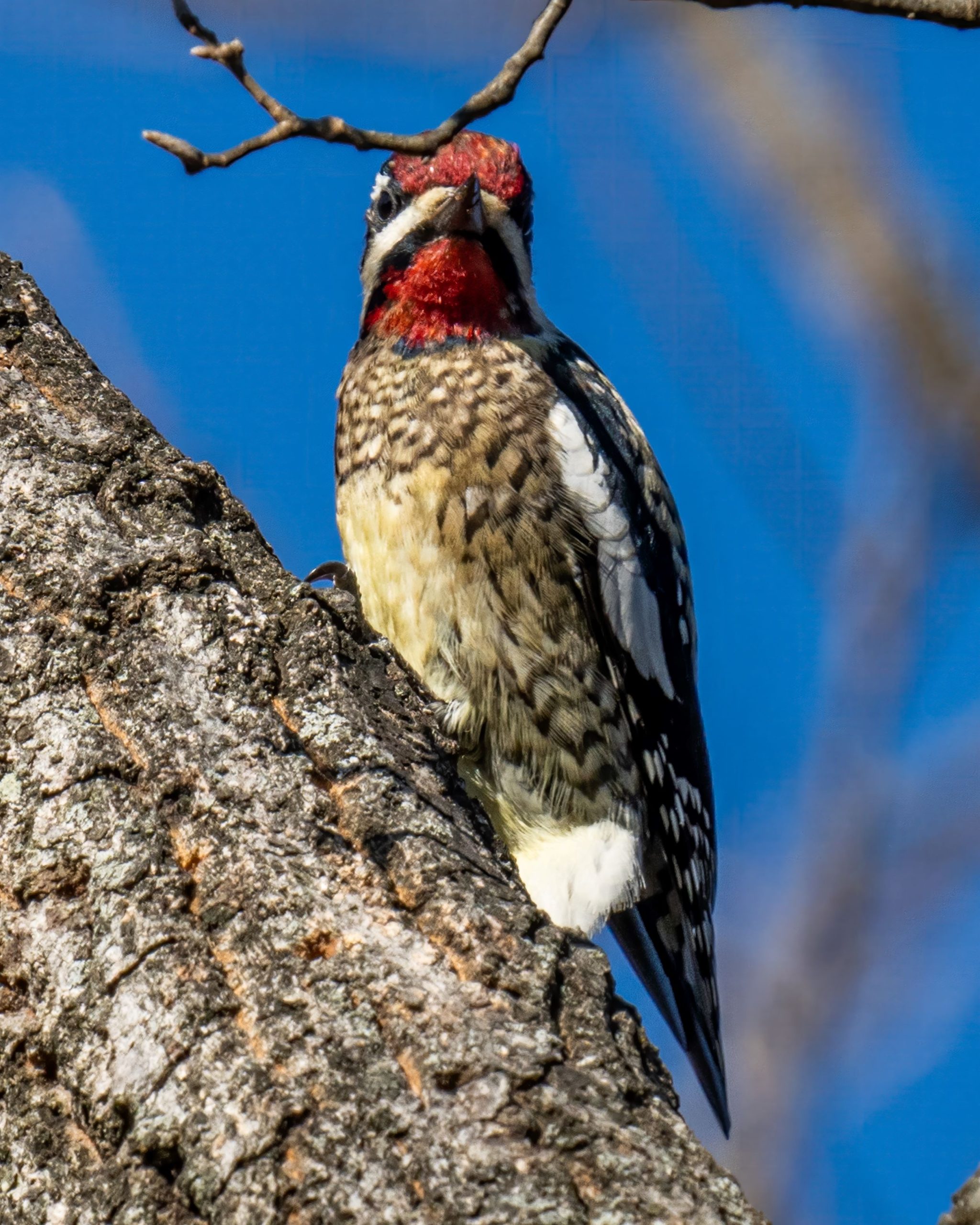
A yellow-bellied sapsucker.
Like many birds, woodpeckers rely on healthy natural forests to live and reproduce. A healthy natural forest has living and dead mature trees. It has logs, snags, and other habitats for woodpeckers.
Unfortunately, many of these natural forests are under threat. The threat comes from aggressive industrial logging practices. If you want to help woodpeckers, join us in advocating for proforestation. Proforestation means stewarding healthy natural forests towards old-growth status.
Our forests and our woodpeckers need YOU to thrive. Will you meet the challenge?
The US Department of Agriculture (USDA) held an Agribusiness Trade Mission in the Netherlands. A group the USDA welcomed is the United States Industrial Pellet Association (USIPA). They represent the interests of some of the largest forest destroyers in the US.
This partnership’s advocacy for biomass export expansion goes against President Biden’s policies. It is counter to his Executive Orders on climate, environmental justice, and forests. It provides cover for the dirty biomass industry. An industry that is facing growing controversy in the Netherlands. The Dutch Parliament passed a resolution to stop subsidizing untruthful wood pellet companies.
This is a region where 90% of the forests are privately-owned. Yet people of color own less than 5%. The wood pellet industry has rapidly expanded over the last ten years. A vast majority of its facilities are in environmental justice designated communities. Several facilities were even fined for emitting toxic pollutants far above legal limits.
Rita Frost, Campaigns Director at Dogwood Alliance said,
“The extractive wood pellet industry destroys forests and pollutes communities. It’s not the type of agriculture that the USDA should support. Additionally, burning forests for electricity releases more carbon than coal. So the agency keeps supporting an industry that’s harming our climate.”

These communities are almost always majority-Black and often under-resourced. They don’t have the resources to fight polluting industries. Yet, USDA promotes biomass as climate-friendly energy for overseas markets. They encourage the industry’s expansion.
The Biden Administration must stop using tax dollars to support this industry. Instead, the Biden administration should promote and advance policies that protect forests. They should champion community solutions to the climate crisis.
Spring is a season of beauty and renewal. In the US South, vibrant flowers bloom from early to mid-spring. Some of the most breathtaking displays come from trees. They bring life and color to gardens, yards, and parks across the region. Flowering dogwood, magnolia, and redbud are well known for their beautiful blooms. If you love trees, you can also check out our tree identification blog or read more about endangered trees in the South.
You can spot these spring flowering trees growing everywhere there’s ample sunshine. Read on to learn more about these special trees and how they bring life and joy in springtime!
Flowering dogwood is a small tree that’s native to North Carolina and Virginia. You can also find them in other parts of the US South. These trees have beautiful white or pink flowers that bloom from early to mid-spring.
The buds on a dogwood tree appear before the leaves. This gives it an especially vibrant display when in full bloom. Dogwoods can reach up to 30 feet tall and often have many trunks or branches for a multi-stemmed look. As with many flowering plants, dogwoods need plenty of sunshine and consistent moisture.
They prefer acidic soil. Due to their shallow roots, they need mulching if you plant them as an ornamental. This helps keep moisture and prevent weeds from growing around them. Pruning is also important. These trees tend to have weak branches that can break under wind or snow load.

Flowering dogwood tree
Magnolias are a type of large tree that are native to the US South and can be found in all states in the region. These trees are especially beloved because of their fragrant white blooms. Like Dogwoods, the blooms appear before the leaves do. Magnolia flowers are often solitary at the end of branches. They have 6-12 petals surrounded by glossy green leaves. They bloom from late February to early May and can sometimes reach up to 80 feet tall.
Magnolias need plenty of sunshine and don’t do well in very wet or dry conditions. These trees also need ample moisture for healthy growth. Unfortunately, their shallow roots make them more susceptible to drying out. Fertilizer is important to provide essential nutrients for their growth and development. Mulching helps keep moisture in the soil. Pruning will keep these trees looking neat and maintain optimal health.
There are many magnolia hybrids and crosses. For example, the magnolia “butterflies” variety will produce bright yellow flowers. This is a stunning look for a tree that can grow up to 30 feet tall. These ornamental trees are great for both beginning and experienced gardeners.
Other magnolia species and varieties include:
Both star magnolias and saucer magnolias are popular in suburban neighborhoods.

Magnolia tree blossoms
Redbuds are a type of small tree common throughout the US South and can reach up to 30 feet tall. As the name implies, these trees feature bright purple-pink flowers. They bloom from late winter to early spring. The buds on redbud trees are very noticeable. They appear before the leaves do and provide a striking display.
Redbuds prefer plenty of sunshine and acidic soil. They need supplemental irrigation during drought periods. Mulching is highly recommended for their shallow roots. And fertilizer is important for providing essential nutrients. Pruning should be regular to keep the tree neat and promote healthier growth.
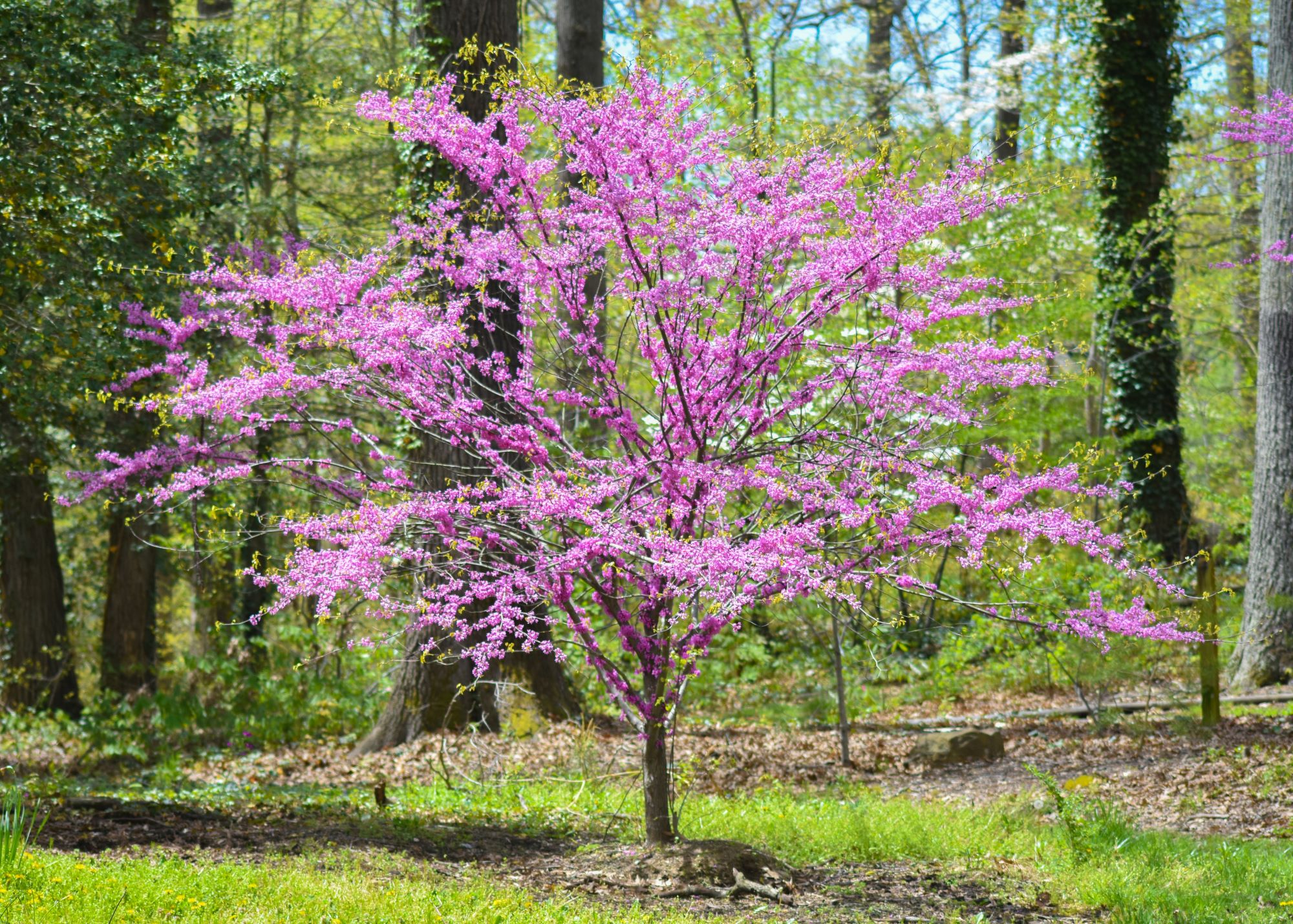
Redbud tree with purple-pink flowers
People have celebrated cherry trees and cherry blossoms for hundreds of years. From Japan to Europe, these beautiful trees and blossoms have captivated the imagination. They’ve even inspired countless works of art.
These trees are great not only for beauty, but also for the ecosystem. Cherry tree blooms play an important role in supporting local ecosystems. They create habitats for many species of wildlife. Plus, cherries provide essential nutrition for both birds and some mammals.
The beauty of flowering cherry season is truly breathtaking. Take a moment to admire the lush display of colors that each spring brings. Or, lie back and enjoy the fragrant air while you relax under a cherry tree!
Cherry blossoms bloom in March and offer stunning displays of white or pink flowers. These flowers will remain for weeks before falling off the branches as petals. Washington, DC is known as a hotspot for flowering cherry trees. But you can plant your own weeping cherry or other flowering cherries in your own backyard, too.

Cherry tree grove in bloom
Crabapples also bloom from March to April and feature deep red buds that open into white or pink flowers. These are then followed by green fruits, which ripen to a deep red or yellow in the fall. Serviceberries are similar with white flowers that bloom from early May through late June. They have small berries that offer an edible treat for birds, mice, and other wildlife.
Apple serviceberries have white flowers but they come in late April to May. An apple serviceberry is a hybrid between two native trees. It produces flowers in April and May, followed by blue berries. It’s a striking, bright native tree hybrid that’s great for your garden or yard.
These trees have similar needs when it comes to growing best. These needs include plenty of sunshine and acidic soil. Water these trees during a drought, and mulch to keep moisture. Prune as you’d like, and fertilize at regular intervals.
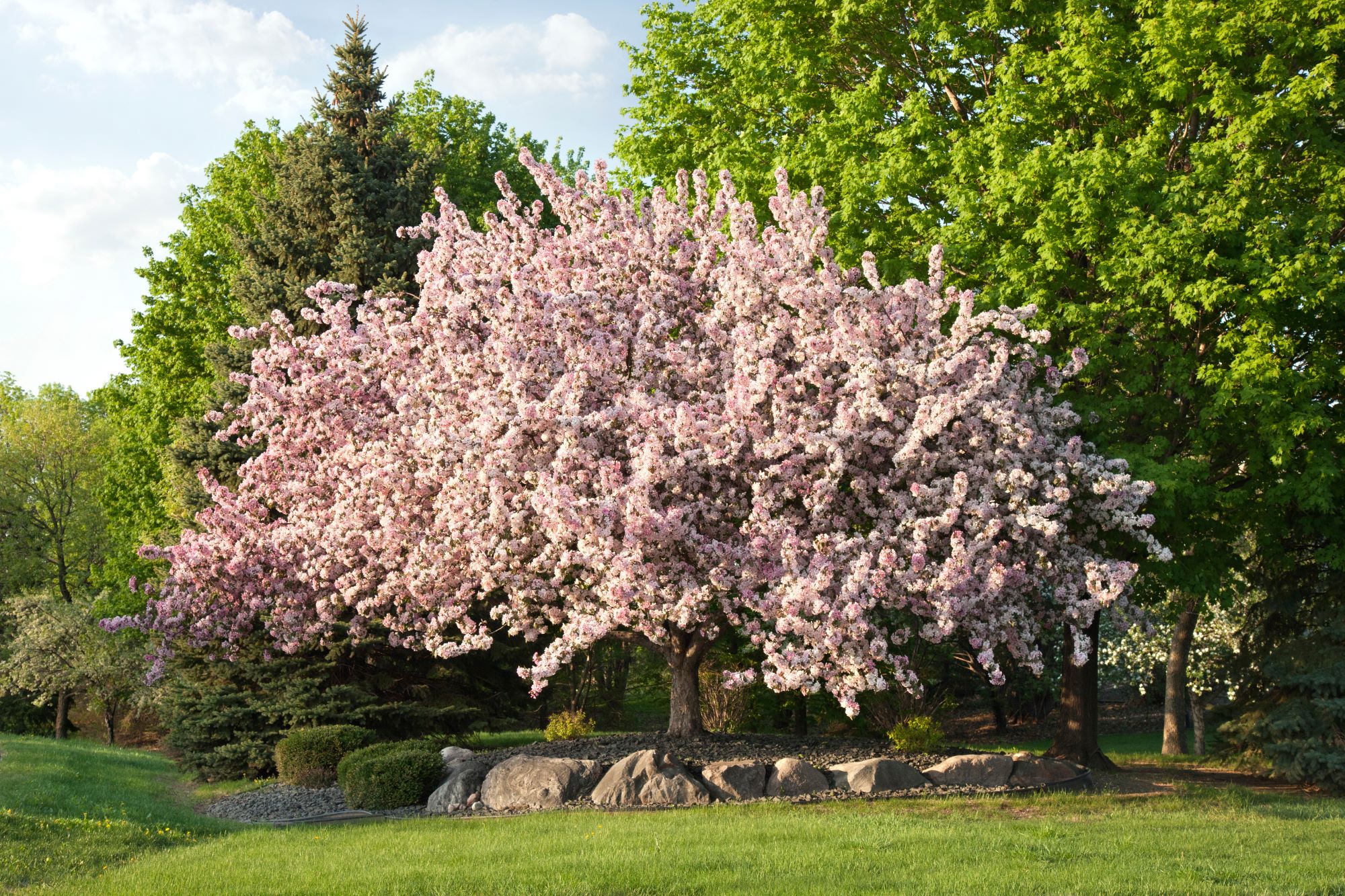
Flowering crabapple tree
Introducing non-native species into an environment can have devastating effects. These effects can disrupt the balance of established ecosystems. This is especially true for springtime flowering trees. Native spring flowering trees shouldn’t need to compete against invading trees.
Invasive species are plants, animals, or organisms that are not native to the environment. They can cause damage to native wildlife, plants, and habitats. They often:
As a result, they threaten the survival of our native plants and animals.
The bottom line is that invasive species often do more harm than good. It’s important to take steps to limit their spread before they get out of hand! Here are a few early spring blooming trees that are invasive – and what to watch out for!
The Callery pear (or Bradford pear) is an increasingly common species of deciduous tree native to China and Vietnam. It’s often used in landscaped settings and in street plantings. Callery Pear has showy flowers. It can tolerate a wide range of environmental conditions. The Callery Pear is an invasive species due to its prolific reproduction rates.
The Callery Pear blooms from early to late spring with white to pink petals. It’s a hardy tree that can grow pretty much anywhere, and it has a deep taproot that makes removal difficult. It was such a popular tree (and such a problem) in Ohio that the state actually banned the sale of Callery pear trees. South Carolina and Pennsylvania have also passed bans on these trees that will begin in 2024.
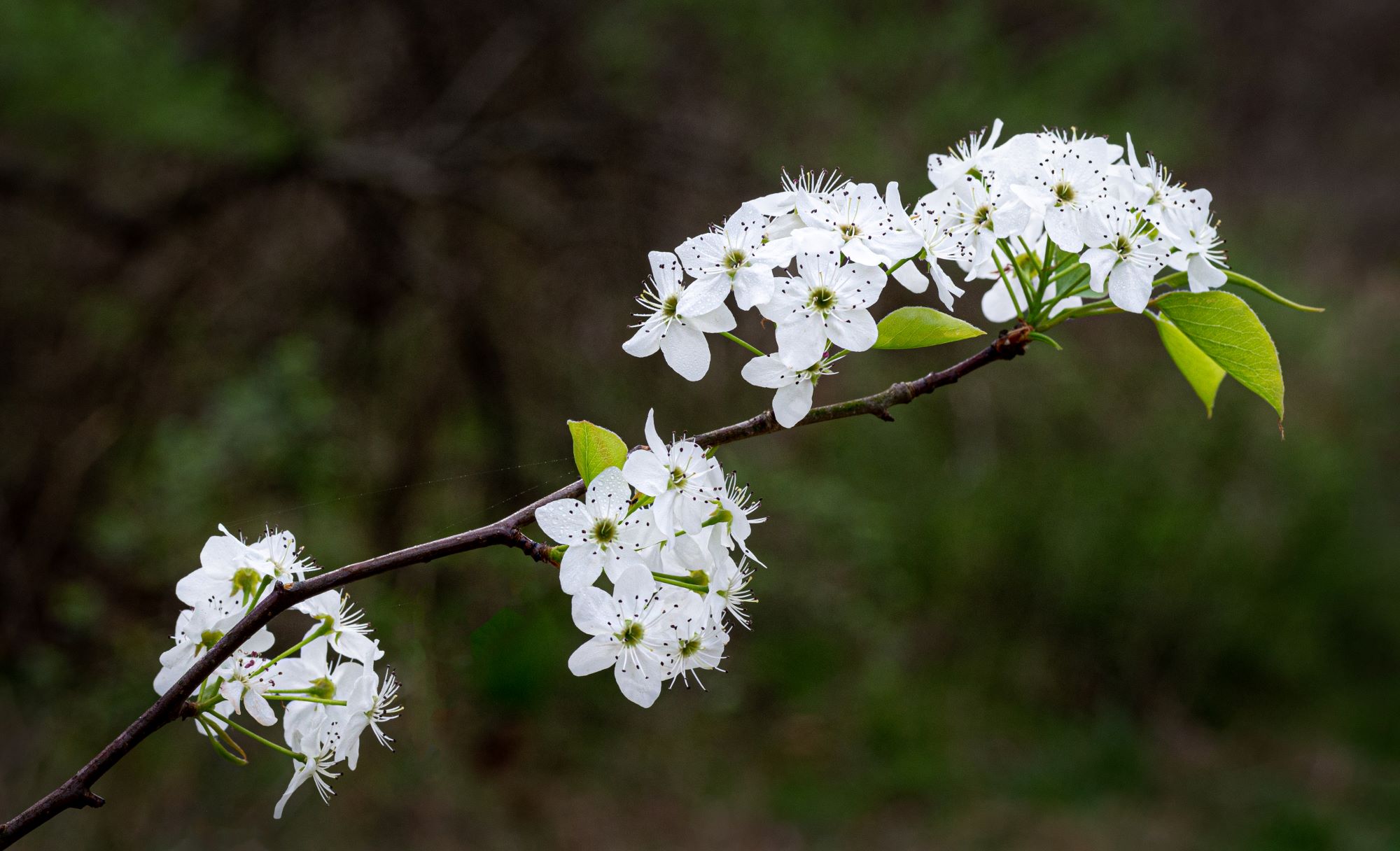
Invasive Callery pear blossoms
The Japanese honeysuckle is a common shrub in many areas throughout the US. Known for its sweet-smelling flowers, it blooms in early spring.
Japanese honeysuckle features white to yellow blooms from March to June. It often produces berries in the late summertime. Japanese honeysuckle spreads rapidly and displaces native plants. You shouldn’t plant Japanese honeysuckle on your property. If you have some, remove it before it becomes a bigger problem.
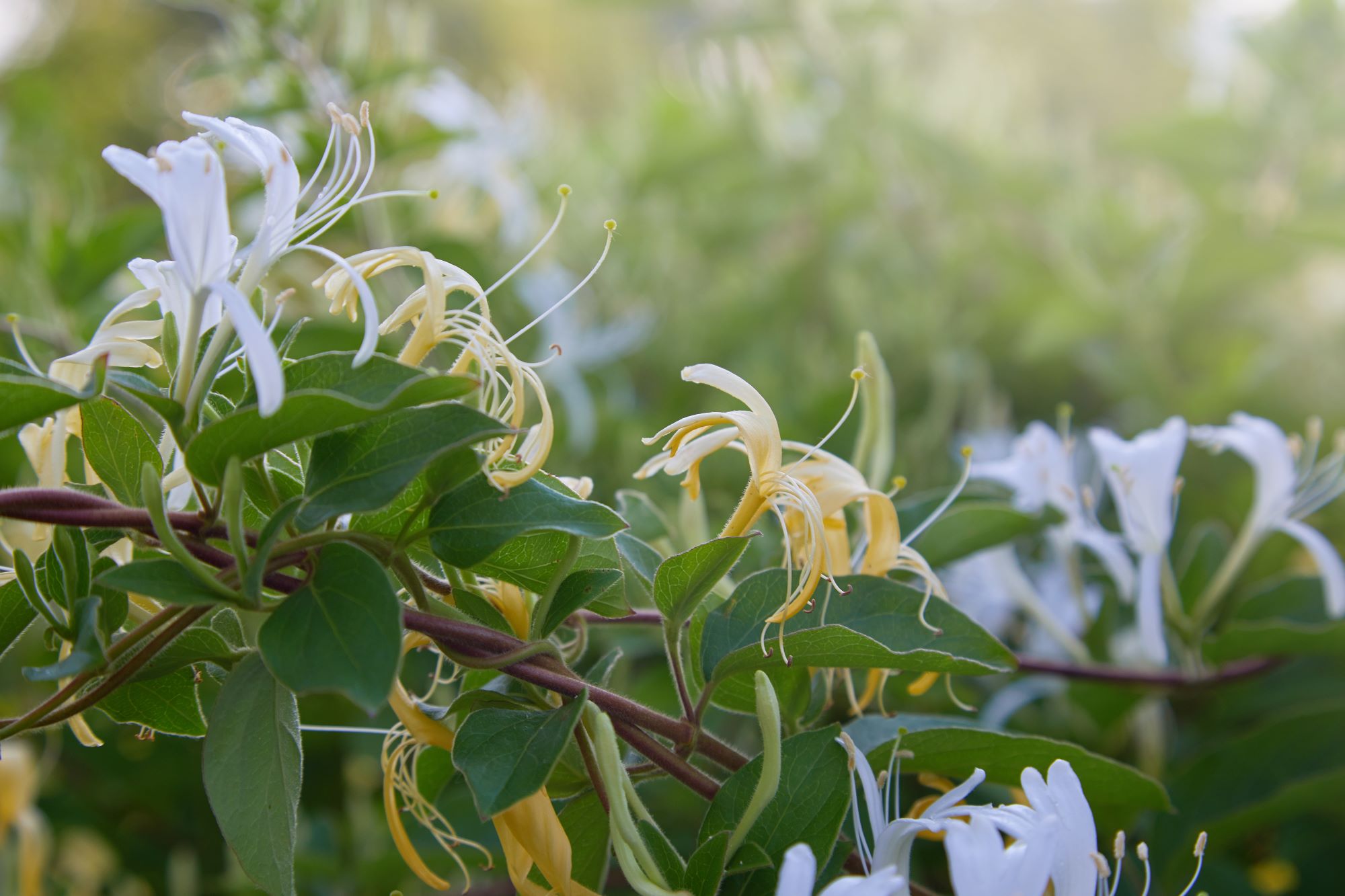
Flowers of the invasive Japanese honeysuckle shrub
If you don’t know which tree species you’re looking at, apps can help. There are a few resources available to help identify them.
One of the most popular tools is iNaturalist. iNaturalist is a mobile app that helps people identify plants and animals. By submitting photos to the app, users can receive accurate species identification. This identification comes from both experts in the field and AI (artificial intelligence) algorithms.
Another useful tool is the PlantSnap tree identification app. This app allows users to quickly identify trees based on their leaves, bark, and fruits. It also provides helpful information like distribution range and any cultural benefits.
A good reference book can also be invaluable for more complex identifications. The National Audubon Society Field Guide to Trees is an excellent resource for beginners. It covers over 800 North American tree species in detail. Other field guides are also usually a safe bet. Be sure to find one specific to the state or region in which you live.
Springtime flowering trees are beautiful and delightful to behold. Their beauty brings joy to many as new life unfolds. They also provide essential habitat for many species of wildlife.
If you’d like to learn more about protecting biodiversity, subscribe now! We share ways you can help preserve the natural world around us. Together let’s make a positive difference for our planet!
The United States is a leading producer of wood pellets, exporting over 8 million tons in 2021. That’s up from just one million tons in 2011. Most of these exports still go to Europe, but there’s a growing demand for wood pellets in Asia. So what are wood pellets, and why are they becoming such an in-demand product?
The answer lies in the international demand for wood pellets to meet renewable energy goals. These countries and companies believe that only dead trees and “post-consumer wood” is used to make wood pellets. However, wood pellets produced in the US come predominantly from whole trees, not wood residues or unmerchantable wood.
Learn more about the wood pellet industry’s growth, the export market’s impacts, and the future for bioenergy below.
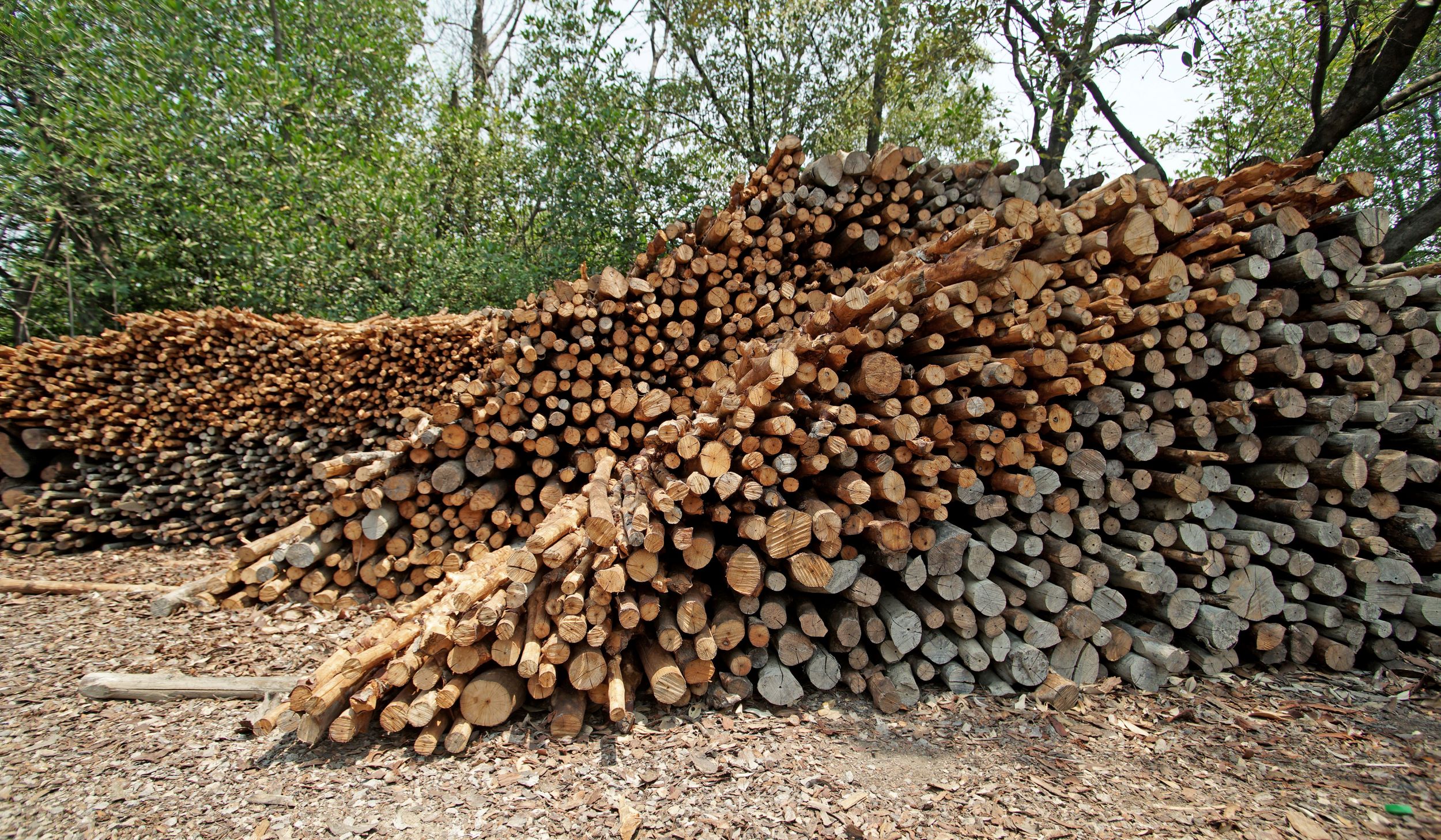
Wood pellets are made from compressed sawdust or other wood waste. When burned in power plants, they produce ash and emit more carbon dioxide than coal. Because wood pellets come from trees, wood pellets are sometimes touted as a “green” energy source. However, there are multiple environmental problems with wood pellets.
First, producing wood pellets requires large amounts of energy: logging, transport, processing, and shipping. These processing steps add 10-20% more carbon emissions to the final carbon impact of these products.
Second, wood pellets are less efficient than other fuels in the electricity sector. Wood pellets used for heating are moderately efficient, but wood pellets take more energy to combust than coal. And they produce less energy for the same period. Because of this and mechanical limitations, wood pellets are often burned in a mixture with coal.
Another issue is that wood pellets speed up the release of carbon into the atmosphere. This is especially true when you compare wood pellets to other wood products. The carbon stored in furniture may stay in the biosphere for decades or centuries. However, the carbon stored in wood pellets is released within a few years. Studies like ours have shown that the carbon impact from logging is gigantic.
In addition, clearcutting forests to get wood for pellets can result in habitat loss and other environmental damage. One study found that more logging residues get removed during a bioenergy harvest. Those are things like branches, leaves, and smaller trunks. This can lead to more significant impacts on the soil and longer forest recovery. As a result, the true environmental impact of wood pellet production is highly contested.
Wood pellet mills are not good neighbors. Communities with wood pellet mills complain about the 24/7 noise, the constant truck traffic, and the thick dust that blankets everything. The dust is so bad that community members have to wash their cars multiple times a week. Wood pellet mills promise jobs to communities, but the truth is that jobs are often temporary or contract with few benefits and securities.
Where wood pellet mills get placed is another issue. A study found that mills were twice as likely to be placed in under-resourced communities of color. All the wood pellet mills in North and South Carolina were placed in these “Environmental Justice” communities.
European countries are increasingly demanding wood pellets because of international climate treaties. The climate treaties argue that trees can be regrown quickly, unlike fossil fuels. Therefore, wood pellets are “carbon neutral” in most countries’ carbon ledgers.
However, substantial greenhouse gases are emitted when wood pellets are burned. Because wood pellets burn hotter than coal, one ton of wood pellets will produce more greenhouse gases than one ton of coal. While technically a renewable energy source, other sources like wind and solar are far more efficient and low-carbon than wood pellets.
While wood pellets are produced in multiple countries, the United States is a substantial producer of solid biomass. There are a few reasons for this:
While many countries produce some wood pellets, the US dominates the wood pellet export market. In 2020, the US was responsible for 25% of total global wood pellet exports. The US exported more biomass resources than the next two countries (Vietnam and Canada) combined.
The number of mills built for wood pellet exports grows every year. Unfortunately, many foreign countries believe that wood energy is the best way forward. As a result, there’s a very high wood fiber demand from external sources.
As of April 2022, there were 24 operating mills for wood pellet exports in the US South. There are an additional fifteen mills either proposed or under construction.
In a crushing blow to forest resources, more and more wood pellets are exported every year from the US South. For a while, analysts even predicted near-exponential growth of the biomass industry. Luckily, those estimates have fallen flat. But the impact of the bioenergy market grows every year.
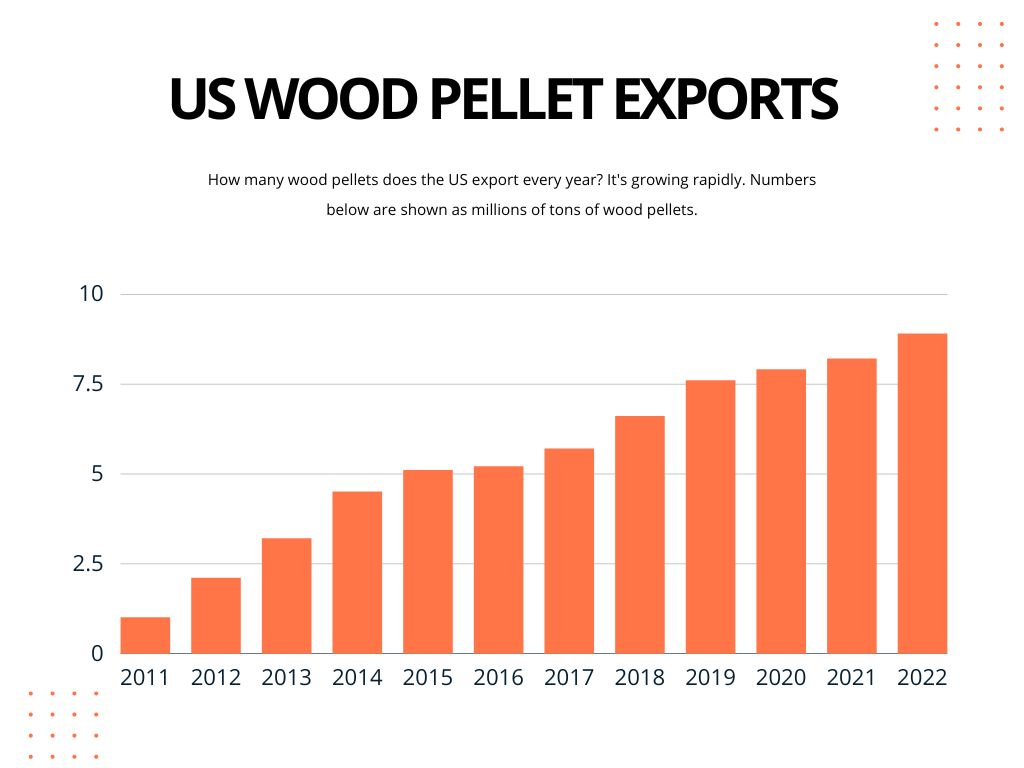
Wood pellets from the US South go mostly to renewable electricity or renewable heating schemes – not other places. As a result, wood pellets from the US have gone to 75 countries since 2012. However, over 75% of US wood pellets have gone to the UK.
Only four countries have received more than a million tons of wood pellets from the United States from 2012-2020:
However, the percentage of wood pellets going to each country will continue to change as bioenergy companies like Enviva secure long-term contracts with governments and their power plants.
Join us as we explore! We’ll learn about the wildlife, plants, trees, and even mushrooms. All right outside our doors. When you sign up, we’ll deliver more Biodiversity in Your Backyard tips directly to your inbox!


 Donate
  April 5, 2026