


We recorded these 4 episodes live at our Annual Woods & Wilds Storytelling Event in August of 2024. We want to thank everyone who came out and attended the event. Experience the magic by listening to this latest season of Woods & Wilds: The Podcast.

Safiya Myers kicks us off with a story about her roots.
Born to parents in the Army, Safiya has had many addresses. She understands how to make a place a home. She immerses herself in culture through travel and listening to stories. Safiya believes storytelling is the medicine we need. In her free time, she listens to storytelling podcasts. Safiya’s favorite thing to do is snuggle her super cute daughter.
DeWayne Barton shares his frightening experience as a child in the woods. He takes us on a journey of forgiveness and asks us, “Why hold hate?”
DeWayne is a native of Asheville, NC. He’s a veteran and the author two books of poetry. DeWayne has advanced community and youth development for over 30 years. As a visual and performing artist, his work is grounded in environmental justice and climate resilience. His art has featured at Duke University, Smithsonian Institute’s Museum of African American History & Culture, and the August Wilson Museum. He is co-founder of both Peace Gardens & Market and Green Opportunities. DeWayne is the founder and CEO of Hood Huggers.
Holly Paar’s story paints a picture of the tree loss in Iceland. She speaks to our need to preserve our innocence. To connect with nature.
Holly Paar has lived WNC for 30 years. She is a painter, musician, poet, filmmaker, photographer, and storyteller. She has premiered two films at the Asheville Fringe Festival. Held art shows. Performed live, both solo and with bands. She’s won poetry slams and generally had a good time. Holly thinks of herself as an “adventure artist.” She’s a druid and the Advancement Director for Dogwood Alliance.
Richie Harding’s story begins in his idyllic youth. Then he shows us how his home has changed because of environmental injustices. He speaks to us of fighting back, solidarity, and interconnection.
Richie majored in computer programming at Hardbarger Junior College of Business. He’s the pastor for New Vision Christian Center. He’s also the CEO of Visionware Recordings and the Executive Director of Gaston Youth. Gaston Youth teaches kids to grow vegetables and appreciate the earth. Richie and his community face pollution from hog farms and wood pellets facilities. His mother worked to protect their community’s water 20 years ago. Richie is proud to follow in her footsteps.
Dogwood Alliance’s Woods & Wilds is a magical storytelling event. Every year, we come together to share our love and connection to the forest. In 2024, we had amazing live music and an incredible line-up of storytellers. Including activists, community leaders, and performers.
Get a taste of our Season 5 storytellers giving their live performances.
Check out other seasons and episodes of Woods & Wilds: The Podcast
Like, follow, subscribe, and leave a review on your favorite podcast platform.
In late September of 2024, Hurricane Helene devastated the Southern US. The storm struck Western North Carolina with shocking brutality. The region was not prepared for a hurricane.
In the hurricane aftermath, a group of UNCA students created a story map. They wanted to reflect on the damage and recovery efforts. They asked themselves a series of important questions. What did the storm do to our communities? Which communities were hit hardest and why? What happened to our forests and wildlife? How are we rebuilding now? Can WNC expect more storms like Helene?
These students did incredible work. They didn’t shrink from the heartbreak. But they also uncovered moments to uplift us. How people worked together. How we can protect the places we love. How we can prepare for the future.
Their story map reminds us why environmental justice matters.
Thank you to Matisse Araque, Justin Huffman, and Ioanna Katsigianis of the UNCA Environmental Justice class in Fall 2024. Thank you for sharing your hard work and story with us all.
Land and Climate Reviewpublished an investigation into the UK company, Drax. Drax is a major industrial wood pellet producer. It’s also the largest consumer of wood pellets for biomass electricity in the world.
Biomass creates energy by burning living materials like plants and trees. How is this biomass made? Companies like Drax:
Burning forest biomass is worse for the climate than coal.

Drax Power Station in North Yorkshire, England
The wood pellet facilities are also dangerous to the health of surrounding communities.
The investigation showed US Drax facilities have broken green rules over 11,000 times:
“8,700 of the violations occurred within the last five years – [an] average of five violations of environmental law per day.”
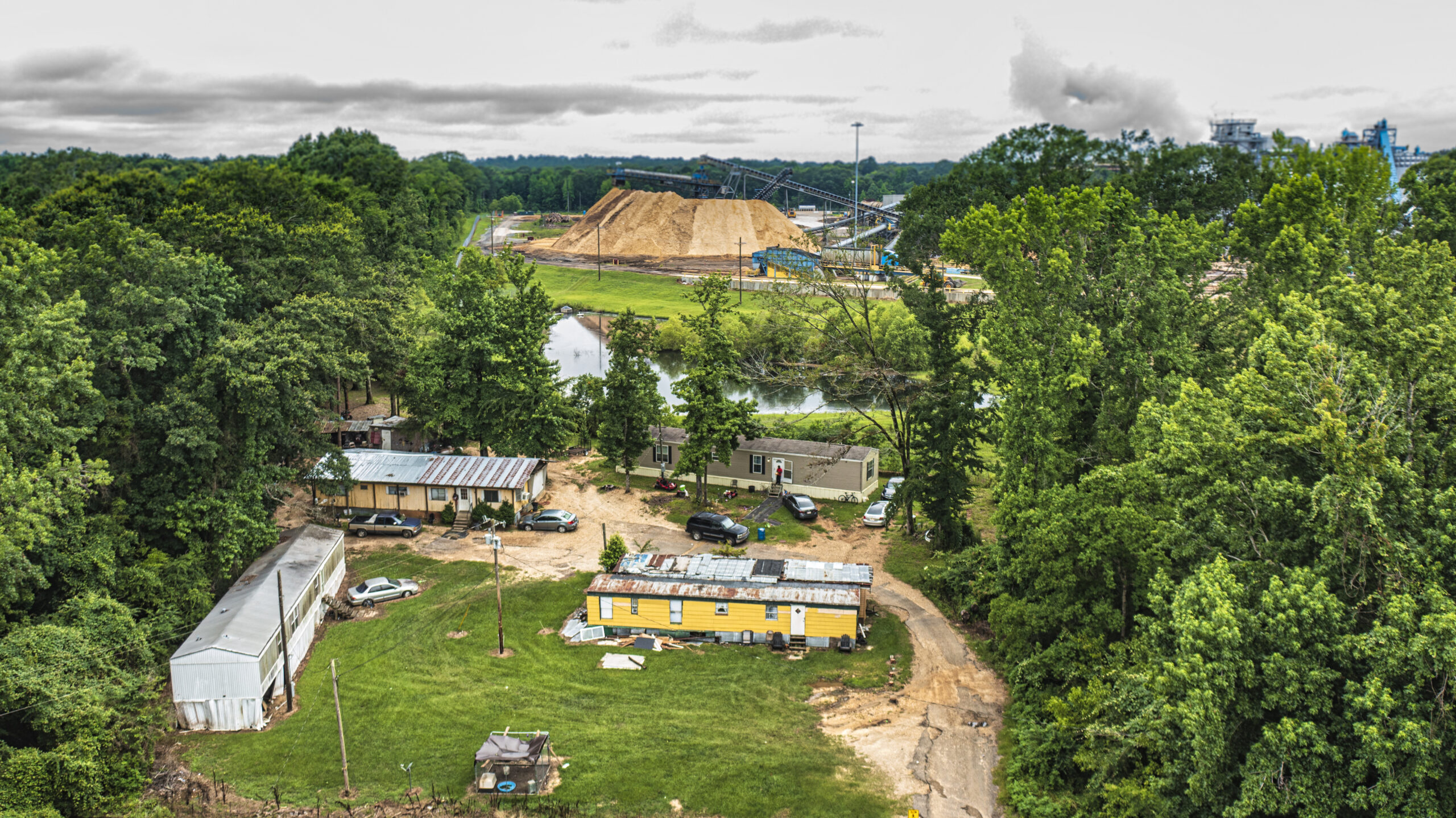
Drax wood pellet facility in Mississippi. Image by People’s Justice Council
This is absurd. How can we continue to let Drax operate? But state and federal decision-makers are sacrificing health and safety for profit. We must confront these violations as a collective. These false climate solutions cannot continue any longer.
Drax plans to expand with 20 other facilities across the United States. We can’t let that happen. That’s why we support communities like Gloster, Mississippi. We work together to stop Drax’s expansion.
Communities come first in the fight against climate change. Justice comes first. Centering environmental justice will benefit the whole environmental movement.
Together, we can build a bright, clean, and sustainable future for every person on the planet.
What comes to mind when you think of beautiful forests? Probably not peat swamps or bogs. Most forests are crucial in exchanging oxygen and carbon dioxide. In peatlands, it plays an even bigger role. These dense, carbon-rich forests can fight climate change.

The Okefenokee is the largest black water swamp in North America. Black water occurs when the tannins in peat soil darken the water.
Peatlands are a type of wetland. They include both peat swamps and peat bogs. Peatlands have a lot of decaying matter. Peat itself is organic material that’s piled up. It makes compacted layers. In some places, the undecomposed matter can be several meters thick. And the compact soil is full of water. This creates an environment with minimal oxygen where things decompose slowly.
There’s minimal oxygen in peat soil. Because of this and the watery soil in peatlands, decomposition is slow. The slow decay builds up carbon dioxide. That means carbon dioxide collects in the ground. This creates a carbon-rich environment.
Peat forests cover only 3% of the earth’s surface. Yet they contain 30% more carbon dioxide than other forests. You can find peatlands in most countries around the globe.
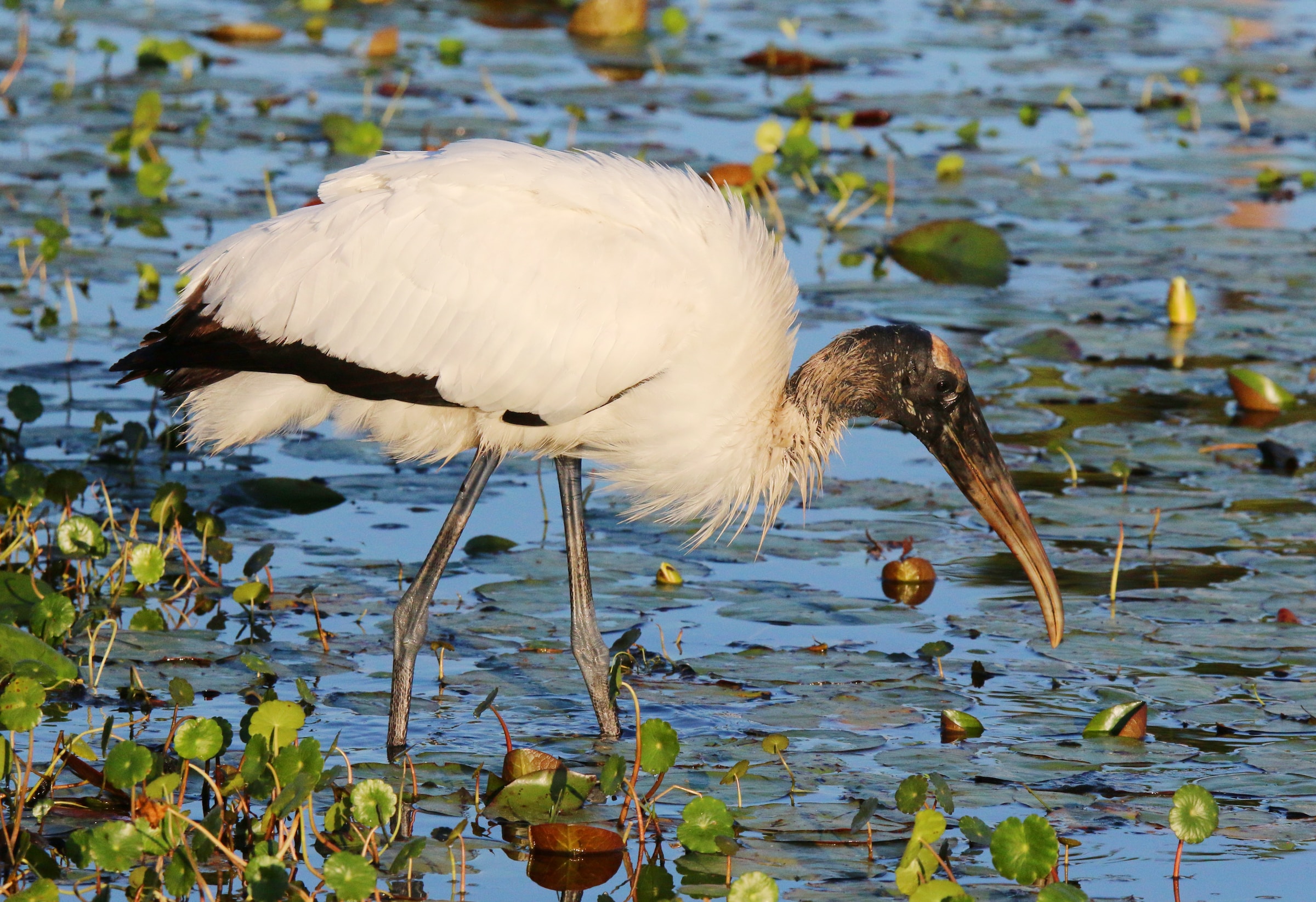
Wood stork populations have declined because of habitat loss.
Peatlands are also full of animal life. They’re important to threatened mammals and birds. 40% of birds and mammals live and breed in wetlands like peatlands. Over a third of endangered animals and plants live in these habitats. Some of the endangered animals are:
There are several threats to peatlands:
These threats pose a danger to climate change. When you drain the water in these forests, they become flammable. Peatlands on fire releases a lot of carbon dioxide. Drained peat forests are also more likely to flood. This can be disastrous for neighboring communities.
As with so many threatened ecosystems, there’s a domino effect. Peat lands have global implications. If we don’t act fast, they’ll continue to dry out. And they’ll keep releasing too much carbon. Then they won’t be helping to fight climate change. Instead, they’ll be contributing to climate change.
Humans have drained 15% of the world’s peatlands. But there’s hope with the Global Peatlands Initiative. Their goal is to improve the conservation and restoration of peatlands. In fact, rehydrating peat swamps and bogs can:
Scientists are using several ways to rewet peatlands. They’re creating ditches, blocking drainage ways, and installing pipes to flow water. A great example is the Bennett Swamp in Florida. A project has reclaimed the nearby city’s water. It’s diverted this water to the swamp for rehydration.
Want to know an amazing fact? Restoring peat forests prevents the release of 394 million tons of carbon dioxide per year.
Dogwood Alliance is hard at work to protect Southern wetlands. This includes peatlands like you’ll find in the Okefenokee swamp. You can help right now!
Take action: Urge your state’s legislators to restore protections to wetlandsMake a donation: Give today to save our peatlands and all wetlands


 Donate