


Dogwood Alliance and New Alpha Community Development Corporation Launch Justice Conservation Fund to Protect Forests from Industrial Logging in Under-Resourced Communities Across the South
The Justice Conservation Fund helps Native American and Black communities purchase properties that will serve as community-owned hubs of forest conservation, outdoor recreation, and eco-tourism. The Fund purchased its first property on April 1 in Laurens County, South Carolina
Florence, South Carolina. Dogwood Alliance and New Alpha Community Development Corporation have launched the Justice Conservation Fund (JCF). The fund is a pioneering multi-million dollar initiative. It invests in community- and tribal-owned forests. It focuses in areas of the South lacking the resources for land protection.
The JCF provided its first funding to the Lower Eastern Cherokee Nation in Laurens County, South Carolina. The tribe purchased forested land adjacent to its cultural center. The land sits in the heart of commercial logging country. The JCF has raised over $1 million so far. The goal is to secure $5 million over the next few years. The JCF will invest in forest protection across the South. The fund focuses in communities that have borne the brunt of the negative health, economic, and climate impacts of industrial logging and wood production. Local environmental justice groups or Native American tribes will own and manage each project. They will establish community-led hubs of forest preservation, outdoor recreation, and eco-tourism.

Reverend Leo Woodberry is the Executive Director of New Alpha. He said:
“The Justice Conservation Fund is focused on protecting forests in low-income, rural communities of color like mine that have been disproportionately impacted by the commercial logging and wood pellet biomass industries. There is no justice in the environmental destruction and pollution these industries cause, but there is justice in land conservation, climate protection, and clean air. Our vision is restorative forested justice where communities build local economies that respect and allow nature to thrive for generations young and old.”
Local governments often prioritize commercial logging and wood pellet biomass industries over preserving forests. All in the name of economic growth. For a decade, under-resourced communities across the South have suffered the impacts of the rapid expansion of the biomass industry.
However, studies show that standing forests are worth 15 times more than logged forests. Outdoor recreation is a proven better economic alternative to industrial logging. Nationwide, outdoor recreation contributed $640 billion to GDP in 2023. Compare that to Forestry and Agriculture combined at $274 billion. The outdoor industry created 500,000 jobs compared to only 90,000 in the forest sector. Additionally, wetland forest ecosystem services are worth more than $500 billion. This includes water filtration, protection from extreme weather events, food, and pollination.
Danna Smith is the Executive Director of Dogwood Alliance. She said:
“Communities want to protect their forests and grow their local economies. We’re creating a new economic model in the South that’s designed to keep forests standing and rooted in community, outdoor education and recreation and climate resiliency. Currently the South is the world’s largest wood-producing region. Logging rates here are estimated to be four times higher than in the South American rainforest. The climate, health and economic impacts have been devastating for local communities. The Justice Conservation Fund is funding a new model for creating local economies that work in harmony with nature. We envision a day where our Southern forests and people thrive together.”
Commercial logging leaves communities more vulnerable to hurricanes, flooding, and extreme heat. Wood pellet biomass facilities drive the clearcutting of forests. They also emit significant levels of pollution, specifically volatile organic compounds (VOCs) and hazardous air pollutants (HAPS). These can cause cancer, brain disease, and respiratory problems.

Rev Leo Woodberry added:
“The Justice Conservation Fund will also ensure that communities can control their own destiny and grow their local economies.”
Each property purchased through the JCF will be in the hands of the communities that own them.
On April 1, the JCF provided its first grant to the Lower Eastern Cherokee Tribe in South Carolina. The tribe purchased 13.5 acres of forested land in Laurens County. The tribe already owned an adjacent 9.25 acres. With this new purchase, the tribe now owns 22.75 acres.
The tribe has named the property “Tribal Forest of the Lower Eastern Cherokee Nation of South Carolina.” They will create a 2- to 3-mile hiking trail around the perimeter. The trail will have storytelling stations about their history and culture. It will have replicas of the tribe’s traditional canoes, baskets, tools, housing materials, jewelry, and other cultural items. The land sits within the wood pellet biomass company Enviva’s sourcing radius. This project helps the tribe protect their land from industrial logging. It will also generate tourism revenue and enhance their connection to the land.
Chief Dexter Sharp of the Lower Eastern Cherokee Nation of South Carolina said:
“The opportunity to own and protect this land represents an exciting new chapter in our tribe’s history. It’s in our blood to be responsible stewards of the Earth. In the years to come, our tribal forest will not only be a popular hiking experience, but a showcase of our rich history and cultural practices. I envision generations young and old leading hikes, making food and souvenirs, and leading presentations about our way of life. It will be a bustling local economy that reflects our tribe’s values and deep respect for the land.”
Prior to purchasing the tribal forest, Dogwood Alliance and New Alpha raised over a half a million dollars. The money supported the purchase of two properties. These projects were the catalyst for the Justice Conservation Fund.
Freedom Land is a 305-acre forest along the Pee Dee River in Britton’s Neck, SC. New Alpha owns and manages this property. It will host an eco-lodge, hiking trails, and outdoor recreation activities like fishing, boating, and horseback riding. A majority of Britton’s Neck residents are descendants of people once enslaved on the property. The land will be put into a trust for those descendants.
In 2022, Dogwood and New Alpha helped the Pee Dee Indian Tribe find funding. The tribe lost all of its tribal land during colonization. They were able to purchase 77 acres of wetlands adjacent to 16 acres they already owned. The tribe is restoring the wetland. They have created an environmental education center on the property. The center focuses on Native American culture and heritage. It also educates about the importance of preserving wetlands.
“The Cherokee tribal forest is the third conservation project built on the Justice Conservation model. Economic growth by keeping our forests standing. That’s what the future of the South looks like,” said Smith.
Media Contact: Carina Daniels
[email protected]
510-847-1617
I must admit that since Super Bowl LX, I’ve had bunnies on the brain. When you think of bunnies Bad Bunny, Bugs Bunny, Thumper, Peter Rabbit, Roger Rabbit, or even the Easter Bunny might hop into your mind. But how much do you know about the actual wild rabbits you can find in your backyard?
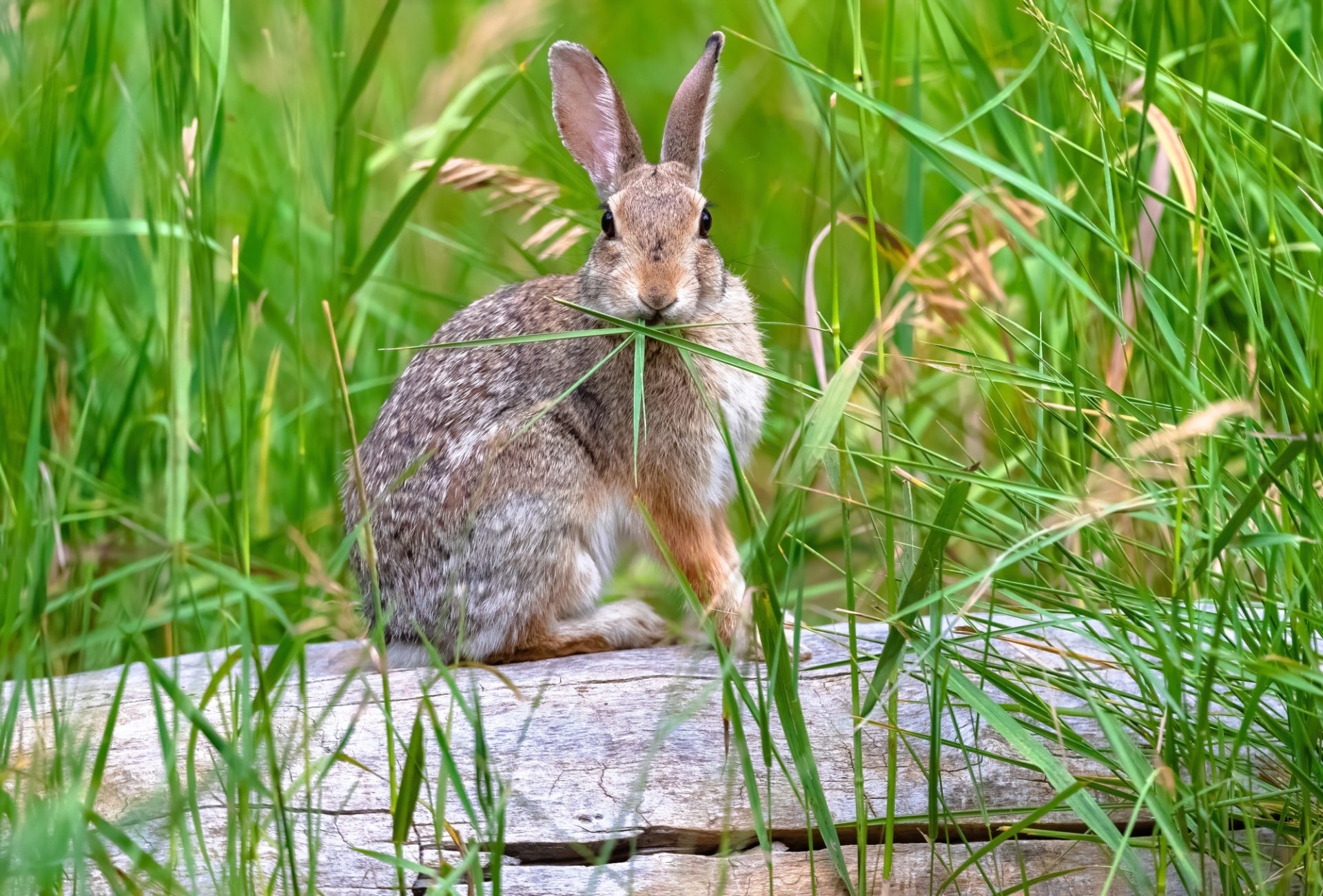
The US South is home to four species of wild rabbits, and they play an important role in nature. Rabbits are avid grazers. These herbivores forage on flowers, grasses, herbs, shrubs, weeds, and woody vegetation. Rabbits help keep plant health in balance. They keep weeds under control and encourage biodiversity. Their waste improves soil fertility and promotes plant growth. Because it’s high in nitrogen and phosphorus, it acts as a natural fertilizer. They’re a significant part of the food web. Wild rabbits are also whimsical and a joy to observe in nature. Learn how to identify them and where you’re most likely to find them.
Eastern cottontails have reddish to grayish brown mottled fur and a white underside. They sometimes have a white spot on their forehead and a rusty patch on their rump. Their tail is short, white, and fluffy like their name implies. They also have a white or light colored ring around their eyes. They have large hind feet, long ears, and big brown eyes that help them detect predators. Adults range from 12.5 – 20 inches in length and weigh between 2 – 4 lbs.
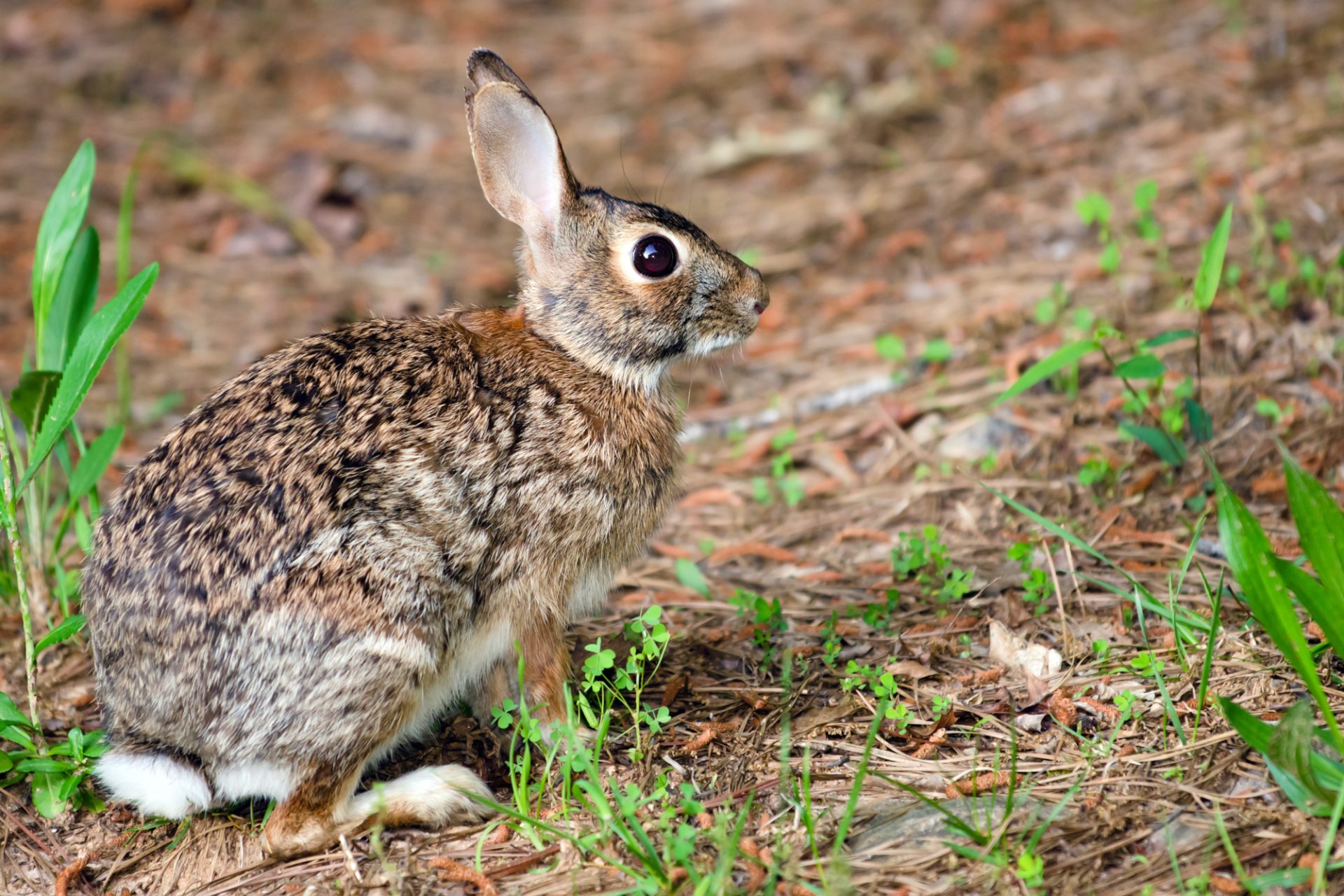
This species is most active at dawn, dusk, and at night. They are territorial and typically stay within the same range. Their speed and agility helps them evade predators. They can run as fast as 18 mph when chased and will typically flee in a zigzag pattern. Eastern cottontails do not dig burrows. Instead they scratch out a shallow hole in grass or thick vegetation. They also seek shelter in the abandoned dens of groundhogs.
Eastern cottontails are the most abundant and expansive rabbit species in North America. Their range spans from southern Canada to northern Colombia. It includes most of the contiguous US from the East Coast to the Great Plains. Eastern cottontails prefer open meadows, grassy fields, thickets, and forest edges. They seldom roam far from the safety of cover. The IUCN Red List considers their conservation status as “least concern”. But they do face threats like disease, predation, habitat loss, and vehicle collisions.
Appalachian cottontails are distant relatives of eastern cottontails. Visually the two are quite similar, and it can be hard to tell them apart. Appalachian cottontails have golden brown mottled fur. You’ll notice they have a rusty neck patch and a white underside. They often have a black spot in between their ears and lack a white spot on their forehead. Their tails are also short, white, and fluffy. They have large hind legs, long ears, and big brown eyes. Females are typically larger than males. Adults range from 15.5 – 17 inches in length and weigh between 1.75 – 3 lbs.
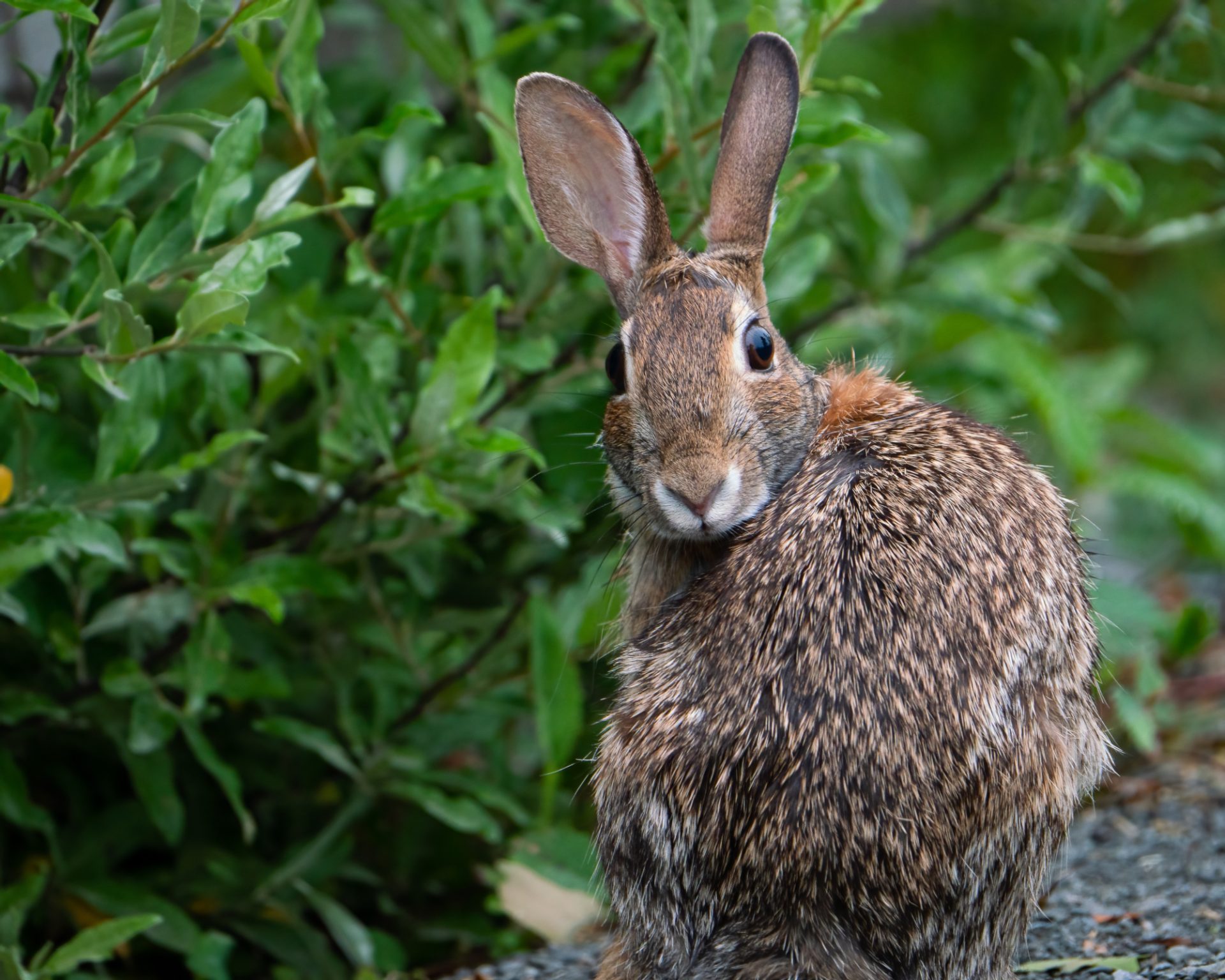
This species is most active at dawn and dusk. During the day they take shelter in dense vegetation. To avoid detection, they move slowly, close to the ground with their ears back. They’re also known to remain quiet and still for up to 15 minutes. When chased, they run in a zigzag pattern to escape predators.
You can find Appalachian cottontails from Pennsylvania to South Carolina. But they’re most prominent in the Appalachians. They’re found in dense forests, brushy areas, and scrub forests. They prefer higher elevations (2,001 to 2,500 ft). Logging and development threaten Appalachian cottontail habitats. The IUCN Red List considers their conservation status as “near threatened”. Unfortunately, their populations are decreasing.
Marsh rabbits are members of the cottontail family and look similar to eastern cottontails. But their faces are slightly mousier. They have blackish brown to reddish brown mottled fur and a grayish underside. Their tails are a bluish gray earning them the name of bluetails. They have black tufts of fur on the prominent edge of their ears. Their ears are also shorter and rounder than eastern cottontails’ ears. They have short legs and often walk on all fours rather than hop. Their hind feet have noticeably long toenails. Adults range from 15.5 – 18 inches in length and weigh between 2.5 – 5 lbs.
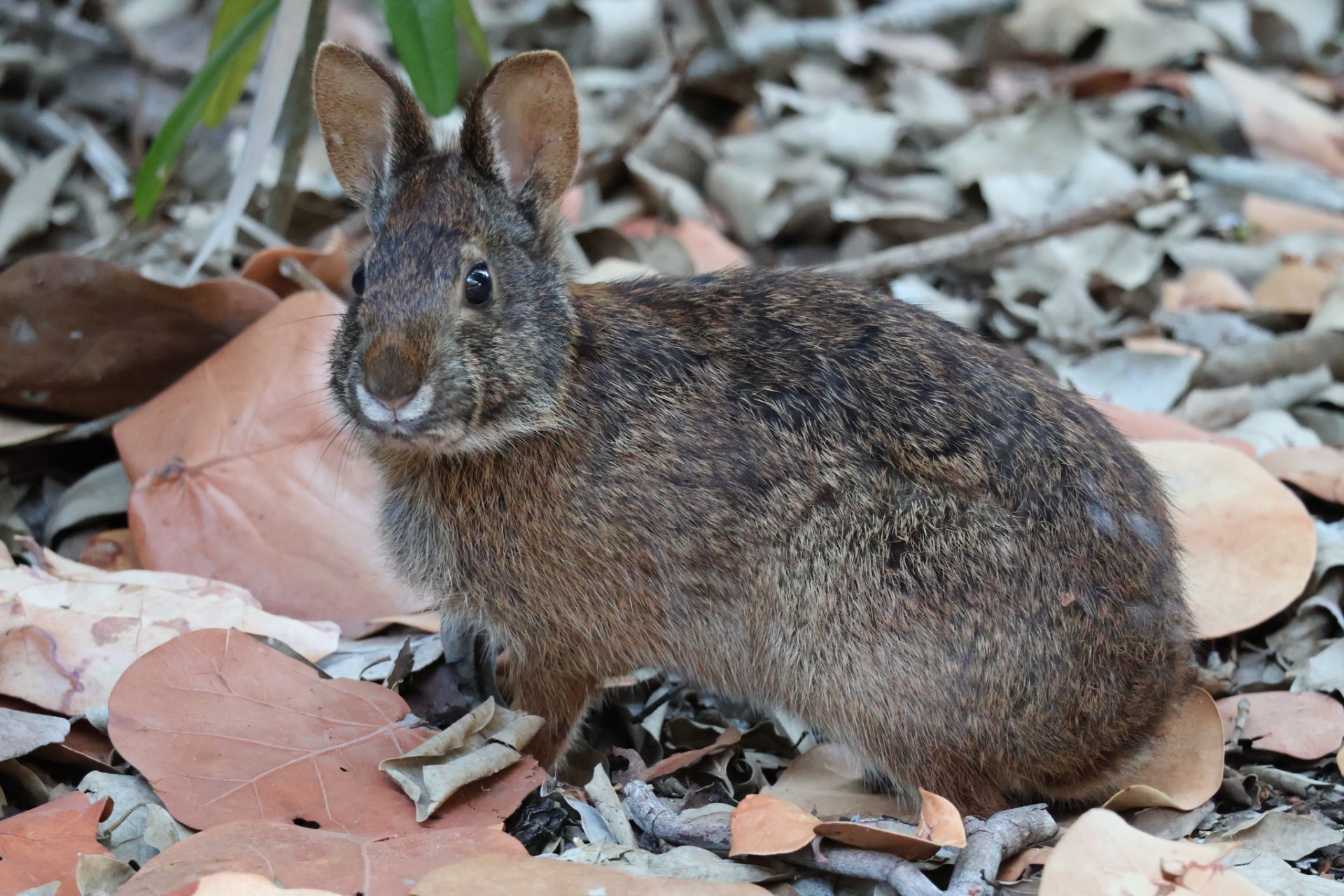
This species is most active at night. They rest during daylight hours hidden in tall grasses, dense shrubs, or hollow logs. Marsh rabbits do not dig burrows. Instead they use the abandoned dens of other animals. Or they’ll create a shallow sunken area under thick vegetation or within hollow trees. Marsh rabbits are avid swimmers and are semi-aquatic. They sometimes hide in muddy waters with only their eyes and nose exposed with their ears tucked back.
Marsh rabbits have a range that spans from coastal Virginia to the lower Florida Keys. They’re only found in wet, lowland habitats and must live near a permanent water source. They prefer marshes, swamps, coastal areas, or anywhere near lakes, rivers, and other waterways. The IUCN Red List considers their conservation status as “least concern”. But the Lower Keys marsh rabbit, a subspecies, is federally recognized as endangered. They’ve lost more than half of their habitat to sea level rise and development in the last 50 years.
Swamp rabbits are the largest in the cottontail species. They’re closely related to marsh rabbits. Their fur is light to dark rusty brown with black speckling. Their chin, throat, and underside are white. They have a cinnamon colored ring around their brown eyes. Their short tails are brown on top and white on the bottom. They have large orange hind legs and medium sized ears. Males are typically larger than females. Adults range from 17.5 – 21.5 inches in length and weigh between 3.5 – 6 lbs.

This species is most active at dawn, dusk, and at night. You’ll rarely see them during daylight hours. They’re very territorial and will leave scent marks to establish their range. Swamp rabbits rest in tall grasses or dense vegetation where they’ve made shallow dugouts for safety. They’re skilled swimmers and will dive into water to escape predators. They sometimes hide in water with only their eyes and nose exposed like marsh rabbits. On land they will flee using confusing maneuvers like zigzagging to evade capture.
Swamp rabbits are native to the south central US and the Gulf coast. They’re most abundant in Alabama, Louisiana, and Mississippi. But their range includes Georgia, Illinois, Indiana, Kansas, Missouri, Oklahoma, South Carolina, Tennessee, and Texas. They prefer wet, lowland habitats near a permanent water source. You’ll find them in cypress swamps, marshes, floodplains, or near waterways. The IUCN Red List considers their conservation status as “least concern”. Though they note that populations are decreasing overall. Data shows the species is rare or imperiled due to loss of habitat in Arkansas, Kentucky, Missouri, and South Carolina.
Most wild rabbits breed from January through September. But mating season can vary depending on elevation, climate, and other factors. Wild rabbits build their nests in dense, low vegetation. You’re most likely to discover their nests while gardening, landscaping, or mowing. If you have rabbit activity in your yard, it’s best to check your grounds for nests before mowing. Especially before your first mow of the year in spring. This could help you avoid discovering a rabbit nest too late.
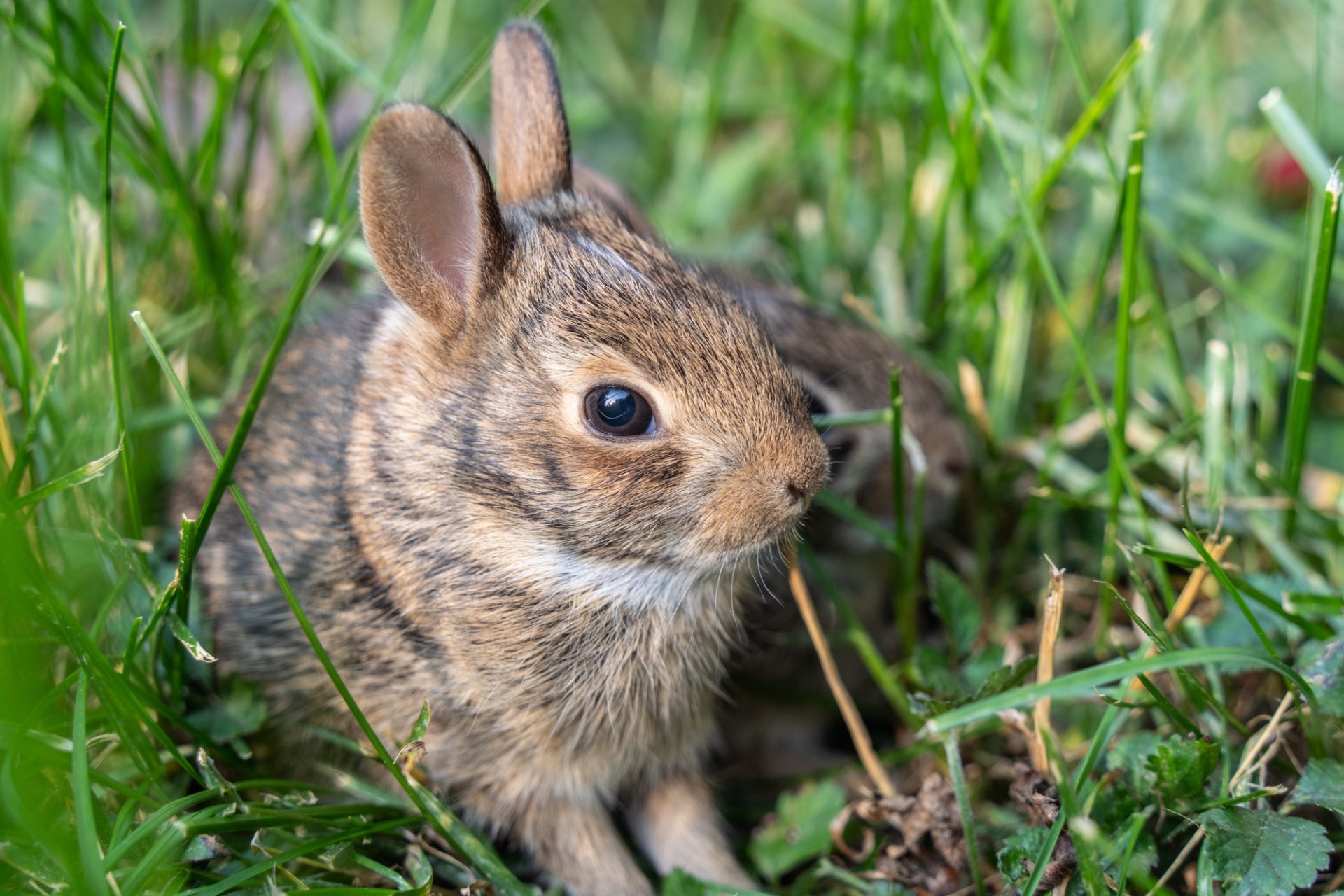
Female rabbits will avoid drawing attention to their nests so the young are often left alone for long stretches of time. If you happen upon a nest of baby bunnies, it’s best to leave it as you found it. Young rabbits found outside the nest usually do not need human help. As long as they’re 4 or more inches long and are able to hop freely. If they’re smaller than 4 inches, injured, or immobile, it’s best to call a licensed wildlife rehabilitator for help. Be careful not to draw predator attention to the nest.
Wild rabbits don’t live very long. On average, their lifespan ranges from 1 year to 18 months. But there have been records of individuals living as long as 9 years in captivity. If you’re lucky enough to have wild rabbits in your backyard, know that their time with you is short. Enjoy watching them forage, lounge, and hop around. Observe them from afar and always keep your distance. Wild animals, even the cute and fuzzy ones, should always be treated with respect and caution.
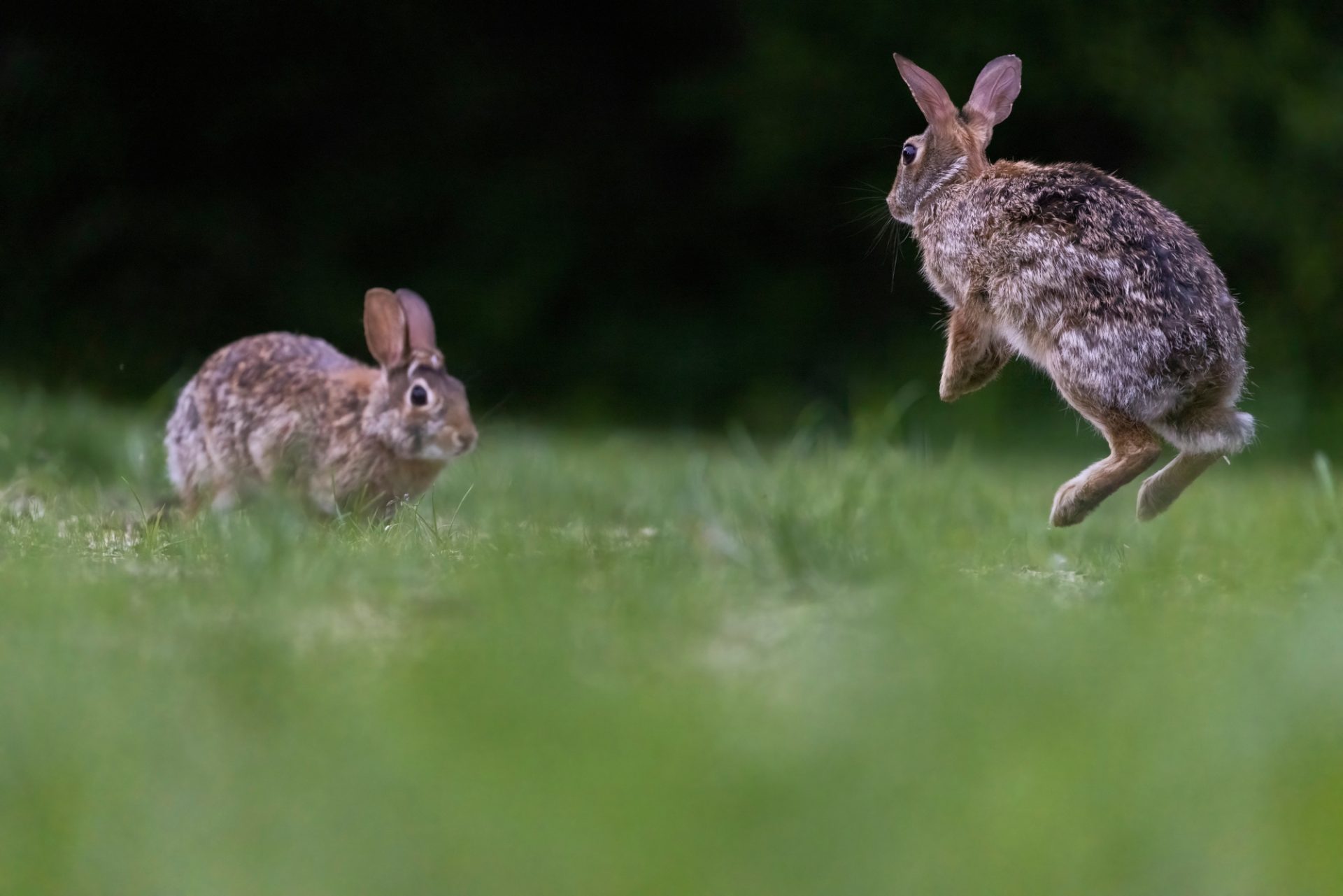
Watching wild rabbits in my backyard is one of my favorite pastimes. It makes me feel happy to know they feel safe enough to make my backyard their home. I love watching them play and chase each other along the tall grass. They make me smile when they lay stretched out like they have nowhere to go and nothing to do. I also look forward to seeing baby bunnies hopping around the yard throughout the year. Observing nature always calms me and fills me with delight. They remind me to touch grass. To be wild and free.
Did you enjoy learning about wild rabbits? If so, why not show us? Share this article on social media and tag us on Bluesky, Facebook, LinkedIn, or X/Twitter! Or share your backyard bunny photos with us on social media.
Join our email list to get new Biodiversity in Your Backyard blogs sent directly to your inbox! And check out the other blogs in our Biodiversity in Your Backyard series!
Join us as we explore! We’ll learn about the wildlife, plants, trees, and even mushrooms. All right outside our doors. When you sign up, we’ll deliver more Biodiversity in Your Backyard tips directly to your inbox!


 Donate
  April 5, 2026