


At the beginning of December, the UK introduced a target to cut carbon emissions by 68% (based on 1990 levels) in the next decade.
In reality, the UK’s climate targets are unlikely to keep us below 2 (never mind 1.5) degrees Celsius warming because they are burning biomass and claiming it as carbon neutral. Not only is this having catastrophic consequences for forests and communities of the Southern US right now, but without addressing the burning issue of biomass, the UK’s climate impacts will hit low income, working class, and BIPOC communities the hardest.
The UK has been relying on biomass for electricity since 2011. The UK’s climate pledges rest on dodgy accounting, and the UK is throwing billions of pounds of taxpayers’ money to prop up the burning of wood for electricity every year.
Erroneously, the UK is counting this dirty power source as carbon neutral. Spoiler alert: It’s not.
The NGO and scientific communities both heavily criticize classifying biomass as carbon neutral. The European Academies Scientific Advisory Council and nearly 800 scientists wrote to the EU Commission in 2018 calling for forest biomass to be removed from the category of “renewable.” Furthermore, earlier this year, a coalition of environmental advocacy groups launched the Cut Carbon Not Forests campaign to “expose the UK’s wasteful subsidies” for companies that burn trees for electricity and to put public pressure on policymakers to support reform. Cut Carbon Not Forest aims to redirect subsidies to support solar and wind solutions, encouraging supporters to email their local member of parliament (MP).
Despite its record of pollution and forest destruction, Drax (the UK’s largest power station) alone receives £2 million in taxpayers’ money. This money should be spent on real climate solutions, not more dirty energy. Over 2,000 Britons have contacted their local MP calling for the UK government to redirect the subsidies to true clean energy.
The UK’s clean energy transition relies on the dirty little secret of biomass energy. Dogwood Alliance is working with the Cut Carbon Not Forests campaign because it’s our forests in the Southern US that the UK threatens with their enormous demand. While you may not have an MP you can write to, you can still raise your voice.
From discussions with activists in the UK, Members of British Parliament, to the media, we want to elevate your voice. Take action so we can spread your message!
This week our hosts Kimala Luna from Dogwood Alliance and Elizabeth Lashay from SlayTheMic talk with artist Allison Maria Rodriguez about her artwork and how she creates immersive experiential spaces to challenge conventional ways of understanding the world.

Be sure to check out Allison’s website here. Her work delves into climate change, species extinction, humanity’s relationship to nature, and the pervasive sense of loss for that which can never be recovered. Here is an example of one of her pieces Wish You Were Here: Greetings from the Galapagos that she refers to in our interview:

You can also read the full transcript of our interview with Allison below.
Want to listen to more?
Check out the full transcript of our interview with Allison!
Elizabeth Lashay: Hello everyone. And welcome back to Woods & Wilds Podcast. I’m Elizabeth Lashay. And I’m joined with my wonderful co-host.
Kimala Luna: I’m Kimala Luna with Dogwood Alliance. And we have the ultimate honor of being here today with Allison Maria Rodriguez, who is a first-generation Cuban-American interdisciplinary artist working predominantly in video installation and new media. She creates immersive experiential spaces that challenge conventional ways of knowing and understanding the world. Her work focuses extensively on climate change, species extinction, and the interconnectivity of existence. Through video performance, digital animation, photography, drawing collage, and installation, Rodriguez merges and blends mediums to create new pictorial spaces for aesthetic emotional, and conceptual exploration. She uses art to communicate beyond language, to open up a space of possibility for the viewer to encounter alternative ways of connecting to the emotional realities of others. And we’re so excited to have her here today. We’re going to be talking about her recent projects, Wish You Were Here: Greetings from the Galapagos and In the Presence of Absence. Welcome, Allison. Hello!
Allison Maria Rodriguez: Hello. Thank you so much for having me.
Kimala Luna: Thank you.
Elizabeth Lashay: I want to just hop right on in and I have to say I’m looking at your artwork and all that it is, it’s absolutely stunning. And my first question would be at what age did you feel like, “I have an eye for capturing the essence of beauty?”
Kimala Luna: Such a good question.
Allison Maria Rodriguez: Yeah, that’s a very interesting question. I’ve always been a lover of wildlife and the environment since I was a child. But my artistic pursuits, I actually was a literature major in college, and I did not think that I was going to be a visual artist in my future. I happened to take a few photography electives while I was an undergrad, and I just fell in love with the way that I could communicate so much more than I could with all the theory and academic jargon that I was using in my papers with these images. And so I kind of transitioned and did a full like 90° turn and started working in visual art.
Kimala Luna: Beautiful. I want to talk about the older project, Wish You Were Here: Greetings from the Galapagos. Can you give us just a little bit of a summary about that project?
Allison Maria Rodriguez: Absolutely. So that is a three-channel immersive experiential installation, and it’s inspired by a trip that I took to the Galapagos in 2016. And the piece basically thinks about the earth as a brain experiencing climate change as trauma. I try to think about intimate ways to talk about environmental issues, ways that make it relate to the experiences that humans have, so that it sort of approaches it from a slightly different angle. I think, than a lot of the media that folks see about climate change and environmentalism. So for this piece, like I said, it’s a brain experiencing climate changes trauma and species extinction is kind of like PTSD, I think about it in the piece. But basically what happens is there’s a huge landscape where you see different environments and peering on the different screens.
And then you start to see all of these animals from the Galapagos appearing in the main screen. And on the side screens, you start to see these synaptic flashes that signal across each other. So one screen talking to the other one, as these extinct animals start appearing as they disappeared from the earth. And then as the piece moves along, seasons change and things like that. But the animals in the center start to turn into pencil sketches and then they disappear and appear on the opposite sides, right, and left with the extinct species. I’m also a figure in the landscape. I’m in all channels, but I’m kind of doing different sorts of activities and really looking at the animals, but not seeing them in a way. And it’s sort of like a blend between conservation and consumption, I guess.
So like I’m a tourist as well. And when I was there, I was very aware that every step I took was a part of what’s sort of wrong with the natural world. Even though I was on an eco-friendly type of experience, I still was very conscious and very aware of that. So this has attention between those aspects of what I do and what we all do as we try to navigate the world. So I think the piece is somewhat geared towards folks who are environmentally conscious potentially already but deal with that struggle, navigating that space.
Elizabeth Lashay: Thank you for sharing that because I have to say I’ve really grown to make and intertwine my life story and nature. Because we are intertwined and that’s what I keep learning. So when you talk about this immersion video and experience, where did this come from to decide that you are going to really install and dive deep into an immersion experience?
Allison Maria Rodriguez: I think it has to do with what I’m trying to create. I want the person engaging with my work to have an experience. I’m creating a space in which they can hopefully open up to different emotions and sort of allow themselves to just have an emotional experience that stands somewhat outside of how they would go about their routine day-to-day. And I use beauty as a strategy to bring people in, to point out how beautiful everyday reality is. I use magical realism as a way to kind of show some… I make something look more real than real in order to show how fantastical your every day is, I suppose. And it just seemed like that’s what I want is a place in which people can open up to connection and to different ways of thinking. And that it’s not something where I’m trying to teach them a particular lesson or convey a particular kind of information.
Allison Maria Rodriguez: I want people to be interested in conservation and to look up these different animals and learn things. But what I’m really trying to do is open up different ways of thinking about engaging with the world. And I think that, that’s kind of through an experience through connection, not necessarily for me and my skillset, not necessarily through infer technical information.
Kimala Luna: I love that. And I think we can relate because a large part of what this podcast is about is like showing different avenues to different people’s various connections to nature, because they’re all marvelous. And so I love the idea of using like beauty as a strategy to just convey that feeling. When was it a time that you completed something and you almost convinced like shifted your own mindset with it?
Allison Maria Rodriguez: That’s interesting. I think I did this fellowship in the Arctic in 2018 and I’m making work based on that experience. I was there because I’m an artist. It was part of a fellowship where I came as an artist sort of like embedded in. I followed around scientists that were out doing research and just kind of tagged along with them. And then I was sort of embedded in a citizen scientist group. So I actually did got to have the experience of doing the research myself, but I came to this experience through art and I had what can only be called a spiritual experience to me. Prior to sort of this work, the Galapagos work, the In the Presence of Absence, this Arctic experience. I didn’t really consider myself a spiritual person.
I mean, I grew up Catholic, which is religious and I sort of stepped away from that as I became an adult, but this really opened me up to feeling that interconnection of existence, of the universe, in this really profound way. And to really look at things, but you can’t see. Like a lot of what they were studying in the Arctic were Daphnia, which are these tiny little water fleas and the sort of feel connected to a water flea and was just a very profound experience. And that happened for me through art-making.
Elizabeth Lashay: I want to talk about the inspiration in terms of like from nature. And when you look at your surroundings, what are some things that you see that stem from what you have experienced growing up?
Allison Maria Rodriguez: I guess, empathy, maybe. I feel the pain of extinction. I feel that as a visceral kind of loss, and I think other people would too if they were more aware of it. That it’s not like a lack of ability to have empathy. It’s more of like not feeling that connection. And when I see beauty, it’s also somewhat painful because it has a sense of leading to it as well. And so my work does kind of come from this place of loss and absence and memorial. And there’s hope in it as well.
Kimala Luna: First of all, it’s so painful that we’re doing a podcast about your art, because your images are just… For anybody tuning in, you should really go to her website. It’s allisonmariarodriguez.com. And look at some of these pieces because they are just like so layered and beautiful. And you do have a parallel between Wish You Were Here: the Galapagos project and In the Presence of Absence where you talk about the cultural loss that happens. So I guess what I want to know about is this reverence that you take in your art, for not only this loss, but like the celebration of it. Like riding that fine balance. I don’t know. Like what is making that connection feel like for you? And what does it feel like when other people can fully comprehend it?
Allison Maria Rodriguez: And this actually is going to tag back into the last question, I think about empathy. And may actually be a better answer to that question. Like In the Presence of Absence was born out of me putting an image of my grandmother on the wall. My deceased grandmother from Cuba alongside of an extinct animal and feeling like there was some kind of connection between those two. And that’s obviously something I saw in childhood, my grandmother, and that experience of loss, to this experience of loss of this other species in the fabric of what makes up our world. And if you can make a parallel between the beauty of a relationship with a human, to the beauty of our relationship with the earth, I think there’s something captivating about that idea.
Allison Maria Rodriguez: And I’ve had people experience my work in lots of different ways and it’s always incredibly rewarding. Little kids have been captivated. I guess, I shouldn’t use captivated too much. Have been seated like inside my installations and just sitting there and watching. And I’ve had parents come up to me and say, “They never do that.” And children were not really my primary audience when I was creating the work, but I figured things kind of move slow. There isn’t really a traditional sense of narrative and the work kids won’t be interested, but it does grab them. And I think it is something about that line in between where it’s celebration and mourning.
Kimala Luna: That’s beautiful. That spoke to my question better than I could even ask it.
Elizabeth Lashay: I think about that childlike thought process, and especially when we’re in a world where it’s quite heavy and we’re navigating racial injustice, a global pandemic. So many different views and narratives of the world and you bring such a light-hearted fantasy into your work. Can you speak about that a little bit, about the fantasy realm of your artwork?
Allison Maria Rodriguez: Yeah. A few things, I suppose. I’m kind of tagging back along to what I was saying earlier about magical realism. I think there’s a sense of making something fantastical in order to make it more real. So I think there’s an element of that. And then also I think there is something empowering about fantasy. I think it’s often in our very patriarchal capitalist society designated to this idea of play, but it’s thinking about things differently. It’s imagining new worlds, which is a skill set that we need in order to change the way that we’re living now. So I kind of consider the creative process that happens when we all fantasize as a strategy for change because it is opening up your mind to different ways of being. And that’s what is so hard for so many people and causes sort of us to run up against this existing in the same old routine and way of being.
Kimala Luna: Yeah. I want to jump deeper into the fantasy aspect of it because I remember a project that I wish I could… I think it’s called something like a girl’s fantasy, but I was originally captivated by your work from this project. Where you tapped back into the fantasies that girls had when they were younger. Like, I think mine was building fairy houses, and that feels very similar to that mourning celebration space. And so can you talk a little bit about that project as well?
Allison Maria Rodriguez: Absolutely. That’s the Legends Breathe project and it’s an ongoing project where I interview different female-identified and non-binary creative people about fantasies that they had as children that help them deal with some form of trauma. So it could be seen as escape, but it also is a way of creating oneself, a new in the world. I have them describe the fantasy to me, and it happens in different ways. Like it can happen via email. It can happen via us meeting for coffee. It happens in different ways, but then I visually explore that fantasy. I don’t recreate it because that’s not possible, but it does have this different sort of life of coming from an adult talking about a fantasy that they had as a child. So there’s that level. But then it’s also coming into me and going through my fantasies and my childhood. And I explore them visually.
And I install them in different ways. I created something that was like a structure that mimics sort of like the idea of a tent or fort, that adult-sized people could go sit inside and experience the fantasy around them. And I also created these small boxes that were like treasure chest, that a child might have to put things that are precious and you open them up. And there was a screen at the bottom that would play the video. So I’m also kind of approaching different ways that we express intimacy, I guess. And the relationship of the body and space to those things. And I’m also just interested, I think like when I showed this project for the first time, so many more people were just like, “Even just this is making me happy right now.” Was something that I felt like we needed at that moment.
People were just like smiling and saying, “This is just making me happy in this moment.” And for me that was good. I’ve also just recently finished showing this in a solo show called Subversive Dreams, where it was all large scale projections surrounding a building. So you could see multiple fantasies at once from outside because of the COVID pandemic situation. And that was really cool because they were larger than life. And one was up at the top of the building and they were along the sides and I liked seeing the fantasies in relationship to one another, so that they start a conversation. And you can see what’s unique about each one, but also where the similarities lie. Yeah. I think fantasy is a tool that we need as a society.
Elizabeth Lashay: Everything that you have done in terms of you and your artwork and the message that you convey, what have been some roadblocks or some difficult times that you have had to overcome?
Allison Maria Rodriguez: I think the pandemic itself has been a bit of a… My work doesn’t lend itself to being online. A lot of artists had to kind of pivot and start to find ways to show their work online. And I decided not to do that. I had a few different projects that I’ve been working on. I have an installation going up in New York in January. And I had a project that was supposed to happen this fall. It’s not happening, but I’m still working on the same work in the hopes of having opportunities to show it in an installation sense still, which some have popped up. But not having access to my studio has been really hard. I didn’t have a studio for a long time, but then I have for the past year and a half. And it may be spoiled me a little bit because having that actual space to think and like lay ideas out and move around and be by myself was really valuable.
But I’m adapting and I’m learning and I’m still making work and I’m still showing work because opportunities are coming up and where I’m doing like window installations and things like that. So people don’t necessarily get to be immersed in it, but they get to experience something in physical space. That’s human size. So I think that was something and is something that I’m still sort of struggling with. Just how to navigate that and continue to make work that’s valuable to the world. And also not just trying to react to the pandemic.
Elizabeth Lashay: I guess, I want to go back to what you described as what can only be described as a spiritual experience and talk to you about are there ways that you tap back into that? Do they involve nature? Can you tell me a little bit about your relationship to nature and how it compares to your art?
Allison Maria Rodriguez: I mean, I live in Boston, which is a city and I do try to spend as much time as I can in green spaces. But a lot of my experiences with nature I have to travel to have. So I do try to go to different places and have experiences. And I try to allow myself to just have an experience there and to not worry about creating a piece of work while I’m there. I think, it’s important for me to remain open to what I’m experiencing, what I’m looking at, what I’m seeing. And I also do a lot of just research and I think that keeps me open.
Elizabeth Lashay: You had described that spiritual experience and how do you tap back into it and just your personal…
Allison Maria Rodriguez: I mean, I think identifying that as well, that, that’s what this is. This is something spiritual to me. And just then looking at my work, looking at my interests, looking at my research from that lens. I can’t get rid of it now. So yeah, it’s just the part now of how I see my work and my movement in the world. I haven’t had really like trouble tapping back into that because it’s just made me see… It hasn’t really necessarily changed the work that I make drastically, but it’s made me see my own work differently.
Elizabeth Lashay: Oh, wow. Whenever I look at your work, I see lots of bright colors. I mean, what is the inspiration for the vibrant colors that you incorporate into your artwork?
Allison Maria Rodriguez: I mean, I guess talking about magical realism and fantasy and nature, which have bright colors in them. That inspiration I think is really aesthetic and is part of being of my particular artistic process. I see colors together and I love them. I love vibrant colors. I love them in relationship to each other. I love surrounding individuals with color. So I think that’s a very instinctual and impulsive reaction to color for me. So I don’t know how it’s inspired and sure it is, deep down inside me, inspired in particular ways. But it just feels very instinctual and very automatic. Like I see these colors together and to me, they’re beautiful. So they go together. And I love vibrant colors. I’ve always loved color.
Kimala Luna: This makes me want to know about like young Allison and like, what were you like when you were a child? And did you always love bright colors?
Allison Maria Rodriguez: Yeah. I mean, I think I came from a very complicated childhood, which I think is part of how I approach the arts. I do think that there’s a lot of creative people that come from backgrounds of trauma, because you have to think and approach the world differently, just based on your experience of life. There isn’t necessarily a clear trajectory or path that you’ve been given to follow. The rules are not the way that you’ve been told the rules are supposed to be. They’re different. So you sort of have to like be creative, think outside the box and experience a world that’s sort of off narrative. So I think that, that leads itself to creativity. I grew up in Florida and as a child, which nature was always a big part of my childhood. My parents both loved nature for different reasons.
And yeah, I don’t know. I was a very introspective, quiet child. And politically motivated. I mean, I’m sure that my sister also went to Antioch College, which our motto is be ashamed to die until you’ve won some victory for humanity. Very politically driven. I became very politically driven. And part of that also was that my family relocated to West Virginia, which was very racist, very homophobic. And I had to deal with those kinds of experiences as well, every day for many years. And I think that, that lended itself to me thinking differently because I wasn’t necessarily allowed inside the dominant narrative. And also to me wanting to change things.
Elizabeth Lashay: I’m so excited to see what you’re doing and what is ongoing. I also want to know what are you doing for yourself? Because I see and I can interpret and view your artwork. And I want to go and be immersed, but is that something that is really your passion still. Because sometimes artwork then turns into providing for others instead of providing for self. So do you still feel self-fulfilled?
Allison Maria Rodriguez: No. That’s a really good question. And my answer to that is that if I don’t make work. Like I’ve been asked, “How do you have hope? How do you continue to make work in spite of like all these statistics? In spite of all these people who don’t believe in climate change? In spite of etc?” And my response is to make art in a way in the most selfish way. It’s my way of navigating the world and my way of living. If I’m not making art, I start to get sad. That’s just who I am. I mean, there are moments in my life where art is not what I’m doing at that moment. And that’s okay because life has its ebbs and flows, but in general I’m a maker and it’s how I process. So in a way it’s not really even about fulfillment. It’s about survival, I guess.
Kimala Luna: Yeah. That lines up perfectly with my next question, because you had mentioned earlier about creativity being a response to trauma. And we are now living through a collective trauma. And I think that art as a form of healing is such a beautiful thing, but I think it’s often really hard for people to just begin. So if you had any advice that you wanted to give people who were maybe needing to process feeling creative, but not knowing how to start, what would you do?
Allison Maria Rodriguez: Now, that’s a very good question. I tell people to make their definition of art more lax. I think that being an artist is not necessarily creating a particular work of art. It’s about living creatively in the world. And I think if you open up your definition of what art is, and you can see the actions that you do in life as creative acts, it can lead you to being more consciously creative, if that makes sense. It’s a very narrow definition, I think, depending on who you ask of what art is. And I’ve always as an educator, as a curator, as an artist, of course, felt like that is too narrow. I mean, it’s about life. It’s about experience. It’s about engaging with the world, with your surroundings, with yourself. So broadening that definition and not holding yourself to a particular standard, I think can open you up to possibilities.
Elizabeth Lashay: I know that Kimala was asking about young Allison and I am also curious of like that moment. If there’s a story or a moment in time, when you remember nature, just really fueling who you are. Anything you like to share.
Allison Maria Rodriguez: I mean, I don’t have a particular moment that I can pinpoint until I became an adult, but I mean, when I was a little child, I wanted to be a marine biologist. And one of the things that I did that I was very proud of was that I’d walk around, asking adults to quiz me about sharks. So I’ve just always been fascinated with nature. I’ve always loved animals. I’ve always loved watching nature films, going to the Everglades, looking at pictures and books. I’ve always loved drawings of animals and scientific drawings of animals as well as creative drawings of animals. So it’s just a part of who I am. I think, as I’ve become older and moved through different stages of life, I’ve recognized the spiritual connection there. And that has happened in particular moments. But yeah, it’s just kind of how I understand myself in the world.
Kimala Luna: So you mentioned that you and your sister both went to Antioch College. And I’m a little curious about this college because it sounds like it was really trying to encourage people to become revolutionaries. And so can you just talk a little bit about your experience there?
Allison Maria Rodriguez: That’s definitely true. It was a very political school. The first year I was there, Mia Boone Jamal was the graduation speaker while he was on death row. And like, there’s one of the slogans to his bootcamp for the revolution. It’s about thinking outside the box. It valued being a citizen in the world, being an engaged person with the world. It encouraged, outward-looking and outward thinking. There was a lot of community meetings, but yeah, it just sort of… It was a little bit of a bubble in Yellow Springs, Ohio. But I’ve noticed as an adult, it did cultivate this way of engaging with other people, that a lot of folks who went to big universities, but didn’t sort of have this particular way of looking at things don’t have those same skill sets or those same ways of approaching situations.
Like everything is modeled around thinking about yourself as in relationship to the world, to everything out, going on in the world. It’s the bigger picture, I guess.
Elizabeth Lashay: If you had a magic wand, what would you change in this moment in time in regards to what we’re seeing environmentally?
Allison Maria Rodriguez: Oh, wow. I think, I really would go down to what my work is trying to do. I think that as a whole, we have this very colonial relationship to nature. This is very much a take relationship. And I would change that. I would make it so that we see ourselves as a part of it, of nature. And that both of us are dependent on each other, not as humans existing outside and dominating nature. I think that’s simply what I would change. And I think if you change that, a lot of other things would change. If folks valued the natural world as a part of who they are and how they understand their identity, the way it’s treated will change. If you felt like harming the earth was harming yourself and your family, that relationship is different than the colonial relationship we have to nature.
Elizabeth Lashay: It’s so powerful.
Kimala Luna: Well, Allison, what’s on the horizon? Where can people see your stuff, follow you?
Allison Maria Rodriguez: Well, I’m on Instagram and I’m just Allison Maria Rodriguez on Instagram. And I love connecting with people. So please feel free to follow me and send me a message. I’ll follow you. I love connecting with people. You can see my work on my website, which is allisonmariarodriguez.com. And I have an installation up in Ohio right now. I’m going to have an installation in Boston in December, and I’m going to have an installation in New York in January. So I’m still out in the world and exhibiting, but I think the best way to follow what I’m doing is to go to my website and look at my news page and to follow me on Instagram.
Elizabeth Lashay: I am just so excited to at least have this time to sit down with you and experience and get to know you a little bit better. So thank you so much for allowing us to talk with you today, speak with you.
Allison Maria Rodriguez: Thank you so much for having me on here. I’m very grateful that you were interested in my work and what I’m doing and the kind of way I’m trying to engage and change a little bit of the world. So thank you both so much.
Elizabeth Lashay: Thank you so much for all the beautiful work you’re doing. I’m super inspired by it. And so happy that you were able to make time for us today. This was wonderful.
Kimala Luna: Yeah.
Allison Maria Rodriguez: Thank you both.
This week our hosts Kimala Luna from Dogwood Alliance and Elizabeth Lashay from SlayTheMic speak with the author of The Unlikely Thru-Hiker, Derick Lugo. Derick not only talks with us about his adventures on the AT and how the origin story of his nickname, but also his love of writing and what led him to write a book in the first place.

Be sure to check out Derick’s website here. You can also read the full transcript of our interview with Derick below.
Want to listen to more?
Check out the full transcript of our interview with Derick!
Elizabeth Lashay: All right, I’m Elizabeth Lashay with Slay the Mic and I am joined by my wonderful cohost.
Kimala Luna: I’m Kimala Luna with Dogwood Alliance. And today, we have the absolute pleasure of being here with author, adventurer, speaker, Derick Lugo, who had never hiked or camped a day in his life. This Brooklyn-born, New York City urbanite hopped on a train to Georgia, grabbed a taxi at the station, and took the cab driver to drop him off at the beginning of the Appalachian Trail. Then he did as he’s always done, he put one foot in front of the other and never looked back. And I want to take a second before bringing Derick on to read the description of his book, The Unlike Thru-Hiker, and you can read more about that on his website, dericklugo.com. That’s D-E-R-I-C-K-L-U-G-O dot com.
Derick Lugo had never been hiking, he certainly couldn’t imagine going more than a day without manicuring his goatee, but with a job cut short and no immediate plans, this New Yorker began to think about what he might do with months of free time. He had heard of the Appalachian Trail, but he had never seriously considered attempting to hike all 2,192 miles of it. Suddenly, he found himself asking, could he do it?The Unlikely Thru-Hiker is the story of a young, black man setting off from the city with an extremely overweight pack and a willfully can-do attitude. What follows are lessons of preparation, humility, race relations and nature’s wild unpredictability. Through it all, Derick, AKA Mr. Fabulous, refuses to let any challenge squash his inner Pollyanna, persevering with humor, tenacity, and an unshakeable commitment to grooming that sees him from Georgia to Maine. Derick, we are so happy to have you. Hello!
Derick Lugo: Thanks for having me. I’m excited to be here.
Elizabeth Lashay: Oh my goodness. I’m excited. I think before we jump into everything that you are, what did you pack in your backpack when you first started on your hike?
Derick Lugo: In my pack, I made the mistake that many novice hikers do when they start a thru-hike and that is I over-packed. And I had maybe, I don’t know, I think I had five liters of water. I had two weeks’ worth of food, and all I needed was maybe two, three, at the most, three days’ worth. And the water source was just all along the Appalachian trail, especially in the beginning, and that’s what really made my pack heavy. My pack, I would say, my food bag itself was like 15 pounds. So I had all the right gear. I just had too much food, too much water, and the gear that I had, I didn’t know how to use. And also, I got to say, at one point, I had about five books in my backpack. I know a lot of thru-hikers out there are like, “What the heck does this dude… has he not heard of a Kindle or something.” Yeah. I was that dude.
Also, I hiked in 2012, and that was before… now they have an app, and my phone was actually used just for an emergency. And even now, if I would ever do a thru-hike, I wouldn’t use my phone, I would set that aside. But I know that’s huge now. There’s trail runners, which I can’t imagine hiking with trail runners, but people do it. I use boots. And apps, phones, it’s a totally different world. But, for the most part, everything I had was what I needed. Some stuff I ended up getting rid of, like the books and the extra food. But, for the most part, I had the right food and the right gear.
Kimala Luna: I want to start at the very beginning. So you’ve made this plan and you’re feeling gung-ho and you’re going to jump in. What were the first initial fears that came up when you realized that this was a reality that you had signed up for?
Derick Lugo: I don’t know if I had fears. This was a challenge for me, so I don’t think I had fears, until I actually got in there. The one thing that I was worried about was ticks, because I saw some kind of documentary that said ticks are all over the AT, people are getting Lyme disease and they would have a feast in these dreads. So the one thing I decided I was going to do was always sleep in my tent, and not in the shelter because that’s where the mice are and they’re carrying ticks. So that was one of my biggest fears, more so than bears, people, animals, or anything like that. It was those little critters. And then, once I got on the trail, everything scared me. I’m from Brooklyn, man. I don’t walk out in the wilderness. It was the first time I ever slept outside. So walking out there by myself, just little sounds like squirrels running on dry leaves would scare me. I would jump around and I would see logs that looked like dinosaurs, dragons. I was scared. So I would say my imagination kind of went wild. But after a while, I was still a little spooked, but not as much. Like they say, you get your hiking legs after a certain amount of days or weeks. And then, if someone had trained for the AT and someone that didn’t, within a few weeks, you’re hiking pretty much… not exactly the same, but you’re a hiker, is my point.
Elizabeth Lashay: So in the description, you go back to saying you put one foot in front of the other, just like you’ve always done. And when has been another moment in your life that you have just kept going, putting one foot in front of the other, and what are some similarities to hiking out in nature, to that experience?
Derick Lugo: Uh-huh (affirmative). That’s a good question, actually. I would say, before I thru-hiked, I was always looking for a new adventure. The adventure didn’t need to be traveling all over the place, but I wanted to try something new, because in my head, this is my only life and I want to do as much as possible. And my thing is, I’m a story teller, and I love hearing stories. I love hearing stories from older people. I can sit next to an old dude telling stories for hours. And I want to be that dude when I get older, I want to have stories. And in order to have stories, I need to do stuff. I need to travel. So, I would say, my first time going to Europe, I went for a month to Spain. I speak Spanish, but it’s a different culture, and I spent a whole month just traveling around Spain, and just getting used to that culture, and each region was different and dialect was a little different, so I had to adjust to that. And then I went from there to traveling around Europe and stuff. So learning new cultures and just trying to better my knowledge of this planet we live on. And I remember being in Europe and people asking me about certain states in the US, and I realized that I didn’t travel a lot in the US. Back then, I thought to get the adventure I had to leave the country. And they brought that to my attention, once I realized that was a thing, I decided, “Okay, let me stay in the US and do fun stuff that I can do here.” So I’m a big baseball fan so I decided to travel… hit all the major league baseball parks. And as I did that, I hit all the major cities and I got to discover their food, their culture, and stuff like that. So my thing has always been to discover new places, new things. And people say, “What? You hit the lottery? How do you do this?” Nah, man, brother is always on a budget, but I was smart. I was smart and I did it the right way where I would travel close. And then, there was other times when I was able to go to Cali and I have friends and family there, so I was able to spend it with them. So my mindset was always to just explore whatever I can, not just other countries, but even my surroundings.
Elizabeth Lashay: I love that.
Kimala Luna: I love it to, and I want to talk about storytelling. When did you first fall in love with the power of storytelling and what about it really drug you to it, to become a storyteller?
Derick Lugo: Well, I’m going to say it this way, when I was a kid, I used to get in trouble all the time. I used to talk my way out of everything. I was really good at convincing people certain things. And I was like, “How do you believe that? How’d I get away with that?” So I’ve always loved just telling stories and love the power of having people just sit there or stand there and just watch you. Sometimes I’ll tell a ridiculous story, knowing that they know it’s not true, but just watching people, the way they’re like, “Man, this could be? No.” And I’m like, “No, I’m kidding.” But I love that, ever since I was a little kid, just getting in trouble. And as I got older, in my teens and early 20s, just being a knucklehead and getting out of stuff. But also, again, like I said, my grandfather, older people in my neighborhood, I used to just love hearing their childhood, their stories or if someone went to… they were in the army or something, just these different stories. And the funny thing about that is, I wasn’t really a big reader when I was a kid. I became a big reader when I was in my early 20s, because I don’t know why, but I was always word of mouth. That’s the way I was hearing stories and that’s the way I was sharing my story. So it started really early. Writing started around the same time as when someone gave me this one book and they were like, “Dude, read this. It’s a good book.” And the big was this thick. It was a Stephen King, The Stand, and that’s about, I don’t know, 1,000 pages and it was during the summer and I’m like, “I’m not reading this, dude. There’s no way I’m going to read this.” And they forced it on me, I started reading it. It took me all summer long, but I fell in love the way he described the environment and also the people. In my book, I get messages from readers and followers that say that they love my interaction with people. Because, for me, the AT, hiking the Appalachian Trail, even the outdoors is more than just the trail. It’s the people that’s on it, the people that maintain it, the people that are hiking it, people that you encounter. So I’m always huge on character development in stories. So that’s why I fell in love with Stephen King and a lot of his books, and I wanted to do the same thing with my book, and I think it came across that way. So yeah, I started super young.
Elizabeth Lashay: Tell us a little bit about the journey. I can imagine long nights and different types of weather that you experienced and the people that were on the trail. Were there any hikers that really stood out to you?
Derick Lugo: Okay. Besides myself?
Elizabeth Lashay: Yes, besides yourself.
Derick Lugo: Well, a few things there, there’s few answers in that. I approached the Appalachian Trail with the mindset that I was going to not hike in the perfect weather. Hikers go to the Appalachian Trail, not all hikers, but many hikers, they go and then they’re like, “Oh, it’s going to be great. The trail is flat. It’s going to be beautiful weather.” And it’s not always like that. In my head, I decided, “I’m going to be hiking in cold weather.” And my peeps are from the tropics and we like the heat, and I knew I was going to walk into this. And I was like, “You know what? I’m just going to accept it.” The cold, rain, I ended up hiking in snow. So accepting that and pretty much embracing it helped me along the way. I had a determination and that’s what got me started, but I think having that mindset where you just accept everything. And then, also, trying to keep it positive, because I had so much going against me already, because I didn’t know what I was doing. I had never pitched a tent. I never camped out, never did any of that, never hiked. First time I did it was on my first day on Springer Mountain, during my thru-hike. Didn’t know if I loved to hike. I was just like, “I’m going to get from Georgia to Maine.” That’s it. And I quickly learned that I’m going to go back to the trail not being just about the trail itself, the terrain, but the people. I was embraced. There was not judgment on the trail. Now, they probably thought, “This dude is never going to make it.” There was this one hiker, I saw several hikers I saw a month or two later and they’re like, “Yo dude, you’re still on the trail. Wow, that’s great.” So the one thing I would say is that there was no judgment and everyone helped me along the way. My first day, the first chapter of my book is called Lessons on Springer Mountain, just because I learned how to pitch my tent that day, how to use my mini stove, how to hang a bear bag, how to filter my water, because I had a pump. The journey went from a challenge to loving the trail to embracing it, to now, this is my world and I was going to try to finish the trail in five months. I ended up doing it six, because I extended it a little bit, took some zeroes. Zeroes are days that you take off from hiking and you can stay in a small town. And that was another thing, being from New York City, the biggest city in the world, I call it the capital city of the world. I’m not used to small towns. And when I went and saw these small towns and the people and how amazing they were. I was like, “Wow, this is a really beautiful thing.” And now, I actually went from New York City, I now live in a smaller city, Asheville, North Carolina, which I love. I’m surrounded by mountains, so that was the thing. It went from a challenge to being a lifestyle.
Kimala Luna: So I guess I want to know, did you know that you were going to write a book before you went out there or did you keep track of it while you were out there? Were you processing what you were learning as you were going or, yeah, is it something that you did after? I’d like to know about that. Derick Lugo: I was not planning to write about it. I have a stack of novels that I have a manuscript, that I’ve written, and I’ve had a journal since I was a teenager. And I did have a journal when I thru-hiked. I didn’t think I was going to, because, for me, there’s many reasons why I did this, but having a plan that I was going to write about it may have taken away from my experience. The reason I decided to write about it was, it was interesting that I started with not knowing what to do, and I thought a lot of people did that. I didn’t realize that… I mean, many people do, but it’s still kind of rare. Normally people have hiked in the past. You don’t go from not doing something, to doing it every day for six months. It’s crazy. I think about it now, and when people ask me, when they’re advise, they’re like, “I’ve never hiked before. You think I can just jump in there and do it?” I’m like, “Nah, nah. First find out if you like hiking. Then you decide and take your time. Do you research. Read my book. Learn from the mistakes I made.” So I would say, “No,” and the reason was people kept coming up to me… in the season that I thru-hiked I was actually the only Black person that thru-hiked it that season. And I didn’t realize that was a thing. I didn’t realize that there wasn’t a lot of Black people that thru-hiked the Appalachian Trail. I thought everyone did this or whoever wanted to would do it. And people just kept coming up to me and not just saying, “Hey, you’re black, you’re on the trail.” But they were saying, “Look man, we’re so happy you’re on the trail. This is great.” And I didn’t get it. I was like, “Well, I’m happy you’re on the trail. This is great.” And they would come out and say, “You know what. You’re the only Black person. We don’t see a lot of Black people on the trail.” I tell this one story all the time, because it’s one of my favorites. And I was hiking up the Smokies and there was this older guy in his late 60s and the Smokies there’s a bunch of different trails that go in and out across the Appalachian Trail and along. And the guy stopped in front of me, I was going north, he was going south, and he stopped in front of me, he said, “Hey, I’ve been doing these trails for 17 years and you’re the sixth Black person I’ve seen thru-hiking on the trail.” And I was like, “Whoa.” And I kept getting that from people, they were like, “Wow. I haven’t seen anyone out here. This is great.” And people were just… they were happy that I was on the trail, that’s why they kept bringing it up. It wasn’t like, “Hey, you’re Black. What are you doing on the trail?” No, people were like, “This is awesome, we love that you’re here.” And also, I didn’t really dress like a thru-hiker. I don’t know exactly how a hiker dresses, but I have dreads, I had different color bandanas all over the place. I looked like a dude from Times Square that would be juggling or something and asking for money or something. I looked like an act for a while. I look at pictures now and I’m like, “Man, what were you thinking?”
Kimala Luna: So when we’re talking about hiking and racial stereotypes, one, why do you think that it is such a rare occasion that Black individuals are deciding to go get out in nature or go on these hikes?
Derick Lugo: Well, I can’t speak for the entire Black community, but I can speak about my experience and my family, my friends. My friends, they didn’t know anything about the AT, now that after so many years and I have a book out, now they think they’re experts. They’re like, “Yeah, Appalachian Trail.” When I told them I was going to hike it, read the first chapter, it’s like, “Dude, you are the most metrosexual Black dude we know. There’s no way you’re going to survive out there.” I would say my experience is knowledge, I didn’t know anything about the AT until someone handed me the book a Walk in the Woods by Bill Bryson. And the only reason why they handed it to me was because I’m a big reader. And they said it’s a funny read. They didn’t say anything about it being about the AT or anything like that. They just said, “Read it. It’s funny.” It was hilarious, but the one thing that he made sound so hard and challenging was something that I was like, “Okay, I really want to do that now.” I would say, lack of knowledge. I wish I had a book that looked like mine that had a dude with the dreadlocks. I’m like, “Oh, okay.” Because this is actually kid-friendly, as well. And also, financially, my parents didn’t have a tent or camping gear that they can hand down to me. It’s not what we do. Again, I’m from Brooklyn, we go to the beach or a park, Yankee Stadium. We don’t do that. Also, it’s the lore. Bad things happen to black people in the woods. You talk about the Underground Railroad, we were only in the woods because we had to escape. In the south, the rural south, bad things happen to black people. So I would say those three things are big factors. Why is that changing now? I don’t know, man. It’s great. I love it. I love it, because now I’m seeing a lot more people of color, not just black, but Indian, all different flavors out there, and it’s a beautiful thing. I think, honestly, it has a lot to do with writings, with books and movies that have been coming out. How many books have come out about hiking? Wild. The Unlikely Thru-Hiker. A Walk in the Woods. There’s so many material out there and movies. So I think now they’re depicting more of the outdoors, more than just it being scary, than Jason being out there and chasing teenagers and stuff. I think society is starting to put a more positive angle to the outdoors for others. And also, the big organizations, I can only talk about the Appalachian Trail, because I did that, but I know there’s a PCT and other West Coast organizations. But the Appalachian trail conservancy and the Appalachian Mountain Club, they published my book. Those organizations are huge and they’re really big on inclusiveness. Trust me, I know this, because there was a meeting I was invited to, and they’re really serious about that. And not just now, because of what’s going on, they’ve been doing this for years. In fact, I would’ve never gotten noticed, if it wasn’t for these organizations, because I like to talk about the AT. I have stories, and they would send me out to do talks. And while I was doing those talks, I was also writing about it. And then, once they realized I had a story to share, then they were like, “Let’s get this dude published.” So I think it’s a combination of things, and I know that more people want it. And black people are more aware of it now, so I think that’s where the shift is happening. I’m hoping in 10, 20 years… I’m going to step back a little, I did a talk in October of last year at Bend, Oregon, and I was the keynote speaker there and it was like 300 people. And as I’m looking out at the audience, I was the only Black person there, and they were eager. One of the questions was, “How do we change this?,” like I had the answer. But what I said to them was, “I’m hoping in a few years that I’ll see more people of all different colors in the audience and doing talks like this.” It’s going to take time. There’s no one answer on how to do it. I think doing this, having a podcast with different hikers and people that have a voice, a strong voice is how things change and how we can get more people of all types out there.
Kimala Luna: That’s beautiful. So obviously, there was a moment, since you hiked all of the Appalachian Trail, all 2,192 miles, where you switched from feeling less comfortable to more comfortable. And so, can you talk about that transition and also just how your relationship to nature has transformed through this experience?
Derick Lugo: I can’t tell you exactly when it happened, I can tell you how it happened. From the jump, I started by myself, I walked through the Approach Trail with the arches, I thought I was just going to do this by myself and within minutes I was hiking with someone. The hiking community just was there for me. I would say within a few days, I think it was four days, I found myself with a group. It wasn’t hard, I should say, to easily go into not knowing what I was doing, to actually just doing it, because I was with a group that had my back and I wasn’t scared, at night I was fine. Now, a month later, when I found myself hiking by myself, that was one of the first nights I was by myself, I was a little scared, because I wasn’t surrounded by people. So I know the people helped me along the way and that’s what made it easier. I would say, once I found myself hiking by myself and my weakness, I would say, I said this in the beginning and then I decided to stop saying it because what you put out there happens, and I was saying that the mountains were my weakness. Even when I’d go for a run, when there’s a climb, I’m like, “Oh man, I got to do this climb.” And I had decided I was going to stop staying that and I was going to rage up these mountains. I was going to be a beast when it came to these mountains, and I ended up being pretty good, once I changed that mindset. So I would say, again, going back to knowing that you’re doing something amazing and keeping it positive. I had this mantra on the trail where along the trail there’s registers that you sign how your day was or whatever, and then you sign your name. And then, the last thing I would write was, “Peace, love, and all that good stuff.” And every time I wrote it, every time I saw it, I was like, “Okay, cool. That’s what I’m out here for.” When I was at the Approach Trail and I looked at the trail I said, “What am I doing out here?” I had a little pain in my stomach. I was like, “Oh man, I’m homesick already.” And then, as quick as that happened, I was like, “No, man. You’re out here, you got nowhere else to go, just go.” So I would say, and as far as what I got out of it, obviously the love of the wilderness. I love the outdoors, which I didn’t even know that was a thing. I thought buildings were trees in New York City. So I have a love of the outdoors and hiking and it’s one of the reasons we moved out here to North Carolina, surrounded by mountains. But also, I would say my love or my understanding or mankind has grown. I can easily say I love you to friends now, where I used to never. I can hang out with friends and then, when we part ways, I say, “I love you.” They say, “I love you,” because they know that’s who I am. So having more love for mankind is what I got out of hiking the Appalachian Trail and I’m a people person, but man, after that, when strangers were giving me stuff to help me out along the way, I was like, “Yo, I got to put this in a bottle and take it back with me, because this is the way it should be.”
Elizabeth Lashay: Mm-hmm (affirmative). I know that we are seeing such a shift in our world, especially with the pandemic and racial injustice, and just consistent and constant things we’re watching on the news, social media, a variety of different places. And when you were talking about restoring that human kindness in humankind, what would be your solution? And I know that’s a huge question, but only for use to think about and answer, what would be the solution for you in times of chaos?
Derick Lugo: And I want to get this clear, so you’re asking me what’s the solution for more of a peaceful existence?
Elizabeth Lashay: Yes.
Derick Lugo: Oh man. That is a loaded question. I wish I had one wish and it’s like, “Okay, world peace.” I think the main thing is that we need to start listening to each other. And I’m going to break it down to this and just listen before you start judging me. Right now we’re divided, it’s obvious we’re a divided country, and I don’t want to sit on either side. I have friends that are, I don’t want to get politic, but I have friends that are republicans and I have friends that are democratic, I have friends that are all over the place. I listen to both sides. And I know people that, if they know someone is a Trump supporter, they will not be their friend anymore, they’re like, “That’s it.” I want to know why or I want to know why you’re a Biden supporter. I want to know why. Tell me why. Don’t just say you’re a supporter, and this got political, which I didn’t want, but I think I’m going to back, I don’t want to go too deep into the rabbit hole. I think just listening to each other. There’s a lot of anger out there and I get it, I get it. There’s a lot of violence, there’s the riots, but there’s also peaceful protest, which I support. What happens is, we put people in a group. So whenever something crazy happens during a peaceful protest, it was everyone that was there earlier in the day and even at 11:00 at night. I went through it in New York City earlier this year, where I walked through a peaceful protest, and then all of a sudden it got crazy. Short and sweet answer would be listening to other people. I know you have your opinion, everyone has an opinion of what’s going on, but just stepping back and listening. And try to listen to what other people… how they feel. Why do they think that way? And then go from there. I’m never trying to change anyone’s opinion on anything. It’s just a waste of breath. I will try to share what I know and also, I always try to put a positive twist in it, and I know that may be a little cliché, but if you read my book, there’s stuff that happens to me on the trail and I’m like, “Gosh darn it, I hate that this happened,” but there needs to be a positive lesson in it all, because if there isn’t a positive lesson then why are living? Are we just living to be angry? I want the end result to be positive, so that’s why I listen to both sides and try to hit it off in the middle and then go from there. I don’t have the solution, I’m not Gandhi, but I try my best.
Kimala Luna: I hear what you’re saying. It’s true. I feel like oftentimes the way we’re taught to debate or argue our opinions is we just dig into our own side, instead of trying to reach across the line and have any kind of understanding. And it’s like, “Well, if you’re not going to take the time to hear what I’m saying, then I’m definitely not going to take the time to hear what you’re saying.” And so, here we are, just two people not hearing anything different or new. So yeah, that’s a good point that you brought up.
Derick Lugo: It’s like trying to have a conversation with an angry drunk dude. That ain’t going to happen. You got to step back and sober up.
Kimala Luna: Well, so this is a good segue, I got to know, how did you get your nickname, Mr. Fabulous?
Derick Lugo: It’s not obvious. I’m out of here.
Kimala Luna: I mean, it’s pretty obvious. I was just wondering if there was a story behind it.
Derick Lugo: There is a story, there is a story. Like I mentioned earlier, when I started the trail, there’s a thing where hikers, when you’re hiking out on the trail, there’s nowhere really to bathe. And I found out that hikers, eventually, they can go a week or two without bathing. And I was like, “Oh, that ain’t going to be. There’s no way I’m going to be out there and I’m going to stink.” And I’ve always, a little less more after I hiked the Appalachian Trail, but before that, I used to always get my hair did, I used to groom myself, get manicures, wear some nice clothes, just look solid. So I went into the Appalachian Trail, I would joke around about it, as well, I would say, “I wish I had a full-length mirror I could pull out of backpack and just hook myself up.” And another hiker, he learned about my inexperience, also how I am as far as grooming myself every night. I would go to a water source and give myself a bird bath, make sure I was half decent, always felt like I was fresh, fresh as far as fresh and clean, compared to other hikers. And he was like, “You know what? You’re Mr. Fabulous.” And I was like, “What?” And he’s like, “Yeah, you’re Mr. Fabulous.” I was like, “There’s no way I’m going to go around calling myself Mr. Fabulous.” That stuff’s kind of egocentric stuff. I can’t even do that. So Mr. Fabulous is the guy from Blues Brothers, he was this suave… I think he was a trumpet player. And he was like, “Just try it. Just use that name and see what happens.” And I started wandering around calling myself Mr. Fabulous, kind of apologizing for it saying, “I’m sorry, but they call me Mr. Fabulous,” thinking that people were going to judge me for it. And nah, people embraced it. They would laugh and want to hear the story, there was a story. And I wanted a trail name that had a story behind it, there’s was other trail names being thrown at me like Marley and New York. And I was like, “Ah, there’s nothing there. It’s flat.” This one had layers, it had stories, a story for me to share. So yeah, I didn’t name myself, but I think it was the way I walked into the Appalachian trail thinking I was going to be a certain way and I was for a while. I would say the entire AT, I was clean-shaven. I had a goatee, but I was clean-shaven and I thought I smelled better than other hikers, but who knows. But I would say, and I don’t think I’ve ever shared this with other people, you guys may be the first, when I got off the trail I think I went four, five, six days without taking a shower and I thought it was magical. And I was like, “Why didn’t I do this on the trail? You would think I would do this on the trail?” And I used to always make sure I was clean, even before I went to bed, and now it’s like, “All right, dude. You had a long day, you can just go to sleep.” I don’t go five days, it was just that one time. I don’t go five days without a bath. What I’m saying is, I’m not as finicky with the way I look as I used to. So yeah, in that way, the trail did change me.
Elizabeth Lashay: So that was an exclusive premiere-
Kimala Luna: Yeah, man.
Elizabeth Lashay: … in terms of letting us-
Derick Lugo: Mr. Fabulous did not bathe for a week when he got home. No one’s going to believe you.
Elizabeth Lashay: Right. What do you think is next? I mean, I know I was reading and walking barefoot on the Sahara Desert, but maybe, maybe not, not really, just kidding. But, I mean, what is next for you?
Derick Lugo:
There’s a lot going on. Well, this year was going to be my book tour year, where I was just going to travel around, hit some of the trails during my thru-hike, visit those towns and do talks. It was just talks and hikes. That changed. More virtual talks now. Still hiking, not as much in the beginning when this all happened. But now that I’m in the mountains, I can do it. I would say just I’m focusing on doing more talks. I am working on a few other projects. I have a children’s book version of The Unlikely Thru-Hiker I’m working on. The audio version of The Unlikely Thru-Hiker, I have a deal with Audible and we’re still trying to piece it together. And then, as far as adventures, I do hikes here and there. I’m doing a three week hike in a few days. Another thru-hike might be a little difficult. Although, [Shanti 00:39:44] and I, she was my hiking partner the second half of my thru-hike and in two years we’re playing around with the idea of thru-hiking the PCT for our 10 year anniversary of the AT, our AT hike. So I’m going to continue writing, continue hiking, and just sharing my outdoor stories and adventure and try to inspire a little Derick that had never heard about the AT or the outdoors, because I wish I had that when I was a kid. So yeah, more writing, more than ever, and hiking. Yeah.
Elizabeth Lashay: So no Mr. Fabulous action figures?
Derick Lugo: I’m working on it. I’m working on it.
Elizabeth Lashay: Okay, okay. Derick Lugo: I got these GI Joe figures, I can put a mop head on it and just there you go.
Elizabeth Lashay: There you go.
Kimala Luna: Well, we are nearing the end of our time and maybe gone a little over, just because we were having a such a good time. And I just want to make sure, for folks tuning in, if you haven’t opened up a new tab and gone to dericklugo.com and ordered his book yet, you should do that right now. And you can find him at Derick Lugo on Instagram. That’s at D-E-R-I-C-K-L-U-G-O and at Derick Lugo on Facebook, by the same spelling. And Derick, do you have any peace, love, and all that good stuff to leave our listeners today?
Derick Lugo: Just keep it positive. If you can’t keep it positive, follow people that are positive. I’m not just saying that so you can follow me. But there’s so many people out there that have something special to share and it’ll touch you. Just keep it positive, keep it real. Life is so amazing. It’s so amazing. So that’s all I have for you.
Kimala Luna: Yay. Thank you so much Derick.
Elizabeth Lashay: Thank you.
Derick Lugo: Yeah.
Kimala Luna: We’ll see you next time.
Despite overwhelming public opposition from local residents, professors, scientists, and environmental advocacy groups, the South Carolina Department of Health and Environmental Control (SCDHEC) has permitted Enviva to expand production at their Greenwood, SC facility to 660,000 tons of wood pellets per year. That translates to logging 15,840 acres per year.
The Enviva plant would then emit 1.4 million tons of carbon per year, or the equivalent of over 273,900 additional cars on the road.
During the virtual public hearing in August, community members and organizations asked SCDHEC to deny any expansion of the wood pellet industry in South Carolina and to immediately address the environmental justice implications of this facility. Several organizations and community members sent a letter to Governor McMaster asking him to use his executive power to postpone all permitting procedures until the coronavirus emergency declaration has been lifted. In addition, community members and activists organized a caravan to the state capitol in Columbia to protest Enviva’s expansion. But the voices of the community, professors, scientists, and organizations committed to a cleaner and healthier South Carolina were ignored.
Enviva has been the subject of a lawsuit for violating the Clean Air Act. Enviva should not expand production and increase pollution in communities, especially communities that are already vulnerable to respiratory illnesses like COVID-19.
Wood pellet manufacturing releases large amounts of dust into the air as well as fine particulate matter (PM2.5) and volatile organic compounds (VOC), both of which have been shown to have serious impacts on human health. Fine particulate matter, specifically PM2.5, is not visible to the human eye and is particularly dangerous since it can lodge deep into the lungs and pass into other organs and the bloodstream. This can result in serious health risks such as respiratory illness, heart disease, and cancer.
Within a 2-mile radius of Enviva’s Greenwood plant, approximately 2,200 residents are already ranked above the 75th percentile for exposure to PM2.5, ozone, diesel, air toxins, cancer, respiratory hazards, Superfunds, and hazardous waste.

Image courtesy of @ViewsFromAbove
It will contribute to global carbon emissions at a time when community health and safety rely on reducing those emissions.
Logging our forests, shipping them overseas, and burning them for fuel to meet other countries’ needs while we get all the adverse side effects is a ludicrous model.
Residents deserve to be safe and informed of the negative consequences of having a wood pellet plant in their community. Unfortunately, Enviva has not been transparent in Greenwood, SC. It is the state’s duty and the obligation of agencies like SCDHEC to hold Eviva accountable to tell both sides of the story.
Unity makes us stronger. Let’s keep working together.
There’s a certain mystery to autumn here in Western North Carolina. Most mornings, as the sun rises, the fog settles in for a few hours. Of all of the seasons, I probably love fall the most. There’s just something about being able to go outside, crunch some leaves, and watch stuff change. This month, we’ll be investigating the science of autumn: in trees, turkeys, and more!
The Blue Ridge Mountains are known for their beautiful fall colors and breathtaking views. Local businesses say that it’s one of the busiest times of the year – even during this pandemic. But how do the trees know when to drop their leaves…all at the same time?

For organisms without central nervous systems, trees sure do seem smart! Even though the intensity of fall colors may vary from year to year, trees are pretty synchronized when it comes to their leaves changing color and dropping from their branches. The answer to this mystery lies in their biochemistry.
Just like you and me, trees have a biological clock that tells them when the sun is rising and setting. In other words, trees can feel the nights getting longer. We know that trees rely on the sun, using their chlorophyll (that’s the green stuff in leaves) to produce energy. But, as the season winds down, the tree produces less energy because there’s not as much sun.
So, as the time between sun periods (night time) gets longer and longer, trees begin to break down chlorophyll and return its ingredients to their trunk and limbs. When the green chlorophyll goes away, we’re left with the stunning yellows, reds, and oranges of autumn leaves. The trees can then let the leaves fall to the ground to make room for new buds to grow and prepare for the following growing season.
Turkeys always seem to me like modern-day dinosaurs. They’re big, they’re ungainly, and they just seem to appear out of nowhere. Turkeys are native to the Americas and are among the largest birds in the two continents. Most of the other large birds in the Americas are birds of prey like raptors and vultures. But hey, we all know what a turkey looks like, so here’s some fun facts about turkeys you might not yet know:

Photo courtesy Adel Alamo
Well, according to the Franklin Institute — no. Ben Franklin had defended the turkey’s honor against the trash-eating bald eagle, but he did not explicitly call for the turkey to be our national bird.
There are multiple instances of these majestic bird-dinosaurs being mean to humans. Don’t believe me? A wildlife biologist had to pose as an elderly woman to trap an aggressive turkey who had a “specific hatred of older women” and relocate him to somewhere without people. Wow. Another turkey out in California saved a driver from a speeding ticket by harassing the cop. Huh. Maybe it’s just something about California turkeys?
Turkeys have bird brains, and so they’re not always on the up-and-up with their critical thinking skills. Check out the video below of turkeys circling a dead cat. According to the National Wild Turkey Federation, the turkeys are suspicious of the dead animal and end up following each other in a circle for safety in numbers, while keeping one eye on the potential threat. Or maybe they’re practicing their circle dancing.
Fall is one of the most active times for Cervid species (elk, deer, and moose) because it is their mating season. Unlike deer, elk only occur in certain areas of the Eastern US. Many consider their reintroduction to the Midwest and Eastern US a conservation success.
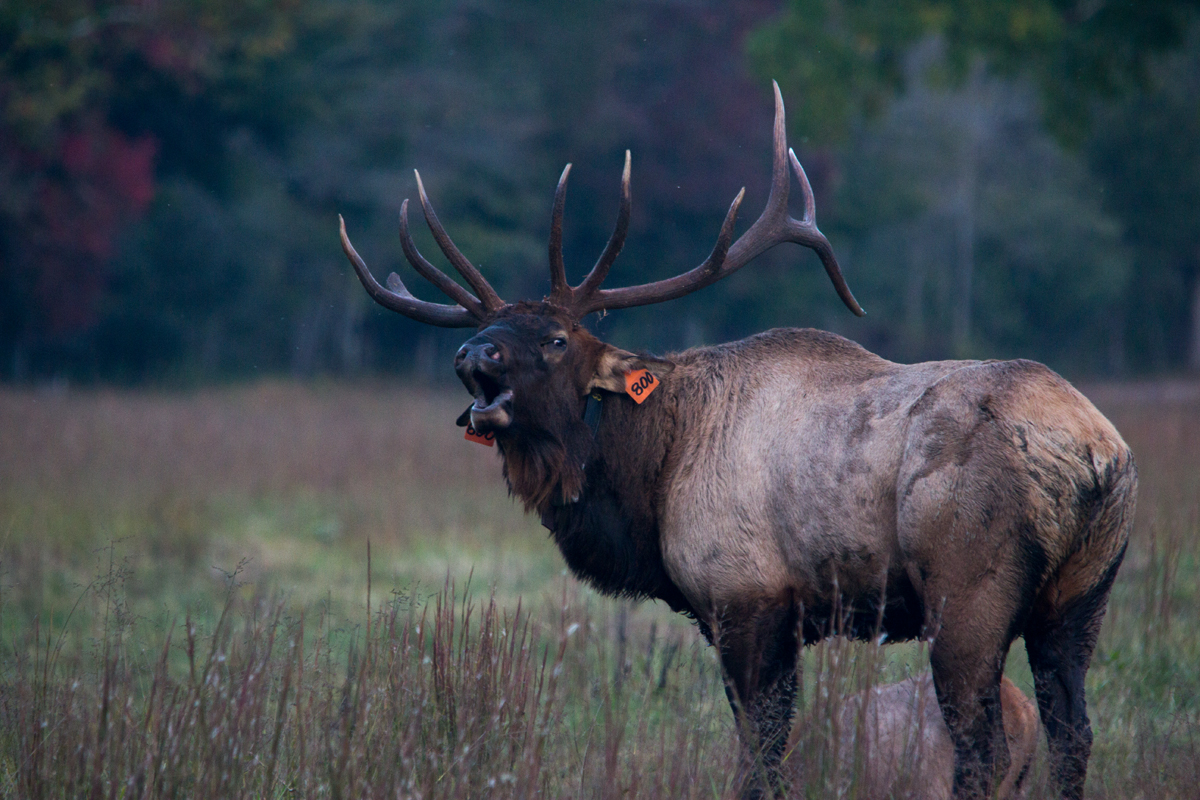
Photo courtesy Adel Alamo
If you’re willing to make the trek, elk can be found near the Great Smoky Mountains National Park as well as in parts of Kentucky, Virginia, and Pennsylvania. These creatures are like the jumbo-sized siblings of deer. Where deer top out at about 250 lbs, elk can weigh more than 700 lbs when they’re full grown. They also live longer, have super-charged antler growth, and can run up to 40 miles per hour.
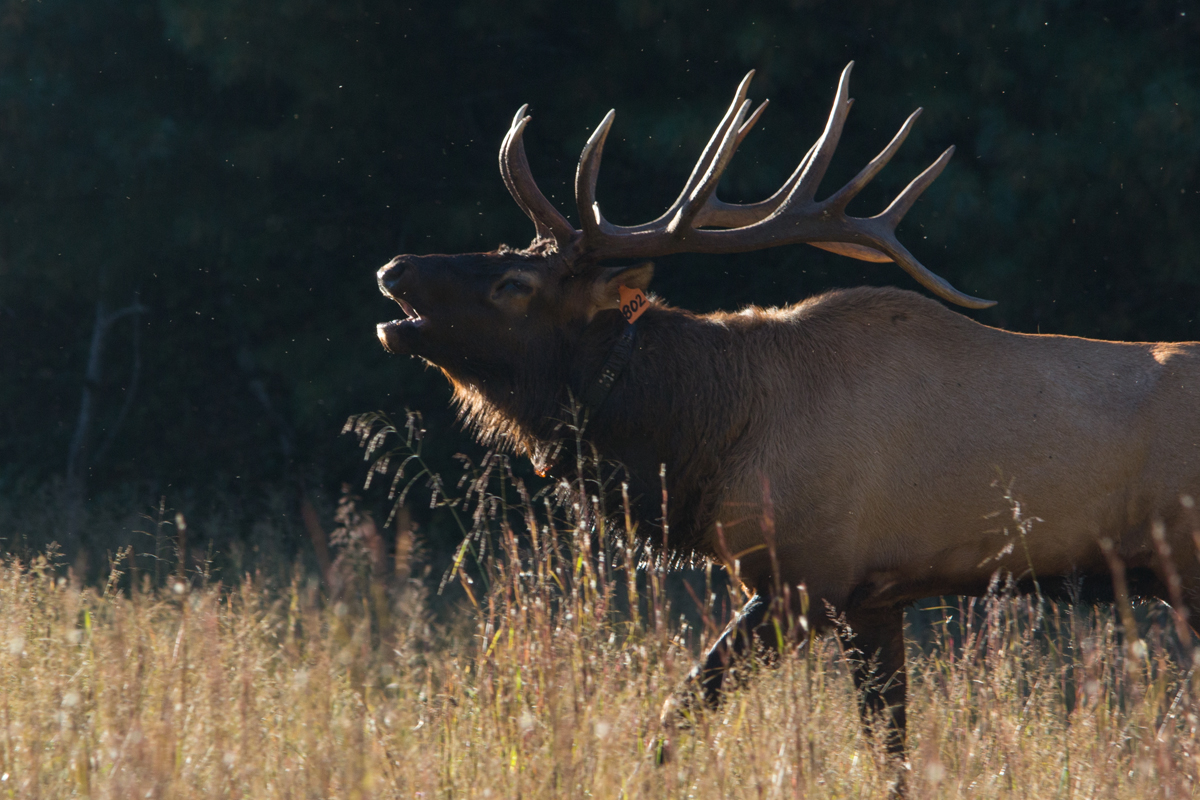
Photo courtesy Adel Alamo
But the iconic thing about elk has to be their bugle. During mating season, also known as “the rut”, bull elks will give off an otherworldly cry to let other elk know where they are and when they’re ready to mate. The elk rutting season is truly an exotic time and draws tourists from all over the country. Bull elk fight, call, and more, amazing the human onlookers. In the Rockies, there’s actually an annual Elk Festival celebrating these majestic creatures.
Did you enjoy learning about my favorite creatures? If so, why not show us?
Share your favorite autumn photos/videos and tag us on Instagram, Facebook, or Twitter!
Want to do more?
Become a Forest Defender today! Your monthly gift will protect the biodiversity of the South.
Join our email list to get new Biodiversity in Your Backyard sent directly to your inbox!
This week our hosts Kimala Luna from Dogwood Alliance and Elizabeth Lashay from SlayTheMic speak with Erniko Brown. Erniko is the founder of the nonprofit Organized Uplifting Resources (OURS) and is the newest staff member of Dogwood Alliance. Erniko talks with us about her Grandmother, learning and teaching patience within her community, and ways we can stay resiliently loving with our community and with ourselves.
Be sure to check out Erniko’s organization here. You can also read more about Erniko’s work in the full transcript of the interview below.
Want to listen to more?
Check out the full transcript of our interview with Erniko!
Elizabeth Lashay: I’m Elisabeth Lashay with SlayTheMic and I am here with my wonderful co-host…
Kimala Luna: Kimala Luna, from Dogwood Alliance, and we are so excited to have Erniko Brown. Erniko has devoted her life’s work to advocating for black communities. She tirelessly navigates beyond the hard conversations and drives support toward action. Her commitment is being a liaison between policy and politics to reconstruct a path of power building and power-sharing in black communities. Erniko is from rural McCormick, South Carolina. She grew up on land that’s been in her family for eight generations. She was raised by her grandmother who emphasized the importance of education. She is completing a Master’s in Organizational Leadership from Columbia College, South Carolina. She completed her Bachelor’s in Human Services with a minor in community and organizational leadership and has received a certificate in faith-based nonprofit leadership from Wake Forest University, North Carolina. Her love for people, nature, forests and advocacy keeps her organizing in the political spectrum. She currently resides in Greenwood, where she currently grows her nonprofit, Organized Uplifting Resources and Strategy, OURS, and builds power in frontline communities through connecting with community members and organizations. Oh my gosh, Erniko, welcome.
Erniko Brown: Thank you all for having me.
Elizabeth Lashay: Oh my goodness. Yes. Well, I have so many questions but I’m just like where do I start? Because that is such a powerful bio, and just who you are. But whenever I of the roots, the roots of who you are, and you, in your bio, mentioned growing up on land and your grandmother teaching you the essence of education. So let’s just go back to whenever you were five or six years old and what are those feelings that stuck with you to who you are today?
Erniko Brown: Five or six, it was freedom. It was love, all love. My grandmother and grandfather predominantly raised us. My mom worked third shift, a single parent. But we had the nuclear family with my grandmother and my grandfather. So, it was always every morning breakfast, people looking out for us, having what we need. Couldn’t get in trouble at school because the principal was our cousin. Getting home, going out working in the garden, tending to the cows, and stuff. And it was freedom, it was home, it was love, it was beautiful.
Kimala Luna: What a beautiful gift to have your grandmother be there for your early childhood. And I guess I just want to hear more about what you love about your grandmother.
Erniko Brown: Oh, man. What did I not love about her? She had a 10th grade education, so she emphasized the importance of us getting an education. And I can remember a time, I think I was 21, young, wild, free, getting ready to move to California to serve as the Southeastern Regional Director for FEMA. And I called her and I was like, “Grandma, I’m getting ready to go.” And she was like, “Where are you going, child?” And I was like, “I’m getting ready to go. I’m going to do this job.” And she was just like, “What do you keep running from? Why do you feel like you got to keep running? You need to sit down somewhere, get an education. That way nobody can take it from you. Do the things that you need to do. Get a job so you don’t have to depend on nobody.” And it was just like, listening to her, she would always say, “You do the right thing, the right thing will follow you. You do the wrong thing and the wrong thing will follow you.” And I owe everything that I am, everything that I’m leaning into, to her. I wouldn’t be the person that I am, where I am, doing what I’m doing if it wasn’t for her. So I thank God every day for that woman and her tireless work on this earth and her instilling values in us that she didn’t have and doing the things for us that she wasn’t able to do for herself. So, just an amazing woman, a beautiful, loving… I mean, anything, if I could embody love or put a face to love it would definitely be hers.
Elizabeth Lashay: Oh, it’s just a little dusty in here or something. Thank you for sharing that. So I heard that you had animals. So you were growing up on this farm and, I want to talk about the comparison of what it takes to be in nature and grow up around all sorts of different animals on a farm, and who you are. So I know that was a really difficult way of framing it, but whenever you’re trying to cultivate something, I always think of cultivating my own dreams and trying to turn things into reality but taking that patience. And so I was wondering what are the similarities that you see from farm life and nature to what you are currently working on.
Erniko Brown: Oh, cool. So, first off, it wasn’t exactly a farm. It was, like my cousins had cows over here. We had two acres of garden over here, a couple of pigs, one or two chickens. Everybody had the kingdom, and we lived out in a very rural area, so any given day you see squirrels, turtles, deer, armadillo, every now and then a bobcat, maybe one or two eagles. But yeah, you saw the entire spectrum because this is a naturalistic habitat. Realistically, we live about five minutes from the lake and this lake goes around the backside of the house, so we have about five state parks within 20 miles. And also, let’s see, if you get out into the water and you probably go maybe five miles you’re over in Georgia. So that’s how close I am to the South Carolina-Georgia line. But the comparison to everything that has gone on, first off, let’s be clear, out in the country, very little to no reception and it was like, “Heck, no. I’m young. I’m ready to get out of here. Ready to live.” So needless to say, when I was 17, 18 I moved away. At that time I didn’t see the value in what was there. But those rural roots were always rooted in me, and so it took me growing of age and seeing and having to come back home. About five years ago my grandmother called me back home and told me that she needed me to take care of her because she wasn’t doing well. Getting back into that life as an adult and coming from the city back home, it was hearing the silence, the peace, being able to hear yourself think, being able to talk to family members and be out there and be in the midst of that. Because I come from a singing family, so our Sundays would be singing on the front porch, singing something grandmother wanted to hear. Having Sunday dinners every Sunday at her house. Being back home and being rooted in those traditions and being taught patience at a mature age was what I essentially learned, when I learned the value of what home was and what home is. As opposed to going out into the world and being a part of the world, it’s more important to be representative and make it personal by being at home. So I’m learning that I need to take care of home because home is the place that took care of me.
Kimala Luna: That’s beautiful. I’m so inspired by your grandmother and this concept of being a good example and planting these beautiful seeds for the next generation. And it reminds me of this Greek proverb that goes something like, “A society grows great when you plant trees that you’ll never enjoy the shade of.” And so, what are some of the trees that you’re planting that you may never enjoy the shade of?
Erniko Brown: I think that in this space I am learning to be in long-term relationships and I’m learning to instill values. Because I have a seven-year-old nephew, and with COVID and everything nobody knows the day nor the hour. So I’m learning how to instill values in him, teach him patience, because he is definitely one of this new generation and instant gratification. Still trying to teach him the importance of the yes ma’ams and the no ma’ams and the yes sirs and the no sirs. Out here in the community, trying to give off the importance of voting and how it can make a difference, and allows so many like myself, just trying to tell the younger generation about the things that are shaping the future. And the conversations that are being had are actually about them, and then need to make their voices known and heard. So those are the things that I’m doing. Outside of that, more specifically, planting trees where they’re being uprooted, honestly. So a lot of these places, I’m out here getting seeds and throwing seeds. They’re out here cutting trees down. Who knows, 20 years, we don’t know. And that’s the timeframe that it takes to grow a very mature tree in order to help the land, honestly. So I’m here doing stuff I ain’t got no business, but I got business doing.
Elizabeth Lashay: So you are literally planting, from the proverb in terms of being literal, and that’s amazing. That is amazing. Thank you. I also heard that you would sing songs you said.
Erniko Brown: I said, I come from a singing family. I’m good on the background. The only person that ever really heard me sing or that I would actually sing a song for was my grandmother. So I haven’t sung in over a year.
Elizabeth Lashay: Yeah. Are there any songs that really drive you and help you get through maybe a difficult time?
Erniko Brown: Yeah. Actually, so this stems from my grandmother raising us and we grew up in church. So we were always on the choir, always singing and every Sunday morning we would listen to, with her, it was this old radio station and it was Gus Wilson Gospel out of Abbeville, South Carolina. So it was like quartet music almost. And so it would be that stuff, but even riding with her, anything, Lee Williams and the Spiritual QCs, the Canton Spirituals, any of the soul-stirring music, I would say, definitely a part of it. Things that will get me through times. She and I had a song, well it was a song we grew up listening to with her, by the Canton Spirituals, it’s called I’m In Your Care. And then there’s one called Memories. Yeah, that was one. And there’s another one by Paul Porter featuring the Canton Spirituals, but those are songs I literally played those the last couple of days of her life, and those were literally the songs that I played as I prepared her for the… What do you call those little people? Coroners, to come and get her. So yeah, she instilled those songs. Those were her favorite songs and did everything I needed to do to send her off the best way I knew how.
Kimala Luna: That’s beautiful. I guess I want to know about teaching the next generation patience, how you approach that? Because it is very similar to, it’s not how things grow, that we plant something and we go out the next day and get angry at it for not being a full-grown thing. So how do you approach that and teach the next generation patience for your nephew?
Erniko Brown: With Jase, I guess I’m very, very old school when it’s… We’ve built a rapport over the years.
Elizabeth Lashay: That’s a nice way of saying it.
Erniko Brown: That’s right, that’s right. If I couldn’t do it, how can you? So for me, with him it’s definitely teaching those things, and in those moments where he is wrong redirecting him. That would be a good thing. And in the midst of redirecting him letting him know why it’s not okay. As far as this entire new generation, just being open, honest, sincere and flow of comment, and letting them know how to move, letting them know what’s coming down the pipeline. The things that I know being in a position to disseminate that information to them so that they know. So that they’re able to make an informed decision about life, how to move, how to navigate it really, and just really keeping my hands intertwining with what they have going on. So, and I’m here mentoring, kids I have been a tutor since I was 17, 18. They still call and stuff like that and I let them know the things that are going on. And I do my best to keep them abreast of what’s going on in the environment.
Elizabeth Lashay: We’re seeing a lot of changes happening and whenever we talk about empowering others and empowering ourselves, it takes time and it takes lots of patience. If you had a magic wand or a magic rake or a magic something, shovel, to cultivate more, what would you want to change right now?
Erniko Brown: Honestly, this whole COVID ordeal, the pandemic, the racism, the hate, and really incorporate healing because all of us need some type of healing in some type of aspect. Because we’re all dealing with various issues that are stemming from what’s going on with the economy, what’s going on with jobs, what’s going on with the current administration. It’s just a lot. We all need to hear something nice. We all need to feel something beautiful and we all need to heal in some aspects. So, that would definitely be it.
Kimala Luna: Speaking of needing to hear something nice, beautiful, something healing, can you talk to me about your relationship to nature and how you feel when you go in the woods? Because I have this sense that you have a pretty deep connection there and I’d love to hear about it.
Erniko Brown: Well, I come from the woods. I can’t help but to connect with them. I love, love, love. I am a country girl at heart. I love going to the lakes. I love being barefoot out in the dirt. I love playing outside with my nephew, and just being out there listening to the trees, being able to smell fresh air, breathe fresh air. Being able to just see the beauty that God has placed before us, and to know that these trees that are out here hold so many memories from me coming up. Yeah, we were talking about me being five, these same trees standing here as I am 33, and being able to share memories with them.
Erniko Brown: Now that my grandmother is gone I can look at this tree and I can remember a time that we were out in the yard planting in the garden, planting all these different flowers, having a flower bed, having a garden, having rose bushes, having a table where we scaled fish that we caught. And just going back to these things and to these moments when I feel like I don’t have a direction, and being able to stand in those moments and be in a place where I feel most of my freedom. So being able to connect with those places and those memories gets me through a lot, it really does.
Elizabeth Lashay: How would you suggest someone to access nature? Because there’s stigma and there’s thoughts and we’re always going in this busy direction, constantly busy, and we forget to take time and moments and go out into nature. What are some of your guiding principles and to tell people to get out there?
Erniko Brown: So if you can’t get far away just get on your porch. Find a botanical garden. There are different places up in North Carolina. I’ve been to Brevard before, and I like waterfalls, just to smell the water, to smell nature, to smell how trees and water just mix and smell together is like a whole different thing and it gets you to thinking, it gives you freedom. Pine trees are just amazing. Cedarwood is beautiful and just being out. If you can’t get far away from the noises, cut your phone off. Go sit on the porch. Go sit on your deck. Go sit out in the yard. And just take time, and if you don’t have time take time to make time for you, because you are important, your thoughts are important. Everything that you possess, if you’re not okay then your day isn’t going to be okay. So it’s of the utmost importance for you to take that time for you yourself. So make time to take time to go out and be a part of nature, because we’re so caught up in devices that it’s like we’ve got to be connected with something that’s tangible. And nature is tangible, honestly. Go out there and take your shoes off. Feel the different textures, hear the different things. You don’t always have to hear a vibration or a ring tone. Just hear something and hear the beauty of the freedom without it being attached to another person. Disconnect with the world to connect to yourself.
Kimala Luna: Oh my gosh. Yeah, Liz and I… You can’t see it because we are just going to record audio here, but Liz and I are both snapping and applauding. All your words are hitting us so hard, they’re so beautiful. And you just started working at Dogwood Alliance so you protect southern forests now, and what do you want people to know about why it’s important to protect southern forests now more than ever?
Erniko Brown: Why is it? Why isn’t it? This is the way that we breathe. That’s a whole married relationship right there. What we give off the trees take in and what the trees take in and give off is what we need. That’s a whole inhale-exhale dynamic. You need them. The best way I can put it is we breathe easier when the world is green. That’s the best way I can give it to you.
Because we as humans are caught up in instant gratification, we’re caught up in greed, we’re caught up in building this powerful infrastructure while we’re tearing down naturalistic habitats for animals. And we’re offsetting the ecosystem, and with us offsetting the ecosystem we’re offsetting our livelihoods. And it’s just like we’re tearing up a place that can’t reproduce itself fast enough to keep up with what we’re doing. And nature’s going to be alright because that’s nature. But are we?
Elizabeth Lashay: And to touch on nature and just human life, can we talk about the intersections of racial identity and nature, and how it relates to the resiliency of just staying strong?
Erniko Brown: So a lot of times, often times… You heard that I came from family land. So with that family land it’s important. These things that we have a lot of times we don’t feel like we have wealth, but nature is wealth. The health of nature is true wealth. And so to be in these places and be in these spaces, and being bought off by places like Enviva, where we are currently at a battleground, it’s really taking our power. And the forest deprivation that is going on, we’re really killing ourselves for a dollar. And within the racial spectrum here in Greenwood, I am 7 miles from the Enviva Wood Pellet Plant. And so essentially I am affected by this. I also live in a low-income impoverished neighborhood. And so they come in and they strategically place places like that plant in low-income impoverished neighborhoods because these people who are in these neighborhoods are really figuring out how to get through the day. How to put food on the table, clothes on their kids backs, and how to get through what they’re going through. So they’re currently attempting an expansion. With that, you have COVID going on, you have respiratory issues, all these different things that they’re combating, and they’re just trying to get through one issue, never mind the six or seven other things that they have going on. And the people who are for these organizations are part of the system, which is the good old boys’ system. And being in that space, they never have to breathe this air. They never have to worry about the air particles. They never have to worry about the injustices that are going on on this side of town. And their family either has wealth or comes from wealth, and so they don’t have to worry about what its like to rob Peter to pay Paul. They’ve never had these issues because they’re wealthy and well connected. But these people who really have issues who are in these spaces, they have to worry. And when you don’t have people who are part of the conversation, who are working on your behalf, and who are throwing out ten dollar words… I think I was in the midst of a panel discussion and they said, I think it was economically challenged, but they were talking about Hilton Head, and they were talking about this community that was right over the road. And it’s like, “How can you talk about this community when this is just right across the road? This is our community.” So we verbally offset things. When we speak about them we don’t talk about our community because what we do is we build where it’s beneficial and not where it’s broken. Well, we should be building where it’s broken and not beneficial for one person. And so it’s like there’s this continuing battle for people to understand this fight because people feel like the system doesn’t care about them, and it doesn’t because it’s not designed for them. And with that they have the rich are continuing to get rich while the poor continues to become poor. And you don’t have people who are actually concerned with the communities, but they’re concerned with their agendas for the communities.
Kimala Luna: And for those folks who are just tuning in and who maybe have never heard about Enviva before, just talk about what Enviva is, what they do on a basic level for people who maybe have never heard about it before.
Erniko Brown: Enviva is a wood pellet plant, essentially, and here they say that they’re cutting down trees that are no longer useful in nature, when in reality here in South Carolina they’re literally cutting down about 43 acres a day on a 75-mile radius. So that touches a great deal of South Carolina. And I’m in Greenwood, so that reaches from here down to Columbia and from here all the way up to Greenville, past Greenville and then honestly, reaches just the tip of Georgia, by McCormick. So people who think they aren’t affected by this, that’s a really big cut. So yeah, in a place where you see trees being cut, nine out of ten it’s Enviva. So if you feel like you’re losing beautiful landscape, nine out of ten, this wood pellet plant that is cutting down trees at an alarming rate is the reason why.
Elizabeth Lashay: This really impacts me and hurts my chest just even having this discussion because it’s just really anxiety-provoking. We’re at a disconnect. I keep seeing that, we are just disconnected as this world, as this country, as our neighbors, as a community, and I’m just trying to think on how do we get connected? Just like you were saying that this is a problem that they’re not listening to the people that this is impacting, or right across the road there is something else going on that some individuals can choose to ignore. So how do we bring it to where we can no longer ignore and just go ahead and address the situations?
Erniko Brown: Well, you definitely need people organizing around the issues. And it’s honestly, at this point, it’s not enough to organize. We need good sound leadership and that’s one thing that we lack. And we’re always looking to these giants for direction. A lot of us fear standing in the gap and building again where we’re broken and where it’s not just beneficial for one person. It’s not enough to just organize. You need people who are willing to stand up, people who are willing to stand in that gap. And I feel like a lot of us don’t do that because we don’t have the cash to fund our own organizations. We don’t have the capacity to walk away from positions that we hold in places, and we don’t have those connections that we need to be grounded in the work that we really want to do in a just manner. I guess we’re caught in a catch-22 and it’s like we feel the brunt of everything that has gone on. So the things that I can do within my capacity, raising awareness, amplifying the message, and I’m doing individual calls to action. We need people power and we don’t need a general purpose for being there. We need the people we need to be our ongoing connections. We need to be amplifying the message, not only in our communities but in our schools. We need to be talking to the students about things like the importance of having a business and creating a business account, over having a $220 pair of shoes. Now, don’t get me wrong. I rock them. I do. But I also own my house, I own my cars, I own my land. And we need to talk about what equity is. We need to teach these things rather than having them learn them when they get out in the world. We need to be able to teach them these things now, because these are the bricks of the foundations that we’re creating for them to stand on. So they only know information that we provide. And if we begin to instill those things at home and in our kids and in the community, and not being afraid of what somebody’s going to say, fashioning information and instilling information in a manner that is just and understandable to our children. And teaching them the right things and the wrong things and learning to have patience with them, I think that will bring about a change. Instilling old school education, as my grandmother used to call it, because that’s definitely what I have. And just loving on the values, the principles and the morals that we used to have, because everything really is coming full circle back to the things that they used to do. So just partaking in those practices of previously lived with where we didn’t have much but we had each other. Right now we need each other. So, that’s about it.
Kimala Luna: Yes. I feel like we’re touching on this beautiful theme of power respects power, and one way that power comes through is through ancestral wisdom. And I just really appreciate all the different ways that your grandmother has been with us today. And I also understand that when people cross over that conversation doesn’t end. So what are the conversations that you’re having with your grandmother right now that inform your work?
Erniko Brown: Oh. Getting the education. In the midst of me you reeled off a lot of stuff that I’m doing. It was important, she always said that I needed to get an education because nobody can take it from me. She would also tell me to get an education because it just wasn’t for me, it was for me to utilize to help somebody. And she would also tell me to get an education because she only had a 10th grade education, so it wasn’t just for me, it was for us. And so she always instilled that value of togetherness, the value of loving unconditionally, and that value of making sure that you know that you’re loved. And for me, I get up every day motivated because I’ve got to help somebody like she helped me. I’ve got to pray for somebody like she prayed for me. I had a near-fatal car accident about 11 years ago, and when I woke up after them basically putting my head back together, I woke up to my grandmother saying, “Lord, save my baby.” Prior to the accident I had always been joined at her hip but it was a more gratifying relationship that we ended up having. And just like she was like, “Lord, save my baby,” and she was praying over my bed, when my grandmother passed I was preparing her and praying over her bed. And so you give what’s been given to you. There’s always an energy on a passing that never transcends time but transcends hearts. So those things that she taught me in that relationship, I’m always trying to give it to people and you love people. She always told me to tell people you love them because you never know the last time they heard that, and you give love because you never know the last time that they were given it. So, it was always about loving all people, it was always about building people up where they fell short. And it was always about giving to people. In this world that we’re living in now people are so wrapped up into what they can have for themselves and not what they’re creating long-term for their people. And with, particularly the Black race, I think that we’re getting back to where we’re loving on each other with intention. Once you have that intention you have a power that nobody can come against. So it’s all love, it’s Black love, it’s beautiful, it’s intentional, and we’re going to get it right eventually. So, we’re here.
Elizabeth Lashay: That’s absolutely beautiful and I just want to say thank you for standing in the gaps, but not only standing in the gaps but creating space and nurturing yourself to stand anywhere that your presence needs to be. So, I think it’s just extremely important that you continue to do this work. But also know that you have so many people that are behind you as well. What’s next? What is next for you in terms of where do you see yourself? I don’t want to do too long-term, but in one year, where do you see yourself?
Erniko Brown: One year I will have walked across that stage with that Master’s Degree. One year, hopefully, we are in another house, a bigger house. I need a basement. Just put that out there. I need a basement. Continuing to grow my organization by being in a space where I’m able to work in full-time, servicing the community. Because there is a component that I’m building specifically within my organization that I really think is beneficial to the black community. So, stay tuned.
Kimala Luna: I love that. So we are definitely reaching the end of our time and I know we’re so… This was amazing. And thank you so much for being on the show with us. And is there anything else that you want to tell anybody tuning for Woods and Wilds?
Erniko Brown: Whatever work that you’re in, whatever space you’re in, be intentional about doing the right thing. Because if you’re intentional then that means that you intend to want something beautiful to come into fruition. Just love on what you’ve got going on, nurture those things and be prepared for something beautiful to come in the future.
Elizabeth Lashay: Yes. Thank you so much for joining us today.
Erniko Brown: Yes, ma’am. Thank you, ladies, for having me.
Kimala Luna: Yes. For your organization or how people can tune into what you’re up to, what are some good places they can check out?
Erniko Brown: Okay. So my website is ourstrategies.org. The email is [email protected]. Shameless plug. If you care to donate to our causes there is a place on the page where you can donate. You can subscribe to our monthly subscription. And yeah, feel free, connect. And if you have projects that you want some help on, if you have some messages you want to amplify, feel free to reach out.
Three years ago, as residents of Richmond County, North Carolina were fighting to stop a dirty Enviva wood pellet facility from building in their community. Meanwhile, residents in Colbert, GA were learning about a new polluting industry that had been proposed in their community – the Georgia Renewable Power Biomass Plant, promising to burn only “clean, untreated wood” but instead burned carcinogenic creosote treated railroad ties as well.
Both Debra David of Concerned Citizens of Richmond County and Ruth Ann Tesanovich of Madison County Clean Power Coalition became leaders in their local fights to stop these polluting industries. They went up against big corporations, their elected officials, and a system that limited their involvement at every turn.
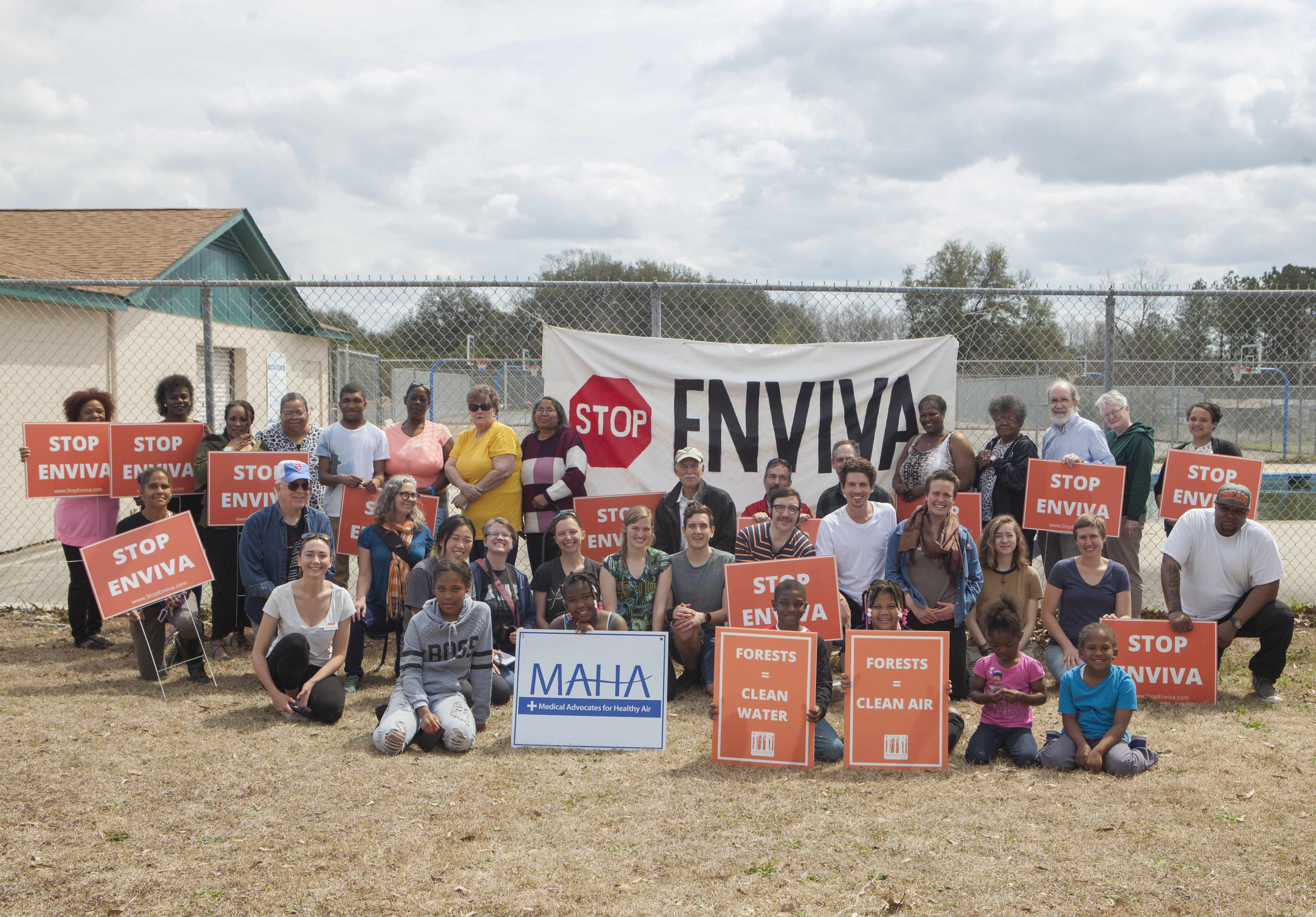
Now Richmond County, NC faces another polluting industry. The proposed building site is just 1 mile from the Enviva wood pellet plant. International Tie Disposal plans to burn creosote treated railroad ties to create biochar.
She immediately began sharing her story with Richmond County residents and has worked to get her story out to local media outlets. In late October, she wrote the following letter to the Richmond County local newspaper:
Dear Editor, Having closely followed news articles related to the proposed biochar plant near Hamlet, NC, I write to warn the citizens of Richmond County of the threat to your health, quality of life, and property rights. I speak from my experience after the Georgia Renewable Power (GRP) Biomass Plant moved in 1.5 miles from my peaceful country home near Colbert, GA.
In 2017, GRP met with local leaders of rural Franklin and Madison Counties proposing to build “twin biomass plants” and to bring jobs and tax revenue to our rural NE Georgia counties. They said they would only burn clean, untreated wood. Instead, when the plants fired up in May 2019, carcinogenic creosote railroad ties were hauled in by CSX rail, stacked in the yard by the thousands, then chipped and burned for fuel. The railroad tie chipping dust and debris (“fugitive emissions”) littered the chipping yard, blew through our air, settled on nearby farmers’ pastures, and washed into our watershed. People’s health began to suffer from burning eyes, nosebleeds, and respiratory problems. We became prisoners in our own homes with windows closed to block out the noise and noxious fumes.
Citizen groups formed in protest. We pleaded for help from our leaders. Our state representative heard our cries for help and introduced legislation to ban burning creosote for power generation statewide. Citizens testified before House and Senate committees. We came up against the power of CSX Railroad, the American Tie Association, and GRP executives. Thankfully, legislators chose the health and quality of people’s lives over big business and passed the legislation unanimously. Our governor signed House Bill 857 into law in August 2020. Creosote railroad ties can no longer be burned for power generation in Georgia. Although the GRP plant goes on producing air, land, water, noise, and light pollution, we are at least thankful that the giant piles of creosote railroad ties, the chipping operation, and related fugitive emissions are gone.
BUT it seems they want to send them to YOU [Richmond County] instead! International Tie Disposal, CSX Railroad, and others are just looking for profitable ways to dispose of toxic creosote railroad ties. The health and quality of people’s lives should not be put at risk for any amount of money and profit. Don’t let Richmond County become a toxic waste disposal site for creosote railroad ties.
For more information visit the Madison Clean Power Coalition website or find us on Facebook.
Sincerely, Ruth Ann Tesanovich Medical Laboratory Scientist Madison County Clean Power Coalition Colbert, GA
And as the opposition grows, so do creative strategies to push back on the harms caused by the biomass industry.
In Richmond County, NC even after the plant was built, local residents didn’t stop fighting for their community. In 2019, local residents won a lawsuit requiring Enviva to reduce Volatile Organic Compounds (VOC) by 95%. And in Colbert, GA the local group celebrated as the Georgia legislature banned the burning of creosote treated railroad ties for power generation in August of 2020.
Armed with this information and support, the residents of Richmond County continue to pursue all avenues. Just this week the local city council passed a resolution calling for the state Department of Environmental Quality (NC DEQ) to hold a public hearing on the permit application.
When we join together, we are stronger, better informed, and better equipped to stand up for our communities, our health, and environmental justice.
Dear South Carolina Governor Henry McMaster,
COVID-19 has now killed more than 200,000 people in the US, and over a quarter of those deaths are Black Americans, in part due to racism, social inequity, and environmental injustices that have purposefully robbed the Black community of health and well-being. As you know, Enviva, a biomass wood pellet company, recently requested a permit from South Carolina DHEC to expand its production at its Greenwood, SC plant.
During the recent virtual public hearing on Enviva’s expansion request, community members and organizations asked that the company’s air quality permit be denied or postponed during the pandemic.
All across this country and around the world, essential services and production have been limited in order to ensure the safety of people. If schools, businesses, governments, and the lives of everyday citizens can be slowed, restricted, or shut down because of COVID-19, then the wood pellet industry, including Enviva, should do the same. There is currently no market for Enviva’s products in the United States. Its biomass wood pellets are burned along with coal to produce electricity in Europe and Asia.
It is a well-known scientific fact that people with preexisting conditions have disproportionate health impacts and our senior citizens are more susceptible to contracting COVID-19 and becoming ill or dying. Greenwood, like many other communities throughout the states, has BIPOC (Black, Indigenous, and People of Color) and low-income citizens who suffer disproportionately from preexisting conditions like respiratory illnesses.
Within a 2-mile radius of the Enviva plant in Greenwood, SC, the approximate 2,200 residents are already ranked above the 75th percentile for exposure to PM2.5, ozone, diesel, air toxins, cancer, respiratory hazards, Superfunds, and hazardous waste. Increasing production at the plant would further heighten the risk of exposure to many of these common pollutants, but most especially the PM2.5 and respiratory hazards risks.
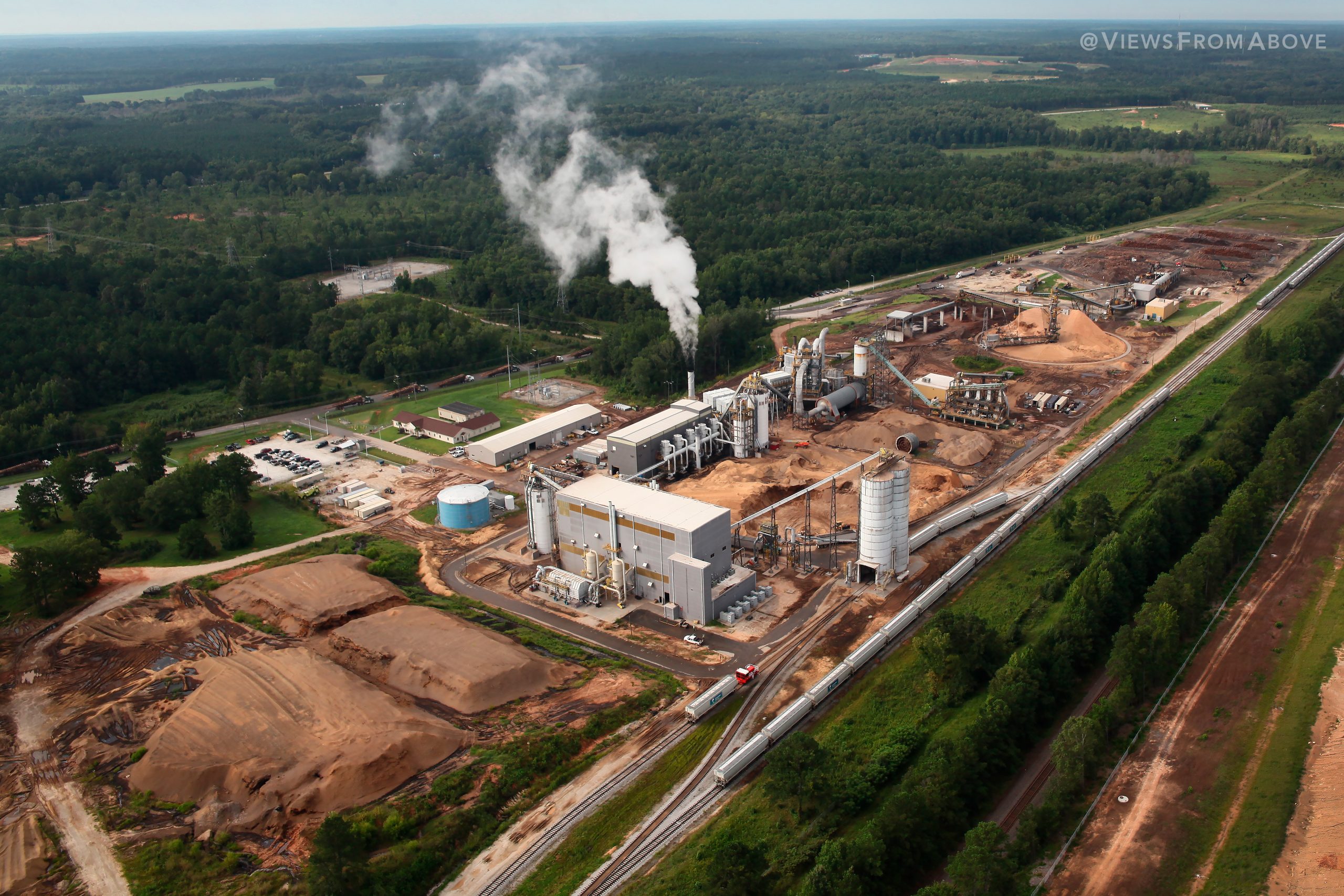
Greenwood, SC Enviva wood pellet facility. Image by: Views from Above
If the wood pellet industry continues to expand, it will have disastrous impacts on the health of local residents, the ability of natural ecosystems to support greater resiliency to storms and hurricanes, and it will contribute to global carbon emissions at a time when community health and safety rely on reducing those emissions.
Logging our forests, shipping them overseas, and burning them for fuel to meet other countries’ needs while we get all the negative side effects is a ludicrous model.
Affected communities and residents deserve to be safe, and it is the duty of the state to inform local residents of the consequences of the wood pellet industry in their community and protect them from this pollution. We reiterate our ask to postpone all permitting procedures until the coronavirus emergency declaration has been lifted.
Sincerely, Reverend Leo Woodberry – Kingdom Living Temple & New Alpha Community Development CorporationDanna Smith – Dogwood Alliance Foothills Group of the SC Sierra Club Lakelands Citizens For Clean Air, LLC Upstate SC Chapter of Climate Reality ProjectSoutheast Faith Leaders Network (SFLN), Southeast Climate and Energy Network (SCEN)-JEDI Fellow – Rev. Dallas Conyers Whitney M Slater Foundation
25 environmental NGOs from the USA and Estonia sent a letter to members of the Bundesrat ahead of last week’s debate about a reform to the Renewable Energy Law (EEG) which, the groups fear, could result in subsidies for converting coal plants with wood pellets, instead of replacing them with non-emissive, clean renewable energy.
The groups warn that subsidies for converting coal plants to biomass would pose a serious new threat to forests in the Southeastern USA and the Baltic States, where wood pellet producers routinely source wood from the clearcutting of wildlife- and carbon-rich mature forests.
They point out that Denmark, the Netherlands, and the UK, where coal power stations have been converted to biomass, import many million of tonnes of pellets from both regions between them.
Scientists, including the European Academies’ Science Advisory Council (EASAC), have warned that efforts to substitute fossil fuels with reliance on forest biomass set back efforts to address climate change by increasing atmospheric carbon dioxide levels.
Enviva, the largest US pellet producer, has repeatedly stated in public that they expect a large new market in Germany, provided subsidies are made available.
The NGOs call on the Bundesrat to reject all proposals for additional subsidies for forest biomass energy and to reserve such subsidies to clean, non-emissive renewables such as wind and solar power, as well as associated renewable heat infrastructure (e.g. heat pumps) in the Renewable Energy Law, the proposed new 1 billion Euro renewable heat subsidy and the coal phaseout law.
Rita Frost, Campaigns Director at Dogwood Alliance states: “In the Southeastern USA, Enviva consistently sources biodiverse natural forests for biomass production. Those forests play a vital role not just as wildlife habitat but also to help regulate the climate. Mature forest ecosystems remove and store large amounts of carbon from the atmosphere, and they protect communities from the worst effects of droughts and floods. German policymakers must not repeat the mistakes made by the UK, Netherlands, and Denmark in subsidizing coal-to-biomass conversions.”
Sebastian Scholz, NABU (Nature and Biodiversity Conservation Union) supports the call made by US and Estonian groups: “To reach climate targets we need to focus on energy savings and environmental friendly power generation from wind and solar energy. Substituting fossil fuels with forest biomass would cause significant harm to biodiversity whilst scientific evidence clearly shows that cutting down trees for energy is no better for the climate than burning coal. Renewable energy subsidies must be reserved for genuinely low-carbon, clean forms of energy.”
Uku Lilleväli from Estonian Fund for Nature adds: “In Estonia, logging – nearly all done by clearcuts – has been intensifying at record levels. This has a detrimental impact on the country’s biodiversity, for instance, the number of forest birds has been in steep decline, and its forest carbon sink, making it more difficult for our country to meet its own climate goals. Germany must not fuel the demand for biomass and intensify the logging further.”
Jane Ballenthien from Robin Wood adds: “US and Estonian groups are right to warn of threats to their forests, however the growing use of wood for biomass in Germany – and the possibility of converting coal plants to wood in future – threaten our own forests, too. Coal-to-biomass conversions would create a long-term greater demand for wood, ultimately requiring even more intensive logging. This is the last thing our forests need in the context of worsening impacts of climate change on forests.” ——————————- END ——————————- Contacts: Rita Frost, Dogwood Alliance, [email protected], +1 512-423-0620 Uku Lilleväli, Estonian Fund for Nature, [email protected], +372 5661999 Link to the open letter: https://www.biofuelwatch.org.uk/2020/open-letteragainst-german-coal-to-biomass-conversions
Notes: The European Academies’ Science Advisory Council (EASAC) has warned that it is “it is inevitable that the initial impact of replacing coal with forest biomass in power stations is to increase atmospheric carbon dioxide levels.”
See the letter here: https://www.dogwoodalliance.org/offener-brief-biomasse/
As forest fires rage across the West, forests in the Southeast are being destroyed for wood pellets and burned in power stations in Europe. This year, forests have become a central focus in climate change and green jobs policy proposals in the US. Unfortunately, a failure to fully grasp the scale of climate, health and economic impacts of the forest industry has led to a mishmash of forest-related policy proposals that are leading us in circles when it comes to solving the climate crisis.
Some forest policies being put forward as solutions such as the burning of trees for electricity, replacing steel with wood in buildings, and logging to prevent wildfires are going to make matters worse not better. Others are half-measures, calling for increased protections while sidestepping the need to drastically scale back forest destruction from industrial logging.
Other policy proposals focus on market-based mechanisms like carbon markets that might work for large forest landowners and Wall Street but do little to address economic and health inequities or actually have any real impact on the concentration of carbon in the atmosphere. Last but not least, some propose to invest billions of dollars in an unproven technology to remove carbon from the atmosphere or planting a trillion trees, when simply protecting existing natural forests and allowing them to grow old is much more effective and supports multiple other benefits such as biodiversity, natural flood control, clean air and water, and recreation.
Forests are vital to solving the climate crisis, protecting communities from extreme weather events, and creating healthy, equitable rural economies. If we don’t get forest climate policy right, we might as well throw in the towel in the fight for climate justice.
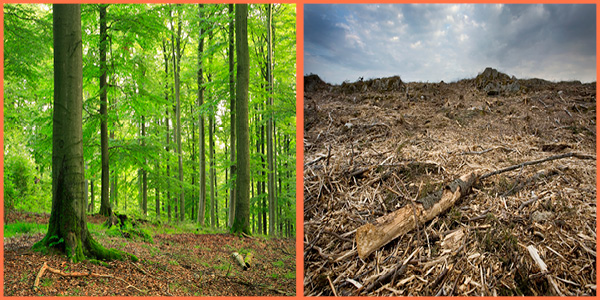
The US is the world’s largest producer and consumer of wood products, with a rate and scale of forest destruction from logging in the Southeastern US alone estimated at four times that of South American rainforests. Along with forest destruction, large wood product manufacturing facilities release harmful pollution into the air and water, with disproportionate impacts to low income communities and people of color. Equally as important, rural communities where America’s industrial-scale logging is concentrated are getting pummeled by back-to-back extreme flooding events. These same communities consistently show signs of economic distress, with disproportionately high poverty rates, unemployment rates, and other such indicators of socioeconomic distress.
Time and time again, government leaders and other advocates who champion climate solutions in the US are failing on forests and climate in five key areas.
Rural communities across the Southeastern Coastal Plain with some of the nation’s highest poverty rates and percentages of Black populations lie at the epicenter of our nation’s industrial logging and wood production. Over decades this industry has compromised the health and well-being of people of color living across this rural, Southern landscape where evidence of racial injustice and corresponding economic and health inequities are pervasive.
In the past several years, these communities have become the target of a rapidly expanding global market for wood pellets, which are being burned in power stations in Europe under the guise of “green”, “renewable” energy. Black, Indigenous, and People of Color (BIPOC) on the frontlines have been pushing back at every turn from North Carolina to Mississippi.

Community concerns about the health impacts associated with the air pollution have time and time again been ignored as permit after permit is approved.
Concerns about increased flooding and the ongoing clearcutting of forests which provide natural flood protection along the rivers have likewise been ignored. Demands for truly green jobs get met with the same old rhetoric about how “green” and “sustainable” the forest industry is.
Seven new permits for expanding wood pellet mills, which emit toxic pollutants known to cause a variety of deadly health conditions were issued over just the past year and a half. Even more wood pellet mills are projected to be built across the South in the coming years and they are twice as likely to be sited in environmental justice communities.
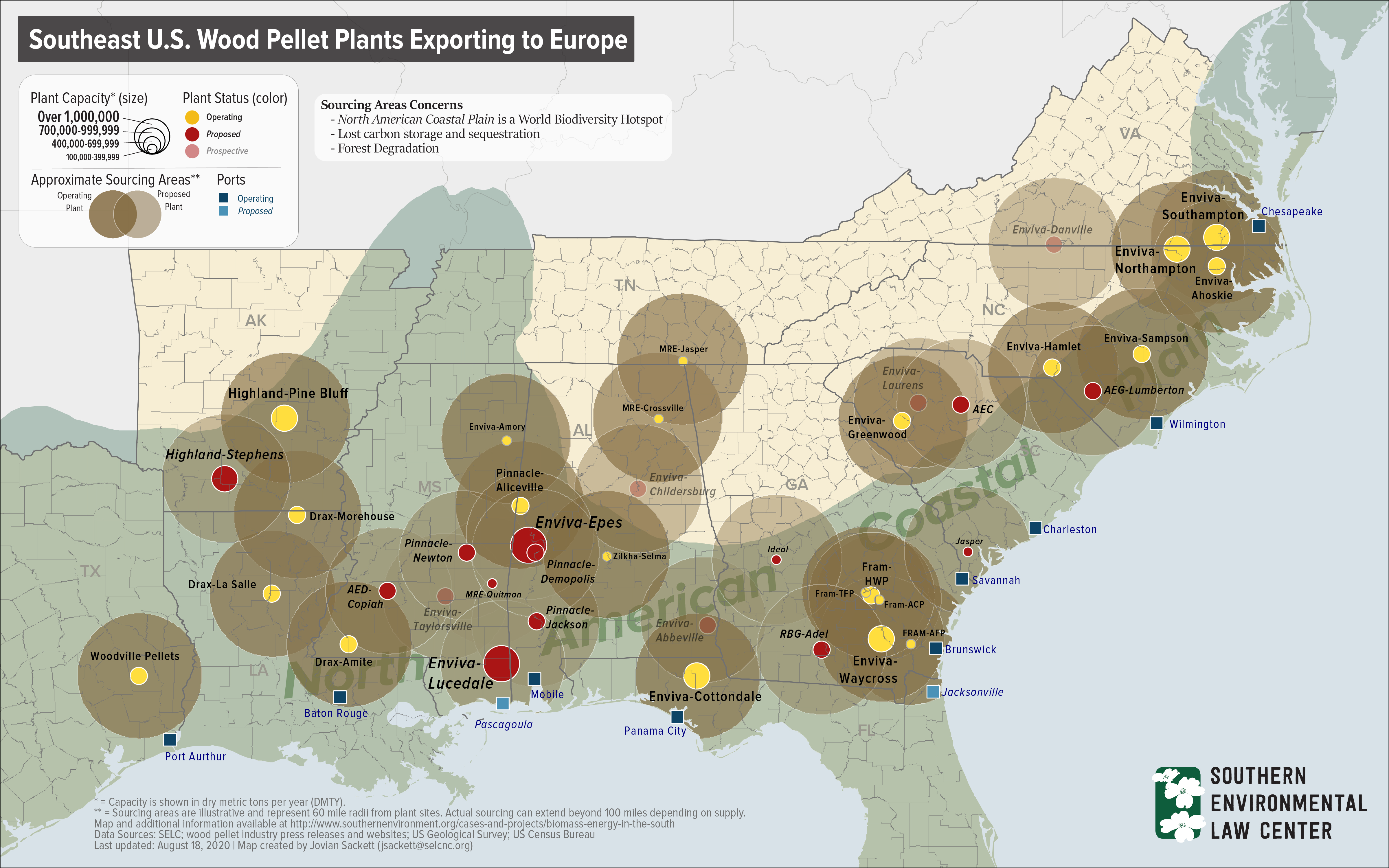
As the Movement for Black Lives introduces The Breathe Act, now is an opportune time for all climate leaders to take action to stop further pollution and destruction and to advance new public investments in the health and resiliency of these communities. Any forest climate policy or platform that fails to address the racial injustices and inequalities associated with the forest industry are, by their omission, complicit in the harm being done to low income communities of color.
Climate leaders are failing to embrace the rapidly evolving scientific warnings about the impacts of industrial logging. A mounting body of science confirms the following:
This year, 200 scientists from across the country signed an open letter to Congress laying out the science and urging them to “oppose legislative proposals that promote logging and wood consumption, ostensibly as a natural climate change solution.”
At a time when we need to be doing whatever it takes to turn the tide on climate change, well-resourced forest industry lobbyists, allies, and spin masters are creating confusion and deflecting responsibility in an effort to perpetuate the status quo.
Lots of well-intended people working on climate change have fallen hard for industry greenwashing. A few dominant myths that have taken hold include:

Too often climate leaders out of touch with the needs of frontline communities focus on economic solutions that work for large landowners, corporate polluters, and Wall Street to the exclusion of solutions that will actually make local economies more equitable, diverse, and resilient. Forest carbon markets are a clear example of a “solution” that works for large investors and landowners, to the detriment of actually solving the climate crisis or building equitable, resilient, local economies that work for historically marginalized communities.
Meanwhile, outdoor recreation, which generates seven times more jobs than the forest industry, can help make communities healthier and climate resilient while creating a more diverse, locally-centered economy. New investments to equitably expand public lands and community-owned forests combined with economic development grants and job training focused on locally-owned nature-based businesses are a much better economic and climate solution that carbon markets.
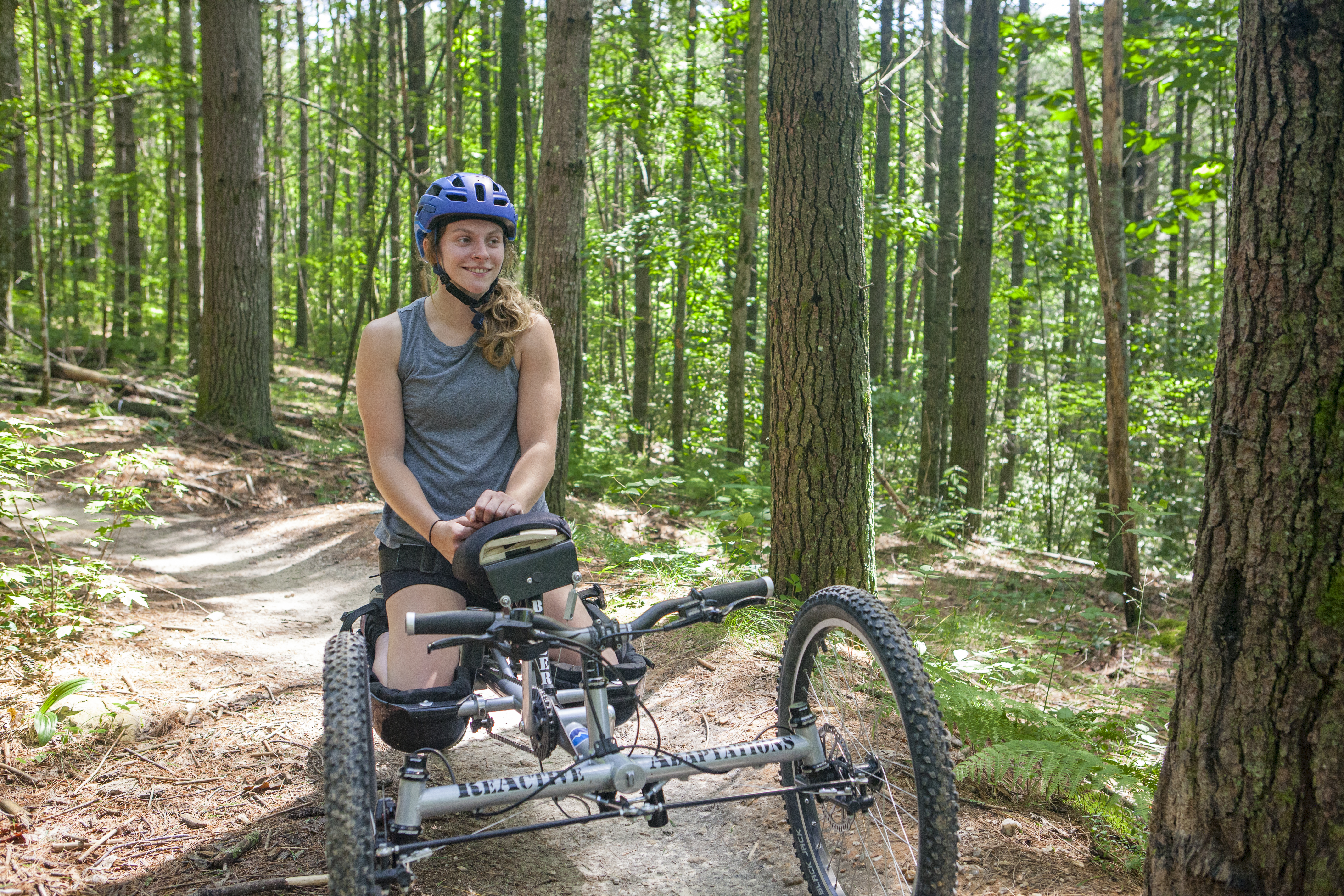
Forest policy proposals today are failing to hold the forest industry accountable for its climate, health, and community impacts. If we are going to solve the climate crisis, leaders must be willing to stand up to the forest industry in addition to the fossil fuel industry.
As forests become more prominent in climate policy proposals, climate leaders must distinguish between what’s truly green and what’s greenwashing. It is vital that leaders working to advance forest climate policy differentiate between forest policies that actually ensure that Black Lives Matter versus those that perpetuate the current structures of power, influence, and wealth.
As voters hit the polls this November with climate change on their list of priorities, it’s vital that climate champions get on the right side of the people, the science, and the forests.


 Donate
  April 5, 2026