


Biomass, or bioenergy, creates energy by burning living materials like plants and trees. The wood pellet industry uses trees to make wood pellets. It then ships them to Europe and Asia where they’re burned in power plants to create electricity. Wood pellet plants are as dirty and problematic as coal plants. Burning trees (via burning wood pellets) is not a climate solution. Here’s why.

Southern forests provide many benefits to humans. They provide us with oxygen to breathe, clean water, and homes for animals. Forests also provide us with food, medicine, and materials for clothing and shelter. Forests are a vital part of our planet and are necessary for our survival.
There are so many examples of how forests influence our access to clean water that it’s hard to choose a few. But here are the highlights:
Forests play a critical role in the global carbon cycle by storing carbon in their trees and soils. Deforestation, however, can release stored carbon back into the atmosphere, which contributes to climate change.
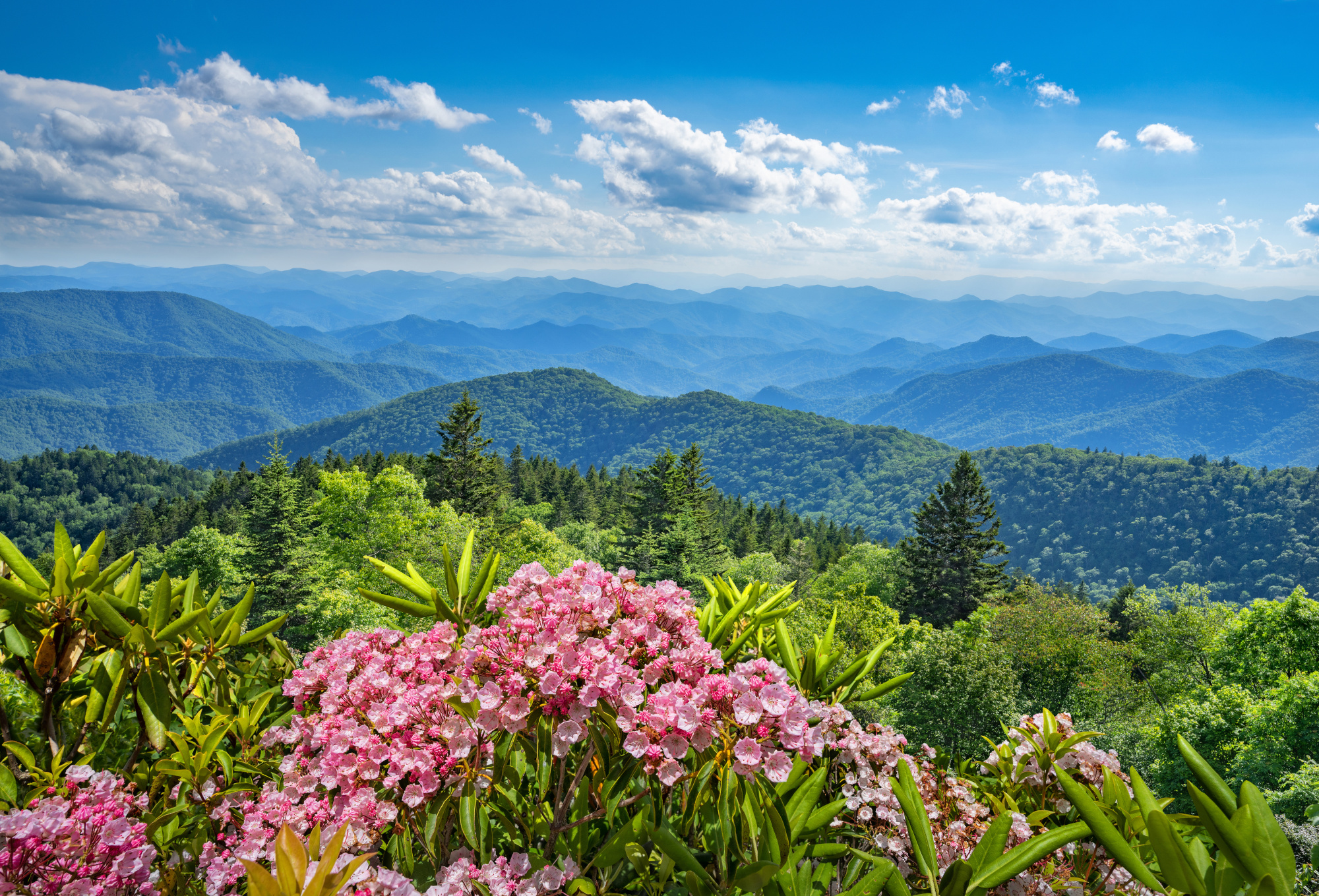
Forests play an important role in keeping regional temperatures steady and safe. By absorbing carbon dioxide and releasing oxygen, forests help keep the Earth’s atmosphere in balance. They also provide shade and cooler temperatures in the summer. They also buffer against extreme weather conditions.
Forests provide homes for wildlife in many ways. One way is that forests provide shelter and food for animals. Forests also shield animals from predators, the impacts from humans (like development and roads), and even from rapidly changing temperatures. When we lose forests, animals lose their refuge.
Forest degradation is the process of harming or diminishing the quality of a forest. This can be caused by a variety of factors, such as logging, climate change, and more. Forest degradation can impact benefits that forests provide in a number of ways. In the US, forest degradation is one of the most common impacts on forests.
Based on the news, you would think that forest carbon loss was mostly coming from tearing down forests for homes or watching them burn in wildfires. But, the number one cause of carbon emissions from US forests is logging. Logging destroys forest carbon stocks and many other benefits.
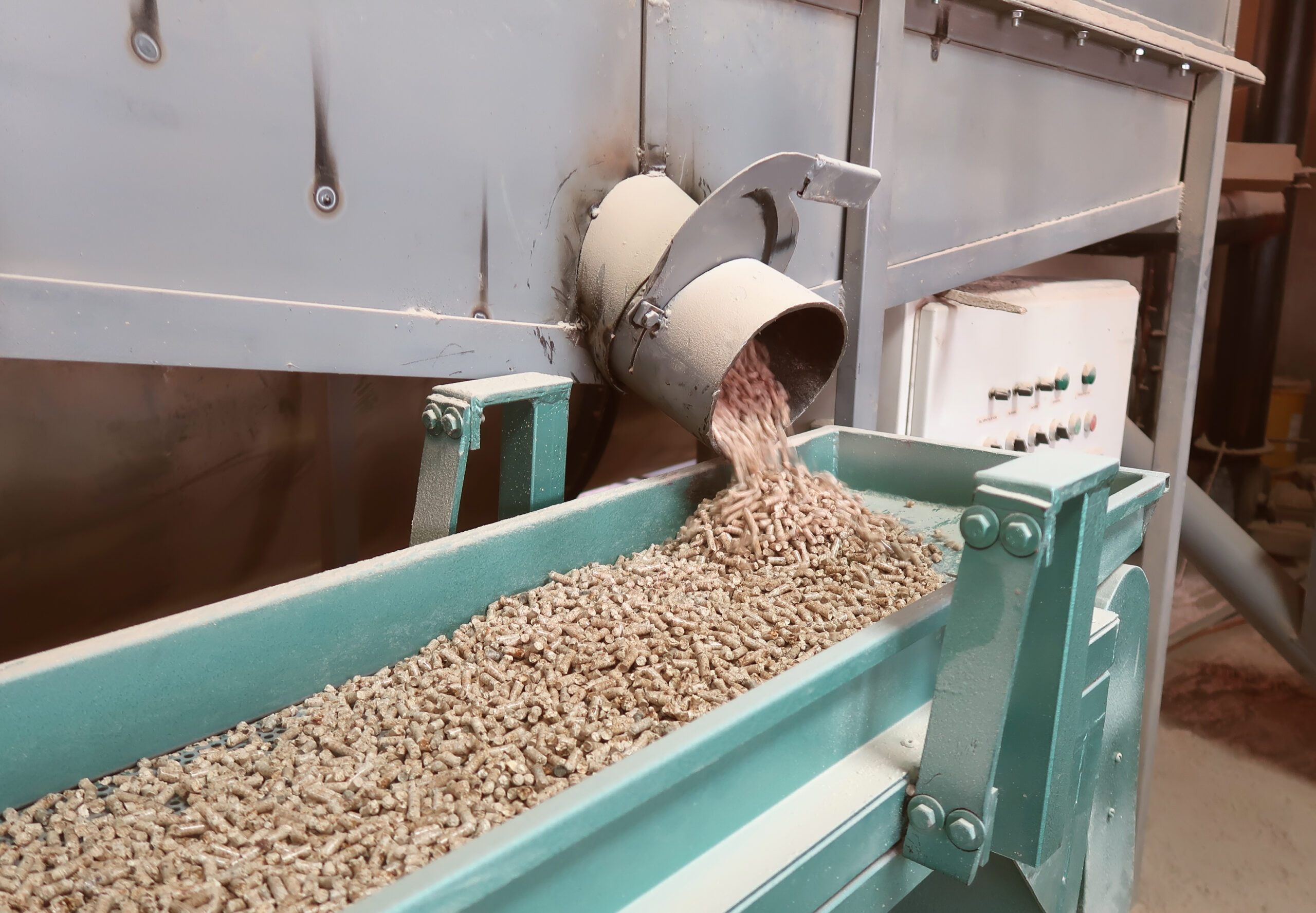
The US South exports more wood pellets than anywhere else in the world. These wood pellets are usually burned alongside coal in the name of “renewable” energy.
While landowners may replant destroyed trees, they are not required to do so by law. Planted trees (tree farms) take a long time to grow and do not offer the same benefits as natural forests.
There are now more frequent natural disasters, including hurricanes, floods, heat waves, and wildfires. Scientists have linked these events to increasing carbon dioxide in the atmosphere. The wood pellet industry is bad for the environment, just like coal or natural gas. The biomass energy industry is destroying forests that help protect us from natural disasters.
Renewable energy industries like wind and solar produce fewer carbon emissions per unit of electricity generation. This is because the carbon emissions associated with wind and solar are mostly during the construction phase. Unlike wind and solar, burning biomass requires a consistent supply of trees. Over time, the carbon debt from biomass energy continues to increase.
Harvesting and transporting forest biomass for wood pellets requires fossil fuels. Fossil fuels via diesel and gasoline fuels are used to operate forestry equipment and transport vehicles. Other energy sources, like natural gas, may be used to power machinery at the biomass energy production plants. The amount of energy used to produce wood pellets varies, but can range from 5-20% of the total carbon emissions generated by the entire lifecycle.
Many biomass plants will proudly state that their wood pellets are carbon neutral. However, this is based on several key assumptions about the manufacturing process. First, many lifecycle analyses assume that biomass plants only use tops and limbs from trees being harvested for other purposes. While this may have been true many years ago, since then, the demand for wood pellets has increased exponentially. Biomass plants are using whole trees and trunks to make wood pellets – not just tops and limbs.
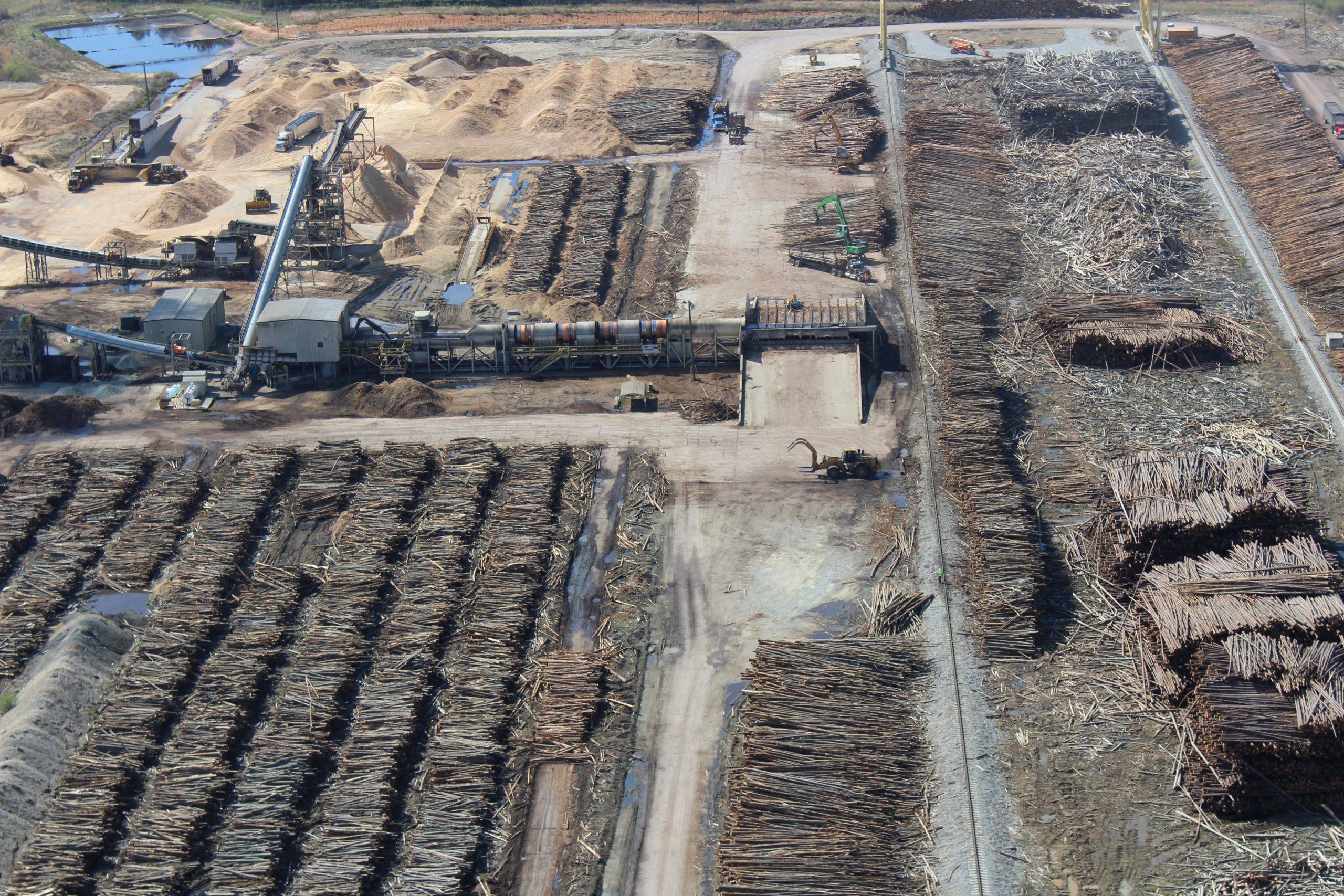
Second, lifecycle analyses assume that trees somewhere in the same region will grow enough to offset the carbon lost through clearcutting. But it’s not fair to expect someone else’s trees to offset the carbon lost through your forest clearing. Instead, lifecycle analyses should be focusing on the areas where the clearcutting occurred. Through that lens, it takes 40-100+ years for the carbon to be reabsorbed by new trees. Unfortunately, we don’t have 40-100+ years to combat climate change.
As the renewable energy boom continues to grow across the world, we must examine the true implications of energy projects like these. Environmental racism is when specific communities, like BIPOC (Black, Indigenous, or People of Color) neighborhoods, are subjected to more environmental harms than non-BIPOC communities. Learn more about this environmental racism.
In the US South, wood pellet facilities that use forest biomass are often placed in low-income communities of color. These communities are more likely to experience environmental injustice. They often already have other sources of pollution in or near their communities like:
These other polluters contribute to hazardous air pollutants and even greenhouse gas emissions. Given this pattern of injustice, why does the biomass industry continue to operate in these communities?
Many wood pellets are “co-fired” alongside coal in traditional power plants. Power plants can burn wood pellets alongside coal to get renewable energy credits. In other words, they can get credit for “green” energy while still burning coal.
When power plants are allowed to “offset” greenhouse gas emissions by cofiring dirty coal with wood pellets, they’re putting more and more carbon into the atmosphere. This is the opposite of the “carbon neutral” companies that they claim to be.
If you’re living near a wood pellet plant, you deserve to know your risks.
Learn more about the air pollution that biomass causes.
Share this fact sheet about the relationship between biomass and forests with your friends.
Take action now to prevent further damage to your lungs and your community!
As the wood pellet industry grows across the US South, we’re asked again and again: Do Enviva or other wood pellet facilities clearcut forests? While the detailed answer is complex, the simple answer is: Yes. Enviva, Drax, and other wood pellet manufacturers ALL use wood from clearcut forests.
Let’s break down where wood pellet production facilities get their wood. We’ll also talk about what to expect as the wood pellets industry continues to grow.
Wood pellet companies turn raw materials (whole trees, dust, and occasionally branches) into compressed pellets. Homes burn these pellets for heat, and power plants burn them for electricity.
Companies can make wood pellets from any type of wood. They used to make them from “low value wood”, like dust or chips left over from another product. Now they usually make pellets out of wood from large logs and whole trees. This is because there is international demand for wood pellets.
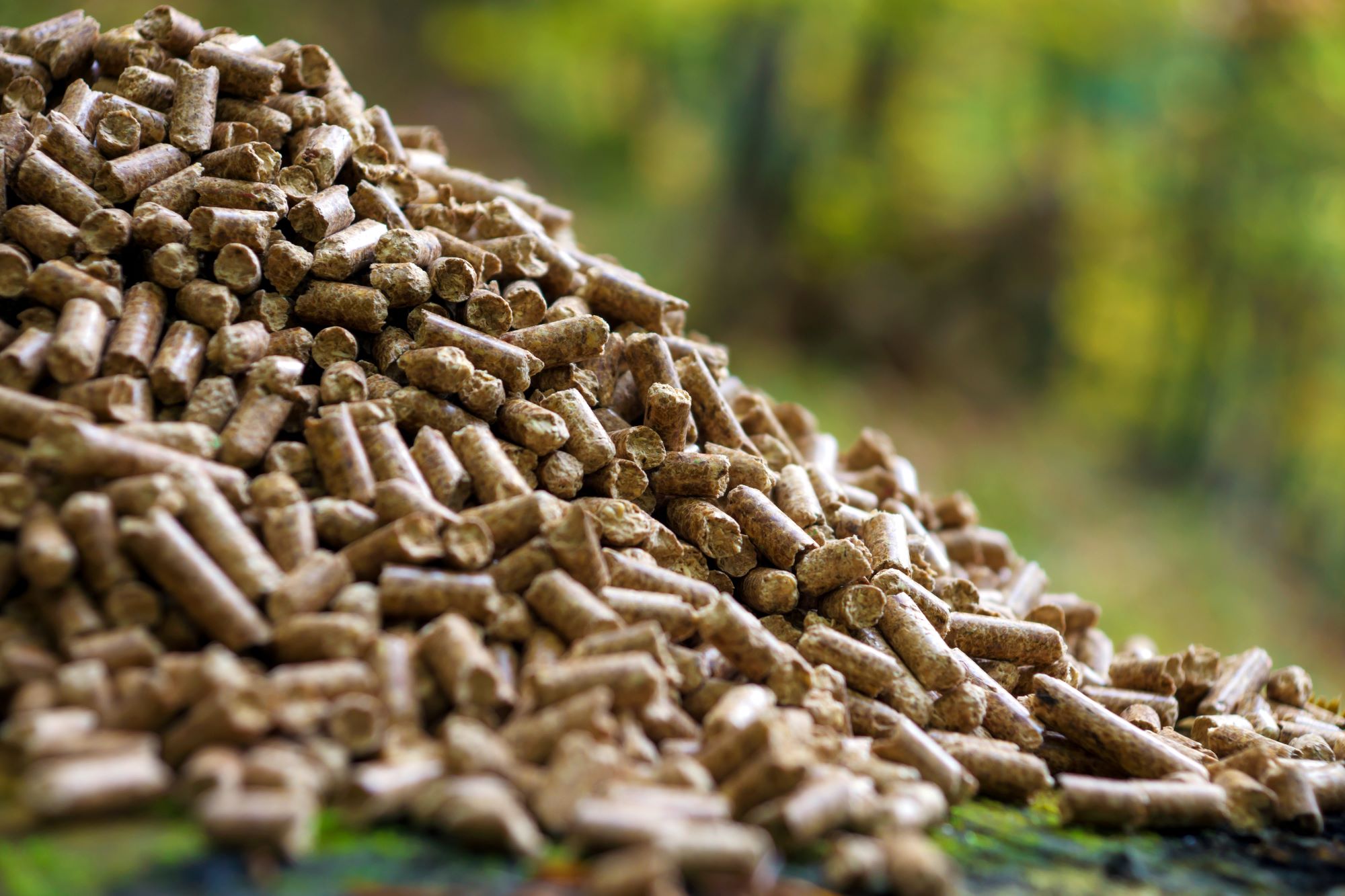
There’s international demand for wood pellets. This is because some global agreements said that wood pellets were a “carbon neutral” energy source. They said this is because new trees can grow on land that has been clearcut. They neglect to share that it takes many decades for cut trees to regrow. Nowadays, scientific evidence says that wood pellets are NOT carbon neutral.
Wood pellets emit carbon (greenhouse gas emissions) directly into the atmosphere. It can take decades, even up to a century, for that carbon to be recovered by a growing forest. While growing trees do absorb carbon, they do it over a long period of time. To fight climate change, we need to use other renewable energy sources that don’t emit as much carbon.
However, international governments haven’t quite caught up yet. They still say that burning biomass for renewable energy is a good idea to reduce carbon emissions. As a result, demand has grown for the wood pellet industry, which offers zero climate benefits. False so-called “renewable” energy products like wood pellets are contributing to the climate crisis, not helping us fight climate change.
The most common type of logging in the US, especially in the US South, is a clearcut. A clearcut is when loggers remove all the wood from an area of forest. This leaves bare ground behind. New trees are either planted or allowed to regrow naturally. Companies clearcut forests because it is easier for them to move equipment in a clearcut.
However, the ecological impacts of clearcuts are worse than other types of logging. Because clearcuts are the most common type of harvest, any forest products company that uses wood will get most of it from a clearcut.
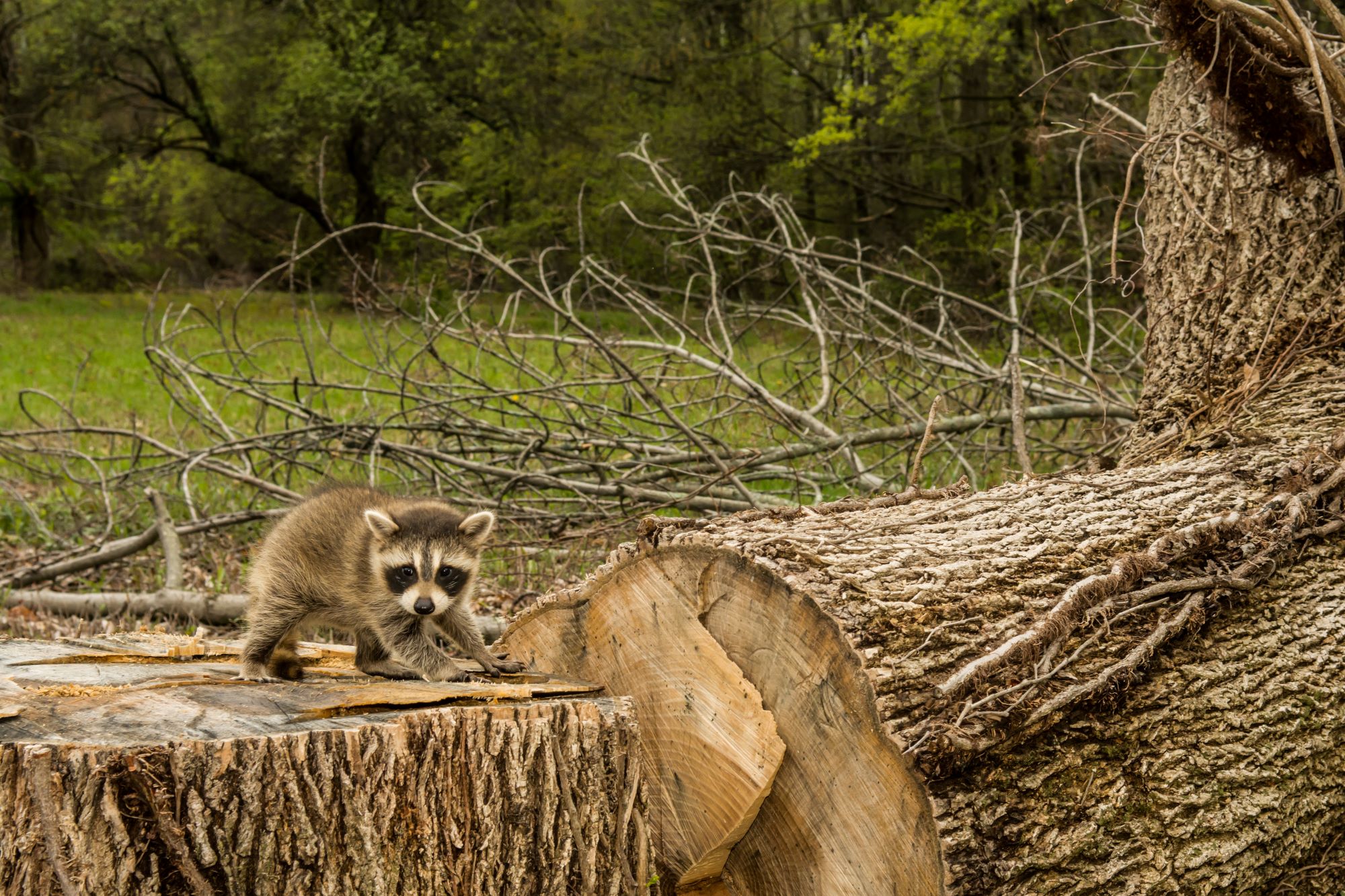
Most of the time, wood products companies are not doing the logging themselves. Instead, companies like Enviva and Drax hire contract loggers. These contract loggers are in charge of their own insurance and equipment. Contract loggers are usually paid a flat fee instead of hourly wages.
Because of this distinction, the wood pellet industry will often blame bad practices on the loggers. They point to their own “responsible sourcing policy” and say that the loggers violated their contracts. This is a way to push responsibility onto a third party when something goes wrong.
The biomass industry often refers to “waste” wood as a way to minimize what they’re doing in forests. They’ll say things like, “Oh, we only use waste wood, don’t worry!” To the biomass industry, waste wood or “low value wood” is any tree that isn’t perfectly shaped.
For example, a slightly crooked tree might be considered “waste” because it’s not perfect for lumber. But that tree has a lot of value if it’s left alone. Trees filter water, clean our air, and provide homes for wildlife. In nature, nothing is waste.
The biomass industry is not picky when it comes to the trees that they get. In North Carolina, the bioenergy industry took wood from 27 types of forest in 2019. 41% of the wood that bioenergy facilities received was loblolly and shortleaf pine forests, which could have been either natural or planted.
Around biomass industry facilities, anywhere from 15-30% of forested area is actually planted pine trees, not real forests. These “forests” offer far less in ecological value than real forests. Plus, pine plantations need extra things like herbicides and pesticides to grow successfully. They’re like the cornfields of forests.
The next largest category of wood that the pellet industry uses are tree species that grow in moist soil, often near rivers and streams. These trees, including sweetgum, black gum, sycamore, and poplar made up roughly 28% of the pellet industry wood in North Carolina.
A common question we get is whether or not the biomass industry is cutting down old growth forests. Unfortunately, there’s no one standard definition of old growth forest. So it’s hard to definitively answer that question.
If we define old growth as forests over 80 years old, then chances are that the biomass industry is receiving wood from those forests. In 2019, approximately 2% of forest harvests in North Carolina were from stands older than 80 years.
However, if we’re defining old growth as containing certain ecological characteristics like downed wood and biodiversity, then the answer is less clear. We don’t have an easy way to measure those characteristics on a big scale. Companies would need to have audits for old growth characteristics in every forest that they logged.
As the wood pellet industry continues to grow, there are serious concerns. Environmental justice, for example, is the idea that all communities deserve equal access to environmental quality. The growth of the biomass industry has meant that some communities are bearing the brunt of the impacts.
Climate change is a big concern as well. As long as there are claims of “green energy” for this industry, it’ll continue to grow and replace fossil fuels without offering any significant carbon savings. We need to use a renewable energy source that is low carbon (like wind or solar) to really address the climate change issue.
Yes, companies like Enviva, Drax, and others do use wood from clearcuts to make their wood pellets. Environmental groups like Dogwood Alliance, the Southern Environmental Law Center, NRDC, and others have been trying to set the record straight for years. If you want to help us fight climate change and get countries to recognize the true cost of their biomass imports, step up and join the fight today.
If you’re in North Carolina, you can take this action to urge Governor Cooper to act on biomass before its too late. If you’re outside of North Carolina, you can urge the Biden administration to take action to protect forests. You can also visit our Act Now page to see our most recent actions, join our list, or become a Forest Defender to maximize YOUR impact on Southern forests.
Mayflies, stoneflies, water flies, have you ever heard those names before? If you like fishing, you probably have. Even if those names aren’t familiar, there’s a chance you’ve seen them flying near creeks and freshwater rivers.
You may be still wondering what type of animals they are. These aquatic invertebrates are known as benthic macroinvertebrates. Say what? Don’t worry; we’ll explain more about these cool creatures. We’ll show you that despite these critters’ small size, their role as aquatic invertebrates in the environment is big and important.
They’re aquatic invertebrates. This means that they live in the water and don’t have a skeletal system and spine. Their name can be broken down as follows:
Benthic: Benthic is the bottom area of a creek or river
Macroinvertebrates: Macro means big enough to be seen without a microscope, and invertebrate means animals that don’t have a spine
Benthic macroinvertebrates are small animals without a spine that live at the bottom of aquatic freshwater habitats like creeks, ponds, rivers, and lakes. You may suspect that only insects are part of this group, but that’s not necessarily true. Many species such as crustaceans, snails, and mollusks are also considered benthic macroinvertebrates.
There are three main reasons these aquatic invertebrates play an important role. First, they become food for larger organisms. Second, they help decompose things in the rivers. And finally, their presence (or absence) indicates the health of a creek.
Different fish species and other animals that live in aquatic habitats depend on these small animals for food. Consider mosquitoes. They are a pest species because they cause a lot of illness in humans and our domesticated animals. And yet, they’re an incredibly important species for the health of our ponds and floodplain wetlands. Mosquito larvae become food for many other invertebrates and fish species that live in creeks, rivers, and wetlands.
Aquatic invertebrates clean the water they live in. They’re the “cleaning service” of creeks and rivers. They scavenge and eat decomposing dead plants, animals and bacteria. Many invertebrates eat things like the leaves that fall into the water, water lilies, or other decomposing plants and animals. It’s gross, but it’s necessary!
Many aquatic species are “indicator species.” Their presence and number give scientists an idea of the health of a creek. That’s right! They’re known as biological indicators and they can be used to gauge whether and aquatic environment is healthy or not. A creek full of different types of macroinvertebrates indicates that the creek is healthy. On the other hand, if they’re absent, that could indicate that the creek has poor water quality.
We made a list of some of these amusing little critters you can spot when going near a creek or any body of water.
Also known as water flies or water fleas. This species of aquatic invertebrates isn’t the biggest macroinvertebrate. It’s barely visible at first glance, but you will be able to find it in any creek or lake in the world. When looking closely, you may notice that they look like hopping flecks.
Their bodies are round, and their heads have no necks. They also have antennae arising from either side. If you have the chance to look at a daphnia under the microscope, you’ll see they’re translucent to the point you can see their organs.
Why is Daphnia italicized? When it’s italicized, we’re talking about the genus (a collection of related species). But if we don’t italicize the name daphnia, we’re referring to water fleas, in general. That can include critters outside of the Daphnia genus.
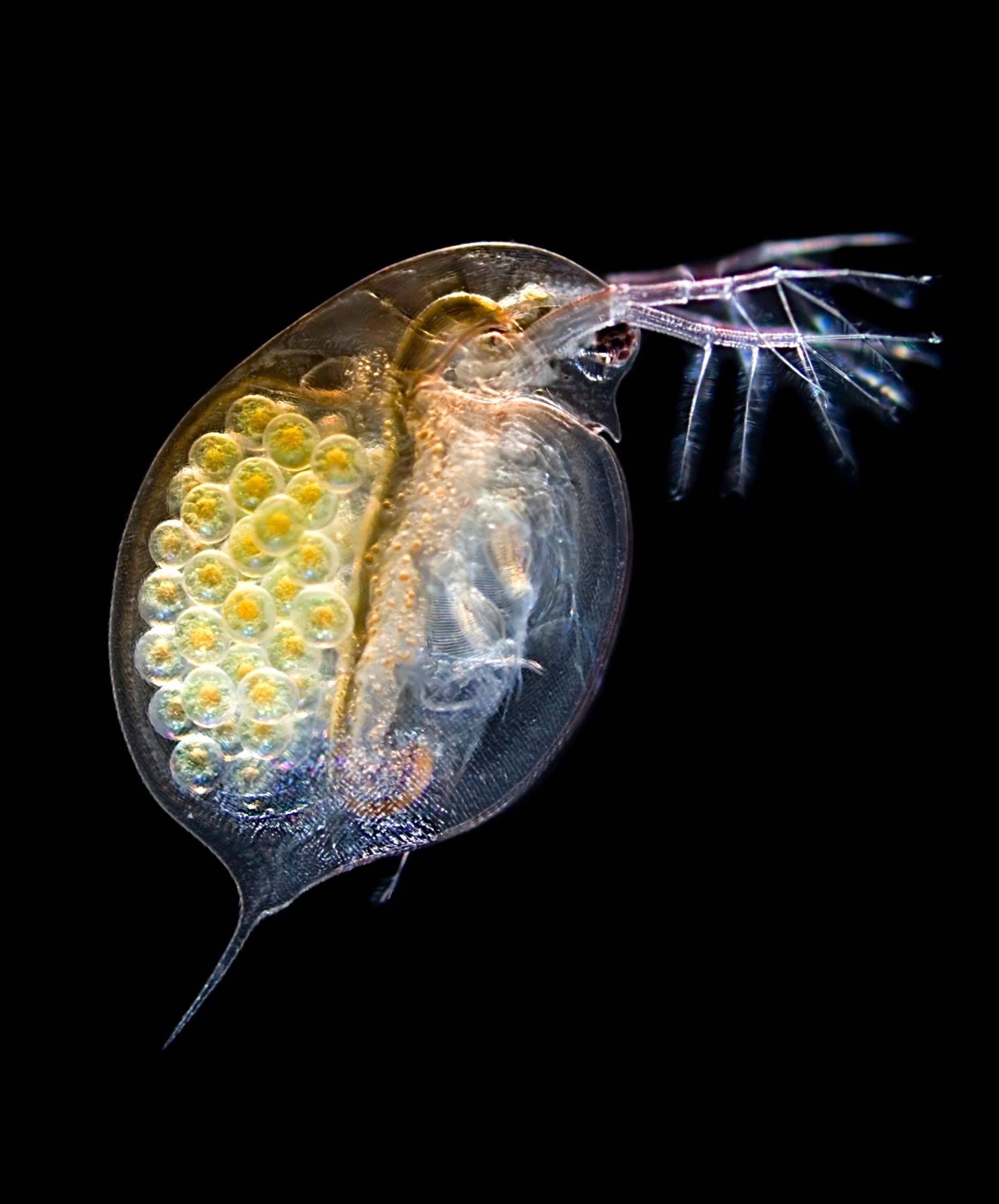
A daphnia
Not much separates these aquatic invertebrates from normal insects. Stoneflies measure around 0.25 to 2.5 inches (so you will be able to see them easily). They have long antennae on their heads, and only adults have a pair of membranous wings.
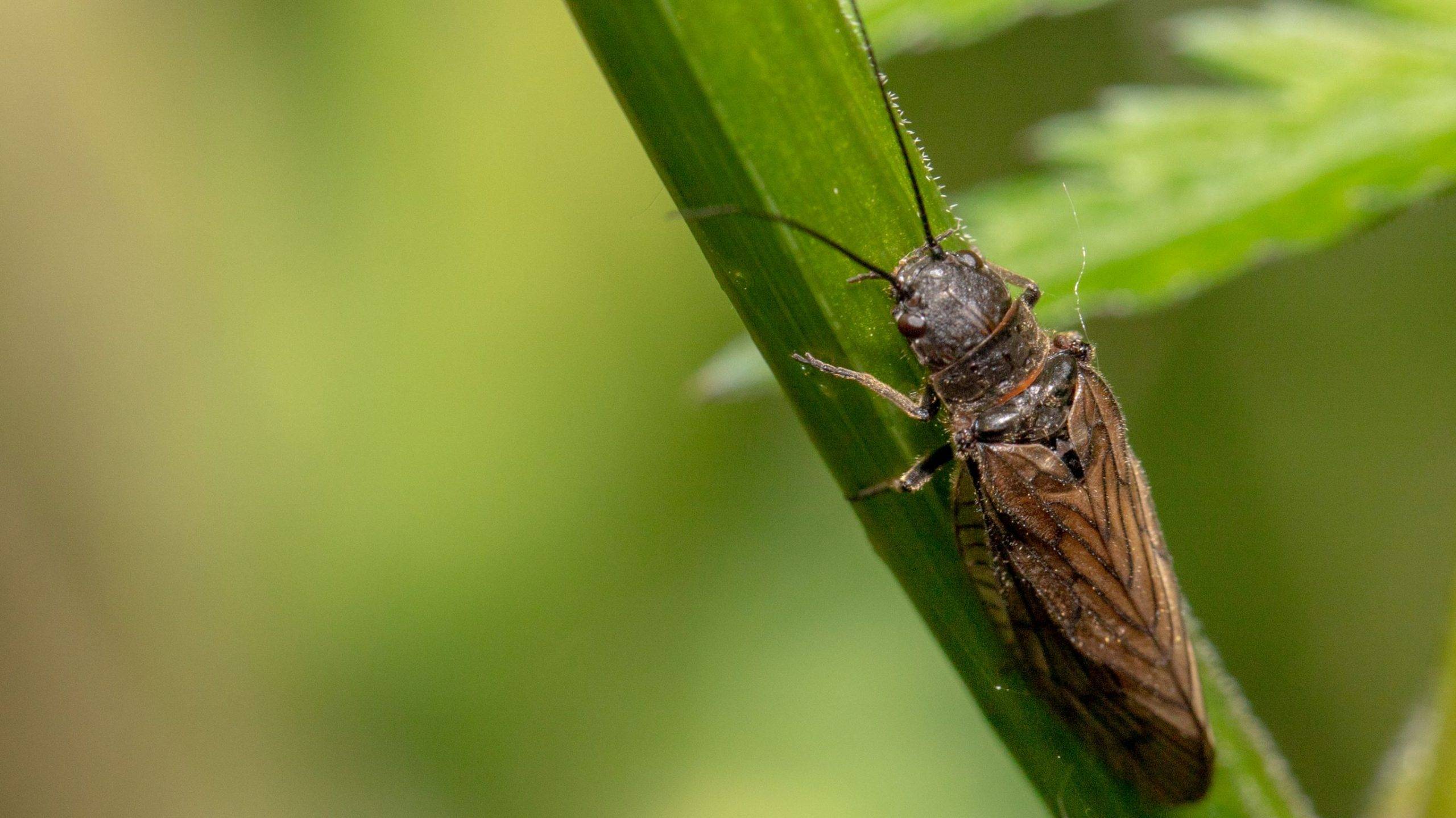
A stonefly
The younger ones tend to live on stones in rivers and creeks. That’s part of the reason why they’re named the way that they are. However, don’t be fooled by their full name because adults are actually poor fliers. In fact, stoneflies will live most of their lives in the same creek.
Unlike Daphnia, these aquatic invertebrates can be noticed very easily. When the adults open their wings, they can measure up to 5.5 inches. But you have to be very lucky to spot one since they are nocturnal and have a very short life. Male adults have distinct long mandibles (they have a sickle shape). Females have shorter mandibles.
The larvae of these aquatic invertebrates form what is called hellgrammites. They’re also easy to spot since they can be as long as 2.5 inches. They have a similar look to a centipede. They have a pair of pincers on top of their heads.
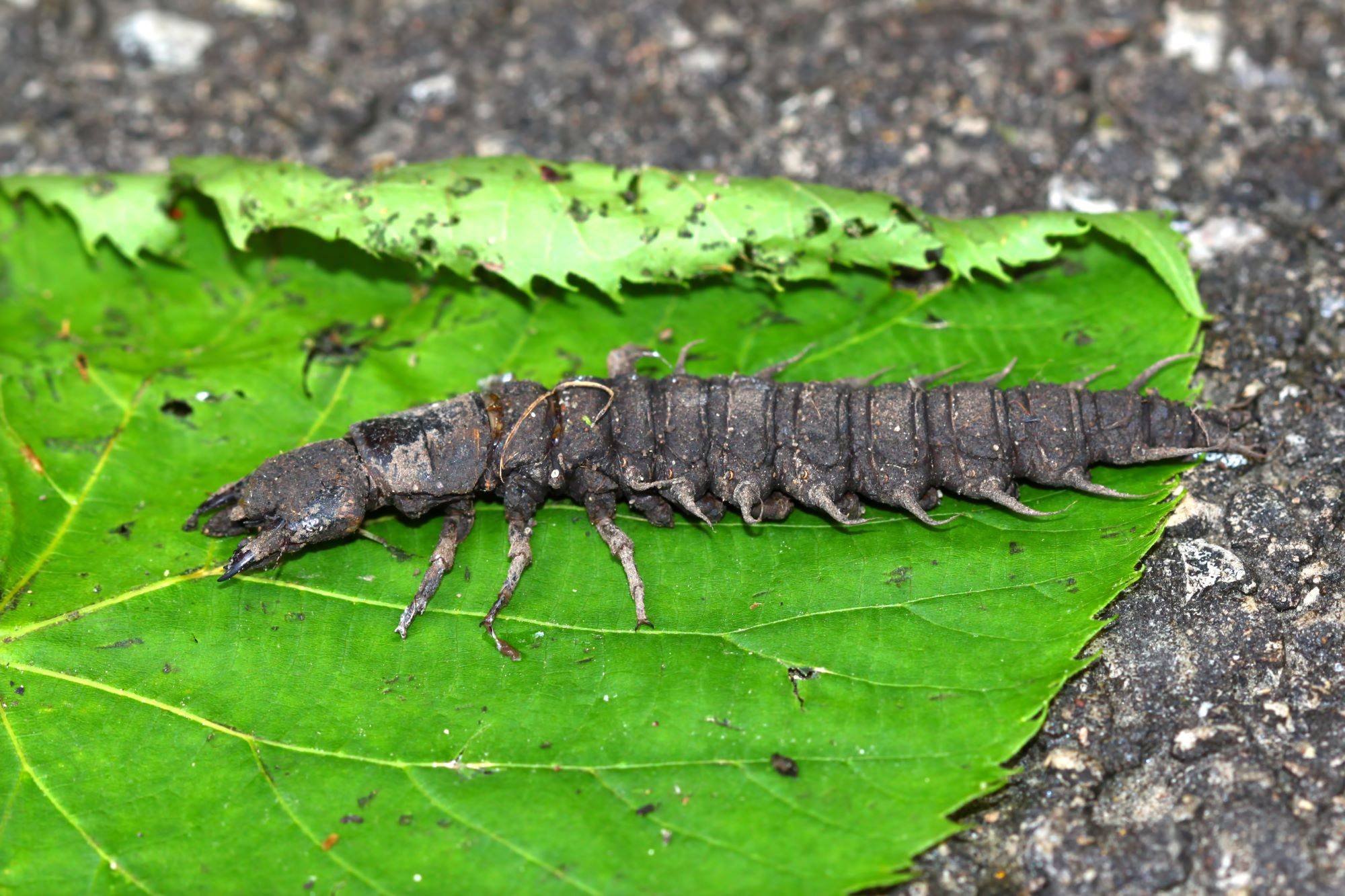
A dobsonfly
In spite of their name, these little aquatic invertebrates are not just active during May. They’re actually active during all the warmer months of the year. They have long, thin abdomens with four membranous wings. You can easily see the veins on the wings. Just take a look at how lovely!
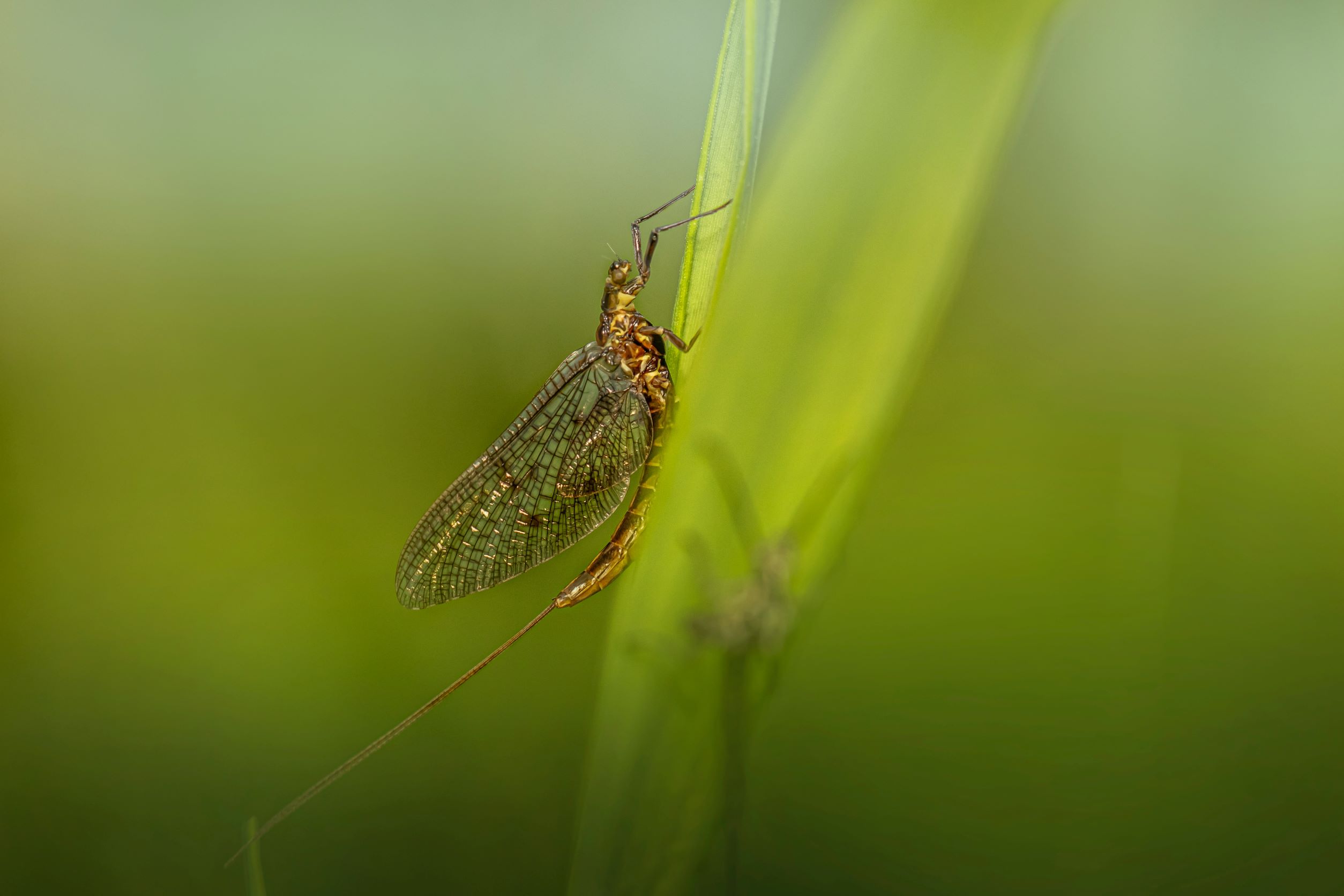
A mayfly
They measure between a quarter to one inch. They can be gray, yellow, or brown.
We’re all very familiar with adult dragonflies and their stunning colors. But very few know about the larvae of these aquatic invertebrates. These little creatures live hidden below ponds or creeks. There are many species of dragonflies. Some dragonfly larvae species can appear squat while the bigger ones are long and robust.
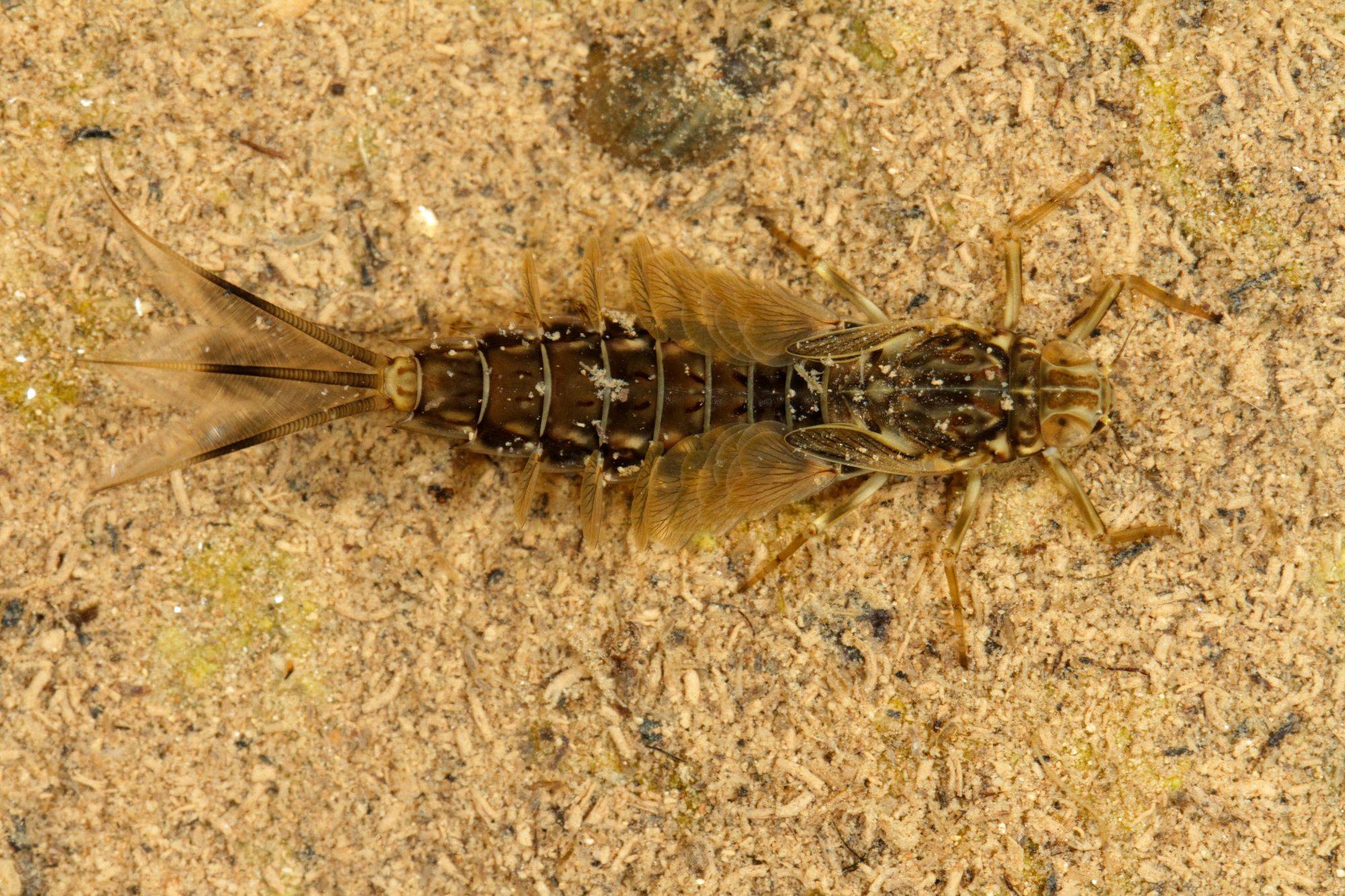
A dragonfly larva
Dragonfly larvae can measure between a quarter and two and a half inches. They move in the water in a similar way to a propulsion jet. That makes them amazing aquatic hunters.
Crayfish larvae are exact copies of an adult crayfish but in miniature. They’re transparent, but they also have a slight coloration that’s similar to what they’ll have when they’re adults. Crayfish can be blue, green, white, or yellow. While growing, their bodies won’t change too much.
These aquatic invertebrates can’t handle the effects of pollution in their aquatic environments. This makes them important indicators of the biological conditions of rivers, creeks, and ponds. They’re trustworthy indicators since they spend almost all of their lives in water. It’s vital that we maintain good water quality and improve poor water quality are vital for the survival of these little creatures. This will protect them from becoming threatened species and will help preserve entire aquatic ecosystems.
Did you enjoy learning about how different invertebrates live? We hope so! Let us know in the comments below what your favorite creeks, ponds, and major tributaries are. We’d love to hear what you find!
Did you enjoy learning about these cool creek critters? If so, why not show us!
Share your picture and tag us on Instagram, Facebook, or Twitter!
Want to do more?
Become a Forest Defender today! Your monthly gift will protect the biodiversity of the South.
Join our email list to get new Biodiversity in Your Backyard sent directly to your inbox!
Cachipollas, moscas de la piedra, moscas de la humedad, ¿has escuchado estos nombres antes? Si te gusta la pesca, seguro que esos nombres te suenan. Si no, existe una gran posibilidad de que los hayas visto volando cerca de arroyos y riachuelos de agua dulce.
Puede que aún te estés preguntando qué tipo de animales son esos. Lo entendemos, no son las criaturas más comunes. Estos invertebrados acuáticos son conocidos como macroinvertebrados bentónicos. ¿Qué dijiste? No te preocupes, en este blog te explicaremos más sobre estas geniales criaturas y te mostraremos que a pesar de su pequeño tamaño, su función como invertebrados acuáticos en el medio ambiente es grande e importante.
Esta puede ser la pregunta del millón. Esencialmente, son invertebrados acuáticos, lo que significa que viven en el agua y no poseen un sistema óseo ni una columna vertebral. Su nombre se puede desglosar de la siguiente manera:
Béntico: Béntico es el área del fondo de un arroyo o río.
Macroinvertebrados: Macro significa lo suficientemente grande como para ser visto sin un microscopio, e invertebrado significa animales que no tienen columna vertebral.
Entonces, los macroinvertebrados bentónicos son pequeños animales, sin columna vertebral, que viven en el fondo de hábitats acuáticos de agua dulce como riachuelos, estanques, ríos y lagos. Puedes estar pensando que solo los insectos son parte de este grupo, pero eso no es necesariamente cierto. Muchas especies, como crustáceos, caracoles y moluscos, también se consideran macroinvertebrados bentónicos.
Hay tres razones principales por las que estos invertebrados acuáticos juegan un papel importante. Primero, se convierten en alimento para organismos más grandes. En segundo lugar, ayudan a descomponer cosas en los ríos. Y finalmente, su presencia (o ausencia) indica la salud de un arroyo. Aquí hay más detalles:
Diferentes especies de peces y otros animales que viven en hábitats acuáticos dependen de estos pequeños animales para alimentarse. Considera a los mosquitos. Son una especie que puede ser considerada como una plaga porque causan muchas enfermedades en los humanos y en nuestros animales domésticos. Y, sin embargo, son una especie increíblemente importante para la salud de nuestros estanques y humedales de llanuras aluviales. Las larvas de mosquito se convierten en alimento para muchas otras especies de invertebrados y peces que viven en riachuelos, ríos y humedales.
Los invertebrados acuáticos limpian el agua en la que viven. Se les considera el “servicio de limpieza” de riachuelos y ríos. Ellos limpian y descomponen plantas, animales y bacterias muertas. Muchos invertebrados comen cosas como las hojas que caen al agua, los lirios acuáticos u otras plantas y animales en descomposición. ¡Es asqueroso, pero es necesario!
Muchas especies acuáticas son “especies indicadoras”. Su presencia y número les da a los científicos una idea de la salud de un riachuelo. ¡Así es! Se conocen como indicadores biológicos y su presencia puede utilizarse para medir si un medio acuático es saludable o no. Un riachuelo lleno de diferentes tipos de macroinvertebrados indica que el riachuelo está sano; por otro lado, si hay ausencia de los mismos podría indicar que el riachuelo tiene agua de mala calidad.
Hicimos una lista de algunos de estos pequeños y divertidos bichos que puedes ver cuando vayas cerca a un riachuelo o cualquier cuerpo de agua.
También conocidas como pulgas de agua o lías de agua. Esta especie de invertebrado acuático puede no ser el macroinvertebrado más grande ya que apenas se ve a primera vista, pero podrás encontrarlo en cualquier riachuelo o lago del mundo. Al mirarlas más de cerca, podrás notar que parecen manchitas saltarinas.
Sus cuerpos son redondos y sus cabezas no tienen cuello. También tienen antenas que surgen de ambos lados. Si tienes la oportunidad de ver una dafnia bajo el microscopio, notarás que son translúcidas hasta el punto de poder ver sus órganos.
¿Por qué escribimos Daphnia en cursiva? Cuando está en cursiva nos estamos refiriendo al género: una colección de especies relacionadas. Pero si usamos dafnia de esta manera, nos referimos a las pulgas de agua, en general, que pueden incluir criaturas fuera del género Daphnia.
No hay mucho que separe a estos invertebrados acuáticos de los insectos normales. Las moscas de la piedra miden entre 0.25 a 2.5 pulgadas (por lo que podrás verlas fácilmente). Tienen antenas largas en la cabeza y solo los adultos tienen un par de alas membranosas.
Los más jóvenes tienden a vivir sobre las piedras de los ríos y riachuelos, de ahí el nombre; sin embargo, no te dejes engañar por su nombre porque los adultos en realidad son malos voladores. De hecho, las moscas de la piedra viven la mayor parte de sus vidas en el mismo riachuelo.
A diferencia de la Daphnia, estos invertebrados acuáticos se pueden ver muy fácilmente. Cuando los adultos abren sus alas pueden medir hasta 5.5 pulgadas. Pero hay que tener mucha suerte para ver uno, ya que son nocturnos y tienen una vida muy corta. Los machos adultos tienen mandíbulas largas distintas (tienen la forma de una hoz). Las hembras, por otro lado, tienen mandíbulas más cortas.
Las larvas de estos invertebrados acuáticos forman lo que se llama hellgrammites. También son fáciles de detectar, ya que pueden medir hasta 2.5 pulgadas. Tienen un aspecto similar a un ciempiés. Tienen un par de pinzas en la parte superior de la cabeza. Puedes ver uno a continuación.
Estos pequeños invertebrados acuáticos están activos durante los meses más cálidos del año. Tienen abdómenes delgados y largos con cuatro alas membranosas (en realidad, puedes ver fácilmente las venas en las alas). Sólo echa un vistazo.
Miden entre un cuarto y una pulgada. Pueden ser de color gris, amarillo o marrón.
Todos estamos muy familiarizados con las libélulas adultas y sus impresionantes colores. Pero muy pocos conocen las larvas de estos invertebrados acuáticos. Estas pequeñas criaturas viven escondidas debajo de estanques o riachuelos. Dado que hay muchas especies de libélulas, dependiendo de la especie, algunas larvas de libélula pueden tener cuerpos rechonchos, mientras que las más grandes son largas y robustas.
Las larvas de libélula pueden medir entre un cuarto y dos pulgadas y media. Se mueven dentro del agua de forma similar a un jet de propulsión. Eso las convierte en increíbles cazadoras acuáticas.
Las larvas de langosta son copias exactas de una langosta adulta pero en miniatura. Son transparentes pero también tienen un ligero color similar al que tendrán cuando sean adultas. Las langostas pueden ser azules, verdes, blancas o amarillas. Mientras crecen, sus cuerpos no cambiarán demasiado.
Estos invertebrados acuáticos no pueden lidiar con los efectos de la contaminación en sus ambientes acuáticos. Esto los convierte en indicadores importantes de las condiciones biológicas de ríos, riachuelos y estanques. Son indicadores fiables ya que pasan casi toda su vida en el agua. Mantener una buena calidad del agua y mejorar la mala calidad del agua es vital para la supervivencia de estas pequeñas criaturas, y así protegerlas de convertirse en especies amenazadas y preservando ecosistemas acuáticos completos.
¿Disfrutaste aprendiendo cómo viven distintos invertebrados? ¡Eso esperamos! Háznos saber en los comentarios a continuación cuáles son tus riachuelos, estanques y principales afluentes favoritos. ¡Nos encantaría saber qué encuentras!
Ridgeland, SC – Danish company CM Biomass purchased Jasper Pellets of Ridgeland, South Carolina. The pellet mill has been idle since November 2021, and the company filed for Chapter 11 bankruptcy in May 2022. In September 2022, The Charleston Post & Courier reported that Jasper Pellets was looking for a buyer before its October 31 bankruptcy deadline.
CM Biomass agreed to buy the company and assume its outstanding debt through its wholly owned subsidiary Ridgeland Pellets, LLC. In 2018, Jasper Pellets borrowed $12.5 million in private bonds through the South Carolina Jobs-Economic Development Authority to expand its facility. Despite the promises of Jasper Pellets, CM Biomass did not receive any wood pellets following the expansion.
CM Biomass incorporated in South Carolina in 2018. They already own and operate several plants in the state. In addition to the facility in Ridgeland, the company has planned renovations at all their facilities. Wood pellet production is expected to triple following the completion of the project.
In November 2019, Southern Environmental Law Center (SELC) and Environmental Integrity Project submitted public comments to the South Carolina Department of Health and Environmental Control (DHEC). These comments opposed Jasper Pellets’ proposal to double production from 105,000 tons per year to 210,000 tons per year. DHEC issued the permit in April 2020, but they limited the company’s production to a smaller amount per year in acknowledgment of the issues raised.
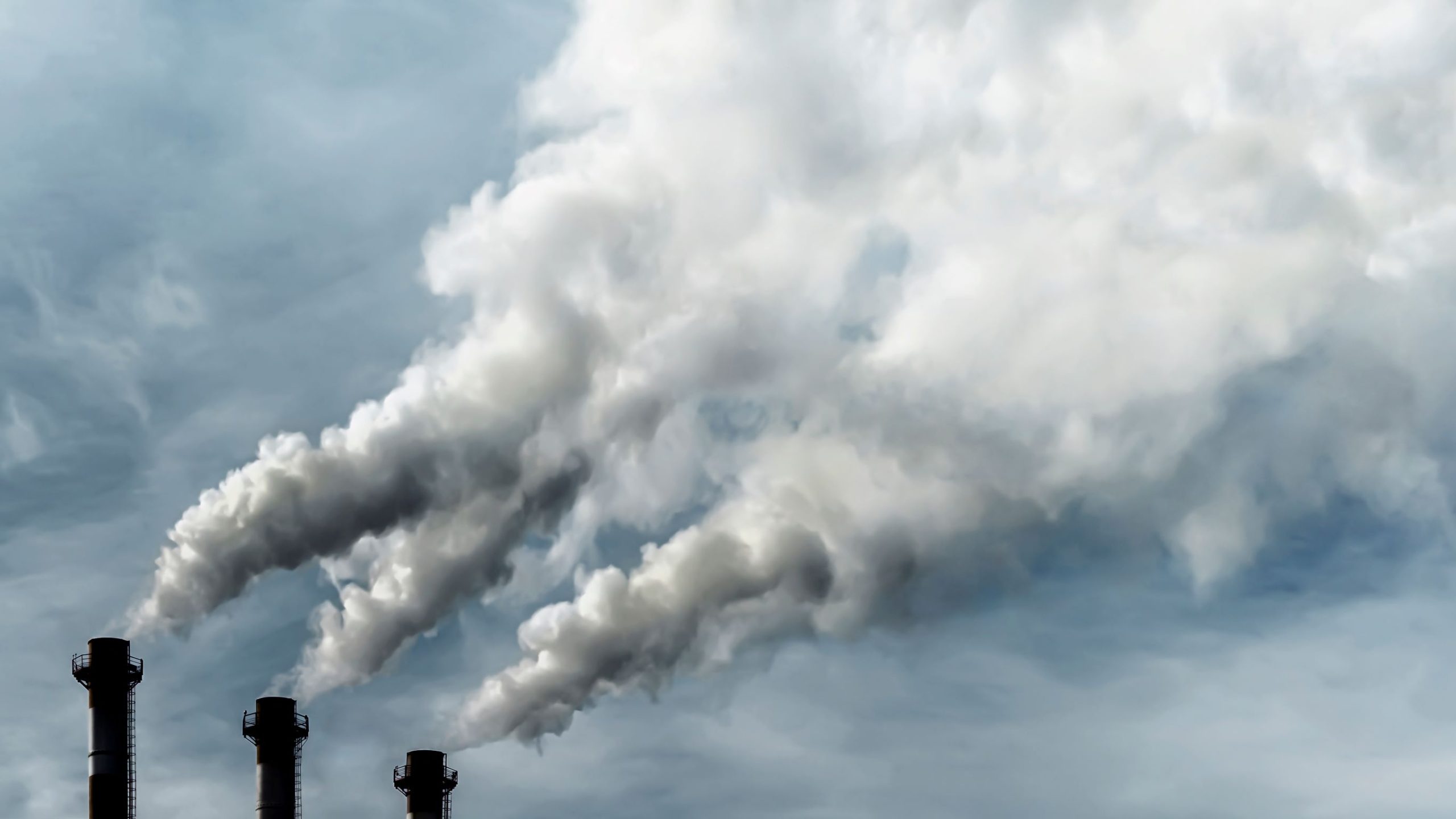
These facilities “process raw wood materials into compressed pellets that are then often shipped overseas to be burned for electricity in power plants.” Hundreds of tons of harmful pollutants are emitted each year, including volatile organic compounds, nitrogen oxides, carbon monoxide, sulfur dioxide, hazardous air pollutants, and fine particulate matter. There are regulations in place under state and federal law because of the negative impacts on the health of the public.
Volatile organic compounds in particular “create smog and ground-level ozone, contribute to secondary fine particulate matter pollution, and contain numerous individual hazardous air pollutants that are known to be carcinogenic or highly toxic even in low amounts.”
As a result of the letter, DHEC issued a $15,000 fine in January 2021 for Clean Air Act violations and for constructing new polluting equipment at the site without a permit. Additionally, Jasper Pellets agreed to conduct additional tests of the facility’s emissions.
In February 2021, Bluffton Today reported that the town of Ridgeland was working with the company to reduce the noise that the plant causes because it was not compliant with town regulations. At a Town Council meeting, the local administration said that many residents were calling to complain.
SELC attorney Heather Hillaker said,
“The Ridgeland community deserves neighbors that put their safety first. We will continue to monitor Jasper Pellets to ensure the facility and its new owners comply with air pollution laws and make decisions that protect communities and public health.”
# # #
Dogwood Alliance is a nonprofit that advances environmental justice and climate action by mobilizing diverse voices to protect Southern forests and communities from industrial logging. Learn more at www.dogwoodalliance.org.

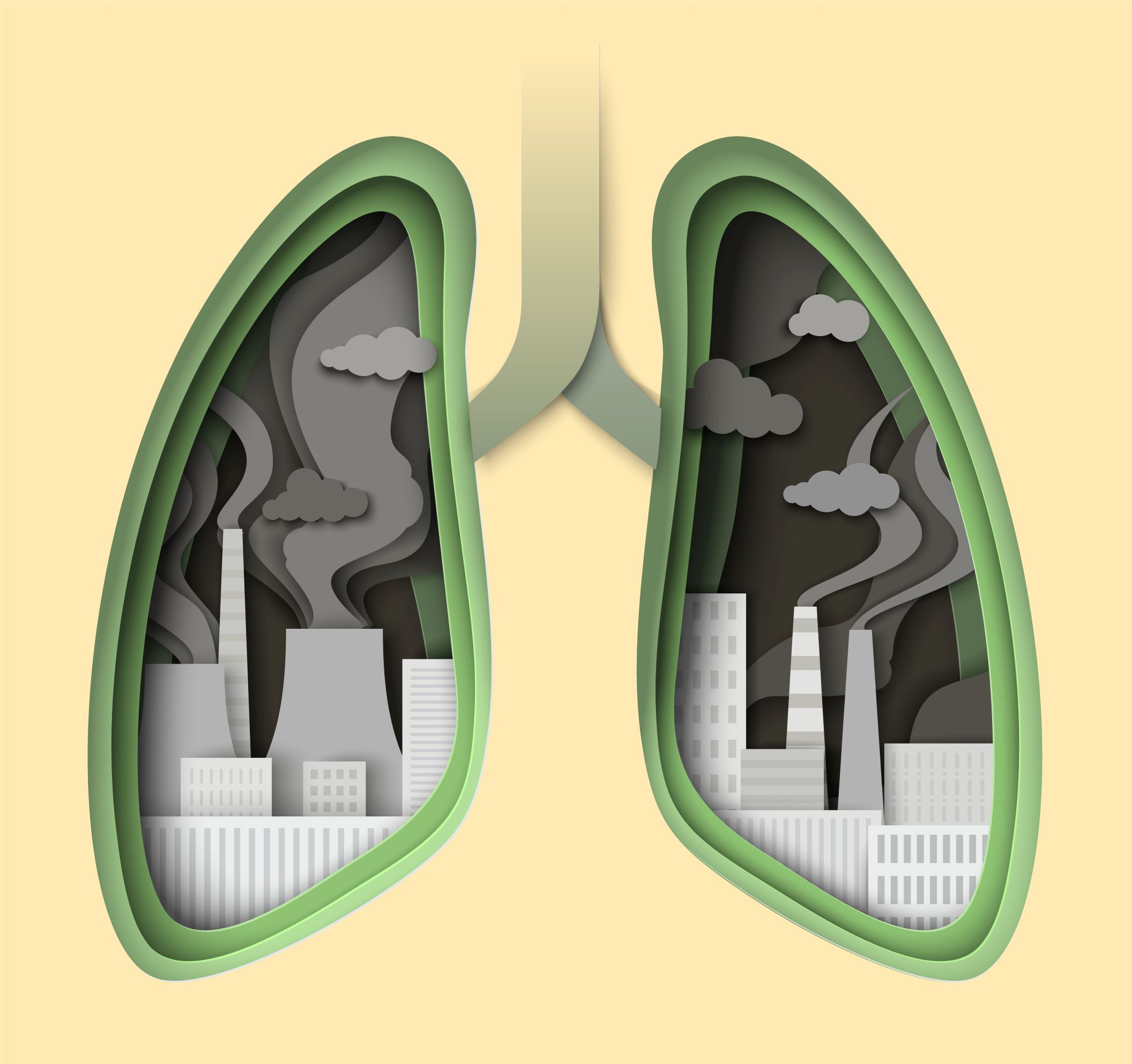
“Short-term exposure to small particulate matter can trigger cardiovascular disease mortality and illness; long term exposure reduces life expectancy up to a few years.”
No matter who you are, everyone can greatly benefit from reading more books and exposing themselves to new and different perspectives. Here we’ve compiled a list of books with the theme of environmentalism. We hope that you enjoy these books as much as we have!
Remember, you don’t have to purchase books to get access to them. Your local library offers free check-outs. If you’re having trouble, you can visit this list of public libraries to get you started!
What it’s about: This centers around nine Americans whose unique life experiences with trees bring them together to address the destruction of forests. Artists, scientists, and citizens unite to prevent forest destruction.
What we like about it: This Pulitzer prize winning novel exhibits the relationship people have with life that’s mostly taken for granted, like the trees that grow around us.
Where to get it: Get it for free at your local library or purchase the audiobook, hard copy, or ebook
What it’s about: Piya is an Indian-American marine biologist in search of a rare, endangered river dolphin. She’s thrown from a boat and rescued by Fokir, a young fisherman. Despite the language barrier, Fokir and Piya begin working together against the forces of political power and unrest.
What we like about it: This novel discusses endangered species and the power of working together to enact change.
Where to get it: Get it for free at your local library or purchase the audiobook, hard copy, or ebook
What it’s about: Flight Behavior follows Dellarobia, a woman from Tennessee, who encounters a huge orange blur in the sky. Unknown to her, it’s a massive migration of monarch butterflies. This draws rural farmers into unexpected acquaintance with journalists, opportunists, sightseers, and a striking biologist with his own stake in the outcome.
What we like about it: This novel discusses one of the most urgent topics of our day: climate change and how different opinions and ideas can affect the outcome and the way we deal with the issue.
Where to get it: Get it for free at your local library or purchase the audiobook, hard copy, or ebook
What it’s about: This book follows Esch, an under-resourced and pregnant 15-year-old. She lives with her family in Bois Sauvage, a mostly Black Mississippi bayou town smack dab in the path of Hurricane Katrina. Salvage the Bones is set during the 12-day lead-up to landfall (plus a few days of aftermath) of the historic storm.
What we like about it: The novel portrays how BIPOC and the vulnerable are impacted when natural disasters devastate. It’s a good depiction of environmental justice. Jesmyn Ward is the only woman and African American author that has won the National Book Award for Fiction twice. Salvage the Bones is one of the books that won her that prize.
Where to get it: Get it for free at your local library or purchase the audiobook, hard copy, or ebook
What it’s about: In an Edenic future, a girl and her father live close to the land in the shadow of a lone mountain. They possess a few remnants of civilization: some books, a pane of glass, a set of flint and steel, and a comb. The father teaches the girl how to fish and hunt, the secrets of the seasons, and the stars. He’s preparing her for an adulthood in harmony with nature because they’re the last of humankind. But when the girl finds herself alone in an unknown landscape, it’s a bear that will lead her back home. Together they’ll travel through a vast wilderness that offers the greatest lessons of all, if only she can learn to listen.
What we like about it: The way the book portrays the strong connection humans can have with their natural habitats and animals. It shows us that there is a way of interdependence where animals and humans can coexist and benefit from this arrangement.
Where to get it: Get it for free at your local library or purchase the audiobook, hard copy, or ebook
What it’s about: Bradley portrays three generations in this book. The story revolves around the family of scientist Adam and his artist wife Ellie as they decide to have a child. It follows the family in a radically changing world. It’s a place of loss and wonder where the extraordinary mingle with the everyday, through disasters and plagues, miraculous small moments, and acts of great courage.
What we like about it: Parents frequently say they’ll do everything for their children. This novel ponders questions like: what are we doing to stop climate change so our children and grandchildren can survive and thrive on Earth? Have we ever stopped to think about how climate change would affect our children’s lives?
Where to get it: Get it for free at your local library or purchase the audiobook, hard copy, or ebook
What it’s about: A thick fog rolls in over Shivering Heights. The river overflows. The sky is streaked with toxic green. Parasites proliferate in torrential rains. Now once safely classified species – humans included – are evolving and behaving in unprecedented ways. Against this poetically hostile backdrop, biologist Laura fights to understand the nature and scope of the changes transforming her own body and the world around her.
What we like about it: The question this book explores is asked in a climate change ravaged world: who will win in the struggle between humanity and nature? What will happen if the next endangered species is the homo sapiens?
Where to get it: Get it for free at your local library or purchase the audiobook, hard copy, or ebook
What it’s about: Security consultant and former wrestler Jane Smith receives an envelope with a key. The key is to a storage unit that holds a taxidermied hummingbird with clues leading her to a taxidermied salamander. Silvina, the dead woman who left the note, is a reputed ecoterrorist and the daughter of an Argentine industrialist. Jane accidentally sets in motion a series of events that quickly spin out her control. Soon, Jane and her family are in danger, with few allies to help her make sense of everything. Is this only way to safely follow in Silvina’s footsteps? Is it too late to stop? As she desperately seeks answers about why Silvina contacted her, time is running out―for her and possibly for the world.
What we like about it: One of the main topics of this book is wildlife trafficking and its consequences. Illegal wildlife trafficking is the fourth most lucrative global crime, just after drugs and arms. It has an estimated value of $23 billion each year. A business that threatens many species every year.
Where to get it: Get it for free at your local library or purchase the audiobook, hard copy, or ebook
What it’s about: Parable of the Sower is a post-apocalyptic science fiction novel that provides commentary on climate change and social inequity through the lens of a young girl’s journey. The novel follows Lauren Olamina. She is a young woman who can feel the pain of others. After growing up relatively protected, her city is attacked and her community becomes displaced.
What we like about it: This book came out in 1993, but it’s so groundbreaking and influential that we had to include it. Octavia Butler is an amazing worldbuilder, and the plot just sucks you right in. Even though it’s post-apocalyptic, the novel displays a thread of hope and rebuilding.
Where to get it: Get it for free at your local library or purchase the audiobook, hard copy, or ebook.
What it’s about: This is the first book in the Broken Earth trilogy. Followed by The Obelisk Gate and The Stone Sky.
This book takes place on a planet with a single supercontinent called the Stillness. Every few centuries, its inhabitants endure what they call a “Fifth Season” of catastrophic climate change. The story follows a woman trying to recover her kidnapped daughter while the world is collapsing around her.
What we like about it: The dangers of a massive ecosystem collapse are explored in this book. The characters are forced to make difficult choices about how to survive. Women characters are portrayed as strong and determined individuals.
Where to get it: Get it for free at your local library or purchase the audiobook, hard copy, or ebook
What it’s about: This trilogy also includes the books Oryx and Crake and The Year of the Flood.
In Oryx and Crake, a man struggles to survive in a world where he may be the last human. In search of answers, he embarks on a journey. The travels through the lush wilderness that was so recently a great city until powerful corporations took mankind on an uncontrolled genetic engineering ride. In The Year of the Flood the long-feared waterless flood has occurred, altering Earth as we know it and obliterating most human life. And in MaddAddam a small group of survivors band together with the Children of Crake: the gentle, bioengineered quasi-human species who will inherit this new earth.
What we like about it: Our negative impact on nature is leading to our world collapsing in front of us. This trilogy focuses on the world we know could end and what could happen after that. Our impact over nature is a key topic in this book. This trilogy can help us understand our environmental impacts.
Where to get it: Get it for free at your local library or purchase the audiobook, hard copy, or ebook
What do you think about our list? Did we miss any great environmental books? Leave them in the comments below!
James Curtis “JC” Woodley passed away on October 5, 2022. JC was a beloved member of the Dogwood family. He served on our board, participated in protests, was a member of FOREST Circle, and appeared in several Dogwood videos. Until his retirement, JC was a field biologist for the EPA. He was also the founder of the nonprofit JAPRI. We wanted to honor his memory and his legacy by sharing some of our personal stories and remembrances.

FOREST Circle. JC Woodley stands in the front row with a blue sweatshirt and cane.
I’m so fortunate I got to know JC well over the eight years we worked together. I first met him at a Sierra Club meeting where I gave a presentation on the impacts of the wood pellet industry on forests and communities. After the presentation, JC told me what a fire this had lit for him. He truly knew the magic of forests. He turned to the woods as a child growing up in Northampton County. He watched in horror as the beautiful forests of his childhood were cut down and chopped into wood pellets.
JC Woodley in Congaree National Forest at a board retreat
JC was incredibly smart and talented. He worked for years at the EPA. He brought those skills with him to the forest protection movement. But what I most remember JC for is his heart. Any project he took on was out of love and passion. He always brought his whole self. In the time I knew JC, he accomplished so much. He brought the issue of forest protection to some of the highest levels of major environmental groups. And he loved people just as much as he did forests. He launched his own nonprofit, JAPRI (Jail and Prison Rehabilitation Information). JAPRI addresses climate change through the lens of the social and environmental injustices that BIPOC and other marginalized communities face.
JC encouraged me to always make sure our spaces were ADA compliant. To make sure our activities had several ways for people to engage.
As JC took on roles with other organizations, we would make time to connect about once a month on a long call. We ended these calls with a renewed feeling of inspiration and purpose. JC talked about his Dogwood family, and it truly felt like family with him. He is one of the most genuine, kind people I have had the privilege of knowing.
The last time I talked with JC, he was in good spirits. His doctor had approved him to travel, and he was planning to join us at a FOREST Retreat in North Carolina. We were both so excited. I was just devastated when I heard the news that he had passed.
I will miss JC dearly as a friend and as a colleague. I’ll be sure to continue to infuse my work with the passion and lessons that JC brought us all.
In 2017, JC was one of the first people I interviewed as part of the Stories Happen in Forests documentary. I created the film to showcase the unique ways people connect with forests. My videographer and I met JC in a park in Greenville, NC to film him. He was nervous and a little camera shy, but he had a clear vision of what he wanted to share. JC spoke about growing up with polio and suffering post-polio complications in adulthood. He talked about how the forest gave him both solace and strength. He said,
“I found my reprieve by going into the forest. Everything is beautiful. Every notch, every crooked branch, everything that other folks may see as ugly or not being normal is absolutely beautiful. I’ve always wanted to feel normal, and I wanted to feel beautiful in my own way. And in the forest, my disability didn’t affect me negatively. It was part of the complexity of life.”
As we wrapped the interview, JC and I kept chatting. With the interview at a close, JC visibly relaxed and spoke more freely. We then discovered my videographer had left the camera rolling. And she captured this easeful conversation. I chose to end the final video with his message from that exchange.
People often ask me which is my favorite interview from the documentary. And while I love them all, it was always JC’s that I talk about. It holds a special place in my heart, leaving me with teary eyes upon every single viewing. His honesty, his vulnerability, his strength, and his joy move me deeply. In 2021, we reunited for a Stories Happen in Forests panel interview. JC revealed that when I released the video, he initially felt exposed and ashamed. But soon having his truth out in the world became a source of confidence for him. I’m so grateful that JC chose to share his story with me and the world. I’m so humbled that he, too, got something special and important from the experience.
With JC’s passing, a beautiful light has gone out. The impact that he left behind will continue. Through the lives he touched, the work he did, and the changes he inspired. I am so honored that I got to be one of the lives that he touched.
I had the pleasure of getting to know JC over the years at several of our board meetings. My impression of JC is of a gentleman and his love for forests. His willingness to hold fast to his ideals and the people and places he cared about stood out. We stayed up very late talking on several evenings after our busy days of board meetings. He shared his journey with sobriety and his love for family. He was dedicated to not letting past hurts take away from relationships he has today. His belief in second chances which is so evident in his nonprofit JAPRI. JC spoke of the pain of his childhood, and how he sought refuge in the forests, and how trees brought him comfort. He was always kind and caring, and pushed himself to do more, but always in service to others. When I learned he was ill, I started to make him a picture in photoshop so he could picture himself in the place he loved. That is how I’ll remember him.
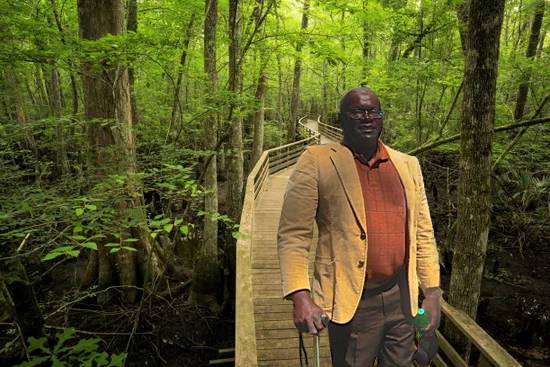
The photoshopped image Sasha Mitchell created of JC in his favorite place: the forest
I had the privilege of interviewing JC Woodley at our 25th Anniversary event last year. I’d interacted with him for years as a board member. This time I got to talk to him about his experience being in the Stories Happen in Forests documentary. JC was so intertwined with nature that he emanated the same feelings I get when I enter a forest. Wonder, reverence, and awe. During the event he shared how as a young boy he found his power in nature. As a boy with polio he was bullied in school. When he came home from school, his family was overprotective. The only place he could be himself was in the woods. People cautioned him to stay out of the woods, but that was where we felt most safe and happy.
He would throw his crutches down and grab onto tree limbs and roll against tree trunks to get around. He said,
“I had to understand all this beauty that I was seeing that people said would harm me, but it wasn’t harming me.”
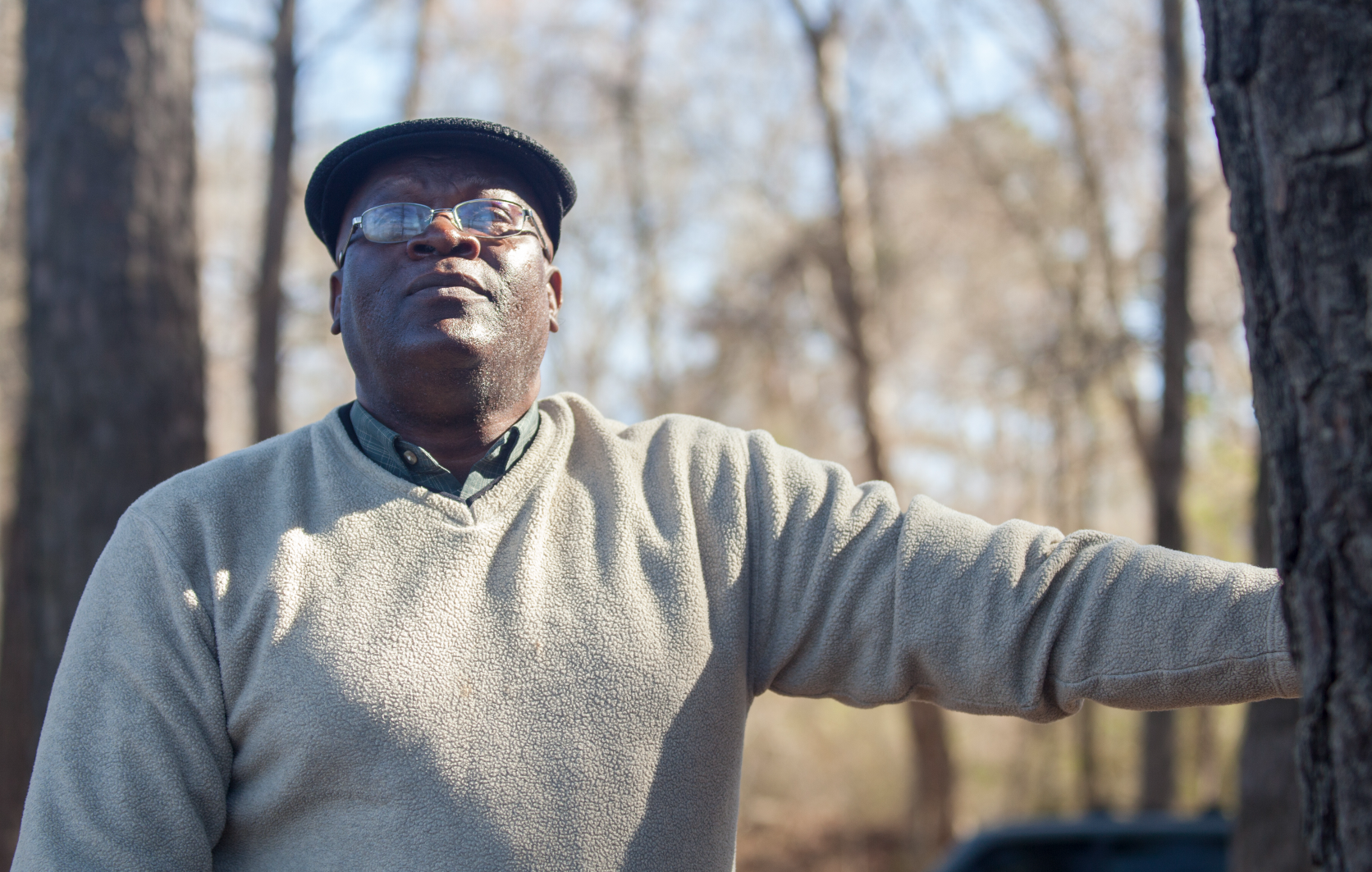
JC at the filming of the Stories Happen in Forests documentary
He saw that animals lived intentionally for their survival. If he stayed out of their way, he never had any problems. JC said,
“My mission is to teach people not to be afraid of forests and to enjoy them and to reap those values that are there.”
JC helped so many people to not be afraid of the woods. He also showed them how to feel secure in themselves and their place in the natural world. He was a joy to be around always. He showed up authentically and bravely in all rooms I ever saw him in. I’m so grateful to have gotten to know such a magical person that I will forever admire. I aspire to be more like JC.
JC was one of the sweetest people I had the pleasure to know. His kind heart and dedication to forests, climate, and justice were an inspiration to me. I know he was an inspiration to everyone he met. We had deep ties; he and my best friend’s sister worked together at the EPA. What a pleasure to make that connection and pass along hellos.
He cared so deeply about everyone he met. He always found beauty everywhere he went. Soft-spoken JC would defend and protect every person and every place he loved. His love for the people of the South, the swamps, wildlife, and trees touched my heart.

JC joins other community members to protest clearing NC forests for biomass wood pellets. JC is on the left in a tan blazer.
I sure will miss him and send my deepest love and sympathy and prayers to his family and friends.
JC was one of the best humans that I have ever had the privilege of knowing. If you had the opportunity to sit in a meeting or attended a rally with JC, you know how inspiring, committed, and passionate he was about his work. Every time he spoke I not only learned something, I felt something.
JC and I connected through many different areas of our lives. From our collective work to protect forests and communities, to our long conversations about how men and boys need to show up in today’s world, as well as our ongoing (and often heated) debate about North Carolina vs Kentucky basketball. All these moments, I will treasure.

JC front and center at the Northampton County public hearing. JC joined others to protect the forests he grew up with and loved.
JC touched so many lives, a legacy that will not be forgotten. We are all living in a healthier, safer, happier world because of JC. I will miss him dearly and am sending all of my love and prayers to his family.
Join us for Episode 5 Season 3 Woods & Wilds: The Podcast! In this episode we’re joined by educator and business founder, Tierra Mack. Tierra joins us to talk about the children she works with, about creating comfortable and safe space to be a kid in this current environment, and becoming water.

Tierra Mack (she/her) is a Georgia native with a passion for digital media, reproductive justice, and environmental advocacy. Tierra is a first generation college student. She’s a senior at the illustrious Hampton University. She’s majoring in political science and minoring in Spanish. Her advocacy for women and children began during her youth in Savannah. Today, Tierra is an aspiring nonprofit leader and entrepreneur with a passion for community activism and youth programs. She has served as the administrative assistant for the Southeast Care Coalition in which she organized grassroots campaigns for community leaders. Tierra is also the founder of WP Lincoln, a business consultancy firm, and Ms. Mack’s Loving Arms, a transportation service. These two business endeavors help to holistically bridge the gap between small business and the global community at-large.
Join Dogwood Alliance and SlayTheMic as we bring you tales of connection to nature and music.
Want to listen to more?
Read the full transcript of our interview with Tierra Mack!
Elizabeth Lashay: Hello everyone. Welcome to another episode of Woods and Wilds: The Podcast. I am Elizabeth Lashay Garland, and I am really excited because I get to work alongside my wonderful co-host who is…
Kimala Luna: I’m Kimala Luna and I’m with Dogwood Alliance, and we are here today with Tierra Mack. Tierra is a Georgia native with a passion for digital media, reproductive justice, and environmental advocacy. Tierra is a first-generation college student, senior political science major. Spanish minor. Attending the illustrious Hampton University. Her advocacy for women and children began during her youth in Savannah, Georgia. Today, Tierra is an aspiring nonprofit leader and entrepreneur with a passion for community activism programs and youth programs. During her service year, she, she served as the administrative assistant for the Southeast Care Coalition, in which she organized grassroot campaigns for community leaders. Tierra is also the founder of WP Lincoln llc, a business consultancy firm and Ms. Mack’s Loving Arms, a transportation service. These two business endeavors help to holistically bridge the gap between small business and the global community at large. Welcome Tierra.
Tierra Mack: Thank you. Welcome. Hello. Greetings everyone.
Kimala Luna: So happy to have you with us today. So our podcast this season is largely focused on youth and opening space up at the table, and it looks like that is a big part of your focus as well. And so can you talk a little bit about your inspiration there?
Tierra Mack: So my inspiration definitely comes from my family. I come from a family of teachers and educators who work in the school system, so making an impact on the youth has always been one of my dreams to just run programming and be able to change the minds of the youth and encourage them to sort be more than their environment around them, that they can be anything they wanna be.
Elizabeth Lashay: I absolutely love that, and I think it’s so important whenever we are talking about how are we including those that are younger and how are we fostering that experience and growing and nurturing that. I know that this podcast is also talking about nature and the power of outdoors and so. If you remember whenever you were younger, was there a memory that stood out in your mind of your experience in nature?
Tierra Mack: So when I was younger, I was a girl scout. One of my favorite memories is going to Girl Scout camp for the first time when I was about eight years old in second grade. I always loved going outside and star watching, being a part of nature, going to the playground. But at camp it’s like I was around other like-minded women. Who wanted to think and see the world, like how I saw the world, in nature. I remember we were walking through the marsh and we got to play with periwinkle and see possums crawling in their environment and to know like we are also in their home and not to be afraid, but to protect their homes, like how the government officials. Adults around us always protected us. And just to build that trust with nature from a young age shaped me into this person who always wants to view the world around me. From that experience in the wood and being emerged into nature and knowing that the nature protects me and I should protect it in return.
Kimala Luna: Are there ways that you incorporate that same mentality and philosophy in your youth programs?
Tierra Mack: Yes. So in my Ms. Mack’s Loving Arms program, we service ages four through 13. In that program we talk about the social emotional learning a lot since the Covid Pandemic. We noticed that sometimes it can be socially awkward for some students to interact with each other since during that time it was a lot of big isolation. Teaching them that you are a product of your environment and you should protect it. And to be who you are and know who you are, knowing your identity within your community and in your environment is definitely important during this time to reshape that social emotional learning curve that has been created since the pandemic.
Elizabeth Lashay: I absolutely loved your bio because it is multifaceted and it really shows that you have a range of passion and love to give. Please tell us a little bit about your passion of digital media.
Tierra Mack: In middle school, I started a blog. This is back when Tumblr was popular and Instagram, when the whole social media way just had begun. In my generation, I feel like we grew up with social media and not just like Facebook, but like the expansion of all the different media outlets and even in school, we were always challenged to make a video, record it, learn how to edit, be digitally involved, get a Microsoft certification. I think through blogging through always using my youth voice, I just found advocacy within my blogging to just share my story and share the stories that were being told around me. Always kind of empowered me to keep going and to never forget where I am from a coastal port city in Georgia originally. And, just sharing that story in general, as I traveled to a bigger city and then out of the country and through study abroad and different excursions, I realized that sharing my story was more important because not a lot of people have a passport or go traveling or go explore out of their city limits. I found my voice within my blogging, but also it strengthened how I shared my stories and how I developed, during that time. Through my blogging, through my website, through my different service learning programs, I learned how to be a better writer and try to digitally organize myself online to not just post for fun, but post with a purpose.
Kimala Luna: As an entrepreneur, I’m sure that you’ve had this moment where you had this idea and it just so made sense and it felt like it was part of your purpose. Can you describe the last time you’ve maybe felt that way and what that experience was like and what the idea was?
Tierra Mack: So my other business, WP Lincoln, I guess that was one of my biggest ideas around my college tenure. It’s a business consulting firm. I felt like a lot of people would come to me with their big ideas and they wanted to have time to process that big business idea and go to the drawing board and create the design and the brand awareness. I think from my blogging experiences and just sharing my story, I understood how to conceptualize. Different business plans digitally and how to think about how do we wanna present this idea to somebody. I think with that business endeavor, I get to explore myself creatively, since I did just begin as a blogger, but also bringing on new clients and taking on new businesses. Like I intern with lighting and production, which is a , It’s totally different from what I study. It’s, it’s about lighting and media, but my focus is in politics and I think stepping outside of that political arena and learning how to navigate different arena inspired me to think, oh, I really can do things outside of my major and connect to my community better because we are digitalizing every day as like the markets are globalizing.
Elizabeth Lashay: As we talk about the world that we’re currently navigating and what we’re constantly seeing, we’re immersed in conversations around environmental justice and what does that really mean, and also reproductive justice and what does that really mean? How are you fighting for that justice in your personal pursuit?
Tierra Mack: Personally, I love lobbying. That was always my dream job to be a lobbyist when I first went off to school. I try to stay involved with different non-profits, the YMCA, the NAACP, or even working for the Girl Scouts. Just doing different youth programs to bring not just awareness, but highlight and advocate for those people who are not being represented in those areas. So as a woman, reproductive justice just means to me to fight for being a woman medically and to be seen and to be heard when I have concerns about my body. Advocating for those different areas. We get to see how, you are just literally a representation of your environment and how that looks for you. You bring a different perspective to the table when you’re discussing these bigger ideas and you’re representing not just yourself, but your community and what you come from.
Kimala Luna: Absolutely. So it is, it is a heavy time for everyone right now in the world. What are some of the ways that you cultivate joy in your daily life?
Tierra Mack: I have a very strict morning and afternoon routine. My morning routine consists of me drinking coffee and going out in nature and gardening first thing when I wake up in the morning and practicing some yoga. I think practicing mindfulness during this time and decluttering and just being aware and taking some time in nature and breathing and just knowing the power of your breath is just something that I try to focus on during this hectic time. Reconnecting with my family and moving closer to home and being in my community again, cuz I was, living in Newport News, Virginia, and then I came back to Savannah, Georgia to continue running programming. Being in my community and being uplifted by them during this time and being reminded of where I’m from and the impact that I can have is getting me through each day and practicing having that gratitude for each day and my environment.
Elizabeth Lashay: I love that. So when you think about, trees, flowers, anything in nature, if you could be one thing, what would it be and why? Why would you want to be that element of nature?
Tierra Mack: If I could be any element of nature, I would definitely be water. I think water is so powerful. It’s such a small element. It’s so transformative. with it being transformative, you get to take on different roles in the environment. It’s not easy to go through a different metamorphosis or a change and to become even stronger than you were before. It’s just so hydrating and water just makes me radiate. I love water so much. Having that power to create change just like water, like even just drinking water or sitting in water is so relaxing. It brings such ease in that I really truly think humans were definitely fishes once upon a time, , because we just crave water so much and it fills us up with so much joy. So definitely water.
Kimala Luna: So this connection was made, through Erniko Brown, who is doing incredible work in the South. Can you talk a little bit about your connection with Erniko and also the environmental, advocacy work that you do?
Tierra Mack: I met Ms. Erniko, via phone call. I was talking to one of my mentors Ms. Angela Harris, who’s a community grassroot organizer with the Southeast Care Coalition. I’m her administrative assistant and we were talking about my programs that I was running with Ms. Mack Loving Arms and how we did a youth convention through our church to get the children back tapped into their spirituality and just to give back to the community. We did a creative dance and we focused on STEAM in Ms. Mack Loving Arms which is science, technology, engineering, arts and math. I feel like arts is always the first thing to get cut in the educational system. So we try to focus on art and expression and how are they really, truly feeling throughout this whole post pandemic lifestyle that we have now. And so we were talking about the environment and how it is holistically viewed and it’s more than just trees and nature and bees. Through that conversation we called Ms. Erniko and we were talking about the children and how we were creating a garden this summer through the Ms. Mack’s Loving Arms because we are a transportation program, but a student not going straight home, they do come to our facility and we like help them with homework and we work on their social emotional development and we talk about different things of nature. But during this particular day we were talking about our garden. We currently are growing, celery, green onions, white onions, and ginger root. So we’re doing our different plants and we’re looking at the house, the facility that we are in, which is my home. We’re in coastal Georgia, so we were talking about coastal plains and the importance of the water and the different elements. I was sharing this story with my mentor and Ms. Erniko about how the girls were just so interested in the soil and like in the rollie polies and in the different elements in nature. They were just like, oh my goodness, I didn’t know that these things were around me. And I’m like, Yes, but we’re in their home. And just knowing that you are safe in your environment. It’s just so beautiful to watch the girls light up. Be excited about their environment and knowing that they wanna protect it and learn about fire safety and water conservation, these big things. Cause climate change is definitely affecting all of us, even at young age. I mean, it’s skyrocketing gas prices and food shortages, and it’s just all connected to our world today. Something that you cannot ignore. So bringing up these conversations of energy and water and recycling. It’s definitely big ideas that children can understand and that they make a change by the little things that they do at home. So that was how we connected. She was like, Wow, you should share this story. And I was just like, Okay, I’m just doing the work here. I’m just doing what I’m passionate about. Just giving back to my community. I didn’t wanna like draw any attention to myself, but I was just like, I’m just proud to continue the work of the Southeast Care Coalition and viewing the environment, than more than just trees in nature, our culture and our history and the social awareness that goes into protecting our community.
Elizabeth Lashay: That is extremely important and I love that you’ve created this garden. And I also wanna dive a little bit deeper into the Ms. Mack’s Loving Arms. Before I do that though, I also want to know, has there been someone who has extended loving arms to you, and helped nurture what you’re currently doing?
Tierra Mack: Yes. So that person would definitely be my mother. She is my, she is my rock, she is my business partner. My mom has always been a teacher in an after school program. Youth engagement has always been her passion. Running the STEAM program. I think she drives the force behind what programming we do, and she always signed me up for different community programs when I was growing up to be involved in my community since I was the only child. We work with families who are single parent homes or recently divorced or any type of emotional hardship that you can really go through. The families that we tend to are experiencing those things and we just want the girls to have an expressive outlet, because no matter if your family unit is changing or your family issues are happening, your economic hardships or whatever the case may be. You don’t wanna have to feel that pressure as a child. You wanna keep your innocence. So knowing that their environment is the natural, but also the cultural and the social and the economic and the political. Bringing all of those components together and making them aware of life and the different life experiences that you have in nature. Every child just wants to have fun and play and keep that childhood innocence. So I think my mom allows children to be children, to provide a safe kid environment and we’re always outside. We’re always staying active and doing different things so that they know who they are ethnically and how we operate in our different public spaces and how economics does not have to impact your experience as a child.
Kimala Luna: What is something that brings you comfort or makes you feel safe?
Tierra Mack: Honestly, what makes me feel safe is fitness and food. Those two things are definitely equal, I think, as a woman, as a Black woman, I think me feeling strong, physically, mentally, It’s definitely something that I chase after every day. I feel like I used to chase happiness, but then I realized that it was the strength within the happiness that I felt. So, I do strengthening yoga and I practice in my breath and I try to always keep calm. Just having that routine of strength training kind of brings me some some peace about how I navigate through the world because I am a traveler and I do solo trips sometimes. it’s adventurous and different, but having that confidence within myself to know that I work out, I am strong. I am confident enough to walk down the street and feel safe in myself. I don’t necessarily need weapons, but I am strong and I am okay. Having that safety and confidence within myself definitely helps me navigate every day.
Elizabeth Lashay: Going back onto, the element of nature and then intertwining that with entrepreneurship, how do you see yourself incorporating elements of water like the description that you provided within your entrepreneurship journey.
Tierra Mack: I just love water. I’m sorry it’s so abstract. You can just do so much with it. In my business I see water flowing and I translate that to financially how money just flows in and out. And when it comes, it’s just like, it pours so heavily. It replenishes the nest and it, it flourishes [00:19:00] out and it continues to flow through me. When it comes to my business, I think the water is definitely how we interact with each other when we’re all in this giant pool also we’re all together and we always need the next partners. And I think of us as little water molecules sometimes. Working together to just create this safe space of coolness. I think nature wise, I think water represents how we interact with each other and how we always need each other to come together and bring more to the table.
Kimala Luna: That reminds me of that water experiment where you have like two jars of water and one water. You’re saying I love you to, and another water cup of water. You’re saying I hate you, and you look at it under a microscope and the water that you’ve said I love you to is usually beautiful crystal patterns and the water that you’ve said negative stuff to is dark and looks like it’s getting bacteria. Are there ways that you practice that kind of positive affirmation to the youth that you work with?
Tierra Mack: Yes. So we actually come up with affirmations twice a month. Most of them are like, I am kind, I am intelligent, I am beautiful. I am at peace. I am still because with the emotional, social, emotional awareness, different students kind of separate, different, I wouldn’t say mental illness, but the anxieties are kind of high. And having those affirmations and taking time to breathe and to say, I am statements like I am strong. I am adventurous. I am brave. It encourages them to be demanding of life and to demand the adults around them to provide safe space for them. I think even saying, “I am Tierra Mack.” that is the strong statement within itself because I am whatever I want to be. I am a digital community organizer. I am entrepreneur. I am a nomad. I am a woman. I think those statements, acknowledging that I am all of those things and not just one entity. I’m just so powerful. And I think passing that on to the youth encourages them to say, Yes, I am London Brown. I am Zanaya Rivera. I am me, and I am a woman and I am talented. And we always use this like king and queen analogy, that they’re divas, that they’re dedicated, that they’re intelligent, they’re victorious, they’re articulate, and they’re kind and noble and gentle. I think those different characteristics are awesome and that they encourage them to be great and to be a standard of excellence every day. I think that’s just so powerful to have those affirmations and to affirm myself and them at the same time.
Elizabeth Lashay: I love that. So whenever we think about advocating for others That’s typically when you’re like a teenager or you’re getting older into adulthood, you’re growing up, you’re seeing life in a perspective. From your expertise and your wisdom, how would you tell a third grade or a second grader to advocate for, you know, fill in the blank for justice.
Tierra Mack: When I’m explaining advocacy to youth, I try to encourage them to always speak up and not to be shy. Being a shy person is not a negative thing. You can express this through a drawing or be expressive in a different way, cuz not everybody is extroverted. I think drawing it out or writing a poem or acting it out. And a skit is definitely a way to express yourself . Having them comfortable enough to even share their ideas and teaching ’em, Hey, everybody has the time to shine, Everybody has the mic taking turns and patience and things of that nature. Explaining to them that when you have a gut feeling that something is bothering you, that it’s okay to speak up because if you didn’t speak up somebody who is afraid to speak up. They could relate to you and you could help them as well. And encouraging them to just be a leader and not to just advocate for themselves, but if they see something wrong, to not be a bystander. I think when somebody is feeling sad they need comfort. And so we teach the students to comfort each other and to be a friend, because I know with social distancing, you always want your own space, but we did a friendship circle and we were holding hands and everybody was like, this feels so weird to hold hands. I’m like, Yes, but we are human and we need to be touched, and we need to be comforted by our friends and by our neighbors, and to know that we are not alone. And as a second and third grader, The feelings of loneliness still occur when you’re going through something with your friends, or you’re experiencing bullying or you’re experiencing economic hardship at home. You feel those pressures subconsciously and sometimes you don’t know how to process them. And so teaching them how to process big stress concepts expressively and artistically and creatively as an outlet, it teaches them that they don’t have to walk around feeling sad or lonely all the time, but that they can lean on their friend. They can lean on a trusted adult to share how they feel and to know that it is okay to not be okay sometimes, but it is not gonna stay that way forever.
Kimala Luna: What is something that you learned from the children that you work?
Tierra Mack: That’s a great question. I learned so much from the children I work with, but the one thing that I learned the most is to never say no to yourself to always keep going. I think children are fearless in everything that they do. I always say that they choose violence every day because they’re just so, they’re just so adventurous and their sense of safety goes out the window and it’s like, I am driven to accomplish this goal right now. Whether that is run out into the street after this ball, or it’s like my hand in this fire. I am curious enough to try something new and I think that is what I learned, that if my mind thinks about anything, sometimes I should maybe entertain it and explore different options, and to always not be afraid of what’s next. That’s what I learned from my students the most is not to be afraid of the next chapter. For me, I suffer with mental illness and I get anxious so, so much sometime, and it hinders me from a completing certain goals. The future is one of the biggest things that I’ve kind of learned to adopt from them because they’re always so excited to learn something new and to be courageous and to go out in the community and just trying something new. I take that from them and I empower myself. To always try new things and keep an open mind and not to worry about all of the variables, but to just have fun and live in the moment and be present. And so I think they teach me so much, but I love that they teach me to keep going, and never to give up.
Elizabeth Lashay: Mm. Well, I know that SlayTheMic is a hip hop and r&b radio show, and we really value music in all forms. I wanna ask you, has there been any music that is really healing for you, your soul within this work? Being an entrepreneur, whether it’s an artist or a song, an album.
Tierra Mack: I would say like I have about three artists that come to mind. One is Snoh Aalegra. She’s a Swedish artist. Her song I Want You Around her whole album, You, Division, their last album Engineer Aiko with Chilombo. I think those are some healing albums that talk about life and talk about your feelings and your emotions and how you process the world and how you want that love. Love is definitely a driving force in my early twenties. I’m always looking, I’m such a hopeless romantic, but I craved that love and that sense of belonging. And I think that sense of belonging that I get from listening to different songs, I think that is what kind of motivates me to go so hard in my community. Because when I was growing up, I didn’t see women in my life that looked like me, being in a gifted class. There was other Black students in my class, but they were Black males. They weren’t Black women. Until I got to college, I didn’t really see any in my high school or middle school, like different women, even professional women who looked like me, who were my teachers. They were always other races until I got to school. When I went to HBCU, I was actually surrounded by other thinkers and intellectuals who actually looked like me and viewed the world as me. In my music, I listen for that woman or that Black human or person who is experiencing these feelings of love like me because it’s just like, I didn’t see those things growing up. I just saw diversity, but no inclusion. Having that sense of belonging in my music keeps me motivated all the time.
Kimala Luna: That’s beautiful. I wanna open it up a little if there’s something that we haven’t covered that’s really important to you that you would like to share with those listening in. And then definitely wanna ask you how we can stay in touch, how we can support, where our listeners can find you to follow along.
Tierra Mack: Yeah, so we are on Instagram, at WP Lincoln like Abraham Lincoln, so WP, L I N C O L N. That’s our Instagram handle. And we’re also on Facebook, but we mainly operate on Instagram. We post our divas and our kings all the time in our programming that we do. We are currently in Savannah, Georgia, but we do programming work in Newport News as well. So we’re remote right now in transitioning, to see where we’re gonna be in the fall. But that is where you can follow up with us and keep in touch with us. We do wonderful things and Savannah and we just protect our environment and protect our youth.
Elizabeth Lashay: Well, I definitely wanna thank you from the bottom of our soul of, of what you do because it takes a lot of time and energy, dedication. Love and loving arms to create a space where young individuals can be seen, heard, empowered, and then nourished. So what you’re doing is a huge lift. And we thank you for doing it.
Tierra Mack: Thank you
Atlanta, GA, USA – Today dozens of impacted community members, environmental justice leaders, and grassroots activists gathered at the EPA Region 4 Headquarters in Atlanta to call for federal oversight of the rapidly expanding wood pellet biomass industry. The press event they held was in response to the unchecked, rapid expansion of the wood pellet biomass industry in the Southern United States. The biomass industry disproportionately impacts low wealth, communities of color across the region and thus far the EPA has failed to acknowledge or address the environmental justice concerns associated with the industry.
Reverend Leo Woodberry, pastor of Kingdom Living Temple and Executive Director of New Alpha CDC in Florence, SC said:
“For far too long now our communities have suffered the injustices of air pollution and forest destruction at the hands of the wood pellet biomass industry, and our government has failed to take action. We gather here today in solidarity with people across the South who face these burdens and call on the Environmental Protection Agency to take action.”
The communities will officially launch a nationwide petition asking the EPA to:
The wood pellet export industry has grown rapidly over the last decade as European utilities transitioned from coal to burning wood or “biomass” as “renewable energy.” This is in direct conflict with scientific warnings that burning wood is worse for the climate than coal. Wood pellet mills across the South are disproportionately sited in low wealth, Black, rural communities. These facilities emit toxic air pollution known to cause health problems. They devour surrounding forests that are vital for natural flood control. There is little to no government oversight.
Dr. Treva Gear, a member of Concerned Citizens of Cook County and Georgia State Manager for Dogwood Alliance said:
“My small community of Adel in South Georgia faces not one, but two wood pellet production facilities, which is an injustice that we have been fighting for the past two years. Permitting two wood pellet plants in our town that is already overburdened by polluting industries is a direct assault on the health of our residents. Clean air is a human right! We do not want the dirty air, flooding, and destroyed forests that this industry brings. We want a healthy thriving community!”
The event featured community members from North Carolina, South Carolina, and Georgia. All acted in solidarity and read statements from communities in Mississippi and Alabama who were unable to attend. It was the primary event today in the largest wood pellet exporting region on the planet as part of the International Day of Action Against Biomass happening around the globe. This global campaign is calling for long-term solutions that embrace the people, the planet, and the future. Communities are calling on EPA to act now to mitigate the damage and prevent the further growth of this industry.
# # #
For additional statements from community partners in Mississippi, Alabama and North Carolina, please visit here.
You’re probably familiar with the terms clean energy, green energy, and renewable energy from the news. You may even think that they mean roughly the same thing. I’m sorry to say that’s not the case. (It’s ok, you’re not alone in that.)
It turns out that each of the three terms differ from one another and have their own specific meaning. They all sound like they’re good for the environment. Some of them are better for the environment than others. These differences are vitally important if we’re going to save the environment and tackle the mounting climate change problems we’re facing. So keep reading as we explore each type of alternative energy to fossil fuels.
Clean energy is simply any energy source that doesn’t pollute and release greenhouse gasses like carbon dioxide, methane, or nitrogen monoxide. Clean energy sources are great long-term replacements for fossil fuels because they keep greenhouse gas emissions to minimum levels and don’t pollute the environment around them.

If you said solar power, wind power, wind turbines, or hydroelectric power (as long as it doesn’t pollute) then you’re correct! Have you ever heard of geothermal energy? Geothermal energy is heat energy taken right from the Earth. The earth’s heat is used to boil water and create steam, which is then used to generate electricity. Think of a coal power plant that runs on the Earth’s natural heat!
In contrast, biomass energy is not a clean energy source. This is because, unlike wind power, biomass energy produces a lot of air pollutants and greenhouse gases. It also doesn’t rate very high in energy efficiency.
Green energy is any type of energy that comes from a natural source. This means that solar energy, wind energy, and hydro energy are all examples of green energy. The Environmental Protection Agency (EPA) describes green energy sources like wind energy as providing the highest environmental benefit. Like renewable energy (which you’ll read about next), green energy is a great solution towards achieving greater sustainability in our power grid.
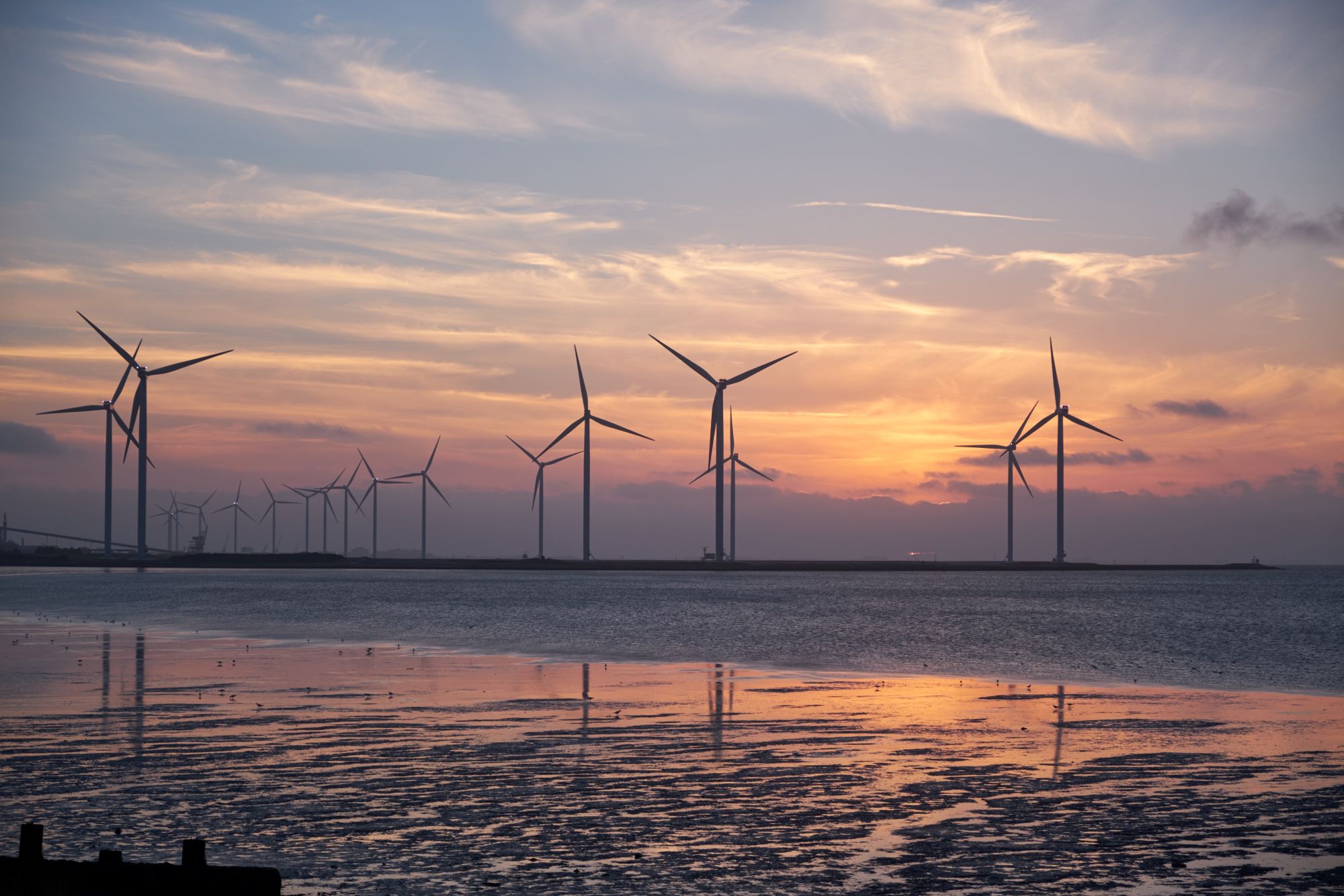
Renewable energy is any type of energy that comes from natural sources and replenishes itself. Believe it or not, people have already been using renewable energy resources for hundreds of years. Wind farms for generating electricity and transforming the wind into wind power. This renewable electricity is helping us decrease our green house gas emissions.
Once again, if you said solar energy or wind energy, then you’re correct! Before cheap and dirty alternatives were available like coal, gas, and oil, people would heat themselves with renewable sources like the sun. Now we use solar panels and wind turbines to harvest the power of Earth’s renewable energy sources.
Did you notice there are similarities and significant overlaps among the three types of energy? In fact, the terms are so similar that they’re often used interchangeably everyday even by environmentalists! But there exist small but important differences. These differences are related to their creation, their renewal, and their impact.
Renewable energy generates electricity from natural sources. These sources can be replaced completely within a generation. If you’re thinking fossil fuels and natural gas are natural sources, then you’d be correct. However, they take millions of years to replenish, so they’re not renewable energy sources.
Green energy is a subset of renewable energy. It must come from natural sources, but it can’t pollute the environment. Like green energy, clean energy doesn’t (or nearly doesn’t) pollute, but it doesn’t need to come from renewable energy sources.
As the name implies, renewable energy is renewable! It doesn’t run out and is naturally restored. As a subset of renewable energy, green energy is also renewable, in addition to not having a negative impact on the environment.
Clean energy, though, is separate. Like green energy it doesn’t pollute, but it doesn’t have to come from renewable energy sources. Some consider nuclear energy a clean form of energy that isn’t renewable energy. However, the waste water nuclear energy produces is potentially a pollutant to the surrounding environment, so saying that nuclear is clean energy is a questionable claim.
Lastly, some renewable energy sources can have an environmental impact. For example, the creation of a hydroelectric dam can have harmful or even devastating impacts on its immediate environment and local fauna, while providing renewable energy. Both clean energy and green have no (or negligible) environmental impacts.
Energy can fall under one, two, or even three of the categories at the same time. Take solar energy and wind energy for example. These two types of energy are clean (they do not release greenhouse gasses or polluting chemicals), green (they come from natural sources), and renewable (they replenish themselves).
This makes energy sources like wind and solar ideal because they renew themselves and produce electricity and power. They do this in a sustainable way that doesn’t contribute to climate change and is a better solution for generations to come.
Now you know the similarities and differences between clean, green, and renewable energy. They’re all important improvements upon burning fossil fuels for energy production. Some are better than others, but conversion to any of the three is a step in the right direction towards combatting and countering the effects of climate change. Remember, ideal combinations of the three exists, such as solar power or wind energies, but one or two out of the three isn’t bad either!
Probablemente estás familiarizado con los términos energía limpia, energía verde y energía renovable tras ver y leer las noticias. Probablemente incluso pienses que significan más o menos lo mismo. Lamento decirte que estás equivocado (está bien, la mayoría de tus vecinos y amigos también creen que son lo mismo). ¡Pero no te preocupes ni temas, porque estamos aquí para aclararte y enseñarte la diferencia!
Resulta que cada uno de los tres términos difieren entre sí y tienen su propio significado. Todos suenan como si fueran buenos para el medio ambiente, algunos son mejores que otros. Estas diferencias son de vital importancia para ayudar a salvar el medio ambiente y abordar los crecientes problemas asociados con el cambio climático. Así que sigue leyendo mientras exploramos cada tipo de energía alternativa a los combustibles fósiles.
La energía limpia es simplemente cualquier fuente de energía que no contamine ni libere gases de efecto invernadero como el dióxido de carbono, el metano o el monóxido de nitrógeno. Las fuentes de energía limpia son excelentes sustitutos a largo plazo de los combustibles fósiles porque estas no contaminan el medio ambiente que las rodea al mantener las emisiones de gases de efecto invernadero en niveles mínimos.
Si dijiste energía solar, energía eólica, o energía hidroeléctrica (siempre que no contamine), ¡entonces estás en lo correcto! ¿Alguna vez has oído hablar de la energía geotérmica? La energía geotérmica es la energía térmica tomada de la misma Tierra. El calor de la tierra se usa para hervir agua y crear vapor, este vapor se usa para generar electricidad. ¡Piensa en una central eléctrica de carbón que funciona con el calor natural de la Tierra! Incluso la energía nuclear es energía limpia si las aguas residuales se almacenan de forma segura.
Por el contrario, la energía producida por la biomasa no se considera una fuente de energía limpia. Esto se debe a que, a diferencia de la energía eólica, la energía de la biomasa produce muchos contaminantes atmosféricos y gases de efecto invernadero. Tampoco califica muy alto en cuanto a eficiencia energética.
La energía verde es cualquier tipo de energía que proviene de una fuente natural. Esto significa que la energía solar, la energía eólica y la energía hidráulica son ejemplos de energía verde. La Agencia de Protección Ambiental (EPA) describe a las fuentes de energía verde, como la energía eólica, como aquellas que brindan el mayor beneficio ambiental. Al igual que la energía renovable sobre la que leerás a continuación, la energía verde es una gran solución para lograr una mayor sostenibilidad en nuestra dependencia eléctrica.
La energía renovable es cualquier tipo de energía que proviene de fuentes naturales y que se repone a sí misma. Lo creas o no, las personas han estado utilizando recursos de energía renovable durante cientos de años. Campos eólicos para generar electricidad y transformar el viento en energía eólica. Esta electricidad renovable nos está ayudando a reducir nuestras emisiones de gases de efecto invernadero.
Una vez más, si dijiste energía solar o energía eólica, ¡entonces estás en lo correcto! Antes de que alternativas baratas y contaminantes como el carbón, el gas y el petróleo estuvieran disponibles, la gente se calentaba con fuentes renovables, como el sol. Ahora, usamos paneles solares y turbinas eólicas para aprovechar la energía de las fuentes de energía renovables de la Tierra.
Estoy segura de que notaste que existen similitudes y superposiciones importantes entre los tres tipos de energía. Eso es correcto, los hay! De hecho, los términos son tan similares que a menudo se usan de manera intercambiable todos los días, ¡incluso los ambientalistas lo hacen! Pero existen pequeñas pero importantes diferencias entre los tres. Estas diferencias están relacionadas con su creación, su renovación y su impacto.
Las energías renovables generan electricidad a partir de fuentes naturales y estas fuentes pueden reemplazarse por completo dentro de un período de tiempo de una generación. Si estás pensando que los combustibles fósiles y el gas natural son fuentes naturales, estás en lo correcto; sin embargo, tardan millones de años en reponerse, por lo que no son fuentes de energía renovable.
La energía verde es un subconjunto de la energía renovable, ya que proviene de fuentes naturales y, al mismo tiempo, no contamina ni deja una huella negativa en el medio ambiente. Al igual que la energía verde, la energía limpia no contamina (o casi no), aunque no es necesario que provenga de fuentes de energía renovables.
Como su nombre lo indica, ¡la energía renovable es renovable! No se agota y se restaura naturalmente. Como subconjunto de las energías renovables, la energía verde también es renovable, además de no tener un impacto negativo en el medio ambiente.
Una vez más, la energía limpia tiene una diferencia. Al igual que la energía verde, no contamina, pero no necesariamente tiene que provenir de fuentes de energía renovables. Si las aguas residuales se almacenan de forma segura, la energía nuclear es una forma de energía limpia que no se considera energía renovable.
Por último, algunas fuentes de energía renovable pueden tener un impacto ambiental. Por ejemplo, la creación de una represa hidroeléctrica puede tener impactos dañinos o incluso devastadores en su entorno y en la fauna local, al mismo tiempo proporcionando energía renovable. Tanto la energía limpia como la verde tienen impactos ambientales nulos (o insignificantes).
La energía puede caer en una, dos o incluso tres de las categorías al mismo tiempo. Tomemos como ejemplo la energía solar y la energía eólica. Estos dos tipos de energía son limpias (no liberan gases de efecto invernadero ni químicos contaminantes), verdes (provienen de fuentes naturales) y renovables (se reponen).
Esto hace que las fuentes de energía como la eólica y la solar sean ideales porque se renuevan y producen electricidad y energía, de una manera sostenible que no contribuye al cambio climático que afecta a las generaciones futuras.
¡Y ahí lo tienes! Ahora conoces las similitudes y diferencias entre la energía limpia, verde y renovable. Todas son mejoras importantes frente a la quema de combustibles fósiles para la producción de energía. Algunas son mejores que otras, pero la conversión a cualquiera de los tres es un paso en la dirección correcta para combatir y contrarrestar los efectos del cambio climático. Recuerda, existen combinaciones perfectas de las tres categorías, como la energía solar o la energía eólica, ¡pero una o dos de las tres tampoco está mal!


 Donate
 April 5, 2026