


Guest post by Zeeshan Khan and Michelle Thompson
Mother Earth has provided food, water, and protection for humans for more than 6 million years. Yet since the industrial revolution, consumption of natural resources has only increased. We now face a grim future: protect nature or suffer the consequences without it. Does nature have rights? Read on to find out more.
What are the Rights of Nature?
The “Rights of Nature” doctrine states that ecosystems can legally be considered people, which would allow them to defend themselves in courts. Under law, this would give ecosystems “legal personhood” – the right to survive, thrive, and to be represented in court by a guardian.
Recognizing the legal rights of nature is not a new idea. Many different Indigenous populations have recognized the rights of nature for centuries. Indigenous communities’ deep relationships with nature helped build social systems that didn’t center humans. They were able to protect their natural resources for centuries by prioritizing them within legal systems. To grow the rights of nature movement, environmentalists should listen to Indigenous leaders and laws.

Under the Rights of Nature movement, ecosystems could be legally protected from environmental degradation such as development, pollution, or extractive practices. The goal is to make sure that corporations and economic interests don’t overshadow the value of nature. For example, Ecuador had the rights of nature included in its constitutional provisions. In 2011, the Principal Government of Loja found that constructing a road near a protected river violated the river’s rights. This was the first successful legal rights of nature case in western law.
Is nature a human right?
Humans depend heavily on healthy and sustainable environments. People have basic needs like clean water, food, and sanitation. Recently the connection between human rights and environmental protection has increased drastically. This connection has advanced the development of laws that attempt to support the environment. These laws look at the relationship between human activity and ecological destruction.
We see action taking place worldwide to protect nature and our basic human rights. Local governments, nonprofits, and Indigenous communities are stepping up and creating fundamental nature laws. These laws protect our basic human right to a clean and healthy environment.
Indigenous tribes have led the fight for the legal protection of vital ecosystems. When finding and designing long-term solutions within ecosystems, Indigenous people are essential. Indigenous traditions are some of the oldest known ways of tending to ecosystems. Indigenous leaders have been critical in protecting nature. They also participate in protecting wildlife and fighting fossil fuel companies.
In September 2007, the United Nations certified the declaration of Rights of Indigenous Peoples. This was the first giant leap for Indigenous Peoples at the UN. This gave a new meaning to access and protection that Indigenous communities would have the ability to seek within legal justice.
This framework made a minimum standard of living for Indigenous communities worldwide. The declaration focuses on human rights standards, like education, food security, health care, and the collective rights of any Indigenous peoples.
In the fight against climate change, nature’s rights have become even more popular. Climate change affects the basic rights of life like clean water and food. Climate change has helped push the legal theory of nature’s rights.
For example, the High Ambition Coalition for Nature and People has committed to protecting 30% of nature’s land and sea by 2030. The Paris Climate Agreement, which 196 countries worldwide have adopted, has created a deadline for countries to set long-term strategies to reduce and cut greenhouse gas emissions by 1.5 degrees Celsius. These all set out to reduce our carbon and ecological footprint worldwide.
Many youth have come forward to fight for the rights of nature, environmental law, and nature laws. One outspoken advocate for climate change and the rights of nature is Greta Thunberg. She’s inspired many young people to speak up about their human right to live in a healthy environment.
In the Western United States, Connor Berryhill is one of these young climate leaders. Berryhill has organized his own environmental movement to clean and restore environments in his hometown. The movement encourages youth to participate in representative democracy. Through voting, the rights of the next generation will then be heard.
Another young activist fighting for environmental justice is Autumn Peltier. Peltier advocates for water rights for Indigenous populations in Canada. She describes water as “one of the most sacred elements” and “something we honor”. While she doesn’t explicitly call for the rights of nature, her message is very much in line with the movement. She fights to protect waterways and believes that bodies of water have value beyond how we can use them.
Climate litigation is one of the most common practices of climate law. Climate litigation can come through forums like local, private, and human rights laws. Climate change litigation is currently reshaping legal systems worldwide and is creating new human and nature rights laws.
Current climate litigation is driving a delaying effect on anti-environmental actions. Over the past ten years, there’s been a spike in lawsuits related to the environment. These suits look at climate change impacts on biodiversity and how climate change continues to affect the legal standing of biodiversity. Some past and future failed bills within the legal system might now have a chance to move through.
Every day people are fighting for the fundamental legal rights of nature. The coalition I Heart Pisgah is currently one example of the local community protecting nature by saving and creating a healthy environment for the next generation.
Another big player in creating nature law is the Earth Law Center (ELC). ELC believes that nature should have the right to environmental protection, just as humans do. ELC, a nonprofit, is fighting for the recognition of the rights of nature through municipal and local laws.
The Global Alliance for the Rights of Nature (GARN) is a network of scientists, Indigenous leaders, and everyday people. People of all ages are changing human relationships with our mother earth. GARN believes that humans must reorient their relationship with natural environments. One way is by making sure rights of nature are established for the longevity of nature’s ecosystems.
Human beings have never been in a more dangerous environmental crisis than now. It’s up to every one of us to fight for the rights of nature. This is our best bet to create laws that ensure the exploitation of nature does not happen. Until the rights of nature exist in western law, we must work together to save our natural communities and guarantee a better future for the next generation.
Are you ready to take action? Act now to tell President Biden to make our forests a priority.
A mountain climbing enthusiast, Zee is a Communication Studies Senior at Appalachian State University and Dogwood’s Spring 2022 intern. He is passionate about creating understanding and awareness about climate justice. On his weekends, he enjoys trail running, cooking, and caring for his fifteen house plants.
 Michelle ThompsonMichelle is Dogwood’s 2022 Forests & Climate Stanback Research Fellow. She has been interested in nature and conservation since growing up in upstate South Carolina. She is a masters student at Duke studying ecosystem science and conservation. Michelle is honored to continue her work in environmentalism at Dogwood over the summer and is excited by the opportunity to work with her community. In her free time, Michelle enjoys crafting, reading, and hanging out with her two cats.
Guest Post By Michelle Thompson
Many companies and government bodies over time have said something like: “As part of our climate change initiative, we’ll be planting X number of trees!” Forests are an incredibly efficient way to capture carbon from the atmosphere. But how well do these tree planting initiatives actually work?
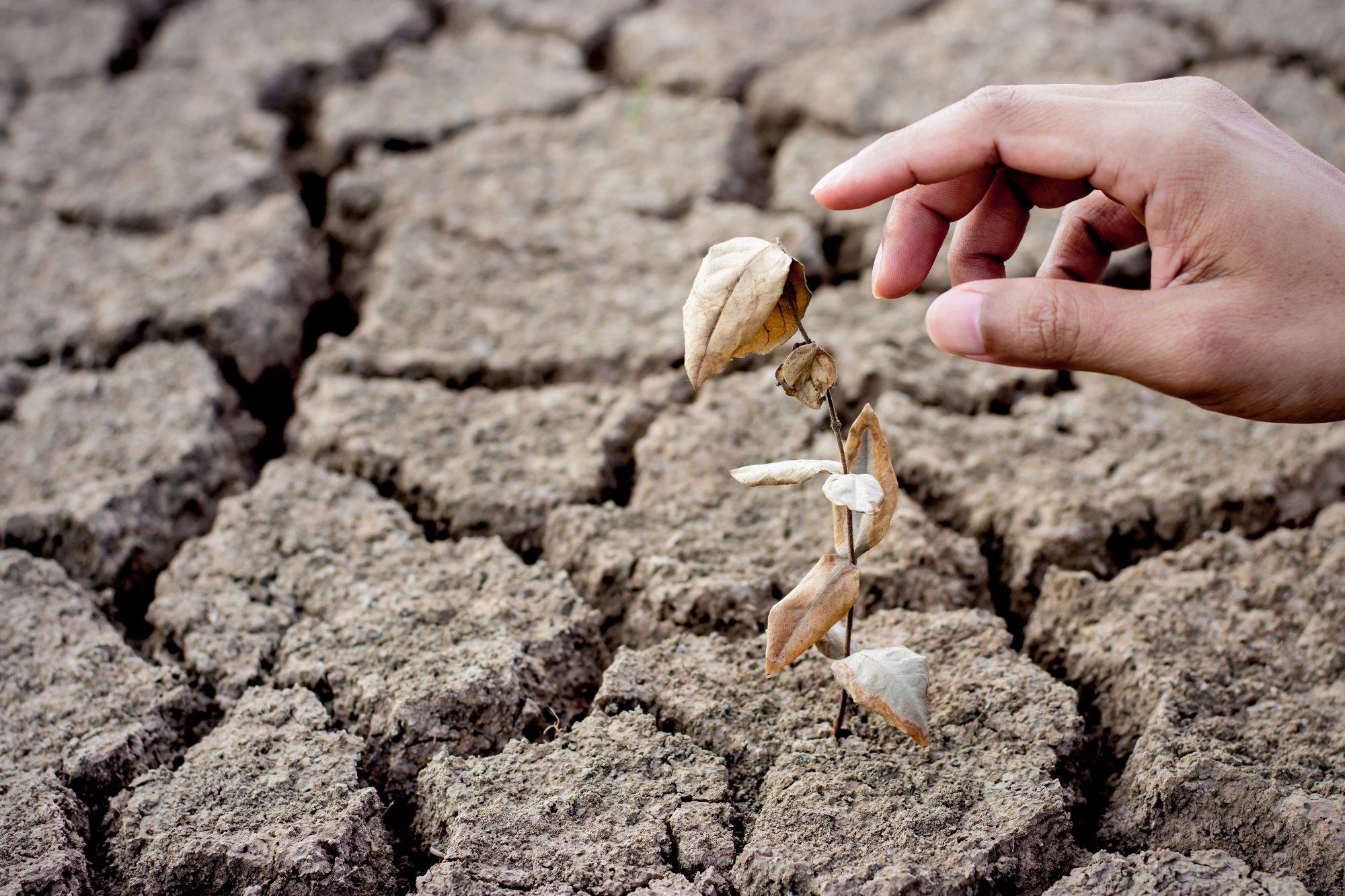
Tree planting campaigns are often included in climate change goals. For climate change goals, planting trees requires the lowest investment expenses and preserves the greatest profits. Other ways to reduce greenhouse gas emissions include:
Money heavily influences American politics. This means that rich corporations can keep legislation from passing.
Planting trees is easy, vague, and it sounds good. It allows organizations to claim to care about the climate. But they don’t need to make significant changes to their business models. Planting trees is nonpartisan and unobjectionable because it isn’t significant. Tree planting is like a one-time payment to get the media and public off your back about your emissions.
There are several reasons why tree planting should not be a pillar of sustainability:
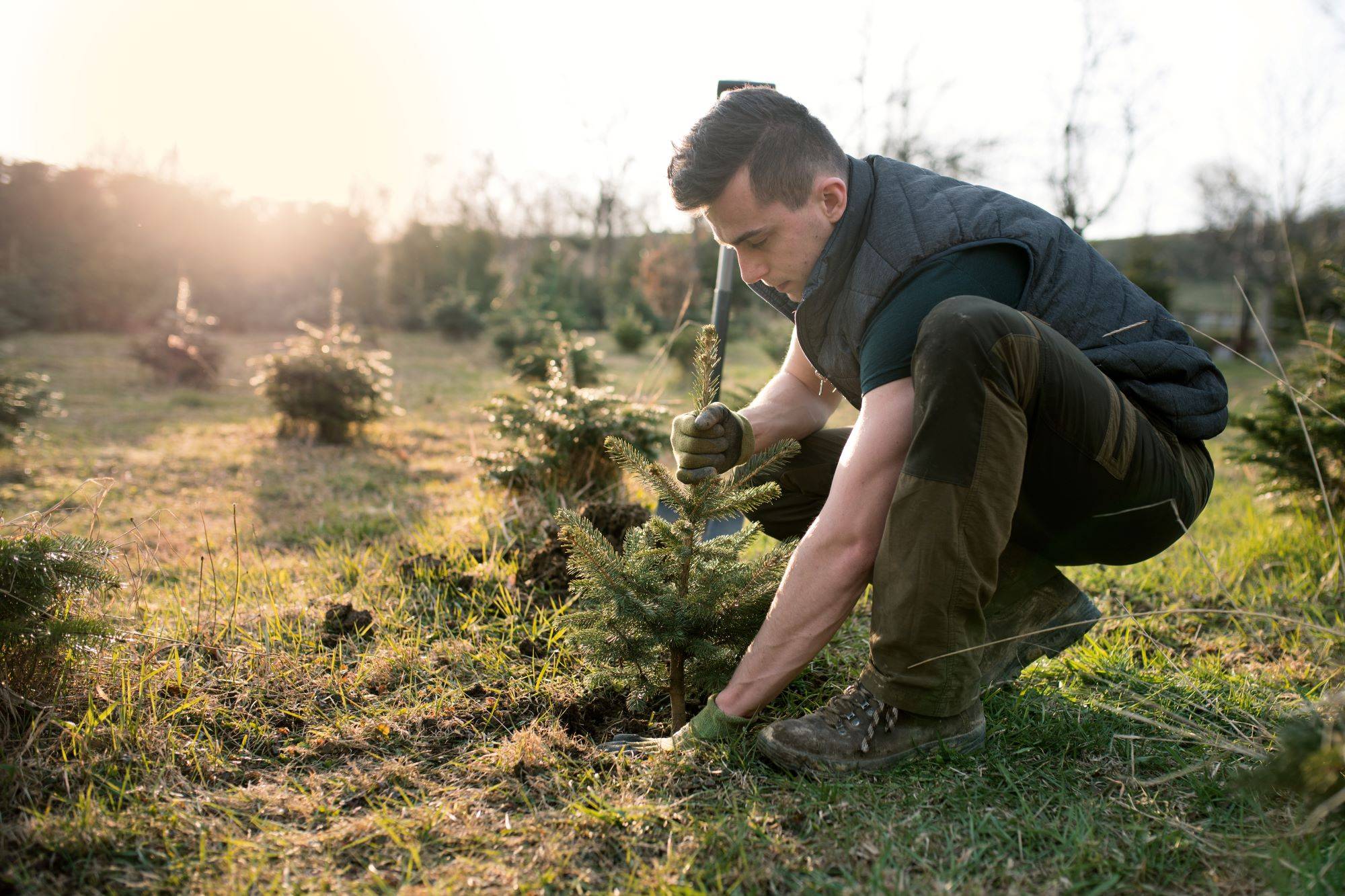
Planting trees isn’t inherently greenwashing. The claims that groups planting trees make, however, often are greenwashing. Corporations and governments use tree planting initiatives as climate intervention. But they aren’t transparent about the results. Groups will say: “We’re planting 30,000 trees”, but they don’t tell the public the survival rate of the saplings. If half saplings are expected to survive, only 15,000 trees will have been added to the environment. And research shows that even THAT many surviving is unrealistic.
These groups also don’t usually explain what kinds of trees they’re planting and where. To save money, groups often choose cheap and available trees. These trees might not be the best suited to the environment. This decreases investment but also decreases survival, so even fewer trees survive to adulthood. Saplings that die release CO2 and further contribute to climate change.
When the saplings die, it creates a discrepancy. On paper, the organization planted 30,000 trees, but when you go look in person, there isn’t a forest. These are known as phantom forests – forests on paper but not in reality. Phantom forests are another case of greenwashing. Governments and corporations claim the forests are helping the environment when they aren’t even real.
Even when the trees survive, they aren’t as beneficial to the environment as people may think. Saplings are planted by themselves on degraded land as a plantation. These plantations do absorb some CO2, but they aren’t as good as healthy, native forests.
Planting trees does not make a forest. Forests are made up of complicated interactions between plants, animals, and environmental factors. Healthy, native forests benefit humans and the environment in many ways. Forests can:
Forests are home to 70% of terrestrial biodiversity. They support 1.6 billion people around the world.
Tree plantations don’t provide wildlife habitat and often aren’t useful for recreation. Plantations are also less effective at cleaning air and water than diverse forests. They’re less resilient to disease or pests. Tree plantations also require human support to survive and cannot support populations of people.
Tree plantations aren’t creating good habitats or viable forests. But the argument for plantations is that they act as a carbon sink. Living trees take in CO2 from the atmosphere. They then release oxygen and use the carbon to build their trunks and leaves.
Because trees USE carbon dioxide, they remove it from the atmosphere. This means that trees can reduce the amount of greenhouse gases in the atmosphere. This will slow climate change.
Trees only store carbon dioxide when they’re alive, though. The majority of saplings planted in plantations die. This means that the carbon dioxide they were storing is released back into the atmosphere.
Additionally, these tree planters buy the saplings from nurseries. Nurseries use resources like water and energy to grow these plants. Spending resources on saplings that are left to die is wasteful. Ultimately, it just increases global emissions.
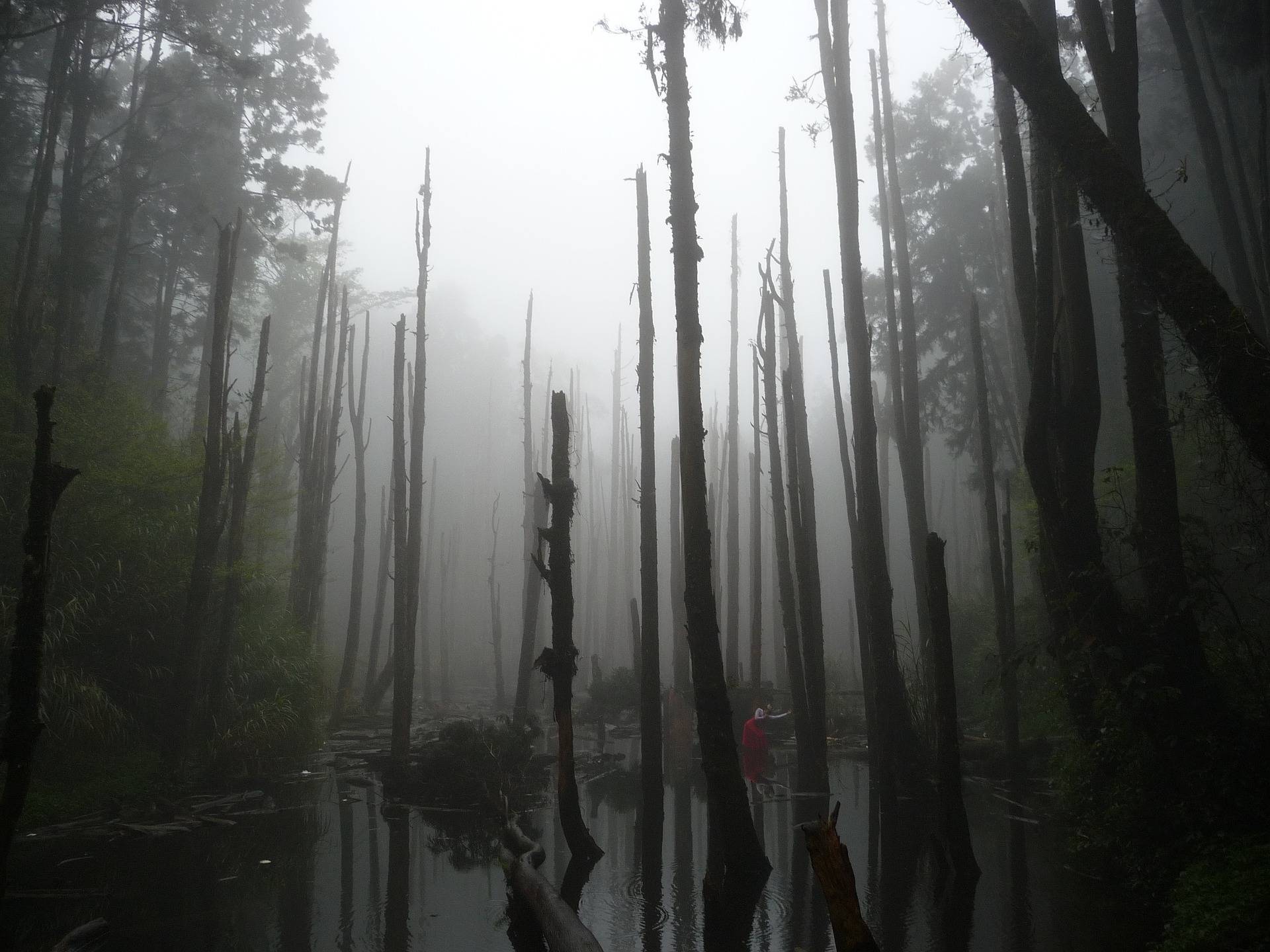
There is evidence that trees planted in other countries as part of these projects have been cut down. The BBC found evidence that eucalyptus plantations in Mozambique were being harvested. Clearcutting trees releases a lot of emissions and is harmful to the environment. This is another example of the lack of transparency in these initiatives.
But the larger problem is that these tree plantations are a mirage. From a distance, they look beneficial to the environment, but it’s not real. The forests aren’t real and neither are the promised environmental benefits. Promoting plantation projects prevents us from pursuing meaningful and lasting change. Instead of band-aid solutions for climate change, we need to attack the root of the problem.
Organizations should instead invest in true restoration, reforestation, and proforestation (protection of existing forests). In other words, groups and governments should invest in methods that actually work.
Groups should give money to knowledgeable organizations that do science-backed restoration work. This would reach goals of increasing forest cover while investing in natural climate solutions.
Groups and governments could also fund sustainable community forest projects like agroforestry.
We need transparency in environmental projects. When governments or corporations launch these projects, they get a lot of good press. But we rarely get follow-ups or specific details on the projects.
Organizations should be explicit about:
To ensure these projects are doing what they claim, all this information should be released and accessible. And if it’s not, governments and organizations should take their money elsewhere.
Finally, we should prioritize large-scale change. We need to embrace more sustainable practices. We need to embrace truly renewable energy. Then we’ll have a much greater impact on the climate. These are more difficult changes, but they’ll target the cause of the problem.
Dogwood Alliance is working to protect diverse and threatened forests across the South. Join our fight to save Southern forests and urge President Biden to pass real and lasting forest protection!
Michelle Thompson is a 2022 Forests & Climate Research Stanback Fellow through Duke University. Michelle has been interested in nature and conservation since growing up in upstate South Carolina. She is a masters student at Duke studying ecosystem science and conservation. Michelle is honored to continue her work in environmentalism at Dogwood over the summer and is excited by the opportunity to work with her community. In her free time, Michelle enjoys crafting, reading, and hanging out with her 2 cats.
Have you ever watched a big bird passing overhead or perched on a post and wondered what kind of bird is that? We have, too. This guide will help you identify six different types of popular big birds. Next time you’re outdoors, you’ll be able to identify them with confidence.

Black vultures are abundant in the Southern states from South Carolina to Texas. In recent decades they’ve expanded their range northward along the East Coast to South America.

Turkey vultures are one of the most widespread vultures in the country. They’re year-round residents in the US South.

Turkeys are an iconic bird species from the United States. Their appearance will depend on whether they’re male or female, but there are still some common characteristics. Although turkeys will roost at night, you won’t generally see them in flight.
The wild turkey can be found all year around in the Eastern states, including the Southern states. They live in forests that have oak or beech trees.
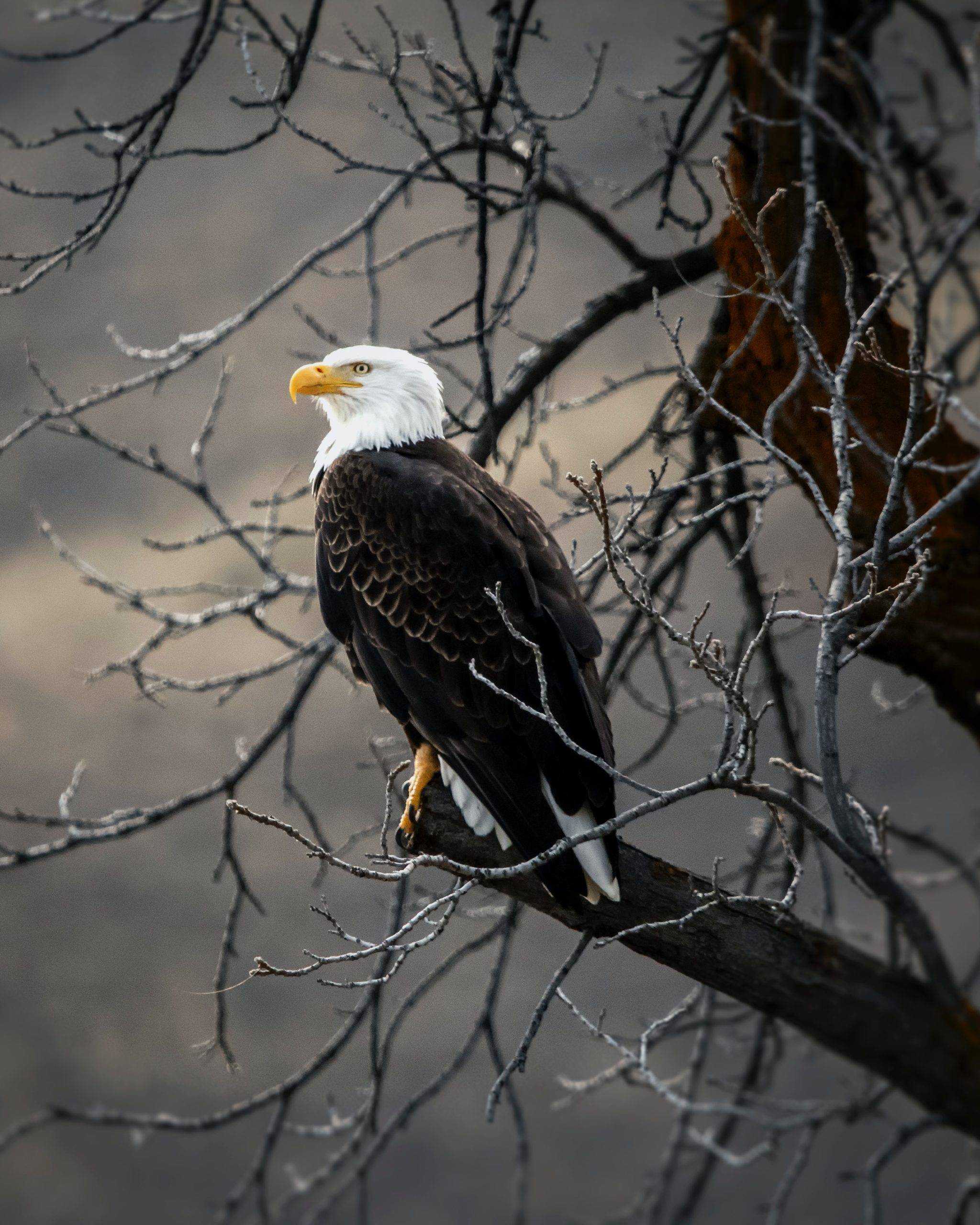
Almost everyone probably recognizes these birds easily because they’ve been a national emblem of the United States since 1782.
Bald eagles can be found in 49 states. In the US South you can find them all year-round, especially near bodies of water like wetlands or seacoasts. North Carolina has the rails-to-trails Eagle Spur trail, very popular place to spot bald eagles during the summer.

During specific times of the year, ospreys can be found all over the United States. However, you can find them year-round in the South. They’re always near bodies of water like rivers or ponds.

The red tailed hawk can be found in almost every state in the United States all year around. They inhabit many different environments, but they prefer to nest along the edges of woodlands.
We can do our part to help preserve these amazing big birds. First, help to preserve their habitats. Don’t throw food or trash on the ground or out of your car window. If you happen to find an injured big bird or a baby raptor bird, please call a wildlife rehabilitation center before doing anything. In North Carolina you can contact Wildlife Welfare, or if you’re in Georgia contact someone on this list.
Share your favorite big bird photos or videos and tag us on Instagram, Facebook, or Twitter!
Want to do more?
Become a Forest Defender today! Your monthly gift will protect the big birds and the biodiversity of the South.
Join our email list to get new Biodiversity in Your Backyard sent directly to your inbox!
¿Alguna vez has visto un pájaro grande pasar por encima de tu cabeza o parado en un poste y te preguntaste qué tipo de pájaro es ese? Nosotros también. Entonces, decidimos preparar esta guía que te ayudará a identificar seis tipos diferentes de aves grandes populares. Asi la próxima vez que estés al aire libre podrás identificarlos con confianza.
Los buitres negros abundan en los estados del sur, desde Carolina del Sur hasta Texas. En las últimas décadas han expandido su área de distribución hacia el norte a lo largo de la costa este hasta Sudamérica.
Los gallinazos de cabeza roja son uno de los buitres más extendidos en el país. Residen durante todo el año en el sur de los Estados Unidos.
Los pavos son una especie de ave icónica de los Estados Unidos. Su apariencia dependerá de si son hembras o machos, pero tienen algunas características en común. Aunque los pavos se posan en los árboles por la noche, generalmente no los verás en vuelo.
El pavo salvaje se puede encontrar durante todo el año en los estados del este, incluidos los del sur. Viven en bosques que tienen robles o árboles de haya.
Estas aves probablemente puedan ser reconocidas fácilmente por casi todos, ya que han sido un emblema nacional de los Estados Unidos desde 1782.
El águila calva se puede encontrar en 49 estados. En el sur de los Estados Unidos puedes encontrarlos durante todo el año, especialmente cerca de cuerpos de agua como humedales o costas marinas. Carolina del Norte tiene el sendero Eagle Spur, un esfuerzo de rail-to-trail muy popular para observar águilas calvas durante el verano.
El águila pescadora se puede encontrar en todo Estados Unidos, durante épocas específicas del año; sin embargo, puedes encontrarlos durante todo el año en el sur. Siempre están cerca de cuerpos de agua como ríos o estanques.
El gavilán de cola roja se puede encontrar en casi todos los estados de los Estados Unidos durante todo el año. Habitan en muchos entornos distintos, pero prefieren anidar a lo largo de los bordes de los bosques.
Podemos hacer nuestra parte para ayudar a preservar estos asombrosos pájaros grandes. Primero, ayude a preservar sus hábitats. No arrojes comida ni basura cuando estés al aire libre o por la ventanilla de tu carro. Si encuentras un ave rapaz herida o una cría, llama a un centro de rehabilitación de vida silvestre antes de hacer algo. En Carolina del Norte, puedes comunicarte con Wildlife Welfare, o si estás en Georgia, comunícate con alguien de esta lista.
Guest Post by Amal Dadi
Did you know that North Carolina is one of the most ecologically unique states in the country? Discover the forests right here in your backyard!
From mountains to sea, North Carolina contains at least eight defined climate zones. This diversity of habitats means that natural spaces in North Carolina are full of surprises. Did you know that most of the land in North Carolina used to be forested?
So what does it mean to be a forest anyways?
Forests are complex, land-based ecosystems that trees dominate. We can find woods in upland areas (which are hilly) or at higher elevations. Or we can find forests in wetland areas, which are low-lying and water soaks through the soil. This can sometimes permanently flood the area.
Most forests have several layers. These include the:
Forests also exist below the ground with extensive tree root systems that go deep into the soil. Roots filter pollutants, reduce erosion, and feed the tree.
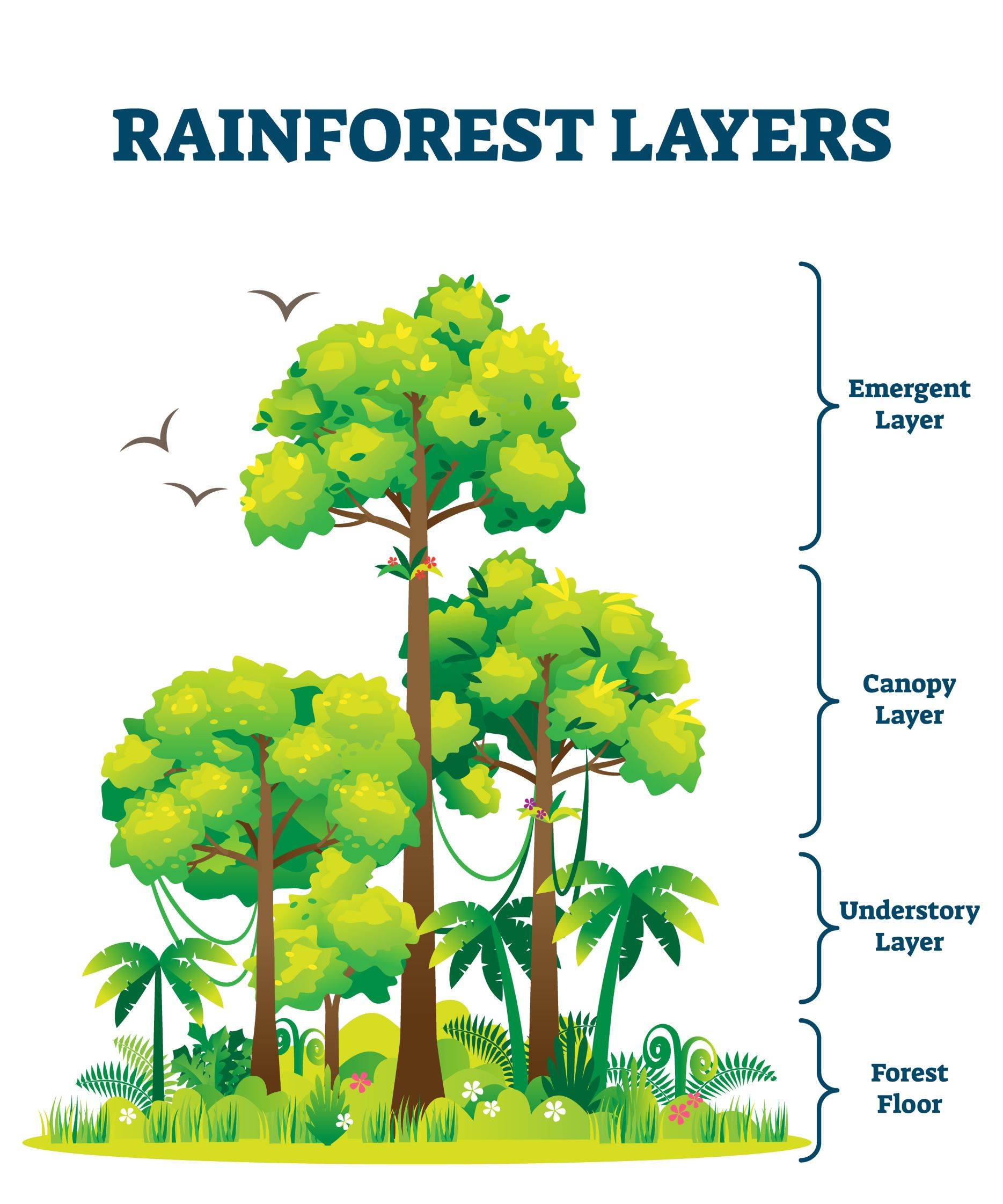
Forests benefit life on Earth in many ways. Whether above or below ground, each section of a forest is home to different kinds of plant and animal life. This makes forests exceptional habitats for promoting biodiversity.
Like all plants, trees make their own food using photosynthesis. Water from the soil, energy from the sun, and carbon dioxide from the air are transformed into oxygen and sugars, which feed the plant and help it grow. This process means that trees are carbon sinks: they take in more carbon from the atmosphere than they release.
The North Carolina Forest Service is responsible for protecting, managing, and promoting forest resources across the state. Part of their job is producing an annual report that lays out the status of forests in the state. It’s important to remember that “forest lands” include natural forests, heavily managed (logged) forests, and plantations that often only grow rows upon rows of one type of tree.
In 2021, the NC Forest Service found that forests cover an estimated 18.7 million acres in North Carolina found that forest lands in North Carolina have many different owners, including:
Forests on public land are special because they’re collectively owned by US citizens. This means that everyone can enjoy the recreational, tourism, health, and other benefits of public forests.
Governments manage public forests at the local, state, or federal levels. United States Forest Service federally manages some of the largest forests in North Carolina. These National Forests include:
There are also plenty of state and local forests to explore!
Though all forests share similar characteristics, not all forests are the same. So exactly how many different types of forests are found in North Carolina? Let’s examine a few.
The pine tree has been the official state tree of North Carolina since 1963, and for good reason. Eight different species of pine are native to habitats within the state’s borders:
Of these, longleaf pines are some of the most abundant. In fact, longleaf pine forests were once the most common ecosystem in Eastern North America.
Like other forests with conifers, longleaf pine stands are fire-dependent. Because these habitats often burn by wildfire, the plants and animals within them have special adaptations to help them withstand the heat. Fire benefits longleaf pine forests by:
Before European colonization, longleaf pine forests covered over 90 million acres in the South. That’s an area over twice the size of the state of Georgia!
Now only 3% of that ecosystem remains. Many factors destroyed much of the state’s pine forests, including:
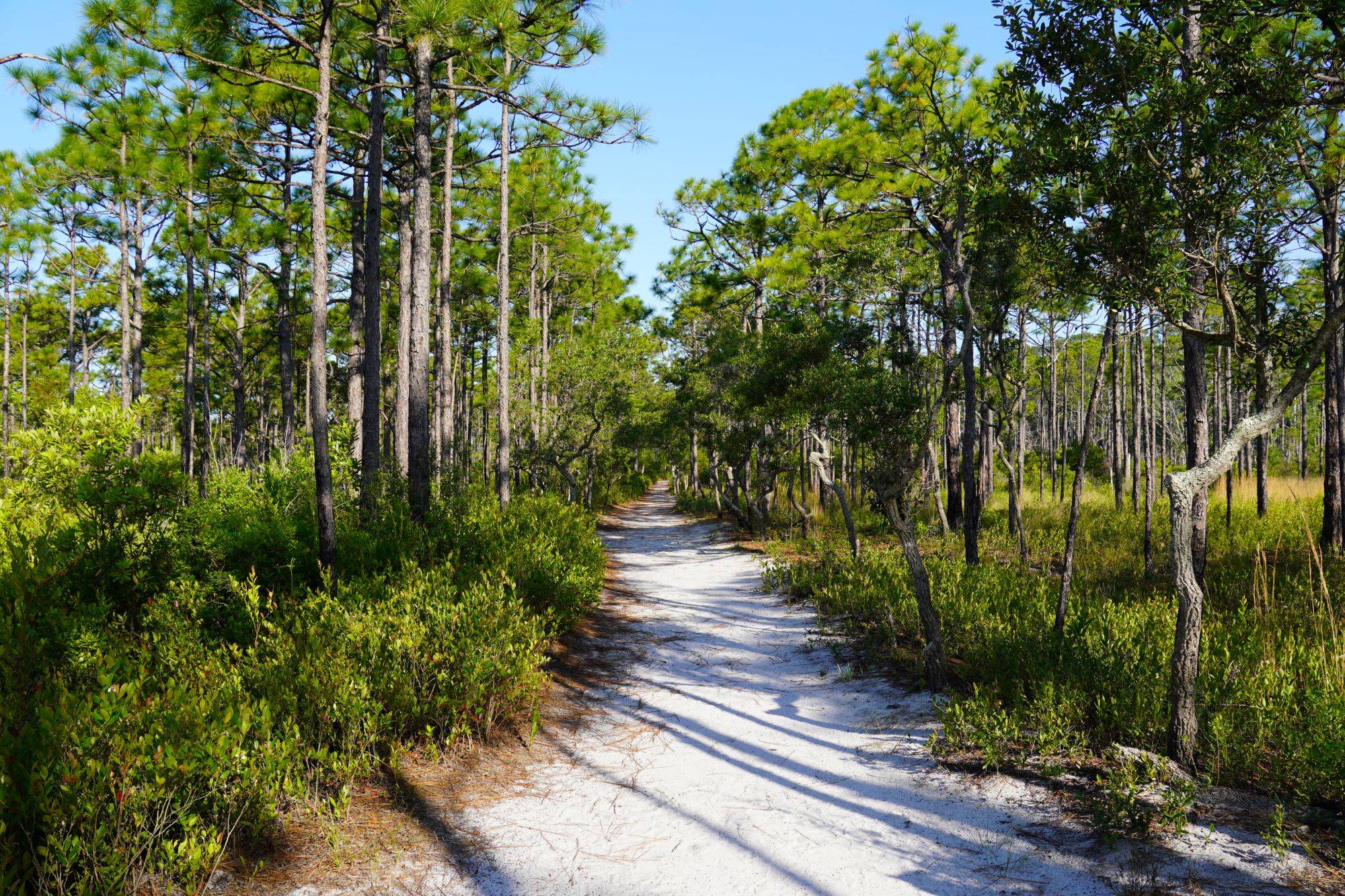
The 116-acre Nichols Longleaf Pine Preserve. It contains the largest remaining stand of old-growth longleaf pine in central North Carolina. Located north of Troy, NC, both the North Carolina Zoo and the Three Rivers Land Trust manage this property. It’s home to some trees that are over 200 years old!
Weymouth Woods-Sandhills Nature Preserve showcases a small, unique inland region in North Carolina: the sandhills. This area is characterized by rolling hills capped with sandy soil. Hardy pine trees tend to thrive here, making Weymouth Woods another fantastic place to see longleaf pine forests.
Did you know that the mountaintops of Western North Carolina are carpeted in temperate rainforests? Towering spruce-fir forests at high elevations receive over 60 inches of rainfall each year. That’s enough precipitation that these regions are actually considered rainforests!
But unlike rainforests in the tropics, Appalachian rainforest temperatures remain cool and mild year-round.
North Carolina rainforests are relics of the last Ice Age. Back then, only parts of the mountains remained uncovered by ice or snow. These oases became critical habitat for animals seeking refuge from colder areas.
Even today, Appalachian rainforests remain a hub of biodiversity. They provide a home for over 10,000 native plant and animal species.
Spruce-fir rainforests thrive at high elevations. We can find them at or near the summits of some of the tallest peaks in North Carolina.
Nantahala and Pisgah National Forests are nestled in the mountains of Western North Carolina. Both contain many examples of temperate rainforest habitat.
Since mountain rainforest habitats are so remote and fragmented, sometimes these microhabitats are home to unique animals. Many species of animal can only be found on a single mountaintop or in a special grove of Appalachian rainforest. For example, the endangered Weller’s salamander is typically only found on Grandfather Mountain near Pisgah National Forest.
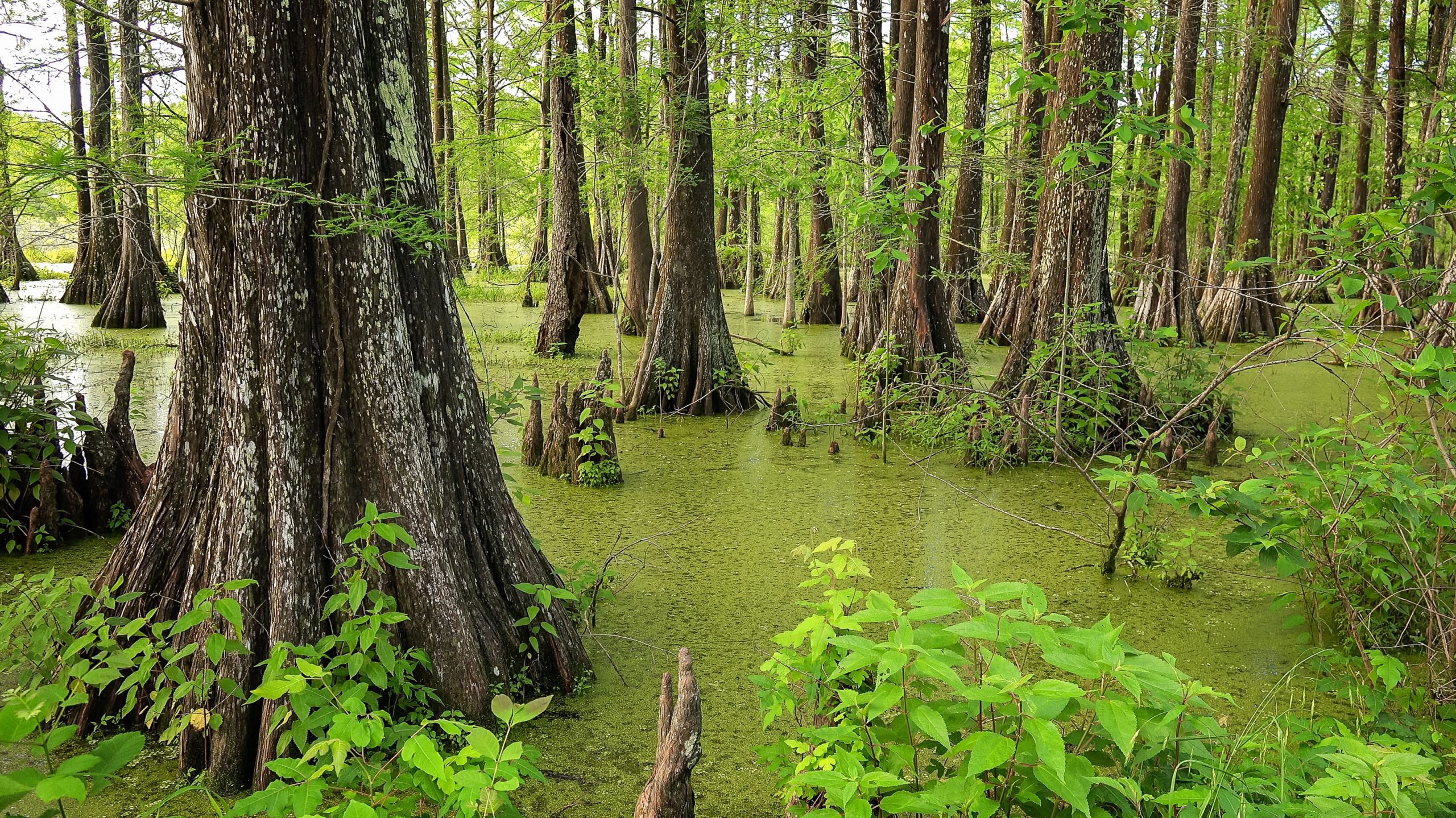
A swamp is any wetland that trees and other woody plants dominate. Since wetlands are saturated with water, wetland plants thrive in damp or flooded environments. These plant communities help clean water by filtering out pollutants and other contaminants.
Several different types of wetland forests exist in North Carolina. Bottomland swamps are found along freshwater rivers. They contain hardwood tree species like cedars, oaks, ashes, birches, and the American beech. Wetland forests can also occur near freshwater lakes or in saltwater habitats by the coast.
Alligator River Wildlife Refuge in Eastern North Carolina. It sprawls across 154,000 acres of coastal wetlands, including swamps and forests.
Croatan National Forest also has 160,000 acres of coastal and wetland forest. It is one of the best places to see native species of carnivorous plants like sundews, pitcher plants, or Venus flytraps.
Some of the oldest bald cypress trees in the world can be found along the waters of the Black River Preserve in Southeastern North Carolina. The oldest known bald cypress is an individual that is confirmed to be over 2,600 years old. That’s hundreds of years older than the Roman Colosseum!
Maritime forests line many of the barrier islands, where sandy Carolina beaches meet the Atlantic Ocean. Shrubs and stunted trees characterize these coastal forests. Only the hardiest plants can withstand the salty spray and strong winds along the shore.
Wax myrtle, red cedar, and stunted live oaks are common in areas that are directly exposed to the elements. These trees shield plants and animals that are more sensitive to the high winds and salty air.
In the undergrowth, you may find American holly trees, loblolly pines, red maples, or larger live oaks. Maritime forests protect coastal regions from storm surges by trapping and slowing excess water, purifying the groundwater, and preventing nearby habitats from flooding.
The North Carolina Coastal Reserve and National Estuarine Research Reserve system protects land that includes three large maritime forests:
Though best known for its massive sand dunes, Jockey’s Ridge State Park also contains extensive maritime shrub and evergreen forests.
These are only a few of the different types of forests found in North Carolina. Though Southern forests are astonishingly diverse, they all share one key trait: forests are extremely vulnerable to industrial exploitation.
Appalachian rainforests are disappearing with climate change. Along the coast, so-called ghost forests are becoming more common: stands of dead trees that haunt the shore killed by rising sea levels. Old growth and hardwood forests are prime targets for industrial loggers. The woody biomass industry cuts down any kind of trees to burn for fuel.
When forests are destroyed, often monocultures replace them. Monocultures: rows and rows of the same type of tree, usually loblolly or slash pine. These artificial forests are not part of a balanced ecosystem.
Pine plantations do not preserve soil integrity or provide the same habitat for native species. There is even evidence that pine plantations may worsen air pollution and climate change.
Natural forests are an important resource. They provide critical habitat for native species and serve as buffers against pollution, disease, and climate change.
Dogwood Alliance believes that forests are worth protecting. Tell President Biden to enact forest protections today!
We’re so pleased to be launching Season 3 of Woods & Wilds: The Podcast. In this episode with are joined by youth organizer Demon Thomas.

Demon Thomas is the former president of UNC Asheville’s Student Government Association and the student representative on the Board of Trustees. He was born and raised in Charlotte, North Carolina, and received his degree in mass communication, sociology, and Africana studies. Demon is a fashion model and plans to further his education to become a film producer. Demon strives to become a TV entertainer who uses his platform to promote social justice. As a public figure, he aims to be a voice for the unheard and to ignite black pride amongst the youth. In addition to having served as class president at West Charlotte High, he also founded the organization UNCA Umoja (brother of unity), which is a club for men of color. He currently volunteers at Youth Transformed for Life (YTL). And he interned with the S.T.E.M. Fun-Packs initiative during the summer of 2021. To create tool kits for Black and Brown children in Asheville.
Join Dogwood Alliance and SlayTheMic as we bring you tales of connection to nature and music.
Want to listen to more?
Read the full transcript of our interview with Demon Thomas!
Elizabeth: Hello everyone. It is me, Elizabeth Lashay with Slay the Mic. And I’m so excited to be joined by my amazing co-host.
Kimala: I’m Kimala Luna from Dogwood Alliance. And we are here today with Demon Thomas. Demon Thomas is the former president of UNC Asheville’s student government association and the student representative on the board of trustees. He was born and raised in Charlotte, North Carolina, and he receives his degree in mass communication, sociology, and Africana studies. Demon is a fashion model and plans to further his education to become a film producer. Demon strives to become a TV entertainer who uses his platform to promote social justice. As a public figure, he aims to be a voice for the unheard and to ignite Black pride amongst the youth. In addition to having served as class president at West Charlotte High, he also founded the organization UNCA Umoja, Brother of Unity, which is a club for men of color. He currently volunteers at Youth Transformed for Life, YTL. And he interned with the stem fund packs initiative during the summer of 2021 to create toolkits for black and brown children in Asheville. Welcome, Demon.
Demon: Hello.
Kimala: Hi. So let’s just launch right in. Demon, when did you first notice a relationship with nature?
Demon: It would have to be; I would say, in maybe kindergarten, just wanting to go outside on the playground and interested in rocks and sticks and dirt and wood chips. I think that’s when my relationship with nature happened.
Elizabeth: I love that. And I think going off of that question of when you found your love for nature when did you feel this empowerment in the world of activism?
Demon: To answer the question, I believe it was in middle school. I come from a predominantly Black community. We had teachers that taught for Teach for America. One of my teachers wasn’t a Teach for America teacher, but she was just involved. I had the opportunity to go to a student city hall council meeting to advocate for education and teacher pay. And I was like, what, sixth grade trying to advocate for teacher’s salary. So I think that’s when my advocacy started.
Kimala: That’s amazing. And your bio is incredible. I love the initiative and leadership you’re taking on Black pride and Black joy. Do you think that originated from your community or your family? Or where does that drive come from?
Demon: It’s all in one. It grows as I get older. So it comes from my mom and my siblings telling me to keep reading, and keep drawing. It comes from my community teaching me about Black leaders and just showing their letters. So what I mean by letters is that many of my teachers were in the Divine Nine, a Black Greek life. And just them empowering me with education and seeing how well and involved they’re in the community. It enhanced my ability to uplift Black pride. And then, just being in college, taking African courses, and experiencing a culture shock. It just, my mind grows. My advocacy just grows. And then, just working with Black students at the YTL. It just, I don’t know, every experience I have; it just keeps growing my mind.
Elizabeth: I think that’s really powerful and also shows who you are. And as an advocate, I know that environmental justice and climate change is rooted in our society, but we tend to not pay as much attention to them. So when I say climate justice and environmental awareness, how have you kind of intertwined that into how you show up in the world?
Demon: Great question. So, for example, me working with DeWayne Barton from the Peace Gardens, learning about redlining, urban renewal, just seeing how gentrification is taking over, knowing that it’s hard to access resources, and putting things on a spectrum. I just like the idea of working, for example, working with DeWayne, whether that’s trying to organize an art show, whether that’s trying to get my hands dirty in the garden, whether that’s trying to come with other Black leaders on how can we, the policy work they’re trying to bring the highways in. Organizing, plays a huge role. I think that just knowing there are discriminations when it comes to the Black community with health and environment, it’s like how can I just save the world?
Kimala: You founded UNCA Umoja, Brothers for Unity. What was the inspiration for that? What’s the role that you hoped it would fill? What was your original vision, and how has it manifested?
Demon: So it started when I got to campus. I had fun branching out, and meeting new friends. But then, I realized, I was like, “Where are my brothers? How can I walk past these men on campus? How can we walk past each other and we not speak? Or why haven’t anyone before me thought about creating a group where we, as men of color, can just relate?” Because we have a corporate campus called Legacy, which is like a Legacy is similar to Umoja, sisters of unity. And it’s like, “Why there isn’t one for men. We need to be talking about our feelings.” And as a black man, toxic masculinity is real, and we need a place where we can be vulnerable. So that idea just came from me seeing that we didn’t have that. And knowing that the school said that you just need six people to do something gave me the courage.
Demon: And now, what I love about Umoja is that the new president, Kameron Henson, he has revised the constitution. He made it to where the constitution includes trans men, so men who identify. So it’s like that, I don’t know, it’s just expanding. So it went from men of color to trans men, and that’s going to give a different perspective on how we can all unite. So I don’t know. And then, they’re trying to do things with DeWayne Barton now, and they’re trying to be more involved. They want to, like t-shirts. Umoja has went from two people coming to meetings to like 10 people thinking of events and stuff. So my mind and my heart is happy.
Elizabeth: That makes me so happy. And I think, oh my goodness, one, I just admire you and how involved you’ve been, just at such a young age, even you saying being in kindergarten and going outside and playing and then seeing how this has evolved. You took something that was a seed, something that you felt like you needed in your campus, and created something that is a movement, something that is much larger than yourself. And my question to you is, what is a movement that you have seen, just in society, kind of branch out into something bigger that you want to be a part of or have been a part of or really excites you?
Demon: I think the movement that I am currently trying to push or that I see that other people are doing, it goes back to education when it came to teacher’s pay. And now, it’s trying to revise the curriculum and adding, let’s say Afrocentric views. I think that I want to add to education because if we can get the youth, like at the young age, if the American system education, we can try to bring some representation involved within a curriculum that everyone feels represented. I think that education should reflect the population, and students are not learning about themselves. And I don’t know, I know that every school system is different, but I just know that movement with teacher’s pay like a lot, for example, a lot of teachers are getting, adding money, out of their own pockets to invest in school supplies. And I feel like that’s a movement, educating students. I feel like that’s a movement. Educating the youth is a movement that we often push under the rug. And I feel like that needs to be put at the forefront because when you’re educating students, you can talk about nature. You can talk about issues. You can educate them on how to grow plants or actually educate them on sex education. I feel like our education, that’s a movement that a lot of people don’t really realize.
Kimala: Yeah. So just meeting you, you seem to have an innate understanding of liberation justice and are already doing that deep work. What is something that you feel you automatically understand about movement work that you wish more people understood?
Demon: I wish people understood the people that are working for free that are not doing it for the money. They are doing it because they actually care. I feel like a lot of people don’t realize that a lot of people are affected by, let’s say, gentrification or police brutality. A lot of people need to realize that if you are not in that situation, that means you are privileged. And it’s okay because we all have privileges. Like, as a black man, as an educated black man, it’s a privilege that I have my degree. But it’s all about how do you use that privilege to help others? A lot of people are not realizing that the purpose of living and the purpose of life is to help others.
Elizabeth: If you think back to the younger Demon, pick an age, pick any age that feels glorious to you. But what were some things that you received from your family or community that really nurtured your growth into the person you are today?
Demon: I think that I would try, the age I would try to aim, I would always go back to middle school. And I say middle school because I actually enjoyed middle school. A lot of people didn’t enjoy middle school, but I feel like being an avid and that’s when college was put into my mind and that’s when you’re trying to set on what high school you go to. And I feel like, at that age, even when trauma starts, or a lot of things happened in middle school that made me realize that I am a leader. For example, it’s this thing called class president. So like Mr. President, it was this 10 year old boy, and he would make videos. And everyone’s like, “Oh, that’s you. That’s you.” Ever since I was young, people seen me as a leader. And I feel like, even now, in 2024 middle school, I think we need to have a graduation, something for class of 2024. Because I feel like, because them saying that, “Oh, I am a leader.” Or they see me on TV, or I don’t know. They boosted my self esteem, I just felt like. And it made me like, “Okay, maybe I need the student government. Okay, maybe the entertainment is what makes me, me.” I like making people laugh, and people will say that I’m funny, or I’m dramatic, or I don’t know. That really, I feel like those words really built me.
Kimala: What is something you’re most proud of accomplishing so far? What’s one of your biggest accomplishments?
Demon: Actually, being SGA president at UNC Asheville. For me to come to, knowing my background, to conquer there and then conquer here and to rebuild black UNCA. Because I was told that since the [inaudible 00:13:10], the nineties, or since the nineties happened, there hasn’t been a huge black presence. And for me, to be little me and just me just always giving my opinions on things, and people actually coming to things that I put on and having professors actually email me and say they support me. And I don’t know, just having the support and just seeing, to build something, to plan something and see it come to life. That really, I don’t know. It gave me hope in myself because it’s like if I can invest in the school for all my peers, imagine I to do that in myself. So I would say being SGA president is a big accomplishment because not only was it a fight to be the fifth black president for the five… Wait. Five what? For five years, we had black president. So for me to be making history and then be part of history, I don’t know. That’s an accomplishment for me.
Elizabeth: When you see yourself, and in your bio, I heard you were talking about entertainment and communication and modeling. The role of an influencer can be one that is you’re on all the time, and you don’t really always get to have that downtime. What do you do for self-care? What replenishes you?
Demon: My family. Like going back home, even though I am in Asheville, every chance I get to go back home to Charlotte to be with family, it reminds me, it keeps me whole. Also, I have a journal of things I want to do. So I don’t know, I have to do things, such as even getting a haircut. The smallest things keeps me grounded. And I feel like when I go home and talk to family and see my nieces and nephews, that keeps me focused. When, I don’t know, have a haircut, I’m like, “Okay.” I’m feeling myself. That builds my confidence. And I feel like when I write, it’s just me and what I write. No one knows what I’m writing in my journal. No one knows what I plan to do in the future. So I just think that even with [inaudible 00:15:14] too, I just feel like there are certain things that I have to write down, so I’ll know and be reminded that I am me, and I am focused. And I am one with, I guess, me or community. I don’t know.
Kimala: Well, if I could ask, what is some of your vision for yourself for the future? What are some of those things that you write down in your journal? Where do you see yourself going?
Demon: I see myself really, really like critics and like the film industry not liking me. And I say that because what I’m trying to do is I’m trying to revise Black content, which means changing stereotypes, going against what white critics think about me, just centering it around Afrocentric people. So I just really have this mindset and this goal to really be, what’s the word, a mogul, so someone who is in my generation that are making change in representation. And by me being, doing that, that’s through film. So that looks like me talking about the Blasian community or me going to Honduras, talking about the Garifuna people, just really bringing different type of Black representation, because I feel like people, when they think of Black people, they only think of Black Americans, Africans, Haitians, Jamaicans. They don’t really think about Afro Latinx or Blasian communities. So I just think that a lot of people are not well versed, when it comes to Black people, and they think it’s just one. But really there’s so… I even miss some names when I think the Black communities. So it’s, so Black is just everywhere.
Demon: And I feel like me even talking about representation, giving more darker-skinned women more roles, I just want to make a way where the youth can see themselves. And they can picture and like, “Okay, I like this movie because it’s funny.” Not because it like, for example, the Boondocks is violent, or Penny Proud is like one thing. I want a lot of Black youth to know they have options with the film. They have, they can see themselves everywhere. They can choose and be like, “Okay, I relate to this cartoon character.” And also, yes, I want them to know that they’re Black but also beyond them just being Black. I want them to show their talents. I want them to look at me and say, “Oh, if Demon can be this person, and if he can do this, and he don’t care what nobody thinks, I’m just like him.” So I just really want people to see themselves in me.
Elizabeth: I love that. And you’ve, throughout this interview, you have had this conversation centered around youth. And so, I think what happens, when there is this advocacy, the adults tend to make decisions without looking at who’s in the room. So whose narrative is running and making decisions? What do you think is missing when we’re talking about what impacts youth? As the adults, and you are a young adult, but you’re closer than I am, so what is missing? What can we do?
Demon: I think that we’re not asking, I want to say, kids because, like you said, close in age. I guess, we’re not asking the students like, “Who are you? What do you like?” Or we’re not bringing out their talents, so to say. I feel like we are missing that they are knowledgeable. They know more things, at their age, than I did. So I feel like, as their mentors, we aren’t really, I don’t know. I guess, we’re putting them at their age range, but mentally, we’re not really investing in them because they know a lot from technology, from social media. They are too well advanced for their own good, which is a blessing and a curse. But if we can try to add more valuable things to their mindset and say, “Okay, you like, let’s say, Lil Baby. Okay. What do you like about Lil Baby?” For example, I had, I made worksheets for the students at YTL, and I asked them, “Give me 20 songs and tell me your favorite artist and why you want to interview them.” Because we have to do things that they like, and we have to mold them into the things that we want them to be but include them and their interests.
Kimala: So that segues really nicely into my next question. What music mostly impacts you? What’s your favorite music right now?
Demon: So I have a favorite artist. I think Liz already know this, so I am a Nicki stan. A lot of people, they say crazy things, but I really like Nicki and her songs. If you guys really listen to her, it’s actually motivating. For you to make a way in an industry that was like you know, and for you to be from Trinidad and New York, and I don’t know. I just feel like there’s certain things that Nicki holds, especially and a Sagittarius, I understand. Sorry to throw in zodiacs. But with me, I just understand the drive that she has and that empowers me to make my own way in the film industry. If she can do that in the music industry, I can do it in the film industry. So she really, really empowers me to keep going. I like how she throws a little shade, but she also speaks positivity. And that’s kind of like me. So I just really, I don’t know, she really empowers me. I don’t know if that’s rap, pop, whatever, but whatever she does, she does no wrong in my eyes.
Elizabeth: So as we intertwine everything that we were talking about today, like who you are, your identity, where you see yourself as an advocate, what you have learned from all of the courses at UNCA, and then moving forward into the next chapter of your life, what is some advice that you would want to give? Because I know you said you’re younger self, but let’s look at your future self.
Demon: I think advice I want to give my future self, I think I would tell Demon have faith in yourself. I feel like, right now, just being young with social media, you get insecure. And you’re like, “Oh, how I’m looking, do people actually support me? Or do I need to help them out with this? Because if I don’t help them out, am I going to look like a bad person?” So I really need to have faith in myself. I need to stop worrying about… Well, I need to tell future Demon to don’t worry about who’s not supporting you. Don’t worry about… Don’t focus too much on negatives because there’s too many good things in your life, right now, that is positive. So don’t focus on the negative. And I feel like, currently, I always focus on the negative because I don’t know. It’s like you guys, I know you guys feel me when it like, even though there’s good things going on, but when something bad happens, or someone says this, it just replays in your head. And I don’t know if I should like say something or keep it to myself, but it hinders me because there’s many great things around me. And I think that I want to tell my future self to take a breath, look around, and take a, just really take in every good thing.
Kimala: Do you ever find solace in nature in those moments? And if so, what does it look like?
Demon: It looks like rain. So it looks like being outside on the porch. It looks like rain, the smell of rain. And it looks like less people. When it rains, it’s more, it’s like everybody’s in the house. So it’s just me, me outside taking in, I want to say, about myself, what I feel about myself. And it [inaudible 00:23:11] peaceful. Like, just right now, hearing the birds and seeing green trees and grass, it’s like, “Wow, we are moving too fast.” I need to just take a breath, smell the trees, listen to the rain. That looks like peace to me.
Elizabeth: I can’t even think of another question after that. That was such a beautiful answer. I do, I know that we want to follow your journey, in terms of what you have going on next and find where we can support all the things that your identity kind of creates and morphs into as you gain more connections and experiences through your life. Where can we, if you have social media and you want individuals or listeners to follow you, where can we find you?
Demon: You can find me on Instagram at _c.demon, which is correctly spelled Demon, D E M O N, underscore. And also, just to add to nature. Also, if you want to find me and my tribe, UNC Asheville, we’re doing a lot of great things, when it comes to environmental justice. We have a lot of events and programs around environmental and sustainability. So if you want to, I guess, follow me and see what it’s like. Take a trip to UNCA because a lot of people at UNC Asheville, who live in… Well, who go, live in Asheville, don’t really know about UNC Asheville. And it’s a public campus and very environmental friendly. We big on recycling. If you know someone who’s interested in trying to, I don’t know, talk about medicine or even vaccines, come to UNC Asheville and try to connect with us. Because even though we’re a small school, we’re big on community. We’re big on projects. And I always kind of shout out UNC Asheville because that’s my future soon to be alum, I guess, that’s how you say it.
Kimala: Awesome. And so, it sounds like we’re winding down, but I would like to know if the world can manifest best for you, your community, your family, what would that world look like?
Demon: That will look like changing the education system, actually investing in the education system when it comes to teachers and Black students. I’ll say, it looks like community. It looks like people who are at the top, now, in this current world, if you are sharing your resources, you can end world hunger. We can build more trees. There’s so many things in this utopia world that I’m thinking of that can be realistic. And I’m thinking even sharing, like just sharing resources. I think I said it already. What would that world look like? I would say opportunity for all, for everyone. The marginalized groups not being marginalized.
Elizabeth: As we continue to speak to individuals and create this season three episodes, we’ve really taken a focus on wanting to tap into speaking to younger individuals because we realize that it does take us all. And those, who are seasoned, I like to say I’m marinating, and then those who are younger, we all need to be able to come together and just create the world that we really want to see and be in.
Kimala: Absolutely. Thank you so much, Demon, for sitting with us today. All your answers were so beautiful. Just appreciate you. I’m excited to follow you on your journey.
Demon: Thank you guys for having me, truly.
The construction industry is one of the biggest polluters. They’re one of the largest producers of solid waste in the world. They contribute between 33% and 39% of all global greenhouse emissions. New materials and sustainable technologies are in high demand. One new possibility is mass timber or “cross-laminated timber” (CLT). But how much do we really know about CLT? Keep reading to find out a more about it and its possible impacts.

Cross-laminated timber, or CLT, is a special type of manufactured lumber, also known as mass timber. It consists of layered lumber boards that are stacked, glued, and pressed into place. This manufactured wood product forms large wood panels that are used in floors, roofs, and walls. Manufacturers claim that this building material will help developers create wood construction multi-floor buildings.
Promotors push cross-laminated timber as a green alternative to concrete. After water, concrete is the most widely used substance on Earth. The concrete industry is one of the biggest producers of solid waste. For example in Brazil, construction and demolition waste represent between 50% and 70% of the total solid waste produced. Just take a look at Brasilia, Brazil’s capital, which is sometimes referred to as the concrete city.

Cross-laminated timber is starting to gain popularity in the United States. Its promoters say that CLT panels are a sustainable material and generate fewer carbon dioxide emissions. They say that CLT could replace concrete or other building materials. They also say that it requires less fossil fuel consumption during manufacturing, transport, and construction.
This would be true if the wood used to fabricate the CLT came from sustainably managed forests. Unfortunately, most of the wood used for CLT is harvested from forests that are not managed sustainably. For example, CLT may incentivize logging more frequently and create even larger clearcuts.

Boards that make CLT are glued together. The glue used in the production process gives off massive quantities of formaldehyde and other VOCs. These two substances are very dangerous pollutants. They’re linked to cancer and other illnesses. For now, states don’t have strong guidelines to ensure that chemical adhesives from CLT production will not endanger the health of people living close to those facilities.
CLT promoters claim that this material consumes less energy and its emissions are lower. One effective way to measure the energy consumption and emissions of a process is through a life cycle assessment (LCA). Currently, the data is still unknown as to how much CO2 would be emitted in the logging, manufacture, and transport of the wood products used in the CLT production.
Also, emissions from the glue used in the CLT production haven’t been accounted for the LCA yet. More detailed information needs to be collected to run a complete LCA. A complete life cycle assessment needs to happen before wood manufacturers can claim that CLT is good for the environment.
CLT is only beneficial to the environment if the wood used to produce it is logged sustainably. Forests in the US are not always managed sustainably, and certification schemes are little more than greenwashing. A complete life cycle assessment would also be critical to determine the real values of CO2 emissions. In this case, having the full data would be decisive.
It certainly does. There are two important risk concerns: fire risks and safety risks.
A fire resistance test on CLT was conducted, and the results showed that it would take around two hours before the fire reached the inner layers and destroyed the complete panel. Yet, many firefighters agreed that more fire testing is necessary to really determine how CLT would perform in the real world. For example, it’s unknown how CLT would perform with a building full of synthetic materials like carpets, blinds, or particle board furniture.
In 2018 part of a CLT floor under construction collapsed after it “unglued”. This incident raised concerns about the security of CLT. It’s unknown to what extent the glue that binds CLT together is susceptible to water damage. Also, stress due to heavy weights can cause a CLT panel to crack.
The pressure causes inner layers in the panels to break down and separate, similar to what happened in the Florida condo complex that collapsed in June 2021 where engineers warned about cracked columns.

Below you can find some actions you can start doing right away.
To fully determine the benefits and impacts of CLT in the environment, more studies and analyses must be conducted. That is the only way to define if this new material is sustainable and a possible solution to climate change. Otherwise, we’ll be cutting down entire forests for nothing.
La industria de la construcción es una de las más contaminantes. Son una de las mayores productoras de residuos sólidos del mundo. Contribuyen entre el 33% y el 39% de todas las emisiones globales de gases de efecto invernadero. Hay una gran demanda de nuevos materiales y tecnologías sostenibles. Una nueva posibilidad es la madera en masa o “madera laminada cruzada” (CLT). Pero, ¿cuánto sabemos realmente sobre el CLT? Sigue leyendo para conocer un poco más sobre él y sus posibles impactos.
CLT es la abreviatura en inglés de madera laminada cruzada. Consiste en tablas de madera en capas (generalmente tres, cinco o siete) apiladas, pegadas y presionadas en su lugar. Este producto de madera manufacturado forma grandes paneles de madera que se utilizan en pisos, techos y paredes.
El CLT se está impulsando como una alternativa ecológica al concreto. Después del agua, el concreto es la sustancia más utilizada en la Tierra. La industria del concreto es una de las mayores productoras de residuos sólidos. Por ejemplo, en Brasil, los residuos derivados de la construcción y demolición representan entre el 50% y el 70% del total de residuos sólidos producidos. Basta con echar un vistazo a Brasilia, la capital de Brasil, a la que a veces se hace referencia como la ciudad de concreto.
Este nuevo material está empezando a ganar popularidad en Estados Unidos. Sus promotores dicen que es un material sostenible y que genera menos emisiones de dióxido de carbono. También afirman que requiere de menos consumo de combustibles fósiles durante su fabricación, transporte y construcción. Esto sería cierto si la madera utilizada para fabricar el CLT procediera de bosques sostenibles. Pero la mayor parte de la madera utilizada para el CLT se extrae de bosques que no se gestionan de forma sostenible. Por ejemplo, el CLT puede aumentar la frecuencia de la tala e incentivar la tala indiscriminada.
¿Y el pegamento? Los tableros que componen el CLT están pegados entre sí. El pegamento que se utiliza en el proceso de producción emite grandes cantidades de formaldehído y otros COV. Estas sustancias son contaminantes muy peligrosos. Están relacionados con el cáncer y otras enfermedades. Por ahora, los estados no tienen normas sólidas para garantizar que los adhesivos químicos de la producción de CLT no pongan en peligro la salud de las personas que viven cerca de esas instalaciones.
Los promotores de CLT afirman que este material consume menos energía y que sus emisiones son menores. Una forma efectiva de medir el consumo de energía y las emisiones de un proceso es mediante un análisis del ciclo de vida (LCA). Actualmente, se desconocen los valores sobre la cantidad de CO2 que se emitiría en la tala, fabricación y transporte de los productos de madera utilizados en la producción de CLT. Además, las emisiones producto del pegamento utilizado en la producción de CLT aún no se han contabilizado. Es necesario recopilar información más detallada para ejecutar un LCA completo. Y es necesario que se lleve a cabo un LCA antes de que los fabricantes de madera puedan afirmar que el CLT es bueno para el medio ambiente.
El CLT solo es beneficioso para el medio ambiente si la madera que se utiliza para producirlo se tala de forma sostenible y se certifica como tal. Un análisis del ciclo de vida completo también sería fundamental para determinar los valores reales de las emisiones de CO2. En este caso, tener los datos completos será decisivo.
De hecho si. Hay dos riesgos importantes: riesgos de incendio y riesgos de seguridad.
Se realizó una prueba de resistencia al fuego en el CLT y los resultados mostraron que tomaría alrededor de dos horas antes de que el fuego alcanzara las capas internas y destruyera el panel completo. Sin embargo, muchos bomberos estuvieron de acuerdo en que se necesitan más pruebas para poder determinar realmente cómo funciona el CLT en el mundo real. Por ejemplo, todavía se desconoce cómo el CLT funcionaría en un edificio lleno de materiales sintéticos como alfombras, persianas o muebles de fibra de madera.
En 2018, parte de un piso de CLT en construcción colapsó después de que este se “despegó”. Este incidente generó preocupaciones sobre la seguridad del CLT. Se desconoce hasta qué punto el pegamento que une al CLT es susceptible al daño por fugas de agua. Además, la presión debida a pesos pesados puede hacer que el CLT se agriete. La presión hace que las capas internas de los paneles se rompan y se separen, similar a lo que sucedió en el complejo de condominios en Florida que colapsó en junio de 2021, donde los ingenieros advirtieron sobre columnas agrietadas.
A continuación, encontrarás algunas acciones que puedes empezar a realizar de inmediato.
Para determinar completamente los beneficios e impactos de el CLT en el medio ambiente, se deben realizar más estudios y análisis. Esa es la única forma de definir si este nuevo material es sostenible y una posible solución al cambio climático. De lo contrario, estaríamos talando bosques enteros por nada.
Guest post by Michelle Thompson
There’s a common story that we can save the planet through small changes to our lifestyles. Headlines bombard us every day with all the things we can and should do for the planet. The media tells us that if we recycle, compost, and bring our reusable bags, we can reduce emissions. But these lifestyle changes require sacrifices that may be inaccessible or unsustainable. Thankfully, the best way to fight climate change isn’t as individuals.
Climate change is long-term changes in temperature and weather patterns. Since humans began burning fossil fuels, WE have been responsible for climate change. Our greenhouse gas emissions have been the main driver of climate change.
Greenhouse gases are gases that absorb radiation from the sun and prevent heat from escaping the earth’s atmosphere. Over time, this causes the atmosphere to heat up and alter global climate patterns. Long-term effects of climate change include:
Anyone who burns fossil fuels contributes to climate change. In fact, some people and companies contribute much more than others.

Corporations have pushed the idea that personal sacrifices are the way to reach our climate goals. The focus on small personal actions is an intentional deflection from large-scale polluters. If we’re focusing on individual choices, we aren’t looking at their extreme carbon emissions. As of 2017, just 100 companies account for 71% of all global emissions! And yet a tweet from Exxon Mobile asked the general public how they could reduce their personal carbon footprint. The audacity.
Corporations have used deflection campaigns since the beginning of the environmental movement.
Exxon Mobile scientist James F. Black warned the company about climate change-causing emissions in the 1970s. At this point, Exxon had already started its denial campaign. As science progressed and the evidence became harder to dismiss, they switched tactics. Instead of outright denying climate change, industries told the public that we were the problem. For example, the Keep America Beautiful campaign was created by beverage companies to tell consumers it was their responsibility to recycle bottles, not the companies’.
Focusing on personal action ignores systemic problems. So much of what we interact with daily is powered by fossil fuels and destructive practices. These include transportation, construction, energy production, and food production. Even if you ate vegan, drove an electric car, and lived plastic-free, you would still be participating in polluting systems. Your food would be grown with unsustainable farming practices. Your electricity would be generated by burning fossil fuels. It’s almost impossible to completely opt out of unsustainable systems. To come close, you’d have to disconnect from society. Most people are unable or unwilling to do this. As a result, they feel guilty for their environmental impact.
These campaigns have created and rely on environmental guilt. This is also known as eco-anxiety, green guilt, or eco-guilt. It describes a feeling that YOU should be doing more to help the environment. For example, feeling guilty after buying something with plastic packaging. Environmental guilt comes from a place of sincere concern. It can, though, be counter-productive to our goal of protecting the planet. Eco-anxiety can make people feel helpless and give up hope that we can stop climate change. Fortunately, there are more effective ways to meet our climate goals.
This is maybe best illustrated by the Keep America Beautiful campaign which started in the 1960s. Beverage companies introduced plastic bottles to reduce costs. Local governments started proposing laws to prohibit single-use packaging. After the first law passed in Vermont, these corporations started the Keep America Beautiful campaign. They used this public ad campaign to tell consumers that trash or litter was their fault. The campaign was widespread and after a while, the public didn’t think corporations were responsible for the trash. The ads told people to feel guilty about litter, so they did.
The average American contributes 16 tons of carbon dioxide emissions per year. This is 3-4 times more than the global average of 4.8 tons of carbon dioxide per person. The average American only accounts for 0.0000000003% of all global greenhouse gas emissions. That’s about 1 in 3 billion. So why do individuals need to reduce carbon emissions? According to this data, individuals are barely contributing to climate change. Asking us to reduce personal carbon emissions only addresses a tiny amount of the total carbon emissions. We need to focus on larger emission sources, not individual carbon footprints.
There is a similar trend with recycling. Of all the plastic created:
This means that even if you recycled ALL of your plastic waste, you wouldn’t make a dent. The majority would still be discarded in landfills and contribute to climate change. The key takeaway is that individual changes don’t do much for climate solutions. While this may seem depressing, it’s a good thing for environmentalism. Through large-scale, systemic solutions, we can make far greater impacts. All this can be achieved even without asking people to change their lifestyles.
Regular people are also told to be more energy efficient. Headlines tell us to do things like keep lights off. Or, they tell us to buy expensive energy-efficient appliances. In 2013, residential energy consumption accounted for 37% of all energy use in America. Commercial energy use accounts for 35%. Industrial energy use accounts for 27%. While personal actions can decrease your residential footprint, they wouldn’t affect the other 62% of energy usage. Instead of stressing personal energy efficiency, we should work to increase renewable energy.
Embracing renewable energy at all levels of government is one way forward. Through de-subsidizing fossil fuels, we would reduce energy usage and help the environment.
Even though our individual habits don’t contribute much, there’s other steps to take. Many people still want to know how they can help tackle climate change. There are many ways to contribute to this fight. Take part in whatever ways you feel comfortable.
The first step is to understand the systemic problems. You should see the push for personal accountability for what it is – a marketing tactic. Instead of focusing on the ways we each contribute to global climate change, we need to look at the largest offenders. In other words, don’t shame yourself for eating meat. Get upset at the factory farm industry which insists on polluting to save money.
Even though the systemic reality of climate change is daunting, we can’t let fear paralyze us. Thinking that “it’s too late” or that “nothing I do matters” keeps us from acting. Powerful polluters use these ideas to weaken the environmental movement. They try to keep people from acting. Hopelessness and dread keep us from achieving positive change.
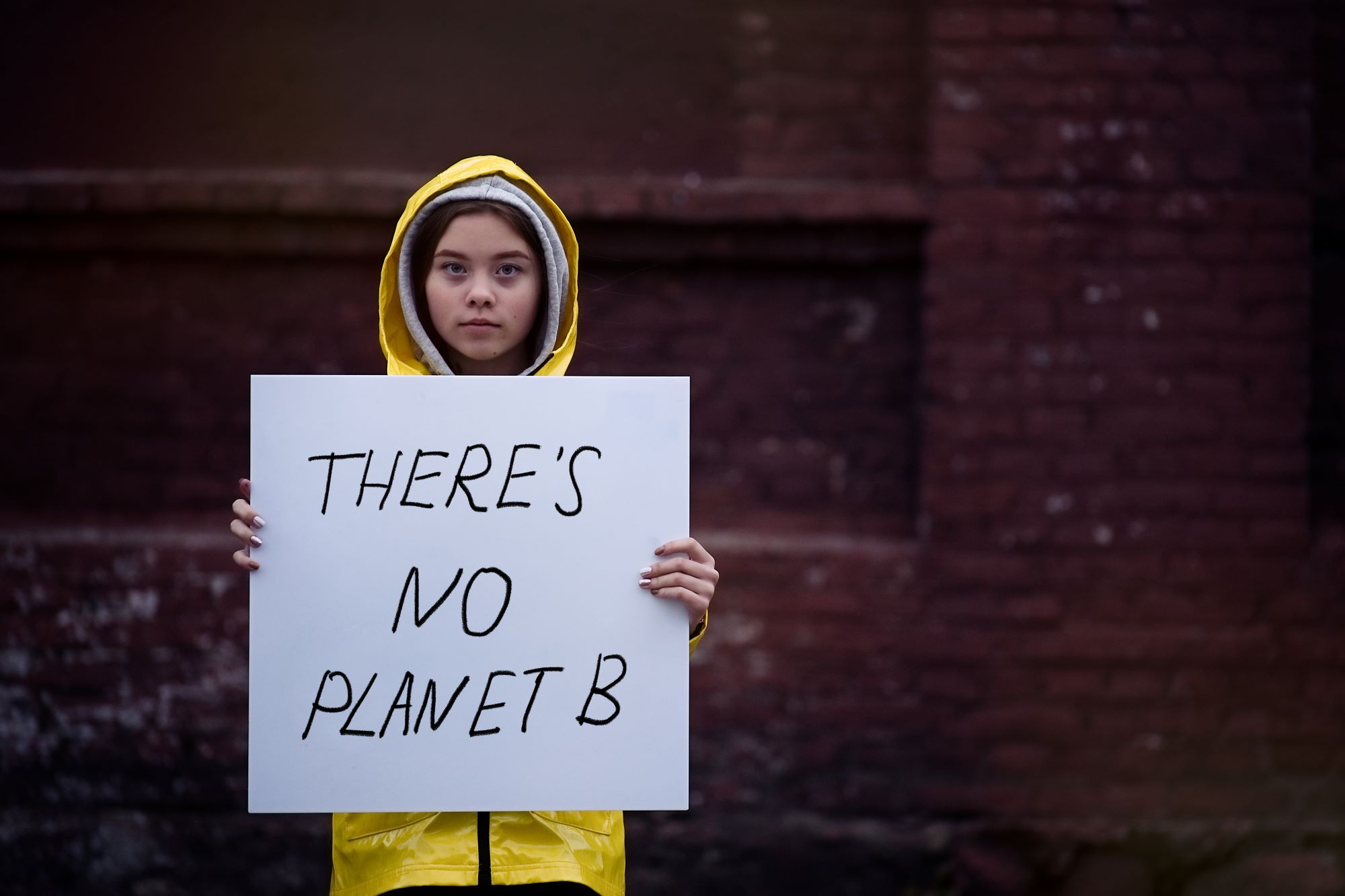
The revolutionary environmental movement recognizes the systemic nature of the problem. Climate activists like Greta Thunberg, Ineza Umuhoza Grace, Vanessa Nakte, and many others advocate for systemic solutions. Listen to activists, community leaders, and affected people about what they need and what systems are affecting them.
You can help Dogwood Alliance protect forests and communities while fighting climate change. Get involved. There are different campaigns you can help with including limiting the biomass industry, advocating for community justice, and more. So take action today!
Michelle ThompsonMichelle is Dogwood’s 2022 Forests & Climate Stanback Research Fellow. She has been interested in nature and conservation since growing up in upstate South Carolina. She is a masters student at Duke studying ecosystem science and conservation. Michelle is honored to continue her work in environmentalism at Dogwood over the summer and is excited by the opportunity to work with her community. In her free time, Michelle enjoys crafting, reading, and hanging out with her two cats.
Yesterday, a Supreme Court ruling restricted the EPA’s power to regulate dangerous carbon emissions from power plants. This disastrous ruling comes on the heels of unprecedented heat waves that swept across the planet before it was even officially summer.
With climate legislation mired in Congress, we know at the end of the day the power to fix this ecological crisis lies in the hands of the people. We are in the fight of our lifetime. It’s going to take every last person who cares about the most vulnerable, who cares about nature, and who cares about the life we leave to the children of today to stand up.
Dogwood Alliance has long held the belief that we need broad sweeping, transformative change to a society that puts the health and well-being of people and the planet ahead of corporate profits. That happens at the local level through creating on-the-ground solutions and through grassroots political power building to hold government and corporations accountable. The real solution for our climate, for environmental justice, and for nature and biodiversity is people power.
Communities matter. Science matters. Your voice and your actions matter. Yes, we are disappointed by the ruling from SCOTUS. But it only motivates us even more to work like hell for what we love. We won’t stop organizing. We won’t stop standing with communities on the front lines. We won’t stop holding the government and corporations accountable.
Now is not the time for fear or regret. Now is the time for action. And when you need a break – because we all do – try heading into the woods or sitting under a tree. Catch your breath. Listen to the birds and your heart. And then get back at it. Together we are building the most powerful grassroots movement the world has ever seen.
We’re sending Postcards from Polluted Places to North Carolina Governor Roy Cooper to urge him to oppose the wood pellet industry.
Reverend Richie Harding lives just a few miles from the Enviva wood pellet plant in Garysburg, NC. As a Black man, a father, and a youth football coach, Richie thinks a lot about the young people in his community. He wants to see them be successful and give back to the community that supported them. He also knows that his community is a hot spot for polluting industries. Companies like Enviva degrade the landscape and reduce the quality of life for local residents. This does not align with the vision that Richie has for his community.
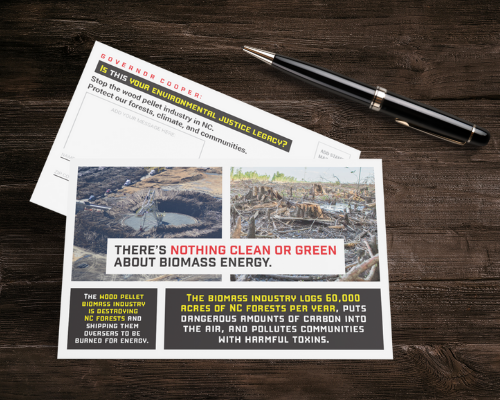
Richie is a member of the Impacted Communities Against Wood Pellets Coalition. This Coalition is leading the movement to oppose this dirty industry in North Carolina. We’re united by a love for our communities, a deep connection to our surrounding environment, and the pursuit of justice for people and the planet.Last year, Richie came up with the idea of Postcards from Polluted Places. His goal is to educate his community and his elected officials about the impacts of the wood pellet industry. The Coalition has distributed postcards in the communities where Enviva operates and at events across North Carolina. We’ve sent thousands of postcards to NC Governor Cooper, calling on him to halt any expansion of the wood pellet industry in the state.
North Carolina exports more wood pellets than any other state in the nation. NC Governor Cooper claims to be a climate champion. He’s passed several executive orders on climate change and environmental justice. Yet his Administration keeps handing out funding and permits for the expansion of the wood pellet industry in North Carolina.
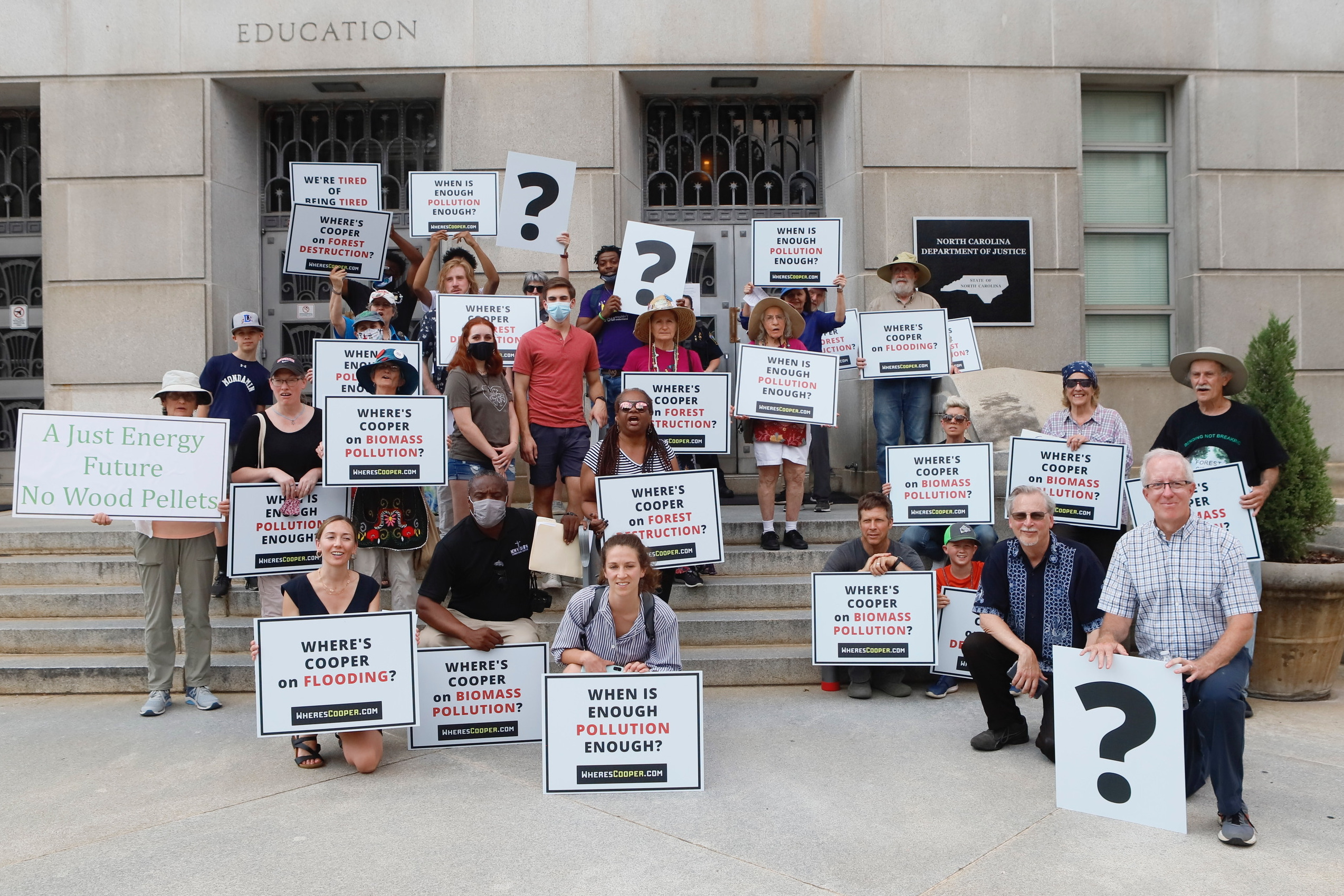
Dogwood Alliance is honored to be a member of this coalition. At the heart of the group are residents from the communities suffering the most direct effects of wood pellet production and logging. Those living near the production facilities have seen their lives completely altered. The dust from the facilities is so pervasive that it makes it impossible to enjoy outdoor activities like sitting on a porch or having a barbeque. The constant noise keeps people awake. One resident said she can’t sleep for more than three hour stretches at a time. The logging trucks stacked high with trees create dangerous traffic and tear up local roads. And for those living within the sourcing radius of the plants, the forests surrounding their homes can be turned into stumps in a matter of hours.
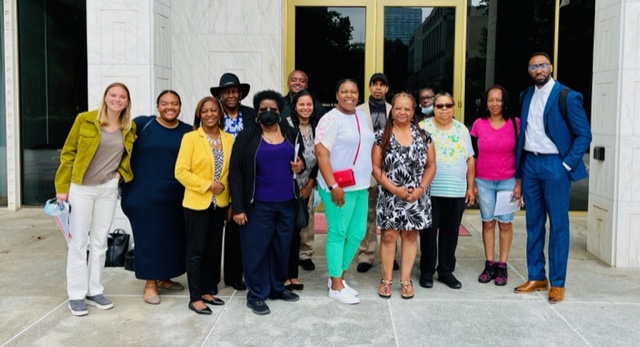
Many Coalition members have been organizing in their communities for years, even decades. Time and again, local and state elected and appointed officials ignore community concerns about pollution and their recommendations for stronger protections.Our Coalition is working together because we truly believe that change is possible. We’re teachers, organizers, activists, parents, and faith leaders. We know that one voice matters and that thousands can move mountains.
Trigger Warning: references of homophobia, transphobia, violence, and suicideSome history
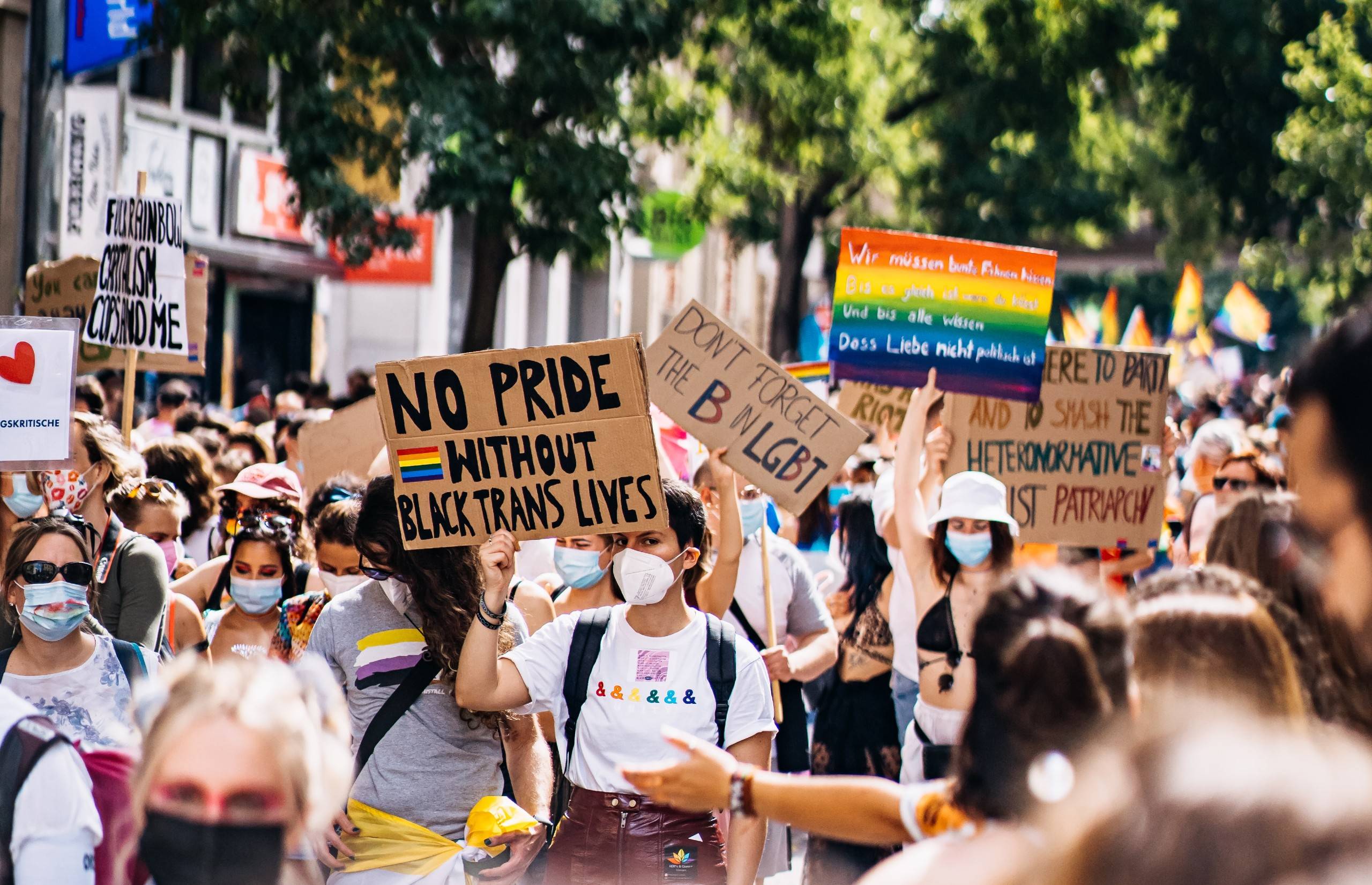
June is nationally recognized LGBTQIA+ Pride Month. It commemorates the June 28, 1969 Stonewall Riots in Greenwich Village, New York City. The riots are widely viewed as the catalyst for much of the world’s movements toward LGBTQIA+ liberation. Organizers held our nation’s first gay pride parade on June 28, 1970 to commemorate Stonewall.
Marsha P. Johnson (a Black trans activist) and Sylvia Rivera (a Latine trans activist) were key figures in the riot, and later they both played critical roles in the movement. I cite these awe-inspiring women because it’s important for us to remember our own history. We must remember that we owe many of the liberties that we now cherish to Black and Brown trans people. Our movement, like many others, is suffused with the damaging effects of white dominant culture, but we cannot forget the contributions of the BIPOC and trans members of our community.
In her essay “Learning from the 60’s”, national treasure and Black feminist lesbian poet Audre Lorde wrote:
“There is no thing as a single-issue struggle because we do not live single-issue lives.”
Why Pride?
The nation’s first pride parade’s official chant was: “Say it loud, gay is proud.” I can’t help but contrast this chant with the “Don’t say gay” legislation sweeping the nation. Our youth are considering and completing suicide at alarming rates. Our transgender kin, especially our Black trans sisters, are facing unprecedented levels of gender-based violence. Our sexuality, our gender expression, and even our existence are criminalized.

In his memoir Just Mercy, African American human rights attorney Bryan Stevenson said:
“Hopelessness is the enemy of justice.”
Pride Month is a time for us to be visible, to unite in solidarity, and to show our joy and our hope in the face of continued hardship. I say to anyone who would harm us: We exist. We are not alone. Though we might be afraid sometimes, we’ll never stop seeking equity and justice.


 Donate
 November 5, 2026