


Guest Post By Carmella Wren-Causey
Across the world, countries are interested in the growing bioenergy industry’s claims about carbon neutrality. Woody biomass companies like Drax and Enviva claim that burning wood pellets instead of coal won’t contribute to climate change. This claim is not backed up by science, but the myth still persists.
Many European countries have already taken the biomass bait, but Japan is still exploring whether or not biomass is right for them. That’s why folks from Japan came to visit Gloster.
My name is Carmella Wren-Causey, and I live in Gloster, Mississippi. I live on land that’s been in my family for over a hundred years, with my puppy, horse, and newly added 3 kittens. Gloster is a small town in South Central Mississippi. We have about 1,000 citizens. We don’t even have a school in town. Our children have to be bussed more than a half hour just to attend school.
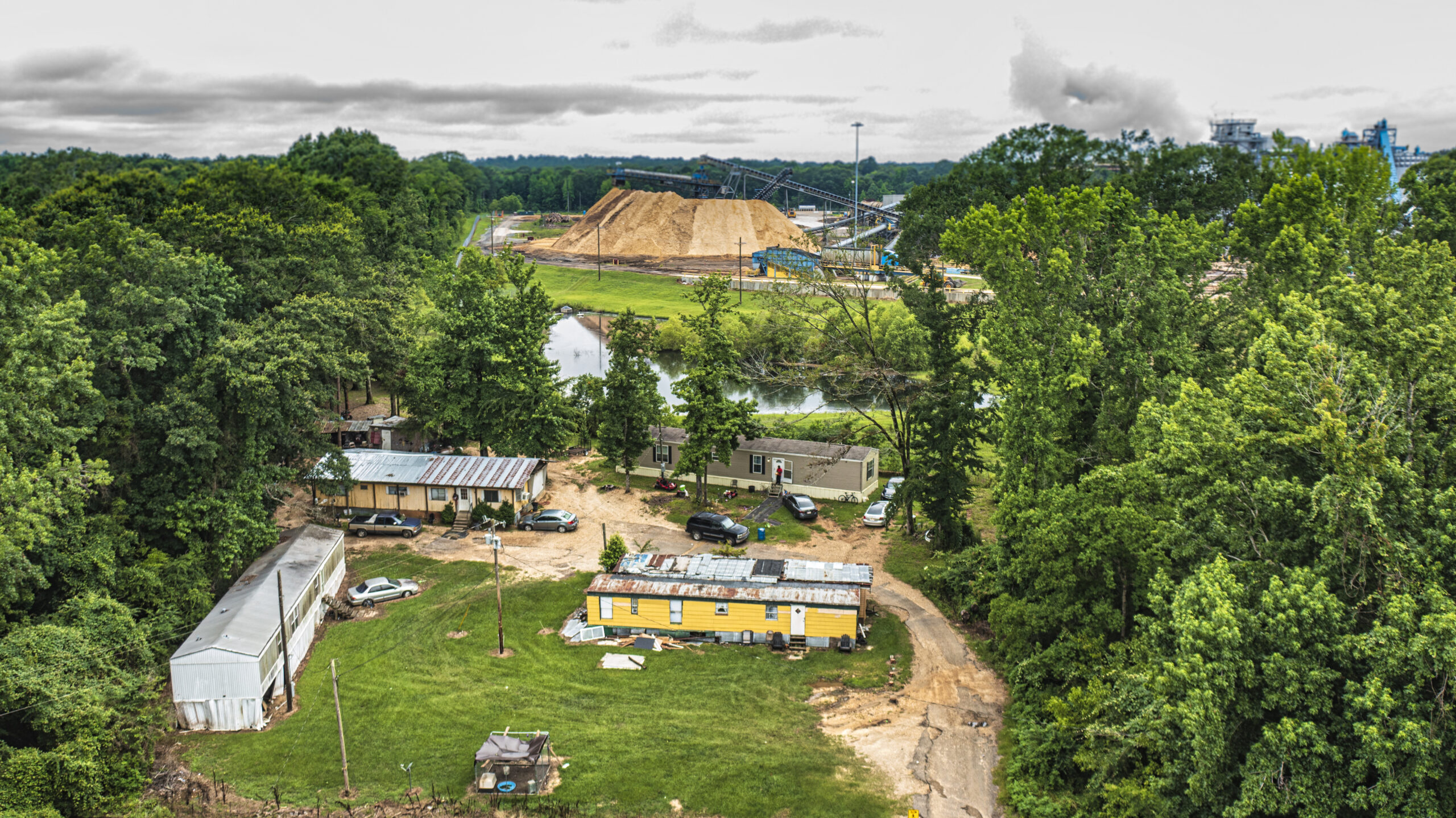
Image by The People’s Justice Council
This plant is open 24/7, produces over half a million tons of wood pellets every year, and ships the pellets around the world to Europe and Asia. Then those pellets are used for generating electricity. The companies tell us that it’s better than coal, but the truth is that these plants are dirty and pollute communities like mine.
Last month, I visited with a delegation from Japan that came to see the truth about biomass. Roger Smith, the Japan Campaign Director from the environmental NGO Mighty Earth, led the planning for the US biomass study tour. The group also included Sayoko Iinuma and Miyuki Tomari, two NGO leaders from the Global Environmental Forum working on biomass issues in Japan. Indy Juno from the National Wildlife Federation and Tokyo-based journalist Annelise Giseburt were also part of the group. These people were all here to see the impact biomass is having on the forests that surround us, my community, and myself. Here’s what they found.
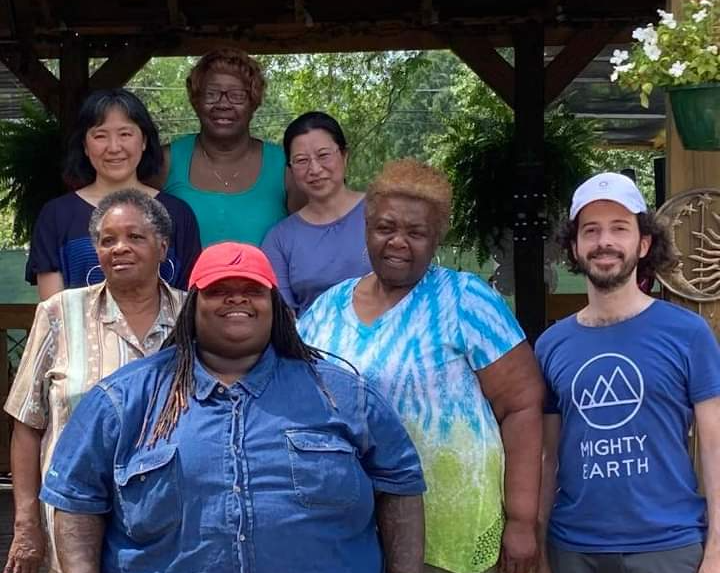
The Japan delegation with Dogwood’s Erniko Brown and Carmella Wren-Causey
The Japanese delegation wanted to learn and to see firsthand the impact that biomass has on the sourcing communities. They wanted to see and hear the log trucks that drive to the mills. They wanted to see how these plants are placed in the backyard of some families’ homes: where our children play.
The group also wanted to see the impact on the members of the community. Six residents of Gloster came out to share the impact that biomass is having on their health. Folks told many stories about how they’ve developed breathing problems:
Many blame other problems on Drax as well. Complaints range from skin issues, like welts or fungal infections, to stomach issues.
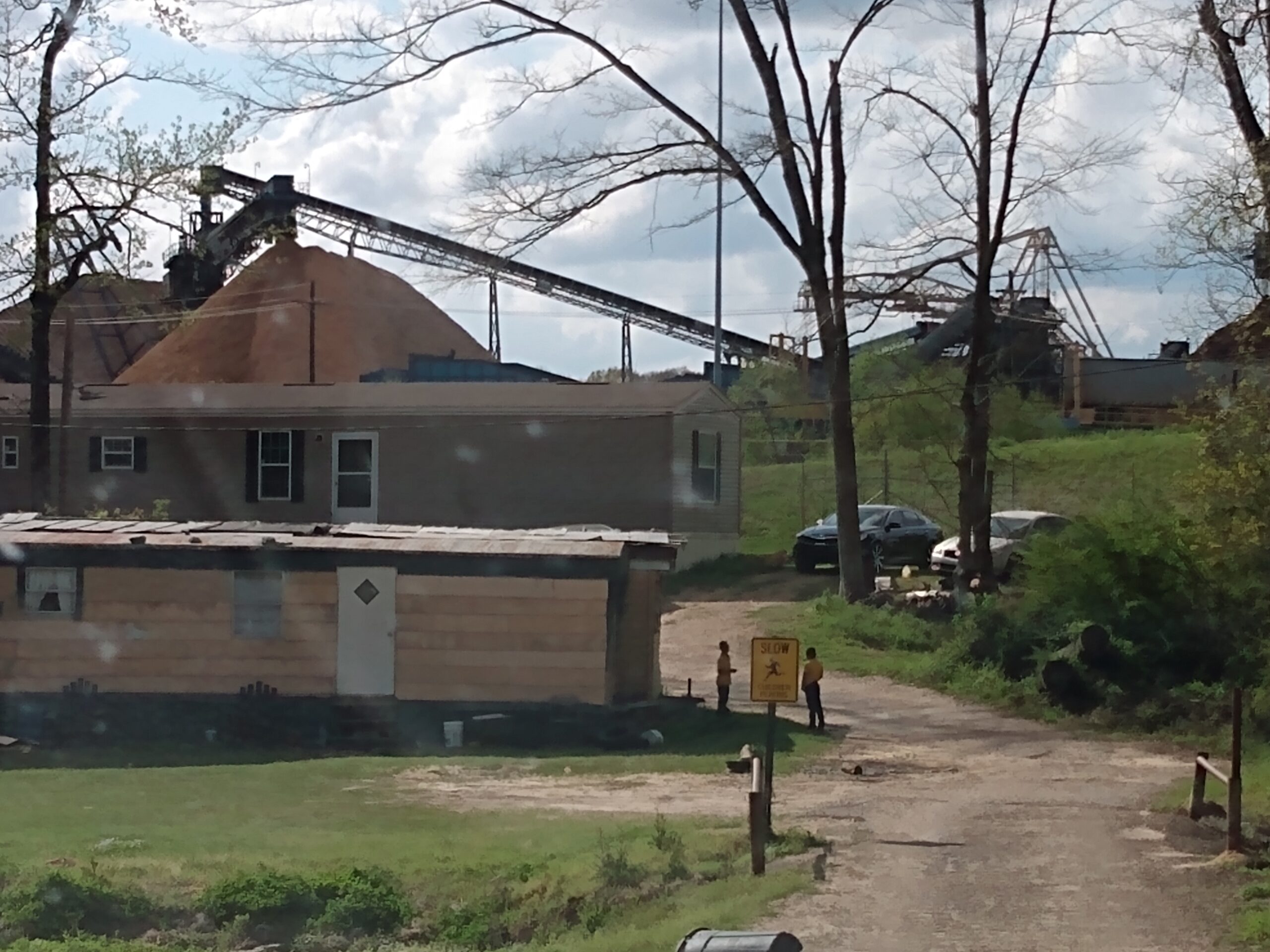
Gloster neighborhood children play in front of Drax Amite biomass facility
You ask what bioenergy is? Bioenergy or biomass is energy generated or produced from living or once-living organisms. The energy from these organisms can be burned to create heat or converted into electricity. Some argue that because more biomass (aka trees) can be grown, this energy is “carbon neutral” and does not damage the environment. However, biomass at all stages (harvesting, processing, and final burning) creates lasting impacts on the natural world and human communities in and beyond those locations.
The biomass industry will tell you that wood pellets are usually made of compressed sawdust that is a waste product from other industries. While this was more true before biomass became popular, now more than 85% of the material used to produce wood pellets is from trees, not sawdust.

Wood pellets became popular because politicians declared it to be green and renewable – not because it actually is. But since other countries are rewarding green energy, biomass companies like Drax and Enviva receive government money (subsidies) to produce their polluting products.
A heartbreaking number of my neighbors have reported that they have skin, breathing, and sleep troubles now that Drax operates 24/7 in their backyard. The EJSCREEN tool from the EPA reveals that:
Drax has been in Gloster for eight years, and since then, it’s:
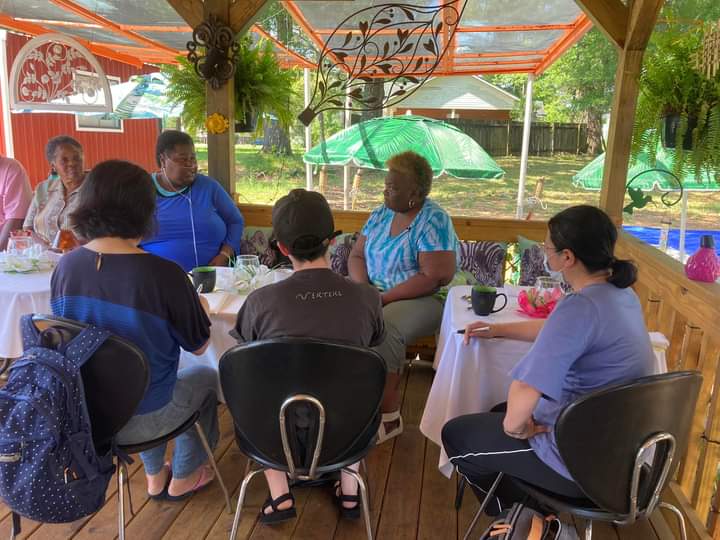
Gloster residents share their stories with Japan biomass delegation
Like it or not, Drax is in Gloster to stay. I hope that the folks who visited Gloster from Japan are starting to understand the impacts of their energy choices. Without foreign demand, wood pellet mills like Drax Amite would shut down. While that wouldn’t bring schools or jobs to our area, it would at least stop the onslaught of pollution.
If you’re ready to get involved, take your first step right now by telling President Biden to protect the forests and communities of the South.

Carmella Wren-Causey
Carmella Wren-Causey is a Storyteller in Environmental Justice Fellow with Dogwood Alliance. Carmella was born in Cleveland, Ohio, but has recently returned to her roots in Gloster, Mississippi. Admirer of the great outdoors, Carmella loves fishing, biking, and nature. She has a passion for flowers and gardening. Carmella came to Dogwood Alliance to tell her story about the Gloster community being impacted by biomass. She is a lifelong committed outreach servicer, now serving as chair of Economic Development and the Co-chair of Environmental Justice for the Amite County NAACP.
For this episode of Woods & Wilds: The Podcast Season 3, we interviewed youth organizer and activist Trinity Giovanna Barnwell-Thomas.

Trinity Giovanna Barnwell-Thomas is an Italian African American living in the heart of the Appalachian Mountains in Asheville, North Carolina. She is currently a senior at Asheville High School and plans on attending a four-year university to earn her bachelor’s degree in business and marketing. She’s passionate about being an advocate for others and bringing awareness to the importance of things. She’s a dreamer and puts in the work to see her ideas come to life.
Join Dogwood Alliance and SlayTheMic as we bring you tales of connection to nature and music.
Want to listen to more?
Read the full transcript of our interview with Trinity Giovanna Barnwell-Thomas!
Elizabeth: Hi everyone. I’m Elizabeth Lashay with Slay the Mic, and I am so excited to be back for season three of the Woods & Wilds Podcast brought to you by Dogwood Alliance. And I am joined by my amazing cohost, who’s going to take it away.
Kimala: I’m Kimala Luna from Dogwood Alliance. We’re so happy to be here with Slay the Mic and Elizabeth, and we have a really special guest today. We have Trinity Giovanna Barnwell-Thomas, who is an Italian African American living in the heart of Appalachian Mountains in Asheville, North Carolina. She is currently a senior at Asheville High School and plans on attending a four year university for her bachelor’s in business and marketing. She’s passionate about being an advocate for others and bringing awareness to the importance of things. She’s a dreamer and puts in the work to see her ideas come to life. Thank you so much, Trinity, for being here today. And I wanted to talk to you just right off the bat, jump right into it, about your very special business plan.
Elizabeth: Yes.
Trinity Giovanna Barnwell-Thomas: Yeah. Oh my gosh. Okay. So I came up with a business plan while in my business management class of last semester. And essentially we were told to look at an industry and see what it’s lacking and what we could provide for it. So I looked at the marketing agency industry and there were two key factors that I noticed. One being that it was not affordable. All of those big businesses were only catered towards very rich companies. And then secondly, what I noticed even just from experiencing this big wave of Black Lives Matter is that there’s a lot of Black owners of their businesses, of their own… Like for instance, Liz, people who are sole proprietors of their own businesses that don’t get enough attention, that get left behind. So Livello is what it’s called, which means level in Italian. And it’s a marketing agency that serves all, but it’s specifically designed to cater towards and help uplift the underrepresented Black and people of color community and those businesses within it to help them get the recognition they deserve and bring more traction to the business.
Elizabeth: And I’m so excited to be able to see this growth.
Trinity Giovanna Barnwell-Thomas: So nice too to have y’all’s support with everything as well. I think that’s another huge factor is like, I was like, “Oh, this is a cool idea.” And then Liz were like, “Get the domain.” And I was like, “Okay, we’re doing this.”
Kimala: Let’s back up a bit though. Let’s talk about… Because I know Liz introduced me to you, Trinity, but how did y’all meet?
Trinity Giovanna Barnwell-Thomas: We met through an organization through my high school called CAYLA it’s the City of Asheville Youth Leadership Academy.
Elizabeth: Academy.
Trinity Giovanna Barnwell-Thomas: Yes. So actually it’s this program through the school or you actually do have to apply to it and you have to get interviewed, just like any other job. And it’s pretty competitive. But it’s designed for us to become part of this little close-knit community of students where we do summer internships based on careers or hobbies that we’re interested in expanding on. So Miss Alex, who is the leader, the coordinator of CAYLA, we had talked about what I was interested in and I was like music and it was also business and entrepreneurship. And she was like, “Girl, I’m going to put you with Liz. Liz is everything you need.” And it kind of just started there. And then I worked with them for the summer and then we decided that I would to continue on working with them after the summer as an intern for them.
Elizabeth: Mm-hmm. And I’m just so excited because both Kimala and I have been able to just witness this amazing… You’re about to graduate. Do you have any excitement? What are your feelings before, as you’re getting closer to graduation?
Trinity Giovanna Barnwell-Thomas: I’m really just excited to go out on my own. I have always been independent growing up and I’ve always had the support of my family. But just the idea of like flying from the nest and getting to really develop who I am. Right after I leave is when it’s really going to start being, “All right, who do you want to be? What do you want your life to look like?” So I’m really excited to start sculpting that.
Kimala: That’s awesome. And for those that are tuning in, I just, for context, want to say that after the CAYLA internship, we had such a good experience working with Trinity and were so blown away by Trinity, your leadership skills and your organization and your commitment working with us that we kept Trinity on working on Slay the Mic multimedia. Which keep an eye out, there’s a lot of projects coming out for that soon. And for me, I can say I’ve been working with you for four or five, maybe six months at this point. And I am really, really impressed by your drive and your artistic passion. And I just want to know maybe a little bit about you grew up in Appalachia, what’s your relationship to nature to forests look like?
Trinity Giovanna Barnwell-Thomas: Well, first off I want to say thank you. So very sweet. So yes, well I would say originally my mom had a very much closer relationship with nature than I. But I grew up in my mom’s way of living and what was important to her was that we were always in the woods, either hiking or camping or just being in the nature. So a lot when I was younger we would go hiking. I learned how to backpack when I was younger as well. And I’ve always been raised to believe that the woods are not only just trees, they’re this living, breathing thing that senses you and it’s something I can connect deeply with. And I think when I was younger, I took that very literally. I would remember going on hikes with my mom and stuff and just thinking all the trees were my friends walking beside me. And I would imagine forest spirits and stuff. So I’ve always had this silly, goofy, fun relationship with being in the woods and everything.
Elizabeth: That is awesome. What a wonderful story and what a wonderful way to be introduced and to hone in on that imagination. As we’re discussing and looking at environmental justice, what are some things that you are noticing that you are appreciating that’s being done? And then that will lead me into my next follow up question.
Trinity Giovanna Barnwell-Thomas: Yes. I think one really big thing that relates a lot to my generation is there is that huge, giant worry of climate change and what our lives are going to look like 10 years from now or whatnot. And so I do know that in my generation there’s many small movements of us doing what we can to start pushing the older generation toward providing what they need to know so that we have a life to live some years down the road that’s healthy and clean. And I see young people younger than me all the time advocating. And I think… What was her name? Greta? Greta, I believe. She amazes me. And I just think seeing that inspires me to advocate myself. And again, going back to my mom and nature, it’s important to us so we do everything we can to provide for it as well. And that looks like just being environmentally friendly and making sure we recycle properly and replanting things and stuff like that. And giving back to the land.
Elizabeth: I think that actually answered my next question was what are some things that can be done or things that you’ve implemented into your lifestyle and practiced? And you just simply answered that. So thank you.
Kimala: Well, it sounds like it’s not dissimilar, right? Your passion for your business plan and your reverence in nature, how we’re pursuing racial justice, climate justice and spending time in nature all have these similar patterns. So where do you see those patterns happening in your business plan and like also how you treat nature?
Trinity Giovanna Barnwell-Thomas: Actually, that’s a really interesting question because the other day I met with Alex and I had an essay that I was going to have to write for a scholarship that was asking me, “As a business, how can you be environmentally and culturally aware and still maintain corporate responsibilities?” And I was like, “That’s a very loaded question. How will I do that?” But it is something that’s super important to me. I’ve always told my mom when I knew that I wanted to be an entrepreneur and start my own business that I want the things that I care about now and my morals to carry into the business and not shift or bend to capitalistic values or views and things like that. And I think as a business, for me, every way that I would operate would be environmentally conscious and friendly. And even in having an office building, when I eventually get one of those, I want to make sure that all the product that we’re producing is friendly. All of the product that we use is friendly. Everything in that space supports protecting our forest and our world. And while doing so, keeping my employees happy and feeling like they’re in a productive and healthy environment. And when my employees and I can feel that way, like we are supporting our environment and each other, we can then be our strongest selves to support this social justice movement that we would like to contribute to.
Elizabeth: Oh my goodness.
Kimala: That’s beautiful.
Trinity Giovanna Barnwell-Thomas: Thank you.
Elizabeth: That was beautiful. And I cannot wait. You don’t have to employ me, but I would love… No pressure, but years down the line. What I would love to know is when you think about the future, so let’s say five years, eight years away, how do you see individuals tackling climate crisis together? I think what you were saying is that your generation is bringing awareness and creating these movements. I wish that there was more awareness during the time that I was growing up. And then for those other generations, how can we build this gap to create the future?
Trinity Giovanna Barnwell-Thomas: Right. Well, I think it’s interesting because the older generation that is kind of in charge of what we do now does have a very different way of thinking, being that they came from a different way of life and that was capitalism and making the most of what you can and however much money you can out of these things. And now our generation is starting to see that these things that they believe in won’t provide for us at all by the time that we’re their age. And so I think in the next five years it’s going to make a huge difference because now those same people from older generations tend to kind of discredit are words and our ideas because we’re just thought to be kids, how do our opinions really hold impact? What do we say really matters? What do we know? Is kind of what is questioned.
Trinity Giovanna Barnwell-Thomas: But I think it’s going to be interesting in the next five years we have all these brilliant minds who have already been doing so much and will hit this age where going to power forward, you know? I think that’s at a point where we no longer can be silenced and that we have the ability to expand our ideas.
Kimala: Ooh, that sounds powerful. And a lot of really forward momentum. Really, every time I talk to you, I have like so much reverence and this deep desire to just really support those that are coming up, who’ve really come up in some of the wildest times we’ve ever seen in terms of the political environment, the climate environment. I just want to show up in the best way. What is one thing you wish, or one thing you could ask for from the older generation to support the youth right now?
Trinity Giovanna Barnwell-Thomas: I think I would ask them for more opportunity. As youth, we’re doing a lot to reach out to the older generation to try to bridge that gap. In turn, the older generation could bridge that gap with us as well. That will heighten our ability to communicate and open the floor more for that conversation. I really think that would do a lot for connecting generations.
Elizabeth: I knew that I really found the power of nature in a very low moment for myself. And then it’s just been this love ever since then. Whenever you are out in nature, what are some feelings that you get whenever you’re surrounded by just nature in general?
Trinity Giovanna Barnwell-Thomas: Oh my gosh, I love this one because it’s truly so amazing. Actually, at my old house, we were on a lot of land so there was a lot of space up the mountain. And we had a spring, an actual water spring that came down the mountain and all these big, giant mossy boulders. And I remember a lot of times when I felt a little bit lost or like I needed to just breathe, I would go up into the mountain and I would go sit on like the biggest boulder I could find that would look over all the springs. And it’s just such a relieving feeling. I would sit there and just close my eyes and just breathe and listen. And listening, it’s just amazing. You can hear so many different things. And it’s really remarkable what you realize by just sitting quietly. The creatures will start to move around you. And it’s really just this super relief that life does exist and it is here thriving beautifully.
Kimala: In the next couple of years, what do you hope to have accomplished?
Trinity Giovanna Barnwell-Thomas: By the time I graduate if there’s the opportunity for me to gain more experience in the field and what I’m interested in, and I really hope that I can have the foundation of a steady job to where that I can bring in enough money to where I can go out and explore. I think that’s something that’s really important to me. Building my career on something I’m interested in is really important to me, but also realizing that life can’t just be your career. It has to be so much more because there’s so much to experience. But while I do something that I enjoy, I want to be able to explore the world and travel, but still feel like I have a safety net at home. That’s the biggest thing to me. I love traveling. I love getting to experience other cultures. And it’s really eye opening. I think a lot of times, especially in our country, people get trapped in this bubble and we forget that there’s so many different cultures and so many different lives lived all over the world. And I think it’s super important to experience that and see how people live their lives and it makes your feel not so small.
Elizabeth: I absolutely love that. And I think it’s a wonderful reminder for me as well, who came from a mother who was like, “You need to work this job and you need to be able to be financially stable in this way.” And there was no room for that adventure and that travel. And so I’m having to unwind some patterns and thoughts of like if taking a break, feeling guilty. So I just want to say thank you for that wonderful reminder. And I admire you and your strength. With that being said, it might be something that’s uncomfortable for some, but what are you proud of of yourself? What are you proud of of Trinity?
Trinity Giovanna Barnwell-Thomas: I would say I am really proud of how I reach for my future. I think a lot of what I see around me sometimes is people feeling hopeless because they’re waiting for that to come to them. But since I was young, I’ve always done everything I can to achieve what I want to. I guess it couldn’t really see the crazy importance of it until this year, but as I’m getting into colleges and I’m getting scholarships, I’m just starting to see the whole weight of everything I’ve worked so hard to do come into one. I just think like I’ve worked so hard and diligently all my life that the next chapter of my life is going be an amazing one. So I’m proud of myself for that and for showing myself [inaudible 00:18:06] along the way.
Kimala: Absolutely. That’s wonderful. You are such an appreciator of art and music. What is music that you’ve been really loving recently?
Trinity Giovanna Barnwell-Thomas: I’ve been really, really, really into folk recently. I detached from that because that was my mom’s thing and moved towards like hip-hop, R&B was my thing for a really long time. But recently… I mean, folk is like the roots of the Appalachia. That’s always at the basis of where my taste can come from. And so I’ve been listening to a lot of also country, like Brandi Carlile. I am obsessed with her. I’m very obsessed. Same thing with these two ladies Lark [inaudible 00:18:55] is their name. Their music is so… It just hits right in your soul. It just vibrates in your soul. I really loved that. I think too though, I’ve been a little bit less into music, but I’ve been a lot more into poetry. Poetry has really been my thing recently. And writing.
Kimala: I love poetry. And you showed me this one poet, what was his name again? It was so beautiful.
Trinity Giovanna Barnwell-Thomas: Kwota B. Yes, Kwota. Oh my gosh. I love his book, When Doves Fly. I like read it like 50 times and analyzed everything. And really honestly, after reading his book, I actually started writing my own poetry. And then I started buying all kinds of poetry books. He really inspired me into this whole different mindset. Because I think I used to be really afraid of poetry just because I thought it’s so intense and complex and I’m like, “How do I dissect this?” But I realized too with reading Kwota’s work and then also listening to a lot of spoken word that it doesn’t have to be so complicated. It doesn’t have to have such a specific form. It’s just what you’re feeling. So that was a cool moment for me. And I started writing my own poetry with no rhyme or reason. It’s just kind of like a bunch of words.
Elizabeth: Well, I love how everything is really deeply intertwined. Your love for nature, your business model, your writing and your passions and your music. It all really seems to be centered from the soul that is able to be then generated from the core of the soul outward. So I really appreciate that. When you’re thinking about next steps for your business, what are things that you would like support on, if anything, to make your dreams turn into reality?
Trinity Giovanna Barnwell-Thomas: For one, I’ve kind of laid out the groundwork. And I think I was telling you this earlier in another meeting, Kimala, but I have this groundwork that I built in my business class, but there’s a lot of it that I want to go over and revise. And I think with that, I could use a lot of help. And I think another biggest thing for me is too, I know some experiences based on my family, but I really want to spend time going into the community and hearing everyone’s grievances and such towards what it’s like, or not even grievances, just like achievements as being a person of color and owning your own business. And I think hearing everyone’s experiences will help me develop my marketing plans and such to address specific things. I don’t want to be so vague. I want to really hone into what the community needs. So I think that would be really cool to get some support from.
Kimala: If you had a recommendation for your peers on how to get started, if they’re interested in being an entrepreneur, if they’re interested in getting more involved in the community, since these are things that you’re already doing, what would your advice be to them?
Trinity Giovanna Barnwell-Thomas: Take every opportunity you can. I was really unsure of CAYLA and I was just kind of like, “I don’t even know if I’ll get in. Or do I even really want to do this?” And it ended up being the most beneficial thing for me that I’ve experienced in a really long time. I met Liz and now I am on board with you guys learning so many new things. And I’m building Livello and having the support from you guys at building Livello. So I would just say to my peers, take every opportunity that you can take. Don’t spend the time to worry about the logistics of it or whether or not it’s right. Just jump right in and see what happens. And it might be something pretty amazing.
Elizabeth: I also know that every few years there’s always new trends and one that I keep hearing a lot lately, at least for the past four years, is self care. Self care this, self-care that, are people actually doing it. And so what is something that you do that’s self care?
Trinity Giovanna Barnwell-Thomas: I think the most important decision that I’ve made for myself is when I really started cherishing my hair. It’s really interesting. It took me a really long time. But I never liked my curls and I always threw it up in a bun. And I don’t know why I always threw it up in a bun because I always hated the way it looked. But I was just like, “Whatever’s easiest.” And I think this year and last year I started really looking into how to take care of my curls. I do hair care routines after my shower and actually I got a bonnet because I used to just sleep on my hair and just let it get all dry and brittle. But now I do my hair care and I wear my bonnet and then I take my hair down in the morning and then I wear it down or I style it differently. And I think as soon as I started doing that, there was a huge shift in a lot of different things. Like the way I carried myself and then also my style, the way that I presented myself. And then it also just felt so good for the soul. I felt like I unlocked a new Trinity by letting my curls be free and taking care of them. That is probably one of my biggest things that I’ve done recently.
Kimala: This is for my own curiosity, but I was wondering, what is it like coming up through high school and you’ve had a really unique high school experience, you’ve probably been remote for a lot of it, it’s been really activated for the other half, what’s that feeling like?
Trinity Giovanna Barnwell-Thomas: It was really strange. I think it contributed a lot to my interaction with people. Pre-COVID Trinity didn’t interact with anyone and just kept her head down and just walked where she needed to go. But then we went into COVID and I was thinking everyone’s complaining, but I was like, “I’ll be fine. I don’t interact with people anyways. So this is like my thing. I’ll just lay in bed all day.” But I actually think it worked the opposite. I started to be like, “Oh my gosh, I don’t want to be in here anymore. I’m so bored and I want to talk to someone.” And so as soon as we got out of COVID, I was like this social butterfly. And now I still am. I have so many friends now and so many acquaintances and I’m so interactive with people. I feel like it had like a reverse effect on me where I’m just like, “I need to talk to people now.” And there’s still those like little parts of me. I can be pretty introverted still where I sometimes I’m just like, “I just want to spend time by myself.” But I definitely think it benefited me in the way of I made a lot of important and close friends after that. So it was really hard though.
Elizabeth: So I’m just going to ask where we can find and keep going with Trinity’s journey. But…
Kimala: I mean, I know we can find Trinity monitoring the cafe project at her school, and I hope she talks about that. And before we wrap up, just definitely want to say that you are so special Trinity and you inspire us all the time in ways you are never going to be aware of. And we’re always blown away. So keep doing what you’re doing. You’re doing a good job.
Trinity Giovanna Barnwell-Thomas: Thank you so much. That makes me really happy. Thank you guys for even having me here as well and letting me talk for a while.
Elizabeth: Yeah, well I want to hear about this cafe project. So tell us about the cafe project.
Trinity Giovanna Barnwell-Thomas: Yeah, so it actually happened like this. So we have this Groundhog… It’s called Groundhogs and it’s a cafe within our school where we make breakfast, right now it’s every Thursday morning, for the teachers and staff. It’s not available to students right now. I just started doing the mornings there this semester. And there was a point where my teacher was like, “Okay, so we have this social media, but nothing has been done to it. Does anyone here know how to do marketing?” And I was looking around and then everyone simultaneously stared at me. And then that’s how it started. It was like I kind of got [inaudible 00:27:28]. So I did, I got put in charge of doing the social media management for Groundhogs. It’s been really great so far actually. It’s been a lot of fun. I’ve been taking pictures. Actually, I have an intern that I’m teaching a little bit about marketing. Although we’re kind of learning along the way to get there. So me and her, we take pictures during the days when we’re cooking and then delivering. And we’ve done some cool little teaser post because we are on the brink of something pretty cool. We’re in the development of something pretty cool. So we’ve been just doing the marketing for that and it’s been pretty responsive so far.
Elizabeth: That is awesome. So where can we find this? So on Instagram?
Kimala: What are the handles?
Trinity Giovanna Barnwell-Thomas: I got you. Okay. So it’s called groundhogs.cafe.ahs. Yeah, it was actually called Groundhogs because we have this family of groundhogs that lives on campus and they’ll literally like walk up to you. There was several points where I just like sat and just me and this groundhog just stared at each other for a while. They live there, they interact with the students. So that’s why it’s called Groundhogs.
Elizabeth: That’s amazing.
Kimala: That’s amazing.
Trinity Giovanna Barnwell-Thomas: Yeah, they’re so cute. They’re seriously super cute. There’s a really, really chunky one.
Kimala: Groundhogs, they know where to find the medicinal plants. If you follow a groundhog all around all day, they’re going to eat the most nutritionally dense medicinal plants in the area. They’re an Appalachia secret, yeah.
Trinity Giovanna Barnwell-Thomas: I didn’t even know that. That makes sense though. We have this big hill around Asheville High that’s just dense vegetation. So maybe that’s why, there’s some goodness in there somewhere.
Kimala: Yeah. For sure. Very cool.
Elizabeth: Oh my goodness. Well, we know that this is not the last that we’re going to hear from you. And actually we have some really cool possible opportunities that we would love to continue to collaborate on. But this is really going to start where we share the table. And actually not share the table, we wanted to take a step back as the generation, the millennials, to just say, “Hey we want to learn from you, the youth, on how we can create a better future.” So we’re so excited and grateful for what you’re doing, what you continuously do and how you show up for others. So I know that, again, just following what Kimala said that this has been inspirational and we are always grateful for you choosing to be part of our life and be our intern and teach us.
Kimala: Yes.
Trinity Giovanna Barnwell-Thomas: Equally, I’m so, so happy you guys chose me to continue working with you because it’s been one of the greatest experiences of my life so far. And I love working with you guys so much. And I’m happy that this is such a big family. Because I know that even when I leave Asheville, I’ll still be able to be a part of it.
Kimala: Definitely. Well, thank you so much, Trinity. And for those tuning in, keep an eye out on what we do this year. Trinity’s going to have a big part in that. And thank you, thank you all so much.
Trinity Giovanna Barnwell-Thomas: Thank you.
We’ve had a significant win in the struggle to stop a mining operation near the Okefenokee Swamp. These iconic wetland forests are once again protected under the Clean Water Act due to the reversal of a Trump-era rule that gave permitting control to the states. The state level permitting process came to a halt when the US Army Corps of Engineers re-established their federal jurisdiction over these waters. Now Twin Pines will be required to go through the more rigorous federal permitting process. Let’s celebrate this victory today knowing that the work of permanent protections for the largest blackwater wetlands in North America isn’t over yet.
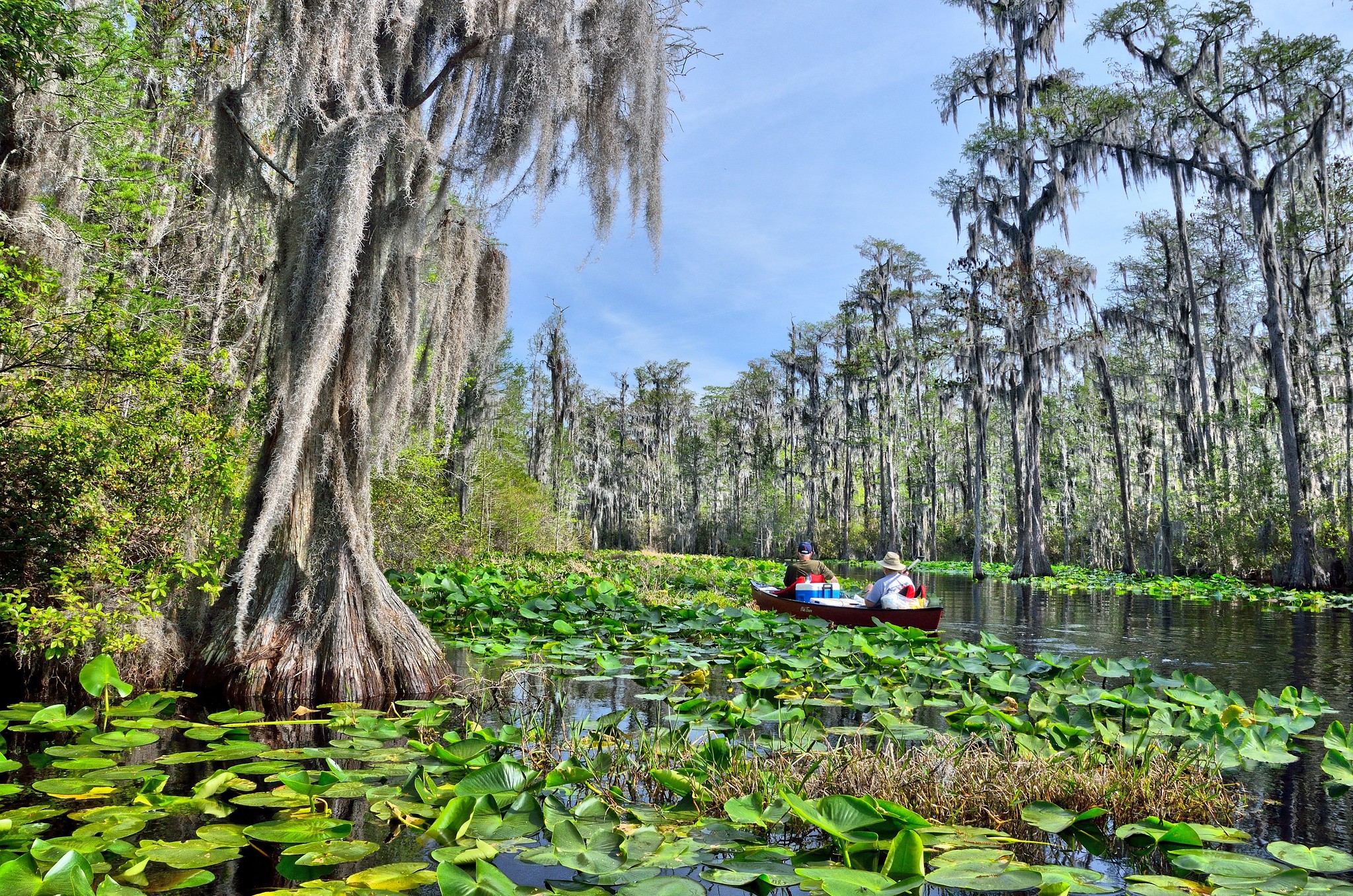
It is the largest blackwater wetlands in North America and one of the world’s largest intact freshwater ecosystems. The refuge supports hundreds of local jobs and produces nearly $65 million for the local economy annually.
Dogwood Alliance applauds the Corps’ decision and calls on the Environmental Protection Agency as well as the Georgia Environmental Protection Division to permanently protect the Okefenokee Swamp. There is bipartisan support for its protection. Representatives Darlene Taylor (R-173) and Debbie Buckner (D-137) passed the Okefenokee Protection Resolution (HR 1158) earlier this year and hope to pass the Okefenokee Protection Act of 2022 next session.
June is the month in which we honor a historical moment in time across this nation.
We also recognize that although slavery has ended, systemic racism and oppression have not. The continuum of centuries long pain and violence in the Black community still lives among us. This unfortunate reality is unacceptable as we strive to make the world a better place for the human race.
Juneteenth is a historic and important day. The world is opening its heart to acknowledge the meaning of this day. We here at Dogwood Alliance recognize the importance of Juneteenth, and we would like to honor the experience of people on our staff and in the communities we serve.

Climate change is one of the most urgent issues we face. It’s a complex problem involving science, economics, society, politics, morality, and ethics. It’s a problem that doesn’t only affect us here at home, but every individual across the globe. Climate change is also a problem without a quick or easy solution. It will take a dedicated and prolonged effort to reduce climate change and its effects.
Impacts of climate change include extreme weather events and sea level rise. Two strategies for dealing with the changing climate are mitigation and adaptation. Let’s explore the environmental benefits of successful adaptation and mitigation strategies.
Global warming is a phenomenon that we’ve suspected for many centuries. Global warming is occurring because humans are burning a lot of fossil fuels. Fossil fuels give off carbon dioxide. Carbon dioxide is one of many heat-trapping greenhouse gases in the atmosphere. These greenhouse gases cause lots of problems. Effects of climate change include:
Global warming is already happening. We can’t completely stop global warming from happening, but we can start reducing emissions and adapting to climate change. Some strategies for adapting to climate change include:
These are all ways that we can avoid the worst effects of global climate change impacts.
Climate change didn’t happen overnight, but over decades, so its remedy will take time. But we need to start immediately. To mitigate climate change, we need to reduce greenhouse gas emissions. Even if we stopped all greenhouse gas emissions today, we would still be dealing with changes to climate for decades to come.
This unfortunate reality means that we need a dual approach. First, we need to reduce and stabilize greenhouse gas emissions. This process is climate change mitigation. Second, we need to adjust to the already changing climate. This is a process known as climate change adaptation.
When people think of climate change solutions, mitigation is what comes to mind. To mitigate climate change is to stop it from happening as soon as possible. There are two approaches to climate change mitigation. First, we can reduce the flow of greenhouse gases into the atmosphere. We can do this by using renewable sources of energy in place of burning fossil fuels. This includes strategies like:
The second strategy modifies the “sinks” that absorb heat-trapping greenhouse gases. A carbon sink is anything that absorbs more carbon than it releases. This is the opposite of a carbon “source,” which is anything that releases more carbon than it absorbs. Examples of carbon sinks are the oceans, forests, and soil. Carbon sinks and carbon sources are important to the carbon lifecycle.
Before the industrial age, carbon sinks and sources kept the atmosphere in balance. We disrupted that balance when we introduced more carbon into the atmosphere, but carbon sinks haven’t changed. Any adaptation solutions we adopt must address this issue.
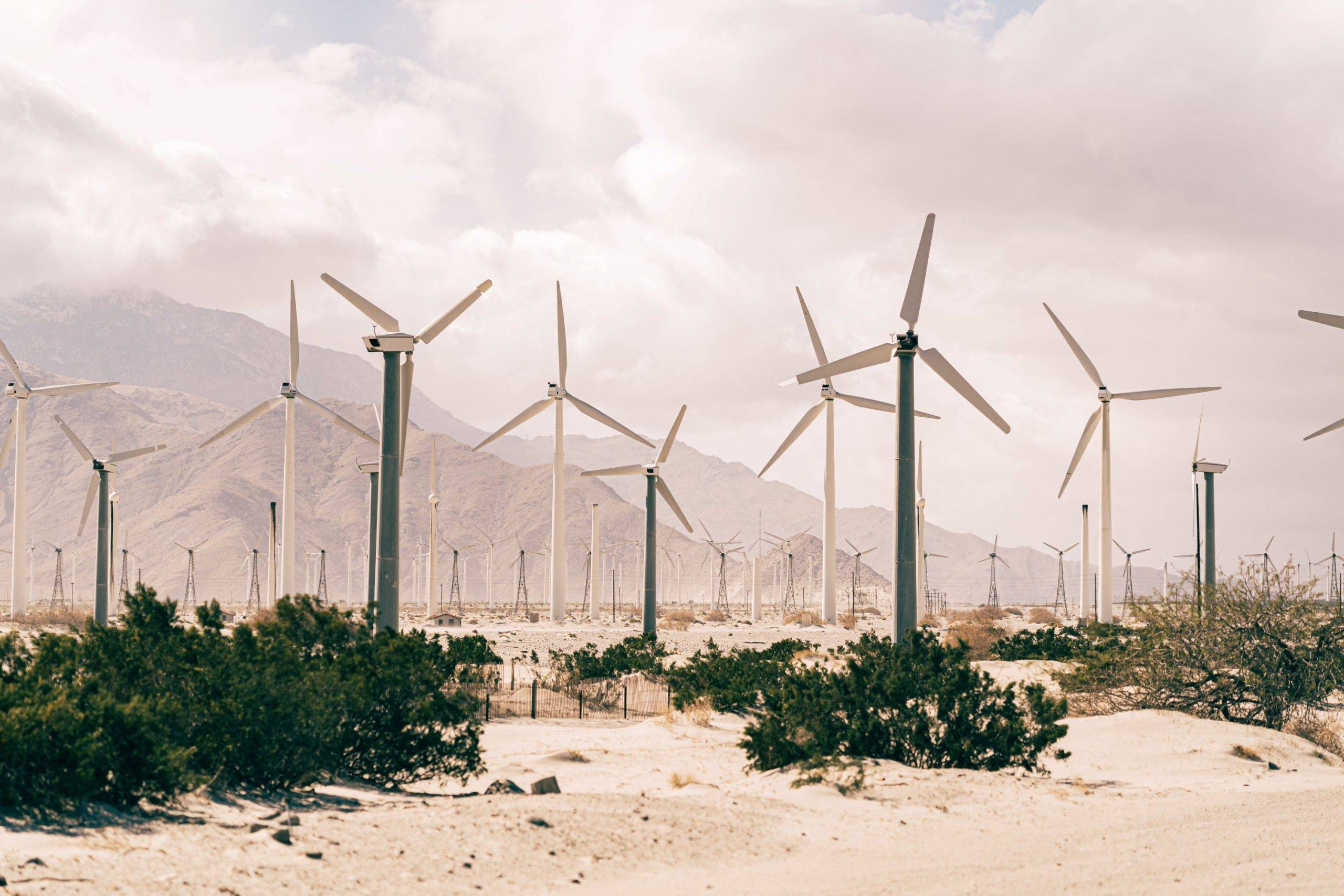
Climate change adaptation is a newer approach to combating climate change. Climate change adaptation proposes we adjust our way of life to the actual or expected future climate we’ll find ourselves in. Climate change adaptation admits that the climate is changing. Adaptation says we should reduce the impacts of climate change by changing our behavior. Since climate change affects areas differently, climate change adaptation measures are location specific.
The problems of rising sea levels, intense storms, and droughts are all different. They force residents in affected areas to develop differing adaptation approaches. Examples of climate change adaptation strategies include:
This doesn’t mean that people only need to worry about their own climate problems and adaptations. Developing countries are especially at risk and vulnerable to the effects of climate change. Wealthier and more developed countries need to assist developing countries. This is especially true because developed countries are most responsible for the release of greenhouse gasses. It’s the moral responsibility of developed countries to take accountability and do whatever is needful to support developing countries in their struggle.

The short answer is yes. Both climate change mitigation and climate change adaptation are necessary. It takes longer for us to use mitigation measures than it does for adaptation strategies.
Since the majority of global power and transport comes from burning fossil fuels, that’s where we need to focus. This means changing massive structures and systems in a process that will take years and decades. To keep the effects of climate change from worsening, climate change mitigation measures are an integral part of the process. Additionally, we must undertake necessary adaptation measures to prevent massive human displacement and the need for migration from regions especially climate change stricken.
Cities around the world are already working to combine the two approaches. They do this to prevent climate change from worsening and to prepare themselves for impacts. Over the past decade, major metropolitan areas such as New York, Chicago, London, Rotterdam, and Quito have published strategies that incorporate climate change mitigation and adaptation measures.
New York’s plan, “A Stronger, More Resilient New York,” that Mayor Michael Bloomberg’s administration proposed in 2013, outlines over 250 courses to protect New York’s coastlines from the flooding and storm surges that have intensified in recent years. In Rotterdam, Netherlands residents aim to make their city completely protected from climate change by 2025 with their “Rotterdam Climate Proof” plan.
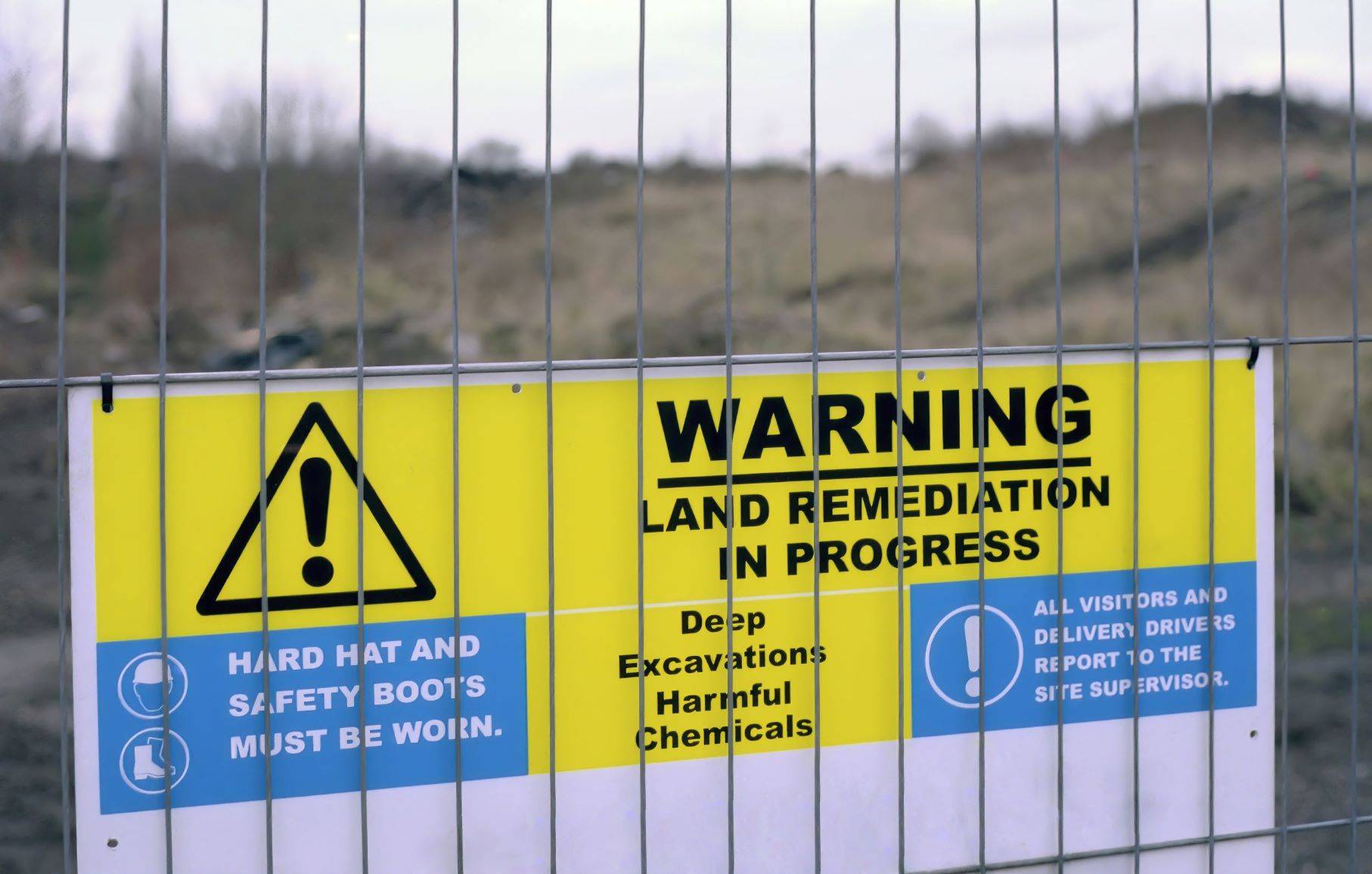
Climate change is one of the most urgent issues we face. It’s a problem that doesn’t only affect us here at home, but every individual across the globe. It’s also a problem without an immediate and quick solution. It will take a dedicated and prolonged effort to reduce climate change and its effects.
El cambio climático es uno de los problemas más urgentes a los que nos enfrentamos. Es un problema multifacético que involucra ciencia, economía, sociedad, política, moralidad y ética. Es un problema que no solo nos afecta aquí en casa, sino a todas las personas en todo el mundo. También es un problema sin una solución inmediata y rápida. Se necesitará un esfuerzo dedicado y prolongado para tratar de reducir el cambio climático y sus efectos.
Dos estrategias para hacer frente al cambio climático son la mitigación y la adaptación. Los impactos del cambio climático incluyen fenómenos meteorológicos extremos y el aumento de los niveles del mar. Exploremos los beneficios ambientales de las estrategias exitosas de adaptación y mitigación.
El calentamiento global es un fenómeno del que hemos sospechado durante muchos siglos. El calentamiento global está ocurriendo porque los humanos están quemando muchos combustibles fósiles. Los combustibles fósiles emiten dióxido de carbono. El dióxido de carbono es uno de los muchos gases de efecto invernadero que atrapan el calor en la atmósfera. Estos gases de efecto invernadero causan muchos problemas. Los efectos del cambio climático incluyen:
El calentamiento global ya está ocurriendo. No podemos evitar totalmente que el calentamiento global ocurra, pero podemos comenzar a reducir las emisiones y adaptarnos al cambio climático. Algunas estrategias para adaptarse al cambio climático incluyen:
Todas estas son formas en las que podemos evitar los efectos más adversos de los impactos del cambio climático global.
El cambio climático no ocurrió de la noche a la mañana, sino durante décadas, por lo que remediarlo llevará tiempo. Pero tenemos que empezar de inmediato. Para mitigar el cambio climático, necesitamos reducir las emisiones de gases de efecto invernadero. Incluso si detuviéramos todas las emisiones de gases de efecto invernadero hoy, todavía estaríamos lidiando con cambios en el clima en las próximas décadas.
Esta desafortunada realidad significa que necesitamos un enfoque dual para combatir el problema. Primero, necesitamos reducir y estabilizar las emisiones de gases de efecto invernadero. Este proceso se conoce como mitigación del cambio climático. En segundo lugar, tenemos que adaptarnos al clima ya cambiante. Este es un proceso conocido como adaptación al cambio climático.
Cuando las personas piensan en soluciones para el cambio climático, lo primero que les viene a la mente es la mitigación. Mitigar el cambio climático es evitar que suceda lo antes posible. Existen dos enfoques para la mitigación del cambio climático. Primero, podemos reducir el flujo de gases de efecto invernadero a la atmósfera. Podemos hacer esto usando fuentes de energía renovable en lugar de quemar combustibles fósiles. Esto incluye estrategias como:
La segunda estrategia consiste en modificar los “sumideros de carbono” que absorben los gases de efecto invernadero que atrapan el calor. Un sumidero de carbono es cualquier cosa que absorbe más carbono de la atmósfera del que libera. Esto es lo opuesto a una “fuente” de carbono, que es cualquier cosa que libera más carbono del que absorbe. Ejemplos de sumideros de carbono son los océanos, los bosques y el suelo. Los sumideros de carbono y las fuentes de carbono son importantes para el ciclo de vida del carbono.
Antes de la era industrial, los sumideros y fuentes de carbono mantenían la atmósfera en equilibrio. Hemos alterado este equilibrio al introducir más carbono en la atmósfera, mientras que los sumideros de carbono no han cambiado. Cualquier solución de adaptación que se tome debe abordar este problema.
La adaptación al cambio climático es un enfoque reciente que se está usando para combatir el cambio climático. La adaptación al cambio climático propone formas en las que podemos adaptar nuestra forma de vida al clima actual o futuro en el que nos encontraremos. La adaptación al cambio climático admite que el clima está cambiando. La adaptación dice que debemos reducir los impactos del cambio climático cambiando nuestro comportamiento. Dado que el cambio climático afecta a zonas de distinta manera, las medidas de adaptación al cambio climático son específicas para cada lugar.
Los problemas del aumento del nivel del mar, las tormentas intensas y las sequías son todos diferentes. Obligan a los residentes de las áreas afectadas a desarrollar distintos enfoques de adaptación. Algunos ejemplos de estrategias de adaptación al cambio climático incluyen:
Esto no significa que las personas solo deban preocuparse por sus propios problemas y adaptaciones climáticas. Los países en desarrollo están especialmente en riesgo y son vulnerables a los efectos del cambio climático. Los países más ricos y desarrollados deben ayudar a los países en desarrollo. Esto es especialmente cierto porque los países desarrollados son los principales responsables de la liberación de gases de efecto invernadero. Es responsabilidad moral de los países desarrollados hacer todo lo posible para ayudar a los países en desarrollo en su lucha.
La respuesta corta es sí. Tanto la mitigación del cambio climático como la adaptación al cambio climático son necesarias. Nos toma más tiempo usar medidas de mitigación que estrategias de adaptación.
Dado que la mayor parte de la energía y transporte mundial provienen de la quema de combustibles fósiles, es ahí donde debemos concentrarnos. Esto significa cambiar estructuras y sistemas masivos en un proceso que tardará años y décadas. Para evitar que los efectos del cambio climático empeoren, las medidas de mitigación del cambio climático son una parte integral del proceso. Además, para evitar el desplazamiento humano masivo y la necesidad de migrar desde regiones especialmente afectadas por el cambio climático, se deben tomar las medidas de adaptación necesarias.
Ciudades alrededor del mundo ya están trabajando para combinar ambos enfoques. Lo hacen para evitar que el cambio climático empeore y también prepararse para los posibles impactos. Durante la última década, las principales áreas metropolitanas como Nueva York, Chicago, Londres, Rotterdam y Quito han publicado estrategias que incorporan medidas de mitigación y adaptación al cambio climático.
El plan de Nueva York, “Un Nueva York más fuerte y resistente“, propuesto por la administración del alcalde Michael Bloomberg en 2013, describe más de 250 planes para proteger las costas de Nueva York de las inundaciones y marejadas ciclónicas que se han intensificado en los últimos años. En Róterdam, los residentes de los Países Bajos aspiran a que su ciudad esté completamente protegida del cambio climático para el 2025 con su plan “Rotterdam Climate Proof“.
El cambio climático es uno de los problemas más urgentes a los que nos enfrentamos. Es un problema que no solo nos afecta aquí en casa, sino a todas las personas en todo el mundo. También es un problema sin una solución inmediata y rápida. Se necesitará un esfuerzo dedicado y prolongado para tratar de reducir el cambio climático y sus efectos.
Guest post by Michelle Thompson
Today, it’s hard to imagine a world without single-use packaging. But before the 1950s, we reused a lot of packaging. For example, people would buy milk in glass bottles and return the empty bottles to the store. Then the bottles were cleaned, refilled, and sold again. Litter and trash were not significant issues because Americans reused as much as possible.
After World War II, companies decided to use lighter, single-use bottles to reduce costs. This saved companies a lot of money. Corporations were able to pass along the cost of packaging to consumers, expand their distribution, and increase profits. But this created trash.
The new disposables that corporations made created a solid waste crisis in America.
Even though corporations created the waste crisis, they did nothing to manage the environmental impact of their trash. Businesses were able to pass off the environmental costs of their business to the public. Whereas before, they were forced to pay for the cleaning and recycling of their containers, they now passed that cost off to communities where trash was piling up.
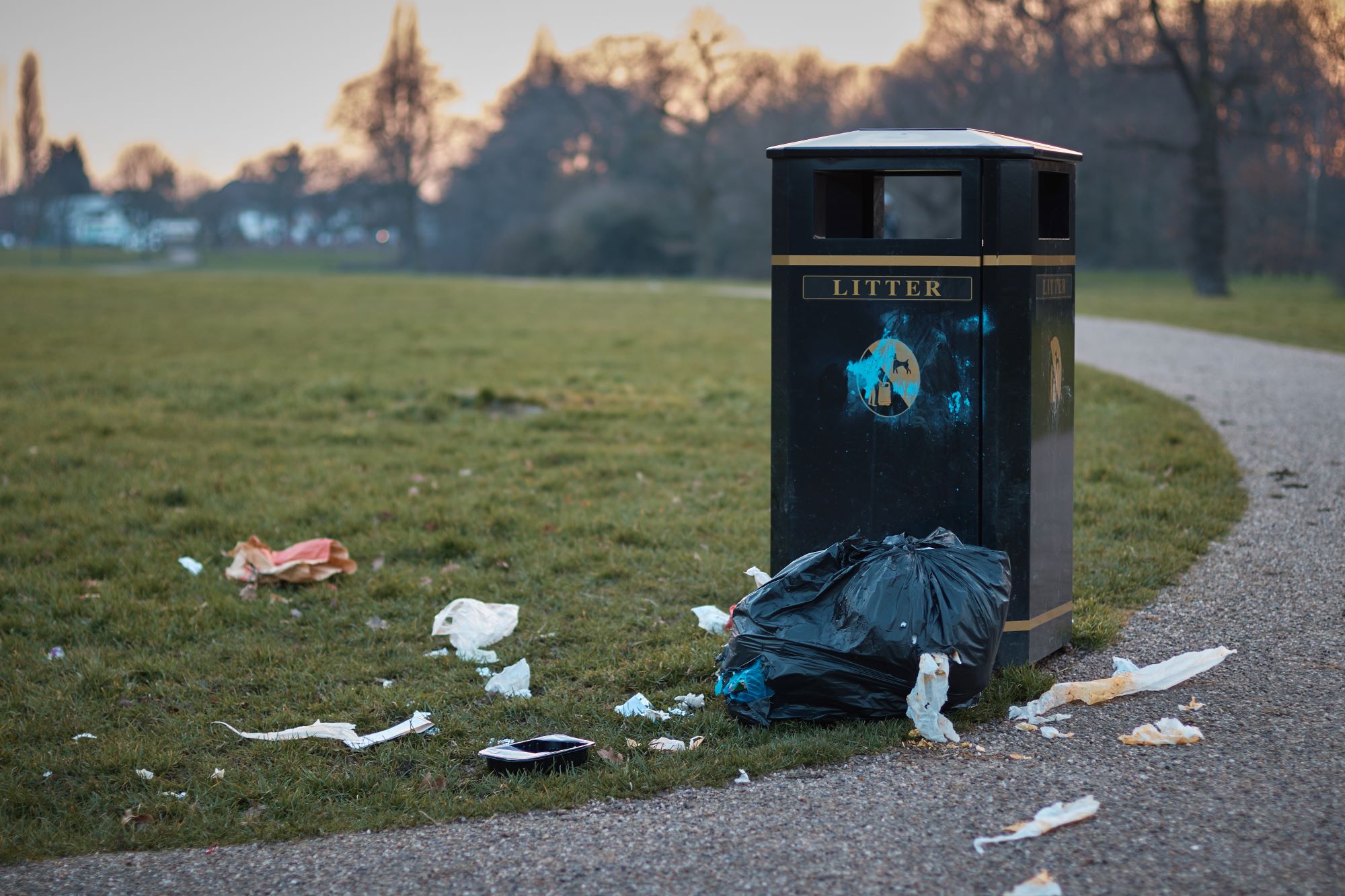
The packaging industry and large companies like PepsiCo and Coca-Cola wanted to protect their new profits. They created a public advertising campaign called “Keep America Beautiful”. The campaign’s only goal was to reduce litter without harming consumer culture. It promoted the idea that litter was the fault of consumers, not the polluting corporations.
The Keep America Beautiful campaign pushed the new idea of a “litterbug”. In 1947 a writer at the American Advertising Council created the term “litterbug”. A litterbug was someone who threw their trash in places other than trash cans. Keep America Beautiful said that litterbugs were the problem. This is the same Ad Council that went on to make public service announcements for Keep America Beautiful. The creation of the litterbug was used to shame people and to change behaviors. It also allowed consumers to feel ok about buying single-use packaging, as long as they threw it in a trash can.
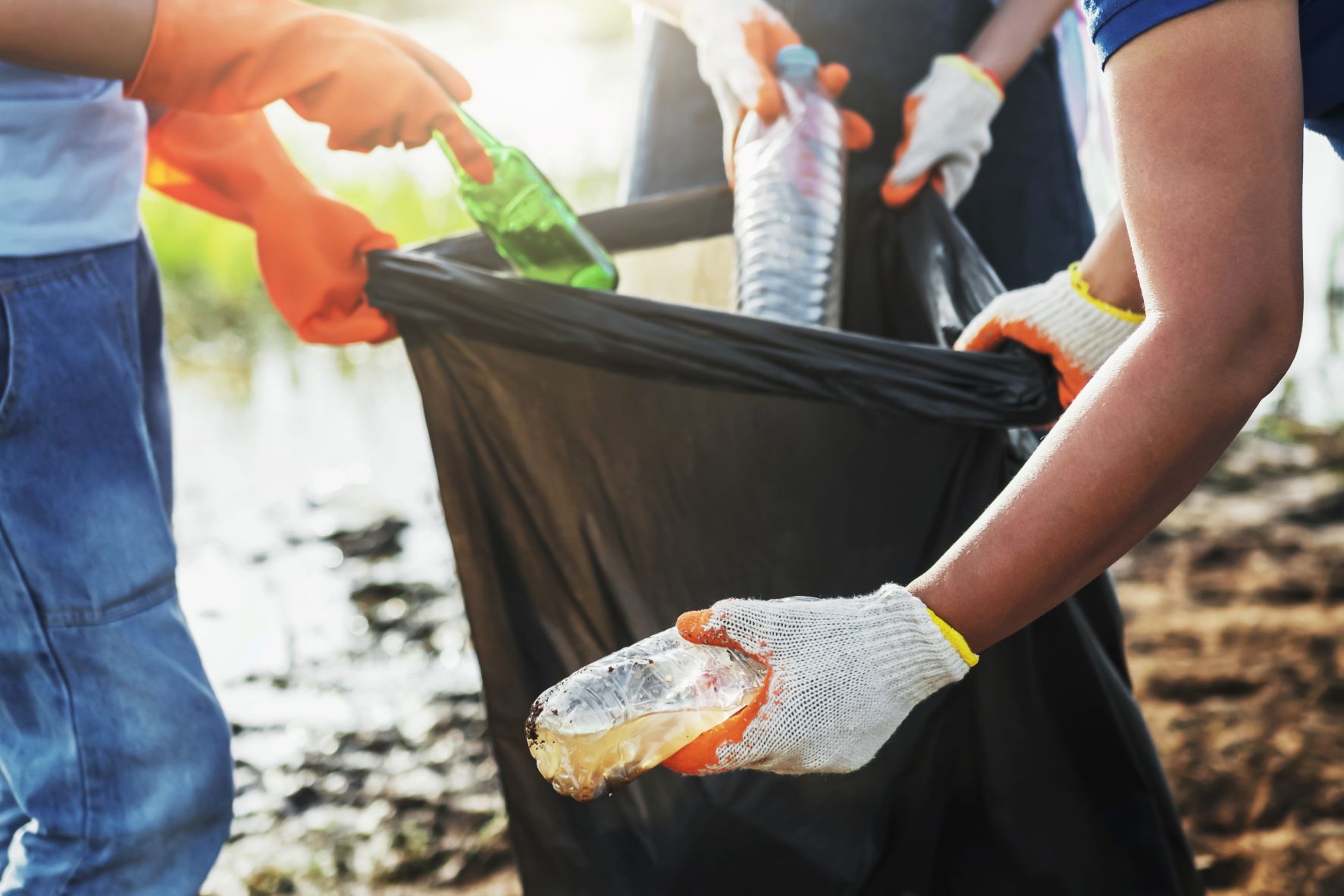
Keep America Beautiful also stopped lawmakers from holding polluting corporations accountable. The Vermont legislature passed a bill in 1953 requiring companies to use reusable packaging. Corporations saw this as a threat, so they teamed up with the Ad Council to make PSAs. Creating a social narrative that trash was the responsibility of the public made it much harder to hold corporations accountable for their pollution. The 1953 the Vermont bill was not renewed and no similar bills were passed. Although the Keep America Beautiful campaign was not the sole factor in the policy change, its public message had a large impact on legislation.
The Keep America Beautiful campaign communicated its message through public service advertisements. With the help of the Ad Council, the Keep America Beautiful advertisements were very widespread and impactful. Two ads in particular made the campaign well-known in America: Susan Spotless and the “crying Indian”.
The Keep American Beautiful campaign had several very notable ads. In the early 1960s, Keep America Beautiful created a character called Susan Spotless. She was a young white girl dressed in white who shook her finger disapprovingly at adults who littered. She also told adults that “every litter bit hurts.” Her appearance was meant to depict innocence, beauty, and cleanliness. These traits also reflected how we saw natural beauty and what Americans wanted their nature to resemble.
The Susan Spotless character was deeply rooted in white supremacist ideals. The campaign used the whiteness of Susan Spotless’s skin and clothes to represent goodness and purity. This commercial is one example of the ways environmental groups have supported (and continue to support) white supremacist and racist ideals. Another example of this is the “crying Indian” commercial.
The most famous ad from the Keep America Beautiful campaign is known as the “crying Indian”. It’s important to note that while some Indigenous groups are comfortable with the term “Indian”, others see it as a painful reminder of the history of racism, violence, and genocide of Indigenous peoples.
The “crying Indian” commercial depicts a man in traditional American Indigenous clothing on a canoe in a stream. As he paddles, he comes across more and more trash. He gets out of the canoe, and a person in a passing car throws a bag of trash out the car window. The bag lands at his feet. He looks up and sheds a single tear while a narrator says: “People start pollution; people can stop it.” It’s called the “most famous tear in American history”.
This ad was problematic in many ways. Firstly, the actor known as Iron Eyes Cody was not Native American. Iron Eyes Cody was born to Italian immigrant parents and built an acting career by impersonating an Indigenous American man. Unfortunately, this was somewhat common in the 1900s. White actors frequently portrayed Native Americans in redface. Redface is the portrayal of Native Americans by white actors often in makeup to change their skin color.
Additionally, the ad has been criticized for depicting Indigenous Americans as “noble savages”. This is because they care about the environment (noble) but are shown as powerless or simple (savage). The noble savage trope is the literary concept of an uncivilized man. This man is inherently good and noble because civilization hasn’t corrupted him. However, not being part of (white) civilization also makes him a savage. This stereotype portrayed Native Americans as foreign, different, and less than civilized. It is an extremely offensive and racist stereotype.
@connorbeardox This PSA is absolutely WILD #psa #tv #commercial #native #indigenous ♬ Strawberry – Prod by Rose
Greenwashing is a marketing tactic to present a company’s unsustainable practices as “green”. Greenwashing is an ever-growing problem. Consumers want the products they buy to be sustainable, but corporations are often unwilling to change their practices. Instead companies use marketing techniques to imply their products are “environmentally-friendly”. These techniques include:

The Keep America Beautiful campaign is unfortunately another example of corporate greenwashing. While it focused on cleaning up litter, the Keep America Beautiful campaign did not advocate for larger solutions. It claimed that litter came from litterbugs, not from the companies that made the unsustainable single-use packaging.
Their shame-based campaign didn’t try to solve the waste problem from the production side. It also did nothing to penalize or set limits on corporate pollution. The Keep America Beautiful campaign was designed to shift the blame from the companies that made the trash, to the person who threw it out.
Keep America Beautiful even worked with its corporate sponsors on projects to promote recycling. Partners included Nestle, Bud Light, and Unilever. Yet the campaign was never critical of its corporate partners who created the litter in the first place.
The first thing you can do is recognize greenwashing when it happens. If consumers can spot greenwashing, they can decide whether or not to support the company. To recognize greenwashing, look beyond the buzzwords and images for evidence of company practices. Approval from third-party sustainable organizations (like Fair Trade Certified) is a good sign that their practices are more sustainable.
Unfortunately, not all certifications mean a corporation is environmentally-friendly. For example, the Sustainable Forestry Initiative (SFI) will certify organizations for a price even if they are destroying forests. The SFI certification is a form of greenwashing that companies use to hide their unsustainable practices. Corporations use a similar form of greenwashing when they promote wood pellets as renewable energy, even though they negatively contribute to climate change.
You can also research the company to back up or disprove its claims. Be sure to check any past news articles about the company as well as the company’s own sustainability claims. Independent resources can provide company-specific environmental metrics. One of these resources is the EPA Greenhouse Gas Reporting Program. There are also independent resources that can help determine if a brand or company is certified to be sustainable. The B Corp Directory is one of these.
You could also join or volunteer for organizations that are advocating for systemic solutions to global warming and plastic pollution. Be sure to thoroughly research organizations to make sure that any group you support reflects your values.
Dogwood Alliance is one organization that holds industries and governments accountable for greenwashing. We’re fighting to protect Southern forests and the communities that rely on them.
 Michelle ThompsonMichelle is Dogwood’s 2022 Forests & Climate Stanback Research Fellow. She has been interested in nature and conservation since growing up in upstate South Carolina. She is a masters student at Duke studying ecosystem science and conservation. Michelle is honored to continue her work in environmentalism at Dogwood over the summer and is excited by the opportunity to work with her community. In her free time, Michelle enjoys crafting, reading, and hanging out with her two cats.
Once the weather starts to warm up, frogs and other amphibians will come out and play. Probably the easiest way to identify a frog is through the sounds they make. We put together a list of some species you can find in the US South. So next time you hear a “ribbit” you can tell what frog is.
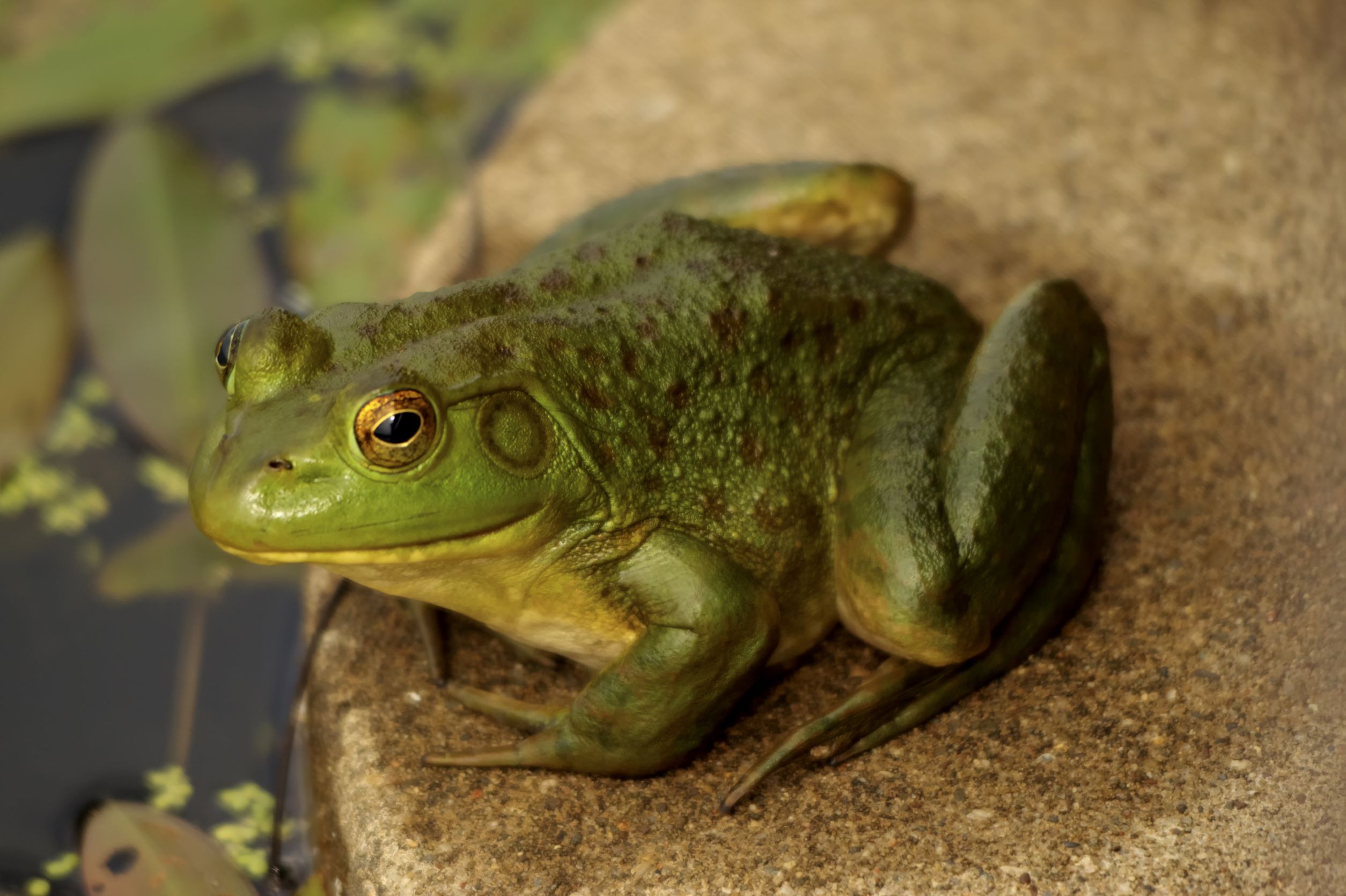
This frog is probably a popular one because of its huge size. You can find them in ponds, lakes, marshes, and streams all over the Southern states.
Bullfrogs have a deeply pitched song. It is similar to the mooing of a cow, but males are the only ones that can make that loud noise.
Listen to the sounds they make here.
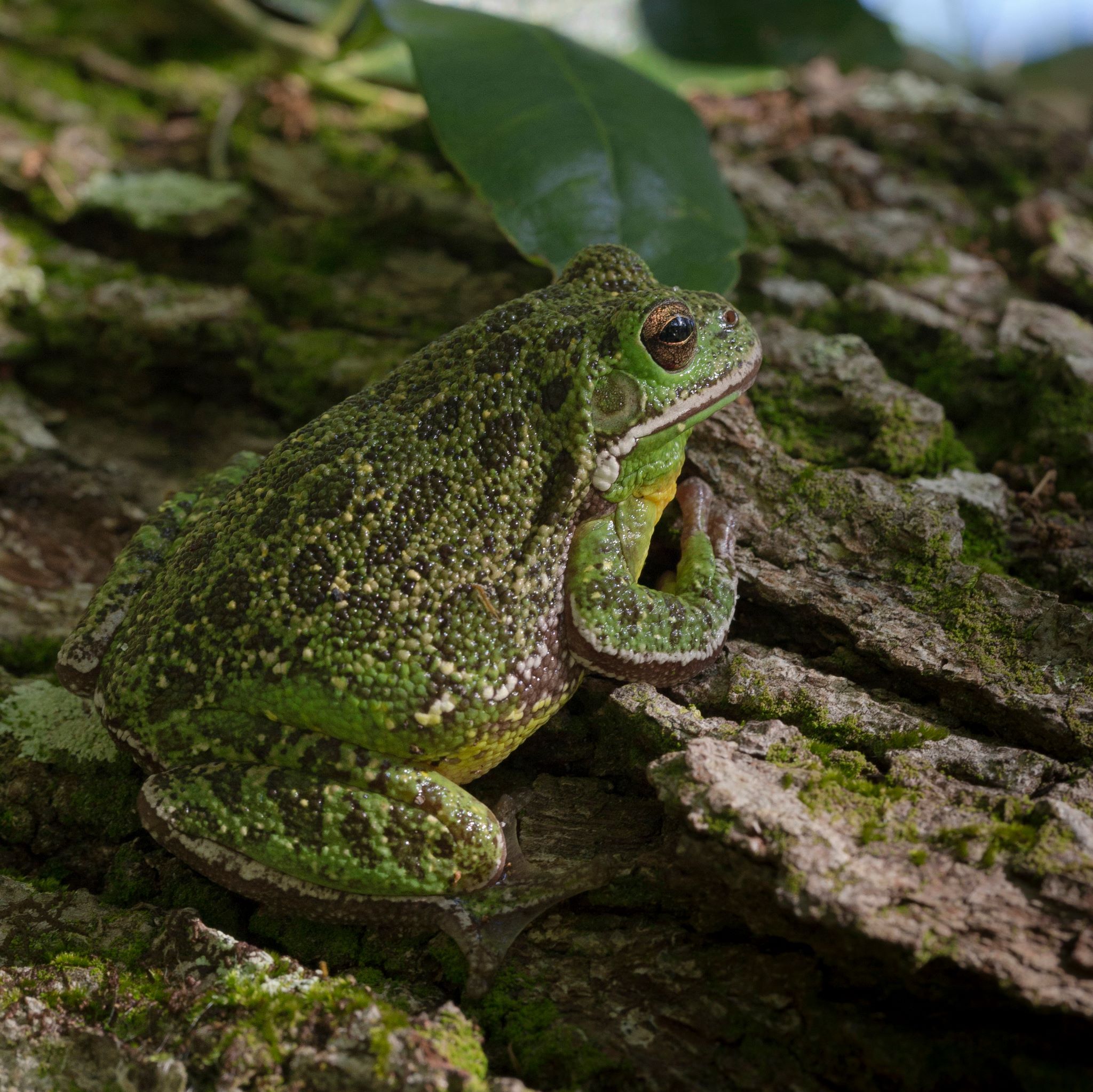
This species is one of the largest tree frogs found in North Carolina. They’re native to Southern states like Florida, Alabama, Georgia, South Carolina, North Carolina, Tennessee, and Louisiana. They’re mostly found in the coastal plains.
Their name may have given you an idea on how they sound. And you’re right! They have loud barking calls.
Listen to how they sound.
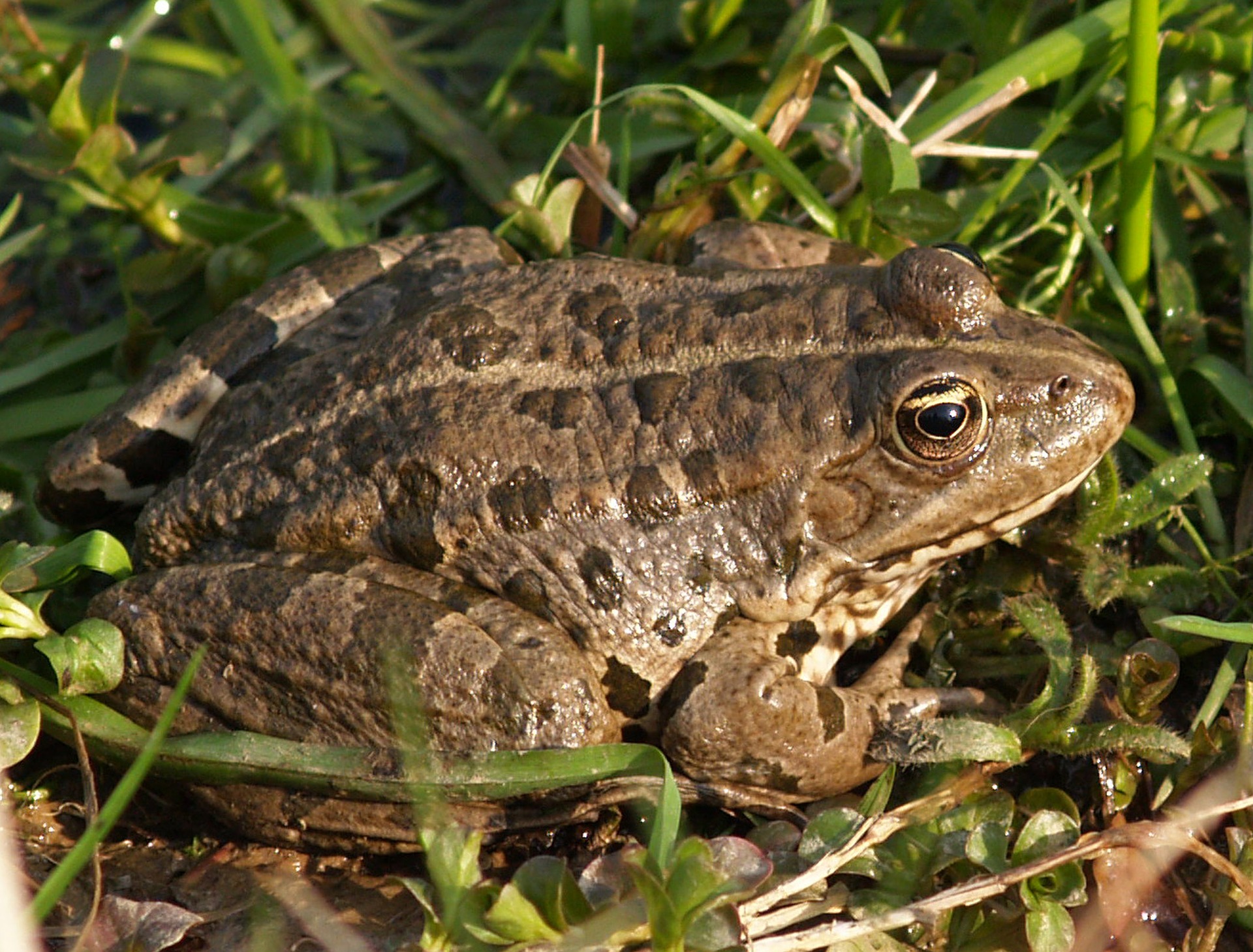
Sometimes people confuse this frog with the bullfrog. They’re the second largest frogs found in North Carolina. Sadly, the last time they were seen in North Carolina was in 1975. You can find them near the coastal plain of the Southeastern states, from South Carolina to Mississippi.
They have loud, deep calls like snores. Some people think they sound like a distant chainsaw, a train, or a lawnmower.
Listen to it here and decide for yourself.
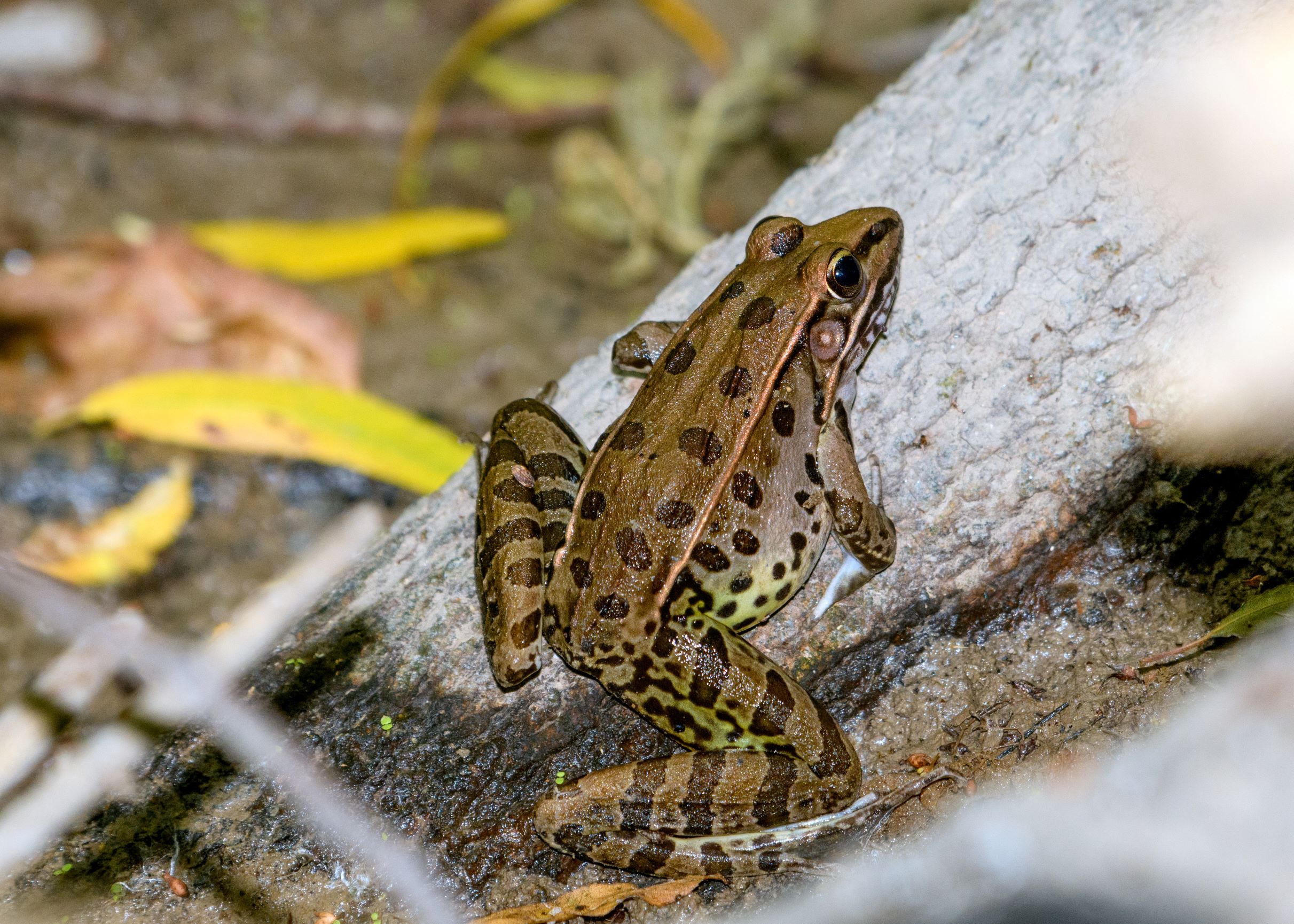
You can find them in ponds, ditches, swamps, and around lakes and streams all over the Southeastern United States. You can even find them up to Iowa and New York.
Their call is like a chuckling croak. Some compare it to the sound of rubbing an inflated balloon.
Listen to it here.
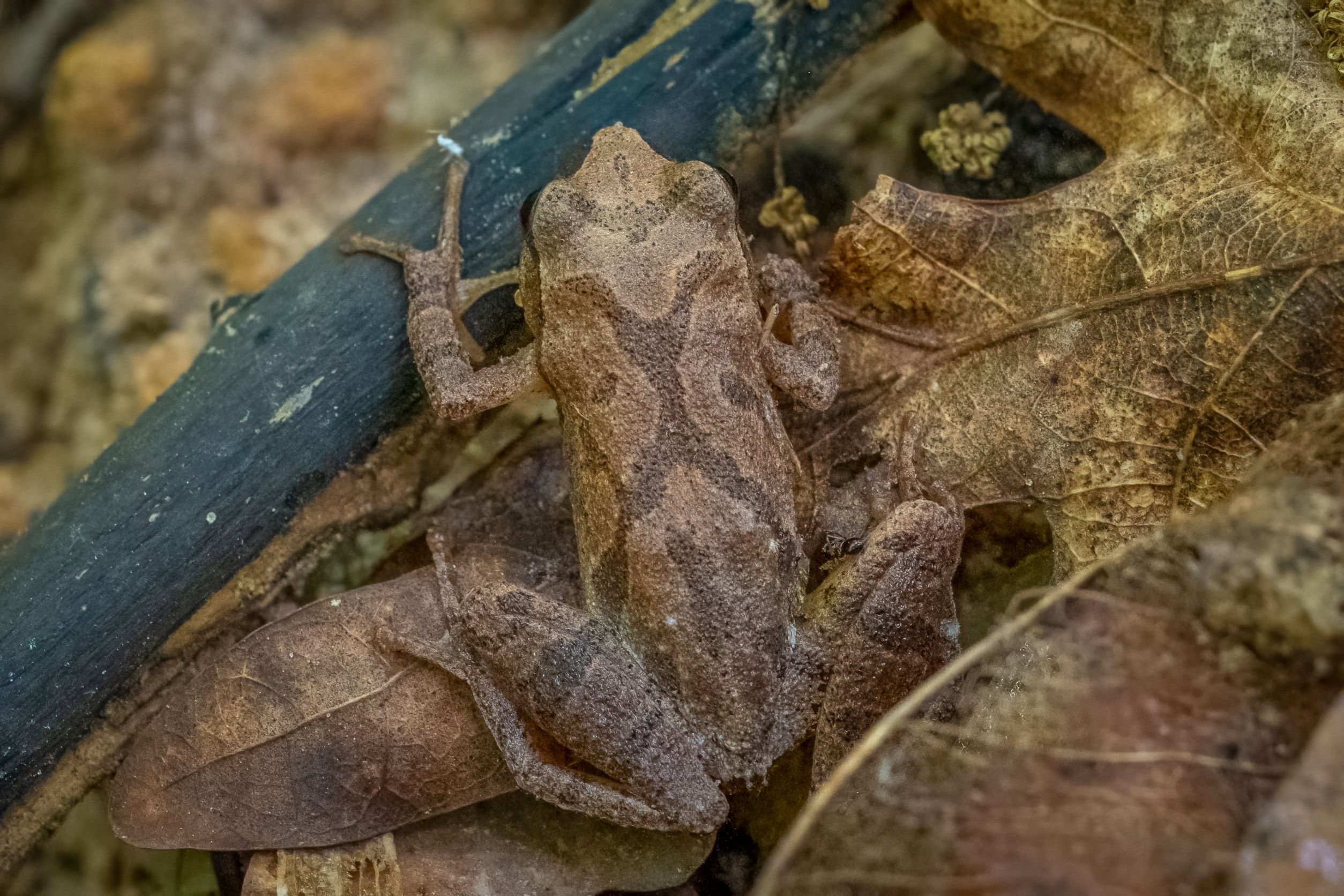
These tiny frogs can be difficult to spot since they’re so small and are exclusively nocturnal creatures. They live in wooded areas and lowlands near wetlands and ponds all over the Eastern United States.
You’ve probably heard the sound they make before in early spring, especially if you live in the US south. Their call is a high-pitched, short peeping sound.
Listen to them here.
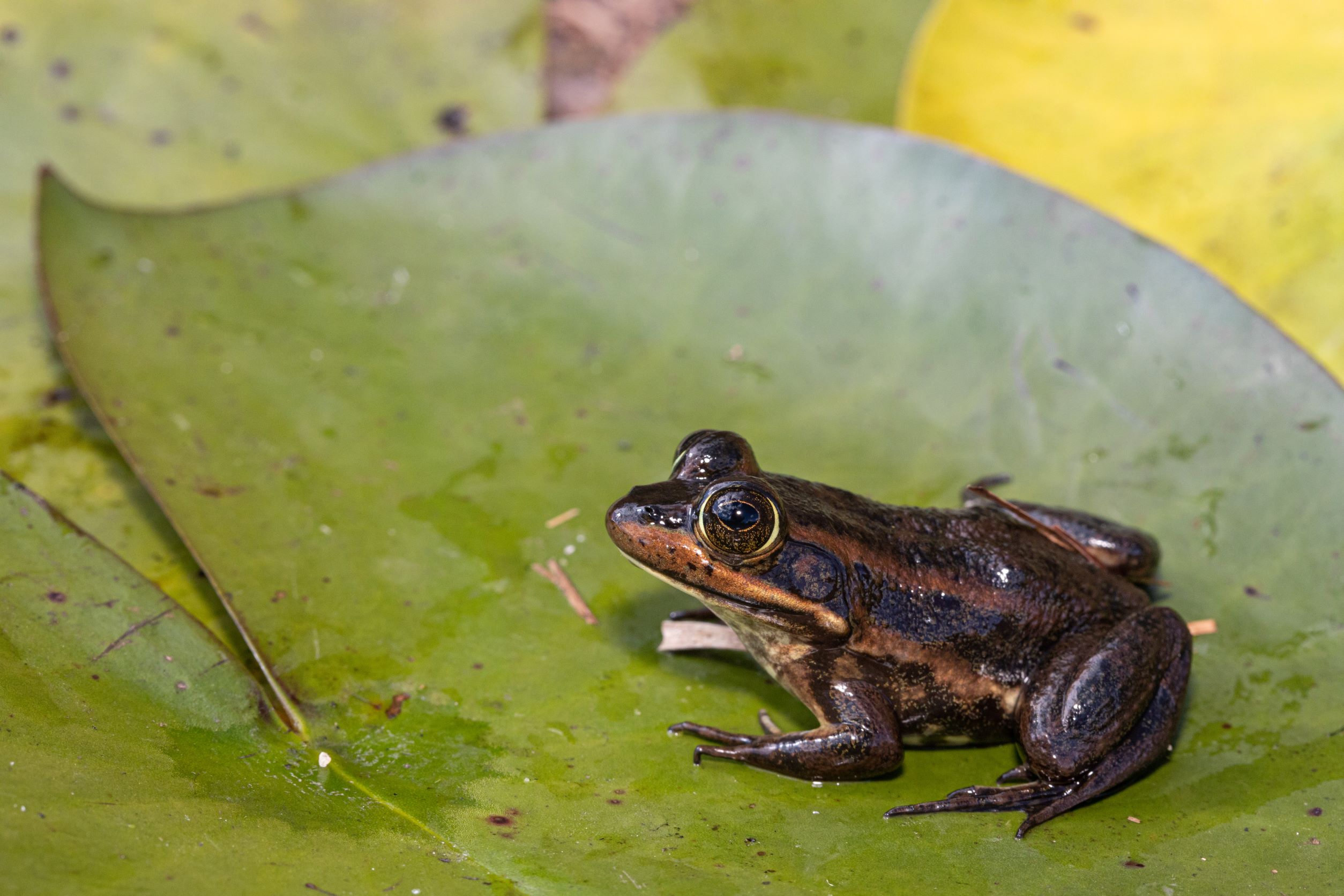
It’s more likely that you’ll hear this frog rather than see it. Since they’re nocturnal, spotting them can be tricky. They inhabit the coastal plains of the Eastern United States.
Carpenter frogs get their name from the call they make that sounds like two carpenters hammering nails one after another.
Listen to it here.
Sadly, many amphibian species like these frogs are under threat from things like logging, climate change, and habitat loss. We can do our part to help preserve these species. Like all amphibians, frogs need water for breeding. Polluting or draining ponds and streams where frogs live, breed, and/or hibernate makes them vulnerable to population loss.
One of the most important things we can do as citizens and advocates is to take action. You can help protect wetlands and woods by contacting your representatives and demanding that they protect these natural habitats. Or you can donate or volunteer with organizations committed to protect wetlands and woods.
Did you enjoy learning about these froggy friends? If so, why not show us?
Share your favorite frog photos or videos and tag us on Instagram, Facebook, or Twitter!
Want to do more?
Become a Forest Defender today! Your monthly gift will protect the frogs and the biodiversity of the South.
Join our email list to get new Biodiversity in Your Backyard sent directly to your inbox!
Una vez que el clima comience a cambiar y la primavera llegue, las ranas y otros anfibios saldrán a jugar. Probablemente la forma más fácil de identificar una rana es a través de los sonidos que hacen. Recopilamos una lista de algunas especies que se pueden encontrar en el sur de los Estados Unidos, junto con sus correspondientes cantos. Así que la próxima vez que escuches un “ribbit” podrás saber de qué rana se trata.
Esta rana es probablemente popular debido a su enorme tamaño. Puedes encontrarlas en estanques, lagos, pantanos y arroyos en todos los estados del sur.
Las ranas toro tienen un canto profundo. Es similar al mugido de una vaca, pero los machos son los únicos que pueden hacer ese ruido fuerte. Puedes escucharlos aquí.
Esta especie es una de las ranas arborícolas más grandes que se pueden encontrar en Carolina del Norte. Son nativas de estados del sur como Florida, Alabama, Georgia, Carolina del Sur, Carolina del Norte, Tennessee y Luisiana. Se pueden encontrar principalmente en las llanuras costeras.
Su nombre puede haberte dado una idea de cómo suenan. ¡Y tienes razón! Sus cantos suenan a fuertes ladridos. Escucha cómo son.
Esta rana a veces se puede confundir con la rana toro. Son las segundas ranas más grandes que se pueden encontrar en Carolina del Norte. Lamentablemente, la última vez que fue vista en Carolina del Norte fue en 1975. Se encuentran cerca de la llanura costera de los estados del sureste, desde Carolina del Sur hasta Mississippi.
Tienen cantos fuertes y profundos, como ronquidos. Algunas personas piensan que suenan como una motosierra lejana, un tren o una cortadora de césped. Puedes escucharlo aquí y juzgarlo.
Puedes encontrarlos en estanques, acequias, pantanos y márgenes alrededor de lagos y arroyos en todo el sureste de los Estados Unidos. Incluso puedes encontrarlos en Iowa y Nueva York.
Su canto es como un graznido risueño. Su canto ha sido comparado con el sonido que se produce al frotar un globo inflado. Escúchalo aquí.
Estas diminutas ranas pueden ser difíciles de detectar ya que son muy pequeñas y son criaturas exclusivamente nocturnas. Viven en áreas boscosas y tierras bajas cerca de humedales y estanques en todo el este de los Estados Unidos.
El sonido que emiten es probablemente un sonido que hayas escuchado antes a principios de la primavera, especialmente si vives en el sur de los Estados Unidos. Su canto es un sonido agudo y corto. Puedes escucharlo aquí.
Es más probable que escuches esta rana en lugar de verla. Dado que son nocturnas, detectarlas puede ser complicado. Habitan las llanuras costeras del este de los Estados Unidos.
Las ranas carpinteras obtienen su nombre del canto que hacen este suena como dos carpinteros martillando clavos uno tras de otro. Escúchalo aquí.
Lamentablemente, muchas especies de anfibios como estas ranas están amenazadas por distintos factores como la tala, el cambio climático y la pérdida de sus hábitats. Podemos hacer nuestra parte para ayudar a preservar estas especies. Como todos los anfibios, las ranas necesitan agua para reproducirse. La contaminación o el drenaje de estanques y arroyos donde las ranas viven, reproducen y/o hibernan las hace vulnerables a la pérdida de especies.
Una de las cosas más importantes que podemos hacer como ciudadanos y defensores es actuar. Puedes ayudar a proteger los humedales y los bosques contactando a tus representantes y exigiendo que protejan estos hábitats naturales. O puedes donar o ser voluntario en organizaciones comprometidas con la protección de humedales y bosques.
Campaigners and community leaders in the Netherlands have had their hard work pay off again. The Dutch government recently adopted a formal policy to rule out new subsidies for biomass heat plants.
Last year, the Dutch Parliament halted new subsidies until they were to complete a biomass phaseout plan. This new policy replaces that temporary measure with a permanent moratorium.
Minister Jetten said:
“…the government is aware of social concerns regarding biomass-based raw materials. That’s why we have decided to immediately halt subsidization of wood-based commodities.”
Dogwood Alliance has supported the on-the-ground efforts for years. An international coalition standing for forests, climate, and communities has raised its voice. Minister Jetten highlighted that our movement is being listened to.
Imports of wood from the Southern US and the Baltic states have stoked growing opposition to biomass in the country.
Could this recent decision tell us what’s yet to come?
Biomass is the largest source of energy subsidized and categorized as renewable energy in the Netherlands. This is similar to other European Union countries. In 2020, biomass was over half (54%) of the “renewable” power consumed and about half of that was from burning wood for heating.
In the Southern United States, this has had extreme consequences for our forests.
We look to a strong phaseout from the Netherlands. The Netherlands phaseout plan could send a signal for all countries in the EU that burn biomass. There’s no better time to stand for forests than now. It’s time to phase out biomass completely.
Every day is an opportunity to celebrate and reflect on the vital role that our beautiful and diverse Southern wetlands play on our planet. Wetlands are vital to the communities that surround them. Wetlands protect communities from flooding and minimize the impacts of hurricanes by quickly absorbing water. Wetland forests are among the most biodiverse in the world, home to many unique plants and animals. These majestic wetlands also draw outdoor enthusiasts from all over the nation.
We’re honored to work with the Pee Dee Indian Tribe on a wetlands pilot project.
Together we’re planting the seeds for new possibilities that are good for both land conservation and the local economy.
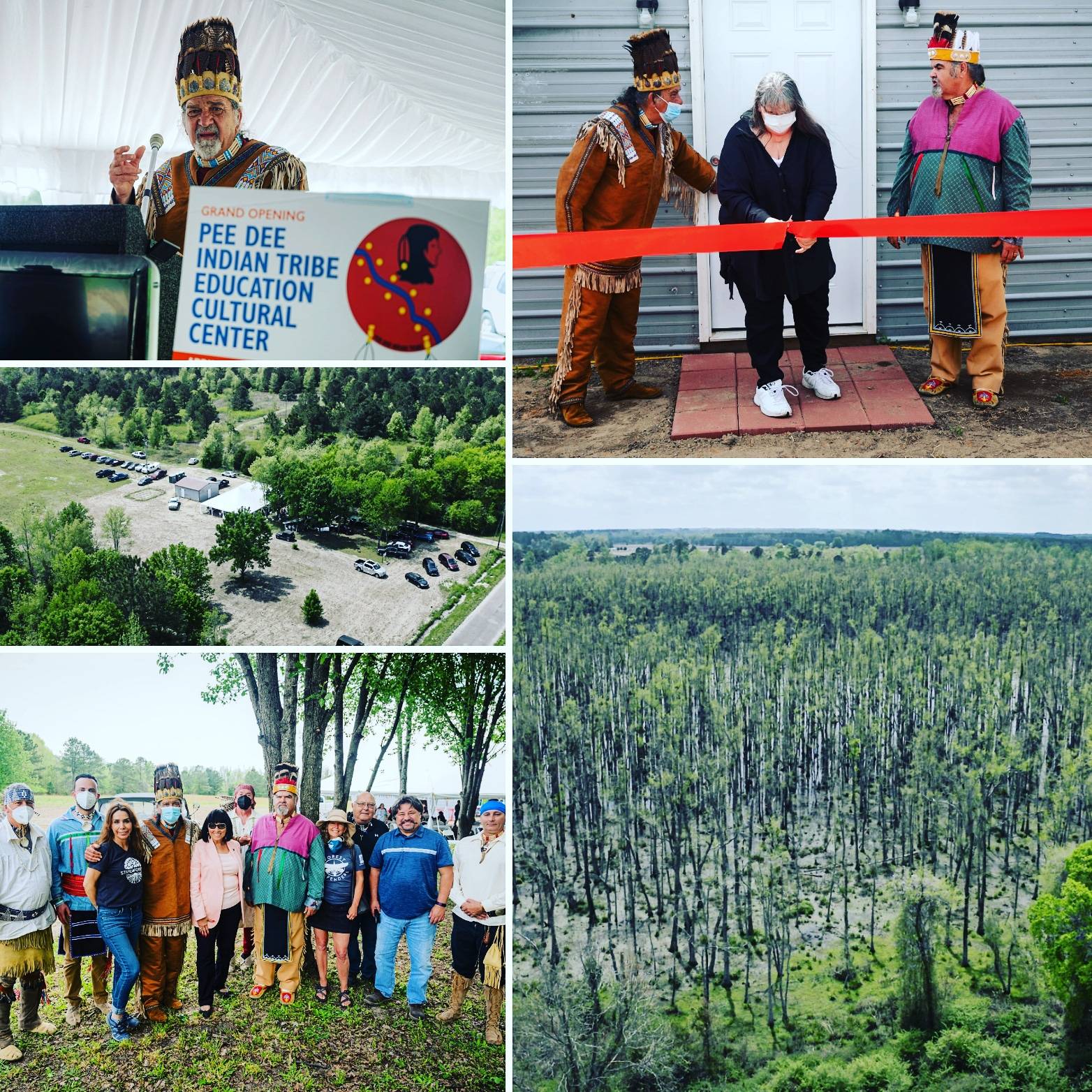
The Pee Dee Tribe in South Carolina is using community conservation to break the cycle of abuse and exploitation that they and their land have suffered. The tribe acquired about 15 acres of wetland forest. They’re currently acquiring another 40 acres. They have many plans that will financially and spiritually support the tribe that are also tied to land conservation. This type of project will bring visitors to the area, a place that many in the past have considered undesirable to visit or invest in. The project will also draw outdoor enthusiasts to the region to camp, hike, kayak, and bring wealth, light, and hope to the Indigenous community.
Take action: Urge Congress to protect wetlands and the communities that depend on them
Give now: Make a donation today to keep our wetlands wild
If you’re trying to add a new hobby or always wanted to hunt for mushrooms, you may be wondering, Where do I start? We put together a guide about the basics of mushroom foraging for you.
There are 5.1 million fungal species in the world. Some of them are poisonous like the Destroying Angel or the Deadly Skullcap. Their names sound like heavy metal bands, but they’re among the most toxic known mushrooms. Edible mushrooms represent only a tiny portion of the enormous variety of mushrooms we discover in the woods.
Sometimes a mushroom collector only learns the rules after they’ve broken them. Before jumping into mushroom harvesting, read these recommendations that can help you avoid some problems.
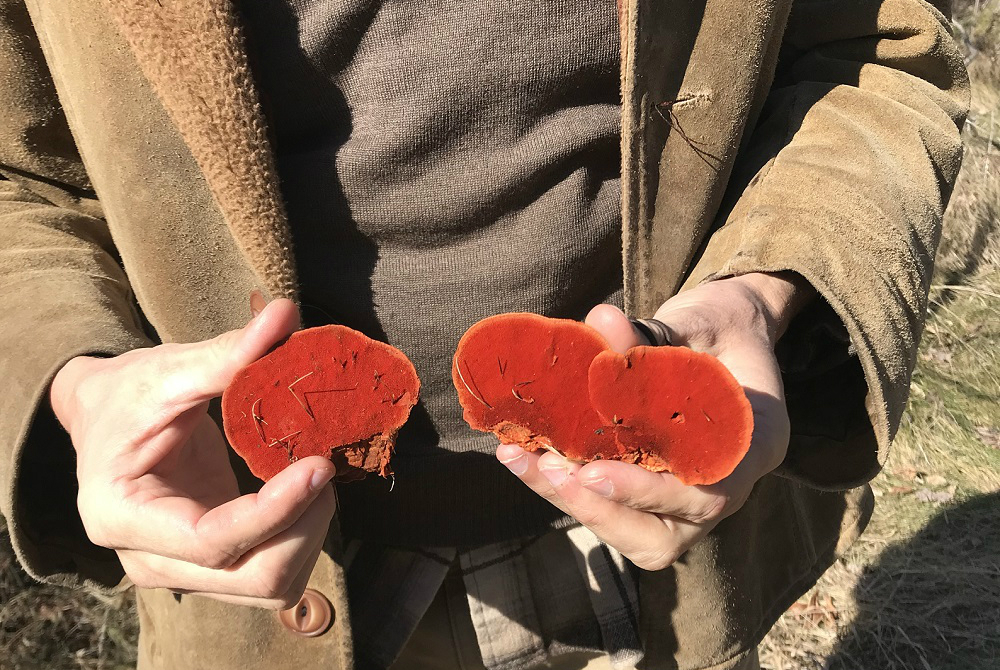
If you’re a beginner mushroom hunter, one of your biggest concerns should be eating the wrong species. We got you. Mushroom-related deaths are rare, around three per year in the United States. In fact, most people tend to experience mild nauseas, dizziness, or some other uncomfortable reactions. Don’t worry, mushroom hunting is not as hazardous as base jumping.
The most effective way to stay away from poisonous mushrooms is to get familiar with the features of the specific mushrooms you’re looking for. Use a mushroom identification book, and take it with you when going mushroom hunting. Learn more about the habitats, growing seasons, appearances, and aromas. Stick to the mushroom species you’re looking for and ignore everything else. Always remember, “when in doubt, throw it out” or when being a responsible mushroom forager, “when in doubt, do not cut it out”.
A good guideline is to never eat raw mushrooms. Even the ones that are considered safe to eat. Cooking will destroy potential harmful toxins. It also makes mushrooms more digestible and improves the flavor and their nutritional value. However, cooking will not make poisonous mushrooms edible.
Being a responsible mushroom collector is vital to ensure the sustainability of all mushroom species and the wildlife that depends on them. Mushrooms are important food sources for wildlife. Some species are fungivores, meaning that over 90% of their food supply depends on mushrooms. Below you can find five recommendations on how to be a responsible mushroom hunter or forager.
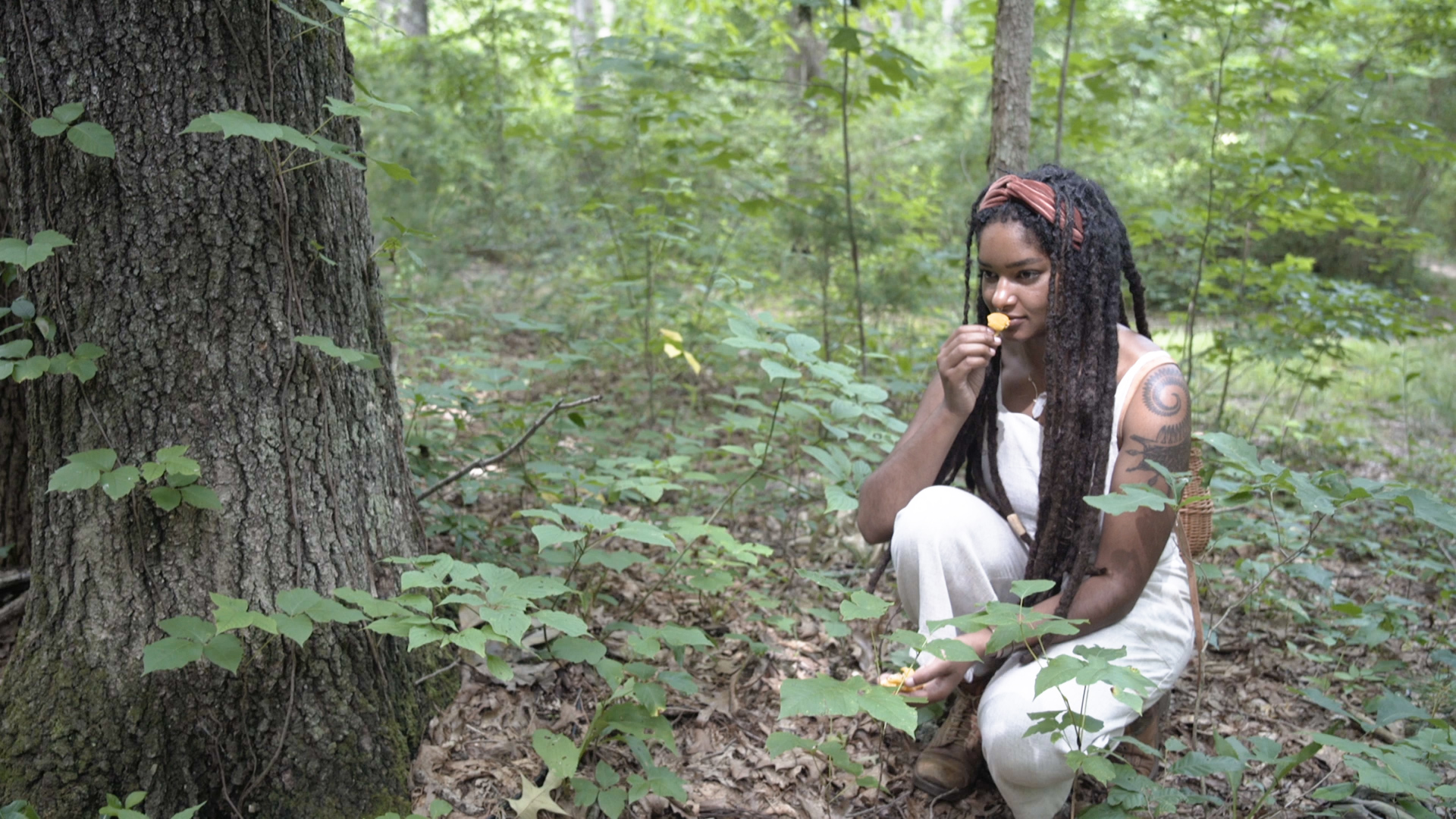
Besides being considerate and leaving mushrooms behind for other hunters, you may end up with way more than you can use before they go bad. Leaving some mushrooms behind will ensure that mushrooms will be available next season. It also makes sure the animals who eat them will still have their food source.
Mushrooms replicate through spores. Mature mushrooms release spores into the air that ensure more mushrooms will grow. When mushroom hunting, try to pick mature mushrooms that have already released their spores. Use baskets or mesh bags to gather your mushrooms. By using them and walking through the woods you’ll allow some spores to be released. Don’t use plastic bags.
Learn to recognize undesirable edibles, like ones that are buggy, dirty, or old. Don’t collect these and instead let them complete their life cycle. You probably won’t end up eating them anyway, so it’s better to leave them behind.
For example, mushroom stems are to be cut at or above ground level, keeping the growing site as undisturbed as possible. There are some great videos about proper harvesting techniques.
Your hiking shoes can cause damage if you’re not careful enough. Try not to step on little mushrooms, and try not to leave any trash behind you. Double check for any tiny bits of trash before leaving the area.
The available mushroom species will depend on the season and area of search. Edible mushrooms are native to the American Midwest, the Rockies, and the Northeast. Some species, such as morels and oyster mushrooms, can even be found deep in the South.
But let’s start with the easiest to identify edible and tasty mushrooms.
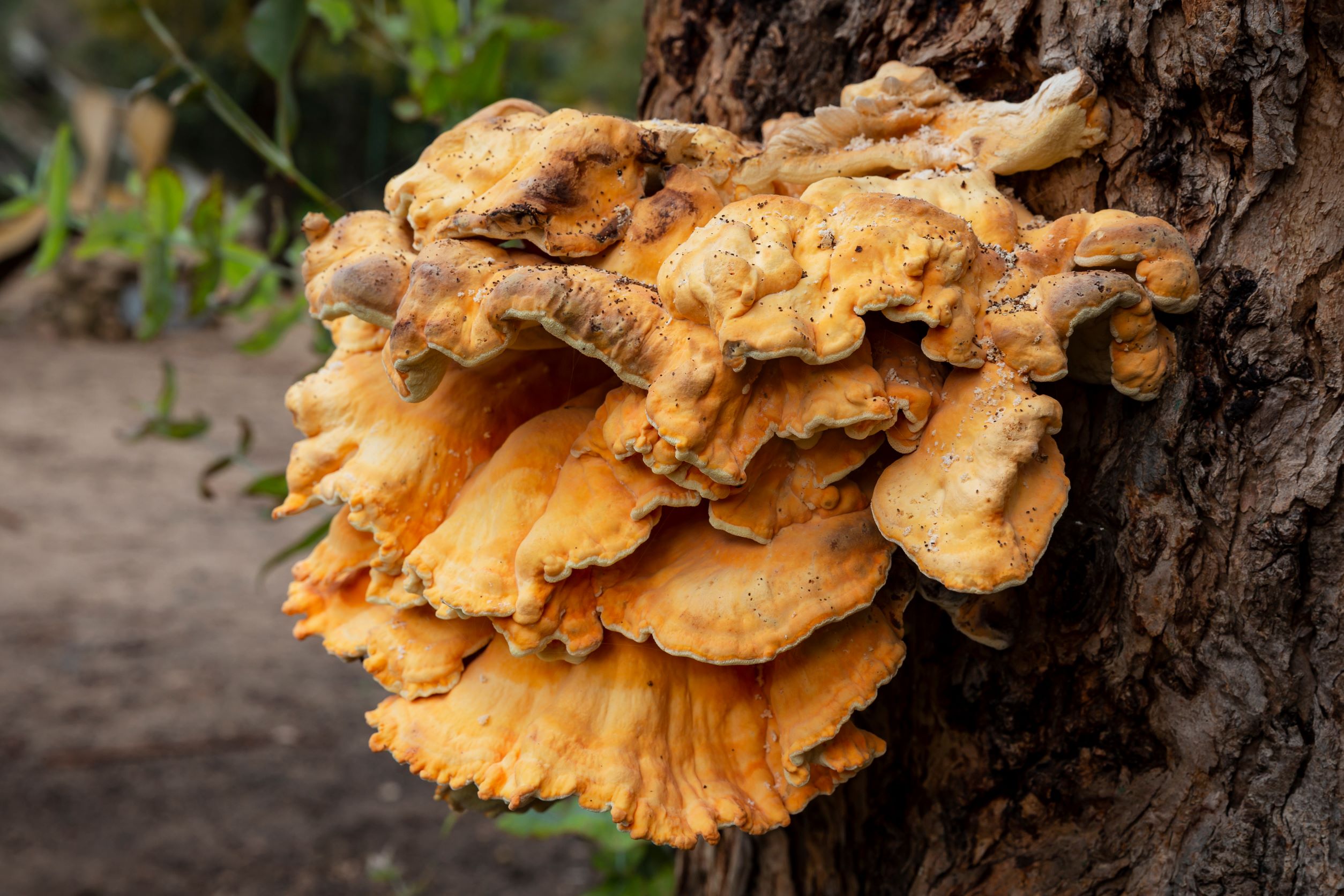
This is a great mushroom for beginner foragers since they’re easy to identify. Pay attention to the following traits:
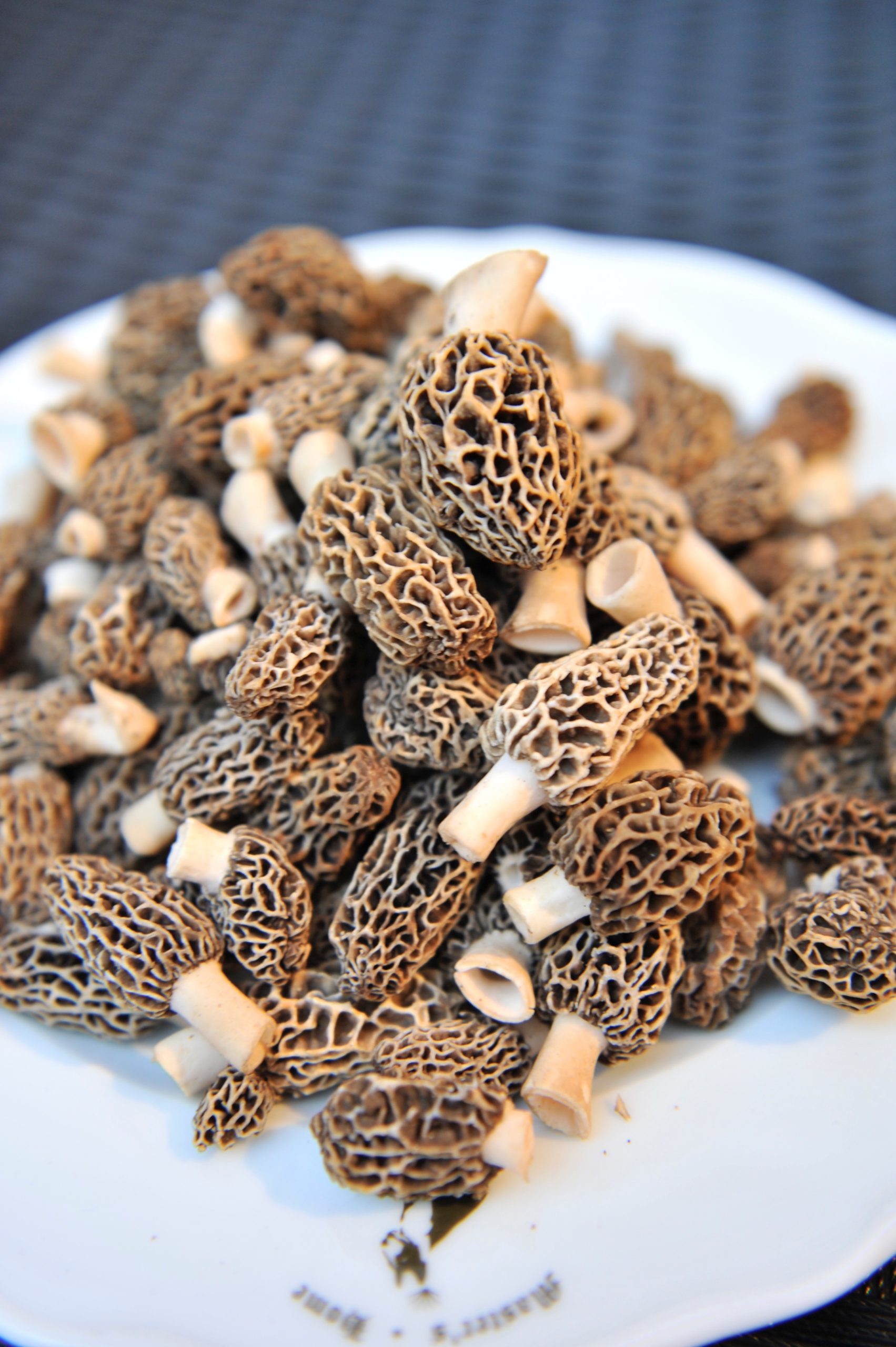
These are some of the most prized and tasty mushrooms. If you want to identify them, pay attention to the following:

This mushroom can also be easy to identify, but it can be more difficult to locate.
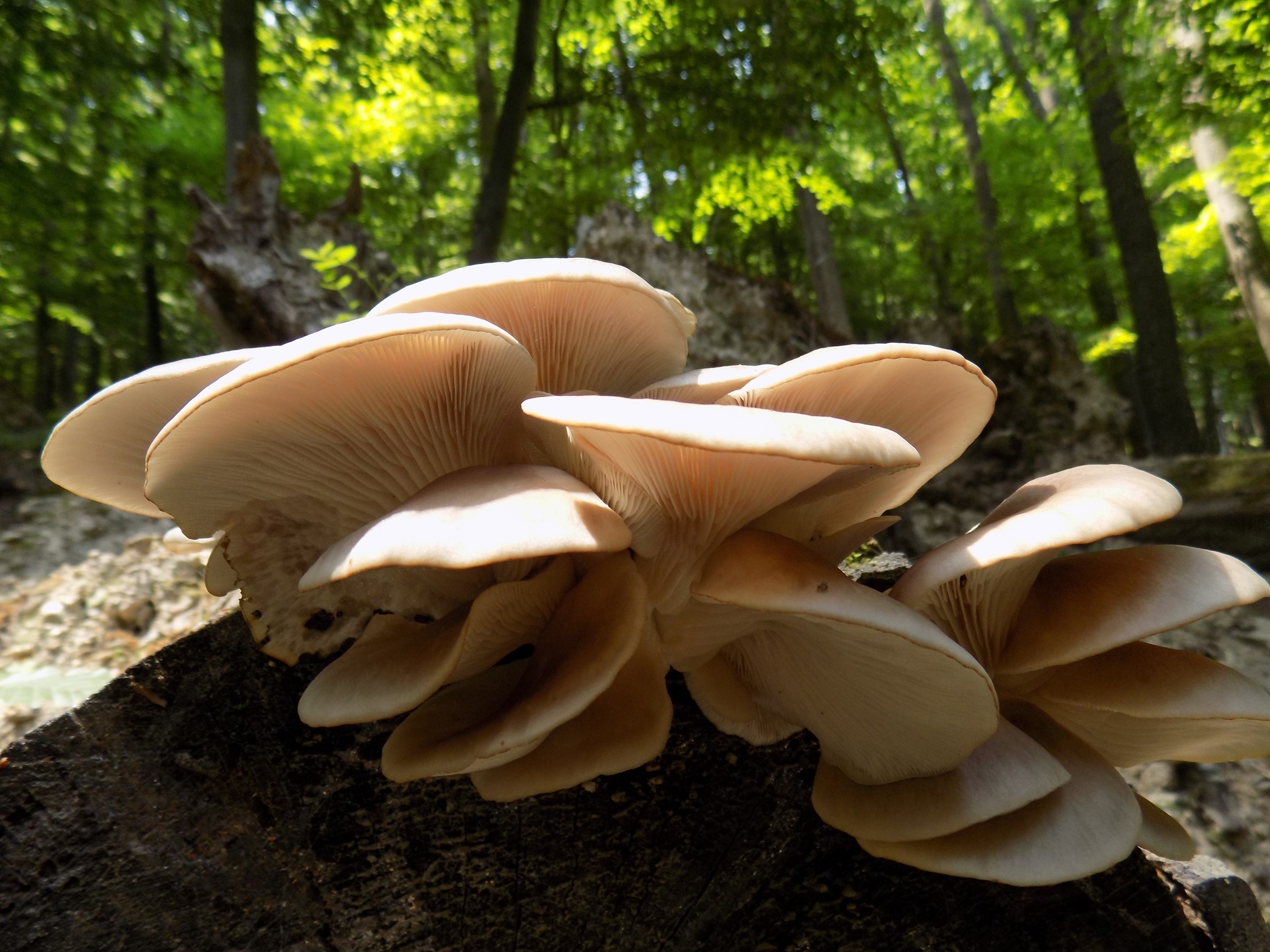
These are the mushrooms you find in grocery stores. To identify them in the wild, pay attention to the these details:
Did you enjoy learning about these incredible mushrooms? If so, why not show us!
Share your favorite mushroom picture and tag us on Instagram, Facebook, or Twitter!
Want to do more?
Become a Forest Defender today! Your monthly gift will protect the biodiversity of the South.
Join our email list to get new Biodiversity in Your Backyard sent directly to your inbox!
Si estás tratando de agregar un nuevo pasatiempo o siempre quisiste comenzar a buscar hongos, es posible que te estés preguntando, ¿por dónde empiezo? Creamos una guía sobre los conceptos básicos de la caza de hongos, así que sigue leyendo.
Hay 5.1 millones de especies de hongos en el mundo. Algunos de ellos son venenosos como el Ángel Destructor o la Galerina Mortífera. Sus nombres suenan como bandas de heavy metal, pero se encuentran entre los hongos tóxicos más conocidos. Los hongos comestibles representan solo una pequeña porción de la enorme variedad de hongos que podemos descubrir en los bosques.
Antes de empezar la recolección de hongos, lee estas recomendaciones que pueden ayudarte a evitar algunos problemas. A veces, un recolector de hongos solo aprende las reglas después de haberlas roto.
Si eres un recolector de hongos principiante, probablemente una de tus mayores preocupaciones sea comer la especie equivocada. Te entendemos. Las muertes relacionadas con hongos son raras, alrededor de tres por año en los Estados Unidos. De hecho, la mayoría de las personas experimentaron principalmente náuseas leves, mareos o algunas otras reacciones incómodas. No te preocupes, la recolección de hongos no es tan peligrosa como el salto base.
La forma más eficaz de mantenerse alejado de los hongos venenosos es familiarizarse con las características de los hongos específicos que estás buscando. Usa un libro de identificación de hongos y llévalo contigo cuando vayas a buscar hongos. Obtén más información sobre los hábitats, las temporadas de crecimiento, la apariencia y los aromas. Cíñete a las especies de hongos que estás buscando e ignora todo lo demás. Siempre recuerda, “en caso de duda, tíralo” o en el caso de un recolector de hongos responsable, “en caso de duda, no lo cortes”.
Una buena regla general es no comer nunca hongos crudos. Incluso los que se consideran seguros para comer. Cocinarlos destruirá las posibles toxinas dañinas. También hace que los hongos sean más digeribles, mejora el sabor y su valor nutricional. Sin embargo, cocinar no hará que los hongos venenosos sean comestibles.
Ser un recolector de hongos responsable es vital para garantizar la sostenibilidad de todas las especies de hongos y la vida silvestre que depende de ellos. Los hongos son una importante fuente de alimento para la vida silvestre. Algunas especies son fungívoros, lo que significa que más del 90% de su fuente de alimentos depende de los hongos. A continuación, puedes encontrar cinco recomendaciones sobre cómo ser un recolector de hongos responsable.
Además de ser considerado y dejar hongos para otros cazadores, puede que termines con muchos más de los que puedas usar antes de que estos se echen a perder. Dejar algunos hongos asegurará que los hongos estén disponibles la próxima temporada y que los animales que los comen seguirán teniendo su fuente de alimento.
Los hongos se reproducen a través de las esporas. Los hongos maduros liberan esporas en el aire asegurando que así crezcan más hongos. Cuando busques hongos, intenta recoger hongos maduros que ya hayan liberado sus esporas. Usa cestas o bolsas de malla para guardar tus hongos. Al usarlos y caminar por el bosque, permitirás que los hongos liberen algunas esporas. No utilices bolsas de plástico.
Aprenda a reconocer los hongos comestibles indeseables, como los que están defectuosos, sucios o viejos. No recojas estos hongos y déjalos completar su ciclo de vida. Probablemente no terminarás comiéndolos de todos modos, por lo que es mejor dejarlos atrás.
Por ejemplo, los tallos de los hongos deben cortarse al nivel del suelo o por encima de él, manteniendo el sitio de cultivo lo más inalterado posible. Hay algunos excelentes videos sobre las técnicas de recolección adecuadas.
https://www.youtube.com/watch?v=9tqKQ1GrEy4
Tus zapatos pueden causar algún daño si no eres lo suficientemente cuidadoso. Trata de no pisar los pequeños hongos y trata de no dejar restos de basura detrás tuyo. Chequea de nuevo para cerciorarte de que no haya pequeños restos de basura antes de abandonar el área.
Las especies de hongos disponibles dependen de la temporada y el área de búsqueda. Los hongos comestibles son nativos del medio oeste estadounidense, las Montañas Rocosas y el noreste. Algunas especies, como las colmenillas y las setas ostras, incluso se pueden encontrar en las profundidades del sur.
Pero comencemos con los hongos comestibles y sabrosos más fáciles de identificar.
Este es un gran hongo para los recolectores principiantes, ya que son fáciles de identificar. Presta atención a los siguientes rasgos:
Estos son algunos de los hongos más preciados y sabrosos. Si deseas identificarlos, presta atención a lo siguiente:
Este hongo también puede ser fácil de identificar, pero puede ser más difícil de localizar.
Estos son los hongos que encontrarás en las tiendas de comestibles. Para poder identificarlos en la naturaleza, presta atención a los siguientes detalles:
Join us as we explore! We’ll learn about the wildlife, plants, trees, and even mushrooms. All right outside our doors. When you sign up, we’ll deliver more Biodiversity in Your Backyard tips directly to your inbox!


 Donate
 November 5, 2026