


During times of stress like the COVID-19 pandemic, spending time in areas of greenery is an important way to reduce fear and anxiety and improve overall well-being. Especially for urban and suburban-dwellers, parks serve as easily-accessible mesocosms of wilderness within towns and cities. They are pretty to look at and relaxing to lounge in. These green spaces, including urban parks and state parks, provide areas for recreation and aesthetic pleasure and are proven to promote overall public health. Moreover, they reduce air pollution by generating cleaner air and reduce flooding by aiding in storm water collection. They are important public utilities that residents benefit from visiting.
However, such green spaces are primarily located in white and affluent communities and primarily benefit those communities. Neighborhoods with greater Black populations and less wealth or environmental justice communities are barred from the health benefits of green spaces due to physical distance.

This issue is reflected in state and national parks. State and national parks are essential areas of recreation for people of all races, yet the proportion of Black people who visit such parks is significantly smaller than the proportion of people of color in the entire US population. In fact, only 1% of Yosemite National Park’s visitors are Black. While the cost of travel to these parks may pose a barrier to minorities, part of the issue may also be that they simply do not feel comfortable accessing green spaces. In 2015, four Black academics were invited to a scholarly event in Yosemite National Park free of charge, along with white and Latinx academics. The Black academics were extensively questioned about their background and qualifications, while the white and Latinx academics were not.
This unconscious idea that green spaces are meant for white and affluent people contributes to environmental racism. This issue is even more prevalent during quarantine. Many of the already limited parks in environmental justice communities are closed to maintain social distancing. A tweet from May 2 highlights the disparity between green spaces in environmental justice neighborhoods versus white affluent neighborhoods, showing how a park in Harlem is locked and empty while a park in West Village is open and full of predominantly white people.
Parks and other green spaces are shown to improve physical health and psychological well-being. Yet these green spaces are distributed in ways that make them harder for Black, Indigenous, and people of color (BIPOC) and low income people to access. Furthermore, though studies suggest lower crime rates in neighborhoods near green spaces, some law enforcement officials view these green spaces as crime hotspots when they are located in environmental justice neighborhoods and obstruct full access. The combination of physical distance from and over-policing of urban parks prevents minority and low-income populations from reaping the health benefits of natural spaces.

 Raksha Doddabele
Growing up in eastern Tennessee with the backdrop of the Smoky Mountains, Raksha has always had a strong connection with the outdoors. She is a current undergraduate at Duke University, where she is pursuing a B.S. in Biology and minor in Computer Science, which she hopes to put to good use working in wildlife conservation. Some of her favorite activities include hiking, Scuba diving, and adventuring.
‘- for immediate release –
9th July 2020 – US American and Estonian forest campaigners welcome the conclusion of the Social and Economic Council (SER) in the Netherlands that the burning wood for heat or electricity should be phased out [1] and call on the Dutch government to act immediately to end both existing and new biomass subsidies that have turned the country into Europe’s fastest growing importer of wood pellets.[2]
The groups point out that although a majority of the Dutch public and several political parties demand an immediate end to the damage done to forests and climate by logging forests for biomass energy, Dutch wood pellet imports are forecast to double in 2020, for the second year in a row.
The biggest sourcing region are the Baltic States, however increasing quantities of wood pellets are also being imported from the Southeastern USA, Russia, and other countries.
Martin Luiga from Forest Aid Estonia states: “Logging rates in Estonia are far too high to protect the climate. Most of our endangered species are forest-dwelling species, and there is a widespread public concern about the intensity of logging. Nonetheless, the prevailing political mood is to further increase the harvesting volumes. Reducing demand for pellets would greatly help the situation and thereby protect Estonian forests.”
A peer-reviewed study published this month in the prestigious science journal Nature shows that across Europe the area of forests logged every year and the amount of wood taken from forests has drastically increased since 2016 as a result of greater demand, especially for biomass energy. The Baltic States are one of the most affected regions.[3]
Rita Frost from Dogwood Alliance, an NGO working to protect Southern US forests, says: “For many years now, we have been watching some of the most biodiverse forests in our region being clearcut followed by logs being taken to an ever growing number of pellet mills for export. Any delay in stopping subsidies in importing countries such as the Netherlands means that more of our forests will be cut down– disastrous for climate, wildlife, and communities alike.”
Almuth Ernsting from Biofuelwatch adds: “We are pleased to see that the SER Advice critiques the use of biomass for heat and electricity on principle. Until now, the Dutch government has put its trust in biomass sustainability standards, but there is no evidence that such standards – whether in the Netherlands or in any other country importing bioenergy feedstock – have had any effect on sourcing practices whatsoever. And even if they did, cutting down and burning trees will always make climate change worse.”
Scientists, amongst them the European Academies’ Science Advisory Council,[4] have been highlighting the fact that the carbon payback period for burning wood for energy lasts for decades or centuries, which is not compatible with the need to drastically reduce emissions in order to keep global warming to within 1.5 degrees.
Contacts: Martin Luiga, Forest Aid Estonia, Tel +372 567 11 615 Rita Frost, [email protected], Tel +1 512 423 0620 (USA) Almuth Ernsting, [email protected], Tel: +44 1316232600 (UK)
Notes: [1] ser.nl/nl/actueel/Nieuws/biogrondstoffen [2] See biomassmagazine.com/articles/17173/report-netherlands-to-double-wood-pellet-imports-in-2020 [3] nature.com/articles/s41586-020-2438-y [4] easac.eu/fileadmin/PDF_s/reports_statements/Carbon_Neutrality/EASAC_commentary_on_Carbon_Neutrality_15_June_2018.pdf
For the safety and well-being of our supporters, Dogwood Alliance will not hold our annual Woods & Wilds live storytelling event this year. It’s an event we look forward to every year because it’s an opportunity to celebrate the magic of forests with our community. We still wanted to find a way to bring that same kind of magic to people wherever they are, so we teamed up with Slay The Mic to launch Woods & Wilds: The Podcast!
We were overjoyed to welcome our very first guest, Dr. Thomas RaShad Easley aka RaShad Eas, also known as the Hip Hop Forester and the Assistant Dean of Community and Inclusion at the Yale School of Forestry & Environmental Studies, where he helps strengthen community diversity and develops programming around workplace equity. He’s also the author of the incredible article How Hip Hop Can Bring Green Issues To Communities of Color.

We look forward to sharing these stories and connections with you!
Want to listen to more? We have new episodes!
On Monday, June 22nd, the North Carolina Department of Environmental Quality (NC DEQ) held a virtual public hearing for a proposed Active Energy Renewable Power (AERP) black wood pellet facility in Lumberton, NC.
In Robeson County, where the population is 42% Native American and 24% African-American, the county is ranked worst in the state of North Carolina for health outcomes. According to NC DEQ’s own Community Mapping Tool, residents of Robeson County live with at least a dozen pollution sources. Many people are still rebuilding after Hurricane Matthew and Hurricane Florence devastated homes, roads, and other infrastructure due to the extreme flooding that made this North Carolina community the subject of national headlines.
It was a powerful hearing despite the technological challenges, including lack of broadband access for nearly 50% of Robeson County. Out of the dozens of comments made including a local state representative and a member of the county commission, only three people supported the new mill, and they were all employees of AERP.
“The shame of this is that every community being saddled with these dirty industries looks the same. It’s called environmental racism. I’m still trying to wrap my head around why you have a Title VI if it’s not going to impact your decision-making.”
Naeema Muhammad of the North Carolina Environmental Justice CoalitionEditor’s note: Title VI, enacted as part of the landmark Civil Rights Act of 1964, “prohibits discrimination on the basis of race, color, and national origin in programs and activities receiving federal financial assistance.”
“I have been following the wood pellet industry for years and noted that there is a consistent and troubling issue of underestimating the emissions of wood pellet plants.”
Attorney Patrick Anderson of the Environmental Integrity Project
“I’m opposed and I’m livid and I’m seeing what it’s doing. People are profiting and we are suffering. We pay tax dollars, we are citizens, we are human, and we are not allowed the opportunity to live as humans when you allow these plants into our community.”
Belinda Joyner of Clean Water for North Carolina
“I managed to go to a friend’s house to use their wifi because I think it is a matter of life or death. Black wood pellets have not been commercially tested in the United States. We’re already a county with high poverty rates and a lot of people with underlying issues, with COVID-19, and experimenting with our air quality may be a death sentence. AERP took advantage of this county by promising jobs. Yes, we need jobs, but not at the expense of our health.”
Concerned resident of Lumberton, NC
“We know it’s going to hurt us and not help us. We are sick of being the dumping and experimental grounds to find out if something is going to work that hurts us. Put it in North Lumberton. I’m speaking for South Lumberton, those that don’t have the necessities and the affordability to get on this call. This cannot go on. We cannot continue to be the sacrificing ground because we are Black and Brown. Air is invisible, but it is necessary.”
4th generation resident of Robeson County
“I’m opposed to this plant but would reconsider if you wanted to put the plant behind Chapel Hill. It’s time to stop what seems to be a purposeful assassination of Native American health across the United States.”
David Lowry, Associate Professor of Anthropology and member of the Lumbee Tribe
“At this time I cannot support this industry coming into our county…I would ask DEQ to slow down, give our community a chance to understand what’s going on here in this process.”
State Rep. Charles Graham (D-47, Robeson County)
“This is not climate action, this is a mistake.”
Erin Carey, Coastal Programs Manager for NC Sierra Club
To read Dogwood Alliance’s comments, please go here.
Environmental advocacy groups join forces in fresh appeal for MPs to redirect biomass subsidies towards truly clean and renewable energy sources like solar and wind
LONDON (22 June, 2020) – A coalition of environmental advocacy groups have launched Cut Carbon Not Forests, a hard-hitting campaign to expose the UK’s wasteful subsidies for companies that burn trees for electricity and to put pressure on policy makers to support reform. In the face of the escalating climate emergency, and as the UK government seeks a “green recovery” from the coronavirus pandemic, the new multichannel campaign, led jointly by Biofuelwatch, Dogwood Alliance, NRDC (Natural Resources Defense Council) and the Southern Environmental Law Center (SELC) calls for an end to these subsidies, redirecting billions of pounds to fill a critical funding gap for genuinely clean and renewable energy solutions like solar and wind.
The UK is the largest user of biomass electricity in Europe, backed by more than £1 billion a year in government subsidies, paid out via a fee on energy bills. However, burning wood in power stations is no better for the climate than burning coal. Further, much of the wood in question is cut down and shipped in from sensitive forests overseas, destroying habitats and wildlife. Cut Carbon Not Forests will spotlight British constituents’ outrage about the UK’s reliance on this false climate solution as they urge their local MPs to remove subsidies from companies that burn trees for electricity.
“The climate emergency requires us to build a genuinely clean-energy economy and end wasteful subsidies for dirty biomass energy,” said Almuth Ernsting, Co-Director of Biofuelwatch. “Cutting down trees, shipping them from forests overseas and burning them in power plants was never compatible with the need to keep global warming to 1.5 degrees; that’s even clearer today. It’s long past time to direct this aid to genuine climate solutions like wind and solar energy.
Research shows British public opinion aligns with a push toward biomass subsidy reform. YouGov polling found 82% of respondents were worried about the impact on wildlife if trees in forests were being cut down to supply power plants. Only 3% of respondents thought the government should promote biomass energy using trees shipped in from overseas forests, which is the UK’s primary source of supply. By contrast, a large majority said the government should promote solar and wind power.
“Our two biggest global environmental challenges – climate change and biodiversity loss – are inextricably linked, so keeping forests standing must be a priority of all governments,” said Sasha Stashwick, a senior advocate with NRDC. “Much of the wood burned in UK power plants is cut down and shipped in from ecologically sensitive forests in the Southeastern U.S. Those forests are efficient and powerful carbon-capture systems and support unique wildlife found nowhere else in the world.
Years of on-the-ground investigations by journalists and local NGOs show that biomass imported into the UK energy market is commonly sourced from clear-cuts of mature hardwood forests in the U.S. Southeast. Once these forests are cleared, they are forever degraded.
In 2018, the UK government introduced new rules, which effectively stop subsidies for new wood-burning power stations. However, the rules do not extend to plants with existing subsidies. This loophole is most glaring for Drax, the nation’s largest biomass-burner, which still receives more than £2 million per day in subsidies despite serious concerns about the company’s impacts on the climate, air quality and forests.
Without further reform, UK energy billpayers will spend £13 billion in direct support to large biomass power plants, including £10bn at Drax alone, according to a new report by climate think tank Ember. Moreover, Drax and other biomass plants not only benefit from billions in direct subsidies but are unfairly exempted from paying carbon taxes and thus indirectly subsidized with billions more in tax breaks. Over the entire period over which subsidies are available to burn biomass (2012-2027), the UK government will forgo upwards of £2.8 billion in carbon taxes, as revealed by the Ember report. Both these direct and indirect subsidies rest on the false assumption that burning trees for electricity is a climate solution, yet government policy continues to lag scientific consensus.
Removing subsidies from companies that burn trees for electricity is the primary goal of Cut Carbon Not Forests, which directs viewers to a campaign website where they can take action by emailing their local MP.
Media contacts: Richard Scarlett or Emma Briggs Finn Partners [email protected]
# # # ABOUT BIOFUELWATCH Biofuelwatch is a UK/US non-profit organisation which undertakes research, campaigning and advocacy regarding the impacts of large-scale bioenergy. Biofuelwatch is working for a reform of energy policies to ensure that all support goes towards the lowest-carbon and cleanest forms of renewable energy as well as energy efficiency and conservation. See www.biofuelwatch.org.uk and follow us in twitter @biofuelwatch
ABOUT DOGWOOD ALLIANCE Dogwood Alliance is a nonprofit environmental organisation based in the Southern United States that mobilises diverse voices to protect Southern forests and communities from destructive industrial logging. The group’s Our Forests Aren’t Fuel campaign is part of an international coalition opposing industrial-scale forest biomass energy. Learn more at www.dogwoodalliance.org and follow us on Twitter @DogwoodAlliance.
ABOUT NRDC The Natural Resources Defense Council (NRDC) is an international nonprofit environmental organization with more than 3 million members and online activists. Since 1970, our lawyers, scientists, and other environmental specialists have worked to protect the world’s natural resources, public health, and the environment. NRDC has offices in New York City, Washington, D.C., Los Angeles, San Francisco, Chicago, Bozeman, MT, and Beijing. www.nrdc.org and follow on Twitter @NRDC.
ABOUT SOUTHERN ENVIRONMENTAL LAW CENTER For more than 30 years, the Southern Environmental Law Center has used the power of the law to champion the environment of the Southeast U.S. With more than 80 attorneys and nine offices across the region, SELC is widely recognized as the Southeast’s foremost environmental organization and regional leader. SELC works on a full range of environmental issues to protect our natural resources and the health and well-being of all the people in our region. www.SouthernEnvironment.org
At the end of February, Georgia forest lovers from across the state came together to advocate for the #Stand4Forests resolution in the Georgia House of Representatives. This call to protect our forests and communities was assigned to the Natural Resources and Environment Committee, and, as a result of volunteers and organizational supporters meeting with key committee members, it looked like our resolution would get a hearing.
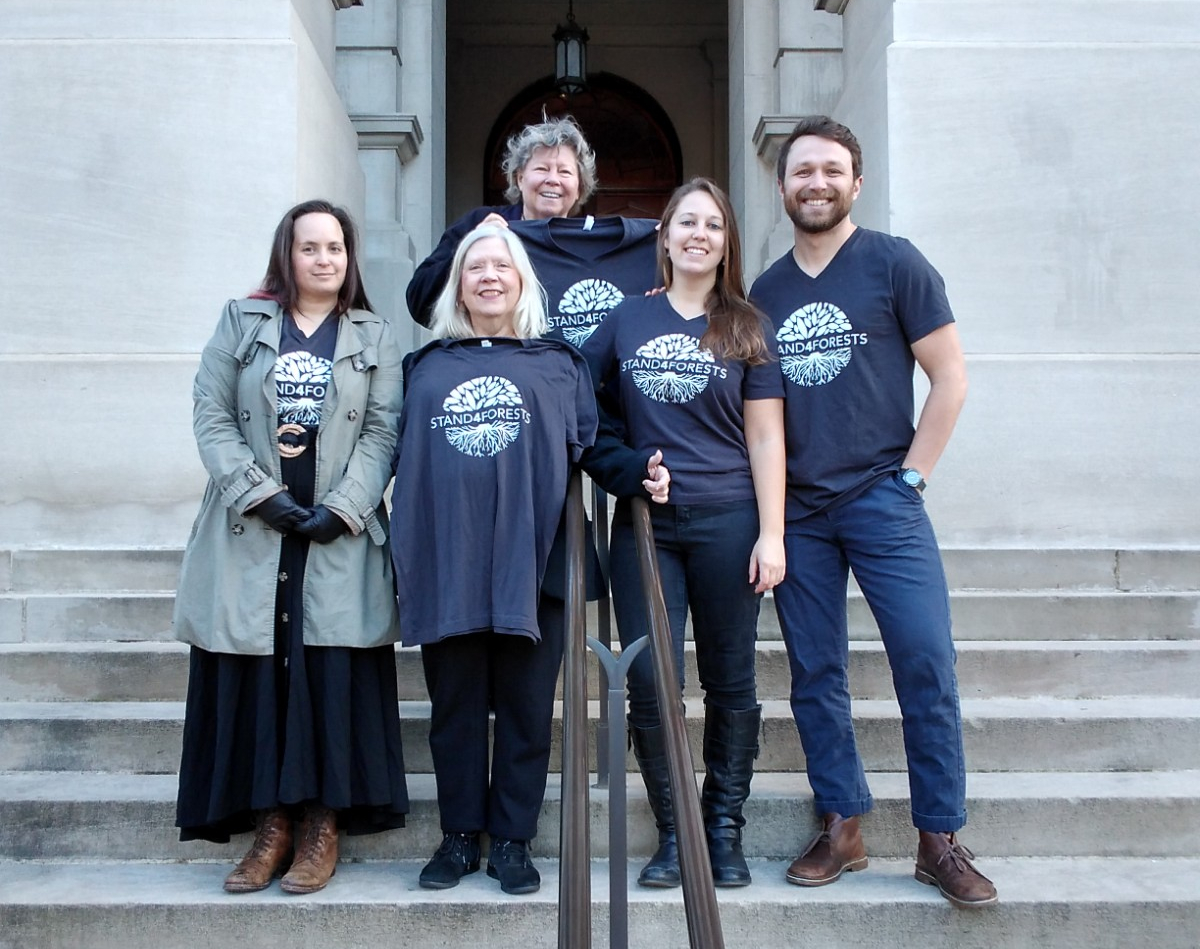
The #Stand4Forests GA team on the steps of the Georgia House of Representatives
Then came the COVID-19 pandemic and the shut down of the Georgia General Assembly. The legislature reopened this week, but crucial bills and budget negotiations will take precedence, so we don’t expect our resolution to move forward this session.
That doesn’t mean we’ve stopped our work to expand our coalition and broaden support for meaningful legislation in the next session.
The initial 6-week online series will feature programs hosted by Stand4Forests GA, Georgia Forest Watch, Sierra Club Georgia, Center for a Sustainable Coast, Georgia Interfaith Power and Light, and Beyond Coal Georgia. We’re working together to bring you the Georgia environmental, climate, and justice news you need to know.
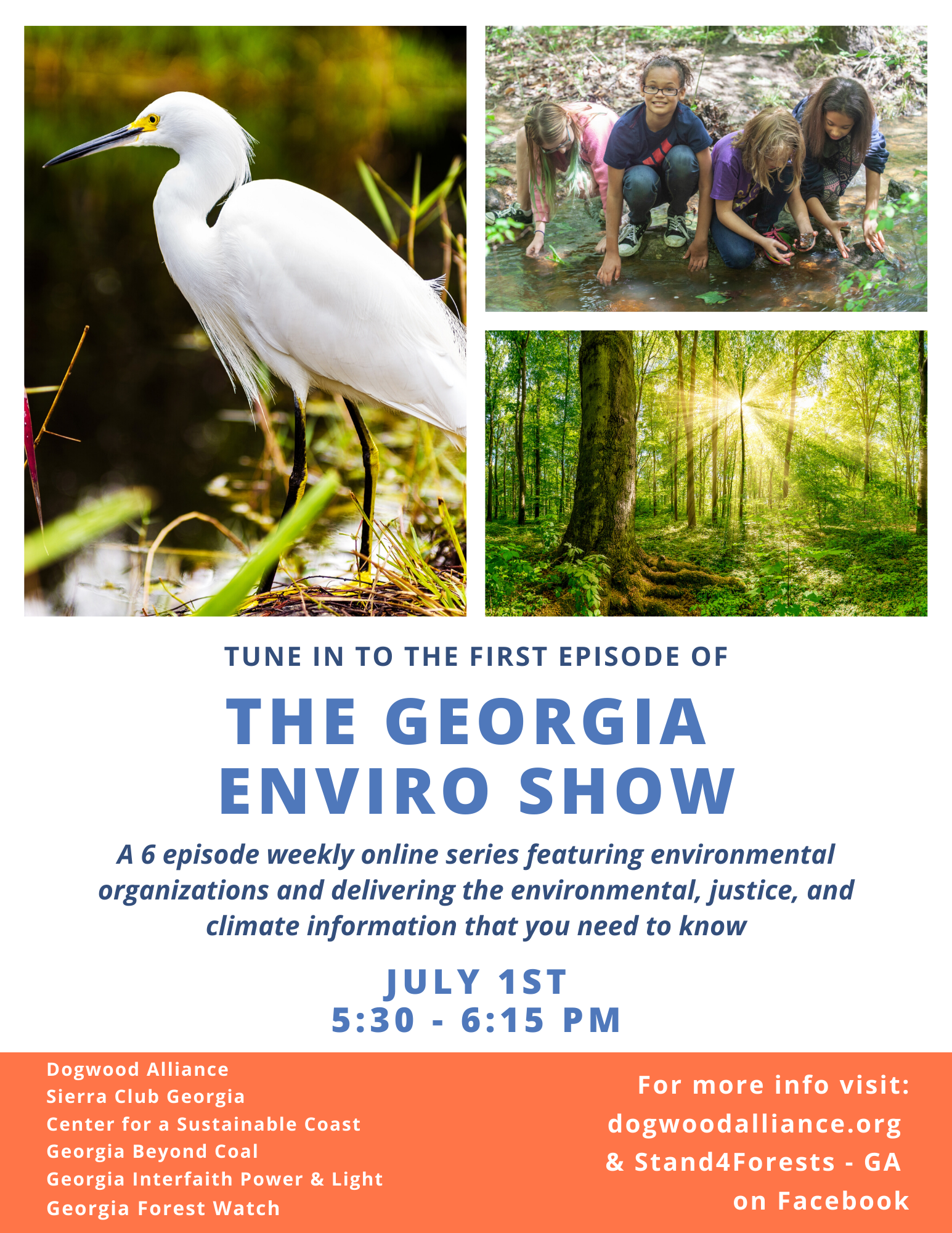
The Georgia Enviro Show 6-week season kicks off July 1st
Each organization will present these issues from their perspective in their own unique format with Dogwood Alliance’s Stand4Forests Georgia (S4F-GA) hosting the first episode on July 1, 5:30 PM. The S4F-GA team has put together a fast-paced, upbeat 45-minute session in a nightly news format that will be livestreamed on Facebook. The program will include everything from expert interviews to stories from “Forest Trek: Next Generation” families.
You’ll also pick up a lot of important information and serious advocacy power tips. It’s all happening on Wednesday, July 1, 5:30-6:15PM.
As the City Council of Aarhus works on new climate change legislation, it is time for the city to phase-out district heating created by burning forests from the Southern United States, and phase-in truly renewable alternatives such as green heat pumps and geothermal energy, say 17 American NGOs in a letter sent to the Mayor of Aarhus today.
In an open letter (English, Danish) from NGOs in the sourcing region for Denmark utility Ørsted’s biomass demand, Lord Mayor Bundsgaard is warned that biomass demand is harmful to forests, communities, and the climate. To paint the picture of this point, the groups point Aarhus political leadership no further than news coverage from Danish news outlet TV 2: last August, a team of reporters from TV 2 Denmark were able to expose the control errors in Enviva’s biomass sourcing: showing the near-impossibility of controlling an industry that is operating an ocean away.
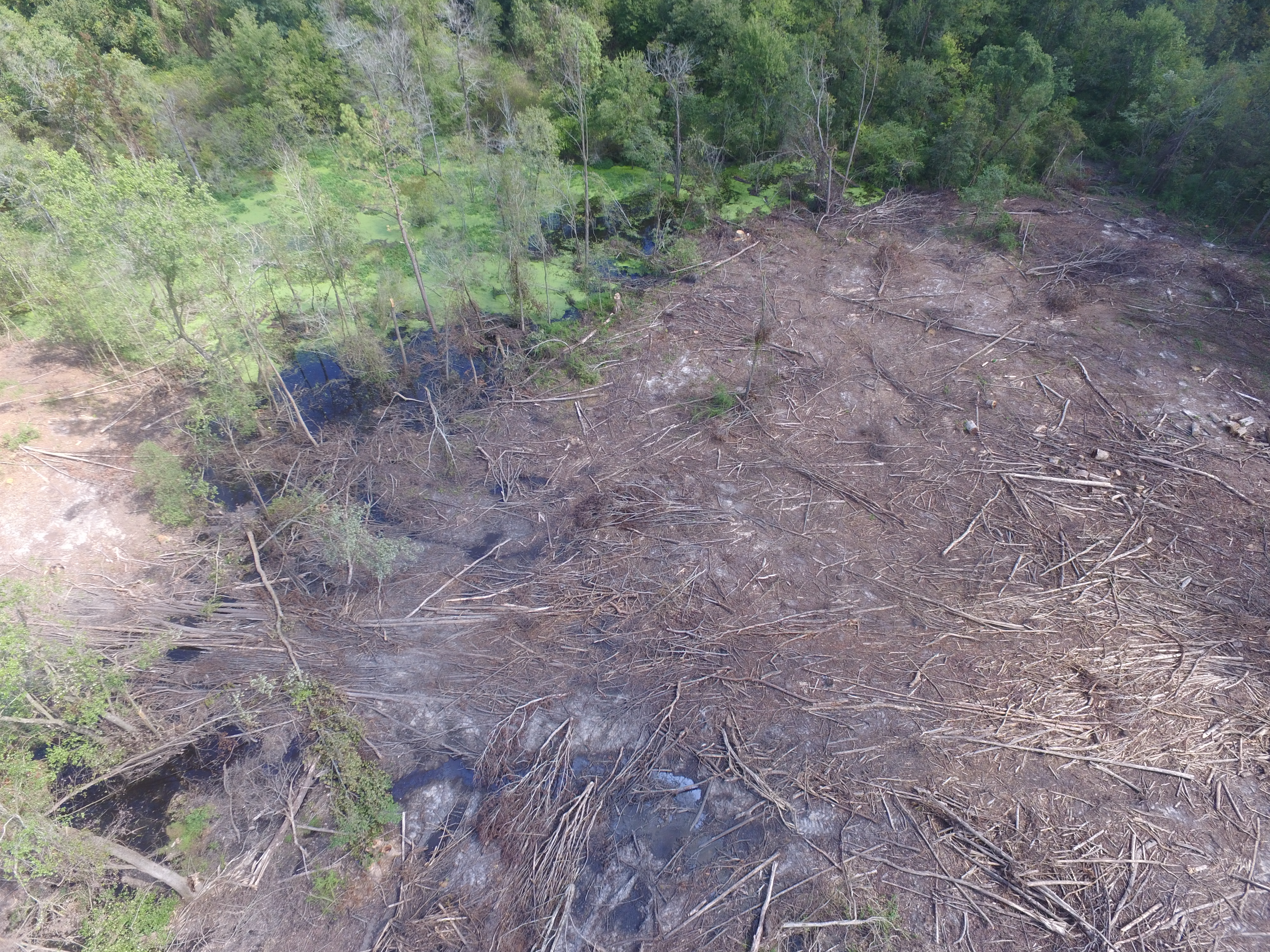
Letting forests grow is the single best way we currently have to remove carbon dioxide from the atmosphere. Standing forests keep growing, storing more carbon and helping to limit the growth of atmospheric carbon dioxide arising from sectors of the economy that are difficult to decarbonize.
The NGOs conclude with a call on Aarhus to phase-out district heating that is created by burning forests from the Southern United States, and phase-in truly renewable alternatives such as green heat pumps and geothermal energy. To see the letter in Danish: see here To see the letter in English: see hereFull list of signatories:
Dogwood Alliance Natural Resources Defense Council Greenpeace USA Southern Forests Conservation Coalition Rachel Carson Council John Muir Project Coastal Plain Conservation Group Southwings Green Belt Movement The Concerned Citizens of Northampton County Spruill Farm Conservation Project Biofuelwatch Pivot Point The Enviro Show Women’s International League for Peace & Freedom, Triangle Chapter 350.org, Triangle Chapter Sierra Club Capital Group Chatham Research Group
To note: this is not the first-time an international spotlight has been placed on Denmark’s use of forest as fuel. Last October, international NGOs sent a letter to Minister of Climate, Energy, and Supply, Dan Jørgensen
Lumberton, North Carolina, in Robeson County is a microcosm of the issues we face as a nation. Business as usual marches on while we reel from a global pandemic, from wrongful murders, and from the constant onslaught of racism, climate change, and a system that continues to prioritize corporations and profit with no regard for human life.
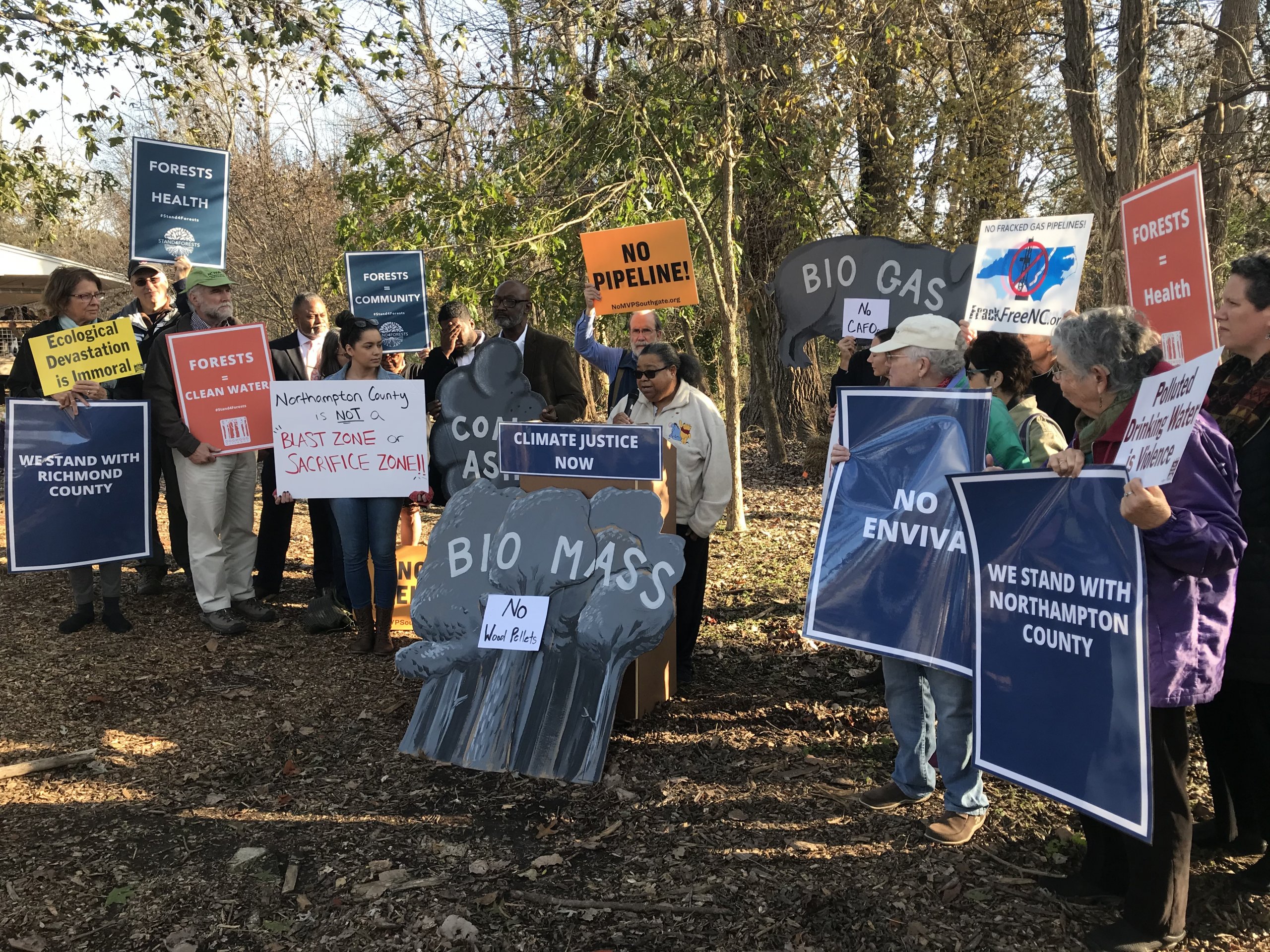
In this small town, the national pandemics of COVID-19, climate change, and institutional racism relentlessly impact the daily lives of local residents who are fighting to stop a proposed wood pellet facility from harming their community.
A concentration of industrial energy production, industrial logging, and industrial agriculture spew toxic pollution and degrade the air, water, and land of Black, Indigenous, and People of Color (BIPOC) communities. The threats of severe weather and hurricanes loom. And the Coronavirus continues to have a disproportionate impact.
Kareem Abdul-Jabbar said, “Racism in America is like dust in the air. It seems invisible — even if you’re choking on it — until you let the sun in.” Recent events have shone a light on the dust. And when that dust is combined with the lack of funding to rural communities and grassroots, BIPOC-led organizations, lack of access to healthcare, food insecurity, police brutality, and climate change, the rural South is choking.
The numbers are stark:
In Robeson County, where the population is 42% Native American and 24% African-American, the county is ranked worst in the state of North Carolina for health outcomes. According to NC DEQ’s own Community Mapping Tool, residents of Robeson County live with at least a dozen pollution sources. These include a solid waste landfill, coal ash sites, and a NC Renewable Power plant, a major pollutant source that burns poultry litter and wood waste. The abundance of CAFOs (Concentrated Animal Feeding Operations) in Robeson County make the community particularly susceptible to outbreaks of Coronavirus that thrive in meat processing production lines. Many people are still rebuilding after Hurricane Matthew and Hurricane Florence devastated homes, roads, and other infrastructure due to the extreme flooding that made this North Carolina community the subject of national headlines.
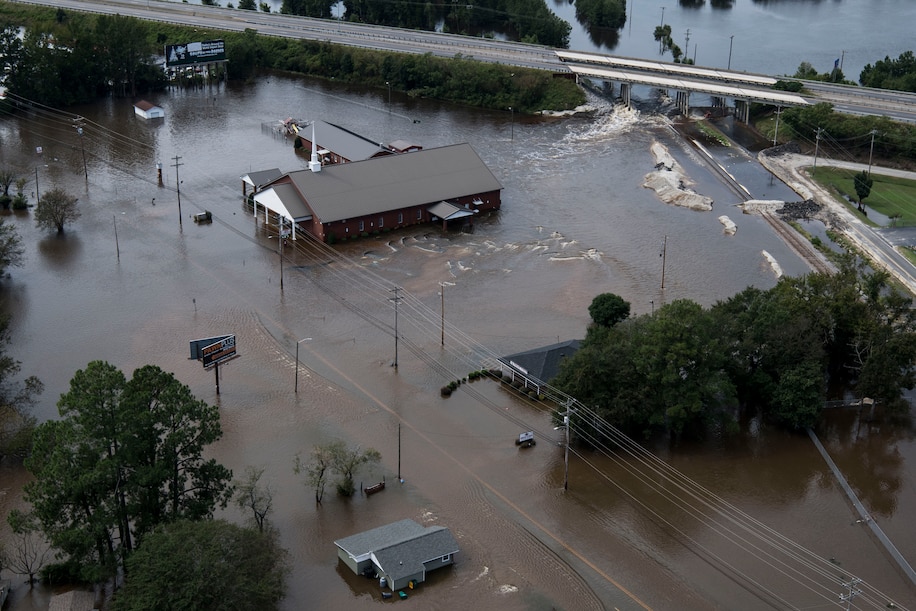
Lumberton under water after Hurricane Florence. Image by Carolyn Van Houten/The Washington Post
In the midst of these pandemics, the North Carolina Department of Environmental Quality (NC DEQ) is attempting to push through the permitting of a proposed black wood pellet facility, Active Energy Renewable Power (AERP). Recently, NC DEQ scheduled a digital public hearing for June 22nd. This is despite local concern over the facility’s pollution, the siting of the facility in a flood zone and in a predominantly Black neighborhood, and the ongoing Coronavirus pandemic. Local leaders, including the Robeson County Branch of the NAACP, the RedTailed Hawk Collective, and the NC Environmental Justice Network, have expressed concern that holding a virtual public hearing will limit the accessibility of the residents who will suffer the greatest impacts from the AERP wood pellet facility. More than half of Robeson County residents lack broadband access completely, and for those who do have access, service is unreliable. A digital public hearing will not provide a meaningful opportunity for engagement for the residents most directly impacted by this facility.
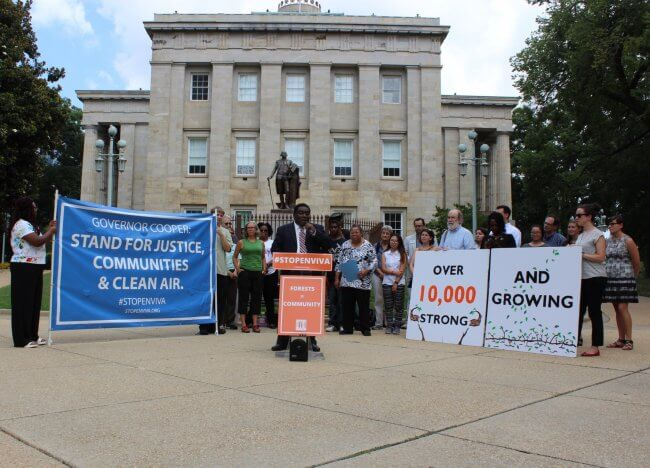
From Minneapolis to Lumberton, the same toxic systems are killing innocent people at the hands of police and at the hands of environmental racism. The movement for climate justice cannot exist without the Movement for Black Lives.
We need deep, structural change that puts resources in the hands of the communities hit hardest by the threats of climate change, racism, and dirty energy production. We need community and BIPOC-led solutions, and we need to truly listen to and follow this leadership.
It will take true, honest, and difficult self-reflection on the part of white people and white-led environmental organizations. It requires following local leadership – really, truly following local leadership. It requires putting resources, time, and intention towards frontline organizations and BIPOC leadership. The movement for justice will not be accomplished overnight or in a vacuum. We are honored to do this lifework with our partners and with our Dogwood Alliance community.
As global surface temperatures continue to rise, it’s becoming increasingly urgent that we phase out the use of fossil fuels for energy generation. To do so, we need to find a suitable renewable energy replacement. Wood pellet manufacturers claim that the replacement should be bioenergy, but this is a misinformed and even dangerous assertion.
Bioenergy is the generation of electricity and gas from organic matter. The most common form of bioenergy is the burning of wood pellets. Bioenergy is often praised by companies as a renewable alternative to fossil fuels, yet bioenergy does not even fix the problems of fossil fuel combustion, which produces the carbon emissions that are warming our planet. We need renewable energy sources that do not generate significant carbon emissions, but the combustion of wood pellets releases 50% more carbon emissions than coal. Rather than being a carbon-neutral solution to our energy needs, the logging of forests for wood pellet production and their subsequent combustion release substantial amounts of carbon emissions. In contrast, other renewable energy sources like solar power and wind power are nearly emissions-free.
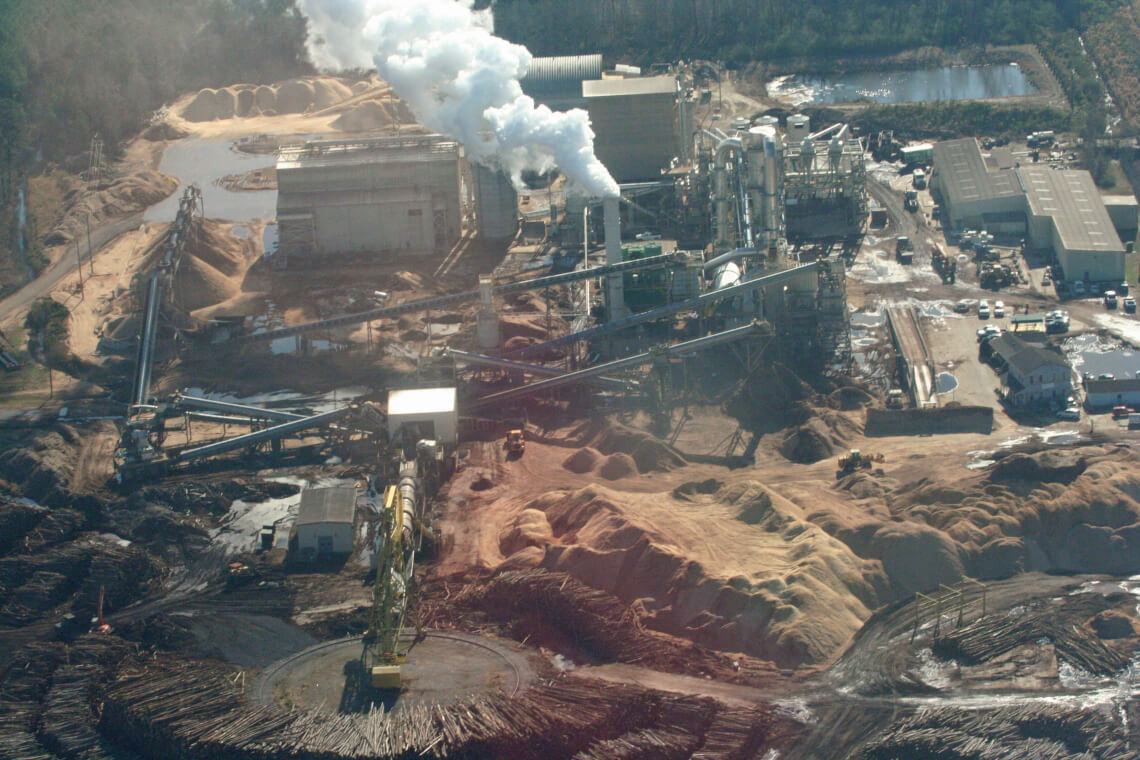
On top of not addressing the problems of the use of fossil fuel for energy, bioenergy production disproportionately affects environmental justice communities. Biomass processing plants are built primarily in low income BIPOC communities. According to a peer-reviewed study published by our own Dr. Sam Davis as well as Stefan Koester, all of the biomass wood pellet mills in North Carolina and South Carolina are in environmental justice communities. This is significant because the production and combustion of wood pellets produce pollution, including carbon monoxide, carbon dioxide, sulfur oxides, and larger particulate matter. Additionally, wood pellet plants can degrade the local water quality. One study found that African Americans who live near a biomass power plant are more likely to be exposed to dangerous pollutants, such as smog, asbestos, and sulfur dioxide. Another study found that wood products industries concentrated in one area can increase unemployment and poverty because of the lack of other areas for employment.
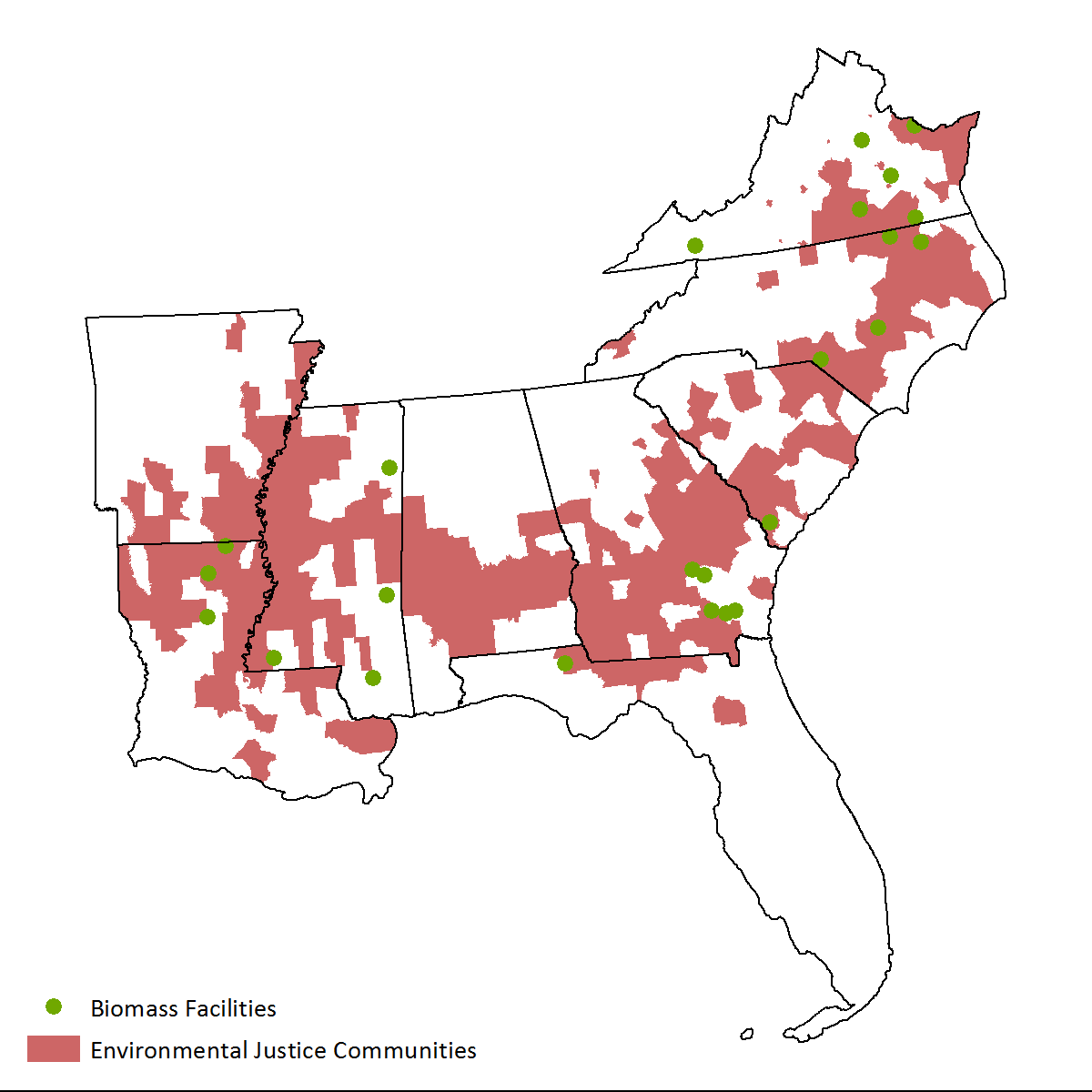
Map showing the location of existing wood pellet mills and Environmental Justice (EJ) designated communities in the Southern United States. All mills in North and South Carolina have been located in EJ communities, and the research found there is a greater than 50% likelihood that future wood pellet mills would be as well.
This reality of bioenergy perpetuates the same problems associated with fossil fuels. Coal power plants are also disproportionately located in low income BIPOC communities, where they cause excess fatalities due to the emitted air pollution. Climate change is already hurting low income BIPOC communities the most. If we allow our bioenergy “solution” to carry on the same environmental racism associated with fossil fuel plants, we are failing the communities that have long suffered the effects of air pollution and climate change.
If we want to end the injustice of environmental racism, bioenergy cannot be the answer to our sustainable energy needs. We should focus on the carbon-storing capabilities of organic matter like natural forests instead of converting them to wood pellets for energy. Other renewable energy sources that serve their local communities hold promise for a greener future without carbon emissions. Above all, we must ensure that the energy sources of the future meet our needs without harming surrounding human communities, so that we leave environmental injustice in the past.

Want to learn more? Check out the Climate Justice Alliance’s resource here on just transitions.
Raksha DoddabeleGrowing up in eastern Tennessee with the backdrop of the Smoky Mountains, Raksha has always had a strong connection with the outdoors. She is a current undergraduate at Duke University, where she is pursuing a B.S. in Biology and minor in Computer Science, which she hopes to put to good use working in wildlife conservation. Some of her favorite activities include hiking, Scuba diving, and adventuring.
I am writing to urge this Administration to deny any expansion of the wood pellet industry in North Carolina and to immediately address the environmental justice implications of this proposed facility. I urge the Administration to address the impacts this facility would have on the climate, on North Carolina forests, on biodiversity, and on the health and well-being of impacted residents. Specifically, I call on this Administration to:
Dogwood Alliance urges this Administration to consider the impacts this facility will have on North Carolina’s forests, the state’s ability to be resilient in the face of increasing storms and hurricanes, and our commitment to reduce carbon emissions. While climate action is a top priority of the Cooper Administration, dirty industries continue to expand, and protections for forests fall short. Last year, Enviva, the world’s largest wood pellet producer, was approved for three massive expansions in North Carolina. The continual permitting process of industries that are scientifically proven to be carbon polluting impedes North Carolina’s executive order to reach a 40% emissions reduction goal by 2025. Wood pellet production is carbon-intensive, leads to energy production that is carbon-intensive, and removes forests that store and sequester carbon.
AERP is applying for a permit to produce 40,000 tons of torrefied wood pellets per year. However, AERP’s website indicates plans to increase production to 400,000 tons per year. If AERP is permitted and their intended expansion goes through, this facility will increase logging by 9,600 acres per year and emit 73,2782 tons of CO2e per year, the equivalence of over 155,580 extra cars on the road.
Many forms of biomass—especially from forests—produce higher carbon emissions compared to fossil fuels. In particular, a growing body of peer-reviewed, scientific studies shows that burning wood from whole trees in power plants to produce electricity can increase carbon emissions relative to fossil fuels for many decades—anywhere from 35 to 100 years. This time period is significant: the Intergovernmental Panel on Climate Change made it clear that the coming decade is crucial and requires dramatic short-term reductions in greenhouse gases. The emissions from biomass will persist in the atmosphere well past the time when significant reductions are needed.
Additionally, industrial logging and wood product manufacturing emit enormous quantities of greenhouse gases and have significantly depleted the amount of carbon sequestered and stored on the land. Each year, roughly 200,000 acres of forestland in North Carolina are clearcut to feed global markets for wood pellets, lumber, and other industrial forest products. CO2 emissions from logging and wood products are a major missing component of North Carolina’s greenhouse gas inventory. Emissions from the release of carbon in wood products, forgone sequestration capacity, decay of logging residuals, and fertilizer likely top 44 million metric tons of carbon dioxide each year, making this sector the third most carbon intensive in the state.
Global demand for wood pellets is devastating forest ecosystems in the Southeast United States. Biomass facilities acknowledge that they harvest from wetlands, highly diverse habitats with many threatened mammal, reptile, amphibian, and bird species. Despite industry claims, independent reporting shows a disturbing pattern: wood pellets are often sourced from wood that is harvested from native hardwood forests in an area designated as a global biodiversity hotspot.
Demand for softwood and pine plantations is also having a negative impact on forests, the climate, and biodiversity. Since 1953, the government has used various programs to pay landowners to plant pine instead of allowing natural forests to grow. As a result, we’ve lost over 35 million acres of natural forest and gained over 40 million acres of pine plantation instead. In addition, industrial tree plantations pose a serious threat to North Carolina’s climate change resiliency because they make the effects of floods, droughts, heat waves, storms, and disease more severe.
Similar to other wood pellet production facilities in North Carolina, which are all located in environmental justice-designated communities, Robeson County is 42% Native American, 24% African-American, and is ranked worst in the state for health outcomes. Robeson County is one of the most frequently flooded counties in the state, and many residents are still recovering from devastating losses from Hurricanes Florence and Matthew.
Based on the Environmental Justice (EJ) Snapshot, the community targeted within the two-mile buffer of AERP’s proposed wood pellet facility in Lumberton is an “underserved community” as defined by DEQ’s Public Participation Plan and therefore must be afforded the “enhanced engagement methods” that Plan prescribes. In addition, DEQ must also complete a full EJ Report, which includes a disparate impact analysis of AERP’s proposed operation that takes into consideration its predicted increased production volume and coinciding pollution and cumulative impacts. It will be impossible for DEQ to meet its Title VI obligations of fair treatment and meaningful involvement without that full report and without allowing additional time after the COVID-19 state shutdown is over to inform and engage the community (as the Plan requires) about the proposed facility, the pollutants it will expose the community to, cumulative impacts of surrounding industrial operations, and data about the community’s health vulnerabilities. The public hearing must be delayed until after the full EJ report is made publicly available so that community members may be meaningfully involved in DEQ’s decision-making process regarding this permit.
If AERP is permitted to operate in Robeson County, it will have impacts on the health of local residents, the ability of natural ecosystems to support greater resiliency to storms and hurricanes, and contribute to global carbon emissions at a time when community health and safety rely on cutting those emissions. Impacted residents deserve an opportunity to be informed about this facility and ask questions to North Carolina Department of Environmental Quality (NC DEQ) staff.
We reiterate our requests that NC DEQ suspend the public hearing until COVID-19 health experts indicate it is safe to assemble in person and until after a full Environmental Justice Report has been completed. Ultimately, we urge this Administration to deny this permit and to put a moratorium on the expansion of any industrial wood pellet facilities in North Carolina.
Thank you for the opportunity to comment on this permit.


 Donate