


The Okefenokee Swamp is the largest blackwater wetlands in North America and one of the world’s largest intact freshwater ecosystems. Located in the southeast corner of Georgia, its wide range of habitats is home to a rich diversity of plants, birds, fish, and wildlife and includes the headwaters of the Suwannee and St. Mary’s Rivers.
Annually over 400,000 visitors from all over the world come to enjoy its cypress swamps, upland pine forest, wet and dry prairies, and winding waterways.
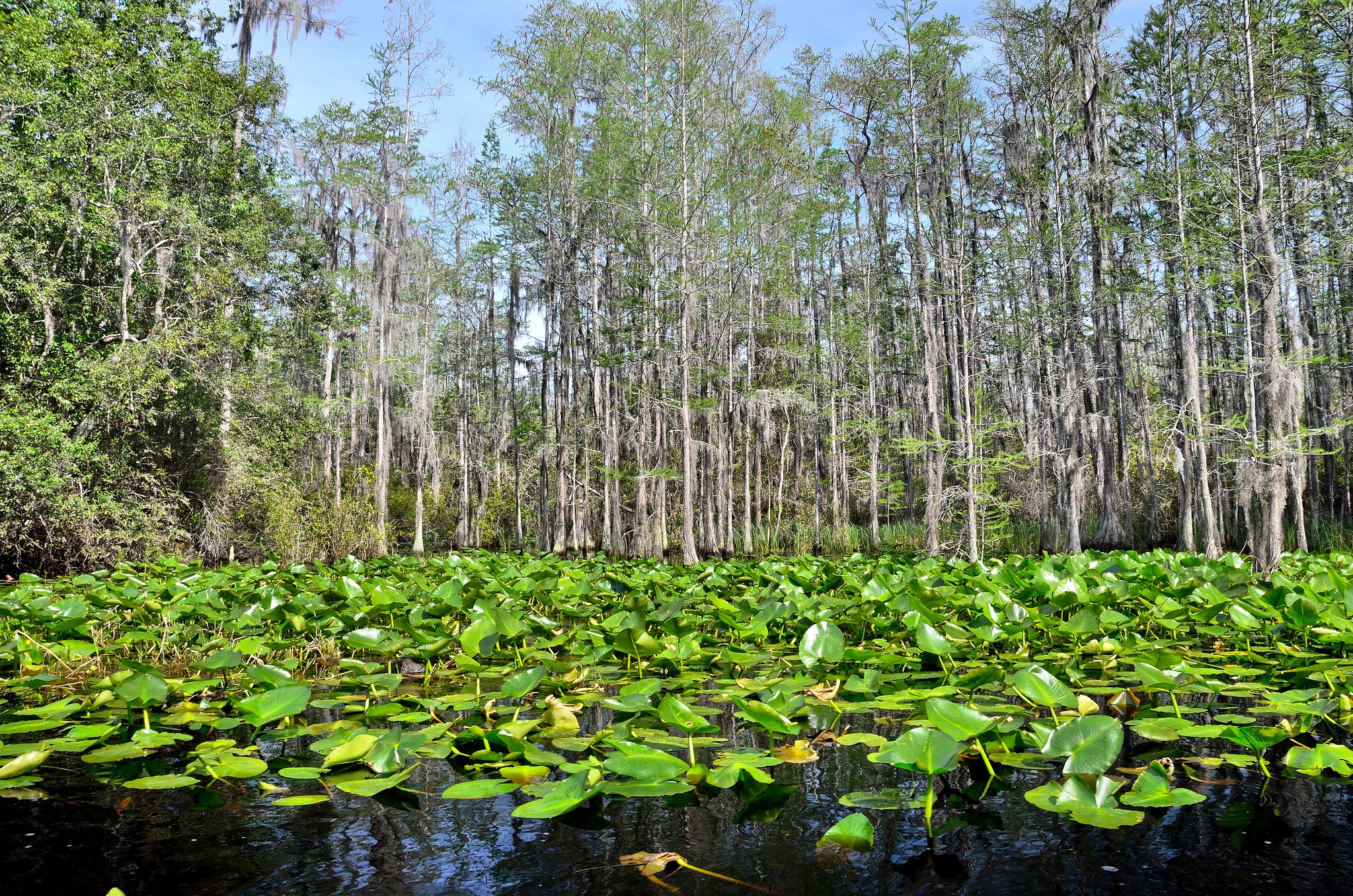
Photo by: Timothy J. Carroll
Trail Ridge, the geologic formation that forms the eastern boundary of the Okefenokee swamp in Georgia, has long been a target of the titanium mining industry. In the 1990s, the DuPont corporation attempted to mine a vast swath of land along the refuge boundary — a proposal that faced near-universal opposition. Because the project threatened to impair the function of the swamp, as well as its famed wildlife habitat, then Interior Secretary Bruce Babbitt declared that mining “should never happen,” and has no place next to what he called a “very uncommon swamp.”
Yet, in 2019, Twin Pines Minerals submitted an application to the US Army Corps of Engineers to operate on 2,414 acres, adjacent to the refuge boundary. As a result of strong citizen opposition, they were forced to withdraw that application.
They submitted a revised application in 2020. It slightly reduced the size of the project area but government agencies expect operations to eventually grow to 12,000 acres, potentially coming within 400 feet of the swamp itself. Tens of thousands of people contacted the US Army Corps of Engineers to voice their opposition to this destructive project.
Unfortunately, the Okefenokee is still under threat because the federal government has changed rules in the Clean Water Act. Now Twin Pines Minerals is pushing to proceed with their 600-acre heavy mineral sand mine without any federal oversight.
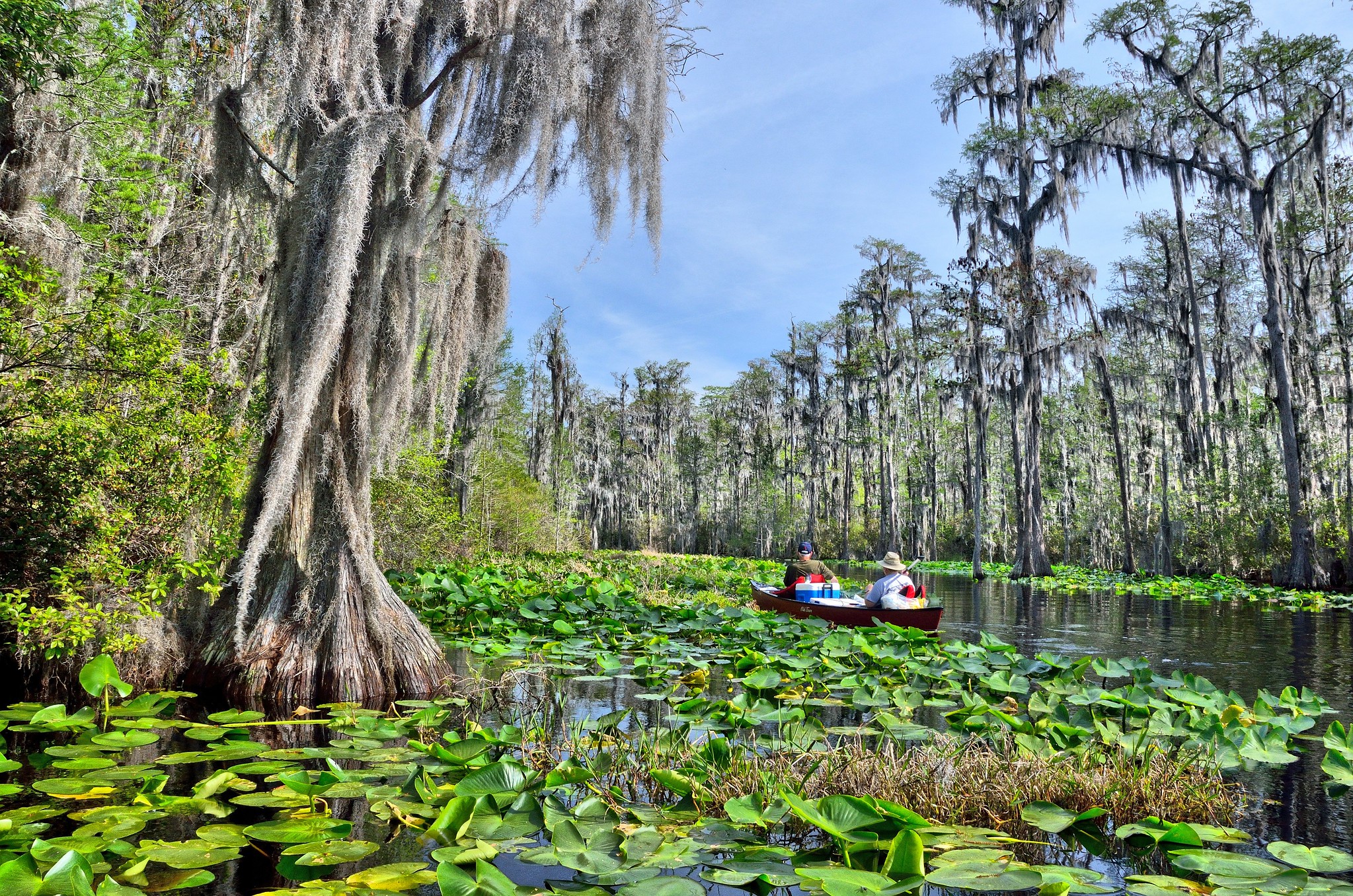
Photo by: Timothy J. Carroll
This area of the Trail Ridge barrier consists of semi-permeable soils that allow for water storage and circulation within the swamp. Should mining damage these soils, the US Fish and Wildlife Service and US Environmental Protection Agency anticipate that “permanent” and “unacceptable” damage could befall the Okefenokee Swamp.
Additionally, mineral mining requires freshwater sources, and the most reliable source of water in Southeast Georgia is the Floridan aquifer. The amount of withdrawals required for titanium mining operations could lower the Okefenokee Swamp’s water table and reduce the natural flows of both the Suwannee and St. Marys Rivers.
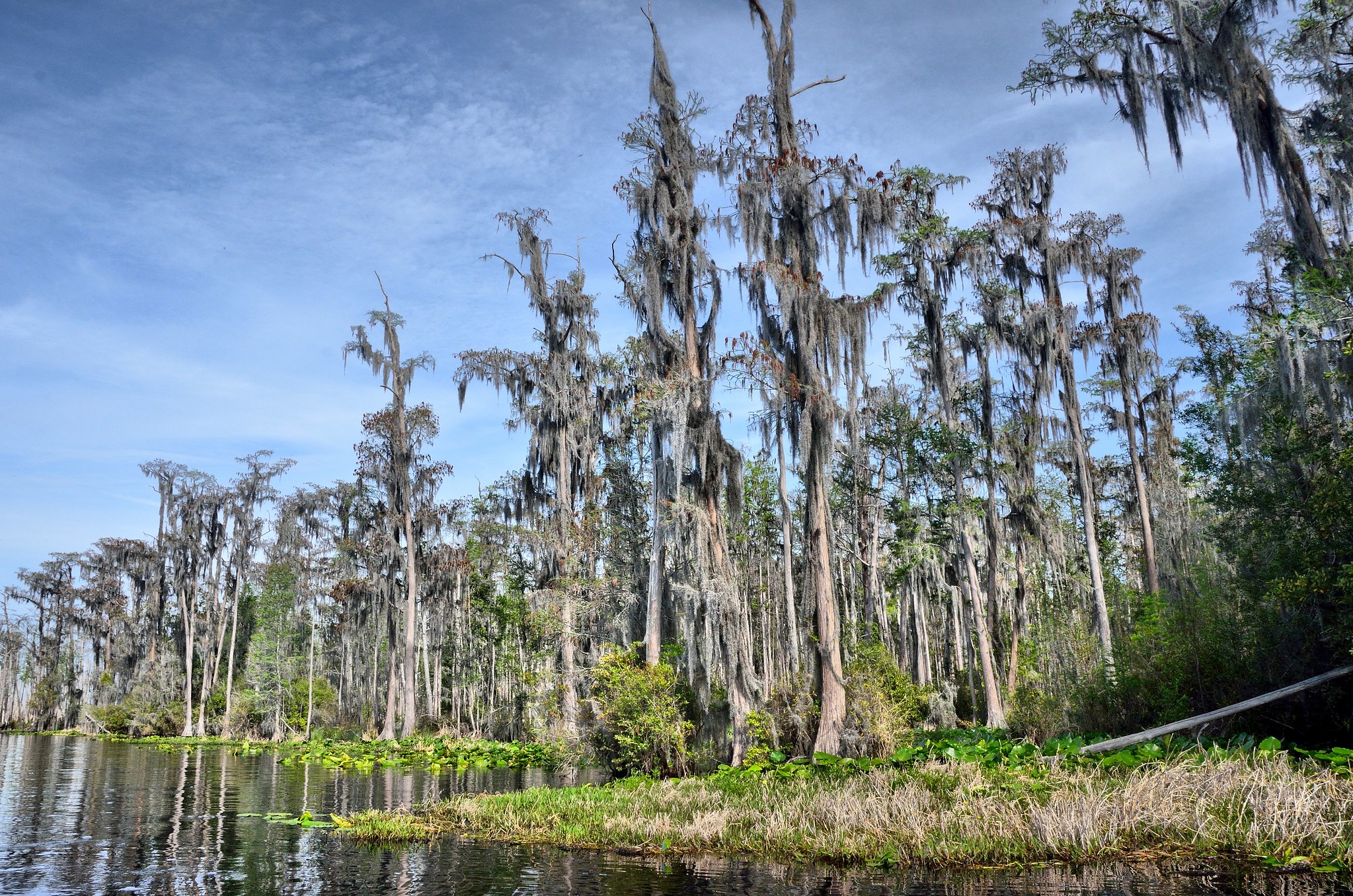
Photo by: Timothy J. Carroll
Permitting agencies must reject any proposals that risk the long-term protection of the treasured swamp and the rivers it births, including the Twin Pines titanium mining permit. With the federal agencies abandoning science and public input, we now must depend on Georgia’s leaders to do the right thing.
What’s more fascinating in your backyard than the things you can’t see? There are so many strange animal sounds at night, whether they’re trying to attract mates, foraging for food, or even just warning off predators. These nighttime creatures range from insects and frogs to birds and mammals. They live in the soil, in the wood, and in the treetops.
Is it an odd rolling sound emerging from your attic? Or a high pitched squeal under your deck? I’m sure you want to know what’s up with these nocturnal animals. Do you want to know what the wild animal noises are in and around your house? Let’s get started… from the ground up!
Identifying nocturnal animal sounds can be challenging – especially when it’s an insect! For being so small, insects can make an awful lot of noise. Nighttime insects fall into two categories: insects that are nocturnal and make noises to attract mates, and insects that eat noisily.
Often insects’ loud noises are mechanical: the result of two hard objects moving against each other. If you hear scratching or louder thumping noises, it’s probably not an insect. Insects produce high pitched singing sounds, whining noises, or grinding sounds similar to woodworking.
Katydids and crickets are excellent examples of nighttime noise-making insects. These backyard wildlife are perfectly quiet during the daytime, but at night: it’s a different story. These insects, which belong to the same Order (Orthoptera) make noises in similar ways: by rubbing their wings together. These insects usually make their high pitched chirping noise at night to attract mates during breeding season.
They may also make these high pitched noises to warn off predators. These noises are fairly loud. If they’re in your house, they can even keep you up until the early morning. I had a cricket in my garage once and it was deafening every time I went into my car for days.
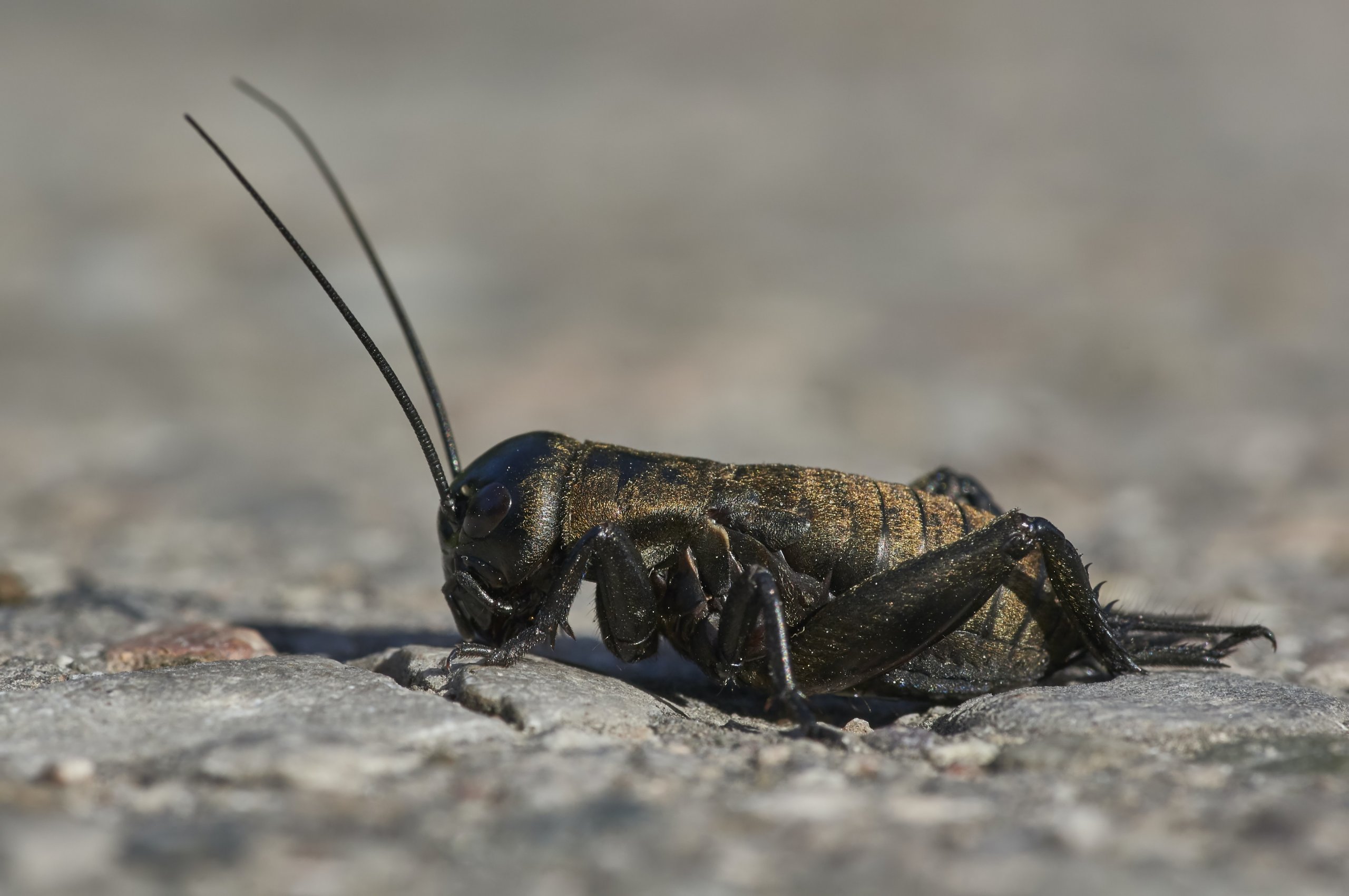
We’ve probably all observed a cricket making their chirping noises, but have you ever seen a huge katydid making theirs? Check out this clip from the Toronto Zoo. These weird noises are definitely memorable!
Another set of insects also makes nighttime noises: wood-boring insects. Story time:
Working at Dogwood Alliance, I live in rural Western North Carolina. A few years ago, I was noticing a weird grinding noise while taking my dogs out at night. It was a mix of grinding and clicking noises. It didn’t sound like scratching sounds – but I wasn’t really sure what kind of animal was making it.
Since it was totally dark outside, I searched the internet high and low for possible reptile, mammal, or bird species that could be responsible for the noise. Then, one day, aggravated, I pinpointed the noise to some downed wood I had in my backyard. A few searches later, and I had my answer: wood-boring beetle larvae were having dinner! They were feasting on the downed log! You can hear a similar noise here:
Among reptiles and amphibians, frogs are our most musical friends. There are so many species of frogs, and they each have very unique calls. Entire fields of science have been built around recording and analyzing sounds to figure out how much biodiversity there is around us.
In the Eastern United States, the “spring peeper”, Pseudacris (Hyla) crucifer, is among the most iconic frog noises that you can hear at night. Spring peepers only peep during mating season. Spring peepers live primarily in forests near temporary wetlands. Here’s their song:
Frog vocalizations sound wild, but don’t worry: they can’t hurt you. Remember, the wetlands where frogs live are their native shelter. They’re safe from predators as they sing the song of their people.
Interested in more frog sounds? Here’s a video compilation of some frogs from Ohio. There are many overlapping and wide-ranging species across the Eastern United States, so I’m sure you’ll hear some familiar noises.
The birds you hear at night can be some of the most fascinating singers out there. Most of them will be owls, but you may not recognize them as owls! Did you know that not all owls make that distinctive “Who who” sound that we learn as children? Which of these owl sounds do you recognize?
Owls are some of my favorite creatures. There are a few moments of my life that have been marked by owls and etched into my memories. Story time:
In 2014, a few friends, my partner, and I went camping in the Adirondacks region of New York. It was June, but it was cold at night, down into the 40s. About half of us were camping in hammocks. During that trip, two things happened that stick in my memory: (1) my partner and I got engaged and (2) three Barred Owls woke us up in the middle of the night, calling to each other. Their noises were so strange and, at 3am, hilarious. It was a perfectly quiet night, until these owls interrupted with their raucous songs.
I wasn’t big into birds at the time, so we had to wait for an internet connection to look up what kind of owl it was. My partner and I were so enamored with them that we ended up getting matching owl tattoos later on.
As long as humans have had oral history, we’ve had tales of things that go bump in the night. Our nighttime predators all have unique sounds, but they’re not usually out to hurt us. Both predators and prey mammals make noises at night, and those noises are often a mix of chirps, screams, squeals, grunts, and growls. If you’re out alone at night, it can be pretty intimidating to hear your wild neighbors. But, never fear, most night sounds have a source, and it’s not nearly as scary as you’d think!
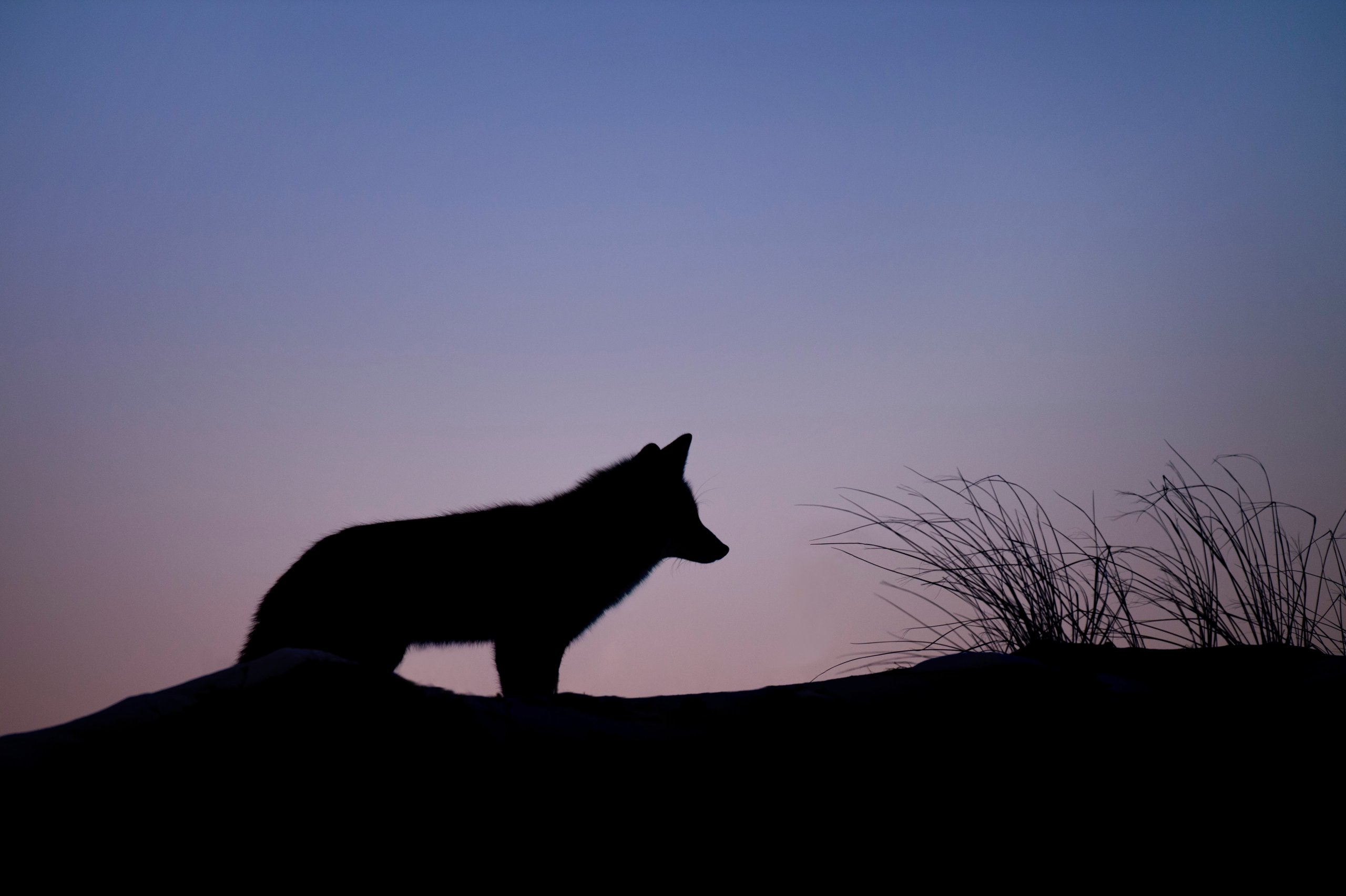
People commonly report nighttime noises that sound like “screaming” in the woods. These “screams” are often just foxes going about their evenings! Foxes are “crepuscular” animals, meaning that they’re active around dusk and dawn. Here’s a great example of a UK fox vocalizing with a friend on camera:
You may also hear coyotes speaking to each other at night. I most often hear the coyotes near my house chatting like this right before dawn:
Bobcats, which can have an average weight of 19 lbs as an adult, can sound much bigger than they are when they growl or grunt nearby. They have a wide variety of chirps and trills at their disposal. Bobcats are pretty rare to see, but I’ve been lucky enough to see two bobcats in the wild in my lifetime: one in California, and one right here in North Carolina. Here’s some of their noises.
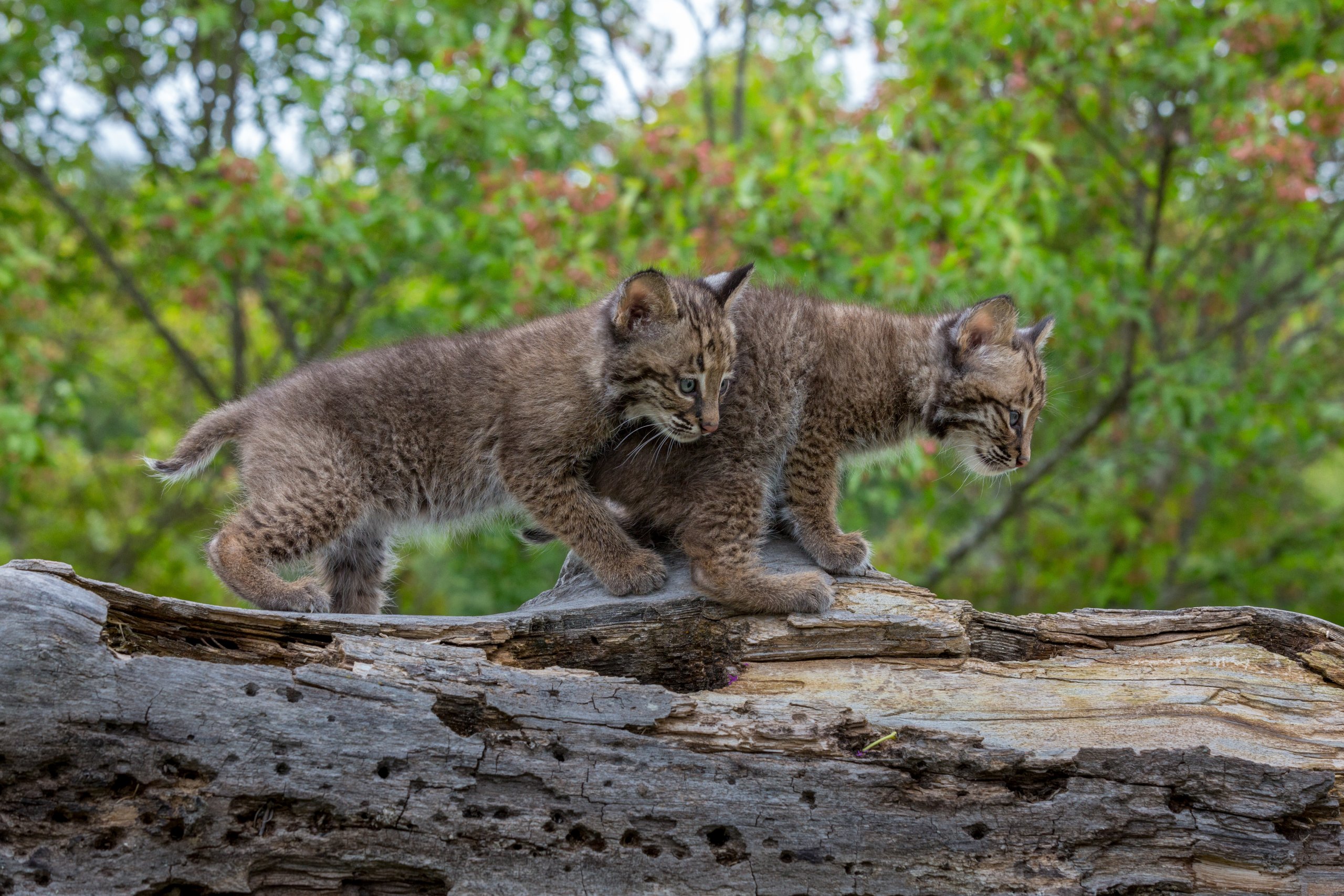
Light pitter patter on the roof? Noises in wall cavities? Claws digging at the edges of your mind while you’re trying to sleep? If you hear animal movements inside your house, you might be in for an adventure. Animal sounds in your house usually means squirrels or mice. Squirrels commonly produce scurrying, digging, or other noises in your attic or walls. Mice or rats can do the same.
Left alone, they may chew wooden baseboards or create larger holes in your home. These small animals can cause a lot of trouble. But don’t worry – you can work with a wildlife expert to exclude the creatures from your home, often without harming them. You’ll need to find out where they’re coming in, then block off those entrances. Some folks may choose to wait until baby-rearing season is over.
Remember, if you’re out at night, take appropriate precautions. Wear reflective clothing, make noise, and have a plan if you do encounter wildlife. The vast majority of nighttime wildlife just want to be left alone. Never approach or harass wildlife of any kind, especially mammals. Did you enjoy learning about these nighttime treasures? If so, why not show us?
Share your favorite night sounds videos and tag us on Instagram, Facebook, or Twitter!
Want to do more?
Become a Forest Defender today! Your monthly gift will protect the night critters and biodiversity of the South.
Join our email list to get new Biodiversity in Your Backyard sent directly to your inbox!
Diverse, intact forests are literally the greenest infrastructure on Earth, vital to our health and survival. They are the ultimate water pumps, critical to ensuring abundant, fresh water supplies. They provide natural air filtration, storm protection, food, medicine, recreation, and a place to find peace. Yet environmental policy solutions put forward in America today largely fail to recognize protecting existing, natural forests as a “green infrastructure” priority.
Millions of people mobilized in the streets and in the classrooms marching, rallying, and educating the public about the need to protect our planet, catalyzing landmark environmental protection laws including the Clean Air Act, the Clean Water Act, and the Endangered Species Act.

Photo Credit: NASA’s Earth Observatory
50 years later, however, no one will be in the streets or the classrooms. Instead millions are self-isolating in their homes, confronting a sobering reality as a virus wreaks havoc across the planet. Extreme weather continues as climate change intensifies, compounding impacts to human health and the economy. An estimated 150-200 species are going extinct every 24 hours.
As the economy shut down amidst the global pandemic, pictures of clear water in the Venice canals went viral. Reports of smog-free skies in Los Angeles spread like wildfire. Carbon emissions show promising declines around the world.
That’s why hundreds of organizations across America are pushing for policies that can help transform our economy to one that is restorative, regenerative, and equitable. Countless organizations are coming together to ensure that the next governmental economic stimulus package includes billions of dollars for “green” infrastructure, helping to lay a foundation for broad-sweeping and comprehensive policy initiatives, such as the Green New Deal, which was designed to address the climate crisis, improve human health, and create millions of “green” jobs.
There is no question that these initiatives are vital, representing hope for a future where protecting people and the planet are at the forefront of policies that shape our economy. Ironically, these “green” policy proposals miss the mark when it comes to forests by failing to address the devastating climate, health, and economic impacts of industrial logging.
Logging rates here are among the highest on Earth, estimated at four times that of South American rainforests in the Southern US alone.
Every year, millions of acres of forests are logged, degrading the greenest life-supporting infrastructure on Earth. Logging releases vast amounts of unreported carbon emissions into the atmosphere, while limiting forests’ ability to remove carbon and provide natural protections against intensifying flooding and droughts.
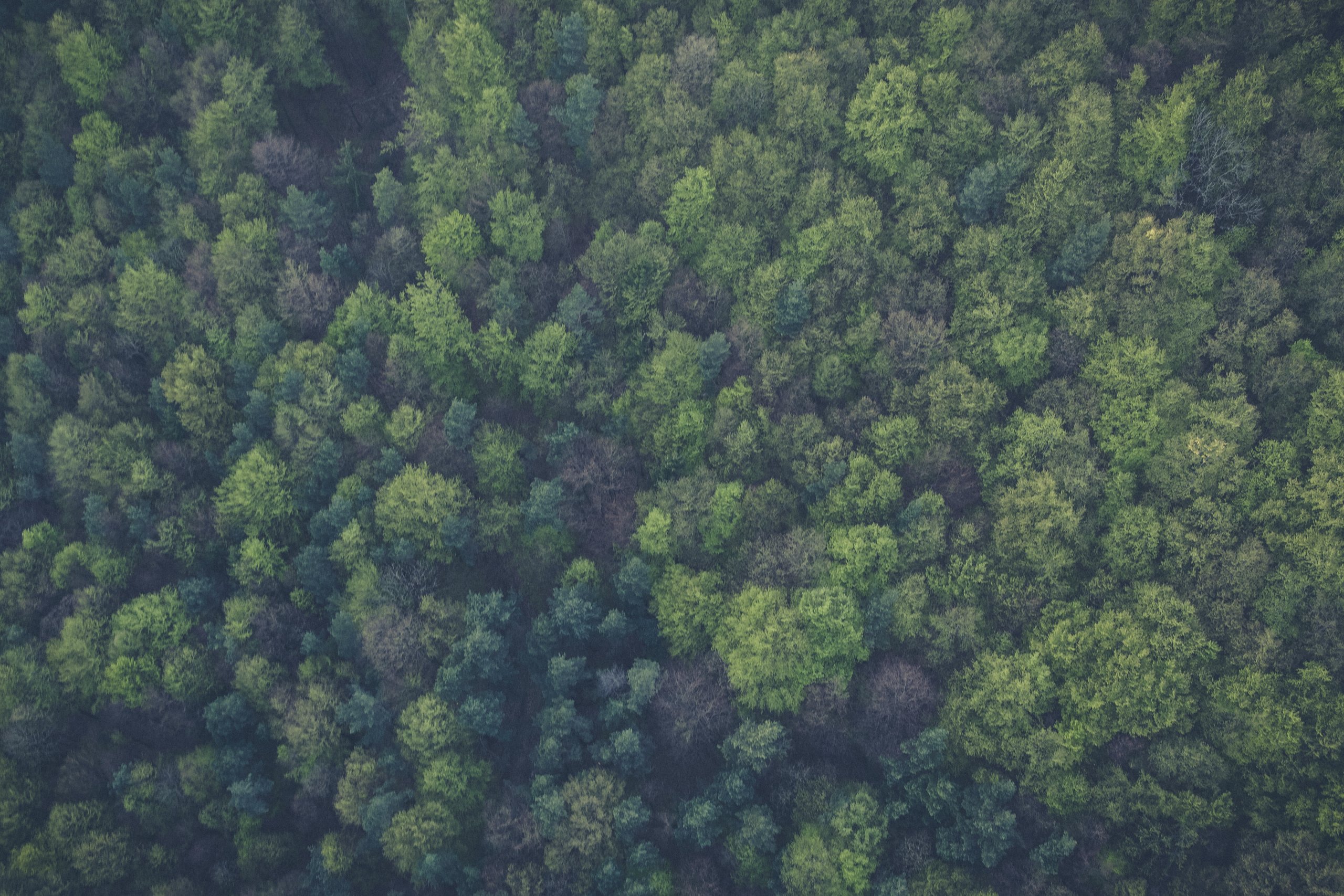
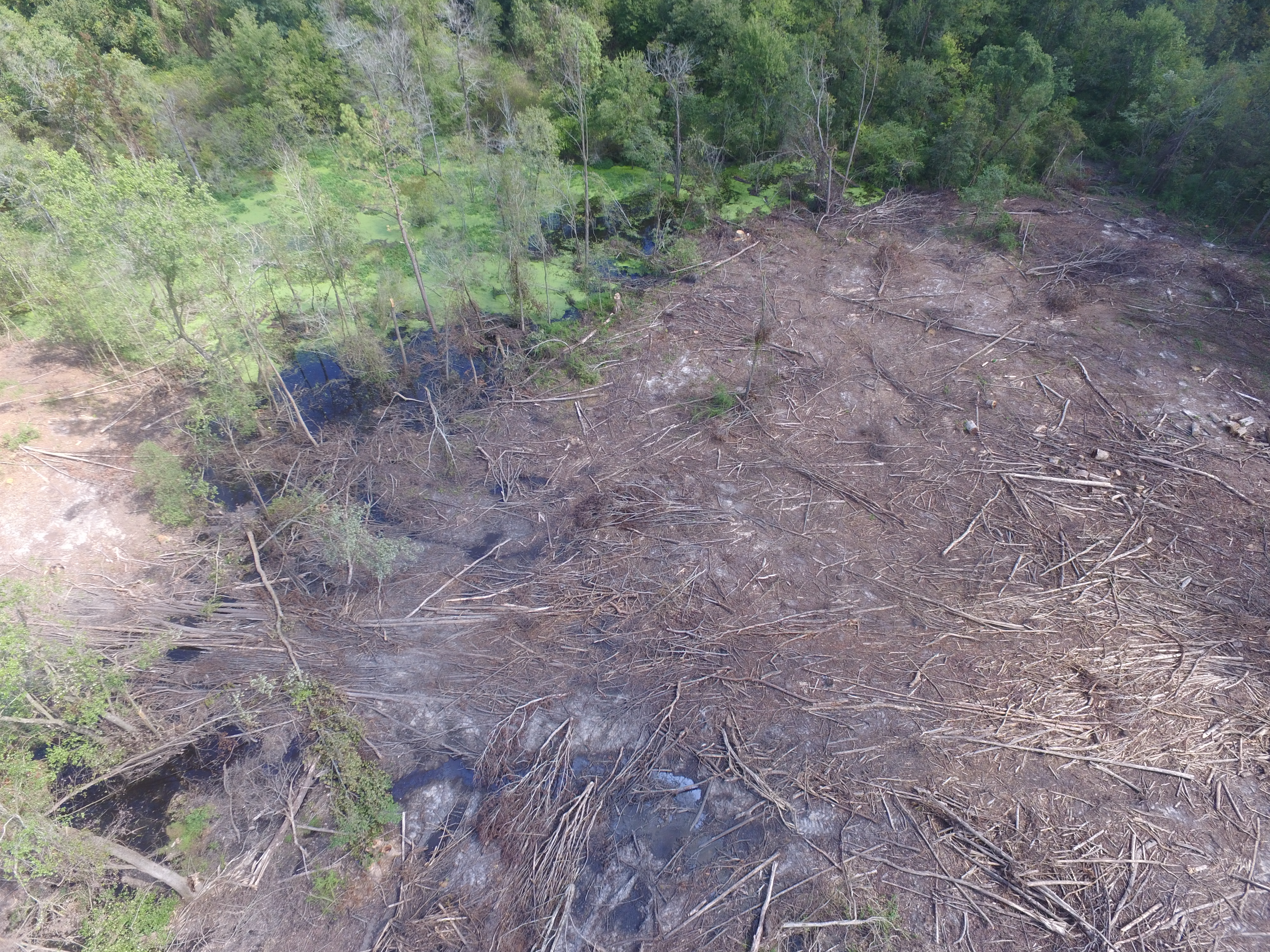
Though the US Forest Service reports that the area of “forests” in the US has remained relatively stable over the past 50 years, the ecological integrity of our nation’s forests has been in constant decline.
Tens of millions of acres have been destroyed to make way for industrial tree plantations sprayed routinely with chemical herbicides and fertilizers. Entire forest ecosystems have been brought to the brink of extinction. Hundreds of industrial-scale wood processing facilities release vast quantities of toxic pollution, compromising the health of nearby residents, disproportionately impacting low income communities and communities of color. Meanwhile, the vast majority of wood products end up in landfills, our once living forests tossed aside as trash.
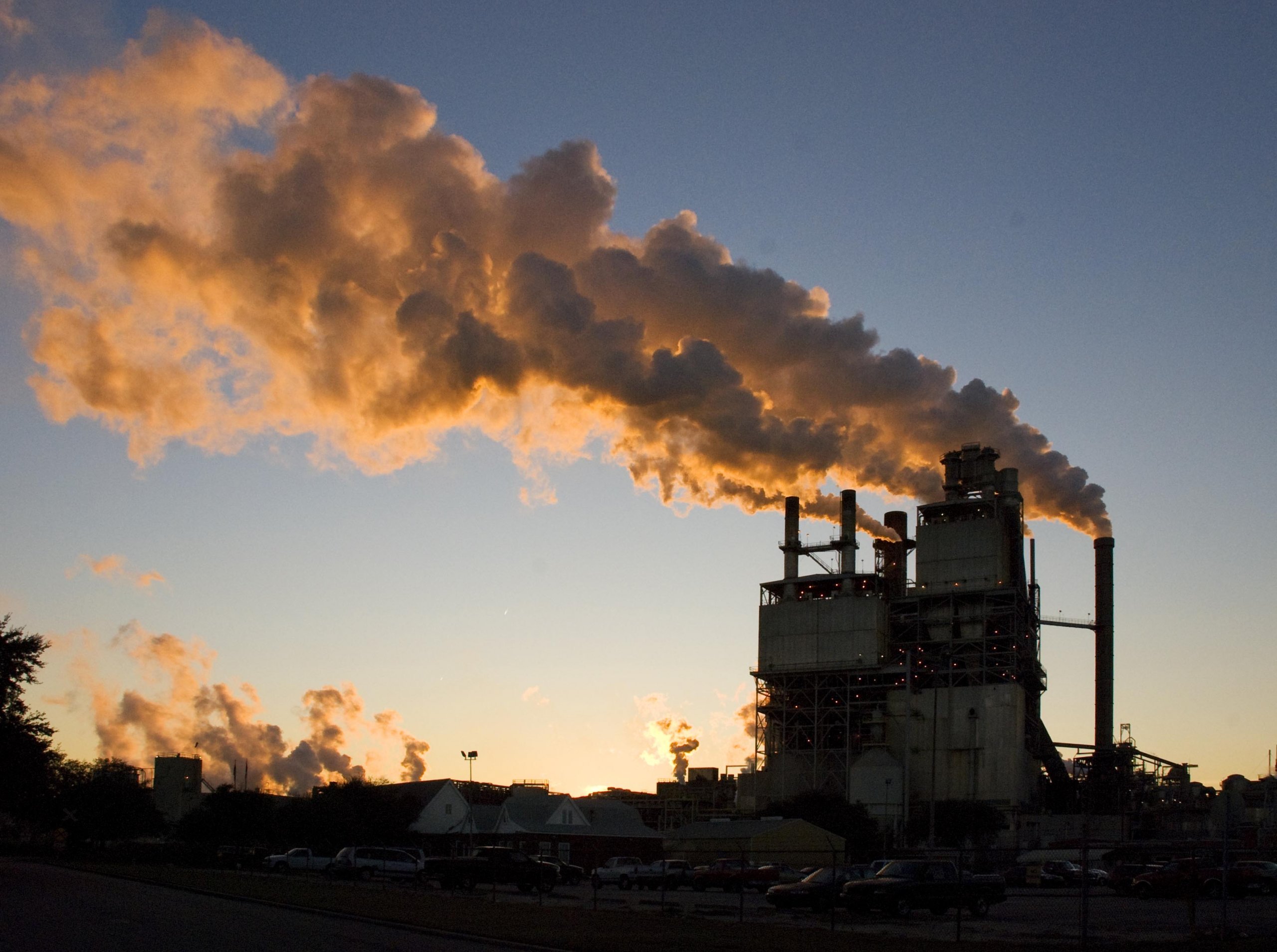
Air pollution coming from a paper mill in SC.
The degradation of forests along with the pollution of our air and water has left communities in a degraded economic condition, with disproportionately high poverty and unemployment rates.
And now, they are at higher risk of dying prematurely if they get the Coronavirus due to high levels of industrial pollution which have been linked to higher mortality rates.
Proposed policies focused on solving the climate crisis and creating “green” jobs simply do not address these problems. Climate policies designed to curb carbon emissions fail to hold the forest industry accountable. Misguided solutions, such as “planting a trillion trees”, have become a focal point of investing in “green” infrastructure and jobs, while expanded protection for existing natural forests, especially on private lands, is largely ignored.
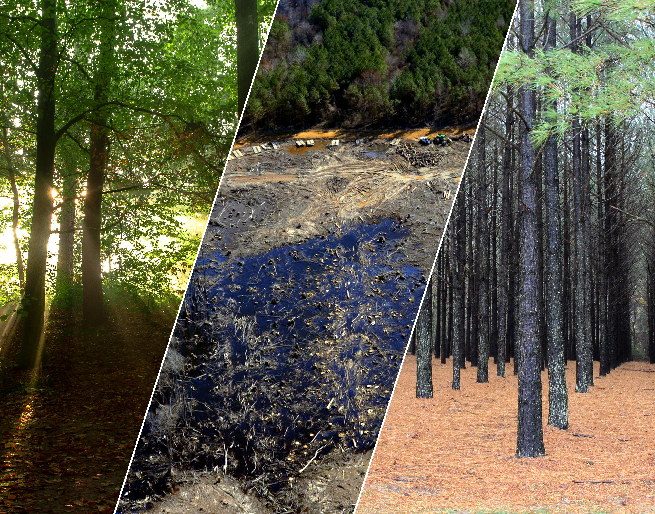
Whether it’s “green” subsidies for burning wood as a “renewable” fuel alternative to coal or proposed “green” stimulus money for building skyscrapers out of wood, policies that promote logging are often embedded in otherwise sound proposals that mandate a phase out fossil fuels and new investments in solar and wind energy. The word “restoration” has become an overused policy buzz word, often used to justify even more logging. “Restoration” is also frequently used to mean re-establishing new forests as opposed to restoring the ecological health and function of existing forests through protecting them.
Yet, protecting existing forests is vital to solving the ecological crises we face, restoring our failing economy and creating “green” jobs. The forest industry employs an estimated 955,000 people in America. That may seem like a lot, but other businesses that help keep forests standing already create more jobs with potential for even more growth.
A growing body of research documents other community benefits associated with outdoor recreation, including improved education and health outcomes. Communities dependent on logging have restricted opportunities for building outdoor recreation-based economies.
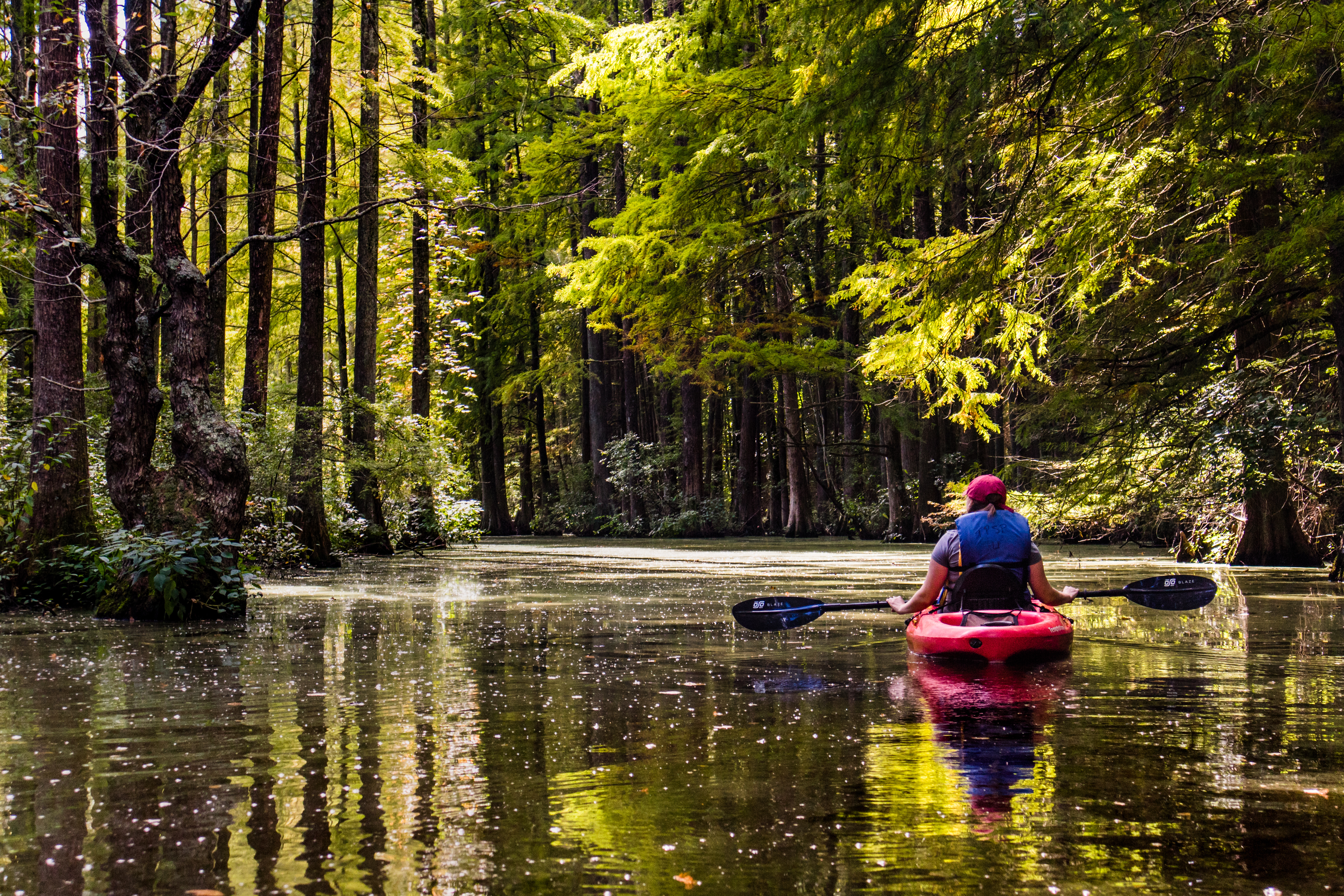
Another example is the recycling industry that employs 1.25 million people compared to 250,000 in solid waste. Paper and wood products currently make up roughly half the materials in our landfills. A US recycling rate of 75% by 2030 would create 1.1 million new jobs, while helping to ease pressure on forests.
The world’s leading scientists recently revealed clear links between degradation of land and degradation of communities, finding that restoring degraded land between now and 2030 could generate $9 trillion in environmental benefits, such as clean water, clean air, and increased wildlife.
It’s not too late for “green” policy initiatives such as the Green New Deal, the People’s Bailout, or the Green Stimulus, to embrace the term “proforestation” which refers to letting existing natural forests grow to reach their full biological potential.
Protecting forests is truly the greenest investment we can make for our future.
We are living in a world-altering moment in history. Now is the time for art and connection. Now is the time to remember and strengthen our roots in nature and our forests. Taking each day as it comes, I’ve drawn strength from the poetry of these five women of color. With diverse cultural backgrounds, including Creole, Mojave, and Chinese, these artists’ powerful words and depictions of nature resonate deeply with me, so I wanted to share them with you.
Whether it’s a reminder that flowers and our souls grow wild and free or mythologizing the loss of a river, these poems tap into both unique and universal experiences of nature that can help ground us and lay bare all the fierce beauty in our world.
I had no thought of violets of late, The wild, shy kind that spring beneath your feet In wistful April days, when lovers mate And wander through the fields in raptures sweet. The thought of violets meant florists’ shops, And bows and pins, and perfumed papers fine; And garish lights, and mincing little fops And cabarets and songs, and deadening wine. So far from sweet real things my thoughts had strayed, I had forgot wide fields, and clear brown streams; The perfect loveliness that God has made,— Wild violets shy and Heaven-mounting dreams. And now—unwittingly, you’ve made me dream Of violets, and my soul’s forgotten gleam.
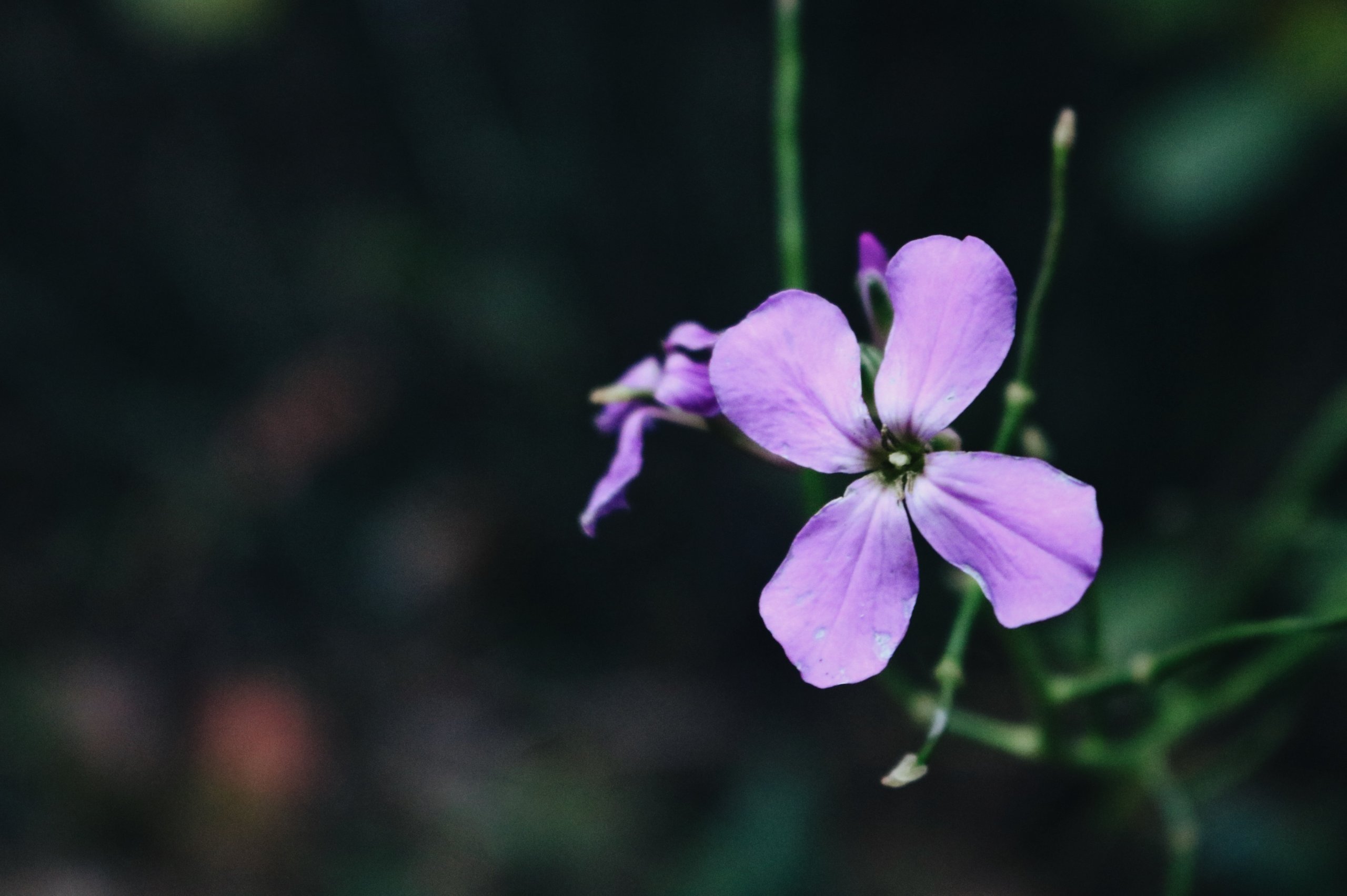
by Maya Angelou
A Rock, A River, A Tree Hosts to species long since departed, Marked the mastodon, The dinosaur, who left dried tokens Of their sojourn here On our planet floor, Any broad alarm of their hastening doom Is lost in the gloom of dust and ages.
But today, the Rock cries out to us, clearly, forcefully, Come, you may stand upon my Back and face your distant destiny, But seek no haven in my shadow, I will give you no hiding place down here.
You, created only a little lower than The angels, have crouched too long in The bruising darkness Have lain too long Facedown in ignorance, Your mouths spilling words Armed for slaughter.
The Rock cries out to us today, You may stand upon me, But do not hide your face. …
(Excerpt. For the full poem, watch the video below of Maya Angelou performing “On the Pulse of Morning” at the 1992 presidential inauguration of Bill Clinton.)
by Natalie Diaz
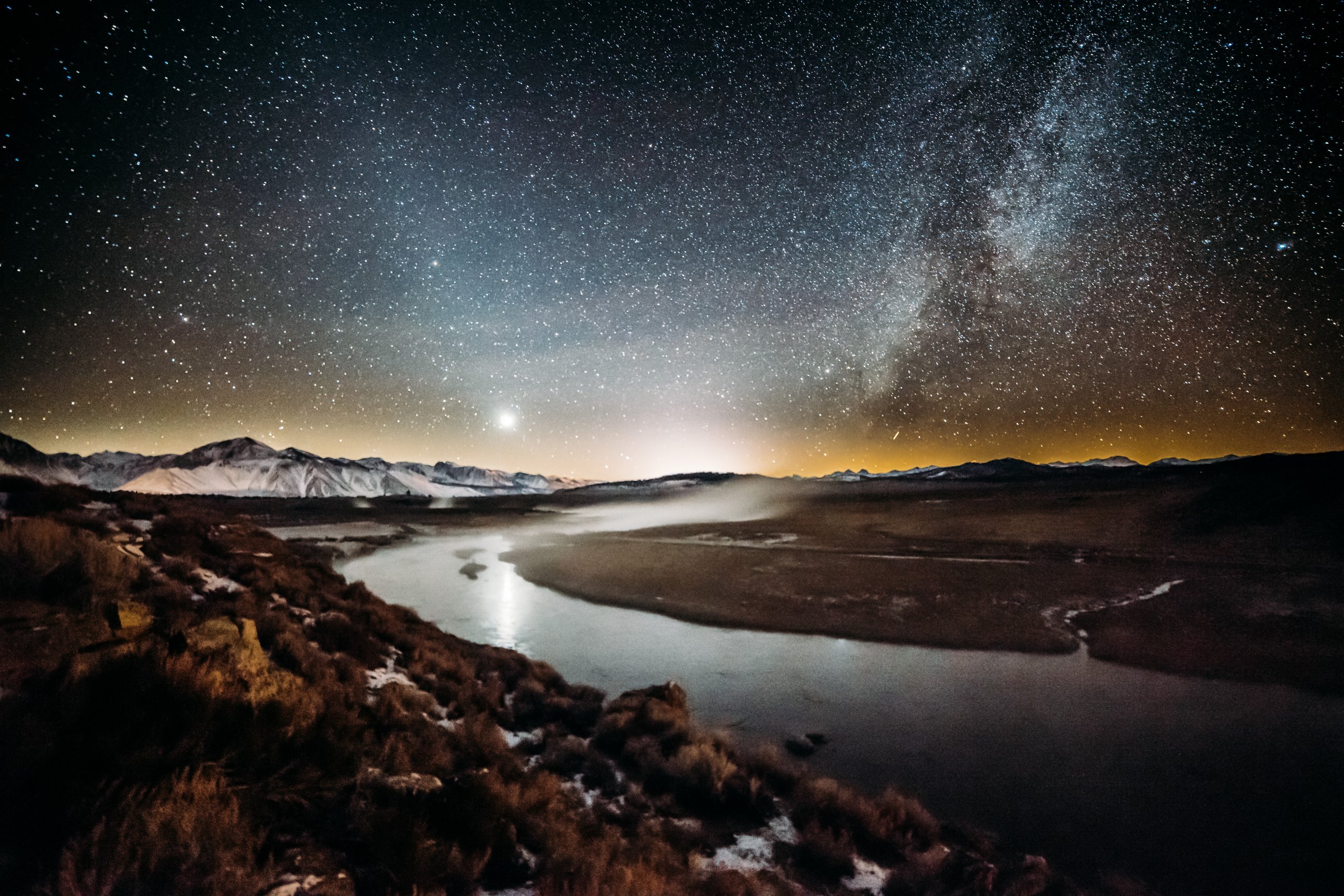
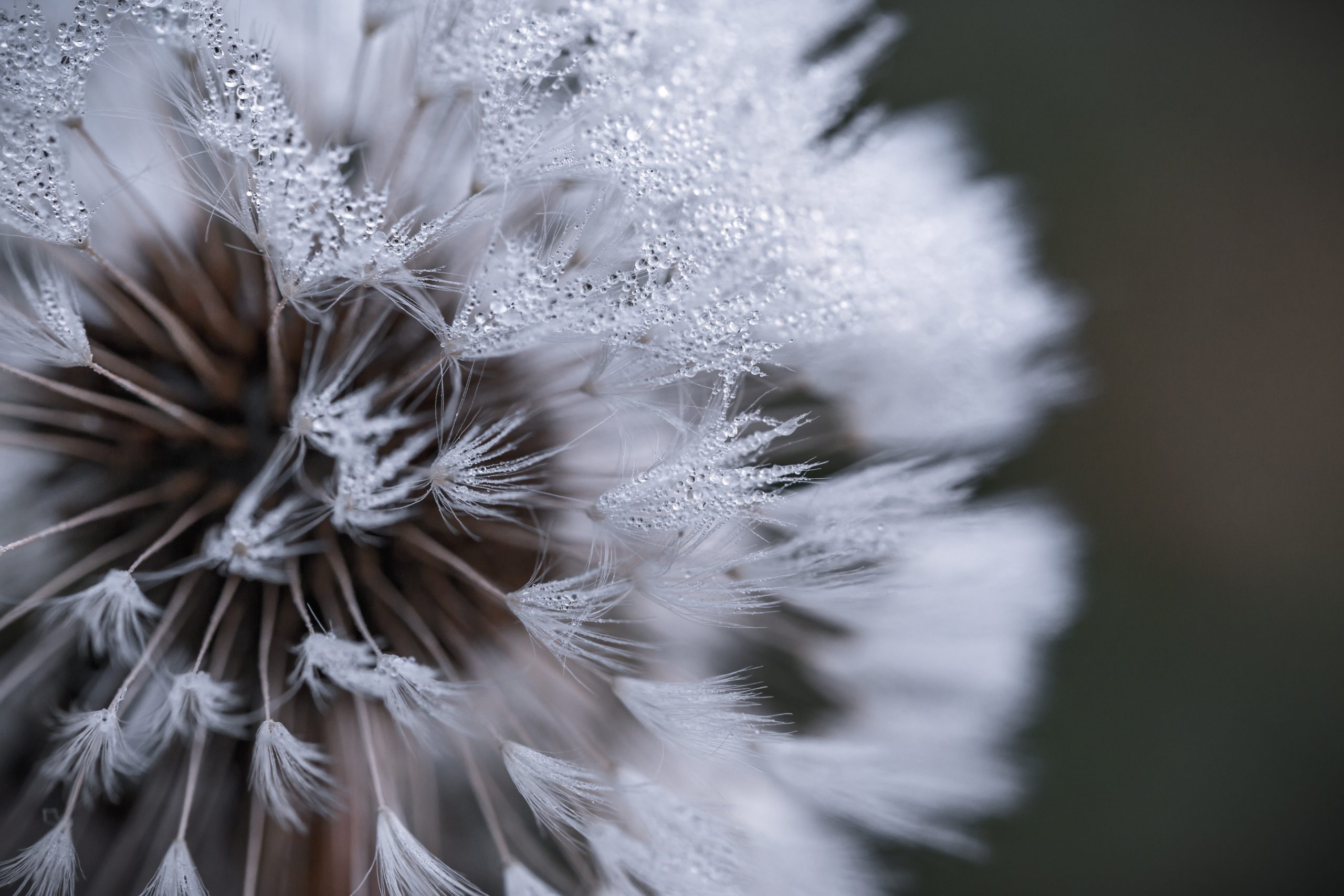
Welcome back to the biodiversity in your backyard series! This week, we’ll be taking a closer look at our feathered friends — the birds. The United States is a huge, incredibly diverse place, especially when it comes to birds. Luckily for you, I’ve lived on both coasts and in the midwest, so I’ve got a pretty good idea of what you might see when you peer out your windows.
With eye-catching headlines like Tyrannosaurus Rex “was more like a chicken than a crocodile”, what’s not to love about birds? Some taxonomists believe that birds are really just avian dinosaurs.
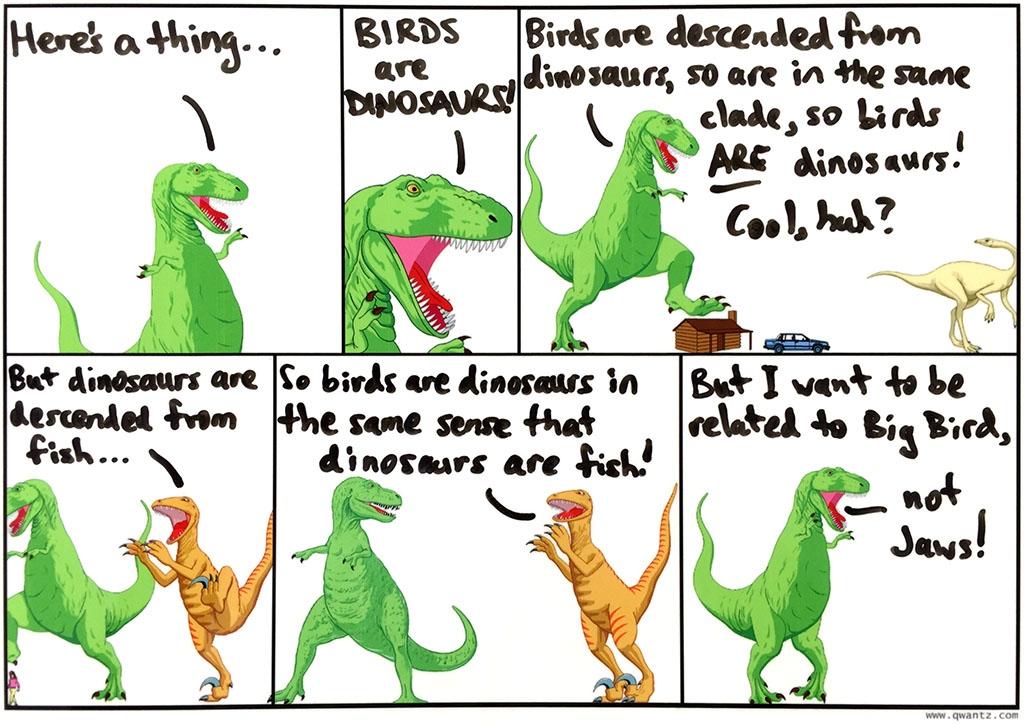
Cartoon by David Morgan-Mar
Whether or not you believe birds are dinosaurs, birds are a wildly diverse and utterly fascinating part of the world around us. Wild birds have learned how to use tools. Domesticated birds have been used as evidence in court trials, and some birds even make other species raise their young.
In the springtime, I always look forward to the return of birds. As you’re sitting on your porch or staring out your window, see if you can spot these species. Can’t see any birds? You might be able to hear them instead! As you first get into bird-watching, you’ll want some easy wins. Here are the easiest birds to spot in North America. You can find them with their bright colors and distinct markings.
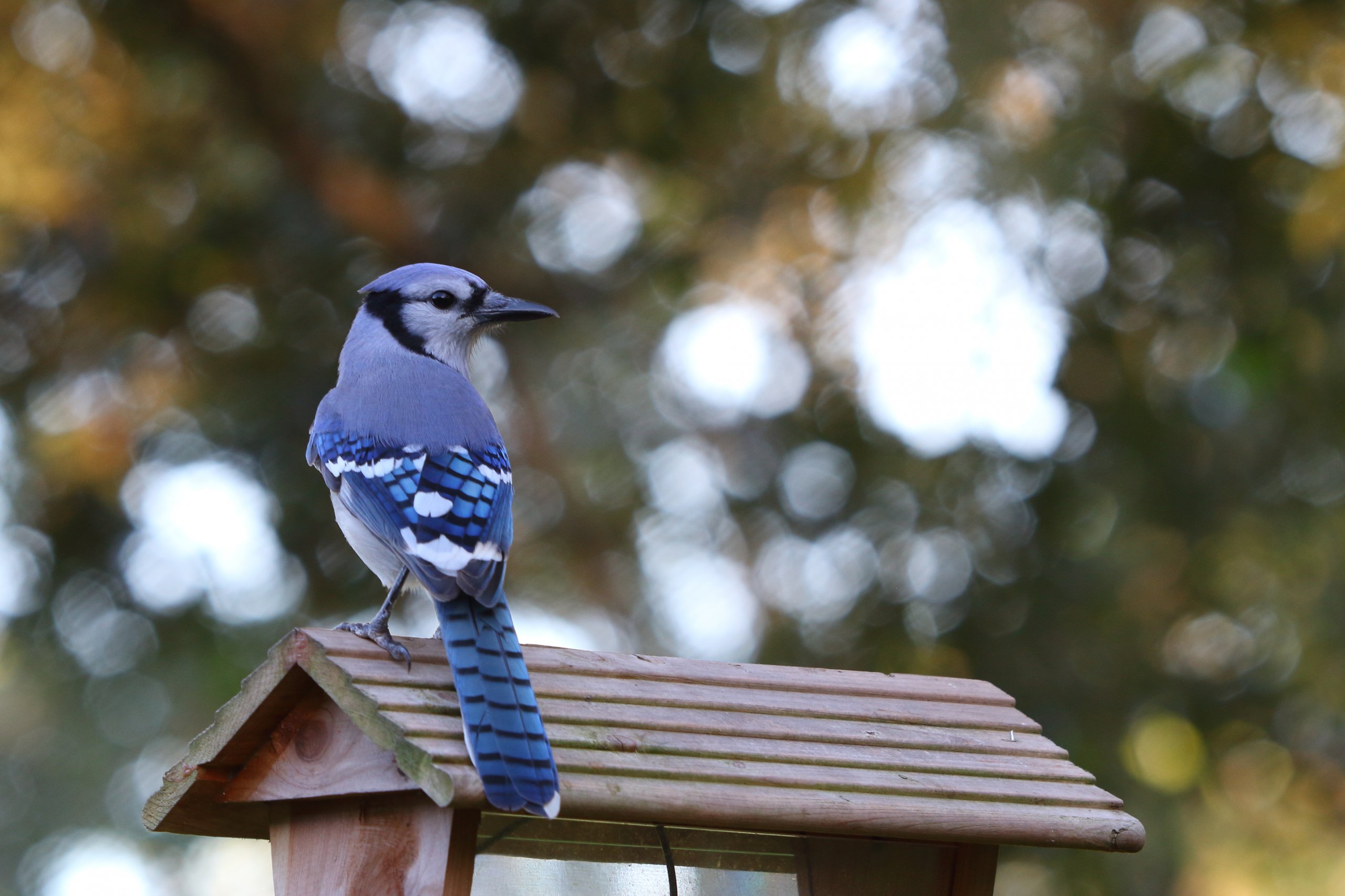
Blue Jay, courtesy of Adel Alamo
One of my favorite backyard birds is the bright and colorful Blue Jay. There are actually several species of Jays, but the Blue Jay, Cyanocitta cristata, is the most common visitor to my backyard. Blue Jays are in the Corvid family, which means that they’re closely related to Crows! These highly intelligent birds have noisy caws and are known to be omnivores, eating nuts, seeds, and occasionally the eggs of other species.
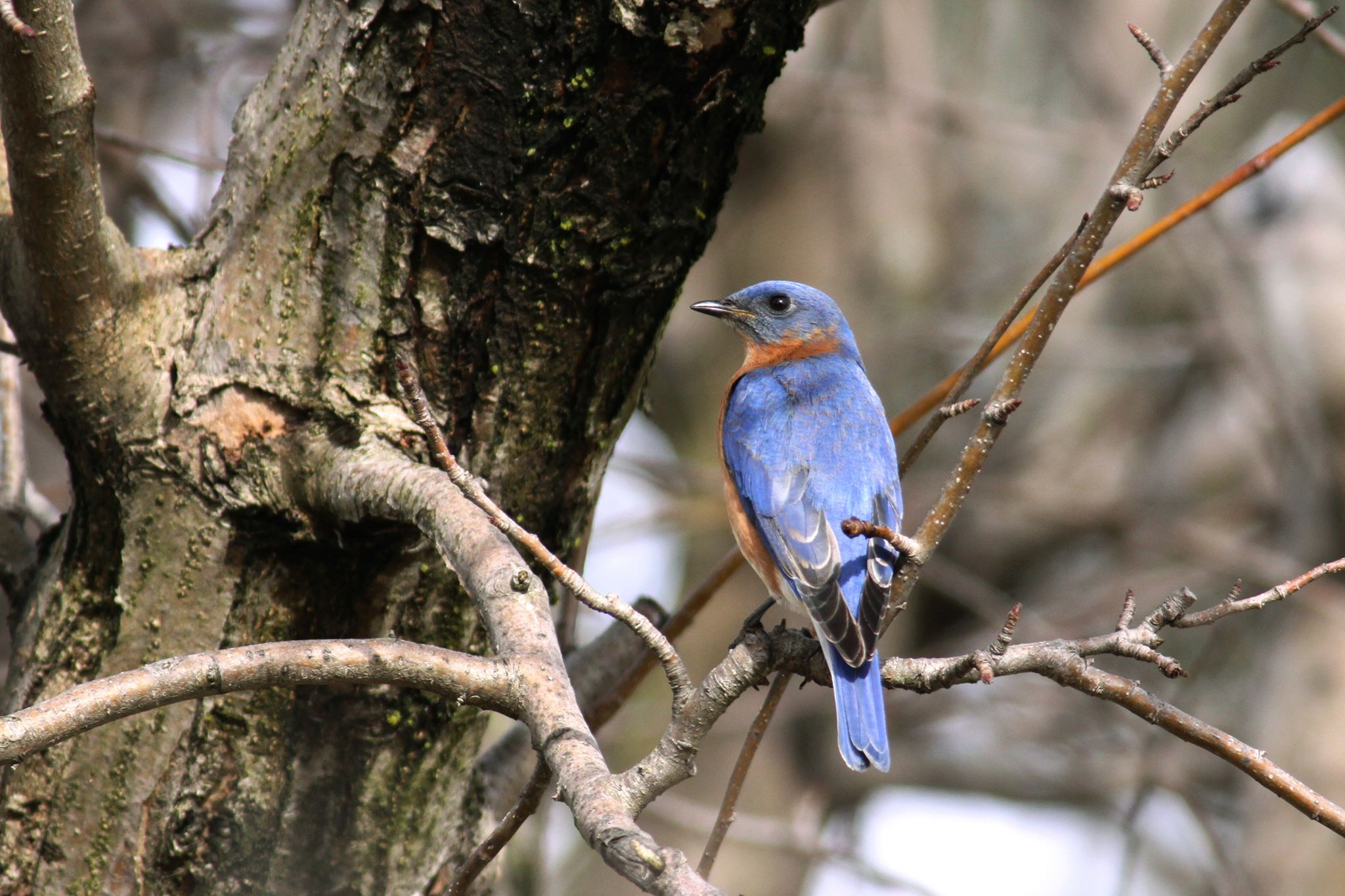
Eastern Bluebird (male), courtesy of Dr. Jeff Peters
If you catch a flutter of blue out of the corner of your eye, but it’s not as big or as noisy as a Blue Jay, you might have an actual Eastern Bluebird on your hands! These muted blue-and-orange birds are smaller than Robins, and eat a mix of insects and berries. If you’ve got bird houses or open places for them to perch, you might find yourself with a little Bluebird family!
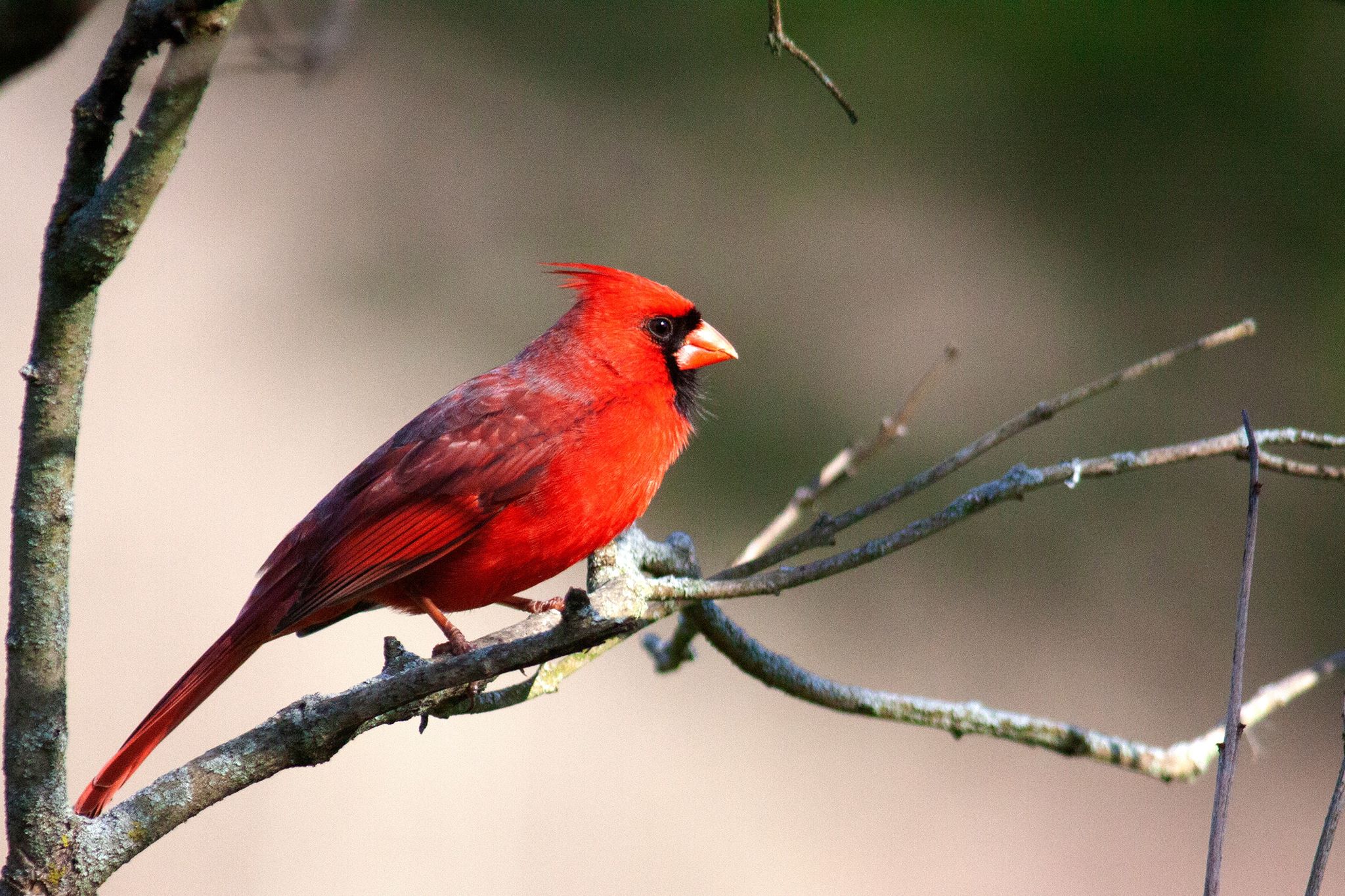
Northern Cardinal (male), courtesy of Dr. Jeff Peters
Another primary color favorite, Cardinals are the bright red birds that you’ll see in your backyard throughout most of the season. The Northern Cardinal, Cardinalis cardinalis, is a bright red bird sporting a fancy, eye-catching crest and cheerful song. Cardinals exhibit sexual dimorphisms, which means the males and the females are drastically different. The males are bright red, but the females are brown with red-tinged feathers most often on their crest. Cardinals can live over fifteen years in the wild!
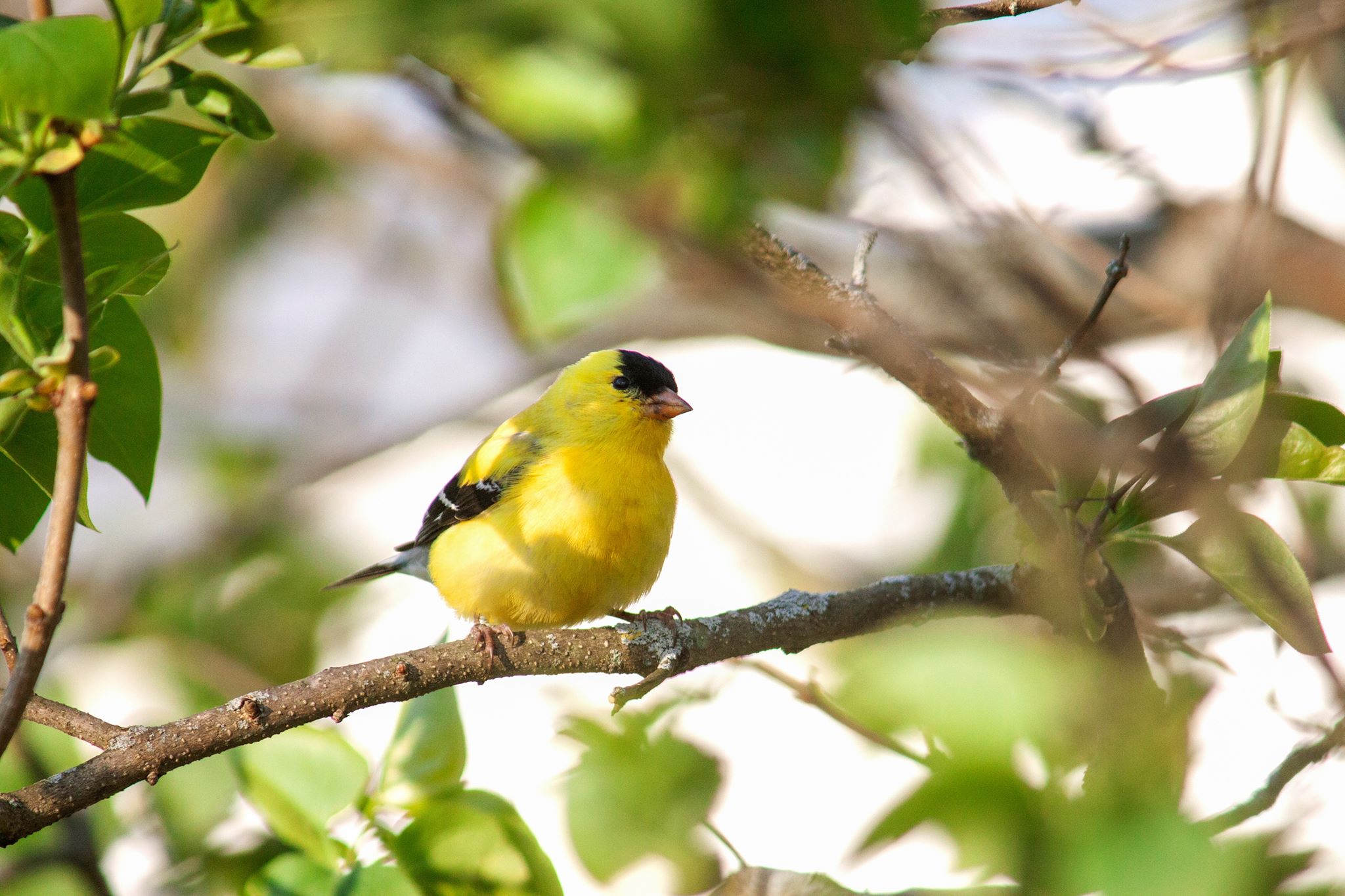
American Goldfinch (male), courtesy of Dr. Jeff Peters
The American Goldfinch, Spinus tristis, is hard to miss with its bright yellow color and unique flight pattern. Most often found around thistles and milkweed, Goldfinches can be attracted with almost any type of bird feeder and seed. Did you know that Goldfinches are the only finches that molt twice a year? Their winter colors are more dull than their breeding colors. Like Cardinals, Goldfinches are sexually dimorphic, and females tend to be browner with softer yellows throughout. Goldfinches are strict vegetarians and spend most of their time foraging for seeds.
Did you enjoy learning about these birds? If so, why not show us?
Share your favorite springtime bird pictures and tag us on Instagram, Facebook, or Twitter!
Want to do more?
Become a Forest Defender today! Your monthly gift will protect the birds and biodiversity of the South.
Join our email list to get new Biodiversity in Your Backyard sent directly to your inbox!
Written by Dr. Rev. Gerald Durley, Rev. Michael Malcom, and Rev. Kate Mosley
In the first chapter of the book of Haggai the prophet says that God asks, “Is it time for you to live in your luxurious homes while my house is in ruins?” God goes on to ask, “How has that worked out for you?”
In our efforts to expand economic power in the state of Georgia, we have lost sight of the impacts on God’s house and God’s people. God’s house is all the earth and God’s people are all people. Therefore, the forests are God’s house and communities that suffer from the decisions we make via deforestation are God’s people. As to “how has that worked out for you?”, the Stand4Forests resolutions, currently in committee in Georgia’s legislature, call upon the state to recognize and respond to the unfortunate reality that Georgia has become increasingly vulnerable to climate change, extreme heat, and extreme weather events. However, this is not an isolated event in an isolated state.
Under attack from a European utilities giant with a voracious appetite for our forests, hundreds of thousands of GA acres are in danger of being harvested, turned into pellets, shipped across the ocean, and burned for fuel disguised as eco-friendly “biomass.”
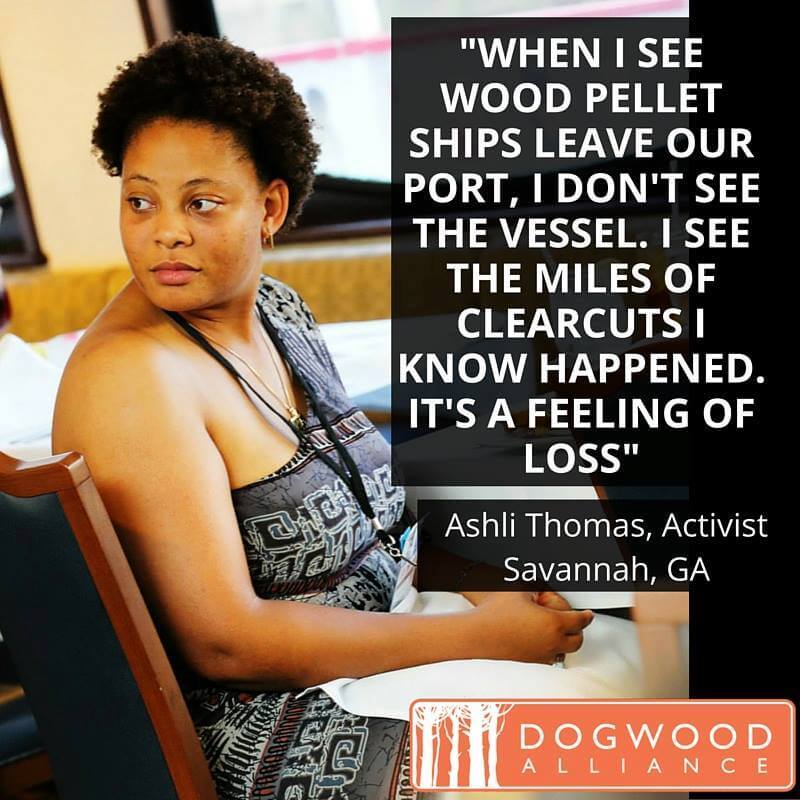
One retired forester put it this way: “90% of the forested land in the Southern US is privately owned, so it’s totally unprotected. There is nothing stopping Europe from taking it all in the next 10 years.”
Wood pellet facilities wreak havoc on nearby communities. They spit smog, asbestos, sulfur dioxide, and explosive dust into the air, cause increased road and rail traffic, and put undue stress on an already crumbling infrastructure. They create constant noise pollution and can drastically reduce area property values. The wood pellet industry relies on just a few highly specialized jobs and therefore does little to nothing to boost the local economy.
These are known as frontline communities in the environmental justice movement because they often suffer disproportionately from the health impacts of polluting industries. There are many health and quality of life impacts from the wood pellet industry but the clear cutting associated with this industry also leaves these communities more exposed to damaging winds and flooding from storms – storms that are only expected to increase in intensity and frequency as the result of our changing climate.
Dr. King said, if America is to survive and prosper we must realize “there is a fierce urgency of now.” America is facing a moral dilemma. Do we make decisions to sustain the earth and its inhabitants or do we decide to destroy all that has been provided for us?” As stewards of creation, we have been mandated to care for God’s creation. This creation is both people and planet. These two cannot be separated. Our very own Dr King said, “We are caught in an inescapable network of mutuality, tied to a single garment of destiny. Injustice anywhere is a threat to justice everywhere.”
This region’s trees allow us to hunt and fish in the wild, help keep our air and water clean and buffer our communities from floodwaters, give homes to millions of living creatures, and help to shape the area’s character. Right now, there are two resolutions sitting in the Natural Resources and Environment committees in the Georgia General Assembly, Senate (SR 108) and House (HR 930). These resolutions aim to protect our woods from being incinerated in distant fires. They will help keep Georgia’s wild places wild, and our communities healthy. Our legislators need to know that trees deserve protection. Legislators need to hear the S4F Resolutions in committees this month.
 Rev. Dr. Gerald L. Durley is Pastor Emeritus of Providence Baptist Church and Board Chair of Interfaith Power & Light, [email protected]

Rev. Kate McGregor Mosley is a Presbyterian minister in Atlanta and is Executive Director of Georgia Interfaith Power & Light, a state-wide interfaith environmental organization. www.gipl.org, [email protected]

Rev Michael Malcom, MDiv MBA is Senior Pastor of Rush Memorial United Church of Christ and Executive Director, Alabama Interfaith Power and Light, [email protected]The views and opinions expressed are those of the author(s) and do not imply endorsement by Dogwood Alliance.
For many of us, the Coronavirus global pandemic has altered almost every aspect of our lives. Our priorities shifted overnight, and our attention turned to pressing matters of our health, our finances, and our communities and families. But for many in the US South, this isn’t the “new normal”. It is an issue that is exacerbated by the fact that communities living on the frontlines of industrial logging and other polluting industries have been experiencing a health crisis for decades.
This is especially true in Robeson County, North Carolina, where the county is ranked worst in the state for health outcomes. Active Energy Group wants to build a bio-coal wood pellet production facility in Lumberton, NC (Robeson County), where two-thirds of the community are people of color. According to NC DEQ’s own Community Mapping Tool, there are at least a dozen pollution sources already in Robeson County.
Last month, many of you sent in comments requesting an extension to the public comment period, and the NC Department of Environmental Quality (NC DEQ) listened to your voices. NC DEQ has extended the public comment period until April 27th. Thank you for speaking out for North Carolina communities and forests! The fight isn’t over yet, though. NC DEQ has made no plans to reschedule the canceled public meeting or to further extend the public comment period as requested by local residents.
Robeson County residents deserve to be informed on the impacts this facility will have on air quality, carbon emissions, and local pollution. Local leaders have set a strong example by advocating for the rights of their constituents. The Robeson County Board of Commissioners has requested that NC DEQ reschedule the public meeting to allow for meaningful public input.
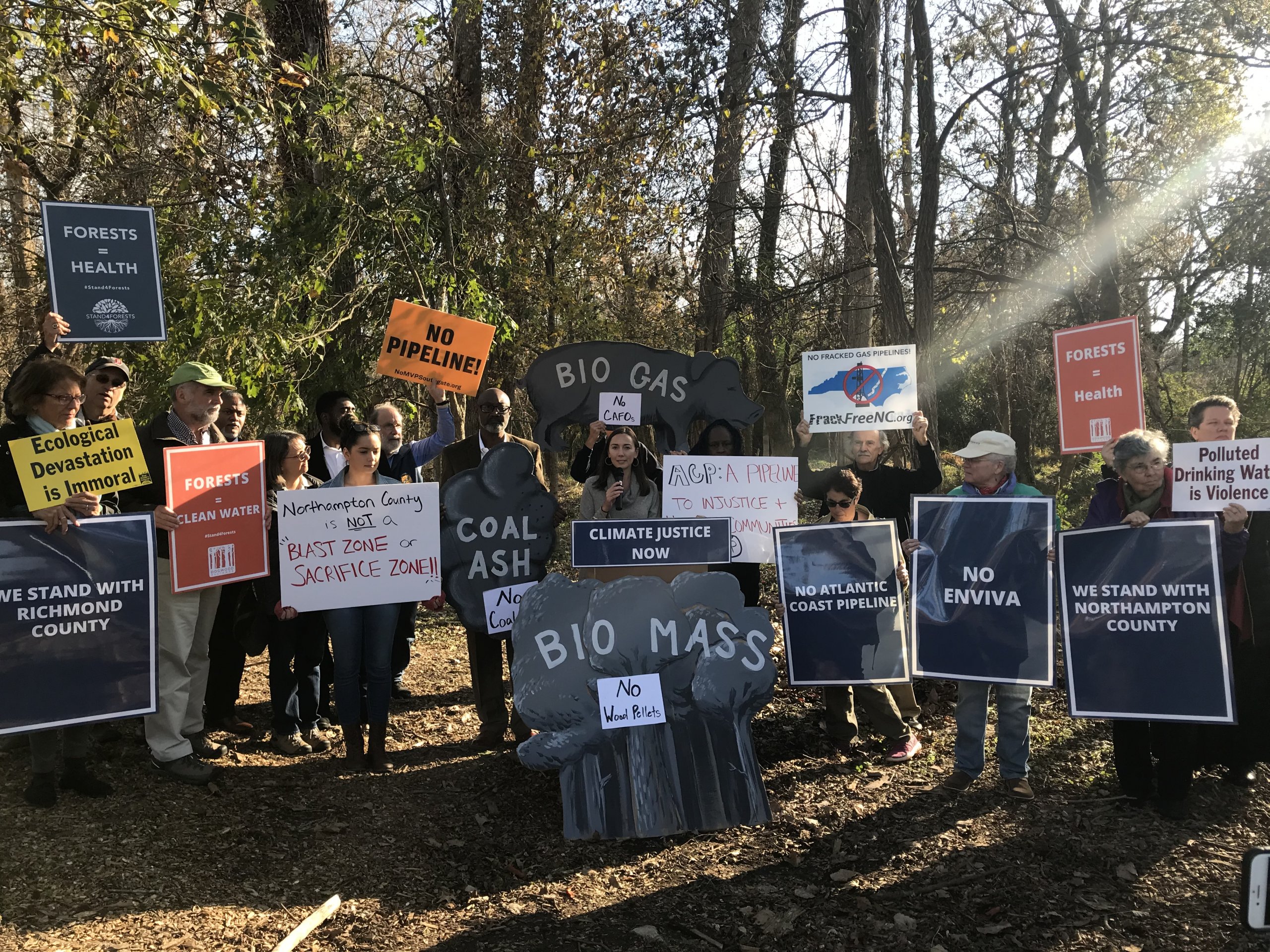
The South is the poorest region in the nation, and is also the world’s largest wood-producing region. In the past decade, the South has also become the world’s leading producer of wood pellets, which are sent overseas to be burned for energy production. The production of biomass wood pellets has a proven track record of forest and climate destruction and polluting local communities with dangerous air toxins.
Wood pellet manufacturing releases large amounts of air pollutants – primarily particulate matter, such as PM 2.5, and volatile organic compounds (VOC’s) that have been shown to have serious impacts on human health. According to the EPA, exposure to particulates like PM 2.5 can affect both your lungs and your heart. Numerous scientific studies have linked particulate pollution exposure to a variety of problems, including heart attacks, aggravated asthma, decreased lung function, and increased respiratory symptoms such as irritation of the airways, coughing, or difficulty breathing.
For communities living with polluting industries, exposure to particulate matter means constantly living with “underlying conditions” and at greater risk for health issues. Yet as this community grapples with responding to the pandemic, the wood pellet industry wants to push through a new facility without even allowing the public an opportunity to ask questions and submit oral public comments.
As the crisis worsens across the US, we hear our leaders and health professionals warn us of the extra danger posed to those with underlying health conditions. The reality for many will be that their increased risk isn’t simply a factor of their age, or ability to self-isolate, but rather, an outcome of their zip-code. People in communities that have been impacted by pollution for decades, such as Robeson County residents, face an elevated risk of underlying conditions that increase vulnerability to the coronavirus and other illnesses.
The global pandemic is reinforcing the need for a Just Transition: one that prioritizes community needs and well-being, ecological resilience, and systems that work for all and not just for a few. Allowing business as usual will only drive us deeper down a path of ongoing health and climate crises.
You, like me, probably keep asking yourself, “When will things return to normal?” Sitting within my home office– which means rotating between working in my bed, on the floor of my bedroom, and trying to balance my external webcam on the top of my computer for an increasing number of video calls– I’ve been experiencing that anticipatory anxiety that I know many of us are and thinking from time to time, “when will things return to normal?” But, there won’t be a return to normal, at least not the normal that we once knew.
The global pandemic is having effects on us all. One of the interesting effects that we are seeing around the world is the clearing of pollution as people are heeding stay-in-place orders. There are stories about the smog over China clearing during the shutdown, of the canals in Venice becoming crystal clear. Take a look at Los Angeles— it’s gorgeous without the smog. Additionally, CO2 emissions are reducing in line with the economic crisis.
However, that shouldn’t mean a return to business as usual when it comes to environmental impacts. The clearing of pollution and lowering of emissions don’t need to be confined to this historic moment, but one that we carry forward with us.
A return to business as usual should actually be our moment to seize a revolutionary shift in society. One in which we take the silver linings of this crisis and let that light flood our reality. Expanding clean energy jobs in the wind and solar industries, funding energy efficiency and weatherization to both reduce energy bills and increase resiliency for low-income Americans, and investing in proforestation measures that will pull millions of tons of carbon dioxide out of the atmosphere for years to come will reduce carbon pollution and better public health.
If we stop deforestation, protect and restore degraded forests, and expand forests, we could reduce annual emissions by 75% in the next fifty years. If we also phase out fossil fuels, we could easily meet the goals of the Paris Agreement and avoid catastrophic climate change. These goals are lofty, but not unattainable, especially if the world unites for a common vision of keeping climate change at just 1.5 degrees Celsius. And look at us uniting to fight Covid-19, in only a matter of weeks!
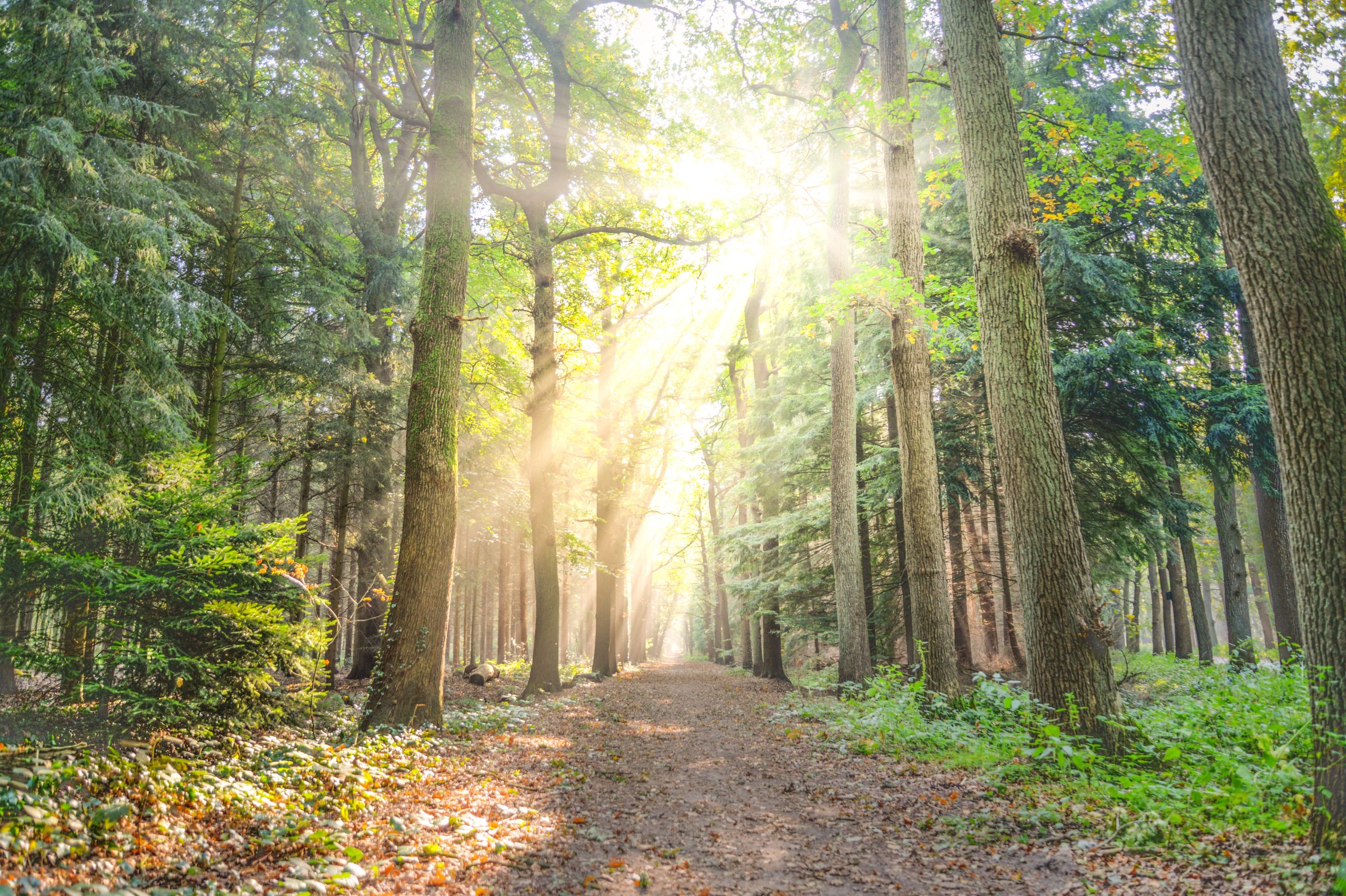
To be clear, fighting climate change doesn’t mean locking everyone in their homes and telling them to not go to work. That is necessary for a global pandemic, but to fight something like climate change, we need collective action, public understanding and buy-in, and decarbonizing the energy mix while supporting economic growth. We need a paradigm shift in how we view forests and natural systems.
To me, a return to business as usual will be recreating what exactly terms like “usual” and “normal” mean. To me, that could mean stopping forest degradation, stopping carbon emissions from making their way into the atmosphere, and protecting communities that are the most vulnerable to climate change. To me, that means singing together and banding our resources together in our communities to become more resilient. Forests can heal people and the planet– let’s make that our new normal.

One of my favorite things about spring is the return of the butterflies. Some trees are starting to leaf and flower. You might see a few grasshoppers or small beetles, and then one sunny day, you see your first butterfly.
Butterflies, like most insects, are pollinators. Although they don’t have pollen sacs like many species of bee, butterflies are excellent pollinators. They use their proboscis to slurp up nectar from flowers, and pollen gets on their faces, which then gets transferred to the next flower they visit.

A butterfly transferring pollen between flowers. Photo Credit: MrClean on Flickr
My first butterfly of the year was a Spring Azure, warming their wings on a gravel path. Shortly after, I saw my first big butterfly of the year: a Cabbage White. As an entomologist and nature enthusiast, I think folks have a lot to learn about insects like butterflies.
In this blog, and in future blogs, I’d love to share what I know about the widespread biodiversity in the South. Don’t worry, I don’t want to talk about just bugs, but also birds and mammals, reptiles, amphibians, and even plants and fungi. Biodiversity is literally the number of species in a given area. In this case, we’ll be talking about the biodiversity that you can find right in your backyard. Or front yard. Or neighbor’s yard!
Butterflies and moths share cool ancestry, but the answer you’re looking for is this: All butterflies are moths. Not all moths are butterflies. That’s right, taxonomically, every butterfly, even the Monarch, is a moth. Butterflies are a special set of day-flying moths in just a few families that all share one characteristic: their antennae have a “club” on the end. In contrast, moth antennae are all different shapes (fringed, straight, narrow, clubbed, feathered, etc) and sizes (very small to longer than their bodies).
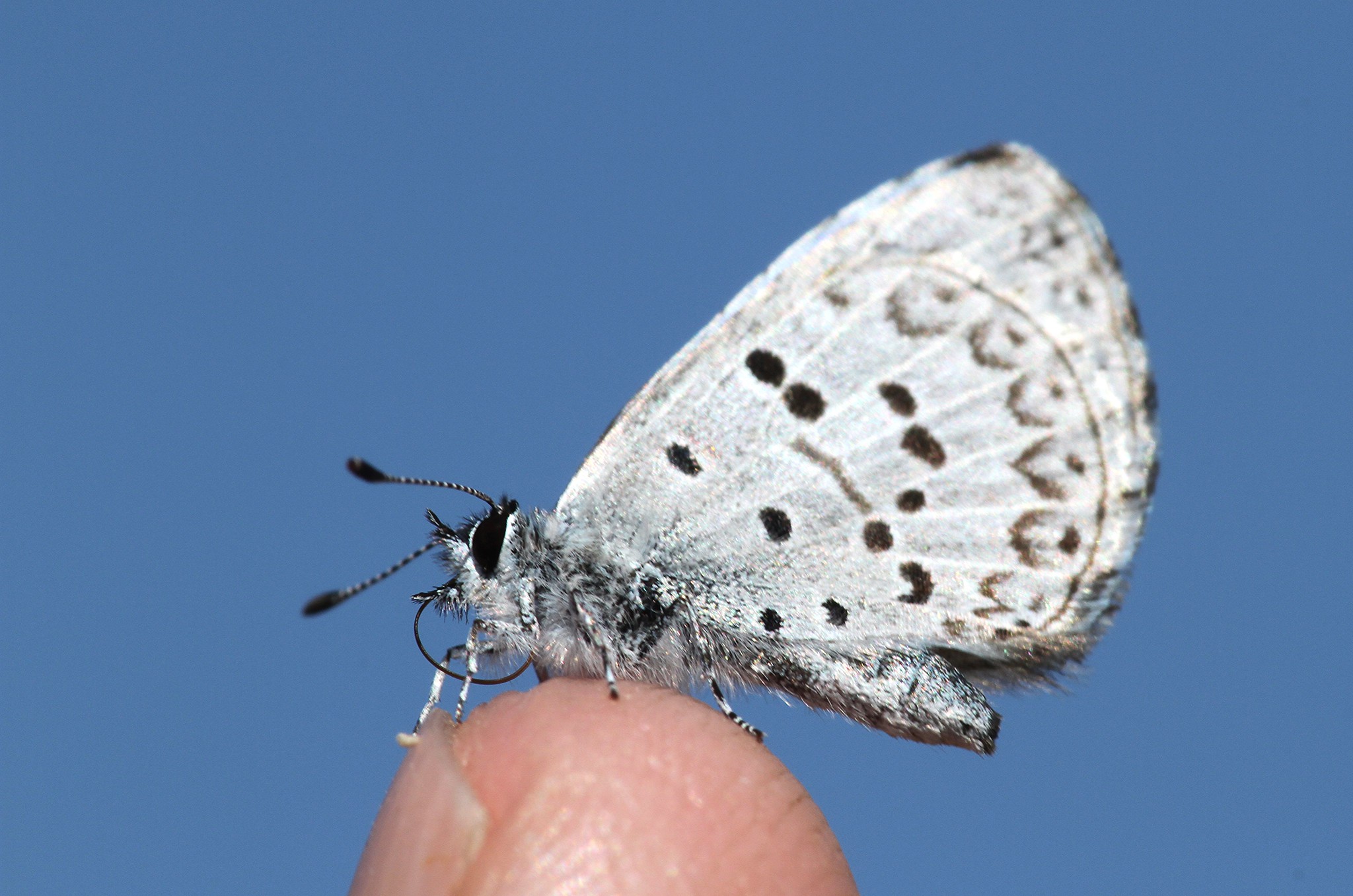
A Spring Azure rests on a person’s fingertip. Photo credit: John Flannery
In your backyard, the most common little butterfly you’ll see is a Spring Azure, Celastrinaladon, a member of the Lycaenidae (or gossamer-winged) butterfly family. These butterflies are very small, often fly low to the ground, and are most active in the afternoon through dusk. Their wings flutter fast enough that you’re not really sure what color they are until they land on a flower to take some nectar. When they fold their wings up behind them, you’ll see white, but when their wings extend, you’ll see blue.
Azures like to lay their eggs on a few different species of woody shrubs. Dogwood trees are a common host, so you may see more of them if you’ve got dogwoods around. They’re strong flyers, too, so you might just see an Azure passing through your backyard on its way to your neighbor’s flowers.
You may also see another member of the gossamer-winged family: Eastern Tailed Blues beginning in the spring and going through the summer and fall, depending where you live. They are similarly colored, but have a neat little “tail” off their wings!

An Eastern Tailed Blue butterfly draws nectar from a flower. Photo credit: Sam Davis

A Cabbage White draws nectar from a thistle plant. Photo credit: Steve Byrne
The white butterflies you’ll see are most likely the Cabbage White butterfly, Pieris rapae. These butterflies are among the first butterflies you’ll see in a year, and they prefer sunny fields, backyards, and “edge” habitats – where trees meet open space. They lay eggs on Brassica or mustard family plants. This includes your common garden vegetables: cabbage, Brussels sprouts, broccoli, and cauliflower alongside wild mustard plants like “yellow rocket” and toothworts.
If you live in a heavily wooded area, you may also find West Virginia White butterflies, but these are a rare species and hard to distinguish in flight from cabbage whites. Unlike Cabbage White butterflies, West Virginia Whites live almost exclusively in forests and only lay their eggs on a couple of toothwort and rockcress species of plants. Although their name is “West Virginia” white, you can find them from Vermont and Wisconsin all the way South to Georgia. West Virginia Whites are an endangered species in a few regions, at risk of local extinction due to things like logging, climate change, and invasive species.

The West Virginia White is a rare, early springtime forest butterfly. Picture credit: Sam Davis
The last springtime butterflies that I want to talk about are the swallowtails (Papilio species). These big, showy butterflies are easy to identify by sight. The Eastern Tiger Swallowtail (Papilio glaucus) is a large, bright yellow butterfly that patrols open fields, roads, and even forests, and their range is in the South. If you live in the Northeast or Mid Atlantic, you may encounter the Canadian Tiger Swallowtail (Papilio canadensis) instead. If you live in the Appalachian mountains, you may encounter the Appalachian Tiger Swallowtail (Papilio appalachiensis), which is believed to be a hybrid species of the Eastern Tiger and Canadian Tiger Swallowtails. These three “species” (the jury’s still out on whether or not they’re all species!) are hard to distinguish in flight, so for most of us, calling it a “Tiger Swallowtail” will do nicely.

A Tiger Swallowtail drinks nectar from flowers. Photo credit: Kelly Schradin
Swallowtails are well known for “puddling” — congregating around mineral deposits, usually in puddles, on gravel roads, or in (ew!) carcasses or animal droppings. Many butterflies do this, but they’re not just hanging out! They use their proboscis to get hard-to-find minerals and salts. This helps with finding a mate and laying eggs.
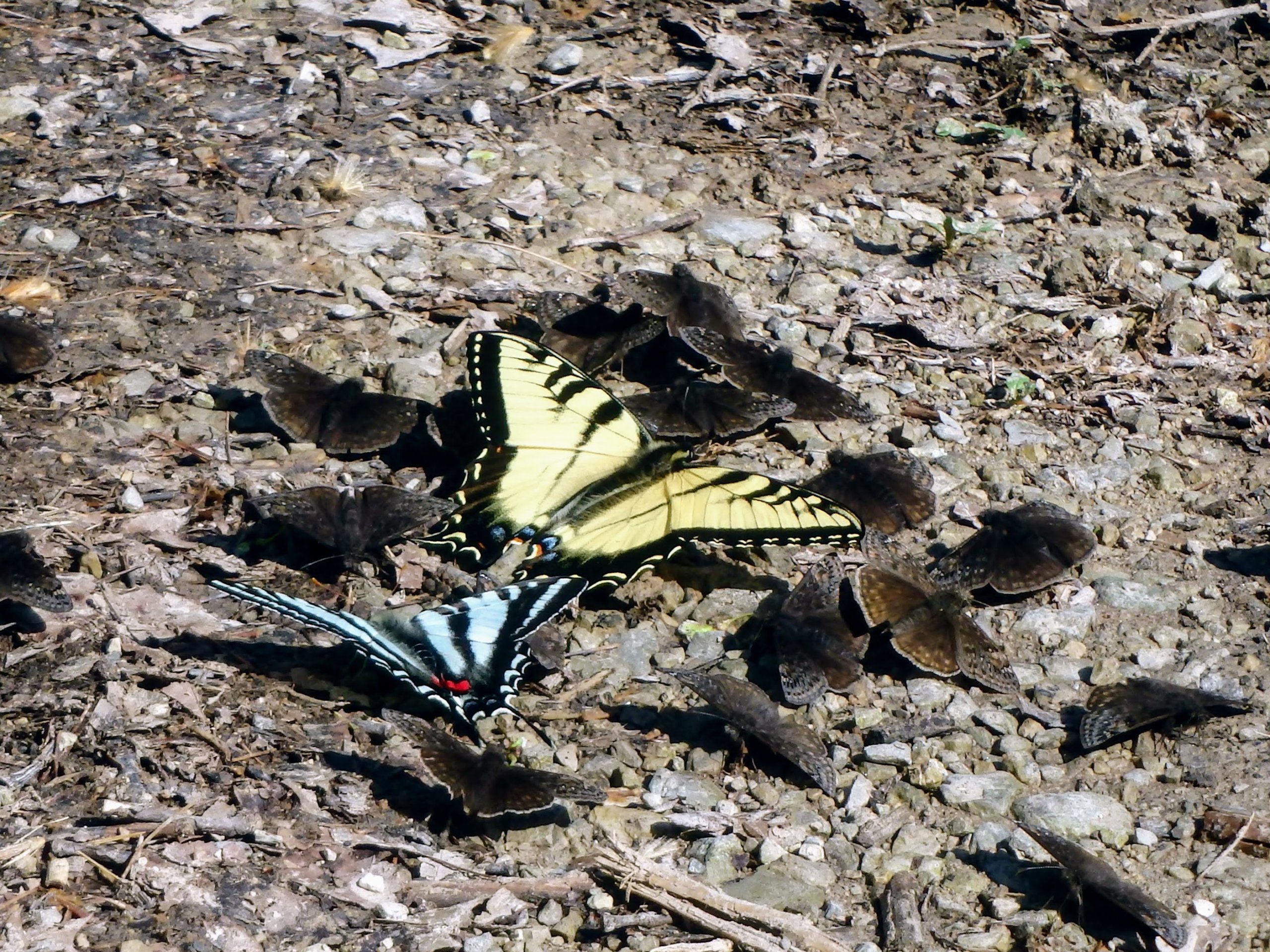
A Swallowtail joins Juvenal’s Duskywings (brown) and a Zebra Swallowtail (white) in puddling. Photo credit: Sam Davis
Did you enjoy learning about these butterflies? If so, why not show us!
Share your favorite springtime butterfly picture and tag us on Instagram, Facebook, or Twitter!
Want to do more?
Become a Forest Defender today! Your monthly gift will protect the butterflies and biodiversity of the South.
Join our email list to get new Biodiversity in Your Backyard sent directly to your inbox!
It’s the International Day of Forests, a day each year that has been set aside to celebrate the role that forests play in sustaining life on Earth. In times like these, hope can be hard to find. But we can find it in forests.
It’s not surprising that every article I’ve read in the last week on how to cope with the stress and anxiety of the Coronavirus pandemic says to get out in nature.
I’m fortunate enough to live in a forest with hiking trails in my backyard. One of my favorite spots is on the top of a big boulder my family and I call Picnic Rock. I went up there just the other day to escape. As I crossed a small stream, I could hear the water flowing over rocks and birds chirping. Once on top of the rock, I looked closely at the small budding leaves on a tree growing in a crack ready to burst into spring. I took a deep breath of fresh air. In the quiet and stillness of the forest, I felt my spirit calm, my body relax.
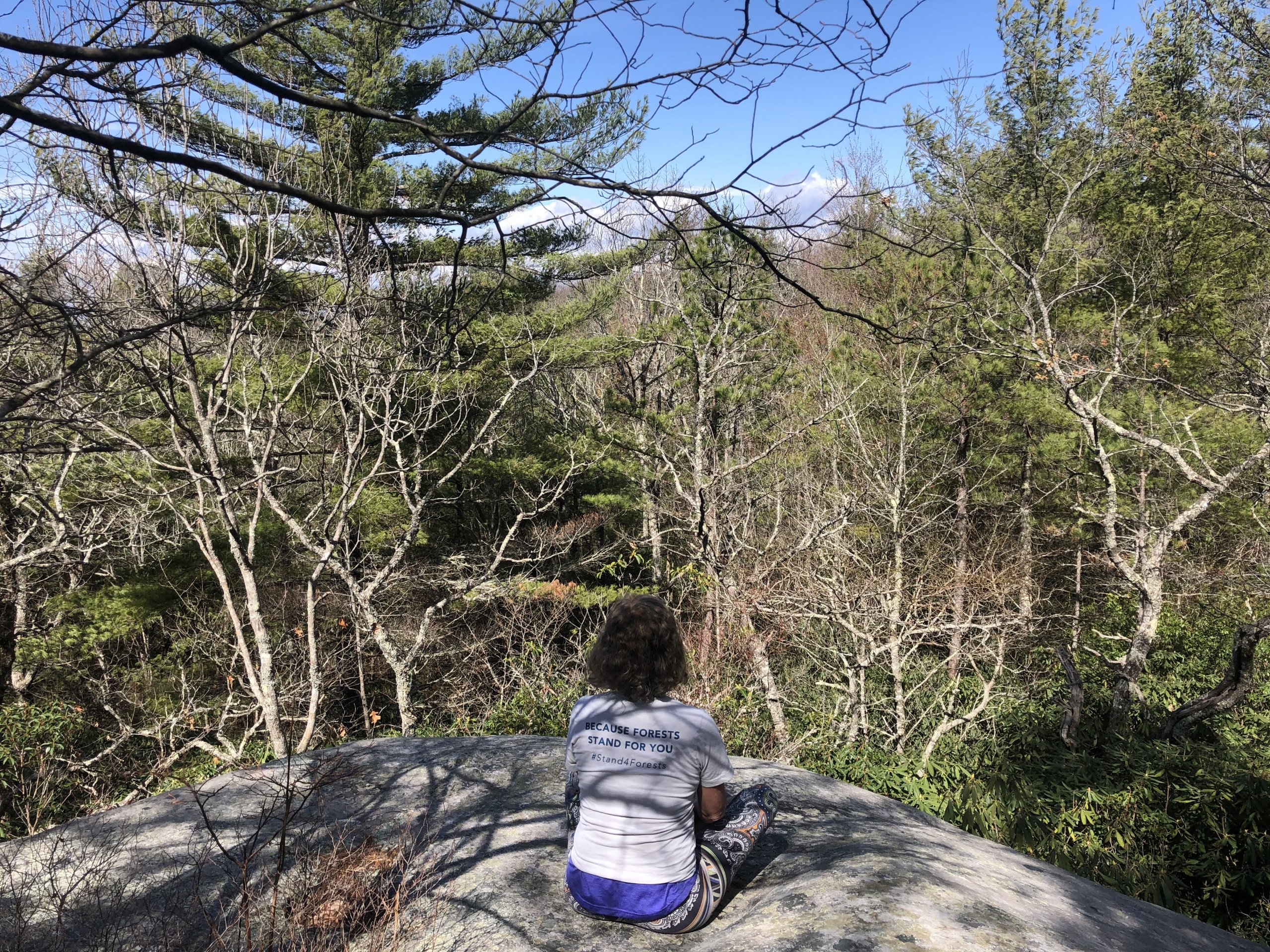
Danna Smith at Picnic Rock
Sitting on Picnic Rock away from all the chaos of the news and emails about the pandemic, I thought about how quickly the whole world responded to this crisis. In a matter of weeks everyone was washing their hands, practicing “social distancing”, and otherwise doing what the experts are saying.
If it’s possible to nearly shut down society in a few weeks, certainly we can stop the burning of trees for power, dial back our consumption of wood products, and scale up the protection of our forests. I left the woods feeling hopeful and grateful instead of anxious and worried.
Let’s all take his moment of pause to reflect on our situation.
The Earth has a fever – it’s called climate change. Temperatures are rising, the ice caps are melting, and communities are flooding. Forest loss and degradation has played a major, yet often underestimated, role in the climate crisis. Habitat destruction is also causing massive extinction at a rate and scale on par with that of the time of the dinosaurs. Scientific reports link the destruction of forests and nature to the unleashing of many recent viruses, including possibly even COVID-19.
Not only has forest destruction played a major role in these global ecological crises, but industrial logging goes hand in hand with pollution, economic inequity, poverty, and a long history of racism. These factors combined have put low income communities and communities of color at greater risk to the economic and health impacts of the current pandemic. I’m concerned for the lives of my friends and colleagues whom I’ve come to know over the years who have suffered too long under an unjust system that puts the profits of a few ahead of their health and well-being.
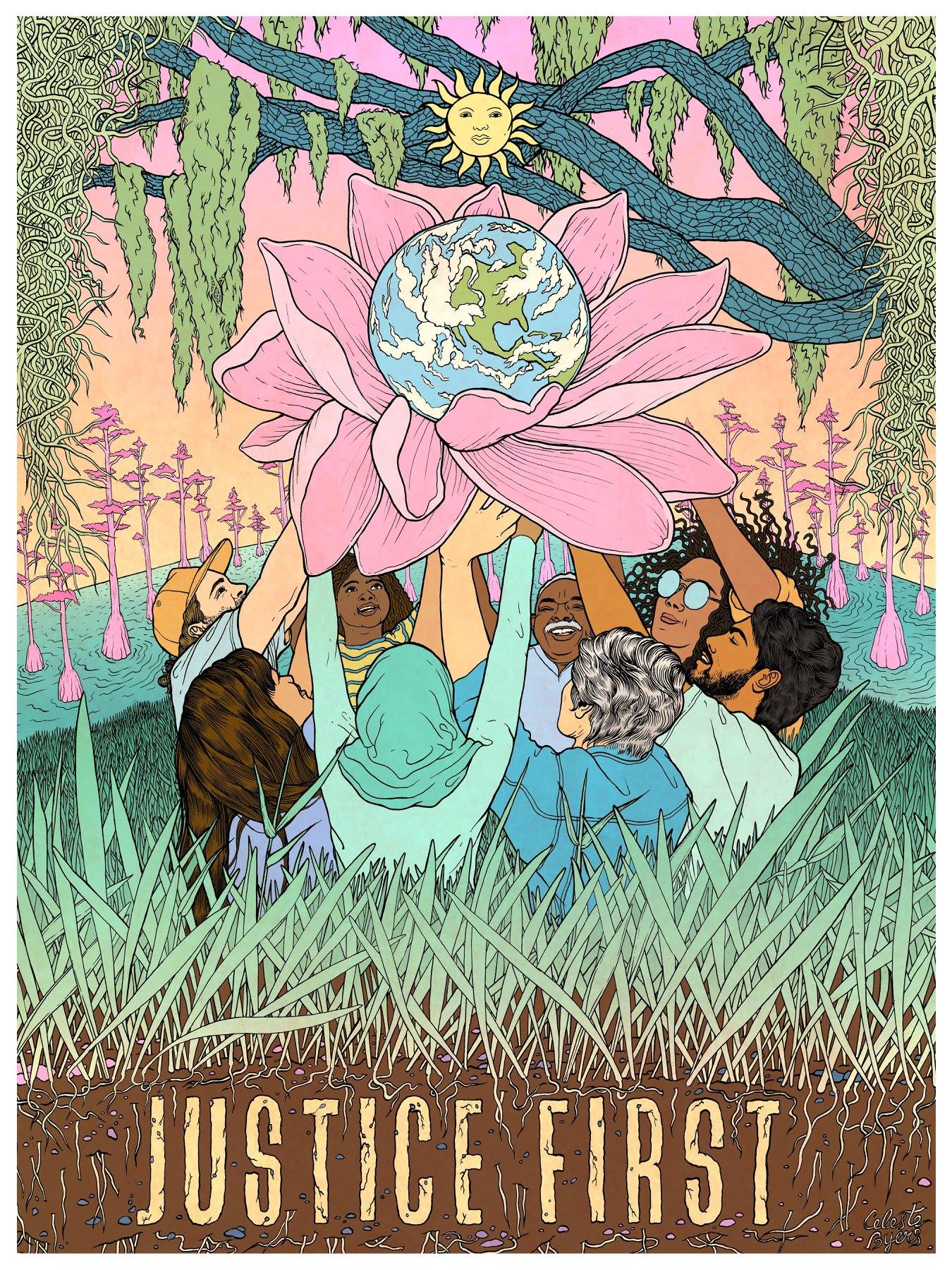
Protecting standing, living forests can help us avert climate catastrophe, cooling the planet down and protecting communities from extreme flooding and droughts. Forest protection can help clean the air of pollution and purify the water. Through setting aside half of the Earth’s ecosystems for biodiversity, we can slow the rate of species extinction and avert future pandemics.
Scientists say we likely have less than a decade to reverse the trend on climate change. Look at what’s been done in a few short weeks to address the Coronavirus. It’s time for government leaders and corporate executives to embrace the science and take immediate action to protect nature.
Imagine instead of large-scale industrial logging and pollution dominated by a few corporations, communities were practicing permaculture, providing fresh, healthy food for everyone. Imagine children in the woods studying and caring for plants and animals. Imagine people building hiking trails and treehouses and creating art and music in celebration of the forest. Imagine the sun and wind providing local energy for local communities. Imagine forests growing old and species flourishing once again. Imagine rivers running clean and the air clear of pollution. Imagine a culture that cares more about the planet and each other than it does about the latest fashion or the newest cell phone model.
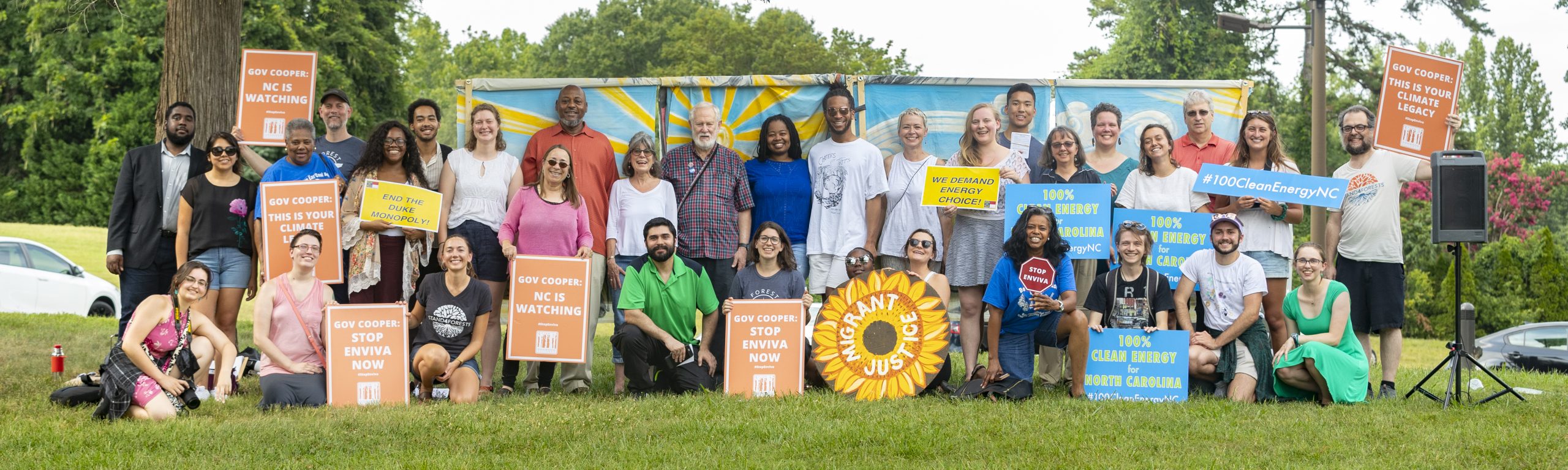
More than 11,000 scientists and 1,400 jurisdictions have declared a state of climate emergency. The Green New Deal has already been written. A Stand4Forest policy platform has already been signed by over 150 organizations and 60 elected officials. A diverse movement of forest and planet defenders is growing by the day. Young people around the world are striking for the future, even if just virtually for the time being.
We are already pooling resources and uniting our efforts. At the forefront of our efforts are the communities who have borne the brunt of the impacts of environmental destruction for too long.
We know what needs to be done. Rapid and far-reaching change is possible if we let go of fear, embrace hope, and come together. On this International Day of Forests, let’s commit to choosing the health and well-being of people and the living planet above all else. To do that we must hold government and corporations accountable to stop forest destruction. So tell your neighbors, family, and friends that hope lies in the actions we take today to defend and protect our forests. Through deep-rooted systemic change in how we are treating nature and each other, we can heal ourselves and the planet.


 Donate
  April 5, 2026