


As the world at every level comes together in response to the Coronavirus pandemic, we wanted to reach out to you as a member of our Dogwood community. In times like these, our networks become our strength and our resilience, our constant reminders that we are not alone. We appreciate your being a part of this community — one that cares deeply about the health of the planet and its people.
This crisis has reminded us why forests are so important and why we must remain diligent in protecting them. Getting out in forests and nature can be one of the best forms of social distancing. Forests help calm our spirits, help relieve anxiety and stress. Forests are our safety net against a changing climate, providing protection from storm surge and flooding, and clean and safe drinking water.
The pandemic crisis has illuminated why building greater economic equity across society is so vital. It has reinforced that protecting forests across the rural South helps build stronger, more resilient local economies in rural areas that have for too long been at the center of forest destruction, pollution, and economic distress.
Dogwood has always been an adaptive, creative organization. We will lean into this strength to find new ways of engaging with you and supporting those on the frontlines of forest destruction and pollution — some of the very communities who are also most at risk from this pandemic’s health and economic crisis.
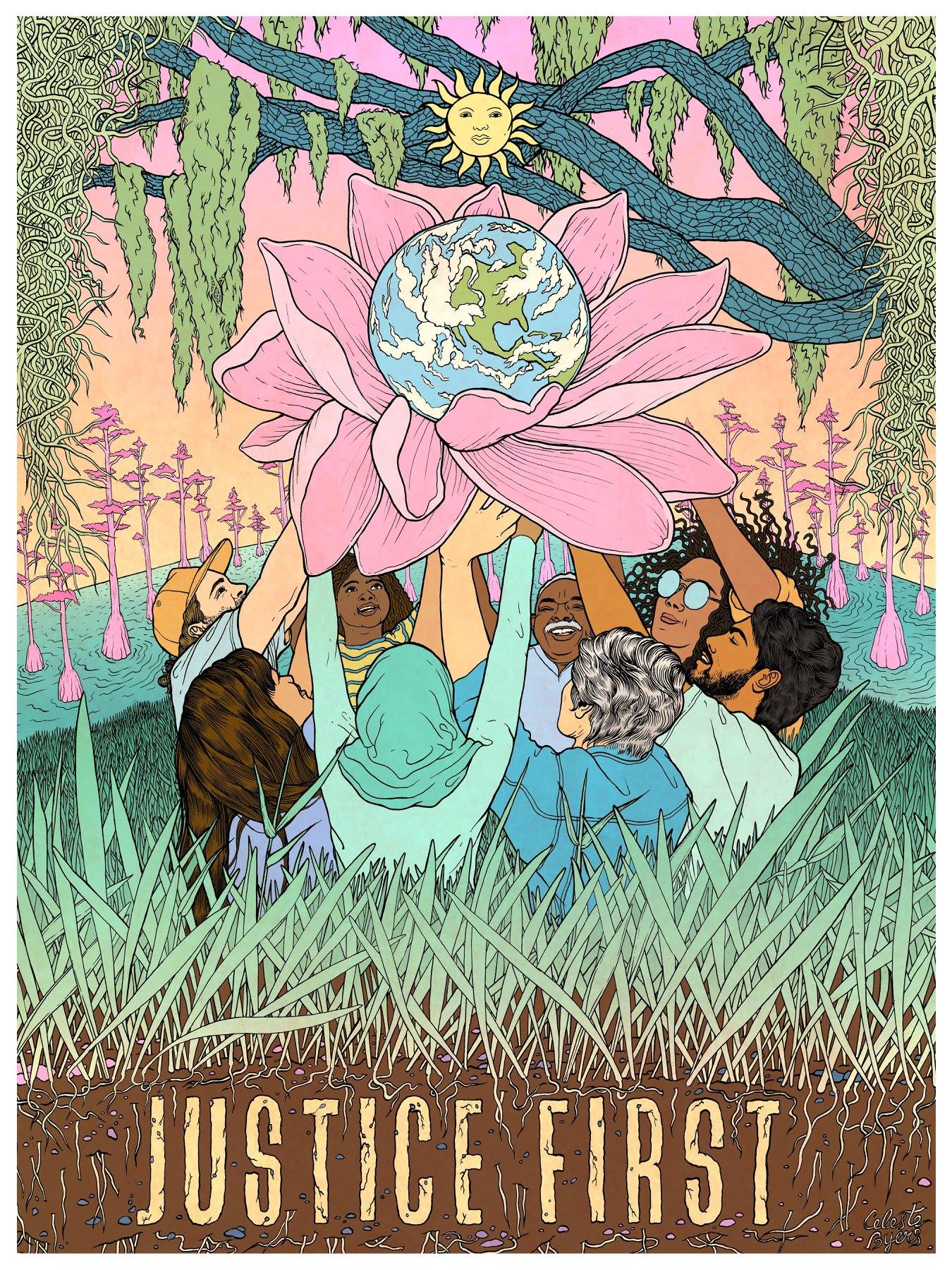
First, we’re prioritizing the health of our staff, board, interns, volunteers, members, frontline communities, and partners.
Here are some steps we are taking:
While we may not be able to meet up in person, we will continue to build a strong community online. Please follow us on Facebook, Twitter or Instagram for regular updates on Southern forest protection and news from communities around the region. We welcome your ideas and thoughts about ways we can stay connected and powerful in these times.
When it comes to our campaigns, we’ll be re-envisioning a lot of our tactics, shifting to entirely online spaces. We’re still working through what the details will look like, but here are some things that we have been considering:
This crisis is affecting all of us in different ways. While many of us are feeling fear and confusion, this crisis shows how deeply we depend on one another to act for a greater common good. The ability to come together, solve problems, and support one another, as Dogwood Alliance has witnessed so many communities do over the past decades, is now something to truly believe in.
The global, rapid, and far-reaching response we are witnessing to the current crisis is a hopeful sign that with strong leadership at every level and the right information from experts, we can also pull together in unprecedented ways to address the climate emergency.
Below are some resources for dealing with the Coronavirus (COVID-19) that speak to issues of physical and mental health and how to stay engaged as well:
As we spend more time at home, let’s make sure that social distancing doesn’t result in social isolation but rather greater social engagement for the positive change we know needs to happen to protect our planet and its people. We look forward to spending time together virtually, advocating for healthy forests and a climate-safe future, and activating our online power while keeping our communities healthy and safe.
On March 12, 2020, Danna Smith testified on Capitol Hill at a Congressional Briefing entitled, “Climate Change or Emergency: Where Do We Go From Here?” The event was hosted by Rep. A. Donald McEachin (VA-04) in collaboration with the House of Representatives United for Climate and Environmental Justice Task Force and the Senate Environmental Justice Caucus.
She was joined on stage by a powerful group of environmental and climate justice leaders including Mustafa Santiago Ali of the National Wildlife Federation, Keya Chatterjee of United States Climate Action Network, Malik Saafir of GreenFaith, Pedro Cruz of Sierra Club, and Dr. Astrid Caldas of Union of Concerned Scientists. The second half of the briefing featured Rev. Leo Woodberry of New Alpha Community Development Corporation, Loretta Slater of The Whitney M. Slater Foundation, Nsombi Lambert Haynes of One-Voice, Nana Firman of Islamic Society of North America, Alex Easdale of Southeast Climate Energy Network, and Kendyl Crawford of Virginia Interfaith Power & Light.
Good Afternoon. My name is Danna Smith and I am the Executive Director of Dogwood Alliance, a nonprofit organization working with communities across the Southern US to protect forests and advance climate justice. It is an honor to be here with this group of esteemed colleagues, who represent some of the most inspiring luminaries of the climate justice movement in America.
I’d like to thank Representative McEachin and the other members of Congress for hosting this press briefing. Your leadership at this moment is critical. Over the past year, over 11,000 scientists (1) and over 1400 jurisdictions around the world have declared a Climate Emergency calling for immediate, broad-sweeping action. Our window of opportunity is rapidly closing. The ice is melting. Forests are burning. Communities are flooding. People are dying.
Across America, forests play a critical, yet often misunderstood role in the Climate Emergency. Recent scientific studies underscore that to avoid catastrophic climate change letting forests grow to soak up carbon out of the atmosphere is as essential as getting off fossil fuels. When left standing, living forests remove and keep vast amounts of heat-trapping carbon out of the atmosphere, provide natural flood control, stabilize fresh water supplies and help purify and cool the air. At a time when flooding, droughts and heat waves are becoming more extreme, letting forests grow(2) is one of the smartest things we can do to stop the ongoing warming of the planet and protect our communities against extreme weather events.
To effectively address the climate crisis, we must acknowledge that our forests are in trouble. Our nation is the world’s largest consumer and producer of wood products, with rates of industrial logging that are among the highest on Earth. The hardest hit region is the Coastal Plain of the US South where the rate and scale of logging has been estimated at 4 times that of South American rainforests.(3) When forests are logged, carbon that would otherwise be stored is released and important natural protections against extreme weather events are compromised. It can take up to a century for new forests to fully regenerate, recapture the carbon lost and for ecosystem functions to be restored.
Decades of widespread, indiscriminate industrial logging has left our forests and communities in a degraded condition with disproportionate impacts to low-income rural communities and people of color. Along with a degraded landscape, these communities are suffering health impacts from nearby wood processing plants and other polluting industries that emit toxic air and water pollution. These same communities are bearing the brunt of the impacts of recent extreme flooding linked to climate change.
Rural communities living on the front-lines of industrial logging also disproportionately suffer from economic distress, having some of the highest poverty and unemployment rates in the country.(4) Meanwhile, the economic value of the public benefits of standing forests along the rivers for things like clean drinking water and natural flood control are estimated to be fifteen times greater than their value for wood products.
In the past several years, the situation has gotten worse due to the rapidly expanding global market for wood pellets that are being burned in power stations in Europe under the guise of renewable “biomass” energy. The Southern US is now the world’s largest exporter of wood pellets, with 20 mills wiping out approximately 180,000 acres of forests a year.
Meanwhile the science is clear, burning trees to generate electricity releases up to 50% more carbon than coal per unit of energy generated,(5) degrades carbon sinks, natural storm protection, impacts wildlife and causes pollution on par with fossil fuels.
I have witnessed first-hand, the way in which the concerns of my friends like Debra David and Belinda Joyner, who have been fighting the expansion in the wood pellet industry, have been brushed aside by policy makers in the name of “green energy jobs”. This industry is not green. Those most directly impacted do not want or need any more of this kind of destructive and polluting economic development. Yet, as I stand here today, more than a dozen new wood pellet plants are proposed across the South from Mississippi to North Carolina.
Policy makers are failing to take the action necessary to stop this false solution to climate change. As a result, the climate emergency is getting worse not better, the problem is getting bigger by the day.
Though the industrial forest industry is far from green it often promotes itself as such. Like the fossil fuel industry it uses distraction tactics, pointing to climate change, wildfire, insects and urban development as the culprits that “kill trees” and release carbon. But the data tell a different story: the largest driver of tree mortality and forest carbon emissions in the US is, in fact, industrial logging.(6) Yet, our current national GHG inventory fails to transparently report or account for these emissions. However, several recent scientific reports document the magnitude of carbon emissions associated with logging. In Oregon, scientists found that emissions from the forestry sector exceeded those from the fossil fuel sector.(7) In North Carolina, logging is estimated to be the third largest emitter of carbon, only slightly behind the electricity and transportation sectors.(8)
Governments’ failure to acknowledge the carbon emissions and other climate impacts of industrial logging has benefited big industry at the expense of our climate forests and communities. The mad rush to plant a trillion trees has further distracted the public and policy makers away from the urgent need to protect forests. Even worse, policies promoting the expansion in the production of wood products, such as replacing steel in skyscrapers with wood, have been put forward under the guise of “natural climate solutions.”
The good news is that government leaders at the state level are beginning to take action. In North Carolina, the state’s recently adopted Clean Energy Plan, specifically rejects wood pellets and biomass as providing a pathway to a clean energy, low-carbon future. A resolution discrediting biomass and calling for greater forest protection now has bipartisan support in the Georgia legislature. The State of Virginia voted this year to phase out all power generation from burning wood.
Today we call for lawmakers to declare a climate emergency. To swiftly activate resources and directives to not only make drastic cuts in GHG emissions across the fossil fuel and agriculture sectors of the economy, but also the forestry sector. We call for an immediate halt to the expansion in production of all dirty fuels, including fracked gas and biomass wood pellets so that 100% of our efforts and investments can flow towards rapidly achieving 100% affordable, clean, renewable energy such solar and wind power for all. We call for plans at every level of government to begin an immediate and far-reaching transition away from a dirty, extractive industrial economy to one that supports a transition to clean energy and the protection and restoration of nature. We stand united in calling for a new green economy that truly works to improve the conditions of low-income communities and people of color, not just in urban areas but across rural America as well.
Notes: (1) World scientists’ warning of a climate emergency, WJ Ripple, C Wolf, TM Newsome, P Barnard, 2019 – academic.oup.com (2) William R. Moomaw1*, Susan A. Masino2,3 and Edward K. Faison4 Frontiers in Forests in Global Change, 11 June 2019 | https://doi.org/10.3389/ffgc.2019.00027 Intact Forests in the United States: Proforestation Mitigates Climate Change and Serves the Greatest Good (3) Hansen, M. C. et al High-resolution global maps of 21st-century forest cover change. Science342, 850–853 (2013). http://science.sciencemag.org/content/342/6160/850 (4) See https://medium.com/@dannadogwood/forests-climate-and-justice-in-the-southern-us-68202f80ce4d for sources (5) Not carbon neutral: Assessing the net emissions impact of residues burned for bioenergy, Mary S Booth, Published 21 February 2018 by IOP Publishing Ltd Environmental Research Letters, Volume 13, Number 3 (6) Harris, N. L. et al. Attribution of net carbon change by disturbance type across forest lands of the conterminous United States. Carbon Balance Manag.11, 24 (2016). https://www.ncbi.nlm.nih.gov/pmc/articles/PMC5108824/ (7) Beverly E. Law, et. al. Land use strategies to mitigate climate change in carbon dense temperate forests, PNAS November 16, 2017 (8) https://www.newscientist.com/article/2215913-logging-study-reveals-huge-hidden-emissions-of-the-forestry-industry/
The Coronavirus global pandemic has altered almost every aspect of our lives, and ground many things to a halt. Seemingly overnight our priorities have shifted, and our attention turned to pressing matters of our health, our finances, and our families. We are looking to our leaders to support us right now. The last thing we need during this crisis is more pollution triggering respiratory illness, more logging and more carbon emissions, and more corporate profit at the expense of vulnerable populations.
The wood pellet industry already destroys more than 50 acres of forests every day in North Carolina alone. When our forests are destroyed, their climate, health, and community benefits disappear.
Active Energy Group, a publicly traded British company, is applying for an air permit to operate a black wood pellet production facility in Lumberton, NC, Robeson County.
This facility will have an enormous impact on the residents of Robeson County, including increased air pollution and the loss of forests to absorb flood water.
NC Department of Environmental Quality (NC DEQ) recently canceled the public meeting and information session due to concerns about COVID-19. We commend NC DEQ for prioritizing the health of the community. However, we are concerned and disappointed that NC DEQ has not rescheduled this public meeting and has not made appropriate adjustments to the public comment period.
The Coronavirus has forced people to shift their daily routine and priorities to focus on more immediate concerns. The situation makes it impossible for stakeholders across the state to adequately respond within the current permitting process. It is unreasonable to expect people to be able to actively participate in the public comment period while they are having to turn their attention to their health and safety, financial difficulties, and childcare needs.
Similar to other wood pellet production facilities in North Carolina, which are all located in environmental justice-designated communities, Robeson County’s population is 38% American Indian and 25% African-American, and this county is already ranked worst in the state for health outcomes. According to NC DEQ’s own Community Mapping Tool, there are at least a dozen pollution sources already in Robeson County. Other impacts include the proposed Atlantic Coast Pipeline and a related compressor station as well as a proposed liquefied natural gas plant operated by Piedmont Natural Gas. Robeson County is also one of the most frequently flooded counties in NC.
The production of black wood pellets has not been proven to be effective, and existing research on the similar process of torrefication shows it to be expensive and dangerous.
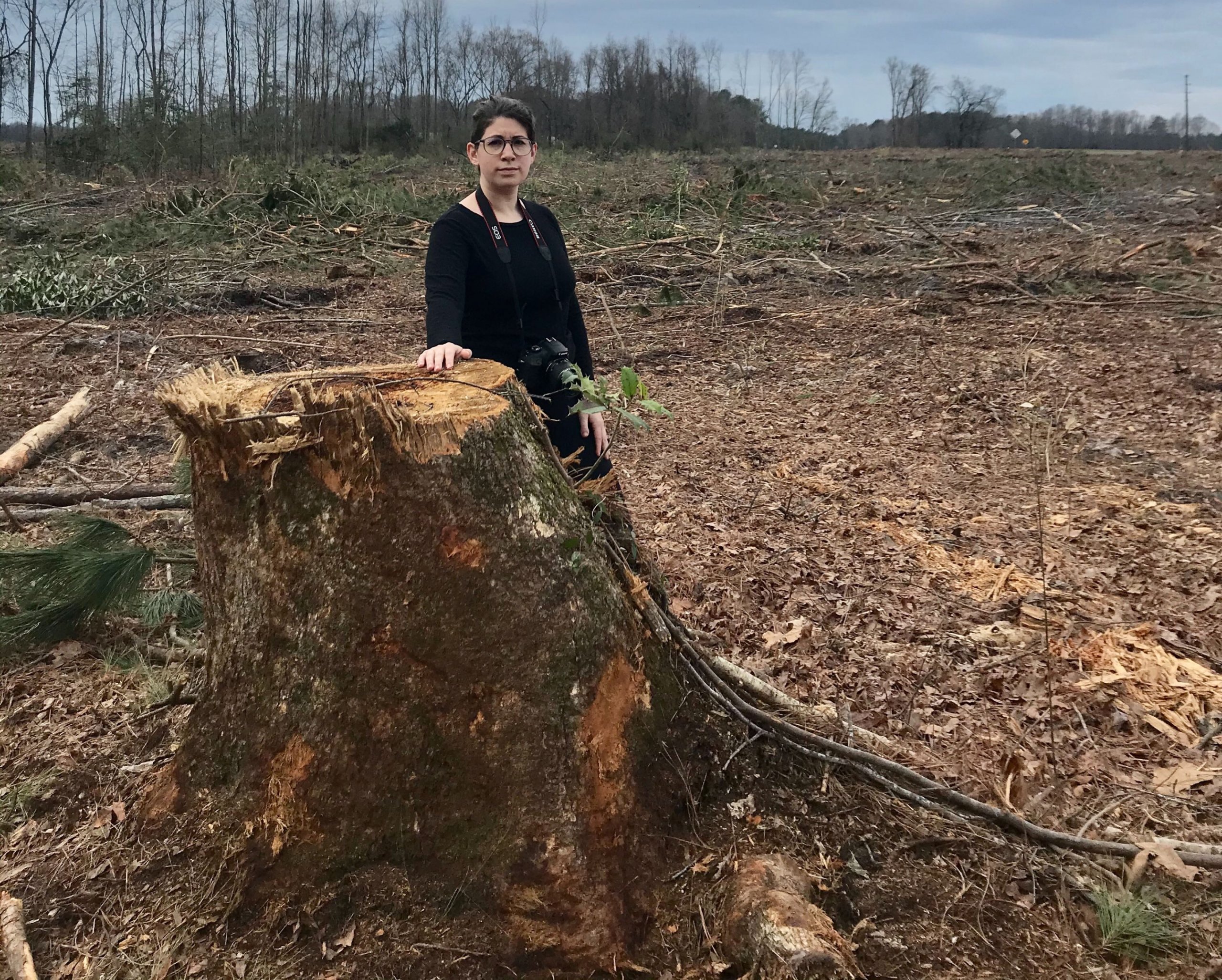
Active Energy Group is applying for a permit to produce 40,000 tons of wood pellets per year. However, they have indicated plans to increase production to 400,000 tons per year. If Active Energy Group is permitted and their intended expansion goes through, this facility will increase logging by 9,600 acres per year and emit 73,2782 tons per year of CO2e, the equivalence of over 155,580 extra cars on the road. The continual permitting process of industries that are scientifically proven to be carbon polluting impedes North Carolina’s executive order to reach a 40% emissions reduction goal by 2025.
Local residents are urging NC DEQ to grant a 90 day extension to the public comment period of Registration Number 10636R00 to allow NC DEQ, local officials, and impacted residents time to fully research and understand the currently unknown impacts of this technology on air quality, carbon emissions, and local pollution.
Now more than ever, we need standing, diverse, healthy forests to store carbon, protect us from flooding and storms, and provide us with clean air and water. And we need real, bold leadership to make that vision a reality.
Tell the NC DEQ and Governor Cooper: Climate champions don’t stand for forest-destroying biomass. This is your climate legacy. We must say NO to the wood pellet industry in NC!

Congressman Bruce Westerman (R-Ark.) and Members of the House GOP introduced the Trillion Trees Act, in conjunction with President Donald Trump’s State of the Union announcement that he plans to join the One Trillion Trees global initiative. Rather than mandate tree planting, the Westerman bill requires an annual increase in logging levels and that all actions under the bill must stimulate the domestic and international timber markets, which is why many environmentalists have nicknamed it the Trillion Stumps Initiative.
One of the most concerning parts of the legislation is that it falsely declares the burning of trees for energy to be carbon neutral. Essentially, the Act ignores what scientists around the globe and even our own EPA Scientific Advisory Board have stated, that burning wood for electricity is not carbon neutral, in fact in many cases it emits more carbon dioxide from the smokestacks than coal-burning plants per unit of energy, and this on top of the carbon lost from the forest and the forest’s reduced capacity to absorb carbon from the atmosphere.
Protecting our forests is so vital, we need to let existing forests grow to their biological potential. Taking a stand for our existing forests will result in reducing emissions from logging and a far greater uptake of CO2 from forests. Now is the time when we must rapidly transfer carbon from the atmosphere to the land, and the fastest and most efficient way to that is by letting our forests grow. Protecting and restoring existing forests is superior because older trees do a much better job than seedlings.
Additionally, tree planting does not equate to forest restoration as the forest industry loves to trick us into believing, a tree plantation is nowhere near as biodiverse or an important carbon sink as a fully functioning natural forest. Planting trees is a feel good distraction, but it is not a substitute for protecting natural forests, because at the end of the day, we will simply have a trillion trees that the industry will continue to manage on short rotations for unnecessary products, and will be left with no real forests.
The effect of the legislation is the protection of the logging industry under the guise of climate action, all while placing the health of our forest ecosystems and our communities at risk. A biodiverse, carbon-rich forest develops only with the slow passage of time. Once it’s gone, it can take generations to return. We need to stay focused on drawing down carbon emissions and protecting our existing forests as the best defense against the climate crisis.
Don’t get us wrong, there is nothing wrong with planting trees, they provide us shade and shelter, store carbon as they grow, protect us from flooding, and provide habitat for a variety of animals. But rather than greenwashing the climate crisis and climate denial with feel good tree planting, we need to protect and restore our existing forests and rethink the extractive industrial forestry model that sees board feet and money rather than community protection and a more regenerative, restoration-based economy.
Protecting our Southern forests and communities requires challenging the industries and corporate interests that threaten them. But it also requires building the relationships and solutions to create the world we want to live in.
The mission of the FOREST Circle is to provide a collective space that intentionally fosters creativity and sustainability, while preparing frontline organizations through power building, education, and resource sharing.
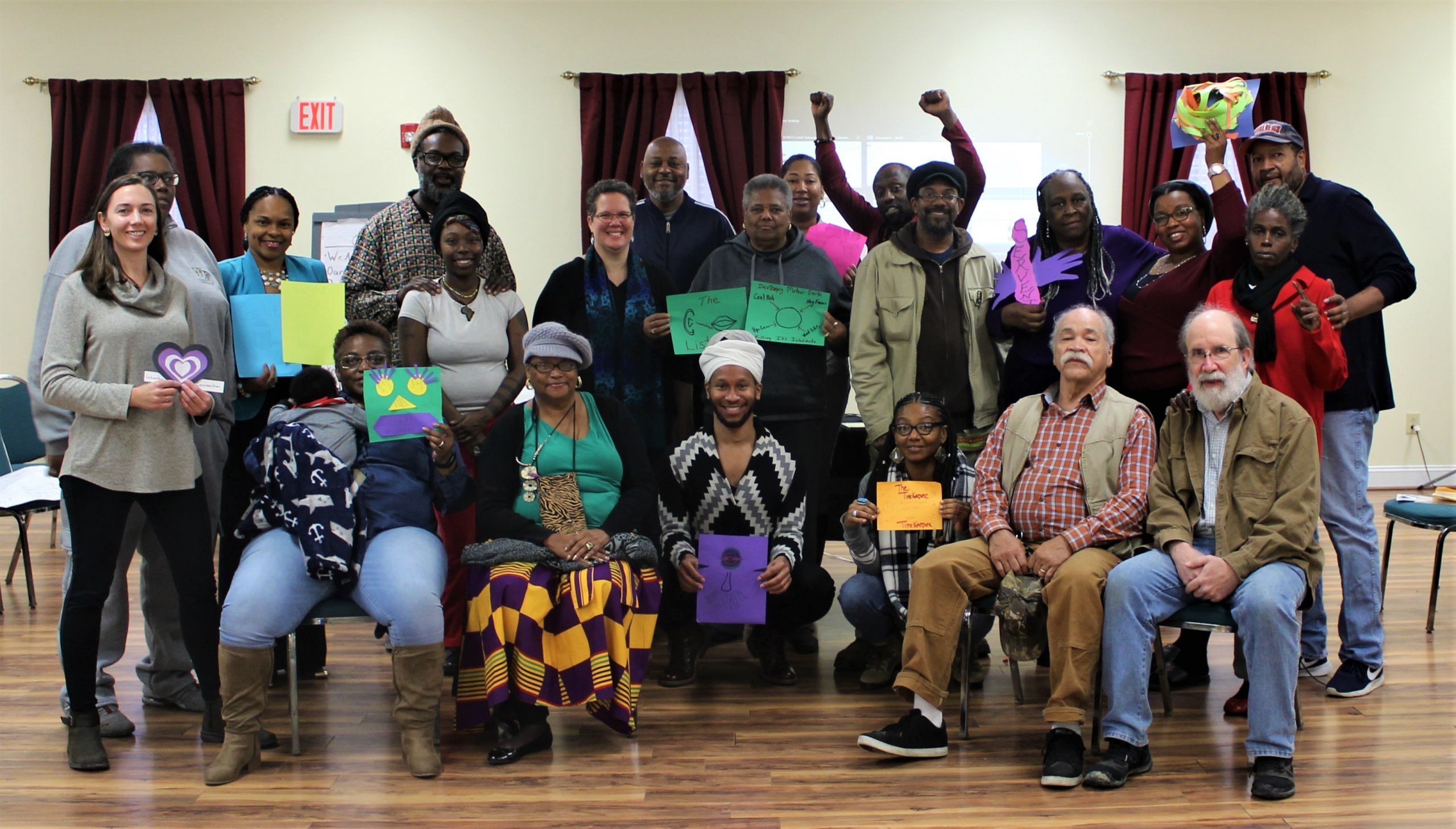 “Our diversity is our strength”
FOREST Summits are grounded in the needs and communities of FOREST Circle members. They provide an opportunity to develop and deepen relationships, a space for skills sharing, and a space to experiment with new solutions.
In December, 2019, members of the FOREST Circle gathered for our 4th FOREST Summit. The Summit brought together leaders from 3 different Southern states, representing rural areas and urban areas, and a wealth of knowledge and expertise.
This year, our gathering took us back to where we held our very first Summit – The Franklinton Center at Bricks in Whitakers, NC, a place with a long history of resilience, organizing, and entrepreneurial solutions as well as a dark history of enslavement and violence. In Whitakers, we were in the home region of many of our FOREST Circle members. Our FOREST Circle hosts reminded us that these contradictions abound in Eastern North Carolina today. While we took in the community, love, innovation, and incredible food of the region, we also explored the injustices that continue to plague eastern NC.
Eastern NC is home to wood pellet facilities, coal ash sites, industrial agriculture (CAFO’s), and the proposed Atlantic Coast Pipeline. Opposing these industries takes creativity and courage. Bobby, Belinda, Valerie, and Marvin gave us a first-hand glimpse into the realities of environmental activism with a local field trip. The work can be grueling, lonely, and dangerous at times. We are grateful for these brave leaders who resist systems of oppression and refuse to give up. Their actions are rippling not just through their local movements, but throughout the world as we face a global climate crisis.
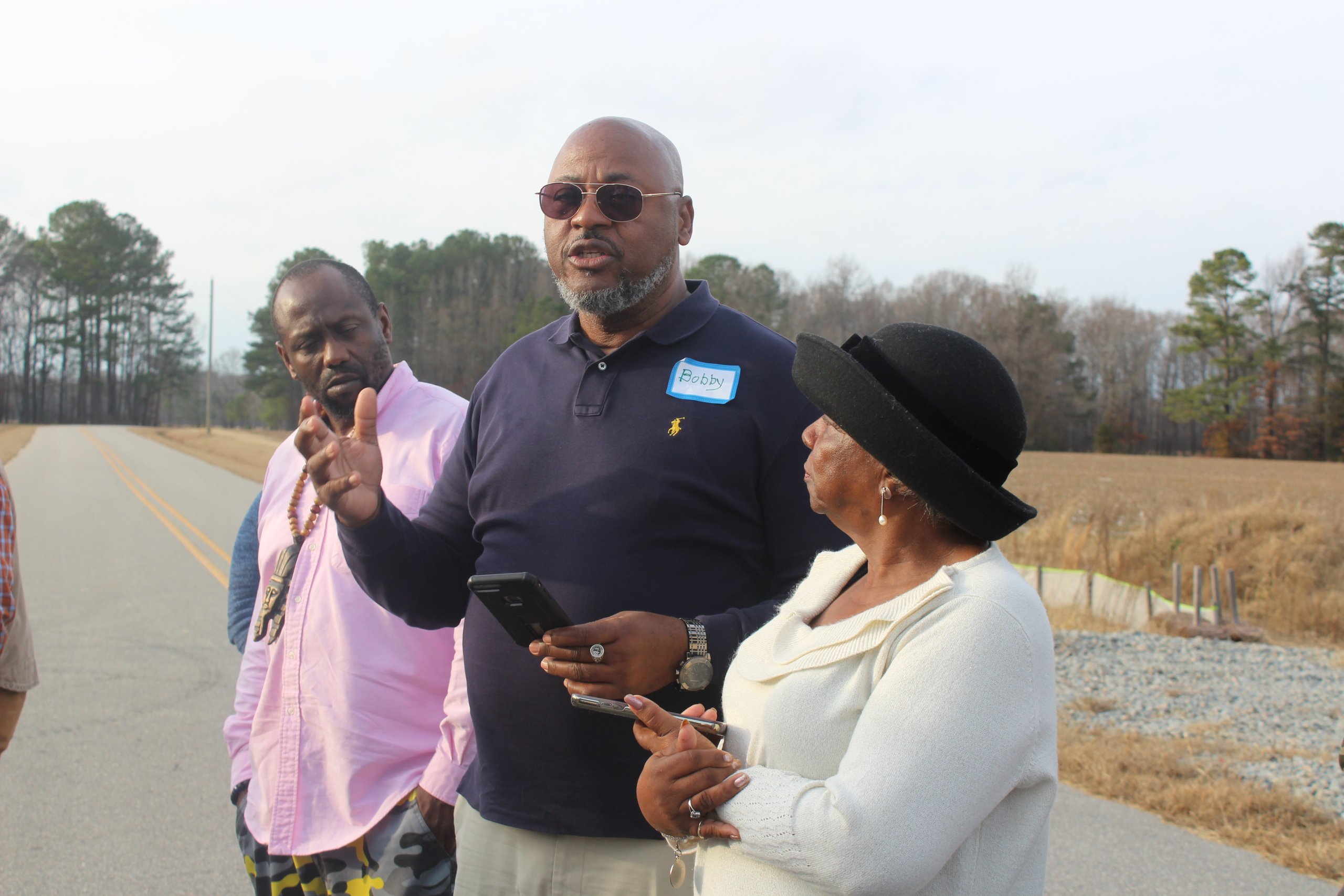 “This summit is very important to the work I do in the community because I get to bring a more comprehensive lens to the work and get more impactful results.”
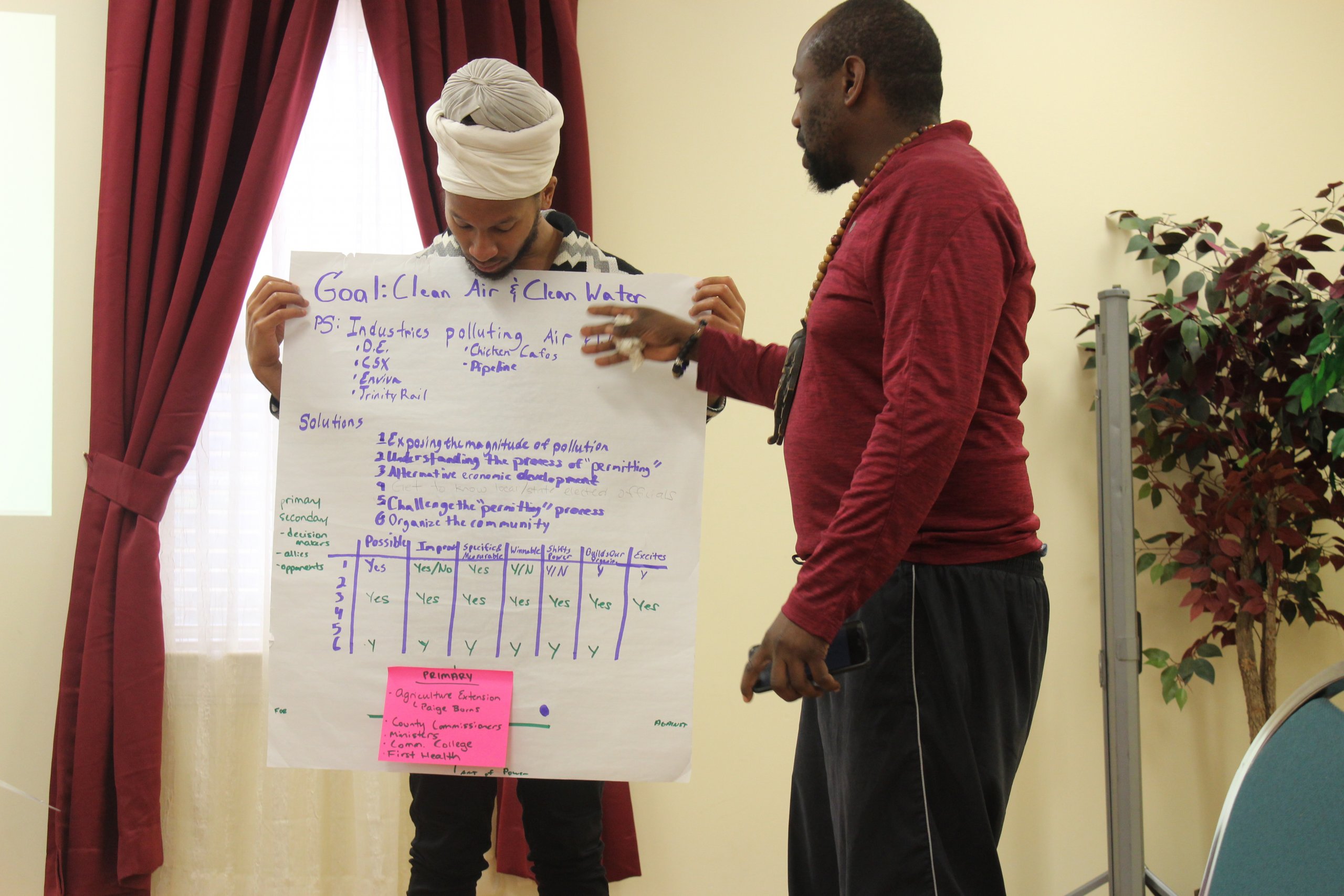
We know that resisting the bad is only half of the work. Our group explored what could be possible. What does it look like to strategically organize in our communities to build the kind of world we want? How do we develop the practical skills to feed and nourish our families and communities, to build cooperative economies, and to advance systems that don’t harm our communities or our environment?
We are sharing knowledge on grassroots organizing around agriculture, learning how a small plot of land can nourish our whole community. We’re creating a mushroom cooperative to connect farmers and growers with markets. Our team learned how to use affordable and easily recycled materials to build a structure that could serve as a greenhouse or a chicken coop, even if all you have is a small back deck.
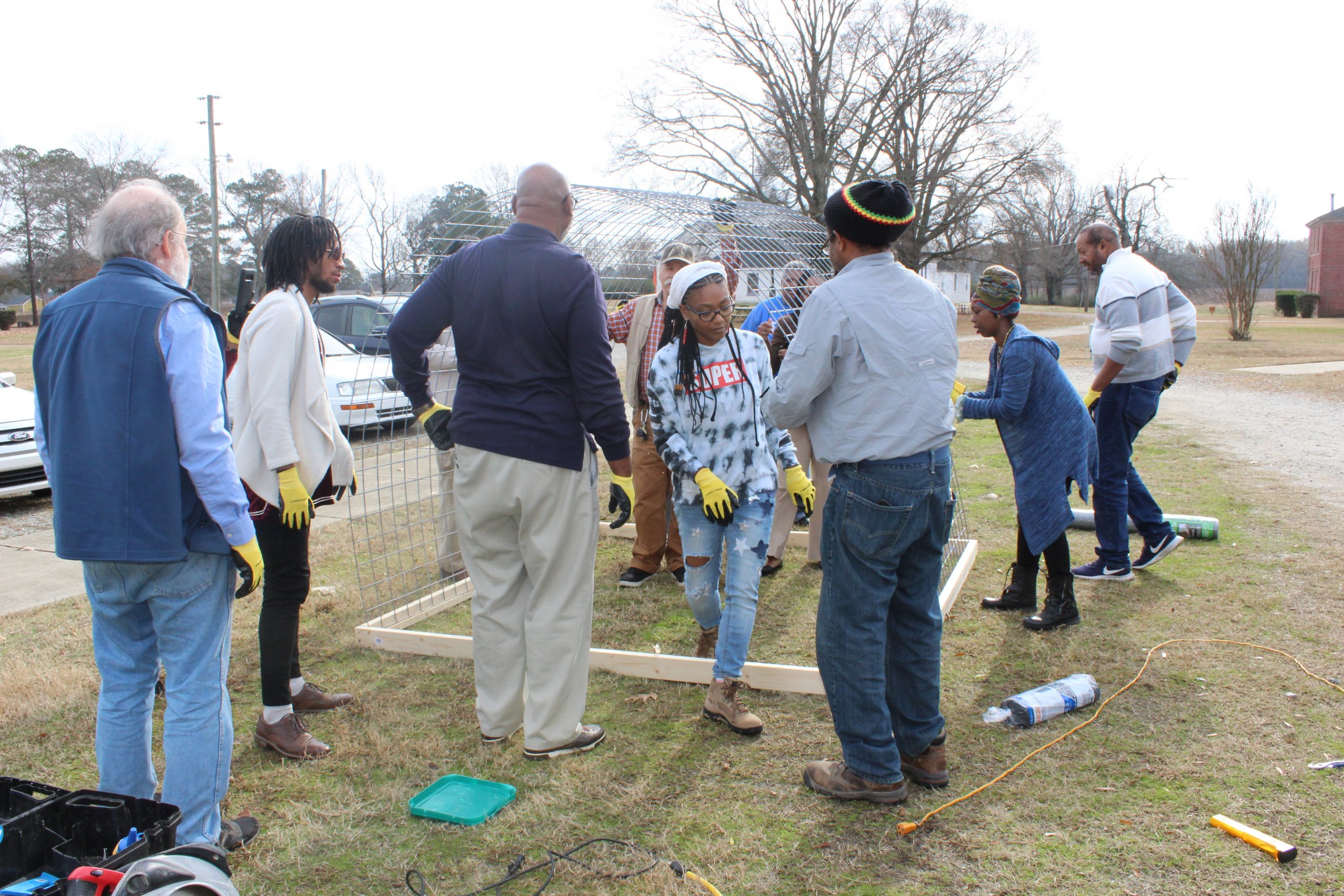 “I love that we are sharing our expertise with each other.”
And we are doing this in areas where extractive and polluting industries have tried to tell us that their way is the only way. We are re-imagining a world where we say “NO” to wood pellet facilities so that we can say “YES” to cooperative economies.
Protecting our forests, communities, and our environment, cannot be done in a silo. The challenges we face are not rooted in a single issue, but rather a consequence of a system that prioritizes profit over people and planet and that forces a false choice between a living wage and a healthy community and planet.
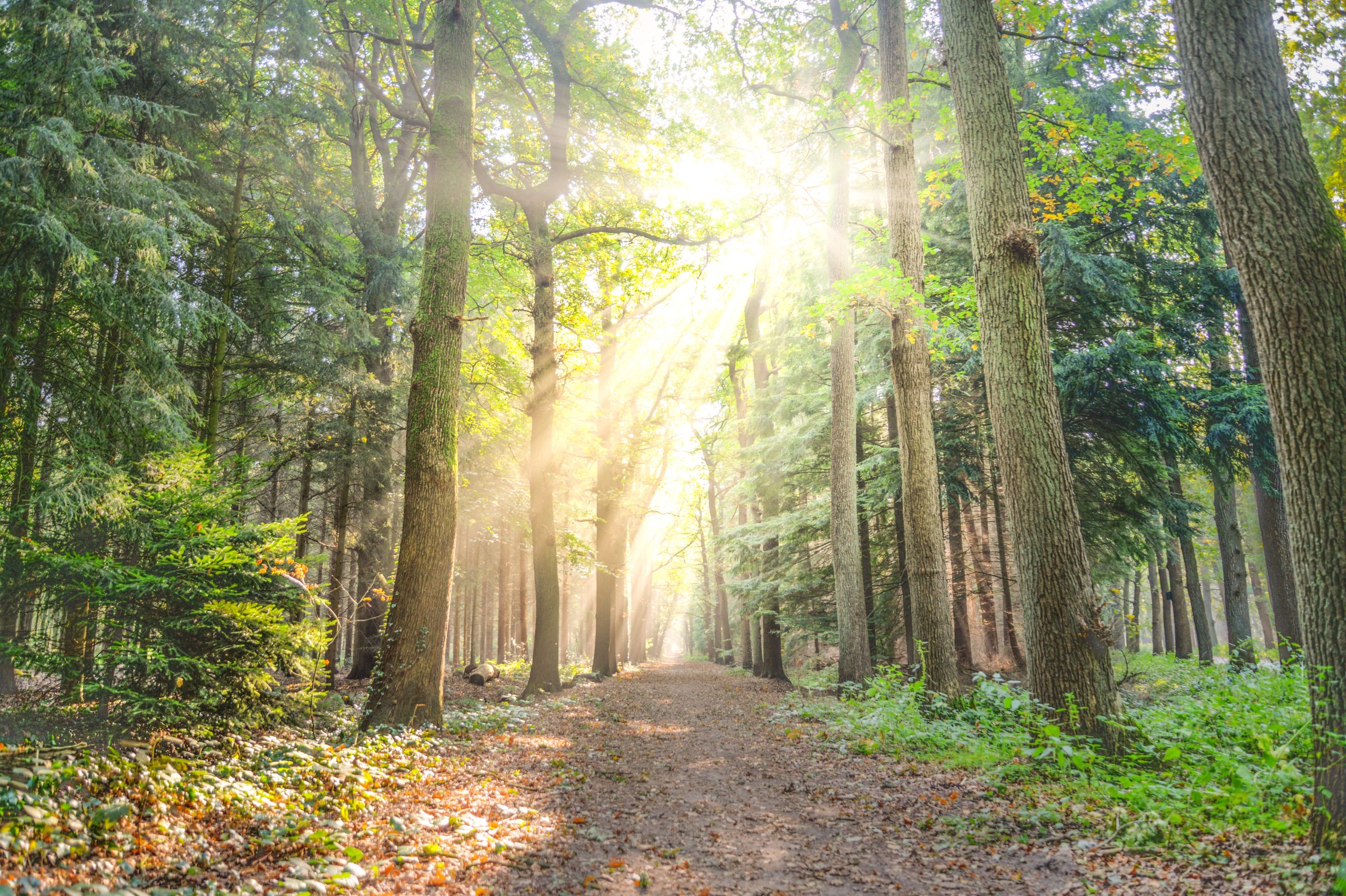
Our forests are special for so many reasons. They provide us with clean air and water, protection from floods and storms, and store and sequester massive amounts of carbon. Equal parts science and wonder, Southern forests provide habitat for unique species you can’t find anywhere else in the world, and they’re places people can go for solace, relaxation, adventure, and reconnection.
But at a time when we need healthy, standing, diverse forests more than ever, they’re being cut down at an alarming rate and even shipped overseas by companies like Enviva, the world’s largest wood pellet producer, to be burned for dirty biomass power.
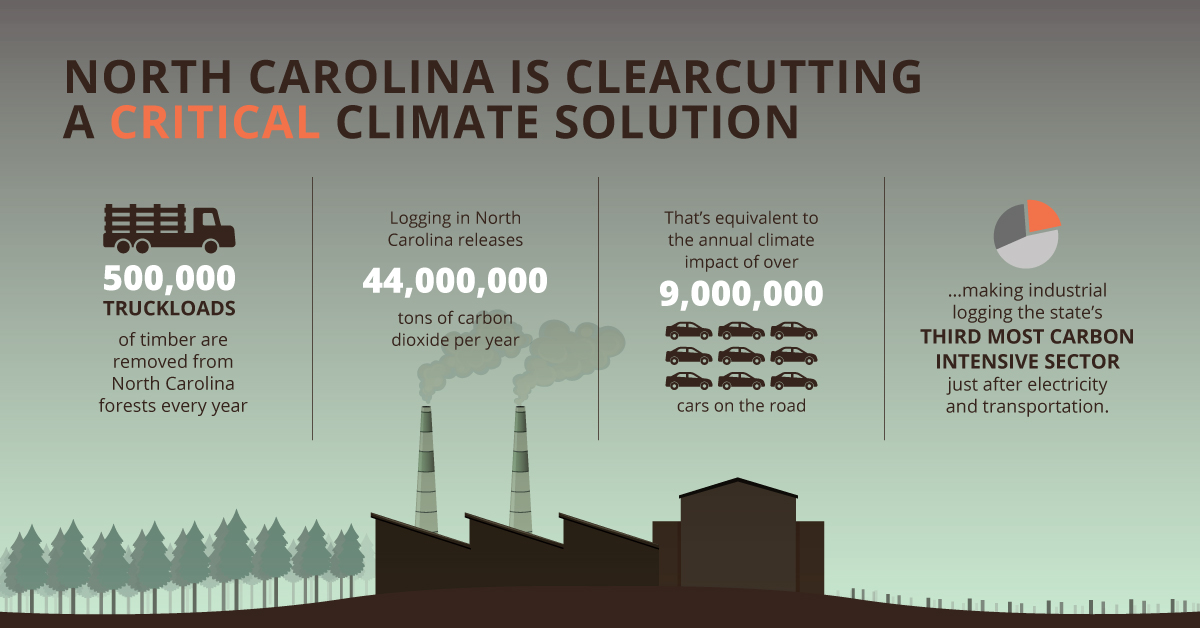
Last year, our report with Center for Sustainable Economy showed that logging in North Carolina releases 44 million tons of carbon dioxide per year, making it the state’s third most carbon intensive sector — just behind electricity and transportation. But this problem is flying under the radar: North Carolina’s latest Greenhouse Gas Inventory fails to accurately account for a significant amount of emissions from logging, forest degradation, and the biomass industry.
Unfortunately, these numbers may very well be increasing. In 2019, Enviva was approved for massive expansions at three of its four North Carolina wood pellet facilities, making North Carolina the world’s largest wood pellet exporter — even as the North Carolina Department of Environmental Quality issued harsh criticism of the wood pellet biomass industry in its 2019 Clean Energy Plan. These expansions will mean tens of thousands more acres of forests cut down each year, degrading our landscape as well as our ability to fight climate change.
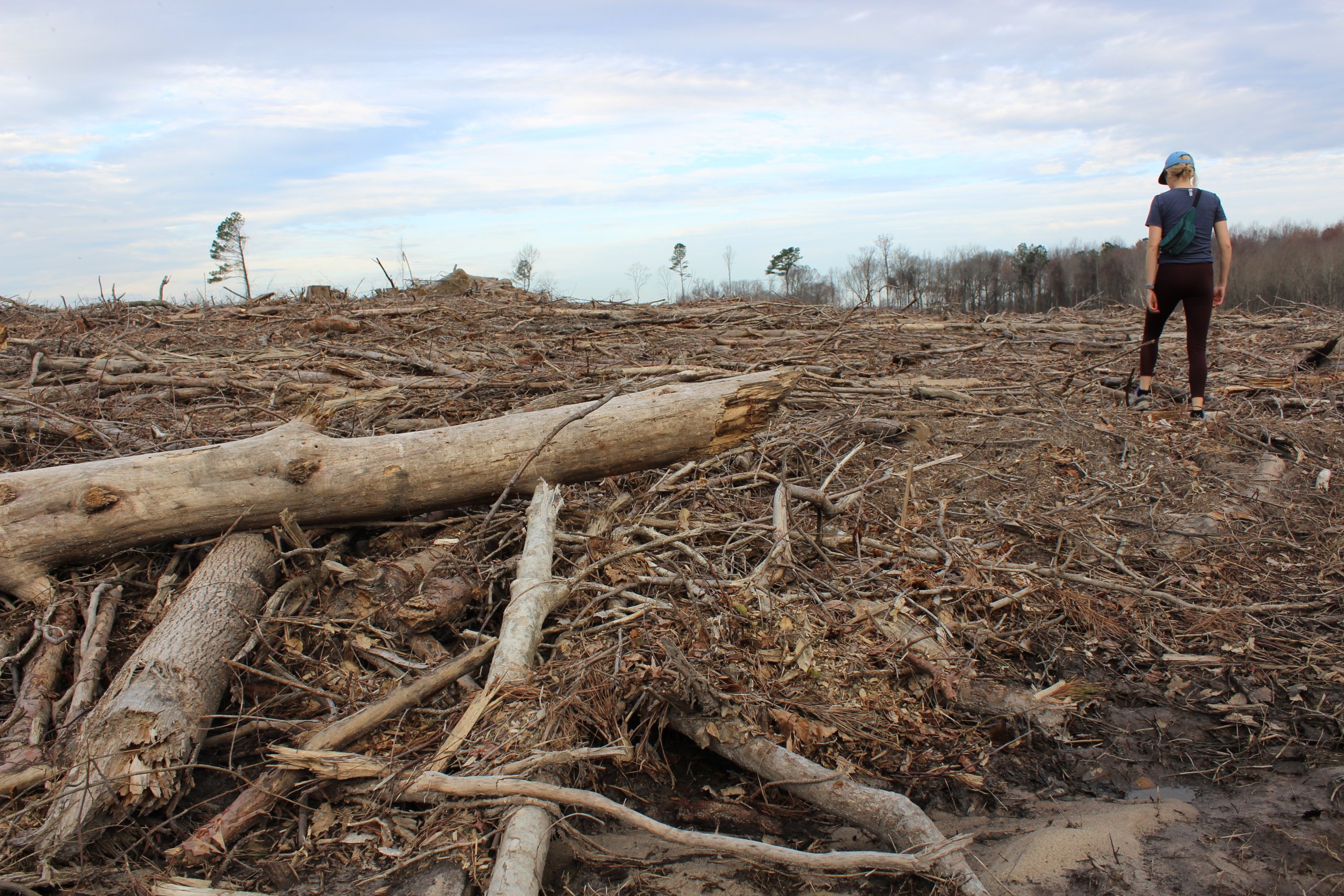
Infuriatingly, these practices are not only allowed, they’re being subsidized domestically and abroad and falsely peddled by industry as climate solutions. The time is now to address the threats of industrial logging and false solutions like biomass — and advance real solutions to protect our forests, climate, and communities.
Stand4Forests is a call to rise up and demand forest protection, climate action, and justice for all, ushering in a new era where we value forests more standing than logged. The Stand4Forests movement has already been making waves. In 2018, over 200 organizations, scientists, and elected officials released the Stand4Forests platform, aligning around a bold vision for forest protection in the US as a vital climate solution. And right now, the Stand4Forests resolution is making its way through the Georgia legislature.
North Carolina has some of the most special forests in the world, and Governor Roy Cooper has made climate a top priority. But our forests are under attack, and dirty industries like Enviva continue to expand at the peril of our climate and communities. That’s why the time is now for Governor Cooper to put forest protection at the top of his priorities.
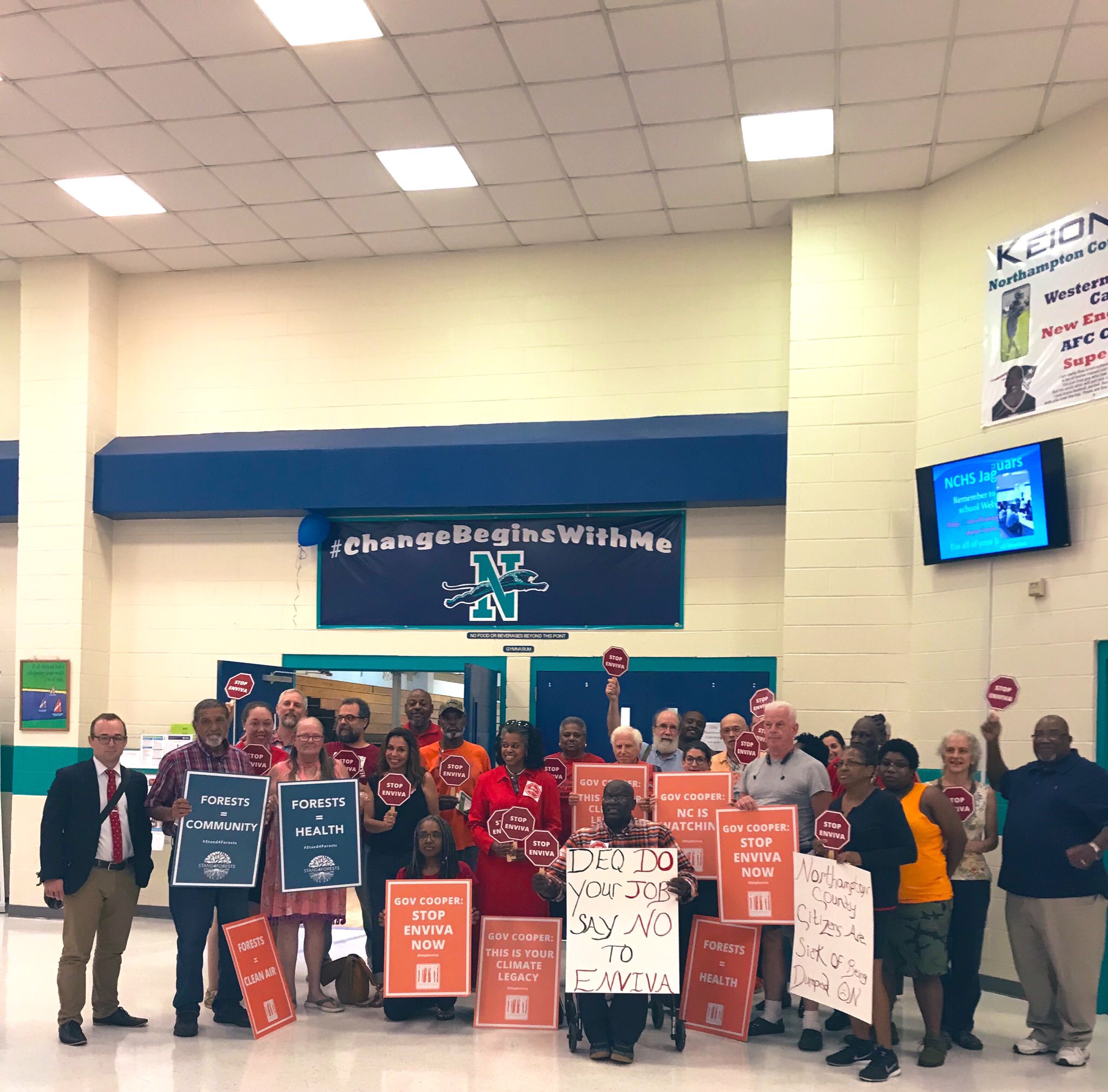
What happens to our forests this year and the critical years ahead makes all the difference for our communities and climate. We can’t wait for change. We need our leaders to Stand4Forests today, holding industry accountable, dramatically scaling up forest protection, and shepherding a just transition for our communities.
Next week, Georgia forest lovers will join other environmentalists from across the state as they descend on the Capitol to support various bills and resolutions to protect our environment. This call to action is in response to Conservation Day at the Capitol, a project organized by our friends at the Georgia Water Coalition which brings in people from all around the state like Brunswick, Savannah, Athens, Albany, and Columbus.
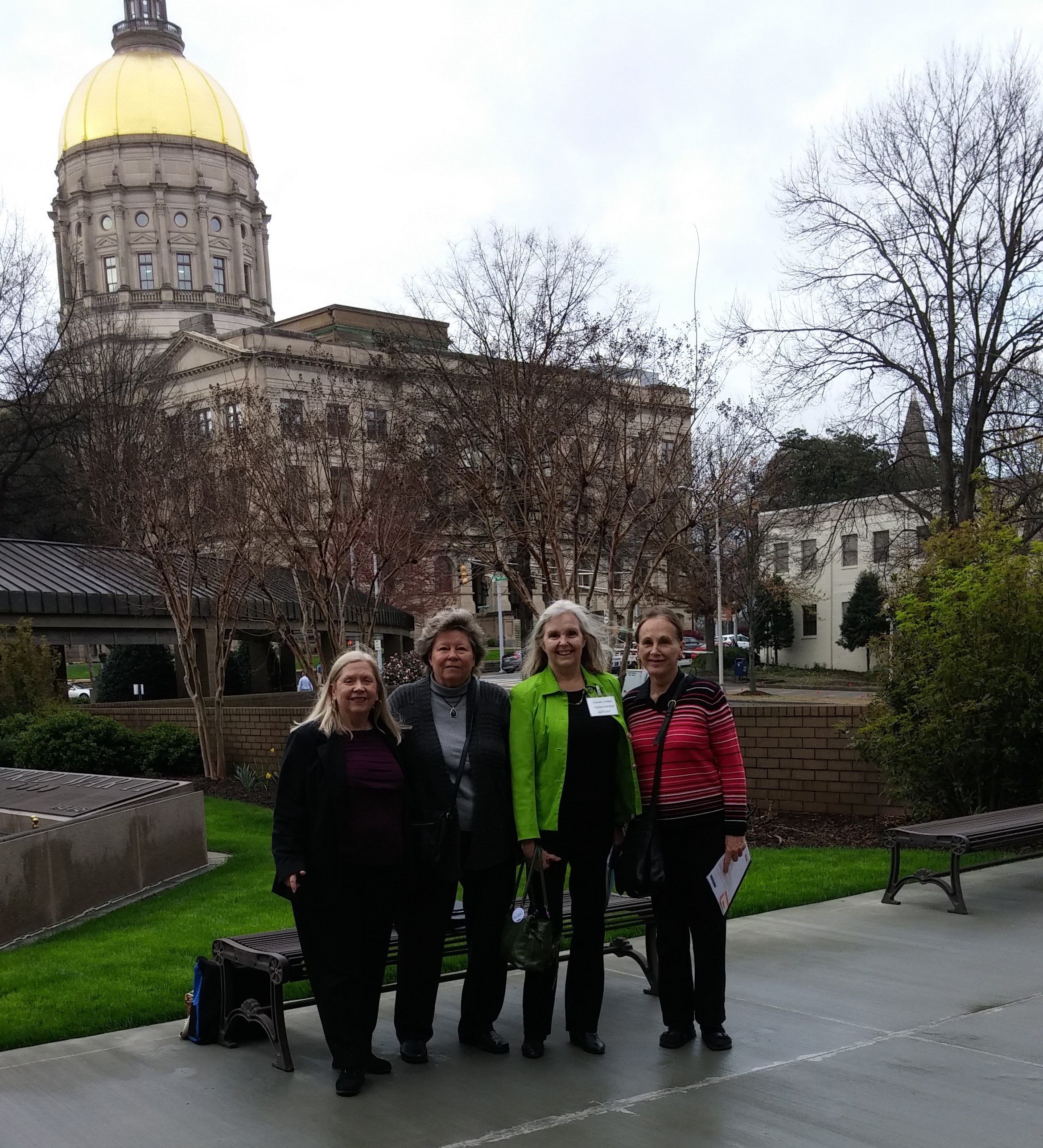
Some Savannah #Stand4Forests team members in front of the Gold Dome
SR 108 was introduced in 2019 by Senator Lester Jackson, and HR 930 was introduced this year by Representative Carl Guilliard. They have been assigned to the Natural Resources and Environment committee in their respective chambers.
Both lead sponsors are from coastal Georgia, which is prone to hurricanes and sea level rise. They recognize the dangers of climate change and the crucial role forests play in climate protection. These environmental champions have been joined by multiple co-sponsors in a bipartisan effort to get the state on a path toward climate protection and environmental justice.
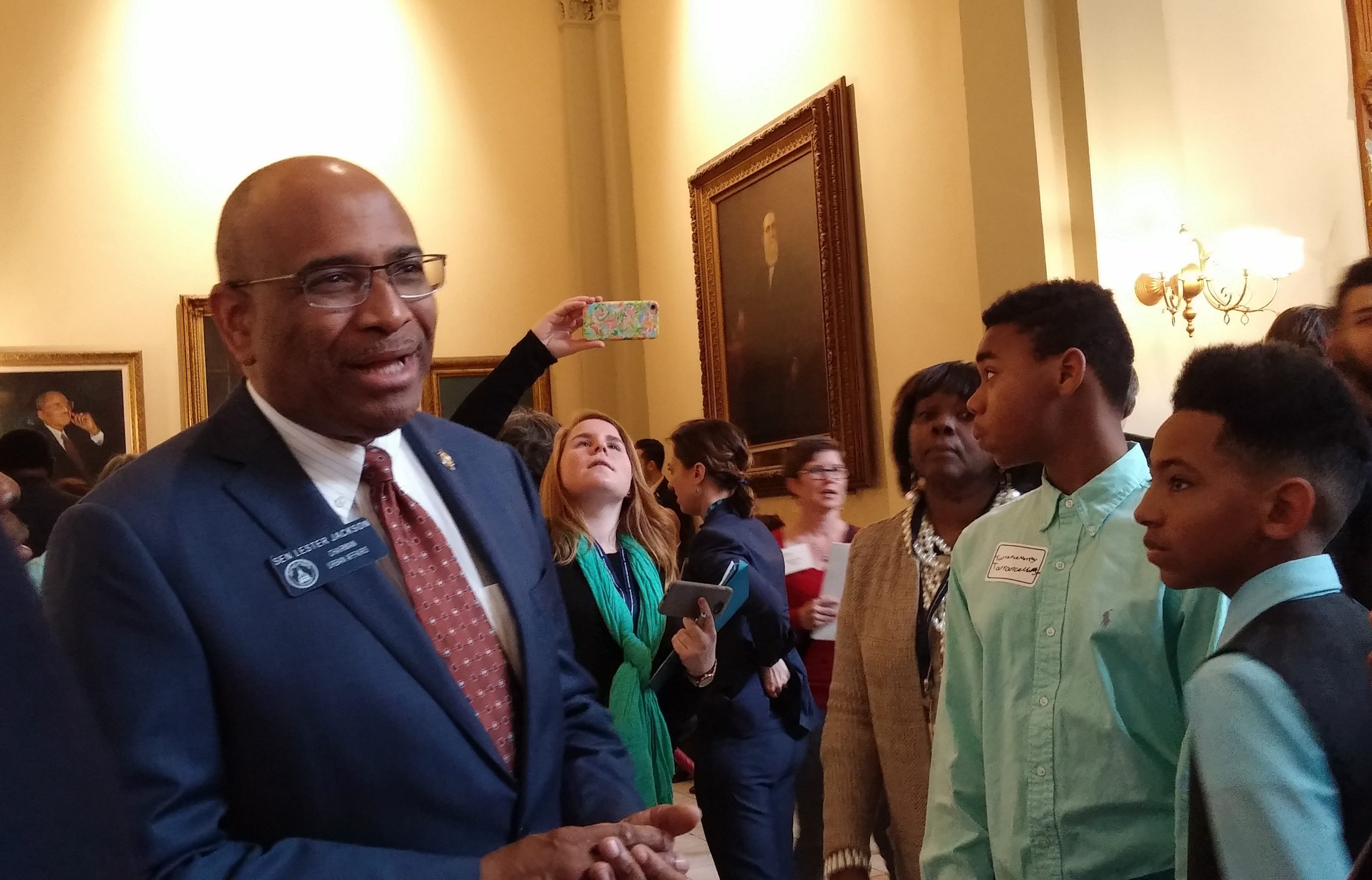
Senator Jackson speaking with YFACE youth at the Capitol
We’ll be kicking off Stand4Forests Week at the Capitol this Sunday, 2/23, where we’ll share our Conservation Day plan and other actions you can take throughout the week to help make that happen. Speakers will include Rep. Becky Evans and Mayor Ted Terry, sharing pointers on how to be an effective citizen advocate, and Georgia ForestWatch Executive Director, Jess Riddle, with some important news on the national front.
There you’ll pick up advocacy power tips, meet new forest lovers, and enjoy some tasty bites from the Georgia Beer Garden. It’s happening this Sunday, 3-5PM.
Happy World Wetlands Day! In honor of this special day, we’re celebrating wetland biodiversity.
The Mobile-Tensaw Delta (often called “America’s Amazon”) has more plant and animal life than any other place like it on the planet. Whoa! With record-breaking numbers of species of freshwater fish, turtles, and salamanders, these wetlands are truly a national treasure. At the same time, they are some of the most threatened and least protected. In fact, since the 1800s, about half of all extinctions in the continental US have occurred in the Mobile River basin.
21 January 2020 – A couple days ahead of the release of the initial results and main conclusions of a joint fact finding mission on the availability and sustainability on biomass, over 20 NGOs primarily based in the United States and Estonia sent a formal request that the results include NGO reports in their inquiry and that they are published in English. The inquiry is being carried out by the Planning Office for the Living Environment (“Planbureau voor de Leefomgeving” or PBL) in the Netherlands. Forests in the United States and Estonia are the primary locations from which the Netherlands sources from to import and burn wood pellet biomass in power stations and generate industrial-scale electricity. Following the conclusion of the study that the PBL will release in March, a council in the Netherlands will use those results to set standards for biomass. In the formal request, the NGOs clearly explain why non-peer reviewed evidence must be considered: namely, over the years, scientific inquiry has been limited. In general, it does not consistently establish the origin of the wood burned in Dutch power stations, examine the logging methods used, nor does it expose the direct impact this logging has on forests from which the pellet wood is sourced. This evidence has almost exclusively been gathered and distributed by NGO watchdogs (1), community group citizen science (2,3), and prominent media outlets (4, 5, 6, 7).Furthermore, the PBL has dodged requests that the results are posted in English. In order for transparency and review of the results of the joint fact-finding mission, the NGOs formally request that PBL posts results in English in order to allow international review from non-Dutch speaking scientists and NGOs.You can see the request here.
The lack of transparency, limitations of evidence, and limitation of independent scientists’ involvement in the consultation has been unsatisfactory to many parties. One scientist that was originally part of the consultation withdrew for this very reason (8).
2020 kicked off with important, major coverage of the wood pellet industry in two major North Carolina papers, the Raleigh News & Observer and the Durham Herald Sun. On the heels of our campaign victory achieved in the NC Clean Energy Plan in November, this is another significant break-through on biomass in North Carolina.
Our team at Dogwood Alliance and many of our partners provided data, sources, and quotes. The series also contains an interview with North Carolina’s Department of Environmental Quality Secretary, Michael Regan, in which he criticizes biomass and says he doesn’t “see a future in wood pellets.”
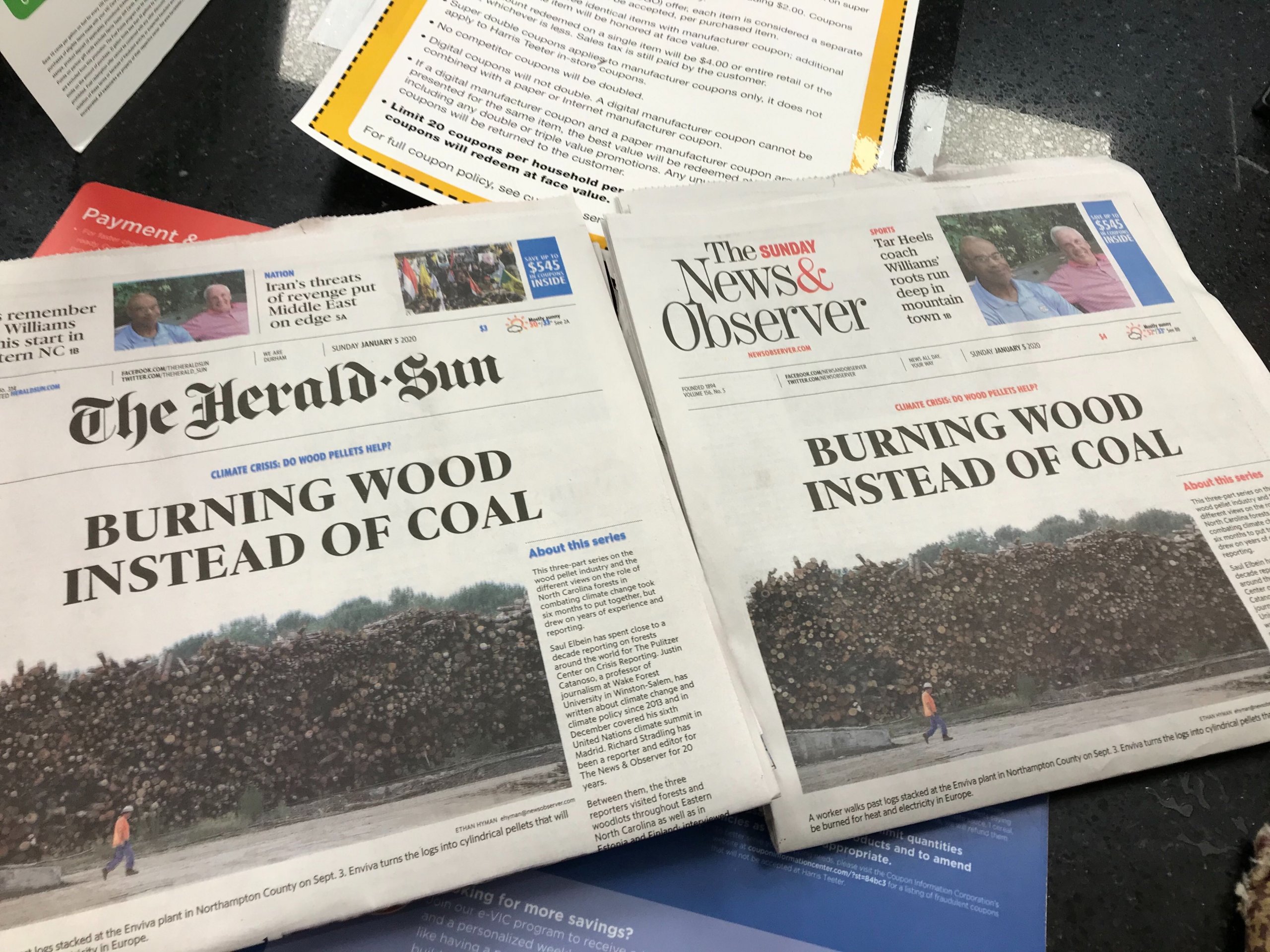
With this series, we see how the wood pellet industry has gone from a little-known issue in North Carolina to one of the most well-covered, top environmental issues in the state, and our elected officials are paying attention.
In Georgia, during last year’s legislative session, State Senator Lester Jackson introduced the Stand4Forests resolution, SR108. This year, we could see the resolution go to the floor for a vote! That means 2020 could be the year that Georgia officially stands for forests, endorsing the national Stand4Forests platform that opposes false solutions like biomass and advances protections for standing forests.
We’ll continue our strategic advocacy to policymakers in NC, throughout the region and abroad, to turn their statements into real, immediate action that pulls the brakes on the destructive wood pellet industry and ensures more protections that keep our beautiful Southern forests standing.
See links to the stories below, and please share with your networks and on social media using the hashtags #StopEnviva and #Stand4Forests.


 Donate