


Decatur Green Fest was a huge success…
This past Saturday the Decatur Green Fest hosted by Dogwood Alliance drew 2,000 enthusiastic green Atlantans of all ages to a solar powered concert, decidedly non-fast food samples from 11 restaurants featuring local and organic produce and meats, a look at green products and services, and an introduction to the DA’s new KFC campaign.
Based on the ourtpouring of support for the event and the large number of young supporters who feel strongly that they want the forests instead of discarded fast food packaging the future of our Southern Forests seems a little more secure.

I started this event 5 years ago in a much smaller venue after deciding that I wanted to find a way to raise some funds to support Dogwood and at the same time I wanted to make more Atlantans aware of the work of the Dogwood. So organizing a public event seemed the best choice. This year we made another leap forward in size and know that hundreds of Atlantans know a little bit of why they should support the work of the Dogwood Alliance and why our precious southern forests need help to survive companies like KFC who would prefer litter to living forests and communities.
You can see more pictures and updates for the event on our Decatur Green Fest Facebook page.
For the forest,
John Beal aka johnthebaker Dogwood Alliance Board Chair Decatur, Georgia – May 7th, 2010
Washington, DC While the U.S. Supreme Court hears its first-ever case involving a genetically modified organism, alarms are sounding over the proposed planting of more than a quarter of a million genetically engineered eucalyptus trees in the U.S., and transgenic trees are being globally condemned.
On April 27, the Supreme Court began to hear a case challenging a ban on the planting of a genetically engineered perennial alfalfa. The ban was implemented due to concerns about escape and contamination, and the inability of U.S. regulators to protect the public.
In April, Reuters released a report exposing the fact that U.S. regulating agencies have “dropped the ball” when it comes to evaluating the potential risks of genetically modified organisms.
Reuters highlighted concerns that, “the U.S. government conducts no independent testing of these biotech crops before they are approved, and does little to track their consequences after.” The report even went so far as to state, “Indeed, many experts say the U.S. government does more to promote global acceptance of biotech crops than to protect the public from possible harmful consequences.”
This is a particular concern since the USDA’s Animal Plant Health Inspection Service, one of the named agencies in the report, is considering approving a request by ArborGen to plant 260,000 GE trees across seven states even though researchers admit some of these trees produce viable pollen and some seedlings are assured to escape.
Referring to the questionable efficacy of the altered fertility technology in these GE trees, researcher Steve Strauss said, “There does not seem to have been any serious field studies, in any crop, sufficient to estimate the operational effectiveness of containment genes.” Adding, “Until many such studies are published, it would be unwise to assume that genes can be fully and safely contained in the near future.”
Additionally, MSNBC, NPR and PLoS Pathogens recently reported that a new strain of a deadly pathogenic fungus, Cryptococcus gattii, has been causing fatal human illnesses throughout the Pacific Northwest. The fungus, which is known to grow on some species of eucalyptus trees, has killed one on four people in Oregon, and 40 out of 220 people infected throughout the region. While it is not known whether genetically engineered eucalyptus plantations would be a host for the fungus, the fact that some of the GE eucalyptus would have reduced lignin has raised concerns that they could be more susceptible to fungal infection.
Another study by researcher Claire Williams, recently published in the American Journal of Botany, found that pollen from trees remains viable over long distances. This raises concerns about the potential for pollen from genetically engineered versions of native tree species like pines to travel large distances and contaminate forests. Williams’ study found that, “GM pine plantings have the potential to disperse viable pollen at least 41 kilometers from the source.”
On April 22, during the World Peoples’ Global Summit on Climate Change in Cochabamba, Bolivia, a broad gathering of Indigenous Peoples, social movements and organizations from around the world, issued a consensus condemnation of transgenic trees and monoculture plantations.
“Given all of this evidence, the USDA should not even consider approving the release of any genetically engineered trees,” insisted Anne Petermann of Global Justice Ecology Project and the STOP GE Trees Campaign. “The fact that there are so many unknowns and no independent studies evaluating the risks of GE trees which include human health risks and damage to forests and wildlife is a major reason why the UN Convention on Biological Diversity in 2006 and 2008 urged countries to use the Precautionary Principle with regard to GE trees. The Precautionary Principle would require GE trees to be proven safe before they are released.”
Contact Dr. Neil Carman, Sierra Club 1.512.288.5772
Anne Petermann, Executive Director, Global Justice Ecology Project 1.802.578.0477
NOTES
“Monsanto’s GM Crops Go to US High Court, Environmental Laws on the Line,” published on Monday, April 26, 2010 by Inter Press Service
Great local festival is this weekend!
This Saturday, April 24th is the 1st annual All Go West Music Festival . Proceeds from this event will benefit Dogwood and support our efforts to protect Southern Forests! All Go West Fest is a FREE music festival in West Asheville- located in front of Harvest Records and next to the Rocket Club. The event will begin at 12:00noon and go until 10:00pm. Activities include an Asheville Micro-Brewery beer tasting, Asheville Artists on display, Kidz Zone & much more! Join us late night at Rocket Club for two full sets from The Trainwreks, Jen & The Juice & Special Guest.
We hope you will join us for a day of great music for a great cause! We also still have volunteer opportunities available for that day and would be so grateful if you wanted to dedicate a couple hours to Dogwood! We promise it will be fun! Email Lindsey our campaign organize at [email protected] to get involved.
Remember age is no obstacle.
 This March, Ranger Rick magazine featured 8-year-old Cole Rasenberger from Charlotte, North Carolina in a full page article in for his efforts to get fast food companies to use recycled paper and help protect our forests. Ranger Rick is National Wildlife Federation’s popular kids’ magazine with a circulation of over 500,000. So, hundreds of thousands of kids are now reading about how fast food packaging is destroying forests along the Mid-Atlantic Coast and what they can do about it.
Cole first contacted Dogwood Alliance last year to get some information for a school project he was doing.The next thing we knew, he had hand drawn beautiful postcards representing four different forest habitats with a message on the back to the CEOs of McDonald’s and Bojangles’ to switch to recycled paper and help protect North Carolina’s Coastal Forests.He then organized 25 of his classmates at Mountain Island Elementary School and together they collected 2,225 signed post cards and sent them to the companies.
But Cole’s class didn’t stop there.Last month I was fortunate enough to attend a play that Cole and his classmates wrote and will be performing at this year’s Odyssey of the Mind Competition about how fast food packaging is destroying North Carolina’s coastal forests.Odyssey of the Minds is an international educational program where kids compete in creative problem solving. The kids made all the props for their play, out of recycled materials, of course, and in just under eight minutes the kids delivered a powerful message: our forests are too important to be wasted for fast food packaging.
Cole and his classmates are ready to help out again this year as we gear up to increase the pressure on the fast food industry. Our work with kids will expand dramatically this year through the fast food campaign. As a mother of a seven-year old, I am all too familiar with the way fast food companies constantly target kids as consumers. It’s time to equip our kids with the knowledge and skills they need to push back. Though kids can’t vote, as a major target audience of fast food companies, they can influence corporate decision-makers.
Many thanks to Cole and his classmates for reminding us all that we adults need to stop and listen to our kids.Their future depends on it.
There’s green and then there’s green. A leap of faith in Orlando…
While the weather was surprisingly brisk for Florida in March, the action was hot at the 4th annual Sustainability in Packaging Conference & Exhibition in Orlando. This was my first year presenting at this event and cross my heart, I promise, no Disney characters were harmed in the production of my presentation.
If you want to know how big the “corporate sustainability movement” is you can count the number of heavy-hitters who are buzzing about sustainability. The challenge is how to take that interest and funnel that corporate power in ways that actually improve things in the forests of the US South and around the world.
For me corporate words and goals are not enough. Even changes in incorporate behavior like carving out the very worst actors from your supply chain are not enough. Today true leadership means raising standards. Less bad is not enough. We need better. Corporate dollars for responsible forestry not abysmal clearcuts and lose of habitat and diversity.
It is plain as day that large corporate customers can influence the paper producers whose forestry practices impact forests. Business is not inherently evil, but business is the driving force exploiting forests here in the South and globally. If you want to know why we work on paper -fully 42% of industrial wood harvesting is used to make paper.
Here’s where we stand right now. Roughly half the world’s forests have been burned or cleared or converted to non-forest uses. Human activity has degraded 80% of what remains of our planets vast forests meaning these forests have lost, to varying degrees many of their species and much of the ability to function as healthy ecosystems. And across the world only 8% of forests have some form of protection.
And don’t forget that forests are a critical part of the planet’s defense against climate change. Forests store roughly 50% of terrestrial carbon. Yet our forests historically held far more carbon than they do now. To fight climate change we need to protect and increase the amount of carbon sequestered in our forests and reduce CO2 emissions.
What we need now are leaders, yes you and me, but also big companies with well-know names and deep pockets to get busy.
Dogwood Alliance Statement on IP Land Sale:
This morning, announced the sale of 5.1 Million acres of its land holdings, mostly in the Southern United States. This sale of nearly 85% of their land to Resource Management Services, LLC and TimberStar comes on the tail of the sale of 218,000 acres or less than 3% of the holdings last week to The Nature Conservancy and the Conservation Fund.
Below are some key points for consideration around this sale:
• Southern forests are some of the most biologically diverse in the world, but have been exploited for generations by the paper industry. • Large-scale clearcuts and millions of acres of sterile pine plantations now scar the Southern landscape. • The sale of 218,000 acres as part of a conservation transaction represents a good first step towards protecting the endangered forests of the South and should be applauded. • managed its lands under the Sustainable Forestry Initiative (SFI) certification scheme, which is a misguided and mislabeled program that allows for logging of endangered forests, continued conversion of native forests to sterile pine plantations and large-scale clearcutting. • Resource Management Services and TimberStar plan to continue operating under the SFI principals. • IP’s sale is part of a continuing trend amongst the timber industry to divest their landholding. Georgia-Pacific and Weyerhaeuser have already sold most or all of their land and companies such as Bowater have announced the intent to follow suit. • IP should consider including in the land sale stipulations that avoid further conversion of native forests to sterile plantations and an end to logging of the most ecologically sensitive lands. • Bowater, one of the largest paper producers in the South, announced last year, a commitment to stop purchasing fiber from native forests that are converted to plantations after 2007. can and should follow suit. • There is an increasing demand from the marketplace for sustainably made paper products and a number of Fortune 500 companies, including Office Depot, Staples, and Kinko’s have strong environmental paper policies in place. • Southern forests have long been exploited and need a break from business-as-usual forestry practices.
Takes Corporate Greenwashing to a Whole New Level
Last November Dogwood Alliance unveiled a new page on our website about (IP) and its destructive ways entitled “Ever Wonder Who’s Behind the Curtain of Forest Destruction?” In what appears to be a calculated effort to deflect our message, this week, IP, the South and world’s largest paper producer, unveiled a new website “Down to Earth” in an effort to convince the world that the consumption and production of vast amounts of paper is actually good for the planet. Even the name “Down to Earth” is full of irony – what planet is John Faraci, IP’s CEO from anyway?
At a time when the health of the planet and life as we know it hangs in the balance, IP’s latest attempt to cover its destructive practices in a thick layer of green paint is irresponsible and immoral. Will people really be bamboozled by a website produced by the biggest paper manufacturer on the planet touting paper as the holy grail that’s going to save our forests, protect us from climate change and preserve water quality and biodiversity? Let’s hope not. I believe as a culture, we are learning to recognize corporate doublespeak when we see it and IP’s new website is one of the most obvious examples out there. It’s really quite sad that IP would rather throw around half-truths than do something meaningful to protect our forests for future generations.
IP’s mass production of paper is destroying forests, water quality and wildlife habitat and releasing huge amounts of carbon into the atmosphere. And while other companies are taking responsibility and changing business practices, IP continues to play a game of smoke and mirrors, misleading the public, its customers and even its shareholders.
Collectively, we will unravel IP’s web of deceit and its fake green house of cards will fall. For, let’s be clear – the reason IP produced this website is because of the effectiveness of our work educating the public, corporate paper consumers and shareholders about how IP is leading the destruction of our forests. We’ve got IP on the run and its time to push even harder to win them over. Our children are counting on us.
For the forests,
Danna
It’s time to invest our tax dollars in truly environmental solutions to climate change, not false solutions like burning our forests.
We all know by now, except for the far fringe deniers, that we are in a climate crisis. Ice caps are melting, temperatures are dramatically fluctuating, sea levels are rising, and we have a small window of opportunity to take action. Unfortunately, when a crisis is at hand, there is always a small group of people hoping to make a buck off of it. For forests, we are most concerned with the risks associated with the push to burn trees for electricity or to convert them into liquid fuel as a “solution” to climate change.
Forests as a critical global carbon sink should be preserved and restored not chopped down to address the climate crisis, but in the headlong rush to find an answer, big companies and small entrepreneurs are pushing forest burning as a solution. Though science is on our side, forests are still viewed by powerful industrial interests as a “renewable” resource, we all have a strong desire to end our reliance on foreign oil and end destructive mountaintop removal coal mining domestically. Taken together, there is a loud battle cry for burning forests echoing in the halls of Congress.
Intact Southern forests are a critical component in the quest to fight the climate crisis. Rather than investing in preserving and restoring our forests, the Federal Government is investing millions of taxpayer dollars in false solutions. Most egregious is the give away to companies building biomass facilities that will burn trees to produce energy. Our forests need to be protected not burned as their solutions means more clear-cutting, more climate emissions and an unproven solution.
Federal legislators are currently considering numerous bills giving generous tax credits to the biomass industry. Congress will be voting on some of these bills very soon. Please take the time to contact your Congress members now to ask for a NO vote on new or extended tax credits for burning biomass to make electricity. You can take action here.
We are calling Congress and the Obama administration to end these taxpayer giveaways for false solutions and invest in proven methods such as conservation and efficiency, wind, and solar power. Please join us in taking action today!
Dogwood Alliance mourns the passing of longtime forest activist and talented musician Alison Cochran.
On Sunday night, longtime activist, musician and friend of our forests, Alison Cochran, passed away. Alison was a co-founder of Heartwood and served as Executive Director from 1999-2001. She also helped found Dogwood Alliance and served two separate terms on our Board of Directors. She was a great spirit, incredible facilitator, and one heck of a musician with a moving voice and deft hands on the fiddle. She will truly be missed!
Below is a short reflection from Campaign Director, Scot Quaranda, please feel free to add your own reflections to the comments…
Remembering Alison Cochran Tis the song, the sigh of the weary; Hard Times, Hard Times, come again no more: Many days you have lingered around my cabin door; Oh! Hard Times, come again no more. – Hard Times Come Again No More by Stephen Foster
I remember the first time I met Alison – it was a beautiful Autumn day at Moonshadow in the Sequatchie Valley on the Cumberland Plateau. She was in between terms on the Dogwood Alliance board of directors but agreed to facilitate our meeting as we were having a particularly contentious board meeting, though for all I remember, the conflict could have simply been over why we were holding the meeting inside the house rather then out in the forests we were working to protect. Logic won out and we got down to the real business at hand thanks to her. She was a maestra of consensus, an incredible facilitator, probably my greatest teacher – turning the acidic barbs and cautious laughter like so many ingredients in a cauldron and brewing them into a strong bond, finding that ceremonial and magical place where we could leave behind our varied scales of perception and find the common ground that would not simply move the work forward, but unite once again with common purpose assured that all was well and right and we collectively had the wisdom to overcome all obstacle and face insurmountable odds.
This was an incredible gift and no matter how hot tempers flared or how soft the voice of the quietest one in the room was she poked and prodded and pushed with a firm yet gentle touch until we were raw yet satisfied. The whole was only as great as the sum of its parts and Alison managed to make us all stronger, better, and more sure that no matter what road we took to get there, no matter how difficult the climb, that what lay ahead was going to be worth the hard work.
After that meeting she was persuaded to take another round on our board of directors and always brought that magic, ensuring the voiceless had a voice and the loudest in the room was laughing by the end rather than stewing. After her term ended, a few years passed before I saw her again. Her and her husband Chris were passing through town and offered to play a house party as a fundraiser for Dogwood Alliance. She was no longer involved in the day to day struggle of the fight for the forests or administrating and politicking that goes along with the environmental movement, but that did not steal an ounce of passion that she had for the forests, wildlife and communities that were so integral to the real meaning of why we struggle. It was Saint Brigid’s day, the halfway point between Winter Solstice and Spring Equinox, when the increasing light of day starts to become noticeable, when everything in its winter slumber feels the first pangs of awakening, a scant moment before the trillium breaks through the leaf litter on the forest floor to let us know the days will be brighter again. The perfect time in so many ways for Allison to re-appear into our lives. She and her partner played old time tunes and bluegrass, including a particularly moving version of “Hard Times” by Stephen Foster, as we drank home brew and shined a light bright into the darkness. Her voice haunting and her fiddle hitting the perfect timbre of the mood.
Alison was a true warrior of light who won you over not with an aggressive nature or by overwhelming you with depressing facts but instead by accepting the truth within you and helping you to find the truth in everyone. She will be truly missed!

Photos Courtesy of Andy Mahler and Heartwood
A short window of opportunity to demand the USDA deny ArborGen permits to do a widescale planting of genetically engineered Eucalyptus in the Southern US…
ACTION NEEDED BY 18 February! Tell the USDA NO WAY to ArborGen’s Genetically Engineered Eucalyptus Frankentrees
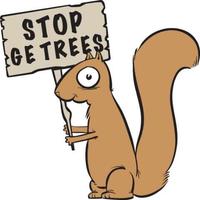
In an unprecedented move toward commercial large-scale release of genetically engineered (GE) forest trees in the United States, ArborGen is petitioning the U.S. government for permission to plant an estimated 260,000 flowering GE eucalyptus trees across seven southern U.S. states in so-called “field trials.”
The mass-planting of 260,000 flowering GE eucalyptus trees is a major step toward the unregulated development of large-scale GE eucalyptus plantations in the U.S. ArborGen has also requested permission to develop large-scale commercial plantations of GE cold tolerant eucalyptus across the U.S. South which the USDA has not yet ruled on.
Government approval of GE eucalyptus trees will set a dangerous precedent to allow the release of other experimental GE forest trees, including poplars and pines, that would inevitably and irreversibly contaminate native trees with destructive GE traits, devastating forest ecosystems and wildlife. Once GE trees escape, there is no way to call them back.
The only way to prevent the genetic contamination of forests is to ban the commercial release of GE trees before it is too late.
Tell the USDA that GE cold-tolerant eucalyptus plantations pose an unprecedented threat to U.S. forests, wildlife and communities. Tell them to reject ArborGen’s request to plant more than a quarter of a million dangerous invasive GE trees across the Southern U.S. Since these field trials are a concrete step toward unregulated commercial growing of dangerous GE eucalyptus, they must be rejected.
CLICK HERE TO SIGN THE PETITION
Additionally, a recent article in “Scientific American” addresses the inevitability of genetically engineered trees being introduced to the Southern United States. (IP), the infamous character in the story of forest destruction is back in the spotlight as the major proponent of replacing the South’s native forests with the genetically engineered eucalyptus. Along with MeadWestvaco, another industry giant and ArborGen, their joint biotech venture, IP seeks government deregulation of the GE eucalyptus so that it can be used on a massive scale in the near future. As of now we are unsure of the capability for the eucalyptus to become invasive. Because of these uncertainties, there is a need for longer and more intense scientific trials that can prove the efficacy of its containment.
However, IP and its allies are more interested in the speedy introduction of GE trees in order to quickly increase their production and profit. Invasive species can be a serious threat to natural forests, wildlife habitat, clean water and ecosystems as a whole. Due to the possibility of serious consequences caused by the introduction of GE trees, it is imperative that IP be held accountable and take into consideration the future safety and presence of the South’s native forests. Read the whole story and reader feedback here: http://www.scientificamerican.


 Donate