


For Immediate Release: March 31, 2008 Contact: Scot Quaranda, Dogwood Alliance, 828.242.3596 (cell) No Free Refills! Dogwood Alliance Launches National Campaign Targeting Fast Food Packaging; Group Releases Report and Calls on Top 11 Worst Offenders to Use Less, Recycle More and Stop Using Paper from Endangered Southern Forests; List Included Louisville’s Own Yum! Brands Louisville, KY – This morning, community leaders and businesses joined Southern forest protection organization, Dogwood Alliance, in front of the signature KFC in Louisville, KY to release a report focused on the destructive legacy of fast food packaging and calling on the top offending restaurant chains, led by Louisville’s own Yum! Brands to dramatically overhaul its use of paper packaging or risk being the target of a national campaign. Yum! Brands is the parent company of five chains listed in the report, including KFC, Taco Bell, Pizza Hut, Long John Silvers, and A&W. The groups are calling on Yum! and some of their biggest competitors, like McDonald’s, Wendy’s, Bojangles, Jack in the Box, and Arby’s to stop using so much packaging, to increase the use of recycled paper used in its packaging, and to stop buying paper packaging that originates from endangered forests in the Southern US. “Today we are here at the signature KFC store in Louisville, to call on Yum! to be leaders in Southern forest protection,” said Scot Quaranda, Campaign Director at Dogwood Alliance. “Southern forests, the jewel of the American landscape, are being destroyed to bring you fried chicken, burgers and fries, and super-sized convenience in a glut of wrappers, boxes and cups.” In addition to announcing the campaign, Dogwood Alliance released a report, “The 2008 Fast Food Packaging Report,” and a new website called “No Free Refills!” that draws attention to the negative impacts of fast food packaging on Southern forests and communities and names the biggest offenders. Some startling facts from the report include: • The average American eats fast food more that 150 times per year. • 300 pounds of packaging waste are generated each year for each person in the United States and 32% of the entire domestic waste stream consists of containers and pack¬aging. • Diners on the run generate more than 1.8 mil¬lion tons of fast food packaging in the Unit¬ed States each year. • Recent surveys show that fast-food packag¬ing makes up about 20 percent of all litter, with packaging for chip bags, drink containers, candy wrappers and other snacks compris¬ing another 20 percent. “Our fast food lifestyle is burying us in an avalanche of excessive packaging and waste. Every year millions of pounds of food packaging waste litter our roadways, clog our landfills and spoil our quality of life,” continued Quaranda. “Simple choices and creative solutions can reduce the excess and destruction while still allowing us to enjoy the level of convenience we have come to expect.” For more information, or to download the report, visit: www.nofreerefills.org # # # Dogwood Alliance is the only organization in the Southern United States holding corporations accountable for the impact of their industrial forestry practices on our forests and communities. In addition to holding the office supply industry accountable to their environmental commitments, Dogwood Alliance is working to stop the destructive practices of the paper packaging sector. Visit dogwoodalliance.org for more information.
‘s Purchase of Weyerhaeuser Packaging Mills Amplifies Need For Company to Reform Forestry Practices in the Southern US and Around the World
The March 17th announcement of ‘s (NYSE: IP) $6 billion purchase of Weyerhaeuser Company’s (NYSE: WY) packaging and recycling mills marks the further expansion of IP’s influence over the world’s forests, including the special forests in the Southern US – the largest paper producing region in the world. With this purchase, IP extends its position as the largest producer of packaging in the country and one of the leaders worldwide. This announcement places even greater responsibility on the company to address the forest destruction associated with its production of paper packaging.
The number one paper product originating from Southern forests is packaging. Though IP is the clear leader when it comes to paper production in the Southern US, IP has consistently lagged behind other paper producers in the region such as Domtar, Potlatch Corp. and Bowater, Inc. when it comes to responsible forestry.
With the purchase of 72 packaging locations, 10 specialty-packaging plants with 6.3 million tons of annual capacity and 4 kraft bag and sack locations from Weyerhaeuser, IP continues its focus on producing paper packaging. The Weyerhaeuser mills that IP will purchase are spread out across the US and Mexico, including two packaging mills in the Southern US in Campti, Louisiana in Pine Hill, Alabama.
IP is the leading producer of paper in the Southern US, yet when it comes to responsible forestry, IP comes in last. IP’s long history of unsustainable forestry practices has scarred the Southern landscape for decades. Practices such as large-scale clearcutting, logging of endangered forests, intensive use of toxic chemicals in forest management and the conversion of natural forests to monoculture pine plantations have had a detrimental impact on the quality of life of local communities, wildlife habitat, water quality and our forests ability to store and sequester carbon to reduce the impact of global climate change.
IP’s prominent packaging mills in the Southeastern Swampland region along the Mid-Atlantic Coastal Forests, including the Riegelwood Mill in NC, the Franklin Mill in VA and the Augusta Mill in GA, have facilitated the ditching and draining of hundreds of thousands of acres of wetlands to make room for industrial pine plantations to produce packaging products that are used once and thrown away. Some of the most unique and special places in the South, from the Great Dismal Swamp in Virginia to the Green Swamp of North Carolina to the Cumberland Plateau of Tennessee and Alabama have been irreparably harmed by the IP’s practices.
For over ten years, Dogwood Alliance and our broad-based network have called on IP to change these practices and join the effort to protect our local communities and forests in the region. IP’s expansion of its paper packaging production in the region and around the world through the purchase of these mills further amplifies the critical need to reform this paper giant through transforming the market demand for paper packaging.
International Paper’s Purchase of Weyerhaeuser Packaging Mills Amplifies Need For Company to Reform Forestry Practices in the Southern US and Around the World
The March 17 announcement of ‘s (IP) $6 billion purchase of Weyerhaeuser Company’s (WY) packaging and recycling mills marks the further expansion of IP’s influence over the world’s forests, including the special forests in the Southern US – the largest paper producing region in the world. With this purchase, IP extends its position as the largest producer of packaging in the country and one of the leaders worldwide. This announcement places even greater responsibility on the company to address the forest destruction associated with its production of paper packaging.
The number one paper product originating from Southern forests is packaging. Though IP is the clear leader when it comes to paper production in the Southern US, IP has consistently lagged behind other paper producers in the region such as Domtar, Potlatch Corp. and Bowater, Inc. when it comes to responsible forestry.
With the purchase of 72 packaging locations, 10 specialty-packaging plants with 6.3 million tons of annual capacity and 4 kraft bag and sack locations from Weyerhaeuser, IP continues its focus on producing paper packaging. The Weyerhaeuser mills that IP will purchase are spread out across the US and Mexico, including two packaging mills in the Southern US in Campti, Louisiana in Pine Hill, Alabama.
IP is the leading producer of paper in the Southern US, yet when it comes to responsible forestry, IP comes in last. IP’s long history of unsustainable forestry practices has scarred the Southern landscape for decades. Practices such as large-scale clearcutting, logging of endangered forests, intensive use of toxic chemicals in forest management and the conversion of natural forests to monoculture pine plantations have had a detrimental impact on the quality of life of local communities, wildlife habitat, water quality and our forests ability to store and sequester carbon to reduce the impact of global climate change.
IP’s prominent packaging mills in the Southeastern Swampland region along the Mid-Atlantic Coastal Forests, including the Riegelwood Mill in NC, the Franklin Mill in VA and the Augusta Mill in GA, have facilitated the ditching and draining of hundreds of thousands of acres of wetlands to make room for industrial pine plantations to produce packaging products that are used once and thrown away. Some of the most unique and special places in the South, from the Great Dismal Swamp in Virginia to the Green Swamp of North Carolina to the Cumberland Plateau of Tennessee and Alabama have been irreparably harmed by the IP’s practices.
For over ten years, Dogwood Alliance and our broad-based network have called on IP to change these practices and join the effort to protect our local communities and forests in the region. IP’s expansion of its paper packaging production in the region and around the world through the purchase of these mills further amplifies the critical need to reform this paper giant through transforming the market demand for paper packaging.
Implementation may not be the sexiest work Dogwood Alliance does. It goes on behind the scenes with lots of phone calls, meetings and data. Every company is different and sometimes the process is frustrating. But ultimately, implementation is where the rubber hits the road.Otherwise, the agreements we worked so hard to achieve would result in little, if any, on-the-ground change.
You may recall that in June 2005 we signed an historic agreement with Bowater, Inc., the largest newsprint manufacturer in the Southern US.This company owned more land on the Cumberland Plateau than any other paper company and enjoys powerful influence over what happens in this irreplaceable Bio-gem of Southern forests.
That agreement has born remarkable fruit here in the South and last Friday we released our second progress report on Bowater.The report details progress the company made over the second year of implementing the commitments contained in the MOU.
Here is the press release, which tells the story in a nutshell. Here is the full report.
Our high-profile, grassroots campaigns create the leverage necessary to open the doors to the boardrooms of powerful companies.Our skillful and respectful negotiations with decision-makers in these companies produce agreements that can make a real difference on the ground, in the forests, where it counts.But it takes persistent work to implement those agreements and ensure that our strategy results in real and lasting protection for Southern forests.
I know you’ll agree that it is deeply satisfying to see our efforts pay off with such an inspiring leap forward.Your support helped change the direction of a major supplier of paper in the South and conserve irreplaceable forests.Feels good, doesn’t it?
Much gratitude,
Michelle
These forests are not only economically important to me; I depend on them for my own peace of mind…
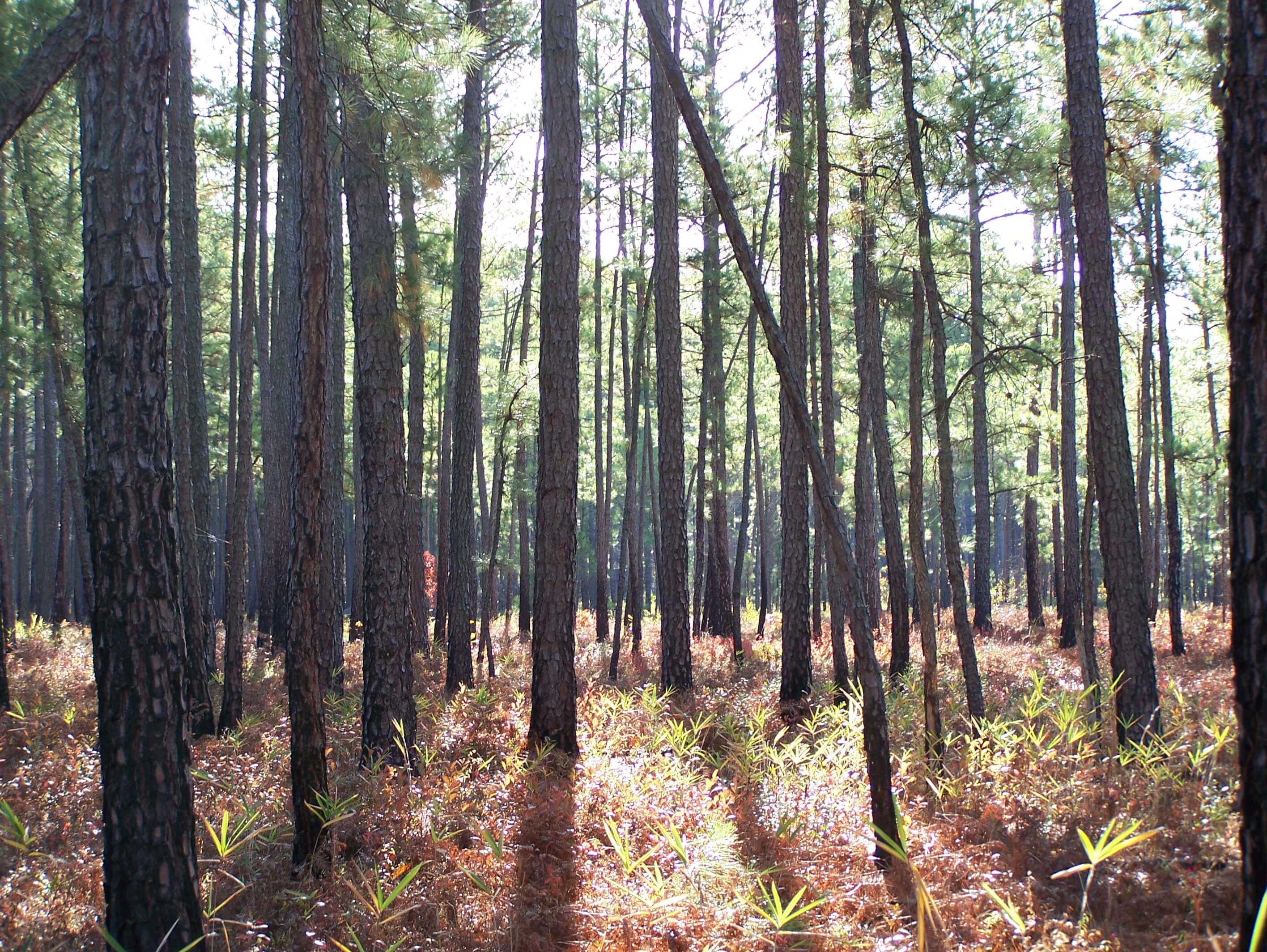
As an ecology PhD student at Old Dominion University, I depend heavily on field work for scientific research that will push me towards the completion of my degree. Without these forests, it would be impossible to complete not only my ecology degree, but any ecologist’s research. Every day I learn about new species and organism behaviors within the Virginian forests that surround our cities. To lose these precious habitats would be morally and scientifically criminal.
These forests are not only economically important to me; I depend on them for my own peace of mind.
Spending a weekend, a day, or even a few hours in a Virginian forest allows me to get away from the chaos of city life and relax with nature. The forests of Virginia are currently quiet, calm and pristine – perfect areas for a pause from the hustle and bustle of normal life.
The Blackwater Ecologic Preserve in Isle of Wight County holds carnivorous plants, unique orchids, and the northernmost stand of naturally reproducing long-leaf pine in the United States.
This preserve and similar tracts of forest in Central and Eastern Virginia are also home to fungus-growing ants, large populations of deer, and rare species of spiders. Other nearby wetlands in eastern North Carolina contain the Venus Flytrap, a species that occurs naturally nowhere else in the world.
It would be a horrible event if these forests disappeared due to our negligence. It would be even worse if these forests disappeared due to a corporation’s greed; unfortunately, this is exactly what is occurring. Fast food corporations are using large tracts of land just like the Blackwater Ecologic Preserve to make their cups, containers, and wrappers to hold their food. A small amount of public support would push these companies to accept more environmentally-friendly practices that allow for forests and fast food to coexist.
Marc A. Milne Ecological Sciences PhD Candidate President, Biology Graduate Student Organization Vice-President, ODU Graduate Student Organization Department of Biological Sciences 110 Mills Godwin Life Sciences Building Old Dominion University Norfolk, VA 23529
AbitibiBowater Leaps Ahead of Competitors on Southern Forest Conservation; Lags Further Behind
Asheville, NC – On February 29, 2008, Dogwood Alliance released a report, “Southern Forests & Bowater, Inc.: Progress Report July 2006 – July 2007,” detailing the leap forward Bowater (now AbitibiBowater) made in honoring its commitment to improve forestry practices in the Southern US and in protecting forests of ecological significance on the Cumberland Plateau of Eastern Kentucky, Central Tennessee and Northern Alabama. The report does not address concerns with AbitibiBowater’s forest practices in the Canadian Boreal forest.
In June 2005, a Memorandum of Understanding (MOU) was signed between Dogwood Alliance, NRDC and Greenville, SC based Bowater, Inc. which set the standard for improved management of the Southern United States working forest landscape. Though in October of 2007, Bowater merged with Abitibi Consolidated to become AbitibiBowater, the terms of the MOU remain in effect for all of the AbitibiBowater mills in the US formerly owned by Bowater. The report details progress the company made over the second year of implementing the commitments contained in the MOU.
“AbitibiBowater has demonstrated that working together, we can end the conversion of natural forests to plantations and protect special places in the largest paper producing region in the world,” said Danna Smith, Policy Director for Dogwood Alliance. “While AbitibiBowater has taken a leap forward, the largest paper producer in the region, , continues to cling to out-dated practices that are destroying some of North America’s most unique forests in the Cumberland Plateau and Southern Swampland regions of the Southern US.”
Highlights from the progress report include:
‘s indiscriminate use of large quantities of wood for its paper mills continues to have significant negative impacts on forests of high conservation value in the Southern US, including in the Cumberland Plateau and the wetland forests of the Mid-Atlantic Coastal region. IP has been a leading force behind the conversion of millions of acres of natural forests and wetlands in the South to sterile pine plantations.
“As others in the paper industry embrace the need for change and make progress, continues to make excuses,” said Smith. “Dogwood Alliance is escalating its efforts to pressure the company to take meaningful action to protect Southern forests and communities.”
In addition to working with IP’s largest customers in the office supply sector like Staples and Office Depot, Dogwood Alliance recently launched an effort targeting IP’s large corporate consumers of paper packaging such as Yum! Brand Foods (parent company of KFC, Taco Bell, Pizza Hut and more) and McDonald’s of the fast food sector and Procter & Gamble and Unilever in the health and beauty sector to convince them to hold IP to a high environmental standard or find alternative, more environmentally progressive paper suppliers.
To read and download the full report, visit: http://www.dogwoodalliance.org/images/pdfs/bowaterprogressreport2007.pdf
# # #
Dogwood Alliance is the only organization in the Southern United States holding corporations accountable for the impact of their industrial forestry practices on our forests and communities. In addition to holding the office supply industry accountable to their environmental commitments, Dogwood Alliance is working to stop the destructive practices of the paper packaging sector. Visit www.dogwoodalliance.org for more information.
Our friends at the Gracey Foundation in Missouri need your help…
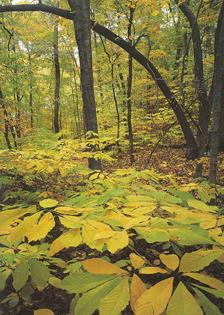
The Maple Woods nature preserve in Clay County Missouri (Northeast of Kansas City) is under heavy development pressure and land adjoining it is currently up for sale. The suburban preserve is filled with Old Growth Oak, Maple and Mockernut Hickory and the seven acre tract for sale next to the preserve are up for sale.
Dogwood Alliance supporter Greg Montgomery’s daughters Heather aged 12 and Zoe aged 9 came up with the brilliant idea of buying the land and donating it to the preserve, helping to protect the park and make it complete.
Zoe says “If we don’t do something they will knock down all those trees too, and it’s just wrong.”
For more information and to learn how you can help, visit The Gracey Foundation.
To read a story in the Kansas City Star about the property, visit here.
 Ad in USA Today Gives The Green Skinny On Office Supply Companies…
These days when every major corporation claims to be environmentally responsible, with office supply companies we can tell you who’s really green and who is just greenwashing.
For Immediate Release: February 6, 2008 Contact: Scot Quaranda, Dogwood Alliance, ph: 828.251.2525 x18 World Class Southeastern Coastal Forests Swallowed Up by and Fast Food Companies Dogwood Alliance and Local Partners Release Report Highlighting Natural Beauty, Legacy of Destruction, and Naming Key Parties to Continuing Destruction; Thousands Show Support from the Region Asheville, NC – Earlier today, local community organizations and university students on the Virginia and North Carolina coast joined regional conservation organization, Dogwood Alliance, to release “Southeastern Swamplands and Paper Packaging,” a report on how a world class biological hotspot of diversity that includes wetland forests, is being destroyed by to make throw away packaging for large fast food corporations. In addition to the report, activists held press conferences in Norfolk, VA and Wilmington, NC and presented petitions signed by thousands of citizens calling for protection of the region’s forests. “We are here today to shine a bright spotlight on the incredibly diverse forests of the Southeastern swampland and call on and their big customers to stop the needless destruction of our forests,” said Ruth Morrison, Campaign Organizer for Dogwood Alliance in Wilmington, NC. “The forests of coastal Virginia, North Carolina and Georgia like the Green Swamp in North Carolina and the Great Dismal Swamp in Virginia should not be chopped down, chipped up, and turned into paper packaging for fast food companies like KFC, Taco Bell and McDonalds.” The Southern Swampland region stretching from the Southeast Virginia coast across the Carolinas to the Georgia coast is an area of amazing natural beauty and unique biological diversity. It is home to unheralded aquatic and plant diversity including such species as the Venus flytrap and longleaf pine trees. Examples of wild natural places in the region that signify what the forests of the region could and should look like include the Great Dismal Swamp National Wildlife Refuge in Virginia and North Carolina and the Croatan National Forest in North Carolina. Southeastern coastal forests are home to incredible biological diversity, including: * Green Swamp Region is a world-wide hotspot for endangered and rare species, including carnivorous plants like the Venus flytrap and Pitcher plant * The sourcing area for the Riegelwood mill includes substantial areas of important freshwater wetlands (4,440,712 ac), home of many species found nowhere else on the planet, including the Waccamaw Killifish, Waccamaw Darter and the Fatmucket Mussel. * Home of rare Remnant Long-leaf Pine Savannahs reduced to less that 2% of their historic range across the uplands of the region. In Virginia the last long leaf stands are hand pollinated in an effort to restore this ecological community in the Zuni Pine Barrens. * The sourcing area for the Franklin mill contains a large area of fresh water wetlands (5,671,194 ac) according to the National Wetlands Inventory, and is home to a diverse array of aquatic species including the white-cedar hairstreak butterfly, greater siren salamander, and the canebrake rattlesnake. “Every time I visit The Green Swamp, I am reminded of how incredible this region once was and what it can be again,” said Juanita Roushdy, President of Cape Fear Audubon Society, and a speaker at the Wilmington, NC event. “Today we are coming together to call for greater protection of these amazing forests and an end to the long legacy of unsustainable forestry practices in the region.” This unique region of the world has been under assault for generations by the pulp and paper industry led by . In addition to large-scale clearcutting, the swamps have been ditched and drained for decades to allow the planting of sterile, monoculture plantations to be planted in place of the native forests. Where once the incredibly unique and diverse longleaf pine – wire grass ecosystems stretched as far as the eye could see the region is now dominated by intensively managed loblolly pine plantations. According to the report, paper packaging is the number one products being produced by in this region. Fast food companies led by Yum! Brand Foods (parent company of KFC, Taco Bell, Pizza Hut and more) and McDonalds with their overly consumptive and wasteful use of paper packaging are supporting the destruction of Southern forests with their packaging choices. “Simple choices and creative solutions can reduce the excess and destruction while still allowing us all to enjoy the level of convenience we have come to expect,” said Scot Quaranda, Campaign Director for Dogwood Alliance. “Using less packaging, using more recycled materials, and embracing sustainable sourcing choices all add up to healthy Southern forests and thriving local communities.” # # # To read and download the full report click here. Dogwood Alliance is the only organization in the Southern United States holding corporations accountable for the impact of their industrial forestry practices on our forests and communities. In addition to holding the office supply industry accountable to their environmental commitments, Dogwood Alliance is working to stop the destructive practices of the paper packaging sector. Visit www.dogwoodalliance.org for more information.
What an incredible Kick-Off Meeting we had here in Norfolk.
Annie and I are thrilled, excited, and inspired by the student leaders of the Norfolk Chapter of Dogwood Alliance. Forty-five people turned out to learn more about the campaign and how to get involved. Our guest speaker, Professor Sussman of Old Dominion University did a great job emphasizing why it is SO important for people to become active and enable change in our world, whether it be in our electoral politics, or pressuring fast-food companies to stop supporting the clear-cutting of our forests for hamburger wrappers and coke cups. We broke up into three groups so that folks would focus, strategize and plan how we can make the biggest impact in Norfolk- and the juices were flowing! So many ideas to engage as many people as possible and make a huge splash. There is no doubt in our minds that the passion and drive to protect our forests will continue on here in Virginia.

Go Team!


 Donate