


On May 18th, the world’s most influential energy institution, the International Energy Agency (IEA), released its roadmap to achieve an energy transition towards a 1.5 degree Celcius pathway in line with the Paris Climate Agreement. Dogwood Alliance applauds the tireless anti-fossil fuel campaigners whose work has been recognized in the report with a call for an immediate end to the production of and investment in fossil fuels.
They are calling for a 60% increase in biomass usage. Furthermore, they are also relying on the development and scale up of Bioenergy Carbon Capture and Storage (BECCS). BECCS is not only an unproven technology, but it also leads to a major increase in logging forests, our best existing “technology” for storing carbon and protecting us from the worst impacts of climate change. Finally, early estimates show that we will need a forest the size of India and Pakistan combined to meet the demands of these scenarios.
We have faced the destruction for this false solution for far too long now, and we can no longer let our forests and communities be sacrifice zones. Bearing the brunt of biomass demand has meant degraded forests, impacted communities, and a climate that is no better off than when we burn coal.
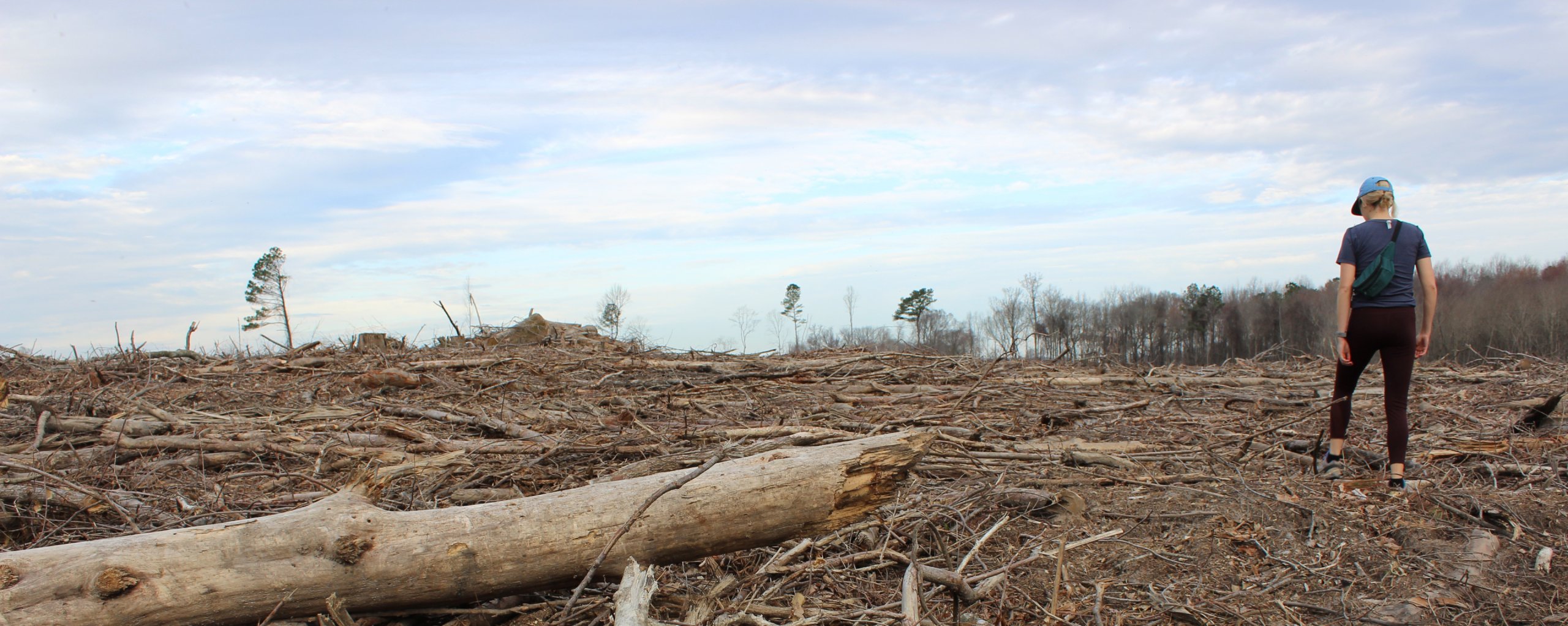
Forests and soils are one of the world’s most crucial carbon sinks. To us, we need our forests to do what they do best: remain standing to capture carbon, provide habitat for wildlife, filter our water, and provide us with places to hunt, fish, and explore. In conclusion, Dogwood Alliance challenges the IEA report to rethink the bioenergy portion of its Net Zero statement and stop supporting biomass as a pathway to a clean energy future.
One of the first acts by former President Trump after he was newly elected was to issue an executive order to roll back protections afforded by the Clean Water Act of 1972. Seemingly overnight, the incredibly complex question of what constitutes the waters of the US (WOTUS) became the jurisdiction of Georgia’s modest Environmental Protection Division (GA EPD). Alabama’s Twin Pines Minerals saw an open door. They immediately applied to mine within walking distance of the Okefenokee’s eastern boundary.
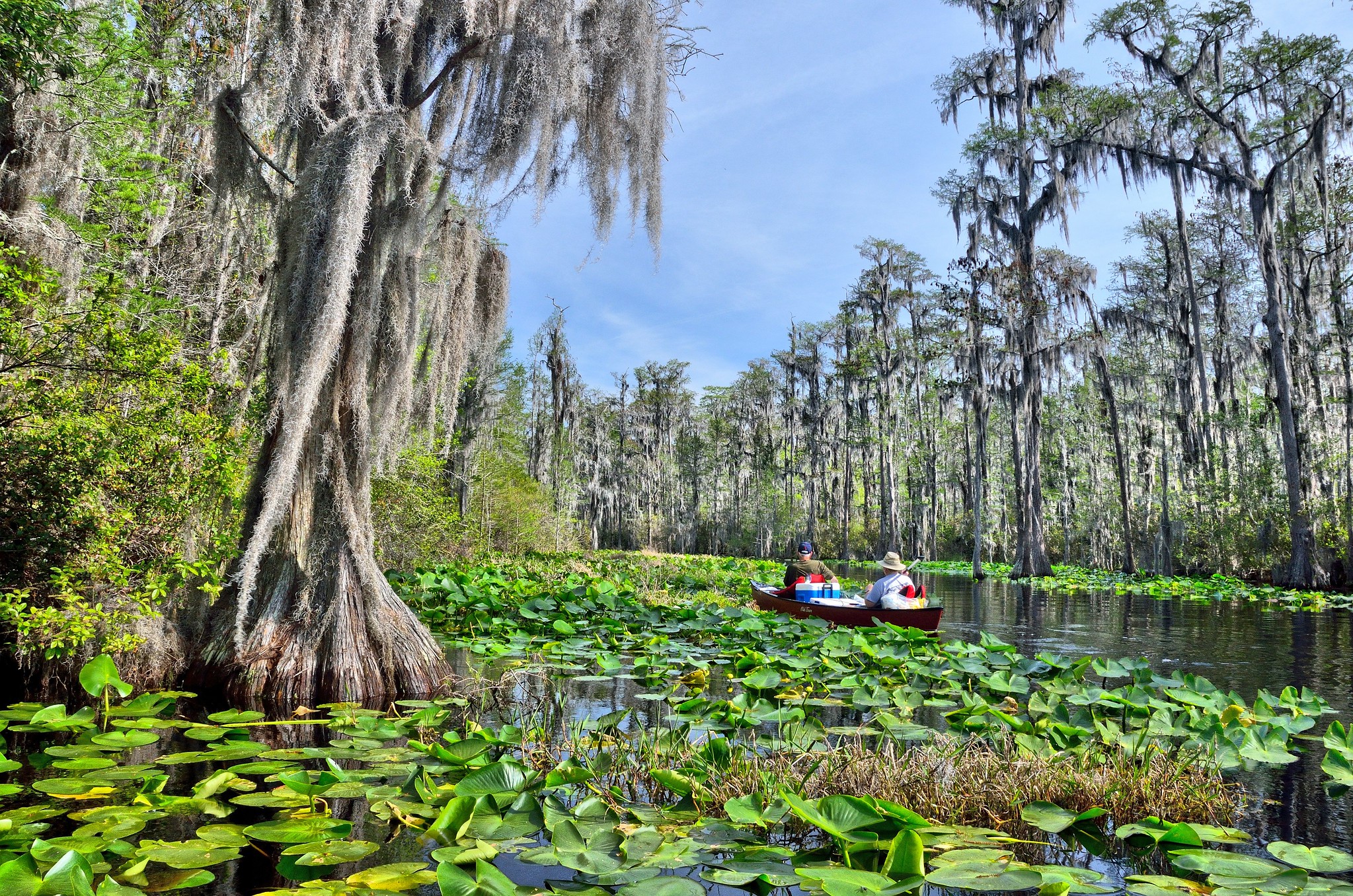
Image by: Timothy J Carroll
Dogwood Alliance and its network of partners have been working overtime to elevate this issue to the national level. We’re thrilled to announce that it has finally arrived!
“A project that could have a devastating impact on a national treasure needs all agencies on board. Five permits now stand between Twin Pines and the Okefenokee,” the letter read.
These permits include an allowance to pump nearly 1.5 million gallons of water every day from the Floridan Aquifer, which supplies drinking water to millions. Others would allow for industrial wastewater discharge, storm water discharge, and surface mining.
One major concern is the Okefenokee’s hydraulics. This powerful but delicate system pulls in water during times of flood and releases it into the wetlands during droughts.
The Senators wrote to “ask the USFWS to provide the Georgia Environmental Protection Division with added resources and support in reviewing all relevant applications. These decisions deserve careful environmental review and robust public participation because of the tremendous ecological value of the Okefenokee Refuge.”
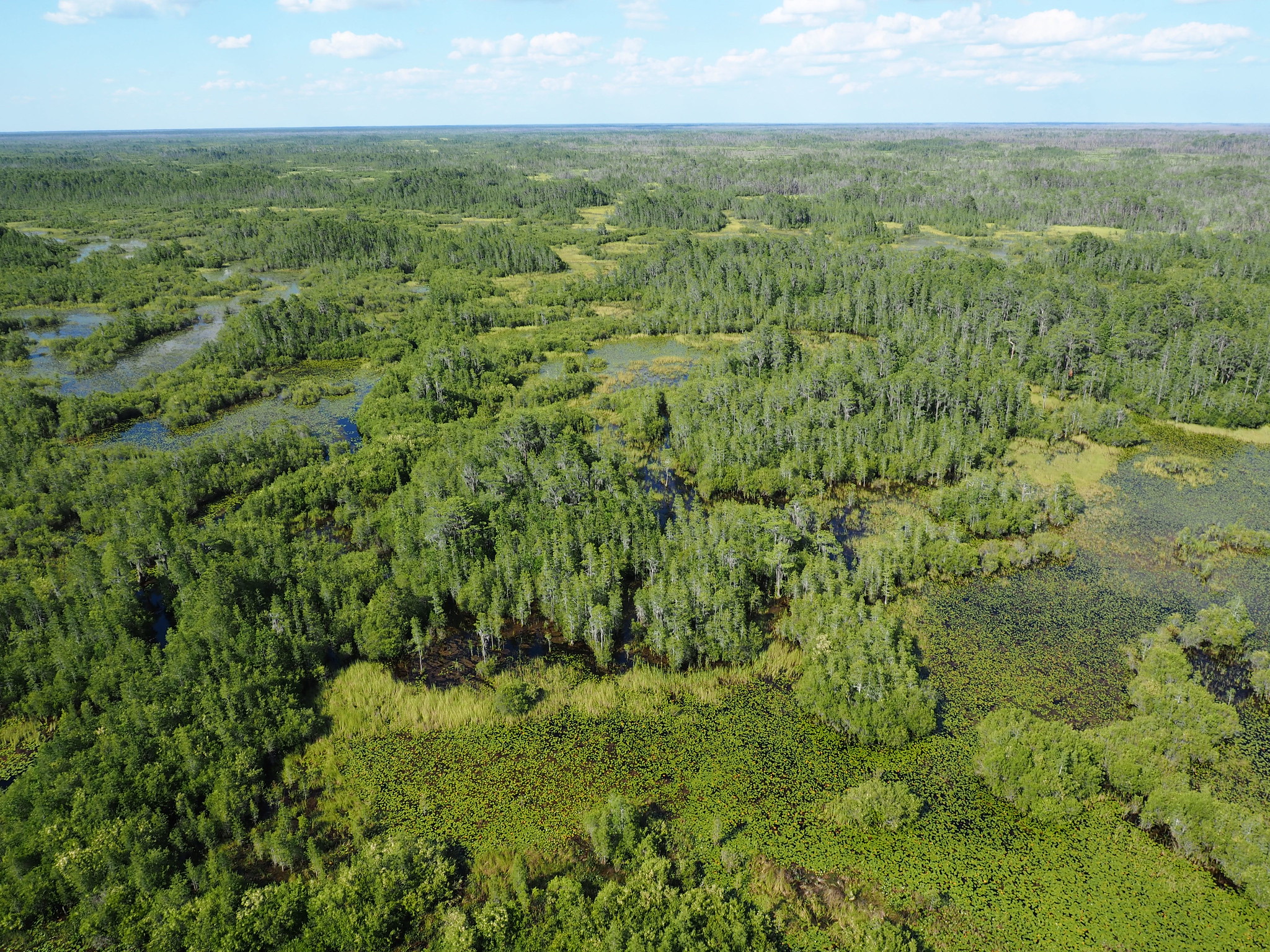
Image by Michael Lusk
The 635-square-mile Okefenokee National Wildlife Refuge is one of the Earth’s largest intact freshwater ecosystems and a top contender to become a UNESCO World Heritage Site. It is known around the world for its biological diversity and serves as a sanctuary for an incredible array of species. Some of these species are on the brink of extinction. It is also a key economic driver in both Georgia and northeast Florida. Hundreds of thousands of visitors flock to the area every year and contribute more than $64M to local economies.
Don’t stop there. There’s one additional action you can take.
Climate change is a crucial matter that must be urgently addressed in the next few years. To keep global warming below 1.5°C, the Intergovernmental Panel on Climate Change (IPCC) suggests that around 730 billion tonnes of carbon dioxide (CO2) must be taken out of the atmosphere by the end of this century. Many of the solutions brought forth by climate scientists involve maintaining and growing our forests. Forests are perfect for taking carbon dioxide out of the atmosphere because they trap large quantities and store it for long periods of time. Some natural solutions include stopping aggressive deforestation, reforestation, and proforestation. Proforestation is a new, simple concept about how we treat our forests.
Proforestation is when we let trees grow to their full potential. We can practice proforestation by leaving older and middle-aged forests (forests in the age range of 70 to 125 years) intact. In the case of middle-aged trees, it means allowing them to continue to grow so they can reach their full ecological potential. For older forests, this means adequately protecting them so that they can continue to preserve carbon for years to come.
In the United States, the percentage of intact forest in 48 states is only an estimated 6–7% of total forest area. So, there’s lots of opportunity to use proforestation for carbon. After all, proforestation is more effective, immediate, and low-cost than planting new young trees. It can take decades for young trees to start trapping carbon dioxide in considerable amounts. This simple approach could slow down global warming in the coming decades.
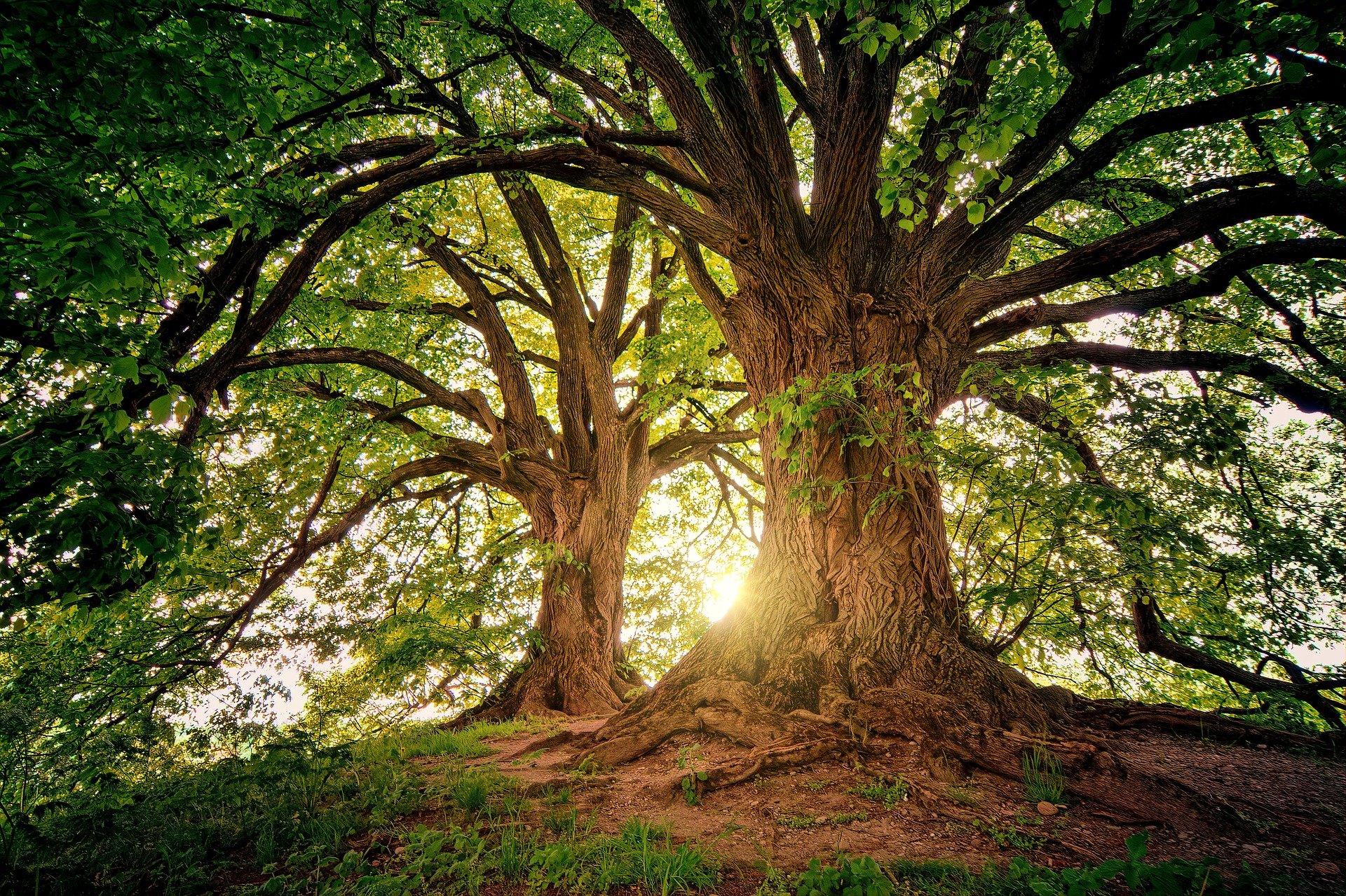
We have mentioned before that forests are essential to removing carbon dioxide from the atmosphere. This removal is necessary to avoid global warming. The advantage of proforestation, when compared with reforestation, is that older trees absorb more carbon every year. Their larger size allows them to store more carbon in their trunks. This makes them big allies in the fight against climate change.
Older forests absorb more carbon because they have higher carbon-trapping abilities compared to younger trees that trap less carbon dioxide. Forests in the United States have the potential for very high atmospheric carbon dioxide removal rates and biological carbon trapping by older forests. In fact, forests in the United States remove enough carbon dioxide yearly from the atmosphere to reduce emission by 11%. It is then effective to allow middle-aged forests to remain intact so we can increase the trapping rate faster and reduce the amount of carbon dioxide in the atmosphere.
Sadly, many trees become victim to logging, especially in the US South. Harvesting these trees does not allow older forests to develop, and their full potential in fighting climate change cannot be reached. Proforestation in the United States will require us to look at the forest products industry and how it treats natural forests across the country.

What would forests look like if local governments and private owners decided to leave intact existing old trees? Let’s take a look at some of the environmental and biological benefits.
First, many plant and animal species unique to many older forests would be preserved. Some of the animals that are disappearing from older North American forests include the red fox, the California condor, and the grizzly bear. Threatened bird species like the wood thrush, red-cockaded woodpecker, and the spotted owl can only live in mature forests. Promoting proforestation would preserve the habitat of these species.
Preserving older forests provides suitable locations for recreational activities. Intact forests in national parks allow trees to grow old and have a greater tree diversity. These old and tall trees create magnificent and awe inspiring natural sites. Forests also provide clean water because they act as natural filters to keep pollution out of water. Strong roots from older trees anchor soil against erosion and material on the forest floor helps absorb nutrients and sediment.
Lastly, we now know the importance of forests when fighting against climate change. If trees were allowed to continue growing and to reach maturity, they would trap about 12 years of carbon dioxide emissions. This carbon removal will be critical in the next decades.

You may be asking yourself what can you do to promote proforestation in your community. Below you can find simple actions you can start doing right away.
El cambio climático es un asunto crucial que debe abordarse con urgencia en los próximos años. Para mantener el calentamiento global por debajo de 1,5°C, el Panel Intergubernamental sobre Cambio Climático (IPCC) sugiere que se deben sacar de la atmósfera alrededor de 730 billones de toneladas de dióxido de carbono (CO2) para fines de este siglo. Muchas de las soluciones presentadas por científicos expertos en cambio climático involucran el mantenimiento y crecimiento de nuestros bosques.
Los bosques son perfectos aliados para sustraer el dióxido de carbono de la atmósfera, ya que estos atrapan grandes cantidades y lo almacenan por largos períodos de tiempo. Algunas soluciones naturales incluyen detener la deforestación agresiva, la reforestación y la proforestación. La proforestación es un concepto nuevo y simple sobre cómo tratamos nuestros bosques.
La proforestación consiste en dejar que los árboles crezcan hasta alcanzar su máximo potencial. Podemos practicar la proforestación dejando intactos los bosques más viejos y de mediana edad (bosques que tienen entre 70 a 125 años). En el caso de los árboles de mediana edad, significa permitirles seguir creciendo para que puedan alcanzar su máximo potencial ecológico. Para los bosques más antiguos, significa protegerlos adecuadamente para que puedan seguir almacenando carbono en los años venideros.
En Estados Unidos, el porcentaje de bosques intactos en 48 estados es aproximadamente entre el 6 al 7% del área total boscosa. Por lo tanto, hay muchas oportunidades de utilizar la proforestación para almacenar carbono. Después de todo, la proforestación es más efectiva, inmediata y de bajo costo comparada a plantar nuevos árboles jóvenes. Los árboles jóvenes pueden tardar décadas en comenzar a atrapar dióxido de carbono en cantidades considerables. Este simple enfoque podría desacelerar el calentamiento global en las próximas décadas.
Hemos mencionado antes que los bosques son esenciales para eliminar el dióxido de carbono de la atmósfera. Esta eliminación es necesaria para evitar el calentamiento global. La ventaja de la proforestación, en comparación con la reforestación, es que los árboles más viejos absorben más carbono cada año. Su mayor tamaño les permite almacenar más carbono en sus troncos. Esto los convierte en grandes aliados en la lucha contra el cambio climático.
Los bosques más viejos absorben más carbono porque tienen una mayor capacidad de captura de carbono en comparación con los árboles más jóvenes que atrapan menos dióxido de carbono. Los bosques en Estados Unidos tienen el potencial de contar con tasas muy altas de remoción de dióxido de carbono atmosférico y captura de carbono biológico por parte de los bosques más viejos. De hecho, los bosques en Estados Unidos eliminan anualmente suficiente dióxido de carbono de la atmósfera como para reducir las emisiones anuales en un 11%. Entonces es efectivo dejar intactos los bosques de mediana edad para que podamos aumentar la tasa de captura más rápido y así reducir la cantidad de dióxido de carbono en la atmósfera.
Lamentablemente, muchos árboles son víctimas de la tala, especialmente en el sur de los Estados Unidos. Al talar estos árboles no se permite el desarrollo de bosques más viejos y tampoco que estos alcancen su máximo potencial para combatir el cambio climático. La proforestación en los Estados Unidos requerirá que observemos la industria de productos forestales y cómo ésta trata los bosques naturales en el país.
¿Cómo se verían los bosques si los gobiernos locales y propietarios locales decidieran dejar intactos los árboles viejos? Echemos un vistazo a algunos de los beneficios ambientales y biológicos.
Para empezar, muchas especies de plantas y animales que viven exclusivamente en bosques antiguos podrán ser preservadas. Algunos de los animales que están desapareciendo de los bosques más antiguos de América del Norte incluyen al zorro rojo, el cóndor de California y el oso pardo. Especies de aves amenazadas como el tordo de madera, el pájaro carpintero de cresta roja y el búho manchado solo pueden vivir en bosques antiguos. Promover la proforestación preservaría el hábitat de estas especies.
La preservación de bosques más viejos proporciona lugares adecuados para las actividades recreativas. Los bosques intactos en los parques nacionales permiten que los árboles envejezcan y tengan una mayor diversidad. Estos árboles viejos y altos crean sitios magníficos e inspiradores. Los bosques también proporcionan agua limpia porque actúan como filtros naturales, ya que eliminan contaminantes del agua. Las raíces fuertes de los árboles más viejos anclan el suelo y así prevenir la erosión. El material presente en el suelo de los bosques ayuda a absorber nutrientes y sedimentos.
Por último, sabemos la importancia de los bosques a la hora de luchar contra el cambio climático. Si se permitiera que los árboles siguieran creciendo y estos alcanzarán su madurez, estos árboles atraparían alrededor de 12 años de emisiones de dióxido de carbono. Esta eliminación de carbono será fundamental en las próximas décadas.
Quizás te estés preguntando qué puedes hacer para promover la proforestación en tu comunidad. A continuación, encontrarás acciones simples que puedes comenzar a realizar de inmediato.
This week our hosts Erniko Brown and Kimala Luna from Dogwood Alliance and Elizabeth Lashay from SlayTheMic talk with Georgie Nakima about the importance of visual representation, doing your best imperfectly, and art as an avenue to learn and heal. Art is healing.
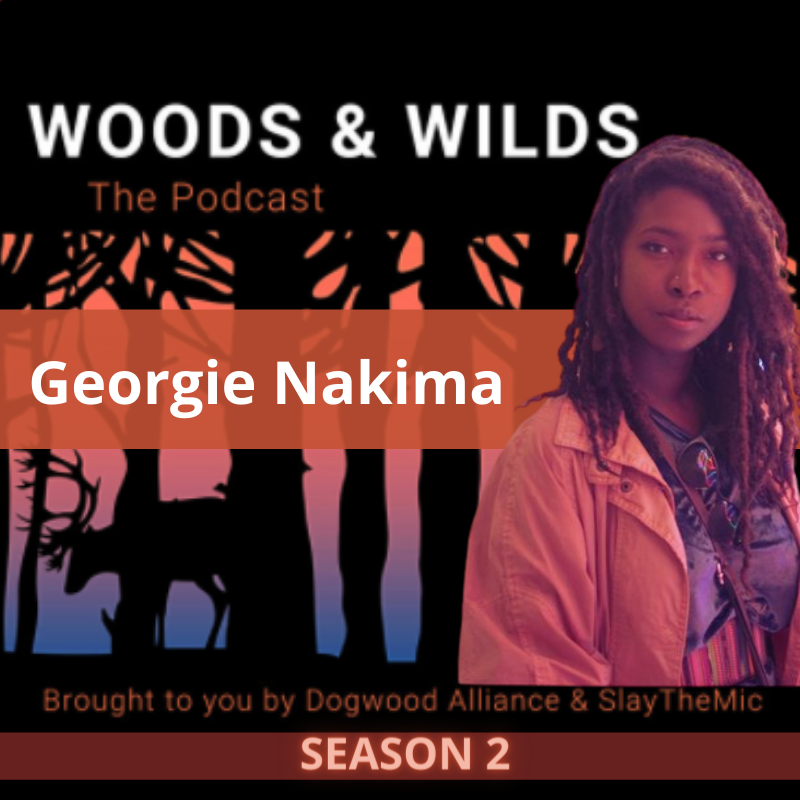
Georgie Nakima is a multidisciplinary artist and muralist based out of Charlotte, NC. After honing in on her artistry at Northwest School of the Arts, she attended Winston-Salem State University with the intention of further exploring the natural world. Her studies in Life Sciences have fueled her insight in environment preservation and philosophy, which transcends through her work’s subject matter.Her work pays homage to the African and Indigenous diaspora while highlighting nature and biodiversity. She casts a heroic vibe to her subjects that represents the resilience and triumph that builds into the essence of women, people of color, and wildlife. Her aim is to collaborate with the community and contribute towards mural installments that also fuse techniques in art therapy. More of her work can be seen at www.gardenofjourney.com.

Want to listen to more?
Check out the full transcript of our interview with Georgie Nakima!
Elizabeth: Hey everyone. I’m Elizabeth Lashay with Slay The Mic and I’m joined with my wonderful cohost.
Kimala: Kimala Luna from Dogwood Alliance. And we are a here with…
Erniko: Erniko Brown, with Dogwood Alliance and, y’all, I am bringing somebody to the table, that is just absolutely amazing. This is my homegirl in justice. My sister in Christ. My homie on the field. We are here. When I tell you you’re going to learn some amazing things about a beautiful soul, be prepared. Because today we have none other than someone I am so privileged to call my friend, Georgie Nakima.
Georgie: What an introduction. Thank you. Let me live up to that for this interview.
Elizabeth: I would love to just jump right in and ask you, where did you find your love for nature?
Georgie: Growing up in a rural area in North Carolina, I think that it’s just kind of a testament to my environment. My upbringing. Also, I think that growing up in the 90s, I’m probably one of the last generations where we just grew up outside. We played outside till the street lights were on. We climbed trees. We just would go on just adventures throughout our day. It was very grounding. I guess you don’t realize how much you love something until it’s away from you. So I think as I started to dive into more metropolitan areas, I was just like, wow. It’s really different here when we can’t seem to get away and just find solitude or quietness, or stillness. I started to appreciate that more and more.
Kimala: Since Erniko gave you such an awesome introduction, and it sounds like you all have a real special friendship. I want to know how you all met. And then it also sounds like you have a lot of overlap in the work you do. So, how has that friendship benefited you during that time?
Georgie: Yeah. We actually connected through Dogwood Alliance. My friend Nakisa was like, “Hey, do you want to go to this workshop in Western Salem?” I just said yes. I just said yes to it. Little did I know that I would meet Erniko and I would meet a lot of other climate warriors who were also invited to go to Al Gore’s Climate Justice Summit. And that’s where we got to really get to know each other, and we really start to really dive into our perspectives, and our shared interests in what it means to have social justice and climate justice especially for Black communities. What mitigation could look like and how we could really join forces, even if it’s just supporting each other from a distance.
Kimala: That’s awesome. Thank you.
Erniko: So I’ll jump in. One thing, you talked about how we got to know each other and how things came about. And in learning about Georgie, we share this thing. And if I remember correctly, Georgie, you did biology, right?
Georgie: Oh well, yeah. I studied in my undergrad.
Erniko: Right. We had a conversation in Atlanta when we were at the Climate Reality Summit with Al Gore. And I was like, “Well, Georgie, how do you mesh biology with painting? How do you do that?” And if you all have not seen her artistic work, y’all are missing out. So Georgie, I would love for you to tell them how you mesh those two things together. Because those are two totally different worlds seemingly. I just want you to share with the people how you put those things together. Because it amazed me.
Georgie: Yeah. Thank you. I mean, I always say that art is a science and science is an art. So I think that they’re more separate than they are. I think that they’re more alike than they are separate. As an artist, I think that the premise of art is expression. So you’re kind of taking in a collection of all your experiences. So just me having my insight in sciences, I think it’s more subconscious than actually premeditated. A lot of people will take notice in my work and how it’s very geometric, and the fractals that go into it. I really think that four years of just diving deep into learning the unseen because really biology to a certain degree, it’s chemistry. It’s more chemistry. And then chemistry is just math. So you really dive deep into the subjects in a way where I think it really nourishes your insight, and just how you really see the world. So I really like to overlay my artwork with… It’ll be realistic portrait, but it’ll also be abstract. And that’s kind of just an ode to the things that we see and the things that we don’t see, and how they come together. I also work as a muralist. And I try to do things more intentional with my murals because this is public art. So it doesn’t just belong to me. It belongs to everyone who sees it. So I like to really make it conscious. And I like to add local fauna and flora. I like to make it as site-specific as possible. And I like to really create a message that is bigger than humans. It also connects with our environment that we’re in. Because sometimes with art, when you see a portrait, it just kind of alludes to the human ego. But I like to kind of show things beyond who we are and just kind of show the shared world that we’re in.
Elizabeth: Thank you. And so can you tell us where you’re located? And where we could kind of see some of these wonderful murals that you have done?
Georgie: Yeah. I’m based in Charlotte, North Carolina. I’m actually working on a mural right now. I have some work all over Charlotte. I’m also working in the historic West End in East Charlotte. I mean, I love working uptown in the more hipster areas. But, also when I’m doing my personal work, I like to bring it outside of the arts district and actually into the communities. Also, I have some work in Winston Salem, which is where I first met Erniko in [Dogwood] Alliance. I actually did a mural at that space in S. G. Atkins. I just finished a mural in Winston last year, uptown, and I’m doing another one this summer. A mural at the World Trade Center, this past October, which was a lot of fun. And I’ve also done some stuff in Durham.
Kimala: Oh my gosh. I have a lot of questions about the mural category. Because that is manipulating space in this really big way. And you have control over what is brought into the space. Like you were talking about earlier, bringing in those plant elements. And then, who is represented in that space? And so can you talk a little bit about the difference between mural creation at the community level, in gentrified areas, and that big project at the World Trade Center? I definitely want to hear more about.
Georgie: Yeah. I mean, my art is deeply rooted in Afro-futurism. I like to really look at the past and look at the dilemmas that Black people have survived, and persevered. And I like to overlay it with hope. With a bit of a futuristic twist. So that it’s ultimately timeless in that, wherever it lives, it can grow with the setting. My goal is to create visual representation. When I was growing up, there was not a strong push for diversity, inclusion, and equity as it is today. So I grew up feeling very invisible and not seen. My hope is to really just create a visual for the movement and to show happy, healthy Brown and Black faces. I think that there’s so much stereotypes, pain, trauma that’s real and that it exists, but that’s not necessarily the story that I’m telling. So that’s what I put into my community work. And it just so happened that, that’s what a lot of corporate and commercial clients are looking for as well. So I’m happy to extend that when the opportunity hits and that’s how I ended up working with the World Trade Center.
Erniko: Listen, Georgie, I tell you all the time you’re absolutely amazing. And I just love you. I love the work that you do because you’re highlighting Black and Brown communities in this Afro-futuristic manner that manifests in places that we aren’t usually represented. And for the big project at the World Trade Center, you are used to seeing traditionally, white males, white females walking around. I mean, you catch a sprinkle of-
Georgie: Actually in New York, it’s more Chinese. Specifically Chinese. So I’m not even blanketing the ethnic group. I think that New York is just international. Just salad. Yeah. So I think with art, there’s a lot of amazing Chinese artists that I saw there. But you’re right. It is dominated by white males as well. And I think that that’s what we kind of see here in our area too.
Erniko: And so what I was getting to, that representation in the space. Why do you feel like it’s important to not only have you as representation in the space but have Black representation through your artwork in these spaces?
Georgie: It’s so important because I think America is just living through its own karmic cycles of oppression. And it’s going to continue to resurface until we acknowledge it for what it is and until we heal it. So I think that art is so healing. I think that it speaks to places that words can’t. I think that it’s the first step of many steps. An example is the Black Lives Matter murals that were popping up nationally. We also did them here in Charlotte. We did one right uptown and it became a safe place. It became a haven. It became a photo-op. It just became so many things. And that’s kind of something that art has the power to do.
Elizabeth: That is beautiful. The whole time I’m getting chills from what you’re saying. And something that really stood out to me that you said was, growing with the environment. That your art grows with the environment. Which I absolutely love. And I want to ask you. What do you think in terms of environmental sustainability, we need in order to continue to grow with the current environment that we’re all living in?
Georgie: Yeah. I think art can be a visual translator, especially to science. Because a lot of the jargon and a lot of the language is beyond what people understand, really. I mean, think about it. A lot of scientific words are written in Latin. Which is like… you know, it’s a dead language. I think people can’t really get to it sometimes. It seems very far removed. So I think any type of infographic, any type of image, data that can be visualized, it will help people that really don’t understand how it’s impacting them personally.
Kimala: Can you talk about the nature of collaboration as it translates from the community work that you do to the artwork you do, to the way that you see it showing up in biology that you find interesting?
Georgie: Yeah. I mean, my whole career is just rooted in collaboration. It just wouldn’t have been possible without kind of being hand-in-hand with my peers. And I think it’s important to get outside of your head and to have a link between what’s going on outside of you. Because that’s a good way to see if what you’re carrying with you is outdated. And also if there’s more to exchange. If there’s more for you to share. If it’s important. What’s not important. I feel super blessed to have been planted here in Charlotte because it’s a city that is growing. But it’s also a city that had a very lacking arts community until my self and my peers kind of galvanized together and were like, “Listen, this is what we need to do. This is what is being called.” And you definitely see the trend of murals happening worldwide. So as far as collaboration, I consider myself a visual storyteller. And I’m very limited in my perspective. So, I like to connect with story keepers. Every community has their story keeper. I mean, all of us in this Zoom call, we’re all story keepers. So if you can share something with me about yourself. Your lived experience. Your goals. I can process that and interpret that through art. So, that’s one of the ways that I collaborate. I like to do surveys. Sometimes it’s just like a pre-engagement process to really just get informal. What’s going on? I like to just kind of continue the conversation so that even after the art is done already, it still has… the intention is known. People know and people can also preserve the story and tell it to the next person.
Erniko: That’s dope, Georgie. And one thing that you just said about you was being transplanted in Charlotte. And I know when you first spoke, you were talking about being from a rural area. Could you just give us a little… Paint a picture if you will, since you’re an amazing artist. Paint a picture if you will for us about the community that you came from. What was it like? I know that it was rural. But outside of it being rural, what catapulted you and just motivated you to say hey, I’m getting ready to leave here. I’m getting ready to make my mark on the world. And I’m going to make that mark predominantly in Charlotte. So paint a picture if you will, of your past and how we got to the present, if you will.
Georgie: Yeah. Well, I’m originally from New Bern, which is on the coast. I guess it’s like a town, technically. But it’s a really small city. It’s like the first city of… The first capital of North Carolina. New Bern is a simple city and there’s a lot of great things that are happening there. But what brought me to Charlotte actually, is my parents separating. My mom just went on a whim to move to Charlotte. And it was the greatest decision that impacted me because, coming from a small city to a larger city, I got to see all of the disadvantages that I had being in New Bern. I saw all the opportunities that were in Charlotte. And sometimes when you are from the big city and you’ve always been in a big city, you’re kind of numb to the opportunities that are right at your face. You’re kind of numb to it. But for me being from a small town and seeing, oh, wow, you all have got cultural arts centers. What? You all have art schools. You all have museums. You all have so many cool maker spaces. It was super motivating. Also, New Bern is a place that is not very… I think it’s like don’t get me on demographics, but it’s a very just Black and white city. It’s not very diverse. There is an Asian population and there is a Latinx population, but they’re still undergoing a lot of backlash from the civil rights era. And it shows. So coming to Charlotte, I just saw so much diversity. I just saw people of different languages. I think it was just my first time being around Black people that were not from America. They were from Africa and Jamaica, and just different places. So I really just started to explore what culture means. What heritage means. What my heritage means for myself. And also just identity. How we identify ourselves. I think when it comes down to any politics, it can be powerful to represent yourself, but sometimes we’ve hyper categorize ourselves into a way that it separates our humanity. I like to use my work where it’s like, yeah, you may see some Afro-centric features on a blue and green portrait, and no matter what you look like, you’re going to see a part of yourself in it. It kind of just breaks it down. What was the original question?
Erniko: No. It was just you painting a picture for us, about you coming from-
Georgie: Oh yeah. From New Bern to Charlotte. Yeah. I mean, I moved to Charlotte when I was 12 years old. So I consider myself from here, but I know my roots. My whole family is seven, eight generations from this region. So I still feel connected to the coast, but I feel like a lot of my refinement came from being here.
Elizabeth: Thank you for sharing, Georgie. I definitely lived in New Bern until I was eight years old. So Tryon palace…
Georgie: Yes.
Elizabeth: A few stoplights and one bagel store. So I definitely know-
Georgie: Walmart and the mall.
Elizabeth: Right, exactly. And it is a different world. Thank you for sharing that. When we talk about where Georgie wants to be, and not just the future of five years. But where do you see yourself in two years when it comes to the work that you’re currently doing?
Georgie: I’m in the process of opening a studio maker space and I’m super excited about it because I feel like with all the opportunities that I have, I want to make sure that there’s a give-back connected to it. And it’s kind of rooted in… physical space is not always accessible, especially for young creatives. Especially for young entrepreneurs. So I’m hoping to just kind of create a space where everyone can use it. We have a collective of artists and creatives, and we’re able to be empowered and just really fertilize the creative ecosystem here. I also do want to be more specific about how I use my artwork to connect with sustainability. I think right now it’s very symbolic and poetic to my work and how I explain it. But I’m interested in being more realistic and actually, physically working on installations that are sustainable. Using sustainable products and using things that can actually help, and show some evidence that it can actually help cleanse the environment in that way. I’m being very general because I’ve written a couple of proposals and I’m just waiting on them to bake. It would be best for me to kind of circle back with you guys in the future after I get some good news. But I want to be very actual with my intentions. Not just kind of talk about it, but actually do things that are powerful, not just for me, but for other people that I’m around.
Kimala: I love that. And so I’m going to sneak two in here. I’ve noticed people who are very specific with their intentions are fueled by some really powerful stuff. So, what lights your fire? What sparks you? What keeps you going? What motivates you? That’s the number one. And then the second one is we kind of skimmed over Afrofuturism. And I was hoping you could talk a little bit about that because it’s dope. And we’re seeing it represented in the media more and more. And I don’t know if people necessarily know that that’s what they’re looking at. So those are my two.
Georgie: Yeah. Well, they kind of connect. I’m motivated by my ancestors. I feel like they made the ultimate sacrifice for me. I envision even with Afrofuturism. I think that technology is an amazing tool, but it’s like, how are we using it? If you’re using your technology just to be on social media eight hours a day, is that really the best light? So I’m really inspired to take the resources that we have today and to also praise what the ancestors were able to do. How they were able to work in synergy with the land, the air, and the water. How they were able to cultivate. How they were able to organize. If we can combine that with technology from this era that we’re in, I think we’ll be more powerful. But I think in a lot of ways we don’t work with nature, we work against it. I’m also just super motivated by all the things that are wrong in the world. The problems of the world do not belong to me. I don’t own them, but I do hope that I leave this world a little bit better than I found it. Even just through small efforts. I’m super inspired just to do things that are uplifting and just be a positive example of what you can do when you actually just believe in yourself.
Erniko: Georgie. I am just amazed at what you’re doing. I really feel that inspiration from our ancestors and people in the thought that you want to leave the world a little better than you found it. If you could just say or speak to individuals in this movement. Are there individuals in this movement that inspire you daily to continue doing what you’re doing?
Georgie: Definitely. But, I’m bad with names. I’m bad with names. If you go through my Instagram, through my… Everyone I’m following is inspiring me in a major way. I like to follow sustainable practice, like pages on Instagram. It’s good because I get… I don’t know. It’s just so much knowledge packed through a meme these days, and I’m here for it. I’m really inspired by you, Erniko. I feel like you’re a person that has a real testimony, and that you’re able to take your lived experience and really empower the people around you. So I see you and I love that you do that. I love how you kind of just, wear your heart in a way where it’s just like… that people around you can feel loved and supported. So I think all of that really counts.
Erniko: Yeah. Okay. Well, the people won’t be able to see it, but I’m definitely blushing over here. I love you for real. And that’s what it’s about man. Supporting each other in this movement. Giving each other daily motivations. Giving each other daily inspiration. Because I can remember, Georgie, our conversations. We’re talking about years ago. We’re talking about places where we wanted to be. And now we’re actually in these spaces doing these things. And you motivate me. And having been on this platform. Just giving you the opportunity to tell that story about how you have come to be and share it with the world. You’re not just Georgie, who I was sitting at a table with years back. You’re Georgie that’s putting out amazing artwork across this world. You’re leaving your mark in so many different places. And those things are amazing to me. And so for me, outside of you just like making my heart [fill with] wonder today. If you can speak to people and give them motivation, what would be one thing that you would want to say to individuals with this opportunity, with your one mic today?
Georgie: All right. I would say, seven-day vegan challenge. Let’s get it. I’m kidding. I would say, it’s not about doing things perfectly. It’s just about doing the best you can imperfectly. I think sometimes we get scared about if I fail or if I’m not that good. But, as long as you’re doing your best imperfectly, giving yourself grace, and learning every day, and just learning something new, I think that that’s what it takes to make this world a little bit better. I think society has this way of showing us that we’re small. That we can’t do anything. That all we can do is just vote and leave it to the politicians. But, every day we vote with the decisions that we make. So, I think we’re a lot more powerful than you realize. And we’re a lot more stronger when we come together.
Elizabeth: Thank you. That was beautiful. So with SlayTheMic, it’s a hip-hop and R&B radio show. And I am just curious. Do you have some songs that motivate you or that you listen to whenever you’re creating a wonderful mural? Or what is in your playlist?
Georgie: Ooh, yeah. I have a whole Spotify playlist called Art to it. I think that’s public. I really love this song by Anna Wise is called Count My Blessings. That’s a good song. Super Bounce is another song that I really like. I listen to a lot of eclectic hip-hop trance soul music. So my ears are all over the place. I’m on the spot. So I’m like, think of an artist. But also, I really like Soulection too. Because I work with a collective of different artists. And they’re always digging up old songs, new songs, and putting them over futuristic beats. So all of that is super inspiring to me. I love to listen to it. Also, when I’m painting, I like to listen to Audibles a lot of the time, when music gets too much or repetitive. Because I feel like I listen to the same things over and over. So right now I’m re-listening to The Alchemist. That’s been really cool. I have a little nugget starter in there. I feel like a lot of stuff that I listen to audibles is a lot more non-fiction, a lot more like self-motivation books. I finished listening to Bell Hooks’s All About Love. Which is really good. I also listen to The Seven Daily Habits of Successful People. I kind of tune in and tune out sometimes, but it’s just kind of good to have as background.
Kimala: So at Dogwood Alliance, we are celebrating 25 years of being an organization. So we’re reflecting back on what we’ve done in the last 25 years, and then imagining the next 25 years. If in your dreamiest dreamy vision, if you could just wave a magical wand and make it how you want it for the next 25 years, what would you do?
Georgie: My long-term goal is to have a school. I think that how we educate the next generation is so important. I have a nonprofit called Learning Resources for Change, which is all about connecting art with education. It’s very informal. It’s just very peer led, but we just all have so much wisdom and insight to share that we don’t often tap into, out of daily small talk. We kind of use art as an avenue to learn, but also to heal, through art therapy. So I would love to just continue working on these community-based projects, but to eventually just have a tribe where we are empowered and where we’re supported. Where there’s enough pay, everybody eats. And we can just have more creative control with how we want to cultivate.
Kimala: That’s super dreamy, thank you.
Georgie: Yes, it is really dreamy. And a garden. A nice little garden somewhere.
Erniko: That’s absolutely amazing, Georgie. And I definitely appreciate you Kimala for bringing that up, because I heard the word healing. And I know that artwork is a healing form for you. How do you utilize your artwork to heal communities? Or how do you feel like your artwork heals communities?
Georgie: I like to talk about very uncomfortable things. I like to talk about gentrification, displacement, oppression. I like to talk about what that means for people. What they’re living through. What they’re hurting through. And then, have them be heard, but channel that into the artwork. It’s just like when you’re taking all of those hurdles and it’s kind of like music. Whenever you listen to a sad song, you’re taking that emotion, but you’re giving it a melody. So it’s able to take you somewhere else and you’re able to find a hope or a process where you can go through it, and you can grow through it. So I like to do that with artwork as well. I like to talk about things that are hard to face and then create an image out of it that is made in love, made in wisdom, made in hope. Channeling something where people can relate to it. And so they don’t just live in that pain. They can actually look at it. Look at the image of it and then they feel like it carries them to a better place. That’s my intention. I can’t say that it always works out like that, but that’s at least my intention.
Elizabeth: Man. I am amazed at the roots and the way you have cultivated such a strong and rich identity of who you are. And when we look back… I always like to ask this question. What would you tell your younger self?
Georgie: Y’all asking me some good questions. I would tell my younger self, keep pushing, keep going for it. To enjoy the moments, because they don’t always come twice. So, be present. I would tell my younger self you’re smarter than you think, you’re stronger than you think. Listen to your intuition the first time and stay away from boys.
Kimala: So, Georgie, it sounds like you got a lot going on and a lot of different ways people can plug in. Can you give us a little… give our viewers some areas they can follow you. I know you mentioned your non-profit. It sounds like you have an art project you’re currently working on. Is that going to be an art show or is it going to be a mural?
Georgie: Yeah. Actually, I have one exhibit that’s currently on display at The Mint museum. We’ll be doing an opening on April 16th. I would love for you guys to follow me at Garden of Journey. It’s spelled exactly like how it sounds. So that’s Garden of Journey on Instagram and it’s also my website, and my Facebook page, Tumblr. All of my social media. So, you can find me there to stay connected on a day-to-day basis. I’m super active up there. Super approachable, if you have any questions or would like to collaborate in the future. Just send me a message or an email.
Elizabeth: I mean, I could talk to you all day about everything that you…
Erniko: I don’t have a question. I just want to say, Georgie, I definitely appreciate you taking time out to join us today. I know you, but I wanted to share you with the world because you’re so amazing. And voices like yours, people doing the work that you’re doing as it relates to environmental justice, they need to be heard. And so I’m just grateful that you joined us today.
Georgie: Thank you so much. Thank you for having me. And this has been awesome, talking to you guys and meeting you two as well. And I would love to stay connected in the future. So please keep me updated on anything, any of your projects, and let me know how I can show up and support.
Kimala: Definitely. And same to you. I want to hear about what’s cooking and baking, and what happens with that stuff. So please keep us posted.
Georgie: I will for sure. Definitely.
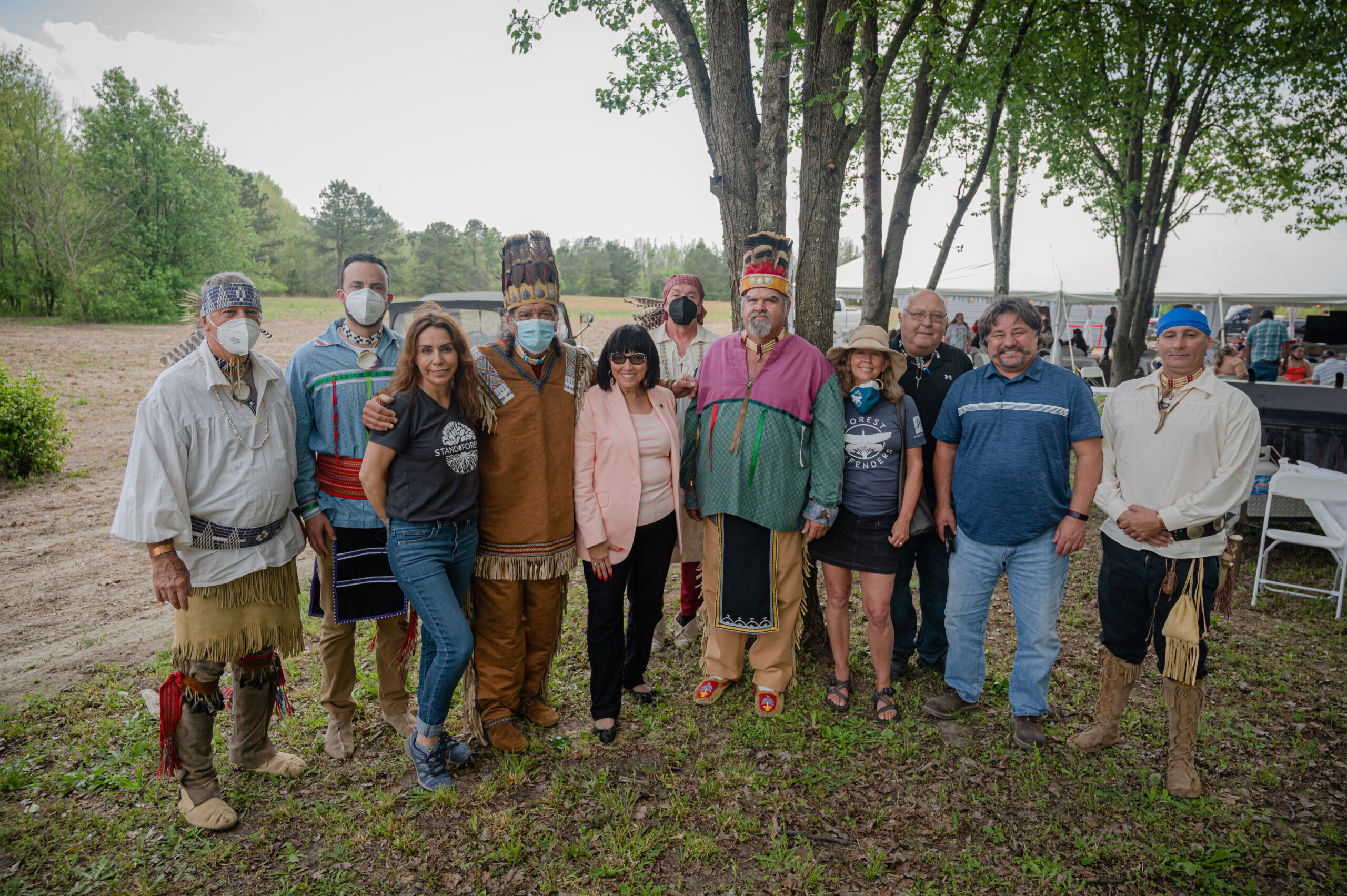
Together, we set forth on a pilot project that will advance a regenerative economy; based on ecological restoration, community protection, equitable partnerships, justice, and a full and fair participatory process. Our shared vision is a solution that can be replicated as a model for other communities impacted by climate change and flooding. We are honored to have had the opportunity to work with the Pee Dee Indian Tribe to fulfill our shared vision.
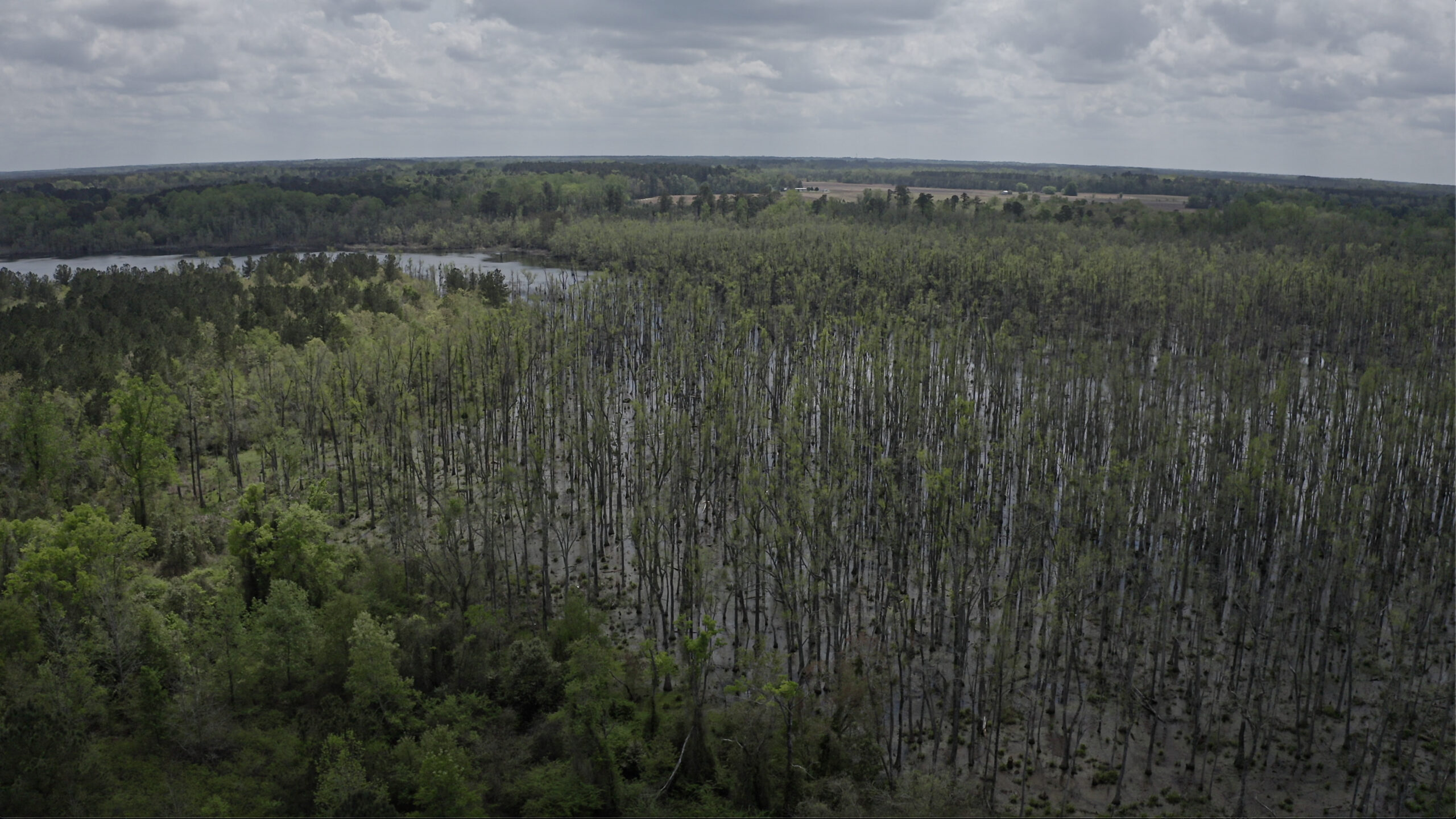
A few years ago, the Pee Dee tribe was gifted a 15-acre tract of land with wetland forests in the Pee Dee watershed. Though developing it would bring income to the tribe, they had no interest in exploiting the land for profit. Instead, they wanted to build a cultural center, plant an organic garden that can provide the tribe with fresh food, and create a place where everyone is welcome to learn about their culture and experience the beauty of Southern wetland forests. “We aren’t interested in trying to make money from the land,” Chief Parr noted. “It’s greed that has gotten us into this mess to begin with.”
“We are trying to do what we do as Indians; we are trying to save the land; our land and our woods are very important to us.”
-Chief Parr, Pee Dee Indian Tribe
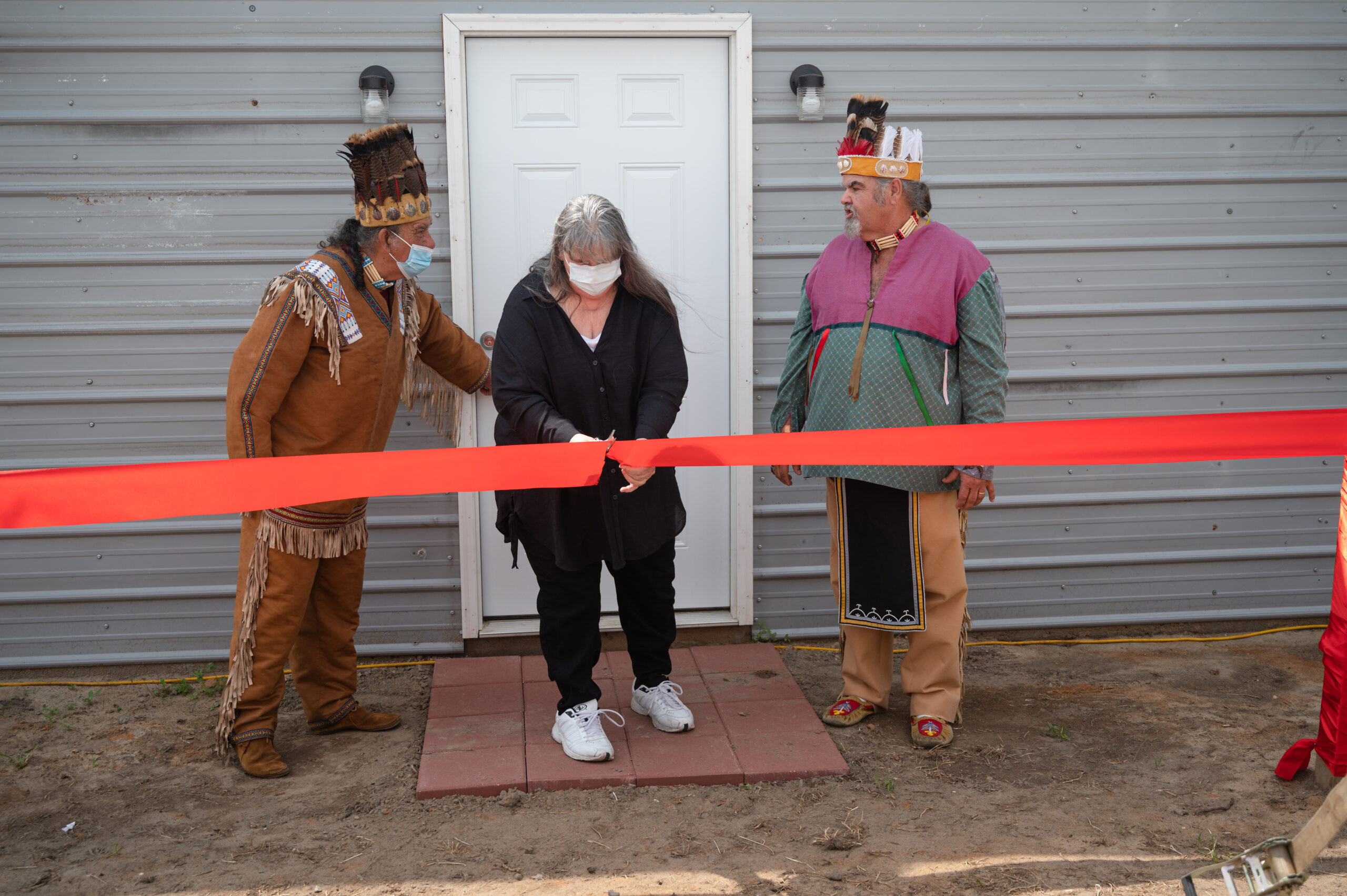
On April 10th, this vision came one step closer to reality. The Pee Dee Indian Tribe held a ribbon-cutting event to announce the opening of the Pee Dee Indian Tribe Educational Center, honoring the integration of culture and nature. The grand opening and ribbon cutting is just the beginning. Phase 2 will include the first steps to build a replica of a living village with two wigwams, a boardwalk, and a platform for camping. Phase 3 will feature the completion of the living village replica with wigwams, a sweat house, a garden, and a ceremony yard that will allow people to interact directly with the wetland forests on the property. This will allow visitors to experience firsthand the culture of the Pee Dee Indian Tribe.
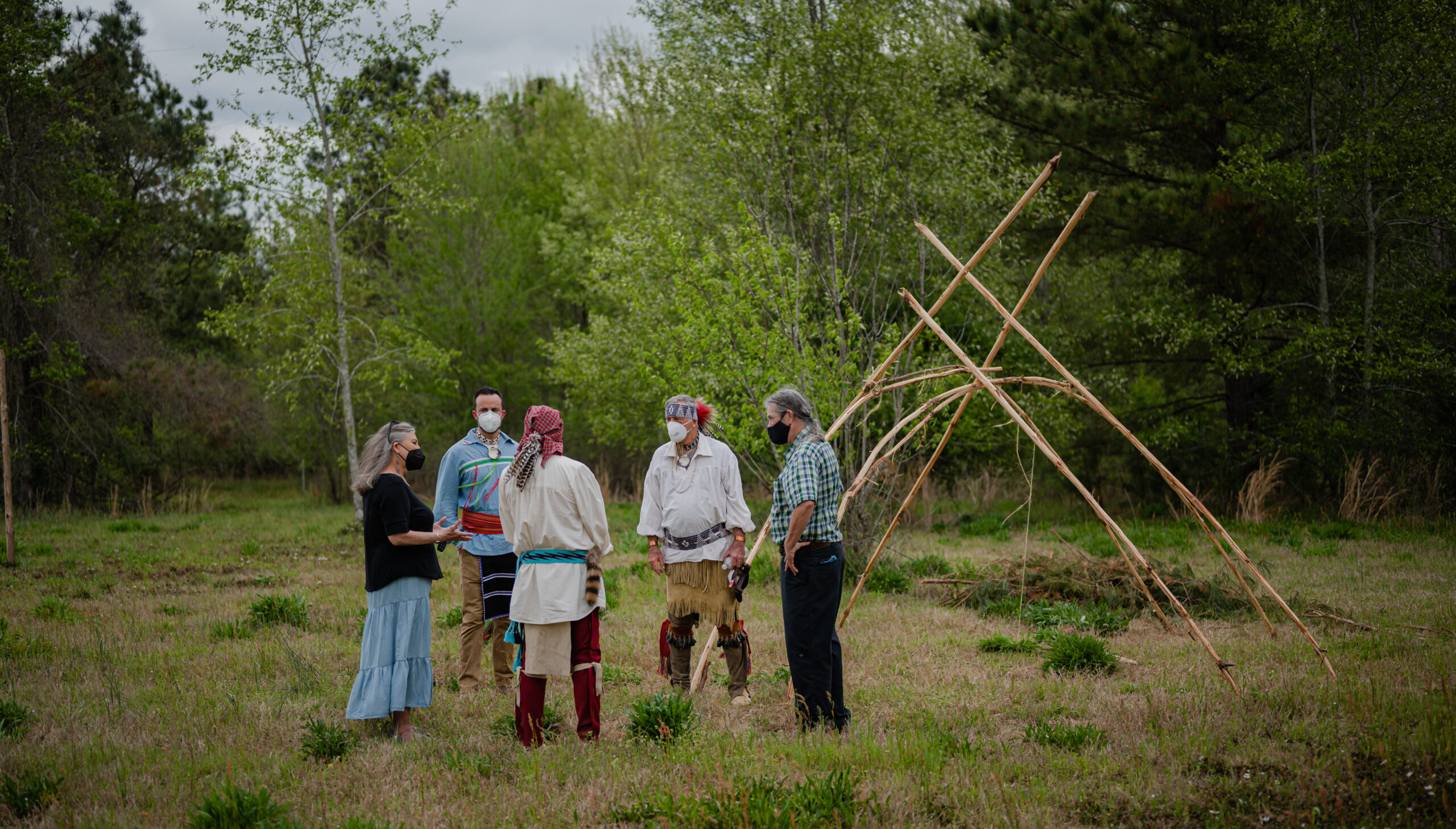
The education center will be a place where people can learn about the culture, history, and language of the Pee Dee Indian Tribe— while simultaneously appreciating the value of preserving wetland forests. This project will draw people to the land – where they can camp, hike, kayak, and experience the beauty, magic, and wonder of wetlands.
The leadership of Chief Parr and the council on this project has been an inspiration to all of us.
Industrial logging intensifies the impacts of climate change, making those communities more vulnerable to heat and flooding due to the constant deforestation (clearcutting) in the surrounding areas. Wetland forest protection and restoration are essential for building climate resiliency and developing new engines of economic development tied to land conservation.
“Our destruction of nature has reached a point that we are out of balance with nature. We have forgotten that humans depend on nature to survive.”
-Danna Smith, Dogwood Alliance
Southern wetland forests are among the most biodiverse forests in the world. They’re home to a wide array of unique plants and animals– such as the Venus flytrap, American black bear, and the Skipper butterfly. According to the World Wildlife Fund, these forests rank among the top ten in North America for reptiles, birds, and tree species diversity and “are some of the most biologically important habitats in North America.”
Investing in protecting and restoring these wetlands gives us hope that we can thrive by exploring new models of regenerative economies and support communities in being more resilient from floods and hurricanes.
To learn more about the ribbon-cutting ceremony, watch the video linked above and check out this article in the Herald-Advocate.
The United States is home to some of the world’s most diverse forests. In the Southern US, our coastal plain is a global biodiversity hotspot. It’s a place where you can find yourself under towering tupelo giants or kayaking among cypress elders. The mature natural stands across the coastal plain of the South are areas where riparian and wetland forests in high-risk flood zones face logging rates estimated to be 4x that of South American rainforests. Southern forests are our nation’s most diverse– but least protected— forests. Protecting these forests is as vital to solving the climate and environmental justice crises as transitioning to clean, renewable energy.
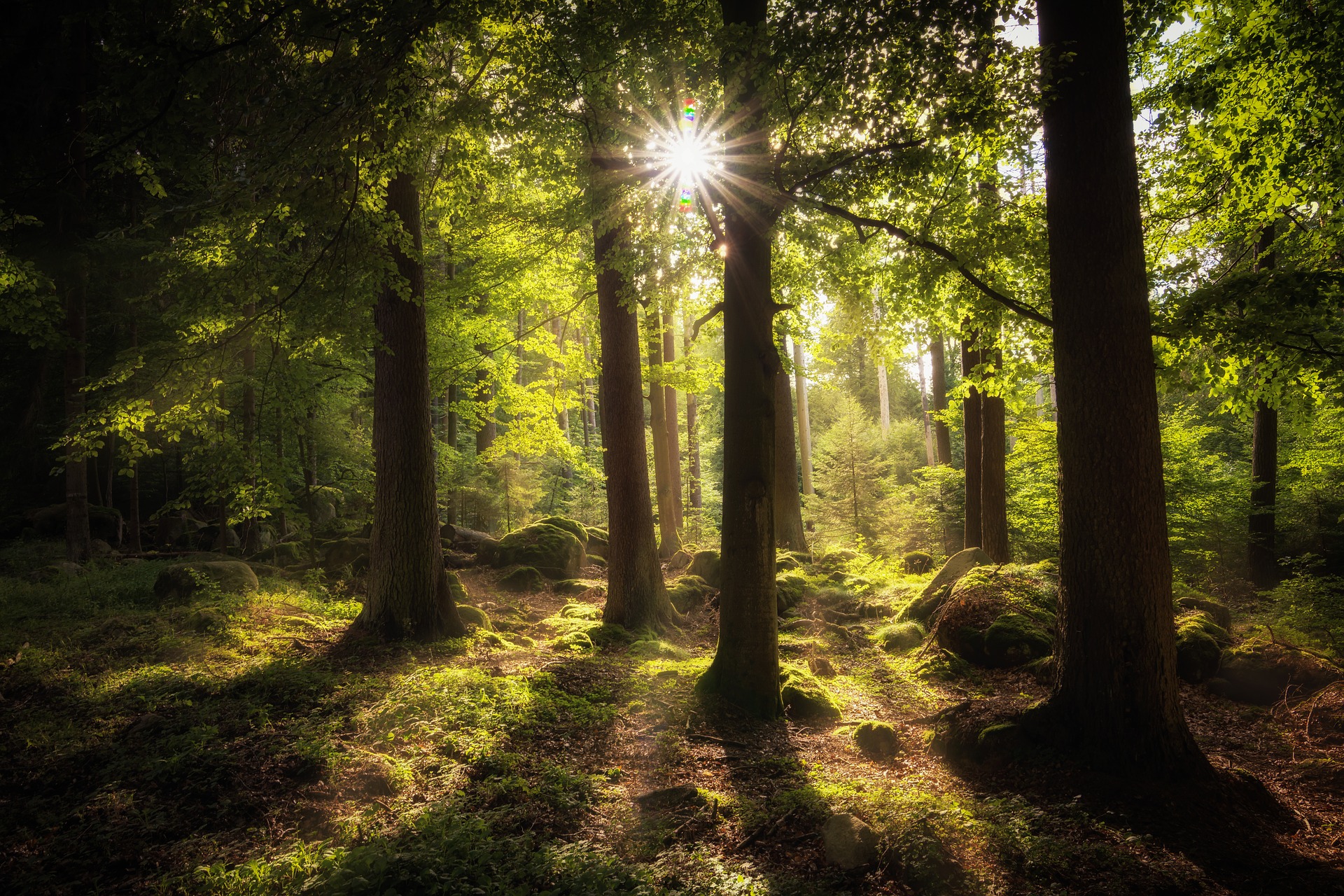
The reasons for protection are obvious:
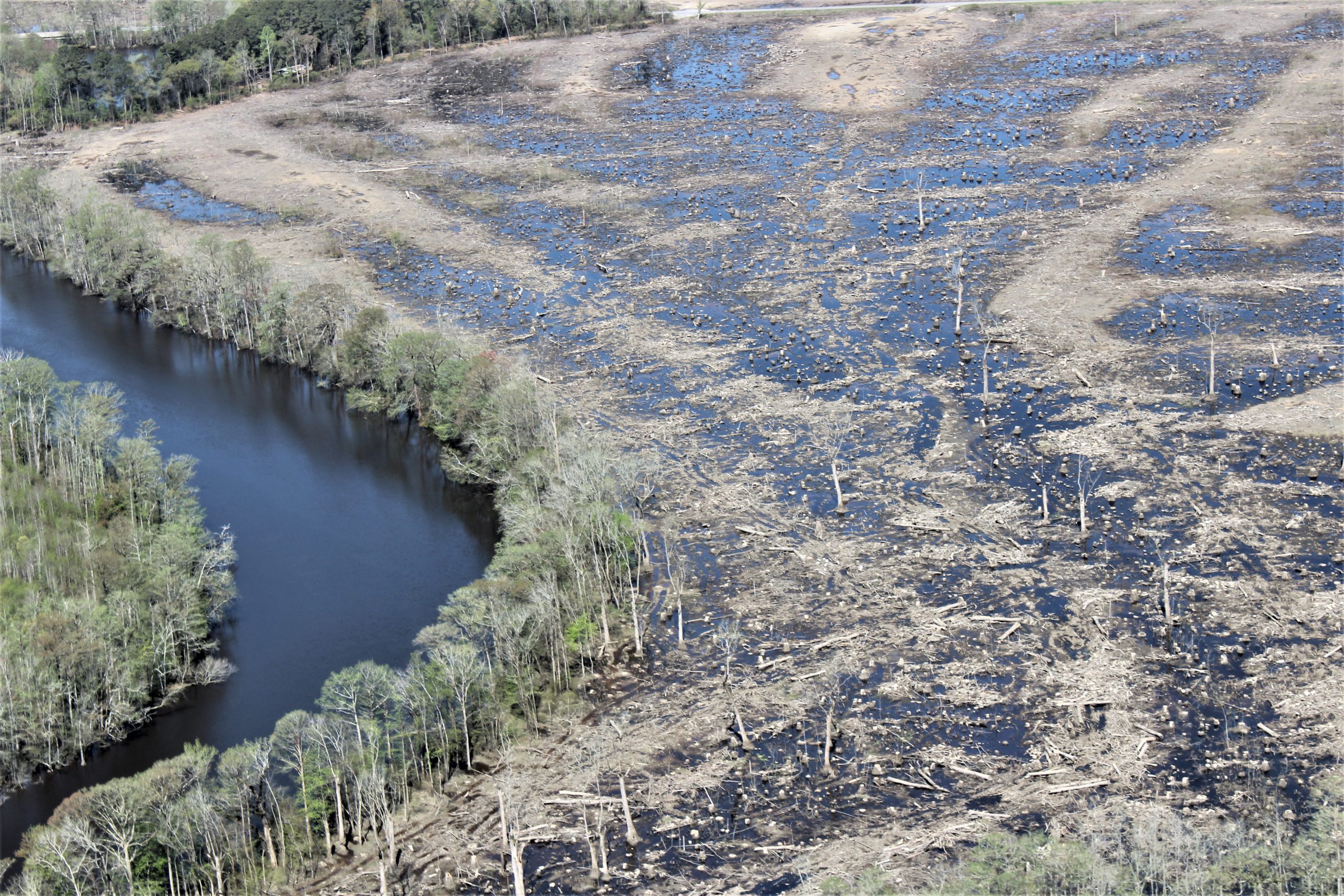
Our forests are primarily looked upon as a wood-supply store. This paradigm completely ignores their life-supporting and climate stabilizing functions. And threats to our forests are accelerating as the use of wood for electricity generation has rapidly increased, despite scientific warnings that substituting coal or gas with wood will accelerate climate change.
Image by Timothy J. Carroll
Keeping forests standing presents a major opportunity for economic development. The US should embrace outdoor recreation, not more wood products. Outdoor recreation represents one of the largest potential avenues for “green” employment in the US South. In the latest stats from the Bureau of Economic Analysis, Outdoor Recreation represented 2.5% of the total value added to the South’s economy. In 2017, this amounted to $152 trillion and accounted for 3.5% of the job market. Outdoor recreation in the South employs 1.8 million people, with an average salary of $39.7k per employee per year. However, when lands are tied up in commercial forest production, there’s less available for growing the outdoor recreation industry.
This has ensured economic returns for large corporations and private landowners at the expense of healthy forests, workers, and communities. The forest products industry is driving massive carbon emissions. They’re degrading forests, polluting the air and water, and compromising vital ecosystem services. The impacts, like so many other dirty and destructive industries, disproportionately harm low-income and communities of color.
President Biden is working to uphold his promises to address climate change and environmental justice. From the Pacific Northwest to the Southeast, communities are calling for a Green New Deal for forests. Together we’ll meet the pressing needs of mitigating the climate crisis, defend communities against its worst impacts, and advance a just transition.
This blog will provide a high-level overview of our message and guide you through the submission process.
On President Biden’s first day in office, he issued an Executive Order to tackle the climate crisis at home and abroad- bringing a renewed focus on environmental and climate justice. Each of the Administration’s agencies must submit their plans to achieve the goals laid out in the recent Executive Order. It’s our opportunity and responsibility to submit feedback on the USDA’s role, considering the Forest Service is a division of the USDA.
The questions around forestry are particularly troubling and advance the industry narrative of wood products as a climate solution — you can see the questions here.
For decades, the USDA and Forest Service have shut out environmental justice and frontline community voices. The people of these communities have been chronically under-resourced, discriminated against, subjected to state-funded police violence, and exposed to toxic pollution through industrial extraction of resources. Even more, the forests and communities of the Southeastern US have become a sacrifice zone, bearing the brunt of the impacts of our nation’s unsustainable wood production and consumption.
Where poverty, unemployment rates, and other indicators of socio-economic stress remain high. Wood production and industrial forestry are not a sound rural economic development strategy. If they were, the economy in these communities would be thriving not struggling.
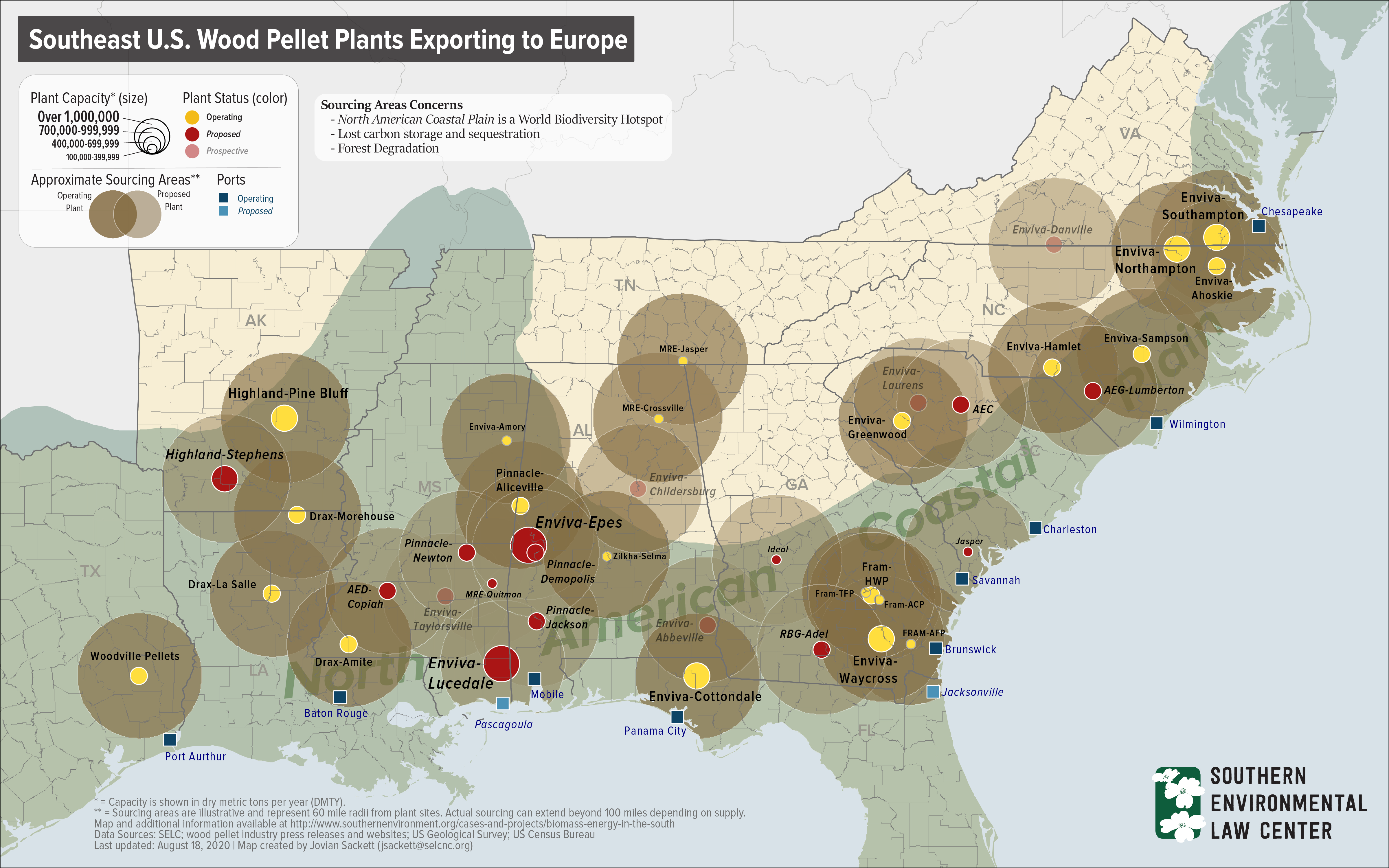
Wood pellet plants are expanding throughout all of the US, polluting our air and clearcutting the best natural tool we have against climate change: our forests. Source: Southern Environmental Law Center
To do so means we have no hope to substantially reduce global greenhouse emissions in accord with the Paris Climate Agreement. Logging is a major driver of climate change. It’s time that we reduce the “productivity” of forests in exchange for reaping more of the climate and carbon benefits they provide. Programs, funding, and financing should be directed towards the sequestration of carbon dioxide over more traditional approaches to forestry management.

This week our hosts Erniko Brown and Kimala Luna from Dogwood Alliance and Elizabeth Lashay from SlayTheMic talk with Tiffany Fant about Black leadership, health over hustle, and showing up authentically.
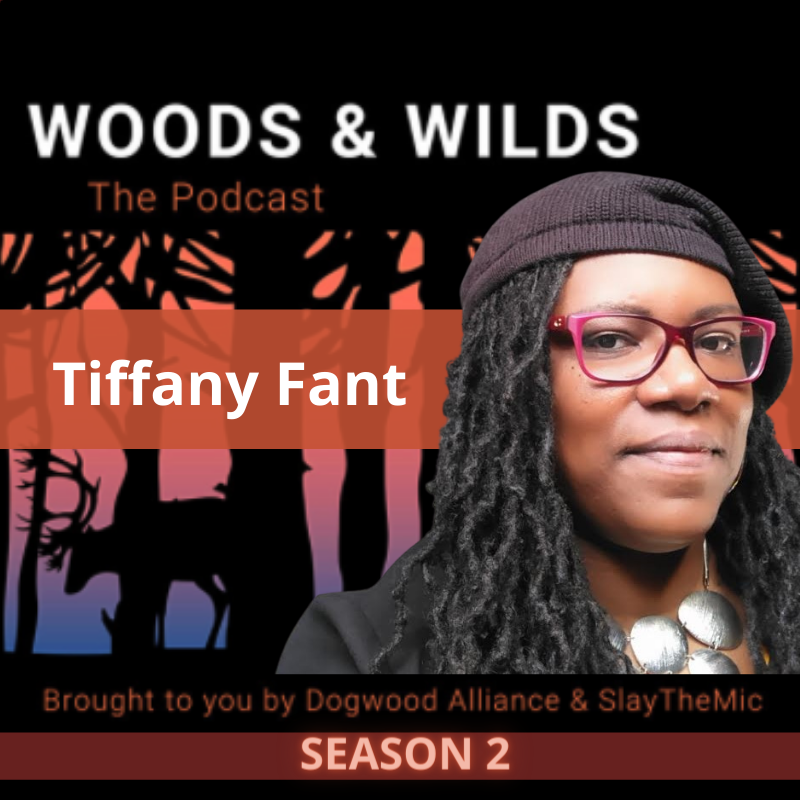
Tiffany Fantdeveloped the Ubuntu Community Development Project, is the Visionary Architect of Sol Nation, is a board member of For the Struggle, Inc, co-founder and board member of University East Little League. Tiffany splits her time between Dogwood Alliance and North Carolina Black-led Organizations and Collectives (NC BLOC), serves on the advisory council for Charlotte’s Strategic Energy Action Plan and is Data and Impact Coordinator for My Brother’s Keeper. Her ultimate goal is to take the information on why injustices and disparities exist to build necessary infrastructures and systems that facilitate sustainable solutions.
Want to listen to more?
Check out the full transcript of our interview with Tiffany Fant!
Elizabeth Lashay: Welcome back to another episode of Woods & Wilds podcast. I’m Elizabeth Lashay from SlayTheMic, I’m joined by my wonderful cohost…
Kimala Luna: I’m Kimala Luna from Dogwood Alliance. And we’re also here with…
Erniko Brown: Erniko Brown from Dogwood Alliance and we have with us today the amazing Tiffany Fant. So Tiffany has been recently named one of the Great 28 of Charlotte, one of the individuals who is [organizing in] Charlotte and outside of that, she has her own nonprofit Qwantum Consulting. She spearheads in Sol Nation, she works with NC BLOC. She’s a visionary architect, one of the main organizers for Black liberation as it relates to Charlotte and down in the South. She is one who is actively disrupting and dismantling the injustices throughout her community. So without further ado, Tiffany Fant.
Tiffany: Wow.
Elizabeth Lashay: Welcome, Tiffany.
Tiffany: Thank you. I need to hire you all for any kind of introduction because clearly-
Elizabeth Lashay: I definitely want to start this conversation off by asking you about the work that you do and actually backing up and saying, when did you fall in love with nature?
Tiffany: When I was a little girl, my grandparents, we had a lot of green space here in Charlotte, we have front yards and backyards and my grandfather used to garden so he had a huge garden. But I would say then because I used to take naps in the front yard. I would put my blanket out in the front yard and go to sleep like four or five years old and walking barefoot, but it was just a country thing to do and help my grandpa compost and be in the garden and help plant. So when I was a little girl, we used to go to the farms to pick fresh vegetables. So I’ve always grew up loving being outside and stuff. And then I think getting into advocacy didn’t happen until college when I went to Appalachian State University and so we talked a lot about treetop removal and green space because our school was expanding. So yeah, so I’ve always had a nice relationship with nature.
Kimala Luna: I want to know because Tiffany, you always come into rooms and you bring such amazing energy and you really hold down the self-care. And I know you’re always doing a million things and I just want to know, what moves you? What drives you? What keeps you going? What gives you life?
Tiffany: Man, well, I think I tell people, I said I want people to be okay because I know what it’s like not to be okay. And I know what it’s like not to be okay and not have anyone help you. So that’s really what moves me is that, that’s the overarching philosophy. And then I particularly work with Black folk and Black community. And I do what my people need. And there are just so many disparities that exist that it keeps me busy, whether it’s learning about economic development, environmental injustice, housing, mental health, mental wellness is like it’s just so much that because I want my people to be okay, my job right now is not going to be done. And self-care, and then throwing in self-care because my philosophy this year is health over hustle, I hustle a lot. But because I spent a week in the hospital last year being septic and then my mental health suffered the last quarter, it was like, yo, I can’t keep going like this. And I saw so many people in my position so this year is health over hustle, but that’s what moves me is I want my people to be okay. And I’m not even talking about pursuing the American dream. I’m just saying being able to have a house that you can afford to pay and have all your needs met and some of the wants, that’s at least bottom line okay and once we get everybody okay, then you don’t go out, go forth and be merry and prosper but right now I just want everybody to be okay. So that’s what moves me, that’s what keeps me going, because it’s always something.
Erniko Brown: That is real. And I definitely understand, especially being in South Carolina and doing the very same work. For me, I would like to know, I know that you’re talking about all the different aspects of the community work that you do, but what definitively made you decide to get into the environmental justice space.
Tiffany: Okay. So that’s a little story because I just show up in my hood being a volunteer, just doing what needed to be done. We know we got issues, we talking about them. So initially here, we have a issue with a rock quarry that’s down the street on Basefield Rd. We have some pollution going on in the creek. We knew these were issues and we were screaming about them. But it really, honestly it’s a friend who introduced me to environmental justice work, Nakisa Glover. That was my introduction into environmental justice work. So she was like, hey, there’s this thing over here because we kept meeting in community. I’m doing the social justice, she over here working, trying to figure out life with this thing and so we kind of collided.
And so I learned, I’m like, oh, you dealing with the same people I’m dealing with over here, same community, same things. And so that was my introduction. And so I learned, and then from there I made it my own because I was already doing social justice work and then here’s this other piece of information that I can now add to the work. I would say that happened about 2017, I would say right after Alton Sterling happened in 2016 so that’s when I started building relationships and then she and I kind of started working about 2017. And when I started really learning and then a little less, I would say two years, I really integrated into what I was originally doing. So that was my introduction. So being able to travel and learn at these big greens, like Greenpeace, did some conferences at the Kaleidoscope, there’s a conference in DC and then some Environmental Justice Network in North Carolina.
So one of my approaches is I always build and learn before action, that’s one of Fred Hampton’s… He said, you got to have political education before you had an action. So one of the things I do is I always learn. So I learned for about a year and then I was able to put this stuff into action to say, now I can say EJ work is my work. I can own it. And it’s not just in relationship to how I was introduced, she brought me to the water, you lead a horse to water, but you can’t make it drink. So led it to the water, I was like, okay, well let me sip all of this. Let me get this. So yeah, so that’s how is by way of introduction. And then with that, we formulated Sol Nation to do some of the EJ work directly in communities, prioritizing Black communities around EJ work. So that was my little pathway in. Thank you for asking that.
Elizabeth Lashay: I’m really excited to learn more about Sol Nation, but before we do that, building and learning, I think going back onto the importance of it, what is something that has really surprised you that you learned over the years? Something that’s really, really shocking.
Tiffany: I think really how some of the conditions of Black folk are tied to EJ issues. How we think sometimes diseases like diabetes or that somehow cancer runs in our family or diabetes when sometimes it’s literally the air and things that are killing us or the water source or the pollution of water. And it just amazed me the frequency of it, the vastness. It’s not this small thing because I just was not aware. And then how industries, I think it’s the industries because I’m a bacon lover. I love bacon. It’s oh, this whole industry is killing my people. And it’s just how sometimes… Though it’s systemic, be clear. I understand that it’s a systemic issue and not a personal responsibility situation, but there’s sometimes our consumer behavior that can drive industry can contribute and it’s… So I think learning that dichotomy is, which do we break?
Do we break the consumer habit or do we break the system because they both feed off each other and where ultimately is there I think that’s the biggest issue, problem I’m trying to solve is like where do you because it’s not all personal responsibility like everybody stopped eating bacon, does that solve the problem or not? So yeah, so I think really just how pervasive the issues are in EJ across communities is. I just didn’t really realize it and then just how we play a part in being able to be a part of the solution and what does that look like.
Elizabeth Lashay: Okay, quotables. I’ve already collected about five quotes from you that are going to go on a t-shirt and all-
Tiffany: Let’s go.
Kimala Luna: Health over hustle for sure.
Tiffany: The truth! Fly true!
Kimala Luna: I want to hear about Sol Nation and maybe a meaningful moment that stands out to you since its formation and then your involvement in it, how it started.
Tiffany: It really started with a conversation around Nakisa trying to figure out how to find a place for her work, consistently, because in organizing, she talks a lot about in organizing where how you’re going from contract to contract. So I was like, why don’t you create a nonprofit so that way you have your own space and build it out to really cover some of the issues that you’re talking about. So this is me early on learning, and this is how one of my titles came about being the visionary architect because I build visions. That’s what I do, like I build a vision. And so from the formation, from my filing paperwork, to building infrastructure, to programmatic development, to really building it to become as we see it today. And that’s where a lot of my learning came from because that’s where I learned a lot about the nonprofit industry complex and the disparities that exist in that and how a Black woman-led environmental organization is the diamond in a haystack or a pen in a haystack or a mite in a haystack, you’re just not finding it.
So that was an eye-opener. It’s like, well, this should be a thing, this isn’t a thing. So just the whole journey around it of building it to be impactful and going past Charlotte, Nakisa always had a national platform, but to be able to grow Sol Nation that it has a national platform is pretty monumental to me know that the work that I done to create the program and impact and talk to funders because the growth that we’ve had in four years, a lot of organizations don’t get to see.
So to be able to say that we could potentially be putting sales on a full-time salary after four years as a woman-led organization, you know what I mean, Black woman-led environmental organizations is huge. A two-person organization to be exact. A lot of people think is… People like, oh, your staff, what staff honey? It’s two of us. What are you talking about right now? And so just the image people think is larger than what it is because of the work, the amount of work, and how we show up in different spaces. And a lot of that probably has to do with my public relations background, creating a story and narrative. And what image do you put out to people, but with that came a lot of responsibility because it’s like, oh, you all can do it. Oh, we can.
So, but yeah, so that’s been Sol Nation’s journey, is really about building and now I’m shifting to more strategic in my personal work through Sol Nation. So now that I’ve learned and built this vehicle, now it’s about integrating the work through Sol Nation that I’ve done to expand and so that’s where Qwantum Consulting is. And then I have a community project that I do here in Charlotte around community development. And then I’m on a board for another nonprofit that does community work. So I can use this vehicle now to really move some of the other work that I have going on. So yeah, the whole journey has been a thing. It’s been a journey. It’s been a whole journey.
Erniko Brown: All of that is super deep. I don’t know about Kimala and Slay, but I can definitely tell you that that was something that we needed to hear. That was something definitely beautiful to enlighten the masses of how to create, to motivate individuals, to just move individuals into action just from your story alone, which brings me to my next question. You talked about a Black-led organization, a Black woman-led organization. Why do you feel it’s important for you to be in the environmental justice space?
Tiffany: Me personally, me personally, Okay, me personally, well, one because I think I bring a boldness that doesn’t exist sometimes. I’m very clear about I work for Black folk. That’s just who I work for and I don’t shy away from that. And it’s not at the exclusion of other people, but at a priority of Black people. So there’s a boldness, I’ll say, well, people like to dance around the issue, I’m not going to dance around. I’m going to cut to the chase. Let’s get uncomfortable. Let me put it in a room, let you all know it’s okay, now we can deal with it because we can’t really get to solutions if people are uncomfortable and holding back. If you don’t agree with it, I need to know you don’t agree with it so we can chop it up and move to some alignment and consensus.
But if you’re holding on to something, then there’s always going to be that barrier. And then also I tell people I think I navigate both worlds well. I grew up in the hoods of Charlotte, if anybody’s familiar with Charlotte, the Westside, and Double Oaks, that’s all the predominantly Black neighborhoods, but I went to all predominantly white schools. So I really know how to navigate both worlds. I still have the trust of my community that if I go into city, county, government, or white spaces that I’m not selling out, or I’m not going to sell out the hood for my benefit. And I can present the information necessary, like I said, Sol Nation, we’re translators, so I can translate to my people and what they want to city-county in a way, in a language, that they’re going to understand that they can move and vice versa. In making the connections that what they’re doing on city or county or state level, it directly affects you even you don’t see it right now, but let me break it down and show you how it affects you. And then also because I think I’m very principled, integrity and being principled matters to me. I tell people, I say people that pursue the American dream of having all this finances and wealth and all, I’m like, no, that’s not my ultimate goal. Money is not my ultimate goal here, if I got enough… Right now, I tell people I’m rich. They like, you rich? I’m like, yeah, I’m rich because a year ago I didn’t have a place to stay and I didn’t have a full-time job. Now I got stable housing and a job and some contract, yo, I’m out here living the life.
So bringing me money right now, that ain’t it. So I’m principled in, you’re not going to be able to buy me. You’re not going to be able to have me sell out my people for my personal gain because I’m a collective. And I think we need to have more of that shifting to what collective responsibility really means and what it looks like. So very principle in how we move. And I’m not here to cause harm to anyone. And the work that I do, I’m not going to allow you to cause harm to anyone, I won’t be part of any of that. And even it’s to my detriment, but to somebody else’s benefit, detriment meaning that, all right, so I might not get $20, I’m going to get $10, all right, I’m good on that. But they got $10 too, okay then, cool. So those are I think the three biggest reasons, my boldness and being principal and then being able to navigate both worlds to be able to stitch something together that looks like a solution. And I’m me though, I’m cool. I tell jokes and stuff, I laugh. I make people feel comfortable and things. And I mean, don’t worry. I got you.
Elizabeth Lashay: Go to joke, is there a go-to joke?
Tiffany: It don’t even need to be jokes. People be like, I’m like, these are not even jokes, this is just life, you know what I mean? I don’t know. I don’t have a set joke because they be cheesy. You know what I mean? Speaking of cheese… See, my jokes be corny. After they give me medicine at the hospital, I had to go hospital and they gave me some Dilaudid, which is like morphine. And so my friend was like, you want something to eat? I was yeah, I’m hungry, I’m hungry. They gave me Dilaudid and some Hydrocodone within two hours so I’m in Mars. And so I was like, I want some Taco Bell. She was like, what do you want? I was like, I want some nacho fries because they mine. She said, shut up. I’m not talking to you. I’m not talking to you. I’m like, I want nacho fries because they’re mine. So my jokes be corny. But you hang around me, I get you laughing though. I thought it was funny. I like it.
Kimala Luna: I’m blown away that Sol Nation is a two-person crew. I am still… I’m shook because I’ve seen you all and I’ve checked out your website and I mean it’s packing so much heat and I had no idea. So-
Tiffany: Yeah. I’m going to toot my horn, I do our website counting the programmatic because my degree is in public relations and marketing and then my minor is in accounting. So I come with a lot of the skillset that can run an organization. But I think we’ve reached capacity of what a two-person looks like now. And I’m also burned out. But yeah, I was like, yeah, we good. I’m getting a whole new stamp. So thank you for that shout out.
Kimala Luna: I mean I think it speaks to the testament of the power of Black women, because I mean, even Liz is founding this radio station and it’s a Black-led media group and Black women-led media group and it’s incredible the work that’s getting done. And I wanted to talk about some of the work you’re doing to develop leadership pathways in environmental justice organizations and I just want to know what’s one thing that you want to tell environmental justice organizations about establishing those leadership pathways and any advice you might have for people interested in pursuing that.
Tiffany: We’re bottom lining two networks, one is a statewide network, which is the Black and green network through NC Black and then we also bottom line a national network called the Black Climate Alignment Network, which are both designated or geared towards Black climate, environmental justice individuals and organizations. And so what we’re doing is bringing the information to people to be able to experience and share, but just creating these networks are necessary because far and few between are Black and environmental justice organizers are leaders. So that’s far and few between so you can go into a space and think you’re the only one, because you’re in a space full of white folk and you’re like, oh, ain’t nobody else doing this work. So the fact that we’re pulling people together and saying, no, we’re out here, we exist. We may be spread out, but we’re here.
So that’s the first thing, getting rid what they call brain drain, we’re infusing putting all the brainpower together. What it looks like is sharing resources, sharing power, and sharing information. Because the organization we built over four years, I tell people, I say, first thing you need to do is get your infrastructure together, in your budget. We want to put that last but let’s have our spending plan together. Let’s have our budget together and what our funding strategy looks like because otherwise, you’re going to be volunteering for your organization and not getting paid. And I could promise you, these volunteer hours are massive so you got to figure that out. So just sharing the experience to be able to say, this is what it takes, unless you have a passion, but then you also have to… In public relations, one of the things we talk about, your message isn’t for everybody. Well, who you want to target? Everybody. That’s not a target.
So helping people understand, what is your niche, who you’re trying to reach? And then giving opportunities like in Sol Nation, we just develop a fellow program where people can come in and learn about EJ work, help us do some of the programming work, take on responsibility, getting messaging out and it’s a paid position. So now you can get come learn and get a couple of dollars to learn about what’s happening. So it’s creating pathways that make sense, that engages people. When you start talking about this EJ work, a lot of these community people are working for free because they were like me. I live here, so I need it to be safe, but what does it look like to elevate them by giving them access to trainings, paid trainings, to help them learn how to advocate, how to lobby, how to understand who makes decisions in their communities so they can be more effective with their work. So I want people to know it’s about sometimes you got to go to versus waiting on somebody to come and say, hey, let me find about EJ organizing.
We didn’t know organizing exists growing up. I didn’t know that was a thing. I didn’t know you could get paid to be organizing. They not sharing it in the hood saying that this is a pathway where you can become an advocate or lobbyists or a organizer for some of the issues that you’re passionate about. So sometimes organizations have to go to community members and make the pitch about why this is important. And then once they get the buy-in, then you still provide a pathway. So sometimes it’s about hand-holding, just because it hasn’t been your experience doesn’t mean it doesn’t need to be done and handholding because everything’s on the internet, you can damn near find there all information on the internet, but still, people don’t know stuff. So what that tell you? So they have to be other avenues in getting people into this work. My little 2 cents, I’m going to keep the three for myself.
Erniko Brown: That was more like 20, 25 cents. So, let’s make sure that the people know that that was definitely information for the masses that hopefully somebody hearing this that’s going to be something to help somebody. And as we talk about leaders and leadership, I know your backstory and I know your grandmother had a great deal of guidance dealing in your life. So aside from your grandmother, and if you care to share a little bit about her, please, by all means, feel free to do so, but outside of your grandmother, who are some of the leaders that inspire you to continue to do the work?
Tiffany: Okay. Okay. Who inspires me? So yeah, Nico Nomi. So my grandma was like 5’2″ spitfire, My grandma was hell. And so my grandmother gave me a lot of the spunk and stuff that I have in boldness and love and energy. So she always inspires me and in her last days, I was able to really take care of her and give her all the love that she had given for so many years. And so my grandma is always a reason why I keep going so hard, so always that. And then also you see I got Marcus Garvey and Tubman and Pan Africans flag on the back that’s some of our leaders of old, like Marcus Garvey just talking around Black liberation and what sovereignty means in the economics and what it means to collectiveness, why he designed that flag where Black Americans need something to organize under and then talk about being a conductor and a leader, some people you just got leave behind.
But as many that want to come, I’m going to get my shoulders right and my back right and we’re going to ride out. And I don’t mind being the lead on that. So some of the traditional civil rights leaders and from history and then another one probably like a historical figure would be Einstein, I’m a huge fan of Albert Einstein, I’m very cerebral and into quantum physics and things and what that means and how that correlates to our real world really into numbers and facts and figures. But then also he was a humanitarian, how some things just didn’t add up. But I think a lot of people don’t understand that, how things didn’t add up in his world about how racism and the lack of humanity that existed. So and then current leaders, anybody on the ground that’s doing work. Any of the young people showing up to protest, that put their bodies on the line. When you look at the collective of a movement for Black lives that’s trying to organize people.
I’m really inspired by the people, the people that show up people like Erniko, because Erniko and I are friends. But someone like Erniko who’s consuming the knowledge and taking up space in traditional government areas that say, hey, let me hold this page right quick and do what I need to do. So those are the people that inspire me to keep going. It’s people around me. I can appreciate figure heads and people that make the news, but what really inspires me are the people who take responsibility for their issues and try to figure it out even if they don’t have the right words, all the information, but it’s like, I’m here, I’m trying to learn. And you’re going to see me. So all of them, all of them. That’s that who, yeah. That’s who.
Elizabeth Lashay: Well, I know we’re not even close to the end of this conversation, but thank you because you are inspiring me at this moment and I am just truly inspired by the work that you do and continue to do and how you show up. Today, I’m always privileged to be in a room full of young adults, youth leaders, those who are trying to figure out how to hold space and how do they do that. And our topic today was age-ism. And so to talk about when people discredit you based upon your age, and I just want to hold space and ask you, what is your advice, or what would have been your advice to your younger self when showing up in spaces that you’re trying to create a better place.
Tiffany: Oh, my younger self. Girl, chill! Chill out for a minute, kid. I think for me because I believe in the collective and I believe everyone has space and a purpose. I believe that young people need to have the wisdom of our elders and those in the middle are to serve as the connectors of translating that message for both that there is no leaving out, that we cannot have a world where there are no young people. We can’t have a world where there are no elders because it’s a privilege to get old. Everybody doesn’t get to do it. And like the past two weeks, we had a community elder that was 59 that passed, and then we had a young man who ran for mayor that was 22 that passed. So it’s like we both are needed and both are being taken out. So it’s a privilege to be able to become an elder and have lived experience that I haven’t had and it’s a privilege to have the energy and spunk and sometimes the lack of fear because there is an unknowing about what lies on the other side that comes with youth that can lead to innovation and push the envelope and disrupt systems that exist.
And I think for us that fall kind of in the middle, it’s like you still have some left in your youth and your swag but your knees and your shoulders telling you on your way to an elder. So you’re going to be like, you’re not going to be able to do that all day. But I’m not quite need to sit down just yet so we can serve as that bridge to be able to bring them together. So everybody needs to be in a room, everybody needs to be in the room and make it personal. Hopefully most people got good relationships with somebody from youth to elder, think about your grandma. So you want your grandma not included in this or you want your niece not included in this or your kids not included? When you make it personal, I think you can have a different outlook, but my advice is definitely to understand that we need the youth, the vigor of the youth and wisdom of our elders and the patience of the bridge. I call them gap dwellers to make solution happened because I say solutions happen at the intersection. Solution dwells at the intersection. So at the intersection of youth elder and our middle age, that’s where we’re going to find solution to all issues that may have and this is just one thing that we have to be very clear on.
Kimala Luna: That’s beautiful. I appreciate that you brought in that you bring boldness to the movement because I really view you as a bold leader, but I know that that’s an evolution. You didn’t just show up like that. And I just want to know about your journey stepping into your own leadership and talking to that same group of kids, what advice do you have to them? Because leadership looks different for everyone. But what advice do you have to those young kids about finding their own sense of leadership.
Tiffany: Get to know yourself because you can lead from in front, you can lead from behind, but your leadership is going to come from knowing who you are and being confident in it. Whether you’re the extroverted outspoken athlete, or if you’re the quiet mathematician or whether you’re the eccentric artist musician, be confident in who you are and don’t align it to what societal norms are, align it to what your principles are and that takes work. Because there are so many things that are trying to shape who we are whether it’s through commercial or messaging, advertising, parents, religion. There’s so many things that are saying who we are that you kind of have to throw your bowls up to say, hold please, I like that piece. I like that piece. I’ll take this. I’ll take that. Let me kick that off and let me tweak that to be who you are. And that’s where once you get that confidence in who you are, then you can naturally show up as yourself because showing up as yourself is leadership enough. To be authentically who you are, to walk into a room and share who you are from your perspective is leadership.
It’s not about occupying a position. It’s not about being the most popular one, but it’s about holding what we call holding your square. Hold your square on who you are and whenever you go in, take that square with you and say, here I am and so people can authentically engage and that’s leadership. I think people too often associate it with a position or influence, and those are necessary to amplify your message. But it’s not necessarily to be called a leader. So once we expand what we consider to be a leader from the student in the classroom, to the person in community who is sharing information about what’s happening to executive directors or elected officials, those are all leaders. And you need to authentically show up as yourself. So that’s what I would’ve told my younger self because I was from the hood and I went to these predominantly white schools that I sometimes conflicted on who I needed to appear to be because… I’ll never forget, seventh grade, I wear glasses and I forgot what the conversation was and I was like yeah, I’m getting new glasses, but they putting the medicine in it and I don’t know if you’re old school, old school Black folk used to say medicine in the glasses. So I grew up around my grandma so I was like, medicine.
This little white kid was like, medicine? What’s medicine? And he bust out laughing. And I felt so embarrassed. And he was like, oh, you mean the prescription? No, I mean medicine. But being comfortable with the fact that, that was a colloquialism that’s used in the Black community and being okay with that. Yeah, medicine, we say medicine in the hood, but prescription if that makes you feel better. Right now, I’m good. Code-switching is not a thing for me. I had to do a lot of code-switching growing up. So it made me feel a little inauthentic. And so now I say, yo, be you. I have a good grasp on the King’s English. They gave me degrees. So clearly I can do it. But now I’m trying to give credibility to all my people in the hood that you don’t think [about].
So I’m not getting ready to come in here and clean up and straighten my tie anymore because I need you to hear the people on the street when they speak as well. And if I’m going to be the one to give them credence or credibility, then let me do that because I will actually do it now. I can throw bows now, you can test me if you want to, do it at your convenience though. So that’s what I would tell myself, authentically be yourself and learn who that is on your own terms and at your own principles and then show up in the world as that person and hold your square. Hold your square.
Erniko Brown: So you have been dropping gems this entire podcast. Kimala and Slay have been over here shaking their heads, going this, snapping fingers like you really, you really, you really have laid it all on the line for us today. And I definitely appreciate you for being here. And I have one last question and maybe they have one as well. You were just speaking to leadership and how it can be tiresome and showing up as your authentic self and holding that square and now all of the code switching and everything. So with those things, I want to know with being tiresome in the work, how does being outside in nature center you back into the work that you do?
Tiffany: I get energy from the sun. I’ve had a rough week. And today in Charlotte, the sky is blue, the sun was out, light breeze. I was like, I have to get outside because it gives me energy. The sun I feel it activates this melanin in a different way to live my experience. I know scientifically that when you’re walking out barefoot in the grass and grounding on negative ions so literally it changes my energy to be in nature and especially the sun in clear skies. And then also just to look at the wonder that exists, when I’m tired and trying to figure it all out to realize that literally this grass knows how to grow and be green and it does it naturally.
And just looking at some of how nature adapts to what’s thrown at it. I have a lemon tree in here that wasn’t thriving. And so I had to get a grow light because it was leaning there. It was on its last leg leaning and I got the grow light and it straightened up starting to spread out and grow. Nature can teach us. So that when we’re trying to figure it out, we can go in nature and find a solution. And I think that’s why I love the book Emergent Strategy, Adrienne Maree Brown because it talks about the correlation of nature in the movement talking about how the oak trees in New Orleans about how they create this underground root system that connects them, which is why those are the trees still standing.
So learning so okay, what does it look like to connect movements with environmental movement, the social movement with the incarceration movement. So we create this network underground. So now we have a solid movement that is like, if I’m talking about environment, I’m talking about the incarceration. I’m also talking about housing because the movements are now and we understand the intersections so it helps give me solution. It helps physically make me better the more I learn and it teaches me to nurture. So I got this lemon tree that’s struggling so I’m buying the little neem oil and I bought the grow light and I’m watering it and turning it around. I put another little plant beside it just in case it needed a buddy, it’s just teaching me to nurture these difficult situations that we find in movement work.
So I was like let me get this green space and nurture these plants. And some doesn’t take as much as the other. Like, I got an aloe, out here winning in life. My aloe out here winning and growing. Lemon tree needs a little bit more energy and my time. So it gives me so much, just personally and just how my mind works and learning from nature and how to apply it too, because one thing about mother nature, it’s going to course correct. It’s going to course correct, period. If that means wiping out humanity, taking a rest, and replenishing herself, mother nature is going to course correct. Period. We in the movement trying to preserve ourselves, be clear, that’s a whole another perspective. We in this movement, I always try to say to earth, no earth is going to be all right. Earth going to be like, look, you know what? I got something for all of y’all, Earth is going to be all right. We trying to preserve ourselves. So we can be around here for the next 20, 30 years, 40 years let’s be clear. So I love that the fact that mother nature always course correct and teaches. Always is teaching us, if we’re willing to go out and listen and look and learn.
Elizabeth Lashay: Ooh, I don’t know… Look, I’m just a little tad bit overwhelmed. This is just amazing. Again, I think we’re up to maybe 102 t-shirt quotes or so but-
Tiffany: Let’s go, let’s go, Slay, I’m with it, let’s go.
Elizabeth Lashay: I have a question just because this is a partnership with Dogwood Alliance and Slay the Mic, and Slay the Mic is a hip-hop and R&B radio show. What music do you listen to that really nourishes your soul? What do you listen to?
Tiffany: You didn’t tell me about the music component, kid. I love music. So it really depends on my mood to be clear. And it also is to the point that how I listen to it. So I had to buy a record player because sometimes I want to hear the style. Right now I got literally, so just to be clear, this is the history of oldest reading. So I got a bunch of LPs because sometimes I want to hear the static and go through the motion of putting the arm down and really have an immersive experience with the music. So I listen to hip-hop, old school. I listen to R&B. I love jazz, gospel, I like funk. I like country.Like… I love music. Growing up, I was really into heavy, heavy metal because I love a lead guitar. And I like a Neo-soul bass a lot. I love music. We can talk about this all day. Music saved my life. So I’m the point where sometimes I have to have a fully immersive experience. In my office, I have the speaker system plus the soundbar. Then I have a soundbar in my living room with the record player, and this is only 700 square feet you all.
So I don’t need this much sound, but it’s look, it’s going to take up everything. So depending on my mood and what I need is the music that I choose. But you’ll find me listening mostly to R&B, Neo-soul on any given day, trap music… Last week I was like, [inaudible 00:45:56] it all depends, but I needed to get some work done. So I was like, let’s turn up. So yeah, music is life. That universal language that we can really talk to everybody, yeah, let’s go.
Kimala Luna: Oh my gosh. This has been incredible, Tiffany. I don’t think any of us expected all of this amazing stuff to happen today. I mean, we had an idea, but you really…We’re going to be thinking about it for a while. We’ve got a t-shirt business going. So I’m going to ask you to take us on Tiffany, I know you’re all about love. You definitely bring it to the table every time I see you. So what’s something you want to send our listeners home with.
Tiffany: What I want to send you all home with? Man, just vibrate higher, vibrate higher, be your best self. Wake up every day trying to be better than who you were the day before. Not in comparison to the next person, not in comparison to standards, but who you can be, whether it’s learn a little bit more about someone else’s… I think once we bring our best selves to the table then that’s where we can begin movement. And then also understanding that bringing your best self is also being honest that you might just be tired. Showing up authentically might be saying, I’m tired and I need a break or I’m tired and I need some support. I’m tired and I need you. So that’s another part of authenticity that as bold and strong as anyone can be, there’s always the other side, must show up and vibrate as a high itself to always consider others more than ourself. And if we all do that, then we’ll never be without, there’d always be someone there. If we always consider others more than ourselves, we’ll always have someone there for us. That’s all I got. That’s all I got.
Kimala Luna: Oh, that’s all. That was incredible.
Tiffany: I appreciate it. Thank you. Just me, y’all little old Black girl from Charlotte trying to do the right thing.
Elizabeth Lashay: We want to continue to watch you on your journey and find out more about what you’re doing. Could you share where we can find you?
Tiffany: Sure. Well, I’m on Facebook. So there is that, go to community development project. You can follow any of Sol Nation’s handles, Sol Nation Inc on Instagram, Facebook and Twitter. I also do work with, For The Struggle inc.com same thing on social media. So those are the major ways to follow the work, me personally, oh my personal Instagram is like Tee Fant30, T-E-E Fant three zero on Instagram. I don’t do nothing on Twitter. I got an account, you all can follow if you want to, ain’t nothing on there. And then on Facebook Tiffany Tfant fan. I mean okay, I’m pretty bad at that, you know what I mean? But so follow me on Facebook or Instagram. Holla at me, holla at me. I’m going to get better. Oh, I’m on LinkedIn as well. It’s a trashy profile, but I’m on LinkedIn under Tiffany Fant. It’s trashy, I’m working on it. It ain’t that great.
Erniko Brown: So let me be the first to just let you know that we have appreciated you today, your presence as a Black woman, your presence in giving Black love Black excellence, Black exuberating knowledge for individuals across the waves. We just appreciate everything that you’ve given, how you move, how you continue to move and how you bring community into the work that you’re doing. So Tiffany, hey, we love you over here where it’s free and we appreciate you.
Tiffany: Hey free 99, I appreciate you all. Thank you for having me. This was great energy. I appreciate you all.
Kimala Luna: Thank you.
Elizabeth Lashay: Thank you.
FOR IMMEDIATE RELEASE – March 10, 2021
Media contact: Carina Daniels, [email protected], 510-847-1617
FORT LAUDERDALE, Fla.– In the wake of the fatal winter storm that left millions in the South without power and water, more than 160 organizations have endorsed the new Southern Communities for a Green New Deal (SC4GND) policy platform. The platform, spearheaded by Southeast Climate & Energy Network, Dogwood Alliance, Kingdom Living Temple, the Gulf Coast Center for Law & Policy, and GASP, builds on the Green New Deal to center and serve low-income communities and communities of color on the frontlines of the climate crisis in the South.
“This is a Green New Deal designed specifically for the American South,” said Alex Easdale, the executive director of the Southeast Climate & Energy Network. “We built consensus among frontline climate leaders, and used a bottom-up and community-based approach to developing our shared vision for how to achieve a safer, healthier, and more equitable future in the South.”
Over 100 leaders and advocates from Alabama, Arkansas, Florida, Georgia, Kentucky, Louisiana, Mississippi, North Carolina, South Carolina, Tennessee, Texas, Virginia, and West Virginia worked for months to develop the Southern Communities for a Green New Deal platform. Now, the endorsing organizations will use the platform to shape climate and green jobs policies at all levels of government.
“From the fossil fuel industry to industrial agriculture and forestry, it’s time for a new vision for the Southern economy,” said Danna Smith, executive director of Dogwood Alliance. “This platform seeks to help lawmakers understand the extent of the problems Southern communities face, and the solutions that will work in the places we call home.”
The South is experiencing more climate impacts than any other region of the US. It is home to five of the top 10 largest carbon emitters in the country, and is experiencing forest destruction from industrial logging at four times the rate of South American rainforests.
Frontline communities – whose residents tend to be Indigenous, Black, and LatinX – suffer disproportionately from extreme weather events, unreliable access to safe drinking water, and unhealthy levels of air pollution. More than half of the Black population of the U.S. lives in the South. Florida and Texas are among the states with the highest Hispanic/LatinX populations, and Hispanic people make up over 16% percent of the region’s population.
“Once again, the South is rising to tackle one of our nation’s greatest challenges and achieve transformative economic and social change,” said the Reverend Leo Woodberry of Florence, SC, who introduced the platform during a virtual Congressional briefing yesterday.
Last Friday, Rev. Woodberry cut the ribbon on four SOURCE® Hydropanels at his predominantly Black church. The panels use sunlight and air to create safe, clean drinking water — something too many Southern frontline communities don’t have enough of.
“As we saw during February’s severe winter storm in the South, when disaster strikes, electric and water services tend to fail in communities of color and low-income communities first, and take longer to fix,” said Woodberry. “These hydropanels offer communities their own climate-resilient and endlessly renewable supply of safe, clean drinking water, totally independent of any aging pipes or unreliable power sources. They are an example of the types of community-led solutions we plan to push for as part of our Southern Communities for a Green New Deal agenda.”
It features a list of policy demands related to energy, water, forest and land, the economy and labor, and democracy. These policy demands reflect core values shared by the 160+ groups that have signed on: committing to Indigenous sovereignty, following frontline leadership, being inclusive, rejecting the privatization of natural resources, investing in transformative solutions that match the urgency and severity of this crisis, and eliminating sacrifice zones, which disproportionately bear the environmental and health burdens of an extractive and polluting economy, and which are generally found in poorer communities and communities of color.
“We were proud to facilitate more than 100 leaders from across the South in the development of a set of core values based on the South’s unique need for sustainable development. This work acknowledged the systemic divestment and over-extraction in our region, as well as our status as a major economic engine, our unique biodiversity and our history of resistance,” said Colette Pichon Battle of the Gulf Coast Center for Law & Policy, lead facilitator and signee of the SC4GND platform, and regional anchor of Gulf South for a Green New Deal initiative.
At the same time, there is no one-size-fits-all approach when it comes to addressing the climate crisis and growing the economy so that it works for all people, regardless of race, gender, or zip code.
The SC4GND platform’s key policy demands include:
###
North Carolina has 19 million acres of forest, which store nearly 1.3 trillion tons of carbon. While this sounds impressive, logging destroys forest carbon in North Carolina each year. Logging is third in the state’s carbon emissions, behind electricity and transportation. Logging degrades our carbon stores, forest quality, and resilience to future natural disasters. Yet, the true costs of logging hide in forest “net growth” – that a forest is growing more than it’s cut.
Need all the details? We’ve put together a two-part report (Part 1: Forest Carbon Accounting; Part 2: Climate Impacts and Smart Solutions). But if you’re looking for an overview — keep reading! We’ve got all the info right here.
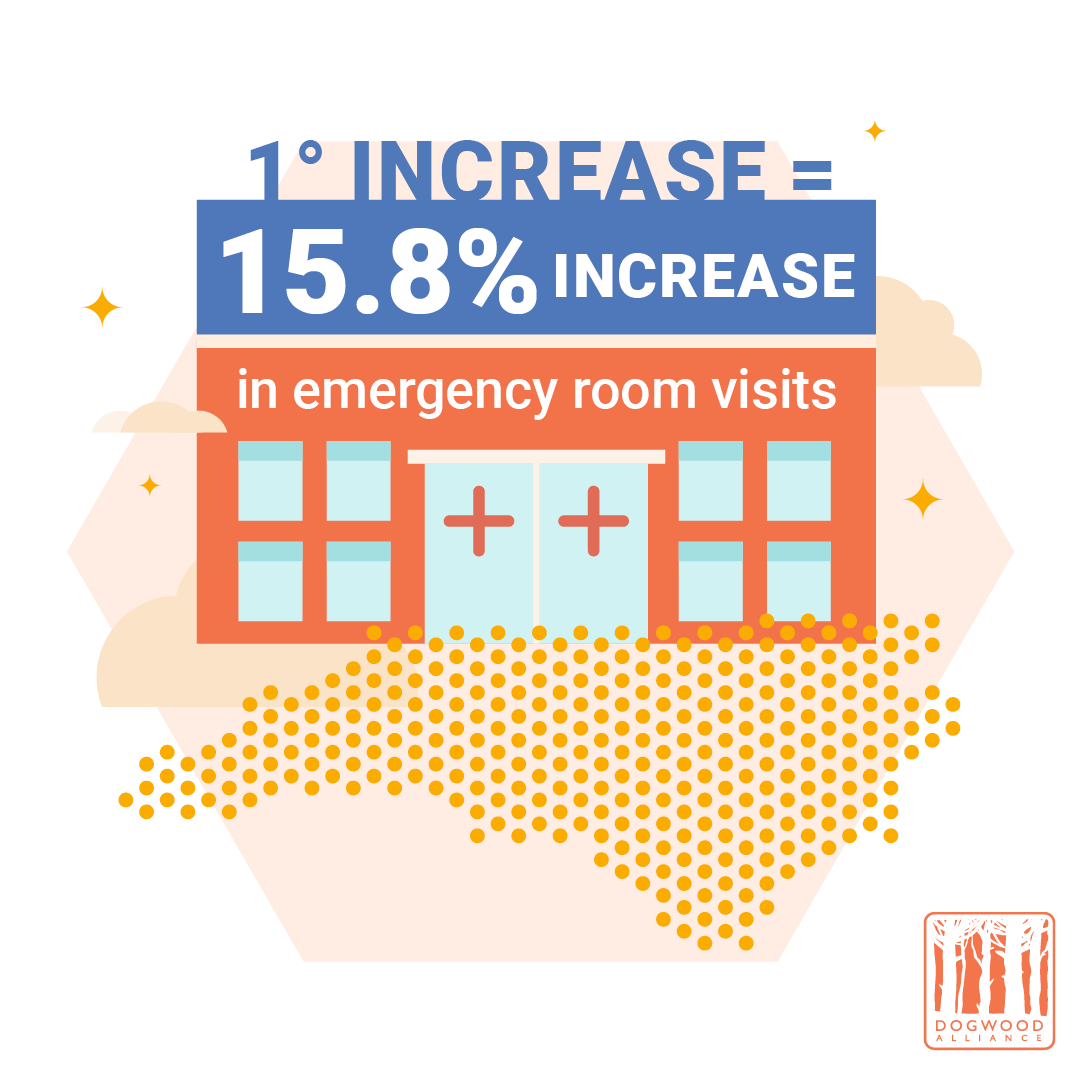
Global warming has already brought profound changes to North Carolina. Projected changes include heat stress, flooding, droughts, water shortages, pollution, wildfires, natural disasters, invasive species, disease, and loss of biodiversity. Climate change will make our communities less resilient to bumps in the road. Hurricanes will get stronger, droughts will get longer, and we will experience new pests and diseases.
By 2100, the average temperature will increase by 2°F to 10°F compared to the average temperature for 1996–2015. In North Carolina, there are fifteen additional visits to the emergency room for every degree increase in temperature above 98°F. These extra ER visits are from seniors, those without air conditioning, and those who work outdoors.
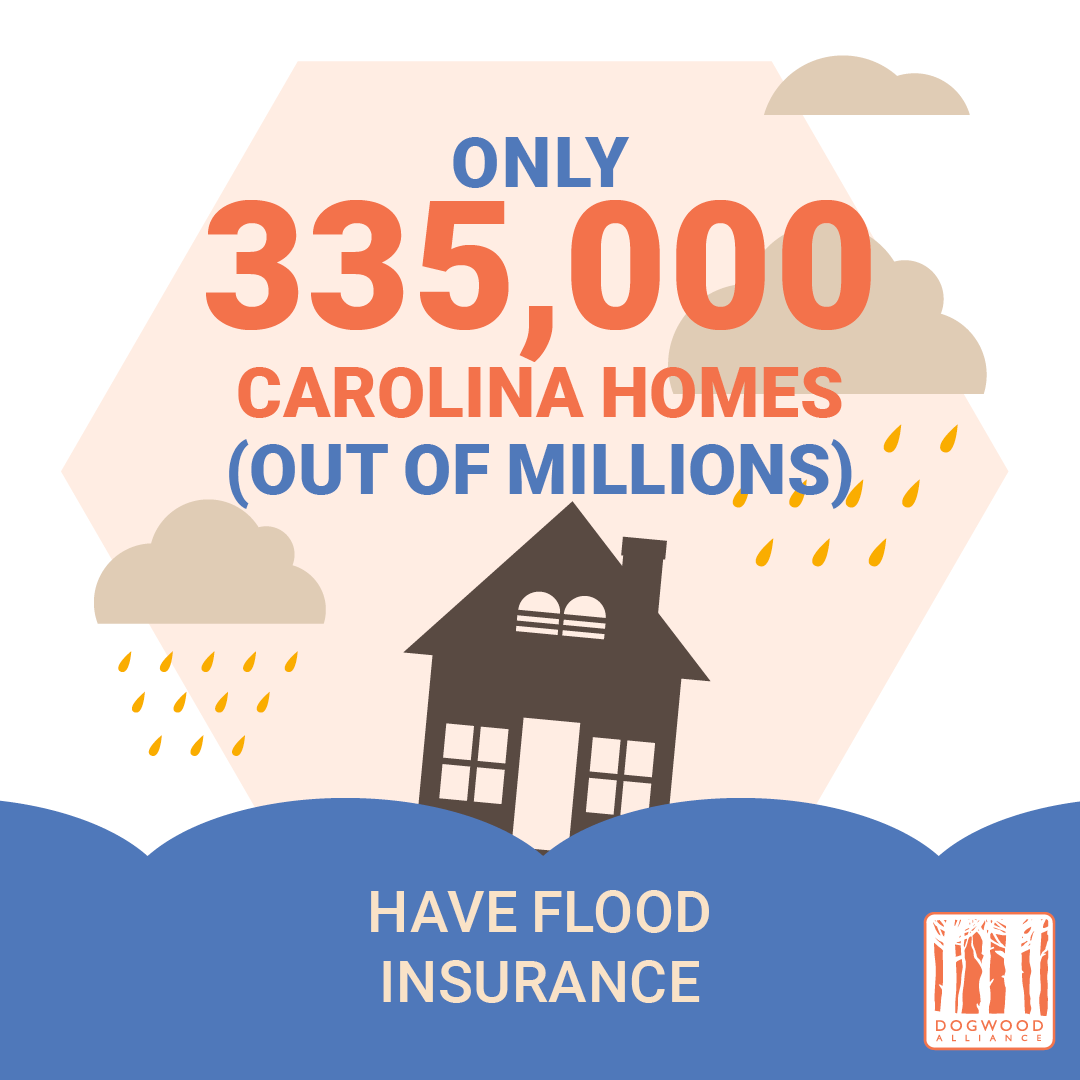
Flooding is also a serious concern for North Carolinians. Millions of Carolina homes may flood from storm surges and sea level rise. A New York Times report found that only 335,000 homes in the Carolinas had flood insurance.
Standing natural forests can help with the issues that climate change brings. They can moderate regional temperatures and reduce the chance of severe flooding. Forests also absorb carbon dioxide and other pollutants from the atmosphere. Almost 19 million acres of North Carolina forests provide many “ecosystem services.” Ecosystem services are what forests do for us: like filtering water, cleaning air, and more.
Unfortunately, most NC forests are at risk of being clearcut to feed the need for cheap timber and pulp. North Carolina is the epicenter of wood pellet production in the United States. Wood pellet companies ship wood pellets from NC overseas to burn in the name of “renewable” energy. Logging in NC also feeds the other major forest product industries: paper (pulp) and timber.
The forest products industry logs 200,000 acres of forests in North Carolina each year. The wood pellet industry alone clearcuts 60,000 acres of NC forests per year — about 164 acres per day. North Carolina lost about 70,000 acres of forests from 2015-2018. Logging is so frequent in North Carolina that, in any given year, around 8% of the state’s forests are in a “carbon sequestration dead zone”. These forests become carbon emitters for up to 13 years after being clearcut.
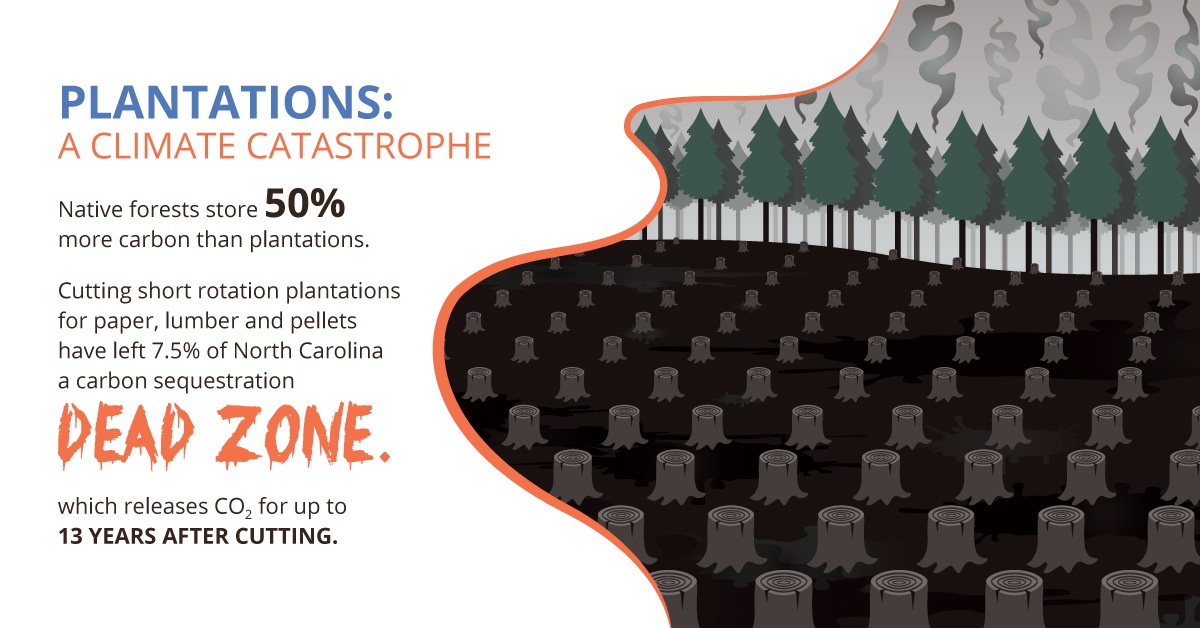
With so much logging in North Carolina, it’s no surprise that emissions from logging rank third in the state. So, why have you never heard about this industry’s dirty emissions? It’s because governments count carbon emissions from logging in the “land use” ledger. This is separate from electricity and transportation. This must change.
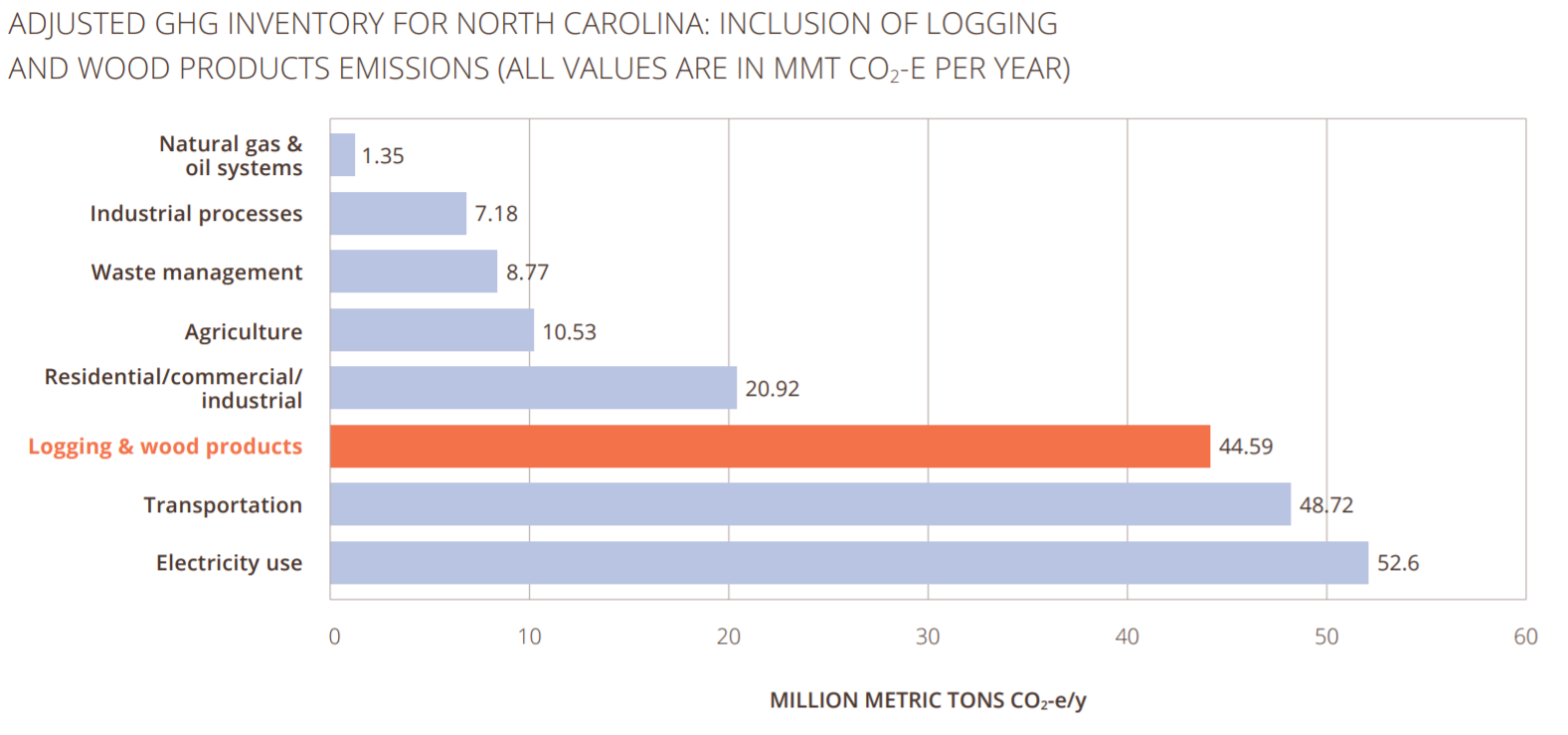
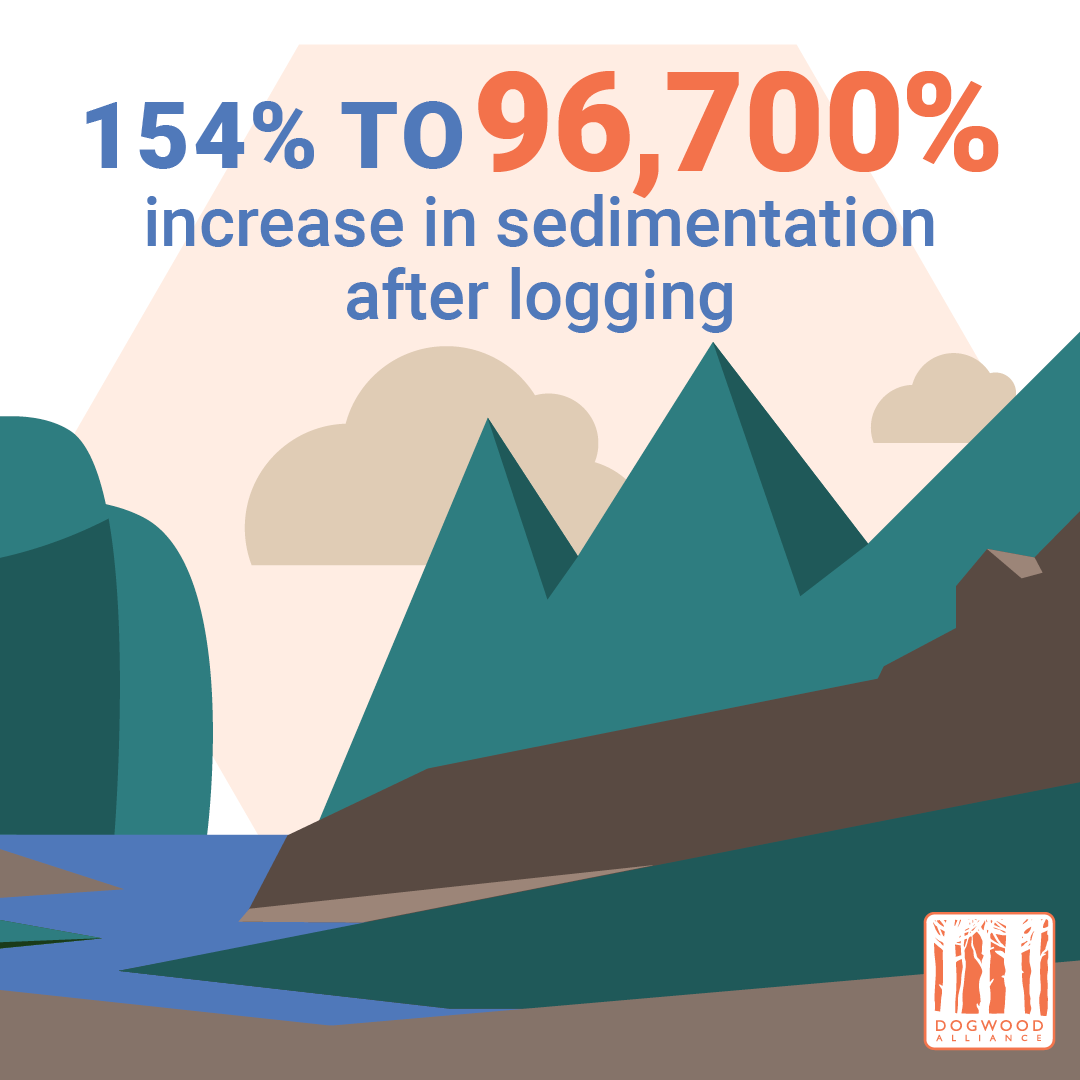
A forest isn’t guaranteed to grow back when it’s logged. It can take decades, even centuries, to make up for what a forest loses in a clearcut. Logging uses heavy machinery that compresses the soil. Compressed soil doesn’t clean or absorb water the way that it should. It’s like squeezing a sponge and expecting it to absorb – not spit out – water.
Logging also causes soils to break apart at the edges. When rain happens, it can pick up small particles which end up in rivers. This is “sedimentation” — and logging increases the amount of sedimentation in nearby waterways.
In a natural system, forests follow something called gap dynamics. Mature forests have closed canopies — the sky is all covered by leaves. If a tree falls, it creates a “gap” in the canopy — a place where direct sunlight can get through. This activates seeds of new plants, which grow in to fill the gap. They can handle direct sunlight, and so they grow first. They’re then followed by trees which will close the gap.
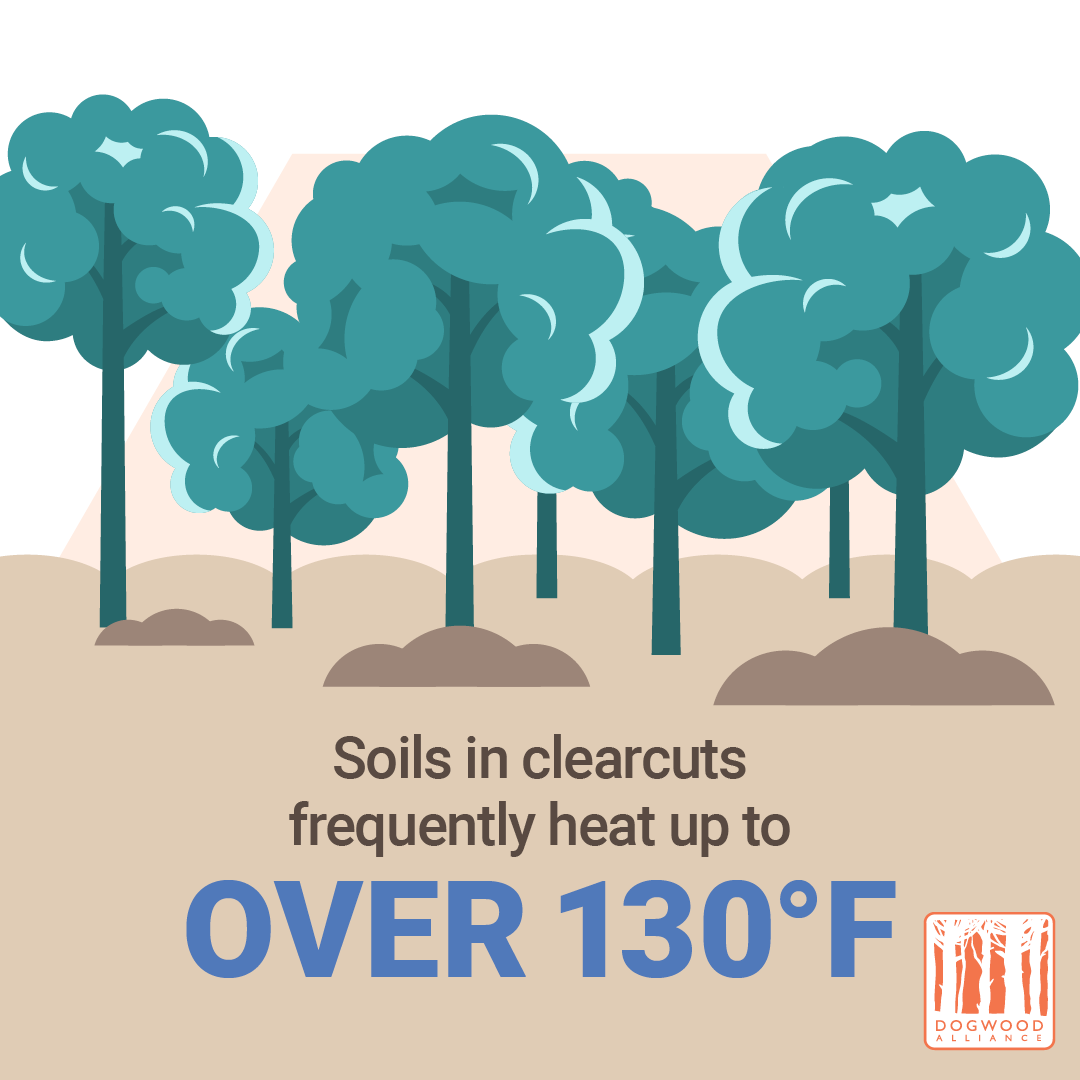
These gaps are the size of a tree and its canopy. If a tornado comes through, there may be a larger gap or gash. Logging, in contrast, will clear tens to hundreds of acres at a time. That’s a really, really big tornado. Our forest soils can’t handle that kind of disturbance. They heat up and dry out, killing many of the high quality seeds that could grow a new forest. Soils in clearcuts can heat up to over 130 degrees Fahrenheit. Every gardener knows: hot and dry soils don’t grow plants very well.
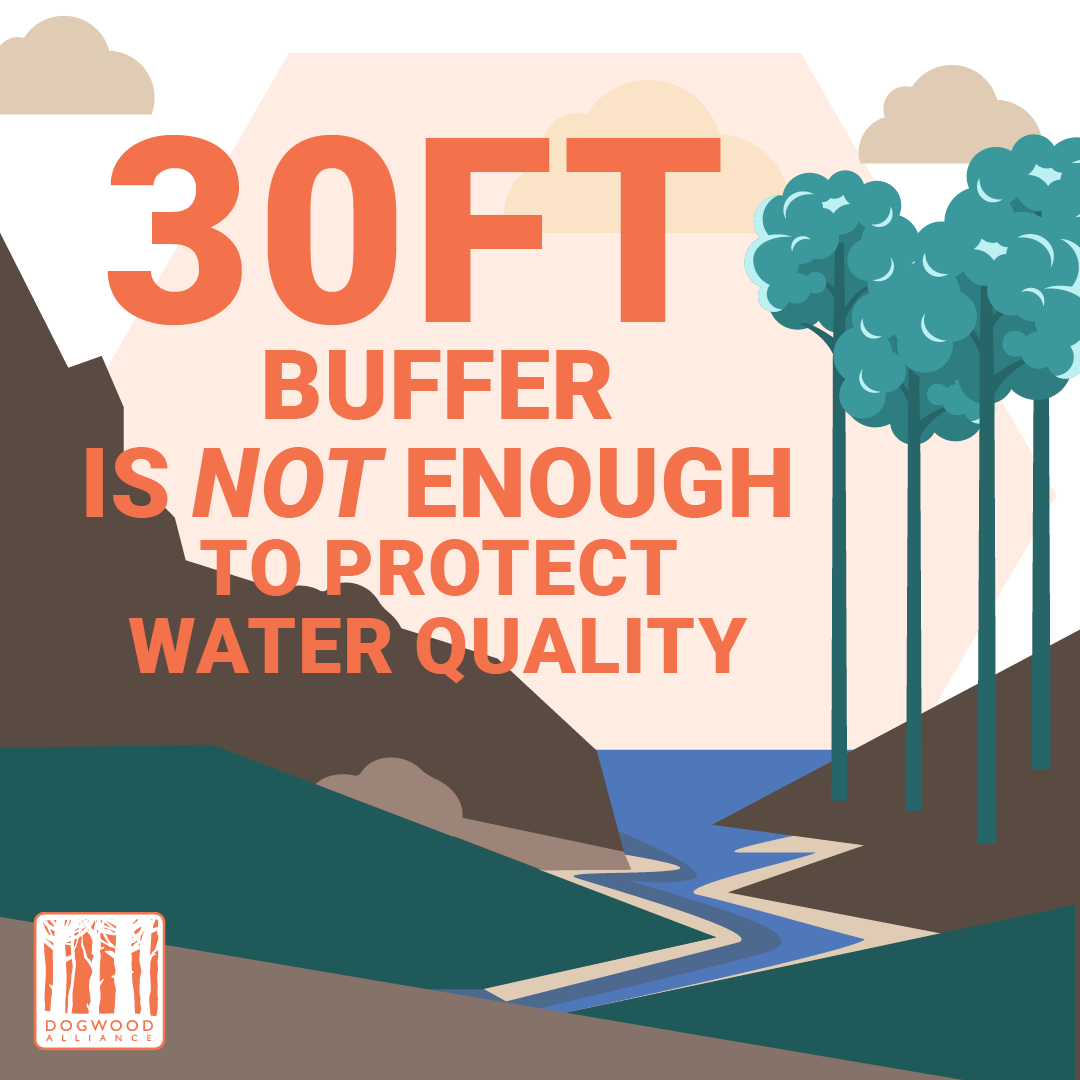
Logging companies have a set of voluntary practices to protect water quality in the surrounding rivers and streams. These Best Management Practices (BMPs) do not completely protect water quality. A study of one logging project found higher pollution levels even fifteen months after the logging had ceased.
Problematic algal blooms started at the site only after logging. The loggers followed BMPs, which required a 33 foot (10 meter) buffer between the logging and the nearby water. It’s clear that the state-recommended 30 foot buffer isn’t enough to protect our water.
Logging doesn’t only change the function of a forest. It also erodes carbon stores in a way that may take decades or centuries to fix. When forests are new, they don’t have very much carbon stored at all – but as they age, they accumulate carbon. We know that natural forests are best at storing carbon. Natural forests store 50% more carbon than planted “forests” – usually plantations.
If we use forests for carbon storage instead of logging, it would benefit us all. Although getting rid of logging is impossible, if we did, the carbon benefit would be equal to about 20 years of NC’s gross carbon emissions. North Carolina forests could store an extra 3 gigatonnes of CO2e. Most of those carbon savings would come from climate-smart forestry practices on private lands.
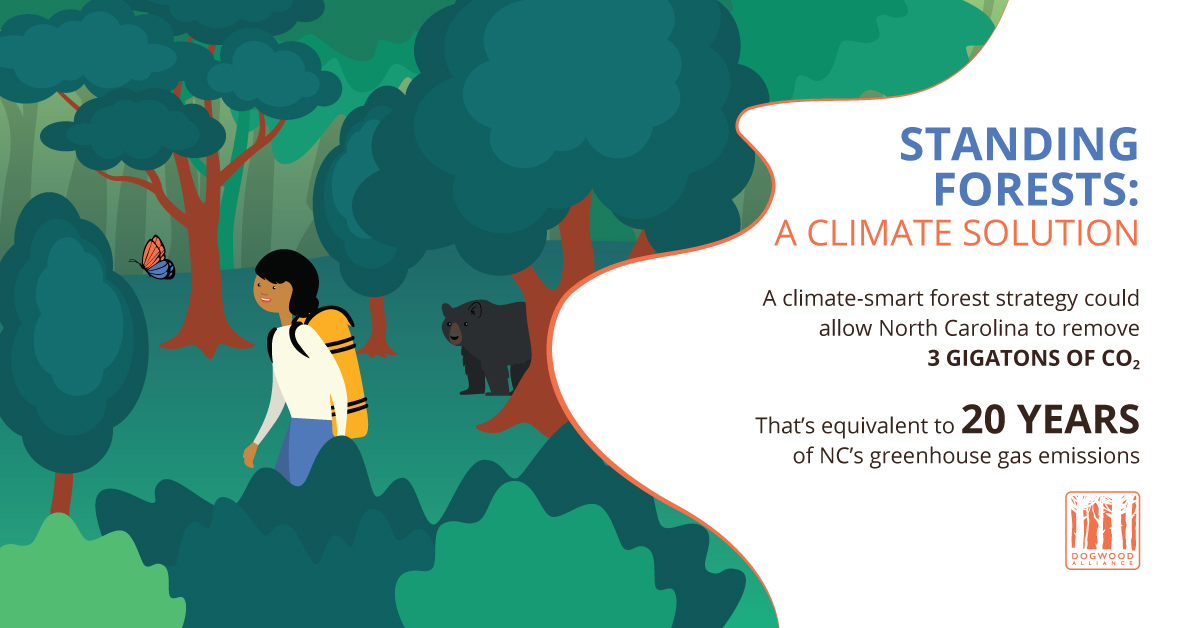
There are lots of issues around logging and forest carbon in North Carolina. But, there are also many ways to improve forest carbon in North Carolina.
Many studies support the idea that intense logging in NC is making climate change worse. North Carolina could bring forestry practices into the 21st century by improving policies. This would ensure a safer future for all North Carolinians, especially those living in central and eastern NC where logging is common.
Proforestation is a new take on an old concept: “let the forests grow.” It’s all about encouraging our forests to grow to ecological maturity. If you ask any child “how old can a tree get?”, they’ll tell you that a tree can be hundreds of years old. But in the US South, over half of all forest stands are less than 40 years old. Adopting proforestation principles can address this discrepancy. Proforestation should be easy to apply to North Carolina forests through policy reform.
Our report shows that climate policies must protect all older forests from logging. Since most old forests in North Carolina are already on public lands, NC can take action. Protecting older forests from logging is an easy way to practice proforestation.
We should also help younger, degraded forest stands develop old-growth characteristics. Old-growth forests tend to have trees of many different shapes and ages. They have standing dead wood providing homes to many different birds and mammals. You can harvest wood without clearcutting. Moving away from clearcuts can help our forests develop old-growth characteristics much faster.
No one expects all logging to stop in the US South. Especially because the US South is the largest wood producing region in the world. Yet, the effects of climate change are far-reaching, and we must address them before it is too late. And, logging is a major contributor to climate change. To prevent further damages, we must introduce climate-smart forestry practices across the state.
Currently, the only “restrictions” on logging are voluntary best management practices (BMPs). These BMPs focus on water quality and represent the baseline care that a logger should use. North Carolina needs to update BMPs. Or, NC needs to create common-sense restrictions on the rate, type, and scale of logging.
We need to hold the forest products industry accountable for its carbon emissions. Logging emissions currently get placed in the “land use change / forestry” category of carbon accounting. This is a “get out of jail free” card for the forest products industry. They are able to hide their emissions behind the existing forest carbon stores. Hidden emissions include emissions from transporting, cutting, and processing wood.
When those emissions are actually counted, it’s big. They rank third in NC’s carbon emissions ledger, behind electricity generation and transportation. We must change this practice.
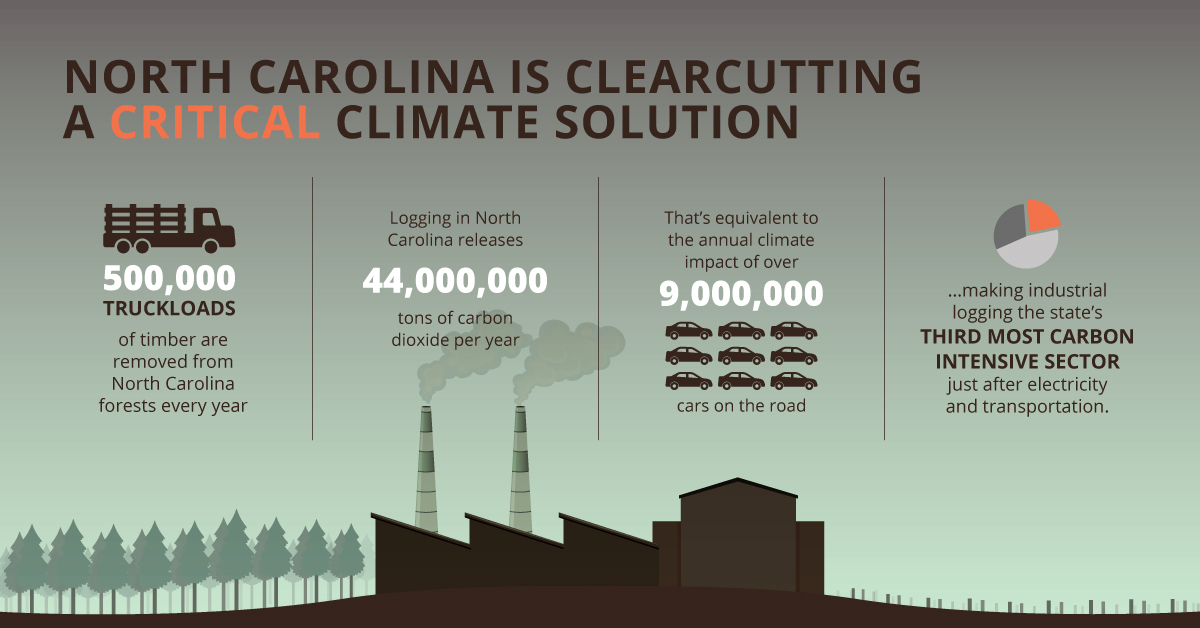
First, we need to revise the state’s Greenhouse Gas Inventory reporting process. This will separate emissions from the wood products industry into its own category. That way, the forest products industry can’t rely on forest growth to hide their dirty laundry.
Are you ready to take action? Head to our Act Now page to see other steps you can take to help North Carolina’s forests.


 Donate