


We just had our 3rd annual Woods & Wilds, celebrating 22 years of forest defense, and every moment was woven into the magical fabric that carried us through the night! Picture this: as soon as you enter The Grey Eagle in Asheville, NC, you’re in awe of the ten-foot high Justice First artwork created by Celeste Byers,Amplifier, and Dogwood Alliance.

Rounding the corner, the serenely glowing lanterns from Flora escort you into the main hall, which gradually fills like an hourglass. Upon entering this hall, you come across our Story Corner, where many people are sharing their own stories of the forests.

Just down from that is Sumo Morgan and Alysha Clark’s powerful art installation “Phantom,” depicting the depth of forest destruction often overlooked in a clearcut.
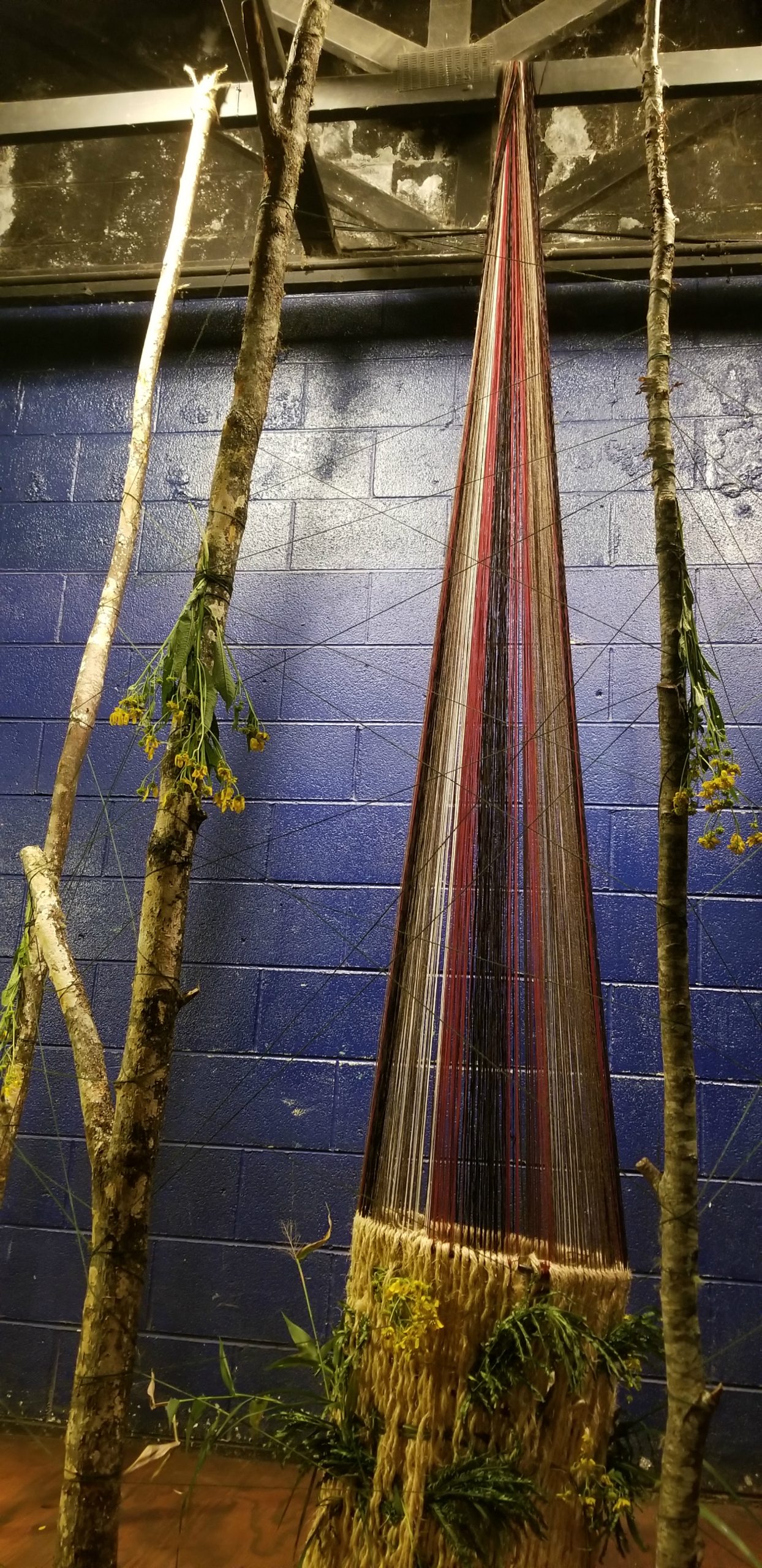
Sumo Morgan and Alysha Clark artwork “Phantom”
The lights dim and the storytelling begins. From wizards to comics, agony to joy, calming to shocking, we hear it all from these seven amazing storytellers. Though each story embraces a unique style and evokes different emotions, every story teaches us something.
Allison Fields, Asheville’s first Moth GrandSLAM winner, sets the tone right:
“All my favorite stories happen in the forest.”

Woods & Wilds Storyteller Alison Fields
Robert Zachary, a facilitator and activist for transformative change through poetry, storytelling, and song, teaches us about the powerful role the forest had in overcoming Jim Crow segregation in his hometown.

Woods & Wilds Storyteller Robert “Zack” Zachary
Author, hiker, and podcast host Gary Sizer shares his story of lying still in the forest for hours as he and his fellow marines waited for another squadron, only to find that they’d gotten lost and were not coming after all those hours. Through that experience, he had an epiphany about life when he heard the spirit of the woods.
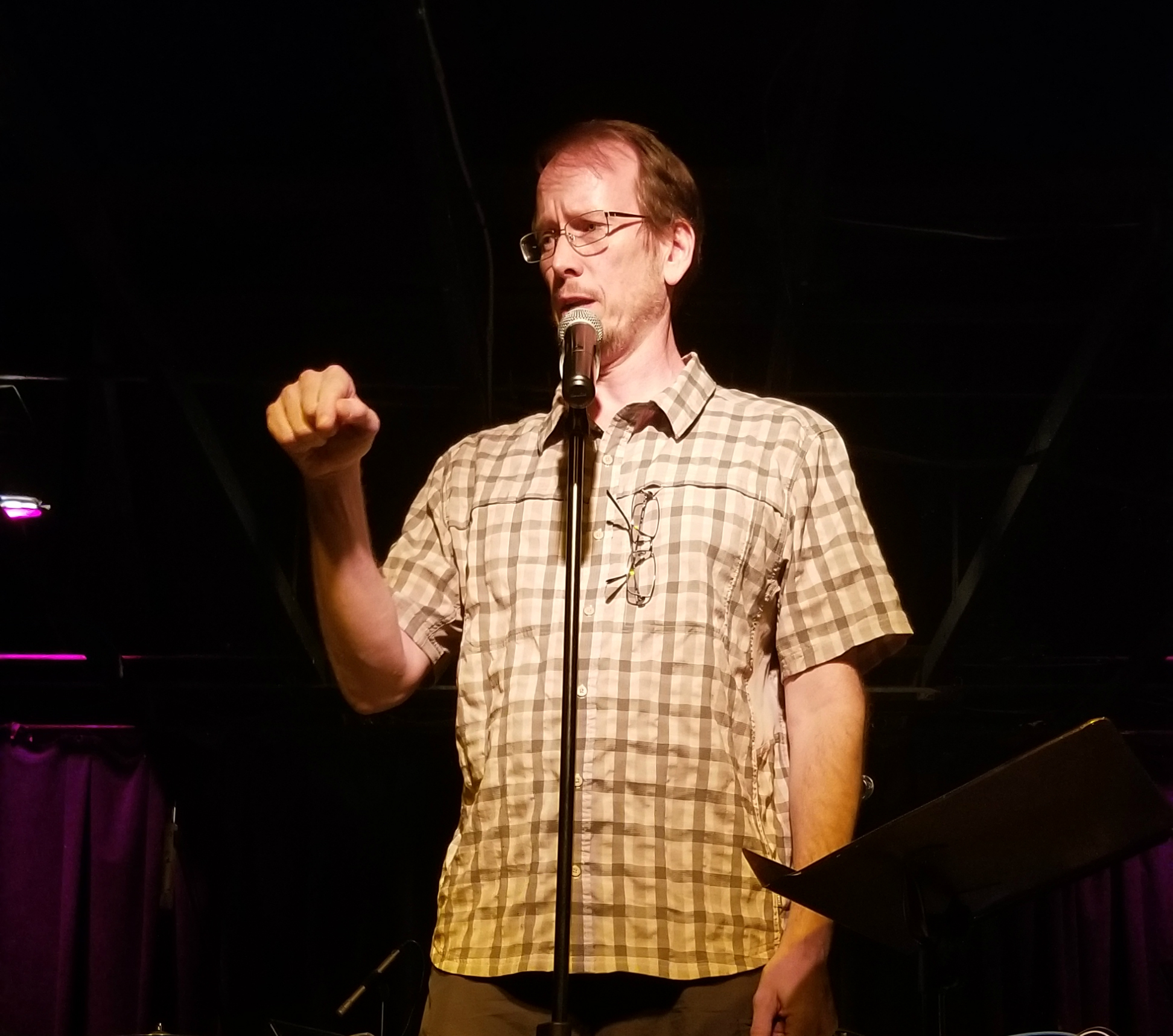
Woods & Wilds Storyteller Gary Sizer
Playing sounds of nature into the microphone, Nicole Townsend, an organizer with Southerners On New Ground (SONG), challenges us to remember ourselves as children.
“I swear as a kid those trees touched heaven.”

Woods & Wilds Storyteller Nicole Townsend
Through a series of shorter stories, DeWayne Barton, the founder and CEO of Hood Huggers International and co-founder of Burton Street Community Peace Gardens and Green Opportunities, shows us that the woods can be a frightening place.

Woods & Wilds Storyteller DeWayne Barton
The always powerful Danna Smith, Executive Director of Dogwood Alliance, shares how she found solace in the forest when faced with the seemingly impossible task of uniting movements around the country to Stand4Forests.
“It’s gonna get harder, but we can always take to the woods and to the wilds for our inspiration.”

Woods & Wilds Storyteller Danna Smith
To close out our storytellers, Sizwe Herring of EarthMatters Tennessee shares his wisdom about how real change happens.
“What does it really take to make change? One leaf at a time.”

Woods & Wilds Storyteller Sizwe Herring
And to tie it all together, we receive a surprise from Dogwood’s own Sasha Mitchell, who also runs the website The Color of Asheville. Sasha comes up on stage to share how deeply she is moved. She shares that no matter our skin color, our stories are the same and our mission to save the planet is the same. She tells us that only through dialogue and stories can we overcome history and unite to save the forest.

Surprise Woods & Wilds speaker Sasha Mitchell
Through it all, we have two rockstar MC’s leading the way – Ali McGhee of AVLToday and Elizabeth Garland of Slay the Mic.
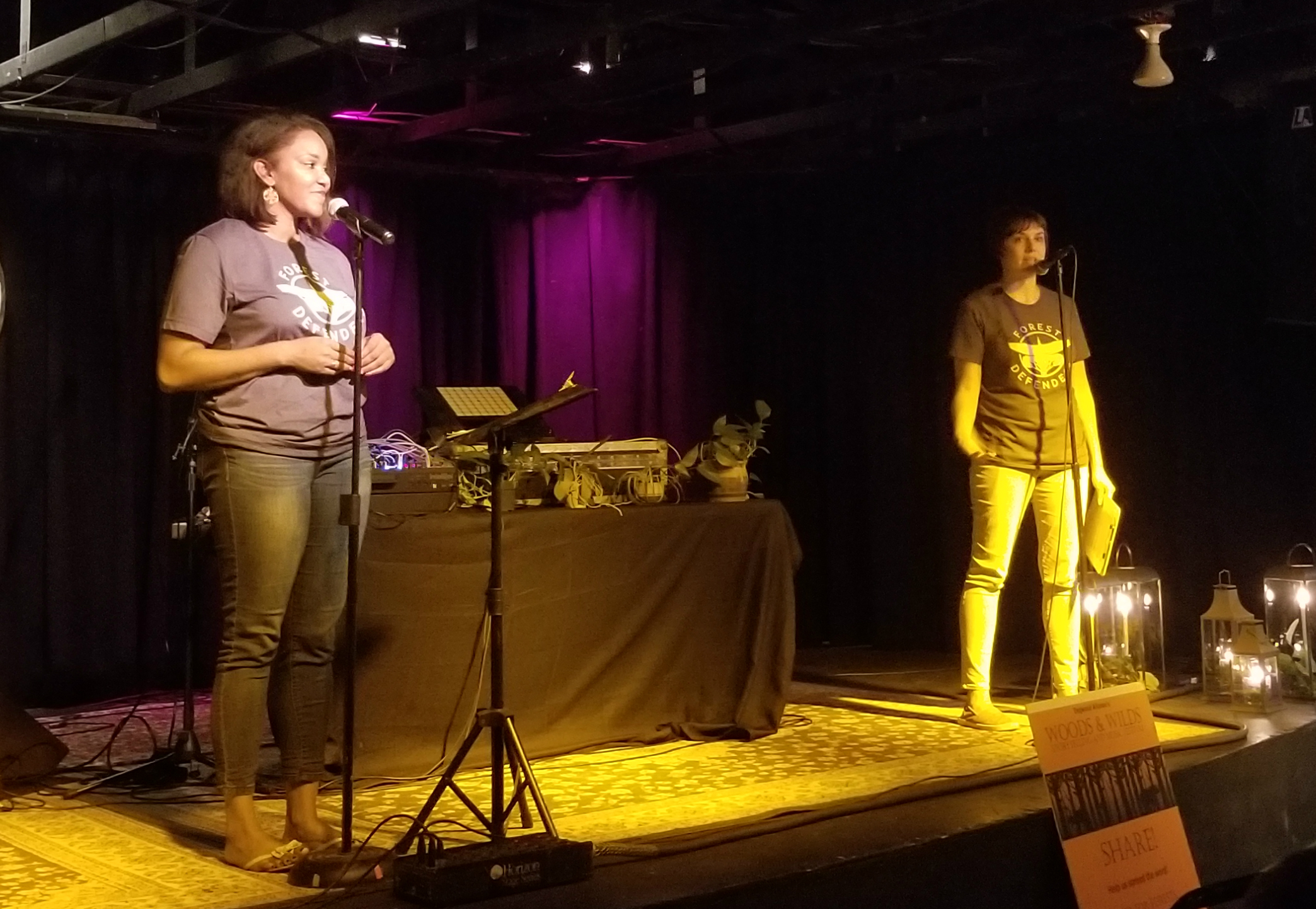
Woods & Wilds MCs Elizabeth Garland & Ali McGhee
Closing out this magical night with a magical set is the one and only EarthCry with fellow Papadosio bandmate Mike Healy on drums.

Woods & Wilds band EarthCry with Mike Healy
We leave with warmed hearts and feeling very much like trees in a forest – though we are all individuals, together we become something special.
 Faith and Forests is a special monthly series by Joseph Frankovic. In the series, Joseph will explore how his deep connection to spirituality and faith intersects with our forests and the work of Dogwood Alliance. The views and opinions expressed are those of the author(s) and do not imply endorsement by Dogwood Alliance.
Dogwood Alliance works with diverse communities and partner organizations. As the alliance part of its name implies, the organization seeks allies to accelerate the formation of a movement to halt commercial logging of intact forests and to shield vulnerable communities from harmful development and resource extraction. The formation of such a movement requires cohesion and mutuality of responsibility to pursue justice —what a Parisian or a Haitian might call fraternité and solidarité.
American reform movements comprising diverse groups that are committed to progressive change have a checkered record of remaining united. In 1868, an early and particularly painful example to recall occurred: ratification of the US Constitution’s Fourteenth Amendment, which was Congress’s response to emancipation and the issue of Black suffrage. Section 2 of that amendment lowered representation in the US Congress in proportion to the number of male citizens whom a State denied the right to vote. Like a bolt of lightning and rolling thunder, the inclusion of the word male shattered the longstanding alliance between abolitionists and feminists. The damage included the splintering of Frederick Douglass and Susan B. Anthony’s joint-efforts as social reformers. A decade later, Southern Black people would face the era of Jim Crow. The civil rights of Black people would be stripped away while independent feminists focused on their fight for women’s suffrage.1
For an alliance working to effect progressive change, maintaining unity is a serious matter because people power can offset shortages of money and lack of political influence—if people stick together and hold firm. Moreover, bobbing beneath a raft of our Nation’s economic, environmental, political, and social problems is untethered capitalism, which is concentrating wealth and consolidating power in the hands of a small number of beneficiaries with unnerving efficiency.
Capitalism is a system that separates working people from the means of their work and that gives to the owners of those means the power to organize the economy. Thoughtful advocates for progressive policies generally know that capitalism defends itself by dividing people. Consider the comment of Professor Emeritus Michael A. Lebowitz, who retired from Simon Fraser University, on capital and the efforts of labor to organize:
“Capital certainly uses racism, patriarchy, national, and ethnic differences to divide the working class, to weaken it and to direct its struggles away from capital. But, it can find many [additional] ways to divide and weaken workers.” 2
I speculate that capital also has specialized ways of weakening and distracting diverse communities and partner organizations when they scale up an alliance.
Beyond these two pragmatic reasons—the superiority of people power and capital’s tendency to divide and deflect that power—people of faith place a special premium on unity and solidarity.
In an old collection of rabbinic comments, which are called aggadot in Hebrew, one can find an explanation of the prophet Jeremiah’s rhetorical question, “Is not Ephraim a precious son to me?”3
בזמן שהן נאגדין כאגודה אחת לעשות רצון אביהם שבשמים, הן חשובים כבן יחיד לפני אביו, ובזמן שהם ממוסמסין לכאן ולכאן, הן חשובין כבנים מרובין לפני האב, שאינה דומה אהבתו שליחיד לאהבתן שלרבים, שכל מי שיש לו בנים מרובין אהבתו מתחלקת על כולן, ואהבת יחיד לא כן
When they are united in tight union to do the will of their Father who is in heaven, they are regarded as a father’s only child. When they are separated in factions here and there, they are regarded as many children before their father, because [a father’s] love for a single child differs from his love for many children. For whoever has many children, his or her love is distributed among them, but the love for an only child is different.
This comment has been preserved in a manuscript fragment from the Cairo genizah, which means that it is old. Despite its age, the explanation, which links the adjective “precious” to the special status of an only child, can continue as a source of encouragement for us today. In a creative, playful way, this aggadic comment associates a rabbinic form of activism—the preoccupation with doing God’s will in concert with others—with an unexpected benefit. The writer describes an intensification of God’s love through concentration on a single focal point when the Jewish people unite to do his will.
Pause for a moment and consider this proposition: Saving Southern forests and shielding vulnerable communities from corporate predators and venal politicians are two priorities that align with God’s will. That assumption, I think, is a reasonable one to make. The challenge is to act and remain united—and then experience the love concentrate.
Another comment from an old rabbinic collection of interpretations on the biblical book of Exodus echoes a similar idea. In the Mekhilta of Rabbi Ishmael, Israel’s arrival at the base of Mount Sinai, it says:4
כל מקום שהוא אומר ויסעו ויחנו, נוסעים במחלוקת וחונים במחלוקת, אבל כאן השוו כולם לב אחד, לכך נאמ’ ויחן שם ישראל נגד ההר
Every place where Scripture says, “They traveled and encamped,” they traveled divided and encamped divided. Here, however, all of them were of one heart. Scripture, therefore, says, “Israel encamped there before the mountain.”
An odd feature of the narrative’s grammar, namely, inconsistent use of plural and singular forms of the verb “encamped,” inspired this interpretive approach. The writer makes a connection between the plural form and the presence of strife and altercations among the Israelites, whereas he treats the singular form as an indication of their singleness of heart.
What happened next? Moses ascended the mountain to receive the precious gift that God wanted to give—his Torah. The people’s oneness of heart had captured God’s attention and so moved him that he chose that moment for giving his Law to the descendants of Abraham, Isaac, and Jacob, as well as to others who were outside that bloodline and had joined them in the wilderness.
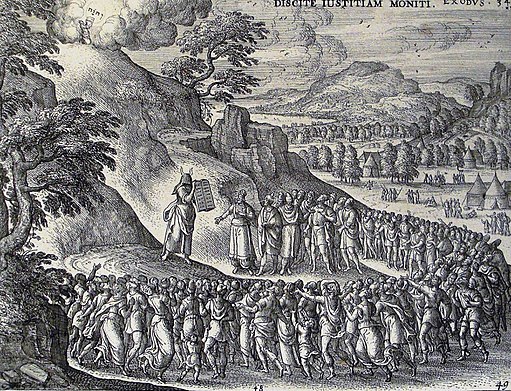
Social justice echoes as a clarion theme throughout the Law of Moses and throughout rabbinic commentaries on that Law. The Torah admonishes its hearers to aid and protect the vulnerable: the orphan, the widow, and the stranger, as well as others. In one of the more emphatic ways that the Hebrew language can convey urgency, the Torah makes the pursuit of justice a priority:5
צדק צדק תרדוף Justice, justice, you will pursue!
When the Israelites abandoned strife and factionalism, their unity and solidarity stimulated God’s love. Responding to that moment, he gave the people a timeless gift to support their pursuit of justice and enjoyment of peace through the ages.
I am so grateful to the ancient rabbis for helping us experience Scripture anew and for stimulating us to rethink the relevance of its message in the ongoing struggle against injustice.
In the opening chapter of the Acts of the Apostles, an early piece of Christian literature, Saint Luke the Evangelist describes events in which the closest followers of Jesus and members of his family participated.6
οὗτοι πάντες ἦσαν προσκαρτεροῦντες ὁμοθυμαδον τῇ προσευχῇ All of these [followers] remained constant in prayer with one accord.
The unity and fervency of the group during the days leading up to the holiday of Shavuot, or Pentecost, had an effect. The time had come for God to respond by giving. On the day of Pentecost, the narrative describes the Holy Spirit visiting them like a rushing wind.7
These people had embraced Jesus’s teachings and joined a movement. Joining or entering the kingdom of heaven required doing the will of their heavenly Father and centered on doing good with an emphasis on healing. Acting in solidarity, doing God’s will in concert with others, attracted the Holy Spirit who then strengthened Jesus’s disciples in their efforts to ameliorate harmful effects of injustice.8
The narrative offers another glimpse of this nascent movement’s commitment to solidarity. In a short time span, Peter and John had enraged the chief priests who exercised power over the temple area and managed its services, including the exchanging of foreign currency and offering of sacrifices. The authorities already had summoned this pair of activists and threatened them. Despite growing persecution, Peter, John, and their allies remained together.9
Τοῦ δὲ πλήθους τῶν πιστευσάντων ἦν καρδία και ψυχὴ μία, Καὶ οὐδὲ εἳς τι τῶν ὑπαρχόντων αὐτῷ ἒλεγεν ἲδιον εἶναι ἀλλ᾽ ἦν αὐτοῖς ἃπαντα κοινα.
The entire multitude who had become believers were of one heart and soul, And none referred to his or her possessions as personal property. Rather, all things were shared by them.
This group’s oneness influenced its choice of a community-wide economic policy that de-emphasized private property. I imagine that if these first followers of Jesus were still alive today, they would support restoring the commons, protecting ecosystems that provide critical ecosystem services, resisting the commodification of natural resources, and creating worker cooperatives as well as additional agendas that favor the public.

Unity and mutuality, fraternity and solidarity are essential for winning progressive struggles against social injustice. Money and political influence can cause a lot of harm by winning elections, buying appointments, and securing confirmations. By dividing and deflecting its opposition, capitalism effectively obstructs initiatives to regulate or replace it. Despite these advantages, it cannot repulse a nonviolent mass movement moving forward with shields locked, gaining and holding ground like a Greek phalanx, and propelling itself with peaceful and sustainable people power.
Yet beyond these basic reasons for prioritizing fraternity and solidarity, Jews, Christians, and other people of faith can offer additional ones. Within the interpretive world of midrash—the distinct type of exegesis used by ancient rabbis to interpret Scripture—the Israelites achieved unity and singleness of heart when they reached Mount Sinai. That achievement moved God, and he gave his Torah as a precious and eternal possession. This Torah commands its adherents to pursue justice. In that respect, God regards everybody who receives his gift as an activist. After the Roman prefect of Judea Pontius Pilate had ordered his soldiers to execute Jesus, those who adopted the Galilean’s teachings remained together and in solidarity. They devoted themselves to prayer, partook of their meals together, and opted out of owning private assets and personal wealth. According to Luke’s narrative, God responded with a mighty rush of the Holy Spirit to superactivate their activism, which they interpreted as good news and associated with the kingdom of heaven.
Endnotes
Listen also to the comments of David R. Roediger, Professor of American Studies and History at the University of Kansas, on race, class, and solidarity, when he was recently interviewed by Sasha Lilley as part of the radio and web media project Against the Grain.
https://kpfa.org/episode/against-the-grain-may-30-2018/http://foundation.ku.edu/roediger
https://monthlyreview.org/2004/06/01/what-keeps-capitalism-going/
https://www.sefaria.org/Mekhilta_d’Rabbi_Yishmael.19.2?vhe=Mekhilta_–_Wikisource&lang=he
My Judaica library is in storage. I did not have handy access to either the Lauterbach edition or the Horovitz-Rabin edition; therefore, I visited the website of the open source and nonprofit project Sefaria to access the Hebrew text of the Mekhilta. 5. Deuteronomy 16:20
Environmental campaigners applaud Government decision which effectively stops subsidies for burning imported wood in new power stationsGovernment urged to extend the same rule to biomass power stations already awarded subsidies31st August 2018 – Environmental campaigners welcome a Government decision, announced today, to rule out future subsidies for biomass power stations with greenhouse gas emissions above 29 g CO2 per megawatt hour, a dramatic 85% reduction from the current limit, which cannot be met by burning imported wood pellets. [1] However, they urge the government to review the subsidies already granted for burning millions of tonnes of pellets imported in UK power stations.
A coalition of UK and US NGOs had called for a tighter greenhouse gas limit in the consultation, and 1,500 individuals endorsed this call via an email alert by Biofuelwatch. The UK imports more wood pellets than any other country in the world and almost all of those are currently burned by Drax power station in Yorkshire. Two other large biomass power stations [2] are under development and have already been guaranteed subsidies, each of which will burn 1.5 million tonnes of imported pellets. Most of those pellets come from the southern US, where carbon-rich forests ecosystems in the heart of a global biodiversity hotspot are being clearcut, increasingly for making pellets which are then shipped to the UK. [3] Drax power station receives £2 million a day in subsidies for burning imported wood. [4]
Almuth Ernsting from Biofuelwatch [5] states: “We are relieved that the Government has at last closed the door on new subsidies for burning imported wood for electricity because of the climate impacts. This comes after years of warnings by scientists and environmental organisations alike that burning pellets sourced from logging forests in North America and elsewhere is no better for the climate than burning wood. However, the Government must now go further and redirect existing biomass subsidies to low-carbon wind, solar and tidal power.”
Rita Frost from Dogwood Alliance in North Carolina, US [6], adds: “Southern US forests, and the communities that depend on them, have suffered from the UK’s misguided policy to subsidise biomass power stations. For the health and safety of our planet and communities, it’s imperative that we stop the unchecked growth of this dirty industry. Today’s decision is a positive signal for Southern forests, communities, and the climate. Now, we need to see an end to Drax’s £2m daily handouts for their destructive burning of forests.”
Mary Booth from the Partnership for Policy Integrity in the US [7] says: “Although the Government continues to use a flawed, unscientific method for calculating carbon emissions from biomass, it at least now acknowledges that the fossil fuel emissions from turning wood into pellets and shipping them across the Atlantic or across Europe alone are so high that electricity generated from burning those pellets is not low carbon and does not merit subsidies. There is no excuse left for subsidising this destructive industry at all.”
# # #
Contacts:
Notes:
[1] The Government’s response to a consultation about Contracts for Difference (renewable electricity subsidies), issued today, can be found at assets.publishing.service.gov.uk/government/uploads/system/uploads/attachment_data/file/736640/Consultation_document.pdf . It states that such subsidies will in future only be awarded for burning biomass that does not result in more than 29kg CO2e/MWh greenhouse gas emissions – a reduction from the current 200.4 kg CO2/MWh. Although the Government’s methodology omits almost all of the emissions associated with logging as well as those from burning the wood, the fossil fuel emissions from processing and transporting wood pellets low distance alone are so high that no imported wood pellets have ever met this new limit.
[2] Those are MGT’s Teesside power station, currently under construction at Teesport, and the former Lynemouth coal power station, which is being converted to wood pellets.
[3] See dogwoodalliance.org/wp-content/uploads/2017/05/NRDC_2014-2017Booklet_DigitalVersion-resize.pdf for evidence about pellet sourcing by Enviva, the largest pellet producer in the US. Enviva is Drax’s biggest external pellet supplier and has signed a supply contract for the MGT Teesside power station.
[4] The £2 million per day subsidy figure is calculated from the figures presented by Drax in its 2017 Annual Report (www.drax.com/wp-content/uploads/2018/03/Drax-Group-plc-2017-annual-report.pdf ) and was confirmed by Drax in an email to Biofuelwatch.
[5] See www.biofuelwatch.org.uk
[6] See www.dogwoodalliance.org
[7] See www.pfpi.net
We’re tired of hearing folks in DC say, “Drain the swamps,” because swamps are actually really, really valuable.
While you can’t put a price tag on healthy families or the way you feel when you’re in a wetland forest, things like water filtration, tourism, protection from extreme weather events, timber, and food have a real dollar value, and people need to know that!
The logging industry wants us to believe that forests are only worth something when they’re cut down and turned into wood products, and that is a lie.
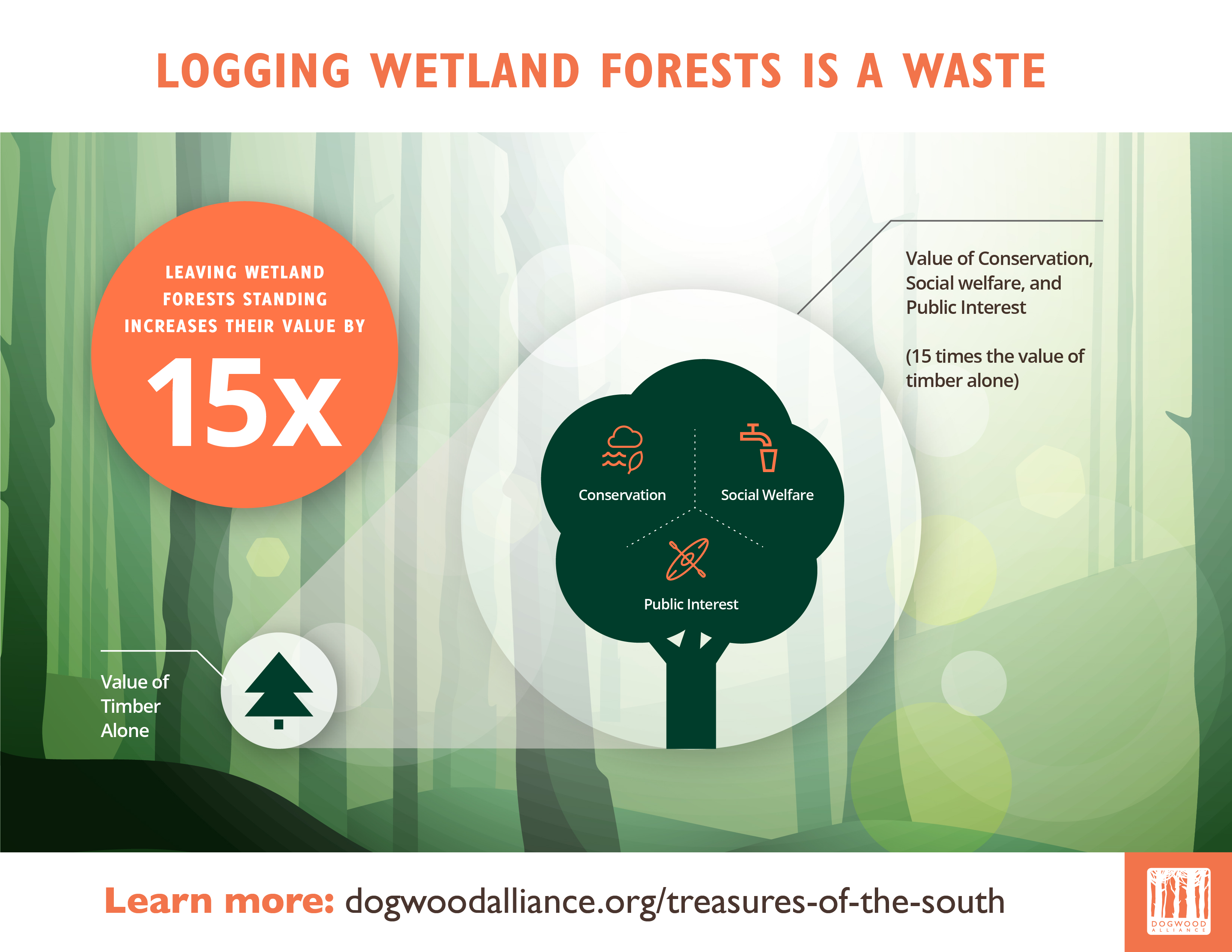 No matter what the logging industry says, the fact is that standing wetland forests keep jobs and wealth in their states and communities in a way that logging never will, and the world needs to know the truth.
If you want to get more involved:
Southern forests are a crucial component in protecting our communities from the worst impacts of climate change and ensuring a safer world for future generations. Our forests protect coastal communities from storm surges and rising sea levels; they limit the intensity of flooding and are the best way to store and sequester carbon, limiting the escalating global temperature increases.
Unfortunately, the forest products industry would have you believe that our forests are flourishing, but the facts paint a different picture. Our new white paper, “Industry Impacts on US Forests” based on the groundbreaking report, “The Great American Stand: US Forests and the Climate Emergency” by Dr. Bill Moomaw and Danna Smith, takes a closer look at the industry’s destructive climate legacy.
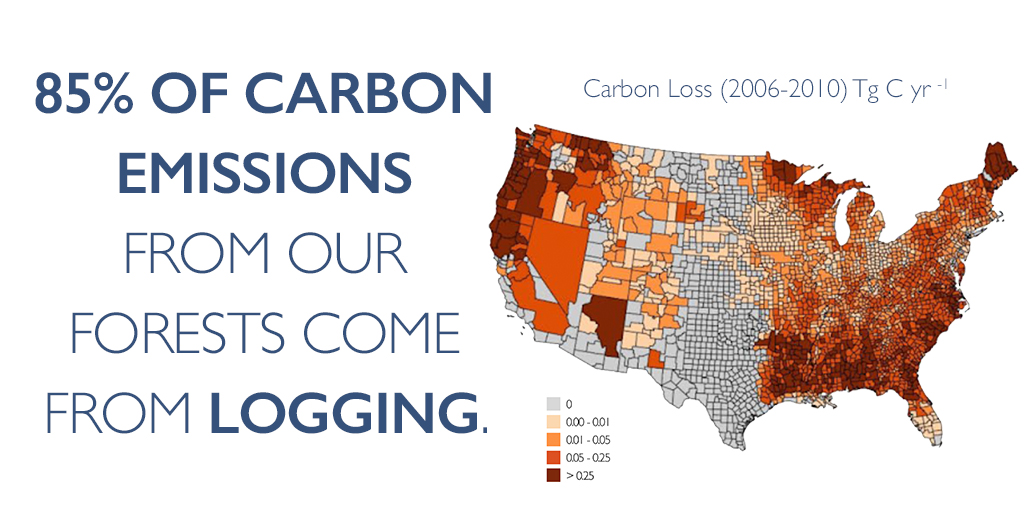
Our forests are supposed to store and take carbon out of the atmosphere, helping us in our fight against climate change. But our forests have released more carbon than they’ve stored in the last 400 years. Over the last century and at a continually accelerating pace, industrial logging is driving this decimation of our forests’ carbon stocks.
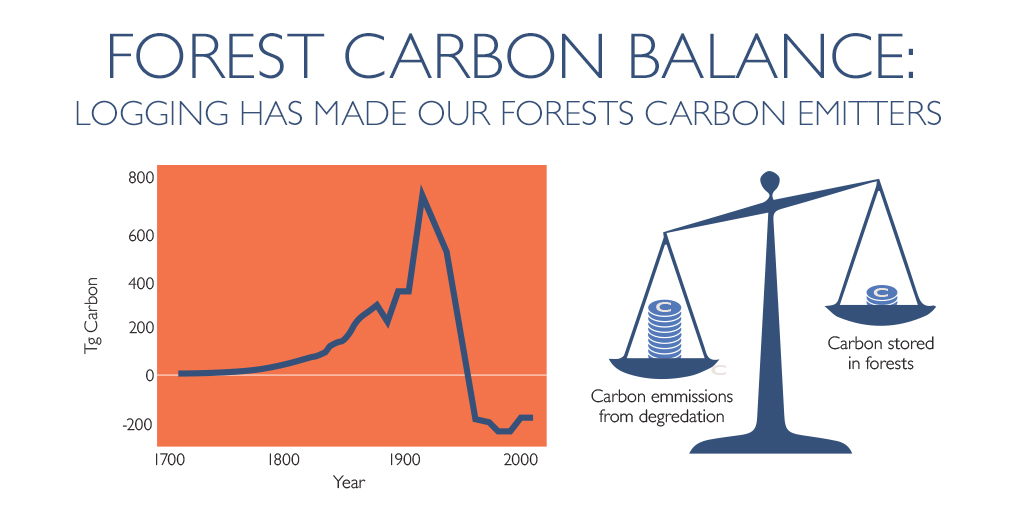
That’s more than five times the emissions from conversion, fire, wind, insects, and tree mortality combined. Over half of forests in the US South are less than 40 years old because the forest products industry encourages landowners to cut down their forests as soon as money can be made from them. Government does not regulate these practices nor do they invest in a just economic transition from an extractive model to a restorative one for our communities.
The forest products industry claims that their products are storing plenty of carbon. Paper, lumber, and other forest products are considered to be short term carbon stocks.
As long as we continue to incentivize forest destruction over forest conservation, we will not solve the climate crisis.

We invite you to join us and push back against this injustice to our forests, communities, and climate.
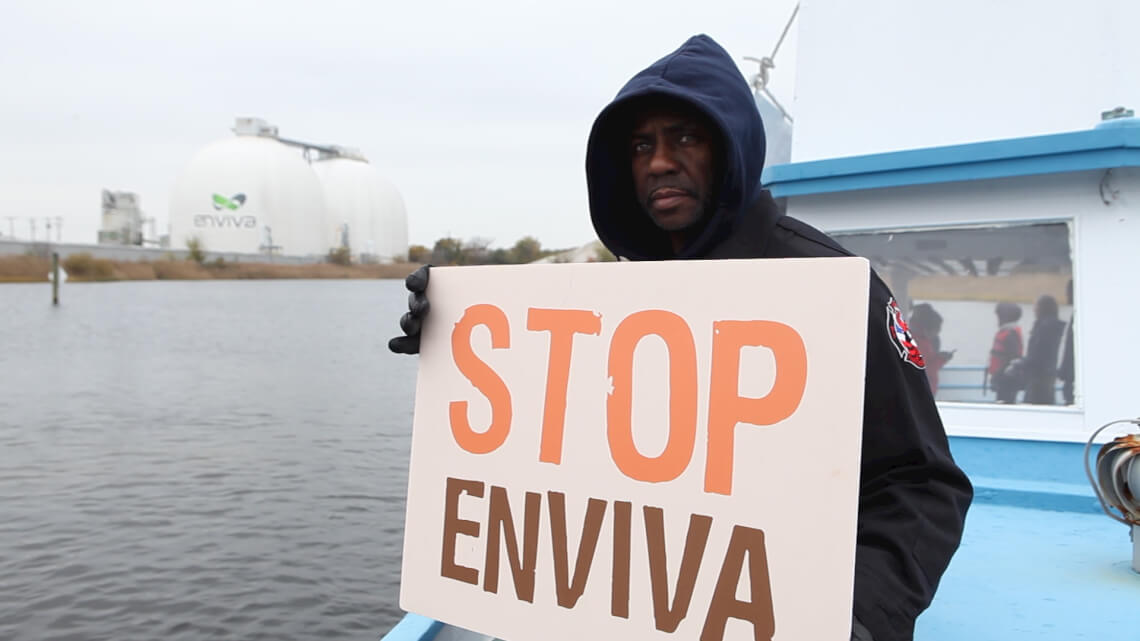
Enviva is the world’s largest wood pellet manufacturer and one of the leading industrial forest destroyers. Together we can expose the truth and end the senseless destruction of our precious forests.
Dublin, August 13, 2018 – An Open Letter by 33 conservation and environmental justice organisations in the USA has today been sent to the Irish government, ESB [2] and Bord na Móna [3], opposing large-scale biomass burning in Ireland’s three peat power stations as a serious threat to southern US forests.
The groups state that both peat and biomass burning are profoundly incompatible with the goals of the Paris Climate Agreement and that the Edenderry, West Offaly and Lough Ree plants must therefore be shut down as soon as possible.
The letter supports demands by environmental NGOs in Ireland that the peat plants should not be permitted to operate beyond 2020 and that the Irish Government and energy companies must instead increase support for genuinely low-carbon renewable energy, such as wind and solar power.
Rita Frost from the forest-protection organization Dogwood Alliance, based in the southern United States: “ESB and Bord na Móna will do anything to keep their subsidies flowing for dirty, climate-polluting power stations. Their current proposal would replace peat with precious forests from the Southern US. The wood pellet industry in our region that would feed these companies is a key driver of forest destruction. Those forests lie at the heart of a global biodiversity hotspot and are vital for the future of the world’s climate,the region’s water supplies, and the local communities that depend on them.”
Bord na Móna has stated that it will burn US wood pellets ‘initially’. Its claims that it can eventually replace them with domestic willow and other biomass have been dismissed in the US Open Letter.
John Gibbons, climate change spokesperson from An Taisce says: “The Irish Government must listen to the warnings from US environmental groups. An Taisce has long called for the urgent phase out of high-carbon, dirty peat burning in Ireland. Burning either peat or imported wood pellets undermines Ireland’s climate change commitments while also destroying critical biodiversity. It must be ended.”
“It is cynical in the extreme for Bord Na Móna to plan to extend the life of its ecologically devastating peat burning business by contributing to similar destruction abroad”, Gibbons added. “As a semi-state company, it is under direct political control, so there is absolutely no reason Bord Na Móna cannot be directed by government to focus only on commercial activities that do not destroy biodiversity, increase flooding risk and further undermine Ireland’s climate targets.”
Rachel Smolker from Biofuelwatch, based in Vermont, adds: “If we want to have any hope of stabilising climate change at 1.5 or even 2 degrees C, we need to end fossil fuel and peat burning and we also need to protect the world’s remaining forests and allow ones which have been degraded or destroyed to regenerate. ESB’s and Bord na Móna’s plans for the three power plants will harm the climate both through direct carbon emissions and by accelerating the loss and degradation of forests.”
To download a pdf of the full letter, go here.
###
Contacts: John Gibbons, An Taisce Climate Change Committee: +353 87 233 2689 Rita Frost, Dogwood Alliance, 828-251-2525 ext 26 Rachel Smolker, Biofuelwatch, office: 802-482-2848, mobile: 802-735-7794 Charles Stanley-Smith, Communications, An Taisce. Tel: +353 87 241 1995 email: [email protected]
Note: The Open Letter can be downloaded at https://www.dogwoodalliance.org/wp-content/uploads/2018/08/Open-letter-on-Ireland-Peat-Power-Stations-Aug-13-2018.pdf
This letter was sent to key government and corporate decision makers in Ireland. We sent the letter to the following contacts: Tom Donellan, CEO Bord na Mona Pat O’Doherty, CEO ESB Denis Naughten, Minister of Communications, Climate Action and Environment Michael Creed, Minister for Agriculture Food and the Marine Hildegard Naughton, Chair of the Committee on Climate Action and the Committee on Communications, Climate Action and Environment Timmy Dooley, Fine Fail Spokesman on Communications, the Environment and Natural Resources Brian Stanley, Sinn Fein Spokesman on Communications, Climate Change and Environment Eamon Ryan, leader of the Green Party Brid Smith, Solidarity-People Before Profit James Lawless, Fine Fail Terry Layden, Fine Fail (Senate) Michael McDowell, Independent (Senate) Joe O’Reilly, Fine Gael (Senate) Mary Butler, Fine Fail, Joint Committee on Climate Action Jack Chambers, Fine Fail, Joint Committee on Climate Action Marcella Corcoran Kennedy, Fine Gael, Joint Committee on Climate Action Patrick Deering, Fine Gael, , Joint Committee on Climate Action Martin Heydon, Fine Gael, Joint Committee on Climate Action John Lahart, Fine Fail, Joint Committee on Climate Action Imedla Munster, Sinn Fein, Joint Committee on Climate Action Paul Murphy, Solidarity-People Before Profit, Joint Committee on Climate Action Tom Neville, Fine Gael, Joint Committee on Climate Action Carol Nolan, Independent, Joint Committee on Climate Action Thomas Pringle, Independent, Joint Committee on Climate Action Sean Sherlock, Labour, Joint Committee on Climate Action Paul Daly, Fine Fail, Joint Committee on Climate Action Maire Devine, Sinn Fein, Joint Committee on Climate Action Tim Lombard, Fine Gael, Joint Committee on Climate Action Ian Marshall, Independent, Joint Committee on Climate Action Michelle Mulherin, Fine Gael, Joint Committee on Climate Action Grace O’Sullivan, Green Party, Joint Committee on Climate Action
I spent the first year of my Environmental Management Masters program at Duke University learning about the theories and practices of community-based environmental management. I discussed the benefits of asset mapping and potential problems with the word “empowerment.” I thought about how to most effectively work with and support communities and had some practice doing so. However, it was not until I began my summer at Dogwood Alliance that I was truly launched into grassroots, community-level work.
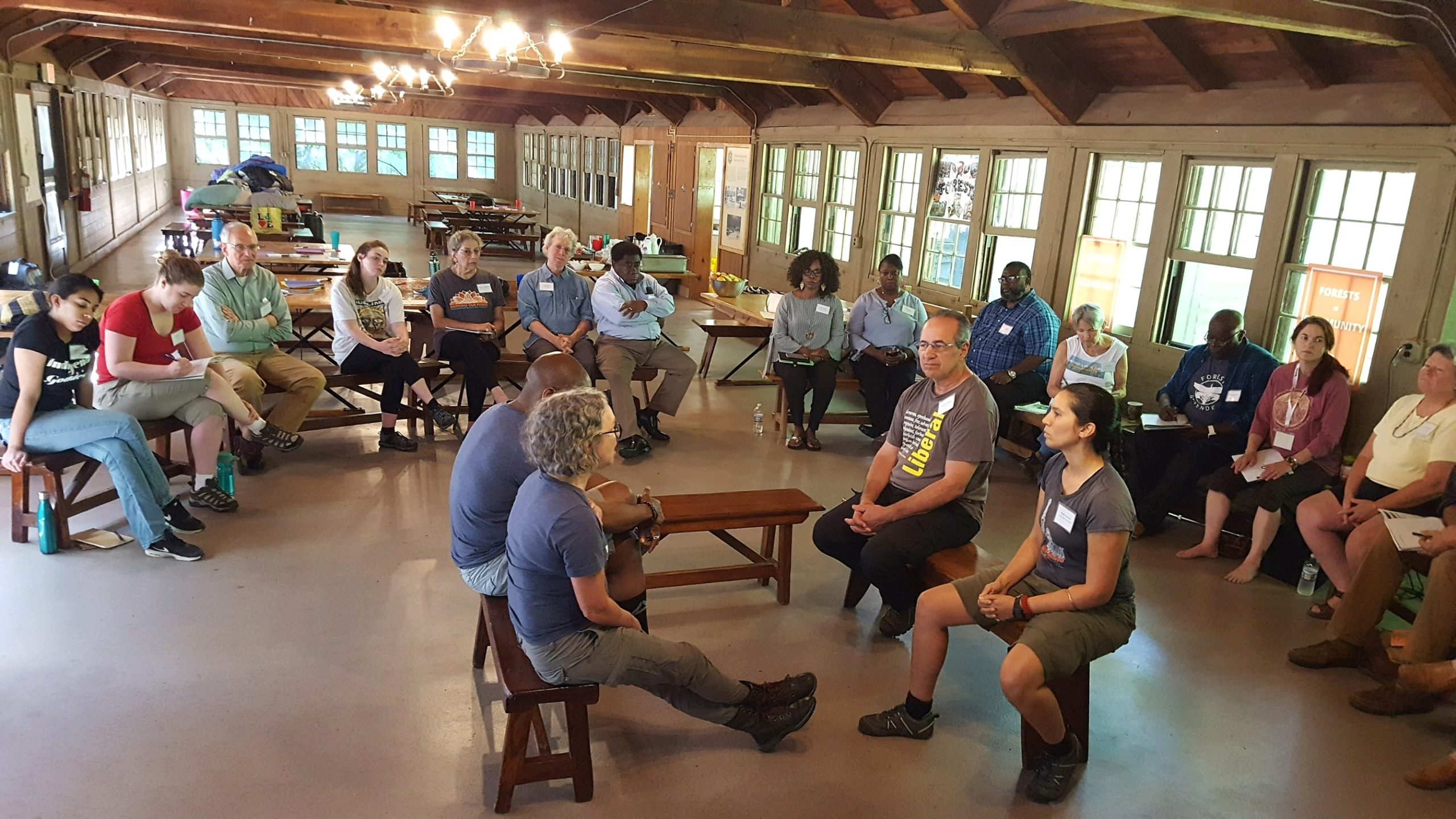
On my second day as the Campaign Intern, I found myself in the car traveling from North Carolina to a state forest just outside of DC. I had spent the day before figuring out where to park and how to log into my email account only to find myself transported, 24 hours later, to a Civilian Conservation Corps camp in the woods surrounded by advocates and influencers in the forest protection movement.
There, we spent two un-airconditioned days talking about and creating a national platform calling for expanded forest protection and an end to forest destruction and devastation. I listened as folks debated about the definition of a “forest” and lamented the injustices they’ve seen and experienced. However, I also took part in celebrations as people looked towards a just future where forests are respected for their intrinsic, not monetary, value.
From this summit, I learned a lot of new vocabulary and specifics about forest protection. But, more importantly, I witnessed passion being harnessed into something tangible — in this case, the Stand4Forests platform — and the power of working at the grassroots level.
It tooks months of collaboration, conference calls, and Google Doc drafts to create the platform, and the result was a platform that addressed the concerns of frontline communities, diverse organizations, scientists, and other leaders, while highlighting forests as a just solution to climate change.
Stepping outside of Stand4Forests, I saw this tenet apply to other aspects of my work, especially among Dogwood’s community members. Dogwood Alliance’s Grassroots Political Organizer Rachel Weber and I are based in the Triangle, and folks there are drawn to the Dogwood mission because they love forests.But they stay involved because of the relationship they develop with the organization, our staff, and the other folks they meet along the way.

Not only do they show up for our local events and meetings, but they consistently ask what else they can do to support our work and grow the movement. At Dogwood, we’re not working for these folks, we’re working with them, which is an integral aspect of grassroots work. And, while minority and frontline community members are still often underrepresented at these events and rallies, Dogwood recognizes this and works to address it through efforts like the Justice First Tour and the FOREST Circle.
In fact, Dogwood’s commitment to integrating social and environmental justice into their work is what drew me to the organization in the first place when I attended their Stories Happen in Forests (SHIF) event with no information other than a Facebook invitation. At SHIF, people shared stories about their connections to the forest.

One year later, I find myself intricately involved in these efforts, learning from and with everyone in this organization. This included organizing a hike in Umstead State Park to learn more about what makes Southern forests so special and teaming up with local artist Ariana Gershman of Moon Rabbit Studio to connect art and self-care with the forest protection movement.
If you want to be a part of this community, come out to our events — like Cheers for Trees in Durham on August 21st or Woods and Wild in Asheville on September 8th — and become a Forest Defender.
At the heart of our values at Dogwood Alliance is a deep-rooted belief that everyone has a right to a safe, healthy and beautiful place to live, work, learn and play. We value the diversity in our forests as well as the diversity of people here in the South and around the world.
Though our work is focused on protecting the forests and communities of the Southern US that face injustice at the hands of destructive industrial logging, we stand in solidarity with people around the world facing injustice at the hands of those in power who value profits above the health and well-being of communities and the planet.
Accounts of the horrid conditions and treatment of people, including families, have endured at the hands of our government are heartbreaking. Thousands of families have yet to be reunited and stories of ongoing mistreatment of those seeking refuge continue to surface in the news.
People who have risked their lives fleeing corruption, violence, and oppression deserve to be treated fairly, with kindness and respect. Every person seeking to come to America to make a better life for themselves or their families deserves a fair and just opportunity to seek legal citizenship.
There is never a valid justification for policies or actions that limit rights based on race, ethnicity, class, religion, gender, gender identity, sexual orientation, country of origin, etc.
The current government practice of separating and mistreating families from Latin American countries trying to escape to safety in our great melting pot is cruel, inhumane, and discriminatory and as such runs counter the American values of justice that we hold dear.
Our internal policies as well as our programs and approach to organizing reflect and prioritize this. Our organization will continue to work at the highest levels to strengthen our resolve and leadership as an ally in the struggle for justice. We invite you to explore more of our work to see us putting our principles into action.
For this Forest Friday, we met up with Christine Brown, an Environmental Educator at Asheville Greenworks, at the Hominy Creek Greenway. In this video, Christine shares her experience at Asheville Greenworks and how they work towards their mission of:
She shares Asheville Greenworks’ amazing initiatives like river and roadside cleanups as well as county-wide recycling events.
Christine demonstrates the “Tree Kit” she designed to teach young kids about trees, nature, and the environment. The Tree Kit uses interactive games and storytelling activities to get kids interested in the environment and also educate them.
She loves being an environmental educator and getting to be the “cool teacher” who teaches kids about the environment, but it’s also all fun and games! We thank Christine for joining us at Forest Fridays and sharing her story with us!

Mandar Patil, Advancement Intern at Dogwood Alliance, has come all the way from Mumbai, India (the city that never sleeps) for his graduate studies at Duke University. He wants to work at the intersection of technology, business, and people to create a positive impact in society. Mandar is pursuing his Master’s degree in Engineering Management and has a Bachelor’s degree in Electrical Engineering. He loves reading, meeting new people, sharing interesting conversations, and playing with puppies at The Puppy Kindergarten at Duke.
Faith and Forests is a special monthly series by Joseph Frankovic. In the series, Joseph will explore how his deep connection to spirituality and faith intersects with our forests and the work of Dogwood Alliance. The views and opinions expressed are those of the author(s) and do not imply endorsement by Dogwood Alliance.
When we use energy generated from fossil fuels, the emissions released during combustion raise carbon levels in the atmosphere. Climate scientists warn us that a direct and proportional relationship exists between carbon in the atmosphere and change in the climate. One of the more visible indicators of this global change can be seen in patterns of regional meteorology: Extreme weather events are becoming more destructive and more frequent.
Dogwood Alliance, a nonprofit organization based in Asheville, NC, has been raising awareness of the implications of more destructive and more frequent for frontline communities in the American South. The organization’s website connects the dots from climate change to increasingly severe weather, to greater damage being caused, to most of that damage being suffered by poor communities: “With climate change already affecting our coasts and severe weather events causing catastrophic damage in the South, vulnerable communities are being hit the hardest.”1
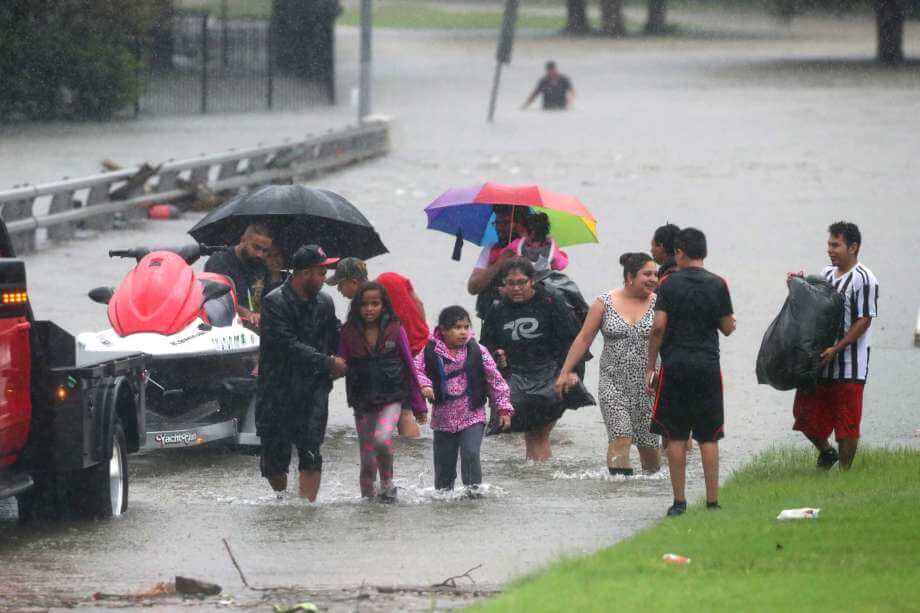
Harvey Impacts Houston Photo: Marie D. De Jesus
In this context, vulnerable describes communities where wages are low, educational opportunities limited, medical services insufficient, and means to evacuate inadequate. These communities tend to be populated by Americans of color and immigrants, and they are typically located near areas where intact forests were cut and natural resources extracted or land developed for industry without regard for either ecosystems or people who depend on them. By the way, intact forests mitigate the effects of powerful storms because of their capacity to absorb water and energy.

A very long time ago, people recognized that natural disasters disproportionately affect those who are poor. From a spiritual perspective, this disproportionality may conceal an obvious advantage for the struggle against social injustice.
For centuries, the Roman Empire once ruled the land between the Jordan River and Mediterranean Sea. After the destruction of the second temple in Jerusalem by the Roman commander Titus in 70 C.E., Jews continued to live and worship in their ancestral homeland. Sometime in the third century, the rabbis finished adding material to a collection of oral tradition, which they called mishnah. They also created a written version of this collection, which is referred to today as the Mishnah.

Jews living under Roman rule maintained a strong bond with the land of their ancestors. They built cisterns to store rainwater, terraced the hill slopes, and planted fields in the valleys. They raised sheep and goats and cultivated barley, dates, figs, grapes, olives, pomegranates, and wheat. Significant parts of their oral tradition centered on aspects of life that agriculture governed and seasonal weather patterns influenced.
One should not be surprised, therefore, to find guidance in the Mishnah for a public fast when extreme weather, in this case a drought, threatens the community.
עמדו בתפלה, מורידין לפני התבה זקן ורגיל, ויש לו בנים וביתו ריקם, כדי שיהא לבו שלם בתפלה While standing for prayer, they bring before the ark [in which the scrolls are kept] an elder who is familiar with the liturgy, who has children, and whose home is empty, so that his heart will be fully invested in the prayer.2
The elder whom they select to perform this task has three qualifications. The first he shares with other men who are present: He must be able to recite the appropriate prayer. The second qualification he also shares with other men who are present: He must be a father with dependent children. The third qualification he shares with fewer men who are present: He must be a father who lacks the means to provide adequately for his family. In other words, he is a poor man living in a vulnerable situation.
The poor man is chosen because he stands on the frontline of the consequences. He will be the first one to run short on food for himself and his children. He also will be the one who feels the effects most severely if drought persists. He recites the prayer before the ark in extremis: the lives of his family depend on it.
This old passage, which dates back to the early centuries of the Common Era, may be handled like a manuscript leaf that we place alongside big data and scientific research to humanize our conversation about vulnerable communities and the disproportionate load that they bear in an age of climate disruption. As civic-minded citizens and good neighbors, as people who are activated by a sense of urgency and responsibility and heightened self-awareness, we seek to help these communities prepare for the next extreme event, to support their recovery efforts in its aftermath, and to back them up in their fight against corporate and political freebooters who brutalize ecosystems for profit. This social justice agenda may sound a little naïve and appear to be sorely under-resourced, if we were to dismiss the opinion of one ancient epistle writer on struggling against evil. His perspective—when considered in the light of the Mishnaic passage that we analyzed above—nourishes the idea that a concert of prayers from the hearts of fully invested vulnerables can weaponize an ultraphysical struggle against greed and venality.3


 Donate