


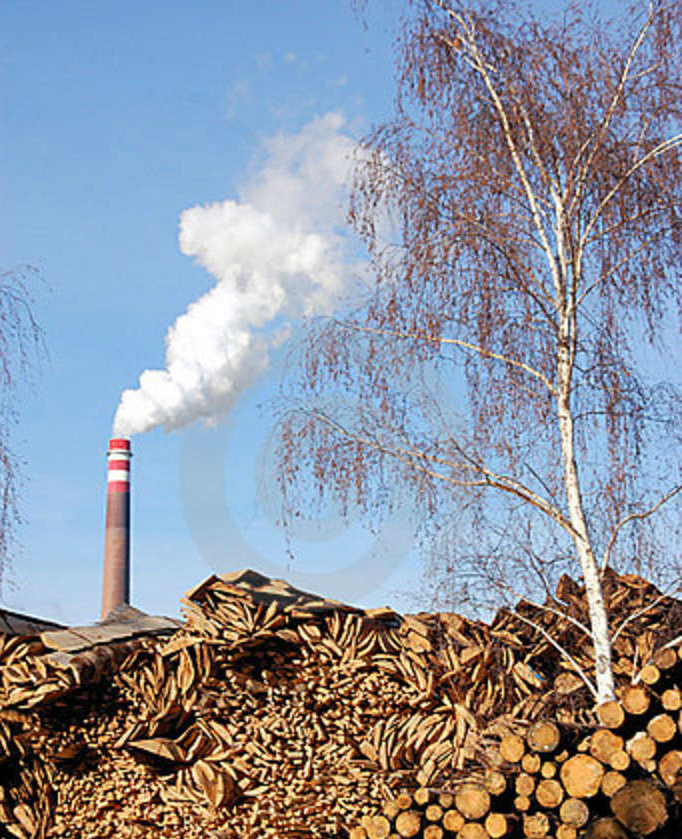
Two years ago the EPA wrote a blank check that exempted biomass facilities from carbon emissions regulations for three years, claiming that it would take that long to gather and analyze the scientific data accounting for the true environmental cost of this so-called energy “solution”. This decision gave biomass industry folks free rein to pump carbon dioxide along with all kinds of other toxic waste into our atmosphere in the name of “renewable energy.”
We thought and continue to think that this EPA deferral is ludicrous. We fought back by joining with a group of concerned organizations to file a lawsuit, contesting the EPA’s judgment. This week, a federal court deemed that the EPA acted outside their purview when they granted that deferral and that the Clean Air Act should and does apply to all industrial facilities, including biomass plants. At Dogwood Alliance, we couldn’t agree more. Now that federal carbon pollution limits apply to biomass, it will rapidly become apparent that this industry is not clean nor does it meet current standards for carbon emissions.
Your countless letters to the EPA combined with our lawsuit coalition have won a victory for forests! It’s not over yet, though. We still must wait to see how the EPA will choose to regulate stateside biomass facilities, while Europe continues to ship our forests into their furnaces to meet their own renewable energy quotas.
Below is the press release from our partners a SELC (the Southern Environmental Law Center):
Frank Rambo, Senior Attorney and Leader of SELC’s Clean Energy and Air Program, 434-977-4090
Washington, DC – A key federal court ruling today confirmed that Clean Air Act limits on carbon dioxide pollution apply to industrial facilities, including tree-burning power plants that burn biomass. The court vacated an exemption the U.S. Environmental Protection Agency had carved out for “biogenic carbon dioxide.”
The decision by a panel of the US Court of Appeals for the DC Circuit in Center for Biological Diversity v. EPA (D.C. Cir. No. 11-1101) found that EPA had improperly exempted all sources of biogenic CO2 from otherwise applicable permitting requirements.
“Today’s ruling upholds EPA’s authority to regulate pollution that drives climate change. The Court’s decision is grounded in an understanding that the science shows that biomass fuels, including tree-burning, can make climate disruption worse,” said Ann Weeks, Legal Director of the Clean Air Task Force, who argued the case for Petitioners and appeared on behalf of the Conservation Law Foundation and the Natural Resource Council of Maine. “The Court clearly noted that the atmosphere can’t tell the difference between fossil fuel carbon dioxide and carbon dioxide emitted by burning trees.”
“Burning trees to generate electricity is dangerous, polluting and ought to be limited to protect people and the environment,” said Kevin Bundy, a senior attorney with the Center for Biological Diversity’s Climate Law Institute. “This important decision will reduce respiratory ailments, protect forests and help ensure a healthier, more livable climate.”
“The science is clear that not all biomass burning is good for the planet and today’s ruling rightly affirms science as the guide for how EPA must now move forward on biomass energy production,” said Niel Lawrence, senior attorney at the Natural Resources Defense Council. “This decision will ultimately benefit the climate, as well as Americans who want to breathe easier and protect the forests that they love. It will also ensure that our investments in clean energy go to sources that are actually clean.”
“The Court’s decision is particularly important for the Southeast. Now we have an opportunity for a more sensible, science-based policy, one that avoids clear-cutting the region’s wildlife-rich forests for energy while intensifying climate change impacts,” said Frank Rambo, head of the Clean Energy and Air Program for the Southern Environmental Law Center, which is representing Dogwood Alliance, Georgia ForestWatch, South Carolina Coastal Conservation League, and Wild Virginia in the case.
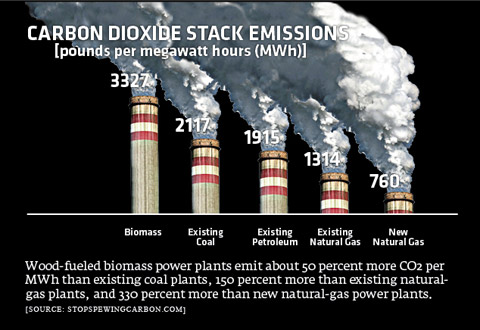
Emissions from power plants and other industrial facilities that burn biomass can accelerate global warming and contribute to a host of respiratory and cardiac problems. Biomass-fueled power plants emit significantly more CO2 per kilowatt produced than power plants that burn fossil fuels—even coal—and it can take decades before that excess CO2 is “re-sequestered” by subsequent plant growth. Under the Clean Air Act, facilities that are required to control their CO2 emissions must also control any “significant” emissions of other regulated pollutants, so the Court’s decision also means that communities near these plants will also benefit from reductions in pollution that causes asthma and other health problems. asthma and other health problems.

Bud Howell, former Dogwood Alliance board & staff member. He will be missed.
It was with great sorrow that we learned of Bud’s tragic passing on July 10th. He was deeply involved in our mission and played many roles here at Dogwood Alliance over the years – staff member on our Paper Campaign in the summer of 2005, then served in several officer roles – Secretary, Vice-Chair and eventually Chair of the Board of Directors during the years 2006 – 2008. He also always remained a cherished friend. Our love and support go out to his family and loved ones. Bud’s mother and loving friends wrote a beautiful obituary that says so much about his passion for protecting the natural world and his deep connection to animals, especially dogs and turtles.
“Bud’s friends remember him as generous, kind, loving, caring, brilliant, big-hearted, handsome, compassionate, irreverent, gentle, smartass, adventurous, funny, genuine, sensitive, and righteous. Bud had boundless creativity and a wild, imaginative wit. He was driven by compassion for people, animals, and all life. He was known to slam on the brakes to pick up turtles on the side of the road, take inconvenient detours to rescue endangered animals, and drive across the country to deliver rescued dogs to loving homes.”
That was Bud, and he will be missed.
Click here to read his full obituary.
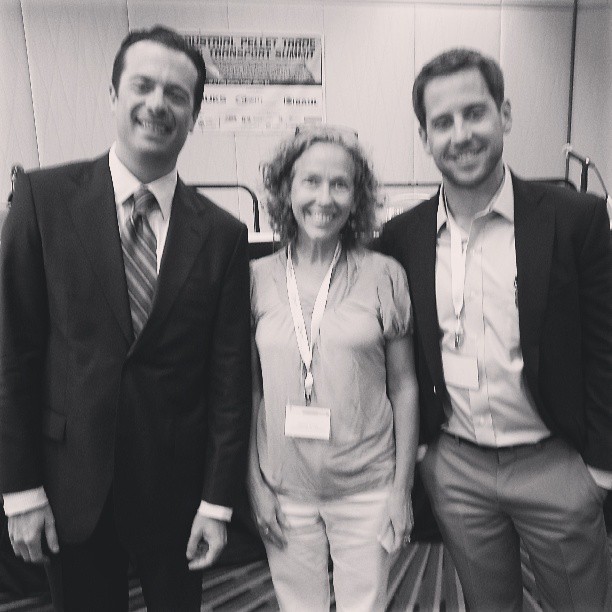
ED of Industrial Wood Pellet Association & Sales VP from Green Circle with Danna Smith
This week I attended the Industrial Pellet Trade and Transport Summit in Atlanta, a gathering of wood pellet manufacturers, European utility companies, wood suppliers and consultants organized by the Industrial Wood Pellet Association (IWPA), to discuss market development for wood pellet exports from the US South. I was impressed with the welcome I received from folks like Seth Ginther, the Executive Director of the IWPA, Todd Bush of Green Circle (owner of the second largest wood pellet plant in the US) and Nigel Hildyard of Eggborough Power in Europe. Although they were very aware of Dogwood Alliance and the launch of the “Our Forests Aren’t Fuel” Campaign challenging the logging and exporting of Southern forests to Europe to be burned to generate electricity, they seemed genuinely appreciative of an opportunity to engage with me. I, too, appreciated the opportunity to engage with them about the issues.
These are folks with whom I am sure I would enjoy taking a hike or having some conversations about life over beers. They did seem at least partially motivated by what they perceive to be an opportunity to be a part of a green energy revolution. I also give them credit for being smart entrepreneurs and sharp businessmen. After all, there is a growing market for wood pellets and money to be made. The companies that make up the IWPA are filling a niche and working to make it happen in the Southern US.
But here is the dilemma: the wood pellet manufacturers must position themselves as providing a low-carbon sustainable fuel alternative to coal because if they can’t…well, there simply won’t be any justification for their industry. I (and countless others) fundamentally disagree that burning trees is a clean, green energy solution.
While there are certainly some intelligent and even well-intentioned folks involved, I did not get the impression that the wood pellet industry or European utility companies are taking concerns very seriously or that they are truly on the cutting-edge (no pun intended) of corporate sustainability. For an industry that maintains it is a linchpin to a clean energy future, the way they talked about sustainability was so outdated it felt like I had stepped back in time.
The presentations at the Atlanta Summit again and again reinforced the message that there is really nothing to worry about in the Southern US when it comes to carbon emissions or forest sustainability, even though recent, countless, prominent scientific studies have documented reason for concern and there is mounting opposition from ENGOs in Europe and the US. For an industry claiming to hold the sustainability mantel, shockingly absent was any acknowledgement of the unique ecological values, species and ecosystem services of Southern forests, the historical loss of tens of millions of acres of natural forests to intensively managed pine plantations in the wake of increasing market demand for wood or the countless species in the region that are declining, rare and/or endanger of becoming extinct.
When I asked John Keppler, the CEO of Enviva, what role the wood pellet industry plays in the continued loss of natural forests to plantations, his response was something along the lines of, “we could have an intellectual discussion for days about how to define natural forests, but the most important thing is to keep forests in forests.” Translation: making sure there is enough wood to supply wood pellets to this growing market is more important than sustaining ecological diversity in the forest.
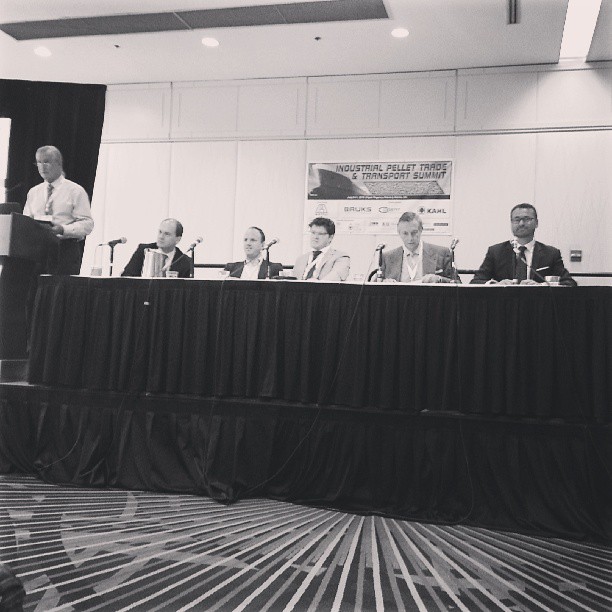
Representatives of European Utility Companies, including RWE
This seemed to be a major theme of the conference. Though the words “sustainable sourcing” were said over and over again, the focus was squarely on the “sustainability” of the wood supply. Equally as telling was the fact that the highly-criticized Sustainable Forestry Initiative (SFI) was highlighted in the session about forest certification. Rather than coming out of the gate with a strong sustainability platform, these guys are aligning themselves with the laggards. The whole experience felt so yesterday…so behind the curve of progress compared to the big players in the solid wood and paper market. I had to double check my calendar that it was indeed 2013 and not 1996!
Really Europe? This is your climate strategy? Taking us backward is not the way to the future.
Unspoken is the fact that burning trees for electricity increases rather than reduces carbon emissions. For the pellet industry to acknowledge this inconvenient truth would mean conceding that their whole business model is flawed and investments will be lost. Can’t let that happen, right? So they will be releasing a study of their own in the next several weeks, making the case that burning trees is good for the climate.
Those who are truly committed to solving the climate crisis, sustaining the world’s forests and not just out to make a quick opportunistic dollar will take concerns about the climate and forest impacts associated with burning trees for electricity much more seriously. True sustainability leaders don’t just refute environmental concerns, they embrace them, change course and become a part of the solution. The old ‘fox guarding the henhouse’ strategy just isn’t going to fly in the 21st century.
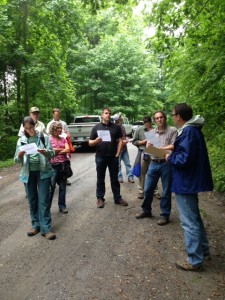
Peter Bates, Professor of Natural Resources at Western Carolina University, reviews restoration forest management on Balsam property in WNC.
What do you get when you bring together cutting edge non-profits, land trusts, consulting foresters, land managers, leading forest products companies with conservation-minded landowners in the beautiful Southern Blue Ridge? The Dogwood Alliance hosted 2013 Spring Carbon Canopy in Asheville, NC of course!
With common goals, 20 people came together in Asheville June 16-17th to review our current pilot projects in Western North Carolina, Southwest Virginia and around the Southern Appalachians. Even getting this group together is, of course, no small accomplishment. Enriched by the multiplicity of viewpoints, we put our heads together and checked-in on the ways our project can help more landowners conserve their land through our working forest model. We focused on the importance of collecting exacting carbon field data and deliberately stratifying forest types to more fully understand the carbon available to bring to market through the carbon offset protocols. On our field trip, I was awestruck once again at the incredible diversity Southern Appalachian forests. No offense, California, but our forests are just plain more diverse than West Coast forests. 😉
The Carbon Canopy Project is a multi-stakeholder initiative, involving large consumers and producers of wood and paper, landowners and conservation organizations working together to advance forest conservation and sustainable forestry in the Southern US. Together, we develop forest carbon projects that generate new revenue for private landowners who commit to long-term Forest Stewardship Council-certified forestry as well as the protection and expansion of forest carbon sinks. We all know that for too long selling timber has been the primary way for landowners to see revenue from their forests.
Co-led by Dogwood Alliance and office products retailer Staples, Carbon Canopy is working to shift this paradigm by creating support for ecosystem service markets and developing projects in the Southern Appalachian region. These projects are designed to reward landowners for good forest management practices that conserve and enhance forest carbon stocks. The carbon stocks are then turned into a new revenue stream as carbon offsets.
This is a new economic vision we are building, one that rewards good stewardship, the maintenance of natural forests while leaving trees in the woods. Based on the amazing natural generosity of Southern hardwood forests, this model can provide a revenue stream for forest products, and carbon will improve the landowner’s forest both as habitat and for high value timber. This is quite a different vision from the push for woody biomass burned for energy. In that model, based on faulty carbon accounting, Southern forests go up in smoke.
Some of the largest forest industry lobby organizations, including the National Alliance of Forest Owners and the US Wood Pellet Industrial Association are organizing a coordinated effort to counter Dogwood Alliance and NRDC’s work to stop the large-scale burning of Southern forests for electricity. Last week, Rolling Stones’ keyboardist and Georgia pine plantation owner, Chuck Leavell, wrote an op-ed in the Wall Street Journal, responding to the launch of the Our Forests Aren’t Fuel Campaign and the paper’s front-page story linking the South’s largest exporter of wood pellets to Europe to the clearcutting of wetland forests. Entitled “Why US Wood Can — And Should — Power Europe” Chuck’s opinion piece completely missed the beat. His arguments were reminiscent of an old, worn-out song people down South are tired of hearing, outdated and out-of-touch.
Numerous scientific studies, including one published last week from researchers at Dartmouth College, have documented that burning trees for electricity releases more carbon than burning coal. This is a big deal given the global consensus among scientists that we must reduce carbon emissions over the next several decades to avoid the catastrophic effects of climate change. While some forest landowners (like Chuck) might benefit financially in the short-term from the South’s exploding wood pellet export market, the longer-term economic losses on a global scale in the wake of catastrophic climate change will be staggering. And beyond the economic losses, catastrophic climate change threatens life on Earth as we know it.
Ignoring the science for the short-term economic gain of a few at the expense of so much is simply unconscionable, but that’s just what some in the industry intend to do. Chuck’s op-ed was just the beginning of a major counterattack on Dogwood Alliance and NRDC that’s being promoted by some state forestry association lobby groups in the South.
It’s important for policymakers to remember that the loud voice of some in the Southern forest industry does not necessarily represent the whole. Over the past decade, major wood and paper producers have made significant strides in improving practices to better protect water quality, wildlife habitat and carbon sinks. They are working hard to maintain a competitive edge in today’s market that increasingly demands the products they buy meet a high standard in the woods. We support the efforts of companies like Columbia Forest Products, Domtar, International Paper, Georgia-Pacific and others who are helping lead the Southern forest industry down the smart path of continuous improvement.
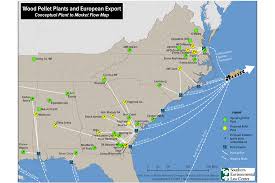
In 2012 the Southern US became the largest exporter of wood pellets to Europe where they are burned for electricity. (Photo courtesy of Southern Environmental Law Center)
These traditional markets, which support hundreds of thousands of jobs, stand to suffer in the wake of a heavily subsidized wood to energy market. At the same time Chuck Leavell and forest industry lobby groups are touting the export market as the South’s economic savior, The National Wood Flooring Association, wrote a blog in response to the launch of our campaign stating “A report from the Hardwood Review Express indicates that there may be too little forestland to supply the rapidly expanding wood pellet industry currently growing in the southern U.S., especially as the construction industry recovers.”
It makes one wonder who these lobby groups attacking our campaign really represent. Do they primarily represent US companies that support US manufacturing jobs, or are they supporting European utility companies like Drax, Electrabel, RWE and others that intend to exploit our forests and out-compete American industry through the heavily subsidized logging and burning of America’s forests?
Over the coming year, we can expect a lot more “green smoke” and “money talk” promoting the export of Southern forests to Europe as good for the environment and economy. But, I suspect most folks who are really paying attention and doing their homework are not going to buy it. A much better economic path forward is to support traditional wood products companies working to improve forest management, help landowners generate revenue from protecting forest carbon on the landscape and scale-up solar and wind power, which can bring good paying, manufacturing jobs to rural communities. Our Forests Aren’t Fuel Campaign will continue to advocate for these solutions while bringing evidence, science and a diversity of voices to the forefront, documenting that logging our forests, exporting them overseas and burning them to generate energy is archaic.
With our recent victory on the IP paper campaign and the Our Forests Aren’t Fuel campaign launch, we wanted to spread the word, connect with long-time and potential supporters, and just plain celebrate. Kind and generous Dogwood fans hosted gatherings, parties, and events for us in the South, inviting their friends, families, colleagues, and other environmentalists to join in the fun!
Some highlights were:
Dogwood’s biggest event of the year is a hugely popular free sustainability festival in Decatur, Georgia. Non-profits, artists working in recycled materials, green vendors, local restaurants, purveyors of sustainable spirits, and hot bands gather as like-minded people celebrating all the ways that, together, we can create a clean energy future. Check out our Facebook photo album!
[youtube]http://www.youtube.com/watch?v=__jcrIeB_58[/youtube]
John and Julie Stehling, owners of Asheville’s beloved diner Early Girl Eatery, hosted a lovely get-together to spread the word about the important work Dogwood does to protect our Southern forests and also to celebrate our IP victory. We held a drawing, and one lucky attendee won a dogwood sapling while another won a case of Terrapin Beer‘s Tree Hugger ale, their newest year-round beer developed in partnership with Dogwood Alliance. Part of the sales of Tree Hugger go to support Dogwood’s forest protection work.
Durham’s ever-prominent Full Steam Brewery focuses on creating distinctly Southern craft beers and has a distinctly Southern identity. In solidarity with Dogwood’s mission to preserve Southern forests, Full Steam hosted a lively gathering at their brewery to support Dogwood while giving Durham folks the opportunity to learn more about how they can join the movement and take action to protect our forests.
Maggie B’s Wine & Specialty Store based in Weaverville generously pulled together a free wine tasting, donating a percentage of wine bottle sales to Dogwood Alliance. It was a large, congenial group sipping on wine while talking about our favorite special places in the South and how to preserve them. What a wonderful way to make new friends!
Atlanta-based nature poet Stephen Wing organized an Earth Day poetry reading, donating the entirety of entry fees to Dogwood Alliance. He aptly chose the all vegan, worker-owned Firestorm Cafe & Books in Asheville as the site of the reading. The event was open mic, so everyone had an opportunity to share stories and poems that cenetered around their love of nature as well as our need to stop the destruction of our natural world.
West Asheville’s Isis Restaurant & Music Hall hosted Dogwood’s official IP victory celebration along with our joint Tree Hugger ale launch with our partner Terrapin Beer. The Isis appetizers were delicious, and we cracked a cask of Tree Hugger for the occasion; it was so tasty that, by the end of the night, the cask was empty! One of the winners of our drawing took home a case of Tree Hugger ale, and the other lucky winner took home a treehugger hammock courtesy of Black Dome Mountain Sports.
—–
All these fun events, and we’re only halfway through the year! Be sure you’re on our email list so that we can let you know when we’re having a party in your neck of the woods!
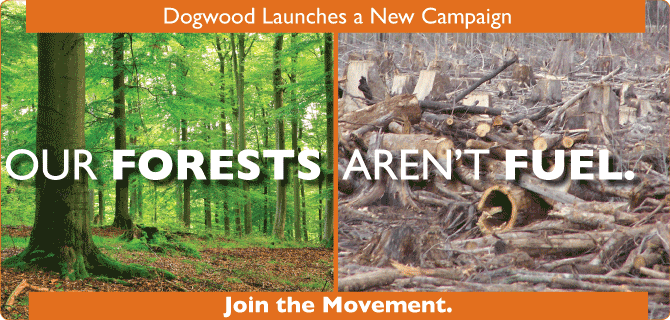 We’ve been busy here at Dogwood Alliance in the days since the Our Forests Not Fuel campaign launch in partnership with our allies at the Natural Resources Defense Council (NRDC). Most importantly, we’ve been spreading the word about these big utility companies who are cutting down our trees to produce electricity while calling their unsustainable practices “green” and “renewable.” The more people who know about the Virginia-based Dominion Power and UK-based Drax Group buying millions of tons of wood pellets from the Maryland-based wood pellet producers Enviva, the better. We need people to know that these companies are cutting down the South’s 100-year-old wetland forests and using whole trees to fire their biomass power plants. We need the entire world to sit up and recognize that biomass is not the way to a clean energy future. We’ve gotten media outlets all over the world to share this storyabout this emerging threat to forests and to life on earth as we know it, including major ones, such as:
In the articles, burning wood for electricity is called “absurd”, “crazy,” and even “lunacy,” but the fact of the matter is that these companies have invested billions of dollars to make this a reality. So, now that many of us know about these practices that are devastating to our forests, what can we do? So far, with the help of activists and supporters, Dogwood Alliance has sent over 13,000 emails to these top three forest destroyers. We must send a clear message: Our Forests Aren’t Fuel! Please join the movement: get educated, take action, and donate today! [youtube]https://youtu.be/_NFLvYfXdJM[/youtube]
After 10 years of campaigning, Dogwood Alliance was finally able to form a partnership with International Paper (IP) to advance forest conservation in the Southern US, the biggest paper producing region in the world. To put this pivotal historical moment into context, IP is the biggest paper producer in the world, so their commitment is a gamechanger for the Southern forests products industry. The day we announced our partnership with IP, Danna Smith, Dogwood’s Executive Director, said,
“Today represents a milestone in a decade-long trend of improving forestry practices in the paper industry, and we are pleased to finally be in a position to give IP public support for its efforts. IP is the dominant player in the US paper market and this new initiative will not only have broad-sweeping positive impacts for Southern forests and communities but also set an important standard for others to follow in addressing long-standing public concerns with industrial logging in the region.”
What does all this add up to? A win for our forests. The value of our forests cannot be overrated. Our forests are vital for clean air, clean drinking water, flood control, wildlife habitat, and protect us from climate change. Not only that, but their presence is essential for our quality of life as inhabitants of this planet. We must protect them and work together toward better forest management systems and practices and toward a sustainable, clean energy future.
LEED, which stands for Leadership in Energy and Environmental Design is the world’s leading green building rating system and has been particularly important in supporting good forest management in the US South through the systems recognition of the Forest Stewardship Council (FSC) certified wood. Overall LEED is an important tool for improving buildings because of its forward-looking position on forests, energy efficiency and chemicals of concerns. Now this successful private, voluntary, system is under attack by lobbyists from old-guard forest products companies including Weyerhaeuser in North Carolina and others around the country.
There have been some important developments with regard to the attacks on LEED at the federal and state levels — as well as a counter-attack on the timber lobby that is driving efforts to ban LEED along with their friends in the chemical/plastics industry. Here in North Carolina, in just a few days, the state senate will vote on a bill (HB 628) that would prohibit LEED from being used for state construction, all because LEED doesn’t reward the use of wood “certified” by the Sustainable Forest Initiative, the timber industry’s greenwash forest certification system, which allows large-scale clearcutting, logging of endangered forests, conversion of natural forests to plantation, and widespread use of toxic chemicals in forest management.
This is just more of the same sad story environmentalists know too well. Big business cries about interference from government while touting the creativity of the private sector, only to whine to their “friends” in government to bail them out when they lose on their own merits. Enough is enough. Green building really should be green and FSC is a better forest certification system. With the support of Dogwood Alliance and concerned people across the South, the forest products industry is making progress and the marketplace has rewarded the green winners. Let’s not turn back.
[youtube]https://youtu.be/5IzM4dYOvZY[/youtube]


 Donate