


Welcome to Part Three of our four-part forest documentary series. We’ve scoured the land to bring you a curated list of the best forest documentaries! Not sure what to watch this weekend? Don’t worry; we’ve got you covered.
You may ask, “What is an old growth forest?” It’s a forest that has been allowed to grow and mature for a long time, usually at least 100 years. Wow! Unfortunately, old growth forests are vanishing across the planet as logging intensifies. These incredible places are so important for wildlife habitat, water filtration, and the incredible amounts of carbon they can store. Not only that, but they are beautiful and awe-inspiring. Go on a journey with us to visit remarkable old growth forests from all across the world!
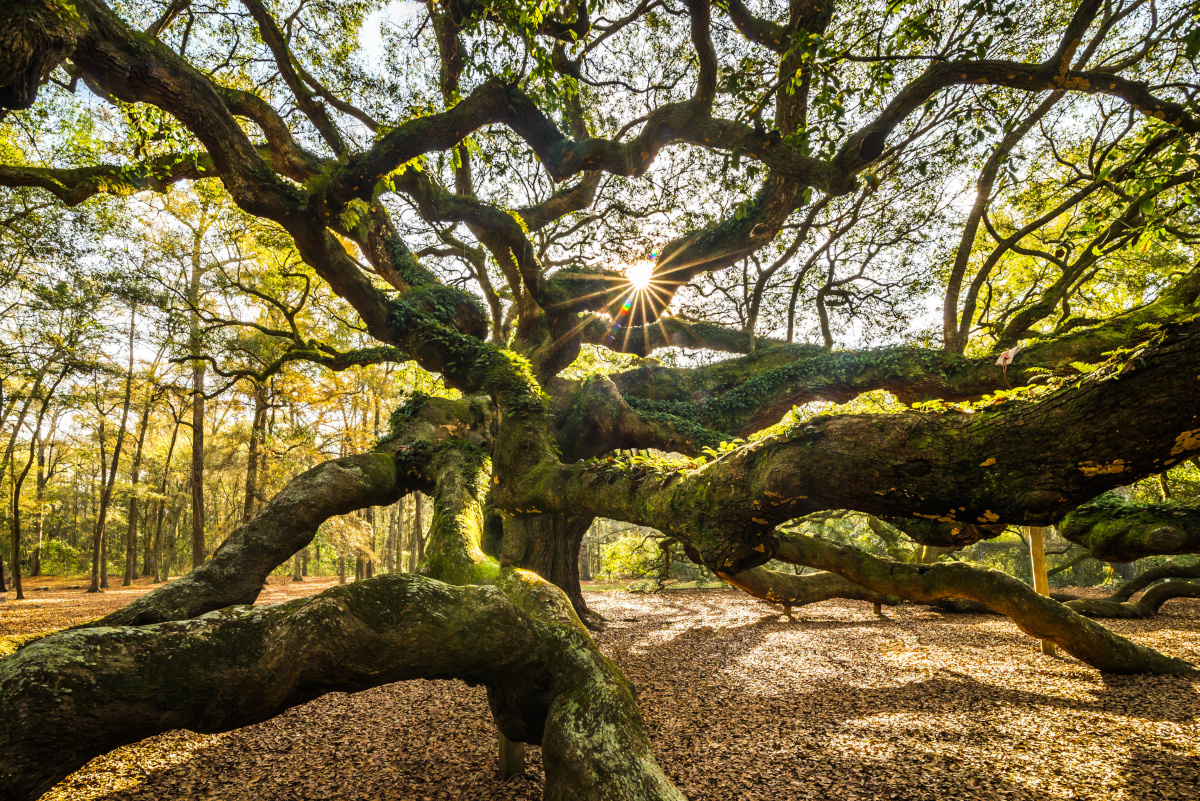
This National Geographic short documentary features an international team of scientists and explorers who go on an extraordinary mission in Mozambique to reach a forest that no human has set foot in. The team aims to collect data from the forest to help in our understanding of how climate change is affecting our planet. But the forest sits atop a mountain, and to reach it, the team must first climb a sheer 100m wall of rock. Where to watch: Available on YouTube.
A wilderness explorer searches for the largest old growth tree still standing near Port Renfrew, Canada, a logging town on the brink of collapse. This cinematic adventure into the old-growth rainforests of British Columbia explores the choices faced by many forest communities: do we remain focused on dwindling timber profits or reinvent ourselves into an outdoor recreation and tourist economy?
When Old Growth Ends tells a love story about the Tongass National Forest of SE Alaska through the eyes of the salmon, the old-growth trees, the Indigenous peoples, and a group of women with an affinity for wild places. The documentary illuminates how the failing timber industry and its government enablers have ruptured the heart of the Tongass, leaving the last remaining old-growth temperate rainforest in the nation vulnerable to completely unraveling. Where to watch: Available here.
We couldn’t say it any better than Patagonia Films does of their feature length documentary:
“Quietly, patiently, trees endure. They are the oldest living beings we come to know during our time on earth. They provide our shelter, our fuel, our companions, and—in some cases—our divinity. They are living bridges into our planet’s enormous past, their obscure stories written into their rings over centuries and even millennia. Treeline takes us to the enshrined cypress groves of Japan, the towering red cedars of British Columbia, and the ancient bristlecones of Nevada, following a handful of skiers, snowboarders, scientists, and healers as they move through these giants and explore a connection older than humanity.”
Where to watch: Available on YouTube
A documentary about the Redwood forest landscape. A forest where the tallest and largest trees on the planet can be found. The documentary includes interviews with Redwoods experts, foresters, conservationists, Native basket weavers, rangers, and naturalists.
Part 1: Top 5 Forest Preservation Documentaries Part 2: Top 5 Forest Restoration Documentaries Part 4: Top 5 Communities and Forests Documentaries
Guest post by Emma Dawson
The Southeastern United States is home to a variety of reptile species, some of which you’ve probably seen in real life! In fact, in 2016 the area was named the world’s 36th biodiversity hotspot. Reptiles are an important part of this biodiversity. Lizards, turtles, snakes, and crocodiles are scaly animals that fall into this category. The region is home to over 450 reptilian species and subspecies. About a third of them are endemic – that means they aren’t found anywhere else in the world!
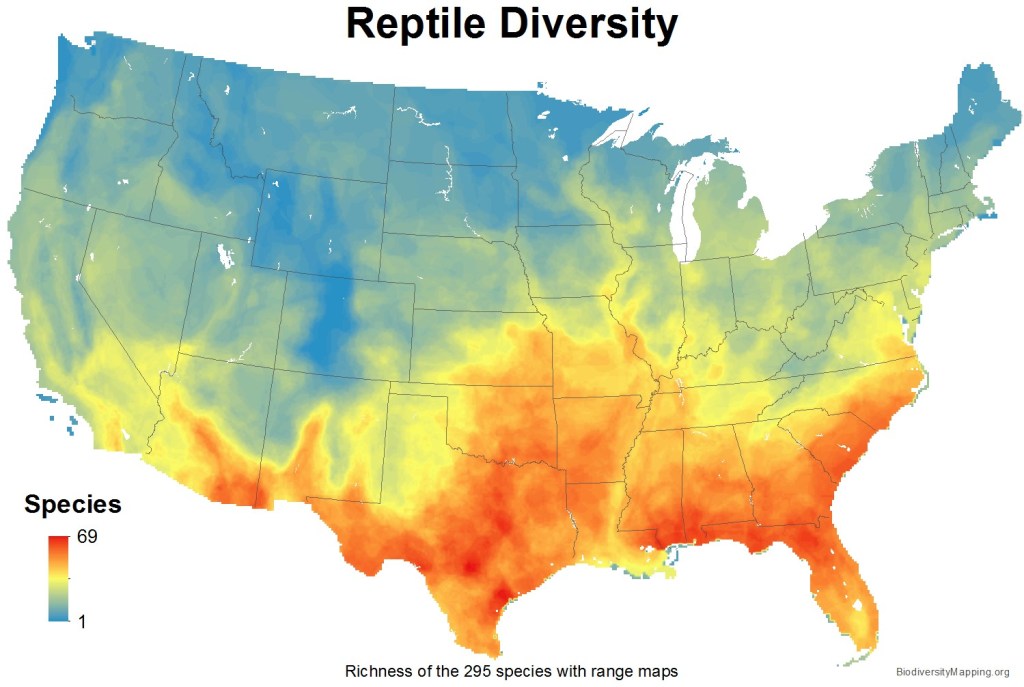
Sadly some of these critters are losing their homes. Habitat destruction has caused some reptile populations to fall to low levels. Let’s take a closer look at some of these vulnerable species.
Blink and you might miss them: bog turtles are the smallest turtles in North America. They’re usually only 4.5 inches long! You can recognize them by the orange patches they have on both sides of their head. They live in mountain bogs and wetlands in the Southern Blue Ridge Mountains of Georgia as well as North and South Carolina. They like to live in areas with wet soil, thick moss, and deep layers of mud, but they also need open, sunny areas for basking and nesting.
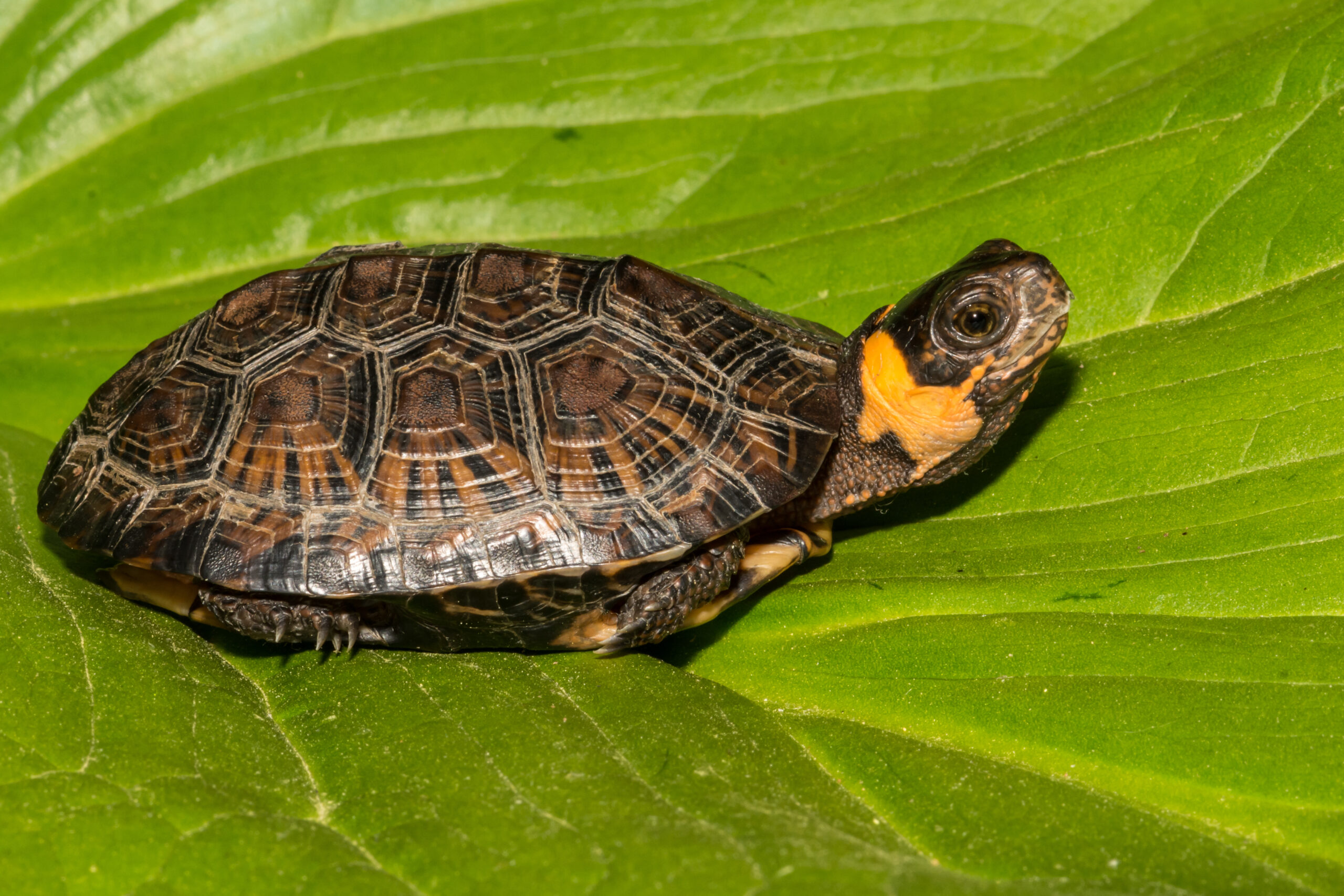
Only 4,000 to 6,000 individual bog turtles currently live across 100 sites. Habitat loss is a big threat to these little ones with only 10% of mountain bog habitat remaining in Southern Appalachia. These areas are often drained and developed. That limits the ability of turtles to travel through wetland environments. The International Union for Conservation of Nature (IUCN) is an organization that maintains a database of the status of species around the world. The IUCN lists bog turtles as critically endangered. That means that they’re threatened with global extinction. The US Fish and Wildlife Service placed bog turtles on the Endangered Species List in 1997, so these turtles and their habitat are protected by the federal government.
As its name suggests, you can recognize the Southern hognose snake by its upturned snout and wide neck. They’re easy to confuse with diamondback rattlesnakes. But, unlike its slithering look-a-like, Southern hognose snakes rarely bite. Instead, they may hiss, fake striking, and eventually play dead. This has earned them a variety of nicknames, including hissing adder, blow viper, and several others. These snakes dwell in longleaf pine forests, living in dry, sandy soil where they can burrow underground.
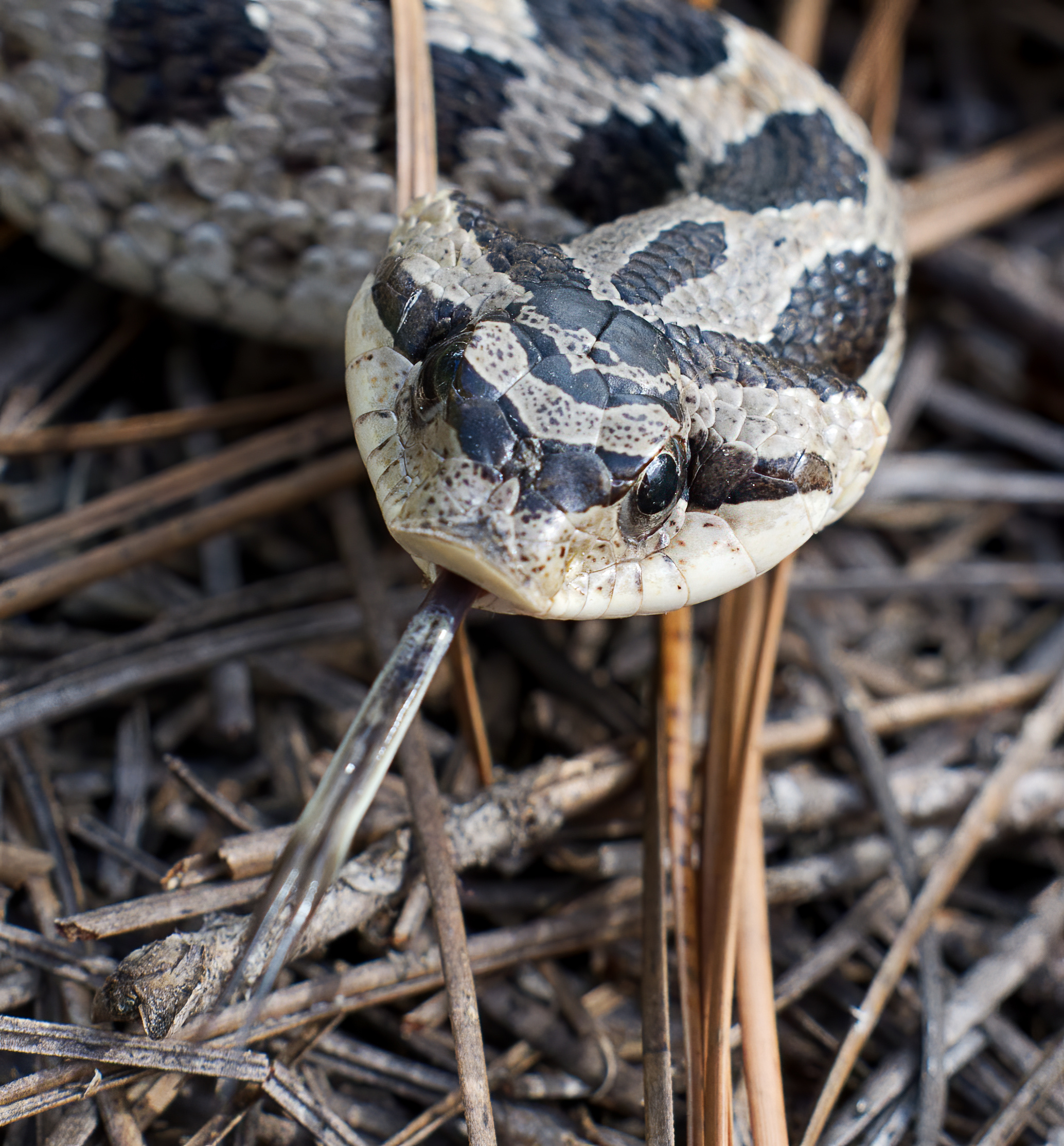
The IUCN has listed Southern hognose snakes as vulnerable. While this is not as bad as the critically endangered bog turtles, it still means that these snakes are threatened with global extinction. In fact, they may be the “rarest and most threatened snakes in North America”. Like bog turtles, Southern hognose snakes suffer from habitat loss with the decline of their longleaf pine habitat. Road mortalities are also common because they sometimes use the hot asphalt to warm themselves. Southern hognose snakes used to live in many states throughout the Southeast, but we haven’t been able to find them in Alabama or Mississippi, their old stomping grounds, since the 1970s. How can we change that? The best things to do are protect pine forest homes and educate folx about how harmless these snakes are.
At first glance, this gliding critter looks like an ordinary snake. Look again! Florida sand skinks are actually lizards with four small legs that are basically non-functional. This slender reptile is usually grey or brown. They have shiny scales and are only four to five inches long. The coolest thing about these skinks is that they can “sand-swim” a few inches below ground, leaving wave-like patterns at the surface. They’re usually found in sandy areas with shrubby vegetation and bare patches of sand, and they are endemic in central Florida.
The IUCN lists the Florida sand skink as vulnerable, and it is classified as federally threatened. This means that this species might become endangered soon, and the government has given it extra protection. The sandy areas they live in are disappearing. Up to 90% of their scrub ecosystem has been lost to development and agriculture. That’s not ok! We need to protect them! To do that, we’ve got to protect and expand the habitats where they make their homes.
Like the Florida sand skink, the gopher tortoise enjoys spending time underground. In fact, up to 80% of its life is spent in burrows. These tortoises have stumpy hind feet and flattened shovel-like forelimbs covered with thick scales, which help with digging. Gopher tortoises may only be nine to eleven inches in length, but they play a very big role in their ecosystems. Their burrows serve as shelter to all kinds of other animals, including burrowing owls, mice, snakes, and rabbits. Gopher tortoises share their homes across the South in Georgia, Florida, South Carolina, Mississippi, Louisiana, and Alabama.
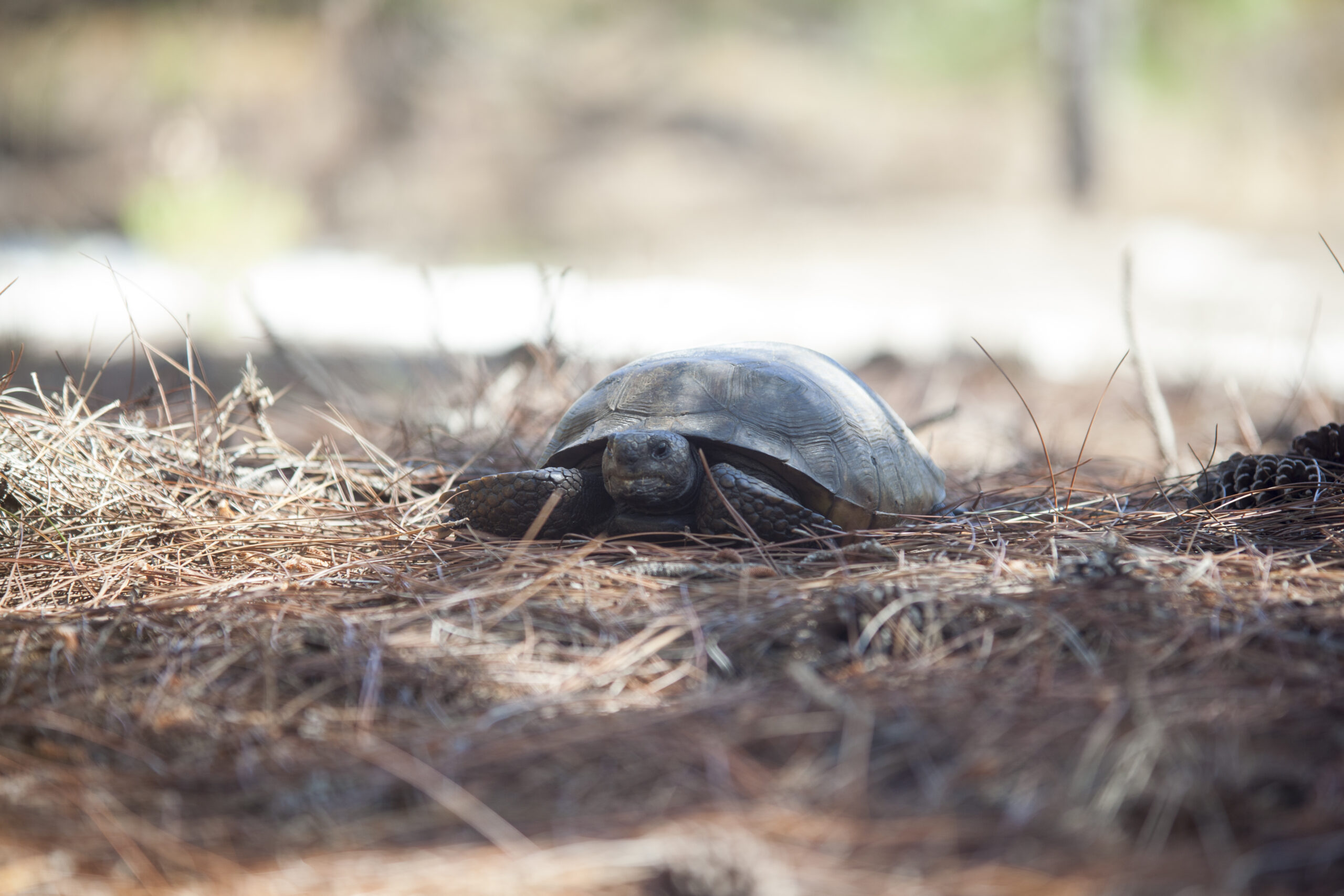
The IUCN lists the gopher tortoise as vulnerable. They’re classified as threatened in their western range of Mississippi and Alabama. Their biggest threat is loss of their home habitats of longleaf pine sandhills, scrub, and coastal dunes. Us humans also like to build our houses on the same high, dry land that gopher tortoises inhabit. Phosphate, limestone, and sand mining are also a problem for them in central Florida. When we try to relocate these tortoises to safety, they usually try to make their way back home. These homeward journeys can be very dangerous and lead to road mortalities. The good news is that a plan is already in place to protect these critters! The Florida Fish and Wildlife Conservation Commission has plans to restore gopher tortoise habitat and increase their numbers in areas where they’ve declined.
You don’t have to be a scientist to help protect these reptiles! Here are some ways you can help out:
You can become a citizen scientist! What does that mean? Citizen science is a way that scientists work with the public to collect data. You can help scientists get the information they need to better understand critters and their homes. HerpMapper is a website that lets you submit your own pictures of reptiles and amphibians that you see in nature. This data is then used for research and can help scientists know where reptiles are living.
You can help to fight climate change! Reptiles are sensitive to changes in our climate. The warming earth can also hurt their habitats. You can help change this by supporting good climate policy and voting for officials who are fighting climate change. You can also reduce your own carbon footprint by using climate-friendly transportation, eating locally grown food, and reducing your electricity use.
Did you enjoy learning about these cool reptiles? If so, why not show us?
Share your favorite reptile photos or videos and tag us on Instagram, Facebook, or Twitter!
Want to do more?
Become a Forest Defender today! Your monthly gift will protect the reptiles and biodiversity of the South.
Join our email list to get new Biodiversity in Your Backyard sent directly to your inbox!
Emma Dawson is a rising third year at the University of Virginia and summer intern at Dogwood Alliance. She is currently pursuing a Bachelor of Science degree in Environmental Science, which she hopes to apply to research opportunities in graduate school and beyond. Emma loves watching and playing soccer, cooking, and spending time outdoors with friends and family.
Guest Post By Brianna Cunliffe
North Carolina’s forests are in peril. Governor Cooper and state laws fail to stop destructive logging and dirty bioenergy. The timber industry claims carbon neutrality, evading accountability for the harms it generates. But across party lines, North Carolinians are getting tired of the greenwashing. Dogwood Alliance asked 1,000 people how they felt about the destruction of our forests. The results were astounding: Our communities have had enough of polluting industries ravaging our precious resources. They’ve had enough of devastating clearcuts, enough of harmful air pollution from wood pellet plants. Enough of policies that ignore science and don’t value forests as complex, living ecosystems instead of just dead timber that turns a buck. Enough of communities being treated like dumping grounds. State leaders must listen to the people speaking out against these harmful industries. The people have clearly expressed that they see far more value in forests as beautiful spaces to recreate than resources to be logged.
Governor Cooper and the state legislature must act to keep their commitment to the people of this state. They must stop the rise of industrial forestry and bioenergy before it’s too late, before our priceless forests vanish forever.
Less than a third of state residents believe that logging laws are adequate in NC. It’s no wonder since the logging industry destroys over 200,000 acres of forest every year. The impacts of industrial forestry aren’t even considered in the state’s records of greenhouse gas emissions.
7 in 10 residents believe the logging industry should be held accountable for its emissions (71% agree, 16% unsure, 13% disagree).
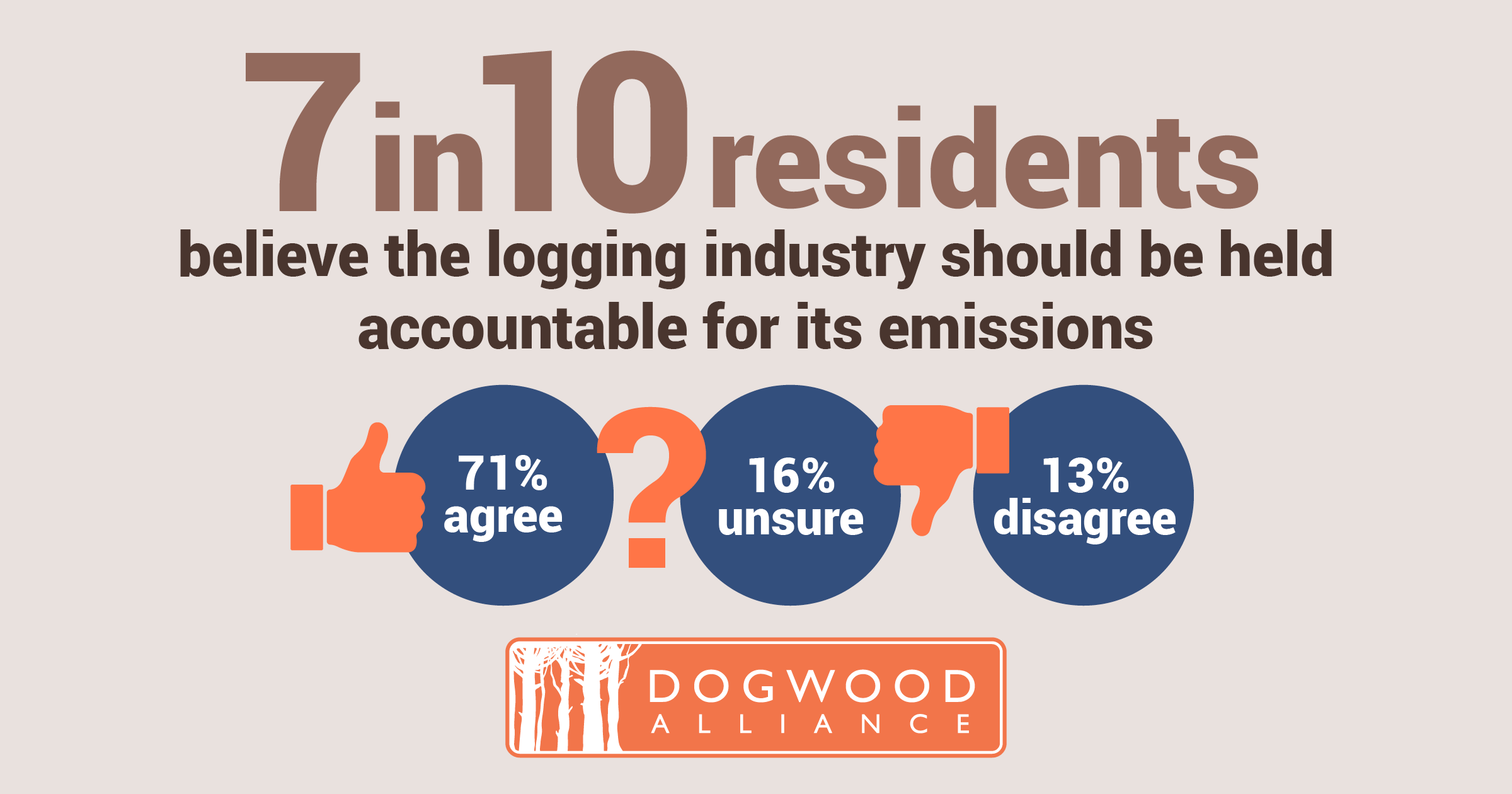
Yet this key piece of accountability is still missing from North Carolina’s Clean Energy Plan. The US Forest Service has acknowledged that timber harvesting was the largest source of gross emissions from US forests between 2006 and 2010. What’s more logging is the biggest driver of forest carbon loss in the US. That’s five times more than the carbon storage lost from development, agriculture, and fire combined. These problems are critical in North Carolina where logging from the wood pellet sector alone destroys 164 acres of forest each day.
An industry-skewed accounting system obscures harmful emissions by confusing this destruction with questionable claims of carbon benefits from “industrial forests”. Although the logging industry claims to replace the trees they cut, this practice doesn’t solve the problem of lost carbon storage. These tree plantations store 50% less carbon than our irreplaceable natural forests. The timber industry cuts down thriving ecosystems to produce short-lived wood products that will soon end up in landfills. Over 85% of carbon from all wood products, including lumber, is in the atmosphere within 100 years. A majority of North Carolinians believe we should stop supporting industrial pine plantations at the expense of natural forests (17% keep subsidizing, 32% unsure, 51% stop).
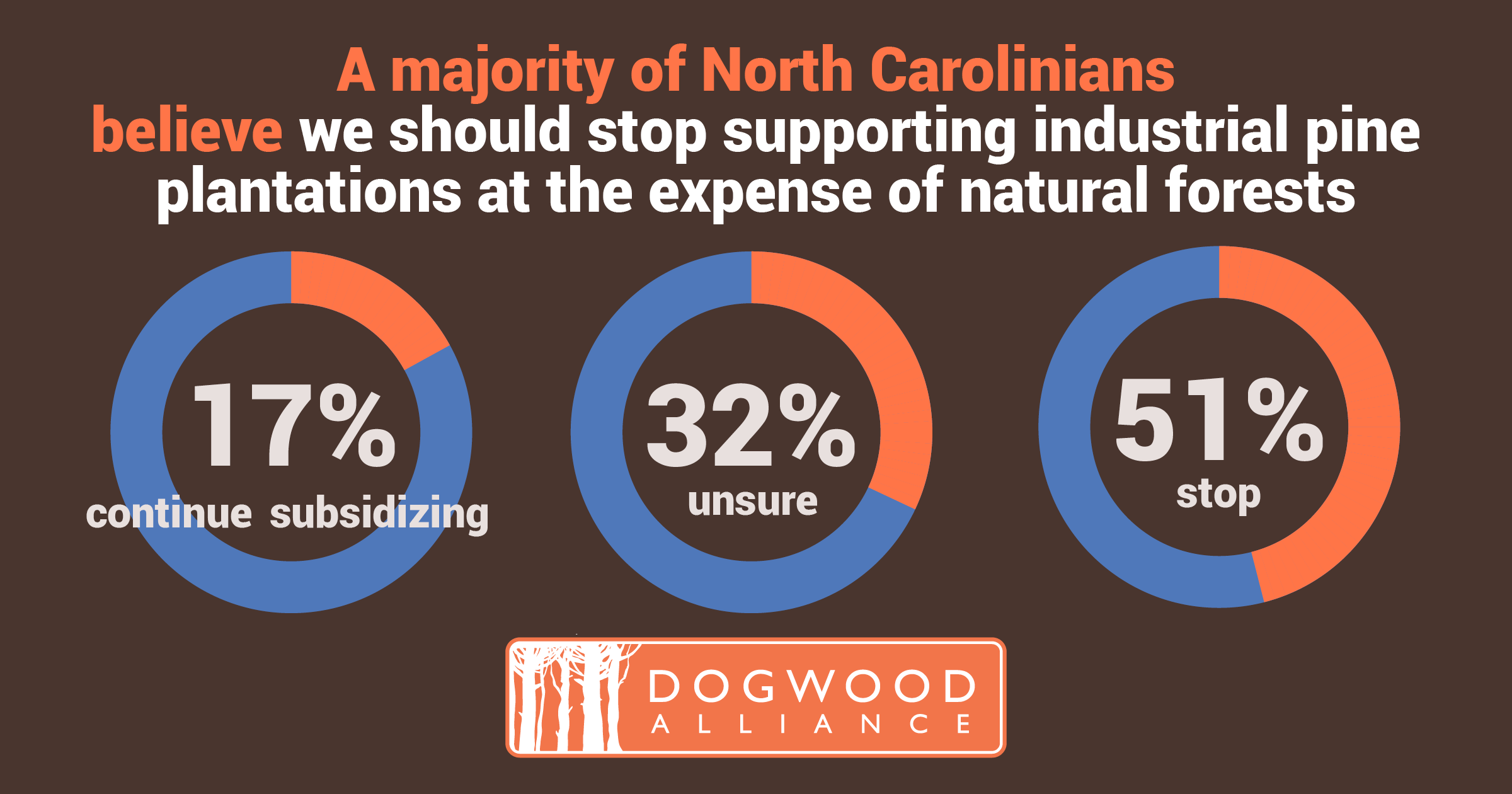
So why are we still subsidizing this harmful industry? Why won’t the state government tell us about the emissions coming from the forestry industry and hold them accountable?
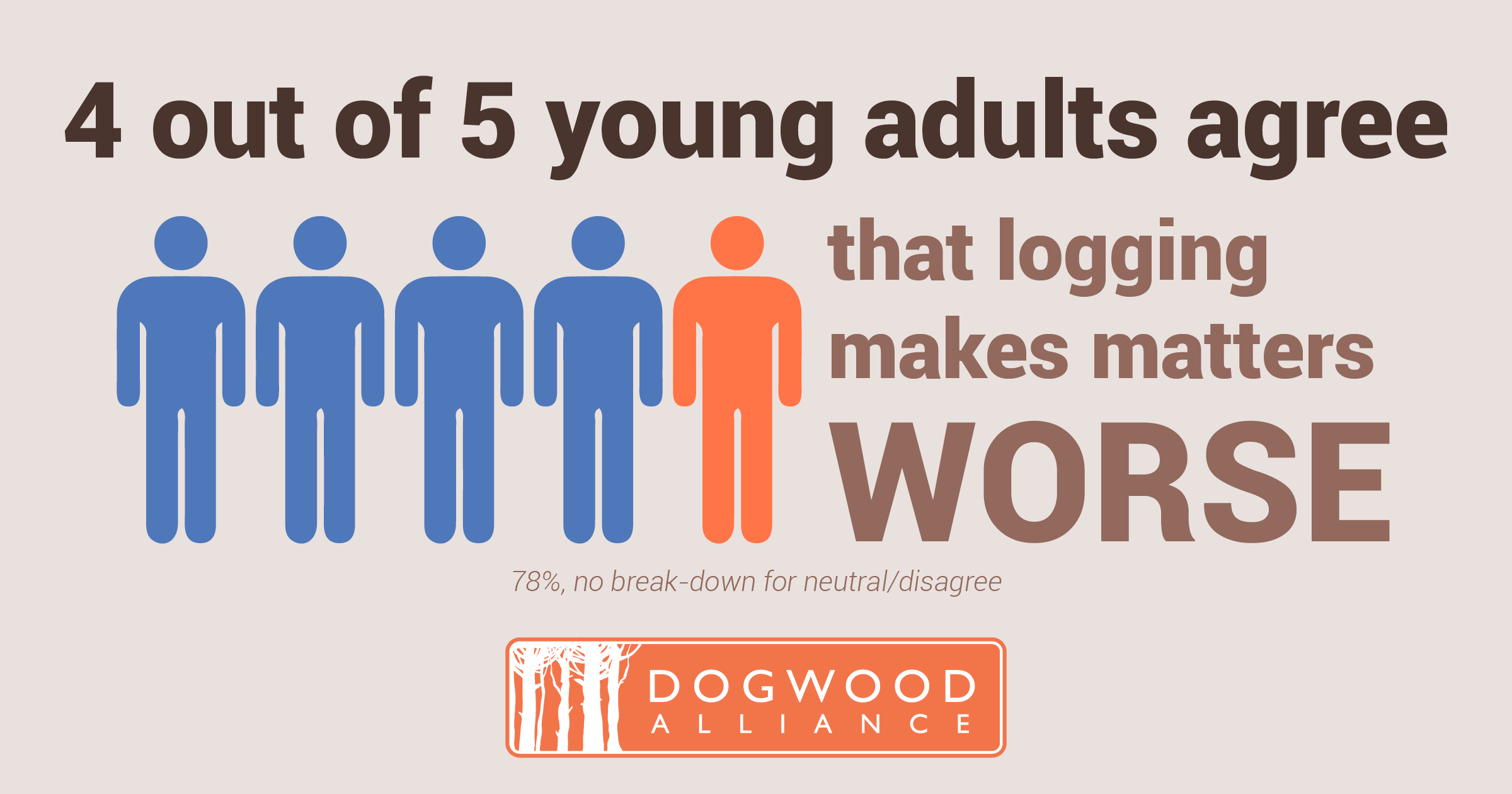
Logging doesn’t just harm communities who live near the devastation of clearcuts. The destruction of our forests also harms state-wide air quality and hurts resilience. The more trees the timber industry cuts down, the more vulnerable our communities are to disasters like hurricanes and floods. Young North Carolinians, who fear the future impacts of climate change, are demanding change: 4 out of 5 young adults agree that logging makes matters worse (78%, no break-down for neutral/disagree).
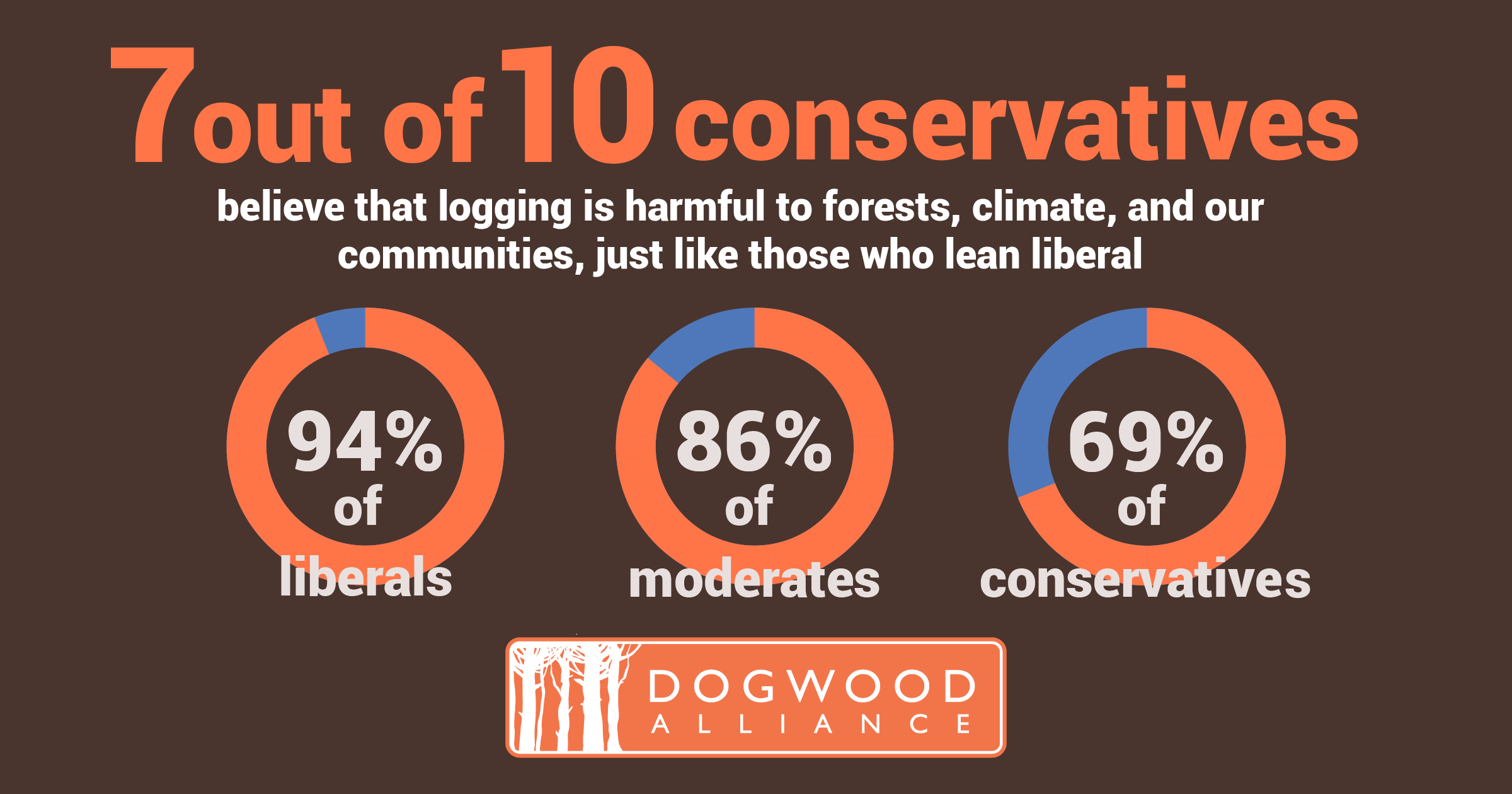
There’s no partisan divide on this issue, either. 7 out of 10 conservatives believe that logging is harmful to forests, climate, and communities, just like those who lean liberal (94% of liberals, 86% of moderates, and 69% of conservatives).
No matter your political identification, it’s clear that our forests are critical. They nourish the air we breathe, the water we drink, the places we recreate, and the communities we call home. But traditional logging isn’t the only threat our forests face. The rise of bioenergy, which burns wood pellets to generate electricity, risks making the destruction even worse.
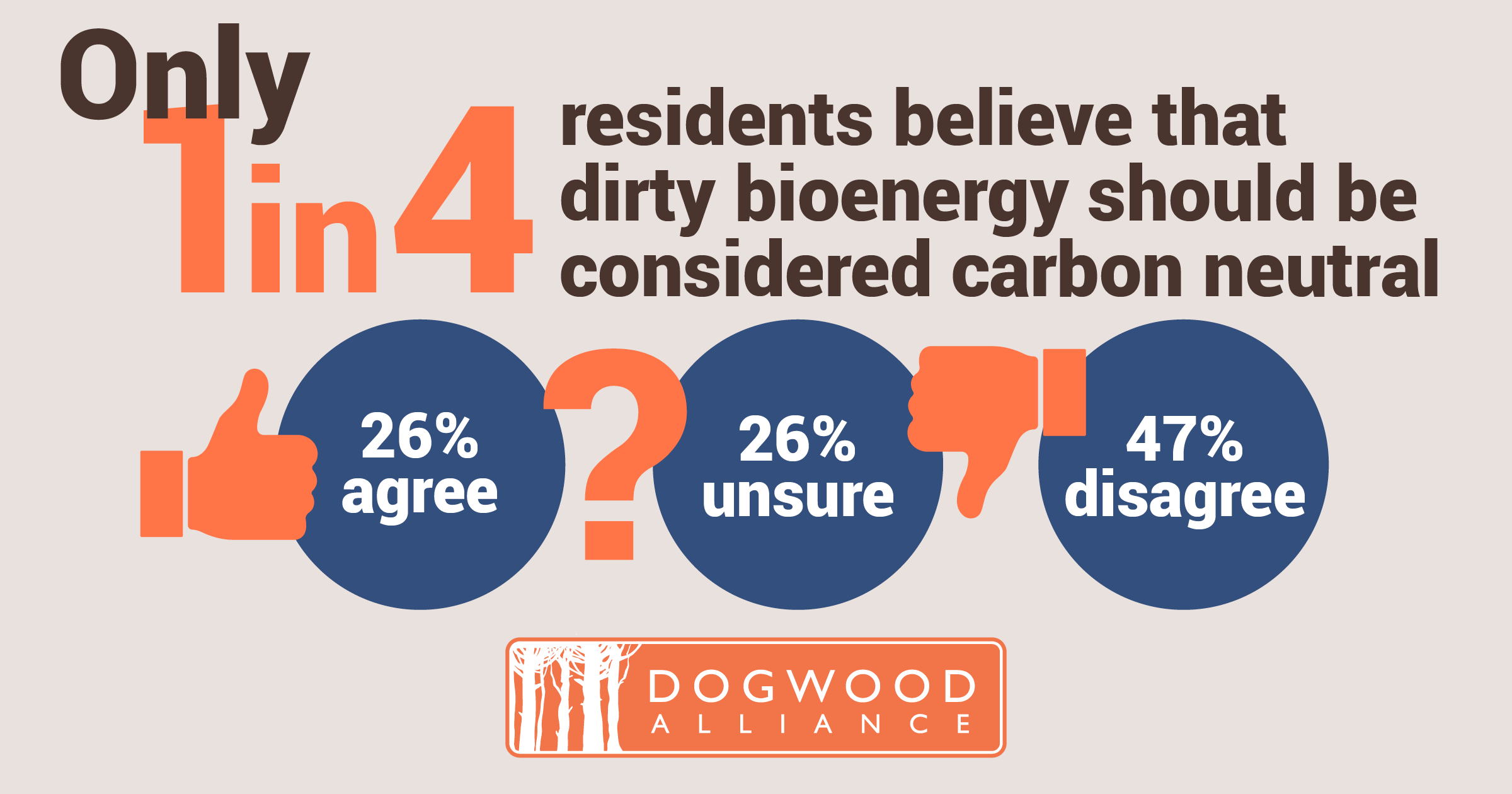
Even as they burn our forests and pollute our vulnerable communities, bioenergy giants like Enviva claim that they “grow more trees” to “fight climate change”. But even without a public debate on the matter, North Carolinians aren’t buying it. Only 1 in 4 residents believe that dirty bioenergy should be considered carbon neutral (26% agree, 26% unsure, 47% disagree). They’re listening to scientists, who agree that biomass from forests actually produces higher carbon emissions compared to fossil fuels. Yet the industry receives handouts and subsidies as if it were a true renewable like solar or wind.
Enviva is even set to expand into a fifth facility without being held accountable for the damage it’s already done. In Lumberton, NC, 90% of the 1250+ comments made by community members opposed a new polluting wood pellet plant. Yet for some reason, the NC Department of Air Quality still approved its permit. Decisions like these override the protests of frontline leaders and go against the will of the people who continue to question, “Where’s Cooper?“
The destruction of our forests doesn’t even truly benefit working people. 20% of jobs in the wood manufacturing industry vanished in the late 2000s because of mechanization and decline in demand. Sudden plant closures, devastating clearcuts, and worsening pollution restrict community economic growth. Climate-driven disasters like hurricanes and droughts will only cause more devastation.
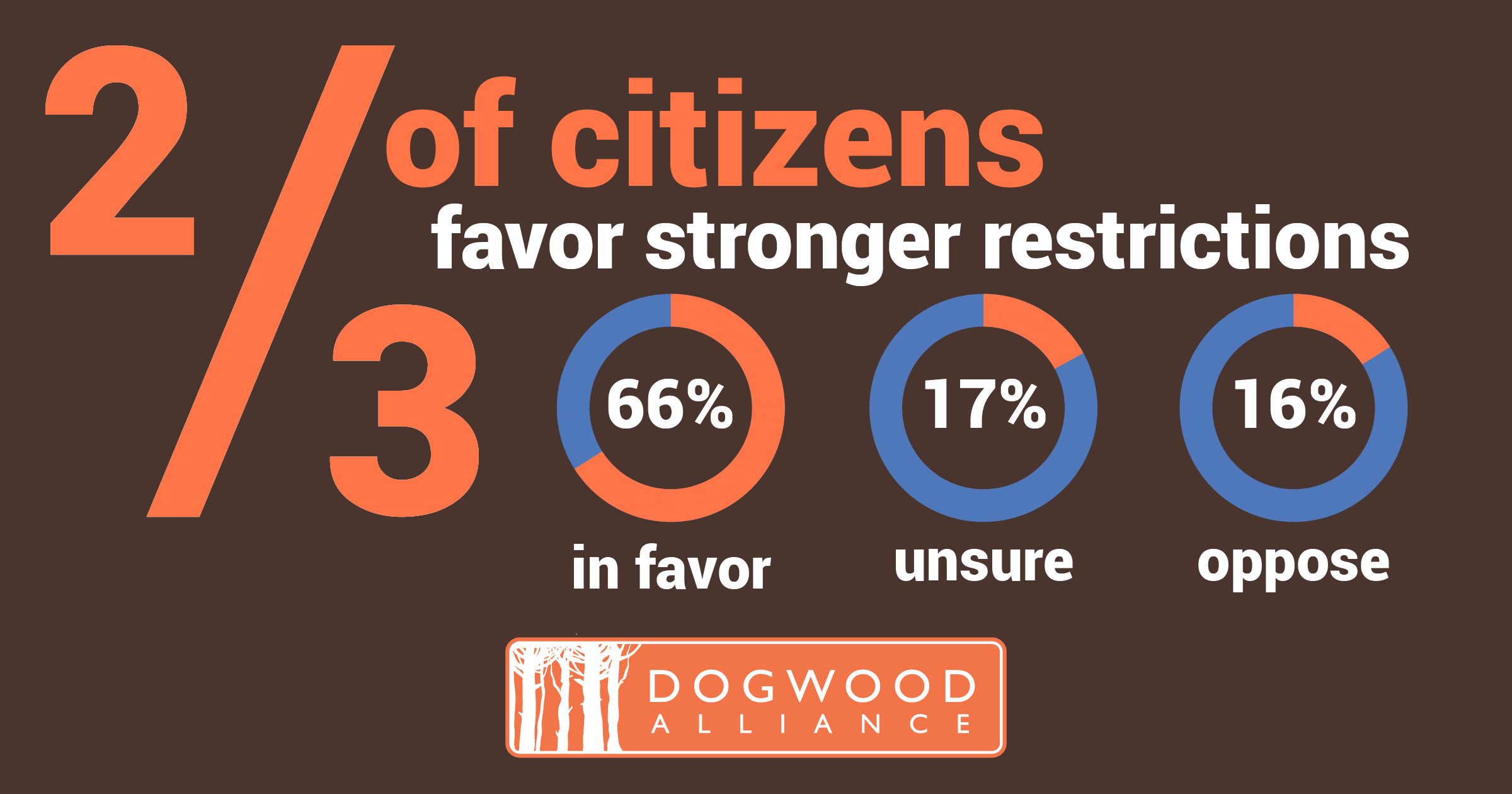
Why won’t Governor Cooper act? He can stop the expansion of dirty biomass and hold the logging industry accountable. As the state fights to achieve its clean energy goals, forest protection is a crucial missing piece of the puzzle. Over ⅔ of citizens favor stronger restrictions, so why wait any longer? (66% in favor, 17% unsure, 16% oppose)
North Carolinians believe scientists: the best thing forests can do for our future is stay standing. Forests are our most precious resource for carbon storage and biodiversity. Their natural beauty guards our health and resilience and makes our state special. When they’re protected, they can flourish, and we will all breathe easier.
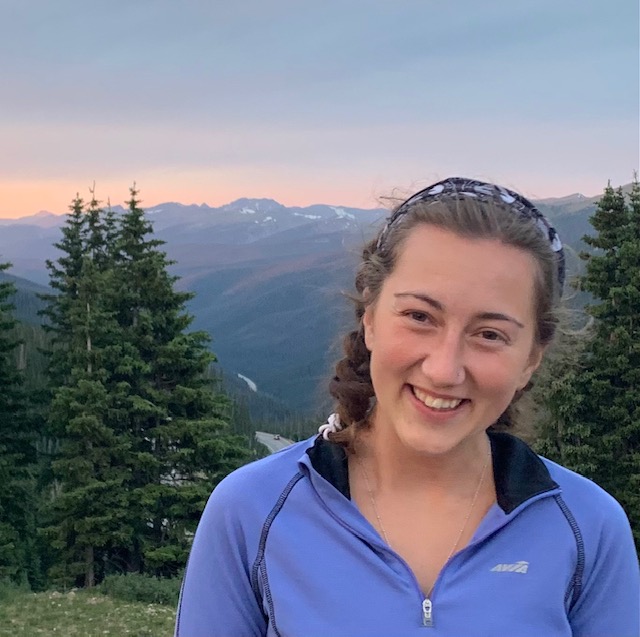
Brianna Cunliffe grew up reading books tucked in the branches of a Carolina pine a few miles away from the sea. Now a rising senior Government and Environmental Studies major and department fellow at Bowdoin College, she seeks to blend passionate activism on behalf of the natural world with innovative, justice-centering policy solutions. Brianna previously worked with elected officials on Protect America, organizing state and local leaders to take action to fight the climate crisis. She’s thrilled to join Dogwood Alliance as an intern to work on the issues closest to her home and her heart.
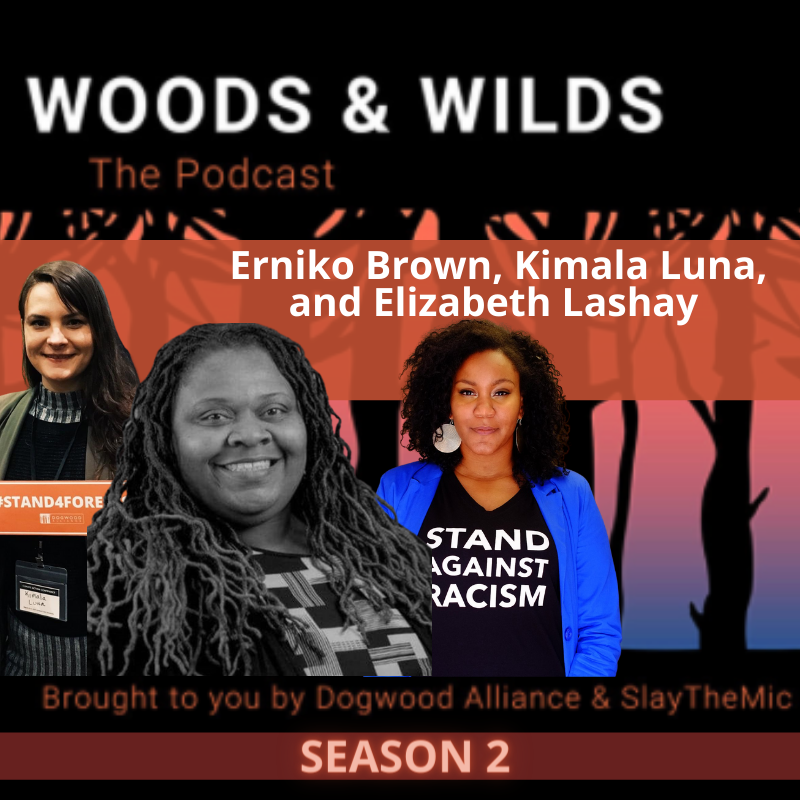
This week we flip the script as Chaya Brennan Agarwal interviews the hosts of Woods & Wilds: The Podcast, Erniko Brown & Kimala Luna from Dogwood Alliance and Elizabeth Lashay from SlayTheMic, about their connection to nature, motivation, and staying connected to the work.Chaya Brennan Agarwal is a rising third-year undergraduate at Duke University from Los Angeles, California, majoring in International Comparative Studies. She is passionate about climate justice and raising awareness of environmental issues through documentary arts, especially photography and painting. She is the Marketing and Communications Intern at Dogwood Alliance.
Join Dogwood Alliance and SlayTheMic as we bring you tales of connection to nature and music.
Want to listen to more?
Read the full transcript of our interview with Elizabeth Lashay, Erniko Brown, and Kimala Luna!
Elizabeth Lashay: All right. Well, hello everyone. I’m Elizabeth Lashay from Slay The Mic, and I’m joined by my wonderful cohosts.
Erniko Brown: Well, I am Erniko from Dogwood Alliance, one of the amazing co-hosts, and our next co-host is:
Kimala Luna: I’m Kimala Luna, also with Dogwood Alliance, and today, we are introducing a special guest. This is Chaya Brennan Agarwal, who is a rising third-year undergraduate at Duke University from Los Angeles, California, majoring in international comparative studies. She is passionate about climate justice and raising awareness of environmental issues through documentary arts, especially photography and painting. She is the marketing and communications intern this summer at Dogwood Alliance, and this week, we are flipping the script and Chaya will be interviewing us so that we can tell you a little bit more about who brings you this podcast each time. Hi Chaya.
Chaya Brennan Agarwal: Hi everyone. So to start, Erniko, I had a question for you. Why did you decide to run for a public office, and how has it been to hold this position?
Erniko Brown: Oh wow. Who told you that information, because I didn’t say that. But no, seriously, what made me run was the fact that we are… Well, Black people aren’t historically at the table, and I also felt like it was a very unique position to be in, as in that position is historically held by older white people. And so I wanted to make it a place where people see the possibility and access and that it’s not enough to organize around issues. We have to have a seat at the table. If we have a seat at the table, then it’s possible to create that change that we want to see in our communities.
Chaya Brennan Agarwal: Yeah, that’s amazing. And this is a question for you all. When did you first feel a connection to nature and to the forest?
Elizabeth Lashay: That’s a great question. I think I really started to have a deeper connection after some traumatic experiences, and it really made me realize how much I needed the outdoors in order to heal. And so I would really have to say it was whenever I was 22 and I felt like the world was kind of coming down on me. So I feel like it’s been a little bit later than other people where they’re like, “Oh, I love nature and I’ve been outside.” But it took me some time, and I also think it’s just, you find yourself whenever you are met with adversity. So I would say in my early twenties is when I found my love for nature.
Erniko Brown: Cool. I’ll go next. So for me, I’m a country girl. I come from the country, so the earth has been my playground my entire life, from gardening to farming, to just being out in nature. I come from a very rural area, so there wasn’t a lot of economic buildup there. And so if you wanted to do something outside of watching The Price Is Right, you had to go outside. And the way that they used to say it is don’t come back in the house until the street lights come on. So my love of nature came out of just not really knowing that there was a love for it and being in the space and constantly exploring it.
Kimala Luna: Yeah. I also grew up in a rural area, and so I spent a lot of time outside, but really I feel like the first time I felt a deep connection was there was the tree in my backyard that had a branch just low enough for me to be able to lift myself up on it when I was really small. And I just developed this friendship with this one tree, and it felt really real to me. Because I was a kid, I could pretend that it was more, I don’t know, animated than it actually was, but it still feels like a real friendship.
Chaya Brennan Agarwal: Yeah. I definitely relate to a lot of those answers. And then I guess going off of Elizabeth’s answer, do you have a go-to place in nature where you can find peace and healing, and how does nature emotionally affect you in times of conflict and adversity?
Elizabeth Lashay: I believe I have found my love of hiking, and so anywhere that gives me a different perspective, anywhere where I can hike and kind of be above the earth and overlook some things in the mountains. That’s a place of solitude for me. And I again want to follow up what I said earlier is that it has this natural healing power of centering and grounding, listening to the wind and analyzing the smell and getting in touch with all of your senses while just being in the present and in the moment is such a beautiful thing. So I would say anywhere where there’s a hike and I can overlook a beautiful landscape.
Kimala Luna: I love that. I love that answer. I really liked what you said earlier too, Liz, about the forest as a space of healing, and then going in to illustrate all the things that you tune you in. I think that’s cool.
Elizabeth Lashay: Yeah.
Erniko Brown: I mean, for me, I would definitely say anywhere that there is a lake, a waterfall, or a mountain. Waterfalls are beautiful, and they seem so cleansing of the things that you’re going through. I know for me when I’m just having a hard time, just to hear the water or hearing animals out in nature, and like Liz up in the mountains, I always say that’s breathing a different type of air and it’s like clearer thinking, a different type of smell, a different type of area to bring about something different in your life, something beautiful. So anytime connecting with something beautiful brings about a different perspective in the things that you’re doing.
Chaya Brennan Agarwal: Was there a moment when you realized the urgency of the climate crisis and became determined to get involved with the climate justice movement?
Erniko Brown: I know for me being in a rural area, as I stated previously, we’re not always at the table. And so when I had an opportunity to be at the table, to be a part of things, I definitely took those opportunities because I don’t carry the weight of myself; I carry the weight of my community. And so having them at the table, thinking about not only myself or the elders in my community, but the people, the young people in the futures and how this is going to affect them, and understanding that we have to be stewards, and when that opportunity presents itself, definitely step up to the plate, and so that’s what I’ve been doing.
Elizabeth Lashay: Mm-hmm (affirmative). I think for me, again, I’ve always been on this journey of fighting for justice and especially racial inequality and justice disparities, and wanting to tackle all of the systems that impact racial discrimination and injustice. But it wasn’t until I was asked to host the annual Woods and Wilds Festival that is put on by Dogwood Alliance that I really had to analyze all the ways in which I just didn’t know what I didn’t know. And I took time to research before stepping into the role of hosting, and I started realizing it really is intertwining any injustice, and so it’s not siloed. It’s not a one-off that environmental justice is separate from anything else. And so that’s really where I started my journey was a few years ago through Dogwood Alliance, and then since then, I’ve been really excited to continue to learn, and learn from other people, and learn from my cohosts, and listen, and just see how everything is interconnected.
Kimala Luna: Yeah. I’ve always wanted to be of value in the world. So I think I’ve always been driven to areas that I could be of service, but I think the urgency piece also didn’t really hit home until a few years ago. It was like 2017. I went to this climate action conference in New York and scientist after scientist got up on stage, letting us know that we had 20 years left as a species, which was really a heavy, heavy, heavy thought. And so looking at that and looking at all of the things that needed to be done that hadn’t been done since the 80s, when they originally knew that our planet was warming, really drove it home. And then after that, it was just looking at, like Liz was saying, all the systemic ways that injustice has been perpetuated from the beginning, it’s a part of the genesis of our nation, just made it all real.
Chaya Brennan Agarwal: Wow. Yeah, those are incredible answers. And then are there any leaders that are most inspirational to your work?
Kimala Luna: I get a lot of inspiration from the people I work closest with. So I would say that Erniko and Liz are some of the people that I feel like really guide my work, and a lot of people that I work with I feel like are just doing incredible stuff that you don’t hear about. It’s like, we hear about people, major players in the climate movement and they’re doing beautiful stuff, but there’s so many people on the ground moving things every day that I feel like all deserve so much recognition.
Chaya Brennan Agarwal: Yeah. That’s very true. I definitely agree with that.
Elizabeth Lashay: And I want to follow that too. There’s so many people… Today I went to a meeting in the South Side garden, and then I was able to look at the individuals who are cooking the vegetables from the garden and how it’s just something that happens, and we don’t recognize people that make things happen. So I want to follow what Kimala had said because that’s such a beautiful thing is we tend to forget. So I’m constantly inspired. I’m inspired and empowered by younger individuals and elders and being able to be a thought partner in things.
Erniko Brown: Yeah, and I’ll just follow them too. And definitely what Slay said about the younger generation. I’m inspired that I have this opportunity, this very unique opportunity to be sitting at the table with so many people and doing the things that they will be doing. So I was inspired by them because I heard a younger podcast and I’m like, well, what if we pull this up, create a podcast around this, and have these conversations. The movement, the Black Lives Matter movement, just all the movements, and for me going home, and I see people who are 65, 70 still out in the garden, still talking about the trees and still reminiscing on those old stories about how things used to be simple in life. So just gathering information and inspiration from them and being able to tie that into the work that I do constantly keeps me motivated and constantly keeps me moving in this work. So understanding that this movement is not just for myself. This movement that has been created is for so many people from so many different places, and everything that we do is intersectional, and every way that we’re working in part of it is intentional. So that’s what pulls me in every time.
Kimala Luna: And I just want to say it, because I don’t think it was ever even clearly stated that Erniko serves as commissioner, and Liz is the founder of a media group called SlaytheMic, and these are in addition to their full-time jobs, and that’s just a fraction of what they’re up to every day. I just wanted to make sure that our listeners knew those details.
Chaya Brennan Agarwal: Yeah, that’s amazing. Thank you. And then as hosts of this podcast, what is the most meaningful thing that you have heard by witnessing all of the episodes?
Erniko Brown: Oh man. Listen, I will say if you have not listened to the podcast, there are so many different jewels that are here, so many things that have been said from so many amazing people, and it’s various different perspectives on nature, on things that are going on in the world. And for me, I can’t put one against the other. It’s all been amazing. I can’t choose, but Slay might have something she wants to say.
Elizabeth Lashay: No, I think that’s a really difficult question because we’ve interviewed so many people, and every person has a unique story that is the puzzle piece to this podcast and are all equally important insight. Just going back onto being inspired, listening to all these stories of how people found their voice, and where it came from, and when they fell in love with the earth, and what is the action they’re taking to make this world a better place. I simply can’t choose, but I am constantly inspired and have so many lessons that I have learned from our listening sessions, our podcast.
Kimala Luna: I agree. I will say, I think it was the very first podcast we had was with Thomas RaShad Easley, who is also a musical artist and a poet. And that conversation, there are certain conversations… I mean, they’re all just so, like Erniko and Liz were saying, they’re so sparky, and you have these moments where you’re just resonating, but that first one was like, oh man. It was so inspiring to feel like we maybe had something really cool here, just listening to him talk. And we use his poetry as the intro of our podcast. And it just, it felt like such a good way to begin. And then since then, it’s just stayed that good, and that’s been really wonderful.
Chaya Brennan Agarwal: Yeah. That’s incredible. I really enjoyed listening to that episode. And the next question, what motivates you each personally?
Erniko Brown: I’ll jump in. For me, as I stated, just having the opportunities that I’m privy to motivate me, knowing that there is a generation behind me who has not tapped into environmental stuff, and meeting them where they are as far as podcasts, and making things relatable to them, and making sure that they see this as a pathway and not a project, and bringing about change for them in the ability to show them that they can be change agents just as we are, motivates me each and every day, because there are so many people out here scrambling in the world has changed, but as the world changes, we definitely can offer up this solution to them and these spaces for them. That’s how I’m motivated.
Elizabeth Lashay: I think I’m motivated because I’m constantly wanting to find ways in which we can amplify voices. And I believe the more that we amplify voices, the more perspectives and stories we’ll have and the better that we’ll be because of those stories. And so I’m motivated because the power of space, time, and voice is something that’s unmatched and that I have really taken for granted over the years but have learned the importance now. And so I’m constantly motivated by just hearing others.
Kimala Luna: I would say collaboration motivates me the most because if it goes well, it’s really inspiring and it’s transformational for the community. And if it goes badly, it’s really humbling and transformational for yourself. And I think that there’s so much power in connecting to others, and coming at things from a different perspective, and putting a bunch of brains on it. So that’s what motivates me.
Chaya Brennan Agarwal: Wow. Is there a project or program that you have each worked on at your respective organizations that has been most impactful for you?
Elizabeth Lashay: I can go. I definitely know that I not only have a radio show, but as we’re building this multimedia company, I am really excited to just continue to see where does the build-out go, learning new things about myself and what does strength look like? And also what does my leadership look like? And refining and defining myself. So working on the project of SlaytheMic and WBMU Jams, which is a digital radio station. And the call letters have a deep historic meaning, and those call letters are Where Black Means Unity. And so it aligns with my mission, and I am also just excited to have a multimedia company where we’re very intentionally placing people into spaces to enhance businesses for other people in our area. So I’m just excited about seeing how I grow and help others grow along with it.
Erniko Brown: I definitely feel Slay, what she said, the strength, and the leadership piece. I have several different projects I’m working on, especially if I haven’t grown, it’s pushing me to grow in my capacity of being a commissioner. Being an elected official, you understand that there are certain ways you need to present yourself. So the formalities and stuff, I want people to be able to see it’s a normal thing to be at the table, but you also have to have certain etiquette within the leadership. And in my capacity as the state chair for environmental climate justice on behalf of the NAACP, I’m learning all of the different projects and how the work is never done, and there’s always something to be done in your community. Then at Dogwood, being the Regional Partnership Engagement Manager, I’m always in community with Black people, and me being a Black person, being able to offer opportunities and resources to communities that are impacted and doing that work on behalf of those communities really helped me grow in the work that I’m doing. And being a chief of staff for YDSC, which is Young Democrats of South Carolina, being in that leadership role and making sure that my people are doing what they need to do on behalf of the communities that we’re serving definitely stretches me. So I would say all of those push me to leadership, push me to grow, push me to be the best that I can be. Not not only for myself, but for my community and the young people that are looking toward me for guidance.
Kimala Luna: Yeah, I would say we were doing this tour across the south called the Justice First tour. And I was doing an event under that and for the Asheville stop and was collaborating with Southside. And that’s how I met Liz. And I learned so much from that project about my local community and that I really hadn’t spent that much time at the Southside Community Center before that. And I was really inspired by all the work being done there. So if you’re tuning in, and you’re a local, and you’re in Asheville, I really recommend checking them out. Liz was talking about the garden earlier. Yeah.
Chaya Brennan Agarwal: Those are all incredible projects that you’ve all been working on. I was wondering, is there a particular song or genre of music that you feel drawn to when you are in nature?
Elizabeth Lashay: I love Indie Arie. There’s two songs, and one song is called, Closer, and I cannot remember the artist’s name. And then there is Beautiful by India Arie. And so it feels very freeing and again, tapping into all of those senses. Those two songs definitely motivate and inspire me.
Kimala Luna: I love Indie Arie. Video was always my favorite.
Elizabeth Lashay: Ooh, yeah.
Erniko Brown: For me, I think it’s Maze featuring Frankie Beverly, We Are One. That is definitely the song I’m just really tapped into. It’s beautiful. It’s talking about unification, and then there’s Marvin Gaye, I think it was The Ecology, I think it is. Oh man, and Mercy Mercy Me. So those are three songs, Marvin Gaye and Frankie Beverly featuring Maze.
Chaya Brennan Agarwal: Amazing. Well, it has been wonderful listening to all of your answers, and I just wanted to open up a dialogue and ask if you had any reflections or thoughts about your time hosting this podcast.
Kimala Luna: I just love it. It’s my favorite thing ever.
Erniko Brown: I’ll jump in, and I’ll say it’s been super exciting because I never did a podcast before. I love people and that’s for real. So to listen to the podcast, listen to the individual stories, listen to their reasons as to why they’re doing what they’re doing, continues to inspire me, and reaching out beyond ourselves and seeing other people authentically in the work that they’re doing and them being the person that they are, has been a lot of inspiration to keep me grounded in the work that I do. And being here with Kimala and Slay, it’s been absolutely wonderful. I feel like, hey, we need to take this show on the road.
Kimala Luna: Yeah.
Erniko Brown: Yeah. I just love doing it. And apart from the work that I do, I love the work that I do, but being able to come to this space, spend this time with these individuals has been absolutely amazing for me.
Elizabeth Lashay: Yeah, I think I follow everything of what both of you all have already said, but I think there’s so much laughter and so much beauty and just again, the power of space and slowing down because my days are constantly busy, busy, busy, busy, and taking time to listen to other people is really healing for me. So I’ve loved it, and I’ve enjoyed it.
Chaya Brennan Agarwal: Yeah. That’s amazing to hear. And I appreciate the work that you all do in highlighting the people who are doing the work on the ground and all of the important things that are going on.
Kimala Luna: Thank you, Chaya. What’s your favorite thing about the podcast?
Chaya Brennan Agarwal: Well, I really love environmental art. And so I’ve loved hearing all of the different kinds of art that people do and where they get their inspiration from. So I think that’s been my favorite part.
Kimala Luna: Yay. Well, this has been wonderful. Anything else guys?
Erniko Brown: No, I just think I want to thank Chaya for being here today and interviewing us because it’s always us interviewing somebody, but who’s checking the checker? So thank you Chaya for checking us. Great.
Elizabeth Lashay: Yes, yes, yes. I love it.
Chaya Brennan Agarwal: Yes. Thank you for having me. I really enjoyed it.
Kimala Luna: Yes. And for those who are watching this or listening to this, just kidding, listening to this for the first time, please be sure to check out all of our other episodes, and follow and like, and subscribe. It really keeps it going.
On Jun 25, 2021, Arkansas, Southern forests, and the planet lost one of their true heroes. Luis “Doc” Contreras was a climate champion, a creative campaigner, a spirited activist, and a lover of humanity and every dog he ever met. He passed away in Eureka Springs, Arkansas at the age of 71.
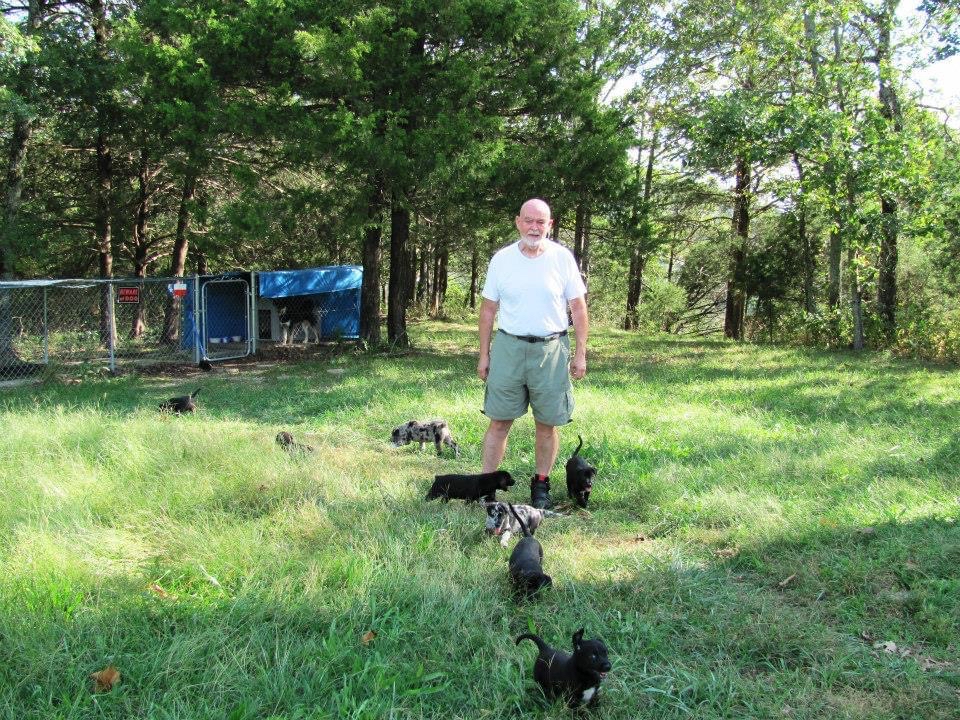
Luis “Doc” Contreras and his rescue pups
I first met Doc, who held a PhD from Georgia Tech for Statistical Engineering, when he called me out of the blue to talk about a gigantic paper mill that a foreign company with a bad reputation wanted to build in Arkansas. Of course, the state government invited them in and threw lots of money at them to make sure they built the first new paper mill in the South in decades.
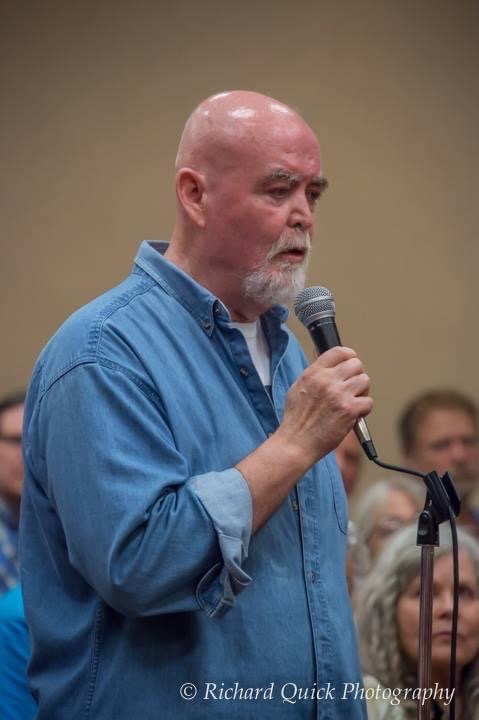
Luis “Doc” Contreras speaking truth to power at a public hearing in Arkansas.
Every time the company applied for a new permit or the state spent more money to entice the company, Doc was there with evidence and passion and a never ending fountain of spirit to oppose this mill. Every time the Governor or Representative Bruce Westerman, the only professional forester in Congress, came out to cheer for the facility, Doc was there with a funny, insightful, and logical response.
He wrote countless letters and editorials for the local paper in Eureka Springs, he spent countless hours doing research on permits, money trails, corporate malfeasance, alternative solutions, and climate impacts to show why this was a bad thing for the people and forests of the state.
Doc’s tireless work was rewarded when the company, who had spent years trying to make it happen, finally gave up. The forests and people of Arkansas breathed a sigh of relief. At that point he could’ve rode off into the sunset, but not Doc. Instead he turned his sights on the many pellet mills proposed for the state. From Zilkha to Highland Pellets to the latest proposal from Drax, he never quit. He was the best kind of activist, and I absolutely loved working with him.
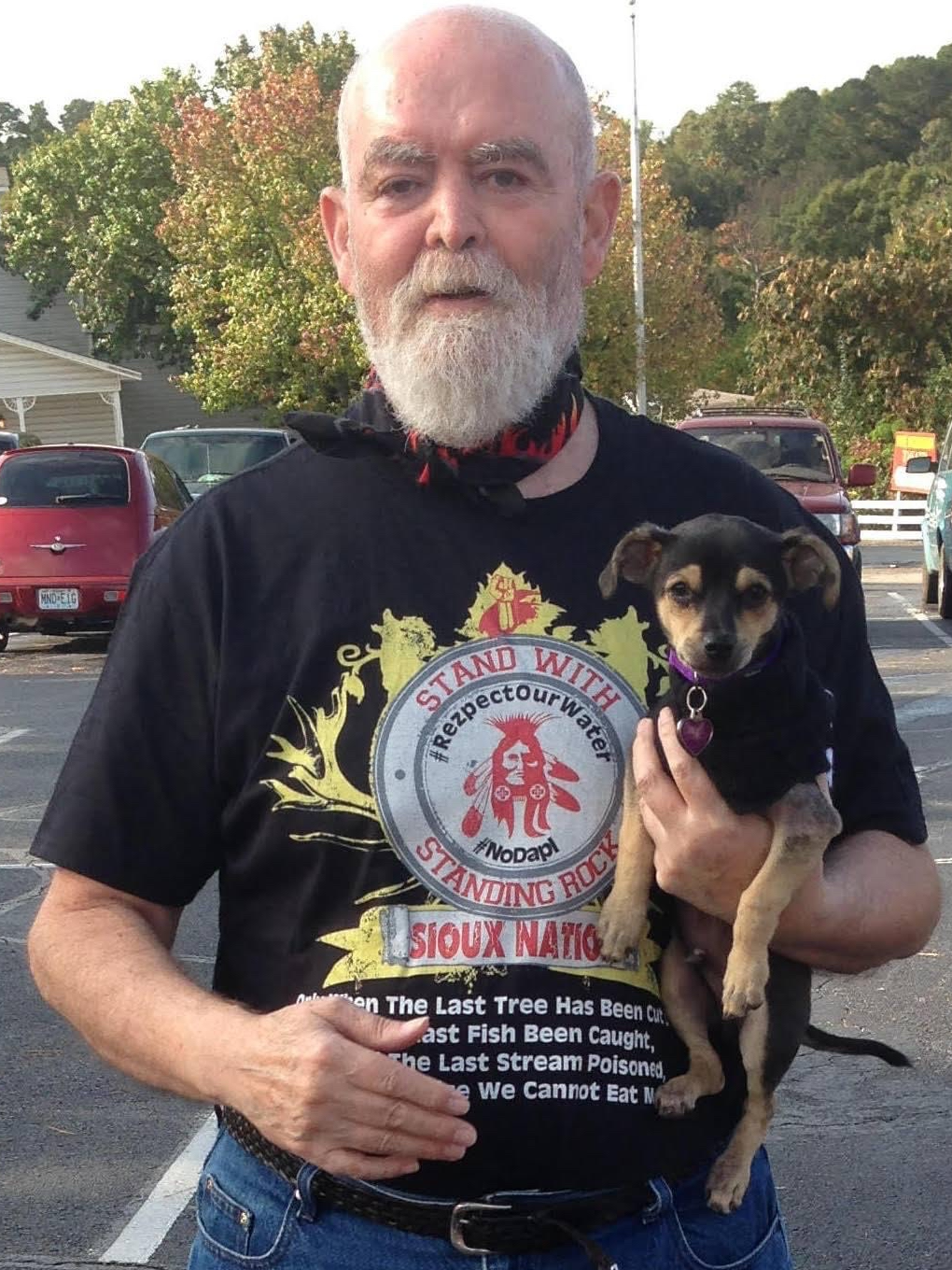
Luis “Doc” Contreras and Hercules stand with Standing Rock
Zilkha disappeared, Highland struggled to make its business profitable, and Drax was just starting to get nervous. I spoke to Doc about three days before his passing, and he was as passionate as ever. He had made inroads with the agencies and had a strategy to stop this big, bad British company. I believe his plan can still work as long as we can all channel our inner Doc and fight for our forests, frontline communities, and our planet.
Our hearts are with his wife Crystal, his nine rescue dogs, and his extended family. It was such an honor and a privilege to work with Doc. He was a real treasure for Arkansas and will be sorely missed. His spirit and passion live on in every single climate activist, lover of forests, and all who laugh in the face of insurmountable odds. You’ll be missed Doc.
 Dogwood Alliance is in support of the Community Roots Climate Bill of Rights for Asheville, NC.
We thank our good friends at Community Roots for their beautiful work and vision.
We need true climate justice in North Carolina.
It asserts our Rights for local self-governance over those of corporations to make a profit – a crucial step in building sustainable communities.
We seek to establish our Rights for local self-governance and a healthy climate, prohibiting the building of new fossil fuel infrastructure, and requiring the City of Asheville to create and implement a bolder Transition Plan to get us to 100% renewable energy by 2030.
It will also establish the RIGHTS OF NATURE in Asheville
Guest Post by Robby Phillips
In June, South Carolina’s Department of Health and Environmental Control (DHEC) held a routine public hearing about a proposed permit for a wood pellet facility that would grind wood into pellets in a process that emits dangerous pollution and then ship those pellets overseas to be burned for biomass fuel. There was nothing routine, though, about the powerful story that unfolded. Over a dozen members of the Effingham, SC community, near where the facility is slated to be built, pleaded with DHEC to deny the permit. One woman spoke of losing her daughter to pollution-fueled respiratory illness. Another person spoke of his family’s generational ties to the area and how each subsequent generation has endured new forms of exploitation and environmental degradation. Chief Parr of the Pee Dee Indian Tribe remarked that his people have never relented in the fight to protect their forests and their land, but moneyed interests seem to always win.
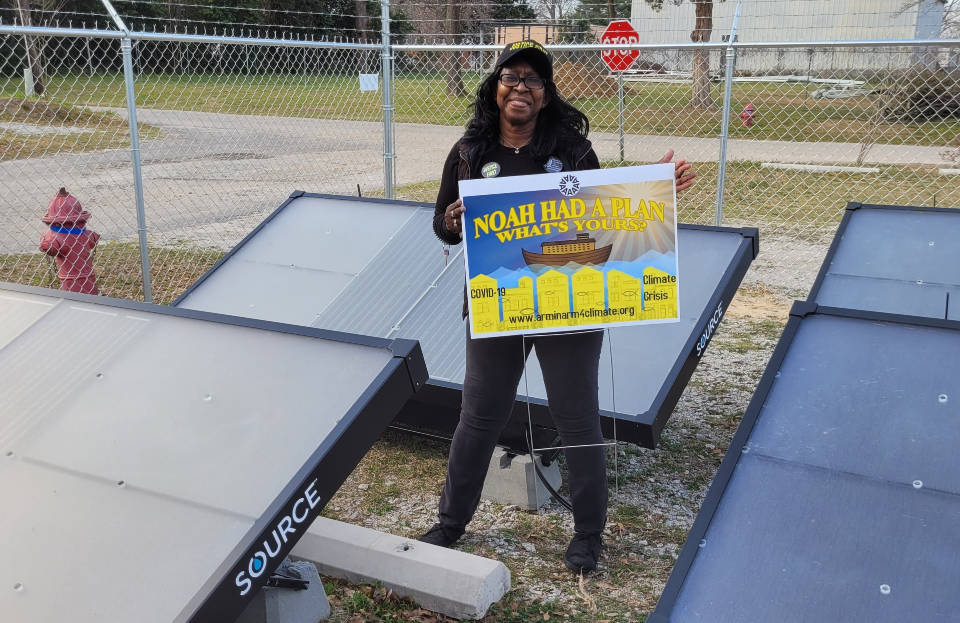
South Carolina community organizer Loretta Slater stands among solar panels.
This is true of many communities throughout the South where environmentally destructive wood pellet facilities are sited. These communities have rallied time and time again against these projects and fought to protect their land, water, and health, but as Chief Parr alluded to, those in power are often deferential to supposed economic interests more than those of health and environment, despite all three issues being deeply interlinked.
The permit in question would allow Effingham Pellets LLC to build a new wood pellet production plant. They would use shavings from a timber mill about a mile away from the proposed site to produce upwards of 43,000 metric tons of wood pellets each year, mostly to be shipped internationally for burning as an electricity and heat source. This is only one of many such facilities that have been proposed and built throughout the Southeast which Dogwood has fought against.
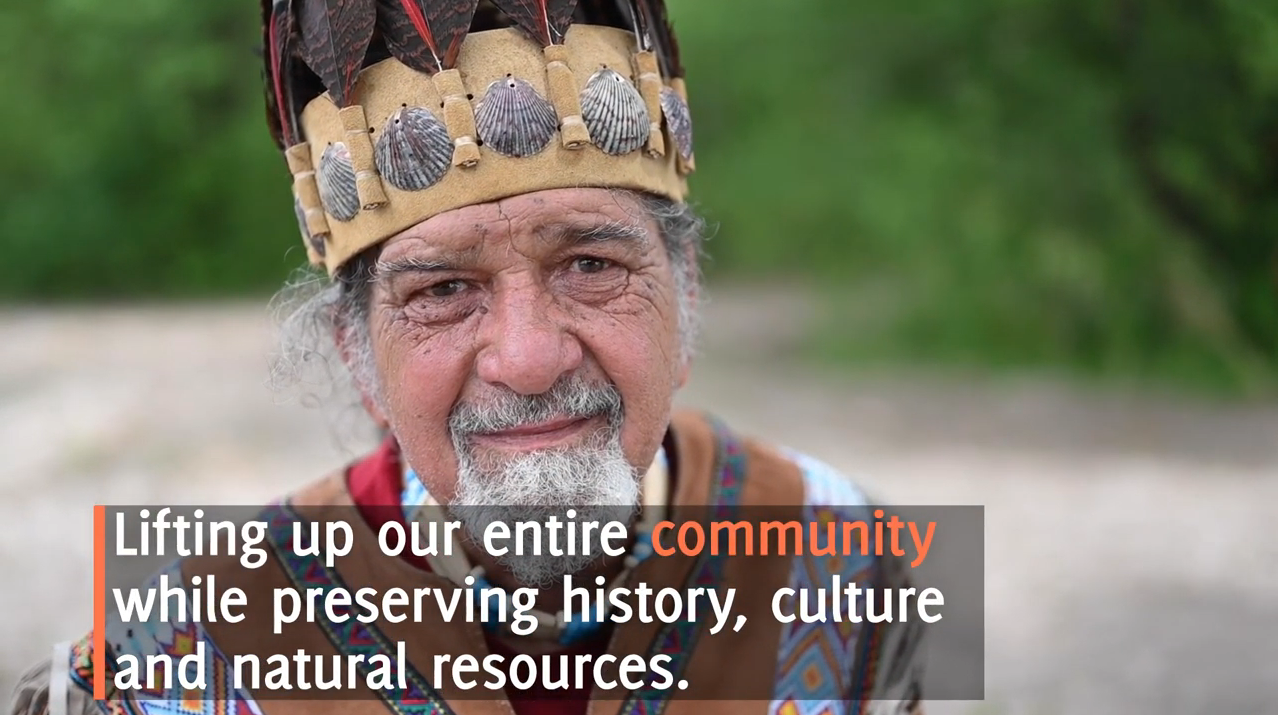
Chief Parr of the Pee Dee Tribe calls for community-led solutions to climate change.
Industry beneficiaries, including one who read a carefully worded statement in favor of the permit at the hearing, claim that using biomass fuel sources like wood pellets will help reduce emissions by replacing fossil fuels, while also benefiting the economy. Climate science is often misconstrued or selectively used to support this false argument. The facility proposed in Effingham would produce carbon dioxide emissions equivalent to over 18,000 additional cars on the road each year, when accounting for the production and eventual burning of these pellets. Further, the pellets are not addressing an energy need in the US or even economically benefiting more than a handful of people.
This is not a worthwhile tradeoff for polluted air and worsening the climate crisis.
In addition to the harm that facilities like these inflict upon surrounding communities, they also squander the little time we have to divert the worst of the climate crisis. I’m 20 years old, and my youth has been defined by wildfires, worsening hurricanes, and dire warnings about our need to cut global emissions in half by 2030. Already this summer, we’ve seen record high temperatures in the Pacific Northwest, flooding in the Midwest and South, and literal fires in the ocean as pipelines leak. It is climate denialism to forge ahead on new facilities that produce carbon-intensive fuel. Our futures are at stake—youth like myself and frontline communities like those in Effingham are making our call loud and clear:
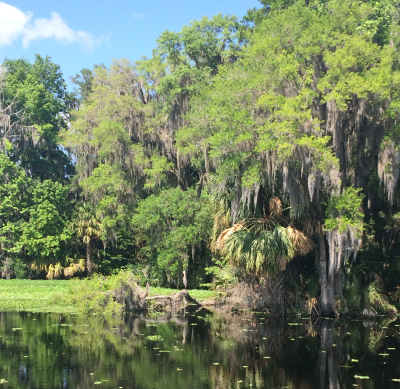 All of our economies, health, and futures rely on rapidly creating a world powered by clean, renewable energy in which we protect our air and water. Our public institutions and officials have an obligation to make this transition their utmost priority. It’s certainly true for an agency whose very purpose is protecting our health and environment like DHEC.
DHEC opened the public hearing by explaining what PM, VOC, and other pollutant levels are considered acceptable; the air permit for the facility claims that they will release pollutants below this threshold of acceptability. What if, instead, we did not accept any amount of pollution being discharged into our communities against the will of the people? What if we reject industries that exacerbate and even cause respiratory illnesses and generally lead to a decline in quality of life? To truly build a just world and prioritize our health and environment, we must utilize the tools and technology we have to listen to the concerns and needs of our most vulnerable. It’s imperative that we create clean and green energy for all. Our futures depend on it.
 Robby Phillips is a rising Junior at Duke University, where he is majoring in Public Policy and minoring in Environmental Science & Policy and History. He is passionate about organizing in politics and for environmental justice. He loves being outdoors, whether it be swimming, hiking, or just hanging out on a nice day with friends or family.
Guest post by Amber Skinner
Have you ever wondered where the term “tar heel”, a common nickname for North Carolinians, came from? For centuries North Carolina residents collected tar from trees, and then they’d be covered in the messy substance: hence the name. The tar, however, came from a very special type of tree known as the longleaf pine. The longleaf pine range once covered over a thousand miles across the Southeast United States. Today 97% of the forest is gone and with it an entire legacy. The tar and turpentine industry destroyed longleaf forests while fueling the North Carolina economy. Although restoration efforts are underway, they may not be enough to truly replace what was lost.
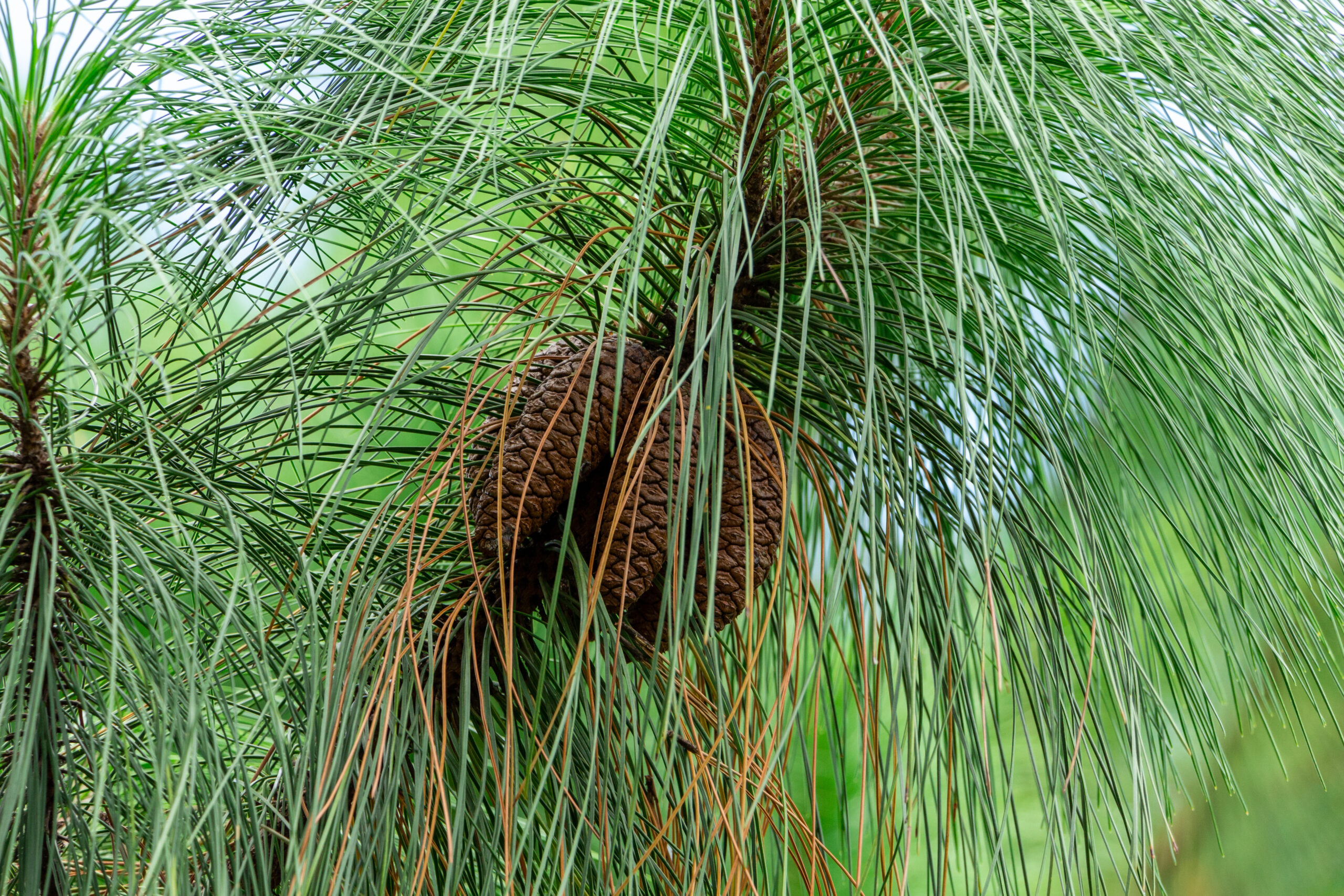
Longleaf pine (Pinus palustris) cones, multiple, brown – Davie, Florida, USA
Longleaf pines are unique for several reasons. First, long leaf pines are adapted to live in fire and actually rely on it for survival. Fire kills competing plants, while longleaf seeds and young trees survive the flames. Seedlings, while susceptible to the flames, are protected by a sheath of needles that burn instead. The seeds also sprout almost immediately upon release. This keeps the seeds from being in a vulnerable position for too long. On the other hand, saplings and adult trees have thick bark that protects the weaker inner tree. By a growing tree’s second year, it develops a resistance to fire. These adaptations allow the longleaf pine to survive in temperatures as hot as 1600 degrees Fahrenheit! Without regular wildfires, competing plants overgrow and kill longleaf seedlings.
In addition to these clever adaptations, this long needle pine tree has a few other tricks. Its giant, nutrient-filled seeds make a good snack for animals in the forest. In order to make sure its seeds aren’t eaten, the pine doesn’t release them consistently. Instead, the pines release almost all their seeds on what is roughly a seven year cycle. There are so many seeds that predators can’t eat them all, so some survive. Finally, the tree grows very quickly, but most of the growth is below ground in the roots. The longleaf pine’s taproot is critical for its survival. It delivers important nutrients, and it can grow to eight feet deep in less than a year.
The longleaf pine is also an essential part of the American Southeast’s biodiversity. In fact, it’s one of the most diverse ecosystems in the world! It’s home to many unique species that are endemic to the forest. Examples of these include the gopher tortoise and red-cockaded woodpecker. The gopher tortoise is an interesting little creature that likes to burrow into the ground like a gopher- hence the name.
The gopher tortoise
The red-cockaded woodpecker, on the other hand, is the only woodpecker in the world that chooses to take the time to carve its home into the living bark of longleaf pines. There are also hundreds of rare plant species that live within the longleaf pine ecosystem. Researchers have identified roughly 600 types of plants in the ecosystem with 389 of the species being considered “rare”.

The longleaf pine’s special characteristics did not go unnoticed by residents of the South. People realized the pine was perfect for producing turpentine, a resinous substance that came from the inside of living trees. It is made by distilling collected tree resin (pine tree sap) in a copper still. Turpentine was useful in all sorts of ways, like making soap, skinning animals, and even lighting lamps. It was also believed to be a cure to most ailments. American physicians prescribed it regularly. However, turpentine was most important for the naval industry. Turpentine was used to repair boats, waterproof the wood, and perform maintenance on ships.
The sandy soil of North Carolina couldn’t grow cotton, the staple crop of the South, quite as well as other states, but it was perfect for longleaf pine. Many venture capitalists purchased parts of forests and mined them for turpentine. North Carolina’s nearness to the coast, large enslaved labor force, and many railroads made the state more appealing for the turpentine industry. Soon, North Carolina had the largest naval industry in the country, driven by enslaved labor. This industry was worth roughly $12 million in the mid 1800s. At the start of the Civil War in 1865, North Carolina was producing 97% of turpentine in the United States. Much of this product was being shipped to European countries for their naval stores.
It is impossible, however, to talk about the naval and turpentine industries without recognizing the enslaved people and other workers of color that made them possible. Members of the Lumbee Native American tribe, located in Robeson County, North Carolina, were staple workers in the turpentine industry. They moved South with the industry until the early 1900s, leaving their home in North Carolina and relocating to Georgia. Black men and women were forced to do the hard labor, like collecting the turpentine and moving it to the distillery. Some enslaved people also worked as distillers, using the copper still to turn resin into turpentine. This was a very difficult job, and distillers had to be highly skilled. Enslaved people who didn’t meet their quotas were subject to harsh punishments. Following the Civil War, former owners of enslaved people used a cycle of debt to trap freed Black people and take advantage of their labor. Otherwise, plantation owners would have lost money on the expensive upkeep of the forests. The turpentine industry would have collapsed, if not for the constant exploitation of Americans of color.
The turpentine industry boomed once wealthy owners of enslaved people began purchasing large sections of longleaf pine forests. However, this also ultimately led to the longleaf pine’s demise. Out of the 92 million acres of pines that were spread over 1,200 miles in the American Southeast two centuries ago, only roughly 2 million are left, or 2.2% of the original forests. As each plantation was inevitably used up, North Carolinian turpentine workers moved into other Southeastern states, namely South Carolina and Georgia. What caused this unimaginable destruction? Turpentine was collected from longleaf pines by a destructive method known as boxing. Workers would cut a deep pocket into the bottom of the tree, and the wounded tree would send resin to the hole to seal it. Some of the resin would flow through the wound, and it would be collected in boxes at the base of the pine. This resin would later be distilled and transformed into turpentine.
Once trees had been boxed, most were cut down and used for the lumber industry. Leftover boxed trees, however, were incredibly susceptible to many ailments. This included water decay, fire, drought, and being knocked over by heavy winds. Worst of all was a condition called dry face. This occurred when resin in boxed trees dripped through the bark, permanently stopping gum flow. Dry face was made worse by drought and insect infestations. Longleaf trees were particularly appealing to bugs like the ips beetle, black turpentine beetle, and turpentine borer. All of these insects attacked the weakened trees, serving only to make their condition worse.
These ailments would not have been as devastating to the longleaf pine population if the pine was capable of efficient regeneration. Unfortunately, the longleaf’s creative adaptations became its enemy when the turpentine industry destroyed the forests. When a plantation was being used, overseers used controlled burning, a technique Native American communities used first, to kill competing plants. Once a plantation had been fully exploited, property owners would leave the dying trees behind without proper management. The plants that normally would’ve been burned through fire management could now overgrow budding pines. This, combined with the longleaf pine’s slow growing period in its youth, led to little to no natural regeneration. Longleaf’s reliance on fire, once a brilliant survival technique, was now its Achilles’ heel.
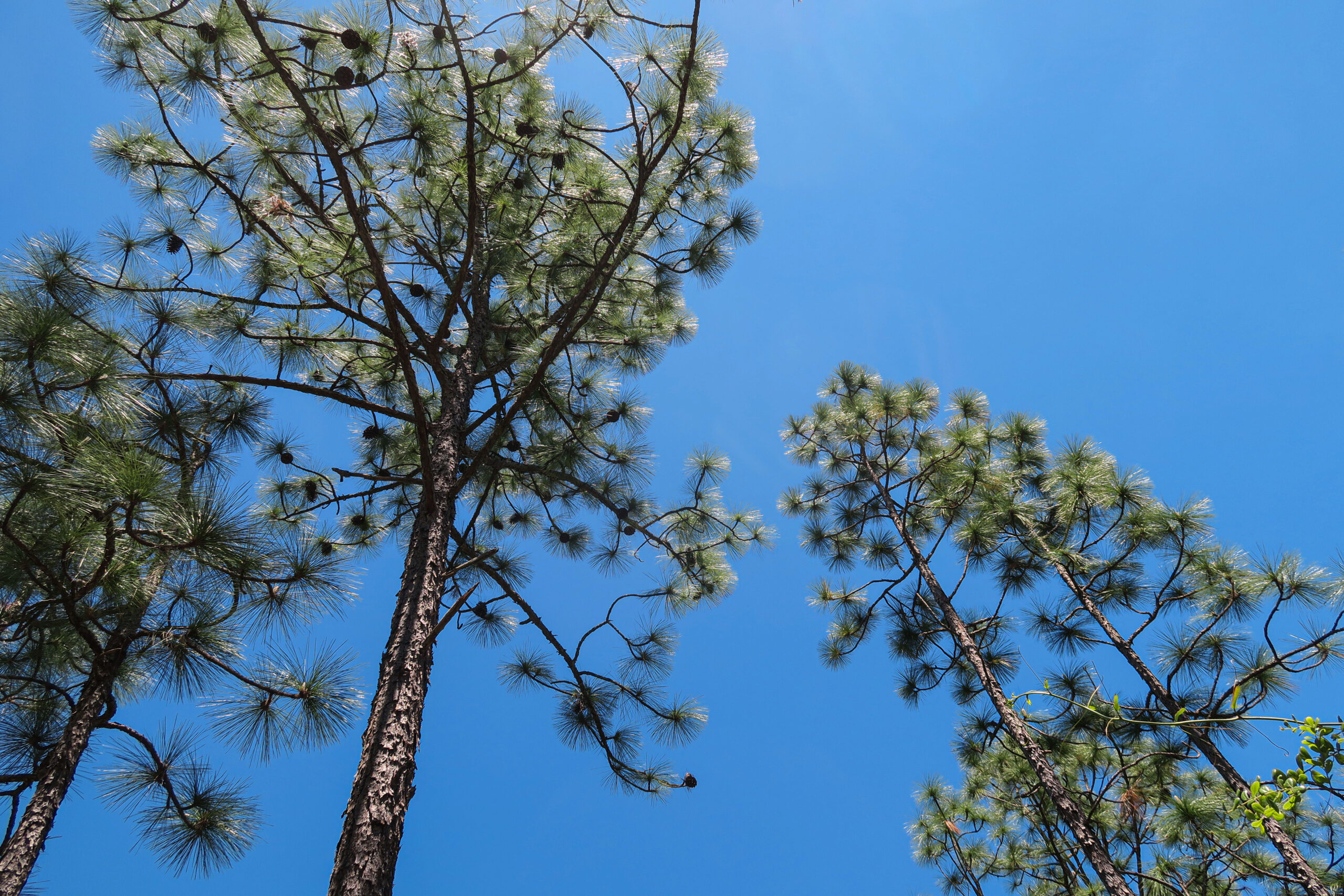
Today, efforts have been made to restore the longleaf forest. The pines cannot ever be truly returned to their original state, but that doesn’t mean we shouldn’t try. Some researchers are attempting to find the fastest way to grow longleaf. As the threat of climate change becomes more imminent, it is vital that our forests continue to grow in a healthy way. Longleaf is a crucial part of this planet’s biodiversity, and through that, fighting climate change. We must restore longleaf pine ecosystems without simultaneously letting logging companies take advantage.
Without enslaved labor, the turpentine industry would not have thrived for as long as it did. Reparations must be paid to Black and Indigenous Americans whose labor was exploited by that industry. This could be done through housing grants, business stipends, or even direct payments. We cannot fully undo the damage done by the turpentine industry, but perhaps there is some redemption in the restoration.
Earley, Lawrence S. Looking for Longleaf: the Fall and Rise of an American Forest. The University of North Carolina Press, 2005.
Jose, Shibu, et al. The Longleaf Pine Ecosystem: Ecology, Silviculture and Restoration. Springer-Verlag, New York, 2016.
Outland, Robert B. “Suicidal Harvest: The Self-Destruction of North Carolina’s Naval Stores Industry.” The North Carolina Historical Review, vol. 78, no. 3, 2001, pp. 309–344. JSTOR.
Kuhn, Mary. “Chesnutt, Turpentine, and the Political Ecology of White Supremacy.” PMLA/Publications of the Modern Language Association of America, vol. 136, no. 1, 2021, pp. 39–54.
If you’re ready to learn more about biodiversity, read all of our articles right here!

Amber Skinner is a rising junior at Duke University and an intern at Dogwood Alliance for the summer. She is working towards a Bachelor of Arts degree in Environmental Science and Policy with a special focus in environmental justice and education. Amber loves the outdoors, particularly hiking, and can be frequently found playing outside her home with her two kittens.
Join Dogwood Alliance and SlayTheMic as we bring you tales of connection to nature and music.This week our hosts of Woods & Wilds: The Podcast, Kimala Luna from Dogwood Alliance and Elizabeth Lashay from SlayTheMic, talk with Kaleia Martin and Nakisa Glover about radical dreaming, changing our belief around what is possible, and how we’re all needed in this movement.

Kaleia Martin, MSW is a community advocate who firmly believes in the power of individuals and communities to make extraordinary change. She has a passion for working in an authentic, community-centered way that allows for typically excluded voices to be elevated. She is a forward-thinking leader who thrives to push everyone around her to dream up more radical possibilities. Kaleia is the co-chair of the environmental justice working group for the Southeast Climate and Energy Network (SCEN). She also has experience as a youth organizer, program manager, facilitator, and filmmaker. She is the founder and striving embodier of Disrupt Transform, LLC.Nakisa Glover, is a climate justice practitioner, thought leader, tech advocate, and community engagement expert. Nakisa actively develops strategies across activism, films, music, and podcasts to help engage and activate millennials, Gen Z, artists, entertainers, community leaders, entrepreneurs, politicians, and other climate experts. Nakisa has built a local to national track record as a community organizer, with years of experience in corporate, community and service-based roles. These roles include Sol Nation Founder, where she advocates for real SOLutions on behalf of the communities she serves; Girls Who Code as a former Regional Partnership Coordinator, where she closes gender and diversity gaps in technology; and as Think 100% Organizer for Hip Hop Caucus where she highlights solutions to climate change and environmental injustices, to help make Think 100% The Coolest place in the climate movement. Because of her expertise in climate justice, Nakisa has been called upon to share knowledge with media outlets, including Media Matters, Yes Magazine, HuffPost, Creative Loafing, Gizmodo, WBTV, Atmos, Lillian’s List, and Earth Gen. Additionally, Nakisa has been asked to be a featured speaker by the Black Women’s Health Imperative, DC Environmental Film Festival, Smithsonian Anacostia, US Climate Action Network, National Environmental Justice Conference, National Adaptation Forum, and the National Conference on Equitable Development.You can listen to Nakisa on the #ClimateFriday radio show broadcasting on WPFW on Fridays at 9:00 am. Learn more about Nakisa at www.naktisaglover.com and connect with her on Twitter, LinkedIn, Instagram, and Facebook.
Want to listen to more?
Check out the full transcript of our interview with Nakisa Glover and Kaleia Martin!
Elizabeth Lashay: Hello, everyone, I’m Elizabeth Lashay with Slay The Mic and, of course,I’m joined by my amazing co-host.
Kimala Luna: I’m Kimala Luna from Dogwood Alliance and I have the greatest pleasure to introduce two incredible guests today. We have Kaleia Martin and Nakisa Glover with us today. Kaleia Martin has a masters of Social Work, is a community advocate who firmly believes in the power of individuals and communities to make extraordinary change. She has a passion for working in an authentic community-centered way that allows for typically excluded voices to be elevated. She is a forward-thinking leader who thrives to push everyone around her to dream up more radical possibilities. Kaleia is the co-chair of the Environmental Justice Working Group for the Southeast Climate and Energy Network. She also has experience as a youth organizer, program manager, facilitator and filmmaker. She’s the founder and striving embodier of DisruptTransform, LLC. And Nakisa Glover is a climate justice practitioner, thought leader, tech advocate, and community engagement expert. Nakisa actively develop strategies across activism, films, music and podcast to help engage and activate millennials, Gen Z artists, entertainers, community leaders, entrepreneurs, politicians and other climate experts. Nakisa has built a local to national track record as a community organizer with years of experience in corporate community and service based roles. These roles include Sol Nation founder where she advocates for real solutions on behalf of the community she serves, Girls Who Code as a former Regional Partnership coordinator where she closes gender and diversity gaps in technology.
And as Think 100% organizer for Hip Hop Caucus, where she highlights solutions to climate change and environmental injustices to help make Think 100% the coolest place in the climate movement. Because of her expertise in climate justice, Nakisa has been called upon to share knowledge with media outlets including Media Matters, YES! Magazine, Huffington Post, Creative Loafing, Gizmodo, WBTV, Atmos, [Leans Left] and EarthGen. Additionally, Nakisa has been asked to be a featured speaker by the Black Women’s Health Imperative, DC Environmental Film Festival, Smithsonian Anacostia, US Climate Action Network, National Environmental Justice Conference, National Adaptation Forum and the National Conference on Equitable Development. She has been recognized as a 2019 Grist 50 Fixer, with the 2019 Martin Luther King Jr. Growing the Dream Award and the 2016 Clean Air Carolina Air Keeper Award, joining North Carolina governor Roy Cooper, Dr. James Kinney, and other business leaders. Nakisa is from Charlotte, North Carolina, and holds a biology degree from the University of North Carolina at Charlotte. Welcome, y’all.
Elizabeth Lashay: Whoa, hey, hey [crosstalk 00:03:36] and you found us, like Woods & Wilds podcast like to add on to this bio of both of you. It’s amazing. Welcome, first of all, we’re really excited to be able to sit down and speak with you. And I have a question that I want to ask both of you. Kaleia in your bio you were talking about being a radical dreamer, and then Nakisa you were also talking about dreams and accomplishing things and pursuing your passion. So what does it look like to be a radical dreamer?
Kaleia Martin: For me sometimes it looks a little chaotic, right? But I think I’d say for me being a radical dreamer means daring to take the risk that everyone wants to take but is too scared to do. I like to think I’m trying to live my life in a way now where if there’s something that I want to do, instead of focusing on the reasons why I shouldn’t do it, I just figure out how to get that thing done. And I think, we often talk about that, but especially being like a Southern black girl living in this country, it sometimes feels like society has told us we have to shrink our dreams down to be more realistic. And I’m just at the point in life where I’m rejecting what society tells me is realistic for my life and encouraging as many people as I can to do the same because I know that we all have the capability to live very full, very exciting lives. Whatever we want to do, there’s no reason why we can’t do it other than we think we can’t do it. So I like to encourage people to do whatever it is that they feel that they’re too small or less equipped to do, because that’s just socialization telling us those things. It’s not true.
Elizabeth Lashay: Thank you for sharing that.
Nakisa Glover: I love that definition, Kaleia and it makes me think of a term that I’ve learned and embodied lately of radical healing. So to be a radical dreamer, I think you got to have radical healing also, and embracing what that looks like a lot of people will talk about healing. But what does radical healing look like especially when you have been forced into so many different situations that have caused pain, trauma, you witness pain and trauma of your community and of your people, and you’ve got to be able to dream. Sometimes you can’t even get to the place of dreaming because you haven’t healed yet. So I really appreciate and embrace the term radical healing and [inaudible 00:06:16] couple it with radical healing.
Kimala Luna: Can you talk a little bit more about what that process looks like for both y’all? Because it’s definitely it’s like, what was coming to mind when you were speaking is like society wants you to be disempowered, and is like pushing that on you. And so like, it’s really an internal shift between disempowerment and rejecting it, and then moving towards empowerment. But like, what is that? What does that? What clicks for you to move from that place to the more empowered place?
Kaleia Martin: I can speak from my experience and say, I think for me reading and watching and just studying the works of Black woman, but particularly like Black, queer, and trans women, and just thinking about what it meant for those women to live their lives at a time when they were completely ostracize and be willing to just stand in their truth. I think being able to read the works of Audrey Lorde, or even just the reflections of Angela Davis, or Bell Hooks, and watch them process life. And understanding that even though they wrote these texts decades ago, they’re still very much applicable. To me it was a lot easier to get to a point of healing because someone had already laid the blueprint for me, they already told me, they basically could tell me how I was feeling before I had the words to describe it. So I think for me, being able to identify what I was feeling, like even how you named feeling disempowered, it took me a long time to realize how that was showing up in my own life. So being able to put a finger on what I’m feeling helped me then start to unpack that and then overcome it and get to a point where I no longer felt that way.
Nakisa Glover: I think what comes up for me is sometimes you just don’t have any other options, and the way in which systems have forced you into positions of disempowerment, you really you have no fear to take the risk, because what’s the worst that’s going to happen? You already know the worst, you’ve already experienced the worst. So really being empowered in being able to set yourself on a trajectory of being comfortable in the unknown, because the known, what you see and what you feel has created this amount of harm, or has disrupted your ability to find stability. Whether it’s job stability, or financial stability, but really finding yourself creating pathways where there are none, because it’s really survival. I guess that’s what I’m trying to say. It’s really survival what it comes down to.
Elizabeth Lashay: So I know that Juneteenth has passed, and it’s now something that is a conversational buzzword. And I also want to ask you all when it comes to climate justice, just like what we’re seeing with Juneteenth and other things that are happening in our society, how can we go past it just being a buzzword? How can we actually implement climate justice, environmental justice into our every day instead of just saying, “I’m going to wear a cool T-shirt and recycle on Wednesdays?”
Kaleia Martin: Nakisa, I’m going to let you take this one first. I know this is your wheelhouse.
Nakisa Glover: Oh my gosh, I saw you off mute. I was like Kaleia has got it. Okay. Kaleia got it to just hand it off to me. Well, I’m really glad that you asked. So I want to lead the conversation with actually a talk that I gave this past week around a case for climate reparations. And let’s talk about reparations from a climate perspective. Let’s talk about Black liberation. Like when we talk about the issues with the climate crises, we will not solve climate without solving racial inequities, and solving for racial justice. Like it’s just not going to happen, there has to be a centralization of the impacts and the harm that capitalism and racism. And as we’ll be talking about in our upcoming series with Dogwood Alliance, all the isms, we have to address how those isms have gotten us to where we are.
So it is a month that we center the harms that the previous errors have caused to Black, Brown, Indigenous, and People of Color communities. So I like to dig in a little bit around the climate reparations piece. Reparations overall, reparations is a need to repair the harm of the technical mechanism in which the repairing of harm that certain conditions have caused for people who were enslaved, and now present-day people who have faced environmental harms. So I didn’t come up with the term common reparations, but it was coined by Dr. Maxine Burkett in 2009. And I’d like to take a moment to just define it for you all. In 2009, Dr. Maxine Burkett came up with this in a paper, she’s a law professor. And climate reparations is the effort to assess harm caused by the past emissions of the major polluters and to improve the lives of the climate-vulnerable through direct programs, policies and or mechanisms for significant resource transfers, to assure the ability of the climate-vulnerable to contemplate a better livelihood in light of future climate challenges.
So I want to frame that because in short, a friend and colleague Tamara Toles O’Laughlin actually goes further to describe it as, a way in which we will move money and other resources to increase the likelihood that the climate-vulnerable will survive the crisis. It ultimately calls out the endless accumulation of wealth by fossil fuel companies and reroutes it to the people that they hurt. So when you talk about Juneteenth, and Black Liberation, and emancipation of the people, we can’t do it without talking about the emancipation and the freedom from pollution in our communities.
Kaleia Martin: And that’s why I kicked it to her first, because I don’t really have anything to add other than, like you said, it has to be more than a moment. It can’t just be the one-off things that we do as individuals that make us pat ourselves on the back. And we really do things like that to like, give us this like moral high ground like this superiority complex of like, well, I recycle, so I’m not harming the planet. But I’m still using Amazon Prime and order things that I could just go to the store and get. It helps us absolve ourselves of the responsibility each of us has to do more. And then again, it also if we’re not attaching via Juneteenth or climate justice, we’re not attaching that to policies being an active thing. We know that policies are going to impact way more people than us recycling. So just helping folks be willing to understand that they have to do both and all of the above, like it’s going to take so much more effort. And it’s a great start, just like with Juneteenth is a great way to build awareness. But now the question is, now that we have people paying attention, now that people are talking about it, how do we capitalize on the moment to make sure that we can translate these people who are now interested in, who are now beginning to learn more about these issues, how do we get them to stay plugged in for the long haul? Because changing policy and then changing this culture, we’re talking about a complete societal shift from the way that we interact with each other, the way we interact with the natural world like this is a completely different world. We’re talking about creating if we want to have a planet that is sustainable for us, and for the rest of creation. So just getting folks on board and figuring out what the best way is to do that.
Kimala Luna: That’s beautiful and tees up my question perfectly. So your training is going to be called Getting to the Root, Unpacking the Hidden Systemic Barriers of Forest Protection. Can you talk a little bit about those systemic barriers? Just a little more, and then maybe describe a little bit of like the world you would like to see?
Kaleia Martin: Yeah, I think not the big one because they’re all interconnected, they’re inextricably linked. The one I spend the most time talking about though is just the connection between racism and capitalism and how we got to where we are in terms of the climate crisis. We know that Africans were the first capital that the people we now call Americans owned. So thinking about the original sins of native genocide, and then this stealing of enslaved [inaudible 00:15:49] people, Africans who were enslaved. We know that’s the foundation of this country. We know that this country’s wealth is built solely off the backs of free labor for 400 years. So if we can’t understand or if we can’t get folks to realize that when we’re talking about this climate crisis, when we’re talking about the fact that we are the number two polluter in the world, I argue that we’re one and two, because China’s number one, but they’re making stuff to send over here.
Kaleia Martin: So I think we can take both crowns, honestly. But if we’re talking about those things, and not talking about our consumer culture, and not talking about the fact that our consumer culture is driven by a capitalistic model that says that you need to continue to build wealth to continue to extract and nothing bad is going to happen. And the best way to get those good profit margins is to have the cheapest labor possible, which means if someone is being exploited, then we’re not going to be able to solve this crisis. If we cannot connect all of those things together, when we’re talking about our forest, we were going to think of it as simple [inaudible 00:16:51] as we’ll just stop cutting down the trees, but we don’t fully understand why those trees are being cut in the first place, because someone’s benefiting from our forests being destroyed.
And oftentimes, when we’re talking about these issues, we tend to focus on the oppression, we focus on the people who have been harmed, which is great, right? But we tell those stories, but we don’t spend enough time looking at who is benefiting from this oppression. And we know that there are clear benefactors, there are people who are banking on the fact that we only focus on the oppression so that they can keep doing what they’re doing because no one’s holding them accountable. So that’s what we’re hoping to do with this series is to of course, highlight the oppression but then just make sure we shift to focus on the fact that someone is benefiting and it’s important that we name both.
Kimala Luna: Yes. Say it louder.
Nakisa Glover: Well, I think Kaleia just dropped the mic. I don’t know if y’all waiting for me but Kaleia dropped the mic. I don’t have anything else to add to that.
Elizabeth Lashay: I believe that was very well said. And I’m really excited for that series to come up. So we’ll definitely be providing some more information on when and how you can be able to access that at the end of this podcast today. I have a question because we kind of just jumped into both of your expertise. But I want to back it up on to like, when did you fall in love with nature? At what age and describe the moment that you were like, “Yep, I’m in love with nature, this is it.”
Nakisa Glover: I don’t know why, but like when you said that you took me right back to being in my grandparents’ driveway, looking up at the clouds and seeing all the shapes that they take and pointing out all the shapes that the clouds would take. You take me back to the fact that I’m now an aunt and I’m a mother but spending, I think it might have been last summer, spending the summer evenings teaching my niece and my son how to catch lightning bugs and let them go, and what’s funny or was beautiful I think about that is like not only did I experience that as a child, but being able to gift that experience to them and their youth. And she was my niece she was super scared to catch the lightning bugs last year. But this year, she’s like telling me how excited and brave like she’s like a whole different child when it comes to catching these lightning bugs.
Or some of y’all might refer to them as fireflies but I guess I’m really showing my Southern and country rules, calling them lightning bugs and I’m not even really pronouncing the G [inaudible 00:19:43] lightning but lightning bugs. Y’all hear me when I say that. But yeah, I think it’s always been there. I can even remember as a child, like whenever I would travel and still to this day when I travel by road like falling asleep like is something soothing about like just being outdoors. So I think it’s always been there but to Kaleia’s point from earlier, not necessarily having the language or needing a way to describe it is just it always has been, it always was and it always will be a love for nature because nature is what gives us the gift to be able to even exist.
Kaleia Martin: I think for me, I was like a closeted nature lover. That’s the only way I can think to put it. I knew I always had this like affinity for nature. I was the girl who was like not really scared of bugs like everyone else, but I didn’t really let on that they didn’t bother me except for water bugs. I do not, just that’s a no. But every other bug, I’m like, Okay, I’m kind of scared, but you know I’m not running away frantic. Right? So growing up, I used to go camping, I had exposure to nature. But I think I was waiting for someone to give me permission to say I enjoy these things. So as I got older, I’ll honestly say I became like open and really cognizant of how much I cared about nature.
Last year during the pandemic, I started just like, going on hikes. I got this pass to the Whitewater Center because I’m based in Charlotte as well. So I would just go kayaking and spend hours just like laying on a paddleboard in the middle of the Catawba River. And it just hit me like, “Wow, I really love this. This is what fuels me. And I want to work to make sure that I can always come do this.” Because if you ride down the Catawba, I don’t know what type of industry it is but there is a polluting station as I kayak down that river. So even being faced with that as I’m just like, enjoying nature just continuously fuels me to keep working and I think… so this year, I decided to just kind of take a hiatus back to this radical dreaming thing. I quit the job I was working at and spent three months in Costa Rica. And there were times, most of the time when people asked me, “Kaleia, what did you do for three months if you weren’t working?” I was sitting outside on a beach chair watching the waves crash. And to me, it became this most mesmerizing thing because I kept saying to myself, “How do these waves just not come on shore and wash everything away?” So just like the mystery of nature, but also the constant like the fact that it can be predictable. Like when you have a garden, if you do the right thing, you’re likely to get crops at the end of it unless there’s some unforeseen natural disaster, which we know we’re having more of because of the climate crisis.
But being able to understand like the concept of you reap what you sow, literally, I learned a lot from nature, I’m paying more attention now. And I think as humans, we would all do a better job if we paid more attention to our natural world, because there’s so many things that’s trying to teach us, we’re just not listening.
Kimala Luna: That’s beautiful. So you both are regarded as leaders. And I want to talk about how that looks really different for each of you and how you found your own sense of leadership and any advice you have for people who are still seeking their space in the world.
Nakisa Glover: I think it’s in your sphere of influence. It wasn’t that I felt a calling to lead a number of people, although like people will try to say like Leos tend to be leaders or what have you. So there is that part, but it wasn’t that I felt called, I think for me it’s been like trying to figure it out really. I found this lane of work named climate justice and I knew I wanted to go deeper, but not necessarily having all the connecting pieces early on in my career trajectory. So like really put all the pieces together. So really like I’m clearing a pathway, like I’m clearing brush, like there is no road, there is no pathway. I’m just trying to like clear out the brush to be able to connect with like, this is where I want to be, this is exactly the work that I want to do and this is exactly the kind of meaningful impact I want to make.
And along the way, without even realizing it, I was clearing a pathway for other people. And by clearing that pathway for other people, there is a leadership aspect to that I suppose. But like where we’re collective, like we’re leading collectively. We’re leading within our sphere of influence. We all are leaders. We all are environmentalists. We all care about our ability to have clean air, clean water, and live on the land, like that’s our ultimate goal to be in harmony with the earth. And any deviation from our ability to have clean air, clean water, and live on the land is no one’s goal. There’s no one that says I want dirty water. There is no one that says like, “Give me that glass of dirty water. Yeah, that looks really appetizing to me.” There’s no one that’s saying, “Yeah, I want this terrible air.” Matter of fact, I think people are breathing in terrible air and thinking that it’s normal because you haven’t necessarily lived in a community that wasn’t being dumped on.
Like I was having this conversation recently and because Kaleia are both from the Charlotte area, Kaleia may or may not know this, but there’s like this area of town and this area of town could be any area of town, it could be your area of town. But there is an area of town in your town, that every time you go past it, you’re like, “What is that smell?” This area that I’m thinking about in particular is like right around the South Boulevard area is like a real metallic heavy smell, which I’ve come later to learn that that is a foundry. I didn’t know that growing up, I just thought that’s the way it smells are going to South Park and it would smell like raw sewage every time you will go over through that area. So I think the point is that back to the point of nobody wants to live in a community that’s not sustainable. Nobody wants to live in a community that’s not regenerative and that’s not providing them the basic necessities in life, which are air, clean air specifically, and clean water. And so in your sphere of influence, that’s what connects back to your leadership, and being able to have those conversations at the dinner table, at school, within your natural course of your day. So I’ll stop there but that’s kind of what that means to me.
Kaleia Martin: And I think just as an example of what she just said, in terms of like clearing away, like Nakisa is the reason why I’m in this work to the extent that I am. My first job out of grad school was I got lucky, lucked into this job as an environmental justice program coordinator. And I went to this conference, and outside of Greensboro, North Carolina, and I heard this lady talk and I’m like, “Oh, she’s from Charlotte. I’m from Charlotte.” And then I just started seeing her everywhere. So I’m like, kind of stalking her. And she’s like, “Oh, you’re young, you’re Black, and you’re a girl, and you’re from Charlotte. You need to be aware of these things, I’m going to bring you into these spaces, like come on.” And I’m like, “Me.” [inaudible 00:28:06] she’s like, “Just come on, you don’t have to do anything, but you need to be here. You have what it takes to be in this room just because you care.”
So having people like Nakisa who’ve been in this worked for a long time, who don’t mind bringing other people along, because not only was I brought into the spaces, I was a youth organizer. I had six Black high school kids that I was working with on a regular basis. So as I’m coming into these spaces, so are they. So it’s just this chain reaction of bringing folks into spaces where again, we’ve been told we should not be and then just naturally taking them over. Like it’s just kind of how that works, but I think my I guess general brand of leadership comes from as my mom says, I don’t know how to keep my mouth shut. I’ve always been the person since I was a kid where if I can tell everybody’s thinking the same thing, I’m just going to be the one to say it. Like I’m going to name the elephant in the room.
I’ve always had a very strong, I guess you’d say urge or you call it intuition where if there’s a feeling in my gut about something that’s being said, and it doesn’t feel right, I’m going to speak up, even if that makes me nervous, even if that means I might face a consequence. It’s just something that I know is instilled in me, like I can’t really control it and I have learned to just lean into that feeling and it’s never steered me wrong. And it’s never caused me harm, even when I have faced negative repercussions that always worked out for my benefit. So that’s just how I am personally but I think that that skill lends itself well to being in this space, where you have people who have been in this work for a long time, and they think they can just assume that they know the right answer without asking the people who are directly impacted. Someone has to be willing to stand up and say, “I know you’ve been doing it this way, but that doesn’t mean it’s right.”
So I find myself doing things like that. But to answer your question around how to bring And other people, we don’t need 10 Kaleias, we don’t need 10 Nakisas. I’m a handful as it is like I can’t even deal with more than one of me. So just reminding people that whatever your skills are, whatever your talents are, those are needed. We need people who can be mediators. We need people who can draw. We need people who are good at note-taking, like things that don’t seem important, it’s going to take everybody in every skill in order to have a successful movement. So just I like to encourage people to think about the things they enjoy doing, the things that they feel good about doing, and lend those to the movement. I can guarantee you, they will be useful, and people will be so grateful that you brought it.
So just wanting to tell people, you don’t have to wait until you have a certain level of expertise about this issue in order to get involved. You can start right where you are, even if the only thing you know is I care about the climate, that’s the only thing you need. And you can do this work, and you will be a benefit to society and to the world.
Elizabeth Lashay: Thank you. And that is something that’s really inspirational because there are so many times where I get overwhelmed. It’s like, “Where do I start? How do I navigate through this? How do I stay motivated?” That it’s just doing. So thank you to you both. I want to ask you in terms of, Slay The Mic is a hip hop and R&B radio show and I want to know like is there a song, is there an artist that like really helps you get through maybe a daunting task or makes you want to celebrate or get up and dance?
Kaleia Martin: I mean, I’m just going to assume that we can’t say Beyonce, because that’s a given. I think that’s a given. Who am I listening to right now? I’ve been on like this wave, I think it’s called Future Punk, it’s an afro, it’s on Apple playlist. And when I’m feeling like I don’t want to do something, I’ll just put on that playlist and just listen to it because I need beats that are kind of up-tempo, they’re kind of singing about nothing like the lyrics don’t really matter. I don’t think I’m listening to like major artists right now, I’m just listening to music that gives me a good vibe or music that picks up my energy. Because there are times when you do this work where you really don’t feel like doing anything.
And so being able to push through that with music that just makes me feel good, no matter who the artist is, is kind of a reflection of the world I want to live in. I want to be able to just listen to something because it’s good and not because they are from a certain background. So that’s one of the ways that I practice that.
Nakisa Glover: I love this question. I’m just going to shout out Tobe Nwigwe, Fat, and Nail, like I’m one of the cousins too, like that’s it for me. And if you’ve never listened to Tobe Nwigwe, Nail, and Fat, do yourself a favor, and it’ll be a rabbit hole. Like I found myself down the rabbit hole, I think I started with Dope. And I didn’t come up for like the whole album like all their songs all their material and content. So if you need a recommendation on where to start in their catalog, you can definitely start with Dope as a song and then you can move to Wavy, Black. Excuse me, you can move to Wavy, you can move to Hella Black, you can move to Try Jesus Not Me. So that’s my energy right there and I love not only the music that they’re putting out, I love the knowledge that they’re putting out. And I love the framework in which they’re doing it in and like they are promoting family, faith, and community. They’re promoting all this front and center. And it’s an excellent model for the way in which I do my work and making sure that I’m connected in that way. So that’s my inspiration, that’s my theme music, my soundtrack, all that. So thank you for that question.
Kaleia Martin: Well, I’m going to just throw in since she dropped one artists, I’m going to just throw in Megan Thee Stallion. That is my personal favorite as well. So I’m going to start her out there because she is also someone, when I really need to just get moving, that’s my go-to, that’s my girl.
Kimala Luna: Yes. If you could choose one thing that people just innately knew and your words are magic, and you could just say that thing and people would just know it forever, what would it be?
Nakisa Glover: That’s a good question. I might have needed that one before, so I could make sure to give it correctly. Okay, so aside from how to pronounce my name, because y’all recognize it ain’t no H in my name. So that would be like the one like it’s Nakisha, but it is spelled Nakisa, I get that. But I would say it’s possible. Being able to have that as the thing that when I say it, people innately knew it, especially as it relates to like our work. But then like, my work isn’t really isolated from my life, like I’ve gotten to a point where everything is aligned. So overall, to be able to say across all dimensions of life that it’s possible, I think that would be it for me.
Kaleia Martin: This is hard, but I think I’m going to go with, you have to get to the root, if you want to see the fruit change. I feel like if we as a society could just understand that we cannot fix 400 plus-year-old problems with so… while only focusing on what’s happening today. If we can understand that that’s not a good strategy, I feel like we would be so much further along as a society as a human race. So I think no matter what issue we’re talking about if we want to see something different if we want to see a different society, we have to get to the point where we understand how we messed up in the first place. Otherwise, we’re just going to recreate it.
Elizabeth Lashay: Well, both of that, that was extremely powerful. And I was just trying to process everything that you just said, and I just bought a sweatshirt that said it’s possible with Brandy from the Brandy version, or the Cinderella, the best version. And I’m also curious, both of you have an intersection with media, whether that’s filmmaker or activating entrepreneurs and entertainers. So how does that influence some of the work towards climate justice?
Kaleia Martin: So to me you have to shift culture if we expect policy to be effective. One of my mentors always says that culture eats policy for breakfast. And so I think, if we’re only pushing so hard for policy change, but the community’s not aware of what’s going on, and why it’s important, we’re going to get trouble from buy-in not only from the people we’re trying to sell on it, but the people who would otherwise be on our side if they knew what was going on. So I think it’s important to get into the storytelling, the entertainment space, because we know that people like to be entertained. We know who holds power in that regard in terms of how our cultural identity is shaped as a country. So as we are trying to change policy, we have to also change what we consider common sense or the right side. So I think it’s important for us, the people who are trying to save this planet to also understand we have to meet people where they are, we have to give them information in a way that is going to be well received and that means we have to be creative. And that’s where the arts come into play. I’m someone, I don’t identify as a creative or even like a filmmaker in a traditional sense but I understand and respect the importance of addressing the cultural elements of this issue. Because, again, we have to change hearts and minds along with policy. We can’t just change policy, just like we also can’t just change hearts and minds like what we talked about earlier with Juneteenth where now people are aware, but they’re not mobilized. We have to find a way to marry these items because it takes all of the components in order to have a viable future.
Nakisa Glover: And I’ll say creatives are the translators. If we were going to solve the climate crisis or if we were going to put an end to deforestation, based on facts and figures alone, that would have been happen, like it would have been happen. There’s enough data, enough reports, enough scientists that have shown us that climate change is real and we know what the causes are, we know that it’s terrible to destroy the forests and the flooding and other impacts of deforestation cause like we would have solved that a long time ago. But you need the translators and I’m so glad Kaleia spoke to people coming into the work with their gifts, whether you’re a note-taker, whether you are a teacher, whatever your gift is, like you’re needed, and you’re being called. This is your call today to engage in the movement for climate justice, and the movement for environmental justice, and the movements for social justice. This is your calling and you’re qualified, shout out to Lindsey Harper who gave me that. You are qualified to participate and bring your gifts and create the change. You are needed. There is space for you. And that goes for our creatives and artists too. And the thing about it is like as a creative or artist, you still want clean air, you still want clean water you’re not above those needs, and you live in the same communities that are being impacted by these issues. We could name a ton of artists and creatives out of North Carolina, and these same artists and creatives exist in a state that has more pigs than humans. They exist in a state that has permitted wood pellet manufacturers to sell off wood pellets as a false solution of biodiesel or biofuel, I should say. They live in these states or live in the same that is facing these issues. So you should care, like you live here too so you should care. You shouldn’t be using your platform, because your platform speaks to the same people who are being impacted.
Kimala Luna:I so appreciate you guys taking time out and being here with us today. This has been so meaningful and rich. And I just want to know, what are y’all currently working on and where can our listeners find you and follow along?
Nakisa Glover: First of all, you can find us by coming to the training called, Getting to the Root, Unpacking the Hidden Systemic Barriers to Forest Protection. We’d love to see you. Those dates are July 29, August 5 and August 12. And I’m sure more details will be provided for you all to get that information. So definitely come out and join myself and Kaleia for that. And then what else am I working on? I wear many hats is what I tell the people, but actively as you heard in the wonderful introduction, you can find me with Sol Nation. You can find me with Hip Hop Caucus. You can find me out here talking climate justice any and everywhere I go. You can find me talking tech advocacy and closing gender gaps in technology everywhere I go. So follow me or to continue to engage with me, you can hear me on #ClimateFriday radio show, broadcasting on WPFW on Fridays at 9AM. You can also learn about me on my website Nakisaglover.com or you can connect with me on Twitter, LinkedIn, Instagram or Facebook. I hope to see you out here in these climate justice streets.
Kaleia Martin: Well, I’m kind of a ghost at this point, so I’ll say you can find me tagging along with whatever Nakisa’s up to. You can also find me doing work with the Southeast Climate and Energy network. And soon you’ll be able to follow and keep up with all the things on Kaleiamartin.com, that website is in the process of being built because I think right now I’m rebelling against social media. I might change my mind but right now those are the places you can find me.
Elizabeth Lashay: Thank you both for being here with us and allowing us to have a moment of your time and have a conversation that is really needed. And I’m just going to have to reiterate, it’s possible and you can start from anywhere and we’re all needed in this movement. So thank you so much.
Kimala Luna: Yes. Woo-hoo.
Stories Happen in Forests is a short documentary that Dogwood Alliance produced and I directed. It features 12 people in the woods telling their stories. These stories range from a professional mountain biker to a 5th grader learning science. From a wilderness guide recovering from addiction to a mushroom forager. From a forester who combines the ethics of forestry and hip hop to a Pulitzer Prize-nominated author who listens to the songs of trees…and so, so many more beautiful stories.
It started out as two women on a shoestring budget trekking all over the forests of the South and beyond to capture unique and interesting stories. Videographer Andrea Desky of Call to Action Creative and I had a mission: to show the world the deeply personal and deeply human connection people have with the woods.
Behind the scenes filming with Andrea Desky and Alison Czeczuga
It was all a pretty organic process. We’d meet our interview subject in a forest, either a place nearby them or one that held special significance for them. Then we’d just talk. Some folx had nerves about the camera or what they were going to say, but, in the end, it was just a conversation. They’d share their experiences, and I’d ask questions to help them open up more or to deepen my understanding.
“In the forest, there’s this beautiful diversity. There’s this community. There’s this family. There isn’t such a thing as homophobia or racism or these things we make up in our human mind.” – Cortina Jenelle Caldwell
When it came time to edit the interviews, we didn’t use any flashy graphics or fancy techniques to manipulate the footage. I had no desire and no business doing that. In fact, I was so honored and humbled that people shared such intimate pieces of themselves that I had a responsibility to treat their interviews with honesty and integrity. Instead it was more about weaving the heart of their words together, distilling their essence into 2-3 minute vignettes.
“In the forest, I’m a human being versus a human doing.” – Indy Srinath
The stories we ultimately shared have a simplicity and an authenticity that really speak to people. I knew the stories were heartbreakingly beautiful, but I was still surprised that my first film, a documentary with so few bells and whistles, would get so much praise and recognition. Maybe the film reminds people of their own experiences of the forest. Or maybe it shows people a way that others connect to nature that they’d never imagined before.
“Hip hop is a teacher, just like the forest is a teacher. It teaches me. It reaches me. I feel safe.” – Dr. Thomas RaShad Easley
Because we often think about how forests clean our air and water, are homes for biodiversity, protect us from storms and flooding, and store carbon, which protects us from climate change. All that is true and vital. But sometimes we lose those human stories when we reduce forests to acres, habitat, and ecosystem services. We forget that the history and lives of people and forests have always been entwined. We forget that forests can be places where people honor their ancestors, commune with their creator, and find medicine, acceptance, and healing.
“People in recovery talk about a higher power. The woods, the oak trees, the sun coming through the leaves; that was my first grasp of what a higher power was.” – Noah Davis
Festivals are still screening the documentary, but this fall Stories Happen in Forests will have its virtual premiere at Dogwood Alliance’s 25th Anniversary event. Stay tuned for more details on that event!


 Donate
  April 5, 2026