


World Wetlands Day marks the day in 1971 when international governments and nongovernmental organizations who were concerned with conserving Earth’s wetlands came together and signed a global conservation treaty. It was the first global intergovernmental environmental treaty in the modern era.
This international treaty, signed by 18 countries 45 years ago, set the stage for the largest intergovernmental agreement on the environment to date — The Paris Agreement — signed this past December by 195 countries committing to take action on global climate change.
As we celebrate World Wetlands Day this year in the wake of the historic Paris Agreement, it is appropriate to acknowledge the critical role that our wetland forests here at home play in the fight against climate change. In light of recent increased periods of drought, impending threats of sea level rise and the increasing frequency and intensity of storms, keeping wetland forests standing strong along our coasts is one of the smartest investments we can make over the coming decades to keep our coastal communities safe from the impacts of a changing climate.

Sixty-five percent of our nation’s wetland forests are found in the Southern US. Wetland forests in the region, often called “bottomlands”, span approximately 24 million acres flanking rivers running through nine states and protect entire watersheds. They provide critical storm protection, including natural flood control.
According to the US Forest Service, these wetland forests are also among the nation’s best at capturing and storing carbon from the atmosphere.Their large-scale protection is therefore also one of our best strategies to keep global temperatures at a level that ensures a livable planet.
Beyond critical human life support services, countless other species depend on these wetlands for their survival. Southern wetland forests are some of the most biologically important habitats in North America, ranking in the top ten for reptile, bird and tree species diversity. Black bear hibernate in the cavities of old cypress trees. A variety of migratory songbirds nest high up in the safety of tall tupelo and blackgum branches. A diversity of carnivorous plants, some of which are found nowhere else in the world, occupy a unique niche in their wet soils.
Additionally, these wetlands are some of the most beautiful and visually unique forests to be found anywhere on the planet.
Yet, in spite of their beauty, diversity and life supporting services these wetland forests provide lack protection. A vast majority are found on private lands across a rural landscape. While some laws prevent these forests from being converted to agriculture or development, rampant industrial logging remains largely unregulated. Their accelerated logging in recent years to supply a new market to Europe for wood as a fuel for generating electricity underscores the constant threat and ongoing degradation these largely unprotected forests face.
As we embrace very real sustainability challenges in the 21st Century, it’s time to prioritize the protection of our wetland forests. Today is not just a day to shine a spotlight on this forgotten forest. It’s also a day to acknowledge the need for government, conservation organizations, citizens, landowners and the private sector to come together to ensure the long-term protection of this national treasure.

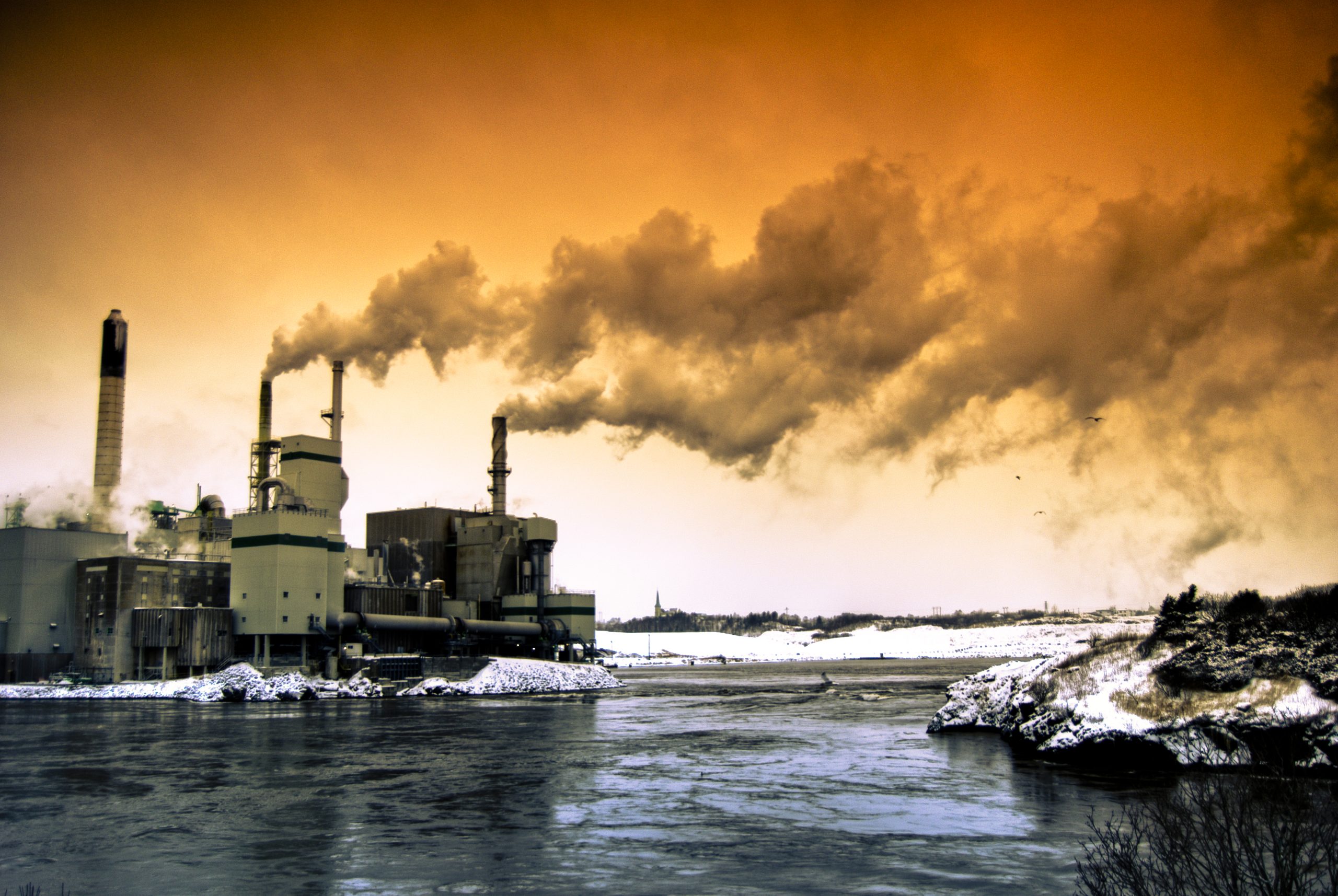
Enviva facility in Southampton, VA: Massive piles of whole hardwood trees burned for electricity in Europe – funded by UK subsidies.
The European Union (EU) Commission recently announced an investigation into the state aid provided for the world’s largest forest destroyer for electricity, Drax. The taxpayer dollars that the UK is providing Drax to convert to burning Southern US forests for electricity is a big reason why this destructive industry is moving us backwards away from a healthy, truly sustainable future.
Since industrial biomass exploded onto the scene in the Southern US, the industry has attempted to paint itself as one that fits into the framework and culture of the traditional logging industry. They want the public to see a symbiotic relationship with an already existing industry. They want us to believe that our precious resources are simply being managed efficiently, and no impacts will be felt by the forests, communities or even the timber markets.
The image of a mutually beneficial relationship between biomass and the traditional logging industry is a complete illusion.
Competition with the Existing Forest Products Industry
At a public event, I heard a representative from the paper industry say,
“The biomass industry is not taking our waste or residues. What they’re taking is our product. We don’t produce waste.”
Why would our traditional wood products industries, like the paper industry, be so upset about wood pellets? Due to the false classification of biomass as a carbon neutral form of energy, enormous amounts of taxpayer dollars are being directed towards the biomass industry. A recent study by RISI commissioned by the American Forest and Paper Association (AF&PA) found that UK wood pellet subsidies distort the US market for wood fiber.
According to our partners at BiofuelWatch, Drax’s renewable electricity subsidies in 2014 were equivalent to 79% of their annual gross profits! With conversion of a third unit (which is currently under investigation) and their coal subsidies, Drax can look forward to over $930 million every year. That’s over $2.5 million per day in taxpayer money.
These funds are subsidizing an industry that takes the raw materials used by our traditional wood products industries. This makes it harder for traditional wood products industries to operate, drives up the cost of timber products and adds fewer jobs to the regional economy. Not to mention, the biomass industry pumps a whole heckuva lot of carbon into the atmosphere, which is the opposite of the intention of renewable energy subsidies.
A timber market that provides sustainable feedstocks for our traditional industries, protects Endangered Forests and incentivizes landowners to manage native forests for increased carbon storage and conservation.
Delaying the Just Transition to a Truly Renewable Energy Future
In our work, we travel all across the Southern region, and in each of these states, a majority of people are fed up with profit-driven companies coming in, extracting their natural resources and leaving nothing but a degraded landscape. From mountaintop removal coal mining to unsustainable industrial logging and even the creation of landfills, we know this story all too well here in the South. More and more residents are asking Dogwood Alliance to support efforts to push back proposed biomass facilities. Many residents see this as an environmental justice concern.

Community Members in Panama City, FL who are fighting biomass incineration facilities, wood pellet manufacturing facilities, and wood pellet export terminals.
Allowing these massive subsidies to flow into the pockets of forest destroyers like Drax, Europe has incentivized this unacceptable status-quo for rural populations and delayed a necessary and inevitable transition to a clean energy economy. We must prioritize investments in energy efficiency and truly clean energy for communities recovering from dirty industries as we move toward a brighter energy future. Equity must be at the center of a just transition to a clean economy. Biomass and the subsidies driving it should not be part of this solution.
These short-sighted corporations are not the only stakeholders in our forests. A new vision must be inclusive of our local communities and our wildlife. This vision must value clean air, clean water and safe communities.
We face incredible problems – global climate change, mass species extinction and polluted fresh water resources.
It’s too risky to incentivize industrial-scale biomass and let industries with a vested interest decide what’s sustainable. It is a part of what’s gotten us here in the first place – economic justification that only benefits a few. Headed down this road of incentivizing industrial scale biomass, while listening to what the industry believes is sustainable – is too risky.
In the South, we’ve learned this lesson the hard way. We can’t afford to let Europe take us down this path again.
The Our Forests Aren’t Fuel campaign applauds the EU Commission for investigating the UK state-aid given to Drax and urges them to put an end to funding this destructive industry.
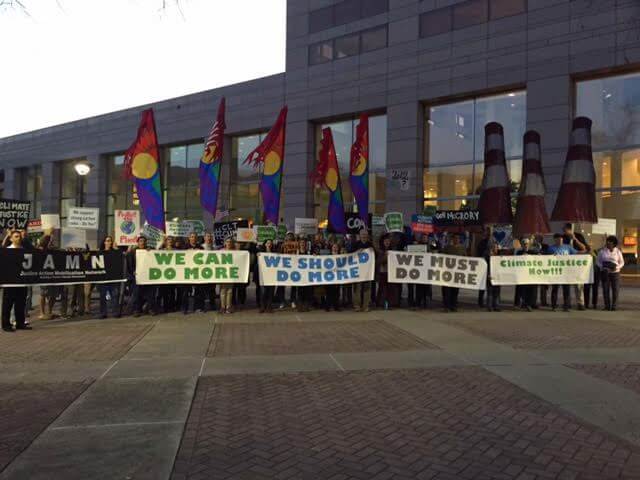
Folks gathered at the Clean Power Plan hearing in 2015.
Late last year, the Obama administration and the EPA released the potentially game-changing Clean Power Plan. To date, this is the boldest policy the US government has initiated to tackle climate change. The science is clear, the planet is heating up, and now is the time for action. Unfortunately, climate deniers and special interests are fighting tooth and nail to destroy or water down this plan. Despite the fact that our forests are our best defense against climate change and the scientific community widely views burning forests for electricity as the wrong direction, the Environmental Protection Agency is considering including biomass electricity as a potential pathway for meeting the goals of the plan.
Today at the close of the first round of comments on the plan, we submitted a letter advocating for Southern forests and communities and against business as usual dirty energy and forest destruction. Highlights from the comments include:
This is only the beginning, and we will all work together to ensure a clean energy future that puts our communities, forests and health first, not corporate profit.

Forests in North Carolina
In closing out 2015, world leaders came together to negotiate a climate deal and signal an end to the era of fossil fuels in Paris. Even more, dozens of countries and more than 60 heads of state emphasized their commitment to forest conservation. And yet, the United States’ Environmental Protection Agency has failed to protect its own forests. In the federal Clean Power Plan, the EPA misses the forests for the trees. They recognize “the critical role that America’s forests play in addressing carbon pollution in the US,” while, on the other hand, they give states and companies a free pass to burn at will with little to no oversight or guidance. In other words, sustainability standards for “qualified biomass” to be burned as a form of “clean energy” has been punted to the states to decide for themselves.
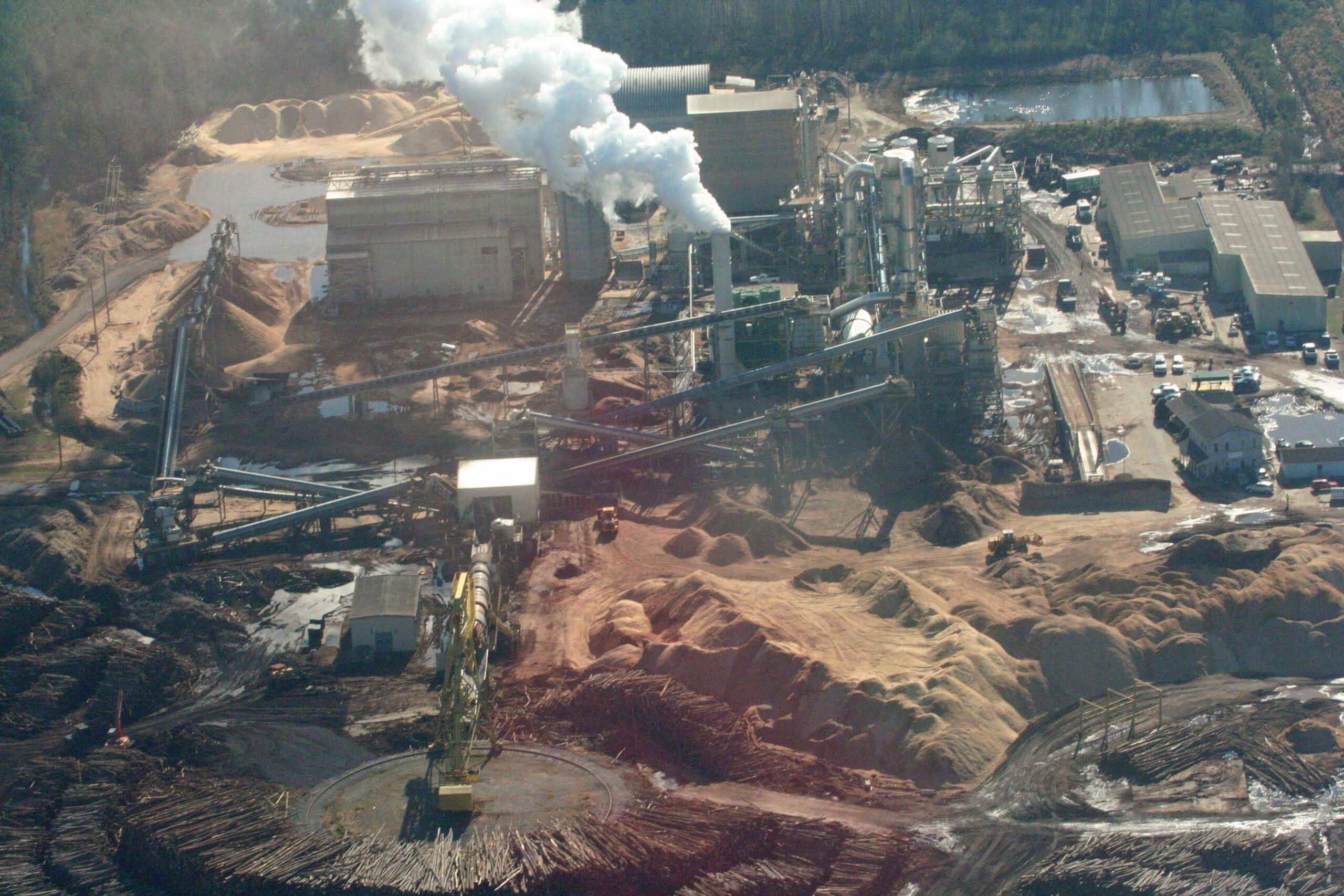
Burning forests for fuel can be 2x as carbon intensive as coal, creates health impacts that are deleterious for communities and negatively impacts the environment
We are at a pivotal moment when we need to increase protection and conservation of forests to store and sequester more carbon and yet our Environmental Protection Agency is turning its back on sound science.
If the federal government won’t set regulations with teeth to protect our forests, our communities and activists will rise up and demand strong state policy that implements the Clean Power Plan without incentivizing the incineration of forests for fuel. The Clean Power Plan allows states to be in the driver’s seat for determining their energy future. Each state must conduct community outreach and involvement in the formulation of their legislation, especially with vulnerable communities, and this provides activists, groups and stakeholders a critical role in stopping the authorization of burning forests to achieve “carbon emission reductions” when we know that is scientifically false.
In the Southeast, North Carolina was the first state to submit its plan for meeting emission reductions and a strong coalition of environmental, public health and justice organizations rose up to demand stronger action and keep forests from being burned. Nearly 15,000 comments have been submitted thus far, and the two-month comment period ends on January 15th. Three public hearings have also been held in Charlotte, Raleigh and Wilmington. We attended the Charlotte public hearing and rallied with a group of 100 people beforehand.
We can do more, We should do more, We must do more! North Carolina can harness the power of the sun and wind for a clean energy future
Except for three rogue individuals, the entire set of speakers were unanimous in calling for the NC administration to leverage the state’s booming solar industry, to include low-income communities in the planning process of drafting the next plan and to focus on renewable energy and energy efficiency.
Burning forests for fuel is bad for our environment, communities, economy and health. Max Stone, a recent college graduate from UNC Asheville, testified in Charlotte:
“North Carolina forests are a place where I hike, hunt, fish, camp and enjoy the outdoors. These forests I enjoy protect me from massive storms and prevent flooding. The federal implementation plan from the EPA proposes burning these very forests to achieve CO2 emission reductions when, in reality, burning forests for fuel can be up to 2x as CO2 intense as coal. The largest utility for our state, Duke Energy, has even rejected biomass as a viable alternative form of energy. I urge North Carolina to exclude biomass from the state’s plan for a clean energy future.”
Coming together, whether it’s for COP21, the Clean Power Plan in the United States, or individual public hearings like the one in Charlotte is the best way to search for solutions to crises such as deforestation. The only way to achieve climate justice is with social justice and that means being part of the process. For the movement to win, we need everybody there. This is why we will continue to stand up for forests and the communities most impacted by the dirty biomass industry. #SOSForests

This is why we will continue to beat the drum and show up at public hearings to testify and gather public comments.
The Clean Power Plan will be rolling out over the next few years and decade. Dogwood Alliance will continue to dig into proposals to provide substantive feedback. We will stay fully engaged with the EPA throughout public comment periods, and we will include our members and allies to ensure protection for forests. If we truly want a CLEAN Power Plan in the United States, biomass must be excluded.
Maria Ramos takes a look at five forest documentaries that explore the current relationship between modern humanity and nature.
 An episode of the BBC program Secrets of Our Living Planet, this hour-long documentary is a charming look at the interconnectivity of life in temperate forests. Host Chris Packham‘s enthusiasm is infectious as he explores how something as simple as a flying squirrel foraging for food can affect the life of an entire forest. But there’s more at work than adorable flying squirrels, baby bears and lynxes. There’s a story at work: nature as a Jenga tower, weaving a thread from one season to the next, with all of the participants playing a part. It’s easy to see if one part goes, the rest will fall as well.
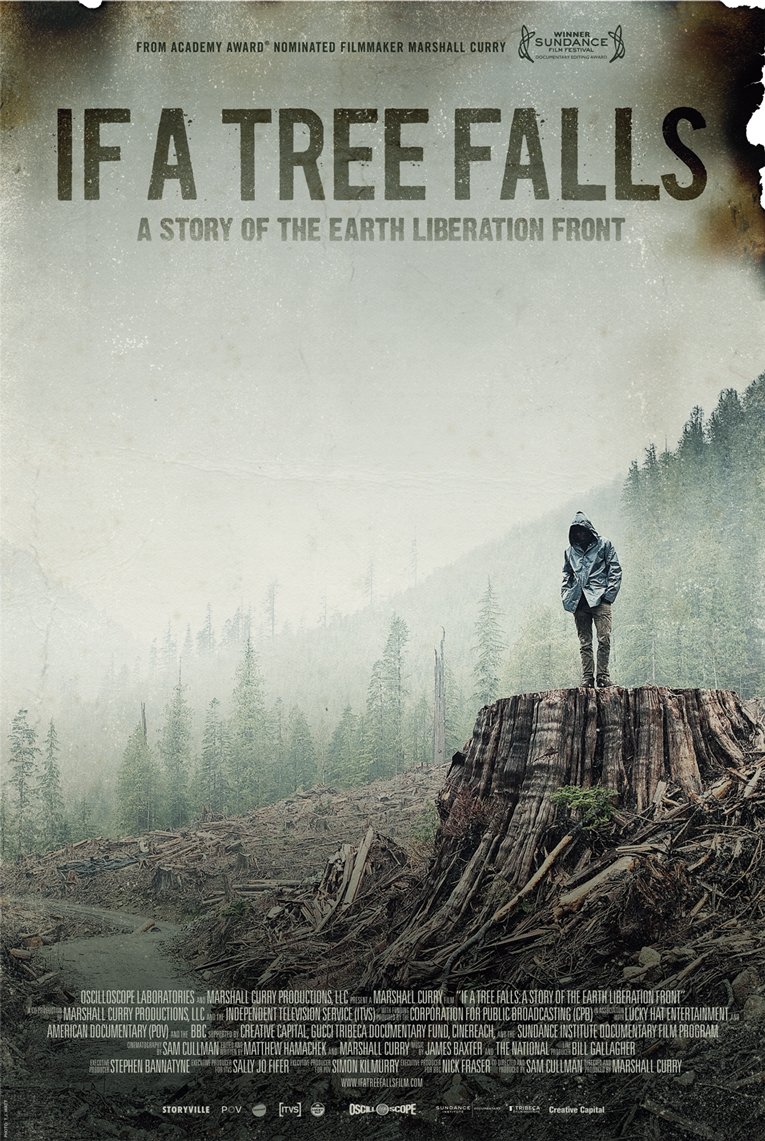 This documentary examines the lives of those who view nature as something worth protecting by any means necessary. This documentary takes a look at the actions of the Earth Liberation Front (ELF), a radical group of environmentalists. If a Tree Falls examines the group’s history and actions, while paying particular attention to Daniel McGowan, who was charged by the FBI in connection to arson and other activities of the ELF. The documentary provides a surprisingly even-handed look at the issue.
 Narrated by Hugh Jackman, this Australian documentary looks at the activities of Dorjee Sun, an Australian entrepreneur. Sun looks to provide an alternative to the slash-and-burn farming of Indonesia, and the film follows him as he looks to find backers for a carbon trading plan in the forest. The documentary also follows a small, local farmer and a woman running an orangutan sanctuary, and when all are brought together, the results are heartwarming. Thanks to efforts like carbon trading and government partnerships, reforestation of depleted areas can happen on a larger scale.
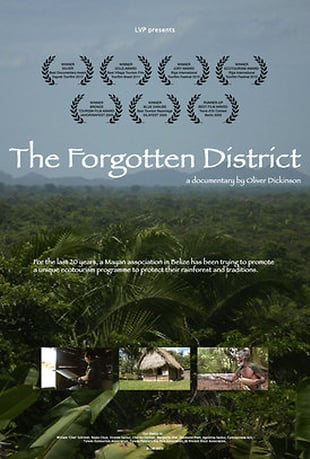 This documentary focuses on the local efforts of a Mayan community in Belize. Contrary to popular belief, the Mayan people are alive and well, and in the community of Toledo, they have been running an ecotourism business for over two decades. Left in poverty by governmental disputes, The Forgotten District shows how resourceful people have leveraged the beauty of their culture and environment to both provide a living and preserve a way of life.
 This film examines Canadian forestry and follows two Canadians with ties to the forest while they lobby for more responsible forestry practices. While some people might think of Canada as nothing but ice and snow, there are significant stretches of boreal forests and conditions in recent years have caused large and dangerous forest fires on a regular basis. Natural Resources Canada, a Canadian governmental ministry, has admitted that climate change is a contributing factor to these fires. When carbon dioxide is 61 percent above 1990 emissions, according to Alberta Energy, the changing of forestry practices is a worthy cause to be championed.These five documentaries offer awareness, which is a good first step. More than that, they offer examples and solutions. Find out how to lower your carbon footprint in your daily life and take a step on the path to saving Earth’s forests.
For the past 3 years, Dogwood Alliance, NRDC, and SELC have sounded the alarm about the widespread, destructive impacts to our forests, communities and climate caused by the rapidly expanding wood pellet industry. Today’s announcement by Enviva, the largest wood pellet manufacturer in the US, is a clear indication that the collective efforts of our organizations are having a direct impact on the practices of this industry.
Enviva is attempting to distract the public from the well-documented and irreplaceable environmental damage that they have already caused and will continue to cause. The Enviva Conservation Fund may be a step in the right direction but this initiative is a drop in the bucket compared to Enviva’s overall impact and does not address the most fundamental problem with Enviva’s business plan – that burning whole trees (even low-grade ones) to produce electricity can be worse for the climate than coal.
Enviva’s announcement does nothing to address the fact that burning wood pellets in Europe from the mature hardwood forests of the Southern US is estimated to result in four times the carbon emissions that would occur from continuing to burn coal over the next century. The export of wood pellets from the region to Europe is based on a government subsidized energy program gone awry. The UK and the EU are in effect subsidizing the logging of forests here in the US that are then shipped as wood pellets across the Atlantic and burned in power plants, enabling dirty coal power plants to continuing operating.
Fundamentally flawed climate policy liquidates our valuable carbon sinks in the United States and sends the carbon up smokestacks in Europe. A 2014 study by the UK Department of Energy and Climate Change concluded burning pellets from mature hardwood forests in the southern US will result in four times the amount of carbon emissions compared to continuing to burn coal over 100 years. If Enviva and the European utilities and governments are serious about reducing carbon emissions, they would start by protecting, and not burning pellets from, hardwood forests from the southern US. If reducing carbon emissions were the purpose of wood pellet sourcing, southern hardwood forests would not be cut at all to be burned.
Southern forests are currently logged at a rate that is 4 times that of South American rainforests and if emissions from soil disturbance are factored into the carbon accounting (which they aren’t) forests can essentially change from being carbon sinks to carbon sources. The biomass industry exacerbates this potential and takes important momentum and resources away from truly low-carbon solutions such as wind, solar, energy efficiency, tidal, etc.
Enviva’s conservation initiative represents a drop in the bucket compared to their overall landscape impacts.
Consider the following:
In the 21st century, clear-cutting and burning the very forests we depend on to soak up carbon and to protect our communities from the impacts of climate change represents an irrational and risky strategy. And yet this is what is likely to happen as a result of Enviva’s expansion plans fueled by the misguided energy policies of the EU and UK. The European Commission has mandated a review of wood biomass policies to assure verifiable carbon reductions and sustainable sourcing in climate policy. If European government subsidies are not continued, the wood pellet export industry in the southern US will quickly come to an end.
Rather than identifying four forest types where it does not plan to source pellets, Enviva and the European utilities should identify the forest types that will be impacted by expanded pellet production and accurately account for the resulting carbon emissions. Enviva should also immediately stop their planned expansion in the Carolinas which will only make this conservation fund less relevant to their entire sourcing footprint.
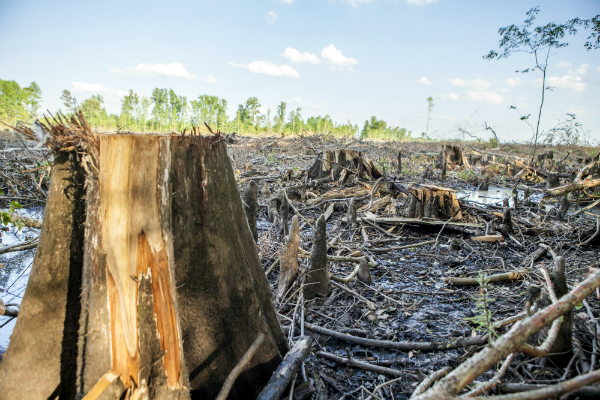
Cypress stumps and knees of a once great wetland forest.
The world’s attention will soon focus on Paris for the COP-21 climate treaty negotiations in December, where international negotiators will attempt to hammer out a treaty to address the rapidly growing threat of climate change. It is vital that we reevaluate our relationship with forests and upgrade our thinking for the 21st century – especially when it comes to the forests of the Southern US.
There is a growing need to scale up forest protection. While climate talks have resulted in increased commitments to protect forests in the tropics, the accelerated practice in recent years of burning trees from the US in place of coal to generate electricity has gone under the radar.
Meanwhile, documentation that Europe’s conversion of coal plants to wood is accelerating carbon emissions and driving large-scale clearing of sensitive, biologically diverse wetland forests across the coast of the southeastern United States is making international headlines.
The volume of wood pellet exports from this region quadrupled in the past several years. Projections of continued growth in Western Europe led by the UK – from 5 million tons in 2015 to over 35 million tons in 2020 – are staggering.
European and British policy-makers and utilities have exploited a fatal carbon accounting error under Kyoto rules for calculating national GHG emissions, allowing countries to count CO2 emissions from burning trees and other forms of biomass as zero. The assumption is that because forests absorb carbon as they grow, eventually any carbon emissions emitted today will be removed from the atmosphere by future tree growth.
Yet, scientific studies warn that this assumption is untrue given that burning wood releases more CO2 at the smokestack than fossil fuels and it can take decades for a forest to rebound after being cleared.
With negotiations so focused on tropical forests, this major forest and climate issue is largely being ignored. The forests of the Southeastern US are the most biodiverse in the North America. When left standing, they are one of our best defenses against climate change. They remove and store vast amounts of carbon, and they protect water resources while providing storm protection.
Logging and burning trees to generate electricity is neither a path to a low carbon future nor to achieving broader sustainability. International negotiators and leaders in the EU need to require accurate forest carbon accounting and update their carbon emission reporting requirements to reflect 21st Century forest science.
The US must commit to a major scale-up in the protection of its own forests. In order to be a global leader on climate, the US needs to clean up its own backyard, and the simplest path forward is to invest in conservation strategies that protect and restore our forests rather than incentivizing their destruction.
Global leaders can no longer ignore one of the most important climate policy debates of this decade – whether or not forests will become a primary fuel source for generating electricity, and they must recognize the importance of protecting forests outside of the tropics, such as those in the Southeastern US.

Sarajane Case in the mountains on the Blue Ridge
Parkway.
Dogwood Alliance asked me what the forests mean to me. I could have said clean air (because that’s true). I could have said the beautiful views (also true) or that I use the forests for recreational purposes.
To be transparent, I went through a phase where I told myself that I wasn’t that into the outdoors. Now I know the truth is that I wasn’t into stillness. The quiet that comes with being in nature is part of its magic. But, when you’re running away from something or you’re not quite ready to see the truth, the magic feels a little bit more like a mirror that shows you the ugliest or most scared parts of yourself.
Though I told myself I wasn’t that into nature, the truth was that I just didn’t like the voices that were in my own mind. I didn’t like the truth that the trees whispered to me. I was anxious and running. I wasn’t ready to face the truths of my childhood, the fears of failure. I wasn’t ready to admit that I was in a relationship that was overbearing or that I’d spent the majority of my life just trying to make everyone happy with me no matter the cost to myself.
Last year, I tried my hand at exploring again. I drove up on the Blue Ridge Parkway. I didn’t have a plan, but I had a purpose. I was hoping to find a little bit of myself up there, to bring a little piece of myself alive.
Jumping off of rocks, paying attention to the tiniest details and moving caterpillars out of my way as I walked. I stood on the top of the mountain, and I let the wind caress my face as I beamed sunshine back into the sky and I smiled a smile that started at the soles of my feet and worked it’s way up through my core and bellowed out through my face.
As a kid, I was lucky enough to always have a home near nature; no matter where we lived, there was a little space that I could go to be alone. In some homes, it was a dock on the lake. Others it was a little piece of the woods or a trailer on the bank of a river.
I grew up in a home where things never felt easy, where you knew a lot very young and where rest didn’t seem normal. I’d run away from home to find my solace and I’d listen for my stepfather’s screaming from the place that I knew he could never find me. The woods became the place where I could be a child. I could run and play. I could feel the earth in my hands as I formed pottery from the red clay mud on the creek bank.

Sarajane Case in the Mountains on the Blue Ridge
Parkway.
Traditionally, I’ve prided myself on being the kind of person who counts her blessings. I’ve looked for opportunities to celebrate the waves of life in every season. Looking for the bright spots in my hardest times and evaluating the construction of my sorrow. The way many of my strongest characteristics were seemingly birthed out of learning to manage chaos. For a lot of my adult years, I disregarded my childhood as difficult. I didn’t dissect it. I didn’t feel like I needed to. I just wrote it off as trying and I moved on.
As I’ve grown, I’ve become wiser, more patient, more understanding of myself. I know what it really means to run from my thoughts. I know that solace doesn’t follow you as you flee.
It’s putting yourself in the position to see your truth and facing it with courage. It’s in the stillness that comes with feeling the earth beneath your feet, the wind caressing your face and allowing the trees to whisper a little bit of truth back to you. For me, solace is found in red clay mud and groves of trees. It’s found on the banks of a river and peace with only the sound of my thoughts and the rustling of leaves.

Dogwood Alliance’s Program Director, Tyson Miller, outside of the United States Environmental Protection Agency.
Recently, I provided oral testimony to the EPA on behalf of the Dogwood Alliance and the forests and the communities we serve. I thanked the earnest members of the panel for their work to develop the Clean Power Plan (CPP) and expressed our strong opposition to forest-based biomass being included as suitable compliance pathway in Federal Implementation Plan for the Clean Power Plan. The Clean Power Plan has the ability to create a lasting legacy and it is evident that the ideals of the CPP are grounded in a moral obligation to citizens and future generations. However, I made sure to articulate that the inclusion of biomass takes us backwards and may actually undermine its intended purpose. Here are just a few reasons why….
Burning wood and other forms of biomass in a power plant produces about 3,000 pounds of CO2 per megawatt-hour—an emissions rate that is approximately fifty percent higher than that of a coal-fired power plant. Accordingly, biomass combustion does not reduce CO2 emissions and should not be considered part of the Best System of Emissions Reduction (BSER) envisioned in the Clean Power Plan.
EPA is requiring that to be qualified, biomass must be “demonstrated as a method to control increases of CO2 levels in the atmosphere,” but the agency hasn’t established required parameters and methods for how states might accurately demonstrate this and this ambiguity might incentivize more states to look to forest-based biomass given a perceived relative ease in meeting a definition for what it might mean for biomass to be “qualified.”
By enabling and promoting forest-based biomass as a compliance pathway, EPA is potentially diverting continued momentum for scientifically-grounded and non-controversial solutions such as wind, solar, energy efficiency, geothermal, tidal, etc. It is our hope that the FIP will contain the kinds of incentives and clear guidance that will spur continued technological innovations and investments in these proven and less controversial renewable energy pathways that further bring down the costs of these important technologies and support their widespread expansion.
EPA only needs to look to the Southeast to see evidence for what happens when you treat bioenergy as having zero emissions. Driven by flawed renewable energy directives in the EU (with the UK being a primary driver), the volume of wood pellet exports from the US Southeast have quadrupled in the past several years. Projections of continued growth in Western Europe led by the UK are staggering and are estimated to jump from 5 million tons in 2015 to over 35 million tons in 2020.[1]
Countless investigations have directly linked wood pellet manufacturing in the Southeastern US to the accelerated logging of forests, including in sensitive ecosystems such as mature bottomland hardwood and wetland forests[2]. Still, industry insists they use “logging residuals”, “scraps” and “waste wood”. Yet, it is estimated that 75% of the feedstock used to manufacture wood pellets in the Southeast comes from ’roundwood’, or whole trees[3]. These facilities simply cannot reach their desired output with residuals, byproducts, and scraps as they claim. In fact, USFS reports project not only accelerated logging across the region but also the loss of natural forests to plantations, if the biomass industry continues to expand[4]. These trends in wood pellet manufacturing are especially troublesome given recent global maps showing that forest disturbance from logging in the Southeastern US was four times that of South American rainforest from 2000-2012[5].
Biomass incineration creates fine particulate pollution that impacts human health. Additionally, these pellet production facilities and biomass incineration plants are often located in relative close proximity to communities. Dogwood is increasingly supporting community-led efforts to push pack proposed facilities and many residents see this as an environmental justice concern.
Beyond biodiversity, standing Southern forests remove carbon from the air, provide critical flood control and protect water resources, services that are critical to both achieving carbon emission reductions necessary for avoiding the most catastrophic effects of climate change and ensuring community resiliency in the wake of a changing climate. Forests represent our best defense against climate change. Now is not the time to open the flood gates for forests to be used as fuel for electricity. Instead, we need to accelerate efforts to protect our forests and improve ecosystem health.
Hopefully, the EPA will listen to the concerns of national, regional, and local organizations on this issue by not building forest-based bioenergy into the Federal Implementation Plan.
[1] http://www.wwrgroup.com/en/biomass-market/the-wood-pellet-market
[2] http://www.dogwoodalliance.org/wp-content/uploads/2015/06/Wetlands-Logging-Investigation-Flyer.pdf
[3] European Commission Workshop Briefing Paper Sept 2015: Study on the Environmental Implications of the Increased Reliance of the EU on Biomass for Energy Imported from North America[4] http://www.srs.fs.usda.gov/pubs/gtr/gtr_srs202.pdf
[5] http://www.sciencedaily.com/releases/2013/11/131114142123.htm
Forest Stewardship Council Recognizes Conservation ChampionsAwards Highlight Critical Role of Forests in Addressing Global Challenges
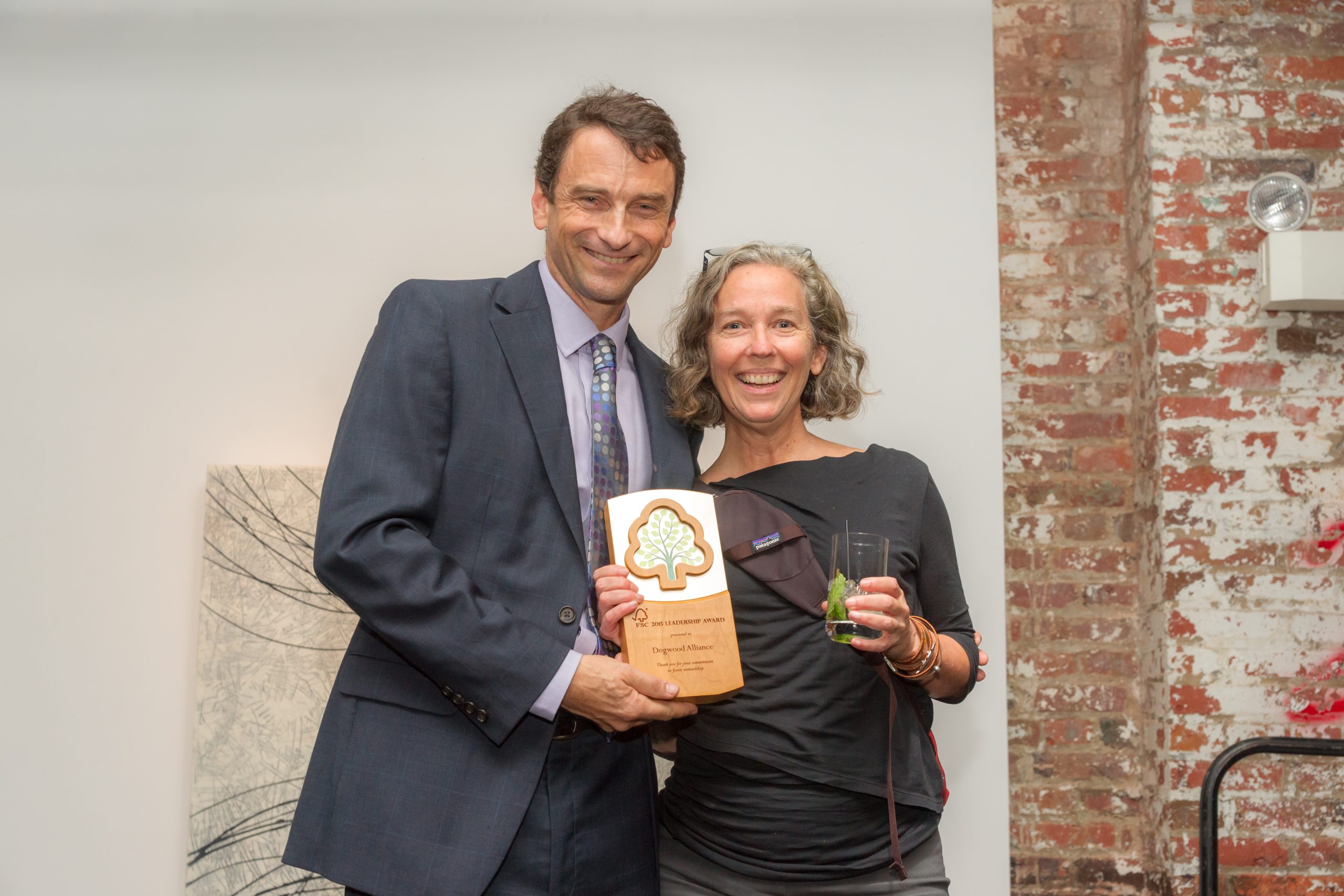
WASHINGTON, D.C. – As the world prepares for the Paris Climate Conference, the Forest Stewardship Council recognized a group of leaders who are highlighting the critical role that governments, businesses and forests play in addressing climate change.
Deforestation and forest degradation worldwide are a leading cause of carbon emissions. Recognizing this, the second annual FSC Leadership Awards celebrated organizations and people who have long used markets to protect forests, which not only store carbon but also protect water quality, provide wildlife habitat, and enhance the economies of forest-dependent communities.
“The award winners demonstrate that we all have a great opportunity – and responsibility – to help protect forests,” said Corey Brinkema, president of the Forest Stewardship Council US. “By building the market for FSC products, the award winners show we can conserve forests, even as we use forest products in our daily lives,” he added.
Winners of the 2015 FSC Leadership Awards are as follows:
Recently, the US Environmental Protection Agency directed federal agencies to use FSC-certified lumber in construction projects. This decision will help sequester more carbon in US forests and continue to build the market for products from responsibly managed forests.
The Forest Stewardship Council co-hosted its award celebration with its close partner, the World Wildlife Fund. Collins, Columbia Forest Products, RoyOMartin, SCS Global Services and Certified Wood Products sponsored the event.
CONTACT:
Brad Kahn
Communications Director
206-419-1607
[email protected]About the Forest Stewardship Council
The Forest Stewardship Council is an independent nonprofit organization that promotes environmentally sound, socially beneficial, and economically prosperous management of the world’s forests. FSC was created in 1993 to help consumers and businesses identify products from well-managed forests. FSC sets standards by which forests are certified, offering credible verification to people who are buying wood and wood products. More than 5,000 companies and nearly 160 million acres of forestland are certified under FSC standards in the United States and Canada. For more information visit www.fsc.org.
###


 Donate
