


 Donate
 Photo: Gavin Bauer


Danna Smith and Adam Macon present 50,000 SOS messages to EU Commission.
Right now, Campaign Director, Adam Macon, and Executive Director, Danna Smith, are in Europe delivering your SOS petitions, all 50,000 of them! They’re also presenting new information against the woody biomass industry and standing up for the forests we love. Our team has coordinated with international allies, met with top decision makers, premiered a documentary that features Dogwood and presented before several Members of the European Parliament. It has been extremely productive, and we’re not even half way through! A couple of initial takeaways have really jumped out to us.
From Romania to France, Africa and across the sea in the Americas, protecting forests from the emerging threat of bioenergy (the burning of trees for electricity) is a growing movement.
[youtube]http://www.youtube.com/watch?v=IEDX8VkdPCs[/youtube]
Meeting after meeting. Event after Event. European policy makers are telling us that the destruction of Southern forests is a concern that Europe must address. From a policy perspective, this is a huge win! A movement has been built that has raised the controversy of the impacts and public support of solutions to a level where Southern forests are a focal point of European renewable energy policy.

Adam Macon reads the SOS Scroll message to members of the EU Parliament.
From utility companies and biomass trade associations to industrial forestry groups, the proponents of biomass have dramatically increased their lobbying and communication to policy makers. Industry opposition has been well-attended at every one of our events, they’ve meet with every policy maker that we’ve met with, and formulated responses to all our talking points. Our path to true forest protection is not going to be an easy one. The platform’s message and leadership role in the global movement to protect forests must increase because those who want to turn our forests into industrial crops, both in Europe and in the States, are not backing down. Now is the time for escalation.
Having a voice and telling my story are important steps in finding an acceptable resolution to the issue of industrial logging in my community. I experienced “that step” in participating in the meeting with a Dutch delegation in Richmond, Virginia early this November. On several occasions now, I have told my story regarding the impacts on my community due to Enviva’s industrial logging in Northampton County, NC and Southampton County, VA. However, telling it to decision makers that day has made a difference in my overall outlook regarding such impacts on other communities.

JC Woodley (far left) is from Garysburg, NC, and he and communities just like his have witnessed firsthand the devastating effects of Enviva’s wood pellet facility.
My voice represented the many voices of the affected communities in the Southeastern USA crying out for help. I come from a community where it is a constant challenge to make the money necessary for families to survive. So many communities are becoming beat down psychologically with nowhere to turn because of the lack of jobs. Compound that with having their environment destroyed right in front of their eyes is another blow they have to take. Then the constant noise, smell and heavy truck traffic does not help either. You have a family with kids who are afraid of the trucks, sick from the particulates in the air and no relief in sight.
I felt the decision makers (including the Dutch delegation) in Richmond, VA heard the voice of those communities through me and through the Dogwood Alliance staff. I am so grateful that I have been given the opportunity to be one of the voices crying out, “HELP ME!”
 JAMES C. WOODLEY
After working in academia for years, James worked with the US Environmental Protection Agency in Washington, DC. His greatest joy involves working on issues to protect the environment. Having to retire early because of a recurring bout of polio, James has immersed himself in addressing environmental issues from his home. Recently, he began working with Dogwood Alliance in addressing industrial logging impacts on the target environments and affected communities. Dogwood’s work is important to him because the issues are vital to the welfare of the community that he was born and raised in.
“I am a firm believer in the people. If given the truth, they can be depended upon to meet any national crisis. The great point is to bring them the real facts…and beer.”
– Abrewham Lincoln
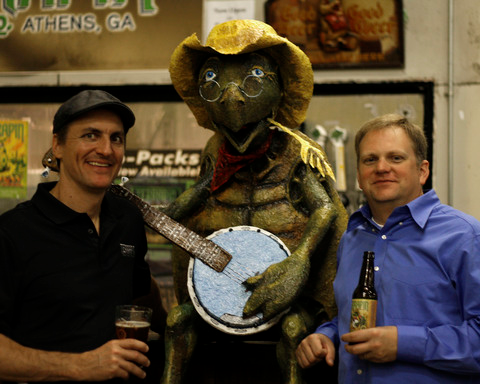
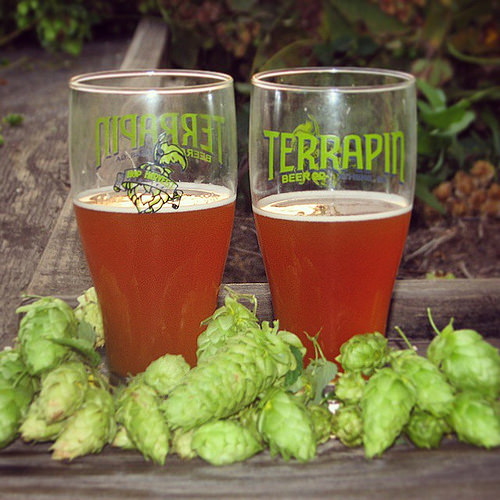
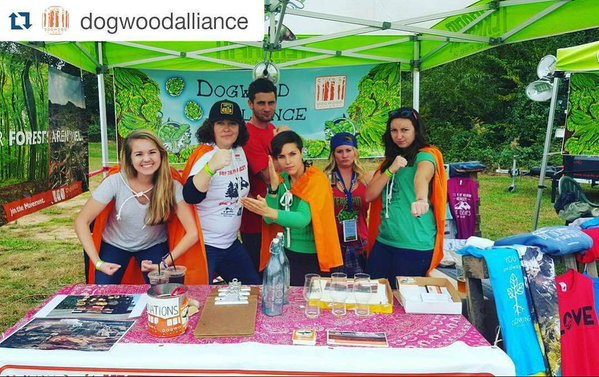
On October 24th, Dogwood Alliance and Terrapin Beer Co. heeded the heralded words of honest old Abe and teamed up again for Hop Harvest: a celebration in Athen’s backyard with music, munchies, love of trees and a special release of fresh-hop beer So Fresh & So Green, Green. As this was the 6th-annual Hop Harvest, our Dogwood Alliance team has come to look forward to the party every year. Here are the 7 best things, old and new, about Hop Harvest:




Founder of Mountainspiration, Evans Prater.
Mountainspiration Apparel is a local apparel company in Asheville, NC that donates 5% of all of their proceeds to WNC nonprofits. The business offers their customers the option to choose which WNC nonprofit will receive 5% of their purchase when they check-out. Mountainspiration was originally founded by Evans Prater.
The idea just came to him one day. On a Blue Ridge Parkway hike, he kept thinking, “Everything you carry should be light,” followed by the idea, “That would be a great bumper sticker!” Evans quickly began building the website. The business, however, Evans did not build alone.
His close friend and the singer of his band, Juliana Rodriguez, asked to be the intern for Mountainspiration. Soon after Evans’ friend from his days of teaching surfing and ocean lifeguarding in San Diego, Adam Morgan, came on as a creative consultant and partner. Lastly, Evans’ father, Bill Lipner, has volunteered his time and energy to help with bookkeeping, taxes and sales.
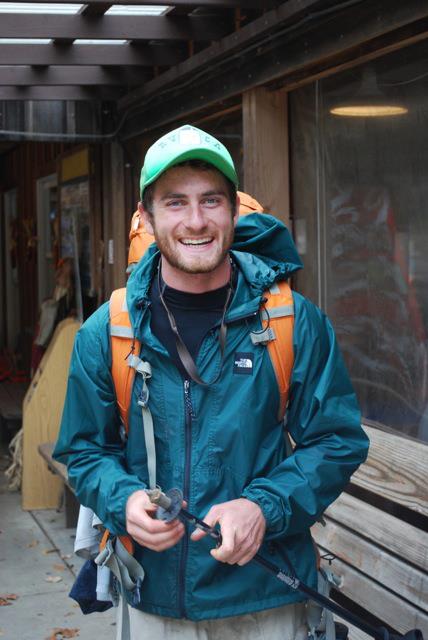
Evans Prater hiking the Appalachian Trail.
Evans has always worked for non-profits and even founded his own a few years ago. His goal in creating a for-profit venture was to work closely with the non-profit community, donate a portion of profits, host charity events and create collaborative t-shirts to not only fulfill his mission of inspiring people to go outside, but work to protect the places he’s encourage his customers to visit.
“I envision people spreading messages of light, love and inspiration across the world through our awesome t-shirts, hats, stickers and eventual full clothing line — feeling good knowing that their shirts come from recycled plastic bottles, while helping the organizations preserving the natural beauty of our planet.”
On what it’s like starting his own business, Evans says it’s been a rollercoaster. He goes on to say, “Starting any company is an uphill battle. The internet is a crowded place, and getting people to buy things is always difficult. I know in my heart, though, that if you truly believe in what you’re doing and have a message of peace, light and love, anything is possible.”
You can help support this awesome company with an incredible mission here. You can also buy our Chari-Tees on their website to donate 100% of the proceeds to Dogwood Alliance to protect Southern forests!

Mountainspiration created Dogwood Alliance Chari-Tees!
In the bottomland swamps of Louisiana, black bears roam. Catching small fish, eating berries and digging up roots, the black bear loves the wetlands it calls home. However, while its brother and sister may be seen as “conservation success” stories in other states of our country, the Louisiana black bear is barely getting by: 80% of its natural range and population has been fractured. Current population numbers are down as low as 500.
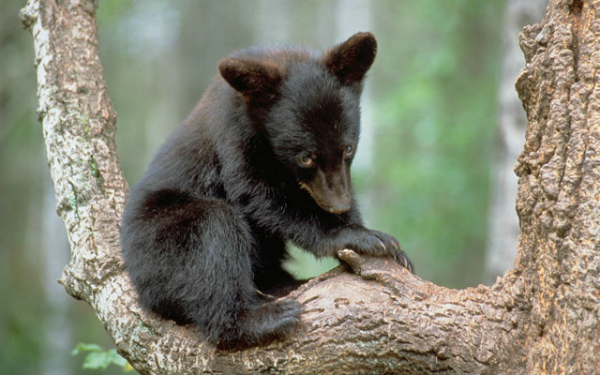
We must do everything we can to protect the home of the Louisiana Black Bear!
Image Source: Nature Conservancy
Black bears all over the Southeastern United States are threatened by an ever-increasing and destructive biomass industry that is converting whole forests into pellets for European electricity. Humans have yet again allowed their greed for profit and cheap fuel to trump species’ need for protected habitat.
Biomass companies are clearcutting the forests of the black bear, processing those trees into pellets and shipping them to Europe to be burned for electricity because policymakers have mistakenly dubbed biomass “renewable, green” energy.
The cost of this false green energy is sky-high: species are being driven out due to the destruction of their forests.
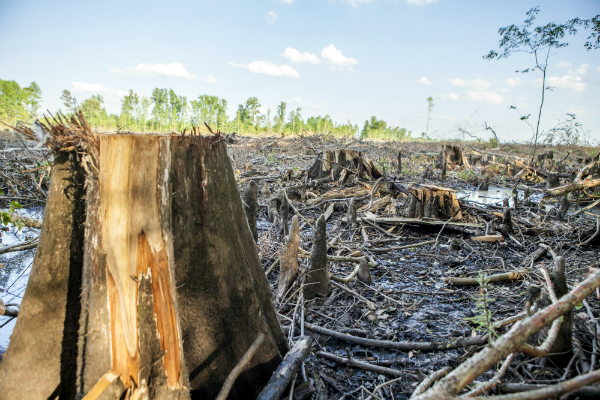
Cypress stumps and knees of a once great wetland forest.
Our SOS asks the president of the EU and the secretary of energy to reject dirty biomass that comes from precious Southern forests. Wood pellets threaten the lives of animals like the black bear, threaten our communities, hurt our economy and destabilize our climate. Take action with us!
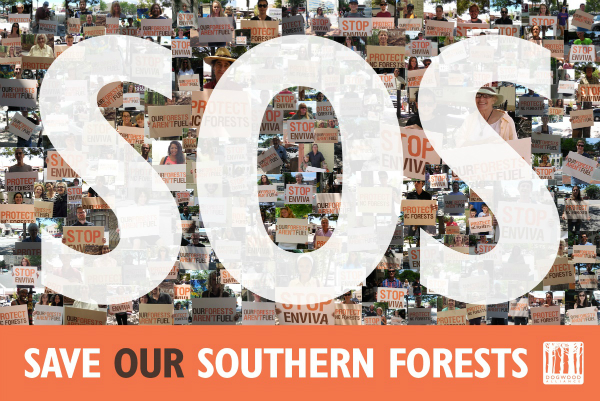
Forests in the Southeast are hotbeds for diversity and vitality. Forests bolster our communities. They’re where we recreate, they protect us from storms, regulate rainfall patterns, clean our air and our water, and provide flood and erosion control. Preserving intact forest ecosystems is the simplest action we can take to sequester carbon and mitigate climate change. There is no time to trade the benefits of forests for large profits for a few companies.
On October 15, 2015, our colleagues at NRDC released a report detailing the potential destructive impact that the wood pellet industry poses to precious bottomland hardwood forests in the Southern US. The following is a blog written by report author Debbie Hammel, outlining the report and concerns along with policy recommendations.
According to a new analysis released today, some of the most threatened forests in America are on the outskirts of iconic southern cities, including Norfolk, Biloxi, Savannah, and Baton Rouge. These last remaining wetland forests, which have helped shape the heritage and identity of these regions, are under imminent threat of destruction by the emerging wood pellet industry in the South – an industry using our forests to feed a growing demand by Europe to burn wood as energy.
In 2013, Dogwood Alliance and NRDC sounded the alarm over energy companies that were taking wood from our forests in the southeastern U.S. that could be ground into pellets and burned for energy in large-scale power plants – primarily overseas in Europe. We warned that the massive fuel needs of these energy companies could drive additional logging, threaten sensitive forested ecosystems and increase carbon emissions significantly, contributing to climate change at a time when we need to be rapidly cutting our carbon pollution.
Over the course of the last two years, this trend is beyond even our worst expectations. In 2013, the United States exported nearly 3.2 million tons of wood pellets to large-scale power plants in the EU. This has skyrocketed since and could reach as high as 70 million tons by 2020. Together, eight states in the southeastern United States—Alabama, Florida, Georgia, Louisiana, Mississippi, North Carolina, South Carolina, and Virginia—now make up the top exporting region for wood pellets to the European Union. The United Kingdom, the Netherlands, and Belgium are the top importers.
While Wood pellet manufacturers and their major customers claim that pellets from these mills are composed entirely of sawdust and other mill residues, tree trimmings, and diseased or “problem” trees not suitable as timber, studies have concluded that logging residuals alone are unlikely to meet biomass fuel market demands and that healthy, whole trees (e.g., pulpwood) will be needed. Our research, along with the research of other organizations, shows that the harvest of whole trees is already taking place.
In light of this explosive growth, NRDC undertook a first-of-its-kind analysis to assess the potential scale of the threat from these wood pellet mills to some of the most biologically rich wetland forests in the United States – known as bottomland hardwood forests. Our report reveals that millions of acres of these vulnerable forests are in the bull’s-eyes of existing and proposed wood pellet mills’ potential sourcing areas. Working with the Conservation Biology Institute (CBI), we compiled data showing the geographic nexus between the region’s unprotected bottomland hardwood forests and existing and proposed wood pellet manufacturing facilities, placing the threats to these forests in stark visual relief.
Bottomland hardwood forests in the southeast U.S. are not planted forests (i.e., plantations) – which are fast growing trees typically cultivated and fertilized like crops. Instead, bottomland hardwoods are natural, slow-growing forests that occur in stream and broad river floodplains in a mixed canopy of trees – such as towering bald cypress and swamp tupelo, red maple, green ash, American elm, and black gum, as well as numerous species of oak trees. The trees in these forests can live for hundreds of years, are an integral part of the regions’ cultural heritage, deliver important ecosystem services to local communities – such as flood control – and provide critical habitat to a host of rare and imperiled species like the Louisiana Black bear and numerous songbirds.
Unfortunately, it is estimated that only around 20 percent of all pre-settlement bottomland hardwood forests remain today – many areas have been drained and converted to plantations, agriculture and housing developments – and only 10 percent of these are fully protected from commercial logging. Contrary to popular belief, forestry on private land in the Southeast—which constitutes more than 80 percent of forests in the region—is conducted with few restrictions and little oversight. Practices such as large-scale clearcutting, old-growth logging, wetland logging, and the conversion of natural forests to plantations are mostly unregulated and are often practiced in sensitive habitats with little protection for species. In addition to the weak legal and regulatory environment in the region, very few forest acres are certified by any sustainability regime, and there is disproportionate reliance on the least rigorous certification systems.
The potential sourcing areas for nearly every proposed pellet plant—and several currently operating plants—include critical habitat for up to 25 different species that are federally listed as imperiled or endangered. Seen here in totality for the first time, the pressure on forests in U.S. Southeast from the biomass industry is nearly ubiquitous.


Our analysis also identifies hot spots—regions of exceptionally heavy wood sourcing where there are particularly high concentrations of established and proposed pellet facilities that overlap millions of acres of unprotected and vulnerable bottomland hardwoods. These hotspots include:
Virginia–North Carolina border: approximately 1.63 million acres of unprotected wetland forests fall within the assumed 75-mile sourcing radius of pellet facilities.
Southeastern Georgia: approximately 5.06 million acres of unprotected wetland forests fall within the assumed 75-mile sourcing radius of pellet facilities.
Alabama–Mississippi border: approximately 4.19 million acres of unprotected wetland forests fall within the assumed 75-mile sourcing radius of pellet facilities.
Louisiana: An emerging hot spot, where approximately 4.1 million acres of unprotected wetland forests fall within the assumed 75-mile sourcing area of pellet facilities.
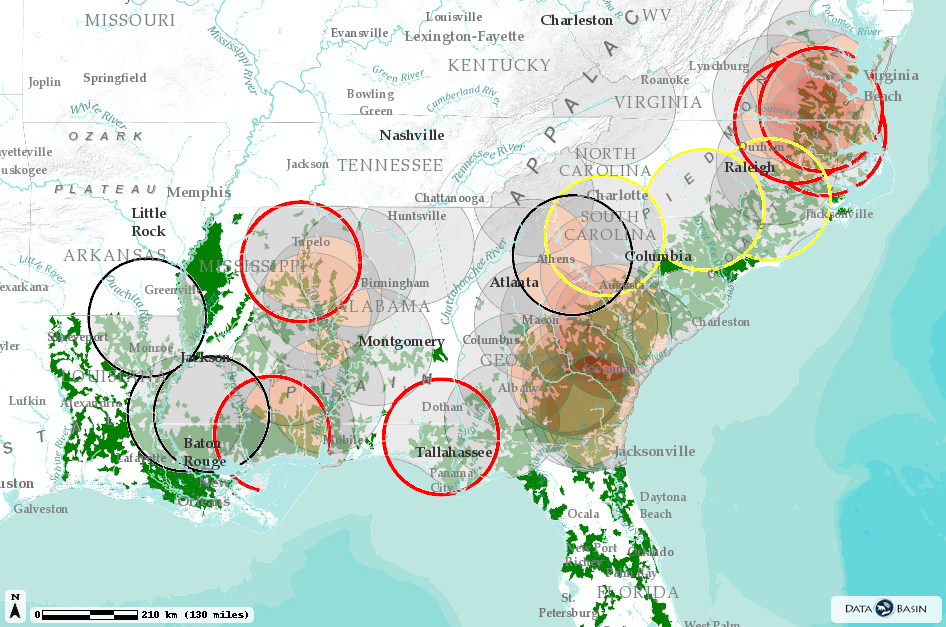
It is clear that the massive additional demand for biomass being driven by the biomass energy industry now threatens to destroy ecosystems that can never be replaced. A small amount of biopower requires a very large quantity of biomass and can drive enormous shifts in the landscape. Thus, even a limited number of conversions to biopower can have major impacts on the ground.
Today demand for wood pellet exports out of the U.S. Southeast is being driven almost exclusively by climate and energy policies in the UK and European Union. However, it is imperative that policymakers in both the EU and the United States implement key policy reforms and avoid making specific policy errors with respect to biomass energy. We recommend the following:
Sustainability standards must be paired with sound carbon accounting.
It is critical that policymakers reject the assumption that all biomass is carbon-neutral and restrict public subsidies and other support mechanisms to sources of biomass fuel that demonstrably reduce carbon emissions within a time frame relevant to tackling climate change.
Sustainability standards must be rigorous, require on-the-ground monitoring, and be verified by an independent third party.
Policymakers should require all pellets to be independently certified to the Forest Stewardship Council (FSC) standard, the strongest certification system. When it comes to sustainability standards, very few forest acres in the Southeast are certified by any sustainability regime. There is also a disproportionate use of the least rigorous certification options, such as the Sustainable Forestry Initiative (SFI) and American Tree Farm System (ATFS) which allow some of the most environmentally harmful practices.
Biomass for energy should be capped to reflect the limited supplies of truly sustainable low-carbon sources.
Given that lower-carbon biomass sources are limited in supply, it is equally important that a cap be imposed on the use of biomass at levels that can be sustainably sourced (taking into consideration other competing uses—the existing traditional forest-products industry—and the pressing need to increase protected areas for sensitive forest types).
Getting this policy signal right is critical to steering the industry away from high-carbon, ecologically damaging sources of biomass and ensuring that bioenergy projects do not increase carbon emissions and adversely impact forests, carbon sinks, soil, wildlife habitat, biodiversity, and water resources. It will also help direct both public resources and private investments toward energy efficiency and truly clean technologies such as wind, solar, and geothermal. Failure to do so risks distorting the marketplace toward greater use of unsustainable and high-carbon sources of biomass, with significant risks to our climate, forests, and the valuable ecosystem services they provide.
NC Resident and Dogwood Alliance Board Member JC Woodley Urges NC DEQ to Hold a Public Hearing in Hamlet, NC
Enviva, one of the largest producers of wood pellets in the world, currently produces more than 1 million tons of wood pellets from North Carolina forests each year, and has plans to double this number. An expansion in NC means more logging, more destruction of our native forests, and greater disruption to the lives of NC residents. At stake is health of those living near Enviva’s facilities, where large and fine particulate matter from the wood dust can lead to respiratory impacts, heart disease, and daily irritation.
Across the state, North Carolina residents are calling on NC DENR Division of Air Quality to hold a public hearing on Enviva’s newest proposed facility, in Hamlet, NC. JC Woodley, a former resident of Northampton County (where Enviva operates a wood pellet facility, Sierra Club Cypress Group Executive Committee Member, and Dogwood Alliance Board member weighs in on his concerns for this new facility.
Do your part, and take action today to tell DENR to hold a public hearing! The future of our forests and our health is too important to be determined without public input.
October 16, 2015Dear Mr. Godwin:My name is James Curtis Woodley. I am a Board of Director’s member of Dogwood Alliance; and foremost a concerned citizen of North Carolina.

JC Woodley, along with residents of Sampson County, NC, discuss their concerns about the Enviva facility that will be built in their town.
Earlier this year (2015), my colleagues and I had an opportunity to work with Sampson County communities regarding their concerns associated with operations of an Enviva facility in their area. They had done their homework by gathering information about such facilities sited in Northampton and Hertford Counties in North Carolina. Also, they had information on a similar facility in Southampton County Virginia. They articulated the potential negative impacts on their quality of life. Dogwood Alliance has captured some of that information shared at one of the Sampson County community meeting, in which I also attended, in a video. That video is titled Selling Out Sampson County and it can be viewed HERE.I grew up in Northampton County and traveled through Hertford and Southampton Counties in my youth and still do today. I have seen the devastating impacts from deforestation associated with activities of Enviva-owned facilities and they are undeniable. I have seen and heard the quality of life impacts from a facility such as the one you are forming your decision about and it is saddening.I encourage you to deny the Construction and Operation Permit for an Enviva facility in Hamlet, NC and hold public forums for the concerned citizens of Hamlet and North Carolina to voice their concerns for the following reasons:• The plant would emit significant concentrations of particulate matter into the atmosphere causing negative respiratory impacts on the surrounding communities.• Of those emissions, significant concentrations of carbon dioxide (CO2) raises concerns regarding enhanced greenhouse gases in the atmosphere further increasing the threat of Global Warming. • The overall quality of life impacts on the residents of Richmond County, NC has not been properly assessed.Sincerely, James Curtis Woodley.
Send your public comment now to stop Enviva from destroying more wetlands and putting more communities at risk!
Today Dogwood Alliance is excited to join in solidarity with the international movement for Blog Action Day 2015 and contribute to this year’s theme, #RaiseYourVoice. We all have the power to create the world we want to see yet for many of our fellow changemakers raising their voice comes at a great risk. Here in the Southern US and around the world, this must change! Here in the South communities are no stranger to extractive industries that put greed over the health and prosperity of the people. We know all too well the familiar story of profit-hungry corporations and politicians promising economic development and community care, but delivering low-paying jobs, environmental disasters, and health consequences that reverberate for decades.
It’s time to #RaiseYourVoice.
Southerners also know the power of community action. From the oil rigs of the Gulf South to the hog waste lagoons of North Carolina, Southern residents have successfully come together to protect their health, heritage, and way of life.

The wood pellet industry is disrupting the quality of life, health, environment, and safety of residents across the South. In Eastern North Carolina, Jane Thornton and Deborah Kornegay dread the completion of the Enviva plant, whose industrial-scale logging and production of wood pellets is putting their rural community at risk. In an area where most of the residents make their living by farming, the threat of logging on air and water quality, flood plain protection, and erosion is deeply felt. The increased truck traffic from the facilities is clogging up the roads, damaging publicly funded roadways, and poses a serious safety concern to local commuters. Furthermore, this industry is being fueled by massive subsidies and incentives, all at the expense of local taxpayers. What few jobs the industry provides come at the expense of the forests, air, and water of communities. Development that destroys the environment and health of the people is not development.
With organizing and action, we can pave the way for a future that puts the needs of the people before corporate profit, and values our forests for the myriad of life-supporting services they provide just by standing. Our Southern communities and forests are not resources that can be taken advantage of for the personal gain of greedy industries. They are vital components of a vibrant global community and ecosystem, and we must take action to make sure they continue to be so. DOWNLOAD THE COMMUNITY TOOLKIT. OPPOSE BIOMASS IN YOUR CITY.
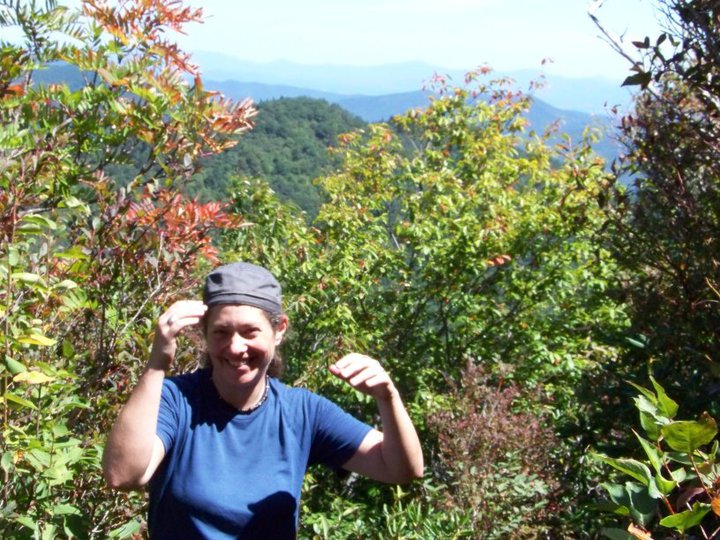
Holly Paar at Graveyard Fields near Asheville, NC.
Holly comes to us with 20 years of experience in marketing and fundraising and a passion for our forests. She first arrived in Western North Carolina when she was 17 as a transplant from Texas and never left. An excellent tennis player in high school, Holly was offered a dual academic/sport scholarship from WNC. She didn’t see the area until her parents dropped her off at the WNC campus, and it was love at first sight. Holly succintly explains,
“Home is here.”
Holly’s nonprofit career began with Mountain Youth Resources (now Children’s Hope Alliance), working at a group home for boys in Macon county. Holly describes the experience, “It ended up being some of the best learning of my life.”

Holly Paar enjoying the riverside near Asheville, NC.
At Mountain Youth Resources, Holly quickly advanced through the ranks, taking on projects of video and music recording with the kids (you can look at some of those videos here), an environmental awareness program that looked at biodiversity and stream monitoring, fostering community involvement in efforts to protect the Little Tennessee Watershed, establishing connections with Duke, leveraging some corporation sponsorships and creating a new project working with adoption, promotion and support in 11 counties.
When a Program Director position at Under One Sky opened up, it wasn’t long before Holly was offered the job. Holly loved that job and all the responsibility and freedom to make her dreams a reality. Eventually, however, the money ran out.
Despite the strain of extra work, Holly played a big part in keeping the organization open for another year.Around that same time, Holly was asked to lead Blue Ridge Pride as a volunteer. Holly says of the superhuman amounts of work she did that year, “It almost killed me.” But Holly isn’t one to shy away from doing the work she loves. Luckily, she didn’t die, but using the hard lesson she learned at Under One Sky, she instilled the importance of fundraising in Blue Ridge Pride.Eventually, Holly ended up in a fundraising position at March of Dimes where she honed her fundraising skills. She developed a passion for the mission by talking with families and learning about their human experiences.
She loved working with March of Dimes, but when a position opened up at Dogwood, she knew it was meant for her, “The mission of Dogwood is something I never had to be sold on because when I moved here 24 years ago, the forests fed my soul.” When Holly was interviewing for the position, she said,
“Just give me the opportunity to save my home.”
In her free time, Holly is an abstract painter (you can see some of her work here); she got her love of painting from her mother who is an artist. Holly has had shows in Asheville over the last couple of years. Holly enjoys composing classical music on the guitar. She also studied Wilderness Education under Paul Wolf. Finally, Holly teaches a series of workshops in Asheville, NC geared towards cultivating your creativity.
On September 25, 2015, activists from the Stop GE Trees Campaign held a demonstration and action at ArborGen’s global headquarters in South Carolina. ArborGen is attempting to genetically engineer multiple species of trees including the loblolly pine which could have detrimental impacts on biodiversity, community health and even potentially private property rights in the Southern US. Two activists were arrested attempting to inform ArborGen of the over quarter of a million people that have signed petitions opposing GE Trees. You can read the statement of the two brave activists below.
Crossposted with permission from Campaign to Stop GE Trees website:
Photo: Gavin Bauer