


On January 17th, the European Union Parliament voted on the Renewable Energy Directive (RED II) which will guide policy for reductions in carbon emissions and investments in renewable energy from 2020 onward. For those of you who’ve taken action or followed our efforts and those of our partners, you know that the outcome of this vote is a critical moment in the ongoing effort to ensure protection of Southern forests and communities from the dangers of industrial scale bioenergy (the burning of wood for energy).
Since 2010, the growth of bioenergy– much of it sourced from Southern US forests– has provided more than half the expansion of “renewable energy” in the EU.
At the same time, with your support, its emergence has sparked organizations like Dogwood Alliance to lead a global movement to end this destruction and recognize real forest protection as a solution to the climate crisis.
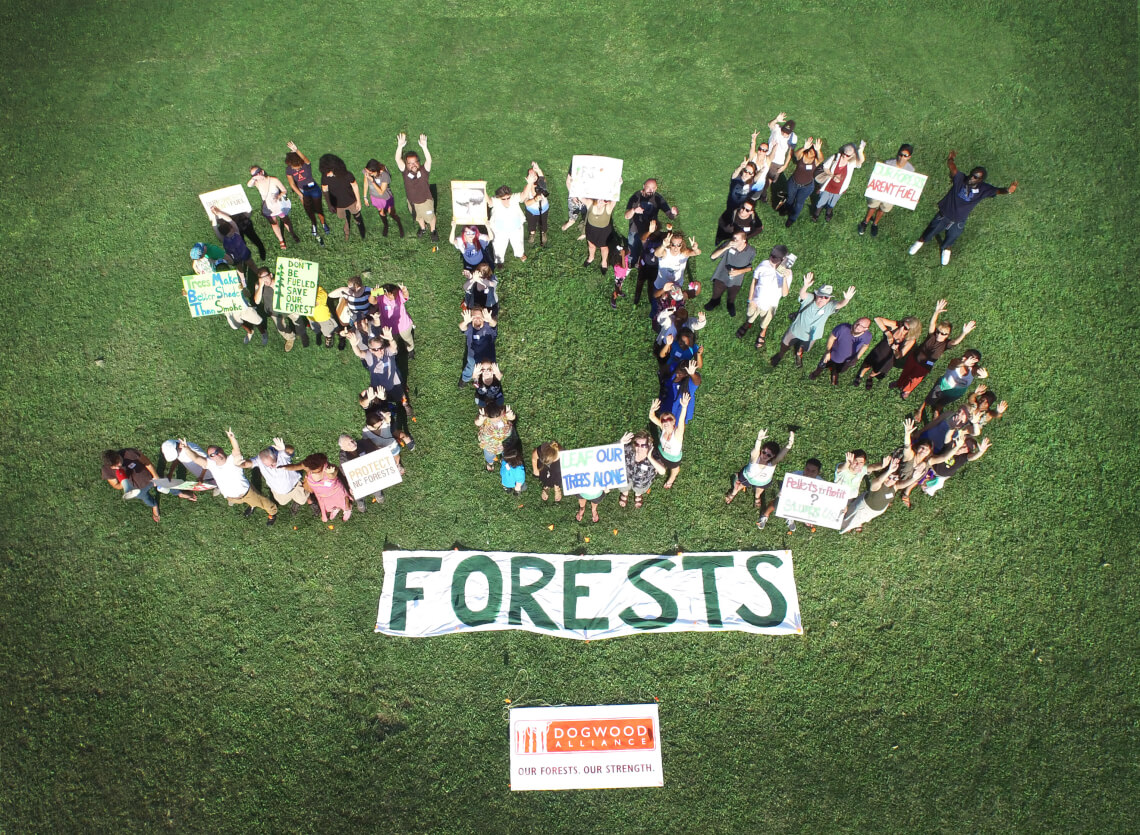
Forest Defenders in Savannah, GA sending an SOS Save Our Southern Forests message to Europe.
Instead of listening to the protests of folks like you, the EU Parliament was taken in by influential pro-logging lobbies from Finland and Sweden. They didn’t listen to the overwhelming outcry from climate champions in the European parliament, affected communities from across the world, leading conservation organizations, hundreds of thousands of individuals, and a remarkable letter from over 800 scientists (including IPCC lead authors and winners of the US medal of science and Nobel prize).
The good news is that the new EU RED policy is only a directive to EU countries like Germany, Denmark, and The Netherlands. Now it’s up to these countries, and us, to take this policy and improve it.
In fact, together we’ve already achieved some huge victories: Belgium was once a huge expansion market for biomass, but now that honeymoon is over!

Dogwood Alliance staff members Rita Frost and Adam Colette coming out of a meeting with top officials in Belgium concerning their biomass policy.
The future EU energy system, and even more, the future world energy system, needs to be based on truly renewable technologies such as wind, solar, heat and electricity storage, demand response, geothermal and other emerging technologies. While we must completely revolutionize our energy system, the only way to fully reverse climate change is to massively scale up the protection and restoration of our forests.
The Paris Climate Agreement gave the world a charge: we must turn the tide of climate change before it’s too late. Our best and most cost-effective technology lies in the power of forests.
Standing forests are critical for community resilience, flood protection, air and water quality, our health and well-being. Forests are the only proven system that can remove and store vast amounts of carbon from the atmosphere to keep Earth a livable planet.
Forest defenders, climate hawks, and community leaders will not let biomass threaten the future of our very existence because short-term fiction peddlers got their way in this vote. We will respond to this reckless EU decision by showing up with even more people power across Europe as we fight to stop these facilities in our own backyard.
2017 was a year of optimism for many in the North Carolina climate justice movement. We had a new governor in office who offered greater support for environmental issues and a new Secretary of the NC Department of Environmental Quality with an agenda to prioritize the voices of rural and frontline communities at the table.
Your activism and support brought critical attention to the many threats of the industrial-scale wood pellet industry.
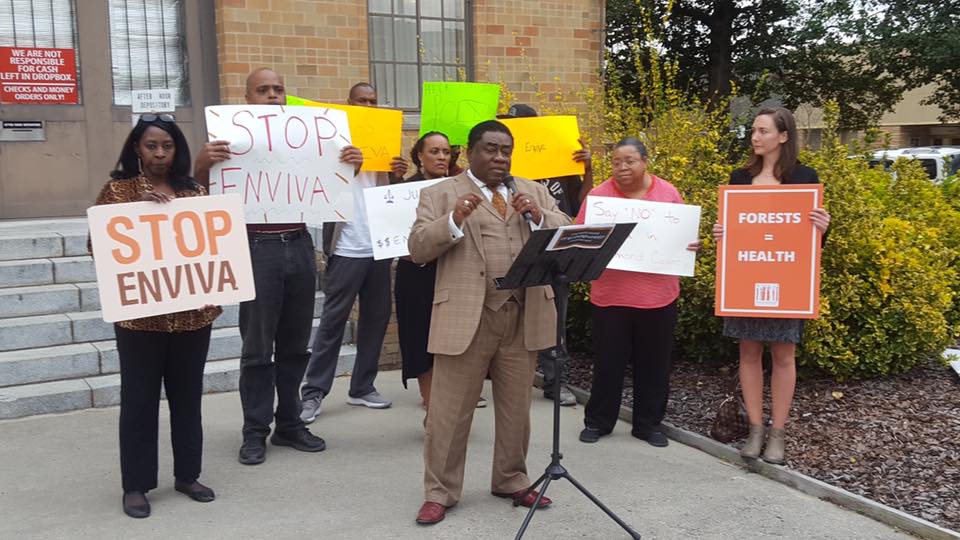
We are greatly disappointed that despite widespread backing from his constituents to take action on Enviva, Governor Cooper chose to remain silent. Enviva is moving forward with construction in Richmond County, putting at risk the health and quality of life of neighboring residents and taking North Carolina further down a path of false solutions.
Shortly after taking office, Governor Cooper announced that North Carolina would join the US Climate Alliance and would remain committed to reducing pollution and protecting our environment. Environmental groups across the state, including Dogwood Alliance, applauded Cooper for this action. We agreed with him when he said,
“Clean air and a healthy environment are vital for a strong economy and a healthier future. So much of North Carolina’s economy relies on protecting our treasured natural resources, and I’m committed to maintaining the quality of their air we breathe for generations to come.”
We know that investing in truly clean energy and promoting businesses that support healthy communities and protect our state’s forests is the path to a prosperous and just future, and we continue to stand with Governor Cooper in this vision.
In Richmond County, NC, the Governor’s constituents are fighting the legacy of his predecessor, opposing an Enviva wood pellet facility that was brought in without proper public notice, will disproportionately impact the local Black community, and will take our state and country backwards on climate. Governor Cooper had full authority and the backing of his constituents to stop this plant. But the Governor remained silent on this issue.
A few months later, the Governor once more had an opportunity to stand by his vision, and once more, he fell short. The Atlantic Coast Pipeline was recently granted its water quality permit, paving the way for countless acres of destruction and hitting our most vulnerable communities with a dangerous and unwanted role to play in energy production.

In the face of big money and corporations, Governor Cooper was silent when his constituents’ clean air and clean water was at stake. It’s time that Governor Cooper break the silence. Do you stand for forest destruction and pipelines, or do you stand for innovative solutions that will take our state forward?
Across the state, the voices of Governor Cooper’s constituents have been clear. In 2017, North Carolinians called on Governor Cooper to stop Enviva in Richmond County.
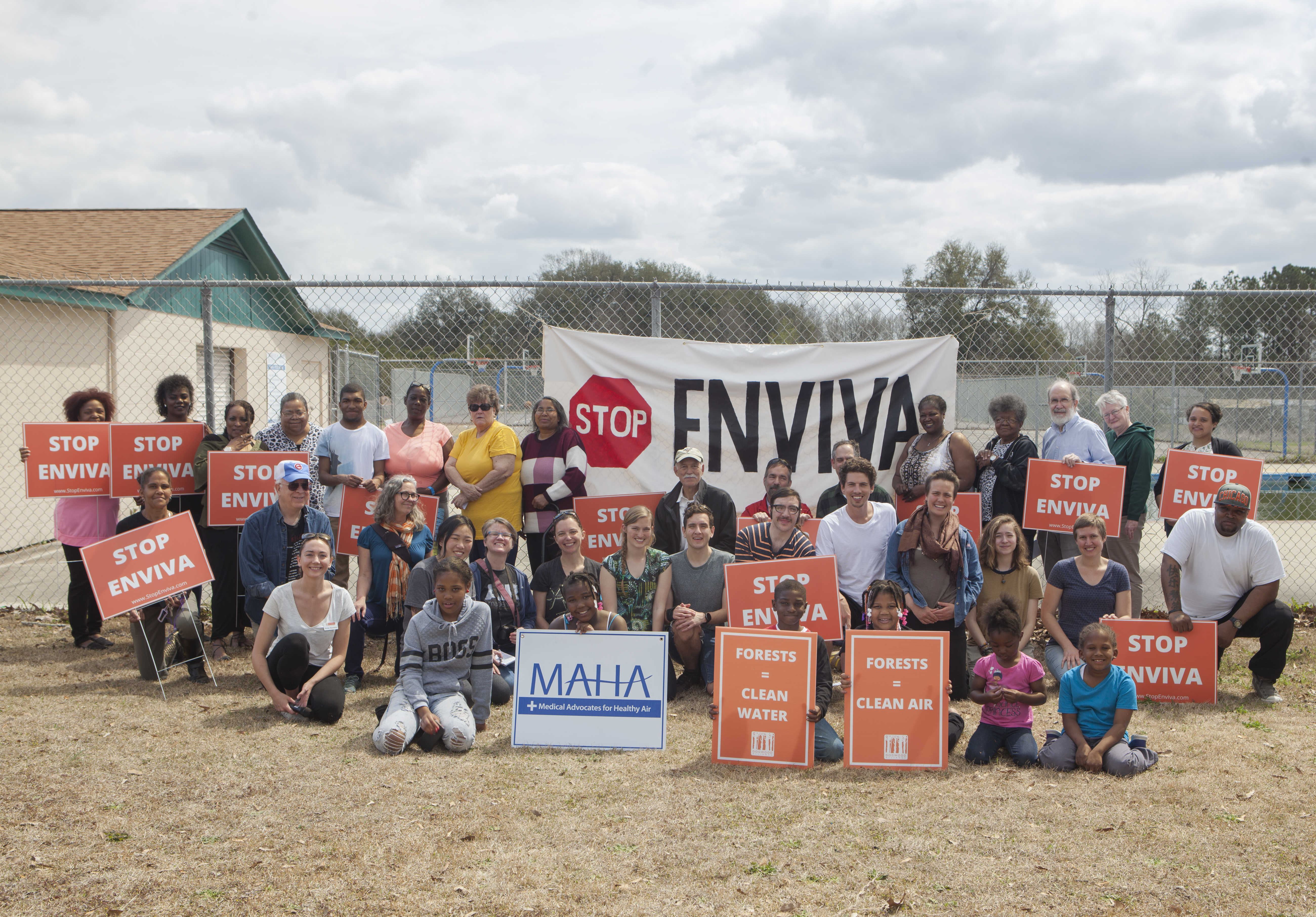
In 2018, Dogwood Alliance is asking Governor Cooper to stand for the environment, stand for justice, and stand for forests.
You can’t put a price tag on clean air and water, protection from storms and flooding, or the way you feel when you’re in a wetland forest. But we knew that there was a real dollar value to all the services our forests provide, so we started digging. We considered things like water filtration, tourism, protection from extreme weather events, wood products, and food. Through exhaustive research, we found startling truths about how much our standing wetland forests are worth to Southern states and communities.

CLICK TO ENLARGE
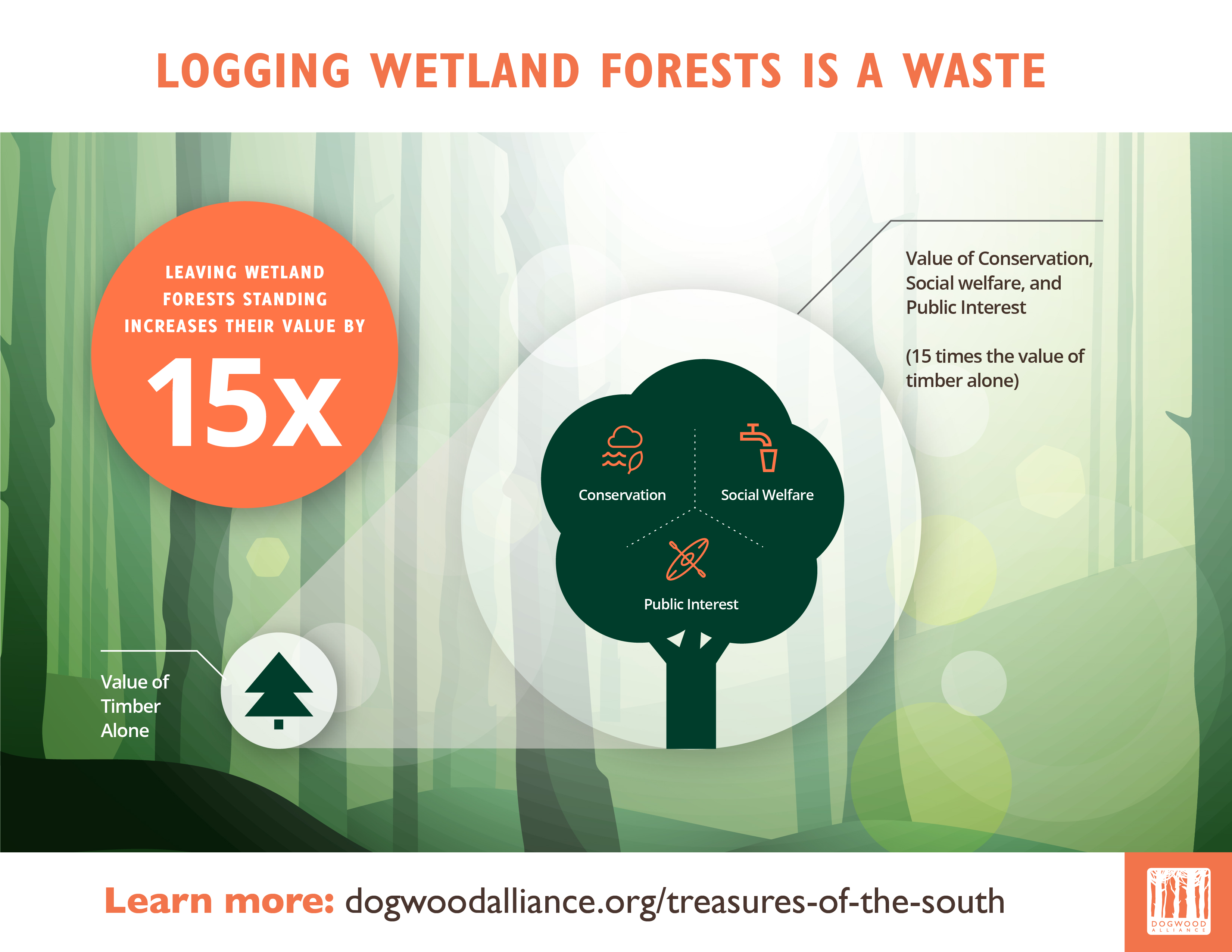
Logging contributes just 0.3% to that $500 billion. In fact, we discovered that wetland forests are worth FIFTEEN TIMES MORE standing than logged.
CLICK TO ENLARGE
No matter what the logging industry says, we’ve proven that standing wetland forests keep jobs and wealth in their states and communities in a way logging never will.
Despite their life-changing and life-saving qualities, fewer than 10% of wetland forests in the US South are protected from logging, agriculture, and development. Sadly, up to 80% of these forests have disappeared across the South.
By the time recovery efforts are complete for 2017’s hurricanes Harvey and Irma, each are expected to cost over $100 billion in damages. Imagine how much worse those damages would have been without those wetland forests absorbing and slowing the flood tides. Imagine how much more these amazing forests could do for us if there were more of them.
If we don’t choose to invest in Southern wetland forests, we are hurting Southern families and communities. We’d be taking away their ability to thrive economically in a changing climate.
We need to make a commitment to restore these forests. We need to put people to work on restoration, management, and ecotourism. When we change the way we value Southern wetland forests, only then will we be able to see all the true benefits and wealth they provide us.
Asheville, North Carolina – On World Wetlands Day, a new report from Dogwood Alliance, “Treasures of the South: The True Value of Wetland Forests,” highlights and places values on the important services that forested wetlands provide to protect and build communities across the Southern US. Conservative estimates place the value at over $500 billion in the 14 state region stretching from Virginia to Texas.
Examining the important services that wetlands provide to the people of the region including protection from flooding and extreme weather events, clean drinking water, recreation, tourism and many more, researchers were able to determine the overall value including a state by state breakdown.
Since colonial times, over 80% of forested wetlands in the region have been lost, and now only 35 million acres remain with only a strikingly inadequate 10% protected. Climate change, continued conversion to agriculture and tree plantations, logging, and other damaging impacts threaten the future of these vital places.
“Our wetland forests are truly priceless and should be protected and restored,” said Dr. Sam Davis, Research Director at Dogwood Alliance. “We hope that placing a price tag on all of their values will help local, state, and national politicians find the will to preserve these national treasures rather than continuing to blindly support their destruction.”
Investing in wetland forest conservation and restoration, rather than logging for short-term profit, would dramatically increase all of the important services that wetlands provide. By shifting the focus of management from timber production to native ecosystem health, wetland forests increase over 15 fifteen times in value from about $1,200 per acre to $18,600 per acre. And more acres protected, expanded riparian buffers, and improving forest management practices could add nearly $50 billion in value to our region.
Two of the world’s most expensive natural disasters in 2016 occurred in the South. Hurricanes Harvey and Irma, in late 2017, are both expected to cost over $100 billion in damages each by the time recovery efforts are complete. Without investing in our wetland forests, the result may be reducing our communities’ abilities to flourish economically and thrive in a changing climate.
“From Houston, Baton Rouge, the Florida Keys, the Upstate of South Carolina and the North Carolina coast, communities have been inundated by extreme weather event,” continued Davis.
“The huge price tag associated with disaster recovery after major hurricanes and flooding over the last several years should be reason enough to rally for greater protection.”
To download a pdf of the full report, go here.
To view new, interactive webpages with information on wetlands across the South, including a state by state breakdown, go here.
# # #
Based in Asheville, NC, Dogwood Alliance mobilizes diverse voices to protect Southern forests and communities from destructive industrial logging. One of the founders of the Wetland Forest Initiative, whose mission is to conserve, restore, and improve Southern wetland forests to strengthen our communities through science-backed actions, diverse partnerships, and citizen and landowner engagement. Follow Dogwood Alliance on Twitter – @DogwoodAlliance
US Environmental NGOs to EU Parliament: Vote Now to Protect ForestsBioenergy loopholes in the 2030 Renewable Energy Directive will increase forest cutting and carbon pollution
Washington, DC, 15 January 2017 – Warning of increased carbon pollution and accelerating forest degradation, U.S. environmental NGOs are calling on Members of the European Parliament (MEPs) to ban use of whole trees as fuel in the European Union’s Renewable Energy Directive (RED) and limit subsidies to only efficient uses of forest biomass for electricity production. A decision to the contrary risks setting back efforts to address climate change and increases the threat to vulnerable forests in the Southern United States.
“Unfortunately, EU policies to date have meant one step forward and two steps back for the climate,” said Sasha Stashwick, a Senior Advocate with the Natural Resources Defense Council. “Not only does the practice of burning stumps and stemwood in inefficient power plants increase carbon pollution compared to coal, it destroys a front-line defense in our fight against climate change: forests. This was never the intent of the RED, and MEPs now have a chance to close these ‘biomess’ loopholes. Together, these commonsense reforms could mean the end of the worst forms of EU bioenergy. Without them, the EU risks undermining its commitments under the Paris Climate Agreement, and its role as a global leader on environmental sustainability.”
U.S. ENGOs urge MEPs to support Article 26.5, which would exclude the burning of stemwood and stumps from subsidies or other policy incentives, and to oppose attempts to weaken Article 26.8 of the EU Commission’s draft proposal, which would require large, biomass-burning plants that receive renewable energy subsidies or other public incentives to use ‘co-generation’ technology to produce combined heat and power.
Since 2009, the European Union has treated all forest biomass as having zero emissions, despite the fact that biomass power stations tend to emit more carbon dioxide (CO2) per megawatt-hour than coal plants. EU member states subsidize biomass-burning in some of their least efficient power stations, and biomass is exempted from regulation under the European Union’s carbon trading scheme. The result has been a massive influx of imported wood pellets to feed a rapidly expanding biomass electricity market.
Much of the pellets are manufactured in the Southeastern United States, with trees harvested from both plantations and native forests. Over the last five years, the export of wood pellets from the United States to Europe to fuel power stations has grown exponentially to over 5.4 million tons per year.
“EU imports of forest biomass for electricity threaten some of the most ecologically valuable forests in the world,” said David Carr, General Counsel at the Southern Environmental Law Center. “This includes the roughly 20% of all pre-settlement bottomland hardwood forests that remain today in the Southeastern United States, a region whose coastal plain has been recognized as a global biodiversity hotspot. If the EU doesn’t take action, these vulnerable forests and their at-risk wildlife will remain in the bullseye of the European biomass market.”
“Climate scientists tell us that we need to plant trees to take CO2 out of the atmosphere, not burn them for energy,” said Mary Booth, Director of the Partnership for Policy Integrity. “We already see destruction of forests for fuel, and this will only worsen as biomass demand increases.”
“Southern communities impacted by logging are already experiencing the worst impacts of climate change due to flooding and intensified storms. Forests are one of the best climate solutions we have and we need to be conserving, restoring, and expanding our forests, not cutting them down,” said Adam Macon, Program Director at Dogwood Alliance. “Wood pellet production is a major social justice issue in the U.S. Southeast. In our region, forest degradation and polluting pellet manufacturing are twice as likely to take place in low-income communities of color that already suffer severe health effects from air pollution. Our Southern communities can no longer afford to have their forests cut down and shipped overseas for energy.”
Media Contacts
For more information, please contact Scot Quaranda, +1.828.242.3596, [email protected]
We often think about the clean air and water that forests provide us, but do we ever sit down and imagine all the unique and wonderful ways that human beings connect with forests in deeply personal ways? Dogwood Alliance took up that challenge. We’ve searched across the Southeast for stories about individual relationships to the forest. Our minds were blown by all the awe-inspiring and unexpected stories we’ve collected so far!
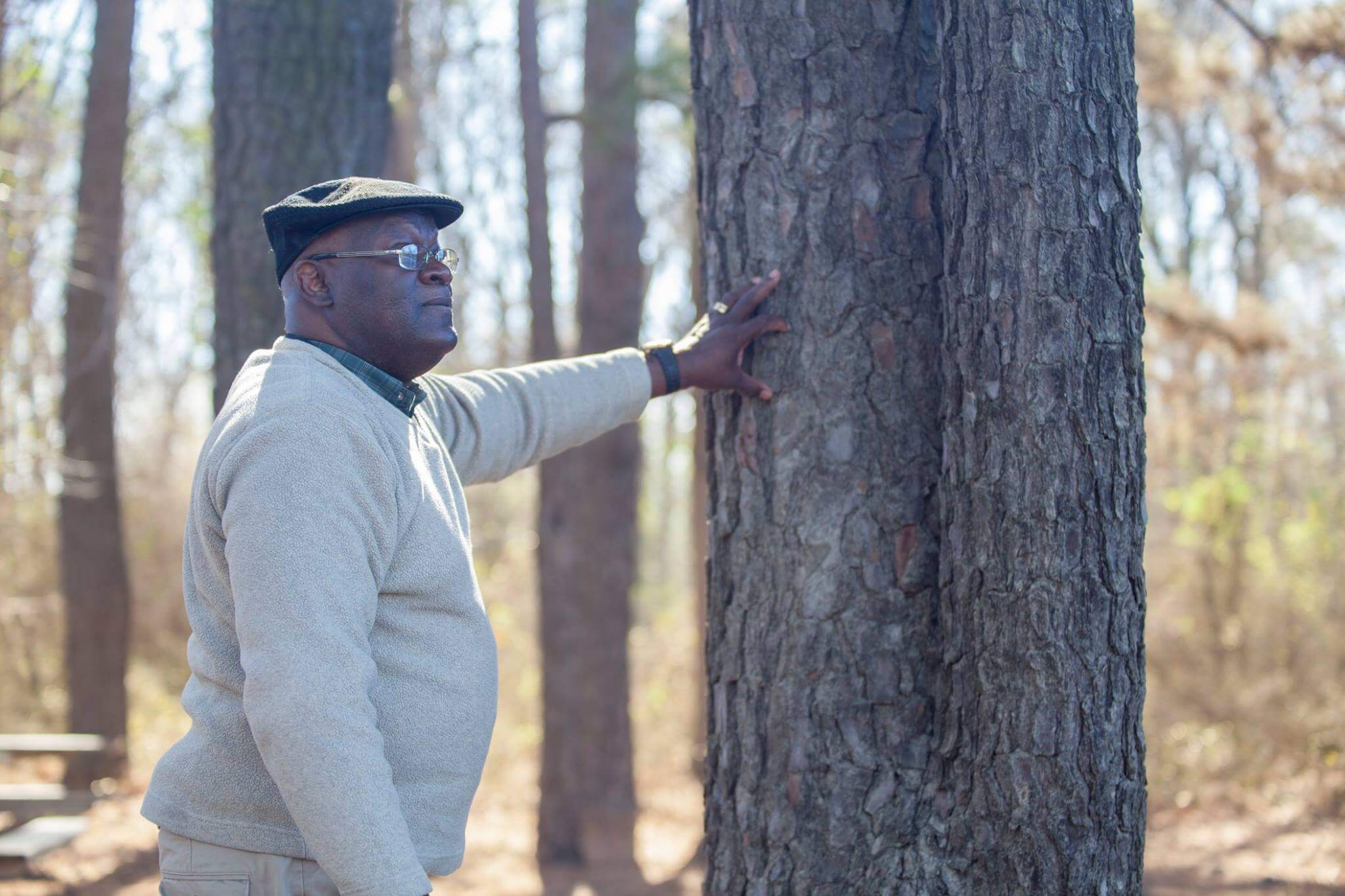
Some are beautiful. Some are funny. Some are tear-jerkers.
We joined Cortina Jenelle Caldwell at Earthaven Ecovillage in Black Mountain, NC.
Noah Davis shares his heartrending story about how he overcame addiction through his connection to the forest.
We sat down with James Woodley, and he told us about how he finds healing and strength in the woods.
We went down to Florida to meet up with forest warrior Ruddy of Global Justice Ecology Project & Everglades Earth First.
We were very fortunate to capture the story of celebrity John Darnielle, singer and songerwriter for the The Mountain Goats.
We hope these stories move you as they’ve moved us.
As a Forest Defender you’ll be the backbone of the forest protection movement, and your gifts will go towards making sure that stories like these, for me and you and others, can keep happening in forests.
***
Today we joined over 100 scientists to send a letter to Governor Roy Cooper, urging him to address the threats posed by the wood pellet industry and to protect North Carolina’s forests. These threats include emissions of greenhouse gasses and other pollutants and the degradation and loss of critical biodiversity.
The world’s largest producer of wood pellets, Enviva, owns and operates three wood pellet facilities in North Carolina as well as a Virginia facility near our border. Meeting the production capacity of these four facilities requires logging, conservatively, nearly 50,000 acres of forest per year—often in ecologically important, native hardwood forests.
Governor Cooper has pledged to uphold the goals of the Paris Climate Accord. Forest conservation and restoration are critical to meeting those goals. Forests are our most powerful tool to soak up carbon dioxide (CO2) from the atmosphere. Regrowth of forests in other areas removes about one-third of the CO2 emitted to the atmosphere by burning fossil fuels. But, when biomass from forests is burned for electricity, it immediately emits large amounts of CO2 to the atmosphere. The more biomass that is burned, the larger these emissions. Deforestation in tropical regions currently contributes about 10% to the rising concentrations of CO2 in the atmosphere.
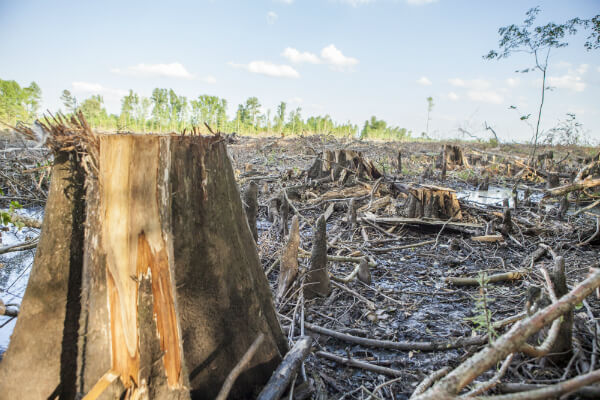
Burning trees for power emits more CO2 per unit of electricity than coal or gas plants. In addition, it releases harmful particulate matter and smog precursors. Yes, the regrowth of forests does recover this CO2, but very slowly. It takes many decades, sometimes more than a century, for forest land to recover the CO2 emitted from burning trees for energy, and successful regrowth is not guaranteed. As the just released National Climate Assessment indicates, we cannot defer action to reduce CO2 emissions to some future time.
Biomass cannot be transported more than a short distance before the energy it contains is equivalent to the energy needed to haul it. So, it doesn’t make sense that forests in North Carolina are being cut down, chopped into pellets, and shipped overseas to be burned in power stations in Europe—ironically, in the name of renewable energy.
Natural forests reduce the risk to low-lying and flood-prone areas, whereas forest degradation and clearcut logging increase flood risk and recovery costs. When the wood pellet industry drives the deforestation or degradation of coastal forests, we put coastal communities at greater risk for storms and flooding. As we pass the one year anniversary of Hurricane Matthew, and as recent hurricanes have brought tragedy and tremendous cost to the U.S. and its neighbors, it is more important than ever that we invest in keeping native forests standing.
Enviva has proposed a fourth wood pellet facility in Richmond County, North Carolina, which is being challenged in the courts. Yet another wood pellet facility in North Carolina would add to existing assaults on our forests and climate. To stave off the worst effects of climate change, it is imperative that we reduce CO2 emissions—our forests are key to achieving that goal. Governor Cooper can lead the way in the charge to protect forests.
—
Norman L. Christensen, Ph.D., is an emeritus professor of ecology and the founding dean of the Nicholas School of the Environment at Duke University.William H. Schlesinger, Ph.D., is a biogeochemist, a former dean of the Nicholas School of the Environment at Duke University, and President Emeritus of the Cary Institute of Ecosystem Studies.
On the evening of October 23rd, the European Union Parliament’s Environmental Committee met to vote on the Renewable Energy Directive. When it came time to determine the future of subsidies for the continued burning of whole trees for energy, members of European Parliament sided with the biomass industry and ignored the conservation community, science, and, ultimately, the people who will suffer as a result of this vote.
The outcome of the environmental committee’s RED II vote fails the climate, forest conservation, and, most importantly, rural and low-income communities in the US South who will now face real-world and all too familiar consequences from industrial extraction and a changing climate.
In the Southern US, our forests are biologically rich and the region where a vast majority of European wood pellet imports come from was recently named the 36th global biodiversity hotspot. Southerners can tell you that the forests logged for wood pellet production are at the heart of our region’s most valuable natural resources, providing flood protection as well as clean air and water to people all throughout the South. If left standing, Southern forests help fight climate change by serving as massive carbon sinks and serve as our best defense against the worst impacts of climate change, including flooding, storm surge, and sea level rise. Yet, the European Parliament opened the door to increased exploitation of Southern forests and logging by subsidizing the biomass industry to cut down these natural forests and burn them in massive power stations. They’re saying that our forests are only valuable when they are logged. This is the exact opposite of what science, climate policy, and efforts to maintain biodiversity tell us.

In the flurry of climate and forest discussions and, ultimately, the vote on the Renewable Energy Directive II, there was a gaping hole among conversations: Why weren’t the communities and people impacted by the wood pellet industry being considered?
The EU Environmental Committee is literally separated by an entire ocean from the forests and communities that they are signing a death warrant for. Since the dawn of industrialization, extraction of our native forests has been carried out in this unsustainable way for far too long. This system hurts communities on the ground and the decision-makers never have to face the consequences of their actions.

The wood pellet industry is part of the extraction economy and is an environmental justice foe. Almost 75% of mills in the Carolinas are located within a 2-mile radius of areas that are non-white and have average median incomes that are lower than the state average. These mills are likely to contribute to environmental injustice. Consider, for instance, the most recent proposed facility from wood pellet giant Enviva in Richmond County, NC.
Richmond County is already suffering from the negative impacts of several other polluting industries, including coal ash transportation, Duke Energy turbines, a Perdue chicken plant, and is the proposed connecting location for the Atlantic Coast Pipeline. According to the EPA’s EJSCREEN tool, the communities in Richmond County are in the 70-90th percentile for air toxics cancer risk, diesel particulate matter, and traffic proximity.
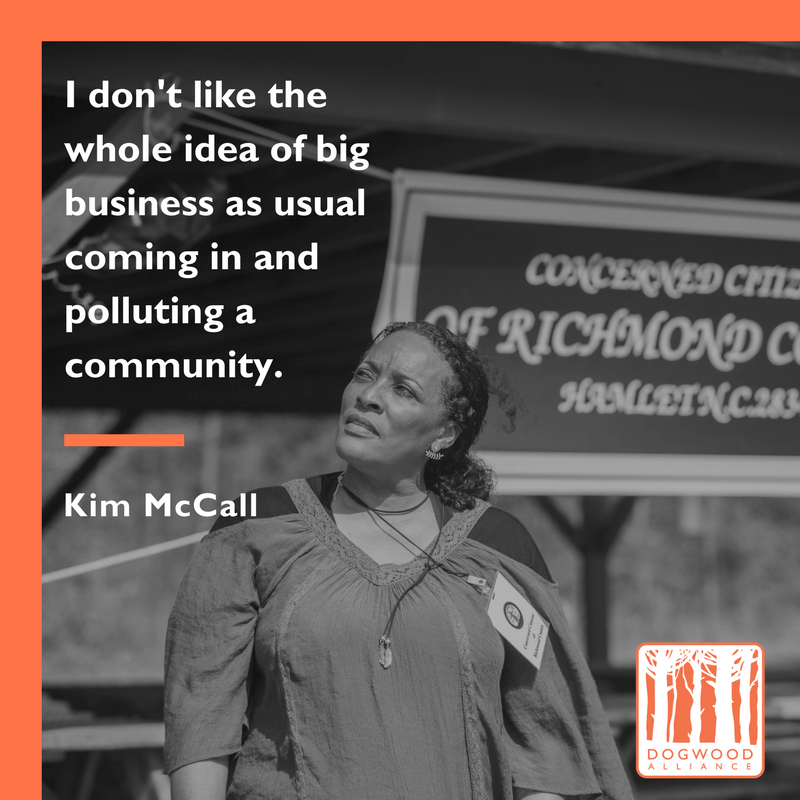
To achieve social and environmental justice, we must strive for major change. We can do this by putting the communities, people, and the faces of those impacted by policies in front of decision-makers. Dogwood Alliance is committed to a future that values and protects the rights of communities to access the resources they need to live happy and healthy lives.

The forest defender movement calls not only for lasting protection for our unique forests but also for a shift from the natural resource extraction economy that has suppressed Southern communities and economies for so long. The forest defender movement calls not only for votes on renewable energy directives that recognize science, but for system change to support forests, climate, and the communities that rely on them. As long as “business as usual” is the golden child among politicians and corporations, we will never realize this shift.
The vote clearly exhibited unequal colonial, economic, and social power relations. The biomass industry’s crooked message and short-sighted science won out over community and climate justice. Now is the time to shift power back to our people, uplift community-based alternatives, and follow the lead of people on the frontlines. For our movement to achieve forest protection and successfully stop the worst impacts of climate change, we must focus on the voices of the communities most impacted by extractive and unjust corporate behavior. Only then will our policies truly reflect the preservation and valuation of the natural world, native culture, and sustainable economies.
Before the Renewable Energy Directive is finalized by the rest of the EU Parliament and individual member states this winter, they must do the right thing and stand for our forests and communities. Their goals of climate change mitigation and forest protection will not be achieved otherwise.
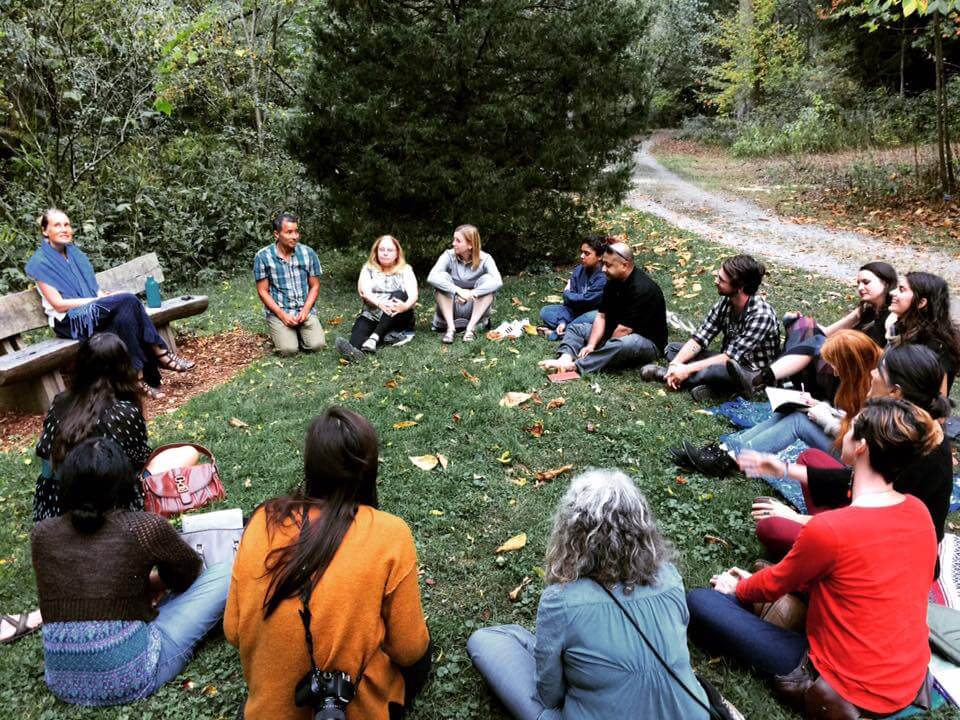
The forests are an important part of the southern Appalachian Mountains, but according to many indigenous traditions, they hold more significance than just the resources they provide.
“When the forests are gone, we lose more than just the oxygen they release, we lose more than just the resources they provide, we lose the wisdom of the trees,” said Erin Everett, a weather worker and tradition-holder in the Nahua lineage in Mexico.
Partnered with the Dogwood Alliance, an Asheville-based forest conservation group, Everett led an event titled “The Stories Trees Tell” in the UNC Asheville Botanical Gardens on Oct. 13. Participants selected a tree in the gardens, spent time meditating and listening to what it had to say then gathered together to share their observations.
“When we were little we saw magic in everything, we saw sacredness in everything, but we’ve been kind of talked out of that as we grow older,” Everett said. “In my experience of the indigenous understandings and cultures that I’ve been exposed to, children would be encouraged. Sometimes their connection with the world around them can help adults. To me, the thing I love about working with indigenous wisdom and bringing that to modern people is that it really gives us something to do to help build that relationship back again.”
“Would it hurt to just go back to some of those ways, not giving up our technology, not giving up our cars but being grateful for those things and being grateful for the world around us who has provided us with so much electricity and all these comforts that we have in modern life?” Everett asked. “If we just add gratefulness and gratitude to the equation, there’s balance.”
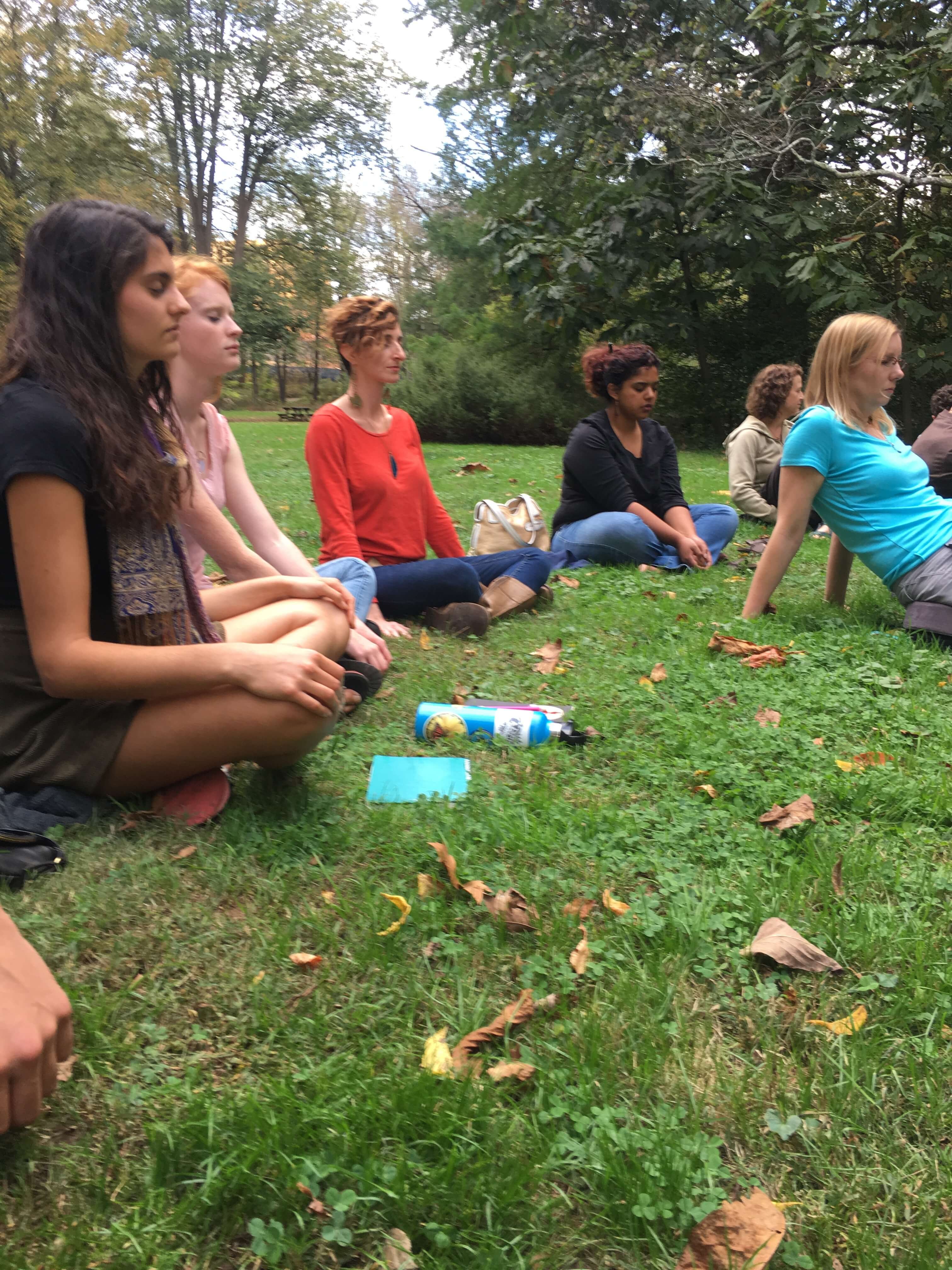
Following individual time with their trees, participants gathered to share their findings with one another.
“What sacred witnesses trees are, how many joyful moments they get to see,” said Ash Wahl, an Asheville resident who said she frequently talks to trees.
Wahl hopes to do a similar event with children through her organization the Ash Tree Faery.
“I found it really amazing the things that you can learn by not putting it in a category,” said Alyssa Melton, a junior ecology and environmental biology student. “I just felt really connected to it.”
“The Dogwood Alliance was honored to have Erin,” said Kimala Luna, a representative of the organization. “She always finds a way to inspire others and instill the mission of forest protection.”
Everett said she hopes events like these can inspire forest protection by helping people recognize the significance of nature.
“It’s like we’re falling asleep in the illusion of our own independence, that human beings don’t need anything else,” Everett said. “But we’re going to find out, and we are finding out, that we do.”
“I really enjoy helping modern people connect with indigenous traditional wisdom and apply it to modern life in a way that’s really practical and sustainable,” Everett said. “It’s really the most practical way of living, the way these people live and to me it’s the ultimate sustainability knowing how to make relationships with the trees and forests and with nature, like we did tonight.”
This year, Terrapin designated Dogwood as the beneficiary for their annual festival in Athens, GA.
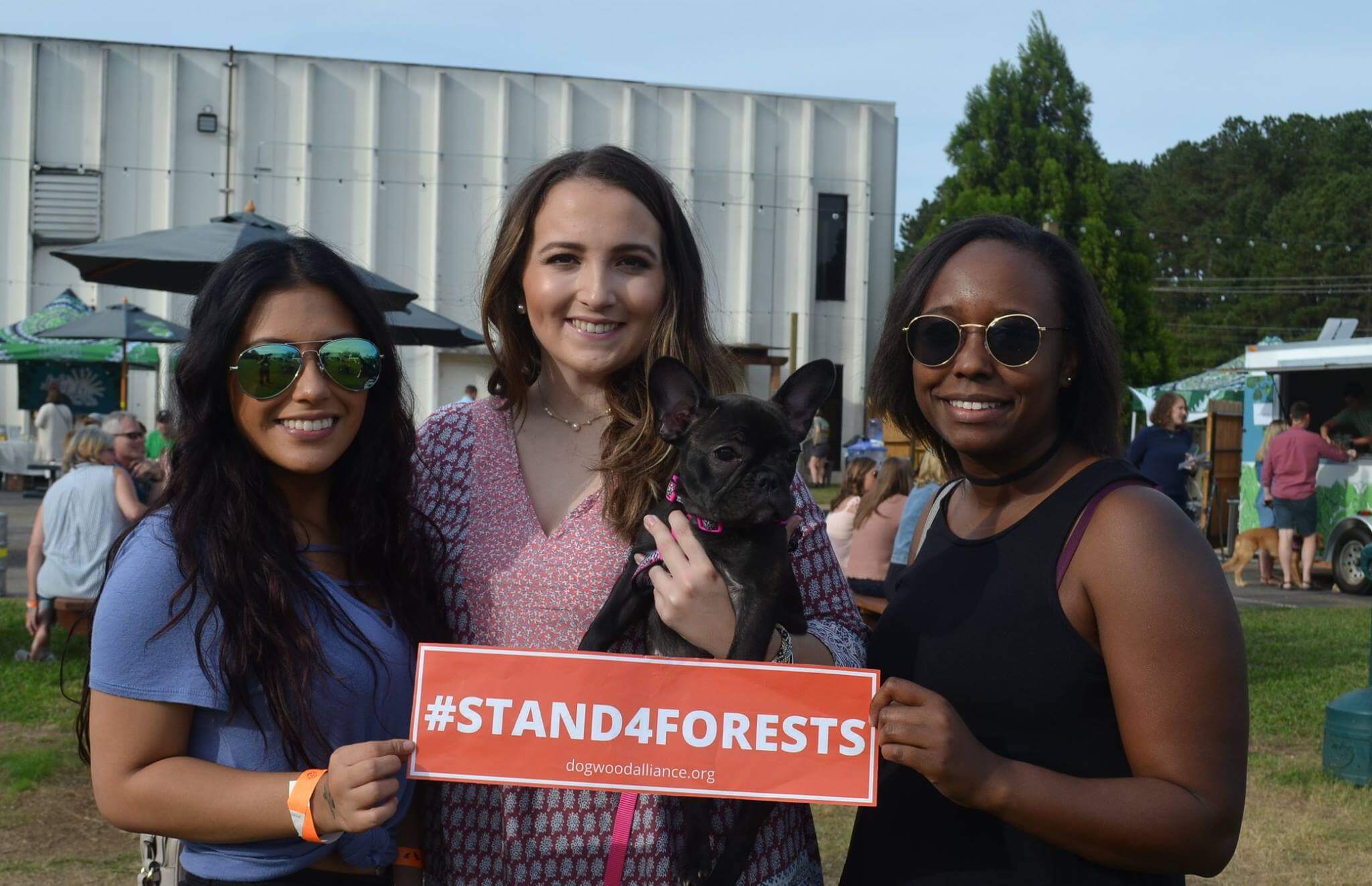
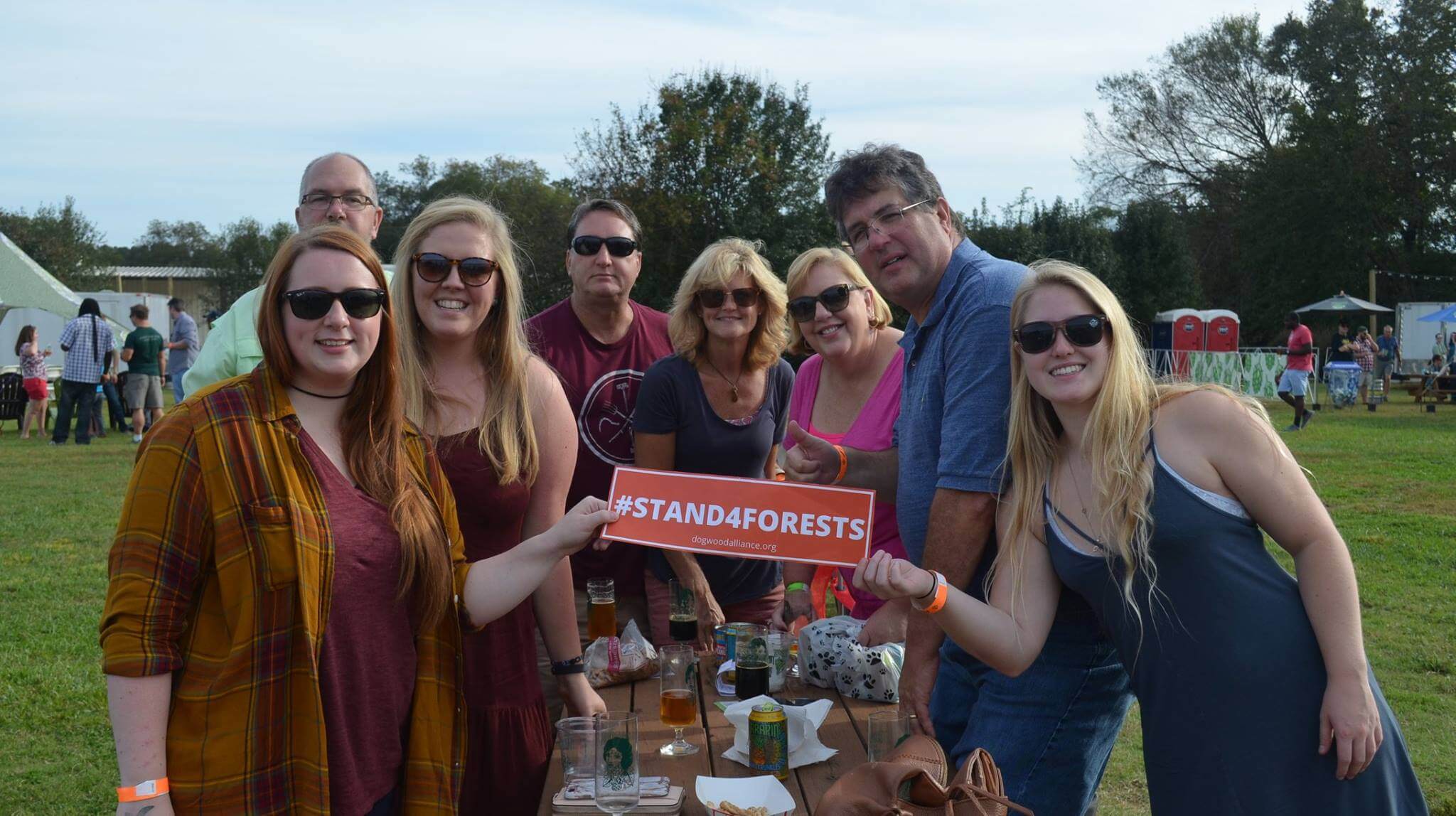
Folks were not just excited for the festival, but they were also excited to Stand4Forests with their photo petitions!
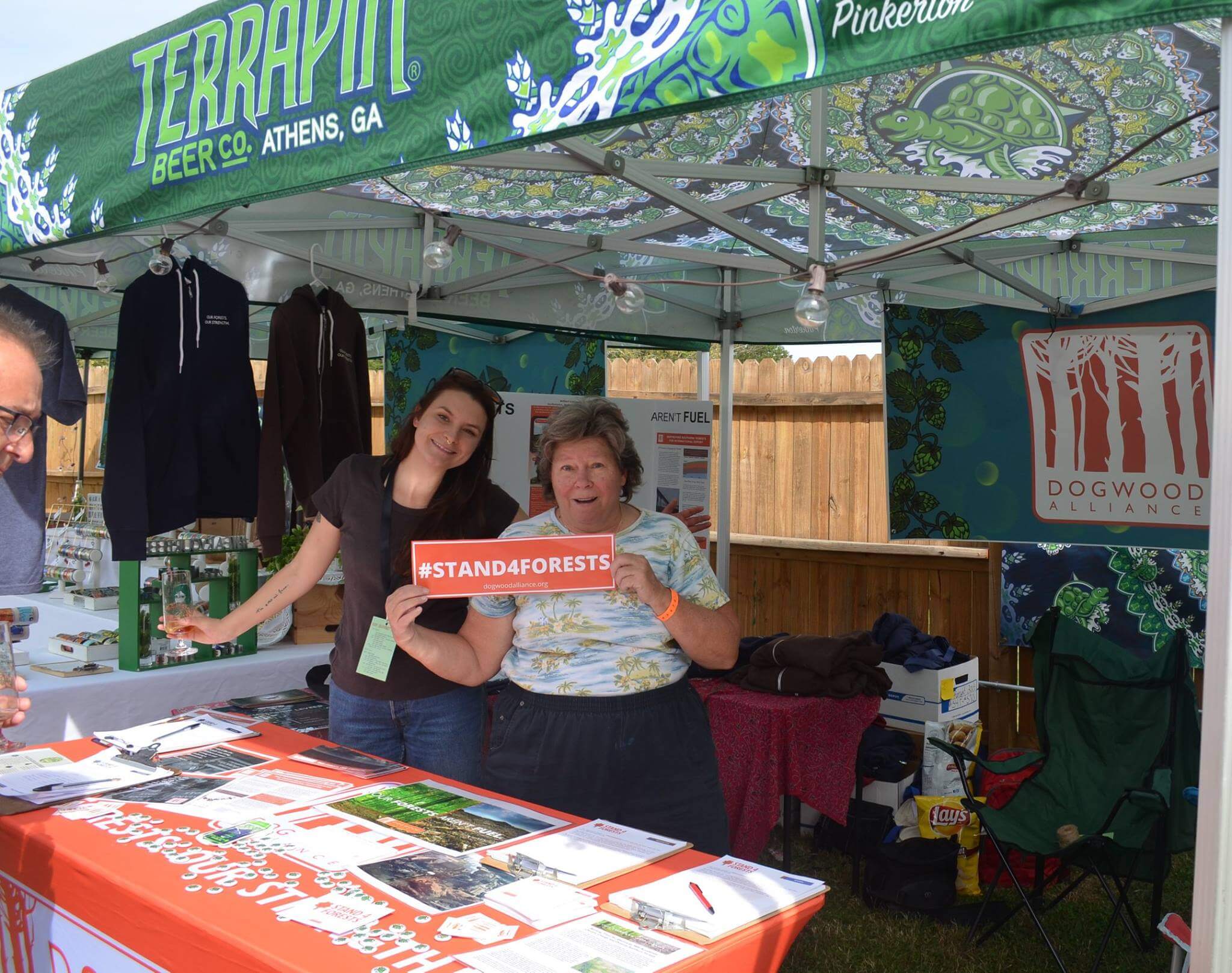
We also had the pleasure of teaming up with our Georgia State Coordinator, Vicki Weeks.


 Donate