


In the rural town of White Oak, South Carolina, residents breathe a sigh of relief as their months of hard work pay off:
Last week, it was confirmed that a group of local residents and surrounding landowners successfully purchased the 15 acres that Abengoa, Inc. needed to build the pellet mill. The purchase marks the end of the wood pellet facility’s plans to produce 530,000 tons of wood pellets a year from the forests surrounding White Oak.
White Oak, located in Fairfield County, SC, is a community with deep roots. It is a place where families have lived for generations, where children go into family businesses and where dreams of the future are vibrant. Just 30 miles north of Columbia, SC, White Oak is the epitome of small-town charm. The downtown Winnsboro area features historical buildings from the turn of the 20th century, and the surrounding neighborhoods are home to towering magnolia, oak and pecan trees that hold the stories of earlier generations. It’s the type of place, according to resident Liz Hutcheson, that “takes me back to a time when neighbors know who you are and people care for you. It is Mayberry.” It is a place worth fighting for.
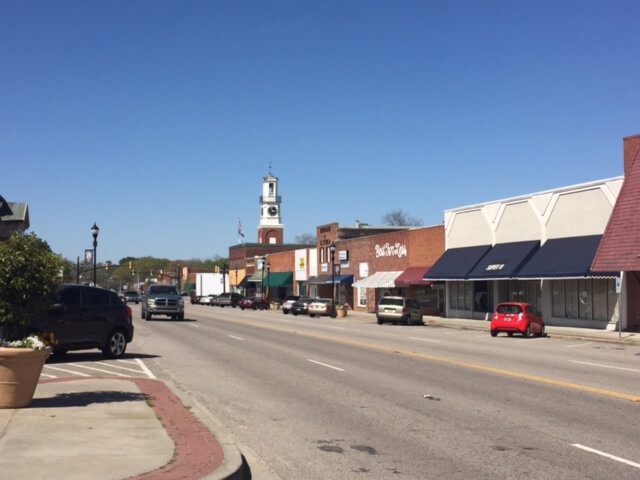
Downtown Winnsboro, SC
Unfortunately, it’s not easy living for all of Fairfield County. With a population of approximately 23,000, nearly 8% are unemployed. The residents welcome development that brings jobs and that benefits the local community and environment, but it was clear that the wood pellet industry was not the right fit for Fairfield County.
Robert Davis, a former County Councilman and longtime resident of White Oak, explained:
“even though the county is in need of a tax base, the negatives [of a wood pellet facility] would be overwhelming. The industry was just too much for this area.”
That sentiment is echoed throughout the county.
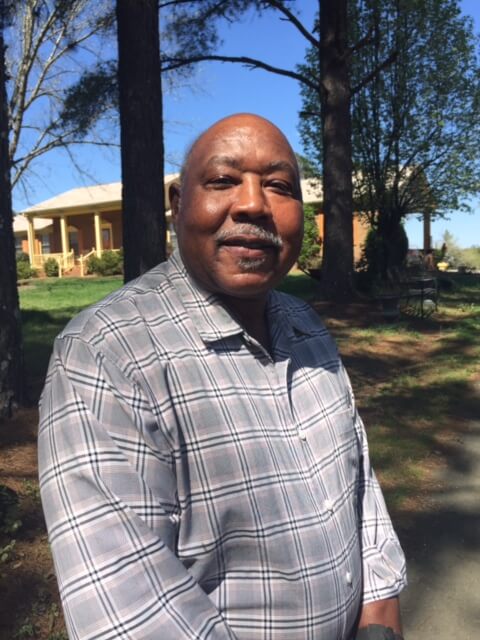
Robert Davis, Fairfield County Council Member from 1985-2002
White Oak is the story of the Southern US. From Clinton, South Carolina, to Baton Rouge, LA, Dogwood Alliance is supporting communities that are organizing to halt the growth of a wood pellet industry that threatens their forests, climate and way of life.
Last fall, White Oak residents were shocked to learn that Abengoa Energy Crops, an international energy corporation, had plans to disrupt the peace and tranquility that is the lifeblood of White Oak with a 530,000 tons per year wood pellet production industry. Abengoa planned to build in a residential area, right between two African-American farming communities that had been there for decades. The facility would provide few local jobs, and the product would be shipped abroad, to feed a European energy market.
Tom Patrick, a resident who helped craft the land purchase, emphasized that, “Everyone in the community worked so hard. It was a combined effort.” Patrick, the founder of a consulting forestry business, has lived in White Oak since 1979, and his family for generations before him. Until he visited the Enviva wood pellet facility in Northampton VA, he did not fully understand the size and scope of this type of facility. He worried about the noise, the dust and the impact on his property values. “I sit out here and listen to nature.” If the facility went in across the street, “that was going to be over.” If he moved in the future, he worried that “no one would want to live in this house.”
Robert Davis, who has grown up in White Oak, agrees. He has watched the neighborhood change over the years as more people move in, and though he reminisces about a time when he was the only house on the block, he is optimistic of a future where residents can still listen to the sound of the birds singing and children playing.
Robert wants development for his neighborhood, but something that is:
“compatible with Fairfield County. Something that benefits the community without being detrimental to the environment or the neighborhood.”
For White Oak residents, the land buy was a sure way to ensure that Abengoa would not locate at that site. But it wasn’t the only avenue pursued. The community examined every angle – pressuring the local county council, reviewing state documents, legal strategies. One way or another they were going to stop this pellet mill.
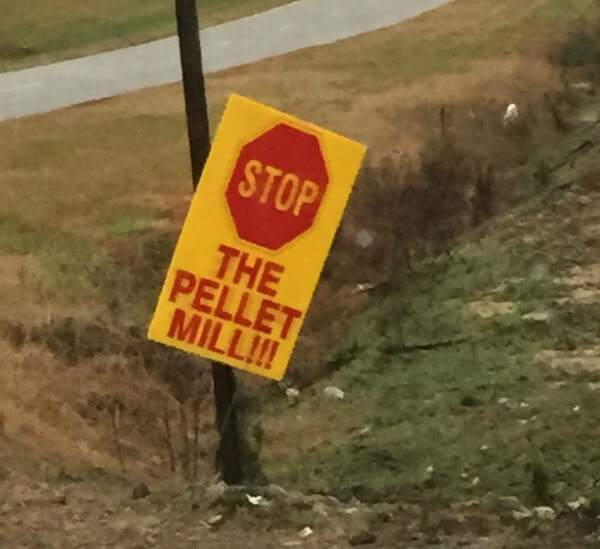
Residents put up Stop the Pellet Mill signs throughout the community.
Liz Hutcheson, an active member of the group opposing the facility, has lived in Fairfield County for 16 years. Her and her husband, Hutch, purchased their dream home in White Oak a year and a half ago, just a mile from the proposed Abengoa site. She speaks passionately about her love for the surrounding area and community, and she feels deeply the affront by Abengoa and the county council.
“It’s just cruel to do that to a community – to put that monstrosity right in the middle of a neighborhood!”
Liz worried about the smell, the dust and the noise of the plant. The thought of this facility down the road, driving her to stay indoors to avoid the headaches that would be brought on by the particulate matter and smell was depressing. She knew, though, that to let anger take over would not advance her cause.

Local resident Liz Hutcheson had concerns about the dust, noise, smell and truck traffic of the proposed Abengoa wood pellet facility.
When I asked her if she had any advice for other communities, Liz confided,”It can be overwhelming.”
“But you’ve got to pull yourself together. Get organized. Make a list of what you want to do, get together with your community, and start right away – there’s no time to waste”.
Robert Davis, thinking back on his 18 years in county council, encouraged other communities facing a plant to get their elected officials to actually visit a wood pellet facility to get a real sense of the size, the noise and the dust.
All residents can agree with Liz when she reminded me, “You’ve got to stop it on the front end. It is a lot of work, but it is so worth it.”
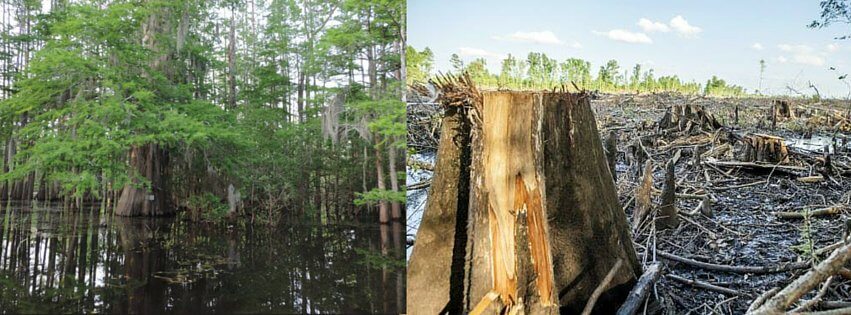
Clearcutting is harmful for communities, biodiversity and the planet.
Have you ever been to a clearcut?
Have you ever been to a clearcut BEFORE it was a clearcut? When it was a lively natural forest? With habitat for woodpeckers, bears, cypress trees, salamanders and flowers? That natural forest allows people like you and me to hunt and fish. It gives us a place to hike. At a clearcut, you’ll find yourself walking around looking down at stumps, not staring up at the wonder of an 70-year-old oak. Unfortunately, clearcuts are all too ubiquitous in the Southern United States.Emily Zucchino and I spent two weeks on an outreach tour in the Gulf South to meet with people who are passionate about protecting Southern forests and are pushing back against destructive industrial logging practices in their backyards. We traveled through the swamps of Louisiana, the marshes of Alabama and the coastal forests of Florida. We explored longleaf pine habitats and kayaked through streams surrounded by cypress swamps.
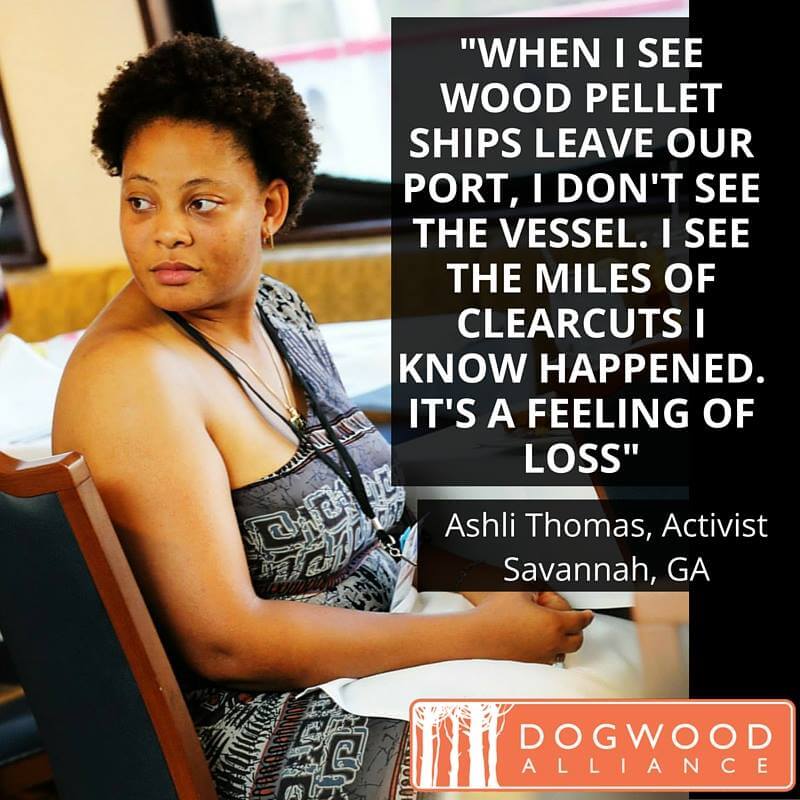
Ashli, activist in Savannah, describes seeing wood pellets leave her town
About 85% of the forested acres in the Southeast are harvested using the clearcut method. It is ugly, extractive and has severe habitat, ecosystem and climate effects. When was the last time you read about an 80-acre forest being clearcut, though? It’s a legal practice; yet, it only benefits the corporations who would rather bypass social responsibility for their financial gain. Politicians look the other way. The public hardly hears about it. Yet the future of forests depends on management practices right now.

Taking care of the Earth is like taking care of ourselves
Clearcutting in our Southern forests has increased because big power companies in Europe want to burn our forests for electricity. In 2015 alone, over 10 million tons of trees were clearcut in the US South and sent to Europe. Even more, we have caught this industry red-handed, clearcutting sensitive bottomland hardwood forest ecosystems.
Enviva, one of the worst offenders of forest destruction, has this quote on their website:
‘Do you source wood from forests that have been clear cut?’ While some images of clear-cut forests can be unsettling, this practice is entirely consistent with, and in many cases essential to, sustainable forest management.
Does anyone really believe that? It seems to us that Enviva thinks that “sustainable forest management” means only growing monoculture pine plantations. That’s not a forest; that a crop row.
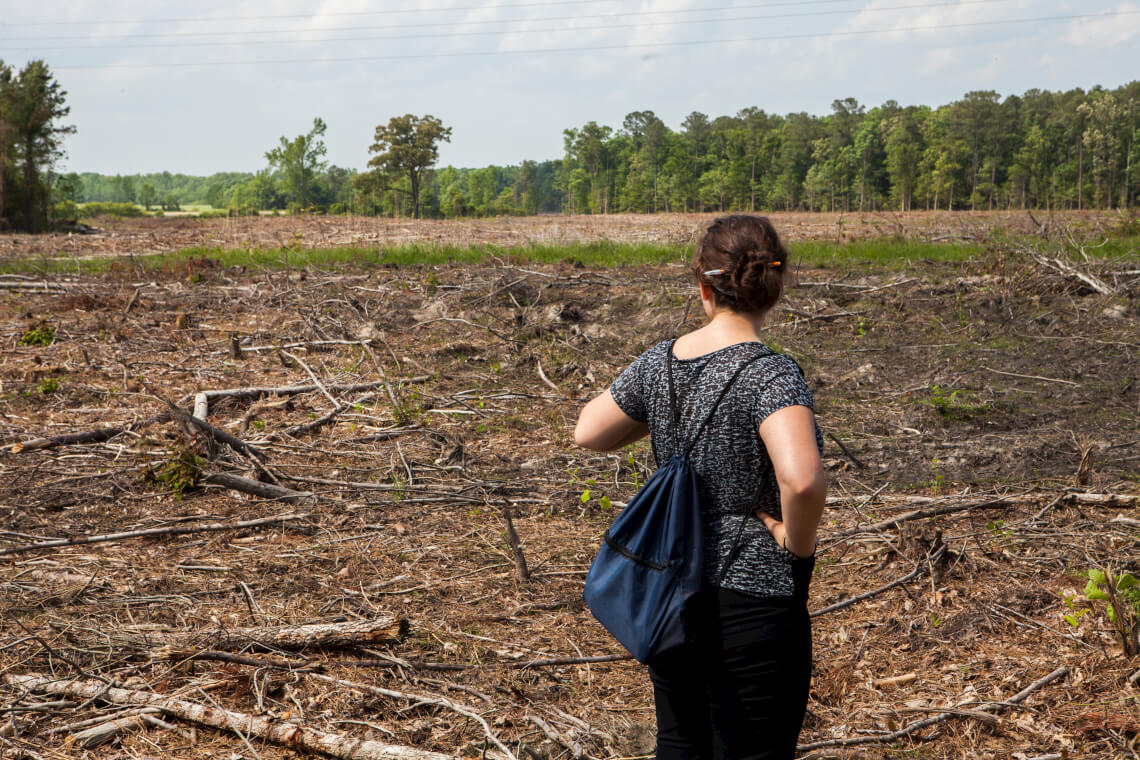
Rachel Weber looking at clearcut
Drive out of the city and into the countryside in the Carolinas, Georgia, Florida or anywhere in the Gulf South, and that clearcut you see may have once held beautiful trees that are now being burned in the UK to keep the lights on.
Southerners care deeply about the land, though, and the activists Emily and I met with are strengthening their grassroots power to catalyze an end to the destruction and an increase in protection for the precious forests of our region. Dogwood Alliance has increased the protection of over 90 million acres of forests across the region. We have created leading environmental policies with Fortune 500 companies, including Staples, Office Depot, Georgia-Pacific, International Paper, McDonald’s, Johnson & Johnson and more.
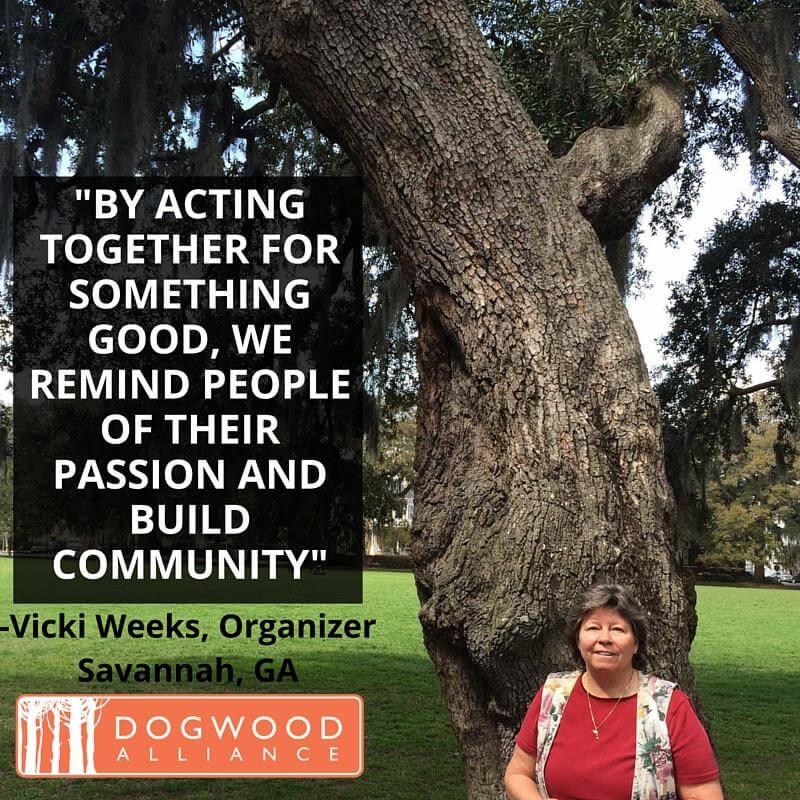
We act together to build community
The movement for forest protection in the South is alive and ready for a paradigm shift.
We can change clearcutting practices. We can change the practices of the biomass industry. This spring, activists are rallying in Charlotte and holding a vigil for the forests in Atlanta.

Save our Southern Forests
[rev_slider new-homepage]
Today is the International Day of Forests, a day to celebrate the ways forests sustain life on Earth. Around the globe, the prominent role forests play in the fight against climate change is at the forefront of efforts to keep global temperatures at a level that ensures an inhabitable planet. Yet, forest protection in the U.S. is barely a blip on the radar of environmental organizations, corporate sustainability leaders, and policy makers.
When left standing, natural forests have tremendous capacity to remove carbon from the atmosphere and store it. U.S. forests alone absorb emissions equivalent to 191 million cars or 75% of the cars on US roads in a given year. They also ensure stable, clean water supplies and protect us from storms. These services are critical to our ability to withstand the effects of a changing climate. Forest loss and degradation disrupt these critical services and release vast amounts of carbon into the atmosphere.
That’s why forests have been a major focus of international climate negotiations from the beginning. In fact, forest protection was a major focus of the historic Paris Agreement with new commitments providing much needed support for tropical forest protection.
Unfortunately, this ground-breaking climate agreement won’t do much to help forests in the United States even though forest disturbance from industrial logging in the Southeast alone was four times that of South American rainforests from 2000 to 2012. We’ve already lost millions of acres of natural forests to tree plantations, and industry experts project that we’ll lose millions more over the coming decades. The “save tropical forests” while we “log the heck out of our own forests” is not a sound climate strategy. Reducing emissions from deforestation and degradation begins at home.
U.S. climate efforts are focused almost exclusively on reducing our dependence on fossil fuels, which we absolutely must do. If the climate impacts associated with the rate and scale of industrial logging in the US were better understood, we’d likely see equal emphasis on forest protection as well.
Instead, ironically, the logging of the nation’s most biologically diverse and unprotected forests has accelerated. The U.S. South is now the world’s largest exporter of wood pellets as a “renewable” alternative to coal for generating biomass electricity in Europe. Exports jumped from almost nothing in 2012 to 4.4 million tons in 2014. Clearing of sensitive, carbon rich and biodiverse wetland forests to feed this explosive new market has been well documented. At the same time, carbon emissions coming out of the smokestack at power plants in Europe that have switched to wood pellets have gone up, not down.
It will get a lot worse for U.S. forests and carbon emissions if big coal plants start burning wood as “renewable” fuel under the Clean Power Plan (CPP). Unfortunately, things seem to be headed in that direction. EPA expects “many states” to rely on biomass to meet regulatory requirements under the CPP. In fact, the Senate just passed an amendment to the Energy Modernization Act that designates carbon emissions from all biomass as “sustainable” and “climate friendly.”
This amendment aligns with the biomass industry position that we shouldn’t worry about increased emissions today because trees absorb carbon when they grow and eventually those emissions will be offset at some point in the future. However, countless scientific studies as well as prominent U.S. scientists warn that burning trees for electricity will actually accelerate climate change.
It can take as long as 100 years for carbon burned from a tree to be recaptured. This is hardly helpful given the urgency of reducing carbon emissions today. It takes seconds for a tree to burn but many decades for a forest to regrow. It’s important to remember that the forests cleared today will be gone for a very, very long time. Not only that, chances are good that the forest will be cleared again long before it reaches maturity and therefore the carbon burned into the atmosphere today may not, in fact, ever be offset by future growth.
The Center for Sustainable Economy and Geos Institute recently released a report concluding that if carbon emissions from clear-cut logging in Oregon were accurately counted, they would be four to seven times that of the emissions from the state’s only coal-fired power plant. This example underscores how carbon emissions associated with logging in the US are not accurately reported. As a direct result, there is very little focus on forests when it comes to climate policy in the United States even though logging is a major source of emissions.
At the end of the day, we aren’t fooling the atmosphere. We better pay closer attention to what’s really happening to forests in our own backyard. In addition to scaling up clean energy like solar and wind power, it’s time for the United States to prioritize an aggressive forest protection agenda.
Pelham, MA and Asheville, NC. March 14, 2016 – Citing a new report by the Partnership for Policy Integrity and Dogwood Alliance on Enviva Biomass, the largest wood pellet manufacturer in the US, 34 groups with over $53 billion in assets under management have requested that the SEC examine claims of climate benefits in the biomass energy sector, and enforce rules requiring companies to disclose material information, including climate-change related risks, to investors.
See the letter and the report here.
Enviva manufactures wood pellets from trees and forest residues at six plants in the Southern United States. The company harvests wood from tens of thousands of acres of forest yearly, with company data showing that over 50 percent is from hardwoods, not pine plantations. The wood is ground and compressed into dried pellets, then shipped overseas to customers in the UK, EU, and Asia, where wood-burning is subsidized as renewable energy.
Renewable energy is not automatically carbon neutral, and power plant emissions data demonstrate that burning wood for fuel emits more carbon dioxide per megawatt-hour of electricity than burning coal. Forest studies and modeling confirm that while trees may ultimately grow back and offset carbon emissions from burning wood, this process takes decades to more than a century, to the extent that it occurs.
Mary S. Booth, director at the Partnership for Policy Integrity and an author of the report, analyzed documents Enviva filed with the SEC when the company went public in 2015, and subsequent SEC filings.
“Enviva claims that burning their wood pellets reduces emissions by more than 80 percent, compared to coal. However, data from Drax Power in the UK, one of Enviva’s biggest customers, show the facility emits more CO2 when burning wood and other biomass than when burning coal, a physical reality that contradicts Enviva’s claims. It’s urgent that the bioenergy industry come clean on its real carbon and forest impacts.”
Julie Gorte, Ph.D., Senior Vice President for Sustainable Investing at Pax World Management LLC, signed on to the letter calling on the SEC to monitor company claims about emissions and enforce disclosure rules that protect investors. “Climate risk is increasingly important to investors, as the Securities and Exchange Commission’s 2010 interpretive guidance on reporting climate risks and opportunities attests,” says Dr. Gorte. “It is important that the agency is aware of the loopholes that companies employ to misrepresent their emissions. This letter and report focuses the disinfecting power of sunlight on one such loophole for producers of wood pellets for electricity generation. We urge the SEC and investors to pay attention to this issue.”
The report highlights misleading claims from Enviva’s SEC filings and public statements in three main areas:
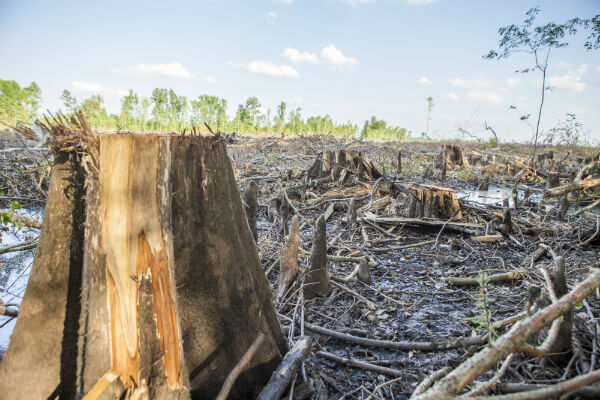
The report concludes that Enviva’s statements about the sources of wood it uses for pellet manufacture are also misleading, because they emphasize the role of “residues,” “sawdust,” and other types of waste wood and downplay cutting of whole trees for feedstock. Specifications for the company’s pellet plants indicate that Enviva predominantly uses large-diameter tree trunks and branches for feedstock, including mature hardwood trees from wetland forests. On-the-ground investigations also bear this out.
“There is ample evidence documenting Enviva’s reliance on large volumes of whole trees to make wood pellets; we have seen the wetland forest clearcuts and watched truck after truck loaded with trees enter their facilities,” said Danna Smith, Executive Director of Dogwood Alliance. “Enviva and others in the biomass industry present the burning of forests for electricity as a positive but it’s actually harming our environment, rural Southern communities, and the climate.”
Steven Heim, Managing Director at Boston Common Asset Management and a signatory on the letter, states “There is no green CO2. In addition to producing more CO2, burning wood for electricity can destroy forest carbon sinks for generations to come. Once regulators catch on, the basis for ‘no carbon’ biomass subsidies falls apart and investors may lose, too.”
Companies are required by the SEC to disclose information where there is a “substantial likelihood that a reasonable investor would consider it important in deciding how to vote or make an investment decision, or, put another way, if the information would alter the total mix of available information.” The SEC’s climate guidance extends this requirement to climate change-related concerns, explaining that companies should disclose impacts of legislation and regulation related to climate change; impact of international accords; indirect consequences of regulation or business trends, such as decreased demand for goods that produce significant greenhouse gas emissions; and physical impacts, such as changes in feedstock availability.
Natasha Lamb, Director of Research & Shareholder Engagement, Arjuna Capital Danielle Fugere, President, As You Sow Foundation Steven Heim, Director of ESG Research/Shareowner Engagement, Boston Common Asset Management Stu Dalheim, Vice President, Shareholder Advocacy, Calvert Investments Steven Viederman, Chair, Finance Committee, Christopher Reynolds Foundation Shelley Alpern, Director of Social Research & Advocacy, Clean Yield Asset Management Sally Ann Brickner, OSF. Justice, Peace, and Integrity of Creation Coordinator, Congregation of Sisters of St. Agnes Duane Roberts, Director of Equities, Dana Investment Advisors Mark Regier, Vice President of Stewardship Investing, Everence Asset Management Holly A. Testa, Director, Shareowner Engagement, First Affirmative Financial Network Jeffrey W. Perkins, Executive Director, Friends Fiduciary Corporation Leslie Samuelrich, President, Green Century Capital Management John Harrington, President and CEO, Harrington Investments Christine Jantz, President, Jantz Management Peter Krull, President, Krull and Company Mary Minette, Director of Shareholder Advocacy, Mercy Investment Services Barbara Jennings, CSJ. Coordinator, Midwest Coalition For Responsible Investment Luan Steinhilber, Director of Operations and Shareholder Advocacy, Miller/Howard Investments, Inc. Julie N.W. Goodridge, CEO, NorthStar Asset Management, Inc. Judy Byron, OP, Director, Northwest Coalition for Responsible Investment Julie Gorte, PhD., Senior Vice President for Sustainable Investing, Pax World Management Corp. Rob Fohr, Committee on Mission Responsibility Through Investment, Presbyterian Church U.S.A. Michael H. Crosby, OFMCap. Corporate Responsibility Office, Province of St. Joseph of the Capuchin Order Jo Marie Chrosniak, HM, Coordinator, Region VI Coalition for Responsible Investment Ethel Howley, Social Responsibility Resource Person, School Sisters of Notre Dame Cooperative Investment Fund Michael Crosby, Executive Director, Seventh Generation Coalition for Responsible Investment Joy Peterson, PBVM, Sinsinawa Shareholder Committee, Sinsinawa Dominican Shareholder Action Committee, Sinsinawa Dominican Sisters Nora. M. Nash, OSF, Director, Corporate Social Responsibility, Sisters of St. Francis of Philadelphia Anna Falkenberg, PhD, Executive Director, Socially Responsible Investment Coalition Allan Pearce, Shareholder Advocate, Trillium Asset Management Patricia A. Daly, Executive Director, Tri-State Coalition for Responsible Investment Timothy Brennan, Treasurer & CFO, Unitarian Universalist Association Katie McCloskey, Director, Social Responsibility, United Church Funds Sonia Kowal, President, Zevin Asset Management, LLC
As I walked through stands of cypress trees and live oaks dripping with Spanish moss in one of Florida’s coastal forests, I found myself thinking about the relationship between forests and people. In my work as an organizer for Dogwood Alliance, my underlying objective is to protect Southern forests, but very rarely does my work take me to the woods. Instead, for me, forest protection means human interaction.
Last week, Rita Frost and I left the office for a two week Outreach Tour to meet with people across the South who are passionate about protecting our Southern forests. We are here to learn what issues are important to them in their communities and how Dogwood Alliance can support them.
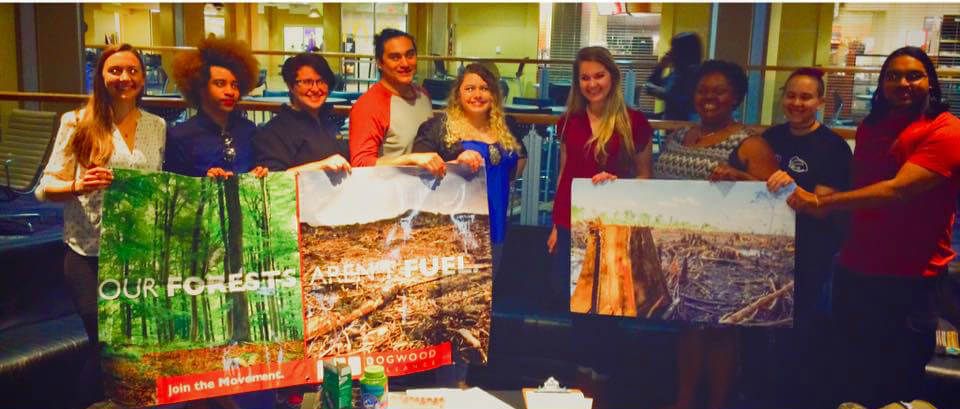
Dogwood Alliance meets with Baton Rouge Organizing
Halfway through our tour, we have met with activists, organizers, environmentalists, landowners, retired foresters and communities living on the front-lines of industrial logging.
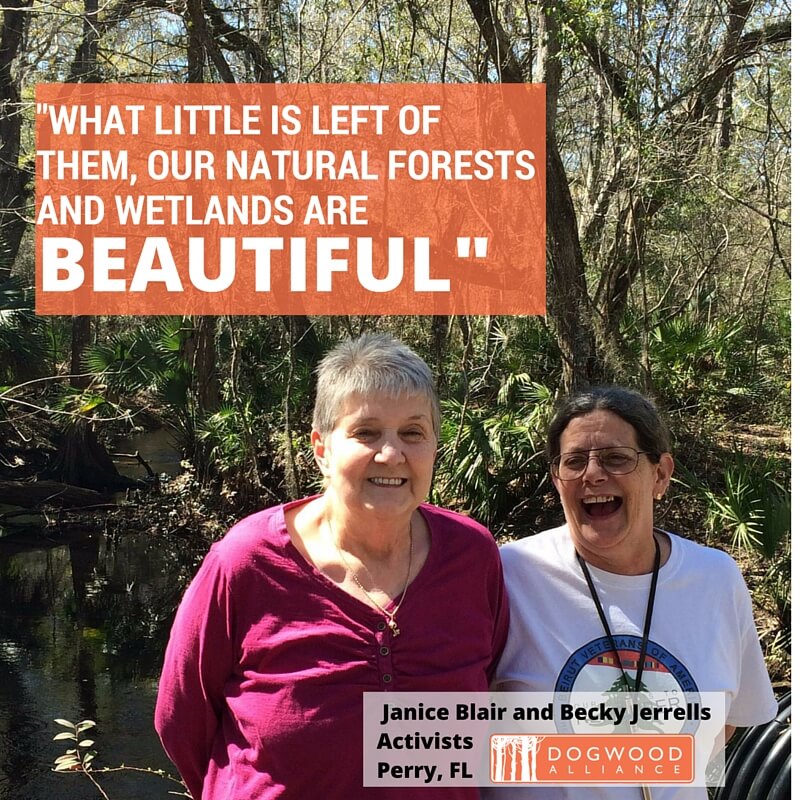
Janice and Becky show us some of their favorite forested areas.
Our forests invoke in people a sense of emotional well-being. They give people a sense of place and hold memories for generations. In Perry, Florida, both Becky Jerrells and Janice Blair took us to Melviny Creek, a forested wetland that creates a nostalgia that makes these two women giggle and gossip like teenage girls. They told us of fishing there as young children and retold stories they had heard of their grandparents boating the Fenholloway River. Now, after decades of abuse by the local Buckeye Paper mill, the river is shallow enough to wade through.
In Panama City, FL, activist Henry Lawrence joined us as we investigated Enviva’s Cottondale facility. In a booming voice, Henry calls for greater involvement and activism by citizens. But when he speaks of his love for forests, his voice softens.
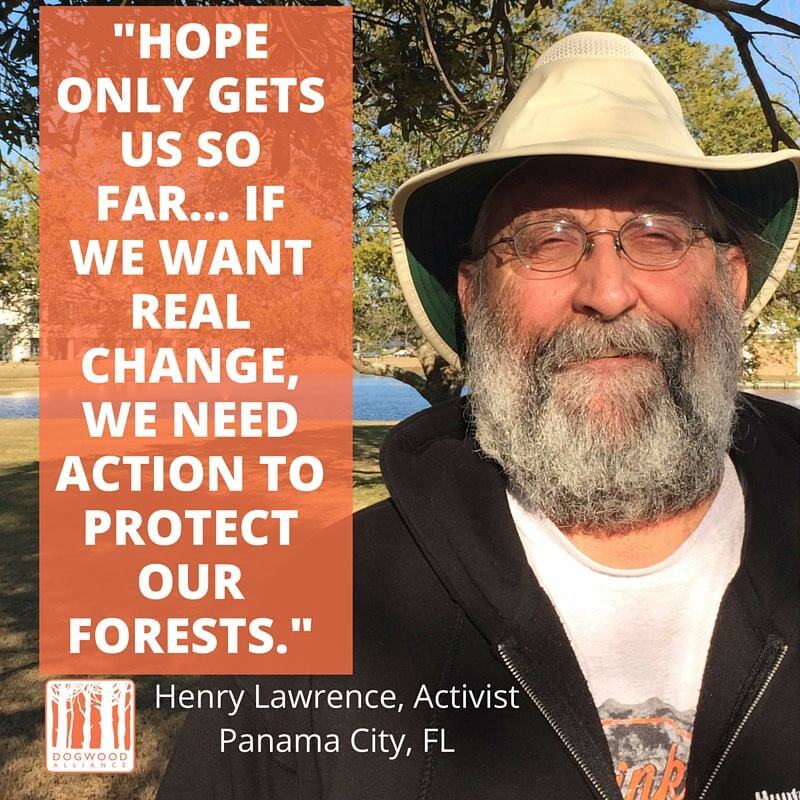
Henry Lawrence talks with us about the importance of citizen involvement and activism.
The coastal communities we met cited physical safety and permanence of their cities and homes as some of the most pressing reasons we need to protect our forests. In Louisiana, activists with Baton Rouge Organizing told us, “If we destroy our wetlands, Baton Rouge is going to disappear!” Five hundred miles away, in Perry, Florida, Becky Jerrells has been fighting the Gaia Corporation biomass incinerator that has been proposed to be built in her neighborhood.
Saving our Southern forests means saving our Southern communities. It means fighting for a world where our children know and love the same forests that we do. In Baton Rouge, Shamaka Shumake tells us that every day, she makes time for her 3 year-old son to play outside. When she can, she visits hiking trails. Some days she just drives to sit by a tree. She wants her son to grow up with the same relationship to nature that she has. In Pensacola, the Student Environmental Action Society at UWF is fighting to protect a sanctuary on campus from being turned into a housing development. Though many of the group will graduate in the next year, keeping this area preserved for future students is worth fighting for. In Mobile, AL, a retired forester told us about going against the grain in his work for many years. This wasn’t the easy path for him, but backing down wasn’t an option when the stakes were the survival of our natural forests.
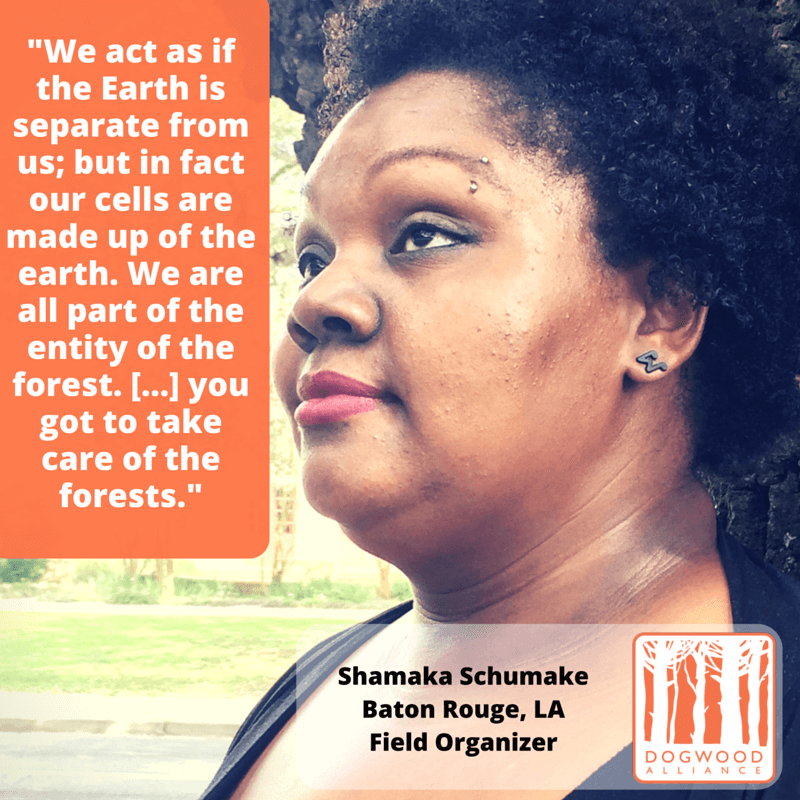
Shamaka Shumake, Dogwood Alliance Field Organizer
The biomass industry can try to sell industrial logging as a benefit for our forests and communities, but we know that our human community cannot survive without our forests. Our forests sustain life. They provide us with clean water to drink, clean air to breathe and act as barriers to storms and floods.

Sam Davis at Taughannock Falls State Park, Ithaca, NY, 2011.
Sam grew up in Brockport, NY and spent most of summers playing in the woods or biking/hiking along the Erie Canal trail. When she was 12, Samantha and her friends made an enclave out of stones and sticks at the bottom of a ravine. This is her favorite memory of the woods.
Sam then attended Daemen College in Buffalo, NY, majoring in Biology. She jumped right into a Ph.D. program at Wright State University. There she investigated the ecology of a rare butterfly, the West Virginia White. Dogwood Alliance’s Research Manager job posting stood out to her because she wants to ensure that forests are there for future generations. She explains,
“I want to reconnect society with the natural world. I want to help translate science into action.”
Sam and her husband have two dogs, Buddy and Desmond, and a “few too many cats and a bearded dragon, Wiggles.”
“People get along, people matter and people work well together towards a common cause.”
Sam’s hobbies include: hiking, cycling, playing soccer, programming, writing, crocheting/knitting and playing guitar. “Not all at once, and not in that order,” she clarifies.

Sam Davis and her dog, Buddy, geocaching,
Oakes Quarry Park, Fairborn, OH, 2012.
A firm believer in finishing things, Sam often finds herself going taking on big tasks…like cycling 400 miles (8 days) from Buffalo to Albany — twice. She wrote a song a week for a year and completed National Novel Writing Month several times. She even built a program that can generate short fiction e-books and their covers. Wow!
Biomass MagicSenator Collins’ Biomass Amendment Transforms Burning Forests to a Carbon Neutral Fuel Source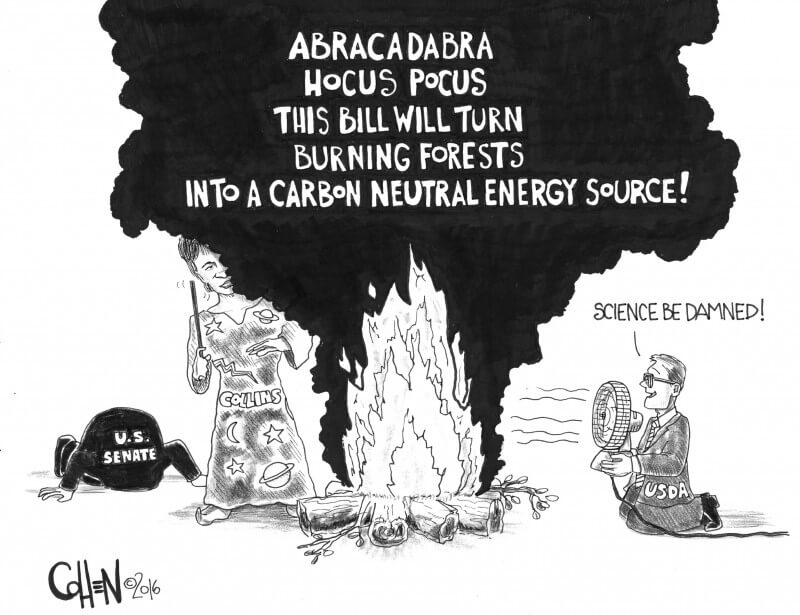 Asheville, NC – In early February, U.S. Senator Susan Collins (R – ME), introduced an amendment to the Energy Modernization Act of 2015 (S. 2012) that declares the carbon neutrality of all forest bioenergy and recognizes biomass as a renewable energy source. This amendment was passed by a voice vote without discussion.
With one wave of her magic pen, the Senator swept aside the prevailing scientific viewpoint that burning forests for electricity is a carbon intensive fuel that in many cases releases more emissions than coal. Despite the fact that various institutions and regulatory agencies have urged caution in moving forward with the use of wood for electricity, in an attempted giveaway to the wood pellet and forest products industry, the amendment was pushed through.
“Senator Collins’ amendment completely fails in its attempt to support the key role that forests can play in addressing the energy needs of the United States,” said Adam Macon, Campaign Director at Dogwood Alliance. “Instead of the short-sighted approach of burning our forests for energy, our government should be promoting the conservation and restoration of forests because they are our best defense against climate change, provide clean drinking water to millions of Americans, and serve as vital habitat for wildlife.”
The Energy Modernization Act of 2015 was stalled in the Senate while Republicans and Democrats wrangled over a Democrat proposed amendment for emergency funding for Flint. The legislation may hit the Senate floor for full debate as early as Thursday, March 25th.
# # #
To download a high-resolution, print ready version of the cartoon for use, go here.
The editorial cartoon was commissioned by the Dogwood Alliance and created by David Cohen has been the editorial cartoonist for the Asheville (NC) Citizen Times since 2006, and has been involved with many other publications over the years. His Facebook cartoon page is www.facebook.com/Cohencidents.
I am an individual who spends every day investigating the biomass industry’s practices and speaking directly with impacted communities. It is infuriating when out-of-touch politicians and short-sighted government agencies push forward their corporate-driven agenda over community and environmental solutions. This agenda completely disregards the prevailing sentiment of unbiased experts, scientists and front-line communities. They subvert the sometimes difficult, but always rewarding path that we must walk to achieve an economy built on justice and respect for all living beings.
Two weeks ago Senator Susan Collins from Maine sponsored an amendment to the “Energy Policy Modernization Act of 2015”. A US Senate committee approved it for an upcoming vote by the whole chamber. The amendment claims the “carbon neutrality” of biomass (forests being burned for electricity). This amendment is essentially a boondoggle that is a giveaway to an antiquated and destructive industry.
We should be embracing a clean energy transition from fossil fuels that protects the health of our forests and communities rather than incentivizing their degradation.
Senator Collins’ amendment completely fails in its attempt to support the key role that forests can play in addressing the energy needs of the United States. Instead of the short-sighted approach of burning our forests for energy, Senators should be promoting the conservation and restoration of our forests because they are our best defense against climate change, provide clean drinking water to millions of Americans and provide habitat for wildlife.
In the past several years, we have seen a similar error in European policy that continues to drive massive clearcuts of precious forests in the Southern US. As Europe has now recognized this mistake (we’ve made sure of that!) and is working to address the problem, the last thing our communities and forests need is for our government to repeat that same mistake.
We imagine a future where local communities and forest landowners are adequately incentivized to keep forests standing, where the health and future of our children are placed above quarterly profits for corporations.
If we allow our government to legislate away science and claim “carbon neutrality” for forest biomass, opening up the floodgates for burning forests for energy, then we’re taking a serious step backwards.
Don’t let that happen. Write your Senator, talk to your neighbor, get involved. Our Forests are truly Our Strength.
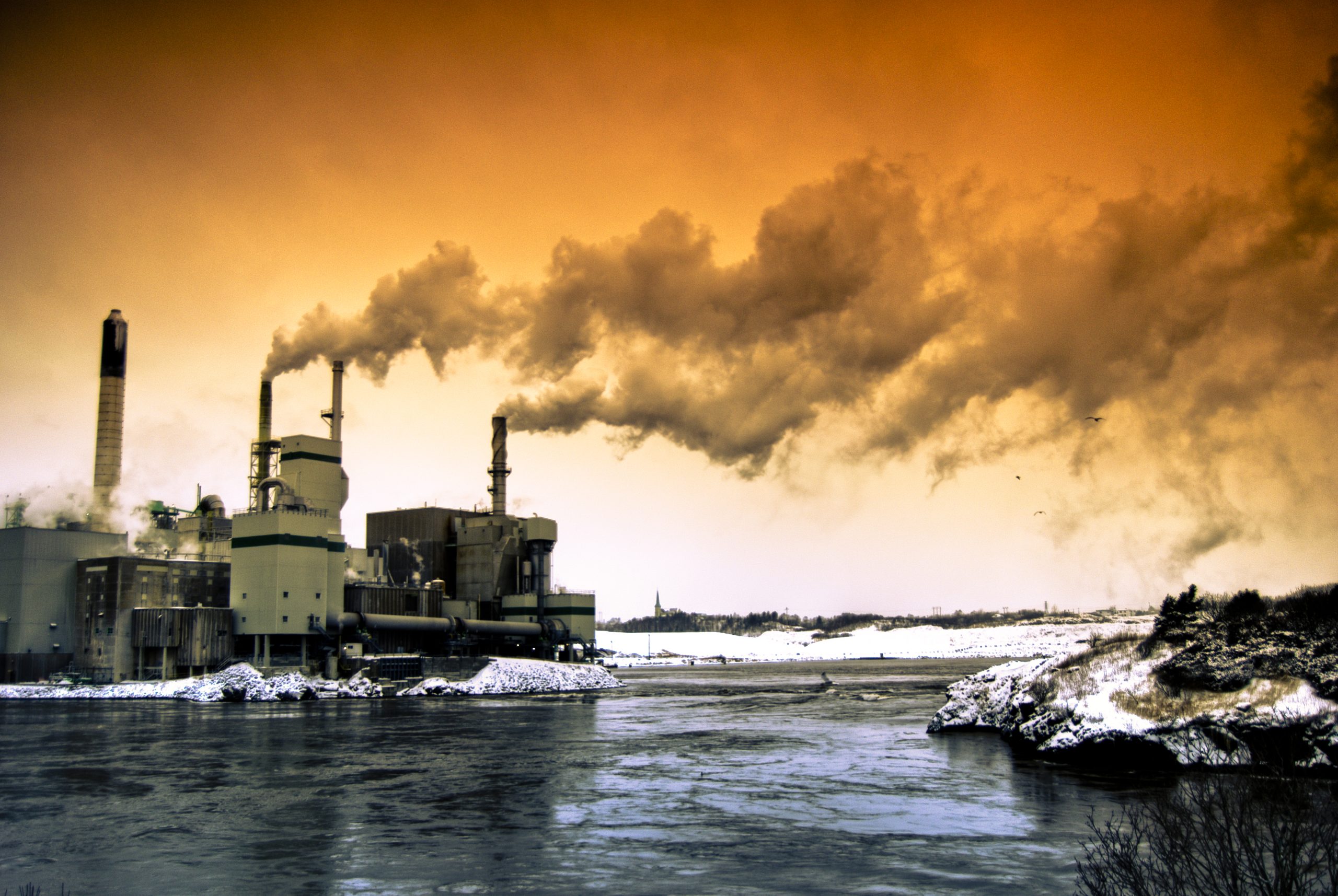
FOR IMMEDIATE RELEASE: February 10, 2016US Groups Join Over 100 International Organizations to Demand Removal of Destructive Biofuels and Wood-based Biomass from European Union Renewable Energy DirectiveBiomass Increases Carbon Pollution, Damages Land and Livelihoods in Communities Around the GlobeAsheville, NC— More than 110 civil society organisations and networks from across the globe joined a declaration today demanding that bioenergy be excluded from the next European Union (EU) Renewable Energy Directive (RED). Published science shows burning wood for energy increases carbon pollution in the atmosphere for decades to centuries. Indeed, so-called “biomass” is even more carbon-intensive than coal when measured at the smokestack. The EU, however, currently treats wood energy as “carbon neutral” despite contrary scientific evidence. This misguided policy has devastated communities and forests around the globe, including forests here in the United States, as European utilities compete for wood pellets and other biomass fuels.
“Rapidly increasing European demand for wood pellets globally, with the US leading the way, is having a devastating impact on the forests and communities of the Southern US,” said Adam Macon from Dogwood Alliance. “We’ve joined with over 110 other groups to send a strong signal to the EU and the US EPA that it must change its mind on bioenergy or risk doing far more harm than good. It’s clear that support for bioenergy in the EU is directly impacting forests internationally and the people that depend on them, as well as incentivising even greater carbon emissions.”
The EU is considering renewal of the RED for 2020 onwards in a “consultation” ending today. The RED will determine Europe’s path forward on meeting its carbon emissions reductions targets following the Paris Agreement signed late in 2015. Bioenergy already accounts for around two-thirds of energy classed as renewable in the EU, and the EU currently anticipates that industrial bioenergy will continue playing a major part in its renewable energy strategy.
Here in the US, the forest products industry and several states are pushing the EPA to classify biomass energy as a “carbon neutral” method of complying with the Clean Power Plan’s carbon pollution standards for power plants. Just last week the Senate adopted an amendment to a bipartisan energy bill that could force EPA and other agencies to ignore biomass carbon pollution despite the science.
“The climate obeys the laws of physics, not the whims of Congress,” said Kevin Bundy, senior attorney and Climate Legal Director at the Center for Biological Diversity. “Native forests across the Southeast are being clearcut to satisfy European demand for wood pellets, all because the EU ignores climate pollution from bioenergy. The EU has to fix its anti-science mistake—and our own Congress has to avoid repeating it.”Background: Industrial bioenergy is not renewable
The declaration submitted today demands that bioenergy not be defined and subsidized as renewable energy under the EU directive, citing growing scientific evidence that current EU bioenergy policy has done tremendous harm to people, forests and the climate. Industrial bioenergy is not “renewable” because biomass fuels are not replenished as quickly as they are consumed. Worse still, carbon emissions from burning biomass for energy are often greater than the emissions from the fossil fuels they are supposed to replace. Peer-reviewed studies and on-the-ground investigations have shown that industrial-scale bioenergy results in significant carbon emissions and fuels the destruction of biodiverse forests from North America to southeast Asia and eastern Europe. These forests are vital carbon sinks. Biofuels in particular have become a major driver for land-grabbing in the global South and are, in many cases, linked to serious violations of land and labour rights.
To download the full declaration with a list of signatories, visit: http://www.biofuelwatch.org.uk/wp-content/uploads/BioenergyOut-Declaration.pdf. For more information on the EU RED consultation process, visit: https://ec.europa.eu/energy/en/consultations/preparation-new-renewable-energy-directive-period-after-2020.
Dogwood Alliance (www.dogwoodalliance.org) is a regional nonprofit organization that is increasing protection for millions of acres of Southern forests by transforming the way corporations, landowners and communities value them for their climate, wildlife and water benefits.The Center for Biological Diversity (www.biologicaldiversity.org ) is a national, nonprofit conservation organization with more than 990,000 members and online activists dedicated to the protection of endangered species and wild places.
# # #
Contact: Scot Quaranda, Dogwood Alliance, (828) 242-3596 [email protected]Kevin Bundy, Center for Biological Diversity, (510) 844-7100 x313 [email protected]
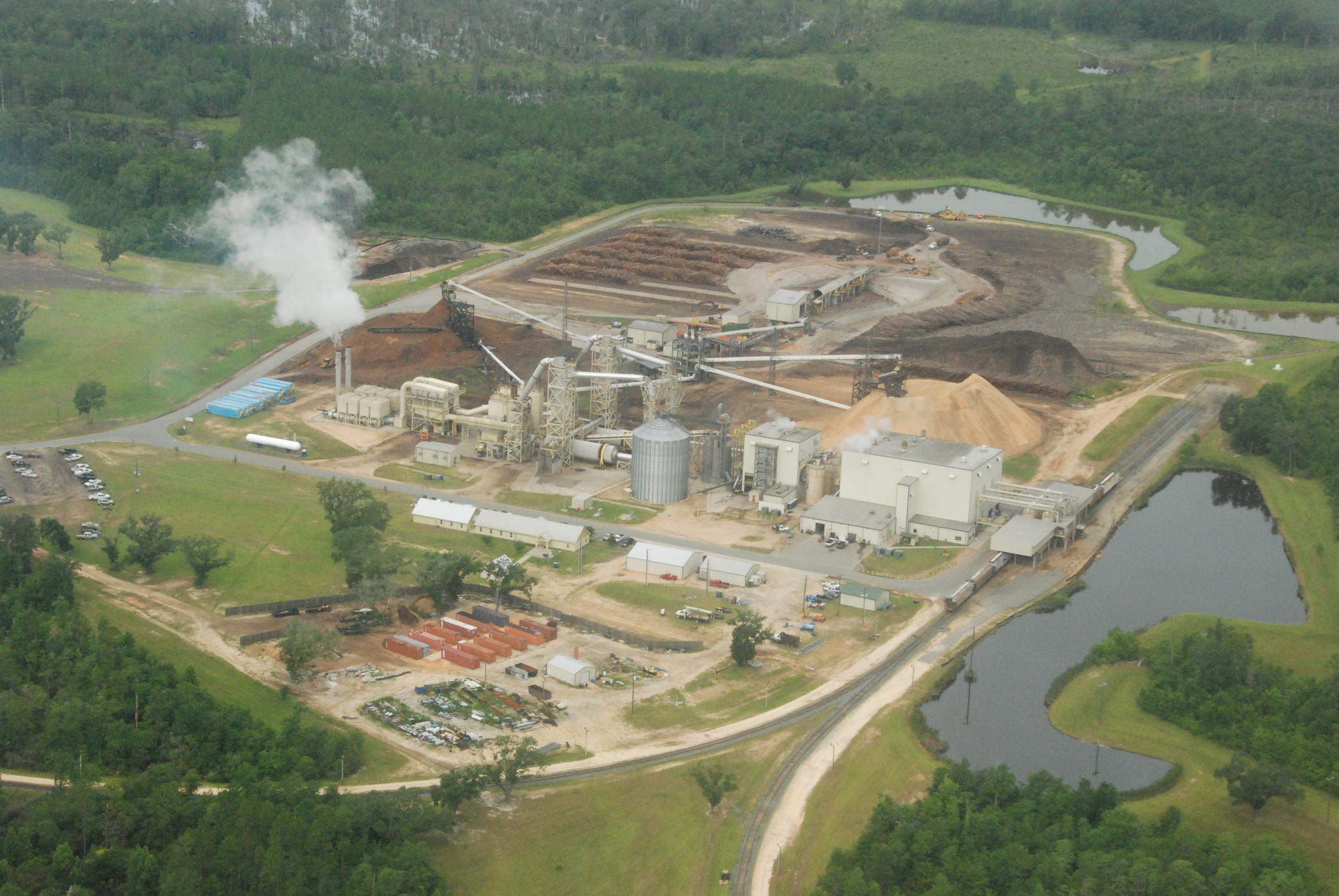
An aerial view of the Enviva Green Circle facility in Cottondale, Florida.
On World Wetlands Day, February 2nd, the Dutch government voted in favor of forest protection over forest destruction.
This is great news for our Southern forests and a strong signal that we are winning!
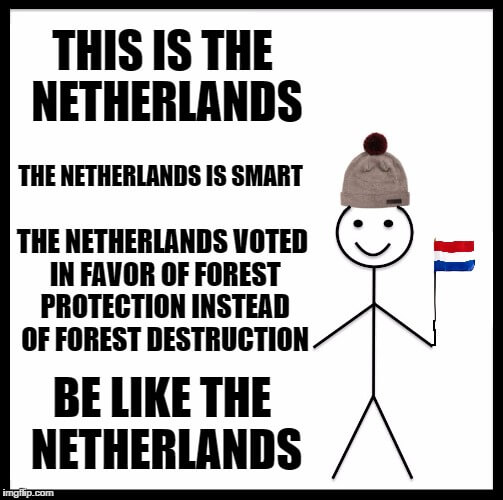
The freeze on biomass funding will be in effect until political clarity is reached for a complete coal phaseout in the Netherlands – which will last late into 2016attheearliest. As this increasingly controversial industry has become more and more heavily dependent on government funding, this very well might signal an end for biomass co-firing in one of Europe’s top importers of wood pellets from Southern Forests. Combined with the ongoing investigation of subsidies provided to Drax in the UK and a powerful economic analysis published in Belgium, the world’s biggest drivers of the destructive wood pellet export market are notably backpedaling. This is something our government officials and the Environmental Protection Agency (EPA) should take notice of.
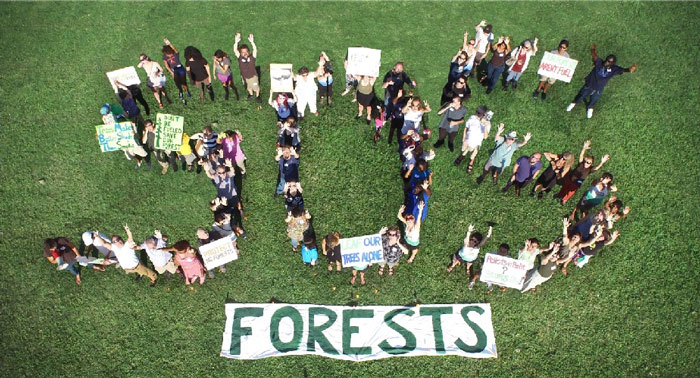
In partnership with international and national organizations, Dogwood Alliance has played a big part in making this resolution possible. In addition to our coalition sending over 100,000 SOS messages to Europe in less than one year, we helped bring the voices and stories of impacted North Carolina community members to meet directly with Dutch officials. Furthermore, just before the resolution passed, Dogwood Alliance along with our partners at NRDC and the Southern Environmental Law Center sent a letter to the Dutch government urging this resolution be passed. We must also give a huge thanks to Greenpeace Netherlands for their leadership on this issue and tireless work to end coal and biomass in their home country. This was a very fitting victory on World Wetlands Day and a clear indication that big biomass is a bad investment.


 Donate