


Only about 5% of mammals are considered to be monogamous. On the other hand, birds tend to mate for life. For birds, long-term relationships work better. Around 90% of birds agree! So if you’ve lost faith in love and think that nobody stays together anymore, keep reading.
This rodent may be small in size and have a very short life, but that is not an obstacle to having a life full of love. This mouse is one of the very few mammals that mate for life. Aside from being monogamous, they’re also attentive parents. Both parents will put effort into building their nests. After they’re born, the dad mouse will help take care of the pups. He retrieves them when they fall out of the nest, licks them, and hugs them to keep the babies warm.
This behavior intrigues scientists. One study found that genetic mutations were the reason behind these monogamous parenting habits. We might share some biological similarities with these mice. However, the genetics behind human parenting are harder to determine.
Coyotes are loyal partners in the best and worst of times. A study found that coyotes mate for life and only seek another partner when their previous one has died. There is no evidence of “cheating” in coyote relationships.
Plenty of food and high populations are usually opportunities for dog family members to stray from relationships. However, even with those conditions coyotes remain loyal to their partners. Coyotes take the line “until death do us part” very seriously.
Geese do not only choose a partner for life, but they protect them and their offspring. Geese will even put themselves in danger just to protect their families. They will often refuse to leave the side of a sick or injured mate – even if winter is coming.
When a goose’s mate dies, they will mourn in seclusion. Some geese spend the rest of their lives as widows or widowers, refusing to mate again.

Red wolves will also mate for life. They live in groups of five to eight wolves. These groups have a similar structure to human families and are composed of the parents and their offspring. Older offspring will help raise their younger siblings. They’ll also take care of the den. They’ll later leave the pack in search of their own mates.
Unfortunately, there are only between 10 to 20 red wolves left in the wild, all living in North Carolina. This decline was due to car collisions, gunshots, and loss of habitat. We should preserve these loyal wolves because once they’re lost, they’ll be lost forever.
Vultures show that a frightening reputation doesn’t make you a stranger to love. Once a black vulture has found its mate, they’ll stick together. Vultures are not only together during the mating season, but throughout the whole year. Once eggs are laid, parents will take turns incubating them.
For their courtship rituals, a male vulture will circle the females with extended necks. They will then chase and dive toward them. It seems weird for humans, but it must work for vultures!
Aside from being the symbol of the United States, bald eagles are partners for life. Their courtship ritual is a spectacular show to watch because it takes place in flight. They swoop, conduct aerial exchanges, cartwheel, and break apart at the last moment, just before hitting the ground.
Part of their courtship involves nest building. The couple in love will build the nest together as part of their bonding. Year after year, they’ll always return to the nest they built. Bald eagles are good examples of sharing responsibilities when parenting. Once the nest is built and the eggs have been laid, they both keep the eggs warm and then feed the little chicks once they are born.
Bald eagles will remain together for many years, unless one of them dies. When this happens, the remaining bird will eventually find a new mate.
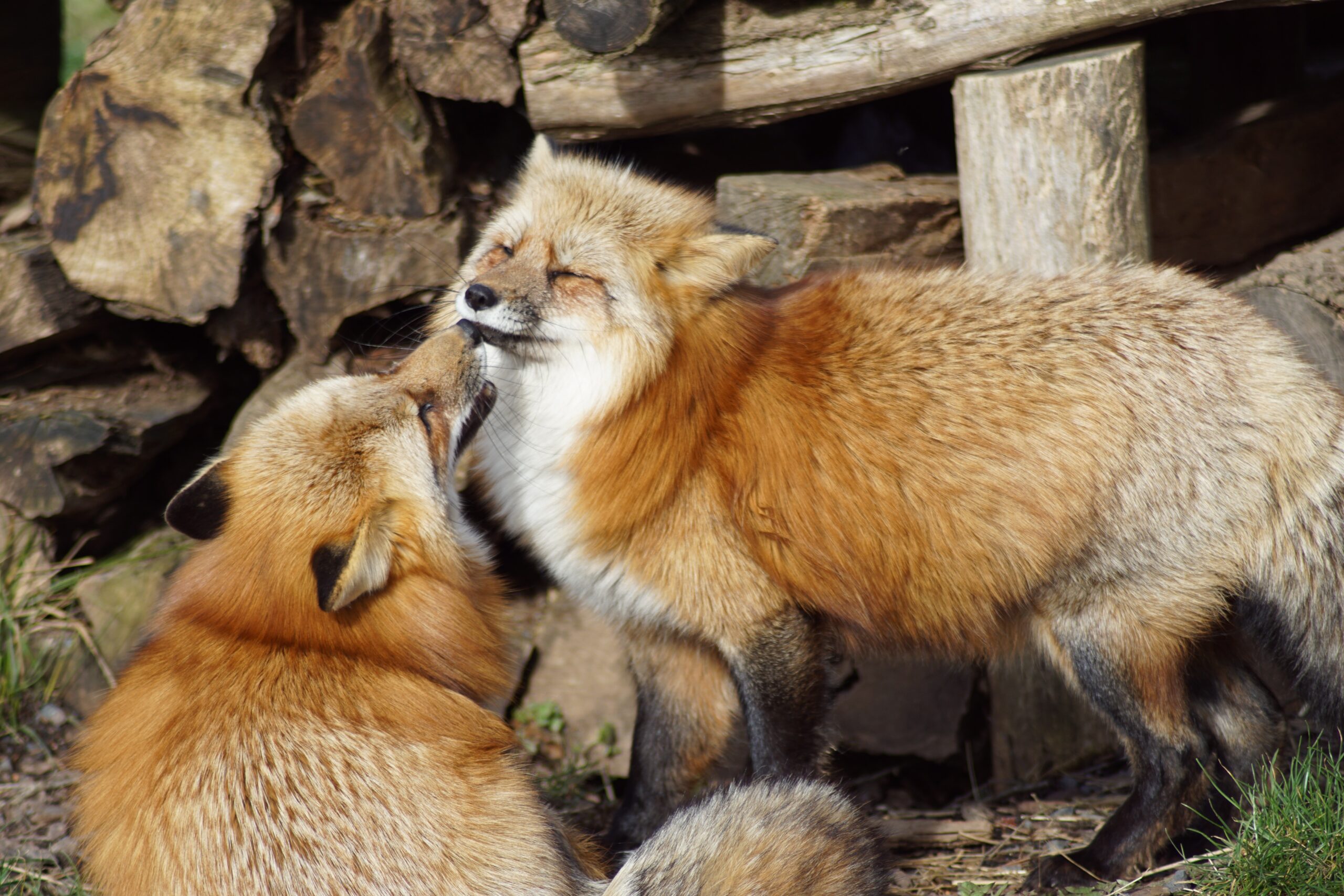
This particular fox is very picky when it comes to choosing their mate. This is because when they choose a partner, they mate with them for life. The only exception to this is if their partner dies. However, even if their partner dies, it can take them several years before they give up their home and find another mate to live with.
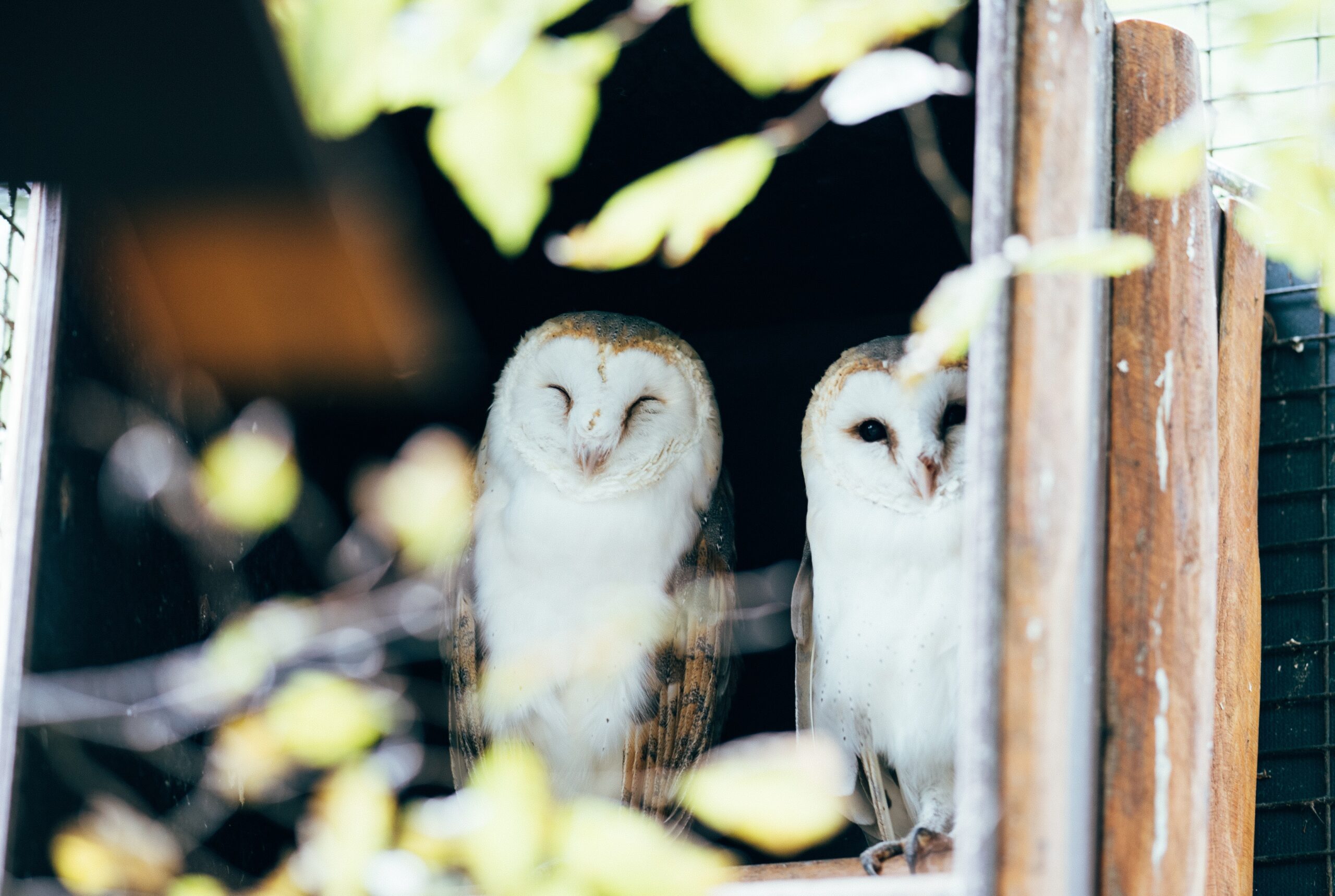
Aside from being intelligent creatures and having the ability to locate their prey based on sound, these birds are also known for their romance skills. Once they’ve found the right one, they devote themselves to their mate for their entire lives. Barn owls are known for being affectionate throughout the year, not only during the mating season. It’s common to spot barn owls grooming their mate or cheek-rubbing. Is there anything cuter than seeing two owls cuddling? Probably not!
During courtship, male barn owls hunt more to impress their females with more food. They even fly more and expand their search area. Male owls will also screech; if a female is interested, she’ll reply back by croaking. They use the same nest site every year and work as a team when it comes to raising their young.
Sadly, some love stories must come to an end. It’s not uncommon for some barn owls to go through what they would consider a “divorce”. This “divorce” comes after a “big argument” where the male owl is kicked out of the nest. This happens when the pair is not successful at mating or their chicks don’t survive.
Cardinal pairs fly together every spring. If you’re lucky, you can even see the “cardinal kiss”. Cardinals also mate for life. Some cardinals even stay together all year long in their nesting territory. In other cases, the birds leave the territory during the winter and return to each other the following spring.
Cardinals work together as a couple. Females will build the nest while the males keep a safe lookout for predators. They both feed their chicks until they can leave the nest.
However, there are exceptions to every rule. Some cardinals do “break up” and look for new mates, sometimes even during mating season. And if one of the pair dies, the surviving cardinal will eventually look for a new mate.
For a long time, scientists believed that beavers mate for life and are loyal to their partners. But has this held up? It all depends on where the beaver is located. One study found that European beavers will remain faithful to their partners and will never “cheat”.
And what about their counterparts from North America? One study found that in the Americas, beavers partner up, but they also “see other people”. American beavers live in colonies and are sometimes tightly-packed. These living conditions probably keep “temptations” closer.
In contrast to the gray fox, the red fox is not as loyal as we would expect. They used to be considered monogamous animals, but scientists found that they actually have several partners during the mating season.
Monogamy in animals is a very complex behavior. While only about 5% of mammals are considered to be monogamous, we think about 90% of birds are. So if you’ve lost faith in love and think that nobody stays together anymore, just think of bird relationships!
Become a Forest Defender today! Your monthly gift will protect the biodiversity of the South.
Join our email list to get new Biodiversity in Your Backyard stories sent directly to your inbox!
[share-buttons]
La monogamia en animales es un comportamiento muy raro. De hecho, solo el 5% de los mamíferos pueden ser considerados monógamos. Por otro lado, las aves tienden a juntarse de por vida. Creen que las relaciones a largo plazo funcionan mejor. ¡Alrededor del 90% de las aves están de acuerdo! Entonces, si has perdido la fe en el amor y piensas que ya nadie se queda junto, sigue leyendo.
Este roedor puede ser pequeño y tener una vida muy corta pero eso no es un obstáculo para tener una vida llena de amor. Este ratón es uno de los pocos mamíferos que se junta de por vida. Además de ser monógamos, también son padres atentos. Ambos padres se esfuerzan en construir sus nidos. Después de que sus crías nacen, el ratón papá ayudará a cuidar a los cachorros. Los recupera cuando se caen del nido, los lame y los abraza para mantenerlos calientes.
Este comportamiento intriga a los científicos. Un estudio encontró que las mutaciones genéticas eran la razón detrás de estos hábitos parentales monógamos. Los humanos podríamos compartir algunas similitudes biológicas con estos ratones. Sin embargo, la genética detrás de la crianza humana es más difícil de determinar.
Los coyotes han demostrado ser parejas leales en los mejores y peores momentos. Un estudio encontró que los coyotes se juntan de por vida y solo buscan otra pareja cuando la anterior ha muerto. No se encontró evidencia de que ellos “engañen” a sus parejas.
Por lo general comida de sobra y una gran población suelen ser oportunidades para que los miembros caninos se desvíen de sus relaciones. Sin embargo, incluso con esas condiciones, los coyotes siguen siendo leales a sus parejas. Los coyotes se toman muy en serio la frase “hasta que la muerte nos separe”.
Los gansos se toman muy en serio sus relaciones. No solo eligen su pareja de por vida, sino que protegen a estas y a sus crías. Incluso se pondrían en situaciones peligrosas solo para proteger a sus familias. A menudo se niegan a dejar a su pareja enferma o herida, incluso si se acerca el invierno.
Cuando muere el/la compañero/a de un ganso, ellos guardan luto en privado. Algunos gansos pasan el resto de sus vidas como viudos o viudas, negándose a juntarse con una pareja de nuevo.
Los lobos rojos también se juntan de por vida. Viven en grupos de cinco a ocho lobos. Estos grupos tienen una estructura similar a las familias humanas y están compuestos por los padres y sus hijos. Los hijos mayores ayudan a criar a sus hermanos menores y también vigilan la madriguera. Luego dejarán la manada en busca de sus propios compañeros.
Desafortunadamente, solo quedan entre 10 y 20 lobos rojos en libertad, y todos viven en Carolina del Norte. Esta disminución se debió a atropellos de automóviles, disparos y pérdida de hábitat. Debemos preservar a estos lobos leales porque una vez que se pierdan, se perderán para siempre.
Los buitres son un ejemplo perfecto de que una reputación aterradora no te convierte en un extraño al amor. Una vez que un buitre negro ha encontrado a su pareja, estos se mantendrán juntos. Los buitres no solo están juntos durante la época de apareamiento, sino durante todo el año. Una vez que se ponen los huevos, los padres se turnan para incubarlos.
Para sus rituales de cortejo, un buitre macho rodeará a las hembras con el cuello extendido. Luego las perseguirán y se lanzarán hacia ellas. Parece extraño para los humanos, ¡pero debe funcionar para los buitres!
Además de ser el símbolo de los Estados Unidos, las águilas calvas son pareja de por vida. Su ritual de cortejo es una muestra espectacular ya que este ocurre mientras vuelan. Se abalanzan, realizan intercambios aéreos y dan volteretas, solo separándose en el último momento, justo antes de tocar el suelo.
Parte de su cortejo implica la construcción de un nido. La pareja enamorada construirá el nido juntos como parte del vínculo afectivo. Siempre volverán al nido que construyeron. Las águilas calvas son un buen ejemplo de cómo compartir responsabilidades durante la crianza. Una vez que se construye el nido y se ponen los huevos, ambos mantendrán los huevos calientes y alimentarán a los polluelos una vez que estos nazcan.
Las águilas calvas permanecerán juntas durante muchos años, a menos que una de ellas muera. Cuando esto sucede, el ave restante eventualmente encontrará una nueva pareja.
Este zorro en particular es muy quisquilloso a la hora de elegir a su pareja. Esto se debe a que cuando eligen un compañero, se quedarán con él de por vida. La única excepción a esto es si su pareja muere. Sin embargo, incluso si su pareja muere, pasarán varios años antes de que renuncien a su hogar y encuentren otra pareja con quien vivir.
Además de ser criaturas inteligentes y tener la capacidad de localizar a sus presas en base al sonido, estas aves también son conocidas por sus habilidades románticas. Una vez que han encontrado al adecuado, se dedicarán a su pareja durante toda su vida. Son conocidas por ser cariñosas durante todo el año, no solo durante la época de apareamiento. Es habitual ver a las lechuzas acicalando a su pareja o frotándose las mejillas. ¿Hay algo más tierno que ver dos lechuzas apoyadas una en la otra? ¡Probablemente no!
Durante el cortejo, los machos cazan más para impresionar a sus hembras con más comida. Incluso volarán más y ampliarán su área de búsqueda. Las lechuzas macho también chillaran; y si una hembra está interesada, ella responderá con un graznido. Usan el mismo sitio de anidación todos los años y trabajan en equipo cuando se trata de criar a sus crías.
Lamentablemente, algunas historias de amor deben llegar a su fin. No es raro que algunas lechuzas pasen por lo que se podría considerar un “divorcio”. Este “divorcio” viene después de una “gran discusión” en la que el macho es expulsado del nido. Esto sucede cuando la pareja no tiene éxito en el apareamiento o sus polluelos no sobreviven.
Es común ver a un par de cardenales volando juntos cada primavera. Si tienes suerte, incluso verás el “beso cardenal”. Los cardenales también se juntan de por vida. Algunos cardenales incluso permanecen juntos todo el año cerca a su territorio de anidación. En otros casos, las aves abandonan el territorio durante el invierno, pero vuelven a encontrarse en la primavera siguiente.
Los cardenales trabajan juntos como pareja. Las hembras construyen el nido mientras los machos vigilan a los depredadores. Ambos alimentan a sus polluelos hasta que estos pueden abandonar el nido.
Sin embargo, existen excepciones a todas las reglas. Algunos cardenales “se separan” y buscan nuevas parejas, a veces incluso durante la temporada de apareamiento. Y si uno de los dos muere, el cardenal “viudo/a” eventualmente buscará una nueva pareja.
Durante mucho tiempo, los castores eran parte de la lista de especies que se juntan de por vida y que son leales a sus parejas. ¿Pero esto es aun cierto? Todo depende de dónde se encuentre el castor. Un estudio encontró que los castores europeos permanecerán fieles a sus parejas y nunca los/las “engañarán”.
¿Y sus colegas en América del Norte? Lamentablemente, un estudio encontró que en las Américas, los castores se juntan, pero también “ven a otras personas”. Los castores americanos viven en colonias y, a veces, están muy apiñados. Estas condiciones de vida probablemente mantienen más cerca a las “tentaciones”.
A diferencia del zorro gris, el zorro rojo no es tan leal como cabría esperar.
Solían ser considerados animales monógamos, pero se descubrió que en realidad tienen varias parejas durante la temporada de apareamiento.
La monogamia en los animales es un comportamiento muy complejo. Mientras que solo alrededor del 5% de los mamíferos se consideran monógamos, creemos que alrededor del 90% de las aves lo son. Entonces, si has perdido la fe en el amor y piensas que ya nadie permanece unido, ¡solo concéntrate en los pájaros!
The Clean Water Act (CWA) is in the news again. From what WOTUS means, to what it means for forests, we’ve got the answers you’re looking for. Read on to learn more.
We created the Clean Water Act in a time of environmental crisis. It was a time when the Cuyahoga River was burning and our skies were cloudy with smog. The Clean Water Act of 1972 was a great start for our drinking water. Our legislators were focused on protecting water quality, and that’s what it does best.
Unfortunately it’s not a be-all-end-all for protection. The Clean Water Act protects “navigable waters” in the US. It also prevents the destruction of permanent wetlands without a permit. But not all waters in the United States are “navigable.” There are also big exceptions for forestry and ongoing agricultural activities.
WOTUS, “Waters of the US”, is an important part of the Clean Water Act of 1972. It took decades of litigation in district courts to finally fully define WOTUS. It is a piece of text within the Clean Water Act that decides which wetlands and waters deserve protection…and which don’t.
The last three political administrations have tweaked the WOTUS definition. Environmental organizations like Dogwood get people like you involved in these changes. We ask you to submit public comments, join protests, call your representatives. Without you, our wetlands will be turned into parking lots.
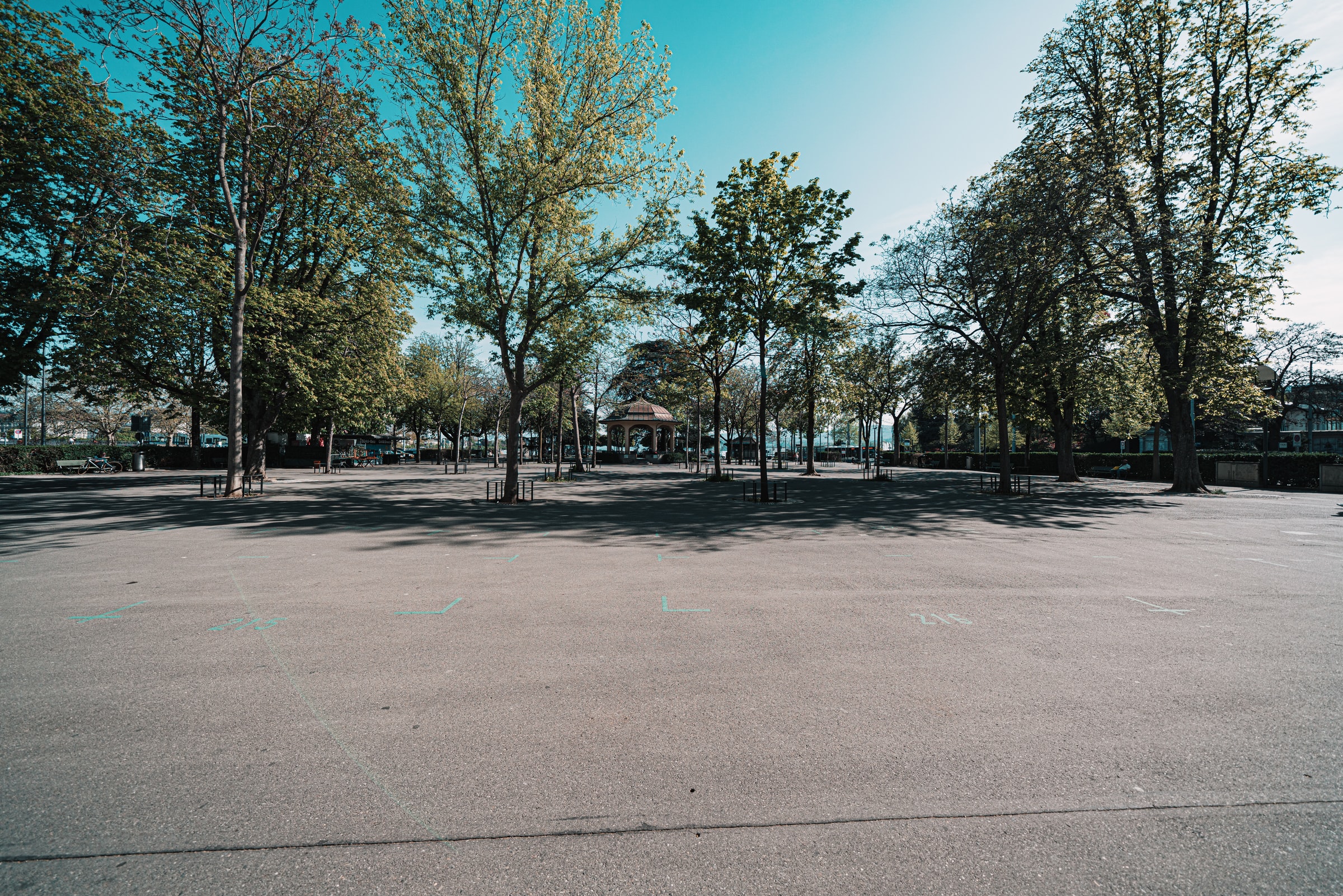
Photo by Claudio Schwarz
Now there is a call for public comments that ends February 7 (more info below). There will continue to be more opportunities to comment because President Biden is trying to undo the damage that President Trump inflicted on the CWA.
The answer is: Both. The Army Corps are in charge of the day-to-day operations within CWA regulations: issuing and reviewing permits, violations, and other tasks. Then the Environmental Protection Agency (EPA) is in charge of issuing guidelines and clarifications around how to implement the rule. It’s confusing, yes, but it’s been like that for decades.
Because of this collaboration, you’ll see the EPA, Army Corps of Engineers (ACE), or both on rulemaking efforts and litigation. In general, though, if you’re looking for a permit, you’ll need to go to ACE, not the EPA.
In many places, there are rivers, streams, and wetlands that fall under the protection of the CWA because they run through or near forests. That means the CWA has the potential to protect forests because of their nearness to the water. However, there is a big loophole when it comes to protecting forests with the CWA.
When this legislation was written, the authors carved out a big exemption for things like logging, road construction, and agricultural activities like pesticide application, constructing ponds, and planting or harvesting with heavy machinery.
In other words, if there’s a wetland downstream of regular farming activities – it gets zero protection. If there’s a wetland between a paved road and a forest and the owner wants to trade trees for cash – all bets are off.
The most likely reason is money. For decades, large forest product companies have lobbied for big exemptions from environmental regulations. They’re flush with cash and will use that money to protect logging wherever and whenever they choose.
Unfortunately, even “sustainable” logging practices come with risks to aquatic life, rare birds and mammals, and other species. Forest roads built for logging have effects that last for generations inside the ecosystem. Voluntary rules and best practices are, in reality, the bare minimum required for protecting water quality, minimizing vegetative disturbance, and preventing damage to adjacent wetlands and rivers.
The US is the world’s largest consumer and producer of wood products.
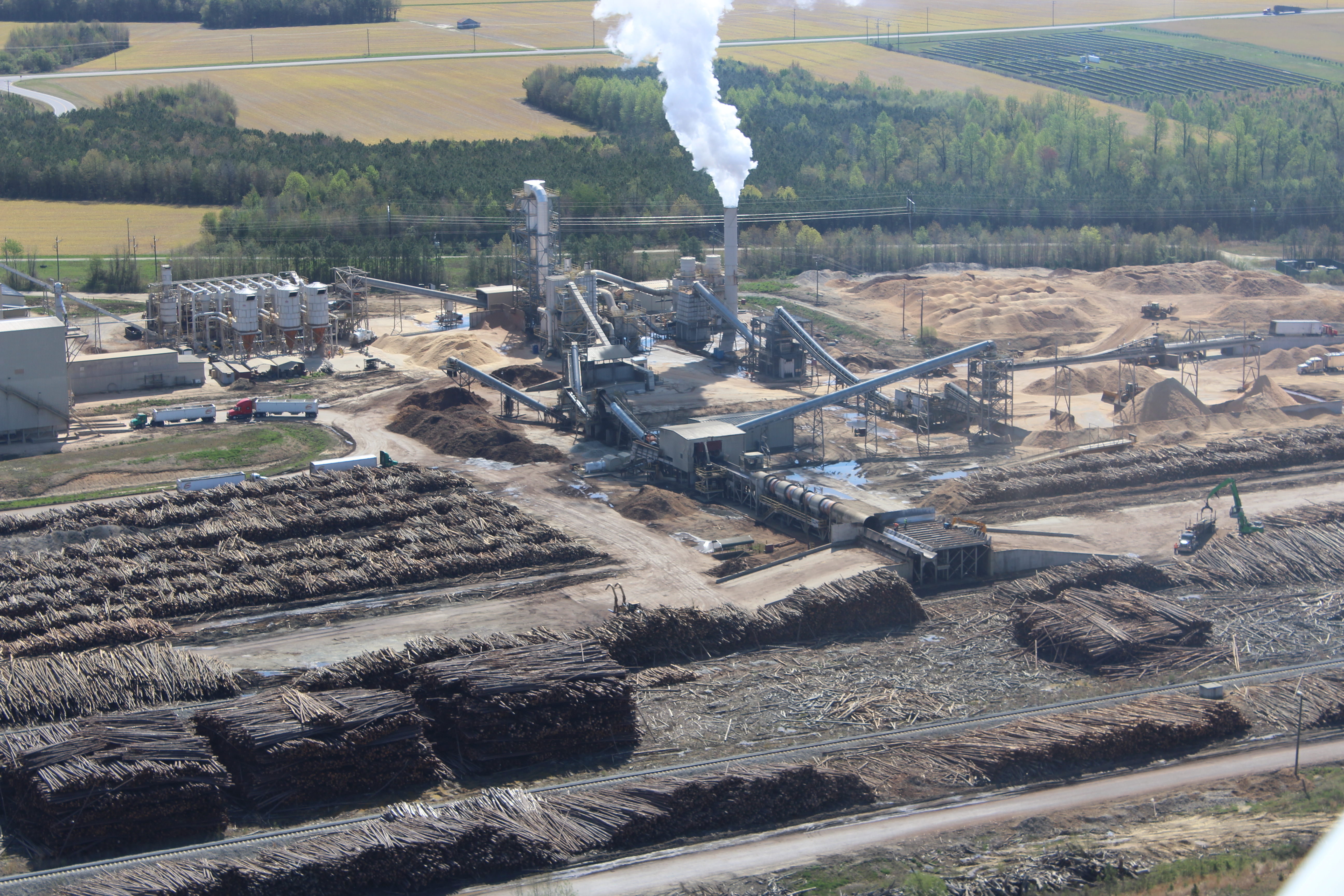
Enviva wood pellet biomass facility in Northampton, NC
These wood products are extracted mostly from the US South, from Virginia south to Florida and west to Texas. Some, like building materials, can be considered necessary. Others, like single-use cups and dirty wood pellets being passed off as “green” energy, are not. Constantly cutting and clearing our forests for these wood products means that we build big logging roads through both wetlands and forests.
Understanding the rate and scale of forest destruction in the United States doesn’t take much. If you ask any middle or high school student, “How old can trees get?”, they’ll tell you that trees can be hundreds of years old. Why then are over half of the forest stands in the US South less than 40 years old?
It’s because the South has been turned from beautiful native forests into rows upon rows of fast-growing pine plantations. Where ancient cypress once stood, now we have pine trees toppled in increasingly frequent storms and hurricanes. In North Carolina alone, over 200,000 acres of forests are logged every year. That’s over 400 football fields a day of forest destruction. Logging is the number one cause of carbon emissions from US forests – five times more than carbon emissions from fires, drought, and insect damage combined.
There are decades of peer-reviewed research about the impacts of logging on water quality. Logging destroys soil. The soil is exposed to full sunlight, it’s compressed, and it’s more likely to break apart under pressure. Dry and compressed soil doesn’t clean or absorb water the way that it should. It’s like trying to use a block of salt like a sponge.
When it rains, this soil doesn’t absorb any water and can even break apart under the water pressure. This causes sedimentation in nearby waterways. Sedimentation can ruin drinking water and can let harmful algal blooms flourish.
Another issue with logging is the “temporary” roads installed with modern logging. They need a way to get their machinery into the forest. Unfortunately, the effects of temporary roads, even if they’re no longer used, last for decades or more.
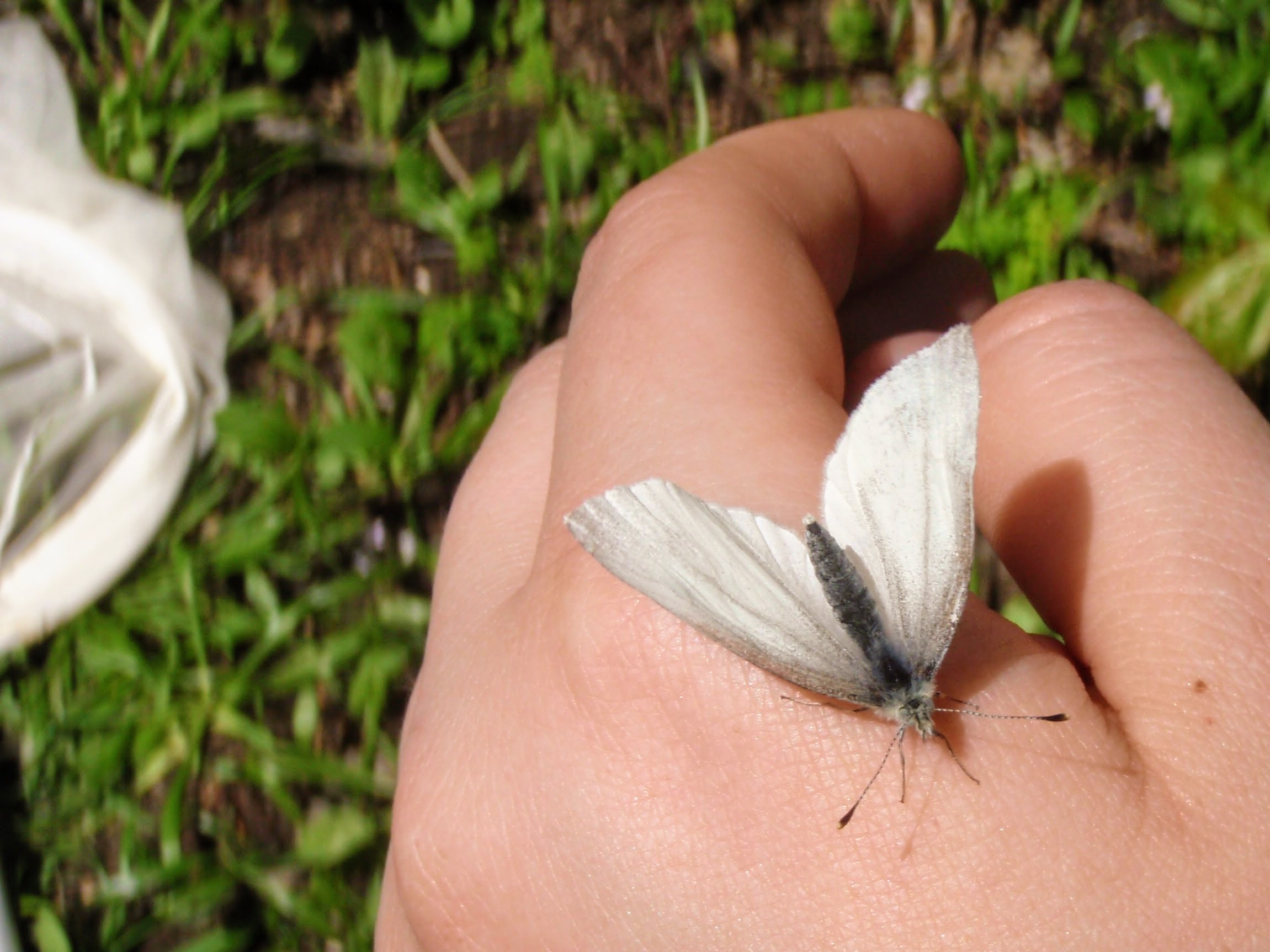
Did you know that some threatened and endangered species rely on intact forests for their survival? Before I joined Dogwood Alliance, I became one of the world’s experts on a rare butterfly, the West Virginia White Butterfly. Widespread logging nearly wiped out this rare insect at the turn of the 20th century.
Butterflies are not the only animals that logging affects. Sedimentation from logging can ruin high quality habitats in the aquatic environment, including places where fish, amphibians, and reptiles make their homes. The South is one of the world’s hotspots for amphibian diversity, and every time we log, we put those treasures at risk.
The industry’s solution to the impacts of logging on water quality is called “Best Management Practices” (BMPs) – voluntary, state-by-state guidelines on how to log and minimize impacts on water quality. These rules are better than nothing, but the strength and effectiveness of the protections vary widely.
The fact is that there are no substantive, legally binding, high penalty rules on logging in the US South. If you own land outright, you can probably clearcut it. No need for a permit, little need to concern yourself. Even on state and federal lands, it’s surprisingly easy to clearcut for revenue, especially if it’s justified with misleading arguments of habitat restoration or wildfire prevention.
In addition to the physical impacts of logging, there are also chemical and biological effects to consider. Many landowners and farmers will use pesticides and herbicides to limit the number of pests and weeds on their property. These uses are for normal farming and other land management, so they’re completely exempt from Army Corps or EPA oversight.
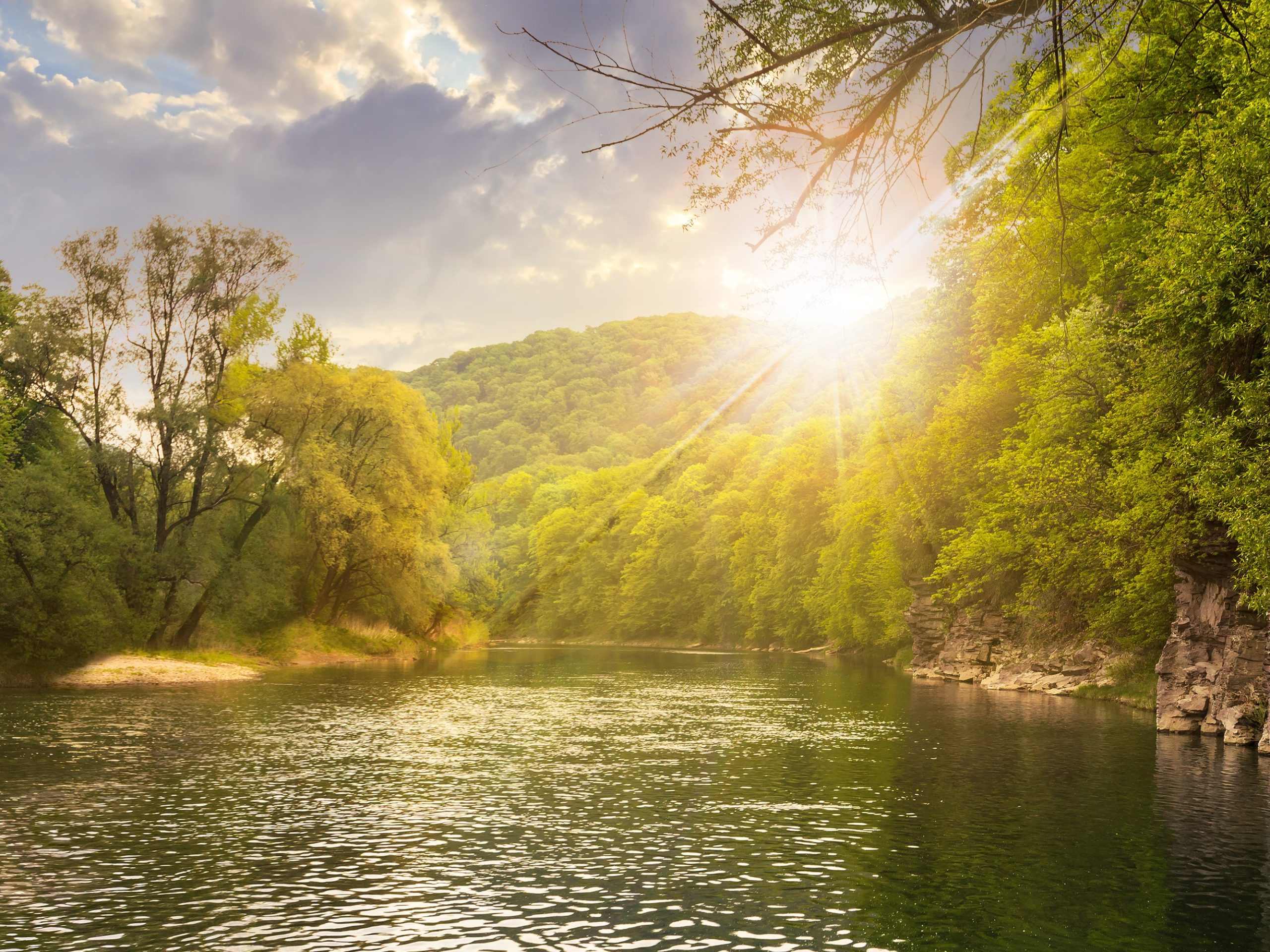
Many people, especially in the US South, rely on natural forests and water sources for their drinking supply. In some states, over half of residents rely on well water, which draws groundwater from nearby surface water sources. In areas of heavy land management or agriculture, these residents are likely dealing with polluted water supplies.
Under this legislation, if what you’re planning to do on a piece of land will have a potential impact on nearby water, you must get a permit from the Army Corps to proceed. Permits will allow impacts or destruction to proceed, but often require some sort of offsetting or mitigation. For example, pollution controls might be installed, or new wetlands might be built.
You’d think that permitting is the solution to our problems, but it’s really not. There is no consideration for scale or cumulative impacts during the permitting process for a single project. The Army Corps and the EPA are simply not required to consider cumulative impacts. As a result, there are no easy answers to the questions that matter: Are we losing wetlands because of the CWA? Are we creating wetlands to replace the ones that new developments destroyed? Are the ecosystems shifting as we lose forested wetlands and gain ponds and open waters?
Some scientists have discovered troubling things. One study out of Oregon and Washington found that there was a net loss of wetlands despite permits mandating the creation of compensatory wetlands; they also found that the types of wetlands being created were not the same type as those being lost. There are similar patterns across the country, despite little documentation and follow-up.
The CWA can only do so much to protect water quality. Since the CWA only applies to navigable waters, and excludes two major sources of pollution, it’s not a magic bullet for water quality. After all, the Clean Water Act makes no restrictions on any logging activities; only impacts new agricultural activities, and harm still occurs even when the process is completed and permits are issued. How’s that for effective policy on clean water?
Luckily, we live in a democracy where change is possible. The CWA may well have reached its limit in terms of potential impact. In other words, the CWA is simply not enough to protect public water supply intake, habitat quality, and navigable waters in the US. We need to do more. Here’s the best thing you can do right now to protect forests and wetlands in the United States:
Join the Dogwood email list to find out about future opportunities to protect our water, wetlands, and forests.
The world is waking up to the realities of the climate crisis, environmental injustice, and the importance of forests. And now, the news media spotlight is growing brighter and brighter on the Southern United States.
The South is home to some of the most beautiful and biodiverse places on Earth.
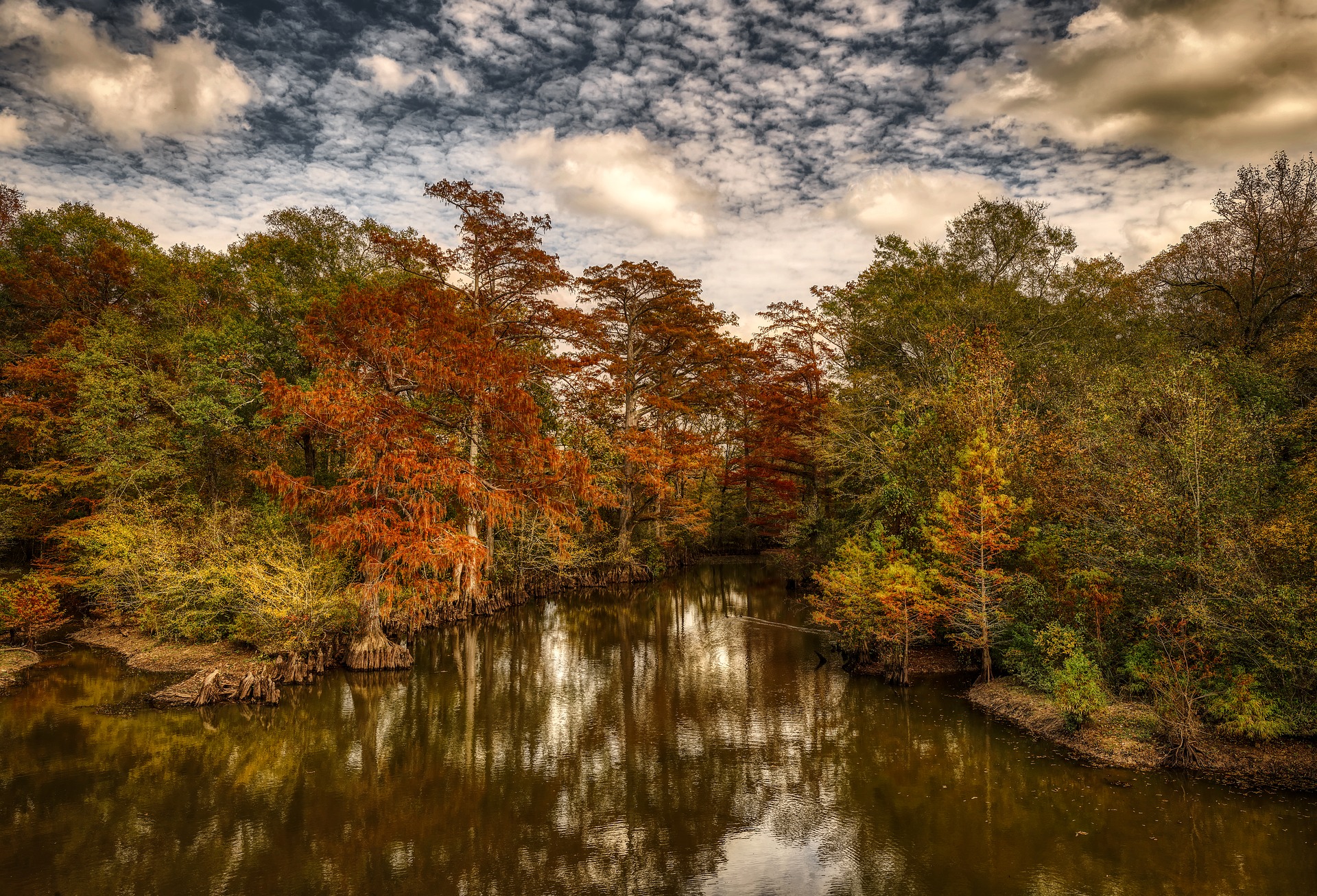
But the South is also home to one of the worst forest destruction cultures in the world. In fact, the US South is the largest producer of wood and paper products and exporter of wood pellets on the planet.
The South is also home to some of the most painful racial, environmental, and social injustices in America. At the same time, we have some of the most vibrant, resilient, and strong communities in the world.
We can’t continue to support a system that focuses on extraction. We must reject this system that destroys land and habitat, pollutes the air and water, contributes to climate change, and harms community health all in service to wealthy corporate interests. We must focus on resistance and resilience. We must transform our economy away from this extractive model and towards a regenerative one.
A great definition of what we mean by a “regenerative economy” comes from Climate Justice Alliance:
“Nature and humans are interdependent. Effective climate crisis solutions honor human rights and the rights of nature. Localized democracies that champion community rights to energy, land, water, and food sovereignty are the best answers to combating exploitation. Shared leadership produces community wellbeing and the most innovative solutions to our climate crisis. Workers should be at the forefront of shaping new economies rooted in fairness, equity and ecological values.”
We must radically change our culture and economy all while we face some of the most damaging impacts from the climate crisis like hurricanes, tornadoes, floods, and droughts.
Throughout 2021, Dogwood Alliance and our frontline partners’ important work was featured in leading international, national, broadcast, and print media publications.
Our first big news story of the year was the cover piece published in Politico Magazine, “The ‘Green Energy’ That Might Be Ruining the Planet.” Next came an important story in The Guardian wanting our take on incoming EPA head Michael Regan, who we spent two years pushing to stop wood pellets in North Carolina as the head of NC Department of Environmental Quality. Right after that was a major piece from the New York Times, “There’s a Booming Business in America’s Forests. Some Aren’t Happy About It.”
National attention then turned to injustices in North Carolina and our Governor’s failure to take action. There was a media feature in the Associated Press that was picked up by almost 120 communication channels big and small across the country.
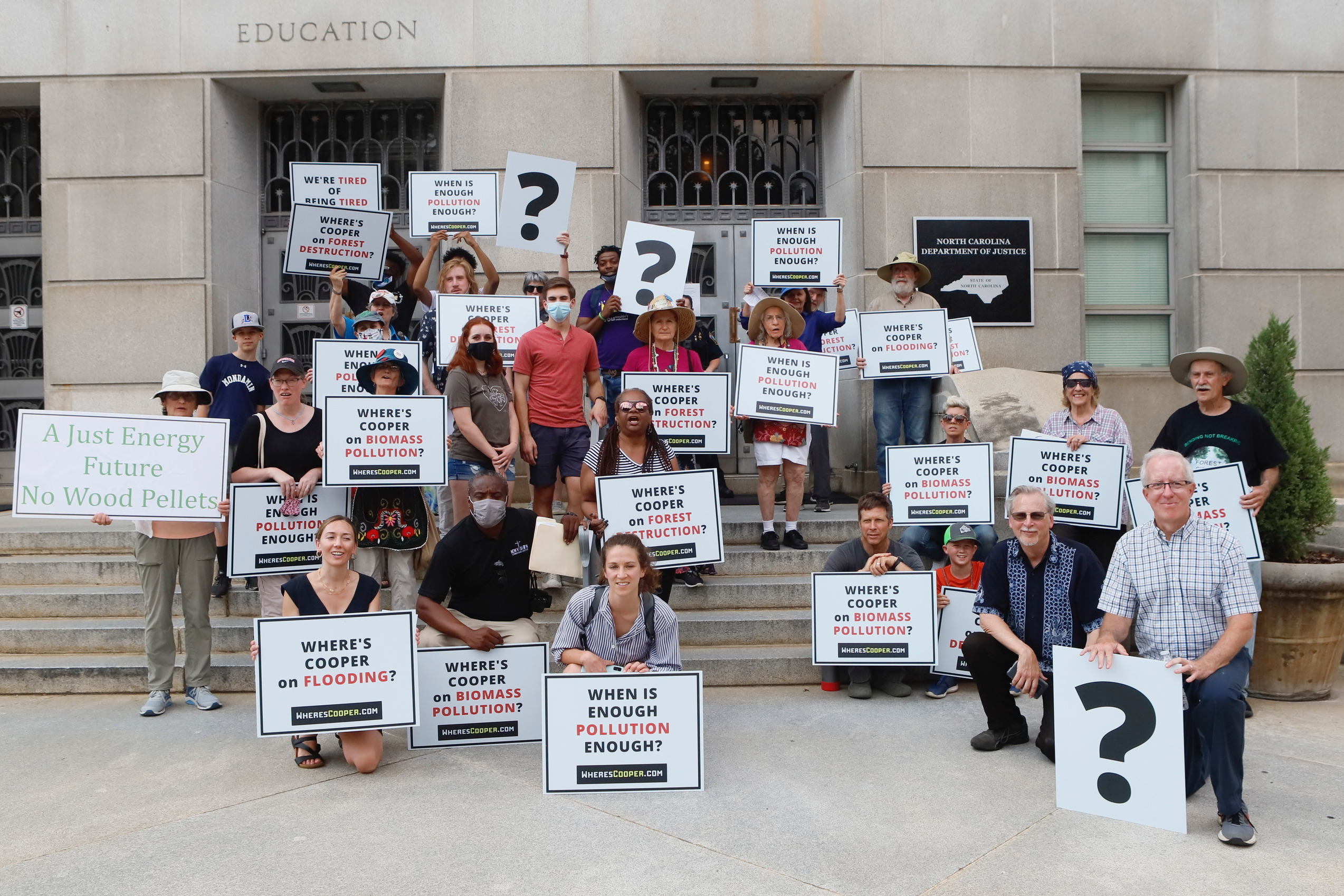
This was then followed by the biggest news article of the year which featured our Executive Director, Danna Smith and some of our top frontline partners demonstrating the destructive impacts of the wood pellet industry on CNN.
As the year continued, we saw a large number of news articles shine a spotlight on how burning forests for electricity is a false solution to climate change. These pieces showed how communities (especially marginalized communities) across the South suffer because of this dirty industry.
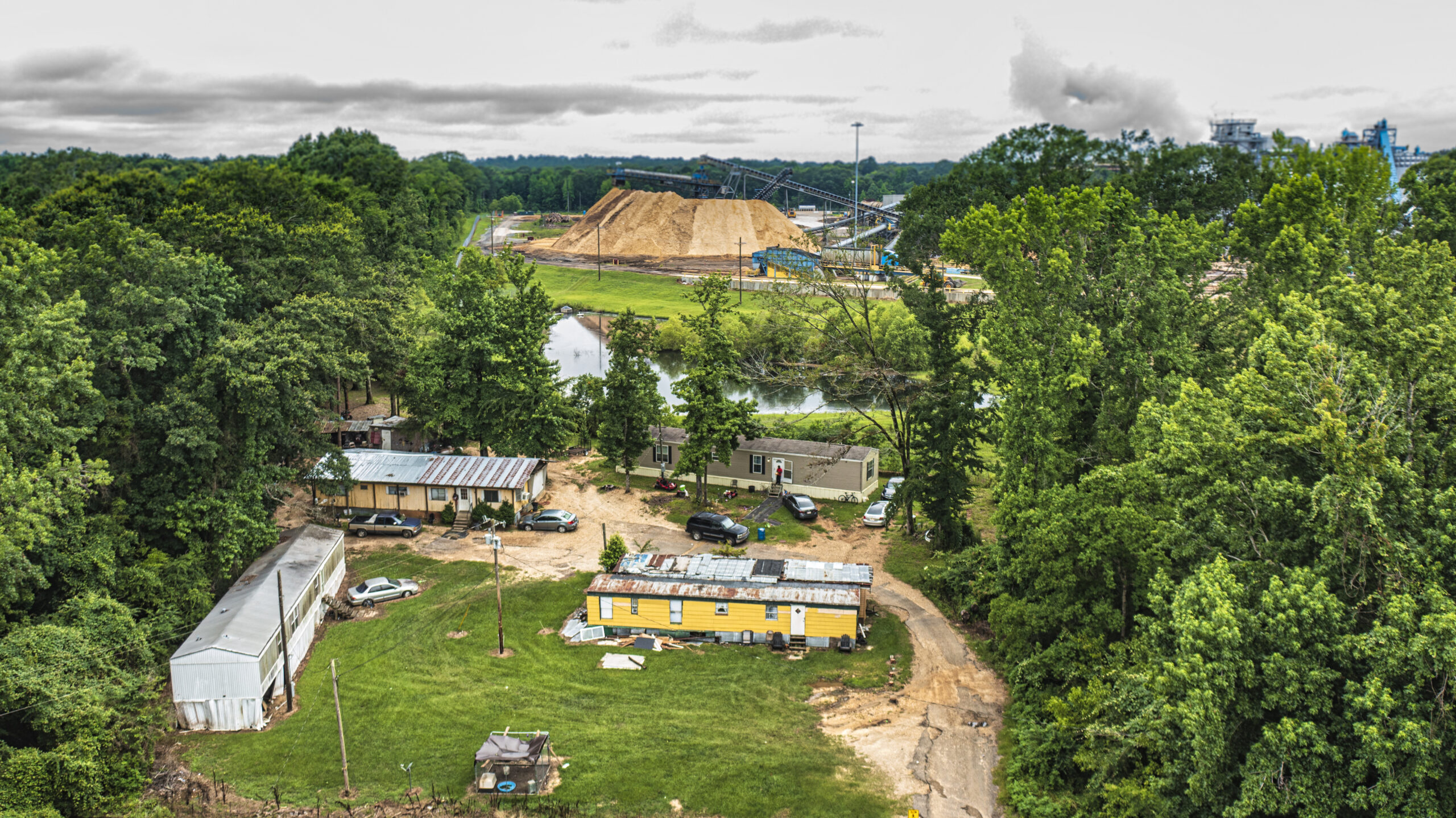
Image by The People’s Justice Council
Major news media pieces appeared on NPR, National Geographic, and in The New Yorker. There were also media pieces on the impact the wood pellet industry was having on rural, environmental justice communities in the Gulf South on ABC National News and in the Huffington Post.
2021 was a banner year for mass media spotlighting the impacts that the forest products industry (especially the wood pellet industry) has on the forests and communities of the Southern US.
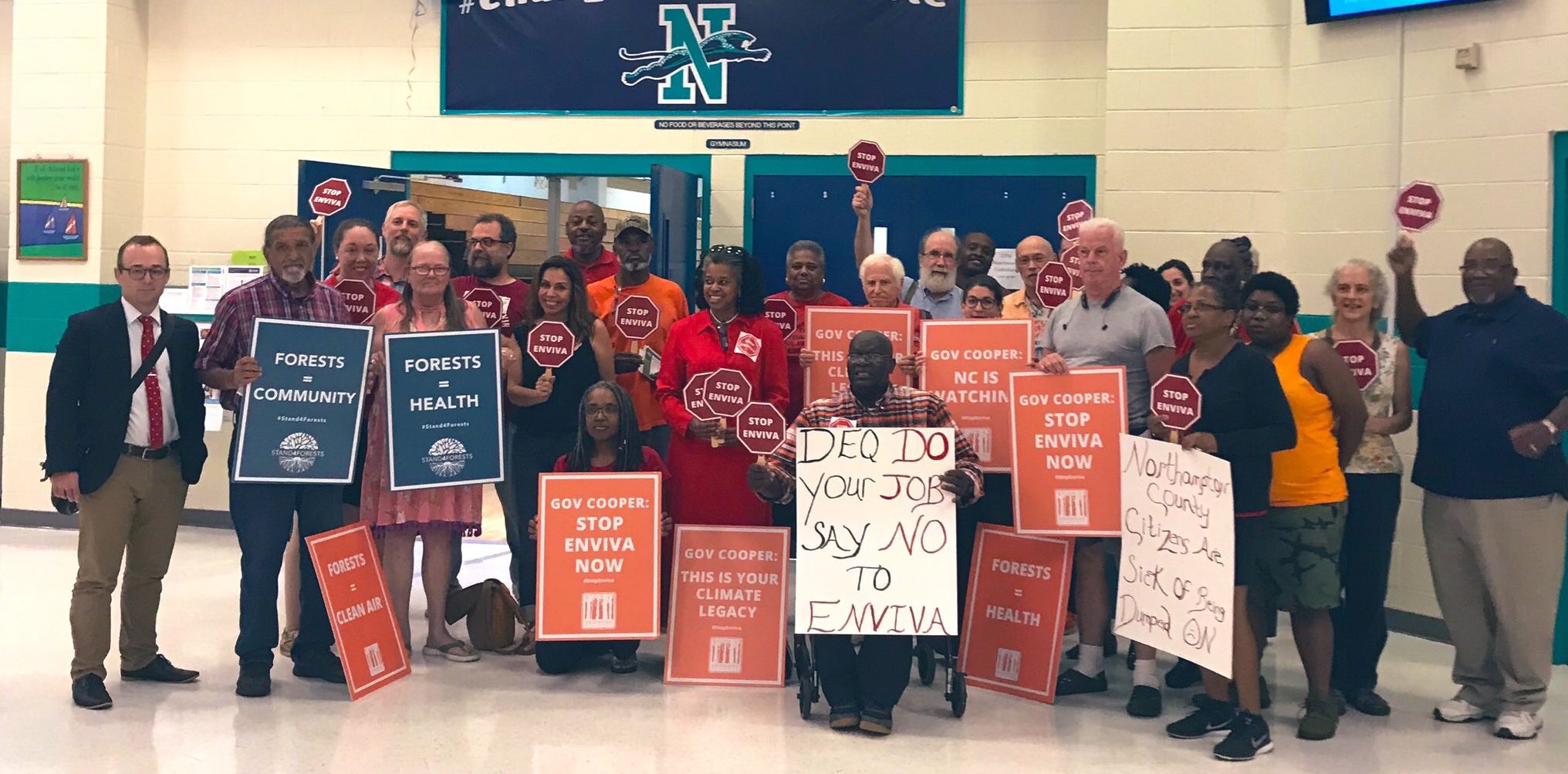
Our work appeared in 200 original stories that appeared in over 750 outlets and reached almost 1.5 billion people. It featured why we need to stop supporting false solutions to climate change and instead invest in regenerative solutions to protect our forests, communities, and biodiversity.
Dogwood Alliance has transformed the paper industry around the world. Our demands are always simple:
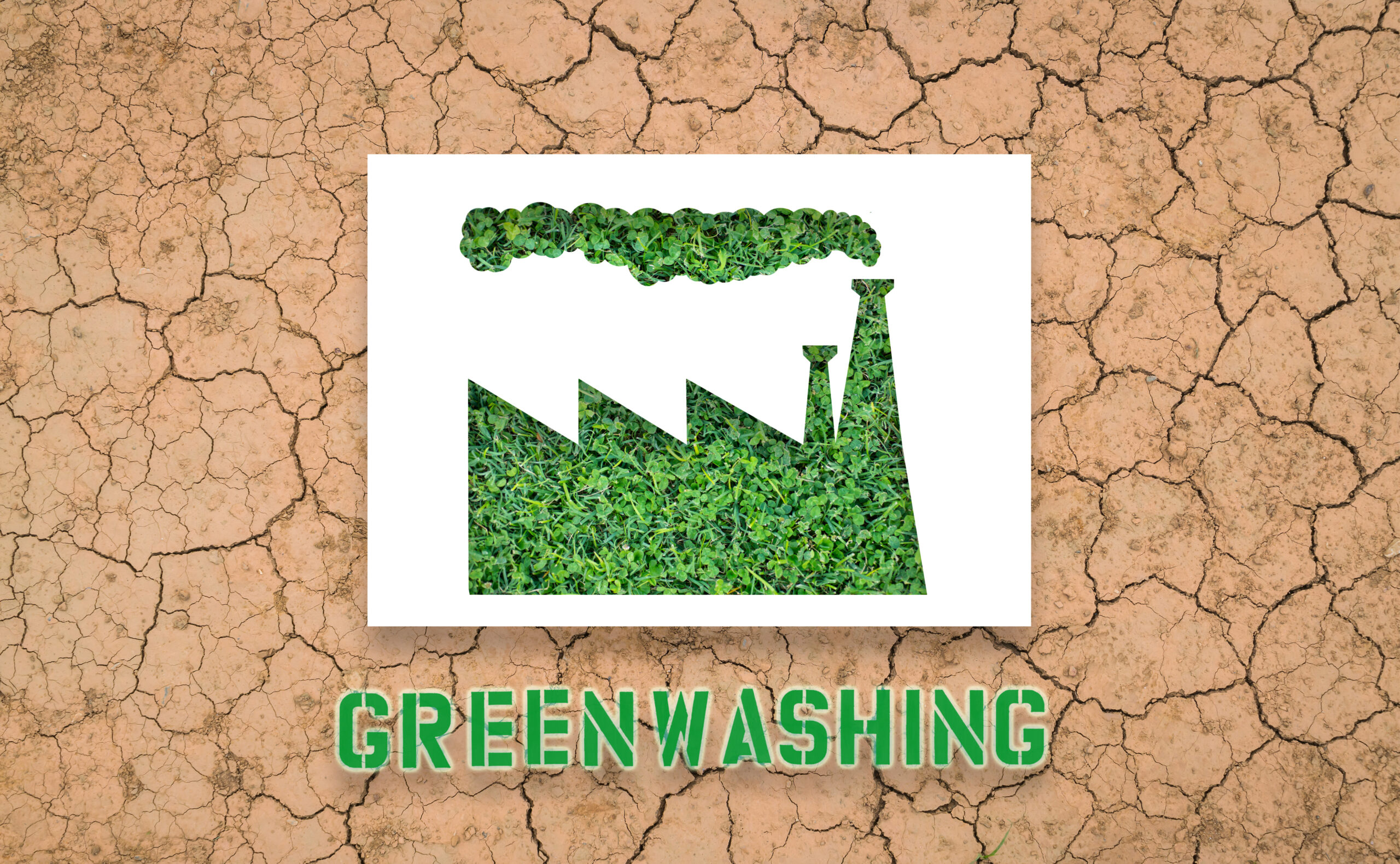
We’ve worked hard to expose forest industry greenwashing.
Companies use greenwashing practices to convince us that their products are an environmental benefit when they’re not. They use misleading information and industry buzzwords like “sustainability”, “clean”, “green product”, “renewable”, and “natural.”
This environmental marketing claim appeals to people who want to be responsible consumers. Companies like this will do anything to get our money except change their practices or improve their supply chain.
Sometimes they even buy fancy certifications to prove that their company is green. Forest certifications are a way that companies can “prove” that they did little or no harm with their forest operations while harvesting the wood. But the environmental impact of harvesting remains. In plain language, this is greenwashing: making consumers feel good about their choices without making any changes to how business is done.
The Sustainable Forestry Initiative (SFI) is an organization that offers empty certifications to greenwashers. For obeying the weak SFI forest management standard, manufacturers get to put the SFI symbol on their forest products.
They do this for a price. You’ll find the SFI seal on greenwashed products that hurt forests and communities. The SFI seal assures consumers that someone is regulating the company’s forest practices. But SFI covers up damaging practices, certifies forest destruction, and calls it green. Just because we call something “eco-friendly” doesn’t mean that it actually is.
The Sustainable Forestry Initiative supports forest management practices that are very damaging to our forests. The average clearcut approved by SFI is the size of 90 football fields. Does that seem environmentally friendly to you? The environmental impacts of SFI are a real threat to our natural resources.
They use other forest management practices that are damaging as well. SFI allows their forest managers to use dangerous pesticides. Those can affect biological diversity and even our drinking water. Does that seem eco-friendly to you?
SFI also allows its forest managers to log old-growth forests, endangered forests, AND turn natural forests into pine plantations. Is that environmentally friendly? Vague claims about SFI representing “green products” simply don’t hold up.
Updates to the SFI certification by its certification body haven’t improved SFI at all. Instead of creating stringent standards, they’ve continued to water down their regulations. Forest management under SFI is no better than forest management by big companies who don’t care about forests. SFI is really just slapping a green sheen on the same old dirty logging industry secret.
SFI is at it again with the latest updates to its forest products certification scheme. But they’re still giving green cover for:
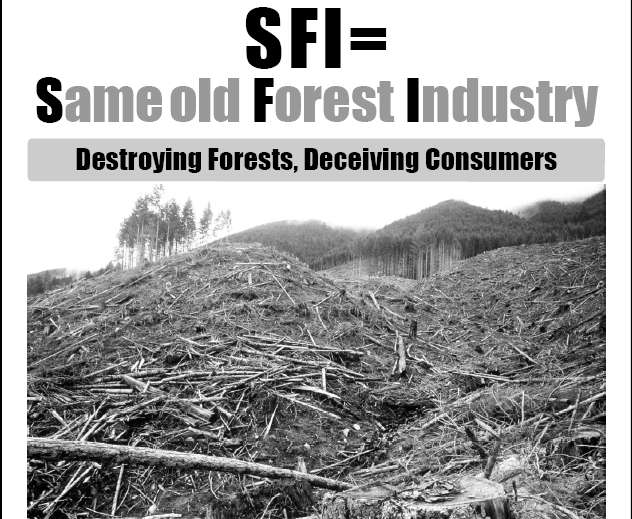
SFI has updated its standards for the certification of forests and forest products. Those updates go into effect in 2022. SFI claims to have made major improvements for climate and biodiversity in their press releases.
Our friends at the Sierra Club have done an in-depth analysis of the changes. The Sierra Club found that it’s still the same old forest industry greenwash. Their forest management practices have remained the same – it’s just more deceptive “green” marketing. Collectively, SFI practices are no better than those of oil companies.
SFI’s new standards are the same as the old ones. They allow business-as-usual industrial logging and then claim sustainability. They guarantee little and have so many loopholes and vague language. This lets the largest timber companies in North America call themselves green while they use poor forest management and hurt our forests.
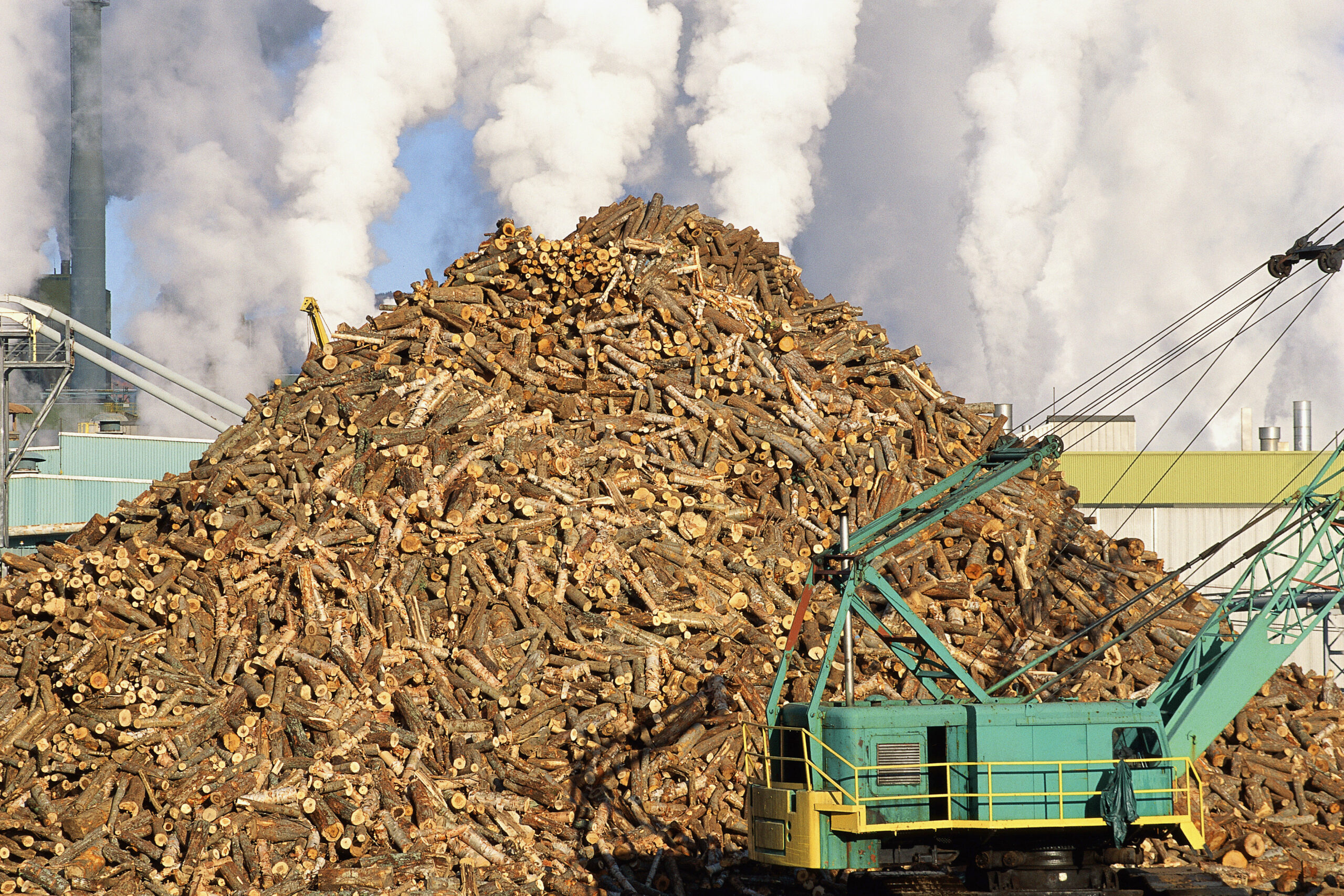
Despite the SFI “updates” and green marketing, the outcome is the same: weak instead of stringent standards that don’t reflect the public’s environmental and social values. SFI remains a labeling system whose central pillar is greenwashing.
As you purchase forest market products like paper, cardboard, and wood, take steps to avoid greenwashing. Look for post consumer recycled content and only buy what you need. Taking steps like these can protect future generations from the impacts of poor forest management and climate change.
Do you know the story of Adel, Georgia? Do you know about their fight to comment on even more corporate polluters coming to their town? Well, Adel is still fighting for Georgia forests and communities. The GA Environmental Protection Division (EPD) refuses to provide a comment period.
Dogwood and its allies have been fighting this battle in Adel for more than a year now. We’ve had some incredible successes. But it would be a stunning blow if the GA EPD approves the permit for another plant in South Georgia.
Spectrum Energy wants to build a bigger plant near the Renewable Biomass Group facility we’ve fought against. Enviva is the world’s largest exporter of pellets. They recently purchased the wood pellet facility in nearby Waycross. Enviva wants to expand capacity by 500,000 metric tons per year. That’s three massive forest-eating facilities in the same South Georgia area. Georgia forests will become 4,153,000 metric tons of pellets. That’s 99,672 acres each year. That’s more than 200 football fields per day. All destined to burn in Europe where the CO2 emissions are not counted. If we leave it up to big business and politicians, there won’t be a tree left standing in South Georgia.
It’s clear why the Southeastern US has the shameful title: Most Heavily Disturbed Forest Landscape in the World.
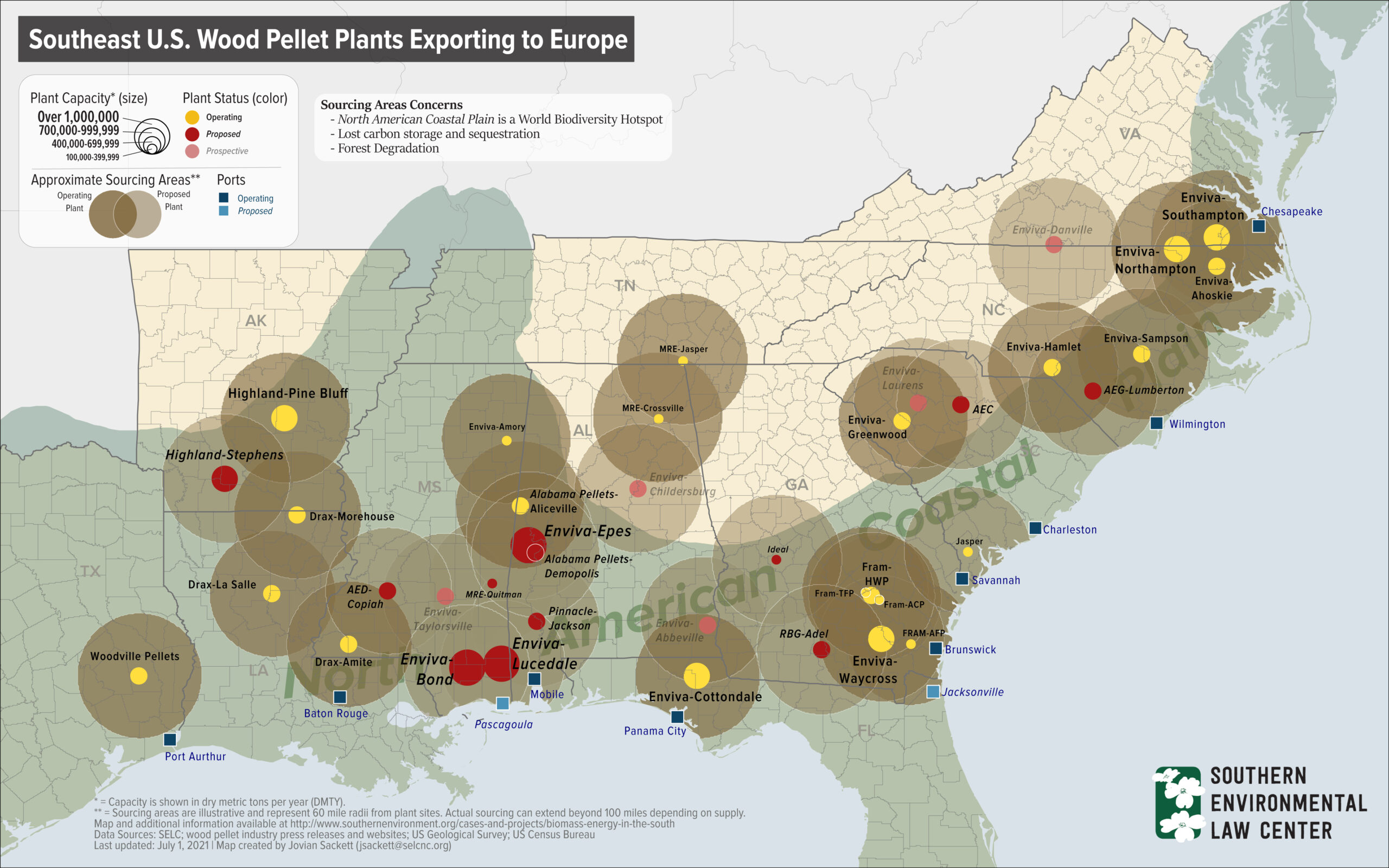
Southern wood pellet facilities exporting to Europe produce 100,000+ metric tons of pellets/year.
The science is conclusive: turning forests into pellets to burn for energy is BAD for the planet. Why? Here’s what a pellet plant brings to town:
That’s the production of the pellets before they’re shipped across the ocean and burned in Europe.
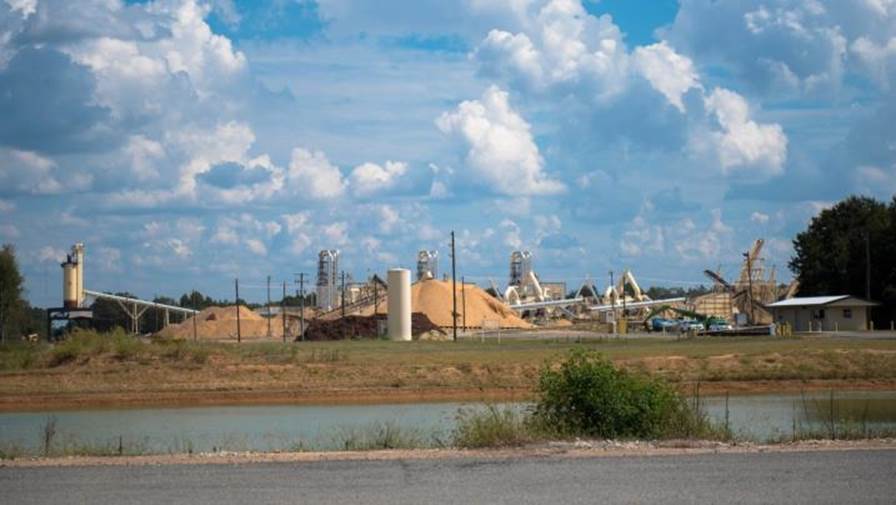
Wood pellet production facility in Hazelhurst, Georgia
Greedy corporations target low wealth communities of color for their dirty plants that no one else wants nearby. In Georgia, five of the eight proposed or existing facilities are in environmental justice communities.
All this at a time when the planet needs its forests more than ever.
In 2021, many national outlets questioned biomass like: CNN, The New York Times, The New Yorker, the Daily Mail, Politico, and Huffpost. But they only report the news. It’s our job to act on it.
How do we store carbon, protect biodiversity, and increase resilience to fires, droughts, floods, and disease? We protect and preserve Georgia forests. We push back against an industry responsible for ravaging the world’s forests.
Thanks to those who’ve fought for Adel citizens’ right to a healthy home.
Watch this Georgia Conservation Voters trailer. See the “good trouble” the Concerned Citizens of Cook County (Adel’s warriors for justice) are stirring up.
Follow our page to stay in the loop as we square off against Big Bad Biomass.

An increasing demand for wood pellets from some European countries is accelerating the expansion of wood pellet industries in the US South. In the last year, the United States exported more than seven million tons of wood pellets, and 99% of those wood pellets came from the US South. As a result, the number of fires and other dangerous incidents related to the biomass industry has increased more or less proportionally to the number of wood pellet installations.
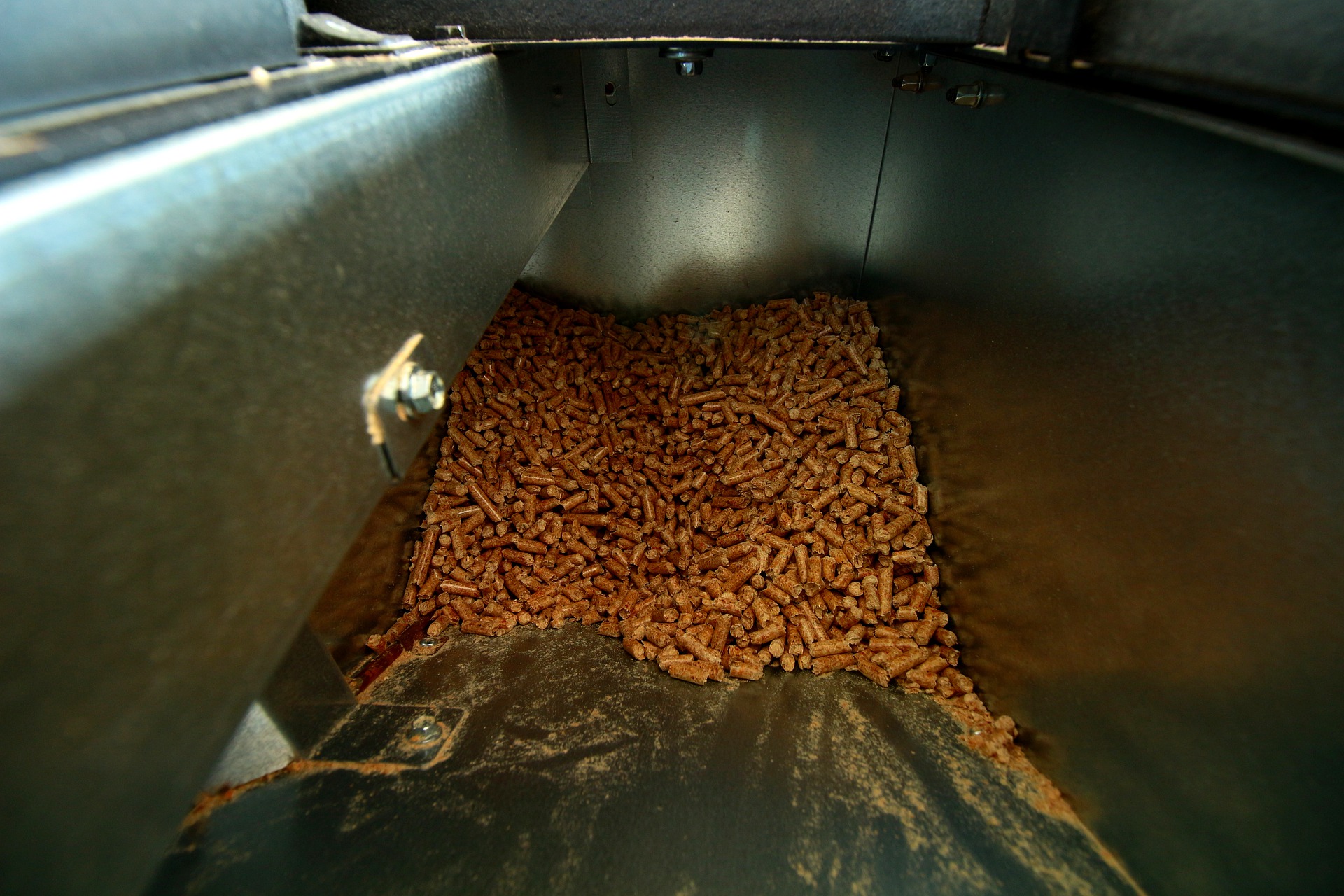
There are two types of accidents that can occur at wood pellet facilities: dust explosions and spontaneous combustions.
Dust explosions are caused by the release of fine wood dust during production or transportation. These explosions are followed by fires and smoke. Dust can linger during wood pellet production operations and cause these explosions if there’s an ignition source.
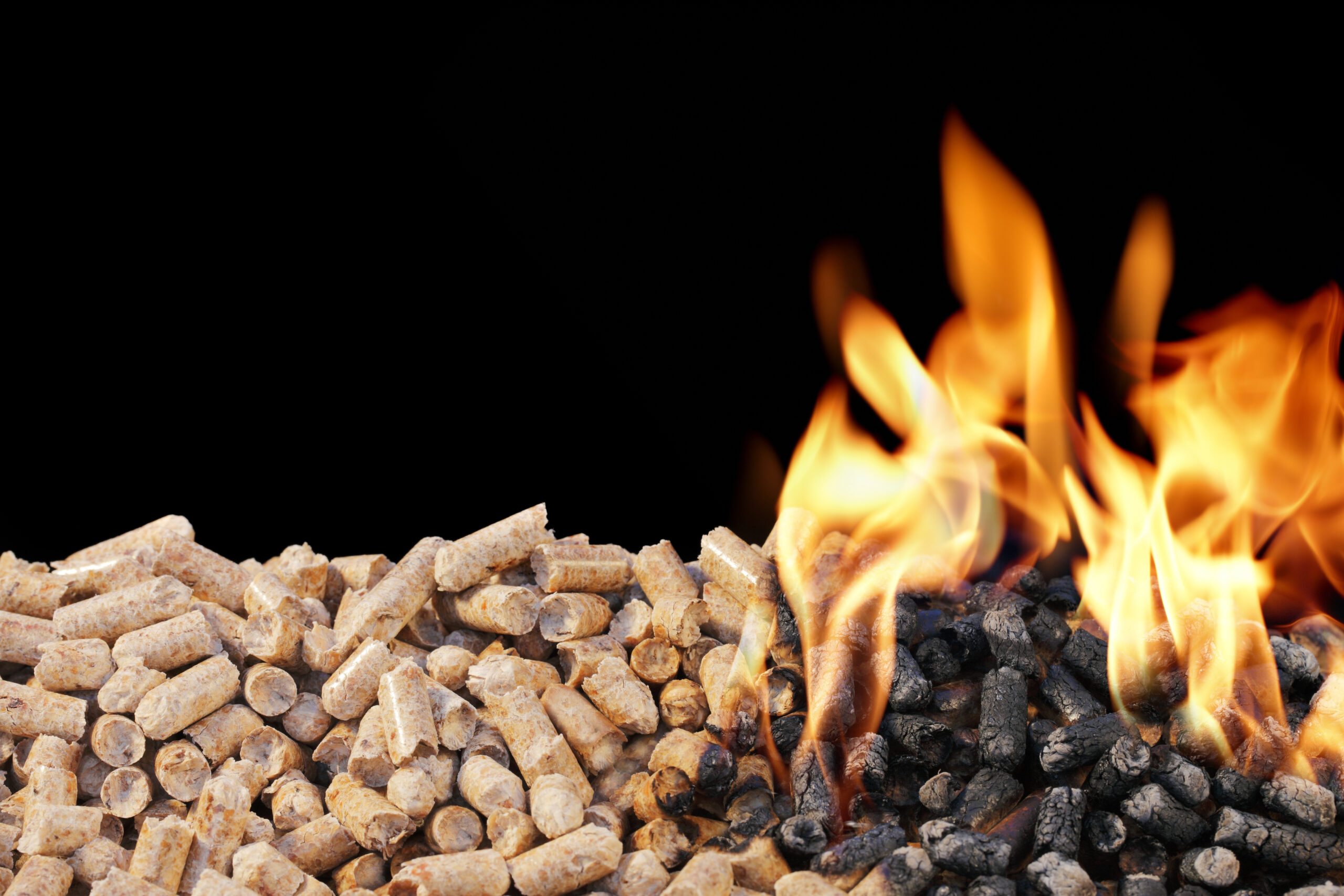
Spontaneous combustion, on the other hand, happens during storage. At higher temperatures wood starts to break down and become charcoal. If during this process the charcoal is exposed to the open air, it can cause a fire. This is very similar to what happens when you use charcoal to make a barbecue.
The shape of wood pellets makes them inherently dangerous. They have a tendency to self-heat because when piled together wood pellets release heating gases. At the center of a pile, the temperature can go as high as 195 degrees Fahrenheit. The speed that these heating gases are produced has not been well studied yet. This means that it’s still not possible to predict the temperature of a pellet pile.
There are three factors that impact the self-heating capacity.
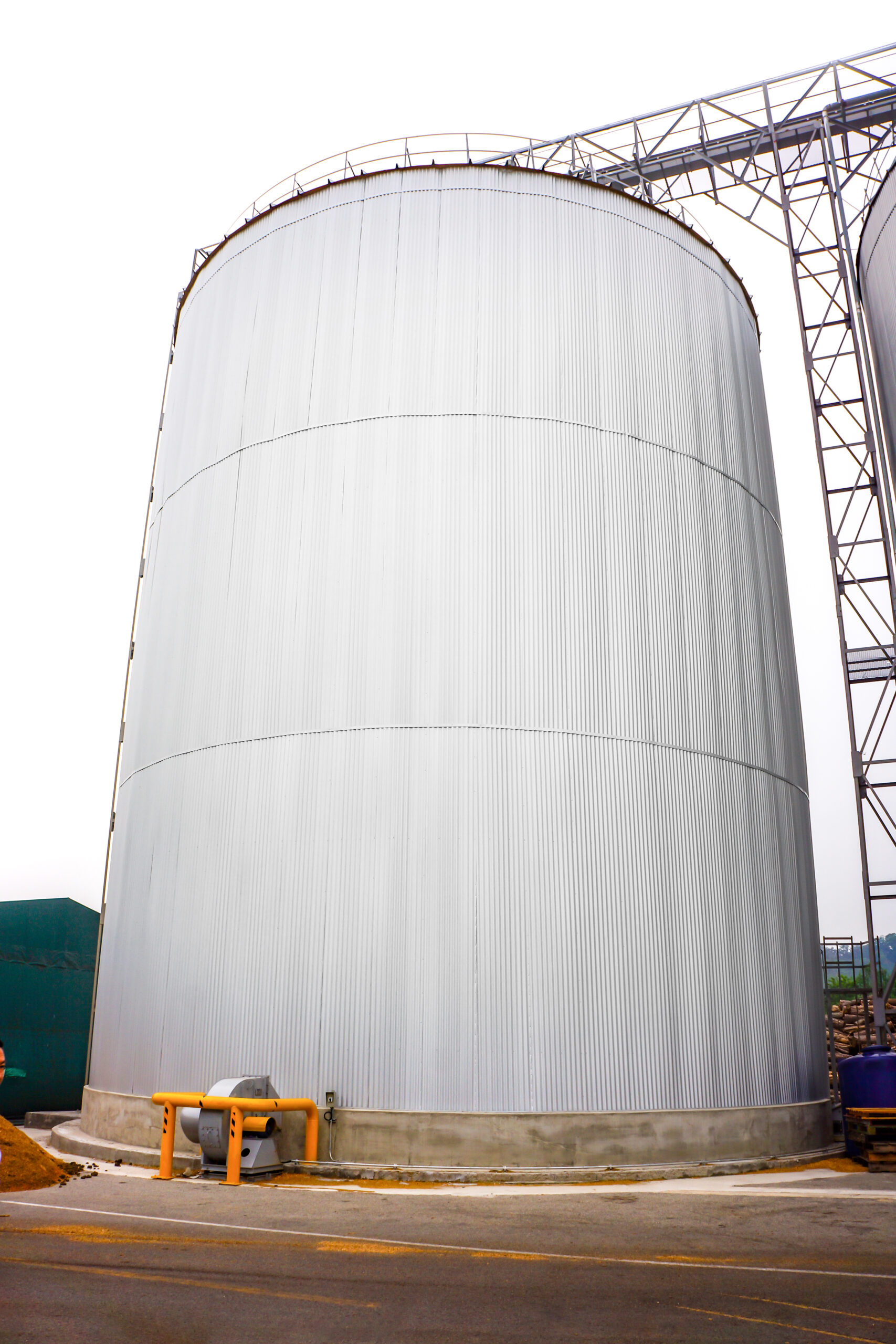
Once these pellet factories produce the wood pellets, they need to transport them overseas to Europe.
Before shipping the pellets, they’re stored in large silos. A typical silo is 49 ft in diameter and 65 ft in height. They can hold 2,500 to 3,500 tonnes of pellets for up to ten weeks.
These pellets are then transported in big vessels across the ocean. These vessels can hold up to 10,000 tonnes. The storage time in the silos and vessels may last several months.
When handling these pellets, they inevitably release fine dust. This dust can end up being a fuel source itself that causes dust explosions. Adding to that, long storage periods also increase the risk of self-heating and fires.
Detecting these fires early is difficult because we just don’t have the technology. The temperature of the external layer of a pellet can be very different from its core temperature. Also, fighting against these fires is complicated. Usually, water is ineffective because water causes the top layer of pellets to expand, creating an impenetrable crust. This crust prevents water from reaching the fire. The crust adds extra weight that causes the wood pellet silos to collapse.
There are many cases of serious accidents in wood pellet plants. Both small plant and massive storing areas, such as the ones installed near ports, are sites of serious accidents. There is always a risk of fire and/or explosion. This is due to the concentration of dust in suspension in the storage silos and the difficulty of detecting a fire early.
The Environmental Integrity Project made a report that found at least 8 of the 15 largest US wood pellet facilities have had fires or explosions since 2014. These incidents happened in 6 Enviva facilities located along the US South, including Enviva Cottondale (FL), Enviva Greenwood (SC), Enviva Ahoskie (NC), Enviva Sampson (NC), Enviva Northampton (NC), Enviva Southampton, and at its port facility in Virginia.
Since 2001, 52 fires, explosions, or both have been identified. The map below locates these incidents across the United States.
Notably these incidents are not only happening in the United States. They’re also occurring internationally with tragic outcomes. Three workers died in 2010 when a wood pellet facility in North Rhine-Westphalia, Germany exploded. Other accidents happened in European cities in Denmark and the Netherlands, among other places.
On April 30, 2021, eight county fire departments responded to battle a fire at the Enviva Sampson facility. The fire sent thick clouds of smoke across Interstate 40. The fire, whipped by strong winds, spread to nearby woods. A pile of raw wood at a facility in Faison caught fire. In a statement, the company said it was investigating the cause. No injuries were reported.
On March 8 2020, six fire departments arrived at the plant off South Carolina Highway 246. The fire started in one of the plant’s silos used for storage. Luckily no one was hurt.
Lower Lake Fire Department Chief Jerry Roberts said when firefighters arrived on the scene they found a silo had caught fire, temporarily shutting down the plant’s assembly line. The fire sparked at about 4:30am Sunday. Four different fire departments responded to the call.
In February 2017, a storage silo caught on fire in a wood pellet facility located in Port Arthur. This particular fire lasted for two months. The silo ultimately collapsed, and smoke from the smoldering pellets caused dozens of Port Arthur residents to seek medical attention. The city of Port Arthur and residents have filed many lawsuits over the fire, and a court has ordered German Pellets to empty its silos and install proper fire-fighting technology. During the process of removing the pellets, a worker was killed when a pile of wood pellets collapsed.
Wood pellet production is a dangerous task that European demand primarily drives. You can help put a stop to these accidents and fires by working with us to stop the injustices of the wood pellet industry. Take action to stop these facilities today.
La creciente demanda de pellets de madera de algunos países europeos está acelerando la expansión de las industrias de pellets de madera en el sur de los Estados Unidos En el último año, Estados Unidos exportó más de siete millones de toneladas de pellets de madera, y el 99% de esos pellets provinieron del sur de los Estados Unidos. Como resultado, el número de incidentes relacionados con la industria de la biomasa ha aumentado más o menos proporcionalmente al número de instalaciones de pellets de madera.
Hay dos tipos de accidentes que pueden ocurrir: explosiones de polvo y combustiones espontáneas.
Las explosiones de polvo son causadas por la liberación de polvo fino de madera durante la producción o el transporte. Estas explosiones son seguidas por incendios y humo. Este polvo puede permanecer durante las operaciones de producción de los pellets de madera y causar explosiones si hay una fuente de ignición.
La combustión espontánea, por otro lado, ocurre durante el almacenamiento. A temperaturas más altas, la madera comienza a descomponerse y convertirse en carbón vegetal. Si durante este proceso el carbón se expone al aire libre, puede provocar un incendio. Esto es muy similar a lo que sucede cuando usas carbón para hacer una parrillada.
La forma de los pellets de madera los hace intrínsecamente peligrosos. Tienen una tendencia a auto calentarse porque cuando se apilan los pellets de madera liberan gases de calentamiento. En el centro de una pila, la temperatura puede llegar a los 195 grados Fahrenheit. La velocidad a la que se producen estos gases de calentamiento aún no ha sido bien estudiada. Esto significa que todavía no es posible predecir la temperatura de una pila de pellets.
Hay tres factores que afectan la capacidad de autocalentamiento.
Una vez que estas fábricas producen los pellets de madera necesitan transportarlos a Europa. Antes de enviar los pellets, estos se almacenan en grandes silos. Un silo normalmente tiene 49 pies de diámetro y 65 pies de altura. Pueden contener de 2500 a 3500 toneladas de pellets hasta por diez semanas.
Luego estos pellets se transportan en grandes buques a través del océano. Estos buques pueden contener hasta diez mil toneladas. El tiempo de almacenamiento en los silos y los buques puede durar varios meses.
Al manipular estos pellets, inevitablemente liberan polvo fino. Este polvo puede terminar siendo una fuente de combustible provocando explosiones de polvo. Además, los prolongados períodos de almacenamiento también aumentan el riesgo de autocalentamiento e incendios.
Detectar estos incendios anticipadamente es difícil porque simplemente no tenemos la tecnología necesaria. La temperatura de la capa externa de un pellet puede ser muy diferente a su temperatura en el núcleo. Además, luchar contra estos incendios es complicado. Por lo general, el agua es ineficaz ya que el agua hace que la capa superior de los pellets se expanda, creando una corteza impenetrable. Esta corteza evita que el agua llegue al fuego. La corteza añade un peso extra provocando el colapso de los silos que contienen los pellets de madera.
Hay muchos casos de accidentes graves en plantas de pellets de madera. Tanto las plantas pequeñas como las áreas de almacenamiento masivo, como las instaladas cerca a los puertos, son lugares de accidentes graves. Siempre existe el riesgo de incendio y/o explosión. Esto se debe a la concentración de polvo en suspensión en los silos de almacenamiento y a la dificultad de detectar un incendio anticipadamente.
El Environmental Integrity Project hizo un informe y encontró que al menos 8 de las 15 instalaciones de pellets de madera más grandes de Estados Unidos han sufrido incendios o explosiones desde 2014. Estos incidentes ocurrieron en 6 instalaciones de Enviva ubicadas a lo largo del sur de los Estados Unidos, incluidas Enviva Cottondale (FL), Enviva. Greenwood (SC), Enviva Ahoskie (NC), Enviva Sampson (NC), Enviva Northampton (NC), Enviva Southampton y en su instalación portuaria (VA).
Desde 2001, se han identificado 52 incendios, explosiones o ambos. El mapa de abajo ubica estos incidentes en los Estados Unidos.
También es importante mencionar que estos incidentes no solo están ocurriendo en Estados Unidos. También están ocurriendo a nivel internacional con resultados trágicos. En 2010, tres trabajadores murieron cuando explotó una instalación de pellets de madera en Renania del Norte-Westfalia, Alemania. Otros accidentes ocurrieron en ciudades europeas en Dinamarca y Holanda, entre otros lugares.
El 30 de abril de 2021, ocho unidades de bomberos del condado respondieron para combatir un incendio en las instalaciones de Enviva Sampson. El fuego envió espesas nubes de humo a través de la Interestatal 40. El fuego, azotado por fuertes vientos, se extendió a los bosques cercanos. Un montón de madera en bruto en una instalación en Faison se incendió. En un comunicado, la compañía dijo que estaba investigando la causa. No se reportaron heridos.
El 8 de marzo de 2020, seis unidades de bomberos llegaron a la planta frente a la autopista 246 de Carolina del Sur. El incendio se inició en uno de los silos de la planta que se utilizan para almacenamiento. Afortunadamente nadie salió herido.
El jefe del Departamento de Bomberos de Lower Lake, Jerry Roberts, dijo que cuando los bomberos llegaron a la escena encontraron que un silo se había incendiado, cerrando temporalmente la línea de ensamblaje de la planta. El incendio se inició alrededor de las 4:30 a.m. del domingo.
En febrero de 2017, un silo de almacenamiento se incendió en una instalación de pellets de madera ubicada en Port Arthur. El fuego duró dos meses. El silo finalmente se derrumbó y el humo de los pellets hizo que decenas de residentes de Port Arthur buscaran atención médica. La ciudad de Port Arthur y los residentes han presentado muchas demandas por el incendio, y un tribunal ha ordenado a German Pellets vaciar sus silos e instalar la tecnología adecuada contra incendios. Durante el proceso de extracción de los pellets, un trabajador murió cuando se derrumbó una pila de pellets de madera.
La producción de pellets de madera es una tarea peligrosa, impulsada principalmente por la demanda europea. Tú puedes ayudar a detener estos accidentes e incendios trabajando con nosotros en las injusticias de la industria de pellets de madera. Toma acciones para detener estas instalaciones hoy.
Guest Post By Amber Skinner
Environmental justice is “the fair treatment and meaningful involvement of all people regardless of race, color, national origin, and income” in all environmental decisions and policies (EPA, 2020). Unfortunately, environmental justice is rarely achieved. Instead, many communities of color are subjected to environmental racism.
According to a 2007 study, it’s five times more likely for a Black child to have lead poisoning from proximity to a waste site than a white child. Even wealthy Black families are more likely to live next to a waste site than low income white families. Black Americans are exposed to 56% more pollution than they produce. Latinx Americans are exposed to 63% more pollution than they produce, and white Americans are exposed to 17% less pollution than they produce. Native Americans are also suffering constant environmental injustices.
People of Color are significantly more likely to be exposed to health risks due to increased pollution and other environmental justice issues. As a result, Black, Indigenous, and People of Color (BIPOC) have elevated rates of cancer, asthma, and other ailments. During the coronavirus pandemic, BIPOC were also more likely to become infected with COVID-19, thanks to environmental racism. The dirtier the air, the more likely a coronavirus infection, and the dirtiest air is found in BIPOC communities.
Like the rest of the country, environmental racism plagues the Southeast United States. Here are a few of the most prominent cases of environmental racism in the Southeast.
Dickson, Tennessee, just West of Nashville, has a population that is 95.5% white and only 4.5% Black. However, the waste management facility is located next to a mainly Black community – Eno Road. Members of the Holt family, a Black family living on Eno Road in Dickson, drank contaminated water for at least 12 years. The Environmental Protection Agency (EPA) was aware of the presence of trichloroethylene (TCE), a carcinogen, in the family’s well water as early as 1988, but they did not tell the family about the contamination until 2000. Several members of the family became extremely ill, and one, Harry Holt, died from cancer shortly after the family learned about the TCE.
Burlington Industries, a clothing organization, released PCBs, a dangerous toxin, into the environment in Cheraw, South Carolina (Southeast of Charlotte, NC) up until 1970. The town, 58% Black and made up of roughly 5,500 residents, was not informed of the contamination until 2016, almost 50 years later. The industry’s waste made its way into the Pee Dee River and nearby creeks, which Cheraw children frequently play in. This may have caused severe health problems in the town. In 2018, Hurricane Florence hit, and the river and creeks flooded, spreading the chemicals farther throughout the environment. Residents then began to really put pressure on the government to explain the silence.
When the BP Oil Plant had its massive spill in 2010, communities all along the Gulf Coast suffered severe impacts. This included the local Indigenous communities, who the federal government has long ignored. The BP oil spill destroyed the Gulf Coast environment, and because much of Indigenous culture includes a deep connection to the land, Indigenous communities suffered disproportionately. Hurricanes and other natural disasters frequently hit the Gulf Coast, but Indigenous neighborhoods rarely receive enough federal aid. In general, Indigenous residents also face racism within their communities: their water and food are often contaminated, and their children are segregated in schools.
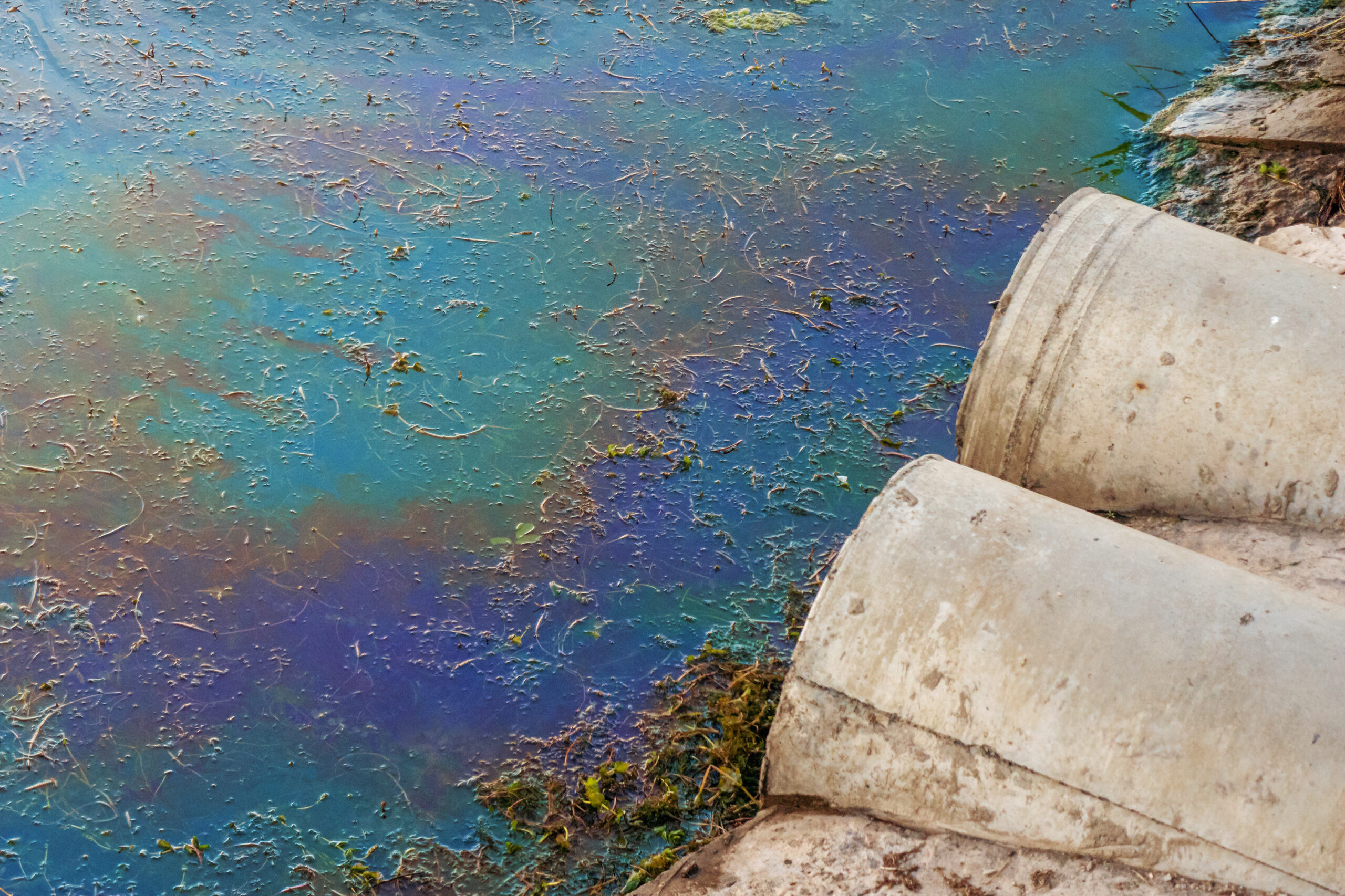
In the space between Baton Rouge and New Orleans, Louisiana lies Cancer Alley, an area named for its high number of petroleum factories. The air quality in Cancer Alley has been a problem for decades, and it’s only getting worse, even as air quality around the country improves. The residents, who are mostly under-resourced and Black, are exposed to significantly more carcinogens than other locations. In order to persuade residents to allow the construction of the plants, petroleum corporations promised jobs to the people in Cancer Alley. However, the corporations only employ a small percentage of those residents because they bring in their own workers from other locations.
In 2008, over a billion gallons of coal ash (a very dangerous pollutant that coal-burning factories produce) contaminated the Emory River in Kingston, Tennessee. The population of Kingston is over 90% white. In order to avoid poisoning residents in Kingston, the Tennessee Valley Authority received approval from the EPA to transport the coal ash waste to Uniontown, Alabama, a small, rural community West of Montgomery. 90% of Uniontown’s residents are Black. Once they moved the coal ash to Uniontown, the EPA labeled it as non-hazardous, even though it was classified as hazardous in Kingston. In addition to being subjected to the numerous health problems that are associated with coal ash (cancer, leukemia, etc.), residents are also forced to watch as the landfill creeps closer and closer to their only cemetery. Like the other locations with environmental justice issues, Uniontown citizens protested the landfill, but their cries have been dismissed. The waste is still in Uniontown today.
In predominantly BIPOC communities in the Everglades, like Pahokee, “black snow” plagues the area. Burning nearby sugar fields creates the black snow. Sugar companies burn their fields before each harvest to reduce transportation costs. It’s a legal practice, but ash and other debris from the fires fill the air in nearby communities, making it difficult to breathe. This sort of “respiratory distress” can lead to respiratory illnesses, like asthma and lung cancer. Black snow also makes residents more susceptible to the coronavirus.
Houston, Texas is yet another example of environmental exploitation of BIPOC communities. The Harrisburg/Manchester neighborhood, just Southeast of Houston city center, is overwhelmingly BIPOC (90% Latinx, 8% Black), and it’s located near 21 industrial waste facilities. This doesn’t even include industrial plants that emit toxic chemicals into the air. The health consequences are horrendous. Harrisburg/Manchester residents are 22% more likely to have cancer, and Black children are two times more likely than their white counterparts to have asthma. In addition, there are frequent chemical accidents in Houston (every six weeks), endangering residents even more.

However, despite these many incidents, BIPOC communities are fighting back. In the 1980’s, environmental racism protests kicked off in Warren County, North Carolina, just northeast of Raleigh. Warren County is a rural, small, and mostly Black county, and in the early 80s, North Carolina chose it to host a hazardous waste site for PCB, a toxic chemical. The state selected Warren County because they thought the county would be easily exploitable because its residents were Black and under-resourced. Instead of sitting back and simply taking in the dangerous waste, residents fought back and protested, making waves across the country. The protests may not have ultimately changed the location of the waste site, but they did pave the way for other environmental justice communities to follow suit.
The first and most important task is to listen to and prioritize those living in environmental justice communities. The country has ignored the voices of BIPOC communities for far too often, when those voices are the ones we should be listening to the most. It’s also imperative that we educate others about the dangers of environmental racism. Not enough people are aware of this problem, and you can’t fight against an issue you don’t know exists. And finally, for those who can, donate, protest, and reach out to local government officials. Do whatever you can, physically, mentally, and otherwise, but do not stay silent. Use your voice to be a part of the change this world needs, until there is truly liberty and justice for all.

Amber Skinner is a rising junior at Duke University and an intern at Dogwood Alliance for the summer. She is working towards a Bachelor of Arts degree in Environmental Science and Policy with a special focus in environmental justice and education. Amber loves the outdoors, particularly hiking, and can be frequently found playing outside her home with her two kittens.
The Okefenokee Swamp is in trouble—again. Yes, we’ve seen this story before: unscrupulous, out-of-state corporate interests want to risk permanent harm to the swamp so they can make nonessential products.
Twin Pines Minerals wants to:
Consequences will include:
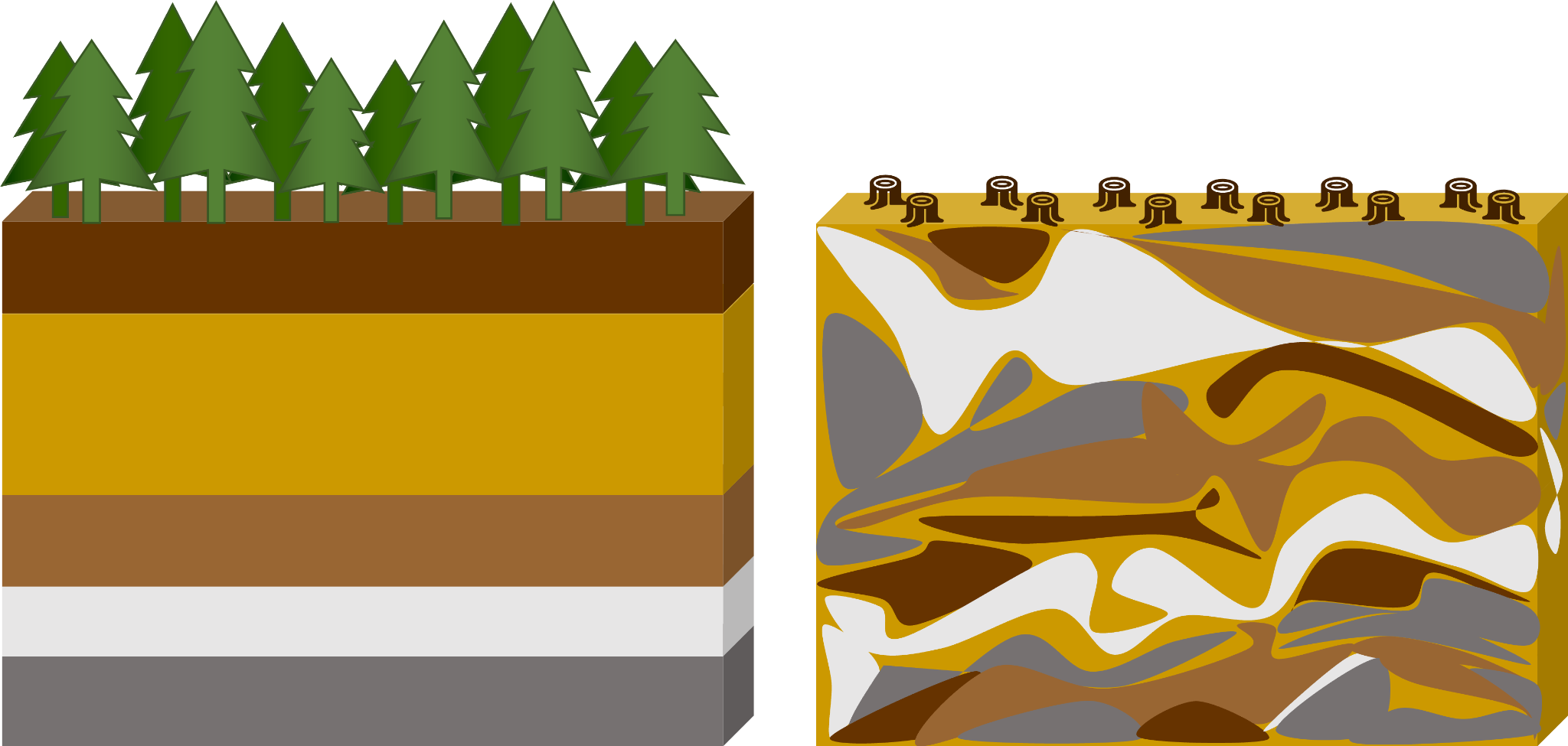
Trail ridge is currently a stratified land mass; it is made up of distinct layers (left). After removal of the titanium, the remaining material will be replaced in Trail Ridge, but in a mixture (right). This will affect the structural integrity of Trail Ridge.
This time around, tens of thousands of letters and comments have poured into the Georgia Environmental Protection Division from around the world in support of the Okefenokee Swamp. Hundreds of environmental organizations have thrown their resources behind this cause. But the protections for this area under federal law are murky, so it’s up to Georgians to protect one of our greatest treasures.
And, we’ve been ramping up the pressure on the Georgia Environmental Protection Division to deny Twin Pines’ permit to mine. But that’s not enough. We need to make certain this will not keep happening, so we’re urging legislation to ensure that the Okefenokee will be protected for all future generations. The cities of Homeland, Kingsland, St Marys, Valdosta, and Waycross have already passed local resolutions demanding Georgia officials do whatever it takes to protect the Okefenokee.
The Okefenokee is the largest blackwater swamp in North America, and one of the planet’s largest remaining intact freshwater ecosystems. It’s home to a reported 233 species of birds, 49 species of mammals, 64 species of reptiles, 37 species of amphibians, and 39 species of fish. It is also a key economic driver in both Georgia and northeast Florida, is visited by almost 400,000 people, and contributes more than $64 million to local economies every year!
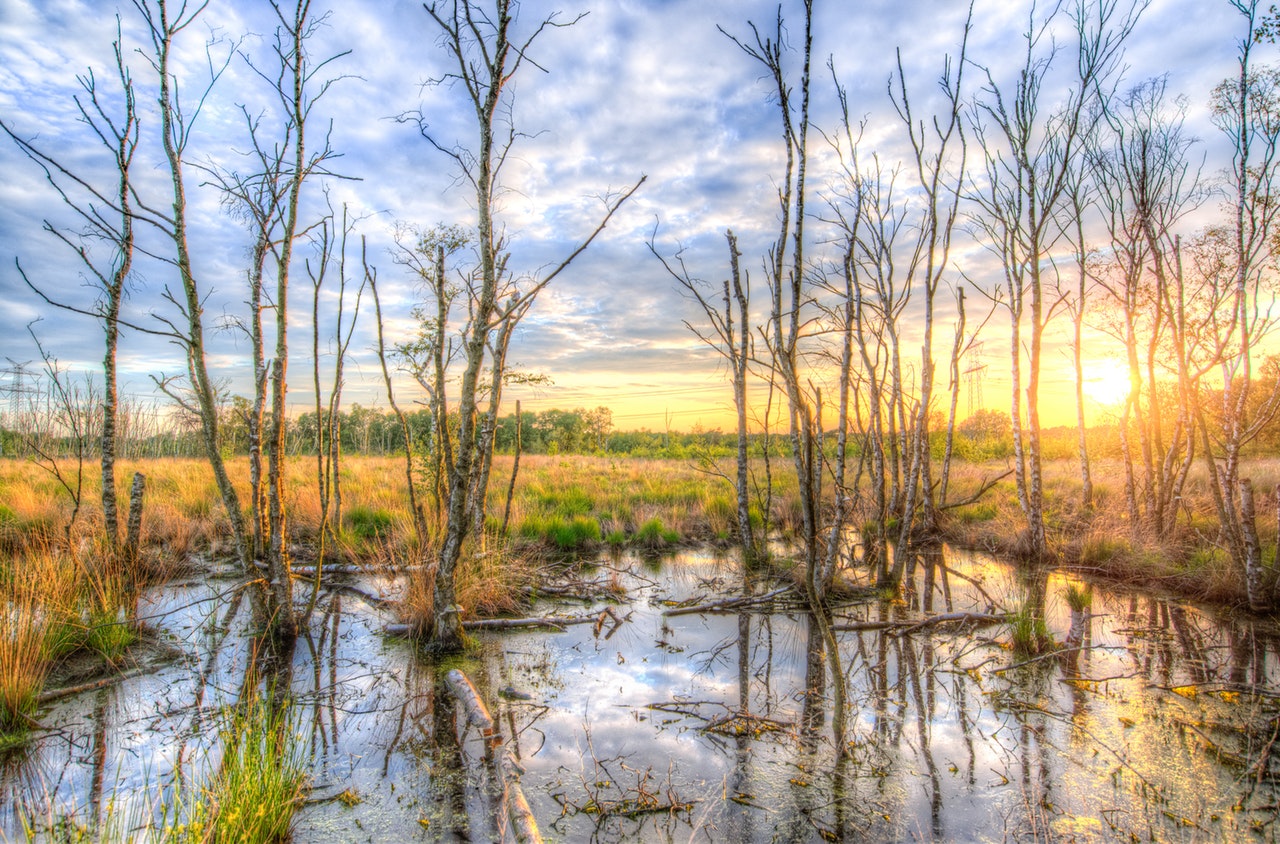
We need to put a law on the books that will.
Black, Indigenous, and People of Color (BIPOC) live, work, and play in some of America’s most polluted areas. This is not a coincidence. Extractive industries (like logging) operate in BIPOC communities because of cheap land and lax laws. Industries like logging use misleading tactics, promising jobs to communities while bringing along substantial air and water pollution.

Environmental justice is the concern that environmental harm disproportionately affects vulnerable communities. “Environmental justice” communities are typically defined on the basis of race and income. Companies target these areas because corporate decision-makers have learned that it is easier to establish polluting industries in low income BIPOC communities than in primarily white communities. BIPOC communities become linked with polluting industries and then become reliant on the increased tax base these industries provide. Regulatory agencies often do not acknowledge the cumulative impacts of polluting industries in communities of color.
Zoning boards and city councils often make decisions out of the public eye, leaving BIPOC communities out of the conversation until it is too late for them to mount an objection. Additionally, these communities do not have the means to hire technical and legal teams to oppose extractive industries. These communities may also lack access to information about the negative health effects of pollution and other environmental hazards. In the case of Latinx communities, important information is rarely available in Spanish. This makes it almost impossible for residents who only speak Spanish to get access to critical information to help decide what’s best for their community.
Disparities among BIPOC and white communities are only getting worse. A study found that the percentage of BIPOC communities living between 1 and 3 kilometers from hazardous industries in 1990 was 46.2%. In 2000 that number was 55.9%. All of these actions add up into a concept known as environmental racism.
Disadvantaged communities should not suffer the majority of negative side effects of pollution. On average, people of color in the US are also exposed to a 38% higher level of nitrogen dioxide than their white counterparts. Poor air quality can effect quality of life, health, and longevity. Living in a clean and healthful environment is a right, not a privilege. BIPOC communities deserve this right.
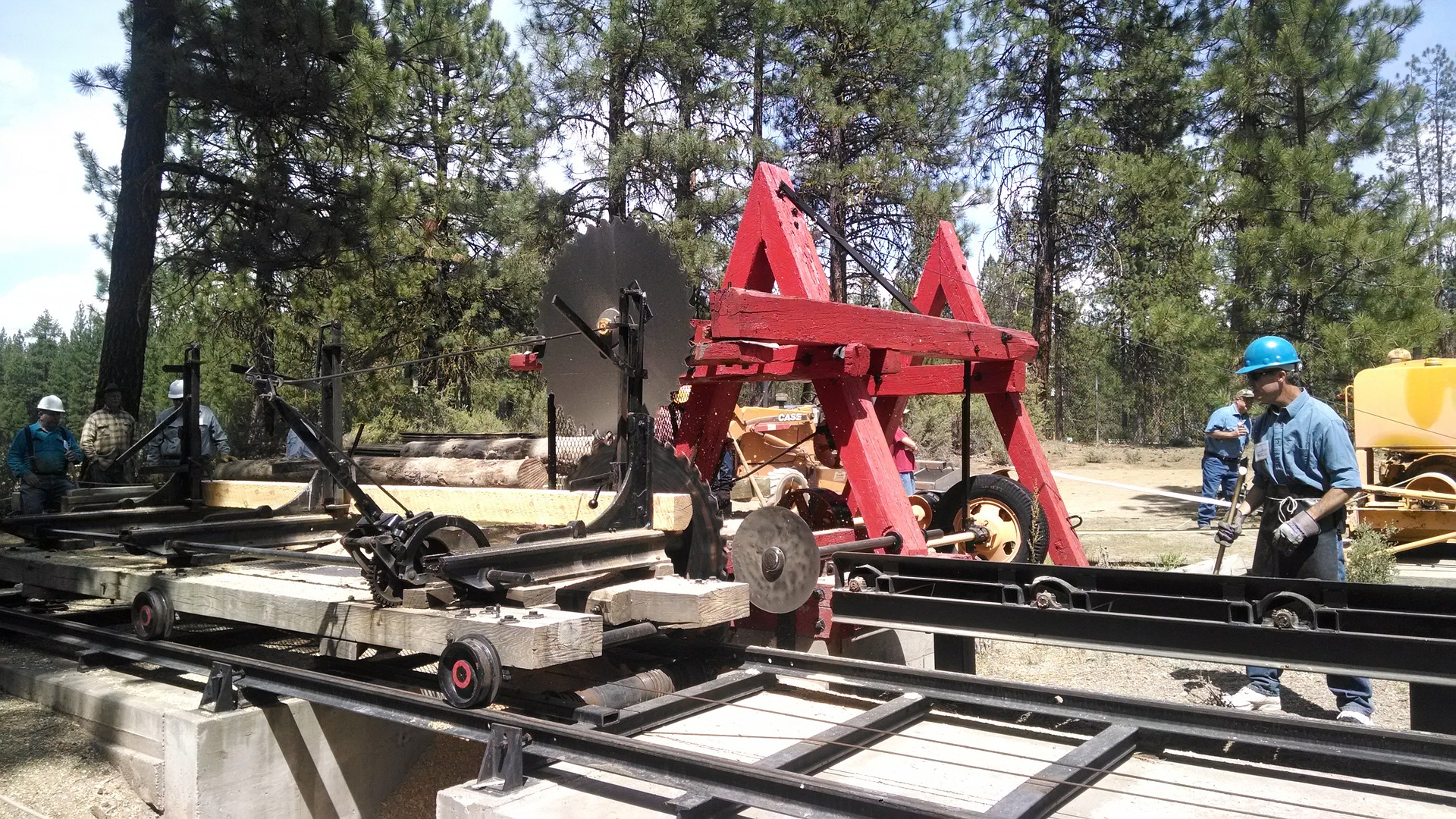
Large biomass industries, like Enviva, often build their facilities in BIPOC low income communities. Five counties in North Carolina that are home to wood pellet facilities are designated as low income areas. Environmental justice communities are twice as likely to suffer the burden of wood pellet facilities than other communities.
Logging operations have a significant impact on the environment and surrounding communities. Misguided logging is not only bad public policy but it can also degrade people’s health and quality of life.
Some of the sources of pollution from logging activities include:
Air pollution, such as nitrogen dioxide or sulphur dioxide are respiratory irritants. This air pollution comes from large trucks used to transport harvested trees. Some air pollution, like nitrogen dioxide, results in asthma and bronchitis. Studies find that children exposed to nitrogen dioxide can develop cognitive delays. It also affects expecting mothers. It increases their child’s risk of early birth and low birth weight. These conditions are a risk for impaired brain development later in life.
Fertilizers and pesticides are often used to enhance tree growth. Helicopters drop these chemicals on forests. This spread can lead to contamination of surface waters. Fertilizers promote surplus growth of aquatic algae and plants. Oxygen in the water is then depleted when large amounts of plant and algae exist in the stream. The lack of oxygen in the water hurts fish and aquatic invertebrates like trout or salmon. Pesticides also degrade the quality of drinking water for communities that are downstream.
Deforestation includes several stages which can affect the environment and human health. Some of those sources are:
Air pollutants. One study found industry plants that process timber discharge harmful gases. These gases include carbon dioxide, methane, sulphur dioxide, and nitrogen dioxide. Some of the consequences from air pollutants are listed above.
Toxic chemicals derived from timber production can come from pulp mills. Mill waste contains benzenes, which are toxic to aquatic life. The harmful effects on humans include tissue damage, reproductive, and developmental problems. One study found that high concentrations of this chemical may cause liver cancer. Another toxic chemical is chloroform used to bleach kraft pulp, a possible carcinogen.
Hazardous chemicals are also derived from adhesives and wood coatings. Adhesives contain aliphatic amines and cycloaliphatic amines. Cycloaliphatic amines might cause irritation or damage to the skin, eyes, lungs, and liver. Wood coatings have the potential to emit volatile organic compounds (VOC). VOCs, such as those containing chlorofluorocarbon, are considered a major environmental problem and contribute to air pollution. They also cause health complications.
Particulate matter suspended in the air is a great health concern. One study found that Latinx and African Americans inhale 40% more particulate matter than whites do. This particulate matter comes from cars, trucks, and buses, as well as dust from manufacturing facilities.
Tiny particles, mostly known as PM 2.5, from burning gas and diesel make up particulate matter pollution. The particles are small and can penetrate deep into the lungs and bloodstream. These particles accumulate over the years. Exposure to particulate matter is linked to heart and lung problems and exacerbates asthma, lung cancer, and premature death.
Besides vehicle emissions, other industries located close to BIPOC neighborhoods are heavy polluters. These industries include shipyards, factories, warehouse delivery trucks, aviation, and agriculture.
Polluting BIPOC communities needs to end. Here is a list of actions to help you get involved.
Las personas negras, indígenas y de color (BIPOC) viven, trabajan y juegan en algunas de las áreas más contaminadas de Estados Unidos. Esto no es una coincidencia. Las industrias extractivas como la tala operan en las comunidades BIPOC debido a que en estas comunidades la tierra es barata y las leyes son permisivas. Industrias como la tala utilizan tácticas engañosas, prometiendo trabajos a las comunidades, mientras provocan una abundante contaminación del aire y el agua.
La justicia ambiental es la preocupación de que el daño ambiental afecta de manera desproporcionada a las comunidades vulnerables. Estas comunidades se definen típicamente sobre la base de la raza y los ingresos. Las empresas se enfocan en estas áreas porque los responsables corporativos han aprendido que es más fácil establecer industrias contaminantes en comunidades BIPOC de bajos ingresos que en comunidades principalmente blancas. Las comunidades BIPOC se vinculan con industrias contaminantes y luego se vuelven dependientes del aumento de la base impositiva que proporcionan estas industrias. Las agencias reguladoras a menudo no reconocen los impactos acumulativos de las industrias contaminantes en las comunidades de color.
Las juntas de zonificación y las municipalidades a menudo toman decisiones fuera de la vista del público, esto deja a las comunidades BIPOC desinformadas hasta que es demasiado tarde para presentar una objeción. Además, estas comunidades muchas veces no cuentan con los medios para contratar equipos técnicos y legales para oponerse a las industrias extractivas. Estas comunidades también pueden carecer de acceso a información sobre los efectos negativos de la contaminación en la salud. En el caso de las comunidades latinas, la información importante rara vez está disponible en español, por lo que es casi imposible que los residentes que solo hablan español se den cuenta de esto.
Las disparidades entre las comunidades BIPOC y las comunidades blancas solo están empeorando. Un estudio encontró que el porcentaje de comunidades BIPOC que vivían cerca de industrias peligrosas en un rango de 1 a 3 kilómetros en 1990 era del 46,2%. En 2000, esa cifra era del 55,9%.
Las comunidades desfavorecidas no deberían de sufrir la mayor parte de los efectos secundarios negativos de la contaminación. En promedio, las personas de color en los Estados Unidos están expuestas un 38% más al dióxido de nitrógeno que sus contrapartes blancos. Vivir en un ambiente limpio y saludable es un derecho, no un privilegio. Las comunidades BIPOC merecen este derecho.
Las grandes industrias de biomasa, como Enviva, a menudo construyen sus instalaciones en comunidades BIPOC de bajos ingresos. Cinco condados en Carolina del Norte que albergan instalaciones de pellets de madera son consideradas como áreas de bajos ingresos. Las comunidades de justicia ambiental tienen el doble de probabilidades de tener instalaciones de pellets de madera en comparación a otras comunidades.
Las operaciones de tala tienen un impacto significativo en el medio ambiente y en las comunidades adyacentes. La tala mal controlada no solo es una mala política pública, sino que también puede degradar el bienestar de las personas.
Algunas de las fuentes de contaminación de las actividades de tala incluyen:
Contaminantes del aire, como el dióxido de nitrógeno o el dióxido de azufre, ambos son irritantes respiratorios. Provienen de grandes camiones que se utilizan para transportar los árboles talados. El dióxido de nitrógeno produce asma y bronquitis. Estudios encuentran que los niños expuestos al dióxido de nitrógeno pueden desarrollar retrasos cognitivos. También afecta a las mujeres embarazadas. Aumenta el riesgo de que los bebés nazcan prematuramente y tengan bajo peso al nacer. Estas condiciones son un riesgo para un deficiente desarrollo cerebral en el futuro.
Fertilizantes y pesticidas, se utilizan a menudo para mejorar el crecimiento de los árboles. Los helicópteros arrojan estos productos químicos sobre los bosques. Este despliegue puede provocar una aplicación excesiva y una posible contaminación de las aguas superficiales. Los fertilizantes promueven el crecimiento excesivo de algas y plantas acuáticas. El oxígeno presente en el agua se agota cuando existen grandes cantidades de plantas y algas en las corrientes. La falta de oxígeno en el agua afecta a los peces y a los invertebrados acuáticos, como a la trucha o al salmón. Los pesticidas también afectan la calidad del agua potable de las comunidades que se encuentran río abajo.
La deforestación incluye varias etapas que pueden afectar el medio ambiente y la salud humana. Algunas de estas fuentes de contaminación son:
Contaminantes del aire. Un estudio encontró que las plantas industriales que procesan madera descargan gases nocivos. Estos gases incluyen dióxido de carbono, metano, dióxido de azufre y dióxido de nitrógeno. Algunas de las consecuencias de los contaminantes del aire ya se mencionaron anteriormente.
Productos químicos tóxicos derivados de la producción de madera pueden provenir de las plantas de pulpa. Los desechos de las trituradoras contienen bencenos, que son tóxicos para la vida acuática. Algunos efectos incluyen daños a la piel, problemas reproductivos y de desarrollo. Un estudio encontró que altas concentraciones de esta sustancia química pueden causar cáncer de hígado. Otro producto tóxico es el cloroformo, que se utiliza para blanquear la pulpa kraft, un posible carcinógeno.
Productos químicos peligrosos también se derivan de los adhesivos y de los revestimientos para madera. Los adhesivos contienen aminas alifáticas y aminas cicloalifáticas. Las aminas cicloalifáticas pueden causar irritación o daño a la piel, ojos, pulmones e hígado. Los revestimientos de madera tienen el potencial de emitir compuestos orgánicos volátiles (COV). Los COV, como los que contienen clorofluorocarbonos, se consideran un problema ambiental importante ya que contribuyen a la contaminación del aire. También provocan complicaciones a la salud.
El material particulado suspendido en el aire es un gran problema de salud. Un estudio encontró que los afroamericanos y los latinos inhalan un 40% más de partículas que los blancos. Estas partículas provienen de automóviles, camiones y autobuses, así como del polvo de las industrias de manufactura.
Las partículas diminutas, principalmente conocidas como PM 2.5, que provienen de la quema de gas y diesel constituyen la contaminación por partículas. Las partículas son pequeñas y pueden penetrar profundamente en los pulmones y el torrente sanguíneo. Estas partículas se acumulan a lo largo de los años. La exposición al material particulado está relacionada con problemas cardíacos y pulmonares, agrava el asma, el cáncer de pulmón y la muerte prematura.
Además de las emisiones de vehículos, otras industrias ubicadas cerca de los vecindarios BIPOC son grandes contaminantes. Estas industrias incluyen astilleros, fábricas, depósito de camiones de reparto, aviación y agricultura.
Es necesario poner fin a la contaminación en las comunidades BIPOC. Aquí hay una lista de acciones que te ayudarán a participar.
At first glance trees may look very similar. But, if you look closely and pay attention, you could become an expert on identifying trees. First, you need to know what to look for. This blog will give you tips and hints so you can identify some tree species easily.
When you hear “maple”, probably the first thing that comes to mind is breakfast syrup. But no, maple is more than pancakes or waffles. In fact, there are many different species of maple tree. Thirteen species are native to North America. Maple trees come in every size, from the small Japanese maple tree to 150 foot tall maple trees.

You can find maples in North America, Europe, and Northern Africa, but the majority of maple species can be found in Asia, specifically in Northern China.
Animals like moose, snowshoe hare, and flying squirrels eat maple seeds, buds, or leaves. Porcupines also consume the bark of the tree, which can harm or even kill the tree.
A crucial species that relies on maple trees is bees. We know that bees have the important task of pollination. Maple trees are an important source of pollen early in the spring for honey bees when they wake up from their hibernation. If you want to support your local bees, plant and raise maple trees!
Sycamore is a tree that has had some historic appearances in literature and popular culture. These trees can reach 98 to 130 feet in height and 6 feet in diameter.
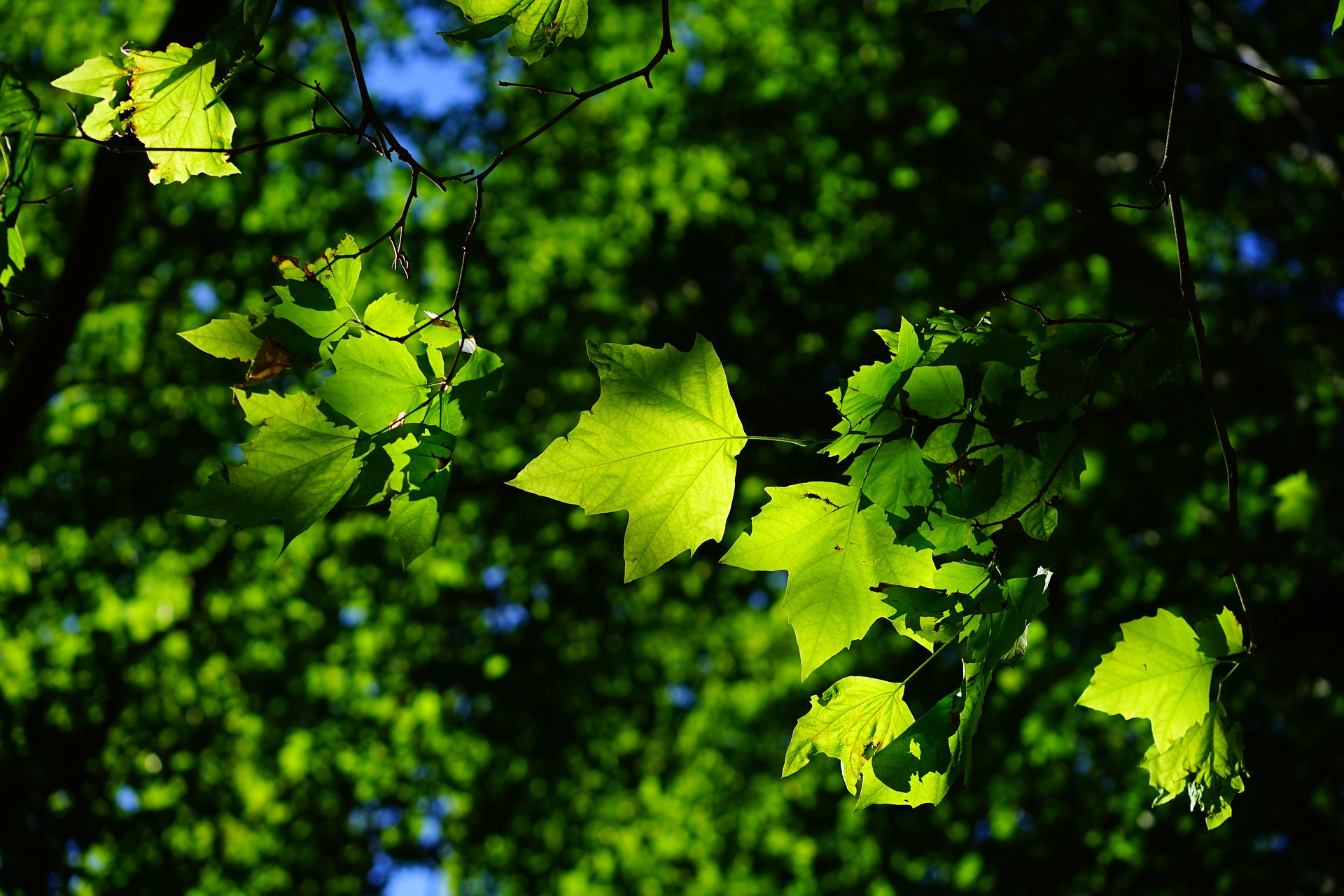
The American sycamore is found as far North as Ontario, as far South as Florida, and West as far as Michigan, Nebraska, and Texas.
Songbirds like finches and juncos eat the seeds of the sycamore. Beaver, squirrel, and muskrat also consume the fruits, and white-tailed deer occasionally graze on the vegetation. Many cavity-nesting birds, such as owls, flycatchers, and chimney swifts, inhabit the nearly hollow trunks of older trees. Wood ducks are known to build nests in the old tree trunks and some species of bats use sycamores as nursery trees.
Willow trees are best known for their love of water and their dramatic and elegant appearance. You may recall this tree from the Harry Potter movies and books.The most recognizable willow tree species in the United States is probably the weeping willow. Their long, charming branches fall into an arch, creating a round canopy that brushes the ground.
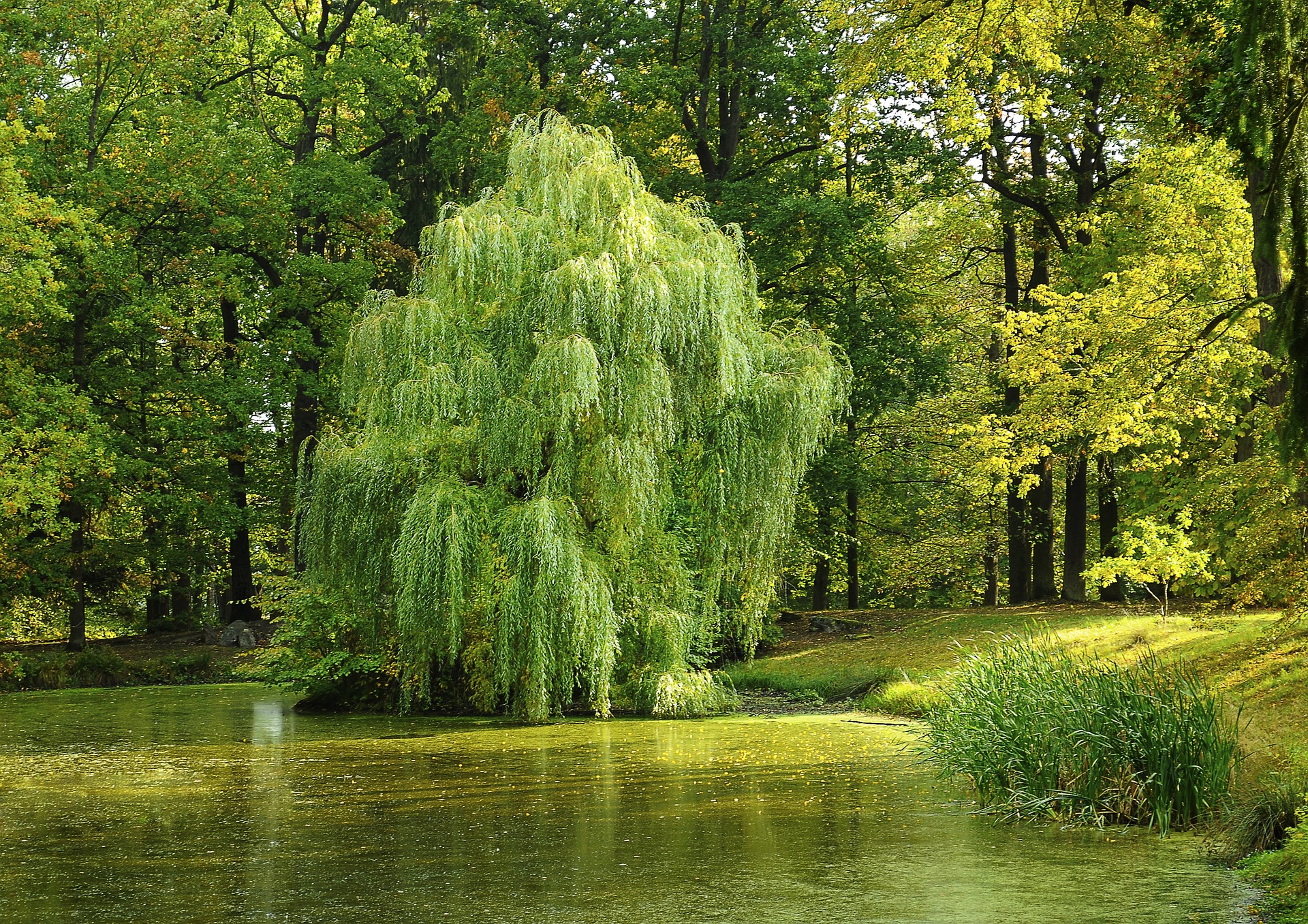
These trees are native to China. However, they’re commonly planted and spread across North America. They’re commonly found from Ontario all the way South to Georgia and West to Missouri.
Flowers from willow trees produce nectar and pollen necessary for bees. Weeping willows can be considered a bird sanctuary. Birds protect themselves from predators by hiding inside the foliage. Songbirds prefer to build their nests in these trees because the cottony material weeping willows produce works well for nest-building. Willow trees also provide food for rabbits, deer, porcupine, bears, muskrat, elk, and beavers.
There are around 60 species of birch that grow around the world. One that can be found mostly in the United States is the paper birch.
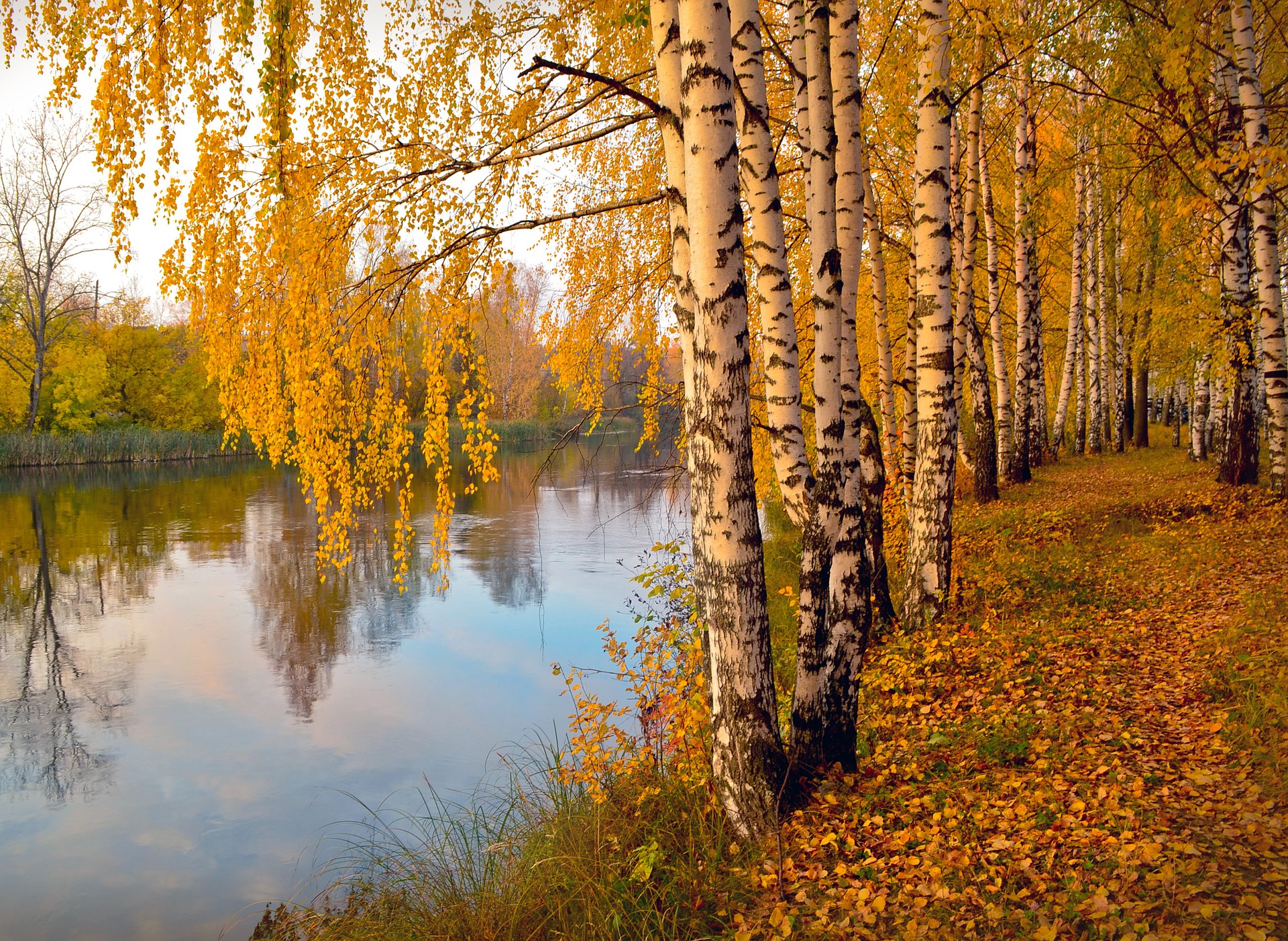
We can find paper birch in the Northern part of North America. They grow from Alaska to Maine, but only as far South as the mountains of Virginia, Tennessee, and Oregon.
Insects, birds, mammals, and fungi use these trees. Aphids grow on leaves, while caterpillars feed on the leaves. Birds such as woodpeckers, feed on the numerous insects that live in these trees, and they also use them to nest. Fungi have a symbiotic or parasitic relationship with birch trees.
If you’re walking anywhere in the Eastern United States, you’ll likely encounter the black walnut tree. These trees are known for their beautiful wood and edible nuts.
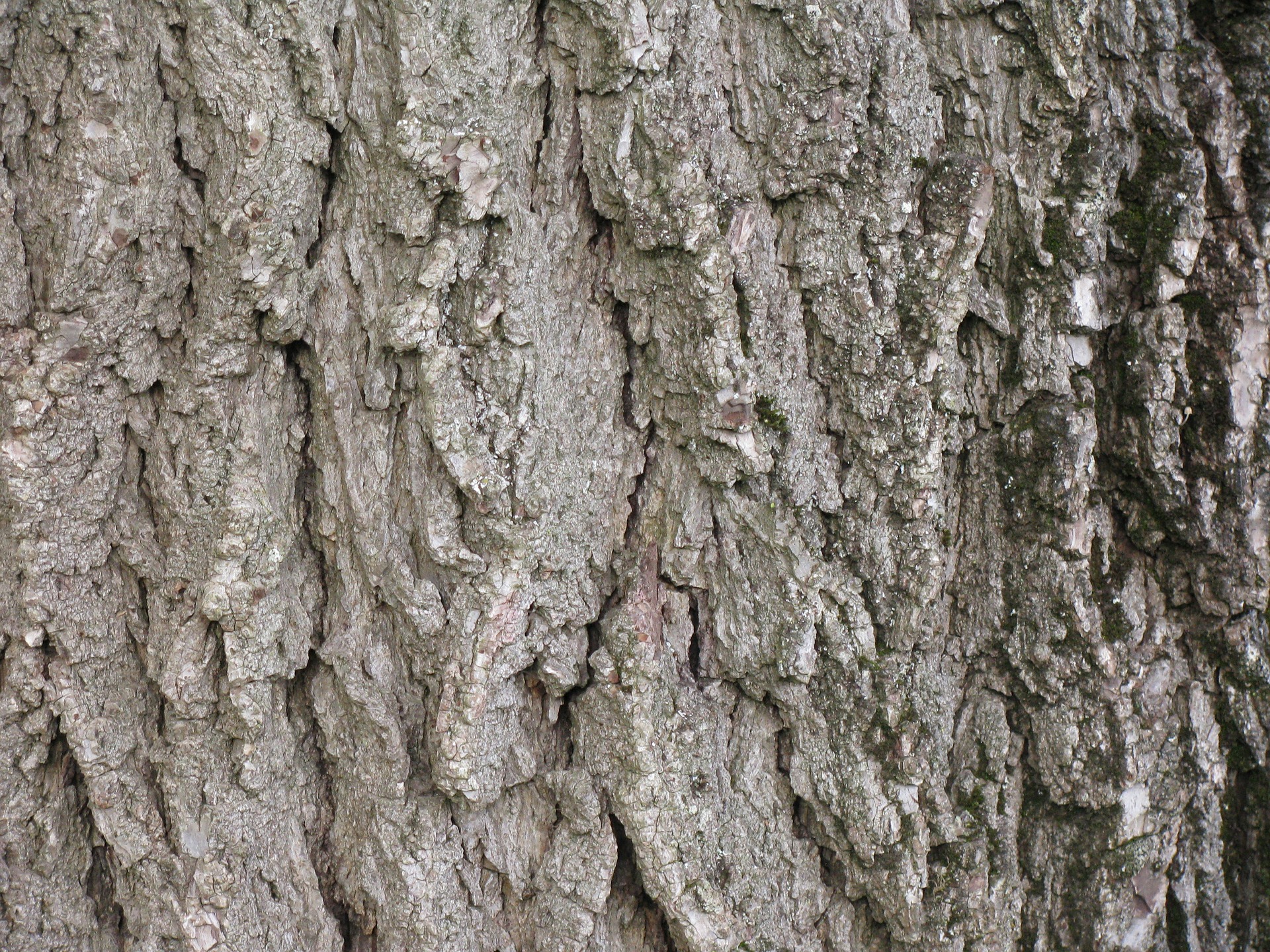
We can find them throughout much of the central-eastern part of the lower 48 states, especially in the Appalachians and the Midwest.
Besides people, many animals also enjoy the walnuts from these trees, including squirrels, turkeys, raccoons, and bears.
There are about 90 species of oak trees that grow in the United States. These trees can live up to 1000 years! That’s why they symbolize strength and endurance.
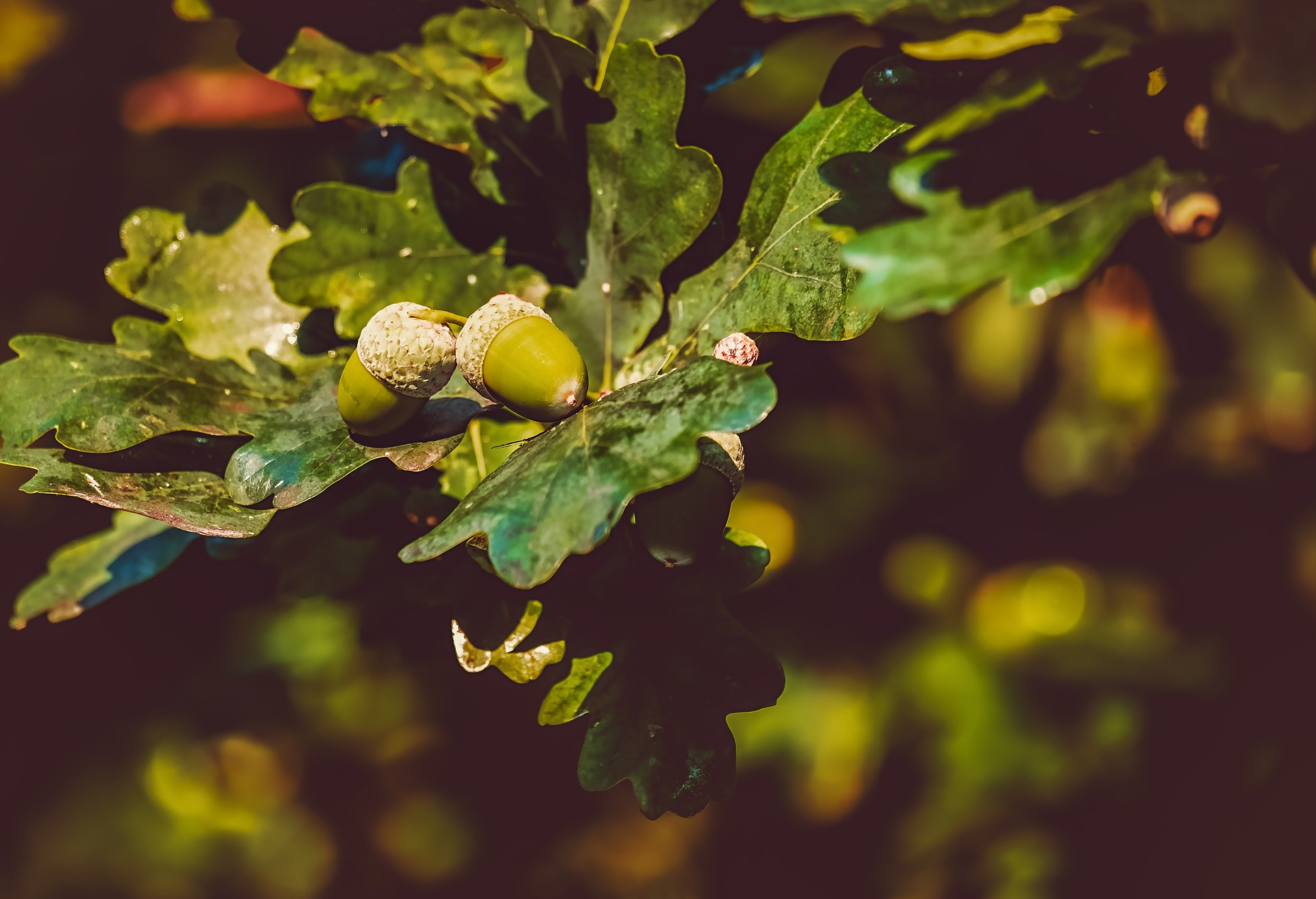
We can find oak trees throughout the Western and Eastern parts of the United States.
Acorns are the main food source for birds, such as woodpeckers, ducks, and pigeons. Squirrels, mice, rats, and bigger mammals, such as deer, pigs, and bears also consume acorns.
Did you enjoy learning about these tree id tips? If so, why not show us?
Share your favorite tree photos and tag us on Instagram, Facebook, or Twitter!
Want to do more?
Become a Forest Defender today! Your monthly gift will protect the trees and biodiversity of the South.
Join our email list to get new Biodiversity in Your Backyard sent directly to your inbox!
A primera vista, los árboles pueden parecer muy similares. Pero, si observas de cerca y prestas atención, es posible que puedas convertirte en un experto en identificar árboles. Primero, necesitas saber qué buscar. Este blog te dará consejos y sugerencias para que puedas identificar fácilmente algunas especies de árboles.
Cuando escuchas la palabra arce, probablemente lo primero que se te venga a la mente sea el jarabe que usamos en el desayuno. Pero no, el arce es más que panqueques o waffles. De hecho, hay muchas especies diferentes de arces. Trece especies son nativas de América del Norte. Los arces vienen en todos los tamaños, desde el pequeño arce japonés hasta arces que alcanzan los 150 pies de altura.
Podemos encontrar arces en Norteamérica, Europa y el norte de África, pero la mayoría de especies de arces se pueden encontrar en Asia, específicamente en la zona norte de China.
Los animales como los alces, las liebres de las nieves y las ardillas voladoras comen semillas, brotes u hojas de los arces. Los puercoespines también comen la corteza del árbol, lo que puede dañar o incluso matar al árbol.
Una especie crucial que depende de los arces son las abejas. Sabemos que las abejas tienen una importante tarea de polinización. Los arces son una fuente importante de polen para las abejas melíferas, cuanto ellas se despiertan de su hibernación a principios de la primavera. Si quieres apoyar a tus abejas locales, planta y cultiva arces!
El sicómoro es un árbol que ha tenido algunas apariciones históricas. Estos árboles pueden alcanzar entre los 30 a 130 pies de altura y 6 pies de diámetro.
El sicómoro americano se encuentra desde el sur de Ontario, hacia el sur hasta Florida, y hacia el oeste hasta Michigan, Nebraska y Texas.
Pájaros cantores como los jilgueros y los juncos comen las semillas del sicomoro. Castores, ardillas y ratas almizcleras consumen las frutas y el venado de cola blanca ocasionalmente pasta la vegetación. Muchas aves que anidan en cavidades, como los búhos, las papamoscas y los vencejos de chimenea, habitan en los troncos de los árboles más viejos. Se sabe que los patos joyuyo construyen nidos en los troncos de los árboles y algunas especies de murciélagos usan los sicomoros como árboles semilleros.
Los sauces son más conocidos por su amor al agua y su apariencia dramática y elegante. Es posible que recuerdes este árbol de las películas y libros de Harry Potter. La especie de sauce más reconocible en los Estados Unidos es probablemente el sauce llorón. Sus ramas largas y encantadoras caen en arco, creando un dosel redondo que toca el suelo suavemente.
Estos árboles son nativos de China, sin embargo, son comúnmente plantados y se esparcen por Norteamérica. Se encuentran comúnmente desde el sur de Ontario hasta Georgia y al oeste hasta Missouri.
Las flores de los sauces producen el néctar y el polen necesarios para las abejas. Los sauces llorones pueden considerarse una especie de santuario de aves. Las aves se protegen de los depredadores escondiéndose dentro del follaje. Los pájaros cantores prefieren construir sus nidos en estos árboles porque el material algodonoso que producen funciona bien para la construcción de nidos. Los sauces también proporcionan alimento a conejos, ciervos, puercoespines, osos, ratas almizcleras, alces y castores.
Podemos encontrar estos árboles en el norte de Estados Unidos y Canadá. Hay alrededor de 60 especies distintas de abedul que crecen en todo el mundo. Una que se puede encontrar principalmente en los Estados Unidos es el abedul americano.
Podemos encontrar abedules americanos en la parte norte de Norteamérica. Crecen desde Alaska hasta Maine, pero solo tan al sur hasta las montañas de Virginia, Tennessee y Oregon.
Insectos, pájaros, mamíferos y hongos utilizan estos árboles. Los pulgones crecen en las hojas, mientras que las orugas se alimentan de estas. Las aves, como los pájaros carpinteros, se alimentan de los numerosos insectos que viven en estos árboles y también los utilizan para anidar. Los hongos tienen una relación simbiótica o parasitaria con los abedules.
Si estás caminando en cualquier parte del este de los Estados Unidos, es probable que te encuentres con un nogal negro. Estos árboles son conocidos por su hermosa madera y deliciosas nueces.
Podemos encontrarlos principalmente en la parte centro-oriental de los 48 estados inferiores. Especialmente en los Apalaches y el Medio Oeste.
Además de las personas, muchos animales también disfrutan de las nueces de estos árboles, incluidas las ardillas, los pavos, los mapaches y los osos.
Hay alrededor de 90 especies de robles que crecen en los Estados Unidos. ¡Estos árboles pueden vivir hasta 1000 años! Es por eso que simbolizan fuerza y resistencia.
Podemos encontrar robles en todo el oeste y este de Estados Unidos.
Las bellotas son la principal fuente de alimento para aves como los pájaros carpinteros, los patos y las palomas.
Las ardillas, ratones, ratas y mamíferos más grandes, como ciervos, cerdos y osos también consumen bellotas.
Join us as we explore! We’ll learn about the wildlife, plants, trees, and even mushrooms. All right outside our doors. When you sign up, we’ll deliver more Biodiversity in Your Backyard tips directly to your inbox!


 Donate
  April 5, 2026