


Wetland forests in the US are our communities’ best protection from the worst impacts of climate change like increased flooding, drought, and degradation of our water quality. But the Trump Administration wants to eliminate protections for wetland forests, streams, and other wetland areas.
Under this new proposed rule, many wetland forests like floodplain forests and bottomland hardwoods would no longer be protected from destruction. The new rule would mean that any wetland forest with a road, levee, or berm that disrupts its connection to other waterways would no longer be protected. Over half of the nation’s wetlands would be vulnerable to destruction and pollution if the Trump Administration has its way. Read on to find out more about the legislation in question: the Clean Water Act.
The Clean Water Act, passed in 1972, is one of the most influential pieces of environmental legislation in the United States. The Clean Water Act is the primary federal law controlling and preventing water pollution. It recognizes the power and responsibility of state governments in preventing pollution while also giving the federal government authority to regulate “point” pollution, like pollution from sewage treatment and industrial facilities. Perhaps most importantly, the Clean Water Act protects wetlands in the US that would otherwise be left vulnerable to pollution and destruction.
Unfortunately, some of the language in the Clean Water Act has been somewhat unclear. In particular, the scope of the nation’s waters has been murky at times and subject to several lawsuits. Two court cases in particular, SWANCC vs. US ACE and Rapanos vs. US, demonstrated the need to clarify which wetlands fall under the Clean Water Act’s purview.
In 2015, the Obama Administration, through the Environmental Protection Agency (EPA) and US Army Corps. of Engineers (ACE) attempted to clarify the scope of the Clean Water Act by proposing the “Clean Water Rule” that clarifies which wetlands are subject to the federal legislation and which are not. This rule was crafted by both the EPA and ACE as they “conducted peer-reviewed hydrological studies, interagency reviews, and economic analyses before publishing a formal proposed rule on April 21, 2014.”
The Clean Water Rule has been demonized by industrial polluters, big business, big agriculture, and industrial forestry since its inception. These industries want to have the right to pollute, destroy, and develop wetlands when it is convenient for them, regardless of the impacts that they will have on surrounding communities.
After President Trump came into office, Scott Pruitt and the EPA suspended the implementation of the Clean Water Rule in January 2018. However, it was reinstated in August of 2018 when a federal district court judge decided that the Trump Administration had overstepped its bounds by not taking public comment before acting. As a result, the Clean Water Rule is the law of the land — but the Trump Administration wants to change that.
As you know, wetland forests in the US are our communities’ best protection from the worst impacts of climate change like increased flooding, drought, and degradation of our water quality. The Trump Administration is now attempting to eliminate Clean Water Act protections for wetland forests, streams, and other wetland areas by “revising” the Clean Water Rule. The proposal limits Clean Water Act protections to wetlands with a “continuous surface connection” to larger lakes, streams, or rivers. In addition, it removes federal protections for rain and snow dependent streams. This Trump Administration would mean, by the EPA’s own estimates, that over half of the nation’s currently protected wetlands will become vulnerable once again.
Under this new rule, many wetland forests like floodplain forests and bottomland hardwoods would no longer be protected from destruction. The new rule would mean that any wetland forest with a road, levee, or berm that disrupts its connection to other waterways would no longer be protected by the Clean Water Act. Additionally, scientists believe that this rule revision would have significant impacts on water resources (like clean drinking water) in the US.
All told, the Trump Administration’s dangerous proposal would remove safeguards for more than half of America’s wetlands, leaving them open to destruction from logging, development, and pollution. Drinking water and flood protection for millions of Americans would be at risk. We will not let that happen.
We only have a short window to show our support for the nation’s wetland forests. Please, speak up for our wetland forests by submitting your public comments to the US EPA.
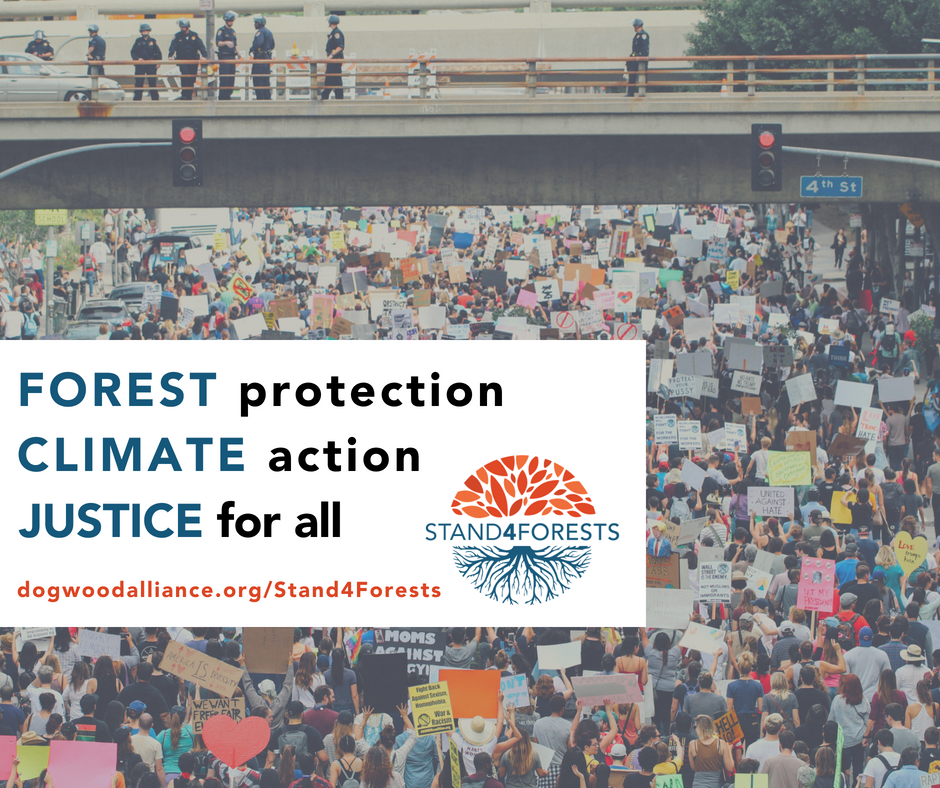
Last year the Stand4Forests movement was launched, laying out a bold vision for forest protection in the US endorsed by organizations, elected officials, and scientists from around the country. The Stand4Forests movement calls for a new vision of forest protection.
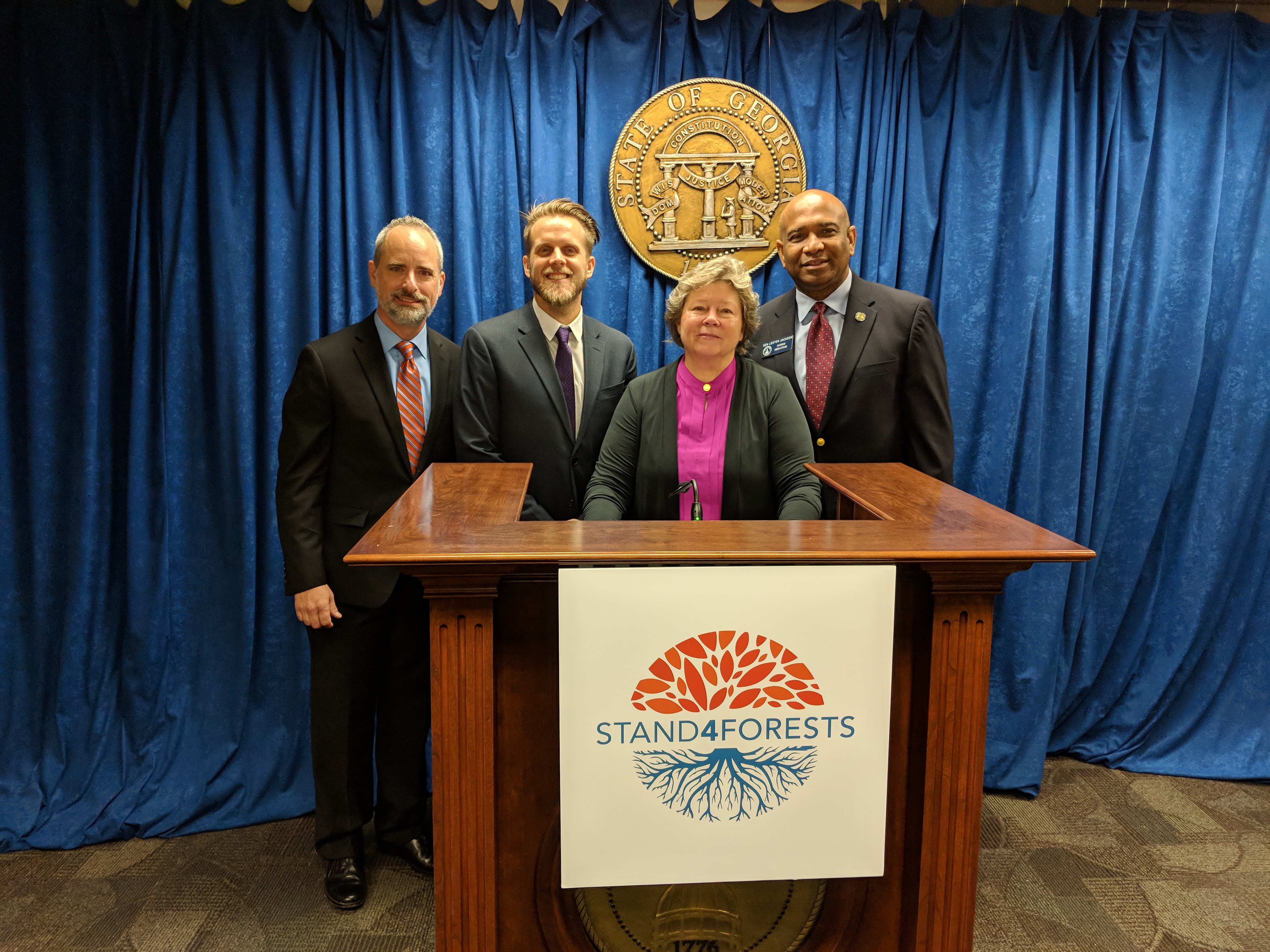
It’s been co-sponsored by at least 6 other State Senators and when the 2019-2020 legislative session begins again, we could see SR 108 going to a vote! That means that now – this year – is the time to call on all of our GA Senators to become forest champions.
The climate crisis is urgent — communities, the planet, and our very existence are threatened. The state of Georgia is no exception. Climate science shows that Southeastern US cities, including those in Georgia, are particularly vulnerable to climate change, with major expected impacts to infrastructure and human health.
But at a time when we should be protecting forests, the US is cutting down our own forests at one of the highest rates in the world, creating a climate emergency.
Georgia is one of the states hardest hit by industrial logging and the expansion of the wood pellet industry. The Georgia Biomass facility, outside of Waycross, is one of the largest wood pellet plants in the world. This pellet industry typically uses whole trees and is increasing carbon emissions and polluting communities. Additionally, wood pellet plants are typically located in environmental justice communities already burdened with other polluting industries.

When left standing, forests provide billions in economic value to our state and local communities. Georgia’s forests, when protected, can buffer communities from the damage caused by extreme weather events, reduce costs of waste and water treatment, provide habitat for pollinators, and support an already robust wildlife-related recreation economy.
We now must ask ourselves – how will we protect our valuable forests? What can we gain if we do? And what do we have to lose if we do not protect our forests?
By joining the growing list of supporters, Georgia policymakers who endorse the Stand4Forests platform will be taking a stand for principles any American can get behind: clean air and water, protection from flooding and storms, jobs in the growing green economy, biodiversity, and the charge to solve the climate crisis.
What makes a forest a forest? This simple question becomes much more complicated, depending on who you ask. Thankfully, Dr. Dominick DellaSala, President and Chief Scientist of the Geos Institute, helps us explore this question and settle the debate in a chapter on “Fake” vs “Real” forests that will be published in The World’s Biomes, scheduled to be released in 2020. Topics that will be explored include:
Industry classifies forests as “an area at minimum 120 ft wide, 1 acre minimum wide, with at least 10% forest cover.” Does that sound like a forest to you?

The US Forest Service is an arm of the USDA. The department of agriculture’s focus is growing crops. Stated plainly, that means the Forest Service sees trees as crops. This typically means tree plantations are planted in dense rows like corn to be thinned, sprayed with chemicals, and fertilized for the fastest growing cycle for logging and the highest “return on investment.”
Natural forests have many species of trees, plants and herbs, insects, animals, fungi and microbes that rely on each other to survive. They provide the benefits we as humans rely on: fresh water, clean air, food, climate regulation, and habitat. They are our place to rest, experience the wonder of the natural world, and a place for recreation. Scientists refer to this as “ecological integrity.” And it’s simple – real forests have the highest integrity, whereas fake ones have none. Unfortunately, real forests are declining globally as fake forests replace them via an unmitigated, massive eco-engineering of the planet’s ecosystems, and this holds true in the United States.
In the second half of the 20th century, the United States paid landowners to plant pine instead of allowing natural forests to regrow. We’ve lost 33 million acres of natural forest and increased pine plantations by 40 million acres in the US South. Now, we have more plantations and less true natural forests than ever before.
To Dr. DellaSala, real forests are superior to their fake counterparts in every aspect. They are complex structurally from the penthouse (forest canopy) to the basement (soils). Natural forests are connected by an Avatar-like sub-highway of root masses and fungal mats that transfer vital soil nutrients and moisture to the roots of trees. Their food-webs have interlocking strands that join squirrel to pine cone and squirrel to owl, deer to grass and deer to mountain lion, and slugs to rotten logs, and so on.
Real forests also are nature’s climate solutions, serving as enormous air filters and giant cooling towers, increasingly vital in a rapidly warming and drying world and for flood protection in a wetter one. They are the best “green infrastructure” we have. Given the climate crisis, we know that we need to reduce the amount of carbon dioxide being emitted into the atmosphere immediately and additionally sequester more carbon dioxide from the air. Where can we turn? Real, natural forests.
If we also phase out fossil fuels, we can meet the goals of the Paris Climate Agreement and avoid catastrophic climate change. One thing is certain: we cannot solve the climate crisis without placing a premium on protection of natural forests while restoring and sustainably managing other forests. Forests are one of the best ways we have to keep carbon out of the atmosphere, especially older, complex forests, because each year they absorb carbon and store it in their roots, leaves, and wood.
Logging real forests and converting them to fake ones contributes more carbon dioxide pollution than any other source of emissions from forests. When we look closely at the data, logging accounts for 85% of emissions from US forests, more than 5x the emissions from fire, wind, insects, and tree mortality combined. Even more, planting trees or entombing wood in buildings does not compensate for carbon held by real forests for centuries.

At the end of the day, forests are more than wood. If we continue to grow plantations instead of forests, we will lose out on all that natural forests provide. Standing forests are our best defense against climate change. Forests support us in ways that we cannot live without. But currently, our economic and political system favors forest destruction over forest protection. Together, we can make a change.

A beautiful wetland Southern forest– It doesn’t get more real than this!

I met Luke Cannon near Bent Creek for our Forest Friday hike. Luke has over 20 years experience as a naturalist, teacher, and student and is the founder of Astounding Earth.
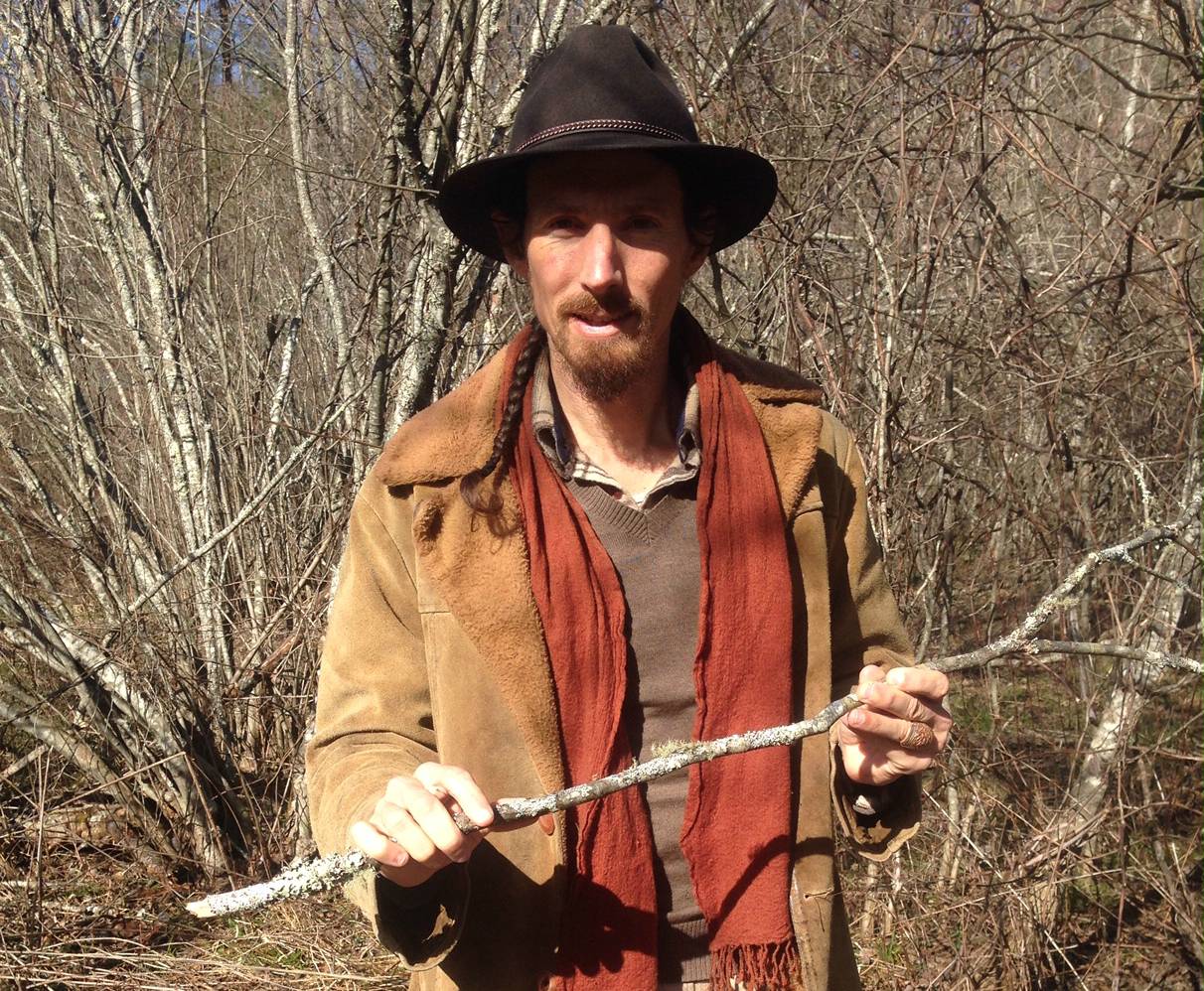
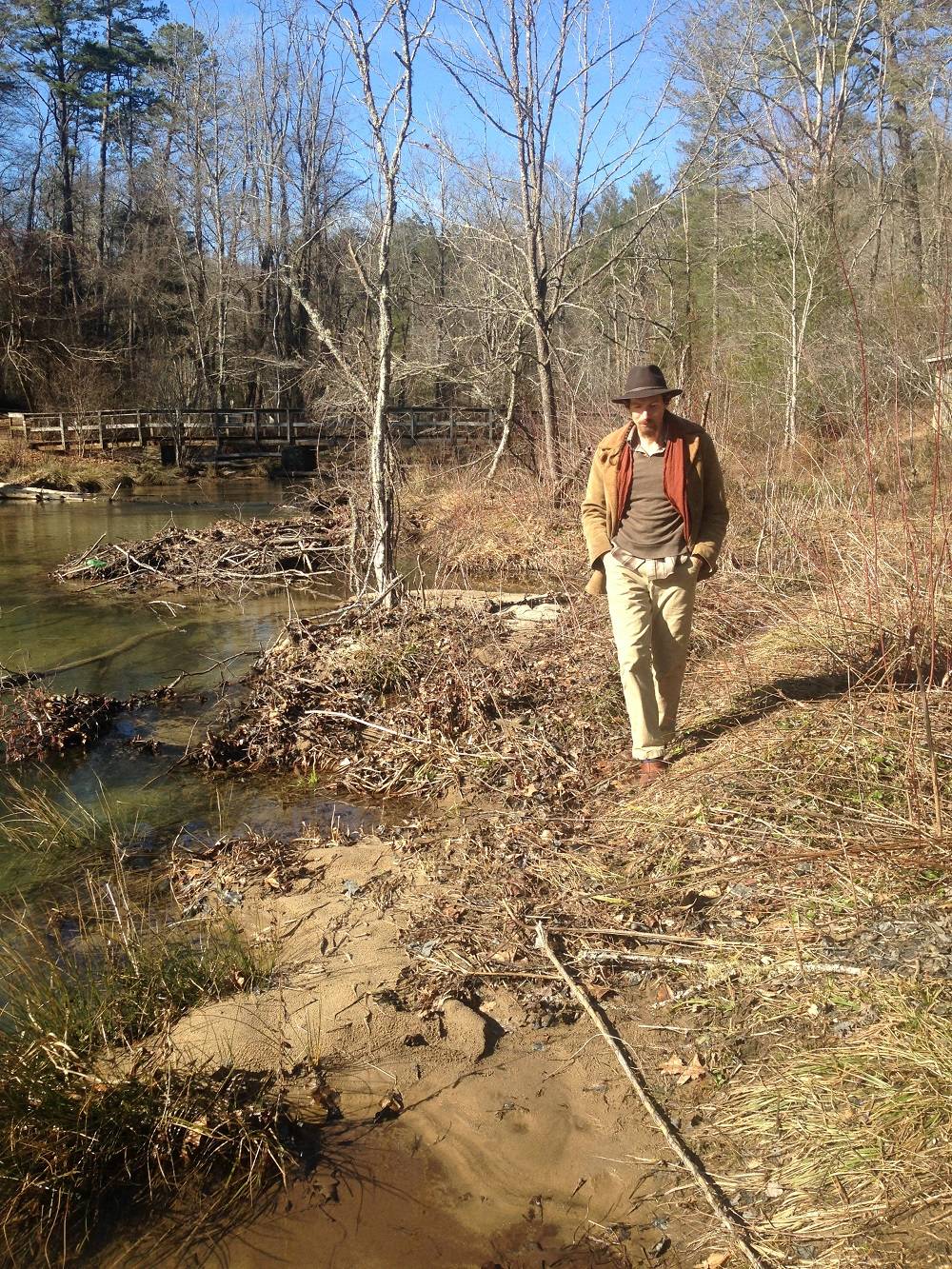
There was a notable chill in the air, but the sun was out, and it was a beautiful day for a hike. Bent Creek is often busy with mountain bikers, hikers, and people walking their dogs, but we didn’t see anyone else on the trail. We took a winding path across a small creek and up a small hill towards the lake. The trees around Bent Creek have vines that spiral elegantly up their narrow trunks. There’s an abundance of sourwoods there, and the ground still had a thick blanket of fallen leaves that crunched under us as we walked.
Luke Cannon discovered early on that, “wild spaces really calmed the storms in me.”
The first one is a man named Ricardo Sierra who runs a program in New York state called Hawk Circle. Luke spent a month with him in the woods when he was fourteen. During that month, Ricardo taught Luke the names and identities of many plants and showed him which ones were edible.
Luke’s other mentor, Frank Cook, was an ethnobotanist, activist, and educator. He taught many classes on food as medicine and believed people should eat one wild thing a day. Luke said:
“I spent more than a decade trying to spend as much time as possible with Frank Cook. We shared time learning about plants as food and as medicine, but also as friends, all over much of the United States.”
Luke spent a number of years doing social work in the inner-city of Washington, DC, but he wanted to be able reach and help people in a more profound way.
Luke said:
“All I could see first-hand was that my life was greatly changed by my experience in the woods and by developing a deeper relationship with the natural world. I wanted to see how I could potentially facilitate that for other people.”
Luke went back to his beginnings and reconnected with his first mentor, Ricardo Sierra to deepen his connection and knowledge of the wild plant world.
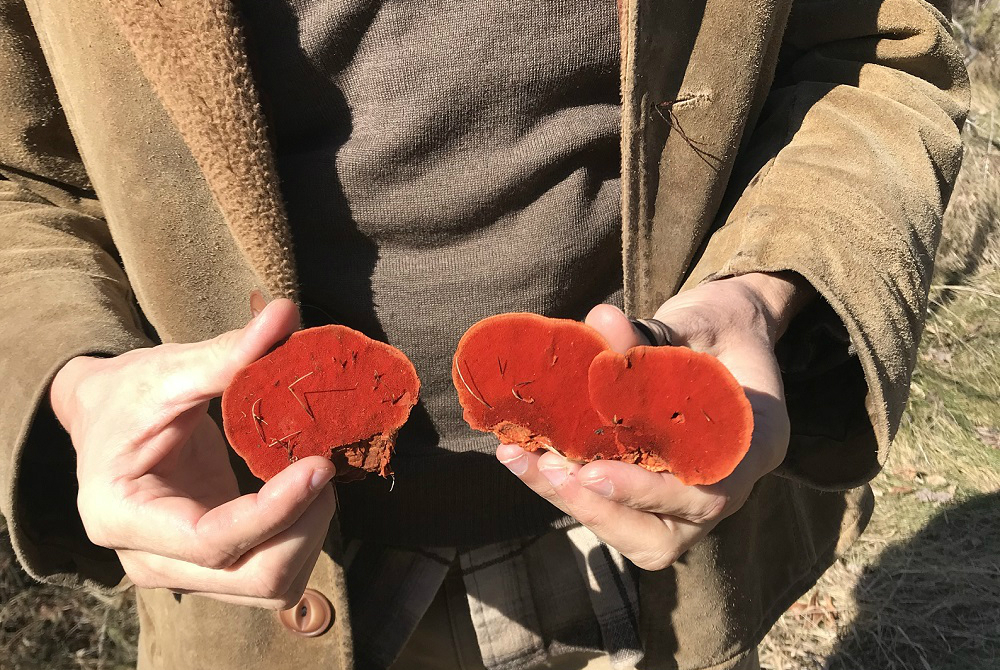
We paused here in the conversation because we found a patch of vibrant orange polypore mushrooms. Luke pulled out a pocket magnifying glass so I could take a deeper look at all the details. Polypore mushrooms, like the name would imply, have tubes or pores on their underside instead of gills. Not all polypores are closely related.
“Astounding Earth is my attempt at helping to make up for what I see as a huge lack in environmental education and eco-literacy in our culture. I open up spaces for people to feel connected. One of the things I love about teaching wild edibles is it really gives people a personal way to experience a plant, mushroom or even a lichen, because once you harvest, touch, smell and taste something, you make a deeper connection with it. You’re using a lot more senses than just your eyes to examine and ‘know’ something.”
In March, Luke will be teaching a class on Wild Edibles at the Organic Grower’s School.
I’m Lucia Ibarra, the Wetland Wanderer! I’ve been traveling all across the South visiting wetland forests.
I’ve been so lucky to encounter incredible plants and critters and to meet some amazing people who are doing the work of protecting our wetlands.
I’m excited to share with you my second Wetland Wanderer Episode! Let’s go on an adventure to Francis Beidler Forest in the beautiful state of South Carolina.
Our wetlands are so incredibly important. Wetland forests are key to helping us endure climate change – Wetlands help absorb and store carbon, and they reduce flooding and drought. Protecting wetlands is an investment that will help us build a clean energy future that rewards our planet and all life on Earth.

Stayed tuned for more Wetland Wanderer videos. I’ll be in touch soon to share Wetland Wanderer Episode #3 with you!
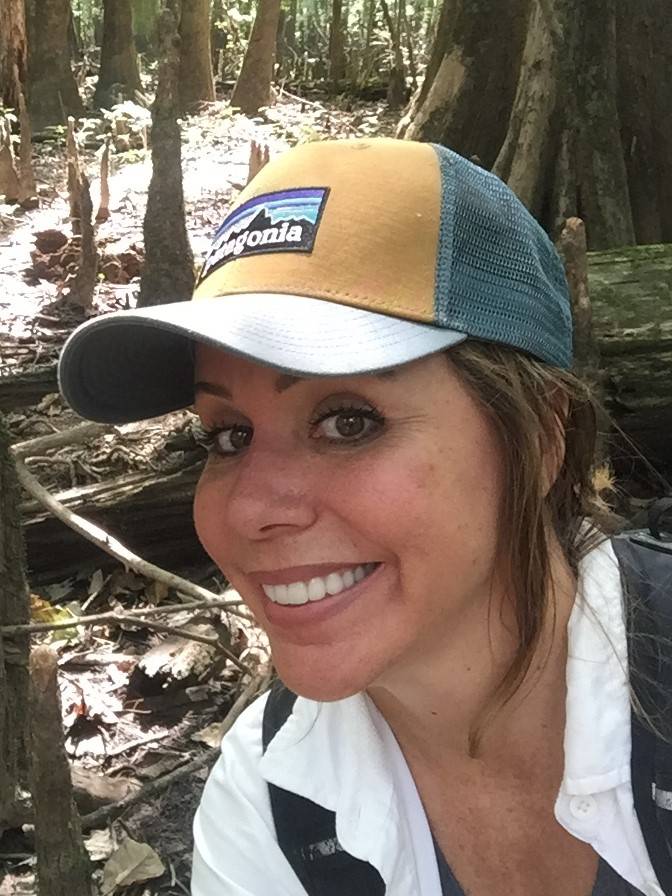 Until then, I’ll see you in the Wetlands!
On February 7, 2019, Drax Power Station in the UK announced it captured its “first carbon dioxide” using “C-Capture technology” in their bioenergy carbon capture and storage (BECCS) pilot. It sounds great in theory, but in the end it’s nothing more than greenwashing from the world’s largest forest burning utility company.
This pilot project perfectly shows how BECCS projects are ineffective, costly, detract from real solutions, and allow dirty polluters to continuously harm communities without actually alleviating the climate crisis. The bottom line: Drax’s pilot program shows us that BECCS projects, like the one they began running a week ago, do nothing to address the root cause of climate change and can’t stand up to the carbon-sequestering power of protecting natural forests.
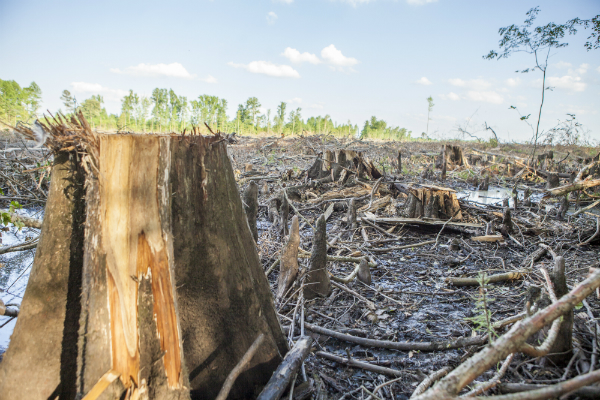
Wood pellet biomass is oftentimes sourced from clearcut bottomland hardwood forests, like this one, in the Southern U.S.
At the Drax Power Station, 4 of its 6 generators are powered by wood pellet biomass mostly coming from the Southern United States. The carbon-rich bottomland hardwood forests that the company sources from are clearcut to be manufactured into wood pellets and shipped across the ocean to be burned at this power station, all in the name of green energy and claimed as the world’s largest decarbonization project.
All of this greenwashing is a false solution to climate change, and it’s essentially paid for by the British government and its taxpayers, which hands out approximately 2 million pounds (over $2.5 million US dollars) a day to Drax in “renewable energy subsidies.” According to a study by the UK Government in 2014:
Working with a company called C-Capture, Drax is using a chemical to capture the C02 from its biomass flue gasses. It’s in the trial stage at the power station, and Drax spent 400,000 British pounds ($516,800) in order to capture a meager 1 tonne of C02 a day this year. If the trial proves 100% successful, they will capture 365 tonnes a year. Meanwhile, Drax’s CO2 stack emissions from biomass burning were 11.77 million tonnes in 2017.
While some of the scenarios that the Intergovernmental Panel on Climate Change (IPCC) use for the basis of their Special Report on Global Warming of 1.5 degrees Celsius assume the use of such negative emissions technology projects, such as Drax’s, they expressly caution over-reliance on BECCS as a mitigation or carbon removal strategy.
As Drax’s pilot is showing right now, there will be no livable planet as these projects are ineffective at scale, cost inordinate amounts of money that need to be used elsewhere, and serve to only provide a lifeline to a declining coal industry while delaying the energy transition needed.
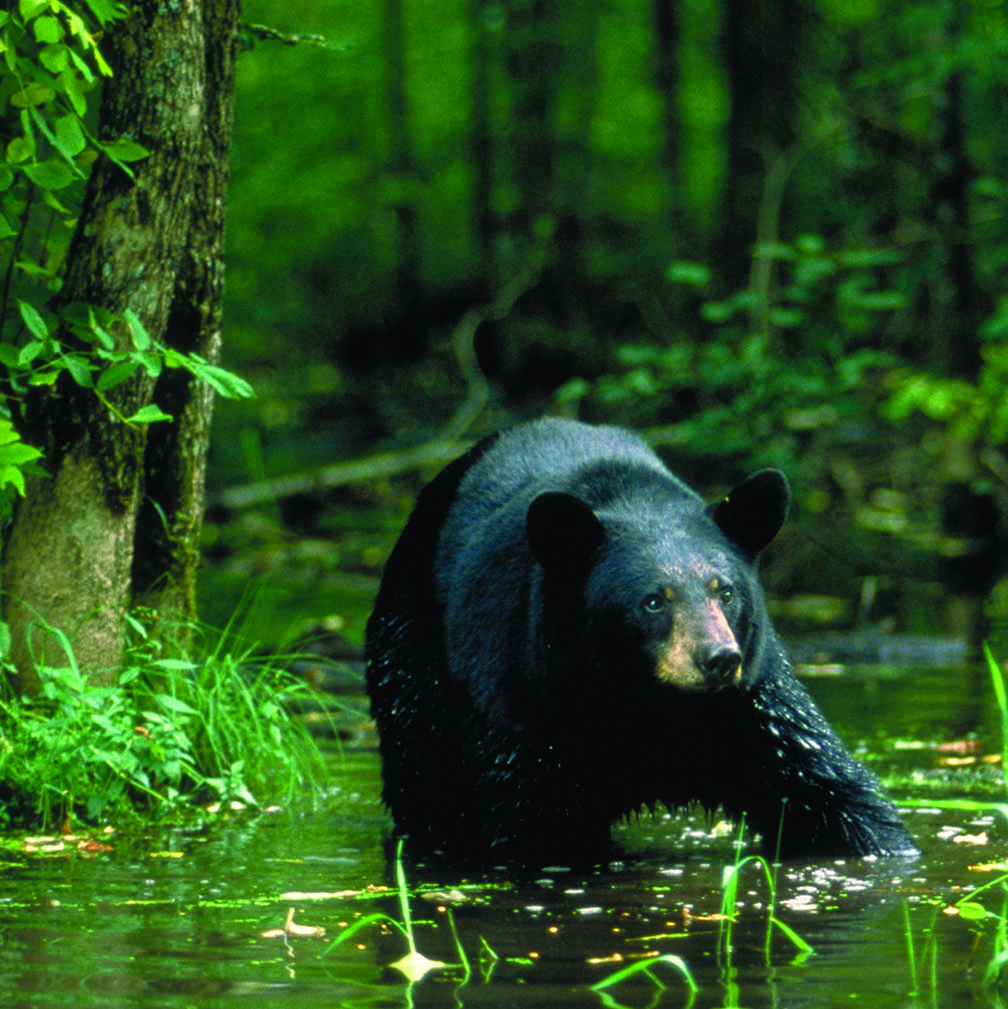
Natural forests provide critical habitat to species like the black bear. Forests must be protected, restored, and allowed to expand in the U.S.
Drax’s BECCS project proves what the environmental justice community has been saying for years now – false solutions and techno-fixes are not we need to keep our communities safe, our air clean, or improve our local economies and quality of life. To maximize carbon storage, we must prioritize the protection of our forests, as noted by the over 200 elected officials, conservation and justice organizations who signed the Stand4Forests platform in 2018.

Join the Dogwood Alliance crew to celebrate the release of Elderberry Wise at Urban Orchard‘s downtown location on Tuesday, February 19th. Meet fellow forest lovers and taste this delicious cider infused with local elderberries.
In support of the forests that give us so much, Urban Orchard is donating $1 to Dogwood Alliance for each pint of Elderberry Wise sold until it runs out! Ranked as the #1 place to drink cider in America in 2017 by Food & Wine Magazine, Urban Orchard Cider Company, a family-owned, local business, prides itself on lovingly crafted cider made from locally grown apples (and elderberries!).
Elderberries are the rich purple-black fruit of elder trees (Sambucus nigra). Elder trees themselves are found here in North American and in Europe as well, although they shouldn’t be confused with the American Elder (Sambucus canadensis). Only growing to a height of about 30ft (although legend has it that they used to grow much larger), elder thrives in wild places. It’s said that propagating an elder is as easy as breaking off a twig and putting it in the ground. Sounds like magic to me!
Elder is regarded as a sacred tree to many North American tribal nations as well as to indigenous, nature-based traditions in Europe. While it heals physically (elderberries are known as a powerful immune boosters and help relieve coughs and sore throats), it’s also considered a very powerful spiritual tree, guarding the gates of the Faery Realm, and not to be trifled with (like Dogwood Alliance!).
In fact, the tree is so respected that many Europeans today still doff or touch their caps when passing by an elder, in deference to the “Grandmother” tree. And, if you cut one down, you should ask her permission three times before doing so. Legend has it that bad things could happen otherwise!
So where does its name come from? It is widely held that “Eld” came from “Aeld,” an old Anglo-Saxon word meaning fire. The tree’s association with fire came from the hollowing out of its thinner branches, which were blown through to increase the flames. In Celtic traditions, Elder is also the 15th “few”, or letter, of the Ogham (an old alphabet based on tree-types), called “Ruis,” and it has been thought that each elder tree has a bit of the Queen of the Faeries in it.

From Karen Cater’s “Ogham Sketch Book” available from Hedingham Fair
If all this isn’t enough to convince you that elder trees are magical, read a very old story about the role an elder tree played in creating the Rollright Stones of Oxfordshire.
Want in on the magic? Come enjoy this delicious, magical, and restorative cider infused with local, native elderberries while it lasts! Meet the fine and friendly folks of Dogwood Alliance and Urban Orchard and some of amazing fellow forest and cider lovers. We can’t wait to taste Elderberry Wise ourselves. No doubt we’ll get wiser with each sip!
North Carolina is a beautiful place to call home. From the mountains to the coast, our state boasts natural beauty that draws both residents and tourists to our state. We love our state, and we want to protect it for generations to come.
But now, North Carolinians are bearing the harsh impacts of a changing climate — increased hurricanes, floods, wildfires, and extreme temperatures are already affecting our state.
Governor Cooper stole our hearts with his ambitious climate goals. In 2018, Governor Cooper signed Executive Order No. 80, setting ambitious goals to reduce North Carolina’s greenhouse gas emissions.
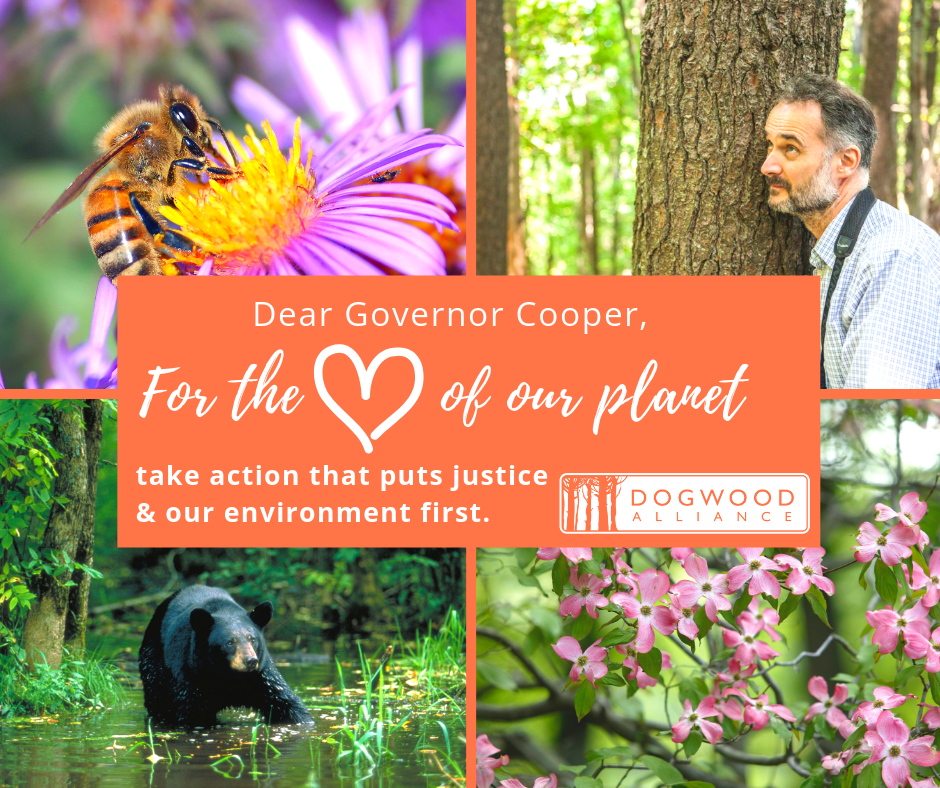
In DC, Governor Cooper urged the federal government to preserve forests and act on climate — but meanwhile, the Cooper administration is green-lighting the destruction of forests and carbon-emitting projects in his own backyard.
Governor Cooper’s lip service to climate change and environmental justice has gone on long enough.
The environmental justice issues we face cannot be tackled in a silo. Combating climate change and implementing a just transition requires unity and solidarity. We are united in our opposition to false solutions that put more carbon in the atmosphere, threaten the health and quality of life of surrounding communities, and place the burden of clean up on residents.
Dogwood Alliance has been working with a number of organizations and coalitions, including the NC Climate, Jobs, and Justice Coalition (NCCJJ), under the umbrella of the People’s Climate Movement. The NCCJJ has committed to a joint vision of a just transition to a 100% renewable economy.
North Carolinians have been loud and clear in their demands: no expansion of the wood pellet industry, no more fossil fuel infrastructure, permanent remediation of coal ash contamination to be paid for in full by Duke Energy, and a transition to sustainable and regenerative agriculture.
We believe in a future with 100% clean, renewable energy, and beautiful, standing forests — ushered in by a just transition policy that creates quality jobs and and prioritizes the most impacted communities.
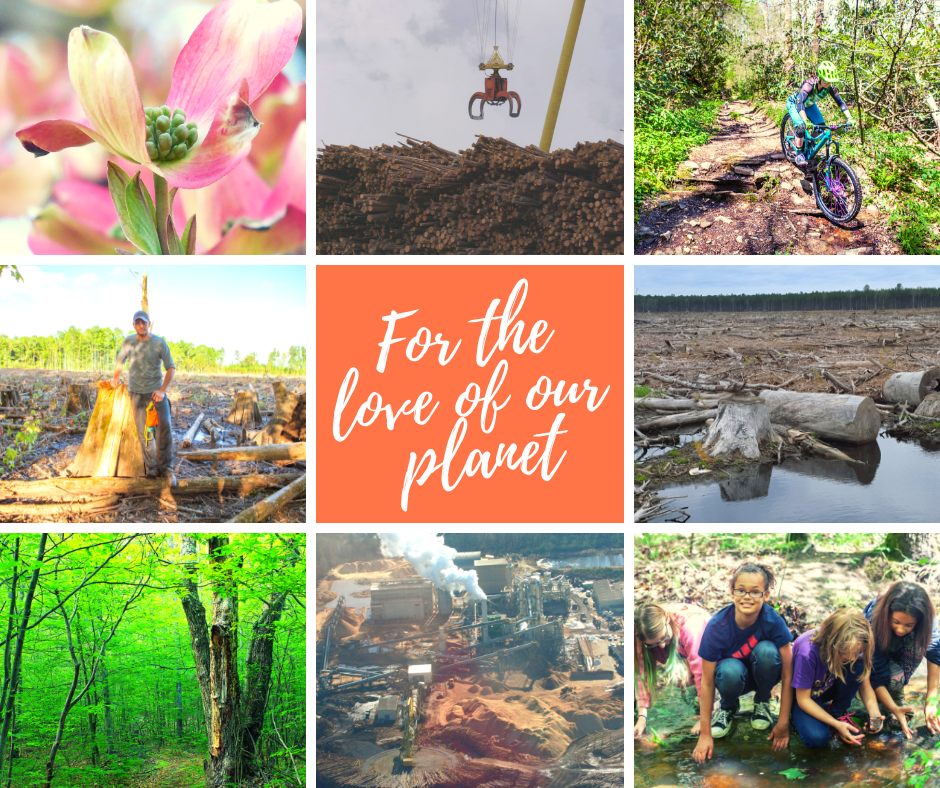
Specifically, we call for:
This week, North Carolina Governor Roy Cooper was selected as a climate leader to testify on Capitol Hill before the House Committee on Natural Resources. Governor Cooper called for bold climate action, including increased protections for our forests. But his actions in North Carolina tell a different a story.
Every year, tens of thousands of acres of North Carolina’s precious forests are cut down, turned into wood pellets at one of Enviva’s mills, and shipped overseas to be burned for electricity. At every step of the process, the wood pellet industry hurts our communities, destroys our forests, and imperils our chance to avoid a climate disaster.
The wood pellet industry has been allowed to grow unchecked in North Carolina. And now, Enviva is applying to expand production. If production increases as planned to 450,000 tons per year:
These forests draw carbon out of the atmosphere and store it in trees and soils, protect us from flooding and storms, and provide us with clean air and water.
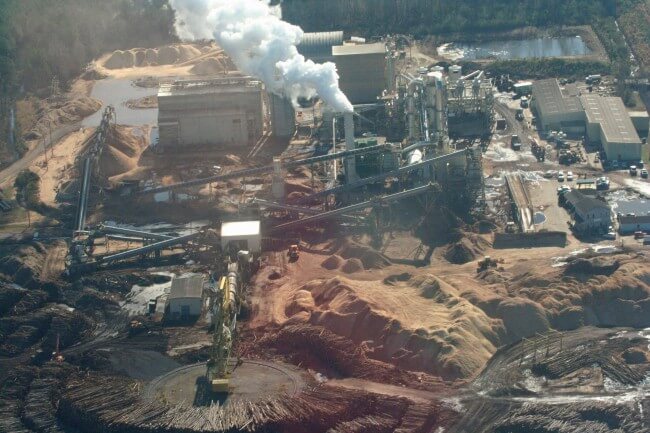
After years of missteps surrounding Enviva’s Richmond County facility, DEQ and Governor Cooper’s administration had the opportunity to do the right thing: deny the expansion and require Enviva to install the air quality controls that they should have had since Day One.
Governor Cooper even recognized during his testimony on Wednesday that there’s a growing concern about the wood pellet industry in North Carolina. Despite this noted widespread public opposition, NC DEQ recently granted Enviva’s Richmond County facility the permit they need to expand production.
Our elected officials work for the people of North Carolina, not for big industry. And the people of North Carolina have been loud and clear about their opposition to the wood pellet industry.
In November 2018, NC DEQ held a public hearing on Enviva’s proposed expansion in Hamlet. The Dogwood Alliance community joined local concerned residents and environmental justice advocates in a united call for clean air and increased forest protections.

Local concerned residents and environmental justice advocates from across the state joined in Hamlet to speak out at the November public hearing.
Dozens of people spoke at the hearing opposing the draft permit, which would grant Enviva’s expansion, and hundreds more submitted comments online. 40 environmental and social justice organizations signed a letter urging DEQ to modify the permit to enforce reductions in production and emissions.
While the final permit does increase emissions testing requirements, it also allows Enviva to expand to over 600,000 tons of wood pellets per year — without addressing calculations that Enviva will certainly be in violation of federal air quality standards at this level.
In DEQ’s report, they noted that there were over 400 comments from people who expressed concerns about increased logging. DEQ’s response? They cited Enviva’s own Track and Trace data, which we continue to point out is merely destruction in disguise.

Hundreds of people wrote to DEQ to oppose Enviva’s expansion and support clean air in Richmond County. Read the full Hearing Officer’s Report and Recommendations here.
Perhaps most problematic, NC DEQ responded to public concerns about Enviva’s climate impacts by claiming that biomass is carbon neutral. This flies in the face of leading science around the carbon impact of the wood pellet industry.
In Louisiana, for example, state regulators recently identified biomass giant Drax and its wood pellet facility in Bastrop, LA as a major source polluter and have placed the facility on a mandatory “compliance schedule” requiring Drax to correct its longstanding violation of the Clean Air Act. DEQ has failed North Carolina by not taking similar steps.
With one hand, Governor Cooper signs a sweeping climate executive order, setting ambitious goals and putting plans in motion to reduce greenhouse gas emissions and make North Carolina more resilient. With the other hand, the Cooper administration and DEQ continue to allow the destruction of our forests at the expense of communities and the climate.
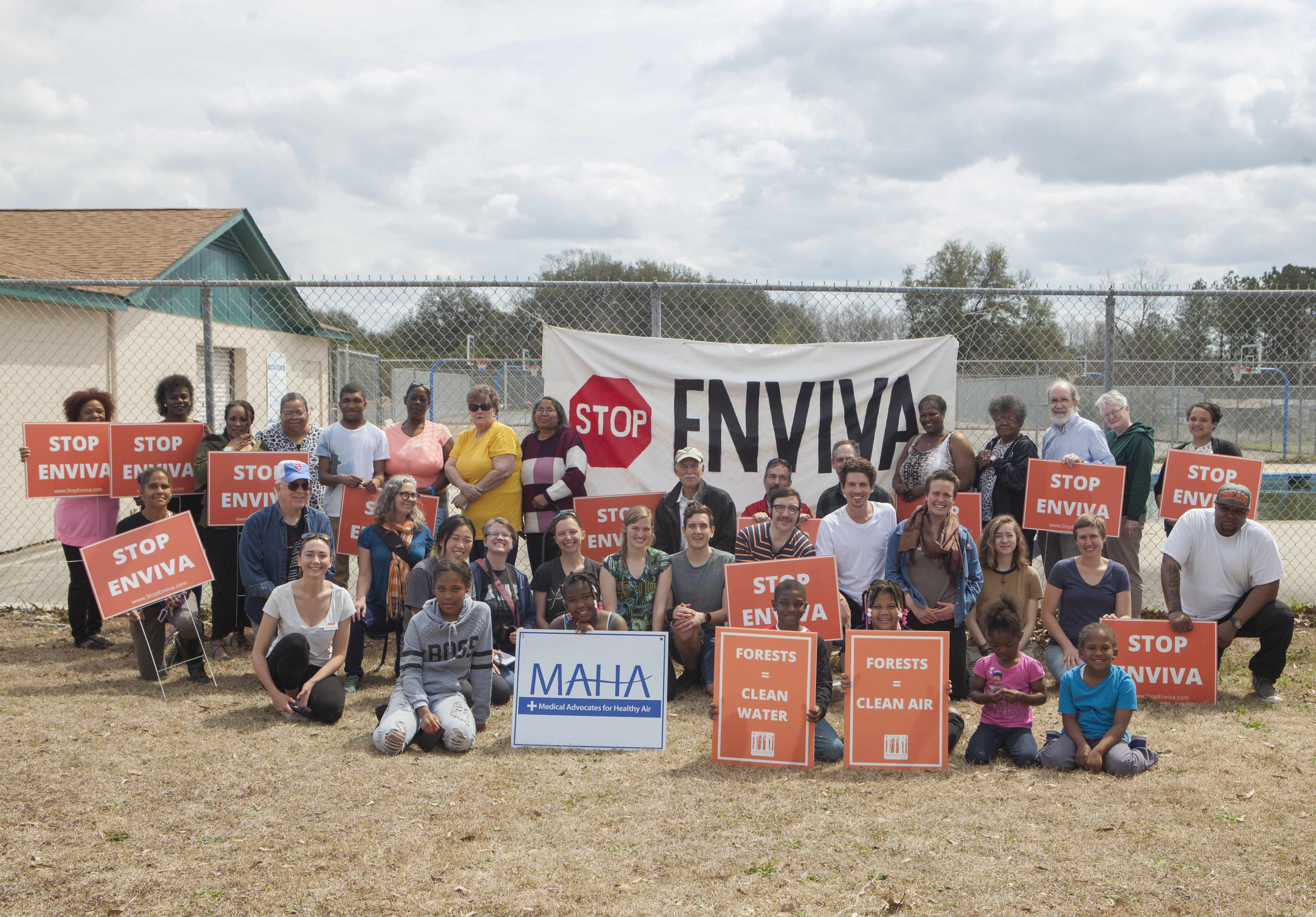
Residents of Dobbins Heights, NC join together to celebrate community and protest Enviva’s forest destruction in their backyard.
On Wednesday, Governor Cooper urged the federal government to preserve forests, but the Cooper administration continues to green-light the destruction of forests in his own backyard. When Enviva expands, they drive more logging of important forests. They increase the burning of wood pellets, dumping more carbon into our atmosphere. And they release harmful air pollution, damaging the quality of life of surrounding communities like Dobbins Heights.
That’s why we’re continuing to hold Governor Cooper and DEQ accountable to comprehensive, just climate action. In solidarity with our partners, we’re calling for increased forest protection, an end to false solutions like biomass and the wood pellet industry, no new fossil fuel infrastructure like the Atlantic Coast Pipeline, and a just transition to a 100% clean and renewable energy economy.
With the introduction of Green New Deal resolutions in the House and Senate, sponsored by Representative Alexandria Ocasio-Cortez and Senator Ed Markey, Dogwood Alliance is encouraged to see Congressional allies, organizations, and a vibrant grassroots movement uniting behind a vision for a new economy that responds to the climate crisis, values life, and seeks to put social justice at the heart of climate legislation.
The Green New Deal rightly calls for urgent action, which communities on the frontlines of climate change have been demanding for decades. Dogwood Alliance supports the immediate transition of the U.S. economy from fossil fuels to clean, renewable energy sources that includes a jobs program that puts justice first.
The Green New Deal resolution also highlights the importance of investing in our natural carbon sinks, which are vital for carbon storage and climate resiliency, such as through “restoration and protection of threatened, endangered, and fragile ecosystems.” This is supported by the most recent IPCC report, which clearly lays out the need to draw carbon out of the atmosphere by dramatically scaling up forest protection and restoration, alongside drastically reducing greenhouse gas emissions across all sectors.
As an organization on the leading edge of forest protection in our country’s most heavily logged region – the Southern U.S., Dogwood Alliance looks forward to working with the sponsors to actualize the imperative of protecting the best tool we have to sequester carbon emissions: standing forests.
This message is affirmed by the over 200 elected officials, scientists, and environmental and justice organizations who endorsed the Stand4Forests platform last year, which highlighted U.S. forests’ essential role in solving the climate crisis and rang the alarm bell against false solutions to the climate crisis like burning wood pellet biomass for electricity. The industrialization of forests in the US has degraded biodiversity, natural flood control, critical life-supporting services that forests provide, and most importantly, are the best carbon sinks we have.
We look forward to working together to strengthen the Green New Deal in order to make sure that protection of natural ecosystems like forests are prioritized in order to store carbon, reduce greenhouse gas emissions from the logging industry, and to prevent false solutions like more tree plantations and burning forests for fuel. Today’s resolution is an exciting starting point that marks how far the climate justice movement has come, and Dogwood Alliance is committed to work with partners, elected officials, and the public to make just climate action a reality.


 Donate