


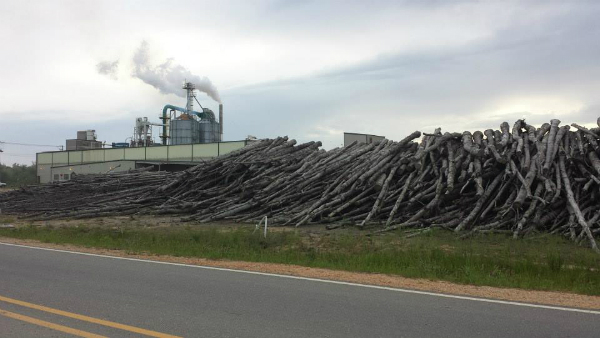
Smokestacks & clearcuts: Enviva’s industrial biomass forest destruction in Wiggins, MS
We’ve had several productive days here in the deep south. From touring the beautiful swamps with ally Dean Wilson to visiting a 150,000 ton Enviva Pellet facility located right on the boarder of the De Soto National Forest, we’ve had an opportunity to experience the full spectrum of the biomass issue in Louisiana.
Yesterday, we presented to a group of Louisiana allies, which included representatives from the Gulf Restoration Network, Sierra Club, Lower Mississippi Riverkeepers, SouthWings, Louisiana Environmental Action Network, and Atchafalaya BasinKeeper. Our top priority for the meeting was for these groups to jump completely on-board with the Our Forests Aren’t Fuel Campaign and to get excited about being our eyes and ears in Louisiana.
I’m happy to report that this was a success, highlighted by a comment from Cindy Sarthou, Executive Director for the Gulf Restoration Network:
“This is great. Now, how can we be the most helpful. Sounds like you need people down here to generate the story.”
Yes! I’m very excited for us to work with these organizations and individuals to challenge our corporate targets and help tell the story from the bayou.
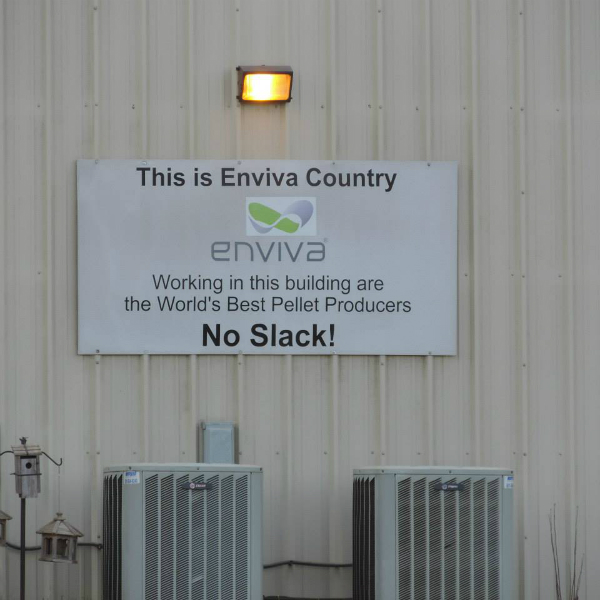
No slacking when it comes to forest & climate destruction
Next up is a fly-over with SouthWings. We’ll be viewing Drax pellet-container domes, construction of a pellet facility and current clearcuts in Louisiana. After the flight, we’re headed back out with Dean Wilson to tour clearcuts from the ground.
This is a guest post from Steve Kallan, the Chair of Dogwood Alliance’s Board of Directors
As the new chair of Dogwood’s Board of Directors, I wanted to introduce myself, celebrate the amazing work our outgoing board members have done for Dogwood and for our forests, and tell you a bit about our talented incoming board members.
I’m Steve Kallan. I live in Weaverville, NC, just down the road from Dogwood headquarters in Asheville. In my personal business, I work with non-profits to help facilitate their development and face all the challenges that come with organizational growth. When I first started working with Dogwood, I was so impressed with their dedication to growth, communication, and strategy. They are a smart and effective group whose successes are well-earned, and I feel privileged to be a part of that.
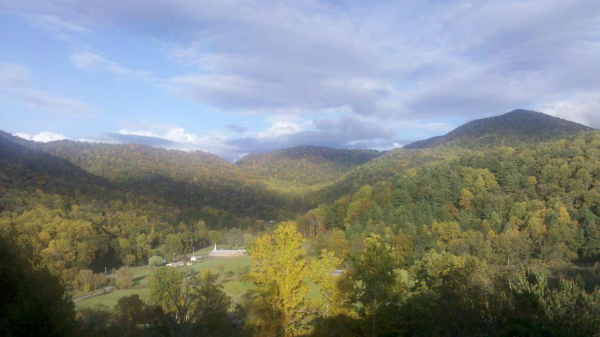
The lovely view from Steve Kallan’s home in Weaverville
This year, we’re saying goodbye to both Dr. Bob Cabin and Dr. Dan Abel. Bob is a professor of ecology and environmental science at Brevard College who co-chaired our Program Committee with Dan. Dan is a professor of marine science at Coastal Carolina University (CCU) in Conway, SC. Together, Bob and Dan worked on a very important scientist letter that we submitted to the UK government about how biomass (burning trees for electricity) isn’t renewable or good for our climate.
Campaign Director, Scot Quaranda says,
“Dan Abel is one of my science heroes and his work has done so much to further the protection of our oceans and Southern forests. So grateful for all of his hard work and the opportunity to be wowed by his crazy adventures with sharks and wildlife around the globe.”
Director of Corporate Engagement, Andrew Goldberg says:
“Bob Cabin is a true conservationist. From his scholarship on conserving endangered plants and his teaching at Brevard College to his service for Dogwood. Bob has walked the walk.”
Laura Floyd is a native coastal South Carolinian who has been a lifelong outdoor enthusiast and has held leadership positions and participated in environmental advocacy for over thirty years. Laura used her invaluable expertise from her bookkeeping and consulting business as the treasurer of Dogwood board.
Associate Director, Helen Powell-Busch, says,
“Laura has a wonderful sense of humor, is completely dependable, and is skilled at asking for support for Dogwood. She also has the cutest and most well-behaved little Yorkie ever, named Tilly.”
Eva Hernandez used to be Dogwood’s Campaign Director way back when. She did amazing work to facilitate Dogwood’s strategic board focus and efforts as its board chair. Now she devotes her considerable talents to the Lone Star chapter of the Sierra Club’s coal campaign.
Director of Corporate Engagement, Andrew Goldberg, says,
“Eva and I started working for Dogwood Alliance on the same day back in 2005. Her enthusiasm and skill as an organizer were just plain contagious. As our board chair, her enthusiasm and skill in leading this organization was just galvanizing. She is truly a great activist and leader for environmental change. We want her back!”
Germane James helped take the Dogwood board to the next level as our board development chair. Germane brings her dedication and social justice background to Durham’s North Carolina Coalition Against Domestic Violence as their Communications & Development Coordinator.
Associate Director, Helen Powell-Busch, says,
“Germane took the role of development chair to the next level and introduced us to social justice communities in NC. She’s got a big smile and a beloved dog, Bud.”
Ryan Black who served diligently on Dogwood’s Executive Committee is the Energy & Climate Project manager at Coastal Conservation League.
Executive Director, Danna Smith, says,
“Ryan hit the ground running with boundless enthusiasm and new ideas for helping Dogwood. Having worked for the South Carolina Coastal Conservation League, Ryan provided a critical link between Dogwood and the coastal forests of South Carolina.”
We also welcome newcomer Clara Vondrich of Fenton (a social change communications agency) in New York to our program/communications committee, and we welcome back former board member and long-time supporter, John “The Baker” Beal. Bicycle enthusiast John has served as the fundraising committee chair as well as the board chair in the past, and now we are excited to have him back as our board development chair.

Clara Vondrich
Amanda Rodriguez, Dogwood’s Marketing & Membership Coordinator, says,
“John is the hardest working, kindest, calmest person I’ve ever met, and it doesn’t hurt that he and I can geek out about our unconditional love of bicycles and cycling.”

John the Baker
Operations Coordinator, Suzanna Baum says,
“Clara came to our board this year with an incredible gusto and full of ideas! She’s a perfect fit to our up-leveling atmosphere here at Dogwood, and I look forward to the ways in which we will grow together from all that she brings to the table.”
I look forward to another year of leading-edge forest protection work with our amazing team at Dogwood Alliance.

Steve Kallan Board of Directors Chair Dogwood Alliance
From our friends at Biofuelwatch today…
We talk a lot about the role of forests in the context of our climate. It’s front and center in Dogwood Alliance’s Carbon Canopy Project where we’re working with partners to conserve and enhance forest carbon stocks with forestland owners in the Southern Appalachians who create high quality forest carbon offsets. And of course, forests and climate are also at the very heart of the Our Forests Aren’t Fuel Campaign, pushing to stop the large-scale burning of biomass from Southern forests for electricity generation in Europe.
That’s why I was so excited to see this recent U.S. Department of the Interior webinar from leading experts on forests and climate: The Role of Forests in Mitigating Climate Change.
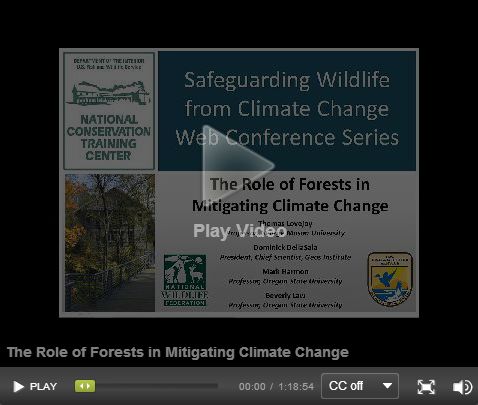
The presenters include Mark Harmon from Oregon State University and Dominick DellaSala from the Geos Institute. This webinar covers complicated but important material. I encourage everyone with an interest in forests, not just forest nerds like me, to take the time to watch this webinar and learn more about how our forests are intimately linked to our climate.
Campaigners have awarded the UK Department for Energy and Climate Change (DECC) the “Biomess Award” after coming out on top of an online poll coinciding with a major biomass industry conference in London, with Drax and the Green Investment Bank coming a close second and third place, respectively.
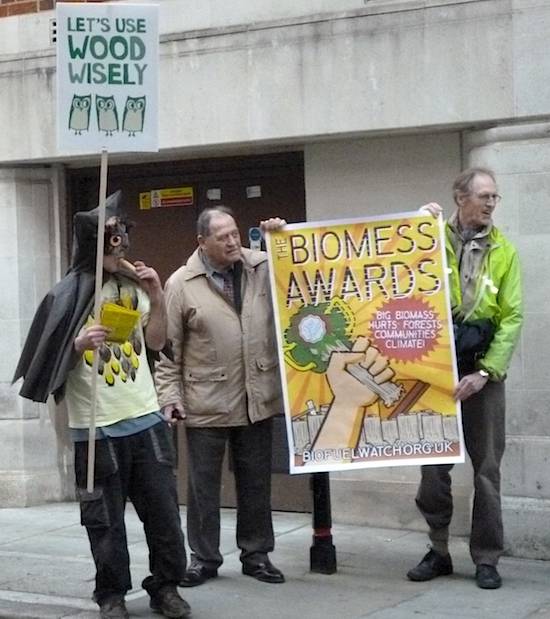
Photo credit: Biofuelwatch
The award for forest destruction was given at an alternative awards ceremony held last night outside a gala dinner for delegates. After a last-minute change of venue the dinner took place at the conference venue, Grange St Paul’s Hotel. More than 40 people held banners reading: “Big Biomass Fuels: Deforestation, Landgrabbing & Climate Change” and “Big Biomass Is Greenwash not Renewable Energy“.
Biofuelwatch Campaigner Duncan Law, who hosted the satirical awards ceremony, said:
The people have spoken, and as far as they’re concerned DECC are the biggest biomass baddie. Through their outrageous support for the biomass industry they have fuelled a new market for burning wood, and rewarded irresponsible companies such as Drax and their pellet suppliers Enviva for clearing ancient forests and pumping greenhouse gases into the atmosphere.

Photo credit: Biofuelwatch
Biofuelwatch’s alternative awards ceremony put a spotlight on the destruction being caused by the companies represented at the conference, which included award nominees Drax, Enviva, the Renewable Energy Association and the Woodpellet Association of Canada. Hundreds of people had voted for their “biggest biomass baddie” in an online poll held before the ceremony.
The Dogwood Alliance plays a key role in exposing the current impacts of UK wood demand for biomass electricity on southern US forests. “Destruction of Southern forests is on the rise due to the dramatic growth in demand for wood pellets for energy from Europe with the UK leading the charge,” said Scot Quarandra, head of campaigns for the Dogwood Alliance. “Big utilities and the wood pellet companies in the U.S. that supply them need to put the brakes on this false solution to climate change, and protect our forests and communities—not destroy them.”
Drax’s biomass plans will require pellets made from 15.8 million tons of wood each year, making it the biggest biomass-burning power station in the world. By comparison, the UK’s total annual wood production is only 10 million tons. A growing number of scientific studies show that burning biomass actually produces more emissions than the coal it replaces for decades.
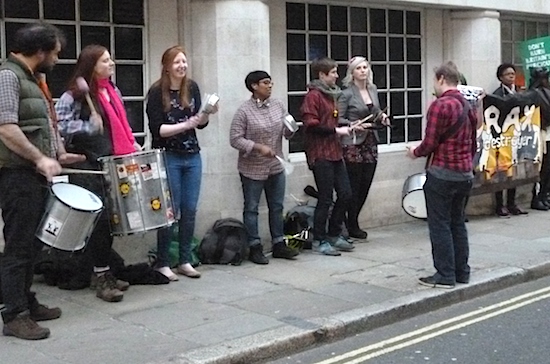
Photo credit: Biofuelwatch
Duncan Law closed the awards ceremony saying:
Government and industry are using renewable energy targets as an excuse to keep old, polluting coal power stations running by burning vast amounts of imported wood. This is being justified because of a modern myth that biomass can be sustainable regardless of its scale. But there is nothing sustainable about importing and burning millions of tons of wood each year. In the UK alone, anticipated demand for wood because of biomass electricity is seven times the UK’s current annual wood production. This won’t come from renewable, clean or green sources, but from imports that are the result of cleared forests.
Press Release8th April 2014, Asheville, NC, USA – A recent report by BW Energy, commissioned by ReThinkPylons [1], has recommended that Ireland’s only coal power station, Moneypoint, should convert from burning coal to wood pellets. Environmental groups on both sides of the Atlantic argue that switching to biomass is a false solution and would harm forests, communities and the environment. U.S.-based Dogwood Alliance and UK-based BiofuelWatch believe that investments should be made into truly renewable and climate-friendly solutions rather than ones that further harm the world’s forests.
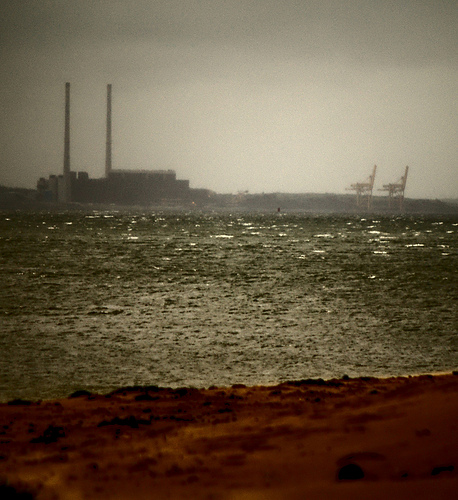
Ireland’s Moneypoint power station should invest in truly green solutions
Almuth Ernsting, co-director of Biofuelwatch, says:
According to an analysis by Biofuelwatch, running a 915 MW power station such as Moneypoint exclusively on biomass would require around 3.6 million tonnes of pellets made from 7.2 million tonnes of green wood (i.e. freshly harvested wood) every year. They further estimate that total annual roundwood production in Ireland is only around 2.65 million tonnes a year. This means that such a conversion would be impossible without heavy reliance on wood imports.
“Over the last few years we have seen a dramatic increase in logging of endangered bottomland hardwood forests and special places across the Southern U.S. to feed European energy demand,” stated Scot Quaranda, Campaign Director at Dogwood Alliance. “We urge the communities and government of Ireland to reject this conversion and instead work to implement truly renewable and climate-friendly energy solutions.”
In the Southern U.S., the large majority of native forests have already been destroyed and many others have been converted to monoculture pine plantations. In recent decades, this destruction was primarily driven by demand for pulp and paper but increasingly, it is now driven and accelerated by the new demand for wood pellets. Around the region, up to 90% of wetland forests have been destroyed, and the remaining fragments are now particularly targeted for pellet production for export. Those are amongst the most biodiverse temperate ecosystems in the world. [2]
Over the past two years, emerging scientific evidence has clearly shown that burning wood from whole trees to produce electricity actually increases carbon pollution, meaning it has an even worse impact on climate change than coal and other fossil fuels. It destroys ecosystems that can never be replaced. [3]Contacts:
Scot Quaranda, Dogwood Alliance, US, Tel ++1-828-2512525 ext 18, email: [email protected]
Almuth Ernsting, Biofuelwatch, UK, Tel ++44-131-6232600, email [email protected]Notes:[1] The report can be downloaded at http://www.rethinkpylons.org/library/BW%20Energy%20Report%202.pdf[2] Many scientific studies of late show the increased carbon debt taken on from burning wood for electricity. A few examples include “Biomass Supply and Accounting for Southeastern Forests” (SELC, NWF, BERC) – http://www.southernenvironment.org/uploads/pages/file/biomass/biomass-carbon-study-021412-FINAL.pdf and “Carbon Dioxide Accounting for Emissions from Biogenic Sources” EPA – http://yosemite.epa.gov/sab/sabproduct.nsf/0/2f9b572c712ac52e8525783100704886!OpenDocument&TableRow=2.3#2.
Other studies can be found at http://www.biofuelwatch.org.uk/resources-on-biomass/[3] Included in report by the US Forest Service Southern Resource Station – (http://www.seesouthernforests.org/discover-southern-forests/benefits/biodiversity) Dogwood Alliance also documented the use of whole trees and destruction of endangered wetland forests in the Southern US by pellet supplier Enviva, an exporter to the UK. Forth Energy had indicated potential to source pellets from this area. For more information see Dogwood Alliance campaign Our Forests Aren’t Fuelhttp://www.dogwoodalliance.org/campaigns/bioenergy/ and Biofuelwatch’s new report “Biomass: the Chain of Destruction” http://www.biofuelwatch.org.uk/2013/chain-of-destruction/
In late 2012, Dogwood Alliance Campaign Director, Scot Quaranda, testified as an expert witness in opposition to the Forth Energy proposal for new biomass utilities in Scotland. Late last week, the company cancelled its plans to build these new facilities. Below is a press release from Dogwood Alliance and our allies at BiofuelWatch and Global Justice Ecology Project celebrating the announcement and placing it into larger context:
 Press release:
Last week was the annual International biomass industry conference, held in Orlando Florida. Industry executives from around the world attended to learn about the latest technologies, discuss biomass “supply chains” and network. This year’s event featured a special “pellet supply chain summit” where the topic of discussion is the rapidly escalating export of Southern U.S. forests to Europe, where they are burned in old coal plants or stand-alone biomass electricity facilities.
But, even as the conference attendees were out on the golf course making deals, or laying plans for pellet supply chains, Scottish and Southern Energy (SSE) announced they would withdraw financial backing for several major biomass electricity facilities that those supply chains would likely have served. The facilities affected by the decision, owned by Forth Energy, include two 100MWe biomass electric facilities in Grangemouth and Rosyth (already granted consent), and a third in Dundee (not yet consented.) (1)
Scot Quaranda from Dogwood Alliance, a group working to protect forests in the Southern U.S., stated, “The loss of finance for Forth Energy facilities is great news for our forests! European energy companies are setting up shop throughout the Southern U.S., cutting and pelletizing trees and shipping them across the Atlantic to be burned as so-called renewable energy. We even found them targeting remaining pockets of endangered Atlantic coastal forests.”(2)
Rachel Smolker, codirector of Biofuelwatch, an organization that works on both sides of the Atlantic and worked with community groups opposing the facilities, stated, “Residents in the communities where Forth wants to build biomass facilities are rightly concerned about air pollution. Burning biomass is filthy – resulting in more particulates and more CO2 per unit of energy generation even than coal, but nonetheless subsidized as clean, green and renewable.”(3)
Meanwhile, Anne Petermann, from Global Justice Ecology Project stated, “The tree biotechnology industry has their scopes aimed at supplying massive amounts of wood for energy, including plantations of Genetically Engineered (GE) eucalyptus across the southern tier of the US. But with growing public resistance to GE trees and investor wariness in the biomass industry, their scheme is poised to fail.”
Notes:
[1] Reported by the Dundee Courier here: http://www.thecourier.co.uk/news/local/dundee/dundee-biomass-plant-scrapped-campaigners-hail-great-news-1.288988 and confirmed over the phone by Forth Energy on 27th March 2014.
[2] Dogwood Alliance documented the use of whole trees and destruction of ancient wetland forests in the southern US by pellet supplier Enviva, who export to the UK. Forth Energy had indicated potential to source pellets from this area. For more information see Dogwood Alliance campaign “Our forests aren’t fuel” http://www.dogwoodalliance.org/campaigns/bioenergy/ and Biofuelwatch’s new report “Biomass: the Chain of Destruction” http://www.biofuelwatch.org.uk/2013/chain-of-destruction/
[3] For a list of studies into the carbon impacts of biomass electricity: http://www.biofuelwatch.org.uk/resources-on-biomass/) Also see “Dirtier than coal?” published by RSPB, Friends of the Earth and Greenpeace. www.rspb.org.uk/Images/biomass_report_tcm9-326672.pdf
For an overview of health impacts from biomass facility air pollution (http://saveamericasforests.org/Forests%20-%20Incinerators%20-%20Biomass/Documents/Briefing/
And statements from medical professionals here:
http://www.energyjustice.net/biomass/health
[4] For an overview of tree biotechnology plans for the southern US: http://globaljusticeecology.org/stopgetrees.phphttp://globaljusticeecology.org/publications.php?ID=615
CONTACTS:
Scot Quaranda, Campaign Director, Dogwood Alliance. Phone: 828 251 2525 ext 18. Email: [email protected]Rachel Smolker, Codirector Biofuelwatch. Phone: 802 482 2848 (office) 802 735 7794 (mobile). Email: [email protected]
Anne Petermann, Executive Director, Global Justice Ecology Project, Phone: 716 931 5833 (office), 802 578 0477 (mobile). Email: [email protected]
One of the hallmarks of Dogwood Alliance’s Carbon Canopy forest carbon project has been an insistence on rigor in our carbon accounting and in our forest management certification. That is why the Carbon Canopy project develops forest carbon offsets using the Air Resources Board protocol under California’s groundbreaking Global Warming Solutions Act with the forest managed to conserve and enhance the carbon held in the forests with deliberate, responsible forest management under the gold standard Forest Stewardship Council (FSC) certification.
So, what does this “rigor” really mean? For our forest carbon projects it means a lot of work. Foresters and forestry technicians go out in the woods and measure trees on 1/10th of an acre to survey plots spread across the project area. To gain a high degree of statistical certainty, we number crunch large amounts of data, determining the standing carbon contained in the project areas’ different forest types. We perform extensive computer modeling of the forest carbon cycle, including projected growth rates and FSC logging over a one hundred year period.
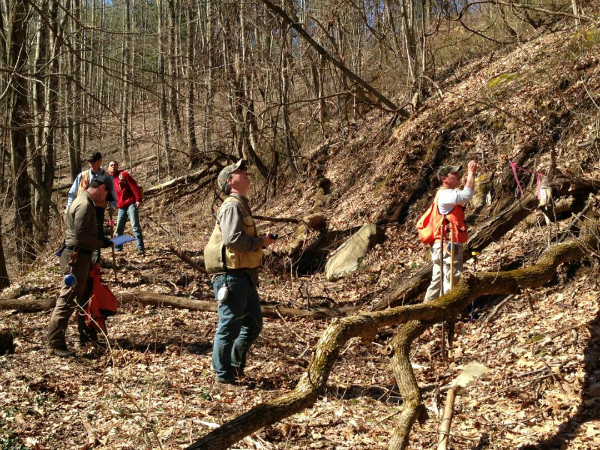
Field verification of Dogwood’s Heartwood Carbon Canopy Project near Dante, VA
In both the ARB and FSC systems, all of the work is reviewed by third parties to ensure compliance with the relevant standards and regulations as well as our plans. In the FSC process, it’s called an “audit”, and in the ARB forest carbon world, the process is called “verification”. Both the FSC and the ARB require not one but two sets of eyes to confirm that the benefits promised under these systems are delivered. Just this week, we’ve got a team out in the field, verifying one of the Carbon Canopy’s projects in southwest Virginia.
Forest management and forest carbon accounting are both complicated subjects related to complex natural systems. That is why it is critically important to have third-parties review and verify and audit the claims made under the systems.
Building forest carbon projects takes a lot of work. But it is potentially a very powerful tool to re-balance the forest products industry, which has for far too long been based only on logging forests for wood products. These projects can help fulfil the critical role of forests in mitigating climate change. With one of our Carbon Canopy projects currently undergoing verification, we’re building the leading edge of responsible 21st century forestry on the ground right now.
Learn more about Carbon Canopy here:
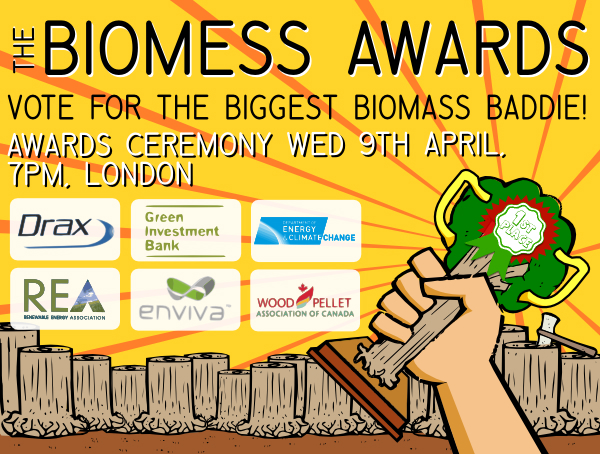
Our friends at Biofuelwatch in the UK are organizing an Alternative Biomess Awards Ceremony on April 9th in London. They’re shining a spotlight on the who’s who of companies investing in promoting biomass, a false solution to climate change, along with the biggest pellet makers in the Southern US and Canada that are sending our forests off to the UK to be burned for electricity.
The honored nominees include:
Of course, they’re all deserving of this award, but we hope you’ll consider casting your vote for Enviva and Drax, two of Dogwood Alliance’s biggest targets in our biomass Our Forests Aren’t Fuel Campaign. If you need a reminder why, check out this videofeaturing Enviva’s impact on our coastal forests or this recent story from the Daily Mail from the UK featuring Drax.
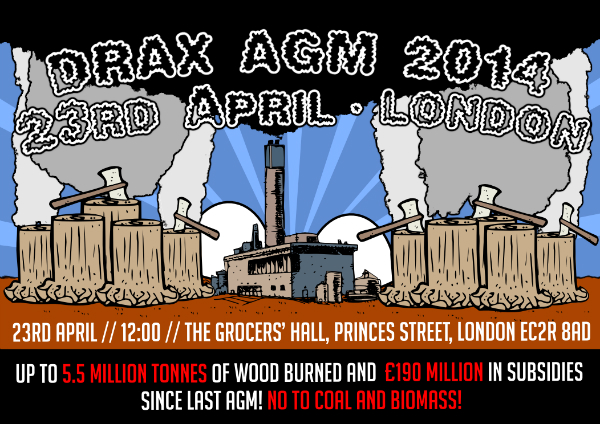
Additionally, on April 23rd, Biofuelwatch is planning an event outside of the Drax annual shareholder meeting where they will call for an end to big biomass and coal as well as an end to subsidies that allow operators like Drax to keep profiting from destruction. Drax power station in Yorkshire is converting three of its six units to run on biomass. Since its last shareholder meeting, it has converted and opened one unit and burned up to 5.5 million tons of green wood (mostly imported) – that’s equivalent to more than half of the UK’s annual wood production. At full capacity, this unit alone will have netted them £190 million in subsidies.

Alcazar Palace in Seville, Spain
This year Dogwood Alliance will be attending the tri-annual General Assembly in Seville, Spain, marking the 20th anniversary of Forest Stewardship Council‘s (FSC) efforts to bring different stakeholders together to find a sustainable future for the world’s forests and the people who inhabit them. This is an exciting opportunity to get together with forest activists and other FSC members and stakeholders from around the world, including many forest products companies from the US South that we have been working with for years. In addition, Dogwood is planning to use this critical platform to focus attention on issues important to Southern Forests and work to strengthen the system moving forward. This international forum will also give us a great chance to speak to a broad audience about the Our Forests Aren’t Fuel campaign and the global connections driving forest destruction from the fast-growing biomass pellet industry here in the US.
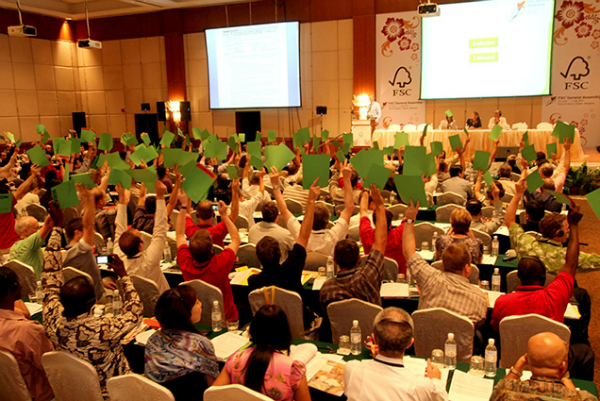
The gathering of unique stakeholders for FSC’s General Assembly
One of Dogwood Alliance’s most important tools for protecting forests is the FSC forest management certification system. The FSC sets strict guidelines and standards to ensure good forest management on working forest lands. Every year 5 or 6 million acres are logged across the South. So making sure logging is done responsibly (in the right place and in the right way) is critical. Nature is generous, and FSC is a necessity to maintain the amazing beauty and world-class conservation values of this landscape.
FSC General Assembly
Because forest management certification is so important, Dogwood Alliance has worked hard in our public campaigns to get large paper users like McDonald’s, Staples and Office Depot to commit to purchase FSC certified paper and large pulp. We also got huge paper companies like International Paper to buy certified wood and produce FSC products. Dogwood’s Executive Director Danna Smith serves on the FSC US Board of Directors, and I serve on a FSC Working Group.
[youtube]https://youtu.be/00aOdYxUQB8[/youtube]


 Donate